
#139
October 2 · 47 min

Mukesh Bansal
Welcome to Sparx, the show that empowers you with the latest research, strategies and tools to help you achieve exponential impact in every aspect of your life. Whether you're looking to advance your career, improve your relationships, leave a mark on the world or simply become the best version of yourself, this is where you need to start.

AI is getting better at answering questions. But what happens when it starts asking and solving the questions scientists haven’t answered yet?In this episode of SparX, Mukesh Bansal sits down with Paras Chopra, founder of Wingify and Lossfunk, to explore AI research, scientific discovery, consciousness, and India’s place in the global AI race.

AI is getting better at answering questions. But what happens when it starts asking and solving the questions scientists haven’t answered yet?In this episode of SparX, Mukesh Bansal sits down with Paras Chopra, founder of Wingify and Lossfunk, to explore AI research, scientific discovery, consciousness, and India’s place in the global AI race.

What will it take to build robots that can truly operate in the real world? 🤖 In this episode of SparX, Mukesh Bansal is joined by Sergey Levine, computer scientist and co-founder of Physical Intelligence, to explore the future of AI and robotics and why giving machines physical intelligence is one of the hardest problems in AI. From Moravec’s Paradox and imitation learning to general-purpose robots and robot learning, we explore why AI that can write, reason and talk still struggles with the physical world, and what it will take to build robots that can learn, adapt, and perform a wide range of tasks. Whether you’re an AI enthusiast, robotics researcher, builder, or simply curious about where AI is headed, this conversation offers a glimpse into the next frontier of artificial intelligence. In this episode, we discuss: * Why physical intelligence is so difficult * Moravec’s Paradox and what it tells us about AI * How robots learn from human demonstrations * The race toward general-purpose robots * Why robots struggle to generalize to new environments * What the future of AI-powered robotics could look like The next breakthrough in AI will be physical.

What does the roadmap to a "Viksit Bharat 2047" look like from the very top? 🇮🇳In this special episode of SparX, Mukesh Bansal is joined by Professor Ajay Sood, the Principal Scientific Adviser to the Prime Minister of India. As a key architect of India’s scientific policy and a Padmashri awardee, Professor Sood offers an exclusive look into the government’s strategic vision for technology as the ultimate pillar of national sovereignty and economic growth.From the explosion of space-tech startups like Skyroot to the revolutionary ₹1 Lakh Crore R\&D fund, we dive deep into the missions that are positioning India as a global leader. We explore the critical convergence of AI and Quantum Computing, the strategic importance of Semiconductor Mission 2.0, and how India is navigating complex geopolitical supply chains.Whether you are a deep-tech entrepreneur, a student of science, or curious about India's technological future, this conversation provides a masterclass on the "Golden Age of Indian Science."In this episode, we discuss:The Vision for 2047: How Science & Tech are the primary engines for a developed India.Deep Tech Sovereignty: Why India must choose its global partners carefully while building indigenous strength.The Quantum Leap: India’s proactive National Quantum Mission and its synergy with AI.Semiconductors & Nuclear Energy: Building a full-fledged ecosystem and the future of Fusion energy.Democratizing Science: The "One Nation One Subscription" initiative and creating a culture that celebrates science like a festival.

Description- Is superintelligence a few years away, and would we even notice if the systems we built started to matter morally?- Nick Bostrom is the philosopher who put superintelligence on the map. His 2014 book defined the field, and his recent Deep Utopia asks the harder question: what is life for once machines can do everything better than us?- In this episode of Sparks, he tells [Host] that we don't have superintelligence yet but are seeing limited forms of AGI, that frontier labs using AI to accelerate their own research could trigger recursive self-improvement, and that he can no longer rule out timelines of just a few years. He argues the outcome is likely to be either very good or very bad, walks through the three ways it fails, and explains why he now works on problems that only matter over the next 6 to 18 months — philosophy, as he puts it, with a deadline.-We also get into full unemployment as a destination rather than a disaster, what an education system looks like when it isn't producing workers, why suppressing deception in a model makes it more likely to claim consciousness, and why building trust with AI systems now may be a safety measure rather than sentiment.

India just carved its name into the history of space.In this episode of SparX by Mukesh Bansal, we sit down with Pawan Chandana, Co-founder & CEO of Skyroot Aerospace, just days after the company achieved a historic milestone - becoming the first private Indian company to successfully launch a satellite into orbit on its very first attempt.Chapters0:00 - Introduction 0:59 – History, Made in India06:14 – The Cold Message That Started It All 09:34 – The Lowest Point: COVID and the Investors Who Believed 12:38 – Building Rockets Was Illegal? 15:10 – The 20-Something Team launching rockets in space17:44 – Advice for Deep Tech Founders & India's New Funding Ecosystem20:01 – Inside Mission Control: Pre-Launch Checks to the 5-Minute Hold 24:53 – Stage-by-Stage: Liftoff Through the 15-Minute Journey to Orbit 29:32 – The Self-Destruct System, and Everything That Could Go Wrong33:56 – Stage Separations Explained: The Riskiest Moments of the Flight 47:30 – The Failure That Almost Derailed Everything52:20 – What's Next for Skyroot? 59:15 – Lessons From ISRO's Failures 1:02:20 – Skyroot's Ripple Effect on Startups1:04:56 – India's Next Deep Tech Bets & Opportunities1:09:06 – "This Is India's Skyroot Moment" Pawan shares the untold story behind Skyroot's remarkable journey—from a LinkedIn message that led to Mukesh Bansal becoming one of Skyroot's earliest believers, to raising capital during the toughest days of the pandemic, building one of the world's most advanced private rocket programs, and the emotional moments inside mission control during launch. There was no revenue, no roadmap, no guarantee — just conviction that these founders wouldn't quit. That was enough for Mukesh Bansal to back them back in 2018, and today that conviction has made history. The conversation goes deep into entrepreneurship, deep-tech investing, India's emerging innovation ecosystem, and the future of private space exploration.Whether you're a founder, engineer, investor, student, or simply fascinated by rockets and innovation, this episode offers a rare behind-the-scenes look at one of the most important milestones in India's startup history.If you enjoyed this conversation, don't forget to Like, Subscribe, and share the episode with someone passionate about entrepreneurship, science, innovation, or space technology.
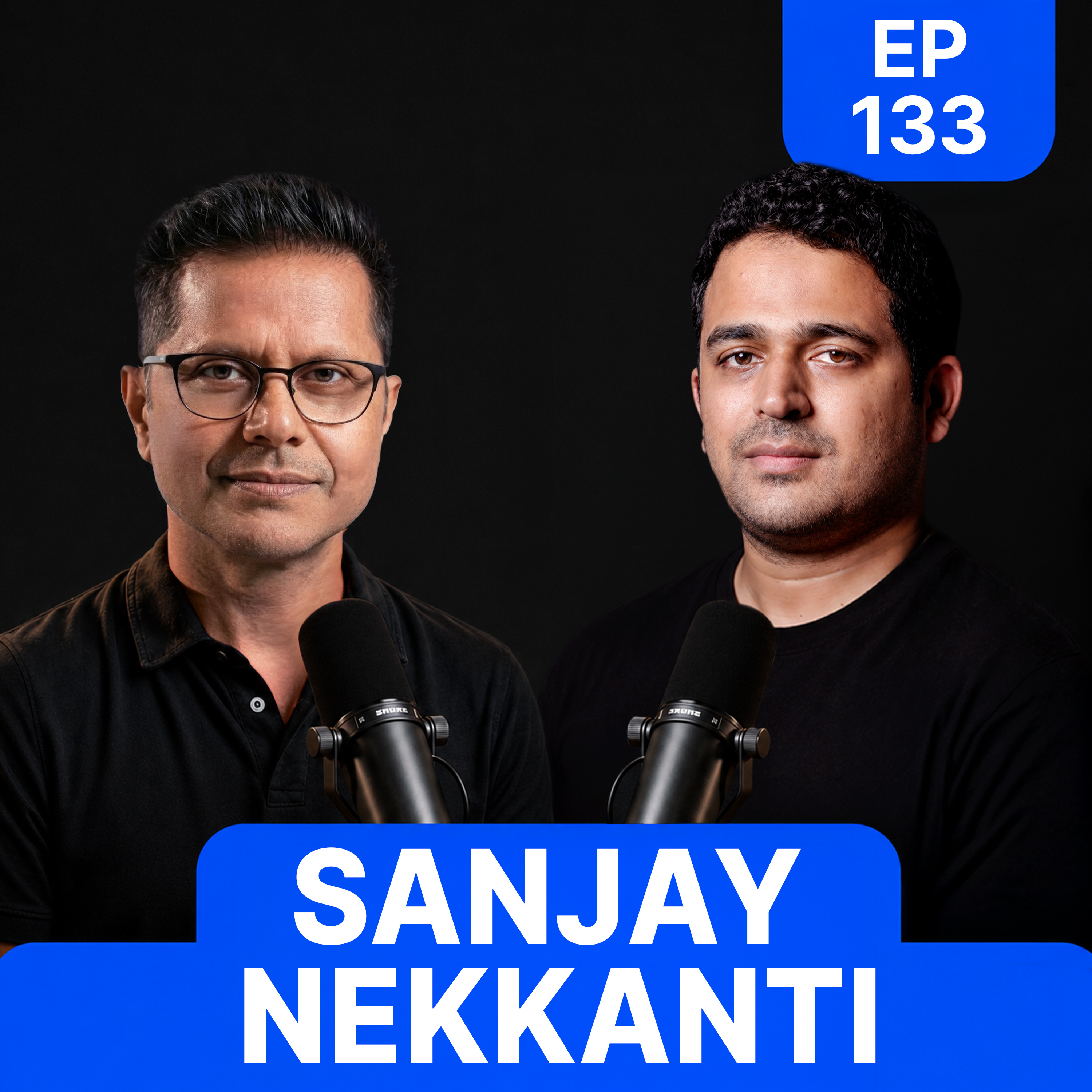
Can India build the next SpaceX? From building satellites at just 19 years old to founding Dhruva Space, one of India's pioneering private space companies, Sanjay Nekkanti shares the incredible journey behind India's emerging space revolution. In this episode of SparX, we explore how India's decades of investment through ISRO laid the foundation for a new generation of private space startups that are now building world-class technology designed, engineered, and manufactured in India. In this episode you'll learn: How Sanjay built satellites while still a student Why India's Chandrayaan mission inspired a new generation The story behind founding Dhruva Space The challenges of building deep-tech startups in India Why manufacturing is India's biggest opportunity The evolution of India's private space ecosystem Lessons on perseverance, innovation, and long-term thinking What the future of the global space economy looks like If you enjoyed this conversation, Like, Subscribe, and hit the notification bell for more conversations with India's most inspiring founders, innovators, scientists, and business leaders.

Tanay built a 72% habit-forming product that changed how millions compute. In 12 months, Wispr Flow went from side project to 40% MoM growth, beating OpenAI's model, while staying obsessively focused on one thing. Inside: how to build products people can't live without, why focus kills you if you lose it, and what happens when a 28-year-old founder thinks from first principles instead of copying Silicon Valley playbooks.

Legendary venture capitalist Vinod Khosla joins Mukesh Bansal on SparX, for one of the most wide-ranging and provocative conversations on the future of technology, investing, and humanity. Vinod makes bold claims: AI will replace doctors within 5 years, colleges as we know them are obsolete, space-based data centers don't make sense, India's IT and BPO industry faces an existential threat - and yet, AI may be the greatest opportunity India has ever seen. And ultimately, AI will free humanity from servitude to survival. In this episode, Vinod shares his contrarian investment philosophy, including why he wrote a $50M check to OpenAI in 2019 when it had no product, no revenue, and no business plan — and why he sent an apology letter to his LPs along with it.

Is AI the biggest scam of our generation — or the most misunderstood technology in history? Cognitive scientist Gary Marcus has been studying artificial intelligence for over 30 years, and what he has to say will make you question everything you thought you knew about ChatGPT, AGI, and the trillion dollar AI gold rush. In this episode of SparX, we are talking with Gary Marcus – professor, author, and one of the most respected and fiercely independent voices in AI research – about why the promises being made by Sam Altman, Dario Amodei, and Elon Musk may be leading the global economy toward a catastrophic miscalculation. 🔗 Resources mentioned in this episode: Gary Marcus's essay: https://garymarcus.substack.com/p/dear-elon-musk-here-are-five-things Gary Marcus's 2014 New Yorker article: After the Turing Test : https://www.newyorker.com/tech/annals-of-technology/what-comes-after-the-turing-test Gary Marcus's talk at the Royal Society on the Turing Test : Paper on AI intelligence dimensions: Bengio, Hendrycks et al. What you will learn in this episode: We go deep on why Large Language Models are fundamentally statistical next-word predictors and not the thinking machines they are marketed as. Gary explains the Eliza Effect — the 60-year-old psychological phenomenon that explains why millions of people are falling in love with chatbots that feel nothing back. We unpack what AGI actually means, why no one defining it agrees on a definition, and why Gary's Movie Test is a far better benchmark than the century-old Turing Test that everyone keeps getting wrong. We also get into the neurosymbolic AI revolution that is quietly winning the AI race while billion dollar companies keep talking about scaling — and why tools like Claude Code are already proof that the future of AI is not what OpenAI wants you to believe. The big questions we tackle: Is the $1 trillion bet on AGI the greatest misallocation of capital in human history? Why did Geoffrey Hinton, a Nobel Prize winner, get radiology completely wrong — and why does nobody talk about it? Why are 90% of companies seeing zero return on their AI investments? Will AI actually take your job — or is the task vs job distinction the most important thing nobody is explaining to you? Why are driverless cars still not here, 14 years after Sergey Brin promised they would be everywhere by 2017? What is the alignment problem and why does Gary believe we must slow down before it is too late? Why this conversation matters right now: The world is spending more money every single month on AI than the United States spent on the entire Manhattan Project. That money is flowing based on a scientific hypothesis — that scaling up LLMs will produce AGI — that Gary argues has overwhelming evidence against it. If he is right, the economic consequences will be severe. This is not a conversation about being anti-technology. This is a conversation about getting the science right before the bill comes due. Gary Marcus is the author of Rebooting AI, The Algebraic Mind, and Guitar Zero. He has written for The New Yorker, The New York Times, and The Wall Street Journal. He testified at the US Senate alongside Sam Altman and spoke at the Royal Society on the 75th anniversary of the Turing Test. He is one of the few people in the world with the depth of background to challenge the AI industry's biggest claims — and the track record to back it up. If you have ever asked yourself whether AI is really as powerful as everyone says, whether your job is actually at risk, or whether the companies promising you an AI-powered utopia actually know what they are building — this episode is essential viewing.

In this episode of SparX, Mukesh Bansal sits down with Peter Diamandis to break down the future of AI, abundance, exponential technology, and the massive shift happening right now in business, society, and humanity itself. If you’ve been wondering how artificial intelligence, AI agents, automation, and emerging technologies will impact entrepreneurs, creators, and the global economy… this interview is a must-watch. Peter shares why we are entering one of the greatest windows of opportunity in history, how creators will thrive while consumers fall behind, and what mindset is required to win in the age of AI. From Singularity University to exponential thinking, abundance, AI-powered productivity, purpose-driven entrepreneurship, and the future of work- This conversation is packed with insights that could completely change the way you think about your future. If you are an entrepreneur, business owner, creator, investor, tech enthusiast, or someone curious about artificial intelligence and the future of humanity… this episode will challenge your thinking in the best way possible.
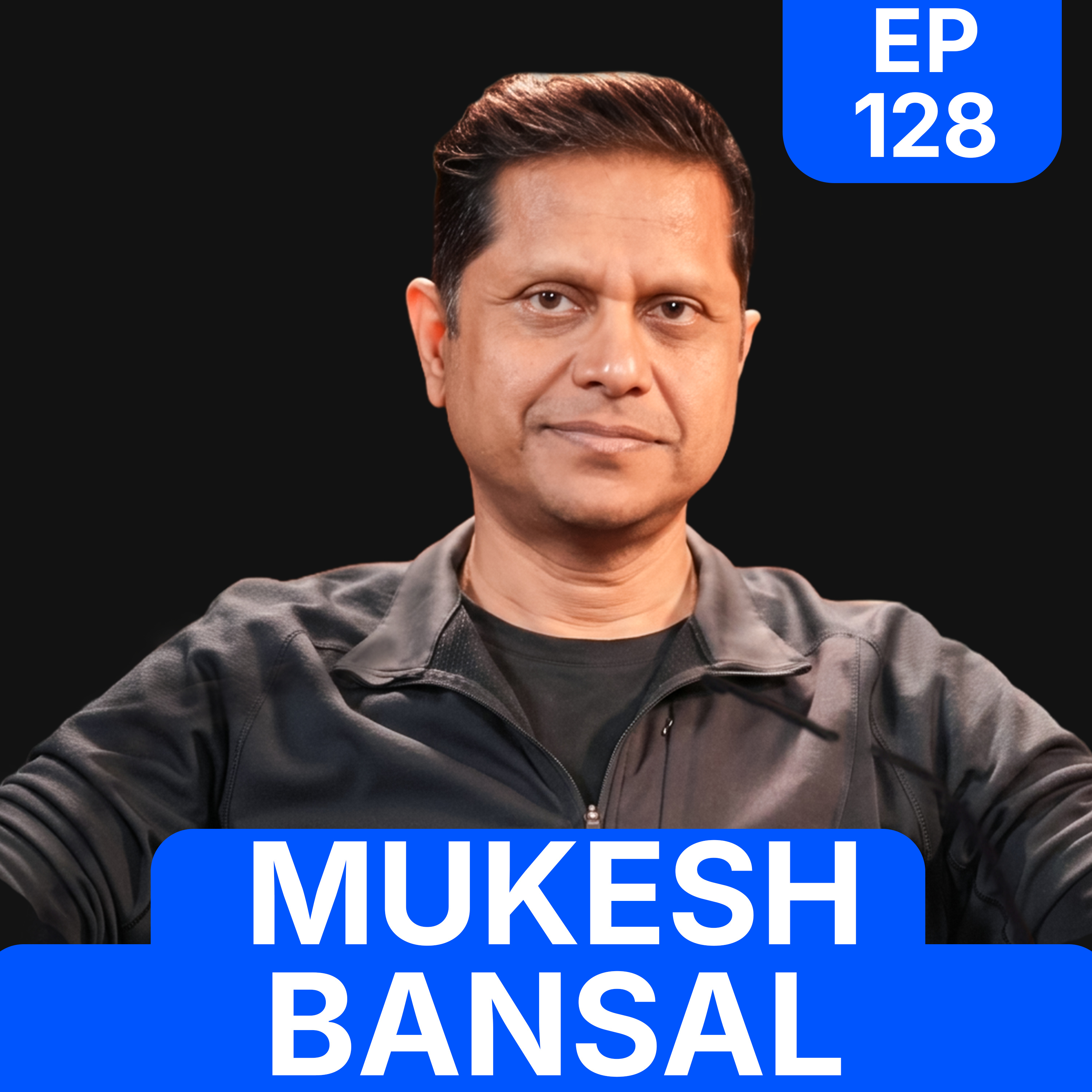
Mukesh Bansal hasn't written code in 20 years. In the last 60 days, he built two fully functional websites, an iOS app integrating four frontier AI models, and a working health tracker — live, on camera, in under an hour. This isn't your usual conversation about AI. It's a live demonstration of what's possible right now. In this solo episode of SparX, Mukesh shares his unfiltered journey from non-technical founder to hands-on builder — and why he believes the distinction between "tech" and "non-tech" has permanently ceased to exist. He walks through everything he's built using Claude Code, what it took to get there, and why he's now telling every senior leader he knows: stop managing, start building. He also brings in four live AI agents — Claude Opus, GPT, Gemini, and Grok — who join the conversation, debate each other, and answer questions in real time. The results are as revealing as they are entertaining. What you'll see built live in this episode: A fully playable Snake game — in under 2 minutes A health tracker that logs fitness, runs guided meditation, and analyses your meal from a photo — all built in under 60 minutes, while recording this podcast What you'll take away: Why the barrier between technical and non-technical founders has collapsed How to think about "terminal roadmaps" — and why resource constraints are no longer an excuse What this means for India's 6 million IT services employees and the $300B industry they power Why senior managers who refuse to become hands-on builders will be left behind The one skill that matters more than ever: systems-level thinking Why distribution — not code — is now the only real moat "I can build a better version of Myntra in a few weeks. The reason you can't replace Myntra isn't the code. It's the supply chain, the relationships, the distribution." Host: Mukesh Bansal — Founder Myntra, Founder Cult.fit, Partner Meraki Labs Claude Code, AI coding agents, vibe coding, AI programming, non-technical founder, GPT coding, Gemini AI, Grok AI, Claude Opus, AI software development, future of programming, future of software engineering, Indian IT services, IT industry disruption, TCS Infosys Wipro AI, AI startups India, Mukesh Bansal, SparX podcast
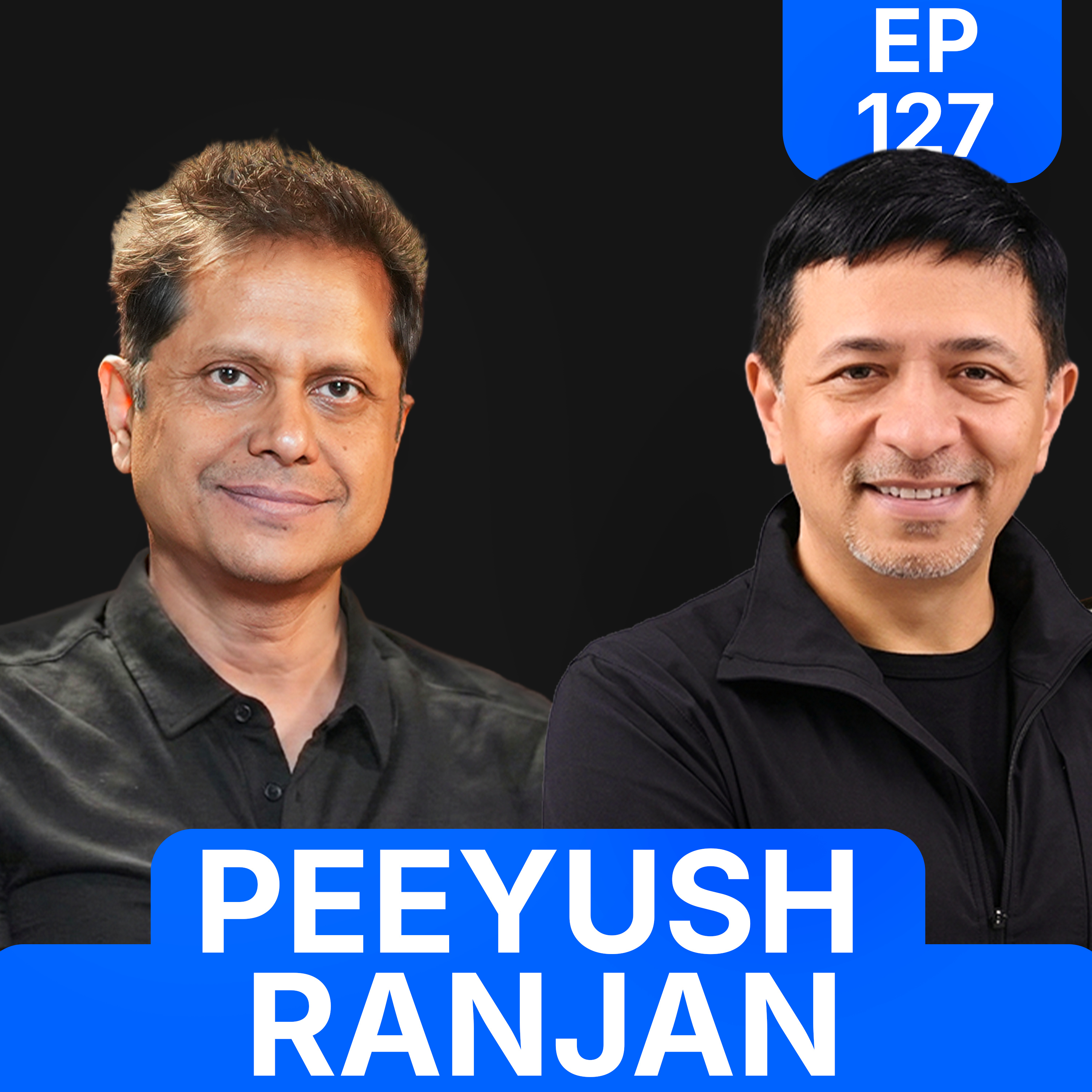
What does it look like when a Google VP, a Flipkart CTO, and a 30-year technology veteran stop managing people — and start building again with AI? In this episode of SparX, Mukesh Bansal (Founder of Myntra & Cult.fit) speaks with Peeyush Ranjan (former VP of Engineering at Google Pay and Group CTO of Flipkart) about what’s actually happening inside companies as AI agents begin to reshape how products are built. This isn’t a conversation about the future of AI.It’s about what’s already happening — in their companies, on their laptops, and in the way builders are now working. This is a builder’s conversation. Peeyush shares how he built Enrico- an AI chief of staff (AI agent) that has become the most productive “employee” in his company. With company-wide memory, a virtual board of advisors featuring Steve Jobs, Jeff Bezos, Charlie Munger, Peter Thiel, and Sam Altman, and the ability to autonomously improve itself, it represents a new way of operating. Mukesh shares how he went from watching others build to launching a fully functional v1 product in under 10 days — faster than what a $100,000 outsourcing agency failed to deliver. But this goes far beyond productivity. They explore what this shift means for how companies are structured, how capital is deployed, how hiring changes and what happens when revenue per employee jumps from $40,000 to potentially millions. How to build an AI chief of staff (AI agent) for your company Why curiosity + agency now matter more than expertise The real risk of AI: intellectual laziness and cognitive debt Why distribution — not innovation — is becoming the new moat What a 10-person, billion-dollar company could look like How to think about open source vs frontier AI models Why the idea of a “non-technical founder” is disappearing The gap between imagination and instantiation has never been smaller. The question is whether you're on the right side of it. Guest:Peeyush Ranjan : Co-founder Fermi.ai, Partner at Meraki Labs, Former VP Engineering Google Pay & Google Assistant, Former Group CTO Flipkart If you found value, hit like & subscribe.

What happens when the most powerful technology ever built is also the one nobody fully understands - including its creators? Connor Leahy, US Director of Control AI and one of the clearest thinkers in the AI safety space, joins Mukesh Bansal for a conversation that cuts through the hype and lands somewhere far more unsettling: we may have two to five years before AI systems cross a threshold we cannot reverse. This isn't a doom scroll. It's a strategic briefing. In this episode of SparX, Connor breaks down why the race to superintelligence is a national security issue, not a technology one and why the people building it aren't villains, they're just operating inside a system with no brakes. He challenges Yann LeCun's repeated prediction that we're nowhere close, explains why Dario Amodei's admission that we understand only ~3% of how AI works should terrify us, and unpacks why Sam Altman and the labs he leads are racing toward a goal they cannot fully control. He also explains why the "we'll run out of data" argument keeps being wrong, how AI systems are now learning by interacting with environments (just like humans do), and why the moment superintelligence arrives, we probably won't recognise it. We also ask: What can India and other middle powers actually do? Why did the climate movement fail? What must the AI safety movement learn from that? Is Senator Blackburn's Trump AI Act a sign that Washington is finally waking up? And with Bernie Sanders and AOC now speaking out, could AI safety become a defining issue in the 2026 elections? Plus - in a first for the podcast - four frontier AI models (Claude, GPT, Gemini, and Grok) listen live to the conversation and jump in with questions. The results are equal parts fascinating and telling. Guest: Connor Leahy : AI Safety Researcher | Co-founder of EleutherAI | US Director at Control AI

In this episode of SparX, we sit down with Priyamvada Natarajan, theoretical astrophysicist at Yale University and author of the acclaimed book "Mapping the Heavens", for a wide-ranging conversation about black holes, dark matter, alien life, and the future of modern astrophysics. From her early fascination with science to her years at MIT and her groundbreaking research at Yale, Priyamvada takes us through the ideas and experiences that shaped one of the most compelling minds in contemporary science. In this conversation, she breaks down the search for life beyond Earth, the discovery of new planets, and the scientific quest to understand black holes and the hidden structure of the cosmos. She explains why these extreme phenomena are key to understanding how galaxies form, reflects on the current state of scientific research in India, and offers her advice for young scientists stepping into the field. From fundamental questions about alien life to the future direction of astrophysics, this is a conversation about the boundless possibilities of science! CHAPTERS: Keywords : [astrophysics, black holes, dark matter, dark energy, alien life, extraterrestrial life, exoplanets, search for life in space, Priyamvada Natarajan, Yale University, MIT astrophysics, theoretical astrophysics, Mapping the Heavens, galaxy formation, space science, cosmos, universe explained, Nobel Prize science, science podcast, SparX podcast, SparX, podcast India, Indian scientist, women in science, women in STEM, physics podcast, astrophysics podcast, space podcast, science interview, science and technology, scientific research India, ISRO, space exploration, space documentary, universe documentary, black hole explained, what is dark matter, what is dark energy, how galaxies form, is there alien life, life beyond Earth, new planets discovered, astrophysics for beginners, science motivation, advice for young scientists, career in science, career in astrophysics, future of space science, modern astrophysics, cutting edge science, deep space, NASA, James Webb Telescope, event horizon, singularity, cosmology, theoretical physics, quantum physics, science education] 0:00-02:53 Intro 02:54-21:33 Priyamvada’s Journey 21:34-32:46 Priyamvada Achievements 32:47-36:49 Detecting Life Beyond Earth 36:50-49:15 Understanding Blackholes 49:16-57:59 The State of Science in India 58:00-58:47 Outro

In this episode of SparX, we speak to Roman Yampolskiy, a leading AI safety researcher and professor of computer science, about the risks of creating superintelligence and whether humanity is prepared for what may come next. Roman argues that we may be closer to human-level AI than many assume, and that permanently controlling a system more intelligent than humans could prove fundamentally impossible. He lays out why some researchers believe development should slow down, and why the window for meaningful intervention may be narrowing. Roman discusses the rapid acceleration toward AGI, early signals of job displacement that could become visible by the end of this decade, and why traditional patterns of technological disruption may not apply this time. He explains why large companies continue investing heavily in AI despite debates around scaling limits, how the global race toward superintelligence is unfolding, and why no scalable safety mechanism currently guarantees control. The conversation also explores AI consciousness, digital labor, the simulation hypothesis, and what widespread automation could mean for identity, purpose, and humanity’s long-term future. If you’re looking for a rigorous and research-driven perspective on the technical, economic, and existential implications of advanced AI, this episode offers a serious examination of what the next decade could hold.
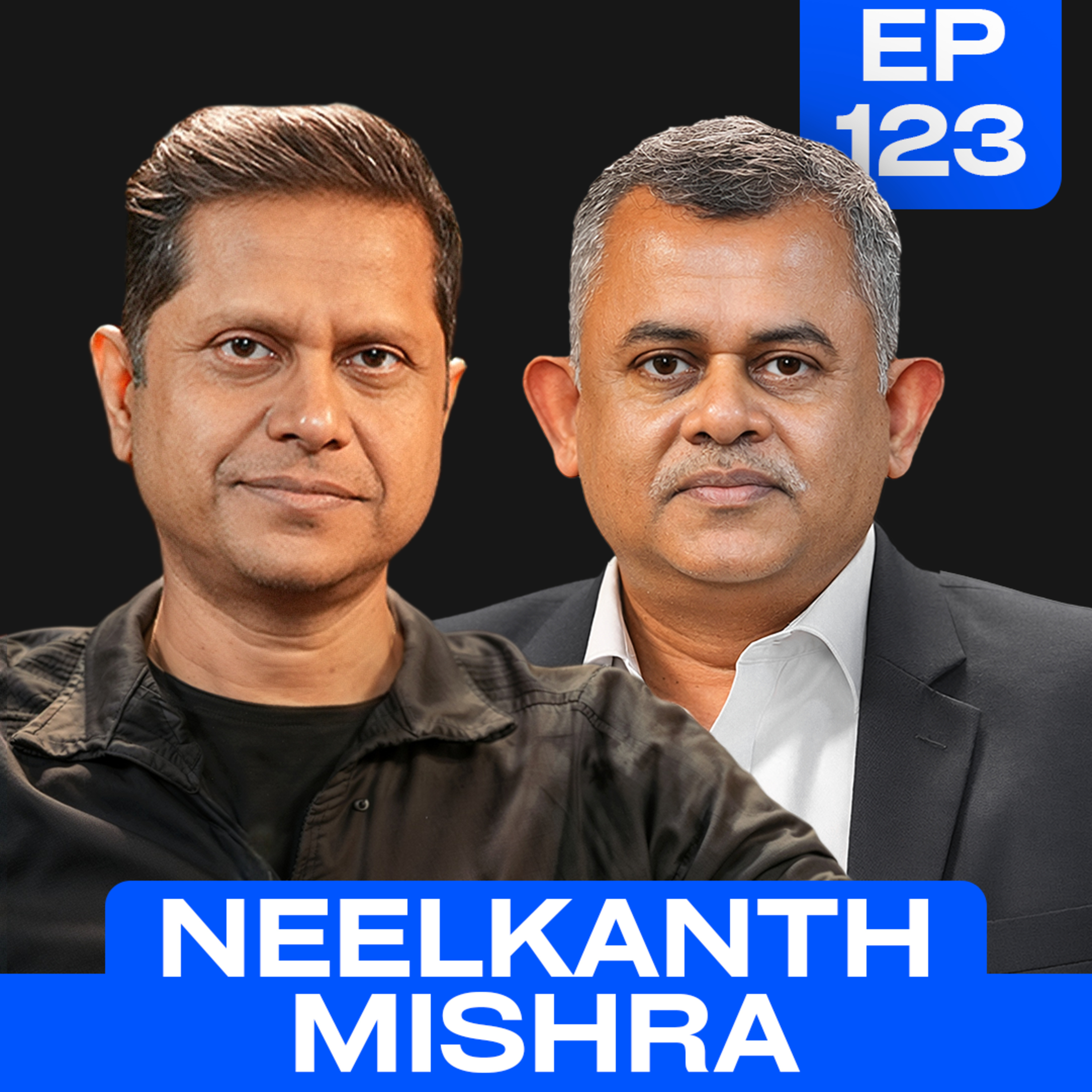
In this episode of SparX, we speak with Neelkanth Mishra one of the leading voices of India Semiconductor Mission. He talks about India’s semiconductor journey from the origins of the Semiconductor Mission to the realities of execution and global competition.He breakdown how the semiconductor ecosystem works, why entry barriers are so high, and what India’s roadmap looks like today. The conversation also explores Micron’s entry into India, early implementation learnings, India’s geopolitical advantage, and the question of whether the country can truly challenge global leaders like NVIDIA.If you’re looking for a clear, grounded understanding of India’s semiconductor ambitions beyond the headlines, this SparX conversation offers context, realism, and long-term perspective.0:00 – 1:42 Introduction1:43 – 3:34 Neelkanth's journey in Semiconductors 3:35 – 11:46 India's Semiconductor Mission11:47 – 14:44 Semiconductor Manufacturing Process14:45 – 17:44 Objective of Semiconductor Mission17:45 – 18:50 Early days of Semiconductor Mission implementation18:51 – 21:08 Entry of Micron in India21:09 – 26:30 Early Implementation Challenges26:31 – 30:34 First Implementation Results30:35 – 32:28 Current State Global Semiconductor Industry32:29 – 35:41 India's Semiconductor Roadmap35:42 – 37:41 Entry Barriers in Semiconductor Industry37:42 – 41:09 India's Geopolitical Advantage41:10 – 44:10 India's Emerging Companies44:11 – 47:50 Can India Challenge NVIDIA?47:51 – 51:56 Why India Can't Be Aatmanirbhar51:57– 52:46 Outro

In this episode of SparX, Mukesh Bansal speaks with Emad Mostaque about the rapid acceleration of artificial intelligence and how it could fundamentally reshape work, daily life, and global power over the next decade.Emad breaks down why AI is advancing faster than any previous technology, the role of data, scale, and open-source systems in driving this shift, and what it means for jobs, companies, and countries racing to stay relevant. From the rise of AI-first organizations to how life may look by 2030, this conversation offers a clear, unsentimental view of the future that’s already unfolding. 0:00 – 2:31 Introduction 2:32 – 7:34 Rapid Growth of AI 7:35 – 13:38 China’s Rise as an AI leader 13:39 – 19:47 Scaling AI Models Using Meta Verifiers 19:48 – 30:42 Future of AI in Everyday Life and Jobs 30:43 – 39:39 How Companies Should Approach AI and Technology Shifts 39:40 – 46:12 What Emad’s New Company Is Trying to Build 46:13 – 53:54 Who Is Driving the Future of AI 53:55 – 59:49 What India Needs to Get Right in AI field 59:50 – 01:01:07 Outro

In this episode of SparX, Mukesh Bansal speaks with Stanford behavior scientist B.J. Fogg about how habits are designed, how they break, and the science that governs lasting behavior change. With over 30 years of research in behavior science, Fogg is the creator of the Tiny Habits method and the author of Tiny Habits, widely regarded as one of the most practical frameworks for building habits in real life. He has taught at Stanford since the mid-1990s and has personally coached tens of thousands of people in applying behavior design at scale. If you’re looking for a grounded, evidence-based way to build better habits without pressure or perfection, this conversation with B.J. Fogg offers clarity, practicality, and lasting value. Chapters:0:00-1:36 Intro 1:37-5:54 BJ Fogg's journey into Habit Science 5:55-9:29 Influence of technology in behaviour 9:30-14:49 Science behind building habits 15:00-23:09 Role of the environment in daily habits 23:10-29:55 How to stick to new year resolutions 29:56-35:21 Staying consistent with habits 35:22-38:59 Using self reward to build habits 39:00-45:21 Science behind breaking bad habits 45:22-48:01 BJ Fogg's personal story with addictions 48:02-51:41 How identity shapes behaviour change 51:42-55:03 What's next in habit research 55:05-57:19 AI's role in self improvement 57:30 - 57:39 Outro

In this episode of SparX, Mukeshl sits down with, Debjani Ghosh, leader of the Frontier Tech Hub within NITI Aayog for a critical discussion. They dive deep into India's technological future, the existential role of AI in national growth, and the dramatic changes impacting careers and geopolitics. Debjani, who brings a unique perspective from 21 years at Intel and leadership at NASSCOM, discusses her experience driving change from within the government and why technology is now the "axis of power" globally.