Artwork for Soils For Life
Science

Soils For Life

Soils For Life

The Soils for Life podcast brings you the voices of farmers around Australia who are regenerating our precious soils and landscapes.

In each episode we share the stories of farmers who are discovering ways to farm with nature, and explore how we can all help more farmers to head in this direction, for healthier food, humans and planet.

These stories show how resilient, regenerated soils and landscapes can support profitable food-producing businesses, thriving and resilient people and regional communities, and abundant and nutritious food.

Produced by Grow Love Project and Soils for Life.

  • 20 episodes
  • Updated Tuesday

Episodes20

  • Tuesday · 39 min

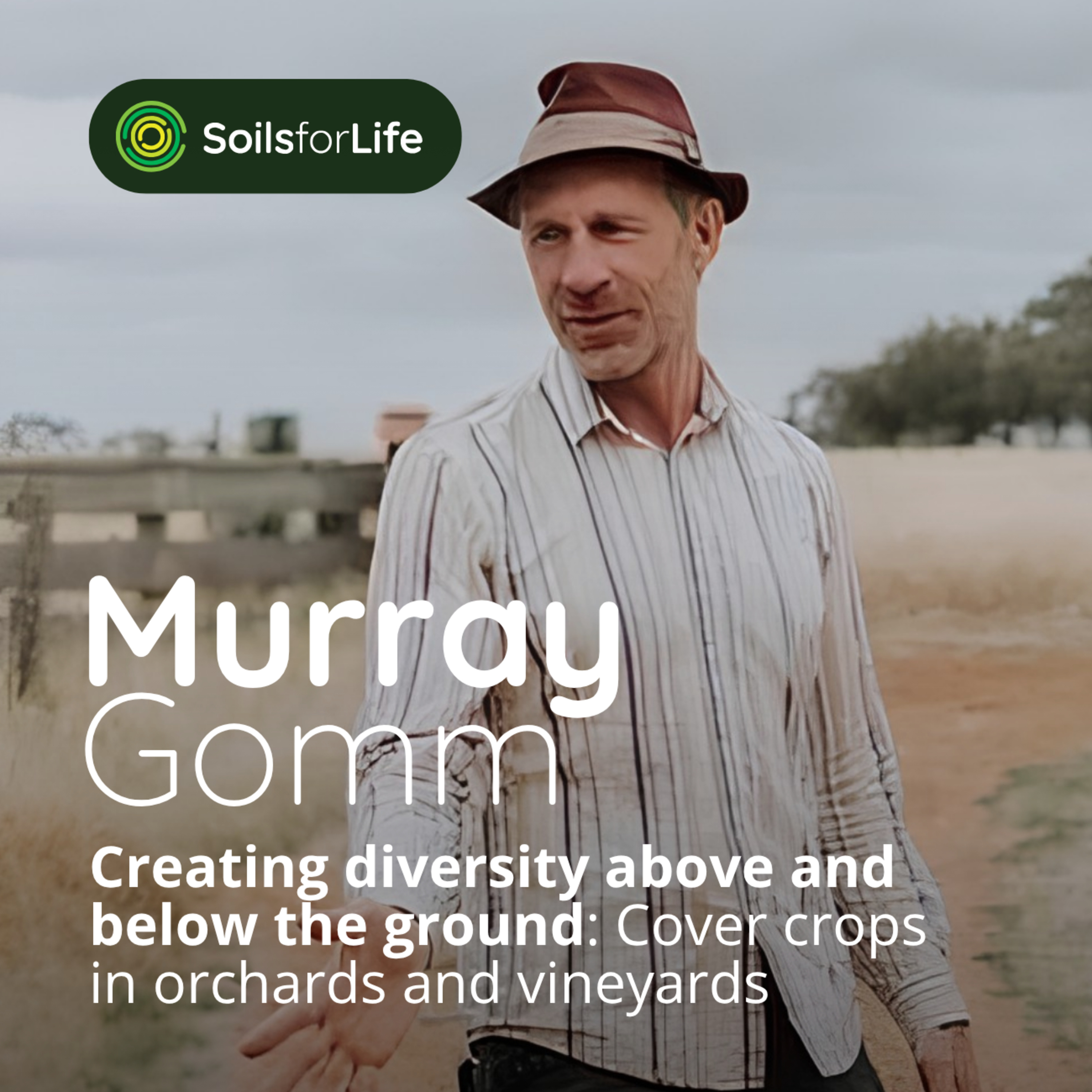
    Creating diversity above and below the ground: Murray Gomm on cover crops in orchards and vineyards

    Murray Gomm is a regenerative farmer and winemaker based near Albany in Western Australia. With his partner Pamela Lincoln, he runs Oranje Tractor Farm, a small organic vineyard and orchard that’s become known for its focus on soil health, biodiversity and carbon-positive farming. Since the late 1990s, Murray has transformed a degraded property into a thriving, diverse landscape producing wine, fruit, and olive oil. The farm integrates cover crops, composting, mulching, and biological soil management instead of relying on synthetic fertilisers and chemicals. Murray is a long-time advocate for working with natural systems and is passionate about sharing the message that healthy soils lead to better produce and stronger communities. He regularly speaks on sustainable tourism, carbon farming, and the intersection of agriculture and ecology. In our conversation, we talk about the value of having a peer group to learn with rather than operating in a vacuum, the role of cover cropping in building diversity and unlocking crop health, soil and plant health monitoring that have helped Murray grow his best tasting peaches ever, and why he now sees himself as a ‘manager of ecological relationships’. Links and resources Oranje Tractor Wine and farm Soils for Life’s Orchard Resilience project The Orchard Underground WA program for commercial fruit and nut growers, delivered by Soils for Life and RegenWA Murray has also worked with RegenWA as a cover crop demonstration site If you have feedback, questions, or suggestions for future episodes or guests, we'd love to hear from you - reach out on social media or at info@soilsforlife.org.au.
  • July 7 · 26 min

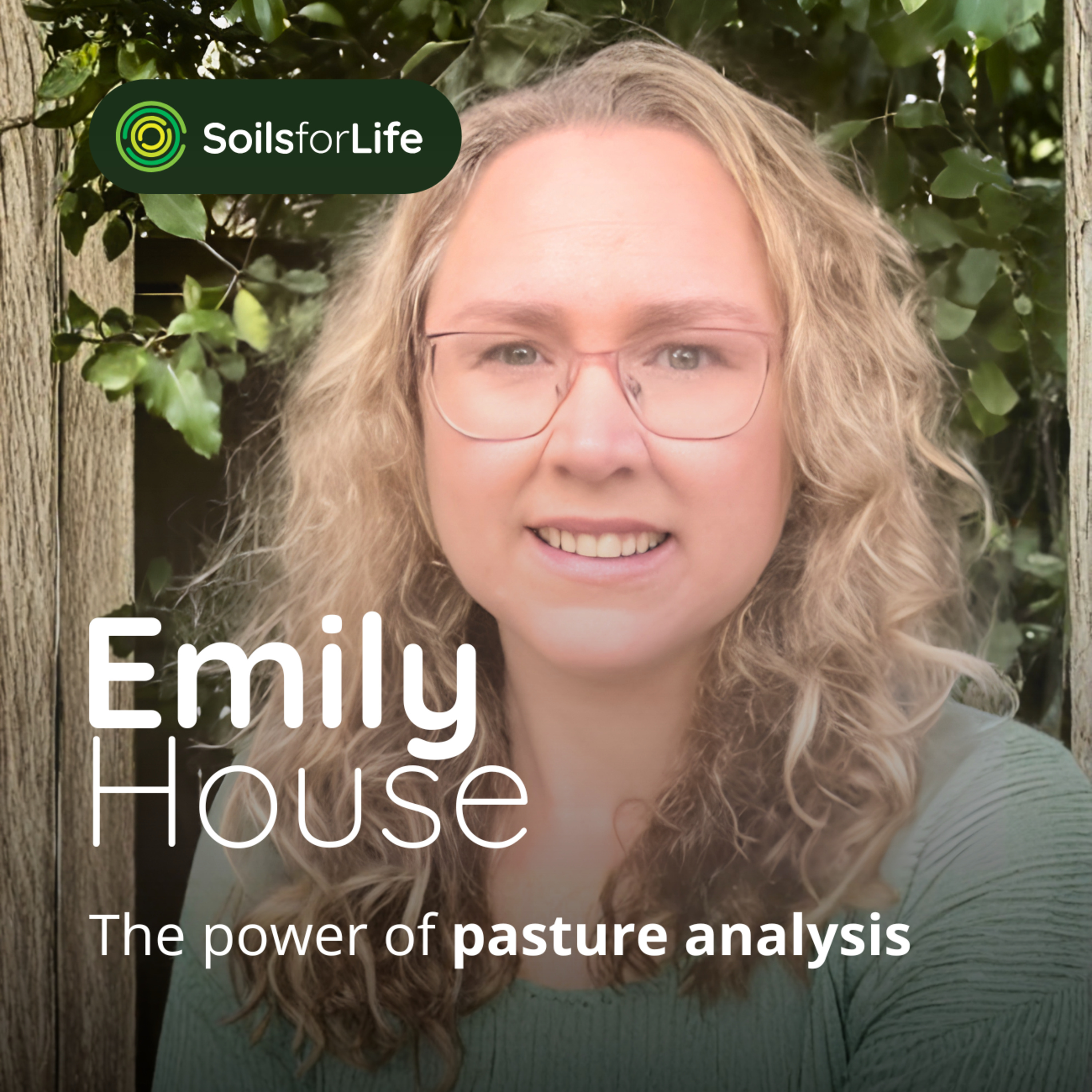
    The power of pasture analysis, with Emily House

    Emily House began her career as a geologist before an unlikely path led her into ruminant nutrition. After moving to New Zealand, she started working with two vets who wanted to shift from treating livestock disease reactively to preventing it, which meant looking closely at pasture as the major component of the diet. Emily brings a background in earth science to her work interpreting pasture and soil analysis for animal health and performance. She was part of the team that developed the DietDecoder™, an online tool that assesses the mineral profile of pasture and flags risks to animal health before they show up as clinical problems. In this episode, she explains why testing the mineral content of pasture goes further than the more familiar measures of dry matter, crude protein and energy that many farmers already use. She talks through real examples, from calcium and milk fever at calving, to copper deficiencies caused by excess sulphur and molybdenum in the soil, and how these mineral gaps can affect everything from hoof health to wool quality. We also discuss the range of responses available once a problem is identified, from targeted supplementation through to adjusting fertiliser regimes and building more mineral-dense pasture through species diversity, along with some striking parallels between what we're learning about animal nutrition and human health. In this episode Emily's path from government geologist to ruminant nutrition consultant Why pasture mineral testing reveals more than standard dry matter and protein analysis How mineral deficiencies and excesses show up in animal health, from milk fever to coat and wool quality The DietDecoder™ tool, and how it's used seasonally around key events like calving and mating Addressing mineral imbalances through supplementation, fertiliser decisions and pasture diversity Parallels between livestock nutrition and the gaps in our understanding of human nutrition Links and resources DietDecoder™ – dietdecoder.nz, including the quote from Dr Pat Poletti referenced in this episode in the FAQ Register to join our upcoing Dairy Convo where Emily will talk about Pasture Nutrition. Mon 13th July, 12pm AEST, details at the link: https://events.humanitix.com/dairy-convos-ask-me-anything-series If you have feedback, questions, or suggestions for future episodes or guests, get in touch on social media or at info@soilsforlife.org.au

  • June 23 · 57 min

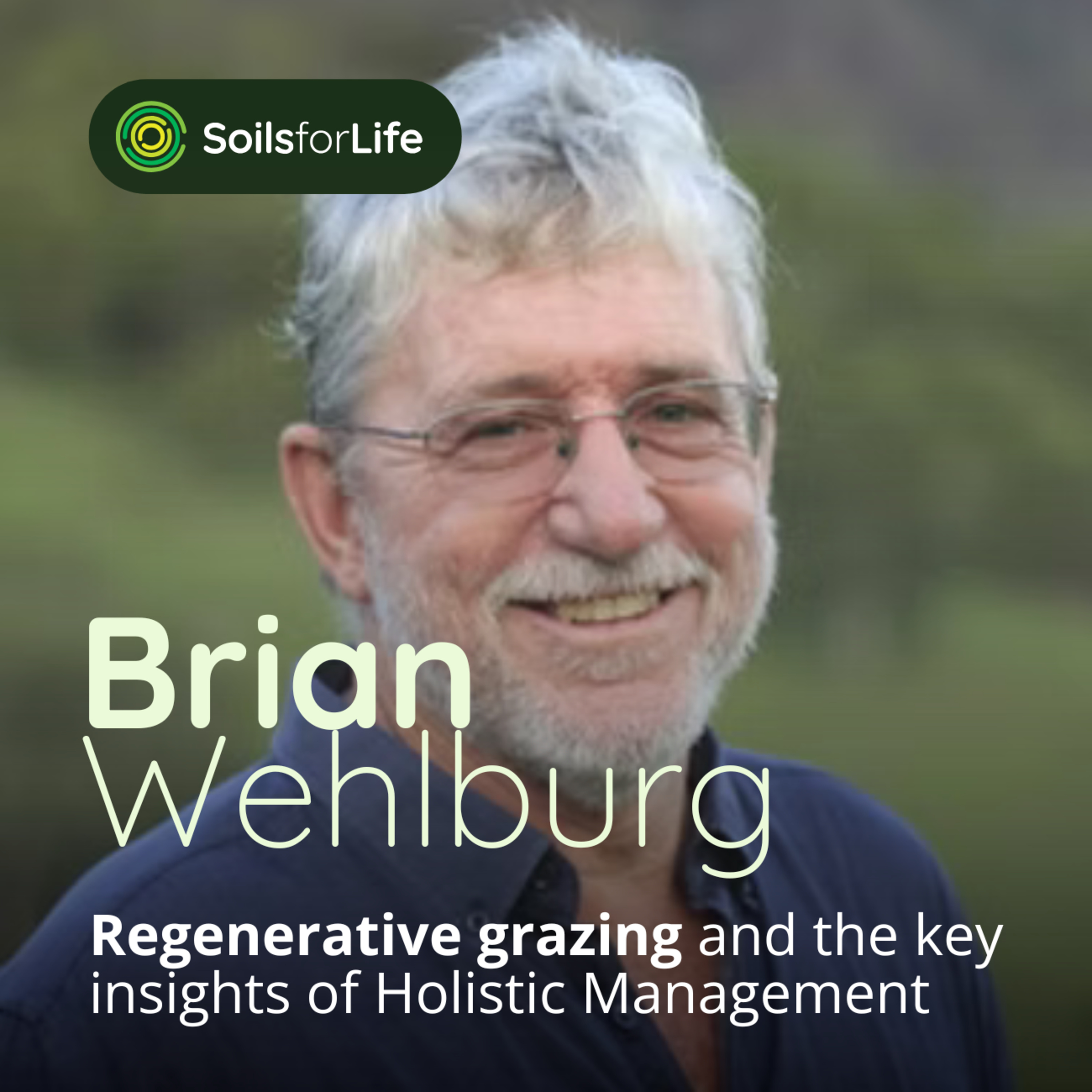
    Regenerative grazing and the key insights of Holistic Management, with Brian Wehlburg

    Brian Wehlburg is one of Australia’s most highly regarded Holistic Management educators and a board member of Holistic Management International and the Australian Holistic Management Cooperative. He has delivered training and consulting to businesses, land managers, families, environmental groups and pastoralists all over Australia, as well as in New Zealand, USA and Zimbabwe. He is also a farmer himself, having experience growing crops in Southern Africa, working as a pasture and cattle manager in South West Queensland and managing a mixed-species property in New South Wales. This is one of the longer conversations we’ve featured on the podcast, but it easily could have been twice this length given the depth of Brian ’s well of knowledge and experience. We talk about his perspective on regenerative grazing, about the key insights of Holistic Management, the deeply held paradigms that often prevent people from seeing these insights, the practical steps that he has seen work to help people get started, and the positive life changes that can result when people succeed. This episode is one of a series of interviews we’re doing with graziers and educators involved in the development of our recently released guide to grazing for soil and landscape regeneration. Details and registrations for our upcoming grazing field day on 15 July 2026 with Dr Judi Earl at the Curtis family farm in Milmerran Queensland - soilsforlife.org.au/grazing-for-soil-health-field-day-curtis. Links and resources: Brian’s consultancy Inside Outside Management - insideoutsidemgt.com.au Soils for Life’s Guide to Grazing for Soil and Landscape Regeneration - soilsforlife.org.au/practice-guide-grazing-soil-landscape-regeneration More about Holistic Management from the Savory Institute - savory.global Andre Voisin - en.wikipedia.org/wiki/Andr%C3%A9_Voisin Jan Smuts, Holism and Evolution - en.wikipedia.org/wiki/Holism_and_Evolution If you have feedback, questions, or suggestions for future episodes or guests, we'd love to hear from you - reach out on social media or at info@soilsforlife.org.au.
  • June 9 · 46 min

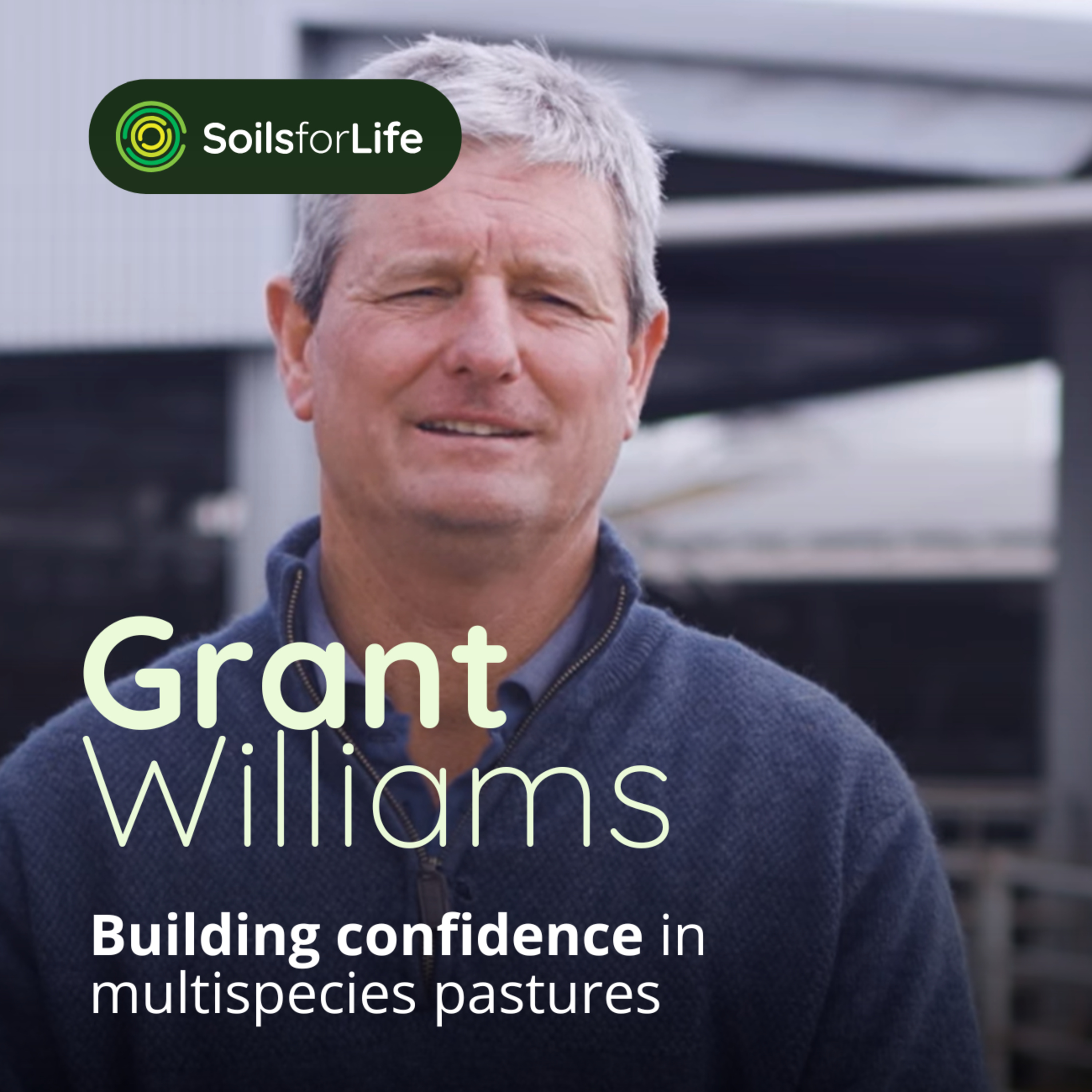
    Building confidence in multispecies pastures, with Grant Williams

    Grant Williams is a dairy farmer at Hallora in West Gippsland, Victoria, where he and his wife Leesa run Willora Farms - an almost 600-cow operation across 430 hectares. He has been a generous and engaged contributor to the dairy community for many years, and previously served on the Board and as Chair of GippsDairy. Despite having been an early adopter of robotic milking, Grant describes himself as cautious about making changes on the farm. Over the past decade, however, he has made a change that many dairy farmers wouldn’t dream of, transitioning the whole farm to multispecies pastures, and in the last four years, cutting out all synthetic fertilisers. In this episode, Grant describes how he ‘fell into’ multispecies pastures, how his early trials didn’t work out the way he hoped, and how he eventually became confident that he could profitably roll out multispecies across the whole farm. Links and resources: Soikee machine - soilkee.com.au Soils for Life’s dairy resources and activities - soilsforlife.org.au/dairy-resilience-project If you have feedback, questions, or suggestions for future episodes or guests, we'd love to hear from you - reach out on social media or at info@soilsforlife.org.au.

  • May 26 · 34 min

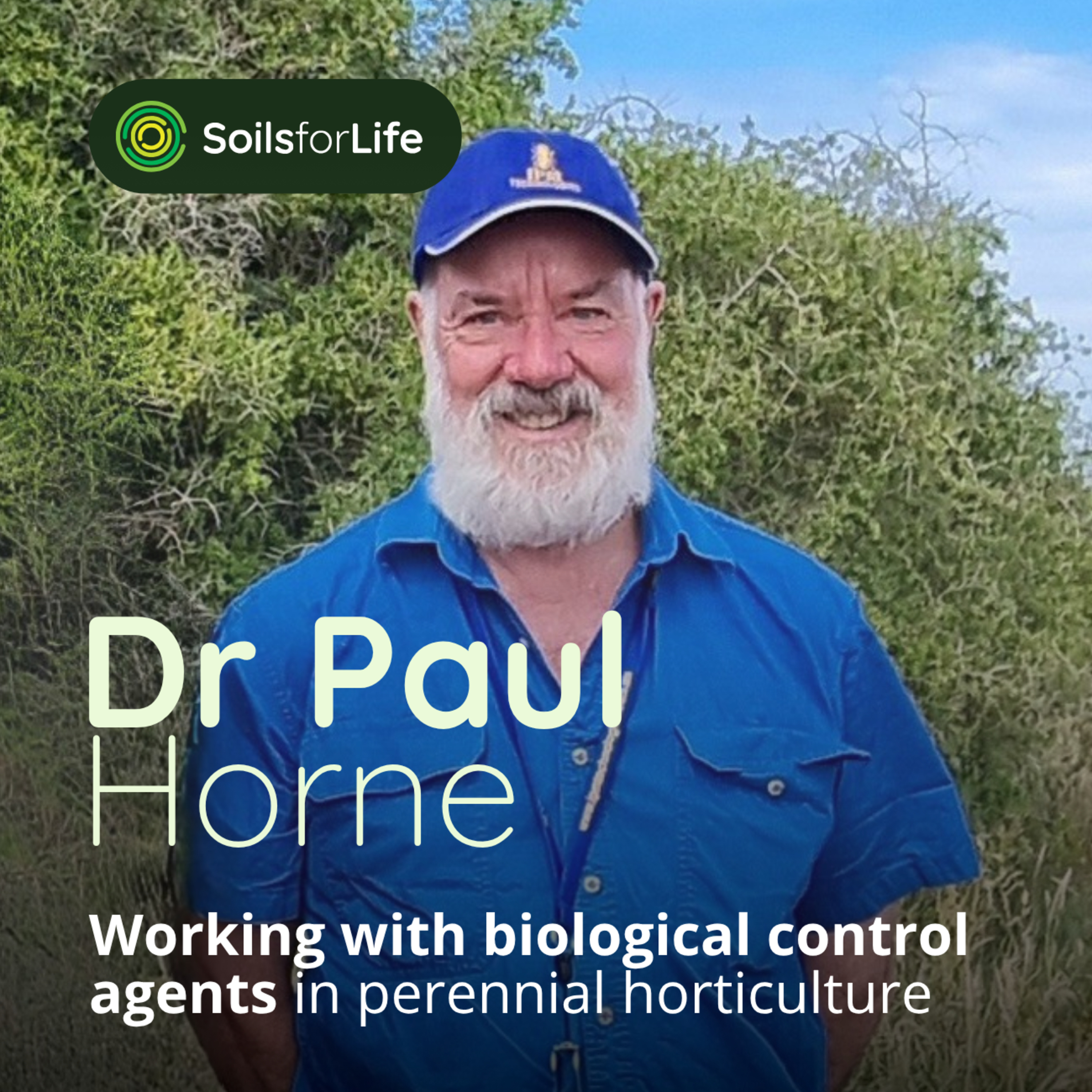
    Working with biological control agents in perennial horticulture, with Dr Paul Horne

    Dr Paul Horne is an award winning entomologist and founder of integrated pest management consultancy IPM Technologies. He began his career at the Victorian Department of Agriculture in the mid-1980s, his work has been published across scientific journals and industry platforms, and he has written several books on insects and pest management. Paul’s work focuses on supporting adoption of IPM strategies to manage invertebrate pests in a wide range of crops including cut-flowers, berries, vegetables, tree and vine crops, nurseries, broad-acre crops and pastures. As our new initiative to support fruit and nut growers kicks off, I wanted to talk with Paul about the state of play with integrated pest management, and what he has found works well to support adoption of IPM in perennial horticulture. If you’re involved in perennial horticulture, check out our new Orchard Resilience Project. With funding from the Australian Government’s Climate-smart Agriculture Program, we’re working over the next three years with perennial horticulture growers across Australia to strengthen soil health and landscape function in tree and vine crops. This episode was recorded live from the Grounded festival in Victoria. Enjoy! Links and resources: IPM technologies Soils for Life Orchard Resilience Project If you have feedback, questions, or suggestions for future episodes or guests, we'd love to hear from you - reach out on social media or at info@soilsforlife.org.au.
  • May 12 · 27 min

    Managing risk in grazing through safe-to-fail farm trials, with Graeme Hand

    Graeme Hand is a holistic land management and grazing educator based near Bairnsdale, Victoria, where he has farmed for more than 35 years. He came to the land via an unlikely route, a decade as an industrial chemist, before applying that scientific background to regenerative agriculture. A Certified Holistic Management educator and Board member of Regenerative Agriculture Network Tasmania, Graeme has been supporting farmers in adopting regenerative grazing techniques since 1996, and has spent the better part of three decades helping farming businesses rebuild topsoil, restore pasture, improve the water cycle and strengthen their resilience to a changing climate. At the heart of Graeme's work is a conviction that lasting change on the land starts with the decisions made each day in the paddock, with ‘safe to fail’ trials at the heart of his approach. As Graeme explains in this episode, trials are the key strategy that enables farmers to manage the complexity of biological approaches to grazing. It was a pleasure to record this episode with Graeme, live from the Grounded festival in Victoria, and I hope you enjoy our conversation. ** Keep an eye out for our new grazing practice guide, which will be launched on the 20th of May at a special field day and launch event in Mundarlo NSW. Details and registrations via soilsforlife.org.au/events/ ** Links and resources: Hand for the Land: Heaps of resources and advice from Graeme Hand’s holistic land management and training consultancy Monitoring ecological indicators of rangeland functional integrity and their relation to biodiversity at local to regional scales: Study mentioned in this episode, authored by David Tongway and others If you have feedback, questions, or suggestions for future episodes or guests, we'd love to hear from you - reach out on social media or at info@soilsforlife.org.au.
  • April 28 · 38 min

    ‘Intensification’ through biology, synergy and farming deeper and higher, with Gavin Fisher

    Find out more and register for the special event to launch our Introductory Guide to Grazing for Soil and Landscape Health, on 20 May at Nick Austin’s farm in Mundarlo, NSW (near Wagga) - events.humanitix.com/grazinglaunchfieldday This episode was recorded live at the third Grounded Festival at Yan Yan Gurt West farm in Victoria’s Otways. One of my highlights of the festival was hearing from third-generation New Zealand dairy farmer Gavin Fisher. Although, dairy is only the tip of the iceberg of Gavin’s farm. He also raises deer, chickens and ducks, and bees. The pastures are multi-species, but every paddock is also surrounded by diverse plantings of trees and shrubs, including fruit and nut trees, and medicinal plants for the cows. This is the product of a decades-long process through which Gavin has steadily transformed his family’s farm from a flat, treeless series of paddocks, into a diverse and multi-layered production system. With the principle of biological diversity and synergy at the centre of his vision, and farming deeper and higher rather than expanding his land area, Gavin has created a low cost, minimal input, highly resilient and profitable enterprise that is filled with life: Links and resources: Gavin’s Instagram - www.instagram.com/off_the_planet_organics Gavin’s LinkedIn - www.linkedin.com/in/gavin-fisher-a28b8280 If you have feedback, questions, or suggestions for future episodes or guests, we'd love to hear from you - reach out on social media or at info@soilsforlife.org.au.
  • April 14 · 35 min

    Tracking milk quality, profit and soil health: A five year regenerative trial.

    What happens when a commercial dairy farm runs regenerative and conventional systems side-by-side, and measures the results? In this episode, Clare Buchanan from Align Farms shares insights from an ongoing trial in Mid Canterbury, New Zealand. Half the farm is managed conventionally, while the other half uses diverse pastures, lower synthetic inputs and a different approach to grazing and stocking. The aim has been to test how these systems perform in the same conditions, across production, environment and profitability. Clare talks through what they’ve been observing in the five years the trial has been running, including pasture production without synthetic nitrogen, how soil biology is tracking, and what they’ve learned about pasture diversity over time. Early research is also pointing to differences in milk quality, with links between pasture composition and fatty acids and plant compounds in the milk. Financial performance is a key part of the trial. The regenerative system is currently profitable, but not yet matching the conventional side, largely due to lower stocking rates and production. As input costs shift and the system continues to evolve, that gap is something they’re watching closely. Clare reflects on what they would do differently, what still isn’t clear, and where there may be opportunities for farmers looking to test similar approaches on their own farms. Links and resources: Find out more about the trial and Align Farms here: https://alignfarms.co.nz/ Lincoln University study, Regenerative Farming Enhances Human Health Benefits of Milk and Yoghurt in New Zealand Dairy Systems, 2025, https://www.mdpi.com/2624-862X/6/4/39 If you have feedback, questions, or suggestions for future episodes or guests, we'd love to hear from you. Reach out on social media or at info@soilsforlife.org.au.

  • April 7 · 41 min

    RAPID RESPONSE: Managing the nitrogen fertiliser crisis, with Joel Williams

    Australia's fertiliser crisis has been building for weeks as a result of the conflict in the Middle East. Around 60 per cent of Australia's urea imports travel through the Strait of Hormuz, which has been severely disrupted, leaving shipments stranded and future orders cancelled. Some reports suggest urea prices have already more than doubled since December 2025, from around US$350 per tonne to US$750, and there are serious doubts about whether any supplies will be available beyond the next few months if the conflict continues. Even if stock becomes available, the prices are eating into margins, with reports that many growers are choosing to cut production because the economics simply don’t stack up. The federal government has formed a Fertiliser Supply Working group and responded with a package of measures including new legislation to underwrite the import of emergency fertiliser supplies. But what can producers themselves do? Today we're talking to soil and plant health educator Joel Williams about what farmers can do right now to manage this situation on the ground. Links and resources: ​Soils for Life Cropping Practice Guides ​Joel Williams’ Foliar Nitrogen Course ​GRDC Resources page If you have feedback, questions, or suggestions for future episodes or guests, we'd love to hear from you - reach out on social media or at info@soilsforlife.org.au.

  • March 31 · 43 min

    Studying regenerative agriculture at scale: The human experience behind the hard data, with Dr Jonathan Lundgren

    Dr Jonathan Lundgren runs 1,000 Farms, the largest and most comprehensive study of regenerative agriculture anywhere in the world. Despite the name, the program now includes more than 2,000 farms across all eco-regions in North America, with a minimum of 500 data types for each farm, including data on production, economics, soil, water, biodiversity, carbon, nutrition and more. The results - according to Jon - are illustrating what farmers themselves have been reporting, that working with natural systems on farms can be as profitable, with greater stability and resilience, improved environmental outcomes and much improved mental and physical health and wellbeing for the farmers. But that incredible research is just the tip of the iceberg of this conversation. After a highly distinguished scientific career, including a PhD in entomology, more than a decade with the USDA, receiving the Presidential Early Career Award for Science and Engineering, and writing more than 100 peer-reviewed journal articles, Jon pivoted. He established Ecdysis Foundation, a nonprofit organization based in Estelline, South Dakota, dedicated to advancing regenerative agriculture through relationship-based, independent research, and bought and now runs a farm - Blue Dasher Farm. He has become a passionate advocate for reorienting food and agriculture systems away from centralised corporate commodity chains and back to the farmers on the land, their health and wellbeing, and that of the communities in which they operate. This, he argues, is the pathway to more secure and resilient agriculture, and to realising the true potential of regenerative agriculture to deliver on our most pressing social, economic and environmental issues. Further reading: ​Ecydsis Foundation ​1,000 Farms Initiative ​Periodic Table of Food Initiative ​Project Avalanche ​Wilmot Field Day

  • March 17 · 30 min

    Nature’s army: Using functional biodiversity for biocontrol in orchards, with Dr Mary Retallack

    Dr Mary Retallack is an agricultural scientist, third-generation viticulturist and agroecologist who has spent more than three decades advancing environmental stewardship within agricultural landscapes. She grew up on a fruit block in SA's Riverland growing grapes, apricots and pears, and now lives on a small vineyard and apple orchard surrounded by native insectary plants in the Adelaide Hills. Mary is the founder and custodian of the award-winning National EcoVineyards Program, working in collaboration with more than 175 program partners and wine growers across fifteen regions in four states to build functional biodiversity, restore soil health, and reduce reliance on synthetic inputs. Mary’s PhD research in viticulture and plant protection focused on native insectary ground cover plants and the role they play in supporting natural predators of vineyard pests. Her findings show how functional diversity not only builds ecological health, but delivers economic benefits to growers, and there are heaps of detailed case studies from growers around the country on the EcoVineyards website. If you’re involved in perennial horticulture, check out our new Orchard Resilience Project. With funding from the Australian Government’s Climate-smart Agriculture Program, we’re working over the next three years with perennial horticulture growers across Australia to strengthen soil health and landscape function in tree and vine crops. Links and resources: EcoVineyards Program Retallack Ecology Soils for Life Orchard Resilience Project John Kempf’s Plant Health Pyramid If you have feedback, questions, or suggestions for future episodes or guests, we'd love to hear from you - reach out on social media or at info@soilsforlife.org.au.

  • February 24 · 34 min

    Milk, the original superfood, with Matthew Evans

    Matthew Evans is a chef, farmer, author, food advocate and founder of Australia's Grounded Festival (coming up in April - tickets available at groundedaustralia.com.au). Soils for Life is kicking off a new national program working with dairy farmers around the country (join our launch event in March, details via https://events.humanitix.com/dairy-profitability-and-resilience-through-diversity-and-soil-health), and we thought it was the perfect time to talk to Matthew about his most recent book, ‘Milk: The truth, the lies and the unbelievable story of the original superfood’. We discuss some of the debates around dairy, including lactose intolerance, nutrition, and sustainability and how regenerative practices on farms can improve both soil and milk quality. You’ll hear about: The biology of milk, and how evolution has designed milk to be the perfect food source for nourishing and protecting the young The history of humans drinking milk from other animals, and why it became so central to many cultures Health benefits of milk, from complex proteins to compounds that support immunity and brain health How plant diversity and soil health influence milk quality, including omega-3 / omega-6 ratios Comparing dairy versus milk alternatives Links and resources: Grounded Festival 2026 described by Matthew Matthew’s book 'Milk The truth, the lies and the unbelievable story of the original superfood' The study on Regenerative farming enhances human health benefits of milk and yoghurt in New Zealand dairy systems, mentioned by Matthew Find our more about the Soils for Life Dairy Resilience Project

  • Nov 27, 2025 · 5 min

    A sneak peek at 'Soil - Rewilding the Underground'

    Today, we’re bringing you something a little different. I’ve recently been involved in a new podcast series called 'Soil: Rewilding the Underground'. It does a fantastic job of telling the big picture story of soil, why it’s so important not just for farmers and food production, but also for water, for biodiversity, for climate stability, and for human health. Today we’re giving you a sneak peek of the first episode, and we encourage you to check out the full six part series wherever you get your podcasts. It features an amazing array of speakers, including farmers, soil scientists, biologists, geologists, First Nations land managers, journalists, chefs and more. If you want to listen to the rest of this episode, and the full six part series, search for Soil: Rewilding the Underground wherever you get your podcasts or head to www.thesoilpodcast.com/podcast. We will be back soon with our next regular episode of the Soils for Life podcast. Thanks for listening! Outro

  • Nov 11, 2025 · 39 min

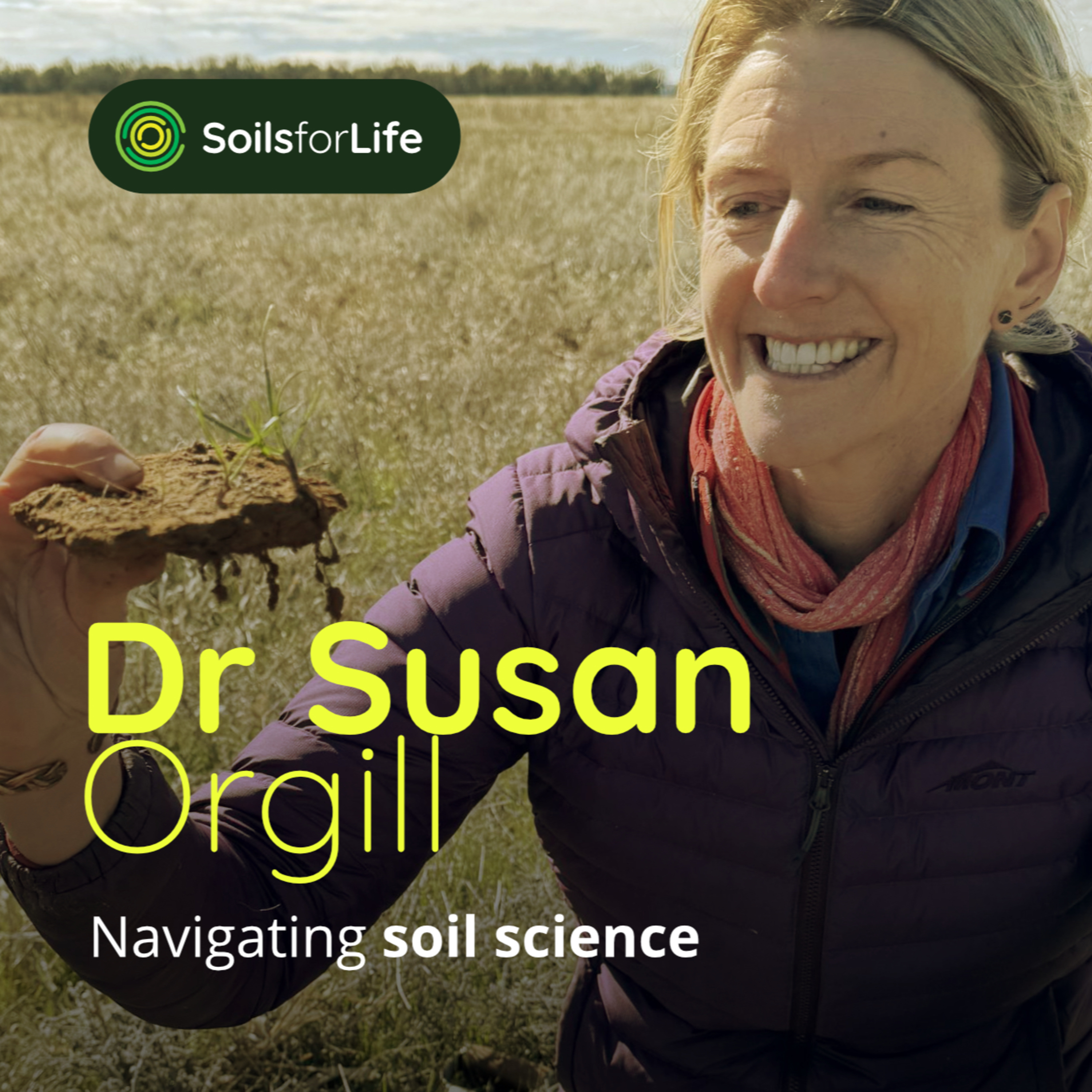
    Navigating soil science, with Dr Susan Orgill

    Dr Susan Orgill is Chief Scientist at Impact Ag Australia and a leading soil scientist with more than 20 years’ experience. She specialises in soil health, carbon farming, and regenerative agriculture, delivering science-based strategies that improve farm resilience, natural capital, and climate outcomes across research, policy, and sustainability initiatives. Suz has long been a friend of Soils for Life. She’s one of the most interesting and impressive soil scientists working in agriculture, and we’ve been meaning to get her on the podcast for some time. So please enjoy this conversation with the one and only Suz Orgill. Mentioned in this episode: Paper mentioned by Dr Susan Orgill: "Placing cropping systems under suboptimal phosphorus conditions promotes plant nutrient acquisition and microbial carbon supply without compromising biomass" Frank Ashwood photography from Soils for Life case study farms Aviva Reed visual ecologist - avivareed.com

  • Oct 21, 2025 · 19 min

    Earning the right to reduce pesticides: Building plant resilience with Brad Campbell

    Western Australian farmer Brad Campbell has spent years refining his mixed cropping system to build healthier, more resilient plants and reduce reliance on synthetic inputs. Over time, he’s cut out routine fungicides and insecticides, moved away from chemical seed treatments, and now only uses pesticides strategically when needed. In this conversation, Brad talks about how targeted plant nutrition, sap testing and careful observation are helping him make management decisions and improve crop health. Brad shares how his family’s early shift toward biological farming set the foundation for his approach, why monitoring matters more than ever, and what he means when he says you have to earn the right to reduce pesticides. Brad’s story features in our Practice Guide on Building Plant Resilience to Pests and Diseases, which brings together insights from farmers and experts across Australia. You’ll find it at soilsforlife.org.au In this episode Why Brad says you need to “earn the right” to reduce pesticides How sap and tissue testing inform his nutrition decisions Using observation and small-scale trials to guide change What’s changed in soil function and disease pressure over time Lessons from experimenting, learning and staying profitable Resources Practice Guide: Building plant resilience to pests and diseases https://soilsforlife.org.au/practice-guide-building-plant-resilience-to-pest-and-disease/ Explore more cropping practice guides and farmer stories at soilsforlife.org.au Brad mentioned a course by Neil Kinsey: https://kinseyag.com/ Brad also mentioned a course by Arden Anderson: https://soillearningcenter.com/product/sustainable-agriculture-course/ This short episode of the Soils for Life Podcast was hosted by Eli Court and produced by Chris Wieffering. If you enjoyed this episode, please rate and share it, and subscribe to hear more stories from Australian farmers building soil and landscape resilience.

  • Oct 7, 2025 · 32 min

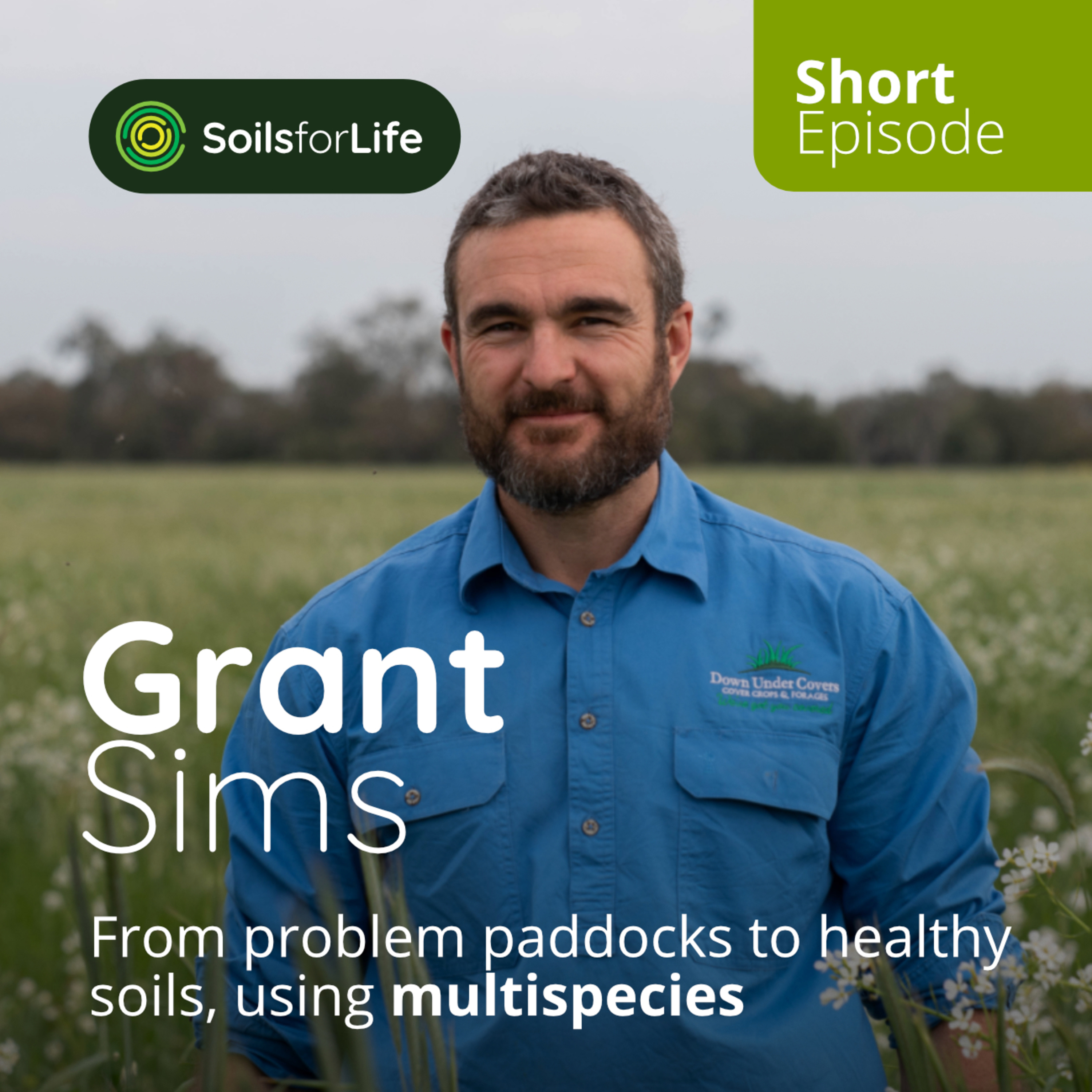
    SHORT: From problem paddocks to healthy soils, multispecies with Grant Sims

    This episode of the Soils for Life podcast is part of our series of mini-episodes with farmers profiled in our series of cropping practice guides. In this short episode, Eli Court chats with Victorian farmer Grant Sims about how multispecies cover cropping has transformed his mixed farming system at Pine Grove near Lockington. After moving away from synthetic fertilisers, fungicides and insecticides, Grant began experimenting with diverse seed mixes to bring more life back into his soils. He explains how integrating livestock with multispecies crops built soil structure, reduced weed pressure and improved resilience during tough seasons. Grant also shares what he’s learned about designing mixes for different paddocks, fixing nitrogen through cover crops, and cutting input costs without sacrificing productivity. Along the way, he’s learnt through trial and error from experiences like underestimating the importance of weed control before sowing and trying to “add biology” to soils that weren’t yet ready for it. He talks openly about these lessons, as well as his current experiment sowing his whole farm with zero nitrogen for the first time. Highlights How Grant “stumbled into” multispecies crop mixes and scaled them over time The role of livestock grazing in improving performance and reducing risk How cover crops can build fertility, especially nitrogen fixation and phosphorus unlock Lessons he’s learned, e.g. weed control, applying biology to soils not ready for it Taking the leap: sowing with zero nitrogen and watching the system work What he wishes he’d known earlier Resources & links Read the full Practice Guide on Multispecies Cover Cropping: https://soilsforlife.org.au/practice-guide-multispecies-cropping/ Down Under Covers: https://www.downundercovers.com/ If you enjoyed this episode, please rate & review it on your podcast app and share it with others. Email us with feedback or suggestions for future episodes at info@soilsforlife.org.au and subscribe to the Soils for Life newsletter to find out the latest.

  • Sep 23, 2025 · 49 min

    Encore: Weeds are telling us something, are we listening?

    We recently attended Grounded in WA, and heard ecologist Dr David Watson's fascinating talk on the important role that mistletoe can play in farm ecosystem. It made us think of one of our favourite podcast episodes - this one. It's a dive into the role that so-called weeds can play in ecosystems. Well worth another run! Enjoy. A little about this episode: The industrialisation of agriculture has created large paddocks of monoculture crops and increased the chemical burden on farmers and their environments. Global herbicide use has continued to increase as farmers have shifted to no till practices and adopted herbicide-tolerant crop cultivars over the last 30 years. One result of this is that the list of herbicide resistant weeds is growing. Some farmers spend huge amounts of money on herbicide and scarce time removing weeds; Meanwhile, exactly how much damage is being done to native plant species and soils is not yet fully known. Either way, the current model is not sustainable In this episode we are exploring a paradigm shift to an ecological systems approach to weeds with Soils for Life agroecologist Sarah Fea. We visit four farmers to understand their changing relationship to plants. Including a grazier, seed producer, a farmer who has enlisted the help of goats and another who has developed no kill cropping. We take a fresh look at weeds and how we can benefit from seeing them through a different lens. We hear how specific weeds germinate to heal damaged soils, showing us what the soil needs and how we can help them heal it.

  • Sep 9, 2025 · 21 min

    SHORT: Moving to a low risk, low input system one step at a time, with Steven Ford

    This episode of the Soils for Life podcast is part of our series of mini-episodes with farmers profiled in our series of cropping practice guides. In this episode we talk with Steven Ford. Steven and his wife Kelly have been farming near Williams, Western Australia, for 16 years. After 10 years working as a livestock agent, Steven returned to the family farm in 2008. Being advised to use a new expensive chemical seed treatment prompted Steven to rethink and do some research. In 2016, he decided to transition their cropping system away from treated seed, synthetic fertilisers, insecticides and fungicides, and he also began to look at ways to reduce the need for herbicide. Steven’s story shows that reducing herbicides is just one outcome of his holistic approach to building soil health and reducing reliance on inputs. We discuss encouraging roots to go exploring deeper in the soil profile, using livestock as the ultimate insurance for transitioning to a lower input, lower risk system, making strategic decisions about when to intervene to address pests or disease, getting off the ‘spending more to make more’ treadmill, and keeping true to the course when the confidence takes a knock. - Read the full Practice Guide on Reducing Herbicides : https://soilsforlife.org.au/practice-guide-reducing-herbicides/ Get in touch - ⁠info@soilsforlife.org.au⁠ Subscribe to our newsletter - ⁠soilsforlife.org.au/the-newsletter⁠

  • Sep 2, 2025 · 34 min

    “We are walking ecosystems”: Our symbiotic relationships with microbes, with Jake Robinson

    Jake Robinson is a microbial ecologist and researcher whose career spans parasitology, symbiosis, and the study of invisible communities of life that shape the health of humans, animals, plants and ecosystems. He is the author of Invisible Friends: How Microbes Shape Our Lives and the World Around Us, and his work explores the connections between soil health, gut health and mental health. We spoke with Jake about the brutal world of microbe warfare that’s going on every day inside our bodies, what it means to see humans and plants as “walking ecosystems”, how microbes underpin communication between the gut and the brain, the importance of exposure to microbes for training our immune system, how farming practices can influence the nutritional value of our food, and just how much of this invisible world remains unknown to science. Jake is the brains behind Soil Yourself September, a series of talks from speakers around the world on the connections between soil health, gut health and mental health. Find out more at https://www.jakemrobinson.com/sys Get in touch - info@soilsforlife.org.au Subscribe to our newsletter - soilsforlife.org.au/the-newsletter More about Jake Robinson - https://www.jakemrobinson.com/

  • Aug 19, 2025 · 26 min

    SHORT: Getting foliars right, with Tom Robinson

    This episode is part of a series of short conversations with the farmers profiled in our cropping practice guides. For Tom Robinson, foliar sprays aren’t a magic fix, but they’ve become a game-changer. Guided by sap testing and years of trialling, they’re helping him hit crop nutrition targets and lift grain performance while fitting into a broader soil health strategy. In this episode, Tom shares how he’s shifted from the odd zinc spray to a targeted program guided by regular sap testing, hitting critical growth stages in wheat, lentils, and canola. We talk through the practicalities – from making his own trace element mixes on-farm to jar testing, timing sprays for maximum uptake, and deciding when to include extras like seaweed or compost extracts. Tom also explains how foliar nutrition fits with other practices like zero-till, controlled traffic, and tactical livestock grazing, and the results he’s seen in grain quality, germination, and reduced pesticide use. Whether you’re already using foliars or just curious about where they might fit in your system, you’ll get practical tips and lessons learned from years of trial, observation, and adjustment – all aimed at building plant health and farm resilience. Read the full practice guide on using foliars at soilsforlife.org.au/practice-guide-foliar-applications/ Get in touch - ⁠info@soilsforlife.org.au⁠ Subscribe to our newsletter - ⁠soilsforlife.org.au/the-newsletter