Skip to content
Artwork for SEO in 2026
BusinessMarketingEducationHow ToLeisureHobbies

SEO in 2026

Majestic.com

SEO is continuing to change at an alarming pace. And yet, in some sense, the principles of good SEO remain the same.
Hello, and welcome to SEO in 2026 – a significant repository of current thinking from many of the world’s leading SEOs.
We're pleased to be able to welcome you to the fifth book and fifth series in this podcast, now well and truly an annual tradition, brought to you by Majestic.

“How people search has seen a bigger shift in the last 12 months than the last 12 years, and this makes SEOin2026 a must-read for anyone working in the industry. Majestic has brought together 117 of the SEO industry's brightest minds to share their insights into what matters, and what doesn't, to continue to drive growth with organic search during a period of massive uncertainty, and the book should be seen as a valuable reference point to keep your strategy on the right track.”
JAMES BROCKBANK
Managing Director and Founder, Digitaloft

“I highly recommend that every SEO professional set aside a couple of days for SEOin2026. You'll thank me for helping you plan your year effectively. I'm extremely grateful to have the opportunity to work alongside some of the world's leading SEO champions.”
NITIN MANCHANDA
Founder & Chief SEO Consultant, Botpresso

“This collection of wisdom from many of the best minds in SEO today is a great line in the sand of where we as an industry are, what problems we face, and how we tackle them. Anyone in SEO or marketing should be dipping into this on a regular basis.”
SIMON COX
Technical SEO Consultant, Cox and Co. Creative

“This series continues to be the industry’s leading source of the most timely advice a marketer could ever want. The most forward-thinking SEO experts in the world come together once a year to create this invaluable collection of new knowledge that should never be passed up on!”
PAM AUNGST CRONIN
President and Founder, Pam Ann Marketing and Stealth Search and Analytics

“2025 has been a sprint for the SEO industry, with AI reshaping how we understand visibility, relevance, and authority. SEOin2026 is not just another trends book; it’s a roadmap for what’s actually coming. I loved being part of it and seeing how experts around the world approach the same challenges from different angles.”
RAMONA JOITA
SEO Consultant and Founder

“David is good at drawing out the substance of a conversation. He will explore the topic and challenge assumptions, steer the conversation into an unexpected direction, and build on your ideas – making you think a bit deeper and sharper. Our recent conversation flew by as always, and as always – I’ve come out energised about the topic with more to think about.”
SUKHJINDER SINGH
Freelance SEO Consultant

Play
  • 21 episodes
  • weekly
  • Avg 17 min
  • English
Counted on this page — what you have heard stays on this device, so it is not something the list can be paged by.
  • S2026 · E604
    Wednesday · 15 min

    Make sure that content quality is high across every page on your website - Astley Cervania

    Astley Cervania talks about the importance of making sure that content quality is high across every page on your website. Talking points include: - The importance of maintaining your website and not just always prioritizing building out new content - Search engines don't evaluate pages in isolation – algorithm updates expose quality inconsistencies across your entire domain, so strong blog content alone won't compensate for neglected landing pages or thin programmatic content elsewhere on the site - Every page needs to earn its place, meaning addressing real search intent, writing that resonates, having a genuine POV, and a clear connection to a business outcome (e.g., user signups) - The practical takeaway: before focusing on building out lots of new content, look at what you already have. Prune what adds no value, revamp what's gone stale, and make sure every page on your site would pass your own quality bar.

  • S2026 · E603
    August 19 · 18 min

    Focus Beyond the Website: Shifting from Google Clicks to Multi-Platform Discovery - Sara Warneryd

    Sara Warneryd shares the importance of shifting from Google clicks to multi-platform discovery. Talking points include: *Understanding Search as Discovery: Why user journeys are shifting from a single Google search to multi-platform exploration, and what this means for your brand. * Creating content for the platforms, not the click: How to format your knowledge so it delivers full value directly on Reddit, TikTok, or YouTube, keeping users engaged where they are. * Mapping High-Impact Sources: How to identify and prioritize the influential channels where your audience actually seeks advice

  • S2026 · E602
    August 12 · 14 min

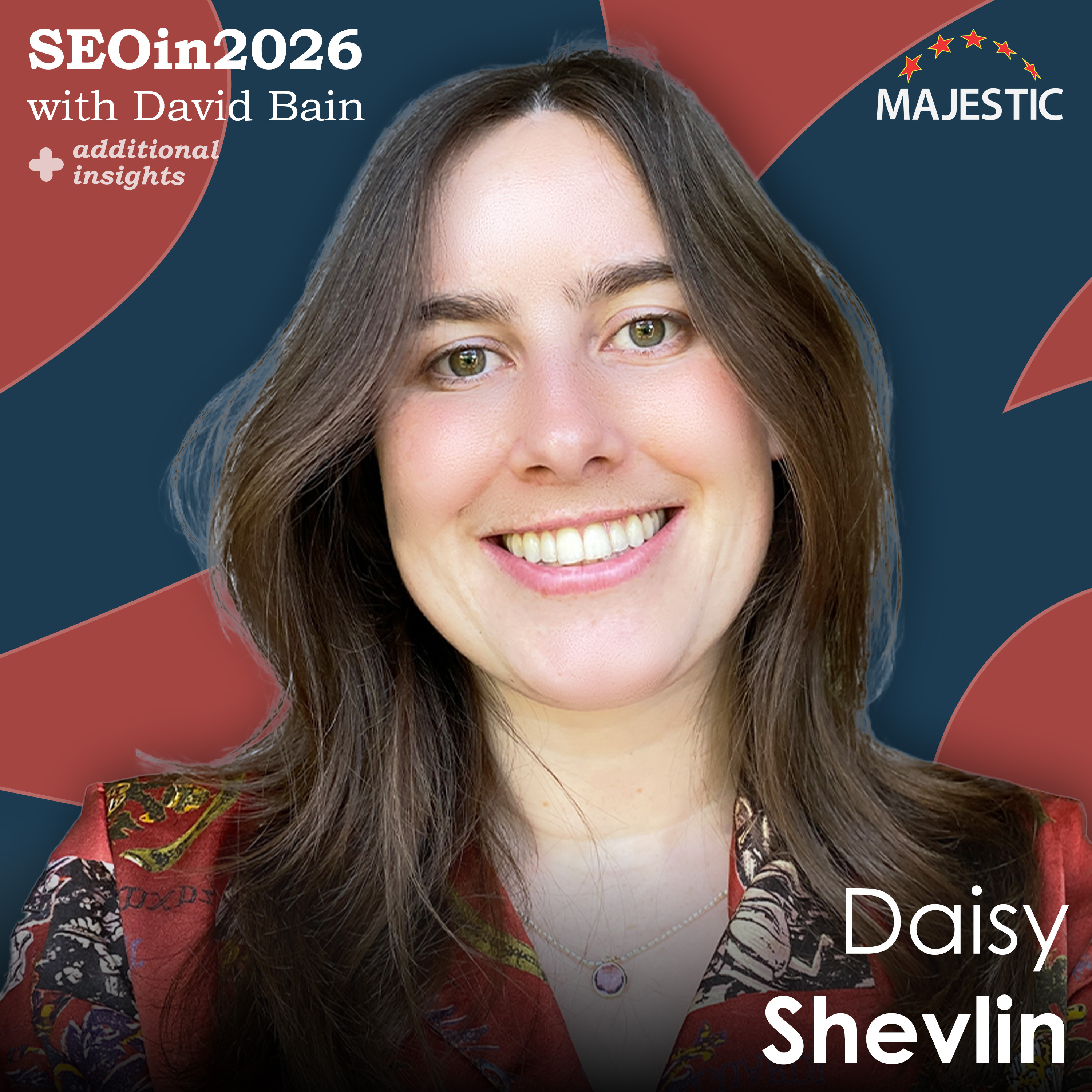
    Don't forget: You're a marketer first and an SEO second - with Daisy Shevlin

    Daisy Shevlin shares that you're a marketer first and an SEO second. Talking points include: What does being a marketer first really mean? Some SEOs' downfall is when it comes to relating how the work we do generates money for the business How do we do this? - AI search requires a more holistic approach to making your brand visible than ever before What does this holistic approach look like? How do we measure success? - You need to partner with stakeholders both within and outside the marketing organisation to be successful What partnerships are key and why?

  • S2026 · E601
    August 5 · 15 min

    Why are journalist request platforms so important for SEO? With Brett Farmiloe

    Brett Farmiloe discusses why journalist request platforms are so important for SEO with David Bain. Talking points include: What is Help a Reporter Out? You’re founder of Featured.com - what does that offer? How do these platforms actually work? Who uses them? What can you actually gain from using these platforms? What are some Best practices for cold pitching podcasts and journalists? How do you measure success? What are some bad or ineffective practices?

  • S2026 · E600
    July 29 · 16 min

    Stop trying to reverse-engineer what AI wants in 2026 - with Claudia Constantin

    Stop trying to reverse-engineer what AI wants in 2026, just interrogate the model on the exact sources it relied on after it answers, and it'll tell you precisely what to fix to get cited. That's what Claudia shares in this episode. Talking points include: - AI visibility is business-specific. - AEO is an extension of SEO, not a replacement. - After the AI answers a real customer-style question, interrogate it - AI is capable but still runs on data it has to interpret, sifting mountains of it. - The content bar didn't rise, it split. - Interrogation turns AI visibility from guesswork into evidence.

  • S2026 · E599
    July 22 · 18 min

    The most effective SEO strategy is to create truly unique, non-replicable content - Joey Randazzo

    In 2026, the most effective SEO strategy is to create truly unique, non-replicable content, which means avoiding the use of AI to mass-produce generic pages at scale. What do you think? Discussion points include: Why is mass-producing content a fragile strategy? How do you differentiate content? What are examples of types of content that nobody else can produce? How do you know if your target audience is likely to want to know about your personal perspective? What are the downsides of this strategy? Where should AI be used?

  • S2026 · E598
    July 15 · 17 min

    Why are businesses not doing a good job of leveraging leads from organic? With Jason Kramer

    Jason Kramer shares why businesses not doing a good job of leveraging leads from organic - and what to do about it. Talking points include: Why are businesses not doing a good job of leveraging leads from organic? How does a business better identify leads from organic? How can businesses do a better job of utilising these leads? How can SEOs work better with other marketing team members to better utilise these leads? What systems and software should be used? How should this better affect and improve organic search strategy?

  • S2026 · E597
    July 8 · 18 min

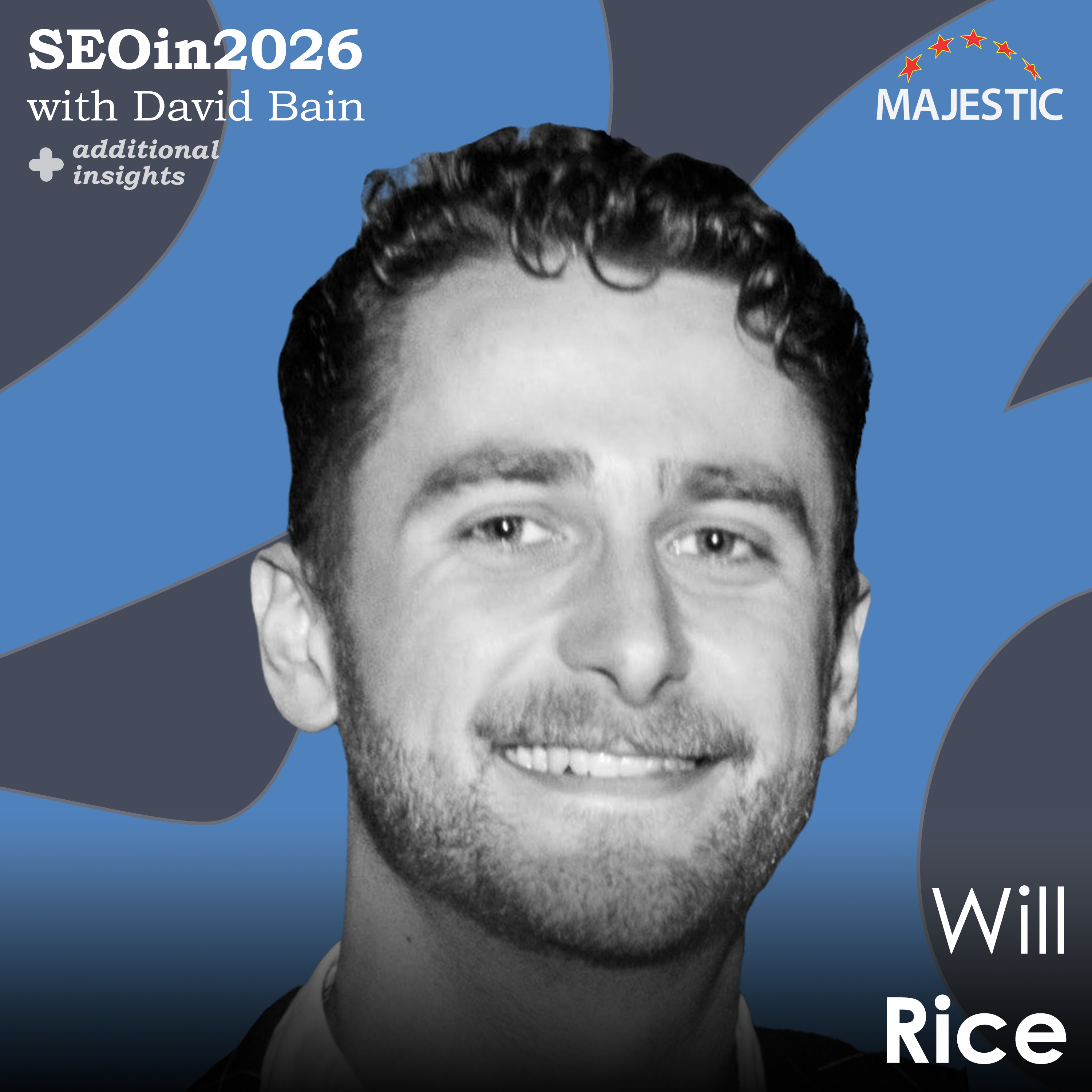
    Create useful tools to convert more of your existing traffic - with Will Rice

    Will Rice discusses the importance of creating useful tools to convert more of your existing traffic. Talking points include: How to understand what is going to get your traffic to convert more. How do you know what traffic is likely to convert? How do you put a financial value on traffic from different sources? How to rapidly build tools to provide genuine value to your customers. Which tools are best? Why is this better than other forms of traffic? What else to do with the data you get from the tools you build?

  • S2026 · E596
    July 2 · 17 min

    Stop obsessing over AI – with Taylor Kurtz

    Taylor Kurtz provides our final SEOin2026 tip, advising that we stop obsessing over AI and instead, focus on high quality content. Taylor says: “Do not obsess about AI. Don't obsess about it.” Why shouldn't you obsess about it? “I'm sure a lot of people have helpful suggestions about it, but frankly, it's all so new that it’s on a trial basis. Anyone saying that they know what to do for this environment, it's not true. They think they know what to do, but nobody knows for sure. It's all based on: What am I doing that's working? What are my peers doing that's working? How do we navigate this? Google has not provided any guidance – and even if they did, who really cares? As we saw with organic search, even if they did provide specific guidelines, those aren’t always true. My issue is more the fact that people feel so concerned about it. For instance, I have so many clients asking, ‘How am I doing on ChatGPT?’, but a study came out yesterday showing that referral traffic from ChatGPT from July 21st through yesterday (August 26th) was down 52%. AI is not going anywhere, and we're very much going to have to adapt to it, but I do not think search will change very much. We're going to have to adapt to utilising it as a new technology, similar to how we had to adapt to voice searches using Siri and things like that. One thing that really does bother me is seeing so many people online talking about GEO, or Generative Engine Optimization. To me, that does not exist. If you want to really get down to the bare bones of it, the crawlers – whether they're crawling the robots.txt file or the newer llms.txt file – are still crawling your source code. The source of information is the same. I'm constantly hearing that GEO is the new thing because the landscape has totally changed with AI search. Typically, the people who say that then go on to present obvious and foundational tactics that have always applied to SEO. For example, ‘We should use schema.’ One thing we've been really focussing on with our clients is making sure that the authors have authoritative bio pages that show their credentials and show who they are. Are the articles fact-checked? However, that all pertains to EEAT (Experience, Expertise, Authority, and Trust), which has been an acronym in SEO for going on a decade.

  • S2026 · E595
    July 1 · 15 min

    Don't neglect traditional SEO just yet - with Stefan Lozo

    Stefan Lozo shares the importance of not neglecting traditional SEO int eh age of AI. Talking points include: What activities would you describe as traditional SEO? How should an SEO define their services in 2026? How should this be communicated with clients? What happens if clients push back and are looking for other services or ways of doing things? How do you set realistic expectations for clients? Is it a good idea to do white label SEO for other agencies? How do you see the traditional agency SEO offering continuing to evolve?

  • S2026 · E594
    June 30 · 14 min

    Escape the backlog – with Michael MacMillan

    Michael MacMillan shares our penultimate piece of advice by encouraging you to ensure that all the good SEO that you already intend to do, is being done. Michael says: “While AI is flooding the web with content, it’s also assisting teams to create huge strategies and big plans. However, we're still not seeing them getting executed.” What does execution actually mean, and why is it not happening? “Imagine that you’ve gone through and done an SEO audit; you've explored all the opportunities, you've gone through the competitor set, and you've gone through what you have for existing content and how you're performing. Then, you get this beautiful list of what you should do to get things done – much like going to the physio, where you get a list of the exercises you should do when you're not at the physio. In the meantime, between visits, the work's not getting done. There's definitely a place for using AI. It's great at analysing data. It's great for giving a first draft of a piece of content. We're leveraging it to get content briefs put together and get a first draft of content. However, a lot of the time, we're seeing things getting shelved. Priorities start getting pulled. It's sometimes the fact that there is a whole lot that needs to get done. A lot of marketing teams are dealing with having fewer people to execute with, and they're having to rely on other sources to get things done.”

  • S2026 · E593
    June 29 · 20 min

    Make yourself discoverable and stay agile – with Reena Bowden

    Reena Bowden agrees with Jade Pruett about the ability to stay agile as we move through 2026. Reena says: “Make sure that you are discoverable, and be agile with optimizing your business for AI-driven search and answer engines. We're also talking about GEO and AIO, not just for traditional search. To be discoverable and agile, you need to be proactive and not just reactive to market changes because things are moving fast.” How would you summarise the key elements of making your brand discoverable in the age of AI, and how has that changed in the last few years? “Not only have things changed in the last two years, but things have changed more than they have in the last 10 years. Just when you think that SEO is going to become boring, it becomes less boring once again. Gone are the days of just building pages for SEO: looking at your keywords, publishing content, and then waiting a few months for the results. Things have changed so much recently, but things are changing again very fast. The question is, how do you remain discoverable and remain visible in this world? You have to work on your assets and materials (whether that’s information or insights – including those that are owned, earned, and paid) to continue being visible in that new AI world, but it's also important to be mentioned in citations. To remain top-of-mind and visible, there are a number of things that you can do to make sure that you continue being SEO-friendly, but you are also AI-friendly. However, it's important to be recognised by the outside world as well. Off-page SEO and, increasingly, digital PR are gaining importance. All of these high authority, trusted sources are becoming very important, as are citations. It's important to understand what AI is looking at when it's looking for information about you. That is where I see the game changing.”

  • S2026 · E592
    June 26 · 15 min

    Forget best practices and get curious – with Jade Pruett

    Jade Pruett is keen to highlight that best practices that existed in the past aren’t necessarily best practices for the future. Jade says: “Forget best practices. SEO in 2026 is about moving beyond checklists and leveraging your own expertise to build effective, trustworthy, and AI-ready strategies.” What best practices do we need to forget? “In the industry, we've become a bit stuck in our checklists. That's often our safe space, as SEOs – especially when you work in an agency setting. Maybe you have a productised system that you offer your clients. So, your SEO has been limited to, ‘We're going to create X number of blog posts every month. We're going to follow these rules that we see online about what matters and what doesn't.’ You provide your SEO services, whether they're really moving the needle for the client or not. In 2026, especially with AI search coming out, things with Google are changing so quickly. It's time to take a step back and really trust your own gut on what's going to move the needle forward for your clients.”

  • S2026 · E591
    June 25 · 16 min

    Embrace scepticism and think more critically – with Petra Kis-Herczegh

    Petra Kis-Herczegh encourages you to be more critical in your thinking – and not to initially accept everything at face value. Petra says: “Embrace healthy scepticism. In a time where the SEO industry is drowning in new AI metrics, from AIO attribution to vector index presence, we need to understand that we don't have robust, standardised methods to validate these just yet. When tools show you things like AI visibility, you should be asking: What's the sample size behind this? What's that number or percentage based on? How are these metrics defined? Is the tool actually using LLM training data, or are they reverse-engineering the attribution models? Embracing healthy scepticism and using critical thinking isn't a new thing. It's not a new process; we’ve had to use it before, but this situation makes it crucial. Previously, when featured snippets appeared, we had to completely rethink how we evaluated our existing Google Search Console data, because it now meant something different because of the change, and it was in a new context. We’ve had to ask these questions, and not just chase new metrics, but evaluate the data that we are basing decisions on. Part of the problem now is that people are trying to look at these shiny new metrics as something that they can base decisions on, when they actually might change in a month or two. Everyone's still collecting data, looking at that attribution model, and trying to learn how these LLMs understand your websites, do vector embeddings, understand context, and serve answers – and the models change all the time as well, so that plays a part. Before you bet your credibility on a shiny new dashboard, you need to ask yourself: What would you actually do differently with this data? Do you have any other way to validate this from something that you already trust and know to be proven? If you can't answer those questions, you are just chasing the hype instead of thinking critically.”

  • S2026 · E590
    June 24 · 16 min

    What Data Sources Should You Be Feeding LLMs? With Andrew Melnychuk Oseen

    Andrew Melnychuk Oseen shares that for effective SEO in 2026 you should be aware of what data sources you're feeding LLMs. Discussion points include: What data sources should you be hooking up to LLMs? What are your go-to LLMs at the moment and why? What are the common mistakes that tend to be made in doing this? What end result are you looking for? Is there any data type that you shouldn’t be getting LLMs to analyse, where human SEOs should be doing the analysis by themselves? You say that AI isn't going to replace human judgement - what does this mean in practice?

  • S2026 · E589
    June 23 · 16 min

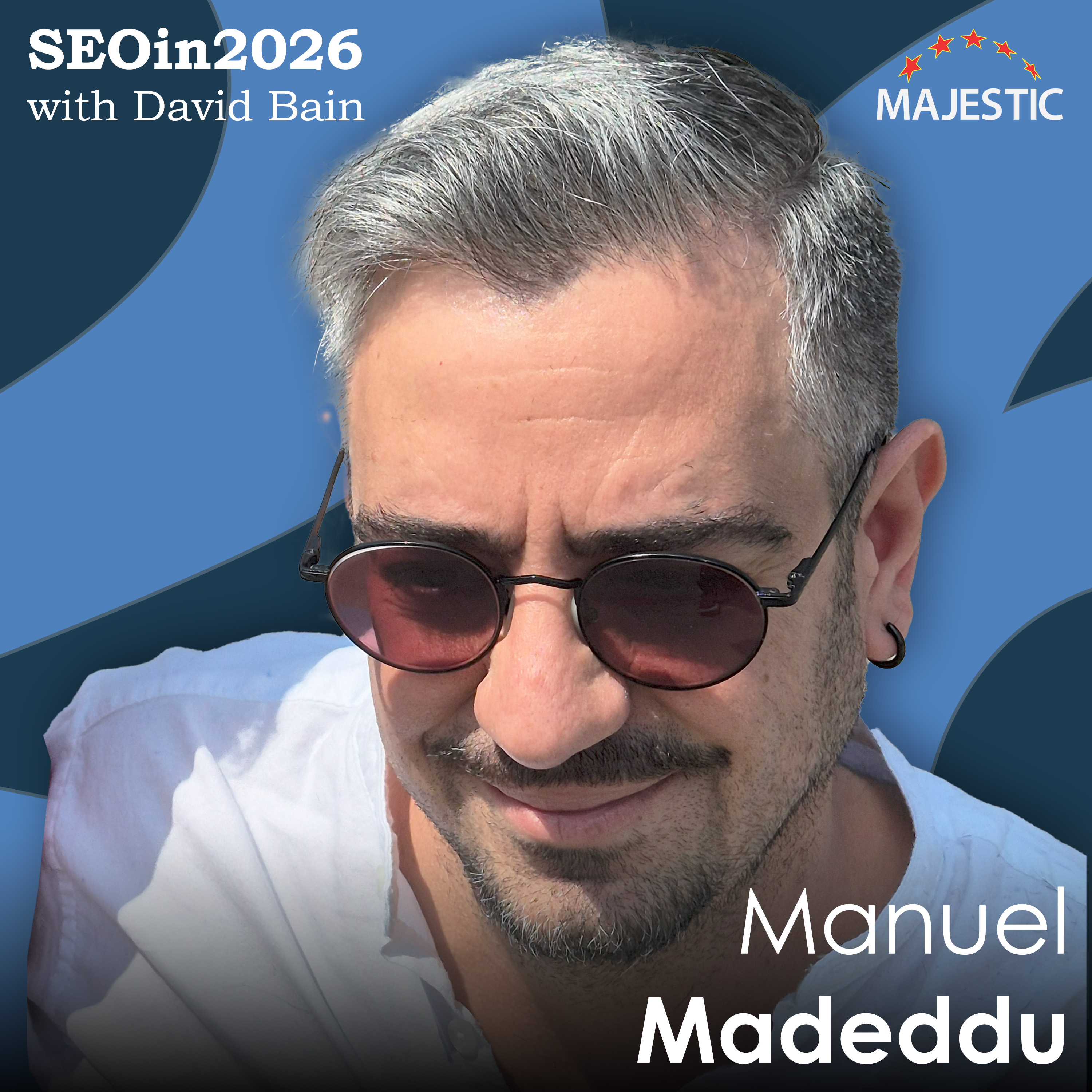
    Be flexible and prepare to adapt – with Manu Madeddu

    Manu Madeddu highlights that the ever-changing world of SEO means that flexibility and being able to continually adapt will be integral parts of future success. Manu says: “Be flexible and be ready to face the unknown. Essentially, be prepared to adapt to all the new and broader challenges we have as marketers, and also flexible enough and ready to absorb knowledge, data, and information about things you might not know, but need to explore.” How do you incorporate flexibility into an SEO strategy? “Long story short, try to anticipate trends. Be flexible by being able to detect trends and adjust your strategy on the go. Don't be stiff and only stick to what was planned 6 or 12 months before, because trends can change swiftly nowadays. Also, you might find that users are changing their behaviour. They may be using a feature or a platform now, but then switch because of recent changes and technological advancements. That’s the kind of flexibility you need in terms of technology and strategy. You also need to be able to discuss and have a more holistic approach. Don't just focus on what you do as a marketer. SEOs tend to work in their silo and just focus on Excel spreadsheets and optimizations. Now, you need to be flexible. Discuss with other teams and other channels to find the best way to achieve the business targets – not only for your channel but overall.”

  • S2026 · E588
    June 22 · 15 min

    Surround yourself with the right people – with Sarah McDowell

    Sarah McDowell shares that surrounding yourself with the right people is a key part of maintaining personal growth. Sarah says: “Community and your inner circle are not only essential for your well-being, but they are also so important for your career progression as well.” Why is community relevant to SEO? “When it comes to SEO and career progression, as in any industry, looking after your own well-being and looking after yourself is so important. It prevents things like burnout, imposter syndrome, not feeling confident enough to push yourself forward, and not having confidence in your own skills. One of the reasons why Tazmin and I started the SEO Mindset Podcast is that there are lots of great podcasts out there that tell you how to do SEO, but there was a gap for a podcast talking about career progression, personal growth, and mental health for those who work in SEO. Those softer skills are really important. They're at the core of all of that lovely growth.”

  • S2026 · E587
    June 19 · 16 min

    Invest in your skillset to advance your career – with Helen Pollitt

    Our final chapter begins with Helen Pollitt taking a look at the skills you need to personally build, to remain as relevant as possible in the SEO workforce for many years to come. Helen says: “Keep your SEO career on track. When it comes to your skillset, you need to stop thinking of ‘SEO versus GEO’. Instead, you need to understand how to apply your organic discoverability skills to each and every channel that you may need to – and how you can use AI to enhance those skills.” How much of your SEO time should you focus on developing those skills? “SEO is a career that is constantly changing, and not just in the sense that what works in SEO is changing. The tools and educational platforms that are available are changing as well. As a result of that, we really need to be investing a lot in our own careers and in our skill sets. I like to spend at least a little bit of time every day dipping into articles, watching webinars, or just making sure that there's no breaking news within the SEO industry that I'm missing. Treat it like an investment. Make sure that you are spending a significant portion of your time investing in those skills and keeping current with what's going on, without succumbing to the hype and fear-mongering that also seems to go around the space at the moment.”

  • S2026 · E586
    June 18 · 16 min

    Be both discoverable and recognisable – with Ray Saddiq

    Ray Saddiq shares that you need to be both recognisable and discoverable in 2026. Ray says: “If you want to seriously influence your consumer moving forward, brand alone is not going to cut it. We got into this mindset that brand was going to be key to driving SEO success, and it plays a huge part, but if you want to grow and stay top-of-mind, you need to drive demand and be discoverable. It's not just an awareness thing anymore. You need a combination of both. It's not enough to be known; you need to be found as well. That means building brand and category salience. You've got to own your category in search so that, moving forward – with LLMs, AI search, and social search – you are the brand that has salience to the category that you want to be known for. You’re the one most closely related to that category. This can’t just happen across Google. This needs to be across every searchable platform, because that's where intent starts now.”

  • S2026 · E585
    June 17 · 24 min

    Most sites have high search visibility but zero AI citations - with Nickolass Jensen

    Nickolass Jensen shares that most sites have high search visibility but zero AI citations, and the gap is diagnosable, measurable, and fixable with a structured three-layer audit. Talking points include... The three-layer diagnostic: Why sites fail AI visibility at the human layer (UX/trust), the search layer (authority/structure), or the AI layer (machine-readable proof) - and why fixing the wrong layer first wastes months. AI crawler visibility: Server log analysis reveals real-time and historical crawl patterns from GPTBot, ClaudeBot and PerplexityBot - most site owners have no idea which AI bots visit them, how often, or what they fetch. The gap between what AI crawlers index and what gets cited is where the work happens. GEO in 2026 is still mostly theoretical. The only practical path forward is tools that enforce structured execution. Rankings remain infrastructure, but the real competitive moat is whether an LLM cites you when a buyer asks. Read the full transcript of Nickolass's interview at https://majestic.com/seo-in-2026/additional-insights/nickolass-jensen

Showing 1–20 of 21 episodes