Skip to content
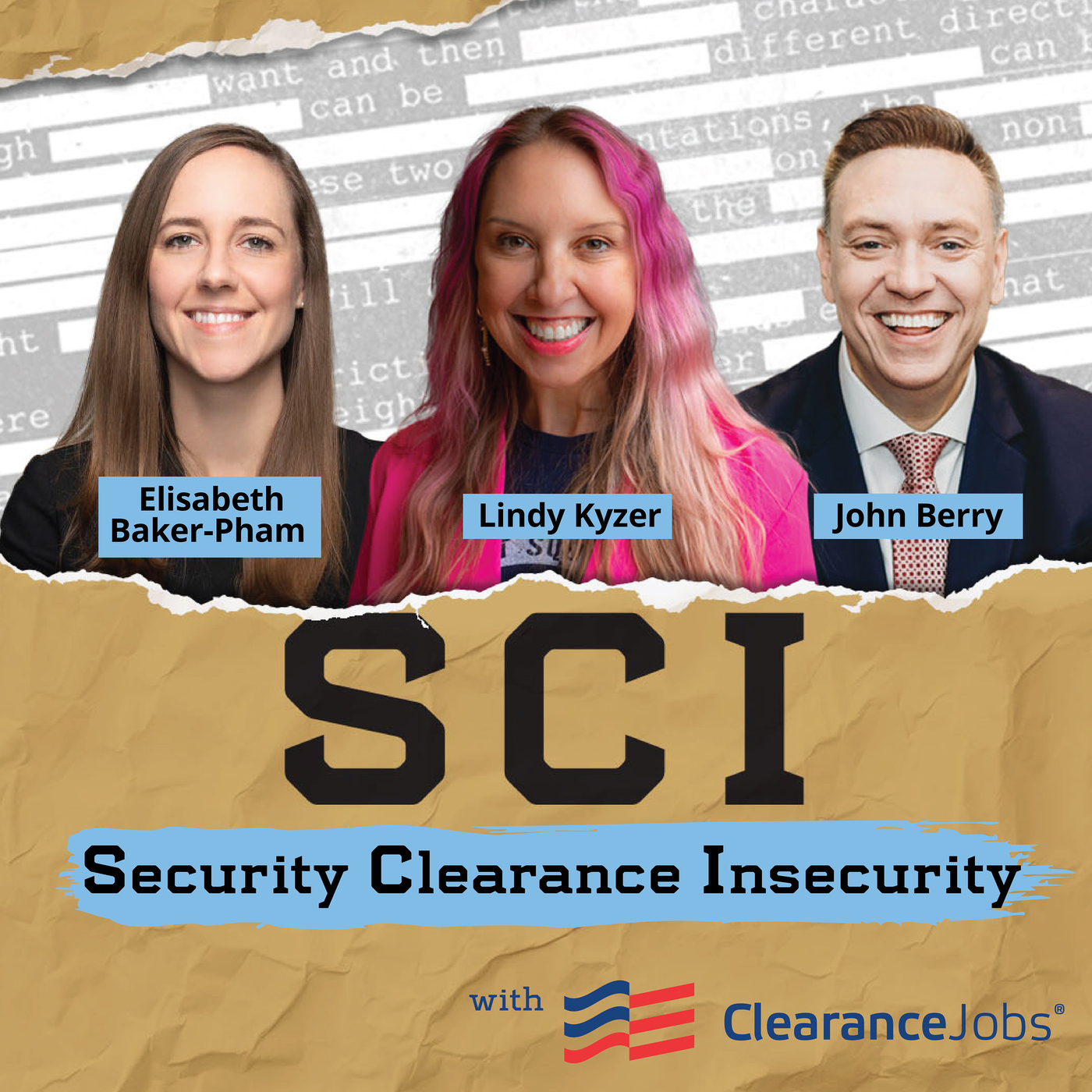
Artwork for Security Clearance Insecurity

Security Clearance Insecurity

Federal News Network | Hubbard Radio

Millions of jobs require a U.S. government security clearance. Getting or keeping one is an anxiety-inducing process shrouded in mystery, and sometimes, urban legend. From drug use and bankruptcy to cryptocurrencies and motorcycle gangs, we unpack all of your top (or most unexpected) security clearance questions. We also talk with some of the leading experts and government officials charged with overseeing the security clearance process and establishing security policies. Security Clearance Insecurity demystifies security clearances, delivers expert insight, and answers the questions you’d never ask at work. Hosted by ClearanceJobs.com's Lindy Kyzer and Sean Bigley, security clearance legal correspondent and regular ClearanceJobs contributor.

Play
  • 20 episodes
  • fortnightly
  • Avg 28 min
  • English
  • October 2 · 28 min

    From Co-Op to Cleared: Northeastern's Talent Pipeline, Plus Foreign Travel Reporting Pitfalls

    How do we grow the pool of cleared talent instead of competing over the same people? Lindy Kyzer of ClearanceJobs talks with Jamie Jones Miller of Northeastern University, a member of the ClearanceJobs Policy Advisory Board. Jamie got her first clearance at 19 as an intern at the Defense Intelligence Agency, and she's held one through her career on Capitol Hill, at the Pentagon and now in academia. She explains how Northeastern's co-op program and industrial security team sponsor students for clearances, train future FSOs and place them with industry partners. She and Lindy also cover reciprocity problems, the push for longer eligibility timelines and a clearance ready reserve, and how to keep the human at the center as AI changes the work of intelligence analysts. Later, security clearance attorney John Berry of Berry & Berry, PLLC joins Lindy to talk about unreported foreign travel. They explain why "I'll just report it on my reinvestigation" is a mistake, what SEAD 3 requires you to report, and how continuous vetting flags travel almost in real time. They also show how a reporting lapse that seems small can add up to a personal conduct concern. Hear Jamie and more speakers in person at ClearanceJobs Connect Reston, October 15–16 at the Carahsoft office in Reston, Virginia. Register at https://about.clearancejobs.com/employers/events/clearancejobs-connect-reston. See Privacy Policy at https://art19.com/privacy and California Privacy Notice at https://art19.com/privacy#do-not-sell-my-info.

  • September 18 · 28 min

    The Cipher Brief's Brad Christian Previews the Threat Conference's 10th Year

    Lindy Kyzer sits down with The Cipher Brief's COO Brad Christian to preview the 10th annual Threat Conference in Sea Island, Georgia — covering AI's growing role in warfare, the widening public-private innovation gap, and the "gray warfare" tactics adversaries are using inside the U.S. homeland. Apply to attend: https://www.tcbconference.com/ Then, attorney Elisabeth Baker-Pham joins Lindy to unpack a less obvious clearance risk: how conflicts in Ukraine, Israel, and elsewhere can reignite foreign influence and foreign preference concerns (Guidelines B and C) for clearance holders whose foreign contacts were already vetted — through no action of their own. See Privacy Policy at https://art19.com/privacy and California Privacy Notice at https://art19.com/privacy#do-not-sell-my-info.

  • September 4 · 28 min

    Modernizing SCI Nominations — and When Foreign Ties Come Under Scrutiny

    This episode of Security Clearance Insecurity covers two timely issues facing the cleared workforce. First, Lindy Kyzer talks with Mike Flanders, founder of SudoTouch, about the technology gap slowing SCI nomination processing and how automation can help security offices keep pace with Trusted Workforce 2.0's shift to continuous vetting. Then, attorney Elisabeth Baker-Pham joins Lindy to break down Guidelines B and C — foreign influence and foreign preference — and what clearance holders need to know when conflicts abroad (Ukraine, Israel, tensions with China) change how existing foreign contacts are viewed, even without any change in the clearance holder's own behavior. See Privacy Policy at https://art19.com/privacy and California Privacy Notice at https://art19.com/privacy#do-not-sell-my-info.

  • August 21 · 28 min

    FOCI Just Got a Lot Bigger — Plus, What Summer Fun Can Cost Your Clearance

    This episode tackles two very different but equally timely clearance issues. First, host Lindy Kyzer sits down with Andrew Lotwin, Senior Vice President of Federal at ISI and a former senior leader at DCSA, to unpack the Department of War's proposed expansion of Foreign Ownership, Control, or Influence (FOCI) requirements. The draft rule would extend FOCI disclosure obligations well beyond the traditional cleared contractor base to any contractor or subcontractor with contracts over $5 million — a change DCSA estimates could take FOCI determinations from roughly 2,000 a year to as many as 40,000. Andrew breaks down what this means for industry awareness, DCSA staffing and technology needs, the strain on the NISS system as it transitions to NISS Increment Two, and how bidders (not just contract winners) could soon be pulled into the process before award. The conversation closes with a look at broader clearance reform priorities, including reciprocity between Title 10 and Title 50 organizations and the push for more transparency in the facility clearance process. In the second half, security clearance attorney Elisabeth Baker-Pham joins Lindy to talk about the clearance risks that tend to surface every summer: overspending and vacation debt, unreported foreign travel (including the "does a cruise count?" gray area), marijuana and hallucinogen use while visiting family or relaxing in legal-use states, DUIs around holiday gatherings, and the general lapses in judgment that come with letting your guard down. With continuous vetting now catching more of these incidents in real time, they explain why self-reporting and consistent judgment matter just as much in July as they do the rest of the year. Have a clearance question or topic you'd like covered on a future episode? Email editor@clearancejobs.com. Want me to adjust the tone, shorten it for show notes, or draft a shorter social-friendly version too? See Privacy Policy at https://art19.com/privacy and California Privacy Notice at https://art19.com/privacy#do-not-sell-my-info.

  • August 7 · 28 min

    Could Veterans Soon Keep Their Security Clearance Eligibility Longer? Plus, Handling False Clearance Reports

    Could security clearance holders soon have more time to return to government service after leaving the workforce? In this episode of Security Clearance Insecurity, Lindy Kyzer is joined by ClearanceJobs Content Director Jill Hamilton to discuss the proposal to extend the security clearance eligibility window for veterans from two years to five years, what it could mean for workforce mobility, taxpayer investment, and the future of Trusted Workforce 2.0. Then, security clearance attorney Elizabeth Baker-Pham joins the show to tackle one of the most anxiety-inducing topics for clearance holders: what happens when a former partner, coworker, or acquaintance reports you to the government out of spite? Learn how investigators evaluate allegations, why honesty and documentation matter, and the steps you should take if you're ever the target of a malicious or exaggerated report. Whether you're transitioning out of the military, navigating a career change, or worried about how personal relationships could affect your clearance, this episode breaks down what you need to know—and separates fact from fear. See Privacy Policy at https://art19.com/privacy and California Privacy Notice at https://art19.com/privacy#do-not-sell-my-info.

  • July 24 · 28 min

    Trusted Workforce 2.0: Closing the Continuous Vetting Gap with AI, Automation & Workforce Risk

    Trusted Workforce 2.0 has transformed personnel vetting, but implementation is still catching up. In this episode of Security Clearance Insecurity, ClearanceJobs' Lindy Kyzer sits down with Aarti Smith, CEO of Chainbridge Solutions, to explore how continuous vetting is changing workforce risk management across the federal government—and why automation, AI, and modern personnel security systems are becoming mission-critical. They discuss: How continuous vetting has replaced the old "set it and forget it" clearance model What Continuous Vetting Action Reports (CVARs) are—and why they matter The growing "continuous vetting gap" between policy and operational reality How DCSA's shared services and NBIS modernization could improve personnel security The role of APIs, automation, and dashboards in reducing administrative burden Where AI can support adjudicators without replacing human judgment Why applicant experience and secure onboarding portals are becoming essential What agencies should prioritize as Trusted Workforce 2.0 continues to expand to larger populations Plus, in a second conversation, Lindy Kyzer and security clearance attorney Elisabeth Baker-Pham discuss what every college student should know before pursuing a career in national security—from understanding the difference between a public trust and a security clearance to avoiding common mistakes that can jeopardize future eligibility. Whether you're a security professional, hiring manager, federal contractor, or aspiring clearance holder, this episode offers practical insights into the future of personnel vetting and workforce readiness. See Privacy Policy at https://art19.com/privacy and California Privacy Notice at https://art19.com/privacy#do-not-sell-my-info.

  • July 13 · 28 min

    The New Rules of Suitability: What OPM's Vetting Changes Mean for Your Career

    The federal personnel vetting landscape is evolving—and understanding the changes has never been more important. In this episode of Security Clearance in Security, host Lindy Kyzer is joined by former OPM suitability expert Bill Pedersen to unpack the biggest updates to federal suitability regulations, Trusted Workforce 2.0, and continuous vetting. They explain how OPM's reforms are creating greater consistency across agencies, what post-appointment suitability actions mean for federal employees, how new reporting capabilities could improve government-wide visibility, and why understanding your position designation has become increasingly important. Whether you're a federal employee, contractor, facility security officer, or security clearance holder, this conversation breaks down complex policy changes into practical insights you can use to better navigate today's personnel vetting environment. See Privacy Policy at https://art19.com/privacy and California Privacy Notice at https://art19.com/privacy#do-not-sell-my-info.

  • June 26 · 28 min

    Building Your Brand in the Intelligence Community with Shana Cosgrove

    Success in government contracting isn't built overnight—it's earned through consistency, credibility, and continuous growth. In this episode of Security Clearance Insecurity on Federal News Network, Lindy Kyzer sits down with Shana Cosgrove, founder and CEO of Nyla Technology Solutions, to discuss what it takes to build a thriving GovCon business while establishing a trusted reputation in the cleared community. Shana shares lessons from her journey as a technology leader and entrepreneur, including overcoming challenges as a woman in a male-dominated industry, building strong teams, developing future leaders, and why documenting your accomplishments matters more than you think. The conversation also explores mentorship, emotional intelligence, work-life balance, AI's impact on technical careers, and the habits that help professionals stay relevant in a rapidly changing industry. Whether you're an aspiring leader, an engineer, or someone looking to grow your career in national security, this episode offers practical advice on creating long-term success through authenticity, resilience, and continuous improvement. See Privacy Policy at https://art19.com/privacy and California Privacy Notice at https://art19.com/privacy#do-not-sell-my-info.

  • June 12 · 28 min

    Secret Squirrel Files: Where True Crime Meets National Security

    What happens when a former true crime reporter, a national security storyteller, and a clearance industry expert sit down to talk espionage, insider threats, terrorism, and the cases that changed history? In this episode of Security Clearance Insecurity, host Lindy Kyzer welcomes Secret Squirrel Files hosts Phoebe Wells and Katie Helbling, ClearanceJobs new true crime, national security podcast. They discuss the inspiration behind their growing podcast series and why some of the most compelling national security lessons come from real-world cases. The conversation explores how true crime storytelling can help security professionals better understand insider threats, espionage, extremism, intelligence failures, and the policies designed to prevent them. From the Oklahoma City bombing and Operation Bojinka to Aldrich Ames and unsolved military mysteries, the hosts share how these stories provide both historical context and practical lessons for today's cleared workforce. Plus, the team discusses the unique format behind Secret Squirrel Files, the origins of the show's name, and why storytelling remains one of the most effective ways to educate and engage the national security community. In the second half of the episode, security clearance attorney John Berry joins Lindy to discuss an often-overlooked clearance topic: neurocognitive disorders and mental health. The conversation explores how conditions such as dementia, Alzheimer's disease, schizophrenia, and other psychological disorders are evaluated in the clearance process, the importance of self-reporting and treatment, and how government attitudes toward mental health have evolved over the past two decades. See Privacy Policy at https://art19.com/privacy and California Privacy Notice at https://art19.com/privacy#do-not-sell-my-info.

  • May 29 · 28 min

    Why Facility Security Officers Are Being Asked to Do More Than Ever

    Facility Security Officers (FSOs) are at the center of some of the biggest changes happening across the national security workforce—and many are feeling the strain. In this episode of Security Clearance Insecurity, Lindy Kyzer of ClearanceJobs sits down with Ike Rivers, NISPAC representative and advisory board member for TechnoMile Security Information Management, to discuss findings from the latest State of the Facility Security Officer Survey. Together, they explore why FSOs are being asked to wear more hats than ever before and what that means for security programs across the Defense Industrial Base. The conversation covers some of the industry's most persistent challenges, including the ongoing confusion surrounding Controlled Unclassified Information (CUI), the modernization gap created by reliance on spreadsheets and manual processes, and why clearance reciprocity remains a major obstacle despite years of reform efforts. Ike also shares his perspective on Trusted Workforce 2.0, NBIS implementation, and the growing disconnect between policy goals and day-to-day operational realities. In the second segment, federal employment attorney Elisabeth Baker-Pham offers practical advice for one of the most important—and often overlooked—parts of the clearance process: completing the SF-86. From investigating yourself before you begin to avoiding vague answers and using comment sections effectively, she explains how applicants can avoid common mistakes that lead to delays and complications. Whether you're an FSO, security professional, clearance holder, or applicant navigating the vetting process, this episode offers valuable insights into the challenges shaping the future of personnel security. See Privacy Policy at https://art19.com/privacy and California Privacy Notice at https://art19.com/privacy#do-not-sell-my-info.

  • May 15 · 28 min

    Cleared & Compensated: What the 2026 Data Reveals

    Average compensation for cleared professionals has hit a record high of $126,125 — but what's driving that number, and what does it mean for you? ClearanceJobs Content Director Jill Hamilton breaks down the 2026 Compensation Report, covering why pay jumped 6% year over year, which clearance levels and certifications move the needle most, and how location, education, and experience combine into what she calls the "triple threat" for top earners. Download the full report here. Then, security clearance attorney John Berry joins to discuss one of the harshest realities facing federal employees with clearance issues: the indefinite suspension without pay, why the Merit Systems Protection Board offers little relief, and what your best options actually are when the ground shifts beneath you. Whether you're heading into a performance review, considering a move from federal to private sector, or just trying to stay ahead in an uncertain market, this episode gives you the data and the legal reality you need to navigate it. See Privacy Policy at https://art19.com/privacy and California Privacy Notice at https://art19.com/privacy#do-not-sell-my-info.

  • May 1 · 28 min

    Storytelling, Service, and Trust: Capturing the Human Side of National Security

    In this episode of Security Clearance Insecurity, host Lindy Kyzer sits down with Jacob Centeno, founder of Poor Bear Stories, to explore the power of storytelling within the national security community. From his personal journey as a Gold Star family member to building a mission-driven media company, Centeno shares how authenticity, vulnerability, and lived experience shape the stories he tells. The conversation dives into the unique connection between storytelling and service—how shared experiences can break down barriers, build trust, and reveal the human side of intelligence and special operations communities. Centeno also reflects on the evolving landscape of content creation, the tension between AI-generated media and handcrafted storytelling, and why depth and meaning still matter in a world flooded with content. Plus, the episode touches on the emotional impact of creative work, the importance of community at events like ClearanceJobs Connect, and how purpose-driven storytelling can extend the life and impact of mission-focused moments. Whether you're in national security, media, or simply passionate about meaningful storytelling, this episode offers insight into how stories connect us—and why they matter more than ever. See Privacy Policy at https://art19.com/privacy and California Privacy Notice at https://art19.com/privacy#do-not-sell-my-info.

  • April 17 · 28 min

    GEOINT 2026: Tradecraft, AI, and the Future of Intelligence

    What makes the GEOINT Symposium 2026 a must-attend event for national security professionals? In this episode of Security Clearance Insecurity, host Lindy Kyzer sits down with Jim McCool to break it down. From his experience at organizations like the National Geospatial-Intelligence Agency, Central Intelligence Agency, and the U.S. Air Force, McCool shares why GEOINT remains at the center of modern intelligence—and how it’s evolving fast. They dive into the role of tradecraft in an AI-driven world, the growing importance of data and critical thinking skills, and how professionals at every stage can get the most out of the symposium. Whether you're navigating the clearance process, exploring career opportunities, or trying to understand how emerging tech is reshaping intelligence work, this conversation offers practical insights and forward-looking perspective. Plus: tips for first-time attendees, what skills are in demand, and why networking at GEOINT can shape your career long after the event ends. See Privacy Policy at https://art19.com/privacy and California Privacy Notice at https://art19.com/privacy#do-not-sell-my-info.

  • April 3 · 28 min

    Certainty in Uncertain Times: CIA Leadership Lessons That Actually Work

    What makes a great boss—and why do so many get it wrong? In this episode of Security Clearance Insecurity, Lindy Kyzer sits down with former CIA Chief of HR Mike Mears to unpack the real driver behind employee engagement, retention, and performance: certainty at the local level. Drawing on decades of experience inside the intelligence community—and insights from his book Certainty—Mears explains why employees don’t leave missions, they leave managers. He breaks down how the brain responds to uncertainty, why psychological safety is critical in high-stakes environments, and how small leadership habits can dramatically improve team performance. From fixing broken clearance processes to building trust in ambiguous environments, this conversation offers practical tools for leaders across government and industry. Plus: what cleared professionals should know about insider risk, disengagement, and why “soft skills” may be the most critical national security asset. If you lead people—or want to—this is a must-listen. Purchase Certainty: www.certaintyleadershipbook.com See Privacy Policy at https://art19.com/privacy and California Privacy Notice at https://art19.com/privacy#do-not-sell-my-info.

  • March 20 · 28 min

    When the Mission Ends: Rebuilding Identity After Service

    What happens when the uniform comes off—or your federal service ends—and the identity that once defined you suddenly shifts? In this episode, host Lindy Kyzer sits down with Lisa Parmeter, Executive Director of Merging Vets & Players (MVP), to explore the often-overlooked challenges of transition for veterans, active duty service members, and former professional athletes. From the loss of identity and purpose to the need for intensity, structure, and community, this conversation dives into what it really takes to rebuild after high-performance careers. Parmeter shares how MVP helps individuals rediscover meaning through peer support, whole-health approaches, and mission-driven community. The discussion also tackles mental health stigma, the importance of vulnerability in leadership, and the real risks of isolation—along with practical ways to navigate change, build resilience, and find your next chapter. Plus, in the second segment, security clearance attorney John Berry joins Lindy to break down one of the most common clearance pitfalls: misuse of IT systems. From downloading unauthorized software to AI-related risks and repeat violations, they unpack what can jeopardize your clearance—and how to avoid it. Whether you’re transitioning careers, supporting someone who is, or navigating the evolving clearance landscape, this episode offers critical insights you won’t want to miss. See Privacy Policy at https://art19.com/privacy and California Privacy Notice at https://art19.com/privacy#do-not-sell-my-info.

  • March 6 · 28 min

    Innovation, AI, and the Future of the Security Industry

    The security industry is evolving far beyond its traditional image of guards, guns, and gates. Today, it sits at the intersection of artificial intelligence, cybersecurity, federal policy, and critical infrastructure protection. In this episode of Security Clearance Insecurity, Lindy Kyzer speaks with Don Erickson, CEO of the Security Industry Association (SIA), about how emerging technologies are transforming the physical security landscape. From AI-enabled surveillance systems to cybersecurity integration and supply chain protections, the industry is playing a growing role in national security. They also discuss how SIA works with federal policymakers to promote responsible innovation, the challenges of navigating evolving AI regulations, and why workforce development is critical as the industry competes for talent. Plus, the conversation explores career pathways into the security industry—including opportunities for veterans, transitioning federal employees, and professionals with skills in engineering, cybersecurity, project management, and analytics. In the second segment, security clearance attorney Elisabeth Baker-Pham joins Lindy to discuss a growing trend: people turning to AI tools for legal guidance on clearance issues—and why relying on AI instead of a qualified attorney can create serious risks. Topics discussed: The growing role of AI in physical security Ethical frameworks for surveillance technologies Workforce development and new security career paths Challenges of AI policy and regulatory patchworks Why AI is not your security clearance lawyer If you work in national security, technology, or the broader security ecosystem, this episode offers insight into where the industry—and its workforce—is heading next. See Privacy Policy at https://art19.com/privacy and California Privacy Notice at https://art19.com/privacy#do-not-sell-my-info.

  • February 20 · 28 min

    Diving Into Federal Career Pivots & Side Hustles

    Career disruption and side hustles are increasingly common — but how do they impact your security clearance? In this episode of Security Clearance Insecurity, Lindy Kyzer of ClearanceJobs sits down with federal career coach and FedUpward host Love Rutledge to discuss navigating unexpected federal career pivots, translating government experience for the private sector, and the emotional impact of leaving civil service. They also share transition resources for federal employees, including: Volcker Alliance — https://www.volckeralliance.org Partnership for Public Service — https://ourpublicservice.org FormerGov — https://www.formergov.com FedUpward Podcast — https://www.fedupwardcoaching.com/podcast Later, security clearance attorney John Berry joins the show to break down how job hopping, gig work, outside employment, tax issues, and timecard fraud can raise clearance concerns — and what to do to stay compliant. See Privacy Policy at https://art19.com/privacy and California Privacy Notice at https://art19.com/privacy#do-not-sell-my-info.

  • February 6 · 28 min

    Who’s Accountable When AI Shapes National Security Decisions?

    The federal government can no longer treat artificial intelligence as optional—but what does true AI readiness actually look like? On this episode of Security Clearance Insecurity, host Lindy Kyzer sits down with Jennifer Ewbank, former Deputy Director of the CIA for Digital Innovation, to unpack how AI is reshaping national security missions, workforce expectations, and accountability across government. Rather than focusing on tools or pilot programs, Ewbank makes the case for a mission-first approach to AI—one that prioritizes readiness, governance, and human judgment. The conversation explores why digital literacy must become foundational for the entire federal workforce, how AI and cybersecurity skills are increasingly intertwined, and why uniquely human skills like critical thinking, ethics, and adaptability matter more than ever. They also dive into the realities holding agencies back—from messy data environments and compliance-driven culture to slow hiring pipelines and outdated talent systems—and why the greatest risk to government may be standing still while technology accelerates. Whether you’re a clearance holder, hiring leader, policymaker, or technologist, this episode offers a clear-eyed look at what it will take to responsibly scale AI across federal missions—without losing accountability, transparency, or trust. See Privacy Policy at https://art19.com/privacy and California Privacy Notice at https://art19.com/privacy#do-not-sell-my-info.

  • January 23 · 28 min

    A New Era of Security Clearance Insecurity: New Legal Voices, Real-World Guidance for 2026

    The Security Clearance Insecurity podcast welcomes new legal contributors Elisabeth Baker-Pham of Kalijarvi, Chuzi, Newman & Fitch, P.C. and John Berry of Berry & Berry, PLLC to the mic. In this episode, the panel breaks down how security clearance decisions intersect with employment law, why agencies handle cases differently, and what cleared professionals should know before filling out an SF-86, responding to investigators, or facing a statement of reasons. A must-listen for anyone navigating the cleared workforce this year. See Privacy Policy at https://art19.com/privacy and California Privacy Notice at https://art19.com/privacy#do-not-sell-my-info.

  • January 9 · 28 min

    Why Workplace Flexibility Matters for the National Security Workforce

    What does flexibility really mean for the national security workforce—and why does it matter now? In this episode, ClearanceJobs’ Lindy Kyzer is joined by workforce strategist and former federal executive Mika Cross for a timely conversation on the future of federal and cleared work. Drawing from congressional testimony, workforce data, and decades of public service experience, they unpack how telework, hybrid models, and strategic flexibility directly impact mission readiness, talent retention, and national security outcomes. The discussion explores: Why flexibility is a national security imperative, not a workplace perk The real costs of losing high-performing cleared professionals Military spouse employment and its impact on readiness What the President’s Management Agenda signals for the federal workforce How national security agencies can lead on agility, trust, and innovation This episode offers critical insight for cleared professionals, federal leaders, recruiters, and policymakers navigating the evolving realities of government work. See Privacy Policy at https://art19.com/privacy and California Privacy Notice at https://art19.com/privacy#do-not-sell-my-info.

Showing 1–20 of 20 episodes