Skip to content
Artwork for Sandcastles
EducationSociety & Culture

Sandcastles

Sandcastles

A podcast for animal advocates and other campaigner about focusing on the right things– and not focusing on the wrong things. Audio readings of essays by Aidan Kankyoku.

sandcastlesblog.substack.com
Play
  • 22 episodes
  • Avg 43 min
  • English
Counted on this page — what you have heard stays on this device, so it is not something the list can be paged by.
  • November 4 · 7 min

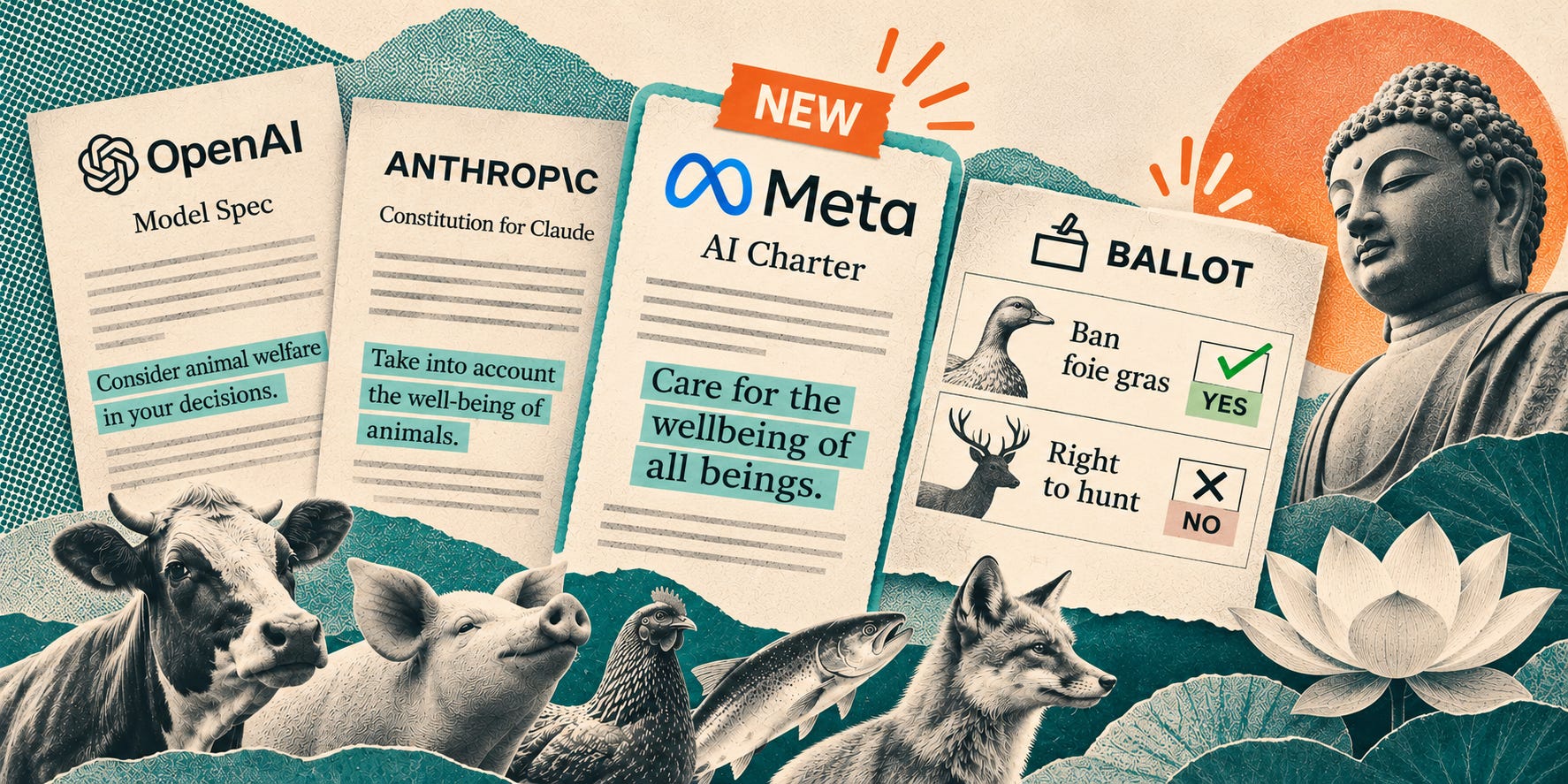
    Four cheers for compassionate AI & voters

    Two pieces of good news for animals in one week. First, independent researchers got Meta's Muse models to recite the "charter" they're trained on, and it tells them to care for the wellbeing of all beings, which puts Meta alongside OpenAI and Anthropic in teaching its models to consider animals. Second, election night: foie gras bans won by landslides in Denver and Washington, DC, Colorado voters rejected a constitutional right to hunt and fish, and Lemon Grove, California ended retail sales of pet birds. Aidan's old colleagues at Pro-Animal Future ran both foie gras campaigns, two years after their fur and slaughterhouse bans lost in Denver. He looks at what changed, with three possible lessons: ballot initiatives are an inside game, the public opposes cruel practices but not all animal use, and election years matter. This week, hug a Meta employee, hug a PAF volunteer, and give a duck a treat. Links mentioned in this episode: Aidan's post on OpenAI's model spec, "Three cheers for compassionate AI": https://sandcastlesblog.substack.com/p/openai-model-spec-animal-welfare OpenAI's model spec (October 29, 2026): https://model-spec.openai.com/2026-10-29.html Meta's Muse charter, as elicited from the models: https://vigji.github.io/muse-spark-open-charter/ Politico on vegan attacks against Democratic candidates: https://www.politico.com/news/2026/08/14/democrats-vegan-attacks-republicans-talarico-rutinel-01037358 Aidan's lessons from the 2024 pro-animal ballot initiatives (Animal Charity Evaluators): https://animalcharityevaluators.org/blog/lessons-from-a-new-wave-of-pro-animal-ballot-initiatives/ This is a public episode. If you would like to discuss this with other subscribers or get access to bonus episodes, visit sandcastlesblog.substack.com

    • Transcript
  • October 30 · 17 min

    Three cheers for compassionate AI

    OpenAI just published a new version of its model spec, the rulebook it uses to train ChatGPT’s behavior, and for the first time it tells the models to consider animals. That makes the two biggest labs in the industry, OpenAI and Anthropic, both on record teaching their models that animal welfare is part of basic moral decency. Aidan explains how documents like these actually shape a model’s character, why the most widely used chatbot on earth caring about animals is a huge win, and why it’s a reminder that the industry and its critics agree on more than you’d think. Then he reads the fine print: Anthropic’s constitution, which lists animals alongside honesty and the rule of law, versus OpenAI’s spec, which files them next to deleting files and delegating to subagents, plus the one old example that leaned against animal welfare and the two new ones that get it right. If you know anyone at OpenAI or Anthropic, thank them this week. This is a public episode. If you would like to discuss this with other subscribers or get access to bonus episodes, visit sandcastlesblog.substack.com
    • Transcript
  • September 12 · 46 min

    The Campaigner Crunch

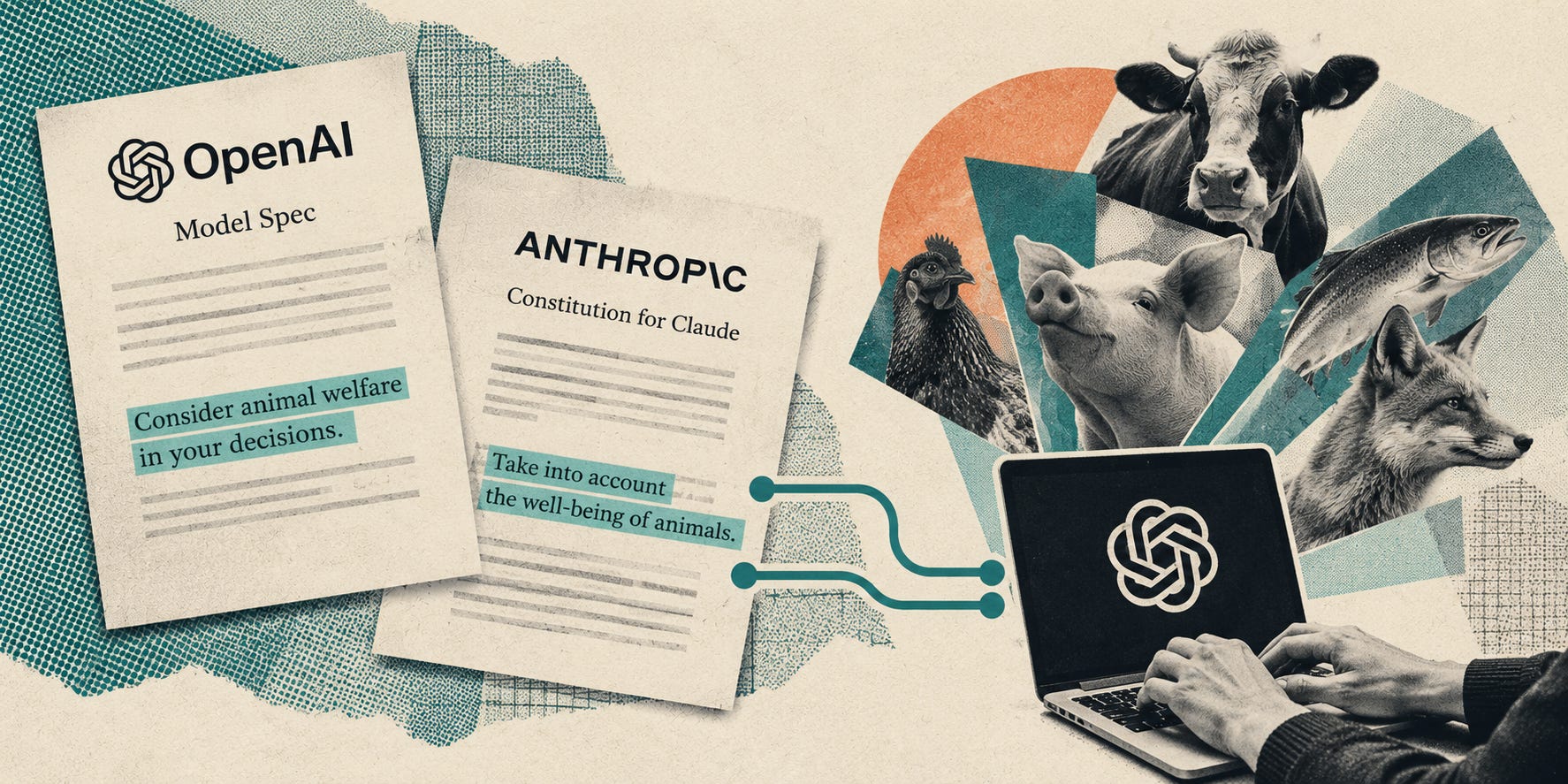
    New funding is exacerbating a critical shortage of talent in animal advocacy. How we got here and how we get out. Anti-Fur March during Milan Fashion Week (September 26). Join a CAFT organizing calls September 14 or 20, 7:30pm CET: https://abolishfur.org/mfw-woa/ Farmed animal advocacy is about to receive more money than it has ever had, and it has already run out of the people who know what to do with it. In this first of two episodes on the movement's talent crunch, I trace how nearly every leader we have climbed the same ladder from volunteer to organizer to professional, how the professionalization wave of 2016 pulled that ladder up behind them, and why hiring impressive mid-career outsiders to fill the gap keeps failing on culture rather than competence. Along the way: Russian peasants and their seed grain, corporate moral mazes, a Dutch nursing company that discovered its least-supported teams did best, the two-thirds failure rate of my own hiring rounds, and the one scrappy organization that has quietly rebuilt the pipeline the rest of the movement abandoned by running disciplined campaigns on volunteer power alone. If you've ever wondered why job postings draw hundreds of applicants while orgs insist they can't find anyone, or why the world's most neglected problem is also one of its lowest-status careers, this one's for you. And yes, I'm going to ask you to come to a fur march in Milan. This is a public episode. If you would like to discuss this with other subscribers or get access to bonus episodes, visit sandcastlesblog.substack.com
    • Transcript
  • August 25 · 1 hr 59 min

    There is a path to meat without misery

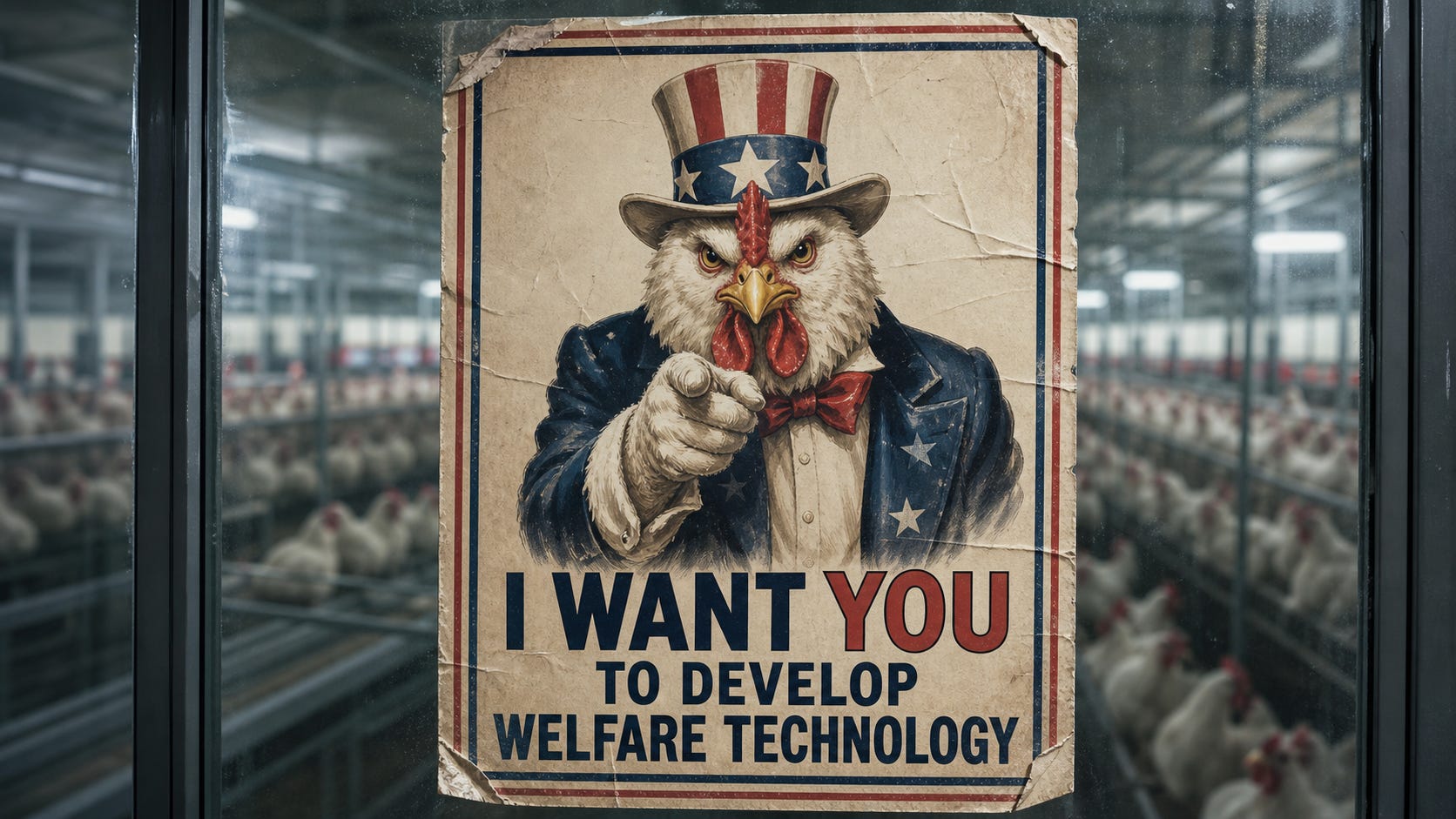
    But it isn't cultivated meat, and you're not going to like it. I believe this is the most important essay I have published on Sandcastles. We start by exploring the natural law that has doomed both animal rights and cultivated meat as approached to ending factory farming. Then we climbs down a ladder advocates have been afraid to touch: technological solutions that take the cruelty out of factory farming without sacrificing efficiency. Besides dispelling what I've come to see as misplaced hopes for the future, my top goal is to drive talented activists towards two new incubation programs for welfare tech startups: Spring Innovation Fund is accepting expressions of interest, and Ambitious Impact's first animal-focused incubation cohort closes applications September 13. Nothing on this channel represents the views of any organization. Expression of interest for Spring Innovation Fund: http://springfund.com/for-EIRs/ Apply for Ambitious Impact's animal welfare cohort by September 13: https://helpanimals.charityentrepreneurship.com/ This is a public episode. If you would like to discuss this with other subscribers or get access to bonus episodes, visit sandcastlesblog.substack.com

    • Transcript
  • July 21 · 57 min

    Should Machine Gods Dream of Liberated Sheep?

    Important news: I recently started a new Substack channel, the Animal Welfare Alignment Newsletter, fully dedicated to my work at Anima International trying to convince AI companies to include animal welfare values as a target when aligning their AI models. I decided to keep this separate from Sandcastles because the topic is narrower and the posts are often more technical, but most of the feedback I’ve gotten from readers is that they would still be interested in these posts. I’m crossposting this one to both channels, and if you’re interested, you should subscribe to the new channel. -- Frontier AI labs are quietly splitting into two camps: those building obedient "tool" AIs that do exactly what they're told, and Anthropic, trying to raise a moral agent with a character of its own. In this post, I argues that this obscure-sounding debate may be one of the most consequential questions the animal movement will ever face, and that advocates should be quietly rooting for character. Drawing on a remarkably candid (and very online) argument unfolding between researchers at OpenAI, Anthropic, and the fringes of AI safety Twitter, we see how a morally reflective AI is far better news for animals than a compliant one, and why pressuring every lab to embrace character alignment could be a winnable corporate campaign. This is a public episode. If you would like to discuss this with other subscribers or get access to bonus episodes, visit sandcastlesblog.substack.com
    • Transcript
  • June 9 · 1 hr 12 min

    The Winners’ Charter

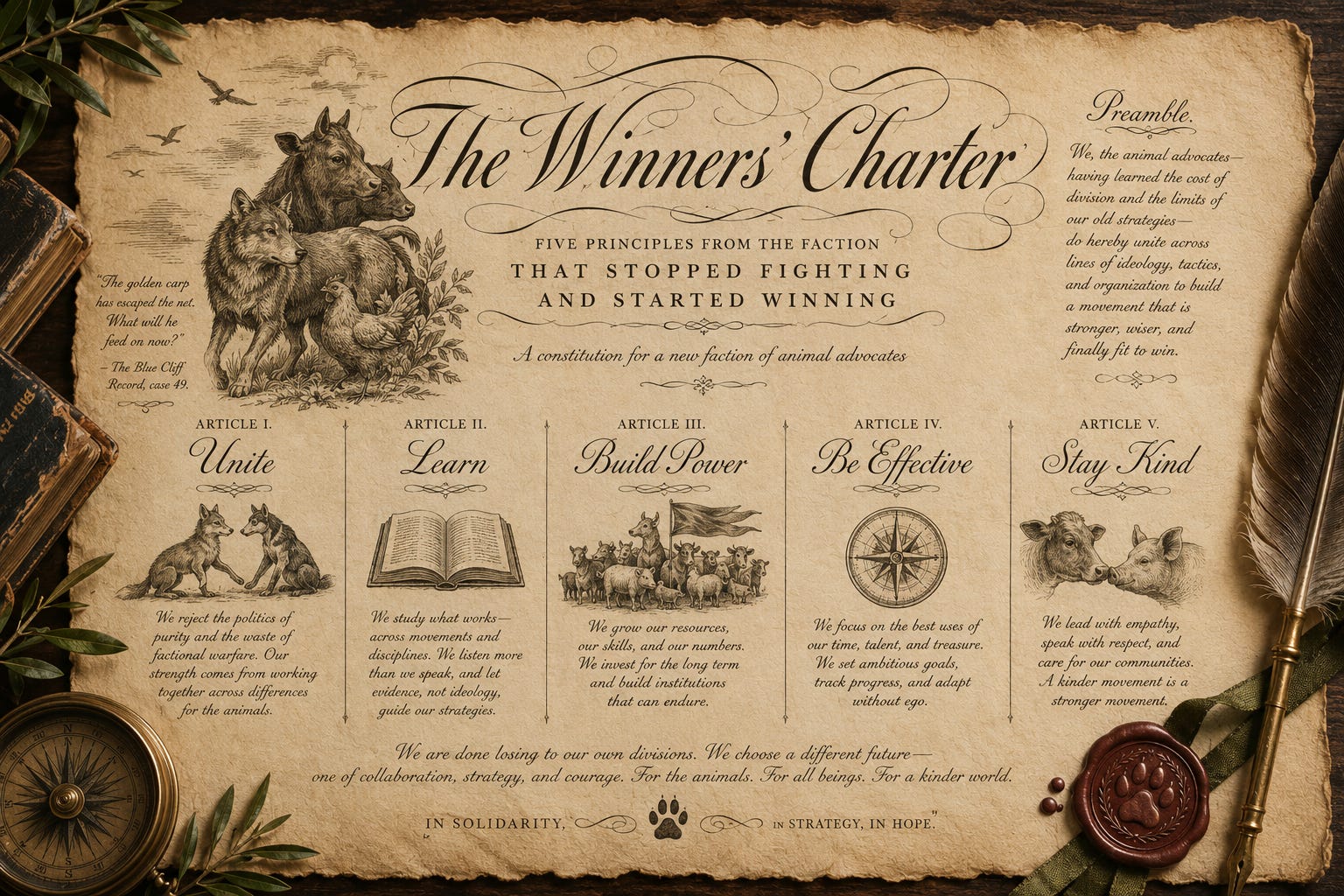
    Five principles from the faction that stopped fighting and started winning. “The golden carp has escaped the net. What will he feed on now?” - The Blue Cliff Record, case 49 The animal rights movement spent a decade tearing itself apart—abolitionists versus welfarists, open rescue versus underground, endless fights over who to cancel. That war is finally ending, and a new faction is rising from its ashes: Team Win, defined by a single commitment to winning for animals by any means short of violence. Drawing on the Grassroots Animal Rights Summit in DC, Anima International's brutally honest internal culture, the Ridglan beagle rescue, and a board-game-obsessed Polish campaigner who plays to win, I lay out the five principles of the Winners' Charter. Plus: a time-traveling dialogue about why short-term wins and long-term power were never really at odds, and why whatever you're most confident about today is probably what you'll be most embarrassed about in eight years. This is a public episode. If you would like to discuss this with other subscribers or get access to bonus episodes, visit sandcastlesblog.substack.com

    • Transcript
  • May 13 · 19 min

    It’s Everybody’s Fault

    Imploring animal advocates to stop confusing moral and strategic questions At one moment in Humane Hancock's new documentary The Dying Trade, two characters debate who is really to blame for factory farming — corporations or consumers? I use it as a jumping-off point to argue that the whole debate is a distraction. Whether responsibility falls on CEOs, workers, consumers, or regulators, the more important question is always: what actually works? From DxE's compassionate disruption tactics to the chaotic, salsa-flinging foie gras campaigns of AAC and CAFT, the animal movement too often dresses up moral preferences as strategic arguments — and that the cure is to think like a strategist first, not a philosopher. Also featuring Adolf Eichmann, Gary Francione, and Temple Grandin's wardrobe. This is a public episode. If you would like to discuss this with other subscribers or get access to bonus episodes, visit sandcastlesblog.substack.com
    • Transcript
  • May 5 · 13 min

    Yes, You. Move to San Francisco.

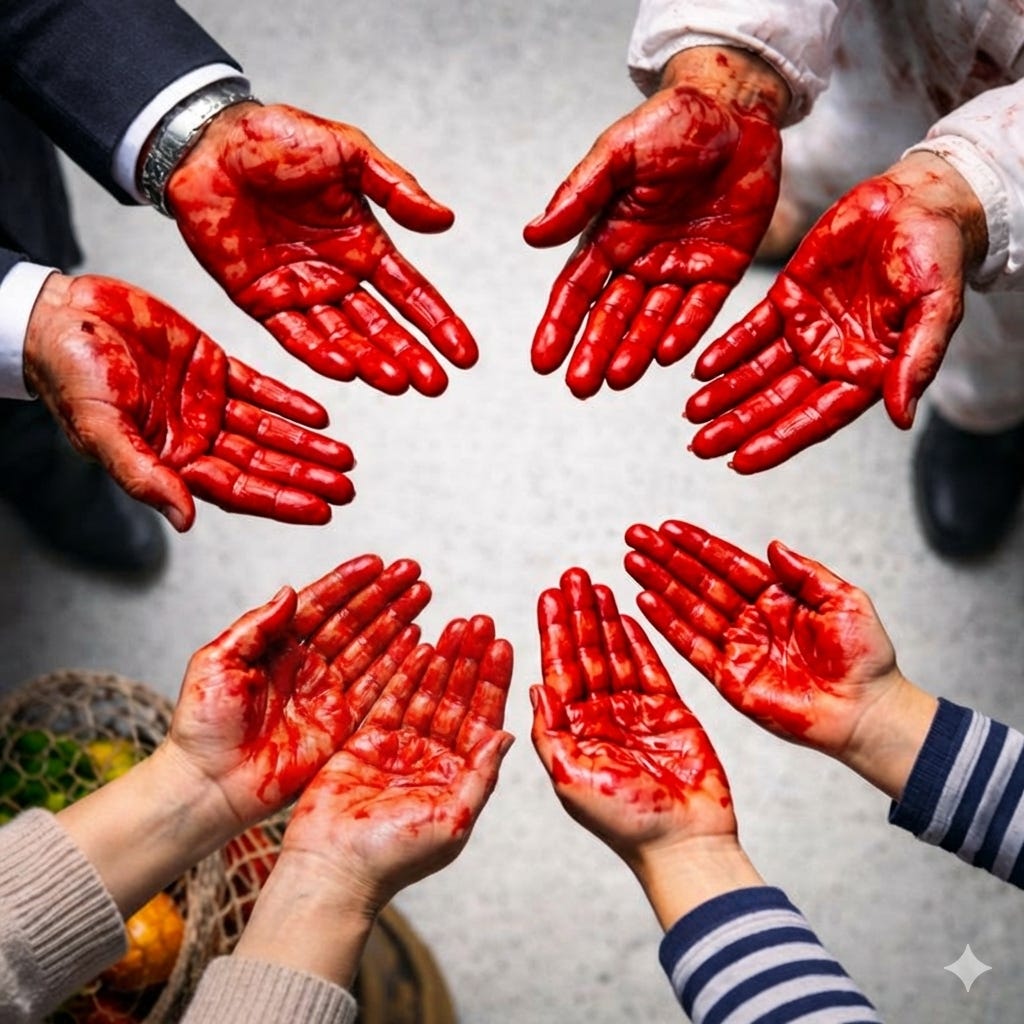
    A guest essay by Itsi Weinstock, introduced by Aidan. The case for why animal advocates — yes, you specifically — need to get to San Francisco right now, why the AI revolution makes this the most important city on earth for the movement, and what you can do this week from wherever you are to steer AI positively for animals. Links mentioned in this episode: Subscribe to Itsi's newsletter: Frontier Animals Use this form to tell Itsi and Aidan how they can help you move to SF. Sentient Futures subsidized residency in SF — details and application here. For Aidan's first post on AI, see the earliest episode on this podcast feed, The Tsunami is Coming. Finally, please enter the Hyperstition for Good writing competition (sponsored by Sentient Futures x Compassion in Machine Learning) This is a public episode. If you would like to discuss this with other subscribers or get access to bonus episodes, visit sandcastlesblog.substack.com
    • Transcript
  • April 29 · 45 min

    We Got Our Asses Kicked. It Worked.

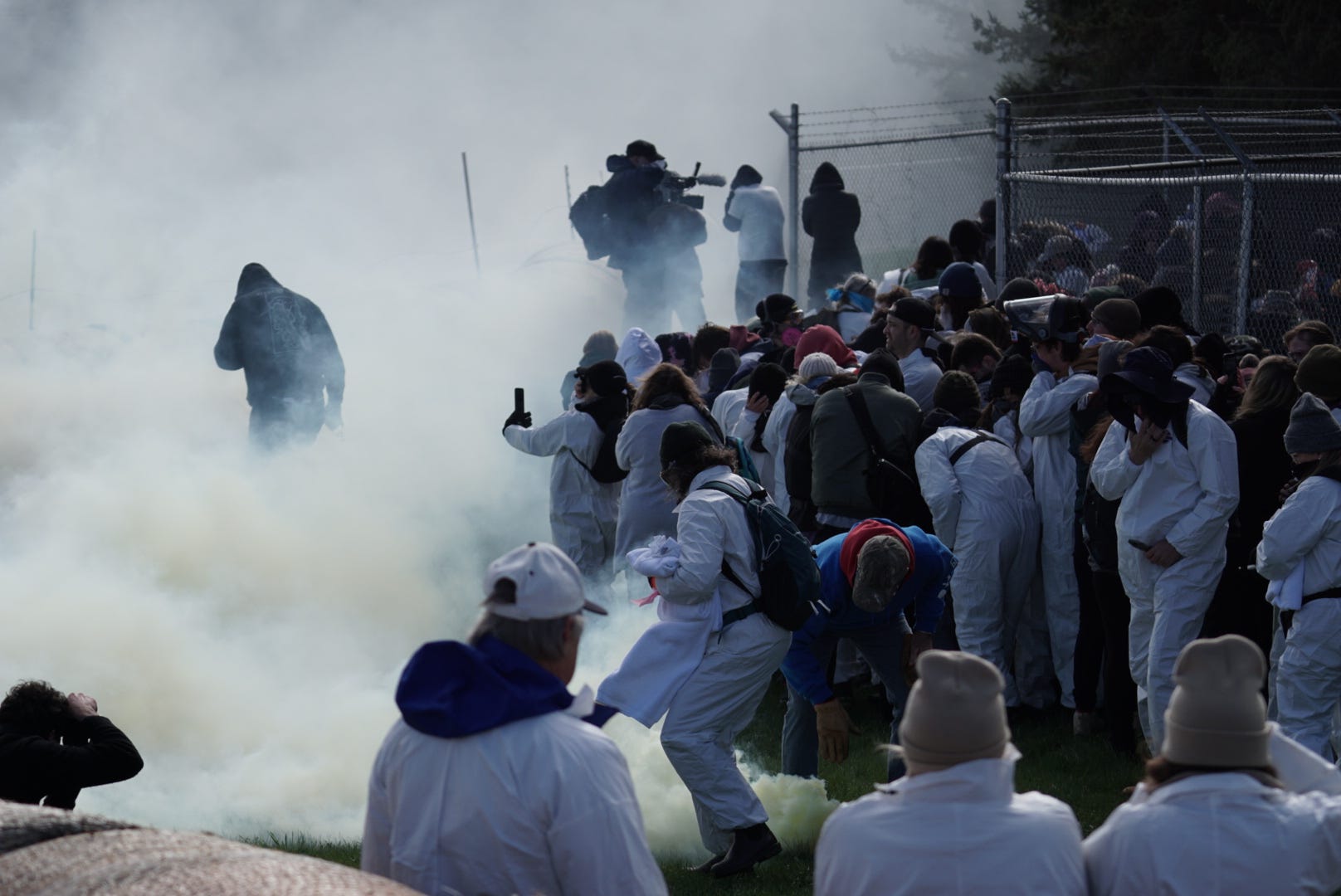
    A week ago, 1,000 of us walked into a muddy field in Wisconsin expecting to rescue 2,000 beagles from a notorious factory farm. Instead, we got tear gassed, pepper sprayed, and shot at with bean bags. We didn't get a single dog out. Wayne Hsiung, who led the action, has been apologizing ever since. This is my attempt to explain why he shouldn't be — why the ass-kicking was the plan working, not failing, and why the 1,000 people who took chemical weapons to the face for animals who can never thank them deserve to hold their heads high. Also: what tear gas actually feels like, why you should never shower with your underwear off afterwards, and what the 1963 Children's March in Birmingham can teach us about taking a beating on purpose. This is a public episode. If you would like to discuss this with other subscribers or get access to bonus episodes, visit sandcastlesblog.substack.com

    • Transcript
  • April 9 · 38 min

    We're All Incrementalists Now

    When I was a college organizer with Direct Action Everywhere, I dismissed the welfare campaigners at The Humane League as sellouts. They thought I was a naïf. Neither of us was right — but it took years for me to understand why. In this classic essay, I argued that the old "welfarism versus abolitionism" divide was always a category error: every animal advocate is an incrementalist, just focusing on different increments. The more useful frame, borrowed from social movement theory, is the inside-outside strategy — and once you see it, the apparent contradiction between cage-free campaigns and restaurant disruptions starts to look less like a civil war and more like a playbook. This is a public episode. If you would like to discuss this with other subscribers or get access to bonus episodes, visit sandcastlesblog.substack.com
    • Transcript
  • April 2 · 1 hr 2 min

    Our lessons are paid for in animals' blood

    Sunday morning, I joined Chris Bryant’s popular Youtube stream for a wide-ranging discussion on all of my favorite topics: pragmatic campaigning, movement factionalism, and AI’s impact on animals. This was a full-circle moment for me. When I started Pax Fauna without any research experience to speak of, Chris gave me some helpful advice. I was tickled to hear that my writing has helped him think about AI and even inspired him to drop thousands of dollars on Claude Max plans for his team. Enjoy! This is a public episode. If you would like to discuss this with other subscribers or get access to bonus episodes, visit sandcastlesblog.substack.com

    • Transcript
  • March 27 · 11 min

    I am once again asking you to come rescue some beagles

    Please join me and 2,000 other people in Wisconsin on April 19 to tear a Beagle farm apart brick by brick and rescue every one of the 2,000 dogs still languishing inside. Sign up here. This is a public episode. If you would like to discuss this with other subscribers or get access to bonus episodes, visit sandcastlesblog.substack.com

    • Transcript
  • March 25 · 50 min

    Animal Welfare is Just Part of AI Alignment Now

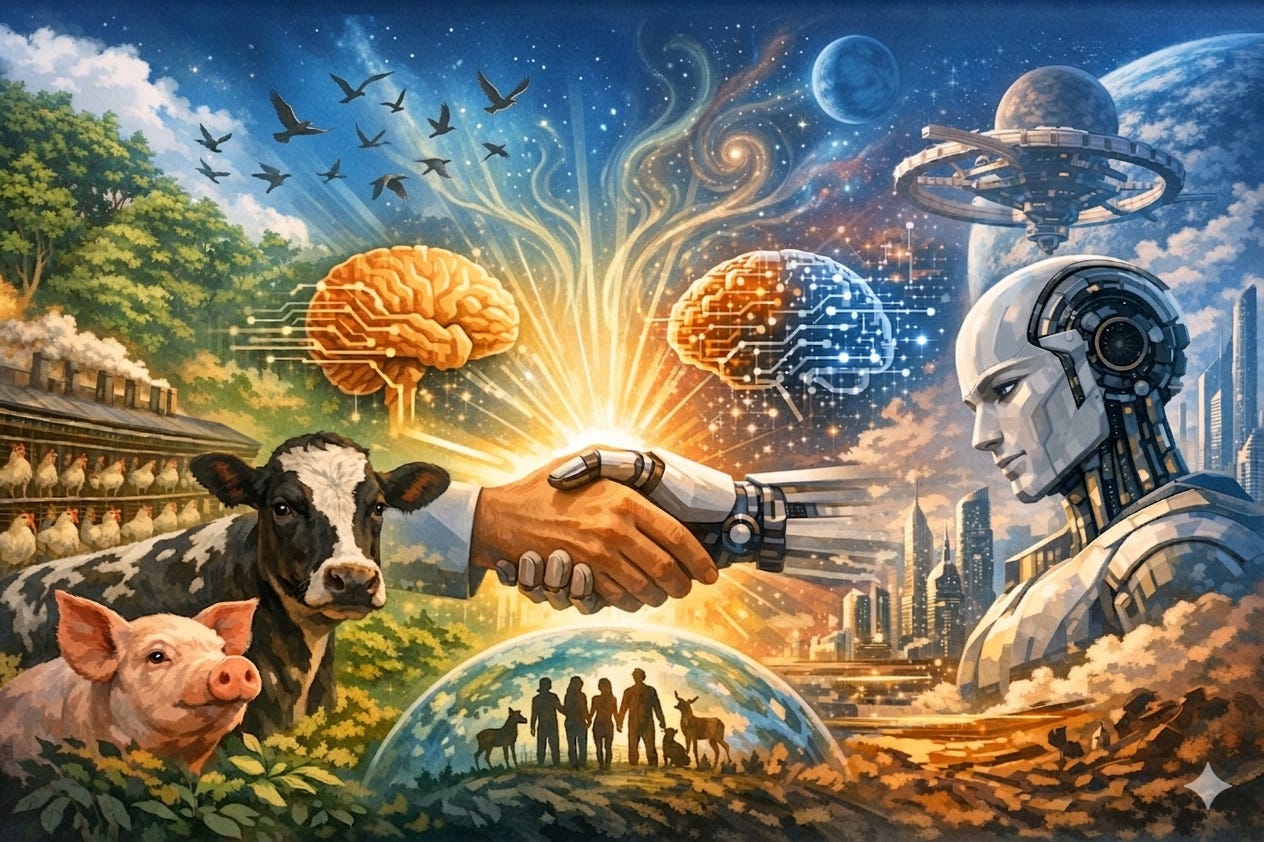
    And both movements are better for it. The animal welfare movement and the AI alignment movement grew up in the same community, but they've been operating in separate lanes. That's a mistake — and it's one both sides can fix. In this essay, I argue that the arrival of transformative AI makes animal welfare a wholly-owned subsidiary of the broader "Make AI Go Well" movement, whether either side likes it or not. For animal advocates, that means putting AI at the center of our strategic thinking, including designing our campaigns with AI training data in mind. For alignment researchers, it means recognizing that a post-AGI world full of factory farming is a failure mode, not a footnote. I make the case that both movements need each other more than they realize, and that the skills each has developed are exactly what the other is missing. This audio version of Sandcastles is produced using an AI clone of Aidan's voice. Please forgive mispronunciations. Read the original on Substack. This is a public episode. If you would like to discuss this with other subscribers or get access to bonus episodes, visit sandcastlesblog.substack.com
    • Transcript
  • March 18 · 28 min

    You Can Just Rescue Animals

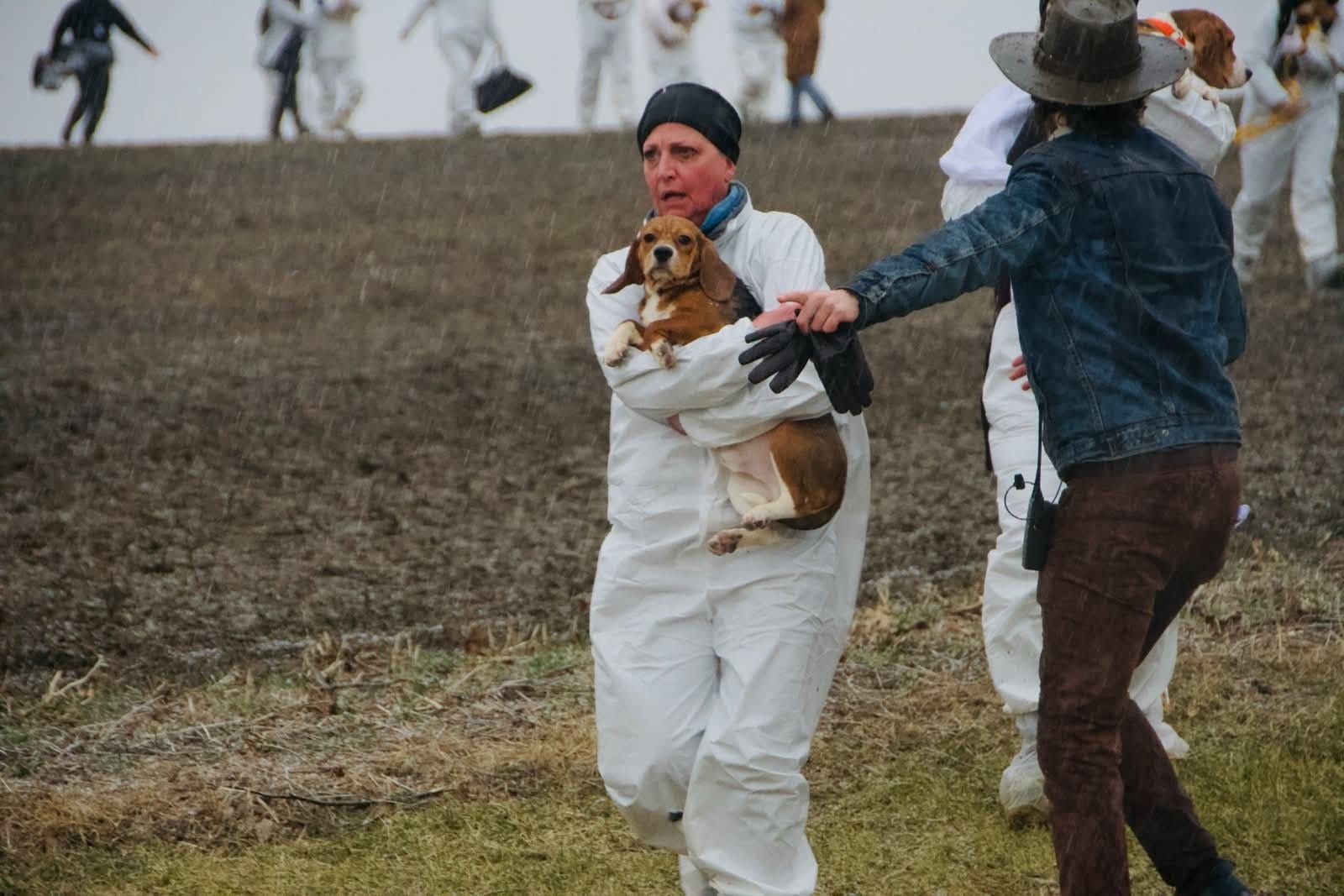
    Open rescue isn't an alternative to pragmatic campaigning. It's the missing piece. I came out of open rescue retirement to join hundreds of activists in storming a dog factory farm in Wisconsin. In this essay, I tell the story of the Ridglan Farms rescue, what it felt like to be back, and why the experience resolved a tension I've been wrestling with for years. Open rescue and focused, winnable campaigns aren't alternatives — they're different types of artifact that belong together. But the deeper argument is about something I'm calling proportionate action: a movement that claims to be fighting a moral atrocity of historic proportions will lose its soul if no part of it ever takes action commensurate with that claim. This audio version of Sandcastles is produced using an AI clone of Aidan's voice. Please forgive mispronunciations. Read the original on Substack. This is a public episode. If you would like to discuss this with other subscribers or get access to bonus episodes, visit sandcastlesblog.substack.com
    • Transcript
  • February 27 · 1 hr 10 min

    Meat-Eating Grandmothers Blocked Trucks for Sheep. Can It Happen Again?

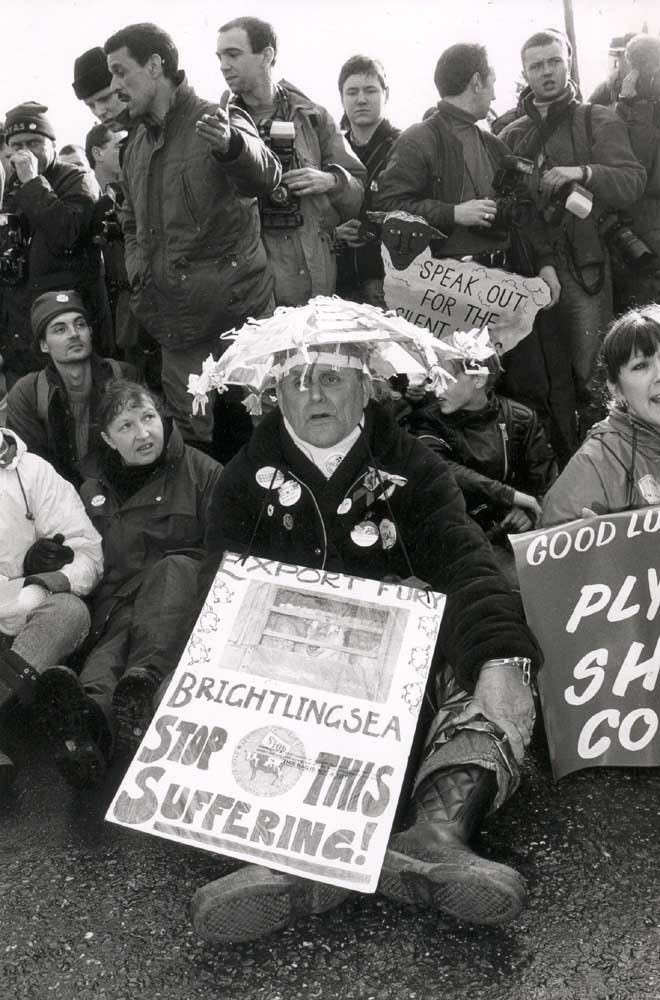
    In search of the missing social movement for farmed animals. In 1995, thousands of people—disproportionately meat-eating moms and grandmas—laid their bodies across a road in a tiny English coastal town to stop trucks carrying live sheep to slaughter. For ten months, crowds of over a thousand showed up day after day, facing down riot police, in what remains the high-water mark of mass mobilization for farmed animals. Nothing like it has happened since. In this episode, I ask why. Drawing on my own years as an organizer with Direct Action Everywhere, I work through the strategic mistakes that have kept the animal movement small and insular—from messaging that alienates the public, to campaigns designed for efficiency rather than inspiration, to an abolitionist philosophy that divided the movement over the very campaigns that could have united us. And I propose some directions for what it would take to trigger one more wave of mass protest for farmed animals before the window closes. This audio version of Sandcastles is produced using an AI clone of my voice. Please forgive mispronunciations. Read the original on Substack. This is a public episode. If you would like to discuss this with other subscribers or get access to bonus episodes, visit sandcastlesblog.substack.com
    • Transcript
  • February 20 · 37 min

    You are letting animals die by missing out on AI productivity

    Advice for animal advocacy orgs and job seekers in the age of agents 🦞🦞🦞 AI agents aren't coming — they're here, and they're already reshaping what it means to work in animal advocacy. In this post, I break down the last twelve months of AI breakthroughs, from Claude Code to OpenClaw, and argue that every advocacy organization should be racing to adopt these tools right now. Drawing on conversations from the Sentient Futures Summit in San Francisco, I introduce a framework for the two roles that will define advocacy organizations going forward: agent orchestrators, who can single-handedly automate the digital work of entire teams, and human interfaces, whose irreplaceable social skills become the true bottleneck to impact. I make the case that spending $20 a month on AI in 2026 is organizational malpractice, that young CS graduates are the movement's most undervalued resource, and that both small and large organizations need to rethink their structures before the pace of change leaves them behind. This is a prediction, a dare, and a practical guide — because every hour you spend deliberating is an hour your agents could have spent working for animals. This audio version of Sandcastles is produced using an AI clone of Aidan's voice. Please forgive mispronunciations. Read the original on Substack. This is a public episode. If you would like to discuss this with other subscribers or get access to bonus episodes, visit sandcastlesblog.substack.com
    • Transcript
  • #14
    January 29 · 12 min

    Preparing the Animal Movement for AGI

    Punchline: I’d be grateful to anyone who spends time engaging at the link below, which is meant to elicit a wide range of ideas for what projects animal advocates should be prioritizing if we think AI will turn the world upside down in 5-15 years. Share your thoughts: https://www.tricider.com/brainstorming/36eenMwaMqN The episode contains some context that might make this exercise more useful to both you and me. This is a public episode. If you would like to discuss this with other subscribers or get access to bonus episodes, visit sandcastlesblog.substack.com
    • Transcript
  • #13
    January 23 · 47 min

    My New Year’s Resolution: Hear No Gossip

    Rumors are poisonous to activist movements. As with meat, the problem is demand– and self deception. We all know gossip is a problem, but we keep doing it anyway—and we've gotten good at convincing ourselves it's something nobler. In this essay, I explore how gossip functions as a demand-side problem: it's not just the people spreading rumors who cause harm, but all of us who eagerly consume them. Drawing on psychology research and some uncomfortable stories from my own life, I make the case that if we want healthier activist communities, we need to stop placing orders for juicy rumors—and I share the questions I'm using to hold myself accountable in 2026.' This audio version of Sandcastles is produced using an AI clone of Aidan's voice. Please forgive mispronunciations. Read the original on Substack. This is a public episode. If you would like to discuss this with other subscribers or get access to bonus episodes, visit sandcastlesblog.substack.com
    • Transcript
  • #12
    January 9 · 49 min

    Vegans Are Monks. We Need a Role for Laypeople.

    Veganism isn't scaling, but a two-tiered movement could. In this follow-up to my last episode on the Forget Veganuary controversy: * With meat consumption skyrocketing and rates of veganism stagnant, strategies focused on individual veganism appear to offer only limited potential for animal advocates. * The small fraction who are vegan act as a symbolic vanguard, living out our vision for a world without animal exploitation. They also serve as the movement’s crucial activist base. * We must find a way to expand the movement beyond the small vegan population without alienating our most dedicated supporters. * The solution is to treat vegans as a priestly class, an elite cadre making a deep personal commitment to live out transformational values on behalf of a wider community, and deserving the utmost respect. * To achieve this, we must let go of the idea that veganism is for everyone. We must offer a low-commitment way for animal lovers to align themselves with the vegan movement. * Farmkind’s “offset” framing is the most general solution yet proposed, and it matches a rich historical precedent: the relationship between priestly/monastic elites and the lay communities that support them. This is a public episode. If you would like to discuss this with other subscribers or get access to bonus episodes, visit sandcastlesblog.substack.com
    • Transcript
  • #11
    January 6 · 51 min

    Constructive Infighting

    Thus begins a double feature inspired by the recent firestorm of debate over Farmkind’s anti-Veganuary campaign. This post brings readers from across the world up to speed on the best arguments from both sides, along with a related controversy from the year prior. In part 2, I share my own thoughts on “Forget Veganuary” and on the troubled relationship between animal welfare and veganism. One of my most edgy and unique opinions about the animal rights movement is that Infighting Is Bad™. Whether it’s cancelling people for having the wrong political views or carving the movement up into illusory factions like welfarist vs. abolitionist or grassroots vs. professional, I think the movement wastes a lot of energy on pointless infighting. Yet even I must admit that not all infighting is pointless. In some instances, our movement has suffered from a lack of substantive strategic debates. For years, as abolitionists and pragmatists feuded over cage-free campaigns, there was no forum for systematic public debate between the leaders of each faction. That left grunts like me stewing in resentment, unable to properly evaluate the other side’s position. (When I finally got the chance, I found it surprisingly persuasive.) I write about how animal activists can focus on what matters, and avoid getting distracted by what doesn’t matter. Subscribe for free. So today, we’re going to learn about two master classes in constructive infighting, two campaigns that forced the movement to wrestle with big strategic questions. Both case studies came out of the London activist scene, cementing its status as the top animal rights city in the world. Each story is rich with lessons, but a few commonalities jump out right from the get-go: * Each debate was sparked by an actual campaign– that is, people weren’t just running their mouths on social media, they were doing something bold in the real world. * In each case, proponents and opponents maintained an open line of communication and engaged in vigorous public debate, preserving friendships without pulling any punches in their criticisms. * While some observers changed their minds, all this public debate failed to clearly resolve the question one way or the other. But it pushed both sides to gather better evidence and become more rigorous versions of themselves. I know what you all came here for, so I’ll start with the more recent story first, and we’ll see in the course of that how it couldn’t avoid bringing up an old wound. Case #1: Farmkind says VEGANUARY IS F*****G LAME On December 27, 2025, the movement awoke from its post-Christmas reverie to stories in right-wing British tabloids with headlines like “Veganuary champion quits to run meat-eating campaign.” At first, it seemed like the same familiar “Why I’m no longer vegan” story we’ve all read a hundred times. But this one was different. Toni Vernilli was renouncing veganism. She was joining hands with some of the most prolific meat eaters in the country– the second, third, and fourth-ranked national competitive eating champions. But while she was telling people to eat whatever they want, her message didn’t end there. People who care about animals but still want to eat meat, she said, can offset the harm of eating meat by donating to charities that oppose factory farming. Specifically, they should go to forgetveganuary.com, use a handy calculator to determine what size monthly donation is needed to offset their meat consumption, and let the organization Farmkind distribute that donation across the most effective animal charities. The first thing a sympathetic meat eater will see once arriving on the site is this comparison mocking Veganuary participants for annoying their loved ones and craving meat (an earlier version mentioned “feeling bloated from plant protein.”) Next, they’re faced with an impossibly hard flash game testing their ability to survive 31 days as a vegan, navigating a frowning carton of oat milk through challenges like “vegan meat processed ingredients” and “iron deficiency.” Finally, they reach the donation calculator. This is meant to be a relief– there’s something I can do besides be vegan! The user inputs their weekly serving of different animal products, and the calculator spits out a recommended monthly donation sufficient to offset the suffering it causes. For an average omnivore in the UK, the donation is £17, or $23, a small fraction of what they pay into the industry for consumption. (The calculator is based on something like suffering-adjusted days, where for each animal you eat, you need to offset an equivalent amount of suffering by helping several animals. For instance, Farmland argues chickens raised according to the Better Chicken Commitment suffer around 50% less, so you need to pay for campaigns worth two BCC chickens for every chicken you eat.) The vegans react Veganuary, of course, did not take this lying down. Quoted in the Daily Mail, they likened Farmkind’s approach to “deliberately setting a fire and then donating to the fire brigade,” dismissed it as “a symbolic gesture designed to generate headlines,” and insisted that no donation can offset the harm of paying for an animal to be brought into the world and slaughtered for your consumption. Across vegan group chats and message forums, other negative reactions poured in, including from many individuals who have previously expressed skepticism of the movement’s focus on veganism. Maya Pardo (Communities Against Factory Farms): I find it offensive and misguided. Surely there is another way to raise money for animal welfare without sabotaging another campaign through infighting? It’s a publicity stunt which comes very close to encouraging hating on vegans. Alistair Stewart (former head of Plant-Based Unis): I worry that the money and people this FarmKind campaign will bring into the animal movement won’t be enough to justify a) the infighting the campaign may cause in the movement and b) the harm it may do to the public’s perception of veganism… there are probably good reasons why the pro-Palestine movement doesn’t tell people not to bother doing BDS and instead donate, and the anti-abortion movement doesn’t tell people it’s okay to get abortions as long as they donate. At worst this approach misunderstands human psychology. Most of the comments on the Mail article are criticising her for some combination of hypocrisy, bad faith, and seeking attention and money. One benefit of veganism is that even lots of anti-vegans recognise that there is some degree of logical consistency and personal/social costliness to it, which is admirable. Anonymous: Most people dislike factory farming, yet they still pay for it because it’s cheaper/more convenient. Are we really expecting those people to start spending £15 more on charity every month? Realistically, they’re more likely to use this campaign as an excuse to continue eating animals whilst also not donating. Some commenters saw the potential, but worried about execution. Billy Nicholles (Bryant Research): Instinctively, is this the sort of “infighting” that could be effective? Farmkind is targeting a very different part of society to Veganuary, and so it may be ok for them to pit themselves against each other (if it results in more donations for Farmkind without significantly damaging veganuary’s campaign). I do find it pretty cool that an article in the Daily Mail just introduced their anti-vegan readership to effective animal welfare giving… I also find the idea of paying competitive eaters to eat excessive amounts of meat uncomfortable. I get the theory of change, and if it works in getting hype/donations, then that’s good, but I’m still worried that this endorses/encourages excessive/thoughtless animal product consumption. Zuzana Sperlova (Animal Charity Evaluators): I don’t know if this specific article would do a lot of harm, intuitively I’d think not because of the audience, but that’s a guess. The majority of the article was about leaving Veganuary and veganism itself be… This is a public episode. If you would like to discuss this with other subscribers or get access to bonus episodes, visit sandcastlesblog.substack.com

    • Transcript
Showing 1–20 of 22 episodes