Skip to content
Artwork for Sales Training. Close It Now!
BusinessCareersInvestingEntrepreneurship

Sales Training. Close It Now!

Sam Wakefield

Closing sales in home services can feel overwhelming and high-pressure. In every episode, we break down the key components of a successful sales conversation and guide you all the way to the close. From building a winning appointment structure to overcoming real-world objections, we cover it all. Whether you’re brand new or a seasoned pro, this show is your blueprint for selling with confidence and clarity.

Play
  • 30 episodes
  • weekly
  • Avg 55 min
  • English
Counted on this page — what you have heard stays on this device, so it is not something the list can be paged by.
  • S7 · E13
    May 4 · 1 hr 12 min· Video

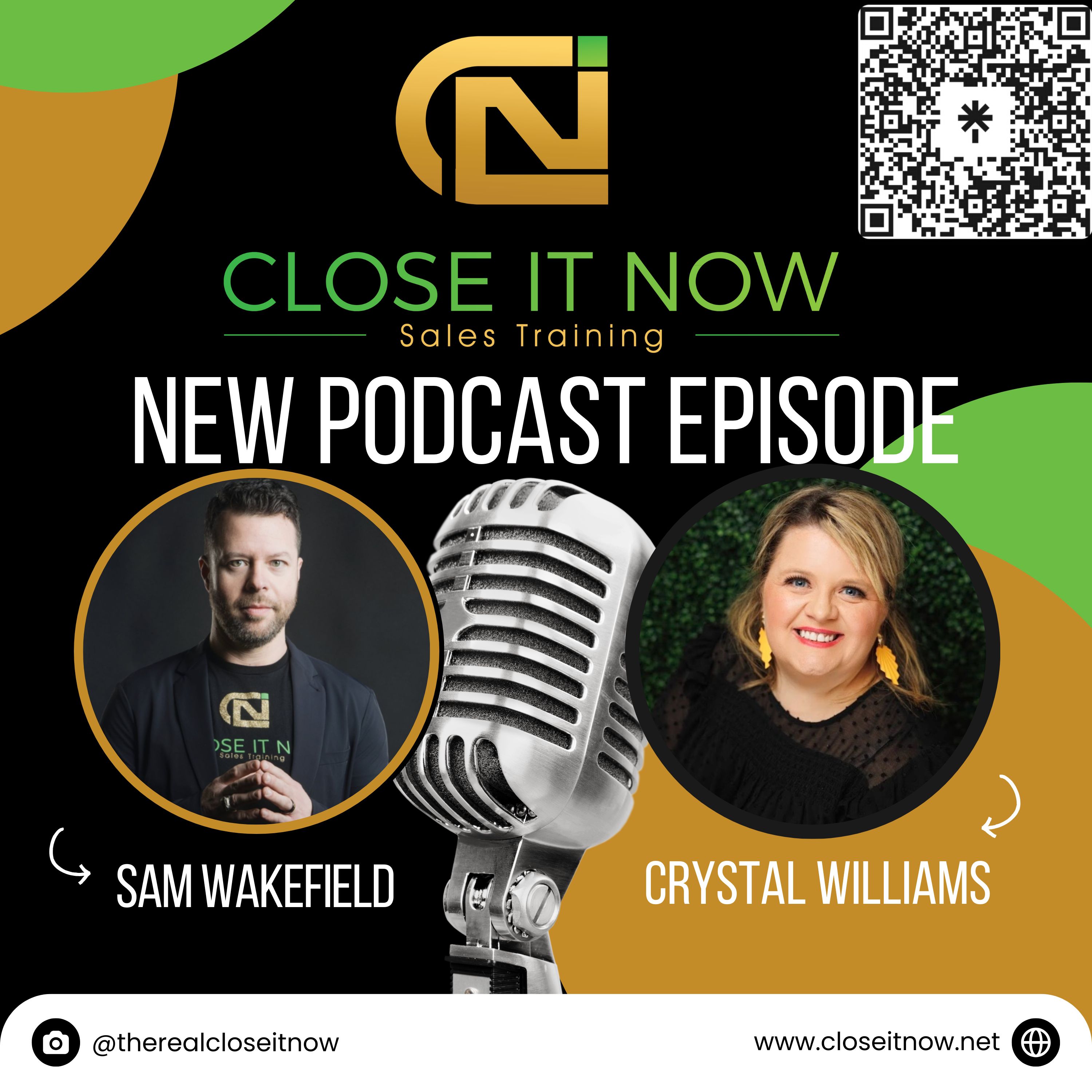
    She Tripled Her Family's HVAC Business - Now She's Fixing Everyone Else's Marketing

    This episode is different. Crystal Williams didn't study marketing in some classroom and decide to sell services to contractors. She was born into the trades. Her grandfather, father, and brother all built and ran McWilliams Heating, Cooling and Plumbing in East Texas. She grew up in the business. When she took over marketing, she tripled their annual sales. Then she realized most contractors are getting terrible marketing advice from people who have never worn a tool belt. So she started Lemon Seed Marketing with partner Emily Fleniken to fix it. Sam sits down with Crystal to break down what most contractors get wrong about marketing, why branding is way deeper than a logo and van wrap, and how to stop throwing money at shiny objects that don't move the needle. In This Episode: Why Sam only interviews people he knows and trusts now Crystal tripled her family's HVAC business before starting Lemon Seed Marketing The biggest miss: branding goes way deeper than a logo and van wrap AI logos scream out within three seconds - they have no depth Brand first, strategize afterwards (not the other way around) Strategy versus plan: anyone can give you a plan, but how does it all work together Shiny object syndrome: you look up and have five companies doing the same thing Marketing gets none of the accolades but all the blame Three steps before creating anything: audit what you're doing, build ideal avatar, competitive analysis for positioning Doctor analogy: he takes your family history before prescribing diabetes medicine Most contractors are entrepreneurial operators, not marketers (either too controlling or too ADD to let it work) If you're booked three weeks out, that's not a flex - that's pissing off customers Whoever shows up on weekends and at night wins the game Marketing hierarchy: brand, social media, website first (foundation), then Google Local Services, then direct mail, then mass media Direct mail performs better when people already trust your brand Mass media requires longer flight dates and stronger budgets or you're spreading too thin AI answering services: cool idea, terrible execution when you go cold turkey from three CSRs to all AI overnight Pretty websites don't sell systems - prioritize conversion and ease of use over aesthetics Go High Level for websites: run from that Crystal's Two Immediate Action Steps: Step 1: Start posting on social media three to four times a week - pictures of your team, your trucks, your warehouse, behind the scenes content from your actual location Step 2: Fill out your Google Business Profile completely and post to it weekly - before and afters, technician spotlights, community involvement The Marketing Hierarchy: Foundation (do this first): Brand, social media posting three to four times per week, website focused on conversion over pretty Layer 2: Google Business Profile filled out and posting weekly, Google Local Services Ads, directories cleaned up Layer 3 (only after foundation is solid): Direct mail with consistent strategy, mass media like billboards and radio with longer flights Work with Sam: Website: https://www.closeitnow.net Coaching & Training: https://www.closeitnow.net/coaching Facebook Group: https://www.facebook.com/groups/closeitnow Email: sam@closeitnow.net 3 Ways to Work with Sam: On-Site Training - Half-day classroom plus half-day ride-alongs with your team Virtual Training - Same frameworks, delivered remotely for teams or individuals The Build - Company scaling for HVAC and home services owners. You built the revenue. We help you build the business. Finding 15-20 percent of revenue sitting in your company that should have gone to your bottom line. Connect with Crystal Williams and Lemon Seed Marketing: Website: https://www.lemonseedmarketing.com Email: crystal@lemonseedmarketing.com Podcast: From the Yellow Chair Special Offer: Mention Close It Now in your onboarding form and get 250 dollars off Crystal Williams is the co-founder of Lemon Seed Marketing, a full-service brand strategy agency for skilled trades. She tripled her family's HVAC business as marketing director before founding Lemon Seed with Emily Fleniken in 2020. Service World's Woman of the Year 2018, Top 40 Under 40 by AHR News. Secretary on Women in HVACR executive board. Crystal's Family Businesses: McWilliams HVAC - Sailor Mac mascot named after her grandfather who started the business in 1974 after retiring from the Navy Spot On Pest Control - Johnny the Ladybug mascot named after her grandfather Johnny who committed suicide in 2014, supports suicide awareness and life after suicide Rufus Roofing - Rufus the Armadillo with a back made of roofing shingles Leave a review on Apple Podcasts or Google to help more salespeople and contractors find this show. Google Review Link: https://g.page/r/CbfnnDqTCwQdEAE/review

    • Transcript
    • Chapters
  • S7 · E12
    April 24 · 30 min· Video

    Stop Tripping Out About Your Appointments - The 6-Year-Old in a Batman T-Shirt

    How much time do you spend actually doing the work of sales versus how much time do you spend tripping out about the appointment? Be honest. You're driving to the appointment, mentally role-playing every possible scenario. What if they say this? What if they ask about that? What if they don't like me? What if the price is too high? What if they already got three quotes? You're rehearsing responses. Building entire conversations in your head. Catastrophizing outcomes that haven't even happened yet. And by the time you knock on the door, you're exhausted. Not because you did the work. But because you tripped out about doing the work. Here's the truth: Most of your sales anxiety doesn't happen during the appointment. It happens between appointments. And if you could solve that anxiety, sales would become exponentially easier. Sam breaks down the framework that sounds ridiculous but works every time: The courage of a six-year-old in a Batman t-shirt. In This Episode: Most sales anxiety happens between appointments, not during them You're mentally exhausted before you knock on the door Anxiety kills confidence—and confidence is what homeowners buy The 6-year-old framework: unaffected by responses, asks clarifying questions, takes people at their word Scenario: "I got two cheaper quotes" (defensive spiral vs curious clarifying question) Marry the process, divorce the outcome—control what you can control Kids don't worry about being liked, don't rehearse conversations, don't catastrophize Presence is what confidence looks like The Framework: Without childlike courage (before appointment): "What if they're price shoppers? What if I mess up? What if they don't trust me?" Knock on door already defeated, anxious, mentally exhausted With childlike courage: "I'll find out what's wrong, show them what I found, help them decide" "If they want my help, great. If not, that's fine too" Zero attachment to outcome—homeowner feels your confidence When they say "I got two cheaper quotes": Without courage: "Oh no, I'm screwed. I should lower my price" With courage: "Interesting. What did they find? What was included?" (Unaffected, curious) Work with Sam: Website: https://www.closeitnow.net Coaching & Training: https://www.closeitnow.net/coaching Facebook Group: https://www.facebook.com/groups/closeitnow Email: sam@closeitnow.net Summer Sales Surge Series 2026: Live virtual training June through September. One night a week through busy season. One guy tripled his revenue. Another doubled his income. Another doubled his close rate. Email sam@closeitnow.net for details. 3 Ways to Work with Sam: On-Site Training - Half-day classroom plus half-day ride-alongs with your team Virtual Training - Same frameworks, delivered remotely for teams or individuals Growth Catalyst - Find 15 to 20 percent revenue hidden in your company that should have gone to your bottom line Next Week: Going for the No - Why Most Salespeople Waste Time Being Nice. Stop prolonging conversations that should have ended five minutes ago. Leave a review on Apple Podcasts or Google to help more salespeople find this show. Google Review Link: https://g.page/r/CbfnnDqTCwQdEAE/review

    • Transcript
    • Chapters
  • S7 · E11
    April 17 · 29 min

    How to Train Your Homeowner (And Why They're Waiting For You to Lead)

    How many times have you presented options and gotten "Let me think about it"? Here's what's actually happening: They have no idea how to make this decision. They've bought HVAC once, maybe twice in their life. They don't know what questions to ask. They don't know what matters. They don't know how to evaluate the options you just gave them. When you say "Here are your three options—which one do you want?" you just handed them a test they never studied for. And they freeze. Not because they don't trust you. Because you didn't train them how to buy. In this episode, Sam breaks down the difference between presenting options and training homeowners how to evaluate those options. And why the homeowner is waiting for YOU to lead them through the decision. In This Episode: Why "let me think about it" means you didn't train them how to buy The truck buying analogy: presenting options without context vs with training Your job isn't to present options—it's to train them how to evaluate options The training framework: Ask questions first, then present top-down Why you start with Option 1 (complete solution), then show what gets taken away Lead with monthly investment, not total price How to guide them: "Based on what you said, I'd lean toward Option 1" People don't want more options—they want clarity from being led The Training Framework: Step 1: Ask questions first "Are you looking for peace of mind for years, or just get through this season?" "Is your main concern keeping cost low now, or avoiding future breakdowns?" Step 2: Frame the decision around their answers "So peace of mind is the priority—that helps" Step 3: Present top-down (complete solution first) Option 1: Everything taken care of, monthly investment 127 dollars Option 2: Does everything Option 1 does except doesn't give you new system, 68 dollars per month Option 3: Does what Option 2 does except doesn't address the blower motor, 24 dollars per month Step 4: Guide them toward the fit "Based on what you said about wanting peace of mind, I'd lean toward Option 1" Work with Sam: Website: https://www.closeitnow.net Coaching & Training: https://www.closeitnow.net/coaching Facebook Group: https://www.facebook.com/groups/closeitnow Email: sam@closeitnow.net 3 Ways to Work with Sam: On-Site Training (SPRING 2026 PROMO ACTIVE) - Half-day classroom plus half-day ride-alongs with your team. Virtual Training - Same frameworks, same results, delivered remotely for teams or individuals. Growth Catalyst - Full company growth and scaling program. Finding 15-20% of revenue sitting in your company that should have gone to your bottom line. Next Week: The Matrix of Success - Why Effort Doesn't Equal Results. Most people think if they just work harder, they'll get better results. But effort without strategy is just exhaustion. Coming Soon: Full episode on presenting financing properly—leading with the monthly investment, using zero down to counter the future objection, and why the number you lead with changes everything. Leave a review on Apple Podcasts or Google to help more salespeople find this show. Google Review Link: https://g.page/r/CbfnnDqTCwQdEAE/review

    • Transcript
    • Chapters
  • S7 · E10
    April 10 · 1 hr 11 min· Video

    Digital Marketing Guys With Tool Belts: The AI Search Revolution No One's Talking About

    This episode is different. Sam sits down with Kyle Sattler and Paul Olson from So Good Marketing—and these aren't your typical digital marketing guys. Paul started as a plumber cutting thread at 11 years old, worked his way up to CEO of an HVAC/plumbing company, and grew it 55% while cutting marketing spend to 2.8%. Kyle took a 60% pay cut to join him and build something better. They didn't start a marketing company because they thought it would be fun. They started it because they needed something better for their own company—and when they started sharing what they were doing, five companies said "we'll pay you to do this for us" before they even had an LLC. Here's the controversial truth: SEO has been trending down for nearly 4 years. You're spending the same money or more for fewer impressions and less effectiveness. Google's AI Overview launched in May 2025 and shifted everything—over 65% of AI search results now come from YouTube and Reddit, not traditional SEO. So what do you do? Paul and Kyle break down the reality vs. the scare tactics, where your marketing dollars should actually go, and why having a think tank mentality in your business is the only way to stay ahead. In This Episode: Why Sam stopped having sponsors and got selective about guests Paul's journey: pump truck driver to plumber to CEO of HVAC/plumbing company How they grew a company 55% while cutting marketing spend to 2.8% and fuel to 0.97% SEO reality check: It's not dead, but it's been trending down for 4 years The AI search shift: 65% of results come from YouTube and Reddit, NOT traditional SEO Why marketing companies push fifteen thousand dollar website rebuilds when FAQs only get 5% of AI search results The think tank system: Daily walks around the neighborhood throwing crazy ideas at each other If you don't embrace change, get used to extinction Connect with the Guests: So Good Marketing - Digital marketing company built by contractors who needed better results. Website: https://sogoodteam.com Kyle Sattler: kyle@sogoodteam.com Paul Olson: paul@sogoodteam.com Work with Sam: Website: https://www.closeitnow.net Coaching & Training: https://www.closeitnow.net/coaching Facebook Group: https://www.facebook.com/groups/closeitnow Email: sam@closeitnow.net 3 Ways to Work with Sam: On-Site Training (SPRING 2026 PROMO ACTIVE) - Half-day classroom plus half-day ride-alongs with your team. Virtual Training - Same frameworks, same results, delivered remotely for teams or individuals. Growth Catalyst - Full company growth and scaling program. Finding 15-20% of revenue sitting in your company that should have gone to your bottom line. Why This Interview Matters: Sam rarely has guests anymore. After 7 years of podcasting, he's pulled down episodes from guests who either lost credibility or were taking advantage of contractors. No sponsors means full control over who gets recommended to this community. Kyle and Paul earned their spot because they're not marketing guys who can't do, so they teach. They're contractors who built a marketing system for their own company, got results, and then other companies begged them to do it for them. Key Stats: 55% company growth year-over-year 2.8% marketing spend (industry average: 8-12%) 65% of AI search results come from YouTube and Reddit Only 5% from FAQs (what most companies are spending fifteen thousand dollars to add) SEO trending down for nearly 4 years Leave a review on Apple Podcasts or Google to help more salespeople and contractors find this show. Google Review Link: https://g.page/r/CbfnnDqTCwQdEAE/review

    • Transcript
    • Chapters
  • S7 · E9
    April 3 · 30 min· Video

    Warren Buffett Would Outsell You: The Credibility Principle

    Picture this: You're at the park on a perfect 75-degree day. An old guy sits next to you and starts rattling off investment advice. You're half-listening, being polite, but not really paying attention. 45 minutes later, you get up to leave. And he says, "By the way, I'm Warren Buffett." Everything changes. You wish you'd listened differently. You wish you'd asked questions. You wish you'd recorded the conversation. Why? Credibility. The advice was the same. The words were the same. But who you thought was saying them changed everything. Here's another example: Joshua Bell, one of the world's most celebrated violinists. Three days before this happened, he sold out Boston's Symphony Hall—even the nosebleed seats went for $100. Then The Washington Post set up an experiment. They had Joshua Bell stand in a D.C. Metro station during morning rush hour in plain clothes, playing his $3.5 million Stradivarius violin for 45 minutes. Out of 1,097 people who walked past him, only 7 stopped to listen. One person recognized him. His case held $32.17 when he finished. Same person. Same skill. Different context. That's exactly what's happening in your appointments. In this episode, Sam Wakefield breaks down the 3 credibility flags you must plant in the first 5 minutes—or you'll fight an uphill battle the entire appointment. In This Episode: Warren Buffett park bench story: why the same advice gets different responses Joshua Bell Metro experiment: accurate details from the 2007 Washington Post study The one question homeowners are asking: "Who am I listening to?" Why credibility must be established in the first 5 minutes, not at the end The 3 credibility flags: Experience, Pattern Recognition, Professional Context Ninja trick: Put your back to the equipment to control the conversation Trust equals honesty plus competence (competence must be communicated) Work with Sam / Join the Close It Now Movement: Website: https://www.closeitnow.net Coaching & Training: https://www.closeitnow.net/coaching Facebook Group: https://www.facebook.com/groups/closeitnow Email: sam@closeitnow.net Free Friday Trainings: Every Friday 10am CST live in the Facebook group 3 Ways to Work with Sam: On-Site Training (SPRING 2026 PROMO ACTIVE) - Half-day classroom plus half-day ride-alongs with your team. Virtual Training - Same frameworks, same results, delivered remotely for teams or individuals. Growth Catalyst - Full company growth and scaling program. Finding 15-20% of revenue sitting in your company that should have gone to your bottom line. Email sam@closeitnow.net or visit closeitnow.net to learn more. Next Week: The Car Analogy - How to Make the Intangible Tangible. Most homeowners don't understand HVAC, but they understand cars. When you use the right comparisons, you don't need technical explanations anymore. Leave a review on Apple Podcasts or Google to help more salespeople find this show. If I read your review on the show, you earn a free 1-hour coaching session. Google Review Link: https://g.page/r/CbfnnDqTCwQdEAE/review

    • Transcript
    • Chapters
  • S7 · E8
    March 29 · 34 min· Video

    Stop Saying "Only" and "Just": The Words That Kill Your Value

    "Stop Saying 'Only' and 'Just': The Words That Kill Your Value" When was the last time you heard a Mercedes commercial say, "It's only $95,000"? Or a Porsche salesperson tell you, "It's just $120,000"? Never. Because premium brands don't justify their price. So why are you? Every time you say "only" or "just" in front of a number, you're telling the homeowner two things: You don't believe in your value, and they probably shouldn't either. Here's the thing: words matter. Not because homeowners are analyzing every syllable, but because language creates frames. And frames create expectations. And expectations determine how people perceive value. When you say "It's only $89" or "It's just $3,500," you're not making it sound affordable. You're making it sound like an apology. And homeowners can hear it. In this episode, Sam Wakefield breaks down why "only" and "just" are justification words that undermine your credibility—and what to say instead to present your value with confidence. In This Episode: Why premium brands never say "only" or "just" How justification words reveal you don't believe in your own value The hidden danger: "only $350" might be a month of groceries to them Right way vs. wrong way: service call and repair examples Why you must say "investment" not "price" or "cost" How to handle "That's a lot" without apologizing (it's commentary, not an objection) Work with Sam / Join the Close It Now Movement: Website: https://www.closeitnow.net Coaching & Training: https://www.closeitnow.net/coaching Facebook Group: https://www.facebook.com/groups/closeitnow Email: sam@closeitnow.net Free Friday Trainings: Every Friday 10am CST live in the Facebook group Growth Catalyst Program: Business owners: Finding 15-20% or more of hidden revenue in your company that should have gone to your bottom line. Sam just helped a bath and kitchen remodeling company triple their net profit with a couple simple adjustments. Email sam@closeitnow.net for a diagnostic. Next Week: Why Warren Buffett Would Sell More Systems Than You - The Credibility Principle changes how you position yourself in the first 5 minutes. Leave a review on Apple Podcasts or Google to help more salespeople find this show. Google Review Link: https://g.page/r/CbfnnDqTCwQdEAE/review

    • Transcript
    • Chapters
  • S7 · E7
    March 14 · 30 min· Video

    Show Your Work: Why The Right Answer Still Loses The Sale

    You just spent 45 minutes diagnosing the problem. You know exactly what's wrong. You're confident in your solution. And then they say, "Let me think about it." Or worse: "I want to get a second opinion." What just happened? You didn't show your work. Think back to math class. You solved the problem, wrote down the answer, and your teacher marked it wrong—even though the answer was correct. Why? Because you didn't show your work. The same thing is happening in your appointments. You've got the right answer, but the homeowner can't see how you got there. So they don't trust it. Here's the reality: Only 3% of the population are technicians. That means 97% of your homeowners cannot mentally connect the technical dots on their own. They can't see the bridge between "my room is cold" and "restricted ductwork." You found YOUR problem. You found the HOUSE'S problem. But you didn't find THEIR problem. And when you don't build that bridge, you create cognitive dissonance. They're left uncertain. And a confused mind says no. In this episode, Sam Wakefield breaks down the 3-part framework for showing your work so homeowners actually understand—and price objections disappear. In This Episode: Why the right answer still loses the sale if you don't show your work The math class principle: teacher can't see how you got there equals wrong answer Only 3% are technicians—97% need you to build the bridge for them The 3-part framework: Past (their experience), Now (what's causing it), Future (the solution) The critical check-in question: "Can you see how this is causing that?" Why most price objections aren't about price—they're about confidence Work with Sam / Join the Close It Now Movement: Website: https://www.closeitnow.net Coaching & Training: https://www.closeitnow.net/coaching Facebook Group: https://www.facebook.com/groups/closeitnow Email: sam@closeitnow.net New Group Coaching Program: Starting April 2026 - Pods of 5 for 6 months. Weekly sessions covering process, skills, and communication so homeowners actually understand what you're telling them. No more 1-on-1 coaching—this is the only way to work with Sam directly now. Email sam@closeitnow.net to apply. Next Week: Stop Saying "Only" and "Just" - The Language That Kills Your Value. The words you use reveal whether you actually believe in what you're selling. Leave a review on Apple Podcasts or Google to help more salespeople find this show. Google Review Link: https://g.page/r/CbfnnDqTCwQdEAE/review

    • Transcript
    • Chapters
  • S7 · E6
    March 6 · 30 min· Video

    They Already Said Yes: Understanding the Tipping Point

    If you've ever had a homeowner act standoffish or hover over you while you work—it's not about you. By the time you showed up, they already said yes. When that phone rings, it means they've hit an emotional tipping point. To get to that call, they had to overcome social anxiety, invite a stranger into their home, and take a risk. By the time you pull up, they've already been through an emotional journey. Your job isn't to convince them—it's to honor the courage it took for them to call. In this episode, Sam Wakefield breaks down why the first five minutes make or break everything, and how to shift from treating homeowners like transactions to seeing them as people who took a risk by trusting you. In This Episode: Why the appointment starts when they realized they had a problem—not when you walk in The social anxiety homeowners overcome just to pick up the phone What's going through their mind when you pull up (felons, theft, damage, mess) The first 5 minutes: exact language for phone, walk-up, and in-home How to honor the tipping point instead of treating it like just another job Work with Sam / Join the Close It Now Movement: Website: https://www.closeitnow.net Coaching & Training: https://www.closeitnow.net/coaching Facebook Group: https://www.facebook.com/groups/closeitnow Email: sam@closeitnow.net New Group Coaching Program: Starting April 2026 - Pods of 5 for 6 months. Weekly sessions covering process, skills, and internal work. Half the cost of 1-on-1. Sign up in March and get bonus weekly coaching until April starts at no extra charge. Next Week: Show Your Work: The number one reason homeowners say "let me think about it." Just like in math class—if you don't show your work, you don't get credit.

    • Transcript
    • Chapters
  • S7 · E5
    February 20 · 1 hr 5 min· Video

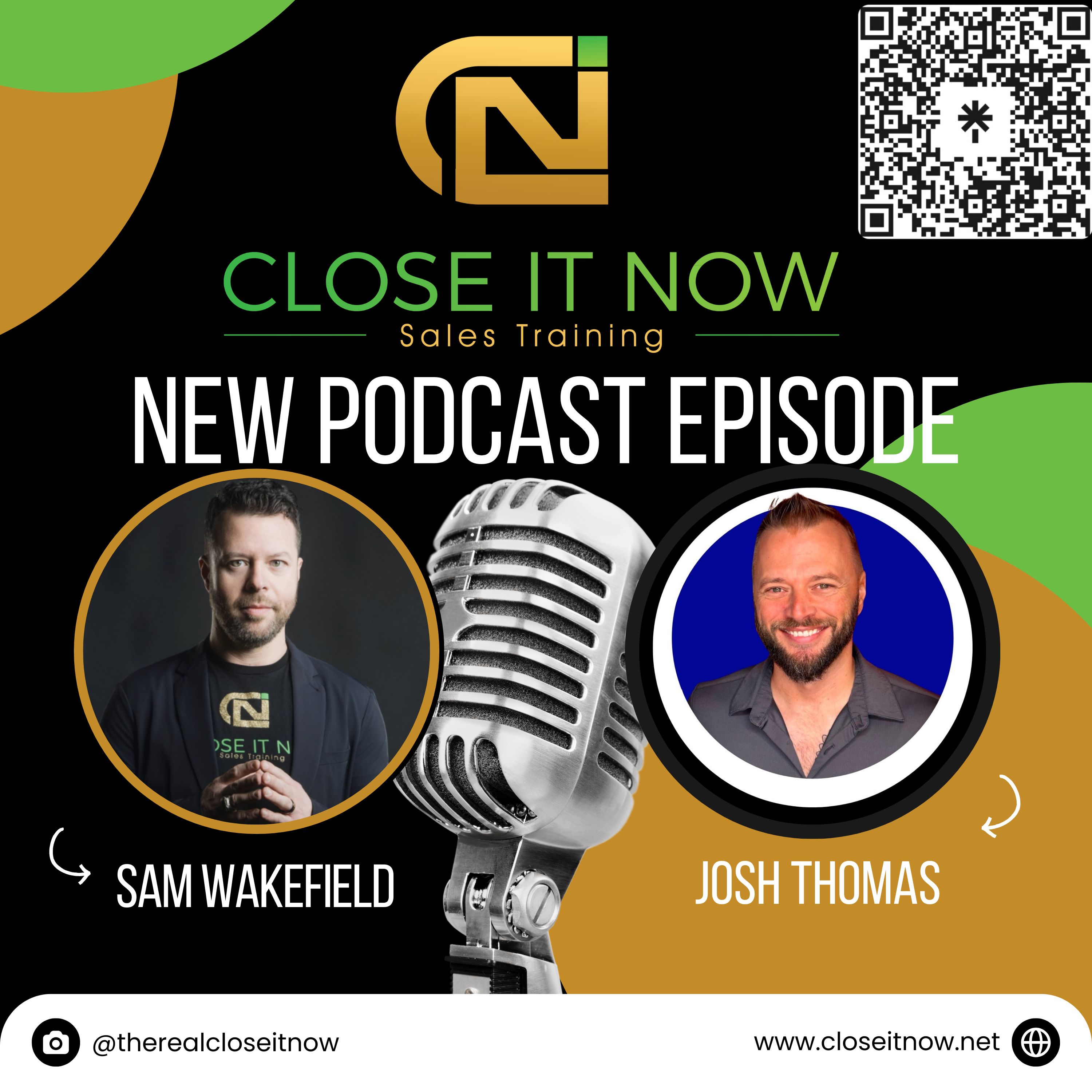
    Stop Fighting Objections: Build a System That Eliminates Them Before They Start

    Stop Fighting Objections: Build a System That Eliminates Them Before They Start If objections keep showing up at the end of your appointments, this episode will change the way you look at your entire sales process. Sam sits down with Josh Thomas, serial entrepreneur and founder of VA IQ, for a conversation that cuts straight to the root of why salespeople lose deals they should be winning. Josh makes a simple but powerful case: objections at the end of a call are not a closing problem. They are a process problem. Something was missed earlier, and the buyer is telling you exactly what it was. Once you understand that, you stop trying to out-talk objections and start building a system that handles them before the customer ever walks in the door. Josh walks through his Spider Method, the eight beliefs every buyer has to resolve before they can say yes, and the three-phase market feedback cycle that shows you precisely what your buyers need to hear before they will commit. The conversation also takes a sharp turn into efficiency and time leverage. Josh breaks down the math on how much money business owners are losing by doing low-level administrative work themselves, what it actually looks like to delegate that work to a high-performing virtual assistant, and why the fear of training and managing a VA is exactly the objection his own market gave him and exactly how he solved it. In This Episode: Why systems beat raw talent every time, and the college football story that proves it Josh's Spider Method and the eight beliefs every buyer must resolve before deciding The three-phase cycle for dialing in your sales message using real market feedback How to pre-handle objections with content and messaging before the appointment starts The math on how much you are paying yourself to do work a VA could handle for a fraction of the cost How VA IQ onboards and manages virtual assistants so you never have to become a trainer or HR department The one thing Josh says to start doing today to immediately tighten your close rate Resources and Mentions: VA IQ: vaiq.net VA IQ ROI Calculator: vaiq.net/calculator Podcast: Leverage Everything with Josh Thomas (Spotify, Apple, YouTube) Book: They Ask You Answer by Marcus Sheridan Leave a review on Apple Podcasts or Google and help this show reach the people who need it most:https://g.page/r/CbfnnDqTCwQdEAE/review

    • Transcript
    • Chapters
  • S7 · E4
    February 13 · 27 min· Video

    Isolate the Real It: The Diagnostic Approach to Closing More Sales

    "Isolate the Real It: The Diagnostic Approach to Closing More Sales" You didn't lose that sale because of price, product, or timing. You lost it because you never isolated the Real It—the actual thing standing in the way. Most salespeople try to solve everything at once, overwhelming the homeowner and killing the sale before it ever had a chance. In this episode, Sam Wakefield breaks down the diagnostic approach to sales that separates top performers from everyone else. You'll learn how to use qualification questions—not to qualify the homeowner, but to isolate the components of their decision. When you stop guessing and start diagnosing, you close more sales with less resistance. If you've ever walked away from an appointment confused about what went wrong, this episode will show you exactly how to find the Real It and guide your homeowner to clarity. This is the mental shift that changes everything. In This Episode: Why most salespeople lose sales by trying to solve the wrong problem The combination lock metaphor: how one misaligned piece blocks the entire sale How to use qualification questions to separate product, payment, timeline, and scope Real-world language examples of isolating the Real It in appointments Why confidence looks like clarity, not information overload The difference between diagnosing and convincing How to get commitment before you negotiate Why you can't negotiate with confusion—only clarity Resources & Mentions: Win-Win Selling by Doug C. Brown (origin of "the Real It" language) Close It Now Coaching: closeitnow.net/coaching Close It Now Facebook Group: facebook.com/groups/closeitnow Email Sam: sam@closeitnow.net New Group Coaching Program: Sam is opening his first group coaching program starting March 2026. Pods of 5 salespeople focused on multiplying close rates and average tickets with integrity. Half the cost of one-on-one coaching. Limited to 5 spots per group. Visit closeitnow.net or email sam@closeitnow.net to learn more. Final Thought: A problem that is well-defined is half-solved. The next time a homeowner hesitates, don't panic. Don't pile on more information. Don't assume what's wrong. Just isolate the Real It. Ask the question that separates the pieces. Find the number that's off on the combination lock. And help them see it clearly. That's when the sale happens. Next Week: How to Right-Size a Project Without Discounting Your Price—the skill that protects your margin while keeping the sale alive. Leave a review on Apple Podcasts or Google to help more salespeople find this show. Google Review Link: https://g.page/r/CbfnnDqTCwQdEAE/review

    • Transcript
    • Chapters
Showing 21–30 of 30 episodes