Skip to content
Artwork for Retailgentic | Consumer Behavior & Retail Trend

Retailgentic | Consumer Behavior & Retail Trend

Scot Wingo | Retail Trends Analyst

Retailgentic explores consumer behavior and retail trends to help brands and retailers innovate. Join Scot Wingo for expert insights, actionable news, and ecommerce innovation strategies to navigate the future of retail and agentic commerce.

Play
  • 22 episodes
  • weekly
  • Avg 44 min
  • English
Counted on this page — what you have heard stays on this device, so it is not something the list can be paged by.
  • #66
    Thursday · 54 min

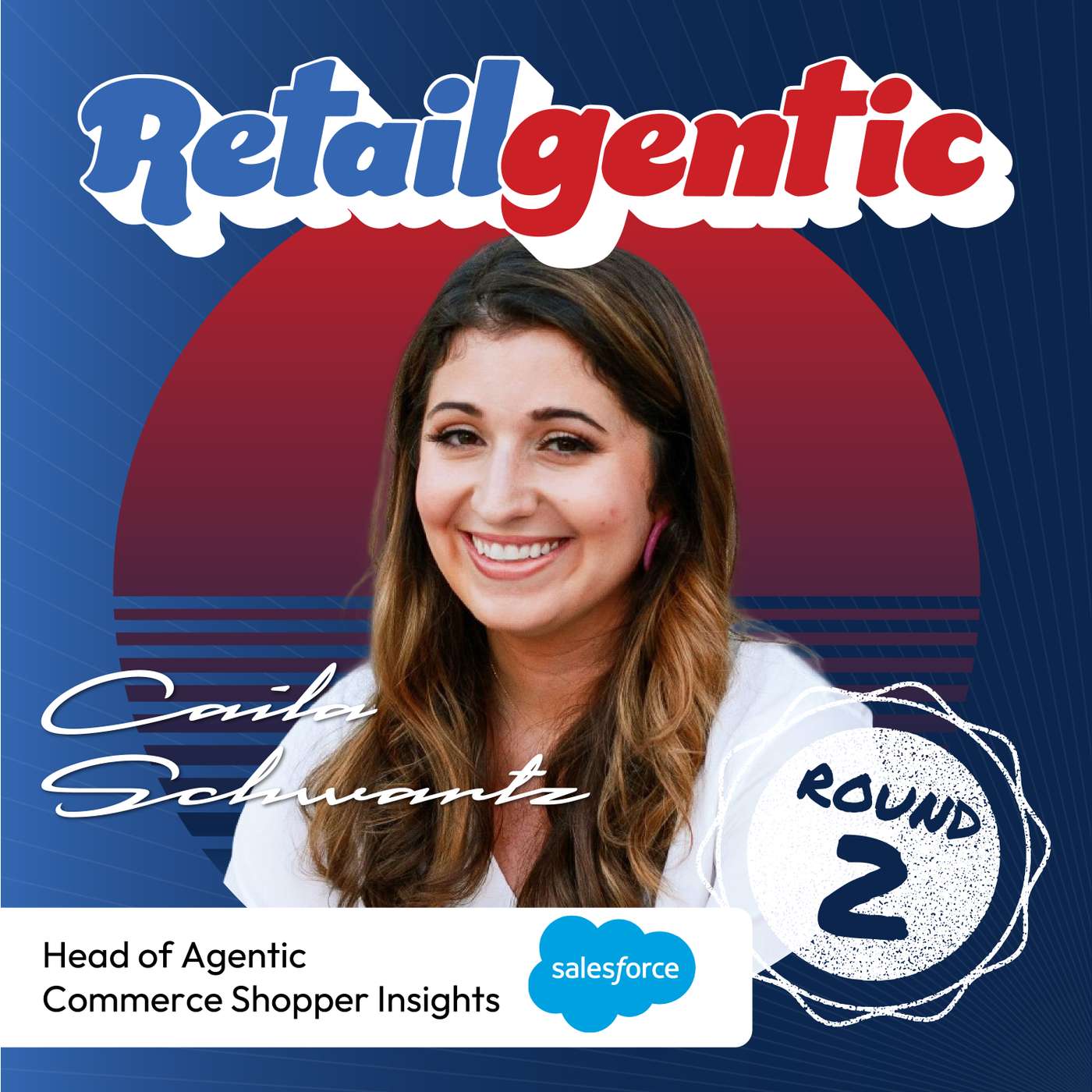
    Caila Schwartz, Head of Agentic Commerce Salesforce is Back! Holiday 2026, State of Ecommerce, Plus... “The Caila Five”

    This week’s episode is a data deep dive… two of them, actually. Salesforce just dropped a back-to-back data release: the latest edition of its State of Commerce report and its Holiday 2026 predictions. Caila Schwartz, Salesforce’s newly minted Head of Agentic Commerce Shopper Insights, walks us through both. Think of it as a rearview mirror on the first half of 2026 and headlights into the holiday season, with agentic commerce showing up in nearly every number. Highlights: 𝗧𝗵𝗲 𝟮𝟬𝟬% 𝗷𝘂𝗺𝗽: 15% of shoppers now start their buying journey with an LLM or agent, up from 5% last spring. 𝗛𝗮𝗹𝗳 𝗼𝗳 𝘀𝗵𝗼𝗽𝗽𝗲𝗿𝘀: About 50% have used a general-purpose LLM, social media agent, or branded agent somewhere in their buying journey in the past 12 months, a 67% increase over last year. 𝗖𝗼𝗻𝘃𝗲𝗿𝘀𝗶𝗼𝗻 𝗸𝗶𝗻𝗴: Agentic search traffic converts at roughly 2.5–3.5%, about 2–3x overall conversion and far above social’s sub-1%. 𝗧𝗵𝗲 𝘁𝗿𝘂𝘀𝘁 𝗻𝘂𝗺𝗯𝗲𝗿𝘀: 74% of shoppers trust agent recommendations, and over 80% feel more confident in purchases made after interacting with a brand-owned agent like Rufus or Sparky. 𝗧𝗵𝗲 𝗿𝗲𝗳𝗲𝗿𝗿𝗮𝗹 𝗯𝗹𝗶𝗻𝗱 𝘀𝗽𝗼𝘁: Discovery is happening inside conversations that never send a click back to the brand site. 𝗧𝗵𝗲 𝗖𝗮𝗶𝗹𝗮 𝗙𝗶𝘃𝗲: Salesforce’s Holiday 2026 predictions: non-human traffic, branded agents everywhere, social commerce acceleration, the store’s new hybrid role, and the free-shipping squeeze. 𝟮𝟬% 𝗻𝗼𝗻-𝗵𝘂𝗺𝗮𝗻 𝘁𝗿𝗮𝗳𝗳𝗶𝗰: This holiday, Salesforce predicts about one in five e-commerce visits will come from crawlers and agents, not people. 𝗕𝗿𝗮𝗻𝗱𝗲𝗱 𝗮𝗴𝗲𝗻𝘁 𝗿𝗮𝗰𝗲: About a third of B2C orgs have agents deployed today, over half plan to deploy within six months, and by Cyber Week one in three e-commerce sites will have a branded agent on site. 𝗦𝗼𝗰𝗶𝗮𝗹 𝗴𝗿𝗼𝘄𝘀 𝟵𝗫: Social commerce is predicted to grow nine times faster than traditional e-commerce this year, and it’s high-income shoppers, even more than Gen Z, saying they’ll buy in-app this holiday. 𝗛𝘆𝗯𝗿𝗶𝗱 𝗵𝗼𝗹𝗶𝗱𝗮𝘆: 37% of holiday dollars will be “hybrid sales” that rely on both digital and physical to close the deal, 80% of shoppers use their phone while standing in your store. 𝗗𝗮𝘁𝗮 𝗶𝘀 𝘁𝗵𝗲 𝗯𝗲𝗱𝗿𝗼𝗰𝗸: Four in five commerce pros say their tech stack grew over the last two years, making data unification the #1 barrier to good agents. Caila brings the receipts, real numbers on a shift most of us are still trying to eyeball. We’ll get her back in the fall when the actual holiday forecast drops. Enjoy the conversation. Timestamps: 06:30 Interview begins, Caila's new title 07:20 Caila's role and 12 years at Salesforce 08:30 Two reports: State of Commerce + Holiday predictions 09:30 State of Commerce methodology 12:50 What's new in this edition 14:45 The agentic discovery shift: 50%, 200%, 15% 17:25 Who's losing share in discovery 19:00 Faster than mobile or social ever moved 22:20 The measurability problem 25:20 Conversion: 2–3x better than average 27:10 Why shoppers lean on agents, by income 29:30 Trust: 74% and the 80% confidence stat 32:00 The branded-agent race 34:30 The #1 barrier: data unification 40:20 Caila Five #1: 20% non-human traffic 42:30 #2: One in three sites get a branded agent 43:15 #3: Social commerce grows 9x 44:25 #4: The store's new role 37% hybrid sales 46:20 #5: Free shipping and the K-shaped economy 47:30 Decoupled transactions deep dive 53:10 Top recos: unify data, turn on ACP 👉 Connect with Caila: https://www.linkedin.com/in/caila-schwartz/ 👉 Learn more about Salesforce: https://www.salesforce.com/ 👉 Check out the State of Ecommerce: https://www.salesforce.com/commerce/resources/state-of-commerce/ 👉 Look at the Holiday 2026 Predictions: https://www.salesforce.com/blog/holiday-retail-predictions-2026/ 🧠 Want to stay ahead in AI commerce? Subscribe and follow along: 📰 Subscribe to the free Substack: retailgentic.ai 📺 Watch episodes on YouTube & Subscribe for updates: https://www.youtube.com/@Retailgentic
  • #65
    August 20 · 45 min

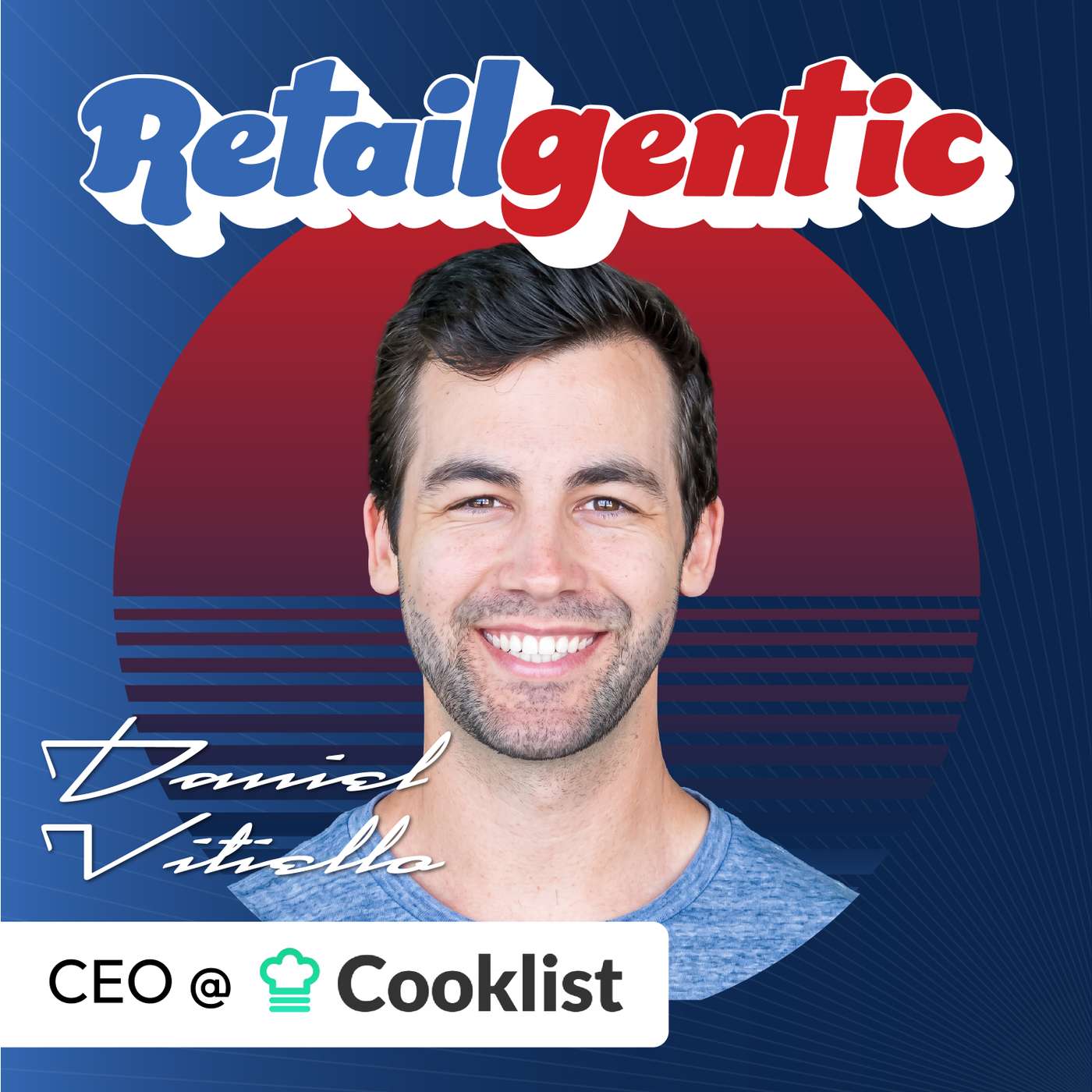
    700 Stores, 10 Million Shoppers, $3M Raised: Cooklist CEO & Co-Founder Daniel Vitiello

    This one is a build deep dive. Daniel has spent eight years on the same problem, and the answer has changed shape three times along the way: a consumer app in 2018, a shoppable recipe platform in 2023, and now a conversational shopping assistant running inside grocers’ own sites. We go deep on the plumbing here: product catalogs, ontologies, eval systems, model selection, retail media, and what an agent does when a shopper types “taco night.” If you like knowing how these things actually work under the hood, this is your episode. Never miss the latest Retailgentic news→ Highlights: 𝗧𝗵𝗲 𝗻𝘂𝗺𝗯𝗲𝗿𝘀: Live in over 700 stores, reaching over 10 million shoppers, with the number of locations set to double before the end of the year. The consumer app has over a million users. 𝟰𝟭 𝗱𝗮𝘆𝘀 𝗰𝗼𝗻𝘁𝗿𝗮𝗰𝘁 𝘁𝗼 𝗹𝗶𝘃𝗲: A one-line JavaScript install that reuses the retailer’s existing catalog, add-to-cart, analytics, and retail media. National scale in six weeks. 𝗦𝗲𝗮𝗿𝗰𝗵 𝗮𝗻𝗱 𝘀𝗲𝗹𝗲𝗰𝘁 → 𝗿𝗲𝘃𝗶𝗲𝘄 𝗮𝗻𝗱 𝗮𝗰𝗰𝗲𝗽𝘁: Daniel’s framing for the whole shift. The old era: you search one thing, you select it. The new one: the agent assembles a solution and you approve it. 𝗧𝗵𝗲 𝗲𝘃𝗮𝗹 𝘀𝘆𝘀𝘁𝗲𝗺: Thousands of test scenarios with grading criteria aligned to each retailer’s merchandising principles, run tens or hundreds of times to get a distribution of responses. 𝗧𝗵𝗲 𝗳𝗶𝘀𝗵 𝗿𝘂𝗹𝗲: Retailers write procedures the agent pulls when a scenario matches. One of Daniel’s favorites: if you’re cooking fish today or tomorrow, it recommends fresh. If it’s later in the week, frozen. 𝗧𝗿𝗮𝗶𝗻𝗶𝗻𝗴 𝗮 𝗻𝗲𝘄 𝗱𝗶𝗴𝗶𝘁𝗮𝗹 𝗲𝗺𝗽𝗹𝗼𝘆𝗲𝗲: Onboarding is essentially an interview with the business. What are your values? How do you respond? What are your merchandising principles? That becomes the agent’s identity and personality. 𝟭,𝟬𝟬𝟬 𝗙𝗼𝘂𝗿𝘁𝗵 𝗼𝗳 𝗝𝘂𝗹𝘆 𝗯𝘂𝗻𝗱𝗹𝗲𝘀: Instead of one holiday carousel every shopper sees, merchant teams define ~20 axes — price, dietary needs, brand preference — and an agentic process generates permutations personalized against transaction history. 𝗔𝗜 𝗖𝗵𝗲𝗳𝘀 𝗼𝗻 𝗧𝗶𝗸𝗧𝗼𝗸: Long before ChatGPT, Cooklist ran a TikTok series generating recipes with GPT-2 and early GPT-3. The models got good at basic recipes so fast that the fun moved to challenging them to be creative. Daniel is one of those founders who has clearly built the thing himself, and it shows in the answers. We learned about a thousand things from this one. Enjoy the conversation. Timestamps: 02:57 Welcome Daniel Vitiello, CEO & co-founder of Cooklist 03:10 Grocery, CPG, and retailer-hosted agents: the pod's favorite topics 04:46 The $1 check and the handwritten letter for loyalty data 05:46 Why 2017 was the moment 06:12 Inside the Cooklist app: home inventory and the AI chef 07:35 AI as the thread: Kurzweil, GPT-2, and the AI Chefs TikTok series 09:37 B2C to B2B, and the synergies of running both 12:05 The cat food problem 13:34 The core identity system: hummus, three ways 15:58 Search and select vs. review and accept 16:23 The spark for B2B: Target, Techstars, and saying no 18:45 Recipe commerce and meal-pairing merchandising 20:19 Funding: RevTech, Mercury Fund, and profitability 21:56 Freemium, pro, and advertising in the app 22:48 700 stores, 10 million shoppers 24:28 The flagship deployment: live in 41 days 25:56 Ontology, context engineering, and interviewing the retailer 27:03 Non-determinism and the eval system 29:06 Entry points: sparkles, suggested prompts, and PDP workflows 31:01 How the catalog and inventory get in 33:41 Procedures: the weekly flyer and the fish rule 35:55 Cost, speed, and the token-efficient stream 37:38 Model agnostic: scoring Opus against Sonnet 38:15 Instacart, Storefront Pro, and winning head-to-head 39:47 Retail media and Criteo 40:22 Agentic search and the "taco night" problem 42:02 Agentic merchandising: 1,000 Fourth of July bundles 42:55 Proactive carts, and the 50% who finish in the store 43:43 Smart fridges and forecasting demand 44:44 Where to find Daniel 👉 Connect with Daniel: https://www.linkedin.com/in/dkvitiello/ 👉 Learn more about Cooklist: https://cooklist.com/ 🧠 Want to stay ahead in AI commerce? Subscribe and follow along: 📰 Subscribe to the free Substack: retailgentic.ai 📺 Watch episodes on YouTube & Subscribe for updates: https://www.youtube.com/@Retailgentic

  • #64
    August 13 · 53 min

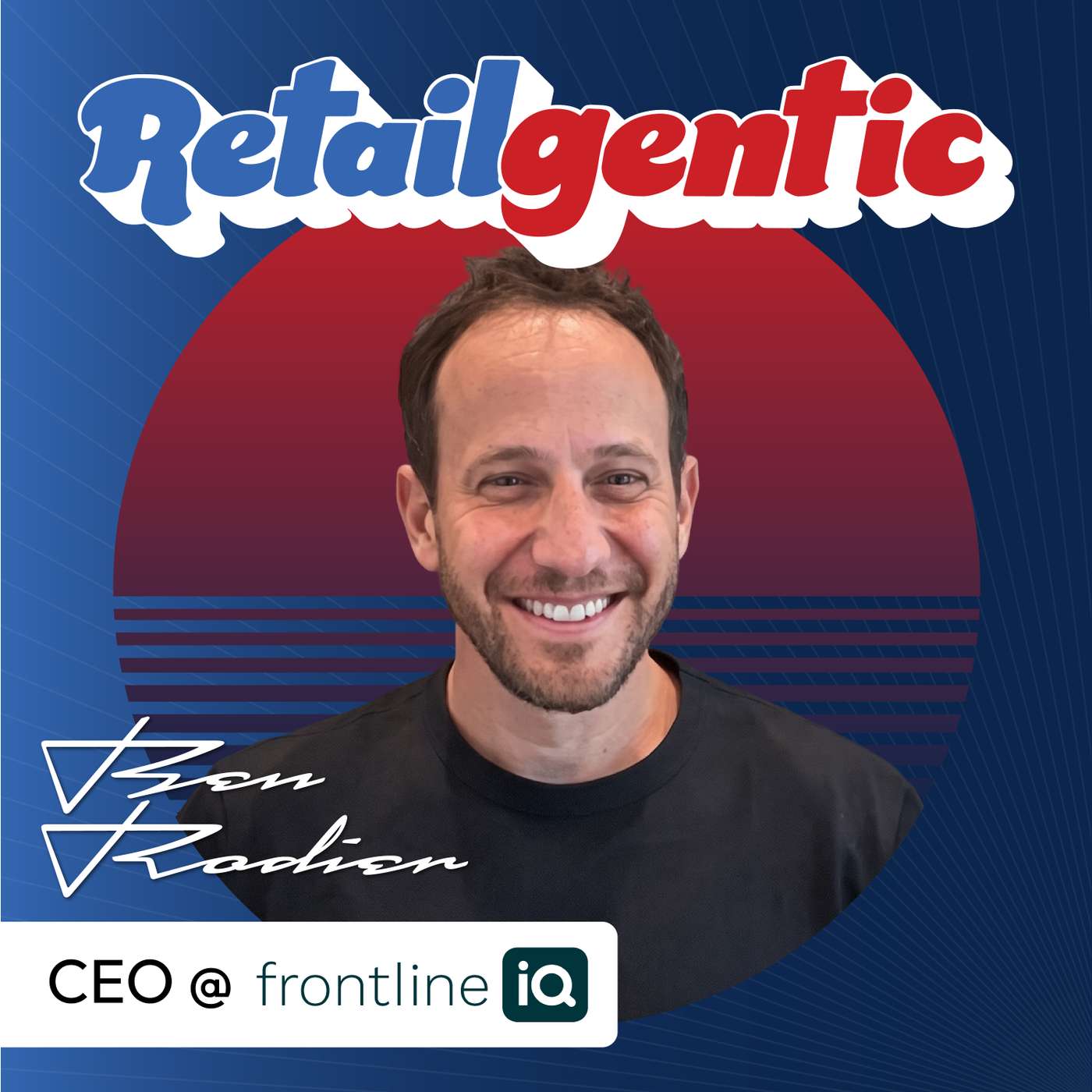
    Physical AI Hits the Sales Floor: FrontlineIQ CEO & Co-Founder Ben Rodier

    This week Retailgentic goes full Tron… in reverse. Instead of getting sucked into the digital world, Scot steps out of it and into into the analog one, bringing the AI angle with us. Ben Rodier is the first AI guest on the show who isn’t from e-commerce. He’s building physical AI for the sales floor: an AI sales coach for the people who sell to you face-to-face in furniture stores, apparel shops, bank branches, and beyond. It’s part founder-journey story (three companies, two exits, twenty years in retail) and part product deep dive into how you actually coach a human salesperson with AI without being creepy about it. Highlights 𝗧𝗵𝗲 𝗥𝘂𝗹𝗲 𝗼𝗳 𝟯𝟬: There’s an inflection point (around 30 AI coaching sessions) where practice turns measurable. Reps who cross it sell roughly $2,000 more per week, about $100,000 more per year, than those who don’t. 𝗧𝗵𝗲 𝗰𝗿𝗼𝗰𝗼𝗱𝗶𝗹𝗲 𝗰𝗵𝗮𝗿𝘁: Plot the reps who practiced 30+ times against those who practiced 10, and the two lines pull apart into a “crocodile-shaped separation”… the clearest picture of coaching ROI Ben’s ever had. 𝗧𝗿𝘂𝘀𝘁-𝗳𝗶𝗿𝘀𝘁 𝘀𝗲𝗾𝘂𝗲𝗻𝗰𝗲: Data (find the goal) → AI role play (practice it) → privacy-compliant listening (coach the real conversation). Each step earns the right to the next. 𝗥𝗼𝗹𝗲 𝗽𝗹𝗮𝘆 𝗶𝗻 𝘃𝗼𝗶𝗰𝗲 𝗺𝗼𝗱𝗲: The coach is a ChatGPT-style voice agent trained on your company’s own playbook. It throws curveballs, like someone walking into the room mid-pitch. “No one likes to do role play with their manager. It’s super awkward.” 𝗔 𝗽𝗿𝗼𝗳𝗶𝘁 𝗰𝗲𝗻𝘁𝗲𝗿, 𝗻𝗼𝘁 𝗮 𝗰𝗼𝘀𝘁 𝗰𝗲𝗻𝘁𝗲𝗿: Unlike most training software, if you practice you sell more so the tool pays for itself. 𝗕𝗼𝗿𝗻 𝗼𝗻 𝘁𝗵𝗲 𝗳𝗹𝗼𝗼𝗿: Ben invented retail-media ads on Walmart’s website in 2009 before the term existed. Google execs opened a meeting with: “Who are you, and how did you figure out how to get these properties as advertising publishers?” 𝗧𝗵𝗲 𝗺𝗲𝘀𝘀𝗮𝗴𝗲 𝘃𝗲𝗿𝗱𝗶𝗰𝘁: McDonald’s tried a humanless AI drive-through and it “failed miserably”. They pivoted right back to a human. Ben’s bet: five years out, most buying and selling is still face-to-face. It’s not often we leave the digital surface behind on this show, but Ben’s take on physical AI, and what happens when the sales floor and the digital world finally connect, is one of the more grounded, human conversations we’ve had. Enjoy the conversation. 00:46 Welcome to Retailgentic 02:01 Scot's intro: a fun diversion into physical AI 03:47 Meet Ben Rodier, FrontlineIQ 04:33 From a TJ Maxx floor to third-time founder 06:07 Sales guy, not a technical founder 06:53 Corporate to startup: the TV advertising leap 07:37 Inventing retail media on Walmart's site in 2009 10:31 Salesfloor: the original idea 13:42 Bootstrapping, PE at the pandemic peak, the Tulip merger 17:19 The genesis of FrontlineIQ: Up Labs & Ashley 20:10 What "physical AI" actually means 21:24 Launching Jan 1, 2025 & hiring AI-native talent 24:41 30 customers in under 18 months 27:36 The oversubscribed seed round 28:46 How it works, part 1: data & trust 30:58 Part 2: AI role play in voice mode 32:43 Part 3: privacy-compliant listening 36:00 The Rule of 30 & the "up" system 37:33 Coach the coach, God view & the control center 39:48 ROI: the crocodile chart & turnover 45:14 The future: cameras, glasses & Plaud pins 49:23 Robots on the floor? The McDonald's test 51:44 Merchandising insight from what reps hear 52:36 Where to learn more & outro 👉 Connect with Ben: https://www.linkedin.com/in/benrodier/ 👉 Learn more about FrontlineIQ: https://www.frontlineiq.ai/ 🧠 Want to stay ahead in AI commerce? Subscribe and follow along: 📰 Subscribe to the free Substack: retailgentic.ai 📺 Watch episodes on YouTube & Subscribe for updates: https://www.youtube.com/@Retailgentic
  • #63
    August 6 · 54 min

    Baird Managing Director of Internet Research Colin Sebastian: What Wall St. Thinks About Agentic Commerce

    This week Scot goes on a markets deep dive with one of Wall Street's leading internet analysts. It’s a tour through the mega-cap playbook (Meta, Amazon, Google, eBay, Shopify) and how professional investors are actually pricing the agentic-commerce shift. Colin covers over $12 trillion of market cap across five names alone, so this is the view from the models, the channel checks, and the trading desk. This is a wide-ranging, numbers-forward conversation about where the money moves as agents become the buyers and which companies Wall Street thinks come out ahead. Highlights: 𝗧𝗵𝗲 𝗦𝗣𝗘𝗘𝗗 𝗳𝗿𝗮𝗺𝗲𝘄𝗼𝗿𝗸: Baird’s formula for internet winners: Scale, Product, Engineering, Efficiency, and Data. Nail all five, and the competitive advantage compounds. “𝗟𝗲𝘁 𝘁𝗵𝗲 𝗮𝗴𝗲𝗻𝘁 𝗱𝗼 𝘁𝗵𝗲 𝘄𝗮𝗹𝗸𝗶𝗻𝗴”: Colin explains why skeptics are dramatically underestimating the size of the opportunity. 𝗠𝗲𝘁𝗮 𝗶𝘀 𝘁𝗵𝗶𝘀 𝘆𝗲𝗮𝗿’𝘀 𝘁𝗼𝗽 𝗽𝗶𝗰𝗸: Colin’s highest-conviction AI bet is Meta driven by WhatsApp business agents, Meta AI, and unmatched consumer reach. (Last year’s pick: Google.) 𝗠𝗼𝗱𝗲𝗹𝘀 𝘄𝗶𝗹𝗹 𝗯𝗲𝗰𝗼𝗺𝗲 𝗰𝗼𝗺𝗺𝗼𝗱𝗶𝘁𝘆: The real value won’t live in foundation models, it accrues to the platforms, applications, and distribution layers built on top. 𝗔𝗺𝗮𝘇𝗼𝗻’𝘀 𝗼𝗻𝗲-𝘄𝗮𝘆 𝗱𝗼𝗼𝗿: By opening its catalog to AI agents, Amazon may have crossed a line it can’t reverse and that could strengthen its ecosystem even further. “𝗖𝗹𝗼𝘀𝗶𝗻𝗴 𝘆𝗼𝘂𝗿 𝗲𝘆𝗲𝘀 𝘁𝗼 𝘁𝗵𝗲 𝗯𝗶𝗹𝗹𝗯𝗼𝗮𝗿𝗱𝘀”: If AI agents skip search results and category pages, they also skip the ads, putting pressure on retail media’s biggest revenue stream. 𝗪𝗵𝗼 𝗼𝘄𝗻𝘀 𝘁𝗵𝗲 𝗮𝘂𝘁𝗵𝗲𝗻𝘁𝗶𝗰𝗮𝘁𝗲𝗱 𝗰𝗼𝗻𝘀𝘂𝗺𝗲𝗿 𝘄𝗶𝗻𝘀: The long-term winners will control identity, payments, checkout, and fulfillment, not just discovery. 𝗪𝗵𝘆 𝗪𝗮𝗹𝗹 𝗦𝘁𝗿𝗲𝗲𝘁 𝗶𝘀 𝗻𝗲𝗿𝘃𝗼𝘂𝘀 𝗮𝗯𝗼𝘂𝘁 𝗦𝗵𝗼𝗽𝗶𝗳𝘆: AI could bypass storefronts and even Shop Pay. That uncertainty alone is enough for investors to discount the stock. “𝗪𝗲’𝗹𝗹 𝘀𝗲𝗲 𝗶𝘁 𝘁𝗵𝗶𝘀 𝗵𝗼𝗹𝗶𝗱𝗮𝘆”: Colin expects agentic commerce adoption to meaningfully accelerate after Q4, even a one- or two-point lift on today’s numbers would be significant. Colin is one of the sharpest lenses out there on how the market is actually pricing all of this. Enjoy the conversation! Timestamps: 3:28 Meet Colin Sebastian 5:04 20 years of history & the Wall Street event 7:00 From bartender to Baird 7:56 Baird's coverage universe & "TMT" 9:29 The GTA VI mega-launch call 11:12 Buy side vs. sell side, explained 13:52 The SPEED framework & top picks 16:16 What is agentic commerce? 20:05 Sizing it: trillions & consumer surveys 22:42 Meta's social-graph advantage 25:05 Amazon's walled garden & the one-way door 29:40 Google, UCP & why models get commoditized 32:36 eBay's used-goods moat 39:44 Retail media networks at risk? 44:33 OpenAI, ads & the closed-loop logic 48:36 Payments: PayPal, stablecoins & who wins 51:57 Protocols: UCP vs. ACP 52:23 Why Wall Street is nervous about Shopify 👉 Connect with Colin: https://www.linkedin.com/in/cosebastian/ 👉 Learn more about Baird: https://www.rwbaird.com/ 🧠 Want to stay ahead in AI commerce? Subscribe and follow along: 📰 Subscribe to the free Substack: retailgentic.ai 📺 Watch episodes on YouTube & Subscribe for updates: https://www.youtube.com/@Retailgentic
  • #62
    July 30 · 53 min

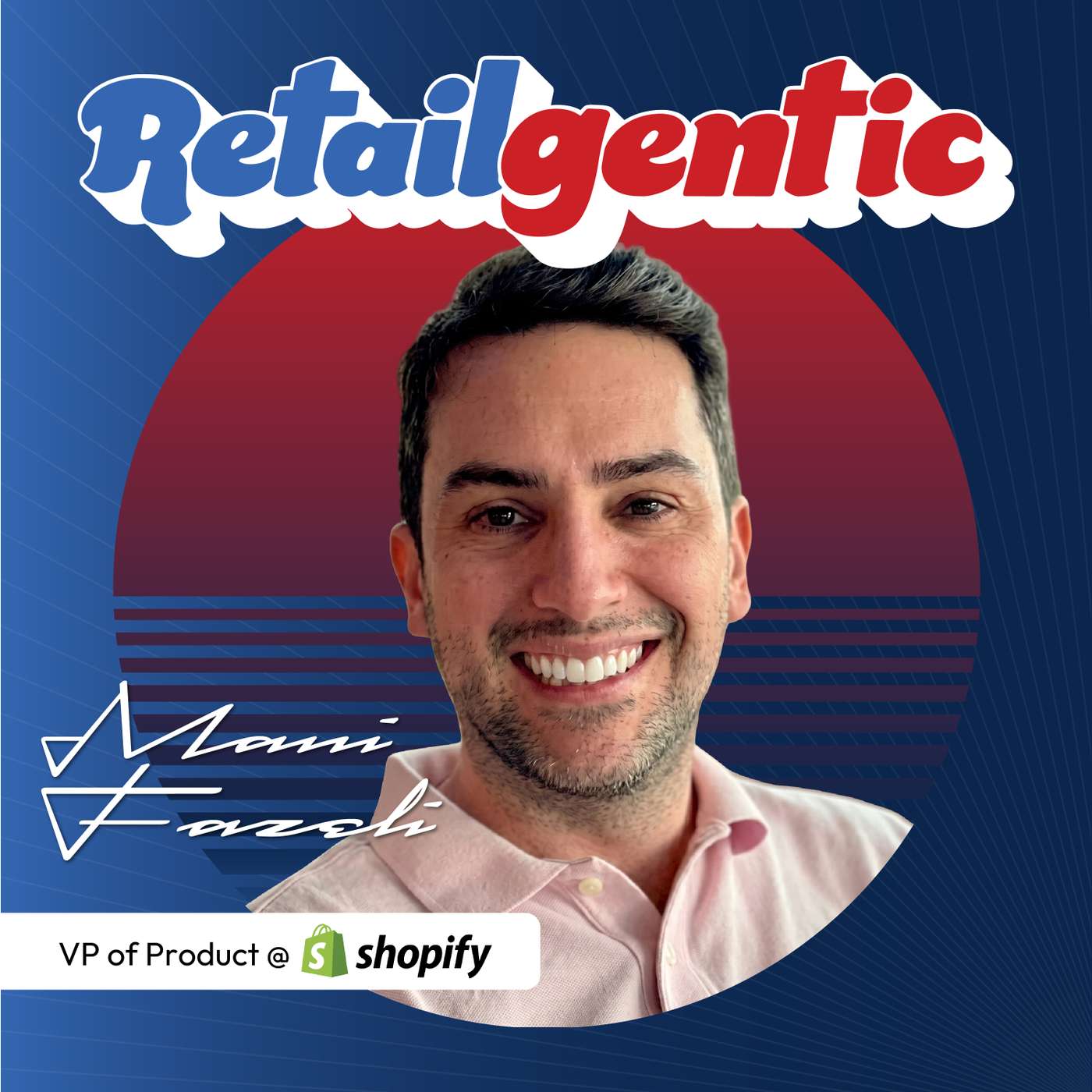
    Shopify's Agentic Commerce Playbook: VP of Product Mani Fazeli on 8X Agentic Traffic Growth and the Long-Tail Boom

    This epsiode is a platform-and-stats deep dive: Scot gets Mani to pin down what agentic commerce actually is (with a four-stage framework that’s the cleanest map we’ve heard), then pulls out a run of genuinely wild numbers on what Shopify is seeing across millions of merchants, before going deep on the catalog, the protocol soup, and everything that shipped in the Spring ‘26 Edition. Highlights: Crawl, walk, run, fly: The framework of the episode. Crawl is AI-driven discovery (the biggest, most impactful stage today); fly is fully discretionary, budget-based buying. Mani’s verdict on where the industry actually is: “somewhere between walk and run today.” 8X traffic, 13X orders: Shopify’s Q1 numbers… AI-driven traffic to merchants up 8X year over year, and orders through those channels up 13X. AI buyers just hit harder: New buyers who discover a merchant through AI order at roughly twice the rate of organic search, are about 50% more likely to convert, and spend about 14% more per order because they show up deeper in the consideration funnel. 70% of AI orders are long tail: About 70–71% of AI-attributed orders last year fell outside the top 100 product categories. Models “don’t need to learn how to reach for the small merchant, they just need to learn the intent of the buyer.” 2X on fresh data: The Shopify catalog, over a billion products across millions of merchants, converts about 2X better than stale or scraped data, thanks to real-time pricing and availability straight from the merchant. A “7 out of 10 at everything”: On how AI is reshaping product, design, and engineering roles. The non-merchant-of-record era: Don’t become the marketplace reselling goods, just be the interface to the merchant. The merchant keeps the customer relationship and runs their own checkout. UCP was a “labor of love”: Shopify was at the genesis of the Universal Commerce Protocol. Sidekick, Pulse & Autopilot: Sidekick usage is up about 4X year over year; Pulse turns Shopify’s data into proactive recommendations right on your admin homepage; and the guiding principle stays “always put the control in the merchant’s hand.” B2B may reach “fly” first: By 2030, Mani splits the world into DTC and wholesale/B2B and bets B2B, where both sides transact professionally and obsess over efficiency, may hit full automation before consumers do. Mani’s four stages are the cleanest map of agentic commerce we’ve heard, and the numbers behind them are frankly staggering. And as he reminds us, we’re still in the early innings. Enjoy the conversation! Timestamps: 03:55 Welcome; watching Shopify's rise from ChannelAdvisor 04:38 Mani's path to VP of Product at Shopify 06:37 The Wish / ContextLogic founding story 08:18 Vibe coding and "AI makes everyone a 7 out of 10" 11:10 What Mani owns across the commerce loop 12:42 Non-merchant-of-record channels (ChatGPT, Gemini) 13:45 Defining agentic commerce 14:44 The crawl / walk / run / fly framework 17:50 The stats: 8X traffic, 13X orders, +50% conversion, +14% AOV 20:03 Out-of-the-box UCP compatibility and agentic storefronts 23:10 The Shopify catalog superpower (2x conversion) 26:40 WebMCP and the protocol stack (AP2, x402, Web Bot Auth) 29:15 UCP: Shopify's labor of love 32:24 Top things merchants should do to win 35:28 The escalation "escape hatch" 37:24 Word of mouth and the long tail, 70% of AI orders 42:41 Spring '26 Edition: Shop app, Ship & Pick Up, Pulse, Autopilot 48:10 Where it all goes by 2030: B2B vs DTC 52:29 Wrap-up 👉 Connect with Mani Fazeli: https://www.linkedin.com/in/mcfazeli/ 👉 Learn more about Shopify: https://www.shopify.com/ 👉 And check out the Shopify newsroom blog here 🧠 Want to stay ahead in AI commerce? Subscribe and follow along: 📰 Subscribe to the free Substack: retailgentic.ai 📺 Watch episodes on YouTube & Subscribe for updates: https://www.youtube.com/@Retailgentic
  • #61
    July 23 · 42 min

    AI Is a New Customer Category: Wharton Professor & Bodhium Labs Co-Founder Kartik Hosanagar

    Kartik Hosanagar wears a lot of hats: Wharton professor, serial entrepreneur, angel investor, and now co-founder of an applied AI lab building simulation tools for AI search. Scot and Kartik land in almost exactly the same place on where agentic commerce is heading, but they get there from opposite directions: Scot on gut and operator instinct, Kartik on research. The result is a wide-ranging conversation about treating AI as a customer, the levels of agentic commerce, and what brands should actually be doing this week, this quarter, and this year. Highlights: AI is a new customer category: Once shopping goes agentic, Kartik argues you have to ask of AI what you ask of any customer: how do we inform it, persuade it, and what biases does it have? The driverless-car model: Agentic commerce has levels 0–5, just like autonomous vehicles. Level 5 is “buy the shoe and make sure it arrives in a week” hands-off; Instacart-style automation and AI-enabled discovery are lower levels and we’re already in the era. The funnel got outsourced: Top-of-funnel work customers used to do themselves like discovering brands and building a consideration set is now done by AI, so shoppers arrive far later in the funnel. Discovery is “fundamentally transformed.” 4 words → 60 words: From his CommerceNext keynote, average search went from about four words on Google to about 60 words on the first ChatGPT turn, then multi-turn. Nobody types “men’s running shoes” anymore; shoes show up on conversation turn seven. UCP, ACP and the protocol wars: Kartik explains Google’s UCP (product feeds today, transactions later), why OpenAI backed off ACP instant checkout, and reads Amazon joining UCP as “testing the waters,” not a strategy reversal Counterfactual simulations: Bodhium builds “digital twins” of ChatGPT and Gemini and spins up virtual worlds where your site looks different, testing a thousand hypotheses in minutes to find what makes AI answers more accurate and favorable. Market research, but for AI. The today / this quarter / this year roadmap: Now: audit conversations, visibility, and which bots read your site. This quarter: build simulators and a UCP/MCP workstream. This year: scale it with agentic workflows. Two front doors: Kartik doesn’t think websites disappear, but “a website is not the right front door for an agent.” Expect a human web door and an MCP door for agents, plus omnichannel behavior where each feeds the other. Kartik calls himself an "agentic commerce maximalist," and after this conversation you'll see why... the research and the gut instinct point the same direction. Enjoy the conversation. Timestamps: 03:04 Welcome: the "renaissance man" background problem 03:49 Kartik's cocktail-party version: academic + entrepreneur, Yodle 04:36 The Yodle / Milo mobile-social-local era (and Fidji at OpenAI) 06:05 Wharton AI Center and what Kartik researches 07:37 The thesis: AI search is more than another channel 10:08 Defining agentic commerce: the driverless-car levels 12:34 UCP, Gemini, and why Amazon joined 15:55 Amazon vs. Walmart strategies (Rufus vs. Sparky) 16:29 Bodhium Labs: what it is 17:00 The AEO/GEO problem: guesswork and the Reddit trap 18:56 Research-led counterfactual simulations 21:02 The long tail: multi-turn conversations replace keywords 22:49 CommerceNext keynote: 4 words to 60 words 24:57 The "AI is just another channel" misconception 26:48 Shopper trust: high for discovery, not for checkout 28:15 You can't fully control what AI thinks about you 30:51 The roadmap: today, this quarter, this year 34:41 Rufus, Sparky, UCP, and MCP endpoints 36:37 Does agentic commerce grow the pie or shift it? 38:32 Do we still need websites? Two front doors 40:39 Where to find Kartik: LinkedIn and Substack 👉 Connect with Kartik: https://www.linkedin.com/in/kartik-hosanagar-22272115/ 👉 Learn more about A Human’s Guide to Machine Intelligence: https://www.amazon.com/dp/0525560882?lv=shuf&channelId=500&plpRedirect=mhFallback 👉 Visit his substack: https://hosanagar.substack.com/ 🧠 Want to stay ahead in AI commerce? Subscribe and follow along: 📰 Subscribe to the free Substack: retailgentic.ai 📺 Watch episodes on YouTube & Subscribe for updates: https://www.youtube.com/@Retailgentic
  • #60
    July 16 · 41 min

    ‼️EXCLUSIVE 👀 FIRST LOOK 👀: Deloitte Digital’s "Bridging the commerce divide" with Bobby Stephens & Apurva Pangam

    This is a report deep dive, and Deloitte gave Retailgentic the exclusive first look at brand-new research: hundreds of senior merchant leaders and a thousand-plus recent online shoppers, both sides of the counter, with trend data from two years back layered in. The result is a map of where brands and consumers see the same picture and where they see completely different ones. And the data is fresh, fielded this spring, analyzed over the last month, unveiled here. They describe exactly what those leaders do differently, and why it pays off. You want the edge? This is it. Highlights The basics are the new battleground: Accurate search, real inventory visibility, clear delivery dates, easy returns are no longer differentiators, just expected. And a majority of consumers say brands haven’t improved on them in two years. The perception gap: Only 16–18% of consumers rate brands “excellent,” while brands rate themselves in the low-to-mid 30s, a false-confidence gap that’s driving under-investment where it matters. 57 definitions of personalization: the “golden term” has “probably 57 different definitions”, but ~70% of consumers say personalized experiences genuinely matter. Get it wrong and you hurt trust more than you help. 14–15 loyalty programs: 99% of surveyed brands offer one and 80% of customers belong to more than one, the average U.S. consumer is a member of 14–15 but active in only four or five. “You are fighting for head space.” The cashback gap: Over half of consumers say cashback is the loyalty benefit they’d value most but only 14% of brands offer it. Customers want financial value and simplicity; brands keep adding tiers and complexity. The leaders’ payoff: Consumers spend 34% more with the brands that nail the basics + personalization + sticky loyalty, 57% will try a new product from them, and 55% will recommend them to family and friends. Efficiency over experience: The two top-reported benefits merchants cite from AI aren’t customer-facing at all, they’re better decision-making and greater efficiency. Brands are getting their own house in order first. Machine-readable product data: Product content is still “teeny tiny” and over-optimized for the keyword era, even as LLMs collapse the old 20-tabs-and-a-spreadsheet decision into one answer. If the data isn’t there, the agent won’t infer it, it just gives what’s available. Connecting the dots: Data, loyalty, and AI in isolation aren’t enough; the winners execute across all three and make deliberate choices about the purpose of the store vs. the site vs. the app vs. the LLM. Fresh data, both sides of the counter, and a clear-eyed read on the gap between what brands think they’re delivering and what shoppers actually feel. Bobby and AP brought the goods. Enjoy the conversation! 👇 Timestamps: 01:57 An exclusive first look 06:12 Meet Bobby Stephens & Apurva Pangam 07:19 AP's background: 20 years in commerce 08:01 Bobby's background — buyer to footwear founder 09:29 Where they fit in Deloitte's retail team 10:18 Inside the report: methodology 12:32 The consumer side — the basics 14:47 The perception gap & false confidence 15:50 Personalization: 57 definitions 17:30 On-site agents: Rufus, Sparky & TSA 20:02 Playbooks, CDPs & the customer P&L 21:21 AI for operational efficiency 25:40 Making product data machine-readable 26:38 Answer engines & the decision collapse 29:34 Loyalty: everyone plays, few win 33:52 Who's winning: profiling the leaders 38:44 Connecting the dots 40:18 Closing & where to find the report 👉 Check out the report: https://www.deloittedigital.com/us/en/insights/research/b2c-commerce-experiences.html 👉 Connect with Bobby Stephens: https://www.linkedin.com/in/bobby-stephens-digital/ 👉 Connect with Apurva Pangam: https://www.linkedin.com/in/apangam/ 👉 Learn more about Deloitte: https://www.deloitte.com/ 🧠 Want to stay ahead in AI commerce? Subscribe and follow along: 📰 Subscribe to the free Substack: retailgentic.ai 📺 Watch episodes on YouTube & Subscribe for updates: https://www.youtube.com/@Retailgentic
  • #59
    July 9 · 49 min

    Fewer Visitors, 3X the Conversion: Forrester VP and Principal Analyst Chuck Gahun Discusses 'The State of Agentic Commerce (Q2)'

    This one's a research deep dive. Forrester just published "The State of Agentic Commerce" for Q2 2026, a client-only report built on a fresh consumer survey, and its headline read like a splash of cold water: the hype is running past reality. We invited principal analyst Chuck Gahun on Retailgentic to defend that framing, walk through Forrester's (strict) definition of agentic commerce, and separate what consumers are actually doing from what the market keeps promising. Highlights Shopping vs. buying: Forrester defines agentic commerce as “shopping or buying experiences that include AI agents acting autonomously on behalf of consumers, buyers, or sellers”, and until buying is involved, they call it conversational commerce, not agentic commerce. The 38 / 17 gap: Among consumers familiar with answer engines, 38% use them for product discovery but only 17% complete purchases, a trust gap Chuck says is the single thing holding agentic commerce back. Who’s liable?: When something goes wrong on an answer-engine purchase, 44% of consumers said they’d hold the answer engine itself liable, a sign of how many guardrails, policies, and return paths still have to be built. The Amazon corollary: “On Amazon, I’d let my kids, my friends, my family have my credit card and go shopping.” That same trust does not yet transfer to ChatGPT or Gemini, closing that gap is the whole game. The merchant verdict: “We’re not telling anybody to wait. We’re telling them to go in strategically while the commerce trust angle is catching up.” Machine advantage: Forrester’s four-quadrant merchant framework (agentic fit, machine advantage, operations, and organizational adaptability) pushes brands to build content strategy for machines, not just humans. The SKU mountain: The hardest conversation in the field, “you need to upgrade 100,000 SKUs,” and the merchant answers that one SKU takes six months, so “this is gonna take infinite years.” Protocols like OpenAI’s ACP and Google’s UCP keep changing underneath them, on an exponential curve. Old B2B PDFs are gold mines: Those spec-heavy, JavaScript-free product pages everyone mocked turn out to be exactly what agents want, and Chuck says B2B (business & industrial) is actually taking off faster, with a report prediction that 20% of B2B moves to human-authorized, agent-executed transactions by year-end. Death of the retail website?: A companion Forrester paper argues the website isn’t dead, it’s becoming a repository of data for agents. By 2030, Chuck expects “dual optimization”: machines bring the shopper, and the site’s only job is to convert them. Less traffic, 3X conversion: Organic traffic is down, but answer engines filter the traffic so well that conversions are up. A sharp, honest look at where agentic commerce actually is right now: the trust gap, the merchant playbook, and a few 2030 predictions worth arguing about. Enjoy the conversation Timestamps: 03:47 Meet Chuck Gahun, Forrester principal analyst 05:03 Chuck's background: two decades, Sapient, the services side 07:57 How Forrester's commerce team is structured 10:52 Defining agentic commerce: shopping vs. buying 12:37 Conversational commerce vs. the strict definition 13:49 Semi-autonomous vs. autonomous (the dog-treats test) 14:38 Inside the answer-engine consumer survey 15:47 The numbers: 38% discover, 17% buy, 62% research 16:22 Beyond retail: healthcare, travel, government 19:48 Figure 1: owned vs. not-owned, four levels 21:47 The trust gap and who's liable (44%) 24:37 Marketplaces, merchant of record, and returns 27:52 What Forrester tells merchants: don't wait 29:57 Product fit, profitability, and the ACP/UCP specs 31:58 Figure 3: the four-quadrant framework & machine advantage 35:53 The SKU problem and exponential change management 38:35 The B2B surge prediction 41:25 2030 predictions & death of the retail website 46:32 Less traffic, higher conversion: the 3X surprise 47:18 Where to find Chuck, events, and outro 👉 Connect with Chuck: https://www.linkedin.com/in/chuckgahun/ 👉 Learn more about Forrester: https://www.forrester.com/ 👉 Get the report: https://www.forrester.com/report/the-state-of-agentic-commerce-q2-2026/RES195671 🧠 Want to stay ahead in AI commerce? Subscribe and follow along: 📰 Subscribe to the free Substack: retailgentic.ai 📺 Watch episodes on YouTube & Subscribe for updates: https://www.youtube.com/@Retailgentic
  • #58
    June 30 · 41 min

    OLLY Agentic Commerce Optimization: MarTech & Digital Compliance Director Jennifer Peters On Building an AI Foundation the Right Way

    In this episode, we sit down with Jennifer Peters, Director of DTC, MarTech & Digital Compliance at OLLY, on building an AEO foundation the right way: FAQs and catalog attributes, measuring agentic visibility, and staying human-centered in a regulated CPG world. We start with a Shopify “side quest”, how a self-taught developer ended up in AI god mode with Claude and MCP, before getting into what OLLY actually is and why a brand that does most of its revenue in-store suddenly cares so much about its website. Jennifer has been quietly building one of the most grounded, real-world Agentic Commerce playbooks we've heard on the show. She shares the basics done tightly and gives a clear-eyed take on what's worth investing in while the ground shifts week to week. It’s a grounded, refreshingly un-hyped conversation about building for the agentic era without losing your head, or your customers. Hit play. Highlights: The cold-resource, high-impact win: Jennifer on catalog feed enhancement. The FAQ slam dunk: OLLY added FAQs to its PDPs using content already on the page, just repackaged into bite-sized chunks. LLMs love the format, and so do humans. AEO is just good SEO: Clean up your schemas, clean up your data structure, and do the things that are good for your brand anyway. Attributes Google never asked for: A partner ingests OLLY’s public catalog and pushes back AI-ready attributes, none of them customer-facing. The website is now the point of entry: A site that was “7 or 8% of the business” is now the brand authority source agents go to first, for OLLY’s own site, Walmart’s Sparky, and Amazon’s Rufus. Trust but verify: OLLY triangulates recommendations across Profound, Contentsquare, and Envive. If all three flag the same thing, it’s probably worth acting on. Don’t “do AI to do AI”: “We’re not changing the goals because we have AI. We’re keeping the goals and just doing a better job getting to them.” Same OKRs, just faster. Fix the un-AI basics first: Connect your DAM, your creative stack, and your marketing stack before you try to sprinkle AI magic on top. Scot adds that AI can be the excuse to finally get it prioritized. The AI bubble in the bubble: From San Francisco, Jennifer on the coming counterculture: “No AI in our creative” as a selling point, growing data center backlash, and Ronny Chieng’s Harvard commencement speech. Jennifer is exactly the kind of hands-on practitioner this show exists to find: strategic, tactical, and refreshingly honest about what’s real and what’s noise. We’ll have to get her back in a year to see what other magical (and weird) things she’s figured out. Enjoy the conversation. Timestamps: 00:00 Cold open — lowest resource, highest impact 00:21 Welcome to Retailgentic 01:36 Scot's intro: a real practitioner doing the work 04:13 Welcome, Jennifer Peters 05:20 Jennifer's background: agency, Cokesbury, OLLY 06:51 Becoming a self-taught Shopify developer 07:56 Side quest: Claude, MCP, and AI "god mode" 11:34 What is OLLY? The square-bottle homeland 12:18 Inside the DTC + MarTech role 13:15 Why the website is now the point of entry 16:21 Jennifer's agentic commerce journey begins 17:48 Start with the basics: AEO is just good SEO 18:21 FAQs on PDPs — the easy slam dunk 19:48 Catalog feed enhancement & digital attributes 21:52 Profound and the AEO vendor landscape 23:57 Panel data: "super sus" 24:42 Trust but verify across tools 25:45 The Reddit problem 27:14 Bazaarvoice and review syndication 28:44 Don't skip the un-AI basics 30:20 Measuring impact without getting fooled 31:31 Same OKRs, AI just gets there faster 35:40 Does it leak into Walmart & Target? 37:48 Sharing content across channels 40:06 What's next: AI backlash and counterculture 42:37 Where to find Jennifer & outro 👉 Connect with Jennifer: https://www.linkedin.com/in/jennifer-peters-3bbb6220/ 👉 Learn more about Olly: https://www.olly.com/ 🧠 Want to stay ahead in AI commerce? Subscribe and follow along: 📰 Subscribe to the free Substack: retailgentic.ai 📺 Watch episodes on YouTube & Subscribe for updates: https://www.youtube.com/@Retailgentic
  • #57
    June 24 · 33 min

    Announcing RetailPlaybook: New Channel (Newsletter+Pod) Focused on ACO for Amazon/Alexa, Walmart/Sparky and Target/TSA

    Scot Wingo sits down with Andrew Bell, ReFiBuy's new VP of Research and host of the new RetailPlaybook channel, for a deep dive on Alexa for Shopping, Amazon's patent playbook, and what agentic commerce optimization looks like across Amazon, Walmart, and Target. This is a launch episode. We're announcing two things at once: Andrew Bell joining ReFiBuy as VP of Research, and the debut of RetailPlaybook. Going forward Andrew hosts Retail Playbook himself, but for episode one Scot jumped in to introduce the channel and interview Andrew in person. It's airing here on Retailgentic as a crossover. Highlights: • 𝗚𝗼𝗼𝗱 𝗔𝗖𝗢 𝗶𝘀 𝗽𝗹𝗮𝘆𝗯𝗼𝗼𝗸-𝘀𝗽𝗲𝗰𝗶𝗳𝗶𝗰: "Good ACO on Amazon means optimizing for Alexa for Shopping, while also keeping the basic mechanics of SEO" — two distinct layers in symbiotic union, and a different playbook for every marketplace. • 𝟭𝟬𝟬 𝗺𝗶𝗹𝗹𝗶𝗼𝗻 𝘂𝘀𝗲𝗿𝘀: Amazon just announced its shopping agent (the artist formerly known as Rufus, now Alexa for Shopping) is reaching roughly 100 million people. • 𝟲𝟬% 𝗰𝗼𝗻𝘃𝗲𝗿𝘀𝗶𝗼𝗻 𝗹𝗶𝗳𝘁: Andrew is seeing conversion rates climb ~60% on product pages in particular. • 𝗔𝗺𝗮𝘇𝗼𝗻'𝘀 𝗲𝗰𝗼𝗻𝗼𝗺𝗶𝗰 𝗲𝗻𝗴𝗶𝗻𝗲: ~$400B in counted revenue, with true GMV likely north of $600B once you account for third-party sales. • 𝗕𝘂𝗶𝗹𝘁 𝗼𝗻 𝗖𝗹𝗮𝘂𝗱𝗲 𝗮𝗻𝗱 𝗡𝗼𝘃𝗮: Alexa for Shopping runs on Claude, Amazon's own Nova, and custom models — and the question that matters is "is your product being reasoned through?" • 𝗧𝗵𝗲 𝗽𝗹𝗮𝘆𝗯𝗼𝗼𝗸 𝗺𝗲𝗻𝘁𝗮𝗹 𝗺𝗼𝗱𝗲𝗹: Andrew frames each marketplace like a different era of basketball, Jordan's two-pointer game vs. today's spread, zone-defense, three-point era. Different era, different playbook. • 𝗙𝗿𝗼𝗺 𝗔𝗻𝗰𝗶𝗲𝗻𝘁 𝗚𝗿𝗲𝗲𝗸 𝘁𝗼 𝗔𝗦𝗜𝗡𝘀: Andrew studied Ancient Greek and preaching, then self-taught business by reading every book on the Barnes & Noble shelf over six months. • 𝗣𝗮𝘁𝗲𝗻𝘁 𝗧𝘂𝗲𝘀𝗱𝗮𝘆: Andrew reads Amazon's granted patents every Tuesday (and non-granted ones Thursday), scoring each on a levels 1–5 framework because "patents are Amazon's playbook of the future." • 𝗗𝘂𝗲𝗹𝗶𝗻𝗴 𝗨𝗖𝗣 𝘁𝗵𝗲𝗼𝗿𝗶𝗲𝘀: Andrew thinks Amazon joined the universal commerce protocol to publish its data outward; Scot thinks they'll pull UCP inward. They agree to see who's right. A new channel, a new voice, and a host who reads Amazon patents for fun. If you sell on Amazon, Walmart, or Target, as a brand or a third-party seller, this is the playbook you'll want open. Enjoy the conversation. Timestamps: 01:02 Scot introduces the new podcast 02:39 In studio — Retailgentic x Retail Playbook, first time meeting IRL 03:06 Andrew joins ReFiBuy as VP of Research + channel launch 04:13 The vision for Retail Playbook (and how it differs from Retailgentic) 05:54 "ACO everywhere" — answer engines vs. retailer-hosted agents 06:09 Amazon's scale: $400B+ and 100M Rufus users 06:55 60% conversion lift; vertical + horizontal agents; built on Claude and Nova 08:34 Why playbooks work — the Jordan-vs-LeBron era model 11:48 "Christopher Nolan style" — rewinding to Andrew's story 12:02 Andrew's background: Ancient Greek, Bible school, self-taught 12:23 Touch of Class: $100K/mo to $4M, 1,500 pages by hand 13:00 GPT store, tens of thousands of sellers, 1,000 ad campaigns 15:08 NFPA: unauthorized resellers and 3x buy box 16:25 "Amazon Science Made Simple" — patents as source of truth 18:08 Patent Tuesday and the levels 1–5 framework 19:07 Use-case language and predicting the Alexa–Rufus fusion 20:51 How Alexa for Shopping ranks: 100 → 30 → the best 5–8 22:39 Full autonomy: price-trigger auto-buy 23:18 Sparky goes live on the web — and where Walmart lags 25:35 The Death Star flywheel and Amazon's selection obsession 27:34 Shop Direct and the dueling UCP theories 28:53 ChatGPT's 20% commerce intent and the horizontal flank 30:49 Back to Retail Playbook: the first Substack and query-planning optimization 32:13 Where to follow Andrew + outro 👉 Connect with Andrew Bell: https://www.linkedin.com/in/andrew-bell-540403275/ 👉 Learn more about RetailPlaybook: www.retailplaybook.ai 🧠 Want to stay ahead in AI commerce? Subscribe and follow along: 📰 Subscribe to the free Substack: retailgentic.ai 📺 Watch episodes on YouTube & Subscribe for updates: https://www.youtube.com/@Retailgentic
  • #56
    June 16 · 55 min

    Ads in the Answer Engine: Roger Dunn, CCO, Thrad on Agentic Commerce, ChatGPT Ads & the Snowflake Economy

    Roger Dunn has watched retail media grow up from the agency side (Mediacom, GroupM, WPP), the tech side (he launched Criteo's retail media business in Australia), and the brand side (a global retail media role at Diageo, home of Johnnie Walker, Guinness, and Baileys). Now he's Chief Commercial Officer (CCO) at Thrad, a Silicon Valley startup building the ad infrastructure for LLMs, "ChatGPT ads, but for everyone else." In this episode, Roger and Scot get into where advertising actually lives inside answer engines, what's working today, and how brands should think about showing up when shopping stops looking like a search box. Highlights: What Thrad is building: both the supply side (helping retailers and chatbots monetize conversational surfaces) and a self-serve buy side where brands can run ads across existing AI inventory globally, not just in the four countries where ChatGPT ads have launched. The new ad formats: sponsored messages, sponsored prompts, polling ads, and product carousels, plus the steady stream of formats Google unveiled at Google Marketing Live. AI-native campaigns: how Thrad turns a URL, a brief, or a prompt into keyword, prompt, and dynamically generated persona targeting, and why creative (human faces beat a bare logo) is where the human edge still lives. What ChatGPT ads look like right now: CPCs roughly in the $1–$5 range, and why the early “hot mess vs. holy grail” takes are both missing the point. Roger’s definition of agentic commerce: not a robot doing the final click, but AI shaping every stage of the journey: discovery, comparison, price, review synthesis. The state of the field: Gemini’s full-court press, Perplexity’s Comet browser, Meta routing UCP checkout into Instagram, the Shopify question Wall Street keeps asking, and where Anthropic/Claude might (or might not) play. Down Under as a test lab: Woolworths’ Olive, Bunnings’ Buddy, a duopoly retail market, and why Australia keeps getting the pilots. The advice brands actually need: start small (think $10–20K in a market) but start; get out of “keyword jail”; and the analogy that lands it: keywords are ice cubes, prompts are snowflakes. A few uniform ice cubes everyone fights over, versus infinite unique prompts where a challenger brand can finally own its wedge. This is a genuinely useful tour of the side of agentic commerce most of us squint at, ads, from someone who has built the playbook three times over. Enjoy the conversation. Timestamps: 02:00 Scot's intro — who is Roger Dunn? 05:17 Conversation begins — live from Sydney 06:47 Roger's backstory — UK to Australia, the agency years 08:00 Criteo, Epsilon, and a global retail media role at Diageo 09:05 What Thrad is — ads inside LLMs 09:38 Why retail media is "the nirvana of marketing" 11:13 SSP, DSP, self-serve — and ChatGPT ads in just 4 countries 17:58 The new ad formats: sponsored prompts, polling ads, product carousels 19:53 AI-native campaigns — URLs, briefs, and dynamic personas 22:30 Real ChatGPT ad numbers — CPCs and why human faces win 24:30 Roger's definition of agentic commerce 27:05 OpenAI's $100B ad target 27:55 Answer engines, product cards, and checkout in Australia 29:13 The state of the arena — ChatGPT, Gemini, Meta, Perplexity, Apple 30:57 The UCP checkout in Instagram and the Shopify squeeze 32:50 Inside the Australian market — duopolies, Temu, and Shein 35:52 Will Anthropic/Claude ever do commerce? 38:55 Retailer-hosted agents — Alexa, Woolworths' Olive, Bunnings' Buddy 42:17 The top questions brands are asking Roger 48:44 Escaping "keyword jail" 50:40 Ice cubes vs. snowflakes 52:00 How challenger brands find their wedge 54:30 Where to find Roger 👉 Connect with Roger Dunn: https://www.linkedin.com/in/rogerdunn/ 👉 Learn more about Thrad: https://www.linkedin.com/company/thrads/ 🧠 Want to stay ahead in AI commerce? Subscribe and follow along: 📰 Subscribe to the free Substack: retailgentic.ai 📺 Watch episodes on YouTube & Subscribe for updates: https://www.youtube.com/@Retailgentic
  • #55
    June 11 · 45 min

    Who Buys, Not Just How: Inside ShopAgentic's €1.9M Bet with Co-Founders Alexander Ringsdorff (CEO) & Kai-Thomas Krause (CPAO)

    This is an exclusive first look at ShopAgentic, and we cover a lot of ground with both co-founders. First we go over the big company news, then rewind through two decades of e-commerce history that brought Alex and Kai to this moment, and why they think the ground is shifting under the entire industry. From there it’s a wide-ranging conversation about what changes when agents, not humans, become the buyers: how a commerce platform built for this era might actually work, how merchants would use it, and where payments, protocols, and front ends are all heading. It’s part founder story, part state-of-the-union on agentic commerce, and part early peek at what they’re building. Hit play. 👇 Highlights: The €1.9M pre-seed: Led by Mayventures and Greenfield Capital, with around nine entrepreneur and business-angel tickets, a “US-feeling” round raised in Europe. Who buys, not just how: Kai’s framing for the whole thesis, agentic commerce is the first shift that changes the buyer itself, not just the channel. Built for humans, not agents: Why the founders believe legacy platforms, even the ones they helped build, aren’t architected for what’s coming. The ACP moment: The OpenAI release that made the duo sit down and say “this is gonna change potentially everything.” The weekend prototype: Asked for screenshots for the pitch deck, Kai vibe-coded a working demo instead, and it’s part of why investors leaned in. A squad of agents, not a platform: The product reimagined from the outcome backward, sold into innovation budgets rather than million-dollar replatforming. Ephemeral UIs: “The fast fashion of front ends” interfaces generated on the fly The protocol soup: Why UCP is “the one to go for” right now, and how ShopAgentic wants to absorb that complexity so merchants don’t have to. A wake-up call for brands: “You’re not even part of that conversation. That’s why you’re not seeing the traffic.” Debut at K5 Berlin (June 22–24): Their first time on the trade-show circuit, including a business-user AI hackathon. Two founders who've lived through every era of e-commerce software, now betting the next one gets rebuilt for agents. Whether you run a brand wondering where your traffic went or you're just curious what a platform "born agentic" looks like, this one's a glimpse into the future. Enjoy the conversation. Timestamps: 04:21 The big news: a €1.9M pre-seed 06:07 How the round came together (the inbound snowball) 07:54 Alex's background: age 14, Magento, CouchCommerce 10:09 Meeting Stephan Schambach and building NewStore 11:35 The German e-commerce family tree 13:27 Kai's background: Metro, robotics, commercetools 16:19 From SaaS to open source to composable 17:30 Why agentic needs a new platform — the ACP moment 20:28 The founding story (and a little Guinness) 22:07 The weekend prototype that sold investors 25:43 How agentic commerce is actually different 26:04 The "squad of agents" vision 27:59 Dashboard, chatbox, and voice for merchants 30:30 Vibe coding, Lovable, Visa, and ephemeral UIs 32:30 Stablecoins and cross-border payments 34:48 x402, MPP, micropayments, and the local-agent explosion 37:07 Debut at K5 Berlin (and a hackathon) 38:17 The agent OS and guardrails 39:09 Navigating the protocol soup: UCP, ACP, AP2 42:00 Who should be an early merchant 44:14 Launching agentic-first 44:48 LinkedIn, shopagentic.com, and wrap-up 👉 Connect with Alex: https://www.linkedin.com/in/alexanderringsdorff/ 👉 Connect with Kai: https://www.linkedin.com/in/kaithomaskrause/ 👉 Learn more about ShopAgentic: https://www.shopagentic.com/ 🧠 Want to stay ahead in AI commerce? Subscribe and follow along: 📰 Subscribe to the free Substack: retailgentic.ai 📺 Watch episodes on YouTube & Subscribe for updates: https://www.youtube.com/@Retailgentic
  • #54
    June 4 · 48 min

    Enterprise or Easy? Salesforce Says Both: DOUBLE Pod with Nitin Mangtani and Lennart Stevens from Salesforce

    This week we have a rare double header. Scheduling conflicts meant no three-way interview, so we sat down with two Salesforce leaders back to back, both there to unpack the company’s big June release, headlined by the launch of its newest platform, Storefront Next. First up is Nitin, who walks through the full sweep of the June release and makes the case for why, taken together, it's Salesforce's biggest commerce release in five years. Then Lennart takes us deeper into the agentic guts, one of our favorite parts. The two interviews rhyme in one important way: both leaders insist that agentic commerce on your owned-and-operated channels matters just as much as showing up in ChatGPT and Gemini. As Nitin puts it, skipping your own shopper agent is like the old days of saying "I participate on Google Shopping, but I don't have search on my website." Highlights Biggest release in five years: Nitin frames the June release as Salesforce Commerce’s biggest swing since he arrived. “It’s 2026, let’s combine the two together”: The forced choice between enterprise-grade and easy-to-launch is a false distinction that can be engineered away. The acquisition cheat code: Rather than spend five years building modern AI search in-house, Salesforce bought Cimulate. It now powers every shopper agent prompt, and it’s available even to non-Commerce Cloud customers. “This code should be written by Claude prompting and not by you”: Storefront Next ships you to the 90% point out of the box; the last 10% is vibe-coded. Migration utilities plus Claude Code shrink what used to be a capital-T front-end project. Live in under 30 minutes: Lennart’s demo path: name the storefront, connect a code repo, click go, and you’re previewing a high-performance site in under half an hour. You need your own Rufus AND to play off-site: Both guests hammer the distinction between agentic commerce on owned-and-operated channels and syndicated commerce via UCP on Gemini, OpenAI, and beyond. One without the other is like being on Google Shopping with no search box on your own site. Focus is magic: Nitin consolidated 20 initiatives down to 4–5, runs two-week iteration cycles instead of two-year PRDs, and credits that discipline (plus AI-native development) for the release’s scope. Advisor and confidant: Lennart’s favorite anecdote… a jewelry brand found customers were more comfortable asking an agent “how big should the ring be, how much should it cost?” than asking a friend. Checkout wisdom from Nitin: Stop offering eight payment options. “Just put Apple Pay on your PDP” four options max, on a good day. The era of choosing between enterprise and easy looks like it's ending and the agents are coming either way. Enjoy the conversation. Timestamps: 01:43 Scot's intro: a rare Salesforce double header 04:17 Part 1: Nitin Mangtani, EVP & GM of Salesforce Commerce 05:40 The Cimulate acquisition story 06:50 Inside the June release: search, Storefront Next, merchandising, POS, OMS 10:00 Four kinds of customers, one platform 11:50 Migration, Claude Code, and the 90/10 rule 14:10 Shopper agents: owned & operated vs. syndicated 17:05 How Cimulate is baked in search and agentic collapse into one 19:05 "Enterprise or easy" is a false choice 20:15 Focus, two-week iterations, and acquisitions as a cheat code 23:10 ChatGPT leaving checkout and the state of agentic commerce 26:10 Part 2: Lennart Stevens, VP of Product, Agentforce Commerce 27:15 Lennart's background: two decades on the partner side 29:15 Where Storefront Next fits in the Salesforce lineup 32:45 The unlock: a storefront live in under 30 minutes 35:20 React, Tailwind, shadcn + MCP server and 40+ skills 38:05 Design partners and the adoption curve 40:55 AI readiness: e-commerce leaders' #1 concern 43:50 The shopper agent as advisor and confidant 44:45 Agentic merchandising and the Figma unlock 👉 Connect with Nitin Mangtani: https://www.linkedin.com/in/nitinmangtani/ 👉 Connect with Nitin Mangtani: https://www.linkedin.com/in/lennart-stevens/ 👉 Learn more about Storefront Next: https://www.salesforce.com/blog/storefront-next/ 🧠 Want to stay ahead in AI commerce? Subscribe and follow along: 📰 Subscribe to the free Substack: retailgentic.ai 📺 Watch episodes on YouTube & Subscribe for updates: https://www.youtube.com/@Retailgentic
  • #53
    May 28 · 26 min

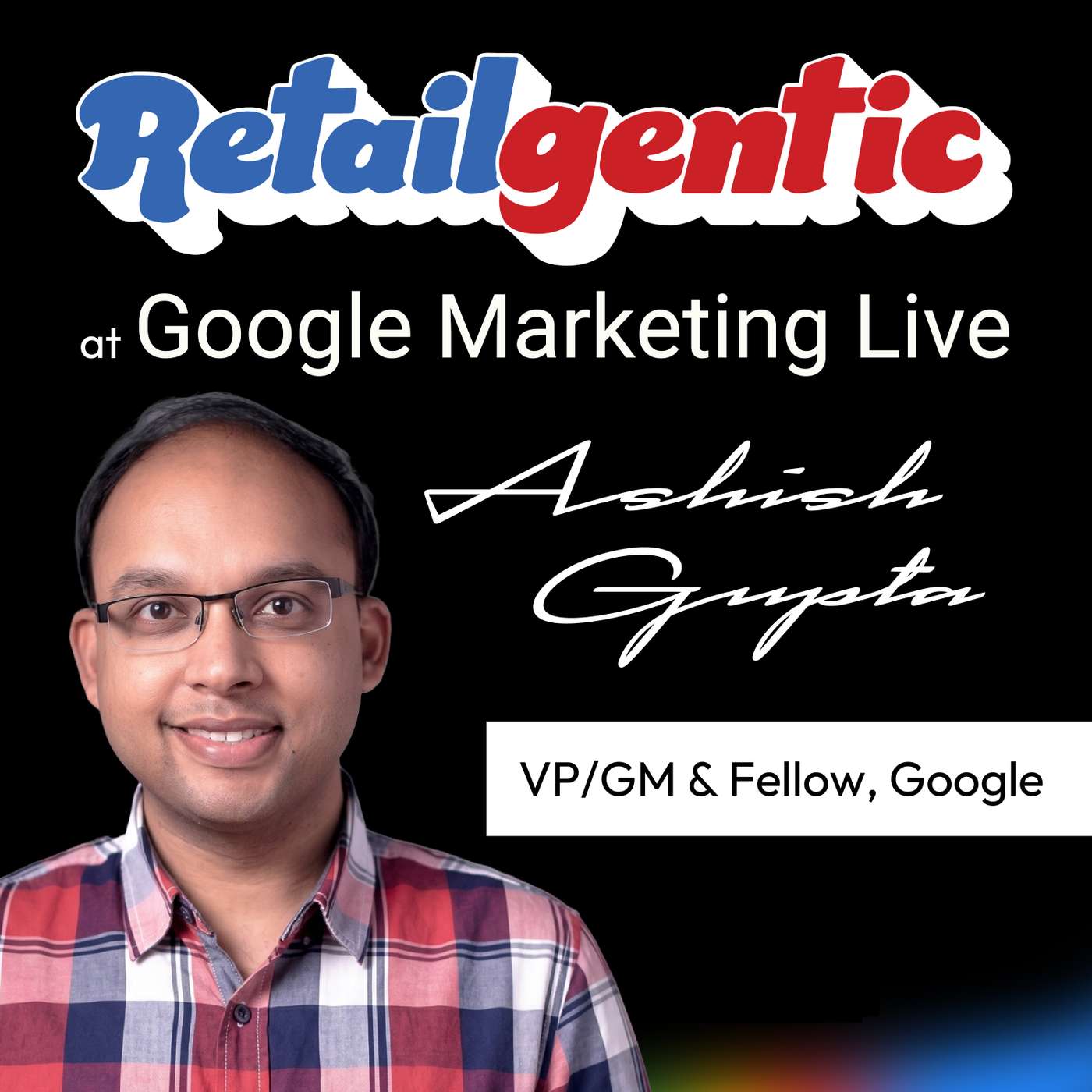
    “We Have Definitely Been Cooking”: Ashish Gupta, Google’s VP of Merchant Shopping, on Everything Google Just Shipped at GML

    May 20th at Google Marketing Live, right before my high-level strategic chat with Nick Fox, SVP of Knowledge and Information at Google (you can read/listen to that one here), I got to sit down with Ashish Gupta, VP & GM of Merchant Shopping at Google. If the Nick Fox conversation was the 30,000-ft strategic view of where Google is taking AI Mode, AIO, and the answer engine, this one with Ashish is the exact opposite. It’s the on-the-ground tactical roadmap for merchants. Ashish is literally one of the people building the thing, and he’s telling you what to do about it before holiday. This interview was recorded right after his fireside chat with Augustina Sartori at Google HQ. On that panel, he laid out the 4 things merchants should do right now: Product feeds Data strength AI campaigns, Agentic infrastructure (i.e., UCP). We get into all four. In this interview we discuss: The 6 new conversational attributes — just launched, live now in the supplemental feed (FAQs, related items, popularity rank, document links, additional variants, item group). Why they exist, how to use them, and the “best sales associate in your store” analogy for how AI surfaces are now expected to behave UCP’s expansion into new verticals — food delivery and travel. Why now, and why the “U” in Universal Commerce Protocol is doing real work Loyalty in UCP via Google account linking — your Ulta $10 reward shows up at checkout. Critical for merchants who don’t allow guest checkout Data strength — bringing first-party loyalty data into Gemini / AI Mode surfaces so loyal customers see more of the brands they love AI Max & P-Max and the new ad formats showing up across AI surfaces (and YouTube) AI Performance Insights coming to Merchant Center — the new Share of Voice metric, why the funnel doesn’t behave like a normal funnel (it can actually widen deeper in), and how Google is moving from a “click/keyword” company to an “answer engine” company The keyword vs. long-tail question — in an answer engine world, is there even such a thing as a “popular search term” anymore? (Ashish’s answer is interesting) What’s neat about doing these back-to-back is you get both layers in one day. Nick’s interview is about framing: how Google thinks about AI Mode vs. traditional Search, the Innovator’s Dilemma, the ~5 prior attempts at “transactions on Google” and why this one is different, and trust at the intersection of answer engines and AI ads. Ashish’s interview is the merchant-facing manifestation of all of that: here’s exactly what’s shipping, here’s what to put in your feed, here’s how we’ll measure you. Read both together and you get a pretty complete picture of what Google is doing with agentic commerce in 2026. Timestamps: 01:41 — Episode intro: Ashish Gupta returns, context on GML, the merchant vs. consumer org structure at Google 04:39 — Interview begins (on-site at Building 100 Bayview) 05:18 — Breaking news: the 6 new conversational attributes are live 06:32 — The "best sales associate" analogy for AI surfaces 08:09 — Popularity rank: how merchants can signal without giving away proprietary data 09:37 — Related items, additional variants, and item group attributes 11:01 — UCP expansion into new verticals (food delivery, travel) — why now 12:32 — The 4 things merchants should do: feeds, data strength, AI campaigns, agentic infrastructure 13:02 — Data strength explained: first-party loyalty data in AI surfaces 14:08 — Loyalty in UCP via Google account linking (the Ulta $10 example) 16:01 — AI campaigns: AI Max, P-Max, and showing up across AI surfaces 17:46 — New ad formats and YouTube shopping 18:04 — UCP on YouTube and what's next (Gmail?) 19:19 — AI Performance Insights & the Share of Voice metric 20:17 — Discover / Explore / Purchase: Google crosses from search engine to answer engine 21:34 — Why the AI funnel doesn't behave like a traditional funnel 23:20 — Long-tail vs. keyword: do "popular search terms" still exist in an answer-engine world? 25:05 — What Ashish is most excited about 26:06 — Outro 👉 Connect with Ashish: https://www.linkedin.com/in/ashishgupta98/ 🧠 Want to stay ahead in AI commerce? Subscribe and follow along: 📰 Subscribe to the free Substack: retailgentic.ai 📺 Watch episodes on YouTube & Subscribe for updates: https://www.youtube.com/@Retailgentic
  • #52
    May 21 · 22 min

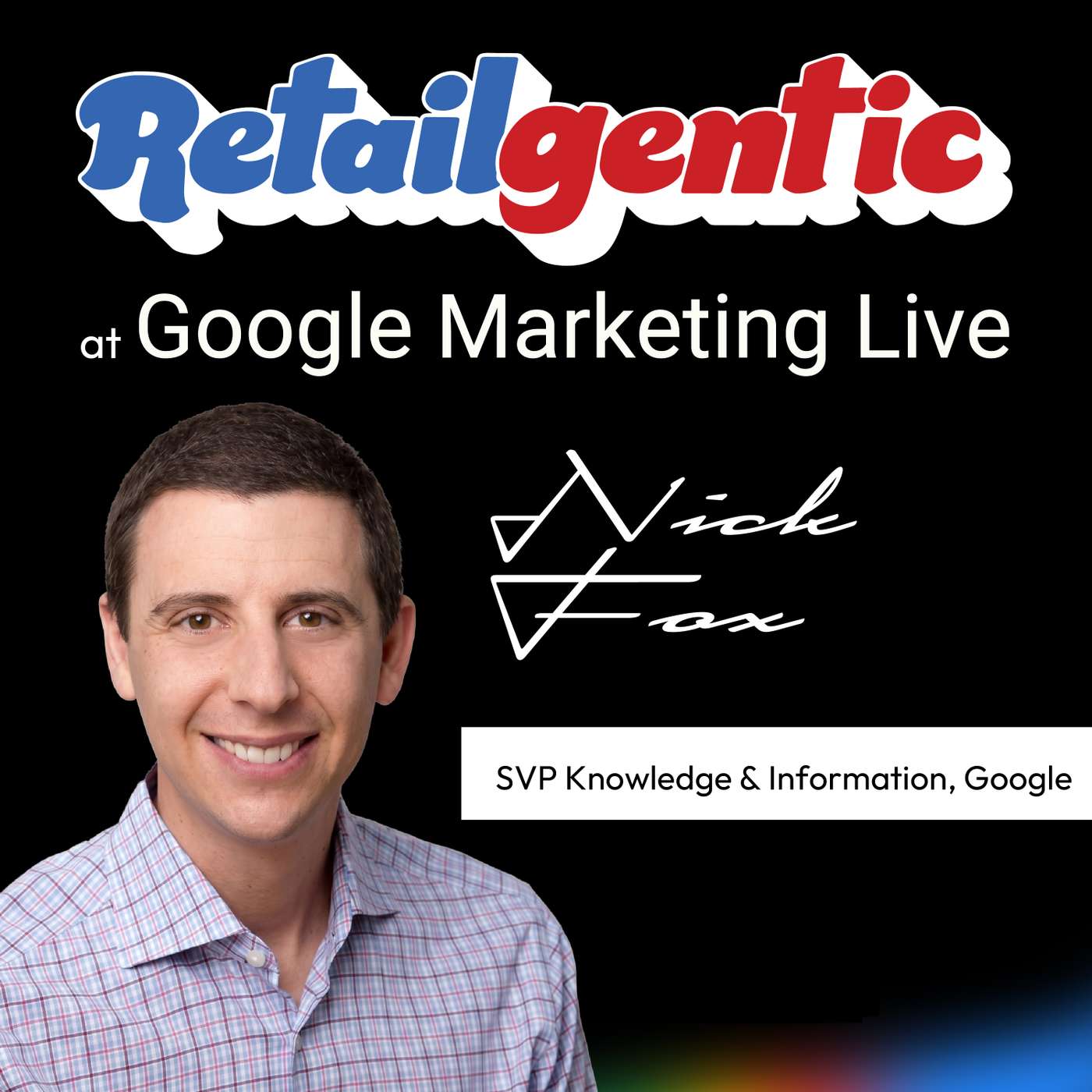
    Nick Fox, Google's SVP of Knowledge and Information, Live Google Marketing Live Interview

    May 20th at Google Marketing Live, I was very fortunate to be able to sit down for ~20 minutes with Nick Fox, SVP of Knowledge and Information at Google. Earlier in the day he had a fireside chat with Ben Smith, Editor-in-Chief Semafor. Later that afternoon after I had time to reflect on this conversation, I had a ~20min interview with Nick. It’s not often you get to sit down with one of the top execs at a ~$5T company so I worked a lot of topics into a short time. As always, I try and approach this with you, the audience in mind. What would YOU ask? I had just completed a super tactical Agentic Commerce / UCP/Universal Checkout chat with Ashish, so for this one flipped into high-level strategic mode. In this interview we discuss: How does Nick ‘frame’ AIO/AI Mode/Gemini Will AI Mode/AIO and traditional search transition from traditional to AI Mode or will they merge, or ‘other’ down the road? Google’s had ~5 previous attempts from the Froogle era to today for ‘transactions on Google’ - why is this the moment they are getting super serious about it? Navigating the Innovator’s Dilemma Finally, managing trust at the intersection of ‘Answer engines’ and ‘AI Ads’ Timestamps: 01:45 — Scot introduces Nick Fox, Google SVP of Knowledge & Information 02:31 — “Search in the AI Era” and Google’s AI strategy 03:21 — What this interview covers: AI Mode, Gemini, ads, and commerce 04:00 — Why Google believes transactions will work this time 04:33 — The innovator’s dilemma and defending Search 05:16 — Ads, trust, and AI-generated answers 05:52 — Interview begins live from Google Marketing Live 06:23 — How Gemini is “supercharging” Google’s advertising products 06:50 — Ads inside AI Mode and agentic commerce tools 07:11 — Universal Commerce Protocol + Universal Cart 07:26 — Nick Fox on 23 years at Google and the AI era 08:07 — Why Google sees tech shifts as growth accelerators, not disruptions 08:53 — Search vs AI Overviews vs AI Mode vs Gemini explained 09:12 — Google’s “two main products”: Search and Gemini 10:16 — Reinventing the Search box for the AI era 11:01 — Will AI Mode eventually become the default? 12:10 — Google’s philosophy: combining AI + the web 13:00 — Why Google believes users still want the web 13:03 — Gemini “Spark” and agentic capabilities 13:43 — AI agents running 24/7 in the background 14:14 — Using Spark to manage complex tasks like event planning 14:50 — The future of Gemini in the agentic era 14:59 — Google as an economic engine and ad marketplace 15:42 — The innovator’s dilemma and Search resilience 16:04 — “Lean into the technology shifts” philosophy 16:52 — Why Google didn’t see AI as a business-model threat 17:17 — Google’s ad model as a marketplace between users and marketers 18:18 — Why Google Shopping is different this time 19:02 — Why AI enables better shopping confidence and discovery 19:43 — AI helping users get further down the purchase journey 20:24 — Trust, ads, and AI-generated answers 21:04 — Google’s principles for ads in AI experiences 21:31 — “Ads are clearly labeled, separate, and relevant” 21:58 — Closing thoughts and wrap-up 👉 Connect with Nick: https://www.linkedin.com/in/nickthefox/ 👉 Learn more about Google Marketing Live: https://www.googlemarketinglive.com/digital 🧠 Want to stay ahead in AI commerce? Subscribe and follow along: 📰 Subscribe to the free Substack: retailgentic.ai 📺 Watch episodes on YouTube & Subscribe for updates: https://www.youtube.com/@Retailgentic
  • #51
    May 20 · 22 min

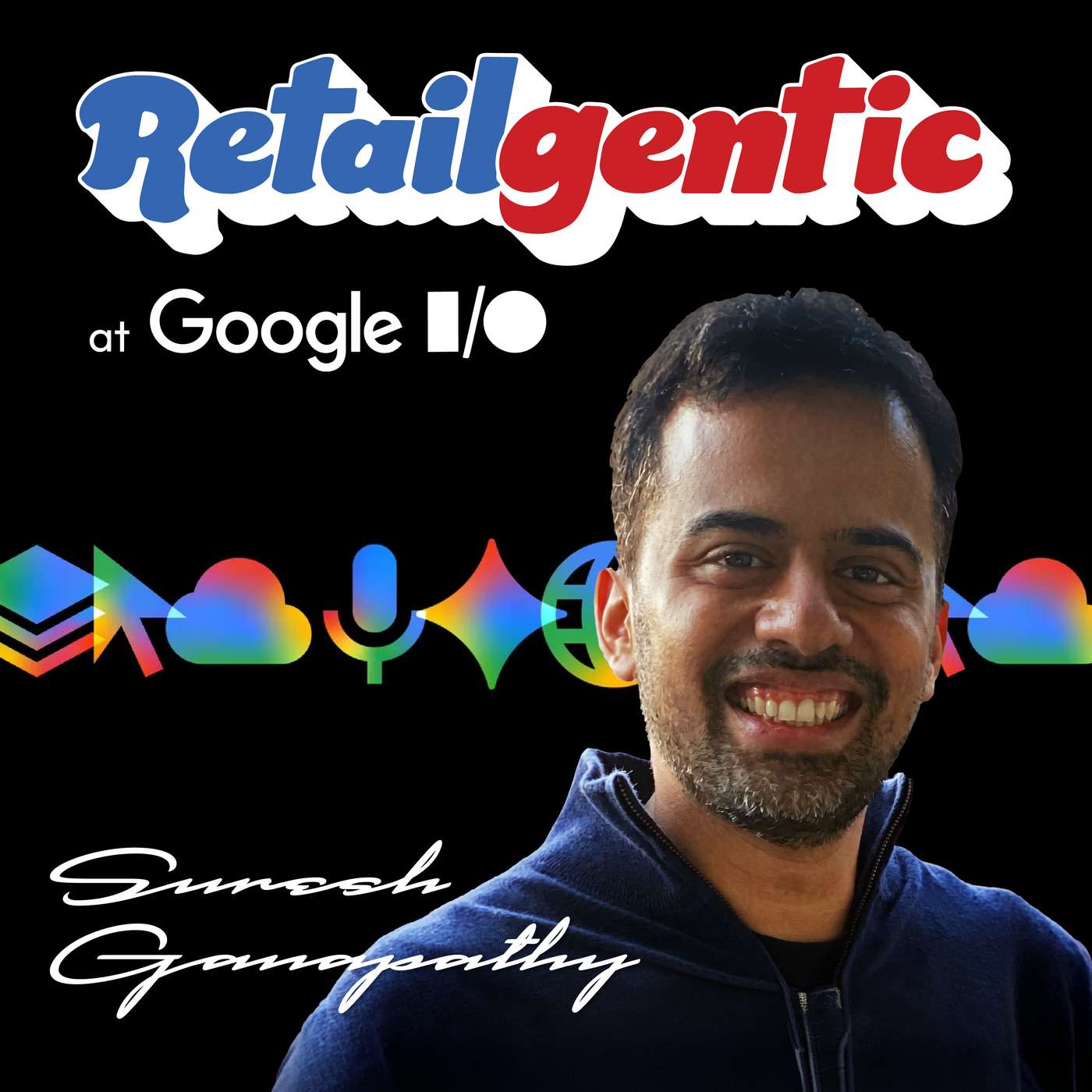
    Suresh Ganapathy, Senior Director of Product, Consumer Shopping: Live Google I/O Interview

    Today at Google I/O, in her part of the larger keynote, VP/GM of Ads and Commerce, Vidhya Srinivasan announced a raft of Agentic Commerce items with the anchor new feature being Universal Cart. After Vidhya’s keynote comments, I was left with these questions that I know merchants will have too: Googlers talk about Universal Cart being available on surfaces like Gmail and YouTube - what’s that actually look like IRL? What are the use cases that merchants can think about and start experimenting with? Universal Cart is coming this Summer - that’s typically June/July/August - that’s a long window in AI-time, early/mid/late Summer? I haven’t heard Google, at least the Agentic Commerce team, talk about AG2 in a while, and suddenly it popped back up in the context of the new consumer agent called Gemini Spark. What’s that all about that. Loyalty (via identity linking) was part of the UCP features announced back on March 19th (details here) but kind of missing here? Even though if you read Vidhya’s blog post very carefully it says that Universal Cart uses “loyalty information”, but it’s not like the Copilot UCP-based loyalty linkage we saw with Target back on April 22 (here if you missed it). That’s a lot of questions - I only had 30mins with Suresh, so had to pick and choose, but we covered some good ground. The good news is I have two more interviews scheduled for Wed 20th at Google Marketing Live and will work them all in. Subscribe, engage and stay tuned for more great Google I/O content coming at you all week! 👉 Connect with Suresh Ganapathy: https://www.linkedin.com/in/sureshsganapathy/ 👉 Learn more about Google I/O: https://io.google/2026/ 🧠 Want to stay ahead in AI commerce? Subscribe and follow along: 📰 Subscribe to the free Substack: retailgentic.ai 📺 Watch episodes on YouTube & Subscribe for updates: https://www.youtube.com/@Retailgentic
  • #50
    May 14 · 50 min

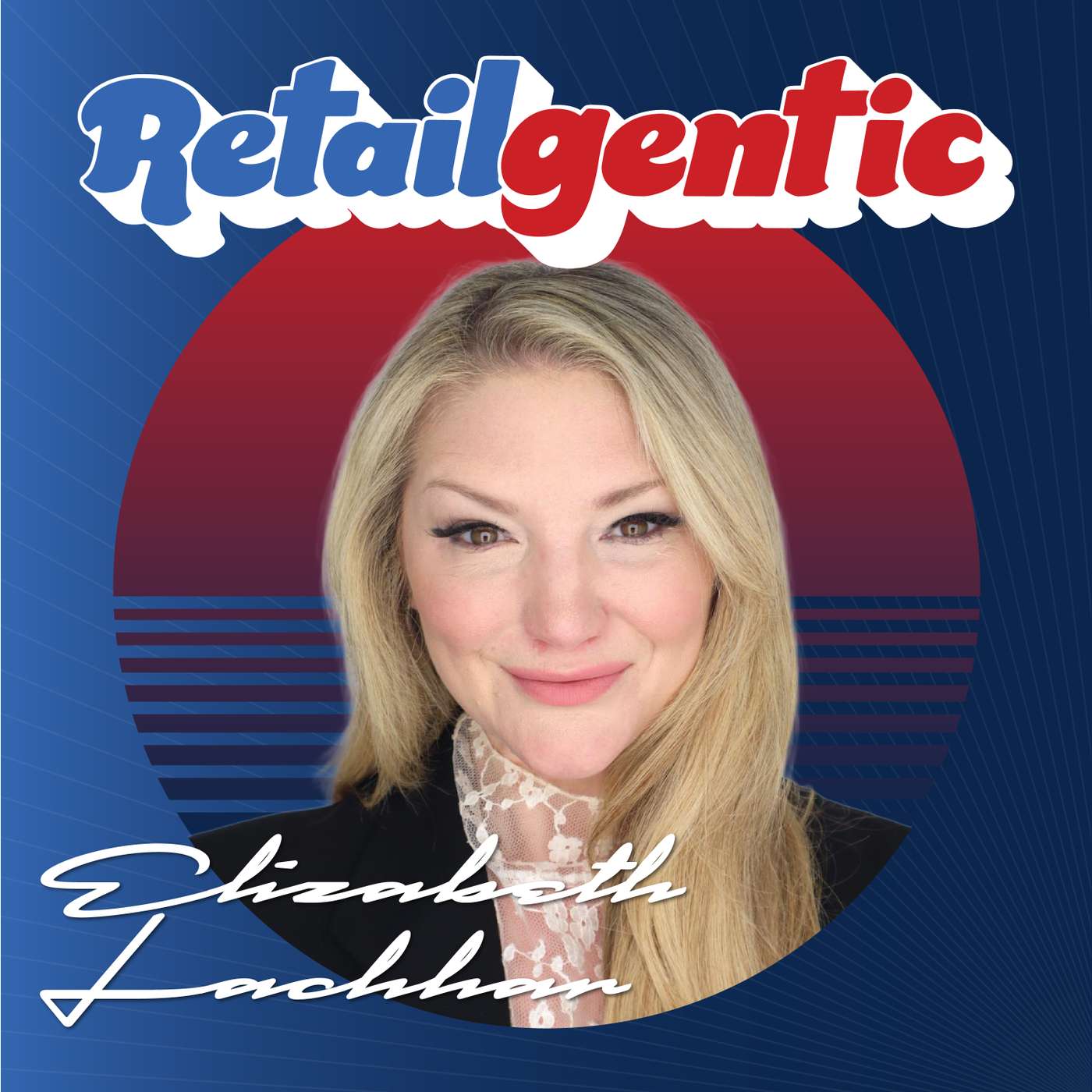
    Elizabeth Lachhar, EVP Americas at Rezolve AI: Is Your Ecommerce Experience Already Outdated?

    In this episode, Scot sits with Elizabeth Lachhar to unpack Rezolve AI’s end-to-end agentic commerce platform, including its closed retail-trained LLM, Brainpower, and modules across search, discovery, conversational commerce, checkout, and loyalty. A lot of the agentic commerce conversation focuses on offsite experiences like ChatGPT, Perplexity, Gemini, and other AI shopping agents. But there’s another major shift happening onsite, where retailers are rethinking search, merchandising, conversational commerce, checkout, loyalty, and personalization for an AI-native world. Elizabeth brings a deep enterprise background from Microsoft, Google, Oracle, and more, and now works with retailers, brands, food service, hospitality, and B2B companies navigating this transition. Highlights Why onsite agentic commerce matters just as much as offsite AI shopping agents How Rezolve AI approaches search, merchandising, conversational commerce, checkout, loyalty, and geolocation Why closed, retail-trained LLMs may matter for hallucination, security, and enterprise trust How conversational commerce can help retailers move beyond flat, 2D ecommerce experiences Why B2B discovery is a major agentic commerce use case How loyalty, memory, and past purchases can create better personalization What retailers are asking about right now: security, compliance, fraud, ROI, and partner strategy Why Elizabeth believes agentic commerce is already here, not years away What Generation Alpha could mean for the future of shopping experiences by 2030 Agentic commerce is also about rebuilding the onsite experience so retailers can understand, personalize, transact, and convert in a world where consumers expect commerce to be faster, smarter, and more conversational. Timestamps 00:00 — Introduction to Retailgentic 01:34 — Meet Elizabeth Lacchar of Resolve AI 04:18 — Elizabeth’s background at Microsoft, Google, Oracle, and more 07:14 — Why she joined Resolve AI 09:54 — What Resolve AI does 10:32 — The end-to-end agentic commerce platform 11:29 — Quick service, geolocation, and hospitality use cases 13:25 — Search, discovery, merchandising, and visualization 15:08 — B2B catalogs and complex SKU discovery 17:12 — Why agentic commerce is different from legacy site search 18:11 — Resolve’s closed LLM, Brainpower 20:26 — Checkout, wallets, crypto, and international payments 26:02 — Loyalty, data, and the full customer lifecycle 29:50 — Brain Suite, Brain Commerce, Brain Checkout, and Brain Assist 31:09 — Resolve AI’s customer mix 34:22 — Elizabeth’s role as EVP of the Americas 35:55 — Vibe check: where retailers are in adoption 38:31 — Is agentic commerce a race to the bottom? 40:28 — Fraud, bots, security, and guardrails 42:35 — Selling agentic commerce across enterprise teams 46:26 — Predictions for holiday and 2030 49:41 — Where to learn more about Resolve AI 👉 Connect with Elizabeth Lachhar: https://www.linkedin.com/in/elizabeth-lachhar/ 👉 Learn more about Rezolve Ai: https://www.linkedin.com/company/airezolve/ 🧠 Want to stay ahead in AI commerce? Subscribe and follow along: 📰 Subscribe to the free Substack: retailgentic.ai 📺 Watch episodes on YouTube & Subscribe for updates: https://www.youtube.com/@Retailgentic
  • #49
    May 7 · 48 min

    Microsoft Joins Retailgentic! Michele Fisher & Atanu Ghosh on Copilot, Agentic Commerce, Loyalty, Ads, and Does Conversational Discovery Changes Everything?

    In this episode, we sit down with Michele Fisher (Global Director, Business Strategy for Retail & CPG) and Atanu Ghosh (Director of Agentic Commerce & AI Innovation), who sit at the intersection of Azure AI, Copilot, and real-world retail and brand Agentic Commerce implementations. This conversation dives into how Microsoft is thinking about agentic commerce as a full operating model shift, not just a feature or channel. From Copilot shopping to data infrastructure to ads inside LLMs, the discussion connects the dots between: Highlights Conversational discovery is fundamentally different from search: The way people talk about brands inside AI systems looks nothing like traditional keyword behavior, and most companies have zero visibility into it. Agentic commerce is not one thing, it’s an operating model shift: Microsoft defines it broadly: agents participating in discovery, decision-making, and transactions, not just checkout. Copilot + catalog + data = the new commerce stack Ads are changing from persuasion to evaluation: Agents don’t care about creative. They evaluate structured data, trust signals, and relevance. Loyalty becomes infrastructure, not a program The “frontier firm” is the North Star: A future where humans and agents work together across workflows, not just AI acting as an assistant. Protocols like UCP matter more than people realize: Open standards enable discoverability across surfaces and prevent fragmentation in agent-driven ecosystems. The funnel is collapsing If your brand is still thinking about traffic as the starting point, you’re already behind. In an agentic world, discovery happens before you ever see the user, and increasingly, without them. Timestamps 00:00 – Why brands have zero visibility into conversational discovery 01:50 – Scot’s “Big 6” podcast goal and Microsoft joins the list 04:00 – Michelle & Atanu backgrounds + roles at Microsoft 10:00 – What agentic commerce actually means (and why definitions vary) 14:00 – Microsoft’s agentic commerce stack: Copilot, agents, data layer 18:00 – The “Frontier Firm” and human + agent workflows 20:00 – UCP, protocols, and why openness matters 23:00 – Loyalty, identity, and friction in agent checkout 28:00 – Ads in agentic commerce: from persuasion to evaluation 33:00 – First-party data vs. conversational behavior data 39:00 – Why most retailers aren’t ready (and what they need first) 45:00 – The real blocker: operating models, not technology 46:30 – Where to learn more + how leaders are consuming information now 👉 Connect with Michele: https://www.linkedin.com/in/michelekfisher/ 👉 Connect with Atanu: https://www.linkedin.com/in/buildingai/ 👉 Learn more about Microsoft in AI: https://techcommunity.microsoft.com/blog/azure-ai-foundry-blog/the-future-of-ai-harnessing-ai-for-e-commerce---personalized-shopping-agents/4386980 🧠 Want to stay ahead in AI commerce? Subscribe and follow along: 📰 Subscribe to the free Substack: retailgentic.ai 📺 Watch episodes on YouTube & Subscribe for updates: https://www.youtube.com/@Retailgentic
  • #48
    April 30 · 50 min

    Stephan Ritter, Director Commerce Transformation Deloitte, EU: Agentic Commerce in Europe, The New Battleground is Discovery, The Importance of Product Data and Loyalty!

    In this episode of Retailgentic, Stephan breaks down how agentic commerce is evolving globally, with a particular focus on Europe’s rapid adoption. We explore why AI-driven shopping is accelerating faster than previous technology shifts, how brands are already losing visibility without realizing it, and what practical steps companies can take today to stay competitive. From product data strategy to protocol wars to the future of loyalty, this conversation offers a clear view of where commerce is heading next. Highlights Discovery is the new battleground: If your product is not readable, trustworthy, and rich in context for AI agents, it will not be recommended. Agentic commerce starts before checkout: The most important shift is happening in discovery, comparison, and decision-making, not the final transaction. Europe is moving differently, not slower: Adoption among younger consumers in markets like Germany is already very high, with many using AI in shopping workflows. Product data is now infrastructure: Years of optimizing for search engines are being replaced by the need to structure data for AI systems. Loyalty and identity are becoming core systems: Future commerce will depend heavily on how well brands manage identity, value, and customer relationships across AI ecosystems. Protocols are evolving fast: Systems like UCP and MCP are shaping how agents interact with product data, pricing, and checkout layers. Small experiments already create visibility gains: Even limited API exposure or structured data improvements can increase inclusion in AI-driven recommendations. Agentic commerce is accelerating existing problems: Many of today’s challenges, like poor data quality and disconnected systems, have existed for years but are now becoming urgent. Agentic commerce is already reshaping how products are discovered today, and the brands that adapt fastest will define the next era of retail. Timestamps 00:00 – Opening and overview of agentic commerce 02:00 – Who Stefan Ritter is and his background 05:00 – Why agentic commerce adoption is happening faster than mobile 09:00 – What agentic commerce actually means 11:00 – Human vs autonomous decision-making 13:00 – Why context is replacing keywords 16:00 – State of agentic commerce in Europe 20:00 – Data quality and infrastructure challenges 23:00 – AI platforms and protocol landscape 26:00 – Loyalty, identity, and authentication of agents 28:00 – The three opportunity spaces for brands 32:00 – How AI changes product storytelling 36:00 – Events, ecosystem, and European perspective 37:00 – Deloitte research and discovery battleground 39:00 – Retail media and monetization challenges 42:00 – Practical roadmap for brands 46:00 – The future of agentic commerce 49:00 – Closing thoughts and where to follow Stefan 👉 Connect with Stephan: https://www.linkedin.com/in/stephanritter/ 👉 Learn more about Deloitte: https://www.linkedin.com/company/deloitte/ 🧠 Want to stay ahead in AI commerce? Subscribe and follow along: 📰 Subscribe to the free Substack: retailgentic.ai 📺 Watch episodes on YouTube & Subscribe for updates: https://www.youtube.com/@Retailgentic

  • #47
    April 23 · 44 min

    Krystina Gustafson: Innovating at the Intersection of Content, AI, Agentic Commerce and Digital Retail Conferences...

    This episode goes beyond surface-level AI hype and into how retail organizations are actually responding. Krystina shares what she’s hearing from operators, board members, and data leaders and why the biggest risk right now is moving in the wrong direction. At the same time, we explore how agentic commerce is reshaping traffic, discovery, and brand relationships and what that means for the future of ecommerce. Highlights AI is forcing a full end-to-end transformation of retail Many companies are prioritizing the wrong AI initiatives, focusing on hype instead of P&L impact A growing concern: “dark” or untracked AI-driven traffic is already impacting performance Data strategy is becoming a core battleground: What do you give AI platforms? What do you get back? Do CRMs need to evolve entirely? The real unlock for AI shopping is complex, multi-step purchases (travel, events, planning) The industry is early, but pressure from boards and declining traffic is accelerating adoption The future of retail will be defined by who applies it to the right problems. ⏱️ Timestamps 00:00 — The future of retail data + AI uncertainty 00:47 — Retailgentic intro 03:10 — Kristina Gustafson’s background (CNBC → Shoptalk → RetailClub) 08:02 — Why RetailClub exists: AI needs a verticalized event 10:00 — From “retreat” to “festival” 12:00 — Intimacy vs scale in events 17:00 — What “festival format” actually means 20:00 — RetailClub themes: full AI transformation of retail 26:00 — How Kristina tracks AI trends (75%+ of her time) 28:00 — AI prioritization problem inside companies 29:00 — Data, CRMs, and “dark agentic traffic” 30:00 — Traffic decline + board pressure 36:30 — Agentic commerce: what actually works 38:00 — Why brands won’t fully disappear 40:00 — RetailClub details + closing 👉 Connect with Krystina: https://www.linkedin.com/in/krystina-gustafson-908a5a14/ 👉 Learn more about RetailClub: https://retailclub.com/ 🧠 Want to stay ahead in AI commerce? Subscribe and follow along: 📰 Subscribe to the free Substack: retailgentic.ai 📺 Watch episodes on YouTube & Subscribe for updates: https://www.youtube.com/@Retailgentic

Showing 1–20 of 22 episodes