Skip to content
Artwork for Relatively Stable
Relatively Stable · Thursday · 19 min

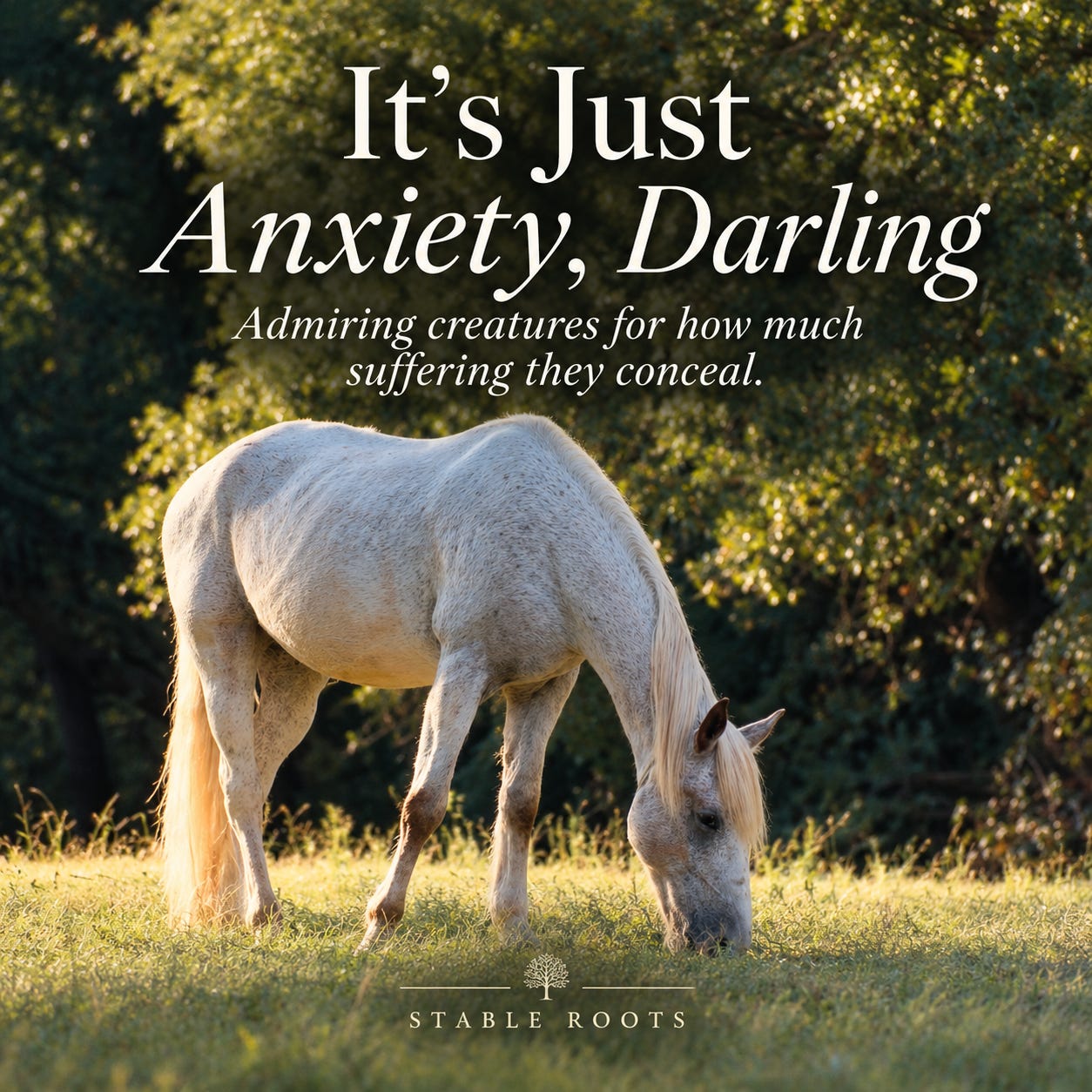
It’s Just Anxiety, Darling

What happens when we become so good at tolerating discomfort that nobody notices we're suffering? After three years of being told the numbness in my hands was anxiety, a nerve conduction study revealed severe damage that required surgery on both hands. Along the way, I encountered some rather strong opinions from my longtime shavings delivery guys, an unexpected lesson in the effects of epinephrine, and the realization that we're super glad to tell others how we're feeling without taking a good look at ourselves. In this episode of Relatively Stable, I explore the uncomfortable similarities between the way we treat human pain and the way we interpret horses. We admire endurance, reward cooperation, and often mistake our ability to compensate for evidence that nothing is wrong. Maybe the more important question isn't how much pressure a horse can tolerate, but why we're asking it to tolerate that pressure at all. Read the accompanying essay at Stable Roots. Love,Kim This is a public episode. If you'd like to discuss this with other subscribers or get access to bonus episodes, visit stableroots.substack.com/subscribe


0:00-19:18

transcript

No transcript — this publisher did not publish one.

show notes

What happens when we become so good at tolerating discomfort that nobody notices we're suffering?

After three years of being told the numbness in my hands was anxiety, a nerve conduction study revealed severe damage that required surgery on both hands. Along the way, I encountered some rather strong opinions from my longtime shavings delivery guys, an unexpected lesson in the effects of epinephrine, and the realization that we're super glad to tell others how we're feeling without taking a good look at ourselves.

In this episode of Relatively Stable, I explore the uncomfortable similarities between the way we treat human pain and the way we interpret horses. We admire endurance, reward cooperation, and often mistake our ability to compensate for evidence that nothing is wrong.

Maybe the more important question isn't how much pressure a horse can tolerate, but why we're asking it to tolerate that pressure at all.

Read the accompanying essay at Stable Roots.

Love,Kim


This is a public episode. If you'd like to discuss this with other subscribers or get access to bonus episodes, visit stableroots.substack.com/subscribe

links2

more episodes

All episodes