Skip to content
Artwork for Recording & Mixing
TechnologyEducationHow To

Recording & Mixing

Sound On Sound

Welcome to the Sound On Sound Recording and Mixing podcast channel where you’ll find shows packed with Hints & Tips about getting the most out of the recording, mixing and mastering process.

More information and content can be found at www.soundonsound.com/podcasts | Facebook, X and Instagram - @soundonsoundmag | YouTube - https://www.youtube.com/user/soundonsoundvideo

Play
  • 21 episodes
  • monthly
  • Avg 28 min
  • English
Counted on this page — what you have heard stays on this device, so it is not something the list can be paged by.
  • August 21 · 42 min

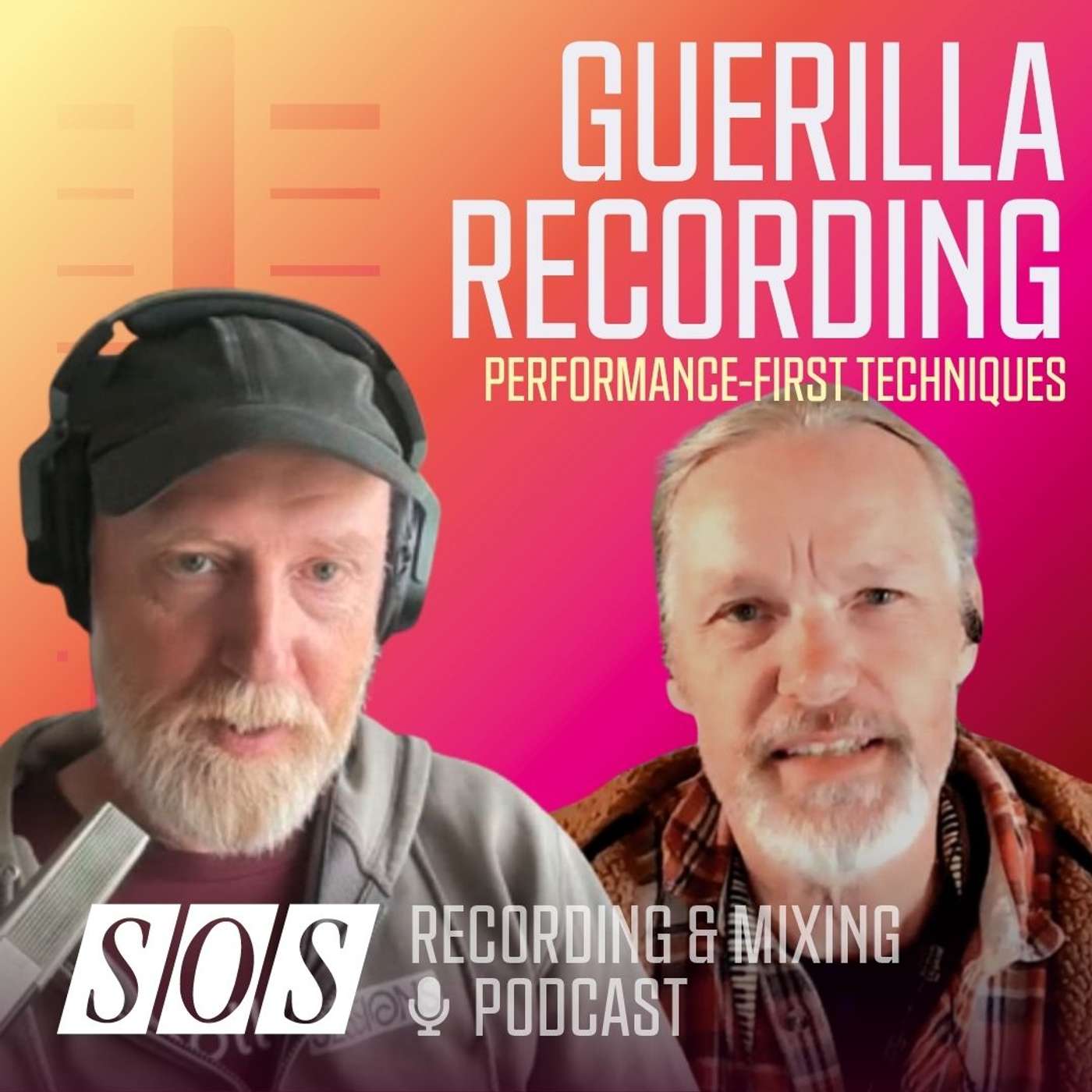
    Guerilla Recording - Performance-First Techniques

    Lincoln Grounds joins Julian Rodgers to discuss guerrilla recording techniques, exploring how a focus on authentic performances, unconventional spaces and adaptability can matter more than technology and complex setups when creating compelling recordings. Chapters 00:00 - Introduction 01:09 - Definition Of Guerilla Recording 05:59 - Not Over-Indulging In Tech 11:14 - Getting A Good Performance Quickly 16:18 - Recording Bands In Their Own Element 19:50 - Working With Spill 30:18 - Headphones And Clicks Where Needed 33:10 - Post Production Techniques #BozDigital #ProTools #FabFilter #NoiseWorks #iZotope #Waves Lincoln Grounds Biog Lincoln Grounds is a composer, producer, recording engineer and owner of Maverick Music. His work spans production music for TV, film and advertising, alongside live performance and recording projects with artists including Sister Sledge, Cockney Rebel and Kid Creole. He has worked in a wide variety of recording environments, from improvised setups to world-renowned studios including Abbey Road and Blackbird Studio in Nashville. https://x.com/lincolngrounds Julian Rodgers Biog Julian Rodgers is a freelance writer and audio engineer with a background in live sound. After many years working in education introducing new users to Pro Tools, he now lives by the sea in West Cornwall, where he plays keyboards in a couple of bands. He also plays bass and guitar equally badly, and remains an enthusiastic collector of microphones and opinions about all things audio. https://www.linkedin.com/in/julian-rodgers-04621926 Catch more shows on our other podcast channels: https://www.soundonsound.com/sos-podcasts

    • Transcript
    • Chapters
  • July 29 · 31 min

    Advanced Effects

    Eddie Bazil explores a range of advanced effects techniques, using practical audio examples to demonstrate how creative combinations of delays, reverbs, harmonisers, flangers and phasers can add depth, movement and texture to your productions. Chapters 00:00 - Introduction 02:43 - Example 1: Multi-Tap Delay 05:43 - Example 2: Granular Resynthesis 08:10 - Example 3: Wrapping Reverbs 12:21 - Example 4: Adding Frequencies With A Harmoniser 16:10 - Example 5: Flangers For 3D Motion 20:43 - Example 6: Flanger, Phaser and Reverb #EventideUltraTap #SoundtoysCrystallizer #IKMultimediaCSRPlateReverb #AcusticaAudioRICE #EventideH949Harmonizer #BlueCatFlanger #InitialAudio808Studio2 #SoundtoysPhaseMistress #GForceM-tronProIV #EventideBlackhole Eddie Bazil Biog Eddie Bazil launched his music industry career at the age of 17 as a synth programmer for a range of Electro / New Wave bands, including Art Of Noise, Spandau Ballet, Pet Shop Boys, Bobin, Paul Dee, DJ Krush, DJ Shadow, Jets Orchestra, and many more. By his 20s, he was working as a sound designer for Akai, Roland, Emu/Ensoniq, eventually signing on exclusively with the latter. Later, due to a growing demand for software instruments and libraries, Eddie began developing libraries for various software manufacturers, including Native Instruments, Kiesel, Sound Effects Library, Rob Papen, Arturia, and Propellerheads. During this time, he trained in music production. He soon gained several prominent contracts working with some notable artistes such as Busta Rhymes, Greensleeves, 9 Bar, SFP, Sleeveless, Chris Campbell and Gam Productions. He contracted to Island Records and Chrysalis as a producer and remixer, and was commissioned to write the score for Macbeth that ran at 2 Way Mirror at Alexander Palace for the Cambridge Shakespeare Company. This led to him offering educational workshops and classes, and becoming a contributing creator and Forum moderator for Sound On Sound. Recently, he was invited by the Recording Academy to become a professional member, approved educator, and mentor for their member base. Eddie now concentrates on providing private sound design and mixing/production tuition, and creating content for Sound On Sound magazine. https://eddiebazil.co.uk/ Catch more shows on our other podcast channels: https://www.soundonsound.com/sos-podcasts

    • Transcript
    • Chapters
  • May 19 · 25 min

    Advanced EQ Tips

    In this episode, Eddie Bazil breaks down the different types of EQ, explains their most common uses in mixing and production, and demonstrates how they shape and enhance sound with practical audio examples. Chapters 00:00 - Introduction 00:48 - What EQ Is And Different Types 01:33 - Active And Passive 02:45 - Linear Phase And Minimum Phase 03:46 - High-Pass and Low-Pass Filters 04:36 - Example 1: Using Synth Filters 06:47 - Common Functions Of EQ 07:27 - Example 2: Shaping A Kick Drum 10:31 - Example 3: Rebalancing An Acoustic Guitar 13:48 - Selecting The Right EQ Shape 15:55 - Managing Redundant Frequencies 18:15 - Example 4: Rebalancing A Mix #PultecEQP-1 #XferSerum #BozDigitalTransgressor2 #EventideSplitEQ #SonibleEntropyEQ+ #SSLNativeXSaturator #SSLValveComp #TokyoDawnTDRArbiter Track Credits Example 2: from 'Puppet' by John Walden. Example 3: from James Perret. Example 4: from 'Another Way' by forester. Written, performed and produced by René Schneeberger. https://foresterdnb.bandcamp.com/music https://open.spotify.com/intl-de/artist/2BtzZiEDaReXLveskYtYkm https://soundcloud.com/foresterdnb https://cambridge-mt.com/ Eddie Bazil Biog Eddie Bazil launched his music industry career at the age of 17 as a synth programmer for a range of Electro / New Wave bands, including Art Of Noise, Spandau Ballet, Pet Shop Boys, Bobin, Paul Dee, DJ Krush, DJ Shadow, Jets Orchestra, and many more. By his 20s, he was working as a sound designer for Akai, Roland, Emu/Ensoniq, eventually signing on exclusively with the latter. Later, due to a growing demand for software instruments and libraries, Eddie began developing libraries for various software manufacturers, including Native Instruments, Kiesel, Sound Effects Library, Rob Papen, Arturia, and Propellerheads. During this time, he trained in music production. He soon gained several prominent contracts working with some notable artistes such as Busta Rhymes, Greensleeves, 9 Bar, SFP, Sleeveless, Chris Campbell and Gam Productions. He contracted to Island Records and Chrysalis as a producer and remixer, and was commissioned to write the score for Macbeth that ran at 2 Way Mirror at Alexander Palace for the Cambridge Shakespeare Company. This led to him offering educational workshops and classes, and becoming a contributing creator and Forum moderator for Sound On Sound. Recently, he was invited by the Recording Academy to become a professional member, approved educator, and mentor for their member base. Eddie now concentrates on providing private sound design and mixing/production tuition, and creating content for Sound On Sound magazine. https://eddiebazil.co.uk/ Catch more shows on our other podcast channels: https://www.soundonsound.com/sos-podcasts

    • Transcript
    • Chapters
  • March 17 · 44 min

    Hardware in a Modern Hybrid Studio

    Professional producers Chevy One and Gareth Young talk to Julian Rodgers about the advantages of a hybrid hardware and digital studio setup and how combining the two can streamline workflow and speed up modern music production. Chapters 00:00 - Introduction 01:07 - Hardware In A Modern Hybrid Studio 03:47 - What Does Hybrid Currently Mean 07:31 - Benefits Of Having A Console 08:43 - Using Control Surfaces 14:54 - Matching Tools To Tasks 23:24 - On The Way In And The Way Out 31:46 - Recallable And Software-Integrated Hardware 37:16 - Hardware Vs Software Workflow #LA2A #Console1 #Audient #SSL Chevy One Biog Award-winning producer and composer Chevy has built a two-decade career across records, global brands and music technology. Operating a modern hybrid studio, he balances analogue commitment with digital flexibility. Recent work includes IKEA’s latest National Swedish campaign and product leadership at All Our Minds. https://www.linkedin.com/in/joseluismontoro https://audiocentralstudio.co.uk Gareth Young Biog Gareth is the owner of Cube recording studios a residential studio in Cornwall where he has worked with clients such as The XX, Tom Misch and Sam Ryder. Gareth has recently co-written and produced Tom Meighan's top twenty debut solo album, ‘The Reckoning ‘ and as a writer/producer he has co-written and produced hits for the Sugababes, Appleton, Dannii Minogue, Ronan Keating and All Saints to name a few. http://garethyoung.com https://www.facebook.com/cuberecordingcornwall https://x.com/cuberecording https://www.instagram.com/cube_recording Julian Rodgers Biog Julian Rodgers is a freelance writer and audio engineer with a background in live sound. After many years working in education introducing new users to Pro Tools, he now lives by the sea in West Cornwall, where he plays keyboards in a couple of bands. He also plays bass and guitar equally badly, and remains an enthusiastic collector of microphones and opinions about all things audio. https://www.linkedin.com/in/julian-rodgers-04621926 Catch more shows on our other podcast channels: https://www.soundonsound.com/sos-podcasts

    • Transcript
    • Chapters
  • February 12 · 19 min

    Advanced DAW Automation

    Eddie Bazil demonstrates creative uses of advanced automation as a musical tool in the DAW, showing how automation can add movement, expression and musical detail. The episode covers shaping arpeggiated parts, using MIDI CC for dynamic control, modulating vocal tracks and applying MIDI note expression to enhance performance. Chapters 00:00 - Introduction 01:49 - Setting Up Automation Lanes 02:30 - Example 1: Adding ARP Movement 04:51 - Example 2: Using MIDI CC For Velocity 07:41 - Example 3: Modulating A Vocal Track 14:52 - Example 4: MIDI Note Expression In A DAW #gforce #imposcar3 #cubase #deviousmachines #infiltrator2 #cableguys #shaperbox #ovoxvocoder #eventide #blackhole See Also: https://www.soundonsound.com/techniques/using-phaser-effects-podcast Eddie Bazil Biog Eddie Bazil launched his music industry career at the age of 17 as a synth programmer for a range of Electro / New Wave bands, including Art Of Noise, Spandau Ballet, Pet Shop Boys, Bobin, Paul Dee, DJ Krush, DJ Shadow, Jets Orchestra, and many more. By his 20s, he was working as a sound designer for Akai, Roland, Emu/Ensoniq, eventually signing on exclusively with the latter. Later, due to a growing demand for software instruments and libraries, Eddie began developing libraries for various software manufacturers, including Native Instruments, Kiesel, Sound Effects Library, Rob Papen, Arturia, and Propellerheads. During this time, he trained in music production. He soon gained several prominent contracts working with some notable artistes such as Busta Rhymes, Greensleeves, 9 Bar, SFP, Sleeveless, Chris Campbell and Gam Productions. He contracted to Island Records and Chrysalis as a producer and remixer, and was commissioned to write the score for Macbeth that ran at 2 Way Mirror at Alexander Palace for the Cambridge Shakespeare Company. This led to him offering educational workshops and classes, and becoming a contributing creator and Forum moderator for Sound On Sound. Recently, he was invited by the Recording Academy to become a professional member, approved educator, and mentor for their member base. Eddie now concentrates on providing private sound design and mixing/production tuition, and creating content for Sound On Sound magazine. https://eddiebazil.co.uk/ Catch more shows on our other podcast channels: https://www.soundonsound.com/sos-podcasts

    • Transcript
    • Chapters
  • January 22 · 43 min

    AI and Music Tech in 2026 - Sonarworks Survey

    Helmuts Bems, Co-Founder and CEO of Sonarworks, joins Sam Inglis to discuss the findings of their recent AI survey. The conversation explores differing industry perspectives on generative versus assistive AI and provides insight into the extent to which professional musicians are already adopting these emerging technologies. Chapters 00:00 - Introduction 00:33 - A Data-Driven Audio Company 04:56 - Assistive Vs Generative AI 07:36 - New Categories Of Tools 08:27 - Early Adoption Of AI Tools 12:50 - Negative Or Neutral Tensions 18:37 - Tackling Ethical Issues 21:25 - Where Music Production Is Heading 26:33 - The Impact Across Industries And Musical Genres 33:05 - Changes In Music Consumption 37:08 - How Technology Has Shaped Music 42:41 - AI As A Huge Industry Disruption For more insights and data read the related article: www.soundonsound.com/music-business/ai-music-tech-2026 Full Report (PDF): https://blog-uploads.nyc3.digitaloceanspaces.com/2026/01/ai-music-production-skills-report-2026-sonarworks.pdf Sonarworks Blog (Short Version): www.sonarworks.com/blog/research/future-music-production-human-producer-survey-2026 Sonarworks Biog Sonarworks is an award-winning audio technology company specialising in sound calibration and audio personalisation. Founded in 2012 and headquartered in Riga, Latvia, the company develops patented calibration and AI-driven technologies that enable consistent, reference-grade audio across a wide range of listening environments and professional workflows. Sonarworks’ solutions are trusted by more than 300,000 studios worldwide and are widely used by audio engineers, producers and content creators. In addition to its professional studio tools, Sonarworks has expanded into consumer audio through its SoundID personalisation technology, which adapts sound to individual hearing profiles and preferences. The company licenses its technology to global audio and consumer electronics partners and continues to be recognised internationally for its innovation in precision audio and sound optimisation. https://www.sonarworks.com/blog/research Helmuts Bems (Co-founder, CEO) Biog Helmuts Bems is Co-Founder and Chief Executive Officer of Sonarworks, a leading audio technology company based in Riga, Latvia. He co-founded the company in 2012 and has overseen its strategic growth into a global innovator in sound calibration and personalised audio solutions, securing multiple financing rounds and international partnerships to expand its technologies across professional and consumer markets. Bems holds a Bachelor’s degree in Economics and Business Administration from the Stockholm School of Economics in Riga. Under his leadership, Sonarworks has been recognised for advancing precision audio technologies used by engineers and studios worldwide and has achieved notable industry accolades and commercial milestones. Driven by complex challenges, Bems combines strategic planning and team leadership with a commitment to advancing deep-tech innovation, and maintains personal interests in endurance sports and outdoor pursuits. Sam Inglis Biog Editor In Chief Sam Inglis has been with Sound On Sound for more than 20 years. He is a recording engineer, producer, songwriter and folk musician who studies the traditional songs of England and Scotland, and the author of Neil Young's Harvest (Bloomsbury, 2003) and Teach Yourself Songwriting (Hodder, 2006). https://www.soundonsound.com Catch more shows on our other podcast channels: https://www.soundonsound.com/sos-podcasts

    • Transcript
    • Chapters
  • Nov 21, 2025 · 22 min

    Gear Of The Year 2025

    Paul White and Hugh Robjohns pick their software and hardware highlights from the gear they've reviewed in the last 12 months. Chapters 00:00 - Introduction 00:14 - Cranborne Audio Brick Lane Compressor 03:56 - Soundtoys SpaceBlender 05:40 - Braingasm Ocula 08:18 - Sub51 And Soundtrax Drop Pad 09:16 - Red Panda Radius Ring Modulator 10:40 - Source Audio Encounter Delay+Reverb 11:45 - Electro-Harmonix Oceans Abyss 13:05 - Sound Devices Astral ARX16 Receiver 15:23 - Sound Devices Astral HH Transmitter 16:31 - Sound Devices Astral TX Transmitter 17:17 - RME ADI-2/4 Pro Converter 18:34 - Newfangled Audio Articulate Audio ADSR 19:54 - Overloud THU v2 Guitar Amp Simulator 20:37 - Grace Design m701 Audio Interface Gear4Music (affiliate link UK/EU only) Red Panda Radius EHX Oceans Abyss Sweetwater (affiliate link North America only) Cranborne Brick Lane 500 Red Panda Radius Source Audio Encounter EHX Oceans Abyss Sound Devices Astral ARX16 Sound Devices Astral HH Sound Devices Astral TX RME ADI-2-4 Pro SE Grace Design m701 #cranborneaudio #soundtoys #braingasm #sub51 #soundtrax #redpanda #sourceaudio #electroharmonix #sounddevices #rme #newfangledaudio #overloud #gracedesign Paul White Biog Paul White initially trained in electronics at The Royal Radar Establishment in Malvern then went on to work with Malvern Instruments, a company specialising in laser analysis equipment, before moving into technical writing. He joined the Sound On Sound team in 1991 where he became Editor In Chief, a position he held for many years before recently becoming Executive Editor. Paul has written more than 20 recording and music technology textbooks, the latest being The Producer’s Manual. Having established his own multitrack home studio in the 1980s he’s worked with many notable names including Bert Jansch and Gordon Giltrap. He’s played in various bands over the years and currently collaborates with Malvern musician Mark Soden, under the name of Cydonia Collective. Paul still performs live claiming that as he has suffered for his music he doesn’t see why everyone else shouldn’t too! http://www.cydoniacollective.co.uk/ Hugh Robjohns Biog Hugh Robjohns has been Sound On Sound´s Technical Editor since 1997. Prior to that he worked in a variety of (mostly) sound-related roles in BBC Television, ending up as a Sound Operations Lecturer at the BBC´s technical training centre. He continues to provide audio consultancy and bespoke broadcast audio training services all over the world, lectures at professional and public conventions, and occasionally records and masters acoustic and classical music too! Catch more shows on our other podcast channels: https://www.soundonsound.com/sos-podcasts

    • Transcript
    • Chapters
  • Oct 10, 2025 · 22 min

    Tips For Home Studio Users

    In this episode, Paul White and Hugh Robjohns address some of the most frequently-asked questions about home studio recording and production. They share practical, experience-based advice to help you get the best results from your setup, whatever your budget or space. Chapters 00:00 - Introduction 00:14 - Improving Your Room Acoustics 02:29 - Working On Headphones 04:13 - Dampening With A Duvet 05:50 - Choosing The Right Speakers 06:50 - Mics And Preamps 09:02 - Cables And Connectors 11:28 - Hardware Vs Plug-ins 14:09 - When To Add A Patchbay 16:18 - Preparing Music For Streaming 18:59 - Bass Drivers And Room Size #IsoAcoustics #AKGC414 #NeumannU87 #AudioTechnica2020 #ShureSM57 #ShureSM58 #Neutrik #Cannon Paul White Biog Paul White initially trained in electronics at The Royal Radar Establishment in Malvern then went on to work with Malvern Instruments, a company specialising in laser analysis equipment, before moving into technical writing. He joined the Sound On Sound team in 1991 where he became Editor In Chief, a position he held for many years before recently becoming Executive Editor. Paul has written more than 20 recording and music technology textbooks, the latest being The Producer’s Manual. Having established his own multitrack home studio in the 1980s he’s worked with many notable names including Bert Jansch and Gordon Giltrap. He’s played in various bands over the years and currently collaborates with Malvern musician Mark Soden, under the name of Cydonia Collective. Paul still performs live claiming that as he has suffered for his music he doesn’t see why everyone else shouldn’t too! http://www.cydoniacollective.co.uk/ Hugh Robjohns Biog Hugh Robjohns has been Sound On Sound´s Technical Editor since 1997. Prior to that he worked in a variety of (mostly) sound-related roles in BBC Television, ending up as a Sound Operations Lecturer at the BBC´s technical training centre. He continues to provide audio consultancy and bespoke broadcast audio training services all over the world, lectures at professional and public conventions, and occasionally records and masters acoustic and classical music too! Catch more shows on our other podcast channels: https://www.soundonsound.com/sos-podcasts

    • Transcript
    • Chapters
  • Sep 16, 2025 · 33 min

    Vocal Processing Techniques

    Eddie Bazil explores advanced vocal processing techniques to achieve a clean, professional vocal track. He demonstrates how to control sibilance, tame resonances and apply quick corrective steps that enhance vocal clarity and ensure the performance sits perfectly in the track. Chapters 00:00 - Introduction 00:30 - Common Vocal Track Issues 01:04 - Example 1: De-essing Sibilance 08:57 - Example 2: Taming Resonance With EQ 16:13 - Example 3: Reverb Ducking 25:22 - Example 4: Frequency Ducking Track Credits Example 1 - written and performed by David Plummer and Becky Bremner - https://www.smokinggoats.co.uk Examples 2, 3 and 4 - ‘Puppet’ written, performed and recorded by John Walden, vocals by Yvonne McKeown #SSLVocalStrip #FabFilterProDS #FabFilterProQ3 #FabFilterMBC #FabFilterProC #UnfilteredAudioTails #TokyoDawnNovaGE Eddie Bazil Biog Eddie Bazil launched his music industry career at the age of 17 as a synth programmer for a range of Electro / New Wave bands, including Art Of Noise, Spandau Ballet, Pet Shop Boys, Bobin, Paul Dee, DJ Krush, DJ Shadow, Jets Orchestra, and many more. By his 20s, he was working as a sound designer for Akai, Roland, Emu/Ensoniq, eventually signing on exclusively with the latter. Later, due to a growing demand for software instruments and libraries, Eddie began developing libraries for various software manufacturers, including Native Instruments, Kiesel, Sound Effects Library, Rob Papen, Arturia, and Propellerheads. During this time, he trained in music production. He soon gained several prominent contracts working with some notable artistes such as Busta Rhymes, Greensleeves, 9 Bar, SFP, Sleeveless, Chris Campbell and Gam Productions. He contracted to Island Records and Chrysalis as a producer and remixer, and was commissioned to write the score for Macbeth that ran at 2 Way Mirror at Alexander Palace for the Cambridge Shakespeare Company. This led to him offering educational workshops and classes, and becoming a contributing creator and Forum moderator for Sound On Sound. Recently, he was invited by the Recording Academy to become a professional member, approved educator, and mentor for their member base. Eddie now concentrates on providing private sound design and mixing/production tuition, and creating content for Sound On Sound magazine. https://eddiebazil.co.uk/ Catch more shows on our other podcast channels: https://www.soundonsound.com/sos-podcasts

    • Transcript
    • Chapters
  • Jul 17, 2025 · 15 min

    Create Your Own Samples

    Paul White explores the creative potential of using 'found' sounds, demonstrating how items found within your surroundings can be sampled, manipulated and transformed into complete tracks within your DAW using a few simple tools. Chapters 00:00 - Introduction 00:36 - Software Options 01:27 - Methods Used For This Demo 01:58 - Creating A String Patch 04:49 - A Few More Examples 08:03 - Constructing A Unique Percussion Kit 11:01 - Layering Sounds With Synth Pads 12:13 - Using The Voice Creatively 13:00 - A Finished Track Using The Sampled Sounds Paul White Biog Paul White initially trained in electronics at The Royal Radar Establishment in Malvern then went on to work with Malvern Instruments, a company specialising in laser analysis equipment, before moving into technical writing. He joined the Sound On Sound team in 1991 where he became Editor In Chief, a position he held for many years before recently becoming Executive Editor. Paul has written more than 20 recording and music technology textbooks, the latest being The Producer’s Manual and in 2010 he received a BASCA award for his contributions to the music industry. Having established his own multitrack home studio in the 1980s he’s worked with many notable names including Bert Jansch and Gordon Giltrap. He’s played in various bands over the years and currently collaborates with Malvern musician Mark Soden, under the name of Cydonia Collective. Paul still performs live claiming that as he has suffered for his music he doesn’t see why everyone else shouldn’t too! http://www.cydoniacollective.co.uk/ Catch more shows on our other podcast channels: https://www.soundonsound.com/sos-podcasts

    • Transcript
    • Chapters
  • Jun 17, 2025 · 20 min

    Yamaha NS-10M Studio Monitors

    David Mellor explores how the Yamaha NS-10M monitors became a studio staple and why, decades after being discontinued, engineers are still seeking out second-hand pairs. Chapters 00:00 - Introduction 00:15 - Why NS-10Ms Became a Studio Staple 02:11 - Making Better Mixing Decisions 03:49 - A Second Pair of NS-10Ms 05:23 - Mixing With Missing Frequencies 09:11 - Reflex vs Closed Box Monitors 11:35 - Why Pleasant Isn’t Always Better 13:29 - Mixes That Translate 15:40 - Making Rapid Mixing Decisions 18:52 - The Case for Closed-Box Monitors The Phil Ward Article - https://www.soundonsound.com/reviews/yamaha-ns10-story David Mellor Biog David Mellor got his start in pro audio through the Tonmeister course at Surrey University studying music, piano performance, acoustics, electronics, electro-acoustics and recording. He went on to work at London's Royal Opera House, with responsibilities including sound design, front-of-house operation, stage monitoring and electronic design satisfying the likes of Luciano Pavarotti, Placido Domingo, Dame Kiri Te Kanawa and Karlheinz Stockhausen. David has also had over 600 works published in the field of production music. Notable uses of his music include the BBC's Horizon, Fahrenheit 911, and the Oprah Winfrey Show. David has been actively involved in Audio Education since 1986, teaching students of City of Westminster College and Westminster University, also returning to guest lecture at Surrey University. From 2001 until recently David has offered courses in audio online with Audio Masterclass. David now enjoys making YouTube videos for his 84,000 subscribers and releasing music on streaming services and Bandcamp for his dozen or so listeners. YouTube - https://www.youtube.com/@audiomasterclass Spotify - https://open.spotify.com/artist/6OkaDx4vB4O2ssUA5p4M8g Bandcamp - https://davidmellor.bandcamp.com/ Catch more shows on our other podcast channels: https://www.soundonsound.com/sos-podcasts

    • Transcript
    • Chapters
  • May 15, 2025 · 30 min

    Mic Techniques For Stereo Sound

    In this episode, David Mellor continues his exploration of microphone polar patterns by discussing techniques for capturing stereo recordings. He examines how the choice of polar pattern and microphone placement can be used effectively to achieve a balanced and immersive stereo image. Chapters 00:00 - Introduction 01:10 - Defining Mono 03:08 - Binaural Recording 04:24 - Defining Stereo 05:28 - Number Of Mics And Placement 06:58 - Polar Patterns 07:48 - Figure of 8 Demo 09:09 - The Blumlein Pair Configuration 11:05 - Coincident Cross Pair Figure Of 8 With Demonstration 16:53 - Coincident Cross Pair Of Cardioid With Demonstration 21:35 - Mic Spacing - The ORTF Configuration 24:31 - Mic Spacing - Omnidirectional Without Angling 27:28 - Medley Of Configurations 29:38 - Summary David Mellor Biog David Mellor got his start in pro audio through the Tonmeister course at Surrey University studying music, piano performance, acoustics, electronics, electro-acoustics and recording. He went on to work at London's Royal Opera House, with responsibilities including sound design, front-of-house operation, stage monitoring and electronic design satisfying the likes of Luciano Pavarotti, Placido Domingo, Dame Kiri Te Kanawa and Karlheinz Stockhausen. David has also had over 600 works published in the field of production music. Notable uses of his music include the BBC's Horizon, Fahrenheit 911, and the Oprah Winfrey Show. David has been actively involved in Audio Education since 1986, teaching students of City of Westminster College and Westminster University, also returning to guest lecture at Surrey University. From 2001 until recently David has offered courses in audio online with Audio Masterclass. David now enjoys making YouTube videos for his 84,000 subscribers and releasing music on streaming services and Bandcamp for his dozen or so listeners. YouTube - https://www.youtube.com/@audiomasterclass Spotify - https://open.spotify.com/artist/6OkaDx4vB4O2ssUA5p4M8g Bandcamp - https://davidmellor.bandcamp.com/ Catch more shows on our other podcast channels: https://www.soundonsound.com/sos-podcasts

    • Transcript
    • Chapters
  • Apr 10, 2025 · 20 min

    Creating A Filter Pan Effect

    David Mellor discusses how to create custom effects in a DAW without relying on expensive plug-ins. Here he demonstrates his approach to creating a filter pan effect using an EQ with high-pass and low-pass filters, highlighting how custom effects can help give your music a unique edge. Chapters 00:00 - Introduction 02:05 - Pan Effect 03:02 - Mono Pan 04:30 - Static Pan 06:21 - Music Track 06:42 - Creative Pan Effect 09:00 - Pan Effect Using A Low-Pass Filter 13:23 - Crossfading Using Filters 17:15 - Effecting Individual Instruments #slatedigital #infinityeq #protools David Mellor Biog David Mellor got his start in pro audio through the Tonmeister course at Surrey University studying music, piano performance, acoustics, electronics, electro-acoustics and recording. He went on to work at London's Royal Opera House, with responsibilities including sound design, front-of-house operation, stage monitoring and electronic design satisfying the likes of Luciano Pavarotti, Placido Domingo, Dame Kiri Te Kanawa and Karlheinz Stockhausen. David has also had over 600 works published in the field of production music. Notable uses of his music include the BBC's Horizon, Fahrenheit 911, and the Oprah Winfrey Show. David has been actively involved in Audio Education since 1986, teaching students of City of Westminster College and Westminster University, also returning to guest lecture at Surrey University. From 2001 until recently David has offered courses in audio online with Audio Masterclass. David now enjoys making YouTube videos for his 84,000 subscribers and releasing music on streaming services and Bandcamp for his dozen or so listeners. YouTube - https://www.youtube.com/@audiomasterclass Spotify - https://open.spotify.com/artist/6OkaDx4vB4O2ssUA5p4M8g Bandcamp - https://davidmellor.bandcamp.com/ Catch more shows on our other podcast channels: https://www.soundonsound.com/sos-podcasts

    • Transcript
    • Chapters
  • Mar 13, 2025 · 28 min

    Using Tube And Tape Plug-Ins

    In this episode, sound-designer Eddie Bazil looks at ways of enhancing a variety of individual tracks and full mixes using plug-ins that are designed to achieve the retro warmth and cohesion of tapes and valves. Chapters 00:00 - Introduction 01:32 - What Is Harmonic Distortion 02:32 - Advances In Music Production Quality 04:47 - The Introduction Of CD 05:59 - Triodes And Pentodes Vacuum Tubes 06:47 - Analysing Harmonic Content 07:56 - Example 1: TR-808 Sub Bass 10:35 - Example 2: Affecting A Whole Mix* 12:39 - Example 3: Adding Saturation 15:07 - The Benefits Of Tape 17:26 - Example 4: Applying Tape Effects To A Bassline* 20:59 - Example 5: Adding Tape To Beats 23:47 - Example 6: Enhancing A Piano Track 26:56 - Summary * Demonstration track ‘Puppet’ (Examples 2 and 4), written, performed and recorded by John Walden. Vocals sung by Yvonne McKeown. #voxengospan #SummitAudio #T-RackS #Kraftur #Aphex #SSL Eddie Bazil Biog Eddie Bazil launched his music industry career at the age of 17 as a synth programmer for a range of Electro / New Wave bands including Art of Noise, Spandau Ballet, Pet Shop Boys, Bobin, Paul Dee, DJ Krush, DJ Shadow, Jets Orchestra. By his 20s he was working as a sound designer for Akai, Roland Emu/Ensoniq, eventually signing on exclusively with the latter. Later, due to a growing demand for software instruments and libraries, Eddie started to develop libraries for various software manufacturers, including Native Instruments, Kiesel, Sound Effects Library, Arturia and Propellerheads. A meeting with Phil Allen, a Capital Radio DJ, resulted in the company Samplecraze, which Eddie has spent 20 years developing as an educational resource. At this time he trained in music production and soon gained a number of prominent contracts working with some notable artistes such as Busta Rhymes, Greensleeves, 9 Bar, SFP, Sleeveless, Chris Campbell and Gam Productions. He contracted to Island Records and Chrysalis as a producer and remixer, plus was commissioned to write the score for Macbeth that ran at 2 Way Mirror at Alexander Palace for the Cambridge Shakespeare Company. His ongoing development of Samplecraze has led to him offering educational workshops and classes, releasing four books via PC Publishing and becoming a contributor and forum moderator for Sound On Sound. Recently he has established The Audio Production Hub for online education and been invited by the Recording Academy to become a Grammy judge. https://eddiebazil.co.uk/ https://samplecraze.com/ Catch more shows on our other podcast channels: https://www.soundonsound.com/sos-podcasts

    • Transcript
  • Feb 18, 2025 · 20 min

    Introduction to Guitar & Amp Modelling

    Paul White delves into the fun world of modelled guitars, amps and cabs, that cannot only make your songwriting and studio sessions more creative and unique, but can also greatly assist with streamlining live performances. Chapters 00:00 - Introduction 00:12 - Techniques For Modelling Amps And Cabs 04:22 - Amplifier Cloning 05:49 - Compression To Improve Tonal Quality 07:58 - Adding Room Ambience 09:41 - Cleaning Up The Sound With EQ 10:51 - Guitar Modelling Options 13:05 - Why We Have Split Pickups 16:24 - Non-Guitar Sounds At Your Fingertips 18:12 - Modelled Bass Guitars #BossVG800 #MODOBass2 Paul White Biog Paul White initially trained in electronics at The Royal Radar Establishment in Malvern then went on to work with Malvern Instruments, a company specialising in laser analysis equipment, before moving into technical writing. He joined the Sound On Sound team in 1991 where he became Editor In Chief, a position he held for many years before recently becoming Executive Editor. Paul has written more than 20 recording and music technology textbooks, the latest being The Producer’s Manual. Having established his own multitrack home studio in the 1980s he’s worked with many notable names including Bert Jansch and Gordon Giltrap. He’s played in various bands over the years and currently collaborates with Malvern musician Mark Soden, under the name of Cydonia Collective. Paul still performs live claiming that as he has suffered for his music he doesn’t see why everyone else shouldn’t too! http://www.cydoniacollective.co.uk/

    • Transcript
    • Chapters
  • Jan 21, 2025 · 15 min

    Creative Ways To Manipulate DAW Effects

    In this episode, Paul White looks at some creative ways that you can manipulate the standard plug-ins found in your DAW, using them alone or in combination with one another, to create some unique sounds, effects and rhythms. Chapters 00:00 - Introduction 00:08 - Hard Tune Effect 01:39 - Processing Speech 03:15 - Fast Pitch Processing 04:04 - Using Match EQ On Guitars 06:07 - Distortion And Reverb 07:14 - Adding In Pitch Shift 07:41 - Reverb And Distortion 09:07 - Adding More Reverb And Delay 10:02 - Using Distortion On Drums 11:30 - Using A Rotary Speaker On Drums 12:43 - Using An Impulse Response With Convolution Reverb Paul White Biog Paul White initially trained in electronics at The Royal Radar Establishment in Malvern then went on to work with Malvern Instruments, a company specialising in laser analysis equipment, before moving into technical writing. He joined the Sound On Sound team in 1991 where he became Editor In Chief, a position he held for many years before recently becoming Executive Editor. Paul has written more than 20 recording and music technology textbooks, the latest being The Producer’s Manual. Having established his own multitrack home studio in the 1980s he’s worked with many notable names including Bert Jansch and Gordon Giltrap. He’s played in various bands over the years and currently collaborates with Malvern musician Mark Soden, under the name of Cydonia Collective. Paul still performs live claiming that as he has suffered for his music he doesn’t see why everyone else shouldn’t too! http://www.cydoniacollective.co.uk/ Catch more shows on our other podcast channels: https://www.soundonsound.com/sos-podcasts

    • Transcript
    • Chapters
  • Dec 12, 2024 · 23 min

    Gear Of The Year 2024

    Paul White and Hugh Robjohns pick their software and hardware highlights from the gear they've reviewed in the last 12 months. Chapters 00:00 - Introduction 00:24 - Lynx Hilo 2 02:49 - Blackstar Polar 2 / Polar 4 03:39 - AEA TRP 3 Preamp 05:40 - Logic Pro 11 07:24 - RME Fireface UFX III 09:57 - Dreamtonics Vocoflex 11:33 - Hum Audio LAAL Limiter 13:43 - FireSonic FireSpacer 14:54 - Crookwood VU Meter 17:03 - Nektar Panorama CS12 17:42 - IK Multimedia Tonex One 18:23 - Sound Particles inDelay 19:19 - Sonnect SoundWire Interface Paul White Biog Paul White initially trained in electronics at The Royal Radar Establishment in Malvern then went on to work with Malvern Instruments, a company specialising in laser analysis equipment, before moving into technical writing. He joined the Sound On Sound team in 1991 where he became Editor In Chief, a position he held for many years before recently becoming Executive Editor. Paul has written more than 20 recording and music technology textbooks, the latest being The Producer’s Manual. Having established his own multitrack home studio in the 1980s he’s worked with many notable names including Bert Jansch and Gordon Giltrap. He’s played in various bands over the years and currently collaborates with Malvern musician Mark Soden, under the name of Cydonia Collective. Paul still performs live claiming that as he has suffered for his music he doesn’t see why everyone else shouldn’t too! http://www.cydoniacollective.co.uk/ Hugh Robjohns Biog Hugh Robjohns has been Sound On Sound´s Technical Editor since 1997. Prior to that he worked in a variety of (mostly) sound-related roles in BBC Television, ending up as a Sound Operations Lecturer at the BBC´s technical training centre. He continues to provide audio consultancy and bespoke broadcast audio training services all over the world, lectures at professional and public conventions, and occasionally records and masters acoustic and classical music too! Catch more shows on our other podcast channels: https://www.soundonsound.com/sos-podcasts

    • Transcript
    • Chapters
  • Nov 20, 2024 · 28 min

    Creating Musical Snippets

    For musicians and producers that struggle to finish tracks, Eddie Bazil explains the benefits of creating musical snippets and gives us some examples as to how we can tap into different moods, use sound design techniques to create something unique that becomes a useable addition to our musical catalogues and create pieces that stand the test of time. “Snippets and the creating of, serve to strengthen sound ideas, hone mixing and production skills, help to understand timing and flow, act as a testbed for song structuring ideas and are the playground for testing and mastering all manner of plug-ins”. Chapters 00:00 - Introduction 00:19 - What Is A Snippet? 01:53 - The Benefits Of Creating Snippets 04:26 - Planning Your Snippets 06:07 - Sound Design 06:53 - Example 1: Phased Pad 17:33 - Example 2: Happy, Mood-Lifting 22:01 - Example 3: Drama And Tension #SoundtoysPhaseMistress #FabFilterTimeless2 #EventideBlackhole #SteinbergGrooveagent #GforceimpOSCar3 #WavesOvoxVocoder #SteinbergHalionTrip #RobPapenAlbino #Kontakt #NIMaschine2 #AirHybrid3 Eddie Bazil Biog Eddie Bazil launched his music industry career at the age of 17 as a synth programmer for a range of Electro / New Wave bands including Art of Noise, Spandau Ballet, Pet Shop Boys, Bobin, Paul Dee, DJ Krush, DJ Shadow, Jets Orchestra. By his 20s he was working as a sound designer for Akai, Roland Emu/Ensoniq, eventually signing on exclusively with the latter. Later, due to a growing demand for software instruments and libraries, Eddie started to develop libraries for various software manufacturers, including Native Instruments, Kiesel, Sound Effects Library, Arturia and Propellerheads. A meeting with Phil Allen, a Capital Radio DJ, resulted in the company Samplecraze, which Eddie has spent 20 years developing as an educational resource. At this time he trained in music production and soon gained a number of prominent contracts working with some notable artistes such as Busta Rhymes, Greensleeves, 9 Bar, SFP, Sleeveless, Chris Campbell and Gam Productions. He contracted to Island Records and Chrysalis as a producer and remixer, plus was commissioned to write the score for Macbeth that ran at 2 Way Mirror at Alexander Palace for the Cambridge Shakespeare Company. His ongoing development of Samplecraze has led to him offering educational workshops and classes, releasing four books via PC Publishing and becoming a contributor and forum moderator for Sound On Sound. Recently he has established The Audio Production Hub for online education and been invited by the Recording Academy to become a Grammy judge. https://eddiebazil.co.uk/ https://samplecraze.com/ Catch more shows on our other podcast channels: https://www.soundonsound.com/sos-podcasts

    • Transcript
    • Chapters
  • Oct 14, 2024 · 33 min

    Essential Studio Effects and Processors

    Paul White and Hugh Robjohns talk us through four essential studio effects that every music producer or mix engineer needs to know for creating an effective mix, placing them in order of importance and giving an insight into how they can be used effectively. Chapters 00:00 - Introduction 00:21 - Effect 1: Reverb 02:11 - Convolution Reverb 04:28 - Reverb Controls 05:53 - Using Aux Sends 08:00 - Effect 2: EQ 08:57 - EQ Filters 11:44 - The Shelving Filter 13:40 - Parametric EQ 14:17 - Cutting Vs Boosting 15:26 - Effect 3: Delay 16:21 - Where To Use Delay 17:40 - Effect 4: Compression 18:43 - Setting Threshold and Ratio 19:51 - Soft-Knee Compression 20:33 - Tweaking Presets 22:08 - Other Controls 26:02 - Parallel Compression 30:11 - Creative Modulation Effects 30:58 - Using Effects Sparingly Paul White Biog Paul White initially trained in electronics at The Royal Radar Establishment in Malvern then went on to work with Malvern Instruments, a company specialising in laser analysis equipment, before moving into technical writing. He joined the Sound On Sound team in 1991 where he became Editor In Chief, a position he held for many years before recently becoming Executive Editor. Paul has written more than 20 recording and music technology textbooks, the latest being The Producer’s Manual. Having established his own multitrack home studio in the 1980s he’s worked with many notable names including Bert Jansch and Gordon Giltrap. He’s played in various bands over the years and currently collaborates with Malvern musician Mark Soden, under the name of Cydonia Collective. Paul still performs live claiming that as he has suffered for his music he doesn’t see why everyone else shouldn’t too! http://www.cydoniacollective.co.uk/ Hugh Robjohns Biog Hugh Robjohns has been Sound On Sound´s Technical Editor since 1997. Prior to that he worked in a variety of (mostly) sound-related roles in BBC Television, ending up as a Sound Operations Lecturer at the BBC´s technical training centre. He continues to provide audio consultancy and bespoke broadcast audio training services all over the world, lectures at professional and public conventions, and occasionally records and masters acoustic and classical music too! Catch more shows on our other podcast channels: https://www.soundonsound.com/sos-podcasts

    • Transcript
    • Chapters
  • Sep 17, 2024 · 43 min

    Andy Bereza - Creator Of The Portastudio

    Pro Audio Design Engineer Andy Bereza summarises his impressive career in a chat with Paul Gilby. Andy founded Allen & Heath Mixers before working for TEAC/Tascam, where he conceived the TEAC Portastudio the portable multitrack cassette tape recorder that revolutionised the home recording market in the 1980s. He then co-founded Bandive-Turnkey where he developed a range of budget signal processors and the famous Great British Spring reverb to sell to the rapidly expanding Home Studio Recording market. At the same time, he was a consultant for the Fostex X15 multitrack cassette as well as helping to steer further product designs. Chapters 00:00 - Introduction 00:34 - Getting Into Electronics 01:45 - Building Custom Desks 04:09 - Allen & Heath Mixers 06:07 - The Minimixer 08:54 - The Pink Floyd Desks 12:24 - Allen & Heath Mod II Mixer 13:20 - Expanding The Company 15:23 - Moving To Tascam 16:58 - Constructing The Portastudio 21:57 - Setting Up Bandive / Turnkey 24:55 - Creating Products For The Home Studio 29:03 - Fostex Releases in the 80s 30:48 - Bandive Seck Mixers 32:08 - Expanding Turnkey 35:14 - Selling To Harman 38:38 - Launching Digital Postcards 41:07 - A Brief Career Summary 42:13 - Proudest Career Moment Andy Bereza Biog Andy Bereza started his career as a Audio Design Engineer after moving to London in 1967 to study Electronics at Chelsea University. A chance encounter with Siggy Jackson in Tin Pan Alley gave him his first custom commission and many more soon followed, with Andy building mixers for Bill Shepherd (producer of the Bee Gees), Alan Price, Maurice Gibb and also a location recording mixer for the Clockwork Orange movie. In 1970 Andy became the Founder of Allen & Heath, where he initially developed the black range of mixers, then their first mass market product the Minimix. At the same time he creating custom quadraphonic live desks for The Who along with Pink Floyd's Pompeii and Dark Side Of The Moon touring desks. In 1975, Andy joined TEAC America and was employed to introduce Tascam into Europe. Then in 1976 he was contracted directly with TEAC Japan where he developed the iconic Portastudio that changed the face of the home recording industry. In 1977 he became one of the founders of Bandive Ltd and helped to develop further products for the home recording market and created the popular Turnkey By Mail catalogue during the late 1970s to mid 80s. Bandive then opened the Turnkey retail store in central London. Following the sale of Bandive / Turnkey to Harman UK in 1987, he briefly became their Marketing Director, before signing up to become Managing Director of Fostex in 1991. Later in the 90s Andy left the Pro Audio industry and turned his attention to multimedia where he developed interactive product catalogues on CD-ROM. Paul Gilby Biog Paul Gilby is the co-founder, along with his brother Ian, of Sound On Sound magazine in 1985. Having written many product reviews and interviews over the years he now heads up the Digital Media side of the business managing the team that looks after the SOS website as well as the video and podcast productions. Catch more shows on our other podcast channels: https://www.soundonsound.com/sos-podcasts

    • Transcript
    • Chapters
Showing 1–20 of 21 episodes