The PT Profession Has a Math Problem
transcript
show notes
Physical therapy has always told students some version of the same story:
Work hard.
Get the degree.
Help people.
There will be a job waiting.
But what happens when the math starts to break?
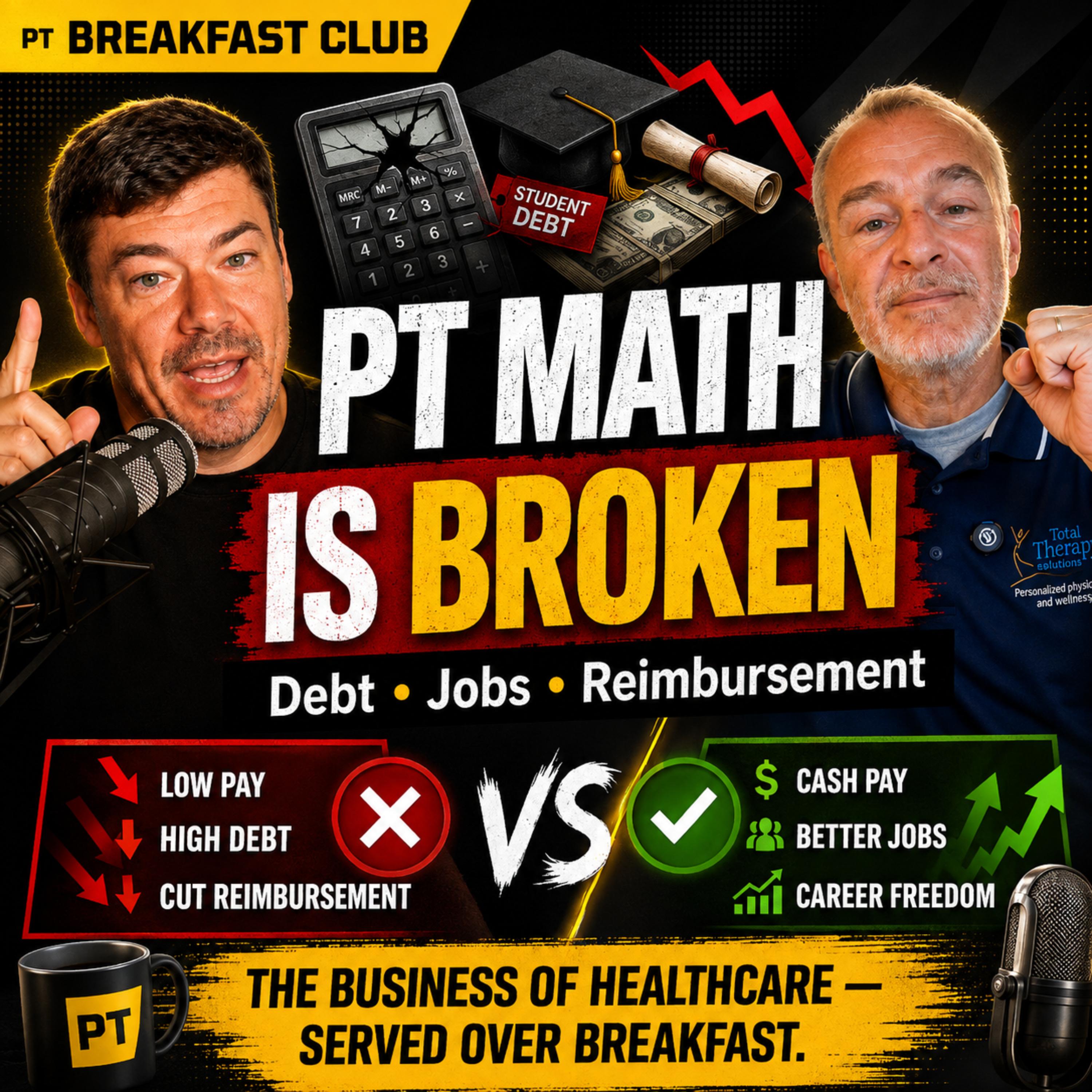
In this episode of PT Breakfast Club, Jimmy McKay and Tony Maritato start with a post from Richard Severin about the financial viability of the physical therapy profession. The conversation quickly moves into PT school ROI, student debt, academic program pressure, and whether the next generation of students is more willing to ask the uncomfortable question:
Is this still worth it?
Tony argues that the profession may be facing a bigger identity problem than it wants to admit. If a patient’s desired outcome is less pain and better function, PT is only one possible delivery model. AI, tech-enabled MSK platforms, personal trainers, hospital systems, cash-pay clinics, PTAs, techs, and other professions may all compete to deliver parts of what PT has traditionally owned.
Jimmy pushes the business angle: if you own a private practice, you are not just in the physical therapy business. You are in the marketing business, the patient attraction business, the hiring business, the customer experience business, and the human resources business.
The second half of the episode turns into a practical marketing lab. Jimmy and Tony critique a listener’s marketing pitch about targeting new families moving into a clinic’s area, then break down why so much AI-generated healthcare marketing feels cheap, loud, and generic. They use classic advertising examples like Rolls-Royce, Grey Poupon, Holiday Inn, and Volkswagen to show how better strategy leads to better creative.
The episode closes with Prompt’s Career Connection program and the idea that maybe some clinicians do not need to leave physical therapy. Maybe they just need to leave the wrong job.
Key Ideas- PT has a financial viability problem, not just a morale problem.
- Students who really run the numbers may never enter the profession.
- “I just want to help people” is not enough if the career cannot support a life.
- The profession may need to separate outcomes from identity.
- Outpatient ortho under insurance may not be the future of private practice.
- If PT cannot scale the outcome, someone else will.
- Private practice owners are not only in the PT business.
- Marketing is not decoration. It is how the market understands your value.
- AI-generated design still requires strategy, taste, and iteration.
- Career matching may work better when it is human, specific, and trust-based.