Skip to content
Artwork for Prime Lenses
ArtsVisual ArtsTechnology

Prime Lenses

Iain Farrell

A camera is just a tool, but spend enough time with photographers, and you’ll see them go misty-eyed when they talk about their first camera or a small, fast prime that they had in their youth.

Prime Lenses is a series of interviews with photographers talking about their photography by way of three lenses that mean a lot to them. These can be interchangeable, attached to a camera, integrated into a gadget. I’m interested in the sometimes complex relationship we have with the tools we choose, why they can mean so much, and how they make us feel.

Play
  • 36 episodes
  • weekly
  • Avg 57 min
  • English
Counted on this page — what you have heard stays on this device, so it is not something the list can be paged by.
  • S1 · E138
    Sunday · length unknown

    Episode 138 - Simon King

    138. Simon King He made a feature film about 27 London street photographers on a camcorder, and now he isn't sure who his next one is for. Guest: Simon King, a London documentary photographer and teacher, and the director of Everything Happens All the Time · Instagram · Blog · 35mmc author page In this episode Simon King spent about four months shooting Everything Happens All the Time, a free, feature-length film of 27 London street photographers talking to him and, in the edit, to each other. I'd watched it before we sat down and loved it, so this conversation started early and wandered: why the film lets photographers talk about whatever they like, what a photography community looks like when nobody is lurking in a doorway with a long lens, and why cheap kit isn't the barrier it's made out to be. Then it gets harder. What do you become once the thing is finished? Simon is candid about the slump that follows a project, about not caring whether anyone sees his work, and about why he thinks the making has to be the part you enjoy. There's also a very good story about a portrait that ended up on somebody's mum's fridge. Highlights Positions are approximate (percentage of the way through the conversation) until real timestamps are added. • [~7%] Why the film shows photographers as people hanging out, not noir detectives with long lenses • [~11%] The production company that bought the cheapest CCTV tape going so marginalised communities could see themselves on TV • [~12%] Why the easiest film to make on a phone tends to be an aggro one, and the £3 karaoke-toy microphone going to India instead • [~25%] Around 35 interviews shot, 27 kept, and why street photography is a niche of a niche that most people only meet through controversy • [~42%] "So I'm making it for no one": the problem with a second film • [~47%] The slump after finishing, and why he doesn't buy the romantic version of it • [~64%] Why leaving your work behind sounds to him like litter, and the print that ended up on a fridge • [~72%] The electrician on a film set, and why the process has to be the enjoyable bit Chapters Approximate positions, not timestamps. Replace with real times from the edit before pasting into a host that reads chapter markers. ~0% Warm-up: swearing, Scotland and first reactions to the film ~3% The film lets photographers talk about what they want to talk about ~6% Community, loneliness and "go outside" ~9% Is cheap kit a barrier? Camcorders, phones and the CCTV-tape story ~12% Why accessible filmmaking drifts to aggro, a £3 microphone and a trip to India ~16% Krishnamurti, dissatisfaction and the problem with gear talk ~19% The mock sign-off ("a great 17 minutes") ~20% The proper start: why make a film about this group of people ~24% 27 interviews kept, around 35 shot ~25% Street photography's image problem and Tatsuo Suzuki ~29% One voice, many versions of themselves ~32% Joey, and London as an overlooked photographic city ~35% Photographer first, filmmaker second ~42% "So I'm making it for no one" ~47% The sense of defeat after finishing ~55% Not arting well, and step counts versus frames ~61% Why make and share work at all ~64% Legacy, litter and Vivian Maier ~67% A portrait on a fridge, and a footballer who nailed it first take ~72% Enjoying the process: the electrician on a film set ~76% One-person production, books and the zine that fell flat ~84% Finding the right medium: video versus audio, and experimenting ~92% How the film was made: Nipon's one take and a gallery opening ~97% Where to watch it Mentioned in this episode People • Simon King, the guest. His D.C. Exclusion Zone series, on the Biden inauguration, is likely the DC project we mention · [~3%] • Daniel Milnor, photographer, Blurb creative ambassador and a past Prime Lenses guest; his Shifter post on the film is likely the blog piece mentioned · [~3%] • Tatsuo Suzuki, the Tokyo street photographer at the centre of the 2020 Fujifilm X100V advert row · Wikipedia · PetaPixel on the controversy · [~25%] • Joshua K. Jackson, street photographer in the film (Simon calls him "Josh") · Street Life podcast episode · [~20%] • Joey Nutkins, the cinematographer Simon wants me to have on, working in anamorphic and making a short-film series about photographers · [~32%] • Also in the film and named in the episode: Mike Chudley, Tim Jamieson, Cal Holland, Nicole Louw, Trisha Lyon-O'Neill and Nipon Ravel. Full cast is in the film's YouTube description. Books and reading • Think on These Things by J. Krishnamurti (1964, HarperOne edition), the book a friend recommended to me, with a chapter on creativity and constant dissatisfaction · Krishnamurti Foundation Trust · [~16%] Music, film and video • Everything Happens All the Time (2026), Simon's film · Watch on YouTube · IMDb · Letterboxd · [~0%] • How the film was shot, in Simon's words: British Cinematographer · PetaPixel · Digital Camera World Watch and listen The film is free and runs 1 hour 45 minutes. It plays well as audio, which we also talk about. Everything Happens All the Time (2026), full documentary Quotes It's easy to get a response from someone if you're being aggro. And so that's where you get so much fight content just filmed. — Simon King, ~12% I get nothing from the knowledge that out there somewhere someone has enjoyed something I made that's not connected to me. The enjoyment is from the making of the work and then the mutual enjoyment with others in either making or experiencing that work. — Simon King, ~64% The process of making something is not the process of looking at that thing. So if you're an electrician on a film set, if you only enjoy watching films and you don't enjoy being an electrician, you're not going to enjoy what you're actually doing. — Simon King, ~72% Mentioned but not linked • "When I die, burn my negatives" [~64%]: Simon's blog article on legacy. Couldn't find the post; probably on his blog above. • Simon's DC book [~3%]: Daniel Milnor "loved your book". I found the project but couldn't confirm the book's title or a page for it. • Matty's book on Gaza [~5%]: my guest, who also photographed in Ukraine. Couldn't pin down who. • The CCTV-tape production company [~11%]: Simon half-remembers it as "the people's production company", filming marginalised communities in the 70s and 80s. Nothing confirmable. • Saga [~39%]: photographer and filmmaker who made a video for Ilford with his own drumming as the soundtrack. Not found. • AP Leslie [~84%]: my recent video episode about his film. Link your own episode page. • Still in Street, at the Photobook Café [~95%]: the gallery opening where Simon grabbed last interviews. Couldn't confirm the exhibition or host. • The film on Dailymotion and the Internet Archive [~97%]: Simon says it's on both, as well as YouTube. Couldn't find either copy. • Name-checked in passing: David Lynch and Eraserhead, Werner Herzog, Vivian Maier, Harmony Korine, Taika Waititi. Credits Hosted and produced by Iain Farrell. primelensespodcast.com
  • S1 · E137
    October 25 · length unknown

    Episode 137 - Ron Timehin

    137. The World’s Best Visa Ron Timehin on trumpets, fog, Vogue, burnout, and why a body of work outlives a post. Guest: Ron Timehin — London photographer and director, Sony European imaging ambassador · https://www.rontimehin.com · https://www.instagram.com/rontimehin In this episode Ron Timehin started as a trumpet-playing teenager, was made an Instagram suggested user before his pictures were good enough, and chose to get good rather than hide. Sixteen years on he has shot on the team behind British Vogue’s September 2020 issue, directed a Dove film about hair discrimination in schools, and this year has work at Somerset House and heading for the National Portrait Gallery. We talk about practice as scales rather than volume, why he won’t pick up the camera until a sitter has been given a chair and some music, the Canon-to-Sony story that ended with a 35mm f/2.8 Zeiss on an A7CR, the burnout that followed his first solo show, and why work built as a series lives longer than a post. It closes on The Black Rainbow, the project he is a third of the way through, and a practical plea to back up your hard drives. Highlights No audio timestamps were in the transcript. Positions below are approximate: how far through the transcript the moment falls. ≈12% He studied the business of music as a compromise with his parents, skipped lectures to photograph instead, then got a two-week Instagram feature that jumped his following by around 25,000 while he thought his photos weren’t very good. ≈16% Practice as scales: why targeted practice beats random practice, and how classical trumpet fundamentals carried into jazz and then into lighting and composition. ≈25% How a shoot starts long before the camera: emails, research, music playing, a team who are warm, and hair and makeup before a single frame. ≈38% After his first solo exhibition he couldn’t do anything for a month. Burnout, rent, and why personal projects keep leading to commissions. ≈41% Vogue found him through a photo essay on the George Floyd protests in London, which is how he ended up on the September 2020 team. ≈52% Iain’s airport story: socially engineered into buying a 35mm f/2.8 Zeiss. Ron’s version of that lens lives on his A7CR as his daily carry. ≈71% The foggy afternoon at Tower Bridge when he spotted a young Black trumpeter in an air cadet band and the portrait work began. ≈82% Photography as the world’s best visa: it gets you into rooms, and out of conversations with weird Uncle Ted. ≈86% What’s next: the National Portrait Gallery show, and The Black Rainbow. Chapters Positional only (no timestamps in the source). Swap in real HH:MM:SS from the edit if you want podcast-host chapter markers. ≈0% Opening banter and sound check ≈1% The studio, Tom Oldham, and how Iain and Ron met ≈4% Paying it forward: trumpet, mentors, planting seeds ≈9% Parents, expectations, and building a creative circle ≈12% Music business degree, Instagram, and getting serious ≈16% Practice, scales, and fundamentals ≈21% Why people: belonging, and preparing the room ≈27% The playlist (Coltrane, Cleo Sol) ≈30% A big year: Vogue, Dove, Portrait of Britain, Somerset House, NPG ≈38% Burnout, personal projects, and Misan ≈46% First cameras: point-and-shoot, Canon, then Sony ≈52% The 35mm f/2.8 Zeiss, the A7CR, and the workhorse ≈59% Play, small cameras, and other creative outlets ≈65% London Fog, books, zines, and rapid iteration ≈71% The air cadet trumpeter and the shift to portraits ≈78% From hero shots to bodies of work; Favela Brass ≈82% The world’s best visa ≈86% What’s next: NPG, Soho House, The Black Rainbow ≈91% Andrew Scott and "openly gay" ≈96% Where to find Ron, backups, and NAS prices Mentioned in this episode People Ron Timehin — guest; photographer, director, Sony European imaging ambassador · https://www.rontimehin.com Tom Oldham — portrait photographer; shares the London studio Ron is calling from, and has been on the show · https://worldphoto.org/node/4839 · ≈1% Misan Harriman — lead photographer of the Vogue September 2020 cover; now chair of the Southbank Centre · https://en.wikipedia.org/wiki/Misan_Harriman · ≈32% Adwoa Aboah and Marcus Rashford — the two cover subjects of that issue · https://en.wikipedia.org/wiki/Adwoa_Aboah · ≈31% Alan Schaller — black-and-white street photographer, a former musician and past guest · https://teneues.com/en/authors-photographers/alan-schaller · ≈15% Judah Passow — photojournalist and past guest, mentioned for access in conflict zones · https://www.hachette.co.uk/contributor/judah-passow/ · ≈83% Tom Ashe — British trumpeter who founded Favela Brass in Rio · https://favelabrass.org/about · ≈78% Books and reading London Fog — Ron’s first book, published by Trope Publishing in 2019 · https://photobite.uk/the-word/trope-publishing-announce-london-photobooks-pop-up-exhibition-featuring-emerging-photographers/ · ≈65% "I’ve been exploring what it means to be queer with African heritage" — 1854 Photography interview with Ron about The Black Rainbow · https://www.1854.photography/?p=76394 · ≈87% Tools and products Sony Alpha 7CR — 61MP compact full-frame body Ron carries daily · https://community.sony.es/t5/discover-sony/two-new-alpha-7c-series-cameras-have-launched/ba-p/3924123 · ≈54% Sony Alpha 7R VI — the successor to the A7R V that Ron uses for jobs; announced May 2026 · https://sony.mediaroom.com/2026-05-13-Sony-Electronics-Accelerates-High-Resolution-Photography-with-the-Alpha-7R-VI · ≈55% Companies and institutions Sony Alpha Universe: Ron Timehin — Sony ambassador profile · https://www.sony.co.uk/alphauniverse/ambassadors/ron-timehin Dove: Reclaiming School Picture Day — the hair-discrimination film Ron directed · https://www.lovethework.com/work-awards/campaigns/reclaiming-school-picture-day-1525417 · ≈33% Vogue, September 2020 — Misan Harriman on the issue · https://www.pbs.org/wnet/amanpour-and-company/video/misan-harriman-on-his-historic-vogue-cover/ · ≈31% Favela Brass — free music school in Rio de Janeiro · https://favelabrass.org/about · ≈78% Places and events Winston Taylor Photo Portrait Prize 2026 (formerly Taylor Wessing) — National Portrait Gallery, London, 5 November 2026 – 17 January 2027 · https://npg.org.uk/PhotoPrize · ≈35% Sony World Photography Awards 2026 — Professional competition; exhibition at Somerset House · https://www.sony.eu/presscentre/sony-world-photography-awards-professional-competition-finalists--shortlists-okswt7 · ≈29% Quotes “Photography gives you the world’s best visa, because it allows you into spaces and places you would not be allowed otherwise.” — Ron Timehin, ≈82% “As much as you are planting seeds in your garden, make sure you’re planting seeds in others as well. So you can watch them flourish.” — Ron Timehin, passing on a line from Chadwick Boseman, ≈5% “It was like my two worlds colliding.” — Ron Timehin, on the air cadet trumpeter, ≈72% Mentioned but not linked Portrait of Britain — Ron’s image shown on screens across the UK this year · ≈33% The Labadi Community — likely the Ghana series shortlisted at Sony World Photography Awards 2026; not confirmed from a primary source · ≈34% The Black Rainbow — Ron’s current project; no project page found · ≈87% Andrew Scott clip on "openly gay" — couldn’t find the clip · ≈91% Brandon Talbot — YouTuber and a friend of Iain’s, mentioned as an athlete who knows about putting in the reps; no channel link confirmed · ≈16% Tobishinobi — close friend Ron shot with every day, who gave him a spare Sony A7 and started his switch to Sony; no profile link confirmed · ≈48% "Sam" — mutual acquaintance who vouched for the first A7 · ≈50% Photography Show / London video and photography event — where they first met; exact event unconfirmed · ≈2% 28 Sunbury — the studio location; unconfirmed · ≈1% Zeiss 35mm f/2.8 — the lens; model not confirmed · ≈50% Misan’s Soho House workshop — end of October; details not confirmed · ≈87% Cleo Sol, John Coltrane — on Ron’s studio playlist (Iain also mentions Superfly) · ≈27% Credits Hosted by Iain Farrell. Guest: Ron Timehin. Prime Lenses is an audio-only photography podcast, new episodes every Sunday.

  • S1 · E136
    October 18 · length unknown

    Episode 136 - Colin Prior

    Prime Lenses Episode 136 – Colin Prior Four decades of Scottish landscapes, the camera he sold and never went back to, and thoughts on the future of photography and AI. Guest: Colin Prior — Scottish landscape photographer, best known for his panoramas · colinprior.co.uk In this episode Colin Prior has spent four decades photographing Scotland’s mountains, much of it on a Fuji 6x17 panoramic film camera, and he opens this conversation with the one thing he says to everyone: it’s not what’s in the picture, it’s where it takes you. From there we talk about the eye path, which he’d like you to think about instead of leading lines, and why he’ll take a few stray white dots out of a frame. He explains why he sold the camera that got his early work noticed and never went back, and he’s blunt about the world it left behind: magazines that no longer pay, video eating stills, and inkjet ink that costs more than a good whisky. His case for books, and for handing yours to a publisher and a designer, runs through the middle of the episode. We finish on AI, an AI-made Odyssey, and the book he’s been working on for ten years and isn’t in a hurry to finish. Highlights ~9:00 “Leading lines” is the wrong idea. Colin calls it the eye path, and he’s happy to remove a few stray white dots to protect it. ~15:00 If you have to ask yourself whether you got the picture, you didn’t. ~16:20 Why he sold the 6x17 camera behind his panoramas, and why stitching digital panoramas never tempted him. ~22:20 The brain stores a still image as a single moment. Video, he says, goes in one ear and out the other. ~24:50 Inkjet ink that costs more than a 21-year-old single malt, and the case for letting a lab do your printing. ~29:10 Why he has never self-published: you sell to the choir and the congregation never sees it. ~40:20 On his workshops: the camera stays in the bag while he walks the landscape looking for evidence. ~56:30 The book he has been making for ten years, and why he doesn’t want an end date. Chapters 0:00 Cold open: “It’s where it takes you” ~0:20 Iain’s introduction ~1:20 October light, and four winters without snow ~5:30 Why landscape? Birds came first ~9:00 The eye path, rogue highlights and what editing really is ~14:00 Self-taught, and what failures teach ~15:40 Selling the Fuji 6x17 ~21:00 Magazines, video and the brain that stores single moments ~23:50 Megapixels, prints and the inkjet problem ~27:40 Books: design, distribution and why not to self-publish ~37:20 Running workshops: critiques, and the camera that stays in the bag ~42:00 Thinking in layers ~44:40 Undisturbed places, Skye as a theme park, and Munros ~49:00 Trends, 500px and colour in print ~53:10 AI, and the AI-generated Odyssey ~56:30 The ten-year book and the underground archive ~59:50 Where it takes you, and where to find Colin ~1:01:40 Outro Mentioned in this episode People Colin Prior — the guest; Scottish landscape photographer, best known for his panoramas · colinprior.co.uk Joe Cornish — landscape photographer and a friend of both Colin and Iain · joecornish.co.uk · ~3:50 Graham Niven — Nethy Bridge photographer and an earlier guest (Prime Lenses Episode 131), whose conversation led Iain to Colin · Niven Photography & Arbor Gallery · ~6:00 Ansel Adams — Colin’s comparison for digital dodging and burning · The Ansel Adams Gallery · ~13:20 Music, film and video Behind the Lens — the Sigma video series Colin and Joe Cornish made together, which Iain mentions enjoying · Colin’s write-up · PetaPixel on the series · ~31:20 The 2.5-hour AI-generated Odyssey movie is 2.5 hours too long — the Verge review Iain read that morning, of the AI film Odysseus: The Fall · The Verge · ~53:30 The Odyssey — Christopher Nolan’s 2026 film, released around the same time · Wikipedia · ~53:30 Tools and products Fuji GX617 — the 6x17 panoramic film camera behind Colin’s panoramas, with the 90, 180 and 300mm lenses he mentions · Specifications · ~15:40 500px — the photo-sharing site Colin was once told to put his panoramas on · 500px.com · ~51:10 Companies and institutions The Royal Photographic Society — Colin says he told its president that nobody will print while printing costs this much · RPS Distinctions · ~26:30 Waterstones — Colin on why photographers’ books need mainstream distribution, and what the shelves look like now · waterstones.com · ~29:10 Places Isle of Skye — the Quiraing, the Old Man of Storr, the Fairy Glen and the Fairy Pools, and Colin’s view that Skye has become a theme park · VisitScotland · ~45:50 Schiehallion — the mountain above Kinloch Rannoch in a friend’s photograph, with sheep creating the eye path · Wikipedia · ~9:50 Find Colin’s work Colin Prior’s website Books and calendars Group tours and workshops Colin on Instagram

  • S1 · E134
    October 11 · length unknown

    Episode 135 - James Popsys

    135. James Popsys What if the goal isn't to make photography easy - what if the difficulty is the whole point? Guest: James Popsys. Photographer, YouTuber and author based in Snowdonia, North Wales · jamespopsys.com · YouTube and Instagram: search "James Popsys" (P-O-P-S-Y-S) In this episode James has been on my list of dream guests for ages, so I was thrilled to finally sit down with him. We start, as these things do, with lawnmowers and film scanners, before getting into the real story: a marketing job in London, weekend photo walks, a conceptual composite of the London Eye as a bicycle wheel, and a move to Sydney that somehow led to a YouTube channel he started almost by accident in New Zealand. James talks about guarding his own individuality by deliberately not watching other photographers' videos, connecting the dots backwards to find the worldview running through his work, and what it took to commit thousands of prints to paper for his book Human Nature. We get into his one-lens, one-body philosophy, why he thinks difficulty is a feature of photography rather than a bug, and why he'd still rather be surprised by an ordinary place than get the photo 3,000 other people already have. He's off to East Greenland in a few days to experiment with a more hybrid, video-forward workflow, and this conversation is a lovely primer for anyone who wants to know how he got there. Highlights [Opening] Film scanners, darkroom chemistry, and a cold open about finding surprise in unremarkable places [Opening] A very serious digression into battery-powered lawnmowers [First third] The London Eye as a bicycle wheel, and the Sydney-to-YouTube origin story [First third] "You can't connect the dots going forward" - finding the worldview that was there all along [Middle] Making Human Nature: watching the zeroes stack up on a 15-metre printer [Middle] The horses-through-the-window print, and why James is a "one body, one lens" traveller [Middle] A Leica SL3's peeling grip, and 21-year-old Leica R8 and R9 bodies that still work [Second half] Guarding individuality by not watching other people's videos [Second half] AI, disclosure scandals, and why nobody's asking for more of it [Late] Street photography, Britt Bradley's Gen-AI-vs-wet-plate test, and heading to East Greenland Chapters Positions are approximate. The transcript has no timestamps. Opening Cold open: finding surprise in unremarkable places Opening Film scanning setups and darkroom chemistry Opening Kit Young's 400-roll film habit Opening North Wales weather and the lawnmower tangent First third James's origin story: London, Sydney, and an accidental YouTube channel First third Connecting the dots backwards to find a worldview First third Guarding individuality; avoiding other photographers' and podcasters' work First third Human Nature: starting the book, and the RISD-style question of what comes after book one Middle Printing day: watching thousands of pounds turn into ink Middle The horses-through-the-window print and limited-run prints Middle A 140kg Canon PRO-2600 printer in the house Middle Exhibitions, introversion, and whether James should "try anything once" Middle Why a photo feels finished when it's printed Second half The New York school-bus photo, 40mm, and shooting at "imperfect" times of day Second half Not doing YouTube gurning thumbnails Second half Dabbling in filmmaking and switching to DaVinci Resolve Second half One body, one lens, and heading to East Greenland with Jeroen Van Nieuwenhove Second half Gear rules, a Leica SL3's peeling grip, and the Leica R8/R9 Late AI disclosure scandals and the Ricoh promotional-material controversy Late Britt Bradley's Gen-AI vs wet-plate test Late Running a business to sustain people, not to maximise returns Close Where to find James, and lawnmowers revisited Mentioned in this episode People Thomas Heaton - landscape photographer and one of the first photography YouTubers James watched early on · YouTube · [First third] Joe Allam - travel and street photographer and YouTuber James cites as an early influence · joeallam.co.uk · [First third] Nigel Danson - landscape photographer and friend who reassured James his printer inks would last for years · nigeldanson.com · [Middle] Ed Smith - photographer local to me, mentioned for his exhibition work · [Second half] Josh Edgoose - London street photographer known for finding humour in the everyday, featured in a video with Sean Tucker that stuck with me · Fujifilm profile · [Second half] Sean Tucker - photographer and YouTuber who filmed the Josh Edgoose video I mentioned · [Second half] Jack Lodge - former guest and South Coast photographer known for returning to the same spot across every season · [Second half] Cal Henderson - former guest whose film street photography I mentioned · [Second half] Britt Bradley (Nitrate Fox) - former guest and wet-plate collodion artist who posted a Gen-AI-vs-real comparison that fooled me completely · Lens Culture profile · [Late] Kit Young - former guest, film photographer who buys film in 400-roll packs and views his work exclusively as prints · [Opening] Jeroen Van Nieuwenhove - landscape photographer and workshop leader James is running an East Greenland trip with · jvn.photo · [Second half] Books Human Nature by James Popsys - his first photo book, self-published in 2024, exploring the relationship between man-made structures and nature · [First third] Tools and products Valoi Easy120 - the film scanning rig Iain is using and James is considering · Valoi · [Opening] Ilford XP2 Super - the black-and-white film James shoots that develops in a standard colour C-41 process · Ilford · [Opening] Kodak Portra - the colour film Iain is buying more of · [Opening] Canon imagePROGRAF PRO-2600 - James's 140kg, 24-inch-wide print studio-in-a-house · Canon · [Middle] Leica SL3 - the camera James used briefly before its grip started peeling · Leica · [Middle] Leica R8 / R9 - Iain's 21-year-old film SLRs, one fitted with a 10-megapixel digital back · [Middle] Panasonic Lumix GX1 - a small Micro Four Thirds camera James recently rediscovered with an added viewfinder · [Second half] DJI Osmo Pocket - the compact camera both James and Iain use for lightweight, all-in-one shooting · DJI · [Second half] Peak Design sling - the camera bag both James and Iain independently landed on · Peak Design · [Second half] DaVinci Resolve - the video editor James switched to after leaving Adobe's subscription model · Blackmagic Design · [Second half] Ricoh GR - the viewfinder-less compact camera at the centre of a promotional-material AI controversy · Ricoh · [Late] Places and events Ammassalik / Tasiilaq, East Greenland - where James is headed days after this recording, to experiment with a hybrid stills-and-video workflow · jvn.photo workshop listing · [Second half] New Zealand - where James shot his first, unplanned videos before starting his YouTube channel · [First third] Chinatown, London - setting for the Josh Jackson/Josh Edgoose street photography video James remembered · [Second half] Quotes I found most joy in getting something that I think is really interesting in a place that isn't particularly interesting. James Popsys, [Opening] The idea of one day can quite easily slip away, can't it? James Popsys, [Second half] What if we just ran the business to sustain the people that work there and that's it, and we didn't worry about maximising returns? Iain Farrell, [Late] Mentioned but not linked "The name of the car is a little bit." [Close] - the transcript's final line is garbled and I couldn't reconstruct it. Please check the audio. Rico / Ricoh promotional-material story [Late] - James says he "heard" about this but didn't know the details; I couldn't independently verify which campaign is meant. The Hasselblad competition "coke bottle" story [Late] - referenced in passing; I couldn't confirm the specific competition or year. GoPro disclosure controversy [Late] - mentioned without a name attached, so I couldn't research or link it. Credits Hosted and produced by Iain Farrell. Subscribe: Apple Podcasts · Spotify · Patreon

  • S1 · E134
    October 4 · length unknown

    Episode 134 - Daria Zlobinski

    What do you do when the best trip of your life makes every photo after it feel smaller? Guest: Daria Zlobinski. London-based photographer, macro and nature obsessive, never without a Leica · Instagram: @dariazlb (main) and @d.zlobinski (photography) In this episode Daria messaged me a while back to say she was burned out and worried she was falling out of love with photography, and would I like to talk about it. That sounded like exactly the right kind of Prime Lenses conversation. We start at the beginning: windsurfing holidays, her dad's cameras, a Tumblr surf blog, and a RISD summer workshop where everyone else photographed people and she found a plant house. Then the harder part: how an Antarctica trip set a bar she isn't sure she can reach again, what Instagram rewards versus what she actually loves, and the small, silly challenges that got her shooting again, from an iPhone walk in Regent's Park to Sunday mornings at a farmer's market. Along the way: a Leica Q3 that got rained on, a salt-crusted Canon 5D Mark II with a black strip across the sensor, the sound of a Leica R9 shutter, and a pop-up show she'd love to hold in the Barbican Conservatory before it closes. And yes, we carried on talking after I said we'd finished. - Episode Sponsorship - BestPodcasts.co.uk is a free podcast player that works in your browser on any device. You can listen to episodes from your favourite hosts. You do not need an account, an app, or to download anything to listen to the best free podcasts. Chapters Positions are approximate. The transcript has no timestamps. Opening Cold open: the iPhone challenge Opening Intro and why Daria is here First third Windsurfing, her dad's cameras, Tumblr, and a Canon 60D First third RISD workshop, the plant house, Henry Horenstein First third London, consent, and carrying a Leica everywhere First third Travelling as a different version of yourself Middle Q3 vs D-Lux 8 in Iceland Middle My kitchen, a Spider-Man web made of wool, and Day One Middle 200,000 photos, iCloud panic, and stock photography Middle Prints, books, and making something just for you Middle Slop reels, likes, and doing it for yourself Middle Postcards, cyanotypes, and slow mail Second half Burnout, comparison, and the self-criticism cycle Second half Photo walks, small challenges, and Sunday farmer's markets Second half Scotland trip talk, spontaneity, and projects that assemble themselves Second half Photographers who shaped her, and Dolly Parton Second half The pop-up dream and the Barbican Conservatory Late The 5D Mark II story Late The R9 and its shutter, favourite cameras, retro lenses, and Osmo Pocket video Close Where to find Daria, and the customary extra ten minutes Mentioned in this episode People Henry Horenstein - photographer, RISD professor, and author of Animalia, the book that clicked for Daria · Wikipedia · [First third] Stephen K. Schuster - New York photographer behind City Kids, a years-long project photographing teenagers · Tribeca Citizen on the exhibition · [Middle, second half] Mike Chudley - photographer and YouTuber who made a book just for himself after his China trip · Episode 124 · [Middle] Anthony Prince Leslie (AP) - photographer and filmmaker I'd spoken to the day before · Episode 133 · [Middle] Books and reading Animalia by Henry Horenstein - close, abstract photographs of animals taken out of context (Pond Press, 2008) · UMass Dartmouth exhibition page · [First third] City Kids by Stephen K. Schuster - the self-published book of the project (2025) · Le Grand J · [Second half] Tools and products Leica Q3 - the full-frame compact Daria carries and that got rained on in Iceland · Leica · [Middle] Leica D-Lux 8 - the small zoom compact that became her Iceland camera · Leica press release · [Middle] Canon EOS 5D Mark II - her dad's well-travelled camera, used in Antarctica and Iceland · Canon USA launch release · [Late] Leica R9 with Digital-Modul-R - a film SLR turned 10-megapixel digital camera, my recent madness · DPReview on the announcement · [Late] DJI Osmo Pocket 3 - what I use for all my video · Launch coverage · [Late] Day One - the journal app I use for its "On This Day" memories · dayoneapp.com · [Middle] Foto - the photo-sharing app behind the global Foto Walks · fotoapp.co · [Second half] Companies and institutions RISD (Rhode Island School of Design) - where Daria took her first academic photography workshop · RISD Photography · [First third] Places and events Barbican Conservatory - Daria's dream place to show her work; it closes at the end of 2026 for a multi-year restoration · Barbican · The Guardian on the plant cutting giveaway · [Second half] Foto Walks - the worldwide day of free photo walks; I host the Inverness one · Walks info · My chat with Michael Howard of Foto · [Second half] Week of Walks - my own week of listener photo walks in July · Day one · [Second half] Park Hyatt Tokyo - the Lost in Translation hotel, reopened after a 19-month renovation · TravelMole · [Second half] Quotes It's okay to stand out from other people. Daria Zlobinski, [First third] It has 3 million views. And for the past couple of months, it just garnered me like 300 followers or whatever. Daria Zlobinski, [Middle] If I make a plan, 99% it won't work out. So that's why I'm very spontaneous. Daria Zlobinski, [Second half] Mentioned but not linked Daria's Instagram accounts [Close] - @dariazlb (main) and @d.zlobinski (photography). Spoken in the episode; I couldn't verify the profile URLs by search, so add the links by hand. Brett Henriksen [First third] - Daria's RISD professor who introduced her to Horenstein; the spelling is unconfirmed. "Lucas" [Middle] - former guest who has worked with scientists drilling ice cores; surname not given. "Richard" [Middle] - former guest, Dutch, based in New York, who sends postcards through a small Patreon; surname not given. "Torsten" [Late] - someone I talked to about the R9 with digital back; surname not given. "Philip Reinhardt" [Late] - former guest who shot the Winter Olympics with a borrowed R9 and digital back; the spelling needs checking. "The Carrier Print Club" [Middle] - my print club starting next month; the name in the transcript looks garbled. "LSA" [First third] - the group Daria reached out to for event photography; possibly LSE. "Kodak channel" [Middle] - the Antarctic spot Daria says she left a piece of her heart; possibly the Lemaire Channel. Grandma's old "IXUS" camera [Late] - a 7-megapixel compact; probably a Canon IXUS. Support the show on Patreon. More about this show: A camera is just a tool but spend enough time with photographers and you’ll see them go misty eyed when they talk about their first camera or a small fast prime that they had in their youth. Prime Lenses is a series of interviews with photographers talking about their photography by way of three lenses that mean a lot to them. These can be interchangeable, attached to a camera, integrated into a gadget, I’m interested in the sometimes complex relationship we have with the tools we choose, why they can mean so much and how they make us feel.

  • S1 · E133
    September 27 · 59 min

    Episode 133 - Anthony Prince Leslie

    My guest this week is Anthony Prince Leslie, a photographer and filmmaker from Brooklyn. He has made a name for himself shooting behind the scenes footage for films like The Drama and Spider-Man Brand New Day. I wanted to speak to him to learn all about shooting behind the scenes on a modern movie set, and on film. This conversation involves some fairly hard-core cameras of the stills and moving picture variety and an impromptu fit check so you might want to watch this one on YouTube. Mentioned in this episode People Zendaya — connected AP to The Drama and later to Spider-Man: Brand New Day · Wikipedia Law Roach — celebrity stylist AP worked with on the Bringing It Forward series, including a Tommy Hilfiger campaign · Wikipedia Tom Holland — star of Spider-Man: Brand New Day, who told AP he loved the sound of his camera on set · Wikipedia Sadie Sink — mentioned as the subject of new images AP is preparing to release · Wikipedia Destin Daniel Cretton — director of Spider-Man: Brand New Day, credited by AP for giving him access on set · Wikipedia Greg Williams — behind-the-scenes photographer known for his work on the James Bond films, cited for a Matt Damon film image printed in Hollywood Authentic · gregwilliams.com Films and projects Spider-Man: Brand New Day — the film AP shot special unit stills for; his medium-format and Bolex images from set are the reason Iain invited him on · Wikipedia The Drama — A24 film starring Zendaya and Robert Pattinson, directed by Kristoffer Borgli, that first connected AP to feature productions · Wikipedia Sugar Honey Iced Tea — AP's own feature film in development, about gentrification in Brooklyn, which he now plans to shoot on film Bringing It Forward — AP's editorial series with Law Roach, including the Tommy Hilfiger campaign that helped lead to his film work Gear and tools Mamiya RB67 — AP's favourite stills camera, prized for its square format · Wikipedia Bolex H16 — his hand-cranked 16mm film camera, used to steal moments between takes on set · Wikipedia Fujifilm GFX 100 — his discreet, medium-format digital go-to for campaigns and editorials · fujifilm-x.com Leica M11 — his everyday carry camera, paired with a Zeiss 35mm lens · leica-camera.com Leica R9 with digital back — a film-era body converted to a 10-megapixel digital camera, which AP recently discovered · Wikipedia ARRI 416 — the Super-16 camera AP calls his "graduation" from the Bolex, used briefly on the Spider-Man set · Wikipedia Alexa LF — the large-format digital cinema camera at the top of AP's wish list · arri.com Canon IXUS 75 — his low-key point-and-shoot for staying discreet on set · Wikipedia Companies and institutions Equator Studio — AP's creative studio and full-service production company · equator.studio Rapid Eye Dark Rooms — the London film lab AP trusts for colour development and scanning · rapideye.uk.com Kodak London — Kodak's UK film processing lab, credited for fast, high-quality 16mm and 8mm turnaround Panavision — camera rental house that supplied and serviced AP's cameras on set Hollywood Authentic — the large-format film photography magazine that printed Greg Williams' Matt Damon image · hollywoodauthentic.com Music "Interrogation (Skit)" by A$AP Rocky, from the album Don't Be Dumb — the source of the episode's title line · Wikipedia Support the show on Patreon. More about this show: A camera is just a tool but spend enough time with photographers and you’ll see them go misty eyed when they talk about their first camera or a small fast prime that they had in their youth. Prime Lenses is a series of interviews with photographers talking about their photography by way of three lenses that mean a lot to them. These can be interchangeable, attached to a camera, integrated into a gadget, I’m interested in the sometimes complex relationship we have with the tools we choose, why they can mean so much and how they make us feel.

  • S1 · E1325
    September 23 · 15 min

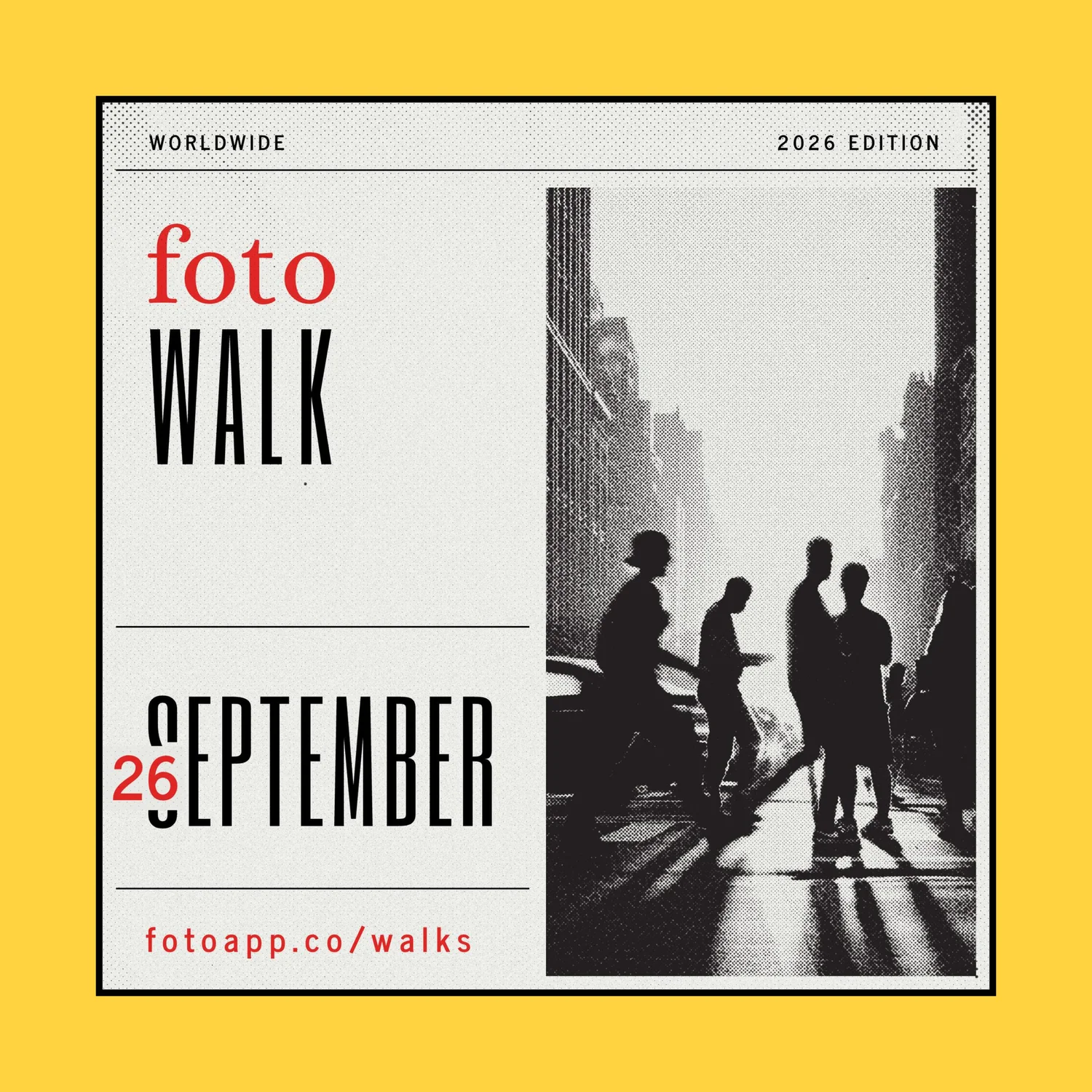
    Foto Walks 2026 with Michael Howard

    A little mid-week episode to let you all know about some photo walks taking place this week in conjunction with Foto, the photo sharing app. You can join one of the many walks this weekend, 26th September, taking place all over the world. To find out more head over to their website or listen to my conversation with Michael from Foto. Support the show on Patreon. More about this show: A camera is just a tool but spend enough time with photographers and you’ll see them go misty eyed when they talk about their first camera or a small fast prime that they had in their youth. Prime Lenses is a series of interviews with photographers talking about their photography by way of three lenses that mean a lot to them. These can be interchangeable, attached to a camera, integrated into a gadget, I’m interested in the sometimes complex relationship we have with the tools we choose, why they can mean so much and how they make us feel.

  • S1 · E132
    September 20 · 1 hr 6 min

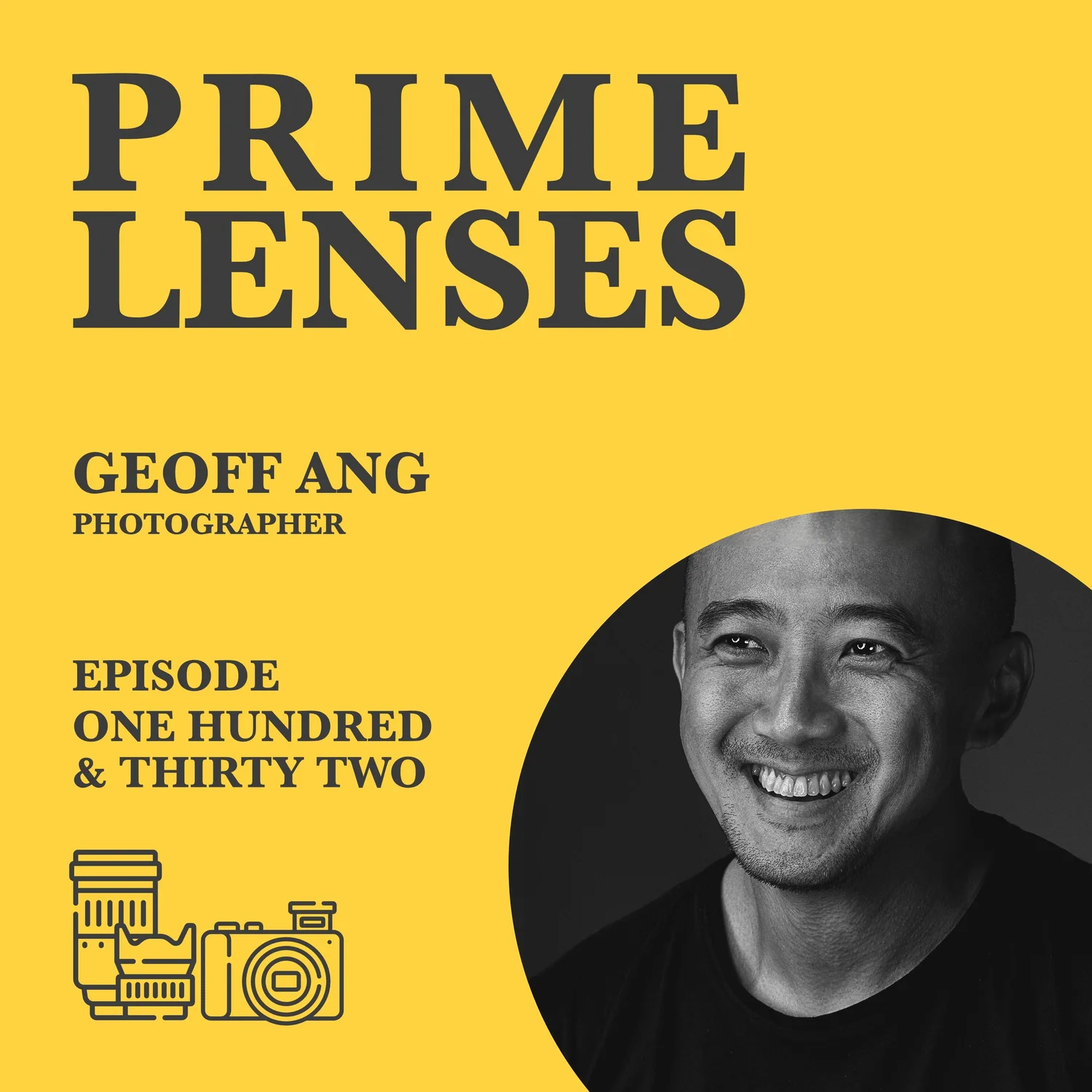
    Episode 132 - Geoff Ang

    Mentioned in this episode People Helmut Newton — fashion photographer Geoff cites as having briefly worked in the Singapore press before his career took off · Wikipedia Steve Jobs — referenced as an example of the "human factor" books Geoff reads about how people become exceptional · Wikipedia Books and reading Inside the Mind of a Photographer by Geoff Ang — his book distilling 20 years of workshop material into a guide to the psychological and business side of commercial photography · insidethemindofaphotographer.com Tools and products Phase One digital backs — the medium format system Geoff bought into in the late '90s and still shoots today · phaseone.com Sinar 4x5 cameras — the large-format studio camera system he used for high-resolution transparencies · Wikipedia Dicomed — the dedicated digital retouching system used before Photoshop matured · Wikipedia Leica SL3 — his current mirrorless body; Geoff has been a Leica ambassador since the first SL · leica-camera.com Fujifilm GFX — his second current system, chosen for faster autofocus at high resolution than his Phase One · fujifilm-x.com Apple Vision Pro — discussed as a new, if "selfish," way of viewing photography · apple.com Sony Alpha 7R VI — mentioned by Iain as a recent loaner, notable for combining high resolution with strong video specs · Sony product page Godox — budget lighting-stand brand Geoff cites as part of the barrier-to-entry drop after 2010 · godox.com Companies and institutions GeoffStudio — Geoff Ang's studio and portfolio site · geoffang.com Profoto — lighting brand Geoff has been a longtime workshop ambassador for · profoto.com Leica Gallery Singapore — hosted his recent exhibition to launch his book · leica-camera.com Places and events Singapore — Geoff's home base for his entire career · Wikipedia Bali — where Geoff lived semi-retired during COVID and wrote much of his book · Wikipedia Support the show on Patreon. More about this show: A camera is just a tool but spend enough time with photographers and you’ll see them go misty eyed when they talk about their first camera or a small fast prime that they had in their youth. Prime Lenses is a series of interviews with photographers talking about their photography by way of three lenses that mean a lot to them. These can be interchangeable, attached to a camera, integrated into a gadget, I’m interested in the sometimes complex relationship we have with the tools we choose, why they can mean so much and how they make us feel.

  • S1 · E131
    September 13 · 1 hr 3 min

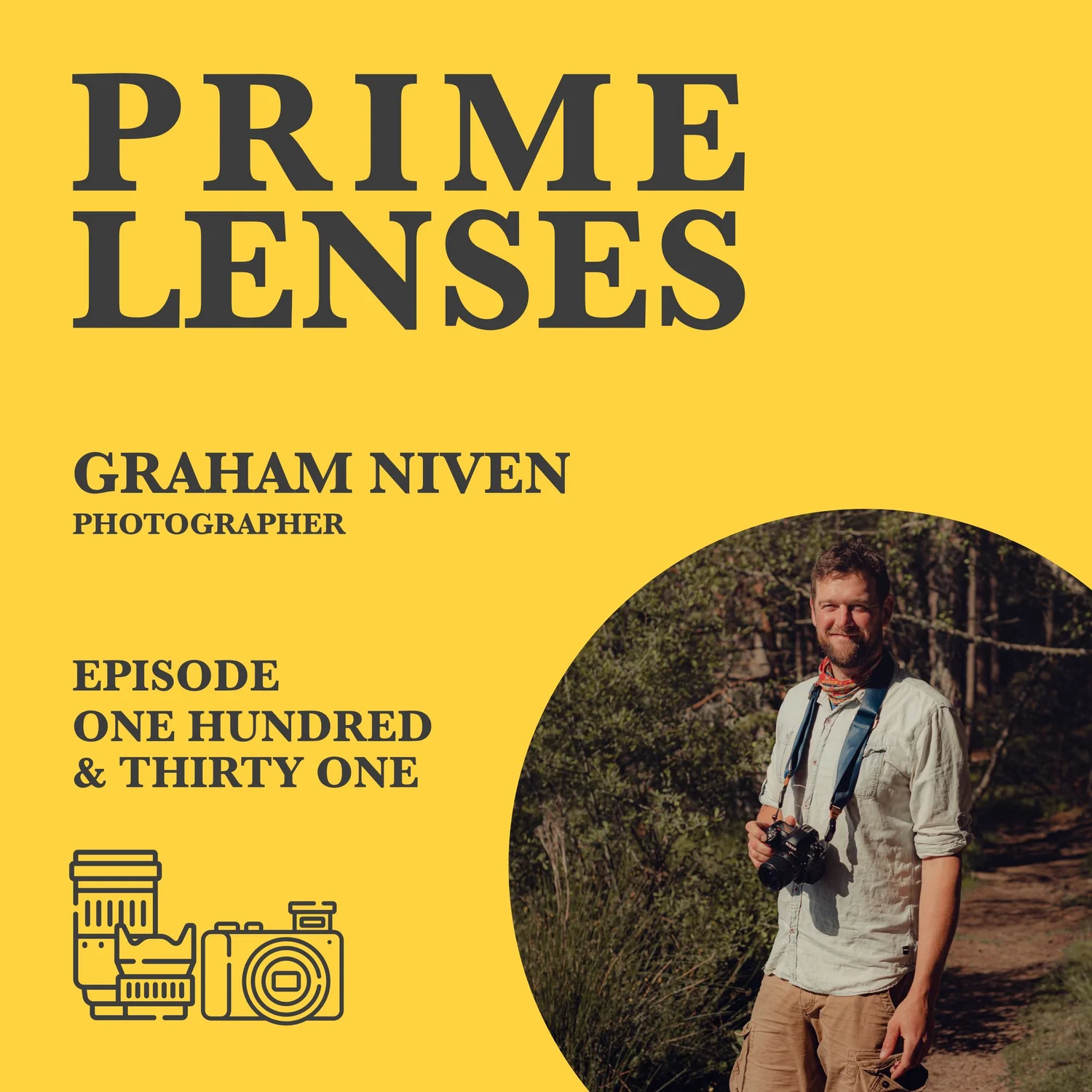
    Episode 131 - Graham Niven

    Mentioned in this episode People Colin Prior — cited as one of the landscape photographers whose 1990s work first caught Graham's eye, before that kind of image became common in the social media era · colinprior.co.uk Jocelyn Bain Hogg — London-based documentary photographer known for his books on British organised crime, The Firm and The Family · theviifoundation.org Martin Parr — referenced as one of the few photographers who can "get away with" a heavy, unflattering flash aesthetic on his subjects · martinparr.com James Popsys — landscape photographer and YouTuber based in Snowdonia, Wales, cited for his discipline of carrying a bag deliberately too small to fit his camera; a future guest on the show · jamespopsys.com Places Nethy Bridge — the Cairngorms village where both Graham and Iain live, and home to Graham's Arbor Gallery · Wikipedia Torridon / Liathach — the mountain and viewpoint (seen from Beinn Alligin) behind Graham's punishing winter hike story · Liathach — Wikipedia The Cuillins — the Skye mountain range referenced both as a backdrop and in Graham's composited "Madeira and Cuillin" image · Wikipedia Coire an t-Sneachda — a corrie on the Cairngorm Plateau where Graham photographed wind-whipped snow and a reindeer herd · Wikipedia St Kilda, including Boreray — the remote Scottish archipelago where Graham shot his well-known black-and-white sea cliff image from a boat · St Kilda — Wikipedia · Boreray — Wikipedia The Buachaille (Buachaille Etive Mòr) — mentioned in relation to one of Graham's early-morning mountain shots · Wikipedia Aviemore — mentioned in passing as the location of Graham's five-a-side football game · Wikipedia Gear and tools Olympus OM-1 — Graham's first camera, already 30 years old when he acquired it in the early 2000s · Wikipedia Leica M (digital back on a film body) — one of two bodies Graham colour/black-and-white "loads" like film stock · leica-camera.com Nikon — Graham's current system, chosen, by his own account, essentially by coin flip · nikon.com DJI Osmo Pocket — his go-to for casual video, bought secondhand · dji.com Ricoh GR — referenced as the classic "glove box camera" for always-with-you shooting · Wikipedia Companies and institutions Niven Photography / Arbor Gallery — Graham's studio and the small gallery he and his wife run on Dell Road, Nethy Bridge · nivenphotography.com Monocle — cited as the magazine that adopted a flash-heavy portrait style for its diplomat and official portraits, to mixed effect · monocle.com Support the show on Patreon. More about this show: A camera is just a tool but spend enough time with photographers and you’ll see them go misty eyed when they talk about their first camera or a small fast prime that they had in their youth. Prime Lenses is a series of interviews with photographers talking about their photography by way of three lenses that mean a lot to them. These can be interchangeable, attached to a camera, integrated into a gadget, I’m interested in the sometimes complex relationship we have with the tools we choose, why they can mean so much and how they make us feel.

  • S1 · E130
    September 6 · 1 hr 8 min

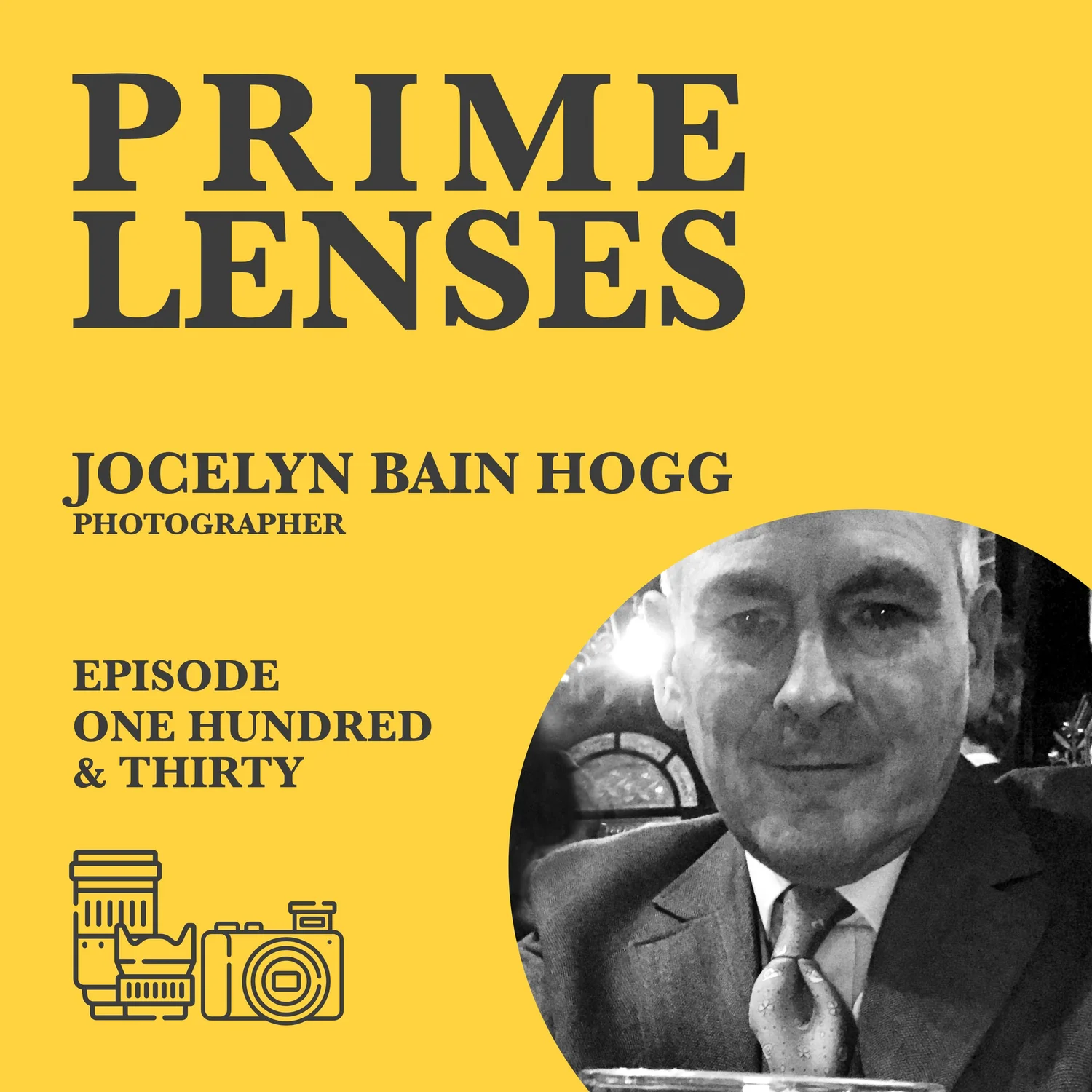
    Episode 130 - Jocelyn Bain Hogg

    Support the show on Patreon. More about this show: A camera is just a tool but spend enough time with photographers and you’ll see them go misty eyed when they talk about their first camera or a small fast prime that they had in their youth. Prime Lenses is a series of interviews with photographers talking about their photography by way of three lenses that mean a lot to them. These can be interchangeable, attached to a camera, integrated into a gadget, I’m interested in the sometimes complex relationship we have with the tools we choose, why they can mean so much and how they make us feel.

  • S1 · E130
    August 30 · 59 min

    Episode 129 - Natasa Leoni

    Natasa Leoni is a photographer based in the UK who in addition to commercial work photographs causes she cares about in relation to climate and social change. Support the show on Patreon. More about this show: A camera is just a tool but spend enough time with photographers and you’ll see them go misty eyed when they talk about their first camera or a small fast prime that they had in their youth. Prime Lenses is a series of interviews with photographers talking about their photography by way of three lenses that mean a lot to them. These can be interchangeable, attached to a camera, integrated into a gadget, I’m interested in the sometimes complex relationship we have with the tools we choose, why they can mean so much and how they make us feel.

  • S1 · E128
    August 23 · 1 hr 10 min

    Episode 128 - Rachael Talibart

    Rachael Talibart is a photographer of coast and sea based in the UK. Support the show on Patreon. More about this show: A camera is just a tool but spend enough time with photographers and you’ll see them go misty eyed when they talk about their first camera or a small fast prime that they had in their youth. Prime Lenses is a series of interviews with photographers talking about their photography by way of three lenses that mean a lot to them. These can be interchangeable, attached to a camera, integrated into a gadget, I’m interested in the sometimes complex relationship we have with the tools we choose, why they can mean so much and how they make us feel.

  • S1 · E122
    August 16 · 1 hr 3 min

    Episode 127 - Dave Herring Returns

    Dave Herring returns to the show this week to talk about his remit to educate and entertain. He’s a lovely guest with excellent taste in 35mm lenses :) Support the show on Patreon. More about this show: A camera is just a tool but spend enough time with photographers and you’ll see them go misty eyed when they talk about their first camera or a small fast prime that they had in their youth. Prime Lenses is a series of interviews with photographers talking about their photography by way of three lenses that mean a lot to them. These can be interchangeable, attached to a camera, integrated into a gadget, I’m interested in the sometimes complex relationship we have with the tools we choose, why they can mean so much and how they make us feel.

  • S1 · E122
    August 9 · 1 hr 3 min

    Episode 126 - Kit Young

    Kit Young is a British analogue photographer and printer. In an age where film is a niche choice and many folks who do shoot it send their film to someone else to process and scan, Kit handles the whole process himself, making his photos, developing the film and then making the prints in a darkroom. As a result his images stand out to me and have a very specific look. Support the show on Patreon. More about this show: A camera is just a tool but spend enough time with photographers and you’ll see them go misty eyed when they talk about their first camera or a small fast prime that they had in their youth. Prime Lenses is a series of interviews with photographers talking about their photography by way of three lenses that mean a lot to them. These can be interchangeable, attached to a camera, integrated into a gadget, I’m interested in the sometimes complex relationship we have with the tools we choose, why they can mean so much and how they make us feel.

  • S1 · E1255
    August 5 · 1 hr 3 min

    Appreciating the Small Stuff with Ian Bogost

    People often say “It’s the little things”, but what does that mean? Ian Bogost has written a book on this subject called The Small Stuff, and in it he describes the gratification that we can all get from paying attention to the small things that happen around us every day. The way a camera feels in the hand, the texture of our clothing, the difference in taste of a soda drunk from a can instead of a plastic bottle. All of these things can be savoured and make our lives a far richer tapestry than it might otherwise be. I am sold and hope you will be too after you enjoy this conversation. And go pick up a copy of the book, I did and it was very much worth it. Support the show on Patreon. More about this show: A camera is just a tool but spend enough time with photographers and you’ll see them go misty eyed when they talk about their first camera or a small fast prime that they had in their youth. Prime Lenses is a series of interviews with photographers talking about their photography by way of three lenses that mean a lot to them. These can be interchangeable, attached to a camera, integrated into a gadget, I’m interested in the sometimes complex relationship we have with the tools we choose, why they can mean so much and how they make us feel.

  • S1 · E125
    August 2 · 1 hr 8 min

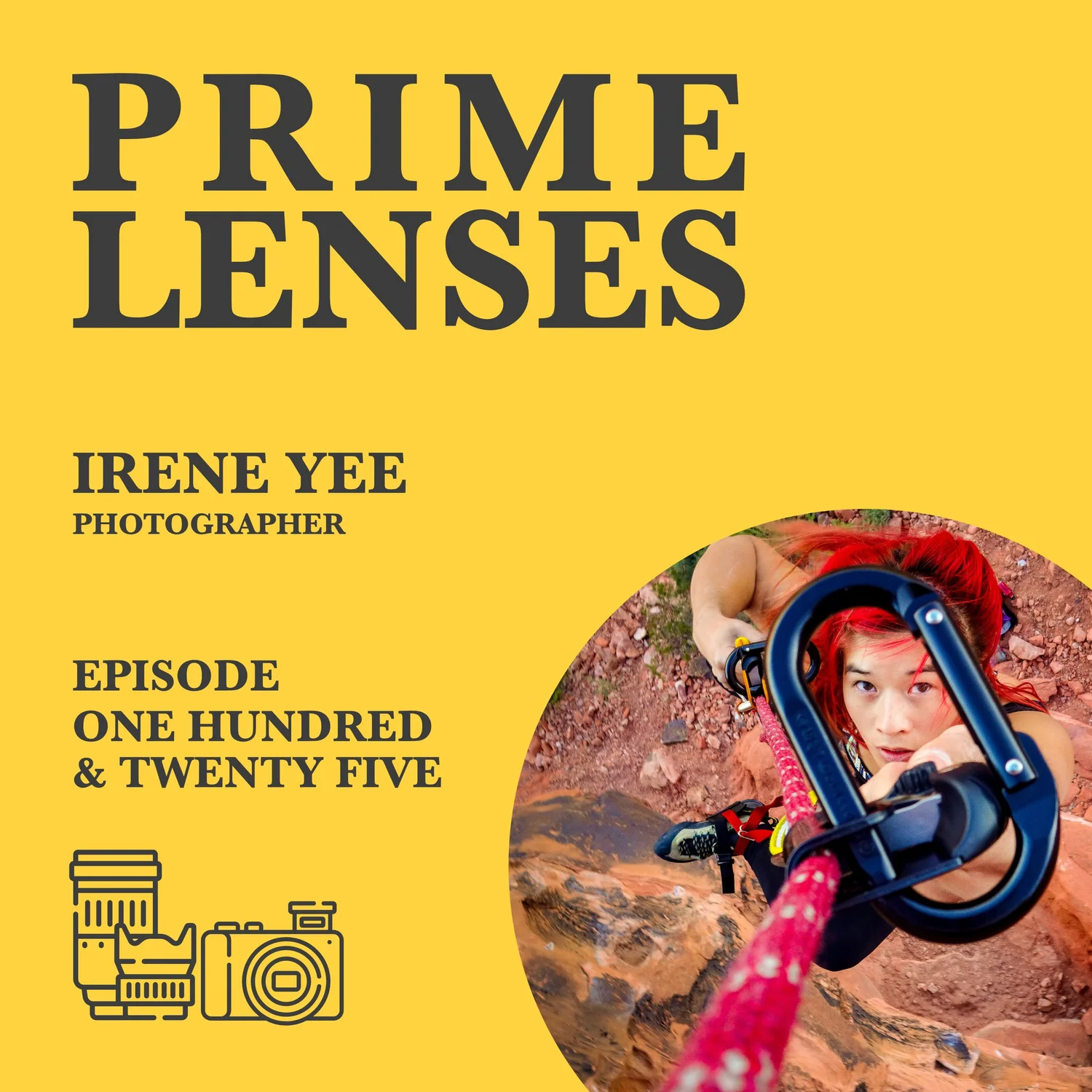
    Episode 125 - Irene Yee

    This week, my guest is Irene Yee, a photographer specialising in the outdoors and climbing. She’s a brilliant and open guest who shares a lot of her techniques and ideas for making great creative work. Support the show on Patreon. More about this show: A camera is just a tool but spend enough time with photographers and you’ll see them go misty eyed when they talk about their first camera or a small fast prime that they had in their youth. Prime Lenses is a series of interviews with photographers talking about their photography by way of three lenses that mean a lot to them. These can be interchangeable, attached to a camera, integrated into a gadget, I’m interested in the sometimes complex relationship we have with the tools we choose, why they can mean so much and how they make us feel.

  • S1 · E122
    July 29 · 1 hr 3 min

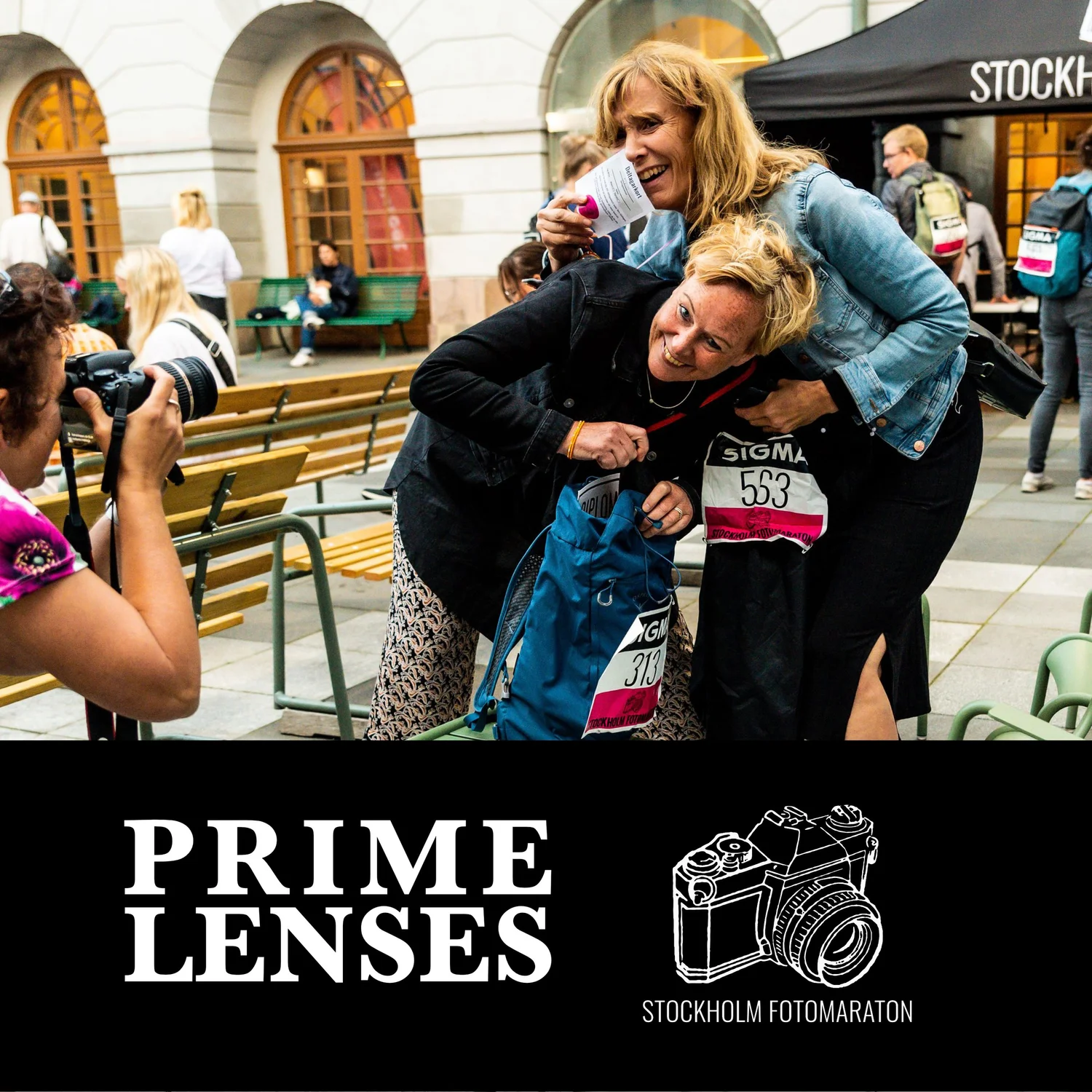
    Stockholm Fotomarathon 2026

    Emil Gyllenberg joins me today. He is the chief organiser of the Stockholm FotoMaraton, a 24 hour event taking place in August. I had never heard of such a thing, people running around making pictures for 24 hours and then entering to have theirs selected as the best in various categories, so I contacted them and Emil agreed to come on to talk about it. Support the show on Patreon. More about this show: A camera is just a tool but spend enough time with photographers and you’ll see them go misty eyed when they talk about their first camera or a small fast prime that they had in their youth. Prime Lenses is a series of interviews with photographers talking about their photography by way of three lenses that mean a lot to them. These can be interchangeable, attached to a camera, integrated into a gadget, I’m interested in the sometimes complex relationship we have with the tools we choose, why they can mean so much and how they make us feel.

  • S1 · E124
    July 26 · 55 min

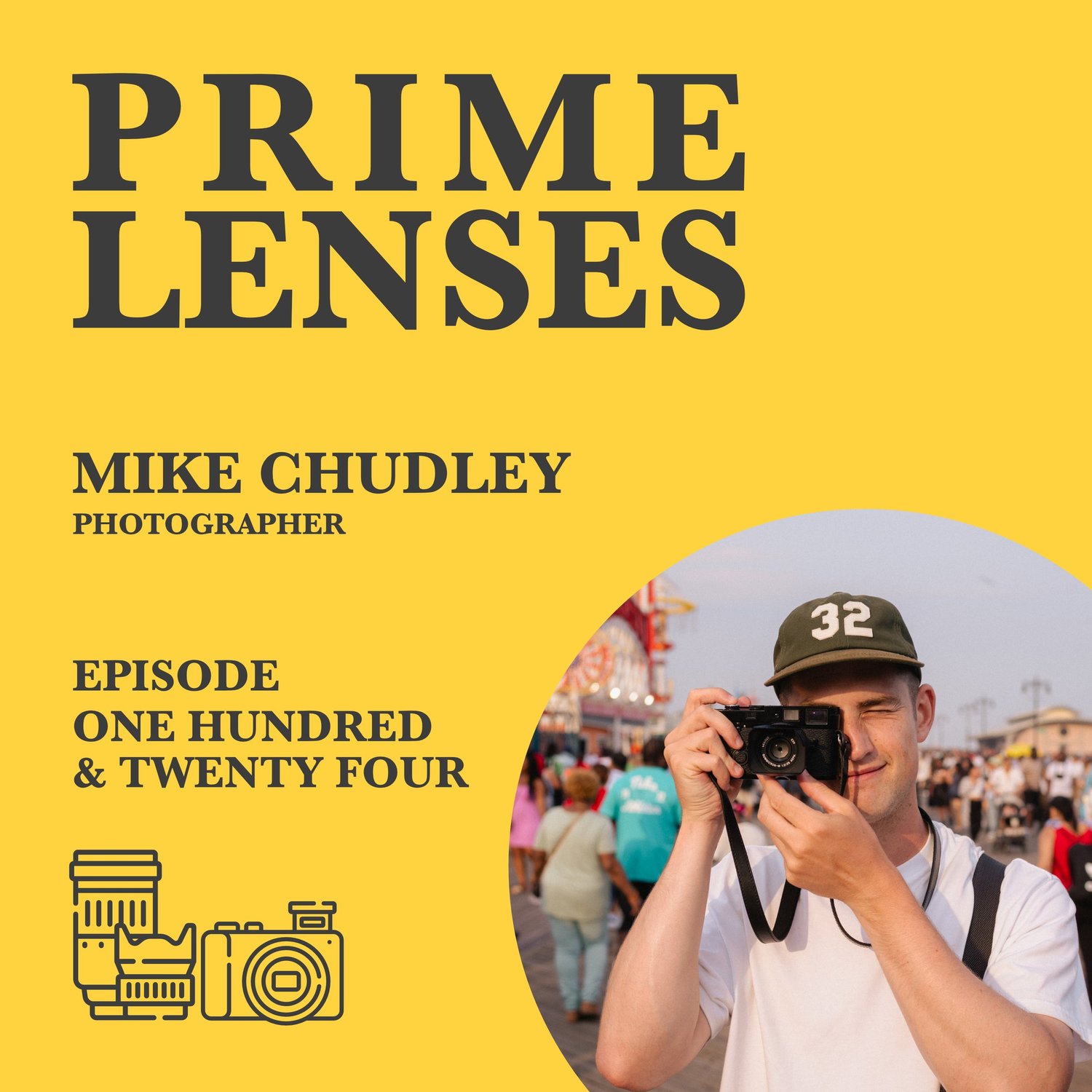
    Episode 124 - Mike Chudley

    This week I’m joined by Mike Chudley, a Photographer and YouTuber based in the UK. We begin talking about other creators we admire and spoke as he was putting the finishing touches to his video about a trip he made to China. Support the show on Patreon. More about this show: A camera is just a tool but spend enough time with photographers and you’ll see them go misty eyed when they talk about their first camera or a small fast prime that they had in their youth. Prime Lenses is a series of interviews with photographers talking about their photography by way of three lenses that mean a lot to them. These can be interchangeable, attached to a camera, integrated into a gadget, I’m interested in the sometimes complex relationship we have with the tools we choose, why they can mean so much and how they make us feel.

  • July 24 · length unknown

    Week of Walks Episode 5

    This week we’re releasing a short daily episode to remind you to get out and make some images. We hope you’ll join us over on Patreon and share the images you make. https://patreon.com/PrimeLenses

Showing 1–20 of 36 episodes