Skip to content
Artwork for Positive Leadership
Business

Positive Leadership

Jean-Philippe Courtois

Positive Leadership has the power to change the world. By focusing on trust, empathy, authenticity and deep collaboration, leaders can energize their teams to achieve success for individuals, their organizations, and society as a whole. Yet, it remains relatively unknown outside positive psychology and neuroscience circles.


Join Jean-Philippe Courtois, former member of the Microsoft senior leadership team alongside Satya Nadella and co-founder of Live for Good, as he brings Positive Leadership to life for anyone in a leadership capacity—both personally and professionally. With help from his guests, Jean-Philippe explores how purpose-driven leaders can generate the positive energy needed to drive business success, individual fulfillment, and societal impact across a range of industries—from technology and social enterprise to sports and coffee.


Most importantly, you’ll learn practical tips to apply in your own life—so you can start making a positive difference in the world.

  • 21 episodes
  • Updated Wednesday

Episodes21

  • Wednesday · 1 hr 2 min

    More Human Than Ever: Summer Special 2026

    Every August, I offer you something different. Not a new conversation, but a pause. This was the year AI stopped being a headline and became part of our daily lives as leaders. I dedicated a whole series to it, from robotics to education to medicine to trust. And one paradox kept coming back, conversation after conversation: the more powerful the technology becomes, the more the difference is made by what is deeply, irreducibly human. So for this summer special I went back through the season and selected seven moments around one conviction. This era demands that we show up with our humanity at its best. More human than ever. We explore four powers together. → Power one, prepare your mind. Ethan Kross on chatter, the voice inside your head, and the toolbox to master it. The brain does not come with a user's manual, so you build your own. → Power two, own your story. Nicholas Thompson on recognising the generational patterns he inherited, and Raj Sisodia on why trauma cannot heal in silence and in shame. Know yourself, love yourself, be yourself. → Power three, magnify your purpose with AI. Stéphane Bancel on why the CEO has to be the chief AI officer and must not delegate it, and MacKenzie Price on the school where children learn academics in two hours a day. → Power four, keep humans at the center. Rana el Kaliouby on emotional intelligence and privacy by principle, and Raffi Krikorian on the hardest question of all: who owns your window to the world? I close with four lessons, one per power, and one practice I want to leave you with for the summer. I call it the summer walk. Fifteen minutes a day, no phone, no podcast, not even mine. Just you and four questions. Pick one tool, one idea from this episode, and practice it before September. Thank you for listening, for your messages and your ideas for guests. This community of positive leaders across so many countries is what keeps this podcast alive and growing. If this episode resonates, share it with one person who needs a spark this summer. I will see you in early September with a brand new season. New here? Subscribe to Positive Leadership & You for one edition a month, written for leaders who want to build companies and communities people thrive in. https://www.linkedin.com/newsletters/positive-leadership-you-6970390170017669121/ Want to go deeper? Listen to the Positive Leadership Podcast on your favourite platform. 130+ conversations with the leaders, founders and thinkers shaping a more human future of work. 🎧 Apple Podcast: https://podcasts.apple.com/fr/podcast/positive-leadership/id1574911588 🎤 Spotify: https://open.spotify.com/show/1EdnJcYgh9nXPTFJ5euOBf

  • July 22 · 1 hr 30 min

    [FR] Frédéric Mazzella : le rôle de l'entrepreneur est d'améliorer la société

    Il roule vers la Vendée un soir de Noël, coincé sur l'A10. Un TGV le double. Il sait qu'il est complet, il a essayé d'y acheter une place. Autour de lui, des centaines de voitures avec un seul passager à bord. Frédéric Mazzella est le fondateur et président de BlaBlaCar. Normalien, physicien, passé par Stanford et la NASA, il a créé la première licorne française et l'a transformée en la plus grande communauté de voyageurs au monde : 100 millions de membres, 29 millions de membres actifs par an, et désormais 41 pays depuis l'expansion annoncée en juin 2026. Avant cela, il y a eu sept ans sans salaire, six modèles économiques testés dont cinq qui échouent, et six banques qui refusent de lui ouvrir un compte. L'une d'elles le raccompagne à la porte avec une tape sur l'épaule : « Merci monsieur, mais Internet, on a déjà donné. » Il est aujourd'hui cofondateur et président de Dift, qui redirige les budgets des entreprises vers le monde associatif, et coprésident de France Digitale. Ce qui m'a le plus frappé, c'est la constance de sa boussole. Il m'a dit que le rôle de l'entrepreneur est d'améliorer la société, et chez lui ce n'est pas une déclaration d'intention, c'est un bilan chiffré : BlaBlaCar évite aujourd'hui 2,5 millions de tonnes de CO2 par an, soit environ 0,5 % des émissions d'un pays comme la France, deux fois le trafic routier de Paris. Puis il a recommencé ailleurs, avec Dift, sur le financement du monde associatif. Et quand je lui demande par quoi commencer, il inverse l'ordre qu'on nous enseigne : l'impact social et environnemental d'abord, le modèle économique ensuite. Parce que des modèles, dit-il, il en existe des dizaines et des dizaines. Dans cette conversation, nous explorons : → Pourquoi il faut se focaliser sur l'impact social et environnemental positif d'abord, et ne chercher le modèle économique qu'ensuite → BlaBlaCar par les chiffres du climat : 2,5 millions de tonnes de CO2 évitées par an, et l'idée toute simple derrière, mieux vaut deux passagers par voiture que deux voitures par passager → Le modèle D.R.E.A.M.S. et l'étude *Entering the Trust Age* menée avec Arun Sundararajan (NYU Stern) auprès de 18 289 membres dans 11 pays : un membre BlaBlaCar au profil complet obtient 88 % de confiance, contre 58 % pour un collègue et 42 % pour un voisin → Pourquoi l'entrepreneuriat n'a pas d'ascenseurs, seulement des escaliers, et pourquoi seules les structures qui ont assimilé le sunk cost progressent vraiment → Ce que la musique lui a appris : la différence entre jouer du Chopin et jouer son propre morceau, et pourquoi un fondateur n'arrive pas à tuer sa propre idée → Le jour où la directrice de Normale Sup a accueilli sa promotion par « vous savez remplir un QCM », et pourquoi tout a basculé → Dift, l'éco-anxiété et le financement du monde associatif : écoper, ou boucher le trou, avec neuf modèles économiques déjà testés en trois ans → Des principes plutôt que des process : fail, learn, succeed, et pourquoi une culture qui ne blâme pas l'échec libère l'action « Il faut se focaliser sur l'impact social et environnemental positif initialement, et puis ensuite on trouvera le modèle ou l'équilibre économique. » Frédéric Mazzella, fondateur et président de BlaBlaCar Si vous portez un projet dont la mission vous tient debout mais dont le modèle économique n'existe pas encore, cet épisode vous dira dans quel ordre construire. 🎧 Épisodes liés : Stephen M. R. Covey, « Building a culture of trust » : https://www.buzzsprout.com/1798971/episodes/12252258 Muriel Pénicaud, « [FR] Diriger comme un chef d'orchestre » : https://www.buzzsprout.com/1798971/episodes/14851596 Akhtar Badshah, « Activating Purpose Mindsets » : https://www.buzzsprout.com/1798971/episodes/9512920 New here? Subscribe to Positive Leadership & You for one edition a month, written for leaders who want to build companies and communities people thrive in. https://www.linkedin.com/newsletters/positive-leadership-you-6970390170017669121/ Want to go deeper? Listen to the Positive Leadership Podcast on your favourite platform. 130+ conversations with the leaders, founders and thinkers shaping a more human future of work. 🎧 Apple Podcast: https://podcasts.apple.com/fr/podcast/positive-leadership/id1574911588 🎤 Spotify: https://open.spotify.com/show/1EdnJcYgh9nXPTFJ5euOBf

  • July 8 · 1 hr 22 min

    Psychologist Ethan Kross: Emotions Aren't the Enemy

    The voice in your head has been talking since before you finished this sentence. For most leaders it is the least managed instrument they own, and the most consequential. Ethan Kross is the psychologist and author who has spent over two decades studying that inner voice. He directs the Emotion & Self-Control Laboratory at the University of Michigan, advises Fortune 500 leaders and Navy SEALs, and wrote the international bestsellers Chatter and Shift. He also discovered his single most-cited tool by using it on himself, at 3am, mid-spiral, when he caught himself typing "bodyguards for academics" into a search bar and said out loud: "Ethan, what are you doing?" I came to this conversation with my own history with that voice. I spent my career in high-pressure rooms where the most important conversation was often the one running inside my own head, and nobody ever handed me the manual for it. Ethan has spent twenty-five years writing that manual, and he makes it practical: self-talk you can actually change, anxiety you can read instead of fear, emotions that become information. And as a new grandfather, I did not expect a conversation about the brain to end up teaching me so much about grace. In our conversation, we explore: → Why your emotions are information to read, not problems to delete, and what changes the moment you believe that → Distanced self-talk: how the simple shift of using your own name reroutes the way your brain handles pressure → Why self-awareness is only step one, and the mental tools that have to follow it → The business case for mental fitness: how unmanaged emotion quietly consumes the attention your organisation is paying for → How a leader gives hard feedback from a secure base, and why leadership falters when we shy away from it "This brain over here does not come with a user's manual." Ethan Kross, psychologist and author If you have ever read to the end of a page and realised you absorbed none of it because your mind was somewhere else, this episode hands you the beginning of that missing manual. RELATED EPISODES Pete Carroll, Seattle Seahawks head coach (2021), Learning to "always compete": https://www.buzzsprout.com/1798971/episodes/9268299 Mo Gawdat, former Chief Business Officer of Google X (2021), Engineering happiness for yourself and others: https://www.buzzsprout.com/1798971/episodes/8944613 Dr Caroline Leaf, neuroscientist (2024), Managing your mind: https://www.buzzsprout.com/1798971/episodes/15018482 New here? Subscribe to Positive Leadership & You for one edition a month, written for leaders who want to build companies and communities people thrive in. https://www.linkedin.com/newsletters/positive-leadership-you-6970390170017669121/ Want to go deeper? Listen to the Positive Leadership Podcast on your favourite platform. 130+ conversations with the leaders, founders and thinkers shaping a more human future of work. 🎧 Apple Podcast: https://podcasts.apple.com/fr/podcast/positive-leadership/id1574911588 🎤 Spotify: https://open.spotify.com/show/1EdnJcYgh9nXPTFJ5euOBf

  • June 24 · 1 hr 22 min

    Anu Bharadwaj: AI Won't Save a Team That Fears It

    Six months into her first management job, Anu Bharadwaj got the feedback no leader wants to hear: she was too intense, she pushed her team too hard. She was stunned. She was only asking them to do what she would do herself. Anu Bharadwaj began at Microsoft building video games, then made a bold leap to Atlassian in 2014, where she rose from product lead on Jira to COO and then President. Along the way she shaped Team Anywhere, led one of the company's hardest cloud transformations, and kept returning to a single question: how do teams actually work better together? I came to this conversation as someone who made the same early mistake she did. In my first years at Microsoft I was known as Mr Plus, always asking for more, always raising the bar, until coaching taught me the difference between driving people and leading them. Anu and I share a Microsoft DNA, and most of this episode felt like comparing notes. In our conversation, we explore: → Why leading people is never about you, and the manager feedback that taught her the hard way → How a values exercise she runs with every team becomes the real source of psychological safety → Energy management over time management, and why self-care is not selfish → Why an AI rollout fails when leaders treat it as a tools problem instead of a human fear → What an AI-native company actually looks like, and why judgment stays human "When you lead people, it is not about you. It is about them. You want to understand what they want, and take them to a place they want to go." Anu Bharadwaj, former President of Atlassian If you have ever pushed a team toward your finish line and wondered why they were not following, this conversation will stay with you. RELATED EPISODES Pete Carroll, Seattle Seahawks head coach (2021), Learning to "always compete": https://www.buzzsprout.com/1798971/episodes/9268299 Kathleen Hogan, Microsoft Chief People Officer (2022), Empowering people to achieve more: https://www.buzzsprout.com/1798971/episodes/10382268 Ranjay Gulati (2023), Creating purpose-driven teams: https://www.buzzsprout.com/1798971/episodes/12903145 New here? Subscribe to Positive Leadership & You for one edition a month, written for leaders who want to build companies and communities people thrive in. https://www.linkedin.com/newsletters/positive-leadership-you-6970390170017669121/ Want to go deeper? Listen to the Positive Leadership Podcast on your favourite platform. 130+ conversations with the leaders, founders and thinkers shaping a more human future of work. 🎧 Apple Podcast: https://podcasts.apple.com/fr/podcast/positive-leadership/id1574911588 🎤 Spotify: https://open.spotify.com/show/1EdnJcYgh9nXPTFJ5euOBf

  • June 10 · 1 hr 26 min

    Stéphane Bancel: The 5% Bet That Built Moderna

    In 2011, Stéphane Bancel walked away from the security of leading a 6,000-person diagnostics company to join a startup of about 50 people, built on an idea most scientists had dismissed: that messenger RNA could become medicine. Almost everyone told him not to do it. He gave the bet roughly a five percent chance. Nine years later, that same bet helped the world face a pandemic in 63 days. Stéphane Bancel is the Chief Executive Officer of Moderna. Under his leadership the company designed a COVID-19 vaccine on a computer within days of the genetic sequence being posted, delivered the first dose to a human just 63 days later, and scaled from zero manufacturing to a billion doses in twelve months. Today Moderna is building personalized cancer vaccines and using AI to reinvent how medicines are discovered and made. This conversation sits right at the heart of what I believe about leadership. That the chief executive is really the chief energy officer. That the boldest decisions are rarely about appetite for risk, they are about the asymmetry between what you could give the world and what you could actually lose. Stéphane lives both, and he is refreshingly honest about the storms, the doubts and the mistakes along the way. In our conversation, we explore: → The five percent bet: how he weighed an enormous upside against a manageable downside, and why his wife was the only one who said yes → What sailing without GPS taught him about staying calm when the storm hits, and why a storm always passes → The 63-day sprint, and the Sunday phone call that saved the manufacturing of a billion doses → Why he slowed a trial down so it would be a vaccine for the world, not a vaccine for white people → The future he sees: personalized cancer vaccines, the human body mapped in silico, and why he calls chemotherapy tomorrow’s barbaric history “I still believe that we have not invented yet our best drug.” Stéphane Bancel, CEO of Moderna If you have ever faced a decision that everyone around you called too risky, this one is about how to think, and how to stay calm, when you choose to leap anyway. 🎧 Related Episodes: Pascal Soriot on the purpose-led culture that transformed AstraZeneca, and the assume-good-intent principle Stéphane says he shares: https://www.buzzsprout.com/1798971/episodes/18782083 Satya Nadella on mission, mindset, and why the CEO has to own the technology shift: https://www.buzzsprout.com/1798971/episodes/8966432 Bertrand Piccard on exploration and staying comfortable in the unknown: https://www.buzzsprout.com/1798971/episodes/14487275 New here? Subscribe to Positive Leadership & You for one edition a month, written for leaders who want to build companies and communities people thrive in. https://www.linkedin.com/newsletters/positive-leadership-you-6970390170017669121/ Want to go deeper? Listen to the Positive Leadership Podcast on your favourite platform. 130+ conversations with the leaders, founders and thinkers shaping a more human future of work. 🎧 Apple Podcast: https://podcasts.apple.com/fr/podcast/positive-leadership/id1574911588 🎤 Spotify: https://open.spotify.com/show/1EdnJcYgh9nXPTFJ5euOBf

  • May 27 · 1 hr 23 min

    Dr Donna Hicks: Every Conflict Hides a Dignity Wound

    Donna Hicks spent three decades at the world's hardest conflict tables and found one hidden injury beneath them all: a violation of human dignity. From the Middle East to Northern Ireland, she watched negotiations stall not over policy, but over something no one in the room had named. This episode is the word that changed everything, and the model she built around it. Dr Donna Hicks, author of Leading with Dignity and Associate at the Weatherhead Center for International Affairs at Harvard University, spent her career as a third party in unofficial diplomacy across the Middle East, Sri Lanka, Colombia and Northern Ireland. She co-facilitated the BBC series Facing the Truth alongside Archbishop Desmond Tutu, and her earlier book, Dignity, reshaped how the world understands conflict, connection and leadership. This one runs close to home for me. As a young boy from a Pied-Noir family — French people of European origin who had left Algeria after its independence — newly arrived in Nice, I was once told by a schoolmate to “get out of here.” I came home devastated. My father’s answer, that I should be proud of where I came from and that I had something real to give, was dignity restored long before either of us had a word for it. In our conversation, we explore: → Why respect is earned but dignity is not, and how leaders who confuse the two quietly damage their teams → The ten elements of dignity, and the single one that 80% of employees say is violated most at work → What happened when the BBC sat victims and perpetrators face to face, and why healing did not require forgiveness → Why Donna now teaches dignity to eight-year-olds, and her advice to young leaders entering a harder world → Mandela consciousness: the three connections that rebuild dignity in any team, family or boardroom "I don't believe we need to find common ground. I believe we need to find higher ground." - Dr Donna Hicks, Harvard University If you have ever watched a meeting derail over something that was never really about the agenda, this conversation hands you the missing word, and a practical model for what to do next. 🎧 Related Episodes: Amy Edmondson on psychological safety, the dignity element 80% of employees say is violated most at work: https://www.buzzsprout.com/1798971/episodes/15687150 Stephen M.R. Covey on trust as the foundation of culture, and what sits beneath even trust: https://www.buzzsprout.com/1798971/episodes/12252258 Barbara Fredrickson on Love 2.0, and why dignity is the fastest path to genuine connection: https://www.buzzsprout.com/1798971/episodes/9437036 New here? Subscribe to Positive Leadership & You for one edition a month, written for leaders who want to build companies and communities people thrive in. https://www.linkedin.com/newsletters/positive-leadership-you-6970390170017669121/ Want to go deeper? Listen to the Positive Leadership Podcast on your favourite platform. 130+ conversations with the leaders, founders and thinkers shaping a more human future of work. 🎧 Apple Podcast: https://podcasts.apple.com/fr/podcast/positive-leadership/id1574911588 🎤 Spotify: https://open.spotify.com/show/1EdnJcYgh9nXPTFJ5euOBf

  • May 13 · 1 hr 33 min

    [FR] Du pôle Sud au pôle intérieur : Matthieu Tordeur, explorateur

    À 27 ans, il a marché seul jusqu'au bout de la Terre. Ce qu'il a trouvé là-bas n'était pas un sommet. À 27 ans, Matthieu Tordeur devient le plus jeune explorateur au monde à rallier le pôle Sud à ski, en solitaire et sans ravitaillement. 1 150 kilomètres en 51 jours. Un traîneau de 115 kilos. Moins 50 degrés. Et la solitude la plus radicale qu'un être humain puisse choisir. Né à Rouen, formé chez les scouts et nourri aux aventures de Tintin, Matthieu fait ses études à King's College London et à Sciences Po Paris avant de transformer une thèse de fin d'études en tour du monde en 4L, à travers 90 pays, pour donner une voix aux invisibles de la microfinance. À 27 ans, il atteint le pôle Sud. Aujourd'hui, il consacre ses expéditions à la science : il vient de rentrer d'« Under Antarctica », 4 000 kilomètres en kite-ski en 80 jours avec la glaciologue Heïdi Sevestre, sous l'égide de l'UNESCO et de la Décennie d'Action pour les Sciences Cryosphériques. Sa conviction n'a jamais été d'accumuler des sommets. « Je ne suis pas un collectionneur de sommets », dit-il. Ce que Matthieu a découvert dans la solitude antarctique n'était pas un record, mais un pôle intérieur, la capacité de se rejoindre soi-même quand tout autour disparaît, et la conviction que toute traversée se sépare en deux niveaux : ce qu'on contrôle et ce qu'on doit lâcher. Quatre routines apprises à -50°C qui tiennent à 9 heures du matin, dans n'importe quelle traversée professionnelle ou personnelle : L'inconfort est temporaire. Les douleurs, les cloques, les courbatures, ça ne dure pas pour la vie. Remets ton rêve de pôle Sud à la surface. Quand tout est difficile, retourne dans l'état d'esprit où tu rêvais ce projet. Séquence la longue route en petits pas atteignables. Lâche prise sur l'incontrôlable. La météo, la neige molle, ce ne sont pas tes leviers. Ta respiration, ton geste, ton alimentation, eux, le sont. Cette conversation rejoint un fil que je porte depuis des années à travers Live for Good : comment aider chaque jeune à trouver sa propre boussole intérieure dans un monde qui les bombarde de distractions. Mes années chez Microsoft m'ont appris qu'aucune stratégie ne tient si elle n'est pas portée par des personnes qui savent pourquoi elles se lèvent le matin. Dans cette conversation, nous explorons : Pourquoi Matthieu est parti seul, pas par défaut, mais comme un cadeau qu'il s'offrait à lui-même La lettre de son père, à n'ouvrir qu'en cas d'abandon, qu'il a portée tout au long de l'expédition Les quatre routines de leadership apprises au pôle Sud « Under Antarctica » avec Heïdi Sevestre : transformer l'aventure en science climatique sous l'égide de l'UNESCO Pourquoi il refuse l'image du collectionneur de sommets, et ce qu'est pour lui le vrai sommet « L'inconfort, les douleurs, les cloques, les courbatures, c'est temporaire. Ça ne va pas durer pour la vie. » Matthieu Tordeur, explorateur polaire 🎧 Épisodes liés : Bertrand Piccard, "Exploration and innovation toward sustainable future" Dr Nadia Medjad, "Neuroscience of effective leadership" John Elkington, "Sustainability, Systems Thinking & Regenerative Business" New here? Subscribe to Positive Leadership & You for one edition a month, written for leaders who want to build companies and communities people thrive in. https://www.linkedin.com/newsletters/positive-leadership-you-6970390170017669121/ Want to go deeper? Listen to the Positive Leadership Podcast on your favourite platform. 130+ conversations with the leaders, founders and thinkers shaping a more human future of work. 🎧 Apple Podcast: https://podcasts.apple.com/fr/podcast/positive-leadership/id1574911588 🎤 Spotify: https://open.spotify.com/show/1EdnJcYgh9nXPTFJ5euOBf

  • April 29 · 1 hr 40 min

    The Iceberg Strategy: Ine Van Wymersch, Drug Commissioner

    A country drifting toward narco-state. The answer isn't a hammer. It's warm water. Belgium is one decision away from becoming a narco-state. Judges in hiding. Prosecutors under armed protection. An 11-year-old girl killed in a drug-related shooting in Antwerp. The country hosting Europe's second-largest port now seizes over 120 tons of cocaine a year. And the Belgian government handed the mission of stopping it to Ine Van Wymersch. Ine Van Wymersch became Belgium's youngest Public Prosecutor at 39, after years as a youth magistrate making the kind of decisions that change a child's life forever. In 2016, she was the calm voice of a traumatized nation following the Brussels attacks. In 2023, she was named Belgium's first ever National Drug Commissioner. She now operates under armed protection. And she refuses the obvious answer. Her view: more police will not save us. Belgium needs a "warm society." Her iceberg metaphor cuts the noise. Above the waterline: shootings, seizures, violence. Below: corruption, money laundering, addicted parents, kids growing up without a chance. Attack the iceberg directly and a new piece grows back overnight. Warm the water around it, with education, jobs, mental health, dignity, and the iceberg starts to melt. Her work sits very close to a question I have lived with for years through Live for Good : how do we stop losing young people before life has really started for them? My years at Microsoft taught me that no organization, however large, beats determined people working from a shared narrative. Ine has built exactly that narrative for Belgium, and it deserves to travel far beyond it. In our conversation, we explore: → Why repression alone cannot beat organized drug crime, and what "warming the water around the iceberg" really means → The three pillars of her strategy: disrupt logistics, follow the money, rebuild society → The story of Elvire, the illiterate woman approved for euthanasia who asked Ine to write her life → How terrorist networks and drug cartels recruit the same vulnerable youth, and why a closed job market is a national security issue → Why "a warm society" of education, mental health, and opportunity is the only sustainable defense against narco-states "If we warm up the water, we are creating an environment where organized crime is not surviving." Ine Van Wymersch, Belgium's National Drug Commissioner 🎧 Related Episodes: Élisabeth Moreno, "Realise the impossible" Muriel Pénicaud, "Lead like an orchestra conductor" (employment and skills as the foundation of a resilient society) Jacqueline Novogratz, "Building a better world together" (empathy, storytelling, and dignity for those society has excluded) #PositiveLeadership #IcebergStrategy #WarmSociety #NarcoState #YouthOpportunity New here? Subscribe to Positive Leadership & You for one edition a month, written for leaders who want to build companies and communities people thrive in. https://www.linkedin.com/newsletters/positive-leadership-you-6970390170017669121/ Want to go deeper? Listen to the Positive Leadership Podcast on your favourite platform. 130+ conversations with the leaders, founders and thinkers shaping a more human future of work. 🎧 Apple Podcast: https://podcasts.apple.com/fr/podcast/positive-leadership/id1574911588 🎤 Spotify: https://open.spotify.com/show/1EdnJcYgh9nXPTFJ5euOBf
  • April 15 · 1 hr 28 min

    Raj Sisodia: How Conscious Capitalism Brings Love into Business

    Companies built on love outperform the S&P 500 by 14 to 1. Conscious capitalism, stakeholder leadership, healing organizations — Raj Sisodia proved it with data, then spent a year in the Himalayas and the Amazon proving it on himself. Raj Sisodia, Co-Founder of the Conscious Capitalism movement and author of sixteen books including Firms of Endearment and The Healing Organization, grew up across four countries and eight schools before the age of 18. He trained as an electrical engineer in India because that was what you did if you were good at math. He stumbled into a PhD at Columbia almost by accident — following seven friends to pick up a GMAT application and ending up the only one who made it to New York. From there, he built a body of research that fundamentally challenged Milton Friedman's doctrine that the only business of business is profit. Then, at 60, he turned that same rigour inward: pilgrimages to the high Himalayas, silent retreats with Peter Senge, and the painful reckoning with a father who once pointed a gun at him. This conversation runs close to what I have lived. When I watched Satya Nadella introduce "model, coach, care" at Microsoft — a framework Raj references directly — I saw firsthand what happens when a leader chooses purpose over power. And Raj's conviction that business must actively heal what it has broken echoes what drove me to create Live for Good: the belief that the organizations we build should leave people stronger, not depleted. In our conversation, we explore: → Why companies that spend 95% less on marketing than competitors have the highest customer loyalty — and what that reveals about extraction-based capitalism → The four pillars of Conscious Capitalism — higher purpose, stakeholder integration, conscious leadership, conscious culture — and the specific acronyms (HEALING, SPICY, SELFLESS) Raj uses to make them actionable → The Bob Chapman story: how one CEO refused to lay off a single employee during the 2008 crisis by asking "What would a family do?" — and emerged stronger than every competitor → His year of conscious awakening at 60 — pilgrimages, silent retreats, ayahuasca in the Amazon — and what four women forced him to confront about his own unhealed trauma → What conscious capitalism demands of AI: the marriage of humanity's most important idea with its most powerful technology — and why the market will ultimately correct for unconscious companies 🔑 Key Themes: Conscious Capitalism, Stakeholder Leadership, Purpose-Driven Business, Healing Organizations, Personal Transformation, AI Ethics, Positive Leadership 🎧 Related Episodes: Paul Polman (ex-CEO Unilever) — Becoming a Courageous Leader: how Polman proved companies can grow while addressing environmental and social challenges Vincent Stanley (Director of Philosophy, Patagonia) — Leading with Purpose: why purpose-led constraints drive innovation and stakeholder alignment Dr. Martin Seligman (Founding Father of Positive Psychology) — Paving the Way to Positivity: the science of flourishing that underpins conscious leadership John Elikngkton : Rethinking Capitalism: A Conversation with the Godfather of Sustainability New here? Subscribe to Positive Leadership & You for one edition a month, written for leaders who want to build companies and communities people thrive in. https://www.linkedin.com/newsletters/positive-leadership-you-6970390170017669121/ Want to go deeper? Listen to the Positive Leadership Podcast on your favourite platform. 130+ conversations with the leaders, founders and thinkers shaping a more human future of work. 🎧 Apple Podcast: https://podcasts.apple.com/fr/podcast/positive-leadership/id1574911588 🎤 Spotify: https://open.spotify.com/show/1EdnJcYgh9nXPTFJ5euOBf

  • April 1 · 1 hr 22 min

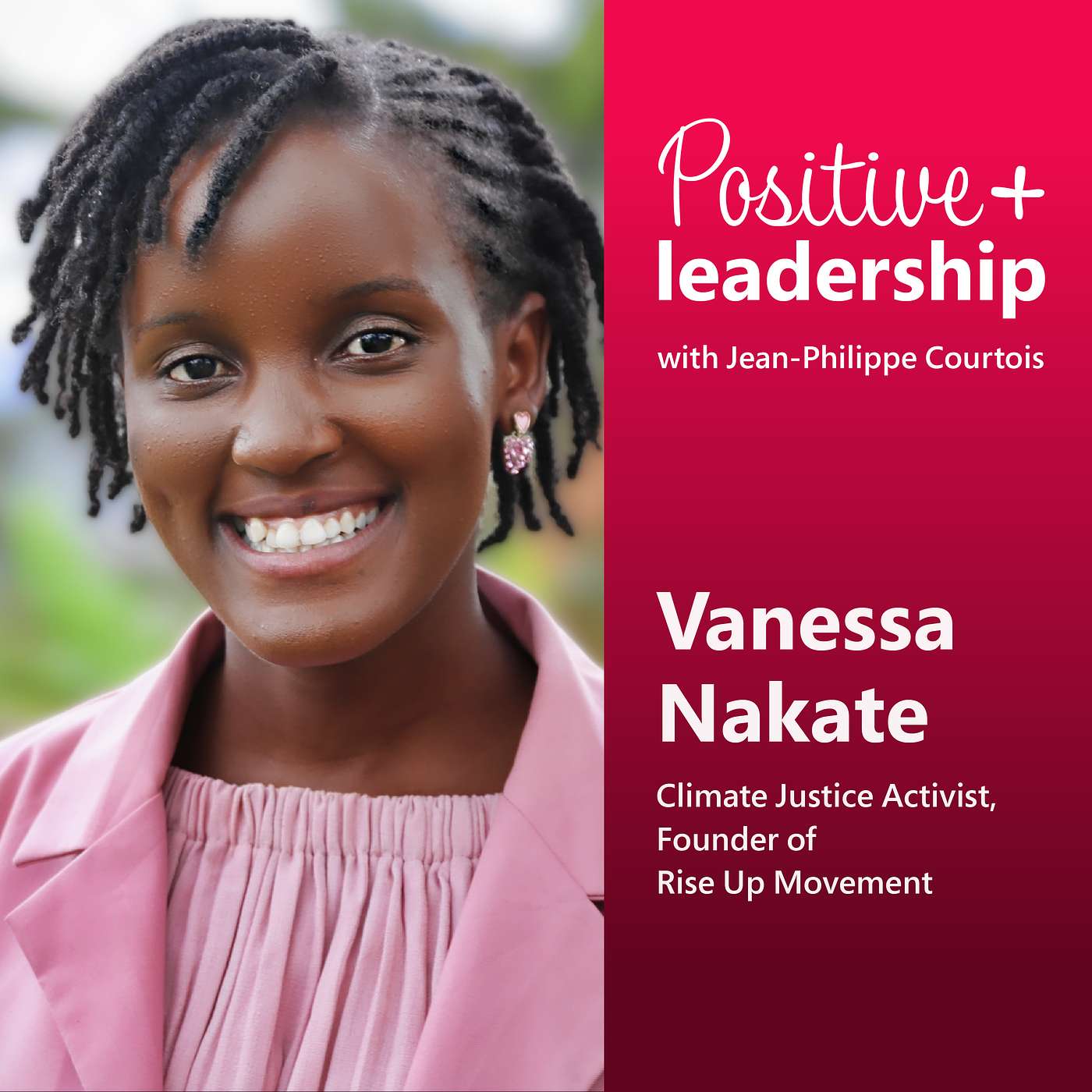
    Erased but Not Silenced: Leading the Global Climate Fight with Vanessa Nakate

    What does it take to start a global movement when you feel like the world isn't listening? Today, my guest is Vanessa Nakate, the pioneering Ugandan climate justice activist, UNICEF Goodwill Ambassador, and founder of the Rise Up Movement. Vanessa’s journey began in 2019 with a solitary strike outside the Ugandan parliament. Since then, she has become one of the most powerful and necessary voices in the global fight against climate change, demanding that the Global South—the communities most impacted by the crisis—are no longer ignored. Vanessa’s story is a profound lesson in Positive Leadership. In 2020, she was famously cropped out of an Associated Press photograph with her white peers at Davos. She didn’t retreat. Instead, she boldly stated, "You didn’t just erase a photo. You erased a continent," using that moment of erasure to spark a vital, worldwide conversation about race, media, and climate justice. In this episode, we explore what true, intersectional leadership looks like. Vanessa passionately argues that we cannot separate the climate crisis from poverty, inequality, and the empowerment of young women. In our conversation, we explore: → How she found the courage to strike alone in Kampala, and how to take the first step when you have no followers → The Davos incident: How to turn being erased into a platform for global empowerment → Why climate justice IS social justice, and why educating girls is a critical climate solution → Building the Vash Green Schools Project to bring solar power to over 75 schools in Uganda → Why she chose to step back from the frontlines to pursue a Master of Public Policy at Oxford, and how she plans to bridge activism and policy "When you are working with people, when you know that you have community, then it's easier to sustain the activism work in whatever field that you're working in... find your community, and it will make activism much easier." — Vanessa Nakate If you want to understand what it really takes to lead a movement, build resilience, and fight for a future that includes everyone, this conversation will deeply inspire you. 🔑 Key Themes: Climate Justice, Youth Activism, Purpose-Driven Leadership, Resilience, Intersectionality, Community, Global South. 🎧 Related Episodes: Hannah Ritchie — Not the End of the World: A Data-Driven Approach to Climate Action Dr. Phumzile Mlambo-Ngcuka — Showing humanity to others Boyan Slat — Leading an ocean cleanup 🎧 Listen on Apple Podcasts, Spotify, YouTube, jpcourtois.com New here? Subscribe to Positive Leadership & You for one edition a month, written for leaders who want to build companies and communities people thrive in. https://www.linkedin.com/newsletters/positive-leadership-you-6970390170017669121/ Want to go deeper? Listen to the Positive Leadership Podcast on your favourite platform. 130+ conversations with the leaders, founders and thinkers shaping a more human future of work. 🎧 Apple Podcast: https://podcasts.apple.com/fr/podcast/positive-leadership/id1574911588 🎤 Spotify: https://open.spotify.com/show/1EdnJcYgh9nXPTFJ5euOBf

  • March 18 · 1 hr 18 min

    Rebuilding Trust in Technology with Mozilla CTO Raffi Krikorian

    What happens when one of Silicon Valley's most accomplished engineers decides the system he helped build is broken—and walks away to fix it? Today my guest is Raffi Krikorian, CTO of Mozilla and one of the most civic-minded technologists I know. We explore why the fight for open-source AI isn't just a technical debate; it is really a fight for who controls our relationship with knowledge itself. Raffi's career path is uniquely fascinating. He spent his early years scaling massive engineering teams at Twitter and launching Uber’s first self-driving fleet. But then he did something rare. He pivoted to public service, becoming the first-ever CTO of the Democratic National Committee to rebuild their cybersecurity from the ground up. He then went on to drive social-impact technology at Emerson Collective, applying his engineering mind to systemic issues like immigration and climate change. At Mozilla, he is now on the frontlines of the AI revolution. We talk about what it means to be "technically optimistic" right now—which also happens to be the name of his excellent podcast. For Raffi, optimism isn't about blind faith in algorithms. It’s about demanding that our tools are trustworthy, transparent, and built to serve humanity, rather than exploiting it. In our conversation, we explore: → The Twitter crash that taught him his job was not to be the architect, but to create the conditions for others to do their best work → Why he left Uber's self-driving program after discovering their models misclassified people based on skin color → How a week of Google Sheets transformed an asylum-seeker nonprofit more than any AI chatbot could → His conviction that we need seven billion AGIs—one for each of us—not seven controlled by massive corporations → Why patience, not speed, is the leadership skill that actually builds movements "We have outsourced dreaming to a few people who are building companies and we all need to dream again." — Raffi Krikorian, CTO, Mozilla If you have ever wondered whether the technology on your phone is truly working for you—or for someone else—this conversation will completely change how you think about what comes next. 🔑 Key Themes: Open-Source AI, Responsible Technology, Purpose-Driven Leadership, Digital Trust, Civic Tech, Cybersecurity, Technical Optimism. 🎧 Related Episodes: Kevin Scott — Empowering people with AI: Navrina Singh — Building Trust in AI: Leadership, Governance, and Human Values Rana el Kaliouby — Human-Centric AI (purpose meets profit in technology) 🎧 Listen on Apple Podcasts, Spotify, YouTube, jpcourtois.com New here? Subscribe to Positive Leadership & You for one edition a month, written for leaders who want to build companies and communities people thrive in. https://www.linkedin.com/newsletters/positive-leadership-you-6970390170017669121/ Want to go deeper? Listen to the Positive Leadership Podcast on your favourite platform. 130+ conversations with the leaders, founders and thinkers shaping a more human future of work. 🎧 Apple Podcast: https://podcasts.apple.com/fr/podcast/positive-leadership/id1574911588 🎤 Spotify: https://open.spotify.com/show/1EdnJcYgh9nXPTFJ5euOBf

  • March 4 · 1 hr 3 min

    How a Purpose-Led Culture Transformed AstraZeneca with Pascal Soriot

    What if the greatest turnaround in modern corporate history wasn’t driven by financial engineering or restructuring, but by an unshakeable belief in science and human talent? In this powerful episode of the Positive Leadership Podcast, I welcome Pascal Soriot, CEO of AstraZeneca—a visionary leader who transformed a struggling pharmaceutical company into a defining global force in oncology, cardiovascular disease, and respiratory care. He is also someone I know personally: I had the privilege of serving on the AstraZeneca board between 2008 and 2016, and I was in the boardroom when we appointed him as CEO. What makes Pascal’s leadership so rare is his non-traditional ascent. He didn't start with an elite corporate playbook; his foundational lessons were grounded in learning the value of loyalty and protecting his people. By beginning his professional life as a practicing veterinarian, he developed a profound sense of empathy—traits that continue to drive his unwavering commitment to putting patients first today. But Pascal’s story isn’t your typical corporate trajectory. Raised in a humble background where he learned early lessons about loyalty, standing up for his team, and defending his territory, he began his professional life not in business, but as a veterinarian. It was this experience that profoundly shaped his empathy and his "patient-first" approach to leadership. In our conversation, we explore: 🔬 The Turnaround – How Pascal orchestrated AstraZeneca's massive transformation by instilling a clear, shared purpose and focusing relentlessly on patient outcomes. 🛡️ The Pfizer Takeover – How Pascal defended AstraZeneca against a massive hostile takeover bid from Pfizer by betting everything on the truth of long-term science. 🌍 COVID-19 & Global Access – The leadership lessons learned during the pandemic and the drive to ensure global, equitable access to the vaccine, particularly for countries in the Global South. 🤖 AI and the Future of Discovery – How AI is accelerating the race to cure cancer and redefine medicine. Pascal’s insight: “People come to work because they believe they can make a difference. First, a shared purpose. Second, clarity about each person’s contribution to that goal.” Whether navigating a corporate crisis, defending core values against short-term pressures, or building a culture of psychological safety and innovation, this conversation is a masterclass in resilient, purpose-driven leadership. Key Themes: Corporate turnarounds, healthcare innovation, purpose-driven leadership, AI in medicine, empathy, resilience, scientific truth, navigating crises. 🎧 Related Episodes You’ll Love: Indra Nooyi: Driving performance with purpose Sir Ronald Cohen: Reinventing capitalism for impact Gianpiero Petriglieri: Leadership, a matter of love Fabio Barbosa: Leading with Purpose: Profit, People, and the Planet New here? Subscribe to Positive Leadership & You for one edition a month, written for leaders who want to build companies and communities people thrive in. https://www.linkedin.com/newsletters/positive-leadership-you-6970390170017669121/ Want to go deeper? Listen to the Positive Leadership Podcast on your favourite platform. 130+ conversations with the leaders, founders and thinkers shaping a more human future of work. 🎧 Apple Podcast: https://podcasts.apple.com/fr/podcast/positive-leadership/id1574911588 🎤 Spotify: https://open.spotify.com/show/1EdnJcYgh9nXPTFJ5euOBf

  • February 18 · 1 hr 28 min

    Running From and Running Toward: Rewriting the Stories We Inherit with Nicholas Thompson

    What if the stories you inherited about who you’re supposed to become—from your family, your industry, your own fears—are the very narratives holding you back? In this powerful episode of the Positive Leadership Podcast, I welcome Nicholas Thompson, CEO of The Atlantic, a visionary media executive who has led transformations at The New Yorker and WIRED, and an extraordinary marathoner who set an American record in the 50K at age 45. But Nick’s story isn’t just about professional success or athletic achievement. It’s about the conscious choice to rewrite the narrative we inherit. Nick grew up watching his brilliant father—a Rhodes Scholar and academic star—whose life eventually “cracked up” due to alcoholism and personal struggles. Around Nick’s 40th birthday, his father warned him: “All men’s lives fall apart at this age.” That was the script Nick had inherited. A story of inevitable decline. But Nick refused to live that story. In our conversation, we explore: 🏃 The Running Ground – How Nick used running as therapy to honor his father while writing a different ending (achieving a 2:29 marathon at 44) 📰 Truth in the Age of Misinformation – Leading The Atlantic through a crisis of trust, deepfakes, and algorithmic manipulation 🤖 AI as Editorial Tool vs. Existential Threat – Why he says AI is “the best tool we’ve ever had” but could also “completely obliterate us” 👨‍👦 Inherited Patterns – Recognizing generational trauma and consciously choosing a different path ⚖️ ️ The Church-State Separation – Why editorial independence matters more than ever 💪 Defying Aging – Getting faster with age and what it teaches about leadership limits Nick’s profound insight: “I run because of my father. Running connects me to my father; it reminds me of my father; and it gives me a way to avoid becoming my father.” That sentence captures everything: honoring where we come from while consciously choosing who we become. Whether you’re navigating generational patterns, leading through uncertainty, or simply asking yourself what story you want to live—this conversation will challenge and inspire you. Key Themes: Narrative identity, media leadership, AI ethics, generational healing, resilience, editorial integrity, running as therapy, conscious choice 🎧 Related Episodes You’ll Love: - Herminia Ibarra: Growing through personal disruption https://www.buzzsprout.com/1798971/episodes/10210926 Caroline Leaf: Managing your mind - https://www.buzzsprout.com/1798971/episodes/15018482 Angela Duckworth: The power of grit - https://www.buzzsprout.com/1798971/episodes/14677055 Peggy Johnson: Leading a human-centric future of AI - https://www.buzzsprout.com/1798971/episodes/18329548 New here? Subscribe to Positive Leadership & You for one edition a month, written for leaders who want to build companies and communities people thrive in. https://www.linkedin.com/newsletters/positive-leadership-you-6970390170017669121/ Want to go deeper? Listen to the Positive Leadership Podcast on your favourite platform. 130+ conversations with the leaders, founders and thinkers shaping a more human future of work. 🎧 Apple Podcast: https://podcasts.apple.com/fr/podcast/positive-leadership/id1574911588 🎤 Spotify: https://open.spotify.com/show/1EdnJcYgh9nXPTFJ5euOBf

  • February 4 · 1 hr 33 min

    [FR] Ne jamais rien lâcher avec Moussa Camara

    Dans ce nouvel épisode du Positive Leadership Podcast, j'ai l'honneur d'accueillir Moussa Camara, un entrepreneur visionnaire et un bâtisseur de ponts infatigable qui redessine le visage de l'entrepreneuriat en France. Fondateur de l'association Les Déterminés, Moussa a consacré sa vie à une conviction simple mais puissante : le talent est partout, même si les opportunités ne le sont pas. Sa mission ? Libérer le potentiel des entrepreneurs issus des quartiers populaires et des zones rurales en les connectant aux réseaux du monde des affaires. Mais pour comprendre l'homme, il faut revenir au début de son parcours. Tout a commencé à Cergy-Pontoise, dans le quartier "Croix-Petit". Enfant d'une famille nombreuse originaire du Mali, c'est là qu'il a lancé sa toute première "entreprise" : un service de retour de caddies au supermarché local. Une école de l'humilité et du travail. Dans notre conversation, nous plongeons au cœur de son incroyable résilience. Nous discutons sans filtre de la manière dont il a transformé l'échec de sa première entreprise (logistique et télécoms) en un tremplin pour bâtir quelque chose de plus grand. C'est une véritable masterclass sur le "Grit" (la niaque) — cette combinaison de passion et de persévérance dont j'avais discuté avec Angela Duckworth. Enfin, nous regardons vers l'avenir. Ensemble, nous explorons comment construire des écosystèmes qui ressemblent enfin à notre société. Moussa partage sa vision ambitieuse avec le lancement de Time4, un fonds d'investissement créé en partenariat avec Daphni, HEC et Live for Good, conçu pour financer ces entrepreneurs trop souvent ignorés qui construisent pourtant l'économie de demain. Dans cet épisode, nous abordons : Les Racines : Son enfance à Cergy et les valeurs de travail ancrées par sa famille et son premier job de caddies. Les Tripes de l'Entrepreneur : Comment rebondir après la faillite et transformer la colère en énergie positive. Le Mouvement : La création des Déterminés pour faire le pont entre "la rue" et les conseils d'administration. L'ADN : Pourquoi "Ne jamais rien lâcher" est une compétence de survie vitale. Le Futur (Time4) : Notre ambition commune pour financer l'excellence, d'où qu'elle vienne. Moussa nous rappelle que le Leadership Positif ne consiste pas seulement à gravir les échelons, mais à construire l'ascenseur pour les autres. 🎧 Si vous avez aimé cette conversation, découvrez aussi : Angela Duckworth (Sur le pouvoir du "Grit") : Lien Fred Swaniker (La prochaine génération de leaders africains) : Lien Pierre Dubuc (L'éducation pour tous avec OpenClassrooms) : Lien New here? Subscribe to Positive Leadership & You for one edition a month, written for leaders who want to build companies and communities people thrive in. https://www.linkedin.com/newsletters/positive-leadership-you-6970390170017669121/ Want to go deeper? Listen to the Positive Leadership Podcast on your favourite platform. 130+ conversations with the leaders, founders and thinkers shaping a more human future of work. 🎧 Apple Podcast: https://podcasts.apple.com/fr/podcast/positive-leadership/id1574911588 🎤 Spotify: https://open.spotify.com/show/1EdnJcYgh9nXPTFJ5euOBf

  • January 21 · 1 hr 28 min

    "Controlled Chaos": How to Scale Innovation Without Killing Culture with Katarina Berg

    In this new episode of the Positive Leadership Podcast, I’m delighted to welcome Katarina Berg, a leader who has redefined HR and culture for the digital age. As the long-time CHRO of Spotify and now Chief People Officer at On, Katarina has been at the helm of some of the most intense “hyper-growth” stories in tech history. But her journey started long before boardrooms—growing up sailing the world and being homeschooled on the ocean taught her a vital lesson: You cannot control the waves, you can only adjust your sails. In our conversation, we dive deep into her philosophy of “Controlled Chaos,” a bold approach that challenges the traditional command-and-control models of corporate leadership. Together, we explore a fascinating reality: What happens when you trust your employees enough to let them work from anywhere—not just as a perk, but as a business strategy? Katarina reveals how the “Work From Anywhere” policy at Spotify unlocked talent globally, and how she is now applying similar principles of trust and speed at On. But the real revolution isn't just about policy. It is about connection. We discuss her famous “Walk and Talks”—solving complex business problems on mountain trails rather than in meeting rooms—and how staying close to nature makes us better decision-makers. In this episode, we cover: The Origin Story: How a childhood spent navigating high seas shaped her resilience and adaptability as a leader. The Philosophy: Why “Controlled Chaos” is essential for innovation, and why rigidity is the enemy of growth. The Strategy: How to implement a “Work From Anywhere” culture that actually works (and isn’t just hybrid theater). The Method: The power of the “Walk and Talk” to break down barriers and foster deep human connection. The Future: Her advice for the leaders of 2030: “Dare to be bold, lead with your heart, and always lift others as you rise.” Katarina reminds us that Positive Leadership is not about choosing between high performance and human care. It is about realizing that you cannot have one without the other. I hope you’ll enjoy this energizing conversation with Katarina Berg. 🎧 If you enjoyed this conversation, you may also like these episodes: Hubert Joly: On “The Human Magic” and leading with purpose: https://www.jpcourtois.com/podcast/fr-liberer-la-magie-humaine-pour-reussir-avec-hubert-joly Jesper Brodin: Learning to embrace risk at IKEA: https://www.jpcourtois.com/podcast/learning-to-embrace-risk-with-jesper-brodin Kathleen Hogan: On building a people-first culture at Microsoft: https://www.jpcourtois.com/podcast/empowering-people-and-organizations-with-kathleen-hogan New here? Subscribe to Positive Leadership & You for one edition a month, written for leaders who want to build companies and communities people thrive in. https://www.linkedin.com/newsletters/positive-leadership-you-6970390170017669121/ Want to go deeper? Listen to the Positive Leadership Podcast on your favourite platform. 130+ conversations with the leaders, founders and thinkers shaping a more human future of work. 🎧 Apple Podcast: https://podcasts.apple.com/fr/podcast/positive-leadership/id1574911588 🎤 Spotify: https://open.spotify.com/show/1EdnJcYgh9nXPTFJ5euOBf

  • January 7 · 1 hr 24 min

    Reimagining Education in the Age of AI with MacKenzie Price

    In this final episode of our special series dedicated to AI, I’m delighted to welcome MacKenzie Price, a Stanford-trained psychologist turned education revolutionary and co-founder of Alpha School. We often hear that AI might disrupt education, but MacKenzie is proving that it can actually save it. After her own daughter told her that school was “boring,” MacKenzie didn’t just complain—she built a radical new solution from scratch. In our conversation, we dive deep into the Alpha School model, a bold approach that challenges the industrial “factory model” of education we’ve accepted for a century. Together, we explore a fascinating reality: What happens when you use adaptive AI to handle core academic learning? MacKenzie reveals that her students achieve mastery in just two hours a day. But the real revolution isn't the speed. It is what happens with the rest of the time. We discuss how this efficiency frees up space for what makes us truly human: “Life Skills.” From public speaking and financial literacy to resilience and high-impact collaboration, we explore how to raise children who are not just good test-takers, but changemakers. In this episode, we cover: The Origin Story: How a moment of frustration sparked a movement to rethink K-12 education. The Mechanics: How AI tutors allow teachers to stop being "lecturers" and start being "Guides" and mentors. The "2-Hour" Paradox: How accelerating academic learning actually creates more room for creativity, connection, and depth. Agency & Leadership: How to give children the autonomy to own their learning journey. The Future: What the world looks like when we raise a generation of purpose-driven, self-aware leaders. MacKenzie reminds us that Positive Leadership is about having the courage to rethink systems that no longer serve us. Whether you are a parent, an educator, or a leader interested in the future of human potential, this conversation offers a blueprint for a world where technology amplifies our humanity rather than replacing it. I hope you’ll enjoy this visionary conversation with MacKenzie Price. 🎧 If you enjoyed this conversation, you may also like these episodes: Peggy Johnson: Leading a Human-Centric Future of AI and Robotics https://www.jpcourtois.com/podcast/peggy-johnson-leading-a-human-centric-future-of-ai-and-robotics Human centric AI (with Rana el Kaliouby): https://www.jpcourtois.com/podcast/human-centric-ai-with-rana-el-kaliouby Revolutionizing Education with Sal Khan https://www.jpcourtois.com/podcast/revolutionizing-education-with-sal-khan New here? Subscribe to Positive Leadership & You for one edition a month, written for leaders who want to build companies and communities people thrive in. https://www.linkedin.com/newsletters/positive-leadership-you-6970390170017669121/ Want to go deeper? Listen to the Positive Leadership Podcast on your favourite platform. 130+ conversations with the leaders, founders and thinkers shaping a more human future of work. 🎧 Apple Podcast: https://podcasts.apple.com/fr/podcast/positive-leadership/id1574911588 🎤 Spotify: https://open.spotify.com/show/1EdnJcYgh9nXPTFJ5euOBf

  • Dec 24, 2025 · 1 hr 14 min

    Building Trust in AI: Leadership, Governance, and Human Values with Navrina Singh

    In this episode of the Positive Leadership Podcast, second edit ofthis special series dedicacted to AI, I’m delighted to welcome Navrina Singh, Founder and CEO of Credo AI, and one of the most influential voices shaping the future of responsible artificial intelligence. Navrina is a technology leader with nearly two decades of experience at Qualcomm and Microsoft, and today she stands at the crossroads of AI, leadership, and public policy. She advises governments and global institutions on AI governance, serves on the U.S. National AI Advisory Committee, works with the United Nations and the OECD, and was recently named one of TIME’s 100 Most Influential People in AI. In our conversation, Navrina shares her remarkable journey — from growing up in India in a family that instilled resilience and courage, to moving to the United States at 19, and eventually becoming a global advocate for trust, accountability, and human values in AI. We explore the pivotal moment when she realized that AI systems were making women and other groups “invisible,” and how that awakening shaped her mission. Together, we discuss why the real risks of AI are not about the power of the technology itself, but about the absence of governance, measurement, and responsibility. Navrina also explains why she founded Credo AI in the middle of a global pandemic, and how her company is helping organizations turn AI ethics into practical, measurable, and auditable systems of trust. We dive into the evolution of global AI governance, the importance of diversity in AI development, and the leadership mindsets required to thrive in an AI-driven world. Throughout the episode, Navrina reminds us that AI will inevitably reflect the values of those who build it, and that positive leadership — grounded in empathy, accountability, and courage — is essential if we want AI to truly serve humanity. This conversation is for leaders, entrepreneurs, policymakers, and anyone who believes technology must be guided by purpose, trust, and human-centered values. I hope you’ll enjoy this deep and inspiring conversation with Navrina Singh. To extend the conversation, I invite you to revisit three previous episodes of the Positive Leadership Podcast: Peggy Johnson: Leading a Human-Centric Future of AI and Robotics https://www.jpcourtois.com/podcast/peggy-johnson-leading-a-human-centric-future-of-ai-and-robotics Human centric AI (with Rana el Kaliouby): https://www.jpcourtois.com/podcast/human-centric-ai-with-rana-el-kaliouby How to fail well (with Amy Edmondson): https://www.jpcourtois.com/podcast/how-to-fail-well-with-amy-edmondson New here? Subscribe to Positive Leadership & You for one edition a month, written for leaders who want to build companies and communities people thrive in. https://www.linkedin.com/newsletters/positive-leadership-you-6970390170017669121/ Want to go deeper? Listen to the Positive Leadership Podcast on your favourite platform. 130+ conversations with the leaders, founders and thinkers shaping a more human future of work. 🎧 Apple Podcast: https://podcasts.apple.com/fr/podcast/positive-leadership/id1574911588 🎤 Spotify: https://open.spotify.com/show/1EdnJcYgh9nXPTFJ5euOBf

  • Dec 10, 2025 · 1 hr 22 min

    Peggy Johnson: Leading a Human-Centric Future of AI and Robotics

    In this first episode of our special AI series, I have the pleasure of welcoming Peggy Johnson — a remarkable leader whose career spans mobile innovation, augmented reality, and now humanoid robotics. What struck me in our conversation is how deeply human her approach to technology has always been. Peggy grew up as one of fifteen children, in a family where every voice mattered. Later, she became one of the very few women studying engineering in the 1980s. These early experiences shaped her belief that inclusion is not optional — it is the foundation of innovation. Throughout her journey — from Qualcomm and Microsoft to Magic Leap and now Agility Robotics — Peggy has championed a simple but powerful idea: 👉 Technology must enhance human life, not replace it. In this episode, we explore: • how her upbringing and early career forged her inclusive leadership style • what she learned from AR, mixed reality, and the hype cycles around emerging technology • why humanoid robotics should serve society by addressing painful labour gaps • how responsible leaders can build human-centric, safe, and trustworthy technologies • what it will take to design a positive future for human–machine collaboration Peggy’s clarity, integrity, and optimism make this a fascinating conversation on the future of tech — grounded in humanity and purpose. At the end of the day, the question she leaves us with is essential: Will we lead AI and robotics toward a future that makes life better for everyone? Or will we let the technology lead us? I hope this episode inspires you as much as it inspired me. 🎧 If you enjoyed this conversation, you may also like these episodes: Kevin Scott — Empowering people with AI: https://www.jpcourtois.com/podcast/empowering-people-with-ai-with-kevin-scott Laurence Tubiana – Le courage du changement : https://www.jpcourtois.com/podcast/fr-le-courage-du-changement-avec-laurence-tubiana Dorie Clark — Reinventing yourself: https://www.jpcourtois.com/podcast/reinventing-yourself-with-dorie-clark New here? Subscribe to Positive Leadership & You for one edition a month, written for leaders who want to build companies and communities people thrive in. https://www.linkedin.com/newsletters/positive-leadership-you-6970390170017669121/ Want to go deeper? Listen to the Positive Leadership Podcast on your favourite platform. 130+ conversations with the leaders, founders and thinkers shaping a more human future of work. 🎧 Apple Podcast: https://podcasts.apple.com/fr/podcast/positive-leadership/id1574911588 🎤 Spotify: https://open.spotify.com/show/1EdnJcYgh9nXPTFJ5euOBf

  • Nov 26, 2025 · 1 hr 24 min

    [FR] 10 ans de Live for Good : une nouvelle génération de leaders à impact. Avec Anne-Sophie Thomas et Marius Hamelot

    Pour célébrer les 10 ans de Live for Good, j’ai souhaité enregistrer un épisode très spécial du Positive Leadership Podcast. J’y reçois deux entrepreneurs que j’admire profondément et qui incarnent, chacun à leur manière, l’esprit de notre communauté : Anne-Sophie Thomas, fondatrice de Gestia Solidaire, et Marius Hamelot, cofondateur du Pavé®. Depuis dix ans, avec Live for Good, nous soutenons une nouvelle génération de jeunes qui entreprennent pour le bien commun. Anne-Sophie et Marius en sont deux magnifiques exemples : l’un transforme les déchets plastiques en matériaux innovants pour décarboner le secteur du bâtiment, l’autre réinvente l’accès au logement abordable pour les publics qui n’ont souvent aucune solution dans le parc privé. Avec eux, je reviens sur leurs déclics, leurs missions personnelles, les obstacles des débuts, la puissance de l’accompagnement, leurs modèles d’impact, leurs engagements citoyens et leur vision d’un leadership authentique et positif. Ils nous partagent aussi leurs plus grandes fiertés… et leur vision du futur, pour 2030 et au-delà. 🎧 Et pour prolonger l’inspiration, je vous recommande également : mon échange avec Laurence Tubiana, pour comprendre comment naissent les grandes transformations collectives : https://www.jpcourtois.com/fr/podcast/fr-le-courage-du-changement-avec-laurence-tubiana l’épisode avec Daniel Goleman, sur les compétences émotionnelles au cœur du leadership moderne : https://www.jpcourtois.com/podcast/optimizing-your-performance-with-emotional-intelligence-with-daniel-goleman ma discussion avec Lucie Basch, fondatrice de Too Good To Go, pour découvrir comment elle a transformé le gaspillage alimentaire en opportunité et construit une entreprise sociale rentable grâce à l’énergie positive : https://www.jpcourtois.com/fr/podcast/fr-construire-une-entreprise-pour-un-monde-meilleur-avec-lucie-basch et ma discussion avec Paul Hawken, qui explore comment la régénération peut devenir un nouveau modèle de société: https://www.jpcourtois.com/podcast/paul-hawken----regenerating-the-world-one-idea-at-a-time Cet épisode est un hommage à dix années d’engagement, d’audace et d’impact partagé. Merci à Anne-Sophie, à Marius… et à toutes celles et ceux qui font vivre la mission de Live for Good depuis 10 ans. New here? Subscribe to Positive Leadership & You for one edition a month, written for leaders who want to build companies and communities people thrive in. https://www.linkedin.com/newsletters/positive-leadership-you-6970390170017669121/ Want to go deeper? Listen to the Positive Leadership Podcast on your favourite platform. 130+ conversations with the leaders, founders and thinkers shaping a more human future of work. 🎧 Apple Podcast: https://podcasts.apple.com/fr/podcast/positive-leadership/id1574911588 🎤 Spotify: https://open.spotify.com/show/1EdnJcYgh9nXPTFJ5euOBf

  • Nov 12, 2025 · 1 hr 12 min

    Avivah Wittenberg-Cox: Rethinking Life, Work, and Leadership for 100 years

    In this episode, I speak with Avivah Wittenberg-Cox, global leadership expert, Thinkers50 Hall of Famer, and a pioneer of gender-balanced and age-ready organizations. We explore her unique journey across cultures, what she’s learned from advising leaders on four continents, and why cultural and contextual awareness is now essential for anyone leading across genders, generations — and even within couples. Avivah also shares why longevity will redefine careers, how companies can prepare for 100-year lives, and what positive leaders should focus on as AI, geopolitics, and demographics reshape the future of work. A sharp, inspiring conversation on building more balanced, human-centered organizations. If you enjoyed this episode, listen also to: A Defiant Optimist Transforming Global Finance (with Durreen Shahnaz): https://www.jpcourtois.com/podcast/a-defiant-optimist-transforming-global-finance-with-durreen-shahnaz Not the End of the World (with Hannah Ritchie): https://www.jpcourtois.com/podcast/not-the-end-of-the-world-with-hannah-ritchie Human centric AI (with Rana el Kaliouby): https://www.jpcourtois.com/podcast/human-centric-ai-with-rana-el-kaliouby New here? Subscribe to Positive Leadership & You for one edition a month, written for leaders who want to build companies and communities people thrive in. https://www.linkedin.com/newsletters/positive-leadership-you-6970390170017669121/ Want to go deeper? Listen to the Positive Leadership Podcast on your favourite platform. 130+ conversations with the leaders, founders and thinkers shaping a more human future of work. 🎧 Apple Podcast: https://podcasts.apple.com/fr/podcast/positive-leadership/id1574911588 🎤 Spotify: https://open.spotify.com/show/1EdnJcYgh9nXPTFJ5euOBf