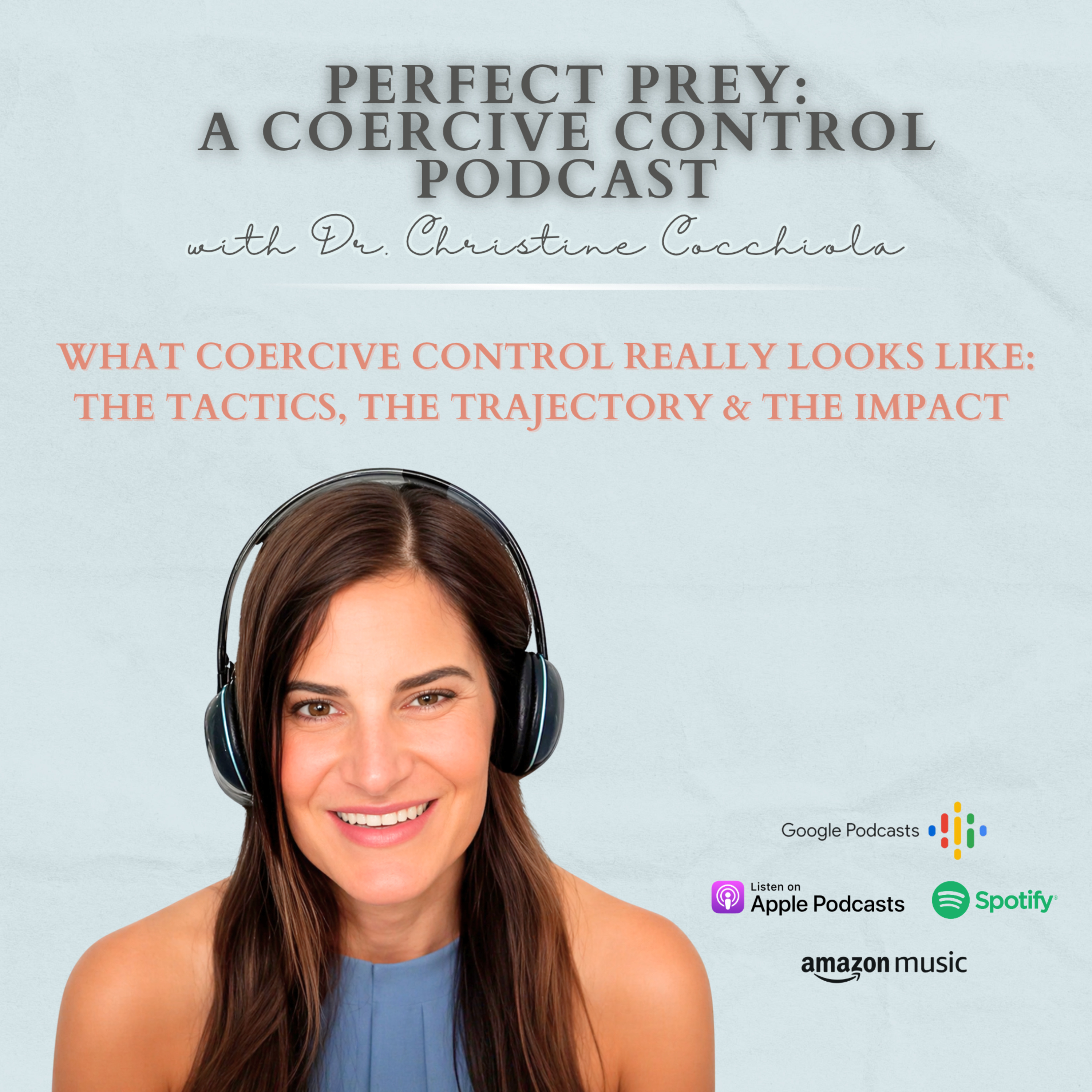
What Coercive Control Really Looks Like: The Tactics, The Trajectory & The Impact
Welcome back to Perfect Prey. In this episode, I want to go back to the beginning and talk about what coercive control truly means, because there is still so much misinformation and misunderstanding surrounding it. Coercive control is not simply another term for psychological abuse. It is a trajectory of behavior. It is about one person exerting power and control over another, gradually taking away their liberty, autonomy, and ability to make their own choices. Abusers don't typically begin a relationship by showing their victims the harm they are capable of causing. Instead, they use a variety of psychological tactics that can initially feel wonderful. Love bombing, future faking, mirroring, and other forms of manipulation can create a sense of connection and safety before the gradual process of diminishing begins. In this episode, I explain how these tactics develop over time, why survivors may not recognize what is happening, and how coercive control extends beyond psychological manipulation into financial abuse, legal abuse, and the weaponization of children. I also discuss why post-separation abuse is an extension of coercive control, why leaving can be such a dangerous time, and why we must understand what children experience inside these family systems. WHAT WE COVER What coercive control really means and why it is more than psychological abuse How love bombing, future faking, and mirroring are used as psychological tactics How abusers collect information and use it to gain control Why the gradual diminishing of a survivor's autonomy can be difficult to recognize How gaslighting, manipulation, and isolation intensify over time Intermittent reinforcement and why survivors may continue hoping things will change Financial abuse, stonewalling, and legal abuse How children are affected by coercive control within the family system The weaponization of children and the impact on their intuition and sense of safety Why post-separation abuse is an extension of coercive control Why survivors are at greater risk when they attempt to leave The connection between coercive control, physical violence, and sexual violence WHY LISTEN Understanding coercive control means recognizing the entire pattern, not just individual incidents of abuse. A relationship does not have to involve physical violence for coercive control to be present. The tactics may begin with experiences that feel loving and positive, but gradually develop into a pattern that diminishes a person's autonomy, agency, and sense of self. This conversation is also important for understanding what children experience when coercive control is happening within their family. Their feelings and instincts matter, and we need to help them recognize and understand what their bodies are telling them. If you have ever questioned whether what you experienced was really abuse, I hope this episode helps bring some clarity. CONNECT WITH DR. CHRISTINE COCCHIOLA Linktree: https://linktr.ee/dr.cocchiola_coercivecontrol?utm_source=linktree_profile_share<sid=406386c4-7be3-4e6d-b570-6da04bda212e TEDx Talk — “It is ALL Coercive Control”: https://youtu.be/gp2qByKOue4?si=U0Csy-kPrRmrB950 BOOKS BY DR. CHRISTINE COCCHIOLA Every Moment of Every Day FRAMED: Women in the Family Court Underworld If this episode resonates with you, please share it with someone who may need to hear this message. Subscribe to Perfect Prey and leave a review to help more people understand coercive control. You don't have to do this alone.