Skip to content
Artwork for Penny Wagers
FictionDramaSociety & CulturePersonal Journals

Penny Wagers

James Hart

Instead of analyzing myths and folklore, I prefer to help you walk through 'em. There are also essays about perambulations, poetry and other cool stuff. Come on in. The water's nice, so feel free to take your shoes and socks off.

pennywagers.substack.com
Play
  • 21 episodes
  • weekly
  • Avg 12 min
  • English
Counted on this page — what you have heard stays on this device, so it is not something the list can be paged by.
  • Monday · 19 min

    Live at the Washington Folk Festival

    Apologies for the sound quality; best that could be done on such short notice. All in all, the day’s events were wondrous and spectacular. I shared a ride to the venue with a pair of Morris dancers, some traditional African musicians and a guy with one sweet guitar. As a highlight, my daughter and I got to ride on the carousel together. Thing is, it’s an original: a real, 1921 Dentzel menagerie; the only surviving ride from the site’s amusement park. It features 52 hand-carved animals, all original and maintained by the national park service. There are very few of its kind. Beyond grateful for you lot here, and the folks who invited me to participate. As perfect days go, I can say I’ve had at least one. Get full access to Penny Wagers at pennywagers.substack.com/subscribe

  • August 17 · 8 min

    Young Perceval Sets Out for Camelot

    Fear not, friends, both the story and the accompanying essay are in the audio for this week’s post. I’m just on the road yet again, so while all is accounted for, it’s just found in the recording. Here’s something I’d love to hear from you about, though, if you can spare a comment: what are the knights like as you encounter them in the story? How do they look to you, and what are they like to be around? I’ve my own thoughts about that, but I’d love to hear from you. Get full access to Penny Wagers at pennywagers.substack.com/subscribe

  • August 11 · 22 min

    Hans, the Fisherman's Son

    I did a very strange thing some years back. I was still a kid if we’re being honest; about two years into my third office job. It was in a K street high-rise, or what passes for such in downtown D.C. The place screamed “beige open office layout,” and the journey home consisted of a crowded 45-minute metro ride followed by a 20-minute drive from the station. Usually, I’d sleep during the metro leg of the trip. But then The Feeling started creeping in. No real way to describe it other than to say I had ants in my pants. Some generalized anxiety that I had to DO something, and I had to do it NOW. Every afternoon on the metro, The Feeling would return. In a few days, I couldn’t even sit down while on the train. After about a week, I’d shuffle in place because the unclassified discomfort became unbearable. So here’s what I did: I started taking my lunch breaks in the building’s basement, in an old storage room its rusty door couldn’t keep me out of. I went down there because it was quiet, no one could hear me, and I still had cell reception. Then I went through the directory I put together of every single bike shop in the city. I called up a fair many before I found one that was still hiring for the season. This particular one wasn’t ideal. For one, it was located on the opposite end of town. Shifts also started at 3pm, which meant I’d have to leave at 2 to get there on time. But, it was a flagship store. And for reasons I couldn’t articulate, it’s what I needed to do. So I applied and started working. My new routine was a delicate operation. On days I worked in the shop, I would have to sneak out the side entrance of my office building with a gym bag. The side entrance sat near a Starbucks, which provided a bathroom to change out of, along with a seldom-used elevator down to the metro station. I’d be able to change into my alter ego and catch a train with minimal worry about being discovered by my office colleagues. There was still the problem of what would happen if anyone came looking for me between 2 and 5pm, but this was during the Great Recession and journalism’s total implosion. It was commonplace to visit the offices of co-workers and find their stuff had been cleared out. Those looking for me might just figure I, too, had been laid off. It was also likely to happen for real by the odds of it, so what was there to lose? Nine to two Monday to Friday, I was in my office. Afternoons, nights, weekends and holidays, I was working in the shop. It was a grueling schedule, but I saw some things. There’s a guy whose latest movie you likely saw this month who also got sized up by me for some shoes and pedals. Also helped a handful of Senators’ aides get kitted up so they wouldn’t get dropped by their bosses. One particular afternoon, my boss showed up in the store van, which we never used. He tells me to help him unload the back. I was thinking surplus tires or something. “You’re going to want to be very careful with what you pull out of there,” he said. The only thing back there was a bike. But it had the Presidential Seal on it. (The urge to ride it was overwhelming, but I never did.) Distance and understanding Part of the reason fairy stories no longer speak to us like they once did is because we insist on distancing ourselves from them. It’s hard not to do. If our great-grandparents heard about young Hans in the forest, they could feel the bugs buzz their ear as they followed the fisherman’s son into the shady dark. They’d smell the bear droppings that told them danger was closer than they’d wish. Today, we say, “oh yes, oh yes, the quintessential Call to Adventure, indicative of the western Hero’s Journey motif.” We think the distance provides understanding, but I happen to think it cheapens the experience. It prevents us from taking it seriously. Others might simply consider Hans and his journey a nonsense way to pass the time before the world was smart enough to invent Hulu. Either way, we’re loathe to leave the lecture hall or living room. There’s a lot Hans could tell us, though, if only we took him at face value and walked the woods with him awhile. For a start, he’s hungry, right? Hungry on a one-way trip to the wild elsewhere with no support. Passing up a meal when all future meals aren’t guaranteed isn’t a plot conceit. It’s taking a massive risk. Eating the fish would have been more than reasonable, given his circumstances. I notice, too, that no one applauded his conservation efforts after he threw back his catch. No pat on the back from his brothers, no thank-you letter from the World Wildlife Fund. No one even saw him do it. It’s seldom anyone witnesses the act of kindness that can help change everything. Speaking of his brothers, I’m way too much like the oldest than I’d feel comfortable admitting to. Petrified by questions I couldn’t possibly answer that keep me where I’m at. Oh yeah, I’ve had analysis paralysis alright. Our good friends Google and Siri make it easier than ever to slide into that. I also don’t think it’s a coincidence that LLMs end their output by asking you more questions. What do you make of the bird outside the abandoned castle? And how about the princess’s gift? Why was it so important that Hans keep it to himself? One of the reasons I love stories like these is because you could fill whole books ruminating on the images. I’d love to hear what you saw in it, or about your own jaunts through your particular forest. If you’ve had one or two yourself, let me know where they took you. Get full access to Penny Wagers at pennywagers.substack.com/subscribe

  • August 3 · 14 min

    Blood on the Snow

    My two favorite knights, meeting at last. As chivalric friendships go, this one’s highly irregular. Then again, you have to remember that neither of these two are O.G. members of the Round Table. You could call these guys part of the New Class; the Warriors of the Realm’s brat pack. One, the Hawk of May, is in all respects a city boy who grew up under the glow of Camelot. He had to make a great deal of sacrifices (and learn a few unkind things about himself) to step out from under his family name and become his own person. The other, whose name means “to pierce the valley,” well… he couldn’t be more different. What strikes me most is that as contrasting as these two are, they didn’t seem to see it. Ted Gioia has mentioned that in his former life, when his job required a lot of tense negotiations and international travel, it would take an average of five conversations to go from being seen as “The American in the room” to “Ted.” My experiences in Australia support this, as likely do so many of those who have moved to America from elsewhere. Sometimes, though, I suppose you just know. When I met my landlady in Oz, we both had our reasons for being a little cagey, but I had an early hunch we’d get along anyway. I still consider her my closest friend. This story’s also got another distinction: between the men of action, and the men of words and wonder. Sagremore and Kay are cetainly of the former. And don’t get me wrong, we need people like that. When the patient is choking and going into a seizure, you need people in the room who know how to use an epi pen, not write missives about the state of modern healthcare. But I wonder how well we understand the need for the wanderers and daydreamers, too. It’s all too easy to see what happens when those folks leave your camp. We mock their silly notions at our peril; they’re the ones who keep the fear, suspicion and finger-pointing at bay. The following wasn’t the first time I met George, although in the past he’s insisted that it was: it was a hot, late spring day and he bolted through the dorm, sweaty and flushed from hoofing it several blocks in the heat. “Does anybody have a bike I can borrow? I have my math final in 8 minutes and I can’t make it without a bike!” Sounded serious, so I unlocked mine and told him the combination was still set on the lock. Later, he said he made it on time and he passed. George and I would go on to have a great many adventures in school, many of which I cannot talk about as I am not as conversant about statues of limitations as I should be. About a decade later, we met up while he was at Walter Reed. (He was getting what was at the time the precursor to LASIK.) We drank, hung out and talked the old talk until very early hours. He reminded me about the bike incident. Hearing his stories, it seemed that his life diverged greatly from my own after college. Only one time did he speak about his military experience. “Man,” he said, “it’s so nice spending time with a guy who would never think to call me ‘sir.’” Get full access to Penny Wagers at pennywagers.substack.com/subscribe

  • July 27 · 14 min

    Saint Collen of Llangollen

    I called these “black sheep stories” when talking to Jon Murphy about them earlier. The religious elements can turn some folks away while the fantastical elements tend to make some Christians uncomfortable. I’m fully aware of this. Other strikes against them: they aren’t the Bible, they offer up something else besides moral takeaways, and their purpose isn’t as clear as a bulleted list. It’s not really my intent with these to be preachy, nor is it to bring wooey superstition through the back doors of belief. I do, however, think that Christianity has become a bit monochromatic out there on the digital wires, and it’s no bad thing to revisit abandoned voices. If our ancestors appreciated such stories, what does it say about us and our sensibilities if we find them threatening or ridiculous? Saint Collen lived in an Ireland divided amongst itself. The country by his time was overwhelmingly Christian in terms of belief, but its folk followed customs that long predated conversion. Priests would remind you regularly of Jesus and His Disciples; grandparents would tell you tales of Cú Chulainn and Manannán mac Lir. This tension is evident in Collen’s story. Speaking of, Collen didn’t get his wish entirely, did he? Despite his strong notions and insistences, it wasn’t for him to decide how rational the world actually was. When trying to conjure up older notions about autumnal holidays, we often say that our ancestors believed in a “thin veil” around the time of Halloween or Samhain. This is new language. To those in Collen’s time, there was no veil at all. Reality itself held a spiritual dimension every bit as real as what could be held in the hand. Our reality is no different if we’re honest about it. When viewing children belly-laughing over pizza and soda at a birthday party, you don’t need a PKE meter to notice that there’s love present in the room. It’s also no mere metaphor to say that there’s grief darkening a house that had just lost a loved one. I recently visited my folks down in their retirement house. After a serious amount of searching, we were able to find a collection of family photos that spanned the years before my birth to the early 2000s. My mom insisted they were physical things that only took up weight and space in the closet. Yet she still kept some, and held some to her heart as she came across them in the pile. To me, those sentiments carried a weight every bit as real as the glossy paper they were printed on. Earlier, when we were home, my daughter was looking at some polaroids she had taken. She didn’t find them particularly interesting and wanted to throw them away. I told her that she’s going to want to hold on to those. “Photographs get funny over time,” I told her. “They become more valuable the older they get. You’re going to wish you had those as an adult.” Nothing in life is unilateral. We never get to decide such things anyway. Get full access to Penny Wagers at pennywagers.substack.com/subscribe

  • July 21 · 1 min

    Back on the Wagon

    Sometimes you don’t want to do it: You’re tired and just want to rest; The ideas haven’t come and inertia has won, So you sit there alone and depressed. But that’s when you need to remember: The magic won’t happen by chance; It’s for you to find—and it’s rude to decline When the universe asks you to dance. Every child has known God, Not the God of names, Not the God of don’ts, Not the God who ever does Anything weird, But the God who knows only 4 words. And keeps repeating them, saying: “Come Dance with Me” —Hafiz Get full access to Penny Wagers at pennywagers.substack.com/subscribe

  • July 13 · 15 min

    The Enchanted Quill

    Still down the old dusty trail this week, but technological limitations aside, I wanted to share with you this story. I’ve been thinking about it quite a bit as of late—likely due to so many confluences between my current events and those of the story—but I’d be interested to hear what it meant for you. Please let me know, and thanks for bearing with me these couple weeks on the road. Get full access to Penny Wagers at pennywagers.substack.com/subscribe

  • July 6 · 7 min

    Saint Sisoes the Great

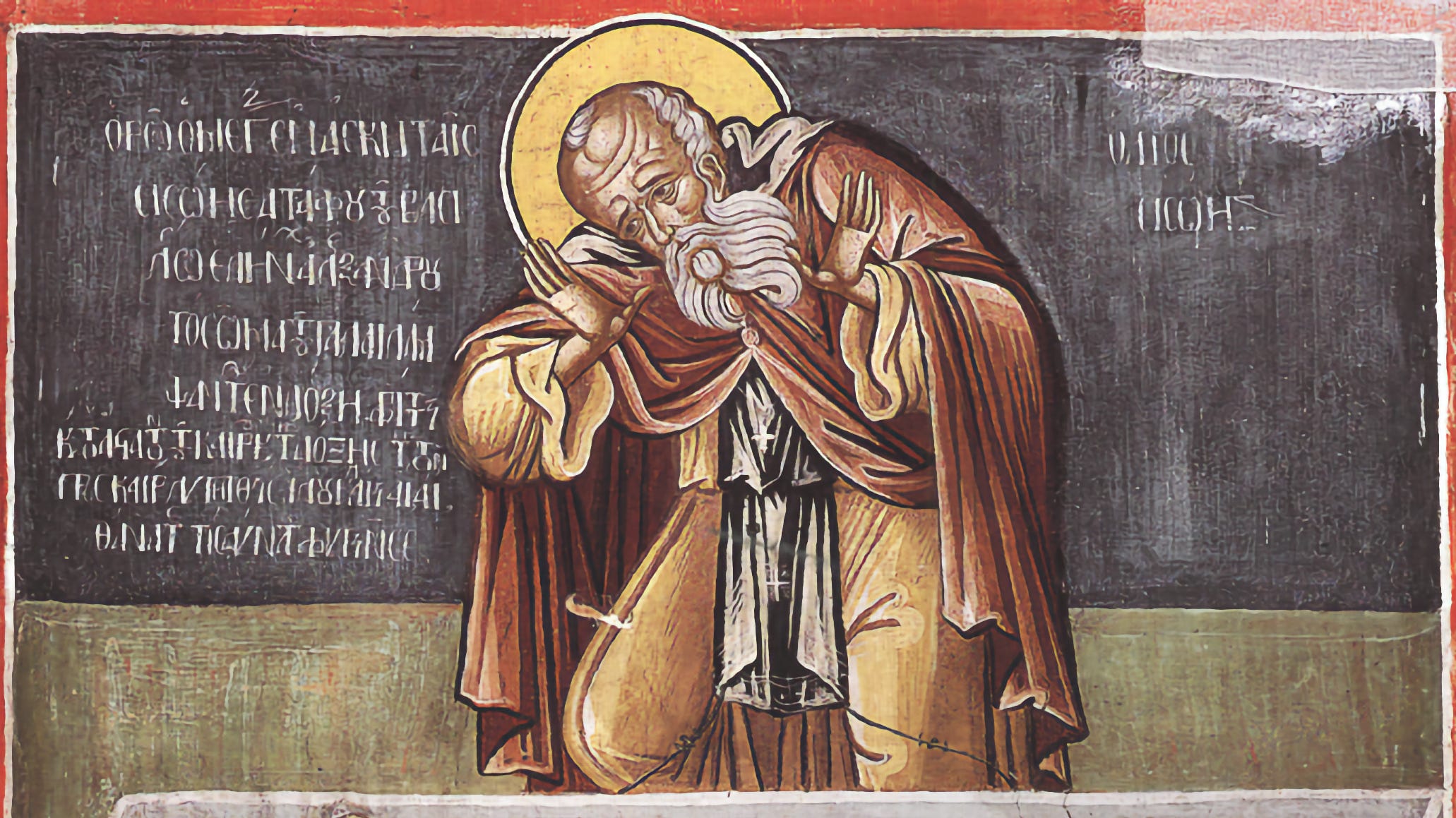
    Yeah, bush souls. Ever met up with yours? If you have, you’re lucky. Truth is, the modern world has forgotten how. Never mind St. Anthony’s cave; we only get about 20 minutes to ourselves a day if BLS numbers are to be believed. Meanwhile, we spend several hours daily staring at magic rectangles. As a result, ours is a culture full of people who are not quite themselves. Let’s try to define that, then get back to Sisoes. He might be able to help us fix this. Seclusion & Society Steely-eyed Patrick would rise alone before dawn and greet the day “come hail, rain or snow.” His monks would climb mountains barefoot, traipse through old-growth forests and kneel on the moss beneath ancient rowans to recite the psalms. They’d row to the Hebrides and the Faroes and spend hours, days, weeks at a time in total withdrawal. Theirs was a life of constant shifting between the shoulder-tight claustrophobia of communal living and the remote seclusion of the wild. I’d like to make a case for how important this is as a practice. In particular, there are three things we can find out there that are hard to come by in our apartments, houses, offices and coffee shops. Psyche, Spirit and the Bush Soul The first is our psyche. I mean the internal stuff: following the downward path toward memory, shame, identity, grief and regret. Psyche is all about confrontation. I think most of us would rather get a root canal from a rusty knife than make that trip. It’s part of why we reach for our phones at night, turn on the Bluetooth speaker in the shower and fire up our favorite podcasts on our commute—any distraction to keep from “dwelling on things.” Even worse, sometimes we treat what we find down there as embarrassing. The past was the past, we were stupid back then and there’s no point in dragging it back out again. None of that is healthy. It’s very important to hear our psyche out and be brave enough to regularly square up with her. If we don’t, she’s just going to come back later with Mid-Life Crisis, Grief or some other unwanted houseguest, and we’re not going to be able to get rid of them so easily. Far better we set aside time and space outside our routines to give her our due attention. The second thing we can find out there is spirit. In some ways, spirit is psyche’s opposite. While psyche leads us inward and downward, spirit goes up and out. Where psyche brings confrontation, spirit brings connection. The unity you feel staring into early morning dewdrops. The fleeting understanding between you and the doe you meet in a spring forest. We can’t participate in these things just by talking about them. The third, “bush soul,” is a term I’m borrowing from John Moriarty. In American culture, we know who we are in the office (even if some of us don’t like that version of ourselves very much). We also know who we are among our friends, and which part of us comes home to our families. But who shows up after several days of having the trees and the bugs as our only companions? Who are we and what are we like when really, truly, no one is watching? Sisoes the Great knew who exactly who he was. But that came from knowing who he was on the mountain, and on his bed. He spent 72 years getting to know the former; I don’t think we can claim the same level of self-knowledge if we’re investing only 20 minutes a day. That’s not nearly enough time to confront psyche, reconnect with spirit and rekindle our bush souls. For that, we need a lot of space, silence and stillness. Get full access to Penny Wagers at pennywagers.substack.com/subscribe

  • June 29 · 7 min

    The Water Nixie

    I escaped from my own nixie just this week. Made moves to, anyway. Gave notice that I would be leaving my well in a few weeks’ time and that neither flax nor bucket nor blunted axe will ever be touched again. I just don’t want to heft those things anymore. And I don’t want to take them with me. What that means for me will be different for you, of course, so let’s not muddle the message with Jungian archetypes, imaginal symbolism or any dry treatment of mature ideas. I’d rather we talk about what it means to climb out of the wells that trap us. Let’s understand this first: The siblings didn’t sign up for their predicament. This wasn’t a dare and they weren’t exploring the well as part of an urbex adventure. They slipped and fell. It was an accident. Or was it? I’m no expert on nixies, but I find it suspicious that this one decided to set up shop in a location ideal for capitalizing on others’ missteps. It’s one of many details in this story I wonder about. No telling how long those two were down there in that well. What we know is that eventually, the kids realized that they had enough. It was time to bust out. Isn’t it weird that this evil, maligned, mythological nixie goes to mass on Sundays? I picture her wet, scaly face covered up in a bonnet, mouth hissing between her jagged teeth as she says, “peaccccccce be with you.” Some aspects of the universe remain constant, it seems, fairy tale or no. What stops me in my tracks, though, is the escape. The nixie chases the kids. It’s not enough to scramble out of the well—the trouble you found there is going to follow you no matter where you go. Unless. Look at what the kids leave behind: a brush, a comb, a mirror. These aren’t traps or roadblocks as we would understand them—they’re tools of appearance. Items to attend to one’s personal and social sense of self. How interesting that these are the things that must be sacrificed to keep past oppressions from catching up with us. The mirror, of course, is the most potent, the one that finally does the job. Reflection can’t be so easily navigated by the shadows that mean to stalk us. There are still plenty of images in the story that elude me. I wonder what it means for the girl to both start and finish the laying of the obstacles. I think it has something to do with the jobs the nixie foisted upon them. That’s the great thing about old stories, though; they’re never fully done counseling you. The key is to not try to think your way through them; they aren’t to be treated as crossword clues or some kind of literary criticism mad libs. How the images spark your imagination is really the thing. What each scene looks and feels like, and what suspiciously sounds like timeless truth whistling through its teeth to get your attention. Anyway, here are a few snapshots I took this past weekend, following along Sister and Brother’s escape route. Who would’ve guessed they’d send me through the Blue Ridge Mountains? Get full access to Penny Wagers at pennywagers.substack.com/subscribe

  • June 23 · 10 min

    St. Ciarán and the Bell

    The various Lives of Ciarán of Saighir share varying degrees of detail and information, but one thing I feel fairly certain about is that Ciarán’s bell was very small. In his time, it would have been relatively easy to keep it handy and wait for its announcement that you have found the Place You Were Meant to Be. So small, it would have been easy to lose. These days, our own bells have to compete with modern equivalents. And the former are terribly overmatched. Modern life moves a million miles a second. We’ve found a way to completely deprive ourselves of the stillness and quiet we need to properly assess any present moment. When I think about this, I’m often reminded of the Ents, and Merry and Pippin’s impatience with Treebeard. We think that scene is funny because Treebeard talks so slowly. The joke, however, is on us. Sit yourself down underneath an old-growth oak or maple and wait for it to speak and you’ll see what I mean. Theirs is the proper pacing. In addition to the bell, I also think about the foundation Ciarán was laying. Ciarán likely didn’t complete any feasibility studies, go through public facilities ordinances or submit any application to a planning board. He went where God sent him and enlisted the help of animals. Aside from the concrete, this lays a very different kind of spiritual and communal foundation that today I think would be very hard to replicate. These stories are sometimes depressing to me, in a way. I wonder the extent to which we’re even capable of navigating the world in this way. To do so would do us a world of good, but our pocket rectangles have done wonders for our myopia and solipsism. At the same time, though, I’m reminded of what Ciarán and his contemporaries did to combat their own distractions. They didn’t live in the monastery, nor did they live in the forest. For them, proper living involved a back-and-forth tension between Severance and Return, never staying too long in one or the other. That’s something I think we can all manage to practice. Get full access to Penny Wagers at pennywagers.substack.com/subscribe

  • June 15 · 12 min

    Lomna's Head

    (This story may seem tragic or disturbing, but please know everyone involved speaks of it fondly. It’s just one of those things.) A long-distance runner, my dad used to get up at 4:30 every morning to run 17 miles. Then he’d shower, make coffee, eat his two bran muffins and wake me up for school. More than a bit Type A, my dad. His running route would bring him by our new neighbors. He’d pass by their house a few times as he ran his circuit. Never once did he see them stir. During more regular hours, they never came out, never introduced themselves, never so much as waved over the fence. Then my dad makes his coffee one morning, and everything that follows he remembers forever. He sips his cup by the kitchen window, then dazes out onto the street and Aaron North’s woods beyond it. He then sees something come up the hill to his left. It’s someone from the neighbor’s house. A late teen or early twenties kid with no shirt on. Well actually, he’s using an inverted t-shirt as a kind of hair-tie and he’s doing this kind of slow-motion exaggerated run up the hill. Very Chariots of Fire. In his right hand is a samurai sword. The kid runs over to our next-door neighbor’s house. My dad moves over to the living room windows to watch him scale our neighbor’s deck, assess the bay windows, then slash them into glitterdust. He then crosses the threshold of the window, cuts himself quite bad but doesn’t so much as flinch, and then collapses on our neighbor’s living room couch. Our neighbors had a son with Schizophrenia. He was off his meds but no one knew it. The theory was that our neighbors were keeping to themselves out of some combination of fear and shame. They were understandably mortified to learn what happened. My dad and our neighbor were just glad no one got permanently hurt, and the whole thing got our neighbors out of hiding. We never became close, but they started waving to us from their front lawn after that. The language surrounding folks like my neighbor may make it sound as if ours is a culture of compassion, inclusivity and understanding. But I’d politely point to our daytime clubhouses for those with cognitive impairments—always in rusted out industrial parks, never near the center of town. Our nursing homes and their epidemic of neglect and loneliness. Our neighbors, who were so cagey about telling us about their son. It’s all downstream from a modern cultural blind spot. Ours is a society always looking toward Winter North. You’re only as valuable as your output. Non-producers are a bit of a burden, a bit of an eyesore. That’s why I dislike the term “special needs.” It frames people in terms of the liabilities they impose, not their value. In older Celtic folk cultures, they would sometimes use terms that meant something like “touched.” As in touched by The Gentry, the People of the Hill. The connotation was fuller and more complicated than our own. To be touched was mostly a curse to be pitied, but not entirely. After all, things happen during encounters with the Fair Folk. Those involved are never quite the same. They carry a bit of the Otherworld about them, so it’d be to your detriment to dismiss them entirely. The Welsh knew all about Myrddin, the battle-mad Man of the Wood who divulged prophecies to apple trees. Best not dismiss what can’t be immediately understood. Older folklore used terms like “touched” or “away with the fairies.” In Christian Ireland, another euphemism started cropping up: duine le Dia. Person of God. Call them superstitious if you like, but for my druthers, I prefer their starting point to our own. As for Lomna’s story, I have a hard time with parts of it—especially the events at Coirpre’s camp. I can’t say that I know exactly what it means to feed a severed head some of your fish, but to do so would require giving time and attention to something that made me uncomfortable. Something possibly difficult to look at if I wasn’t used to it. Over the weekend, I was lamenting the state of my voice at length to my wife. I mean, c’mon, it’s been four weeks at this point. I’ve never heard of anyone with a permanently altered voice after a minor cold. My wife said that unfortunately, it’s been known to happen. I asked her if this was likely the case with me. She said she didn’t know. I nodded, then stepped outside to take the trash out. The clouds in the west were darkening and coming in fast. My own next-door neighbor caught me looking at them. He was a good kid who’s had to overcome a couple traumatic brain injuries. (I don’t know the nature of them; this is just what he told me the first time we met.) I pointed at the clouds. “Think it’ll rain soon?” He didn’t follow my finger. Just stared straight at me and said, “Momma says it’s on God’s time. Why try to hurry it along? It’ll come when it comes.” It no longer sounded like we were merely talking about the weather. “Your momma’s a smart lady,” I said. “This is just a shot in the dark, but you don’t know the significance of a speckled white-bellied salmon by any chance, do you?” Get full access to Penny Wagers at pennywagers.substack.com/subscribe

  • June 8 · 5 min

    Perceval on Turtle Island

    He galloped toward the forest’s boundand rode in on a path he found,where there were hoofprints, freshly madeby horses passing through the glade.“This is the way the people took,the ones for whom I came to look.”He galloped through the forest fast,not stopping while the trail would last.—Perceval by Chrétican de Troyes There’s nothing for it but to strip down naked and make an assessment. It would have to be fast. Who knows how much time I have before some couple or unsuspecting family happen across me in my birthday suit, writhing around in the sand like some frantic chinchilla. I start laughing as I slap my shirt and turn it inside out. Sitting atop a bed of ticks was absolutely not on today’s bingo card, but games change quickly out here. The plan was just to Go Out again. Venture out past the strip malls to meet back up with Percival and the Fisher King, like I’ve been doing lately. That may have been my company out here, but I’m nowhere near Brocéliande. No, this is Thunderbird country, my friend, Turtle Island is Coyote’s place. He’ll pull the rug out from you every time. I’m glad I’m laughing at this. It’s not something I would have found easy to do just a year ago. Ambling along Wonder Mountain amid all manner of wild and icky weirdness has made me more understanding of nature’s surprises. Black widow babies crawling around your site will do that. Truth be told, I’d still rather be out here, ticks or no ticks. I’ve been having a hard time with the idea of Return as of late. I mean, for goodness’ sake, why? What is there to return to? Watching my third career implode across the globe? Environmental degradation at the hands of linear thinking? A culture so obsessed with maximizing its outcomes that existence itself has become a utility equation? Horchata Frappuccinos? That’s all rather one-sided, of course. People are meeting in person more. Self-checkout lines are withering, vinyl and flip phone sales are up. Humanity seems to be making in-roads. It’s just that I seem to be able to tolerate only so much participation in my own time and place. Percival spent his adulthood searching for the old wisdom necessary to heal the Angler. It wasn’t nostalgic romanticism for him, either. …He also did a ton of dumb crap, too, but I think sitting along a tick-infested shoreline is a blunder unique to me. Clothes back on and just a few steps back up the trail, I pass two women on their way to the shore. See? Look at that, I knew I didn’t have much time. Risking indecent exposure was still the better option over Lyme disease or alpha-gal. Some retired forester who now turns wooden bowls for a living told me we live in the largest alpha-gal hotspot on the coast, perhaps the continent. He told me it wasn’t always like this. I told him that I remember when it wasn’t. We’re both older than Galahad in that way. For him, the land was always blighted. However, he knew it was the Angler’s wound that so scarred the world. To heal the man was to heal the land. That’s something I wish we still understood. Mind retraining. That’s a big part of it. It’s why John Moriarty left his university teaching track. He felt that he could no longer prepare students to thrive in an environment he no longer believed in. He had to retrain his brain, he said, retrain it away from his compartmentalized, productivity-first, outcome-obsessed European education. It starts with the mind, perhaps, but it’s got to reach body, spirit and soul, too. That’s what Moriarty said he wanted, to walk back into the woods and find his bush soul. I find myself trailing just behind him on occasion, following paths away from town and toward everything that was there before it. I can’t stay out here, though, as much as I think I’d want to. Percival never stayed in the forest, nor did he kick up his feet for too long in Camelot. Tarry not idly by the chapel perilous, good sir, the work of the road lies before you. After all, the names of Percival, Vasilisa the Beautiful and Fionn mac Cumhaill come out strange in our mouths today. We’ve forgotten the very sound of the Primum Mobile, the gears that keep the spheres aloft. If all it took to true our cosmic wheels was to share their names a little, wouldn’t you do it? Wouldn’t you do what you could to share them? Stories. That’s what’ll heal our culture’s dolorous stroke, I think. Stories heal the man, stories heal the land. I walk up the hill and head back to the car. Get full access to Penny Wagers at pennywagers.substack.com/subscribe

  • June 1 · 10 min

    Saint Winifred's Beheading

    “Where’s your head at?” This is something my father asked me all throughout my childhood. Almost always when my head was somewhere it shouldn’t be. Continuing that line of thought, I’d argue that entire dissertations could be built upon contemplating the significance of just where exactly Saint Winifred’s head is at. Consider the chase. Caradog’s on the horse, sword in hand. The outside threat closes in with greater speed and force, as it often will. And Winifred was almost inside the church, wasn’t she? Her study and formal devotion to a life of faith was nearly complete. She almost made it fully in. It matters that her body collapsed just at the threshold while her head landed within the church. Recall that to the medieval Celts, the head was connected to the soul, the life force, the spiritual power of a person. So, Caradog’s outside. Winifred’s head landed inside while her body remained beyond the door. Beuno and the community are inside, and it’s from inside that they prayed for her. The well and Caradog’s fate are interesting too, aren’t they? To the Welsh and the Celts, spirituality was not confined to our thoughts, or some internal life of the mind. Fidelity to the Creator influenced creation itself. That’s why I’d argue that Winifred’s story is not merely a virtue anecdote. Her Wales was a world of mutual relationship among people, the earth, spiritual devotion, ancestry, stories, ritual and community. There’s much in our own present we’d do well to revive ourselves. Get full access to Penny Wagers at pennywagers.substack.com/subscribe

  • May 24 · 15 min

    Robin Hood on Whitsun

    Happy Whit-Sunday! When I was growing up, Memorial Day marked the official start of the crazy season. The lake would be full-on packed, my car’s A/C would break down and there was no way I’d not be getting overtime every week until Labor Day. This one, though, had me thinking of the other holiday this weekend, and a story that I like to return to in lieu of older community gatherings. I’ve a better audio version of this that’s far more polished if you’d like to check that out. Otherwise, I hope you enjoy this during your weekend comings and goings. Get full access to Penny Wagers at pennywagers.substack.com/subscribe

  • May 18 · 9 min

    Lugaidh's Son

    Hear the story first, before we get to what’s below: There’s an old Anglo-Saxon word that would be helpful in a conversation such as this. We don’t know it anymore, but you can find it in the first lines of Beowulf. Þrym. We say it means something like “glory”—that’s how it’s often translated, anyway—but the real meaning is much harder to pin down because we don’t use words in the same way we once did. Instead of treating it as a concept, it’s more helpful to consider it a kind of feeling. Þrym is the sensation you get standing feet away from an entire army marching into battle. It’s also something you might feel while looking up at the Sistine Chapel. Ever meet a celebrity you were a huge fan of and get star-struck? That’s þrym for you, too. Fionn mac Cumhaill certainly had þrym; there are plenty of stories that bear that out. Me? Eh, I’m not exactly Lugaidh’s son (although in my younger years you’d probably have a hard time telling us apart). I’m more like the guy walking up the hill to talk to Fionn about Lugaidh’s managerial style—the one so unassuming and non-central to the tale that he doesn’t have a name. Not a complaint, just an observation. There’s a lot of peace in freedom in being that guy. I often wonder what I’d say if I were Fionn, though. What I might tell my younger self to help him improve his aim a little. If it were me and I had the opportunity, here are some things I’d probably say: * You’re not wrong in your assessment of the world—it’s just that you only know half the story. There are reasons why things are as they are, and no one’s the villain of their own story. So speak to the exiled hero in them; ignore the ever-present villain. * Faith doesn’t have to be an intellectual exercise. Columba got neck-deep in freezing water to recite the psalms. People thought he was a little nuts perhaps but hey, look at him now. * Your grandmother wasn’t quirky, she was right. Know the names of every flower in your yard. Regarding the animals and the birds who frequent your home, give them your own names and regard them as your neighbors. Learn how to listen to them. * This world is long on reason and short on intuition. The latter you will need to work on. It has important things to tell you that can’t be learned elsewhere. * You’re going to want to define yourself by the things you love the most. Pursue them by all means, but they can’t ever be an identity. Humans live in the Contraries, not within their definitions. * Your world lives almost entirely in Winter North with the occasional Summer South vacation. But being a human being requires learning the lay of Autumn West and Spring East. Your culture won’t take you to those places. (There’s no money in it.) * Walk barefoot more often. * Practice starving your ego. It’s helpful for getting things done, not for empathy or understanding. (Don’t worry, it’ll always come back.) * If you’re looking for some home decor, might I suggest a sign in the mud room above the front door that says “don’t judge and stop worrying so much.” * Architecture lies to you. There is no “In Here” versus “Out There.” It’s all Out There. As Gary Snyder tries to tell us, the mountain is sitting past the forests and the hills. The mountain is also hoarding acorns on the sidewalk. The mountain is pumping gas. Get full access to Penny Wagers at pennywagers.substack.com/subscribe

  • May 11 · 8 min

    Saint Melangell of Powys

    Late Wednesday afternoon was not a time for phones or wallets. The cottonwoods were already shedding, sprinkling the air with motes as weightless as the late day sunlight. You can’t catch their linty stipples; snatch as fast or as stealthily as you like, they just pass around and through your fingers on their descent toward the creek. The whole span of the water was awash in their fluid bokeh. I don’t think I was ever aware that locust trees could smell like this. Had they always? I leaned closer to a flower to check if it was indeed their fragrance I was picking up. Their sweet traces followed me up the path as I shuffled toward the Detour. Mr. Wendell was up there, making the neighborhood rounds on his lawnmower. There’s an easy way to tell the town locals from the part-time renters and corporate homeowners: the latter two would always hire an overpriced, underpaid landscaping team to cut their grass while the locals called Mr. Wendell. He saw me and gave his standard two-finger salute as he rounded the next corner. I took the lane leading off the Detour so I could take another look at the Narnia lamp. Some people think Lucy met Tumnus by a lamppost in Aslan’s land, and certainly that’s the case, but it’s here, too. Just past the road that will take my daughter home from school. The lamp looks different in the mid-day light. I tell my daughter to go visit it after the sun sets. The time to check for fawns is dusk, I remind her, always in the dusk. The forest was as welcoming as always, and I was thankful for that. I was, however, having trouble keeping myself to myself. The prior insanities of the day kept encroaching onto the lane, insisting they walk with me. Sometimes that’s okay. It’s important to let them have their say from time to time. But they’ve been altogether too chatty as of late and I was here to seek some solitude. I didn’t get it. In my first few crumpled leaf-brown footsteps down the trail, I came across a robin. I love robins. Their unfinished songs remind me of early spring mornings in the house that grew me up. I’d wake to robin calls and look out my window. Watch the bright spring sunlight throw a kaleidoscope across the dewy leavings of the previous night’s frost. Robins were the sound of cold kitchen mornings and my mother smiling at the window because it was Saturday. The robin doesn’t fly away, though. He forages in the leaves, takes two steps forward and stays there. I take a step myself, careful to give him space. Again he picks at the ground, hops forward along the path and again I follow. It goes on like this for ten yards or so. Twenty, then thirty. He turns his head, then starts again, always down the path and never off it. Sixty yards becomes a hundred. He and I share the walk for the better part of a mile. He only flies away when we reach the terminus: another robin screeches and reminds him of their avian property lines. My friend flies toward the water and I hope he knows that I owe him now. We’re travel companions, he and I. Some say Saint Melangell’s story is just an allegorical teaching tool meant to explain her spiritual significance and based on a Welsh fairy tale. It’s not meant to be taken literally. What I say is that the more I encounter this kind of flat attention, utterly insisted upon throughout our world’s housing developments, strip malls and offices, the more I understand why she sought her green martyrdom in the first place. Get full access to Penny Wagers at pennywagers.substack.com/subscribe

  • May 4 · 7 min

    Fionn and the Old Man's House

    As I mentioned at the start, this one’s a real beauty of the Fenian Cycle. So much to unpack in just a few short minutes. The story does of course take place in an older Ireland, before Christianization. Some folks might be quick to judge the story on those grounds. I understand the impulse, but some things I’d point out before we toss it out: * It’s precisely because of Irish Christians telling these stories to themselves over the years that they were able to survive to the present day. They obviously saw a value in them beyond entertainment, or like other entertainments, they’d have been forgotten as soon as we figured out television. * These stories span the length of Christianization in Ireland. In fact, they tell that story explicitly. Ossian’s discussions with Saint Patrick are hard not to read as a discussion between Pagan and Christian Ireland, trying to get to know one another. Honestly, I wish I was privy to what they discussed when I was younger; it would have helped clarify a lot of confusion with questions I had myself. * For this story, as with any good poetry, the images are the thing. My master’s advisor warned us once that there will come a day when you realize that who you see in the mirror is not the fullness of who you are. That you’re going to wonder where those other yous went. If they’re still in there somewhere, behind who you’re facing now. The first time that happens is roughly how this story makes me feel. For folks of a Christian persuasion, it’s my personal feeling that belief doesn’t hide us from that moment, but puts it into a better context. Get full access to Penny Wagers at pennywagers.substack.com/subscribe

  • April 27 · 18 min

    Saint Ciarán of Clonmacnoise

    These stories likely seem silly today. They’re not real, right? Like, did they really happen? What does the historical record say? My answer to these aligns pretty closely with why I’m sharing them. There’s a lot we have to untangle first, though. For my part, I’m going to have to over-extend a bit, and tread a little past where my toes can touch. I hope you’ll bear with me; I think these are places we all really need to go, and the sooner we wade out into the water, the better. So let’s suppose a few things, okay? Let’s use our imaginations and suppose a few things. The Trade for Artistic Clarity Let’s start with the Council of Trent, because Back to School is still funny to me after all these years, and also because some interesting things started to happen afterward. The Church was doubling down on its defense of sacred art and stories—and let me tell you, they went nuts over the Baroque stuff—but there was also a narrowing of what might be called “artistic possibility”: clearly religious artwork was ay-okay, but there was also a call for bishops to remove art they felt was confusing in its message, borderline superstitious, inappropriate, or unclear in its purpose. Were these always clear calls to make? After all, many great stories and works of art are more embodied than they are clear. Some are mysterious, profound, provocative, fun, and contain elements of truth that cannot easily be codified. When demanding clarity, these are the things that can get left behind. Now let’s suppose something a little more heavy: let’s try to pinpoint where the world shifted on its axis. The Trade for Reason We’ll move up to the late 1800s, when the Age of Reason was bringing us into the Modern. Pope Leo XIII starts freaking out over what he saw as false philosophical conclusions spreading through public and private life. (Hardly the first time this has been a problem; philosophical sophistry was old and problematic even in his time.) So the Church decides to fight fire with fire. Leo writes Aeterni Patris, urging Catholics to return to scholasticism and “the golden wisdom” of St. Thomas Acquinas. This brings the Church into a more organized, rational, and definition-focused approach to faith. This didn’t happen in a vacuum. At the time, the entire western world was bringing itself into a more organized, rational and definition-heavy approach to how it perceives reality. People demanded proof, records, documentation and a scientific approach to navigating the world. Ideas that could be standardized, defined, measured and repeated at scale became the focus. In turn, the Church continued to spread, and we were able to achieve wonderful things like steam engines, latticework skyscrapers, X-rays and other advancements that helped humanity to flourish. But let’s suppose there may have been some casualties in this universal march toward progress. Inside the Church, some of the first to go were wakes, pattern days and local mysteries. These weren’t so much sworn off so much as ignored because they were seen as embarrassing. Embarrassing because they were hard to defend to a public who became increasingly trained on scientific thinking. This led to saints shifting in their roles. Instead of reminding us that we inhabit a vivid world of mystery, spiritual relationships and sacred landscapes, saints were now used as a safe model for how one should behave. A lot more could be said and suggested about the Church’s further trajectory and its parallels to the rest of the west, but let’s leave them for now and move over to post-war America. The Trade for Space Suppose that prior to the Great Wars, rural and urban life enjoyed overlaps that today are difficult to find. In prior centuries, urban parishes weren’t just a group of folks who all went to the same place on Sundays. They were a community brought together by a connected neighborhood, a school, a government and an ethnic identity. Out in the sticks, you had much the same. Village festivals were attended by all who lived there. People passed their parish on foot when they went to the market. They knew the name of the carpenter who constructed the doors. For these folks, the stories about their saints weren’t just some moral story—locals could show you the very spot where their great-gran told them Ciaran first met the stag. You could likely speak to Oengus’ descendants who lived not too far from Ciaran’s field. But in America, two things happened. One of course was immigration, which saved countless families from war, famine and economic hardship, but it also severed their ancestry from their sense of place. Kids could no longer point to the place where their great grandparents built their home. And then there came post-war American housing. Suppose that in addition to being kitschy, the suburbs created a radical new way to live. In exchange for bigger houses and spacious yards, we also became spread out in ways we didn’t realize. The layers of daily life—parish, watershed, job, school district, migration routes, voting districts and the land where our food came from—that were once stacked on top of one another were now separate and exclusive. People start driving more to reach these layers, and parishes are now chosen out of proximity and convenience. On Sundays, parishioners sit beside strangers they don’t work with or live beside, and their kids go to different schools. They don’t know one another beyond being a face in the pew. What is a story about Saint Ciaran to them? They weren’t born in Ireland, their parish isn’t their neighborhood and after mass, there’s the grocery store to drive to and soccer games to attend. So, suppose we stop telling saints’ stories on pattern days. Suppose we stop with the pattern days altogether. Radically Old-Fashioned Are these stories real? Did they actually happen? My answer is that these are precisely the kinds of questions a recipient of these trades would ask. But for me, they don’t take me anywhere helpful or interesting. Not everything can or should be approached through reason and rationality. I think we lost a few things along the past few centuries. I also think we continue to lose something when we insist upon reason inside domains it doesn’t serve. Call me old-fashioned in the medieval sense, but I’d rather ask these: What kind of holiness is going on here? What is being shown to us? Where do we go to meet the kind of good these stories inhabit? And how do we keep it going in a world like ours? Get full access to Penny Wagers at pennywagers.substack.com/subscribe

  • April 21 · 20 min

    Fionn and the Raven

    Check out more of Joe Heaney’s storytelling on his website. I, too, have met the Short Little Man. He didn’t look anything like Fionn’s companion, of course. Things are different in North America. It was a day or two before I moved to Australia. One thing I still needed to do was drive back to my office and pick up my bike. (I built it myself, so no way was I going to abandon it.) It was a Saturday. I never visited my office on the weekend, which should have put me on my guard to begin with. Outside of routine, your office really isn’t your office. Once-familiar places can become haunts for the surreal and unexpected. I parked half a block from the entrance. All I had to do was walk up the hill, use my card to open the garage, get to the bike rack, walk my bike to my car and drive off. It should’ve taken about four minutes. I was busying myself looking for quarters for the meter—they still used change then—when he walked up to me. Started in with the whole dance that everyone who works in D.C. is familiar with. Excuse me do you have any money or spare change for some food and some etc. I absently replied with something about only having a card on me and waved him off. He was having none of it. He planted himself in front of me, looked me straight in the eyes and said, “Come on, man, I’m just trying to get something to eat!” “Yeah?” I said. “Whadda ya want?” Without skipping a beat, he said, “A burger.” Right behind him, over his shoulder and across the street, there was a Five Guys. Something you should know about Five Guys burgers: They’re a big chain in America now, but they started in D.C. I can’t vouch for the ones you’ll find in strip malls in Ohio, New York or Pennsylvania, but the D.C. Five Guys are something else entirely. Never frozen, perfectly sourced patties that come with fries freshly bathed in peanut oil. Not with a stick could you ever beat those burgers. You can’t really argue with a guy who knows what he wants. So we walked across the street and we both had some Five Guys. I remember the confusion on the cashier’s face and a couple of stolen glances by other customers, but other than that it was a fairly normal affair. He didn’t order anything extravagant and neither did I. I don’t remember whether we got our tray of peanuts. Then we ate and went our separate ways. I like this story for a whole lot of reasons. Not least because it’ll allow you to put one over on the Film Studies majors out there. “It all started with Seven Samurai, did it? Well, listen to this!” It also reminds me of the story of the Road to Emmaus. Recall that Fionn asked God to guide him before he even stepped out the door. It’s eye-opening, what that can truly entail. Get full access to Penny Wagers at pennywagers.substack.com/subscribe

  • April 14 · 7 min

    Snake Woman's Treasure

    Weird story, right? Was the woman some kind of witch, or princess under an enchantment? What finally got into the bones of the old man to take to the forest that day? What I like about the story is that, short as it is, it doesn’t accommodate such questions. Instead, it invites you to practice what a Disney animator friend of mine calls confusion tolerance. Part of that is knowing that sometimes you have to ask different questions. For me, the story has a lot of time imagery to it. An old man getting older. A deadline that coincides with the shift between maximum potential to waning energies. And strange prognostications about the future told from nature’s perspective. The story reminds me of what I find myself remembering each time I spend a serious stint out in the woods: modern life has put us into orbit. We’re going a million miles an hour standing still. Get full access to Penny Wagers at pennywagers.substack.com/subscribe

Showing 1–20 of 21 episodes