Skip to content
Artwork for PDA Society Podcast

PDA Society Podcast

PDA Society

Welcome to the PDA Society’s podcast, where we explore all things PDA to help make life easier for PDAers, their families, and everyone affected by demand avoidance. Research suggests PDA (Pathological Demand Avoidance) is a profile of autism, meaning individuals share similar strengths and challenges. A key feature of PDA is extreme demand avoidance – finding it hard or impossible to complete everyday tasks, even those they want to do. PDAers often use social strategies to manage demands, form deep connections with safe people, and experience strong emotions. Join us as we dive into PDA together!

If any of the issues in today’s podcast affected you or you’d like to learn more, please visit our website for help and information on: www.pdasociety.org.uk

Play
  • 21 episodes
  • Avg 32 min
  • English
Counted on this page — what you have heard stays on this device, so it is not something the list can be paged by.
  • S1 · E13
    August 6 · 28 min· Video

    Helpful therapies for PDA adults

    In this episode, Beth Silcox and Rebecca Homewood (who are both specialists in neurodivergent affirming practice) talk about what genuinely helpful therapy looks like for PDA adults, why traditional approaches don't always work, and the practical things that make a real difference in the therapy room. For information and guidance about your circumstances, you can get in touch with our support service through our website. If you want to hear more from Beth and Rebecca we continue our conversation with them in a webinar available over on our training hub. This is the last episode before we take a short break, keep an eye out for more episodes later in the year!

  • S2 · E12
    July 30 · 43 min· Video

    Accessibility for PDA pupils with The Access Hub

    In this episode we're chatting to Kate Whittlesey and Pat McMahon from the Access Hub about what it really means for a PDA or neurodivergent child to access their education. They cover why a child being physically present in school doesn't always tell the whole story, and what schools can do to make learning genuinely accessible for every child, as well as what The Access Hub is and how it can help students, parents and schools. For information and guidance about your circumstances, you can get in touch with our support service through our website. Guest links: https://theaccesshub.co.uk/

  • S2 · E11
    July 23 · 28 min· Video

    Parents of PDAers: Mental health & wellbeing

    In this episode we're chatting to Emma McDonnell, parent of two autistic children including one with a PDA profile, about the realities of parental mental health and wellbeing. Emma shares how small, practical shifts can make a genuine difference when you're running on empty. For information and guidance about your circumstances, you can get in touch with our support service through our website. Guest links: www.emma-mcdonnell.com Facebook and Instagram - @theemmamcdonnell

  • S2 · E10
    July 16 · 39 min· Video

    SEND law and your child's education

    In this episode we're chatting to Laxmi Patel, specialist SEND lawyer and partner at Boyes Turner, about your rights when it comes to SEND law. She takes us from the very start of the journey through to EHCPs, appeals, and tribunal. For information and guidance about your circumstances, you can get in touch with our support service through our website. Guest links: https://www.boyesturner.com/our-people/laxmi-patel SEND Code of Practice

  • S2 · E9
    July 9 · 35 min· Video

    OT assessments and PDA children

    In this episode we're chatting to Faith Newton, highly specialist children's occupational therapist and parent of two PDA children, about how to approach OT assessments with PDA children - whether you're a parent preparing for an appointment, or an OT looking to adapt your practice. You can hear us chat more to Faith about Occupational Therapy and PDA on our Training Hub. For information and guidance about your circumstances, you can get in touch with our support service through our website.

  • S2 · E8
    July 2 · 32 min· Video

    Daily life in a PDA family

    In this episode we’re chatting to Jennifer Chilton, neurodiverse informed coach and parent of a PDAer, about the ups and downs of daily life in a PDA family - and how when we adapt our approach and expectations, life can become infinitely more manageable. For information and guidance about your circumstances, you can get in touch with our support service through our website. Guest links: Website: www.neurodistinct-coaching.co.uk Instagram: @Jen_neurodistinct

  • S2 · E7
    June 25 · 29 min· Video

    Finding support networks as a PDA parent

    In this episode we’re chatting with Lindsay and Stacie, from the PDA Devon support group, both of whom are parents of a PDAer. It can be really isolating as a PDA parent, especially when the people around you don’t understand what’s going on or how to offer support. In this episode we explore why it’s so vital to build a likeminded community and support network, and how to connect when awareness about PDA is still growing. You can our Facebook support groups here or explore our directory of support.

  • S2 · E6
    June 15 · 25 min· Video

    Declarative language made easy

    In this week’s episode we’re chatting to parent Steve Keightley about how declarative language can reduce demands for PDAers and the difference this has made for their family. If you’re not sure how to recognise declarative language, Steve has created the Ask Gentle app which can help you find a softer way to communicate around demands. You can find out more, including our previous episode on Declarative Language with Linda K Murphy, through the PDA Training Hub.

  • S2 · E5
    June 11 · 19 min· Video

    PDA and the Biology of Sleep

    In this episode we’re chatting to Nathalie Shek, a paediatric occupational therapist who works with neurodivergent children, young people and families. Sleep hygiene advice such as creating routines can often create extra demands, so we’ll be talking about the biology of sleep what helps to make common sleeping difficulties a little easier. You can find out more on our website or and find more episodes, including a Q&A with Nathalie when you sign up to the PDA Training Hub.

  • S2 · E4
    June 4 · 36 min· Video

    Finding therapeutic support as a PDA parent

    In this episode we’re chatting with Christine MacInnis (LMFT) about some of the challenges parents of PDAers face when looking for support. Being a parent of a PDAer can be an isolating experience - from the lack of support, the stress of not being believed, and the pressures to conform to potentially harmful practices. In this episode we look at some of the ways parents can access support, and how to recognise PDA-affirming therapeutic practice. If you need help and information about PDA, contact our support service today. Guest links: www.theneurodivergentwhisperer.com

  • S2 · E3
    May 28 · 28 min· Video

    Animal therapy for children with SEND

    In this episode we’re chatting to David Boxall from Elysian, who provide alternative farm-based education, about how animal therapy can support children who have been failed by a mainstream education setting. To find out more about supporting PDA children in school, check out the information on our website or sign up to the PDA Training Hub. Guest links: https://elysianuk.org/

  • S2 · E2
    May 21 · 31 min· Video

    The Hidden harm of School Behaviour Policies

    In this episode we’re chatting with Beth from Lily Oaks psychological and Counselling practice about why school behaviour policies often do more harm than good. You can find out more about supporting PDA in school through our website or the PDA Training Hub.

  • S2 · E2
    May 14 · 29 min· Video

    Why Diagnosis Matters for PDA Adults

    Welcome back for Season 2 of PDA Life - The PDA Society Podcast. We’re seeing a rise in adults discovering their autistic identities, and yet it’s increasingly difficult to access a diagnosis – which can be used to gatekeep vital support. In this episode we’re chatting to PDA parent, Paula, about why access to a diagnosis is so important for finding your community and understanding your experiences. If you’re struggling to find your PDA community, you can join our Facebook Groups here or contact our support service for help. https://training.pdasociety.org.uk/

  • S1 · E27
    April 30 · 41 min· Video

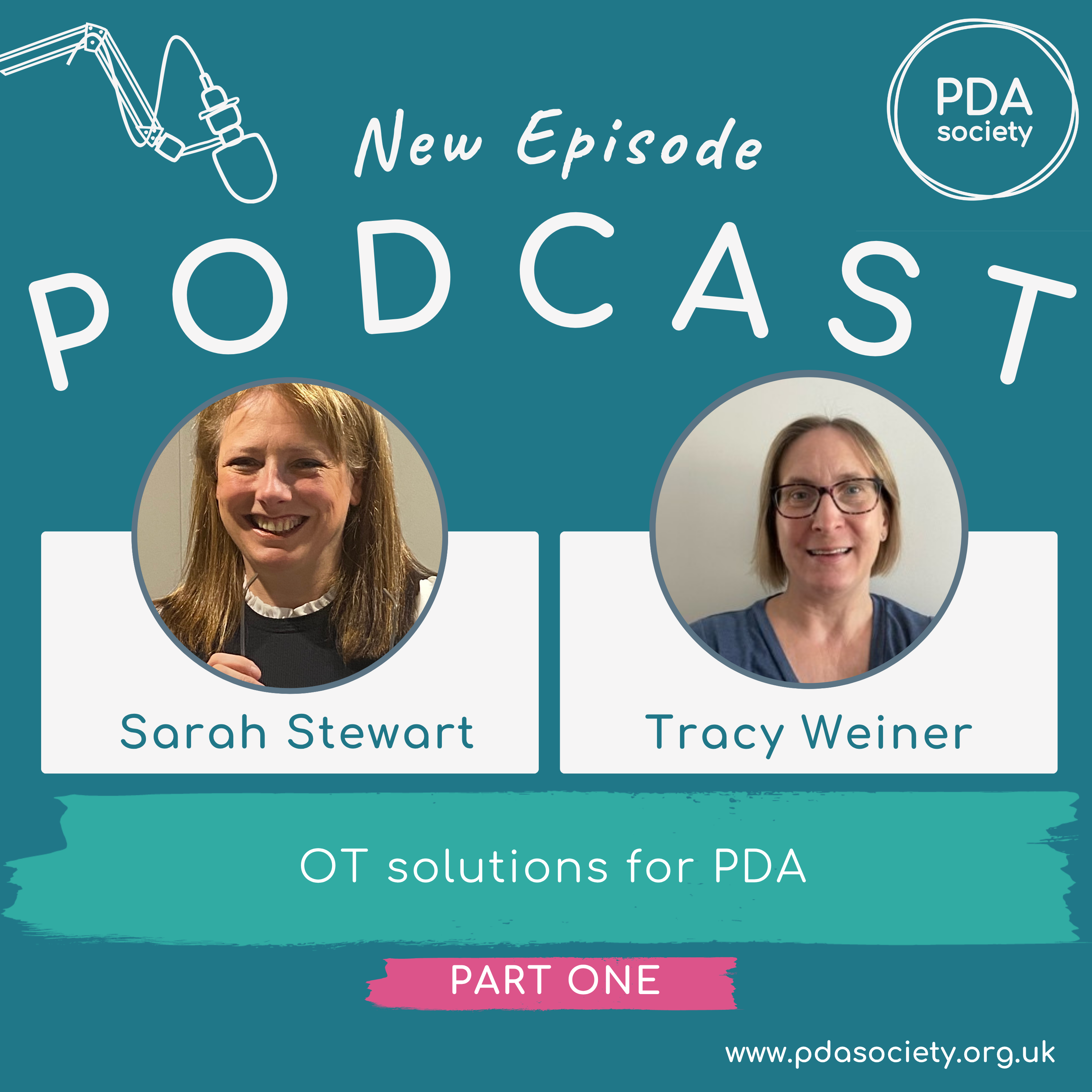
    OT solutions for PDA

    Welcome to the final episode of season one! We'll be back in May, after a short break, with a whole bunch of new conversations around PDA. When season two rolls around we'll start to archive earlier episodes, but they'll remain available on our training hub. See you soon! In this episode, Sarah Stewart from the PDA Society is joined by Tracy Weiner, a former Occupational Therapist and parent of a PDA young person, to explore how sensory needs can impact PDA individuals and their daily lives. Tracy brings both professional insight and lived experience to the conversation, sharing how sensory differences can shape behaviour, emotional responses and overall wellbeing. Together, Sarah and Tracy discuss how sensory needs are often misunderstood, particularly when they present as avoidance, distress or heightened reactions to everyday situations. The episode explores how sensory sensitivities can interact with anxiety and demand sensitivity, making environments such as home, school and public spaces feel overwhelming. Tracy reflects on how recognising these needs can help reframe behaviour, shifting the focus from “what is going wrong” to “what might this person be experiencing”. The discussion also highlights the importance of observation, flexibility and adapting environments to better support regulation. Tracy shares how small changes, such as adjusting sensory input or reducing expectations in challenging moments, can have a significant impact on reducing distress. This episode offers a compassionate and practical perspective on sensory needs, helping parents and professionals better understand how to support PDA individuals in a way that promotes safety, autonomy and wellbeing. Key Themes Understanding sensory needs in PDA individuals How sensory differences can impact behaviour and emotions The link between sensory overwhelm, anxiety and demand sensitivity Reframing behaviour through a sensory lens Using flexibility and observation to reduce distress Disclaimer The views and opinions expressed by guest speakers in this podcast are their own and do not necessarily reflect those of the PDA Society. While we aim to provide balanced and inclusive discussions, individual experiences and perspectives may vary. The PDA Society is committed to using language and terminology that reflects the preferences of PDA and autistic people, but sometimes our guests may use language and terminology which differs. Appearance on our podcast is not an endorsement of an individual, and not all of our guests will align with our position on the issues discussed. Further sources of support and information More podcasts available on the PDA Society Training Hub: https://training.pdasociety.org.uk/pda-podcasts/ PDA Society Training: https://www.pdasociety.org.uk/support-and-training/training/ PDA Society Support Service: https://www.pdasociety.org.uk/support-and-training/support/ Guest links: https://www.kentcht.nhs.uk/childrens-therapies-the-pod/neurodivergence/sensory-processing-pathway https://www.sensoryintegrationeducation.com/pages/free-sensory-resources https://www.rcot.co.uk/ https://www.sensory-people.co.uk/parents-guide-to-sensory-integration/

  • S1 · E26
    April 27 · 28 min· Video

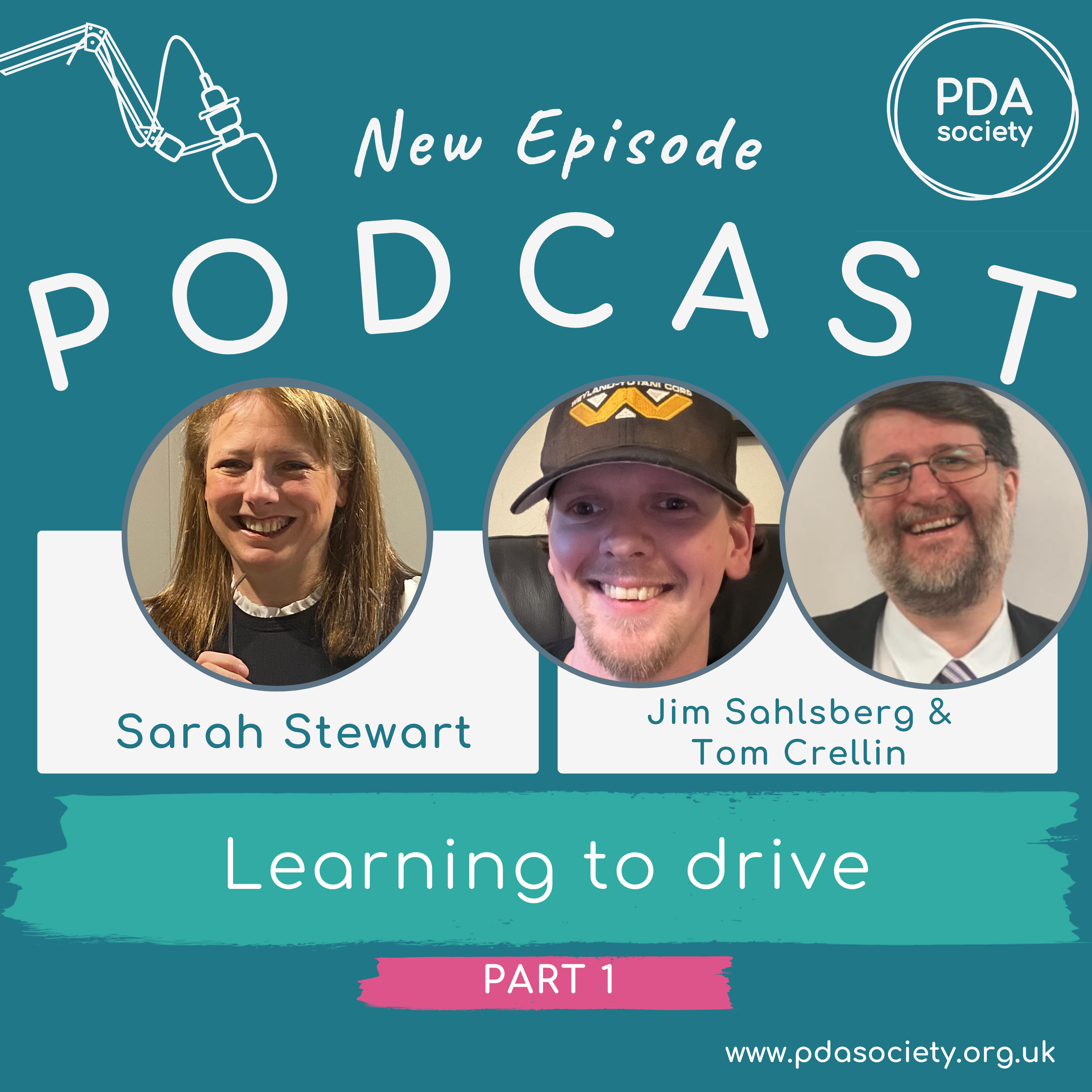
    Learning to Drive

    In this episode, Sarah from the PDA Society is joined by Tom Crellin and Jim Sahlsberg to explore the experience of learning to drive as a PDAer. Jim shares his lived experience of learning to drive, including the challenges he faced and the persistence required to complete the process. The conversation explores why learning to drive can feel particularly difficult for PDA individuals, with factors such as anxiety, demand sensitivity, unpredictability and pressure playing a significant role. Tom and Jim reflect on how the structure of driving lessons, the expectations placed on learners and the high-stakes nature of tests can all contribute to overwhelm. The discussion highlights how traditional teaching approaches may not always meet the needs of PDA learners, and why flexibility, understanding and reduced pressure can make a meaningful difference. Part 1 focuses on building understanding of the barriers PDAers may face when learning to drive, and the importance of adapting approaches to support confidence, autonomy and regulation. Key Themes Why learning to drive can be challenging for PDAers The role of anxiety, pressure and unpredictability Demand sensitivity within structured learning environments The emotional impact of repeated attempts and setbacks The importance of flexible, understanding instruction Supporting confidence and autonomy during the process Deep Diver Subscriber Episode For those who would like to go further, Part 2, an exclusive “Deep Diver” subscriber episode, is available through our Training Hub. You can access it here: https://training.pdasociety.org.uk/pda-podcasts/ Disclaimer The views and opinions expressed by guest speakers in this podcast are their own and do not necessarily reflect those of the PDA Society. While we aim to provide balanced and inclusive discussions, individual experiences and perspectives may vary. The PDA Society is committed to using language and terminology that reflects the preferences of PDA and autistic people, but sometimes our guests may use language and terminology which differs. Appearance on our podcast is not an endorsement of an individual, and not all of our guests will align with our position on the issues discussed. Further sources of support and information PDA Society Training Hub: https://training.pdasociety.org.uk/pda-podcasts/ PDA Society Training: https://www.pdasociety.org.uk/support-and-training/training/ PDA Society Support Service: https://www.pdasociety.org.uk/support-and-training/support/

  • S1 · E25
    April 23 · 33 min· Video

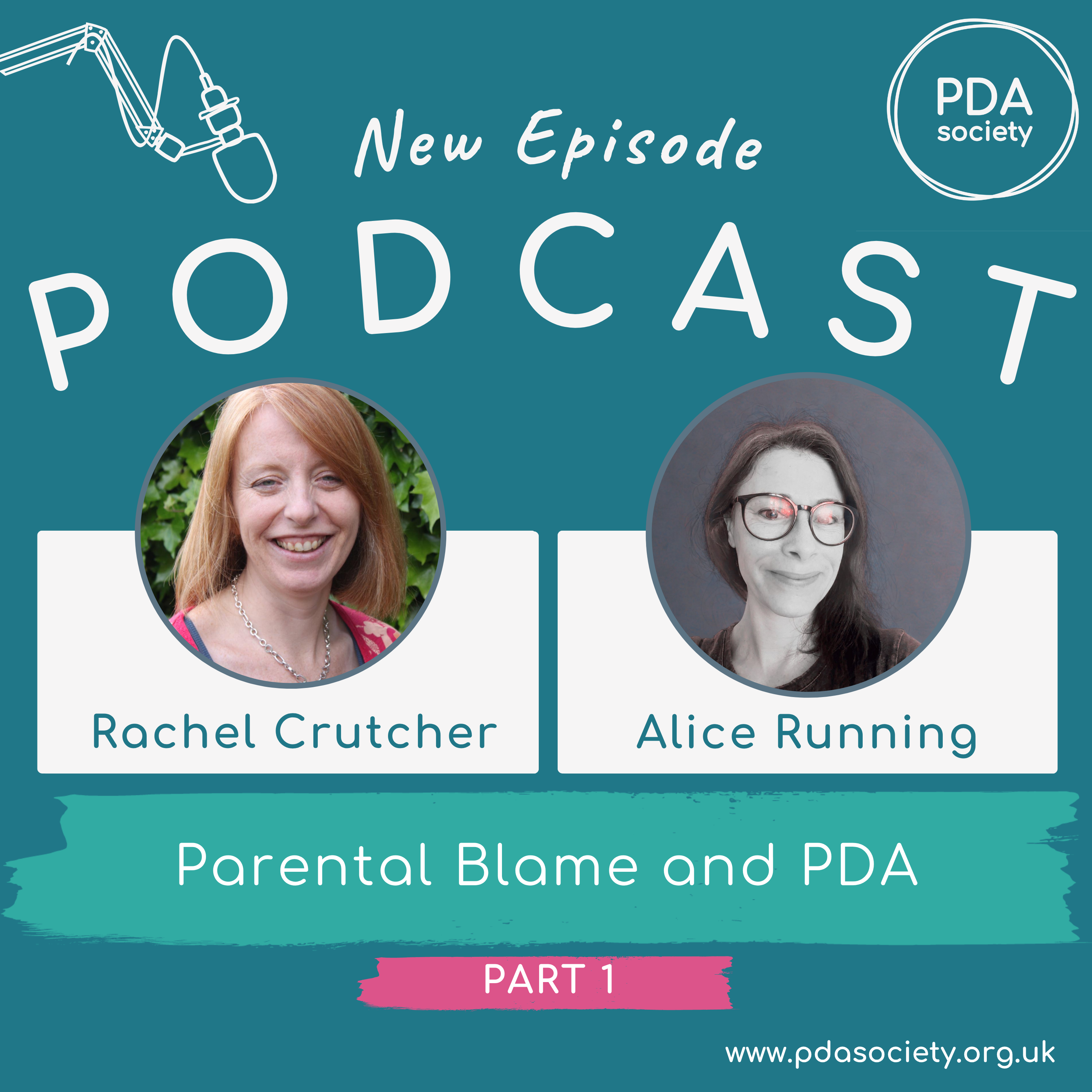
    Parental Blame and PDA

    In this episode, Rachel from the PDA Society is joined by Alice Running, an author and writer focusing on autistic lived experience and neurodivergent parenting, to explore the issue of parental blame in the context of PDA. Alice shares both personal and research-informed insight into how parental blame can arise when children struggle within systems that do not fully understand PDA. The conversation explores how behaviours linked to anxiety, demand sensitivity and distress are often misinterpreted, leading to assumptions about parenting rather than recognition of underlying needs. Rachel and Alice discuss the emotional impact this can have on families, including feelings of shame, isolation and self-doubt. Alice reflects on how blame can become embedded within systems such as education and services, particularly when professionals focus on behaviour rather than context. Part 1 focuses on understanding what parental blame is, why it occurs, and how it can affect both parents and children. The discussion highlights the importance of shifting towards a more compassionate, informed approach that recognises the child’s experience and the parent’s efforts to support them. Key Themes What parental blame is and how it shows up for PDA families Misinterpretation of behaviour linked to anxiety and demand sensitivity The emotional impact of blame on parents and families How systems can reinforce blame through misunderstanding The importance of context, compassion and neuro-affirming approaches Challenging assumptions about parenting Deep Diver Subscriber Episode For those who would like to go further, Part 2, an exclusive “Deep Diver” subscriber episode, is available through our Training Hub. You can access it here: https://training.pdasociety.org.uk/pda-podcasts/ Disclaimer The views and opinions expressed by guest speakers in this podcast are their own and do not necessarily reflect those of the PDA Society. While we aim to provide balanced and inclusive discussions, individual experiences and perspectives may vary. The PDA Society is committed to using language and terminology that reflects the preferences of PDA and autistic people, but sometimes our guests may use language and terminology which differs. Appearance on our podcast is not an endorsement of an individual, and not all of our guests will align with our position on the issues discussed. Further sources of support and information PDA Society Training Hub: https://training.pdasociety.org.uk/pda-podcasts/ PDA Society Website: https://www.pdasociety.org.uk/ PDA Society Training: https://www.pdasociety.org.uk/support-and-training/training/ PDA Society Support Service: https://www.pdasociety.org.uk/support-and-training/support/ Guest links: About Alice Running | AliceRunning Parental Blame | AliceRunning We Need to Talk About Autism and Parent-Carer Blame by Alice Running | Waterstones

  • S1 · E24
    April 16 · 34 min· Video

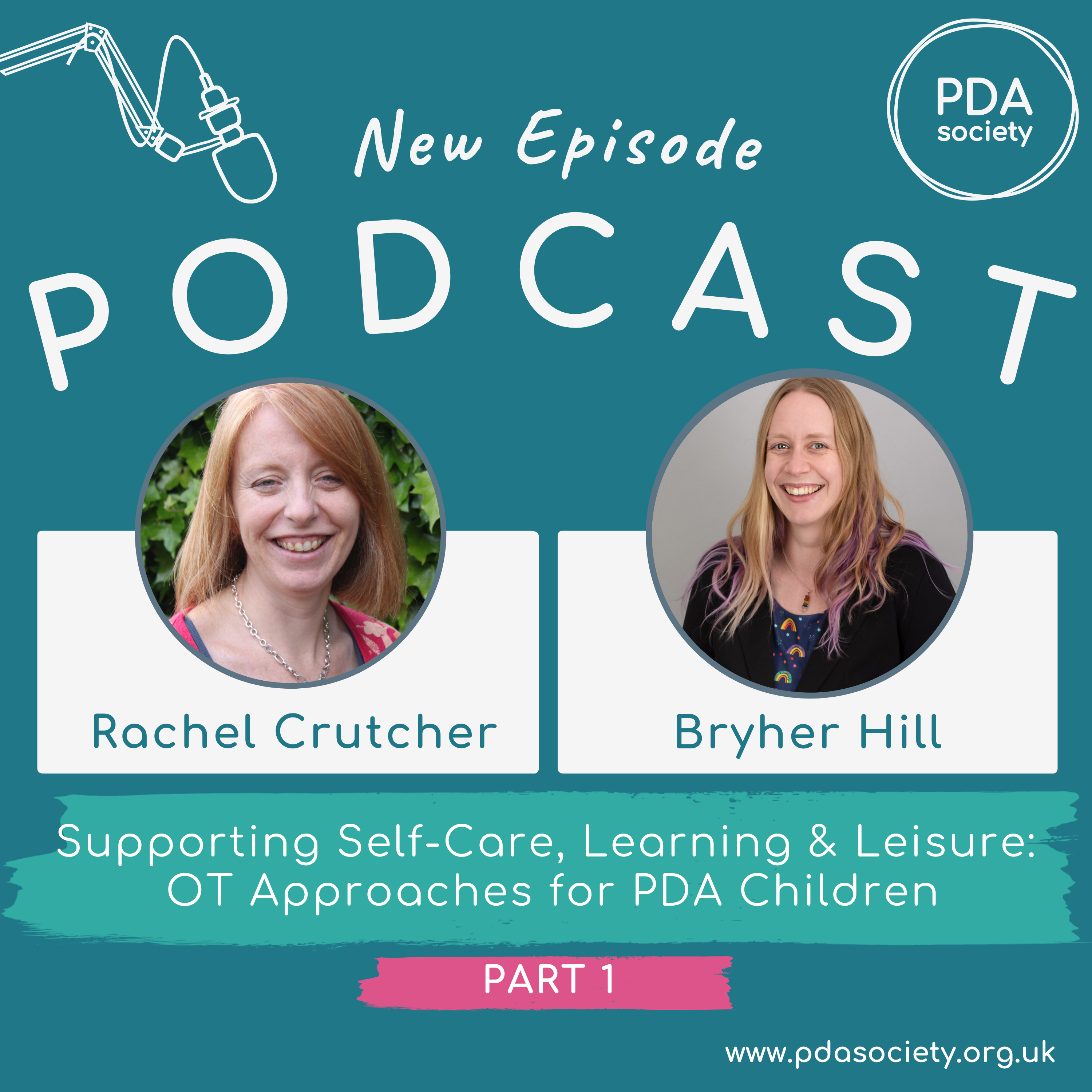
    Supporting Self-Care, Learning & Leisure: OT Approaches for PDA Children

    In this episode, Rachel from the PDA Society is joined by Bryher Hill, an occupational therapist from Helping Kids Shine, to explore how occupational therapy can support PDA children and their families. Bryher shares insight into how occupational therapy looks different when working with PDA profiles, focusing less on compliance and more on understanding the underlying needs driving behaviour. The conversation explores how everyday activities such as self-care, routines and transitions can become overwhelming when anxiety and demand sensitivity are high. Part 1 focuses on understanding the role of occupational therapy in supporting regulation, autonomy and participation in daily life. Bryher explains how observing a child’s sensory profile, nervous system responses and communication style can help identify what is making tasks feel difficult. The discussion also highlights the importance of adapting expectations, reducing pressure and working collaboratively with the child, rather than imposing routines that may increase distress. Bryher emphasises that small, thoughtful adjustments can make everyday activities feel more achievable and less threatening. Key Themes The role of occupational therapy in supporting PDA children Understanding behaviour through a sensory and nervous system lens Reducing demands around routines and expectations Supporting autonomy and participation in daily life Working collaboratively rather than directing Deep Diver Subscriber Episode For those who would like to go further, Part 2, an exclusive “Deep Diver” subscriber episode, is available through our Training Hub. You can access it here: https://training.pdasociety.org.uk/pda-podcasts/ Disclaimer The views and opinions expressed by guest speakers in this podcast are their own and do not necessarily reflect those of the PDA Society. While we aim to provide balanced and inclusive discussions, individual experiences and perspectives may vary. The PDA Society is committed to using language and terminology that reflects the preferences of PDA and autistic people, but sometimes our guests may use language and terminology which differs. Appearance on our podcast is not an endorsement of an individual, and not all of our guests will align with our position on the issues discussed. Further sources of support and information PDA Society Training Hub: https://training.pdasociety.org.uk/pda-podcasts/ PDA Society Website: https://www.pdasociety.org.uk/ PDA Society Support Service: https://www.pdasociety.org.uk/support-and-training/support/ Guest links: Helping Kids Shine empower children, young people and families through Occupational Therapy and Speech and Language Therapy, supporting families to navigate challenges with improved understanding and confidence. With a focus on strengths and neurodiversity-affirming practice, we open doors to brighter futures where children can move from surviving to thriving. Want to learn more? Find us at the following links: www.helpingkidsshine.co.uk https://www.facebook.com/helpingkidsshineUK/ https://www.instagram.com/helpingkidsshineuk/

  • S1 · E23
    April 9 · 35 min· Video

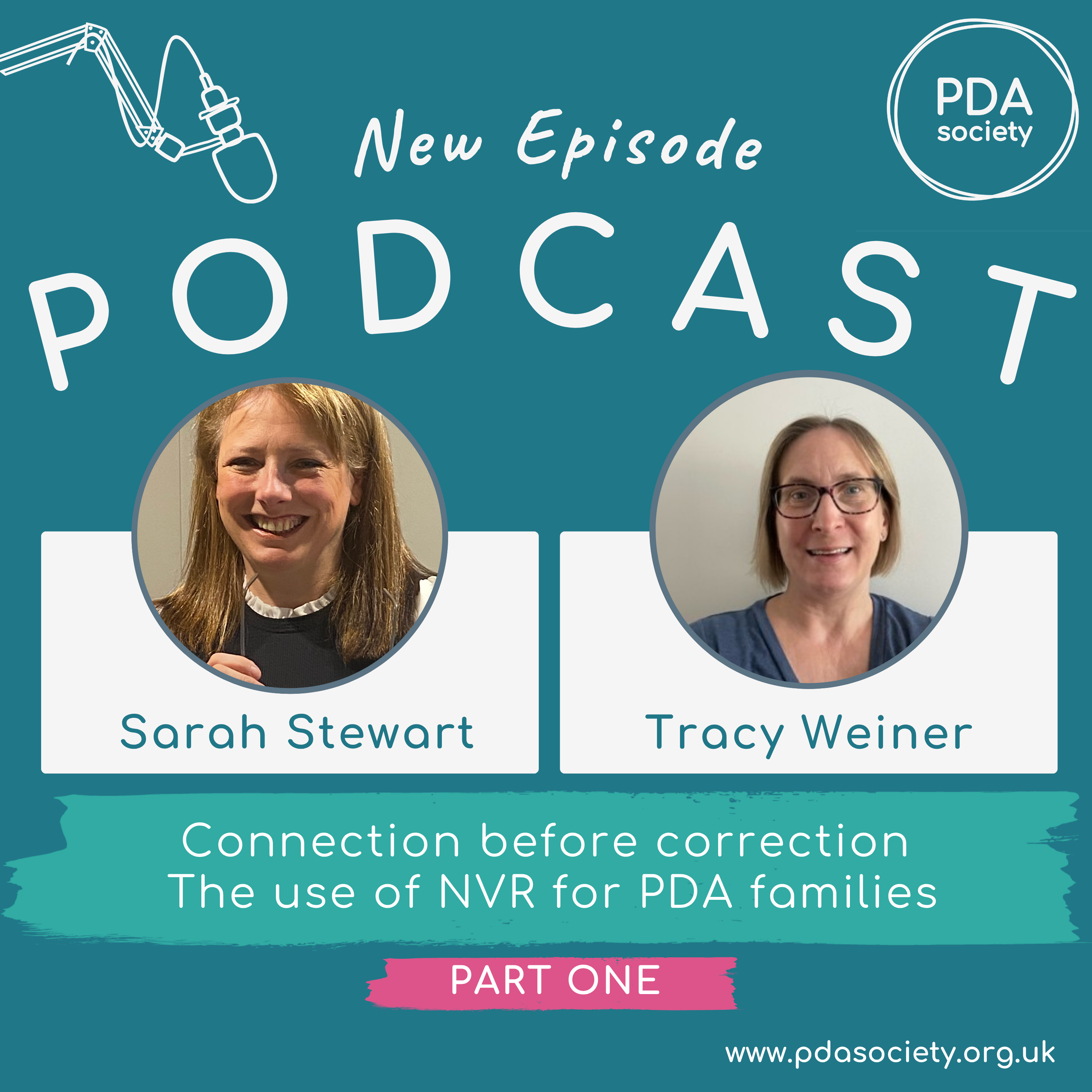
    'Connection before correction' The use of NVR for PDA families.

    In this episode, Sarah Stewart from the PDA Society is joined by Tracy Weiner, an NVR (Non-Violent Resistance) practitioner and parent of a PDA young person, to explore how NVR can support families experiencing high levels of distress and conflict. Tracy shares both her professional expertise and personal experience as a parent, speaking about the realities of parenting a PDA child into adolescence and adulthood. The conversation focuses on how NVR can offer an alternative approach when families are facing situations such as parental violence and aggression (PVA), where traditional strategies may no longer feel effective. Part 1 introduces the core principles of NVR, including moving away from control and consequences, and instead focusing on connection, presence and de-escalation. Tracy explains how NVR shifts the focus from trying to “fix” behaviour to strengthening relationships and reducing conflict over time. Sarah and Tracy also explore the emotional impact on parents, including fear, isolation and uncertainty, and how NVR can help rebuild confidence and stability within the family system. The discussion highlights that this approach is not about giving in, but about responding differently to create safer, more sustainable dynamics. Key Themes What NVR (Non-Violent Resistance) is and how it works Moving away from control and consequence-based approaches Strengthening connection and reducing conflict The emotional impact of high-stress family situations Rebuilding parental confidence and stability Deep Diver Subscriber Episode For those who would like to go further, Part 2, an exclusive “Deep Diver” subscriber episode, is available through our Training Hub. You can access it here: https://training.pdasociety.org.uk/pda-podcasts/ Disclaimer The views and opinions expressed by guest speakers in this podcast are their own and do not necessarily reflect those of the PDA Society. While we aim to provide balanced and inclusive discussions, individual experiences and perspectives may vary. The PDA Society is committed to using language and terminology that reflects the preferences of PDA and autistic people, but sometimes our guests may use language and terminology which differs. Appearance on our podcast is not an endorsement of an individual, and not all of our guests will align with our position on the issues discussed. Further sources of support and information PDA Society Training Hub: https://training.pdasociety.org.uk/pda-podcasts/ PDA Society Website: https://www.pdasociety.org.uk/ PDA Society Training: https://www.pdasociety.org.uk/support-and-training/training/ PDA Society Support Service: https://www.pdasociety.org.uk/support-and-training/support/ Guest links: NVR - Haim Omer explains non-violent resistance (40 min) https://www.nvruk.co.uk/

  • S1 · E22
    April 2 · 33 min· Video

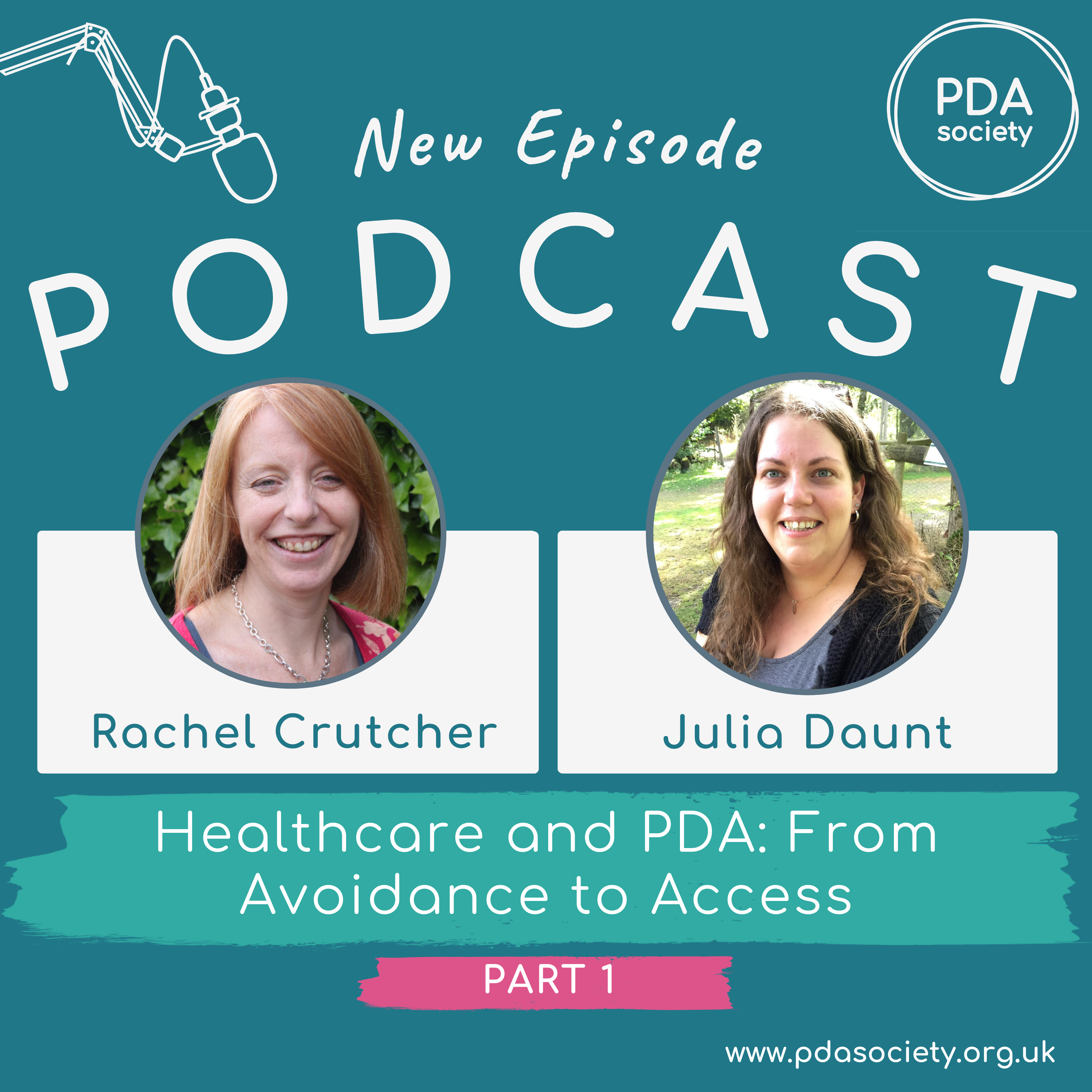
    Healthcare and PDA: From Avoidance to Access

    In this episode, Rachel from the PDA Society is joined by Julia Daunt, a PDA adult and trainer with the PDA Society, to explore the realities of accessing healthcare for PDAers. Julia shares her lived experience of navigating medical environments, highlighting how appointments, procedures and interactions with professionals can often feel overwhelming, unpredictable and highly demanding. The conversation explores why healthcare settings can trigger anxiety for PDAers, including loss of control, sensory challenges, unfamiliar environments and the expectation to comply quickly with instructions. Rachel and Julia discuss how these experiences can lead to avoidance, delayed care or heightened distress, even when support is urgently needed. Julia reflects on the importance of understanding how demand sensitivity shows up in medical contexts, and why what might appear as resistance is often a response to feeling unsafe or overwhelmed. Part 1 focuses on building understanding, offering insight into what healthcare feels like from a PDA perspective, and why compassionate, flexible approaches are essential for supporting access. Key Themes The challenges PDAers face when accessing healthcare Anxiety, control and unpredictability in medical settings Sensory and environmental factors affecting appointments Why avoidance and resistance can occur Understanding healthcare through a PDA lens The importance of safety, autonomy and trust Deep Diver Subscriber Episode For those who would like to go further, Part 2, an exclusive “Deep Diver” subscriber episode, is available through our Training Hub. You can access it here: https://training.pdasociety.org.uk/pda-podcasts/ Disclaimer The views and opinions expressed by guest speakers in this podcast are their own and do not necessarily reflect those of the PDA Society. While we aim to provide balanced and inclusive discussions, individual experiences and perspectives may vary. The PDA Society is committed to using language and terminology that reflects the preferences of PDA and autistic people, but sometimes our guests may use language and terminology which differs. Appearance on our podcast is not an endorsement of an individual, and not all of our guests will align with our position on the issues discussed. Further sources of support and information PDA Society Training Hub: https://training.pdasociety.org.uk/pda-podcasts/ PDA Society Website: https://www.pdasociety.org.uk/ PDA Society Training: https://www.pdasociety.org.uk/support-and-training/training/ PDA Society Support Service: https://www.pdasociety.org.uk/support-and-training/support/

  • S1 · E21
    March 26 · 37 min· Video

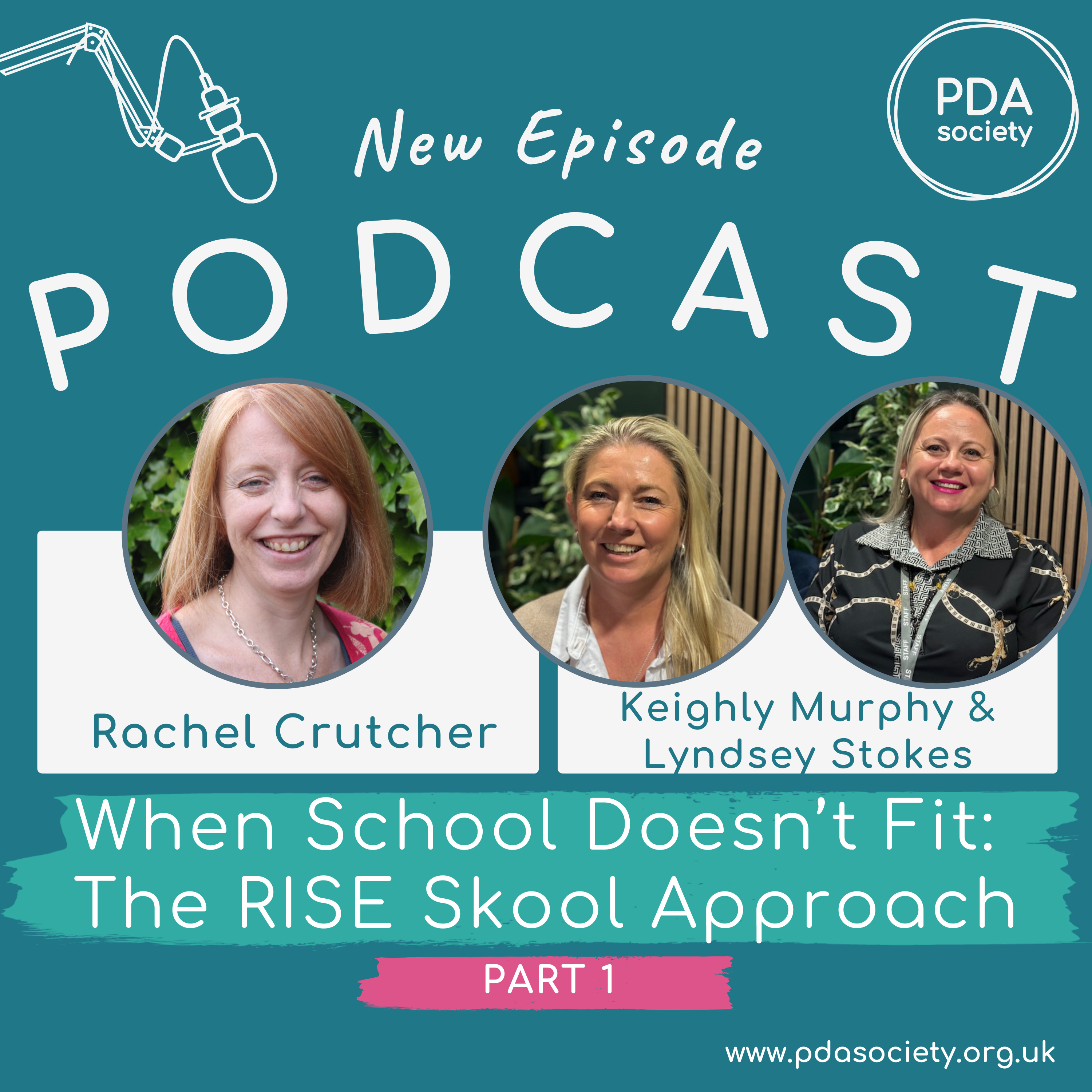
    When School Doesn't Fit: The RISE Skool Approach

    In this episode, Rachel from the PDA Society is joined by Lyndsey Stokes and Keighly Murphy from Rise Skool, an alternative education provision supporting neurodivergent children and young people who have struggled in mainstream settings. Together, they explore what can happen when education is rebuilt around safety, trust and emotional regulation rather than compliance and rigid expectations. Lyndsey and Keighly share how many of the young people who come to Rise Skool have experienced repeated school trauma, exclusions, anxiety or long-term disengagement. The conversation focuses on creating environments where children feel safe enough to learn. Rather than prioritising academic targets from the outset, Rise Skool centres relationship-building, predictability and co-regulation. Lyndsey and Keighly explain how reducing demands, observing communication patterns and tuning into nervous system responses helps students begin to re-engage. Part 1 explores how traditional education models can inadvertently escalate anxiety for PDA learners, and how alternative settings can shift from control to collaboration. The discussion highlights the importance of dignity, flexibility and truly listening to young people. Key Themes Why PDA learners often struggle in mainstream education The impact of school trauma and repeated exclusions Building safety before focusing on academic outcomes Relationship-led and co-regulation-based approaches Reducing demands to support re-engagement Reframing success in education Deep Diver Subscriber Episode For those who would like to go further, Part 2, an exclusive “Deep Diver” subscriber episode, is available through our Training Hub. You can access it here: https://training.pdasociety.org.uk/pda-podcasts/ Disclaimer The views and opinions expressed by guest speakers in this podcast are their own and do not necessarily reflect those of the PDA Society. While we aim to provide balanced and inclusive discussions, individual experiences and perspectives may vary. The PDA Society is committed to using language and terminology that reflects the preferences of PDA and autistic people, but sometimes our guests may use language and terminology which differs. Appearance on our podcast is not an endorsement of an individual, and not all of our guests will align with our position on the issues discussed. Further sources of support and information PDA Society Training Hub: https://training.pdasociety.org.uk/pda-podcasts/ PDA Society Website: https://www.pdasociety.org.uk/ PDA Society Training: https://www.pdasociety.org.uk/support-and-training/training/ PDA Society Support Service: https://www.pdasociety.org.uk/support-and-training/support/

Showing 1–20 of 21 episodes