Skip to content
Artwork for Pause and Respond | Mastering Emotional Control, Intelligence
Society & CultureRelationships

Pause and Respond | Mastering Emotional Control, Intelligence

Josua Rine | Relationship Communication Emotional Control

Pause & Respond is a practical podcast about emotional control, boundaries, and better decisions — especially in moments that usually lead to regret.

Hosted by licensed counselor Josua Rine, each episode breaks down real-world emotional reactions like anger, shutdown, defensiveness, and impulsivity, and shows what actually helps before things spiral. This isn’t about suppressing emotions or “calming down.” It’s about learning how to pause long enough to choose a response that aligns with your values, relationships, and long-term goals.

Short, grounded episodes focus on emotional regulation.

Play
  • 20 episodes
  • Avg 28 min
  • English
  • Friday · 49 min

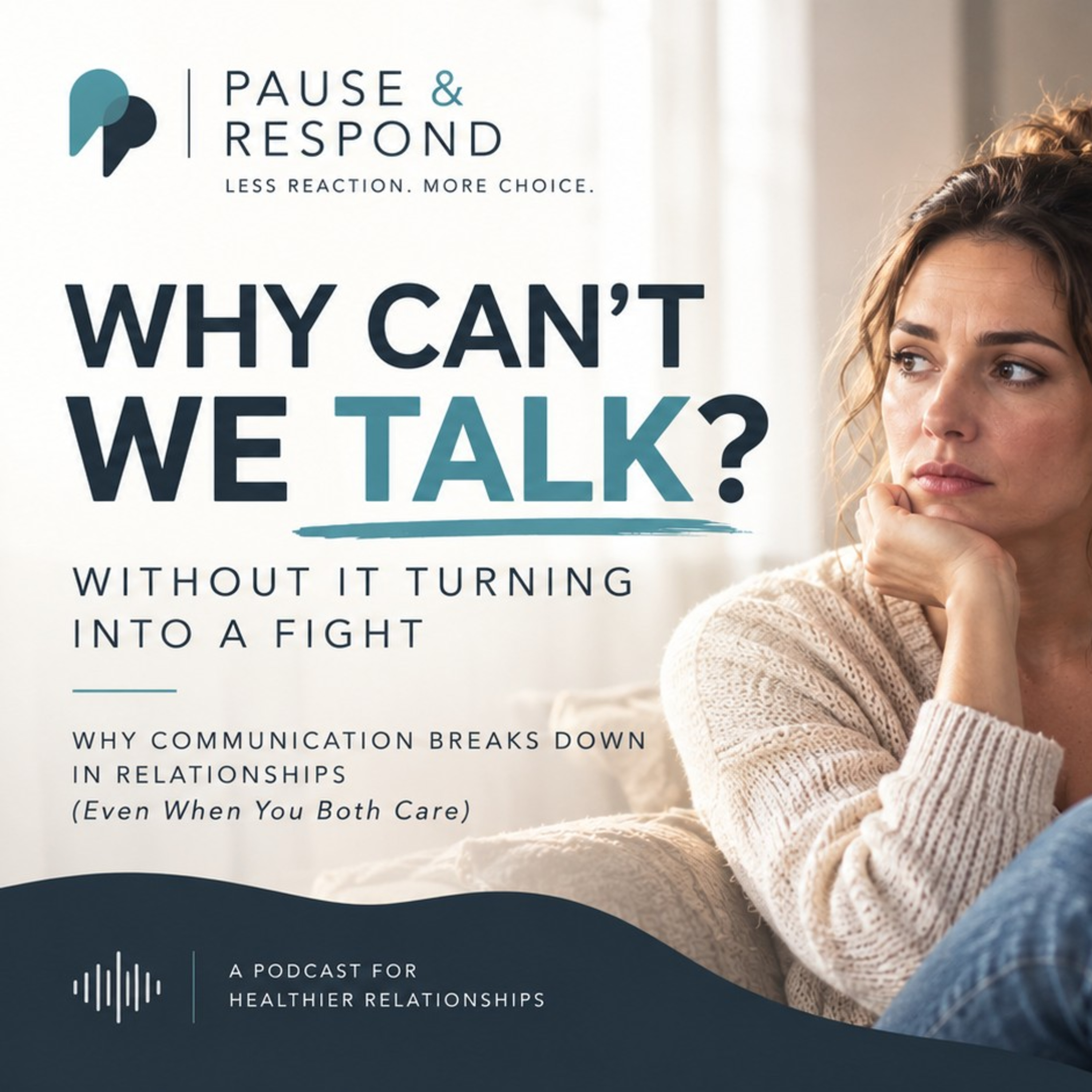
    Why Communication Breaks Down in Relationships (Even When You Both Care)

    Why do conversations between two people who love each other turn intoarguments so quickly? You start talking about a phone, housework, money, sex, parenting, ortime together—and somehow, minutes later, you're defending yourself, feelingcriticized, shutting down, or wondering how the conversation got so far awayfrom where it started. In this episode of Pause & Respond, Licensed ProfessionalCounselor Josua Rine breaks down why communication fails inrelationships—even when both people genuinely care. You'll learn about The Communication Collapse: the predictablepattern where something happens, meaning gets attached, emotions rise,protection takes over, and eventually both people are reacting to each other'sreactions instead of addressing the original issue. But underneath many of these fights is something deeper. "You never listen to me" may actually mean: "I need to know that what I say matters to you." "Nothing I do is ever enough" may actually mean: "I need to know you see how hard I'm trying." Sometimes two people aren't fighting because they stopped caring. They're fighting because what they care about has become harder tocommunicate without protection. In this episode, you'll learn: The goal isn't perfect communication. It's learning how to find each other again when the conversation getsdifficult. If you recognize your own relationship in this episode and want helpworking through your specific communication pattern, Pause & RespondCoaching gives you the opportunity to work directly with Josua. Bring the conversation you keep getting stuck in. We'll start there. Visit PauseAndRespond.com to learn more and schedule a coachingsession. Core: #PauseAndRespond #LessReactionMoreChoice #EmotionalIntelligence#HealthyCommunication #EmotionalRegulation Relationship: #RelationshipCommunication #CouplesCommunication #HealthyRelationships#MarriageCommunication #RelationshipAdvice #RelationshipCoaching#ConflictResolution #EmotionalIntimacy #CouplesConflict #BetterCommunication
  • September 5 · 45 min

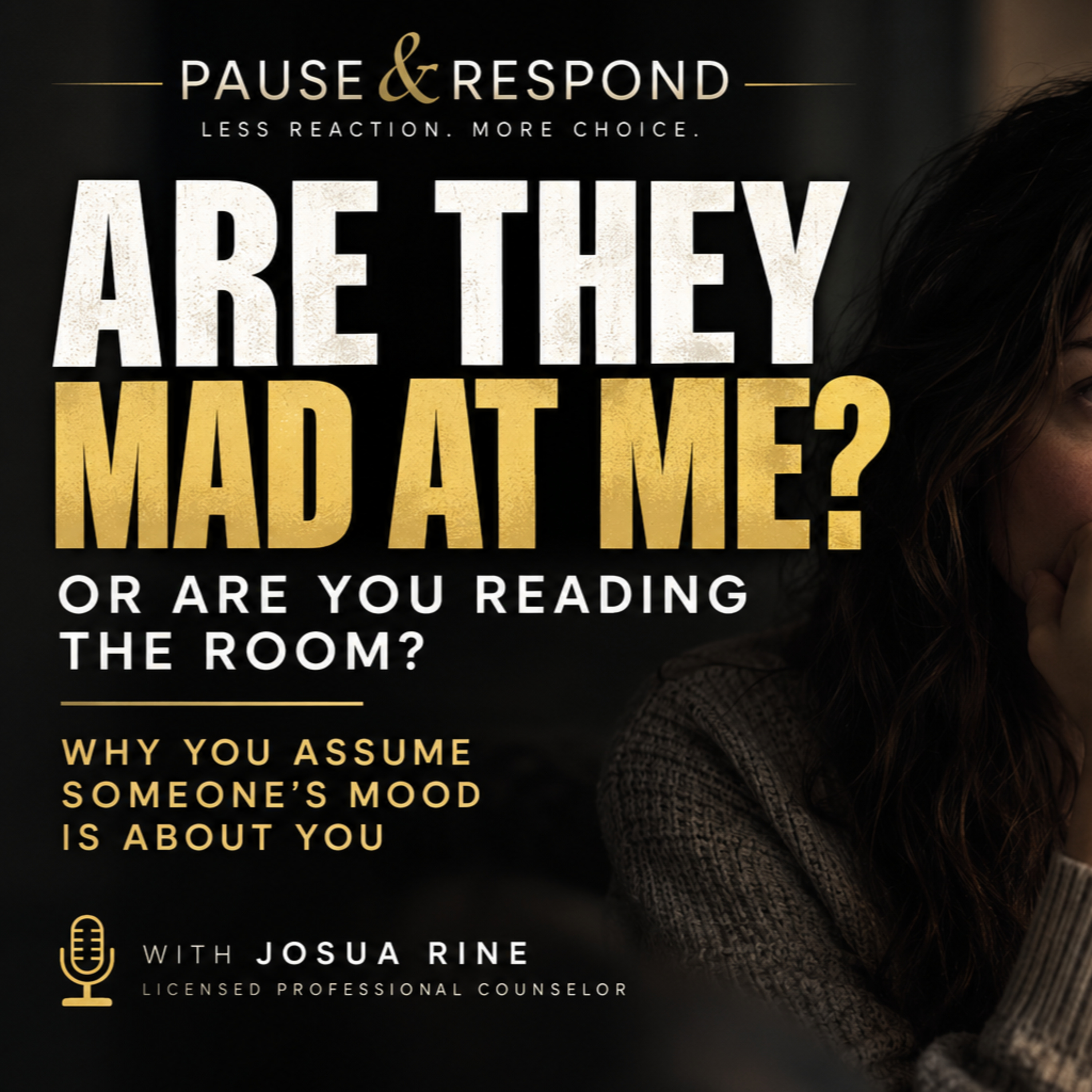
    Why You Assume Someone's Mood Is About You

    Someone walks into the room quieter than usual. Their tone changes. They seem irritated. They send a shorter text. And almost immediately... you start wondering: “Did I do something?” Why do some of us automatically assume another person’s mood hassomething to do with us? In this episode of Pause & Respond, Licensed ProfessionalCounselor Josua Rine explores the habit of emotional scanning—constantlyreading facial expressions, tone, silence, and changes in other people’sbehavior to determine whether something is wrong and how you’re supposed torespond. You’ll discover why being good at “reading the room” can becomeemotionally exhausting, how awareness can quietly turn into ownership, and whyanother person’s emotional state doesn’t have to become instructions for whoyou need to be. This episode also explores the difference between empathy andabsorption, support and rescue, and what it means to remainemotionally connected to someone without reorganizing yourself around theirmood. In this episode, you’ll learn: The goal isn’t to stop caring about how other people feel. It’s learning that you can care... without leaving yourself. Someone else’s mood is allowed to exist. And so are you. Visit PauseAndRespond.com for additional tools and resources foremotional regulation, healthier communication, relationships, and personalgrowth. #PauseAndRespond #LessReactionMoreChoice #EmotionalIntelligence#EmotionalRegulation #HealthyCommunication #RelationshipAnxiety #Overthinking#EmotionalBoundaries #PeoplePleasing #SelfAwareness #HealthyRelationships#EmotionalHealth #RelationshipCommunication #PersonalGrowth #ReadingTheRoom

  • August 28 · 38 min

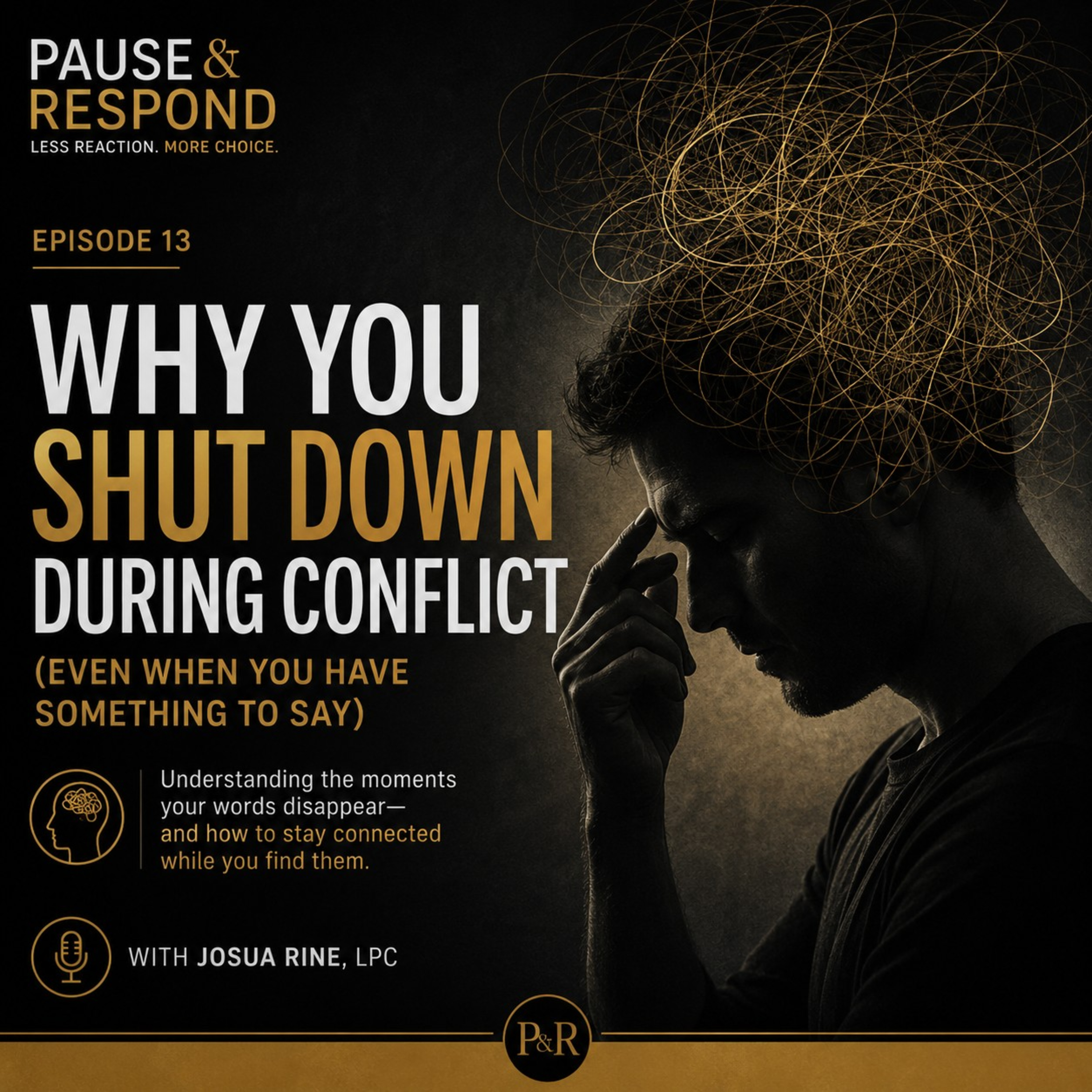
    Why You Shut Down During Conflict (Even When You Have Something to Say)

    Have you ever been in the middle of a difficult conversation and suddenlyhad nothing to say—only to think of everything you wanted to say after theconversation was over? You weren't necessarily avoiding the conversation. You may have temporarily lost access to your words. In this episode of Pause & Respond, Licensed ProfessionalCounselor Josua Rine explores why some people shut down during conflict,what happens in the moments before your words disappear, and how emotionalpressure can make it harder to think, listen, and communicate clearly. You'll discover the Communication Window—the range where you canstill remain emotionally available to yourself and the person in front ofyou—and learn how to recognize the early warning signs that you're beginning tomove outside it. Most importantly, this episode explores how to stay connected whileyou're still finding your words. In this episode, you'll learn: Sometimes emotional intelligence isn't having the right wordsimmediately. Sometimes it's being able to say: "I don't have my words yet—but I'm still here." Visit PauseAndRespond.com for practical tools and resources foremotional regulation, healthier communication, and stronger relationships. #PauseAndRespond #LessReactionMoreChoice#EmotionalIntelligence #EmotionalRegulation # #ConflictResolution #EmotionalShutdown #RelationshipCommunication#HealthyRelationships #CommunicationSkills #RelationshipAnxiety #Overwhelmed#CouplesCommunication #SelfAwareness #PersonalGrowth

  • August 16 · 40 min

    Why You Apologize Even When You Didn't Do Anything Wrong

    Do you apologize even when you're not sure you did anything wrong? Someone becomes quiet. Their mood changes. A conversation feelsuncomfortable. And before you even understand what happened, you hear yourselfsaying: "I'm sorry." In this episode of Pause & Respond, Licensed ProfessionalCounselor Josua Rine explores why apologizing can become an emotionalreflex—and why some people automatically assume responsibility wheneversomething feels wrong. This isn't about becoming less accountable. It's about becoming more accurate about what actually belongs to you. You'll discover how Responsibility Anxiety can cause you to searchyourself for the problem, why self-blame sometimes feels safer thanuncertainty, and how The Control Bargain can convince you that ifeverything is your fault, at least everything is yours to fix. We also explore the important difference between guilt and shame—and whyemotionally mature accountability means being able to admit: "I did something wrong..." without turning it into: "There is something wrong with me." In this episode, you'll learn: The goal isn't fewer apologies. It's truer apologies. Own all of yours. Don't own more than yours. And when you make a mistake, repair what you can, learn what you need,and allow yourself to keep becoming. Visit PauseAndRespond.com for practical tools and resources foremotional regulation, healthier relationships, communication, and personalgrowth. #PauseAndRespond #LessReactionMoreChoice #EmotionalIntelligence#EmotionalRegulation #HealthyCommunication #OverApologizing #SelfBlame #GuiltAndShame #PeoplePleasing#HealthyRelationships #SelfWorth #EmotionalHealing #PersonalGrowth#Accountability #RelationshipAnxiety

  • August 7 · 26 min

    Why Saying No Feels So Hard | The Fear of Disappointing People

    Why is saying "no" so difficult—even when you know it'sthe right answer? For many people, the struggle isn't about communication. It's about fear. Fear that disappointing someone will damage the relationship. Fear that honesty will create distance. Fear that saying no means you're selfish, uncaring, or no longer worthy oflove. In this episode of Pause & Respond, Licensed ProfessionalCounselor Josua Rine explores the hidden emotional beliefs that makeboundaries feel so difficult. You'll discover why your nervous system mayconfuse disappointment with rejection, how "Borrowed Safety" keepsyou emotionally trapped, and why healthy relationships aren't protected byavoiding difficult emotions—they're strengthened by learning to survive themtogether. If you've ever struggled with people-pleasing, overexplaining, guilt, orfeeling responsible for everyone else's emotions, this episode will help youunderstand why—and show you a healthier way forward. In this episode you'll learn: Because emotional maturity isn't learning to keep everyone happy. It's learning to trust that healthy relationships can survive honesty. Visit PauseAndRespond.com for additional articles, resources, andpractical tools to help you build emotional resilience, healthierrelationships, and lasting emotional freedom. #PauseAndRespond #HealthyBoundaries #PeoplePleasing #EmotionalFreedom #MentalHealth #EmotionalIntelligence #HealthyRelationships #SelfWorth #PersonalGrowth #LessReactionMoreChoice

  • July 29 · 22 min

    Why You Feel Guilty When You Rest | Breaking Free from Productivity Guilt

    Why is it so hard to rest—even when you're completely exhausted? If you've ever sat down to relax only to feel guilty, anxious, or like you should be doing something more productive, you're not alone. In this episode of Pause & Respond, Licensed Professional Counselor Josua Rine explores the hidden beliefs that make rest feel uncomfortable. This isn't a conversation about time management or productivity hacks. It's about identity. Many of us quietly learned that our value comes from what we accomplish. Over time, productivity stopped being something we did and became proof that we mattered. The result? Rest begins to feel like something we have to earn. In this episode, you'll discover why your nervous system resists stillness, how performance became permission, and what it means to finally live from Enoughness instead of constantly striving to become enough. Why resting can trigger guilt and anxiety How productivity quietly becomes your identity The difference between Earned Rest and true rest Why high achievers often struggle to relax What Enoughness really means How to stop measuring your worth by your accomplishments A simple practice to begin living from peace instead of proving The goal isn't becoming productive enough to deserve rest. The goal is discovering that you were worthy of rest before you ever earned it. Visit PauseAndRespond.com for additional articles, practical exercises, and resources to help you build emotional resilience, healthier relationships, and lasting emotional freedom. In this episode you'll learn:

  • July 17 · 34 min

    Why You Feel Like You Have to Keep Everyone Happy (And Why It's Exhausting You)

    Do you feel responsible for keeping everyone happy? Do you avoid conflict, struggle to say no, or feel guilty whenever someone is disappointed with you? In this episode of Pause & Respond, licensed professional counselor Josua Rine explores the hidden psychology behind people pleasing and emotional responsibility. You'll discover why many of us confuse keeping the peace with keeping relationships healthy, why disappointment feels so threatening, and how healthy love is built on honesty—not constant approval. If you've ever: felt guilty for setting boundaries avoided disappointing people struggled with people pleasing worried that saying no would damage a relationship measured your worth by keeping everyone happy carried the emotional weight of everyone around you this episode will help you understand where those patterns come from and how to begin building healthier, more honest relationships. Why disappointment feels emotionally dangerous The difference between approval and belonging Why many people become emotional peacekeepers Comfort vs. Connection: understanding healthy love How to stop measuring your worth by other people's happiness Why honesty builds stronger relationships than performance One powerful question to ask before abandoning yourself to keep the peace This episode is part of the Pause & Respond framework for emotional intelligence, healthy relationships, emotional regulation, people pleasing recovery, and personal growth. In this episode you'll discover:#PeoplePleasing#HealthyBoundaries#SelfWorth#RelationshipHealing#EmotionalHealing#PersonalGrowth#AuthenticLiving#RelationshipAdvice#MentalWellness#EmotionalFreedom

  • July 15 · 36 min

    How to Stop Chasing the Last Word and Find Peace After Difficult Conversations

    Why is it so hard to let some conversations end? Why do we send one more text, replay arguments in our minds, or feel compelled to explain ourselves one last time? In this episode of Pause & Respond, licensed professional counselor Josua Rine explores the hidden psychology behind the need for the last word. You'll discover why the real struggle isn't winning the argument—it's the fear of being misunderstood, the need for reassurance, and the search for emotional safety. You'll learn why unresolved conversations stay with us, how identity becomes wrapped up in being understood, and how emotionally secure people learn to leave conversations without leaving themselves. If you've ever: replayed arguments in your head sent one more text after a conversation ended struggled to let disagreements go needed to explain yourself repeatedly feared being misunderstood had trouble finding peace after conflict this episode will help you understand what your nervous system is really searching for—and how to finally find peace without needing the last word. Why unfinished conversations stay with us The hidden fear beneath the need for the last word Why misunderstanding feels like a threat to identity The difference between resolution and peace How to stop chasing reassurance through conversations Why self-trust changes the way you communicate A practical exercise for leaving conversations with peace instead of regret This episode is part of the Pause & Respond framework for emotional intelligence, communication, healthy relationships, and emotional maturity. In this episode you'll discover:#ConflictResolution#CommunicationSkills#RelationshipAdvice#Overthinking#EmotionalHealing#SelfAwareness#PersonalGrowth#HealthyRelationships#EmotionalMaturity#MentalWellness

  • July 13 · 37 min

    Why You Feel Responsible for Everyone Else's Feelings | Stop Carrying Emotional Weight That Isn't Yours

    Do you feel responsible for keeping everyone else happy? Do you carry other people's stress, disappointment, anger, or anxiety as if it were your own? In this episode of Pause & Respond, licensed professional counselor Josua Rine explores why so many people quietly take responsibility for emotions that were never theirs to carry—and how that pattern often begins long before adulthood. You'll discover the difference between caring and carrying, why many emotionally responsible people learned to confuse usefulness with worth, and how healthy relationships are built through compassion, not emotional over-responsibility. If you've ever struggled with: people pleasing guilt for setting boundaries feeling responsible for everyone else's emotions emotional exhaustion over-functioning in relationships difficulty saying no carrying everyone else's problems this episode will help you understand where those patterns come from and how to begin putting down the emotional weight you were never meant to carry. Why you feel responsible for other people's emotions The difference between Care vs. Carry What "Borrowed Weight" really is Why usefulness often becomes part of identity How childhood adaptations follow us into adulthood Why healthy boundaries are acts of love—not rejection How to love people deeply without losing yourself A simple daily question that changes relationships: "Is this mine to carry?" This episode is part of the Pause & Respond framework for emotional control, emotional maturity, healthy relationships, boundaries, and personal growth. In this episode you'll learn:#PeoplePleasing#HealthyBoundaries#SelfWorth#EmotionalHealing#PersonalGrowth#EmotionalFreedom#RelationshipSkills#MentalWellness#CodependencyRecovery#SelfAwareness

  • July 9 · 38 min

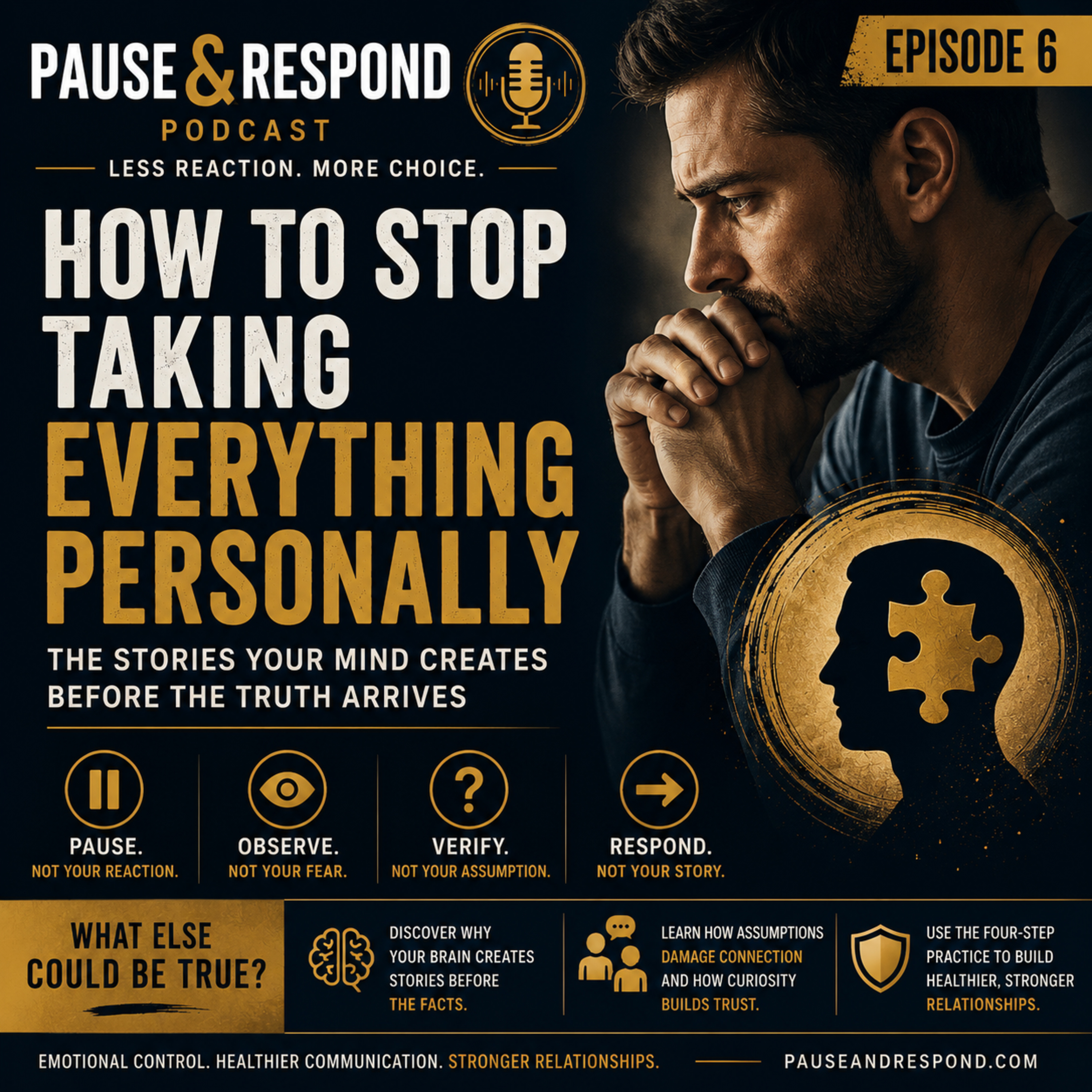
    How to Stop Taking Everything Personally | The Stories Your Mind Creates Before the Truth Arrives

    Do you ever assume someone is upset with you, replay conversations in your head, or take a simple comment more personally than you want to? In this episode of Pause & Respond, licensed professional counselor Josua Rine explores why our minds create stories before we have all the facts—and how those stories quietly shape our emotions, relationships, and decisions. You'll discover The Meaning Gap, The Certainty Trap, and the powerful shift from becoming a storyteller to becoming an investigator. Learn why your brain prefers certainty over truth, how assumptions create unnecessary emotional pain, and how to stop letting your first interpretation control your relationships. If you've ever: taken a delayed text personally assumed someone was upset with you replayed conversations in your mind struggled with overthinking or relationship anxiety reacted to a story that later proved untrue this episode will help you understand what's happening beneath the surface and give you a practical framework for responding with greater wisdom and emotional control. Why we take things personally The psychology behind emotional assumptions The Meaning Gap: where emotions are really created The Certainty Trap and why your brain craves quick answers How emotionally secure people think differently Why curiosity is stronger than certainty The Pause. Observe. Verify. Respond. practice How to build healthier relationships through better interpretation This episode is part of the Pause & Respond framework for emotional intelligence, emotional regulation, communication, and healthier relationships. In this episode you'll learn:

  • July 7 · 36 min

    Why do we become defensive—even when no one is attacking us?

    In this episode of Pause & Respond, licensed professional counselor Josua Rine explores the hidden psychology behind defensiveness and explains why our brains often mistake feedback for rejection. You'll discover how your nervous system predicts danger before it knows the truth, why criticism can feel like a threat to your identity, and how defensiveness quietly damages the relationships you're trying to protect. If you've ever found yourself explaining instead of listening, interrupting before someone finishes, or replaying conversations wondering why you reacted the way you did, this episode will help you understand what was really happening beneath the surface. You'll learn: Why criticism feels like a personal attack How your nervous system predicts emotional danger Why defensiveness damages trust and connection The difference between protecting your ego and protecting your relationships The Four-Second Pause: a practical strategy to interrupt defensiveness before it takes over How emotionally secure people respond differently during difficult conversations This episode is part of the Pause & Respond framework for emotional control, healthier communication, and stronger relationships. If you struggle with defensiveness, conflict, emotional triggers, communication problems, marriage challenges, or emotional regulation, this episode offers practical insights you can begin applying in your very next conversation. #PauseAndRespond #EmotionalControl #Defensiveness #HealthyCommunication #EmotionalIntelligence #RelationshipSkills #ConflictResolution #SelfAwareness #PersonalGrowth #MentalWellness

  • June 28 · 22 min

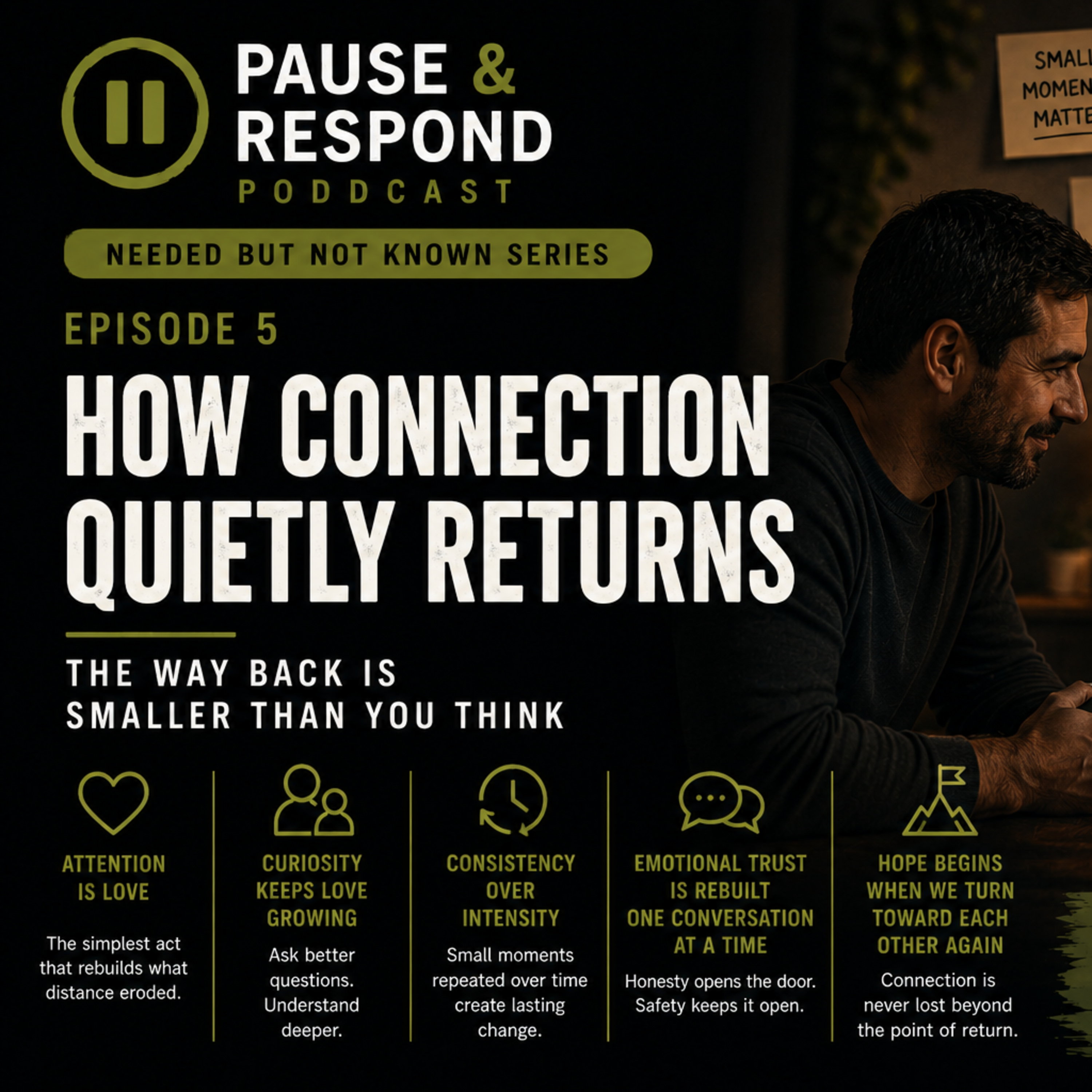
    How Connection Quietly Returns | Rebuilding Emotional Connection One Small Step at a Time

    Can a relationship find its way back after distance? Absolutely. But probably not in the way most people expect. In Episode 5 of the Needed But Not Known series, Josua Rine explores one of the most hopeful truths about relationships: Connection rarely returns through one dramatic moment. It returns through small moments repeated over time. Because the way back is usually smaller than we think. In this episode you'll discover: • Why relationships heal through consistency, not intensity. • Why attention is one of the purest forms of love. • How curiosity keeps love growing. • Why small moments matter more than grand gestures. • Why connection is not a feeling—it's a series of small choices. • How emotional trust is rebuilt one conversation at a time. • Why hope begins with simply turning toward one another again. If you've ever wondered whether your relationship is too far gone, this episode is for you. Visit www.pauseandrespond.com for books, workbooks, articles, and resources designed to help you strengthen your emotional health and relationships. Less Reaction. More Choice. #Relationships #MarriageAdvice #EmotionalIntimacy #Communication #RelationshipGoals #EmotionalHealth #Marriage #MentalHealth #PersonalGrowth #Connection #PauseAndRespond #JosuaRine

  • June 26 · 22 min

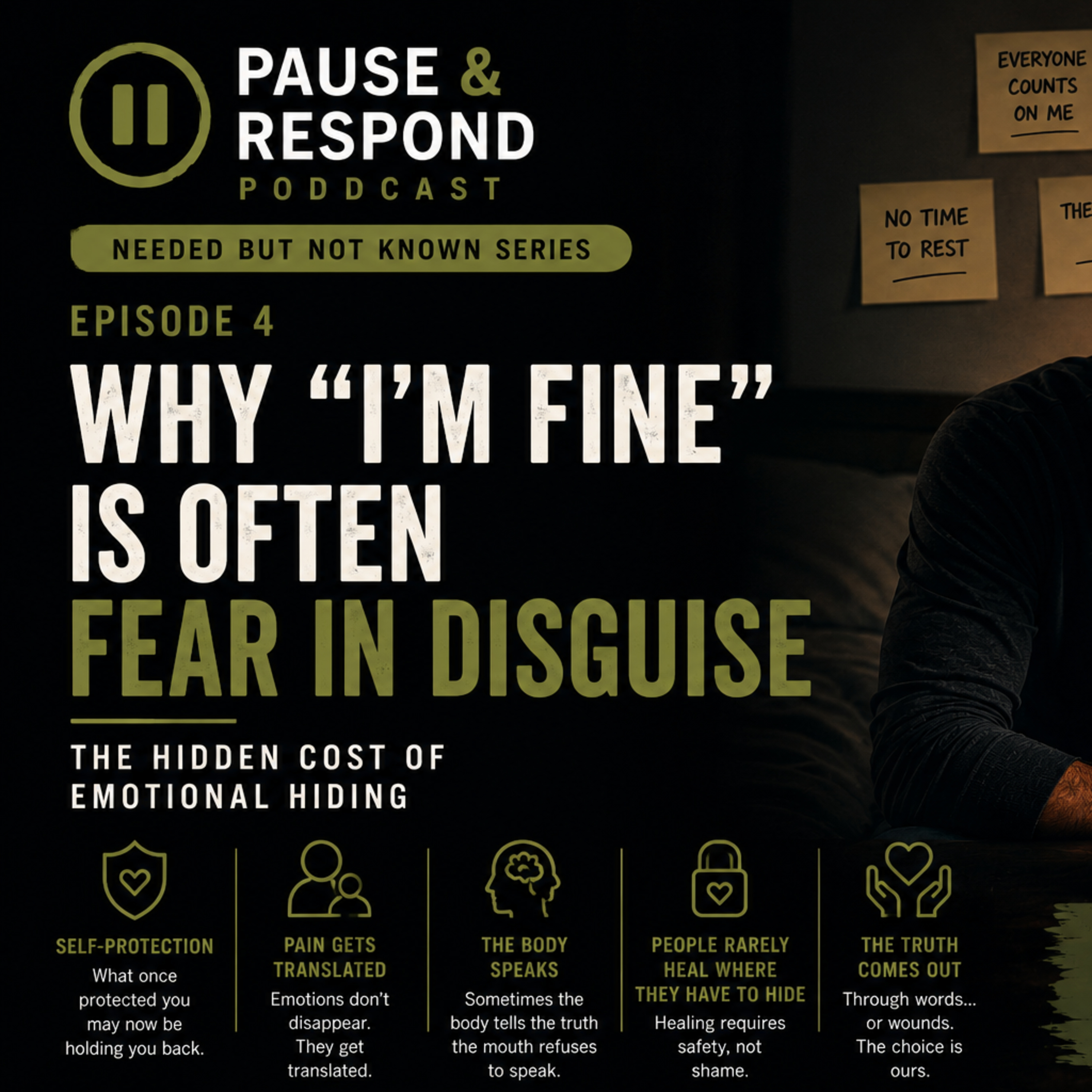
    Why "I'm Fine" Is Often Fear in Disguise | The Hidden Cost of Emotional Hiding

    How many times have you said: "I'm fine." when you really weren't? In Episode 4 of the Needed But Not Known series, Josua Rine explores one of the most misunderstood forms of emotional self-protection. Because emotional hiding usually begins as self-protection. But eventually… self-protection can become self-imprisonment. In this episode you'll discover: • Why emotional hiding often begins as a survival strategy. • Why honesty feels dangerous when love has always felt conditional. • Why some people become experts at translating pain into acceptable emotions. • Why the body often tells the truth the mouth refuses to speak. • Why people rarely heal where they have to hide. • Why frightened hearts don't need shame—they need safety. • And why the truth usually comes out through words or wounds. If you've spent years saying: "I'm good." "Don't worry about me." "Nothing's wrong." while quietly carrying things no one else can see… this episode is for you. Visit www.pauseandrespond.com for books, workbooks, articles, and resources designed to help you strengthen your emotional health and relationships. Less Reaction. More Choice. #EmotionalHealth #MentalHealth #Vulnerability #SelfAwareness #Relationships #EmotionalIntelligence #Communication #Anxiety #PersonalGrowth #Healing #PauseAndRespond #JosuaRine

  • June 24 · 23 min

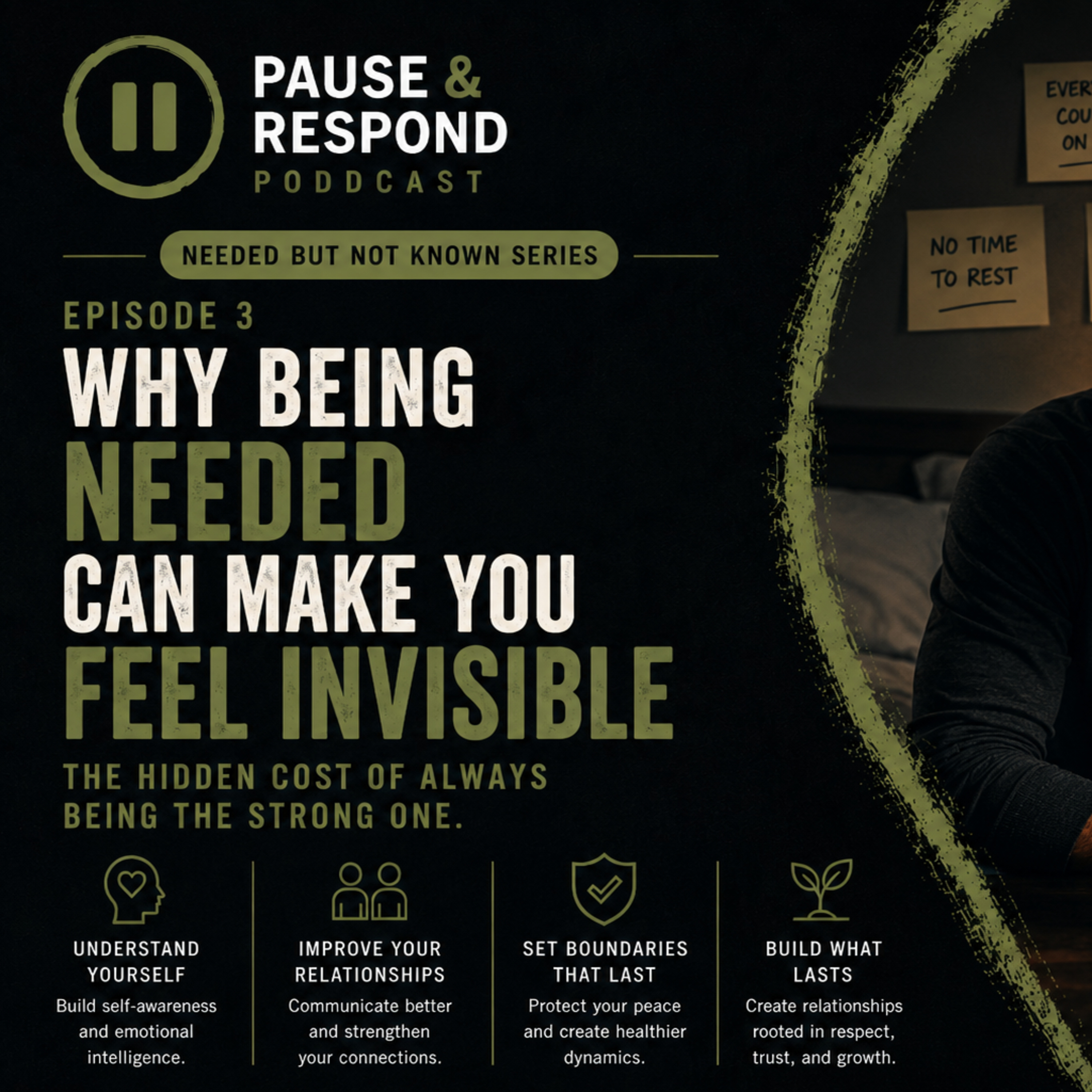
    Why Being Needed Can Make You Feel Invisible | When Helping Everyone Makes You Disappear

    Why do some of the most dependable people feel the most invisible? Why do helpers, caregivers, providers, and strong people often become exhausted? And why can being needed slowly become a substitute for being known? In Episode 3 of the Needed But Not Known series, Josua Rine explores the hidden cost of always being the strong one. Because sometimes people don't disappear because they leave. Sometimes they disappear inside their responsibilities. In this episode you'll discover: • Why being needed can become emotionally addictive. • Why some identities become prisons with applause. • Why exhaustion can feel safer than irrelevance. • Why some people become trapped inside the compliments they receive. • Why performing strength can cause us to lose ourselves. • Why the person you miss most may be the version of yourself you abandoned. • Why the goal isn't to stop serving people—but to stop abandoning yourself while you do it. If you've spent your life being the helper, the provider, the caretaker, or the person everyone depends on, this episode is for you. Visit www.pauseandrespond.com for books, workbooks, articles, and resources designed to help you strengthen your emotional health and relationships. Less Reaction. More Choice. #Burnout #EmotionalExhaustion #PeoplePleasing #CaregiverBurnout #MentalHealth #Relationships #SelfWorth #EmotionalHealth #PersonalGrowth #Boundaries #PauseAndRespond #JosuaRine

  • June 22 · 21 min

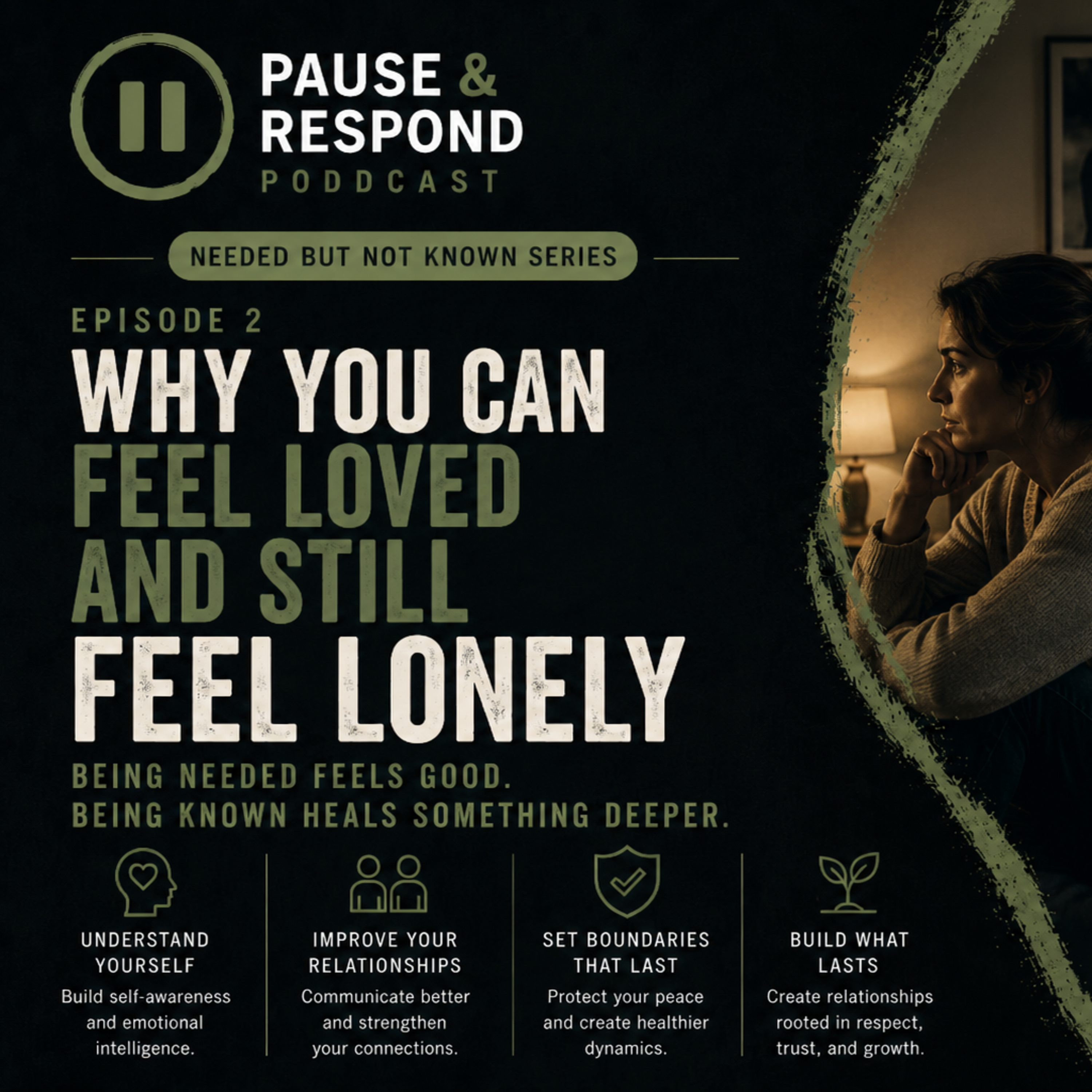
    Why You Can Feel Loved and Still Feel Lonely | The Hidden Hunger to Be Known

    Why do some of the loneliest people in the world feel deeply loved? In Episode 2 of the Needed But Not Known series, Josua Rine explores one of the most confusing human experiences: feeling loved and still feeling lonely. Because love and loneliness are not always enemies. And perhaps the deepest hunger we carry isn't the need to be admired, appreciated, or even needed. Perhaps it's the longing to be known. In this episode, you'll discover: • Why love does not satisfy every human hunger. • Why some of the strongest people are often the loneliest. • Why being needed feels good, but being known heals something deeper. • Why many people spend years feeding the wrong hunger. • Why we may fear being known even more than we fear loneliness. • Why loneliness may not be the enemy. • And why loneliness may actually be an invitation. If you've ever wondered: "Why do I still feel lonely when I know I'm loved?" This episode is for you. Visit www.pauseandrespond.com for books, workbooks, articles, and resources designed to help you strengthen your emotional health and relationships. Less Reaction. More Choice. #Loneliness #Relationships #EmotionalIntimacy #MentalHealth #MarriageAdvice #RelationshipAdvice #EmotionalHealth #SelfAwareness #Communication #PersonalGrowth #PauseAndRespond #JosuaRine

  • June 19 · 29 min

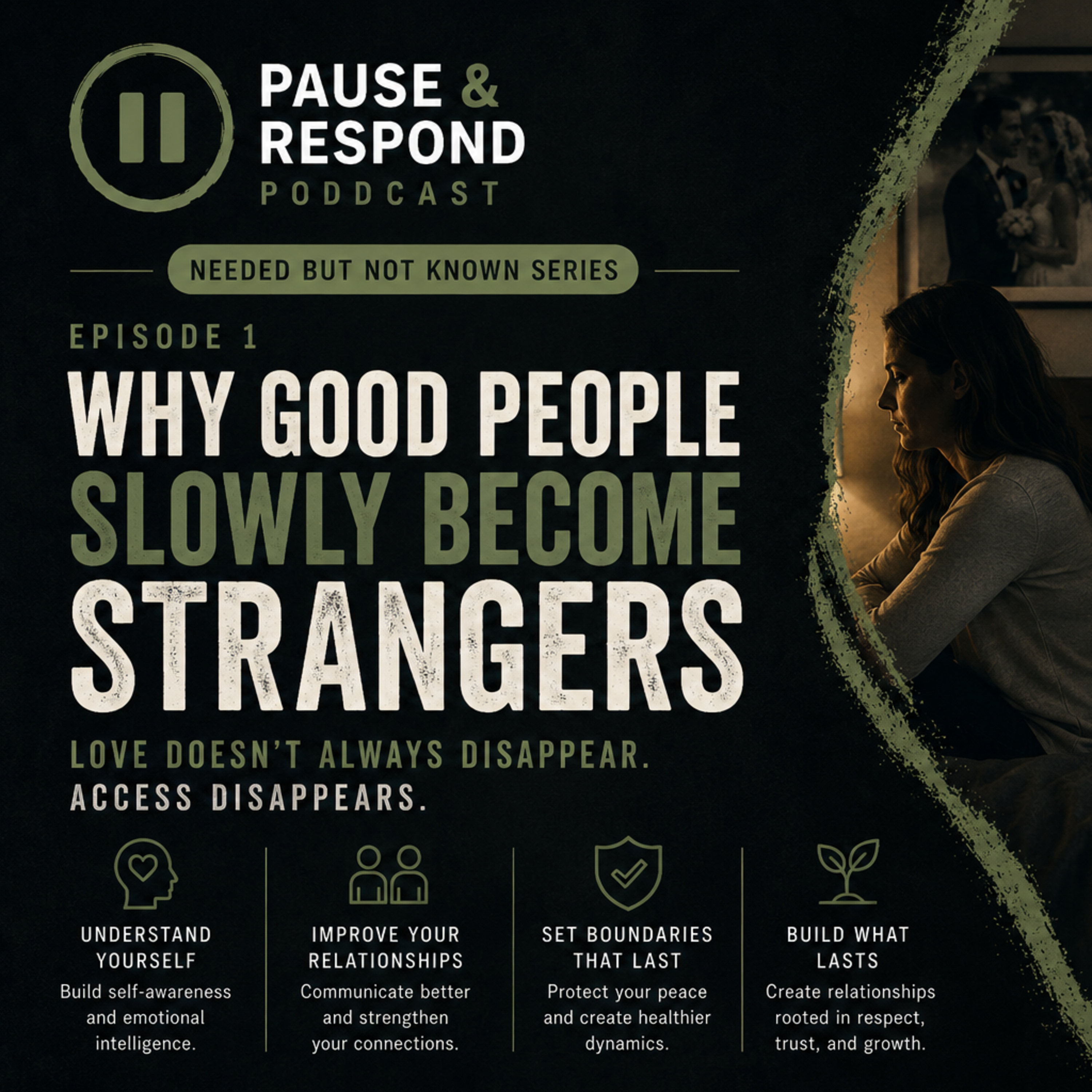
    Why Good People Slowly Become Strangers in Their Marriage | Why Couples Feel Lonely Together

    How do two people who once couldn't stop talking become two people who barely know what to say? In this powerful first episode of the Needed But Not Known series, Josua Rine explores one of the quietest tragedies in relationships: how good people slowly become strangers. Most relationships don't collapse because people stop loving each other. They drift apart because they stop sharing. You'll discover: Why love doesn't always disappear—access disappears. How fear disguises itself as responsibility. Why emotional distance is often created by protection, not cruelty. Why some of the loneliest people in the world are deeply loved. Why you don't always miss another person—you sometimes miss who you were together. How healing begins when two people choose to become known again. If you've ever looked at someone you love and quietly wondered, "What happened to us?" this episode is for you.

  • S7 · E14
    June 12 · 10 min

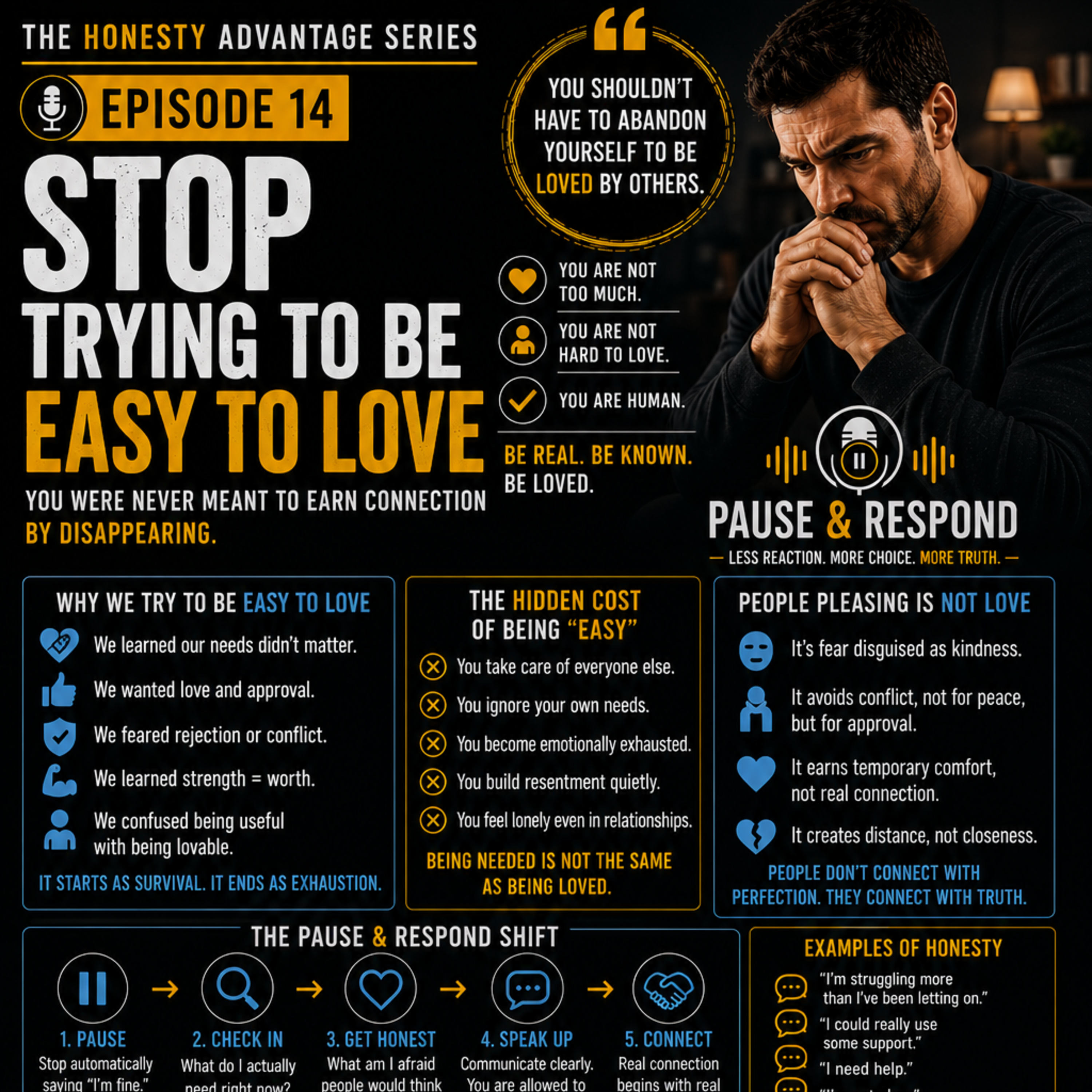
    Stop Trying to Be Easy to Love | People Pleasing, Emotional Exhaustion & Self-Worth

    Have you spent your life trying to be easy to love? Always being the strong one. The helper. The dependable one. The person who never asks for much. In this episode of Pause & Respond, Josua Rine, LPC, explores the hidden emotional cost of people pleasing, emotional self-neglect, and trying to earn love through performance. Learn why constantly being "low maintenance" can lead to loneliness, resentment, emotional exhaustion, and feeling unseen in your closest relationships. This episode covers: people pleasing emotional exhaustion self-worth and identity loneliness and connection emotional honesty relationships and vulnerability fear of rejection emotional intelligence codependency and self-sacrifice the Pause & Respond framework If you've spent years being the strong one, carrying everything yourself, and trying to make life easier for everyone else, this episode will help you understand why being useful is not the same as being loved. Visit: for books, workbooks, coaching, and additional podcast resources. #PauseAndRespond #PeoplePleasing #SelfWorth #EmotionalIntelligence #Relationships #MentalHealth #Loneliness #SelfAwareness #Boundaries #EmotionalHealth PauseAndRespond.com

  • S7 · E13
    June 11 · 11 min

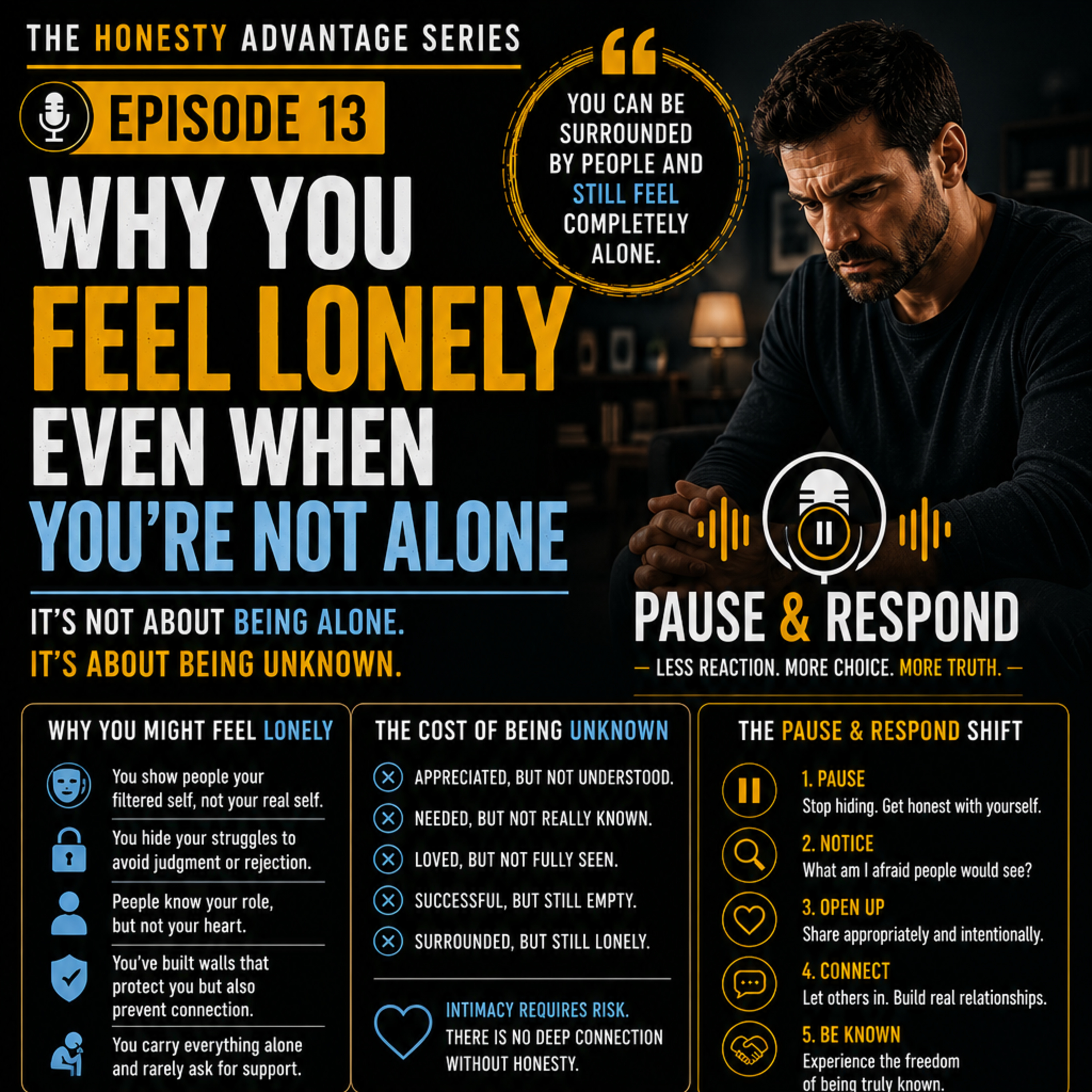
    Why You Feel Lonely Even When You're Not Alone | The Hidden Cost of Emotional Isolation

    Why do so many people feel lonely even when they're surrounded by family, friends, and relationships? In this episode of Pause & Respond, Josua Rine, LPC, explores emotional loneliness, vulnerability, and why feeling unknown can create deeper pain than physical isolation. Learn why high-functioning people often carry the most while sharing the least, why emotional self-protection leads to disconnection, and how honesty creates the kind of connection people are truly searching for. This episode covers: emotional loneliness vulnerability and connection emotional isolation men's mental health emotional honesty relationships and intimacy fear of vulnerability emotional intelligence self-protection and loneliness the Pause & Respond framework If you've ever felt lonely despite having people around you, or wondered why you still feel disconnected even in close relationships, this episode will help you understand the hidden cost of carrying everything alone. Visit: for books, workbooks, coaching, and additional podcast resources. #PauseAndRespond #Loneliness #MentalHealth #Relationships #EmotionalIntelligence #Vulnerability #MensMentalHealth #Connection #SelfAwareness #CommunicationSkills PauseAndRespond.com

  • S7 · E12
    June 10 · 10 min

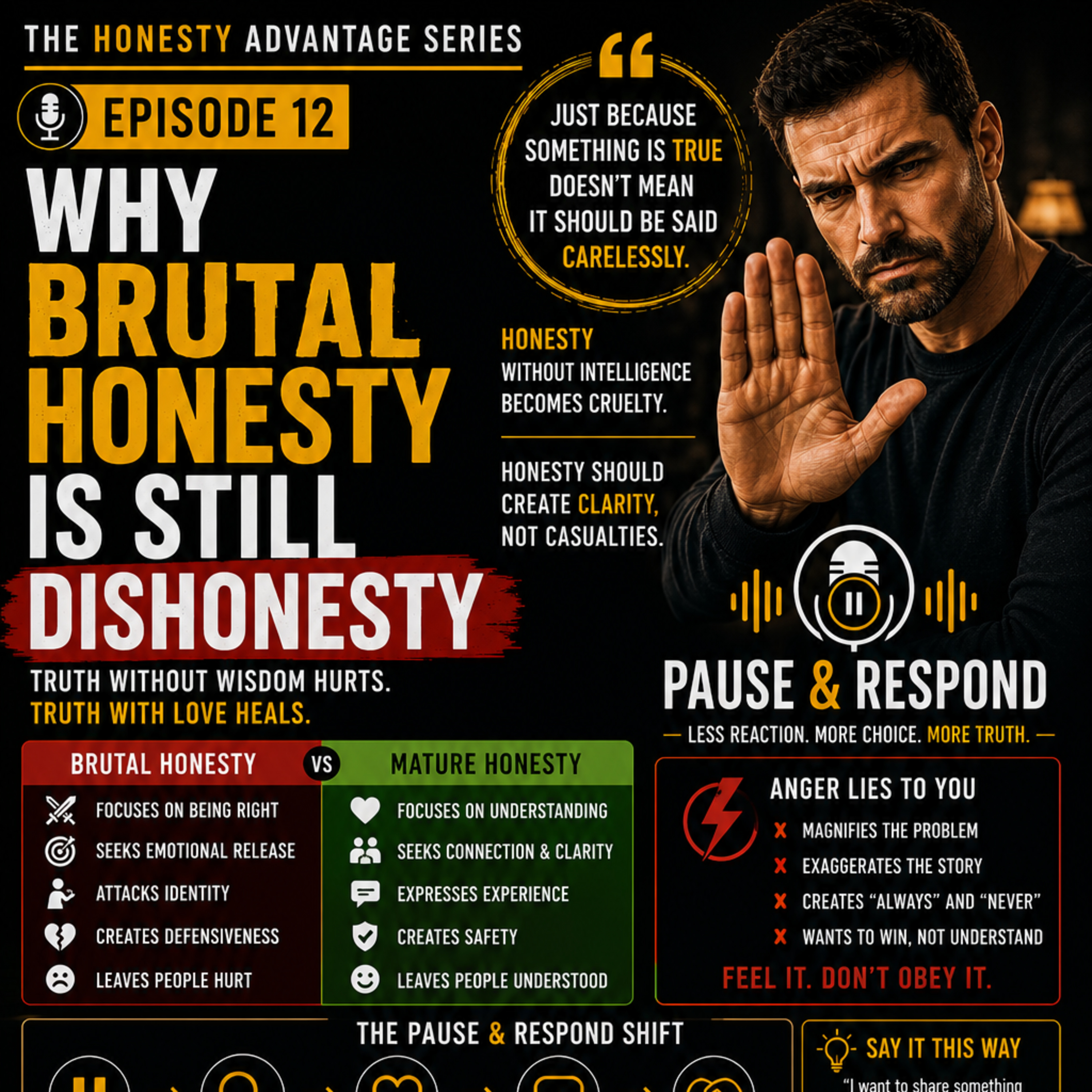
    Why Brutal Honesty Is Still Dishonesty | Emotional Intelligence & Healthy Communication

    Is brutal honesty really honesty? In this episode of Pause & Respond, Josua Rine, LPC, explores the difference between emotional honesty and emotional dumping. Learn why anger often feels truthful, why harsh communication creates defensiveness, and how mature honesty builds trust instead of causing damage. Many people believe they're "just being honest" when they're actually releasing pain, criticism, or unresolved emotions. This episode covers: brutal honesty vs healthy honesty emotional intelligence communication skills anger and emotional regulation defensiveness in relationships conflict resolution trust and emotional safety emotional maturity boundaries and connection the Pause & Respond framework If you've ever struggled with speaking the truth without hurting people—or have been hurt by someone who claimed they were "just being honest"—this episode will help you understand the difference between truth and emotional overflow. Visit: for books, workbooks, coaching, and additional podcast resources. #PauseAndRespond #EmotionalIntelligence #CommunicationSkills #Relationships #AngerManagement #EmotionalRegulation #ConflictResolution #MentalHealth #SelfAwareness #HealthyCommunication PauseAndRespond.com

  • S7 · E11
    June 9 · 10 min

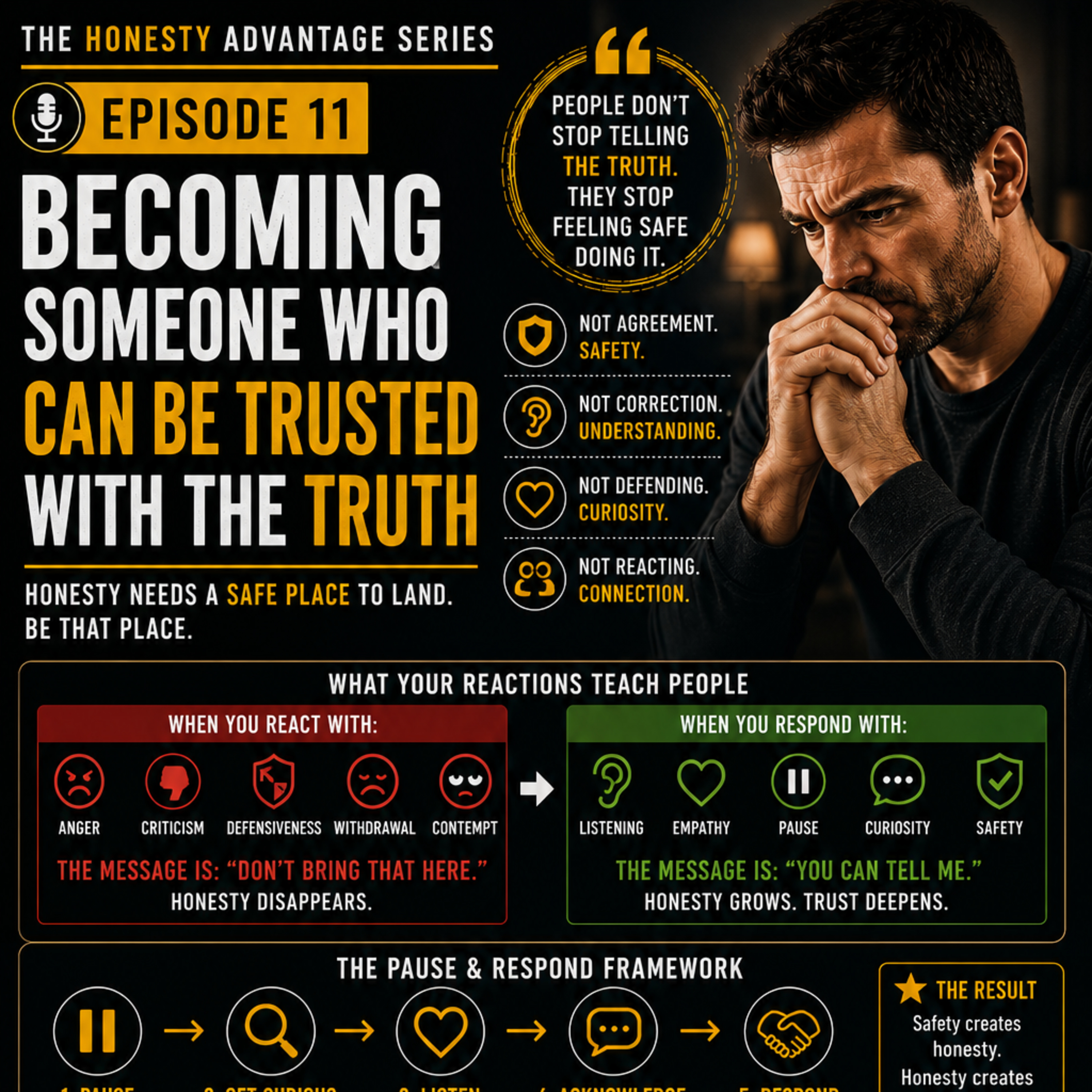
    Becoming Someone Who Can Be Trusted With the Truth | How Emotional Safety Builds Strong Relationships

    Why do people stop being honest in relationships? It's often not because they don't care. It's because honesty no longer feels safe. In this episode of Pause & Respond, Josua Rine, LPC, explores emotional safety, defensiveness, trust, and why people need more than love — they need relationships where they can tell the truth without fear of judgment, shame, or emotional punishment. Learn how your reactions teach people whether honesty is welcome and why becoming someone who can hold difficult conversations without defensiveness creates deeper connection and stronger trust. This episode covers: emotional safety trust in relationships defensiveness communication skills emotional intelligence vulnerability active listening conflict resolution relationship connection the Pause & Respond framework If you want stronger relationships, deeper conversations, and more emotional intimacy, this episode will help you understand how trust is built — and how it is quietly lost. Visit: for books, workbooks, coaching, and additional podcast resources. #PauseAndRespond #Trust #Relationships #CommunicationSkills #EmotionalIntelligence #EmotionalSafety #MentalHealth #SelfAwareness #Marriage #Connection PauseAndRespond.com

Showing 1–20 of 20 episodes