Skip to content
Artwork for Patrick Boyle
BusinessInvestingEducation

Patrick Boyle

Patrick Boyle

Patrick Boyle is a hedge fund manager, a university professor and a former investment banker.

This channel is all about quantitative finance. By subscribing you will see videos explaining what is happening in markets right now, you will learn about financial derivatives, corporate finance and how traders use quantitative tools like statistics. You will see interviews with some of the most interesting people in the financial industry. In addition, you will see some longer form documentaries on the history of financial markets.

To contact Patrick go to the website http://onfinance.org

DISCLAIMER:
This channel is not affiliated with any financial institution. The videos on this channel are for entertainment purposes only and do not constitute financial advice. Those seeking investment advice should seek out a registered professional. Patrick is not responsible for investment actions taken by viewers and his content should not be used as a basis for investment.

Links:
Amazon Author Page: https://amzn.to/3bTeqed
Patreon: https://www.patreon.com/PatrickBoyleOnFinance
Website: https://www.onfinance.org/
Instagram: https://www.instagram.com/patrickeboyle/
BlueSky: https://bsky.app/profile/pboyle.bsky.social

Play
  • 479 episodes
  • Avg 28 min
  • English
Counted on this page — what you have heard stays on this device, so it is not something the list can be paged by.
  • Thursday · 34 min

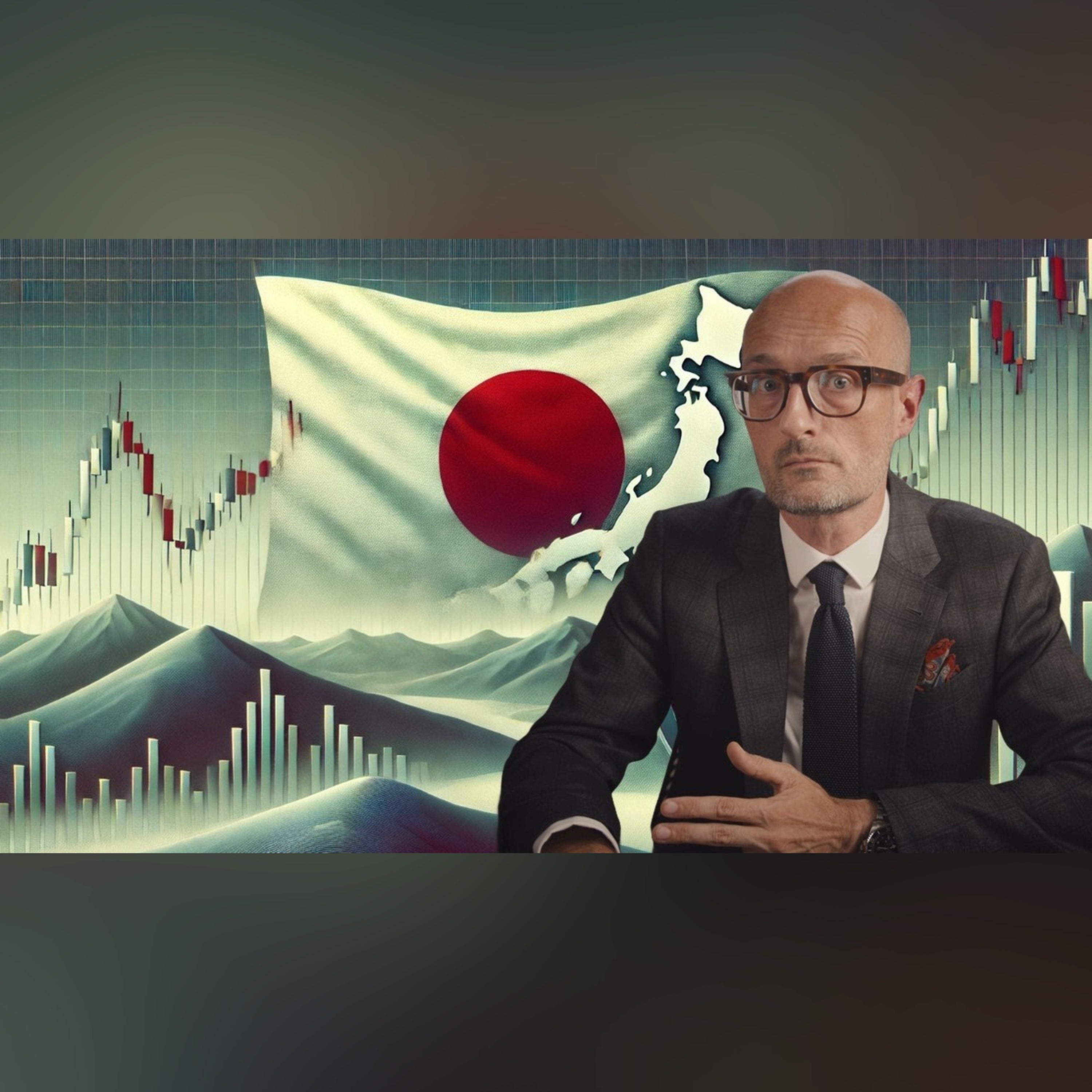
    Japan Spent 60 Billion Dollars Defending The Yen!

    Get a free 14-day trial of Odoo’s all-in-one business solution and see how it can make your life easier! Check it out at https://www.odoo.com/r/YQW Over a four-day period Japan is suspected to have carried out two interventions to support the yen at an estimated cost of $59 billion dollars. The first intervention came after the yen fell below 160 to the dollar for the first time in 34 years. The second intervention came a few days later after Jerome Powell announced that a rate hike was unlikely to be the Fed’s next interest-rate move. The simplest explanation for the declining yen is that it is entirely driven by Japanese interest rates being low relative to other developed markets. People take their money out of the yen which is yielding 0 and put it in dollar denominated bonds to earn 5% - leading to a decline in the yen, but my friend Manoj Pradhan at Talking Heads Macro argues that this is a lazy oversimplification and that the Yen and Japanese markets are possibly the most interesting story in macroeconomics today. Manoj Pradhan on Twitter: https://x.com/ManojPradhanTHM Patrick's Books: Statistics For The Trading Floor: https://amzn.to/3eerLA0 Derivatives For The Trading Floor: https://amzn.to/3cjsyPF Corporate Finance: https://amzn.to/3fn3rvC Ways To Support The Channel Patreon: https://www.patreon.com/PatrickBoyleOnFinance Buy Me a Coffee: https://www.buymeacoffee.com/patrickboyle Visit our website: www.onfinance.org Follow Patrick on Twitter Here: https://twitter.com/PatrickEBoyle Patrick Boyle On Finance Podcast: Spotify: https://open.spotify.com/show/7uhrWlDvxzy9hLoW0EYf0b Apple: https://podcasts.apple.com/us/podcast/patrick-boyle-on-finance/id1547740313 Google Podcasts: https://tinyurl.com/62862nve Join this channel to support making this content: https://www.youtube.com/channel/UCASM0cgfkJxQ1ICmRilfHLw/join Learn more about your ad choices. Visit megaphone.fm/adchoices


  • Thursday · 34 min

    Tech Bros Inventing Things That Already Exist

    Ad: 🔒Remove your personal information from the web at https://joindeleteme.com/BOYLE and use code BOYLE for 20% off 🙌 DeleteMe international Plans: https://international.joindeleteme.com It seems like every day the tech industry comes out with a "brilliant new idea” that turns out to be merely a reinvention of a mundane product that already existed. Tech bros keep reinventing the bus, but they have also taken to reinventing the tea pot, the toothbrush, the lunchbreak and the public park. In today's video we look at the tech products that either already existed or should never have existed. Patrick's Books: Statistics For The Trading Floor: https://amzn.to/3eerLA0 Derivatives For The Trading Floor: https://amzn.to/3cjsyPF Corporate Finance: https://amzn.to/3fn3rvC Ways To Support The Channel Patreon: https://www.patreon.com/PatrickBoyleOnFinance Buy Me a Coffee: https://www.buymeacoffee.com/patrickboyle Amazon Affiliate Links Hydrate Spark: https://amzn.to/4dXX0hi Soylent: https://amzn.to/3ThRyxp A Juicer – which might be good: https://amzn.to/3XmLiWm A Bluetooth Tea Pot: https://amzn.to/3ZtlYRc Doug Evans – Sprouts: https://amzn.to/3XjXMy7 A Tent: https://amzn.to/3TmrIZm AI Powered Toothbrush: https://amzn.to/3B2Ktuv Affordable GPU for Handbag Making: https://amzn.to/4edxiFp Rocket: https://amzn.to/3MDADBP Visit our website: https://www.onfinance.org Follow Patrick on Twitter Here: https://twitter.com/PatrickEBoyle Business Inquiries ➡️ sponsors@onfinance.org Patrick Boyle On Finance Podcast: Spotify: https://open.spotify.com/show/7uhrWlDvxzy9hLoW0EYf0b Apple: https://podcasts.apple.com/us/podcast/patrick-boyle-on-finance/id1547740313 Google Podcasts: https://tinyurl.com/62862nve Join this channel to support making this content: https://www.youtube.com/channel/UCASM0cgfkJxQ1ICmRilfHLw/join Learn more about your ad choices. Visit megaphone.fm/adchoices

  • Thursday · 13 min

    What are the problems with VaR? | Risk Management | Finance

    In todays video we will learn about some of the problems in Value at Risk. These classes are all based on the book Trading and Pricing Financial Derivatives, available on Amazon at this link. https://amzn.to/2WIoAL0 Check out our website http://www.onfinance.org/ Follow Patrick on twitter here: https://twitter.com/PatrickEBoyle In todays video we will learn about some problems with Value at Risk (VaR) Calculations. One of the first issues with VaR is that there is no standard protocol for the statistics used to determine asset, portfolio or firm-wide risk. For example, statistics calculated using a period of low volatility may understate the potential for risk events to occur and the magnitude of those events. Risk may be further understated using normal distribution probabilities, which rarely account for extreme events. The assessment of potential loss represents the lowest amount of risk in a range of outcomes. For example, a VaR determination of 95% with 20% asset risk represents an expectation of losing at least 20% one of every 20 days on average. In this calculation, a loss of 50% still validates the risk assessment. The financial crisis of 2008 exposed these problems as the relatively benign VaR calculations ended up understating the risk posed by portfolios of subprime mortgages. Risk magnitude was also underestimated, which resulted in extreme leverage ratios within subprime portfolios. As a result, the underestimations left institutions unable to cover billions of dollars in losses as subprime mortgage values collapsed. Watch the video for more information. Learn more about your ad choices. Visit megaphone.fm/adchoices

  • Thursday · 15 min

    Probability in Finance - Statistics For The Trading Floor - Quantitative Methods

    Today we discuss probability in finance and why it is important for investors to have a good understanding of probability theory. Probability theory is widely applicable in all areas of finance. Probability allows financial professionals to calculate things like expected value and to price derivatives. The expected value of an investment is simply the probabilities of the various outcomes multiplied by the various payoffs in the different scenarios. Probability is used everywhere from valuing a simple equity investment, to pricing exotic derivatives. The insurance industry is almost entirely built upon probability calculations, and an important component of credit is the probability a loan will be repaid. In Patrick Boyles' book “Statistics For The Trading Floor” (available at this link https://amzn.to/3fcQrIK) he works through all of the important probability calculations and how quantitative methods can be applied in stock market analysis. In the video Patrick mentions professional poker player Annie Duke and her book Thinking in Bets, available at this link. https://amzn.to/33bnt9F Patricks' Books: Statistics for Traders: https://amzn.to/3eerLA0 Financial Derivatives: https://amzn.to/3kwsPSr Corporate Finance: https://amzn.to/3fn3rvC Visit our website: www.onfinance.org Follow Patrick on Twitter Here: https://twitter.com/PatrickEBoyle Patreon Page: https://www.patreon.com/PatrickBoyleOnFinance Learn more about your ad choices. Visit megaphone.fm/adchoices

  • Thursday · 9 min

    Intrinsic value and Time Value of Financial Options

    What is Intrinsic value and Time Value of Financial Options?, In The Money, At The Money, Out Of The Money These classes are all based on the book Trading and Pricing Financial Derivatives, available on Amazon at this link. https://amzn.to/2WIoAL0 Check out our website http://www.onfinance.org/ Follow Patrick on twitter here: https://twitter.com/PatrickEBoyle The price of an option is made up of a combination of intrinsic value and time value. The intrinsic value of an option is the value of exercising the option right now. If the price of the underlying stock is above a call option strike price, the option has a positive monetary value, and is referred to as being in-the-money. If the underlying stock is priced cheaper than the call option's strike price, the call option is referred to as being out-of-the-money. If an option is out-of-the-money at expiration, its holder simply allows the option to expire worthless. This is because a rational investor would choose to buy the underlying stock at market rather than exercise an out-of-the-money call option to buy the same stock at a higher-than-market price. For the same reasons, a put option is in-the-money if it allows the purchase of the underlying at a market price below the strike price of the put option. A put option is out-of-the-money if the underlying's spot price is higher than the strike price. The time value of an option is the premium a rational investor would pay over its current exercise value (intrinsic value), based on the probability it will increase in value before expiry. Learn more about your ad choices. Visit megaphone.fm/adchoices

  • Thursday · 15 min

    Saint or Sinner

    Learn more about your ad choices. Visit megaphone.fm/adchoices

  • Thursday · 26 min

    Was Endless Shrimp to Blame for Red Lobster's Bankruptcy?

    To try everything Brilliant has to offer for free for a full 30 days, visit https://brilliant.org/patrick/. You’ll also get 20% off an annual premium subscription. Red Lobster was America’s largest casual dining seafood chain, with almost 600 locations across the United States and Canada. Its bankruptcy was announced earlier this week. The bankruptcy declaration insinuates that the chains equity owner who was also their biggest seafood supplier might have decided that their equity stake in the business was worthless, but that they could extract some extra value from the company before it declared bankruptcy by selling them a lot of extra shrimp, leading to the uneconomical "Endless Shrimp" deal at Red Lobster. The decision to make the $20-dollar endless shrimp deal a permanent menu item is said to have led to an $11 million dollar loss. The bankruptcy declaration says that “the Debtors are currently investigating the circumstances around these decisions.” @pat_finnerty video link https://www.youtube.com/watch?v=2WeEyncm_jQ Red Lobster Bankruptcy Filing: https://dm.epiq11.com/case/redlobster/info Patrick's Books: Statistics For The Trading Floor: https://amzn.to/3eerLA0 Derivatives For The Trading Floor: https://amzn.to/3cjsyPF Corporate Finance: https://amzn.to/3fn3rvC Ways To Support The Channel Patreon: https://www.patreon.com/PatrickBoyleOnFinance Buy Me a Coffee: https://www.buymeacoffee.com/patrickboyle Visit our website: https://www.onfinance.org Follow Patrick on Twitter Here: https://twitter.com/PatrickEBoyle Patrick Boyle On Finance Podcast: Spotify: https://open.spotify.com/show/7uhrWlDvxzy9hLoW0EYf0b Apple: https://podcasts.apple.com/us/podcast/patrick-boyle-on-finance/id1547740313 Google Podcasts: https://tinyurl.com/62862nve Join this channel to support making this content: https://www.youtube.com/channel/UCASM0cgfkJxQ1ICmRilfHLw/join Learn more about your ad choices. Visit megaphone.fm/adchoices

  • Thursday · 32 min

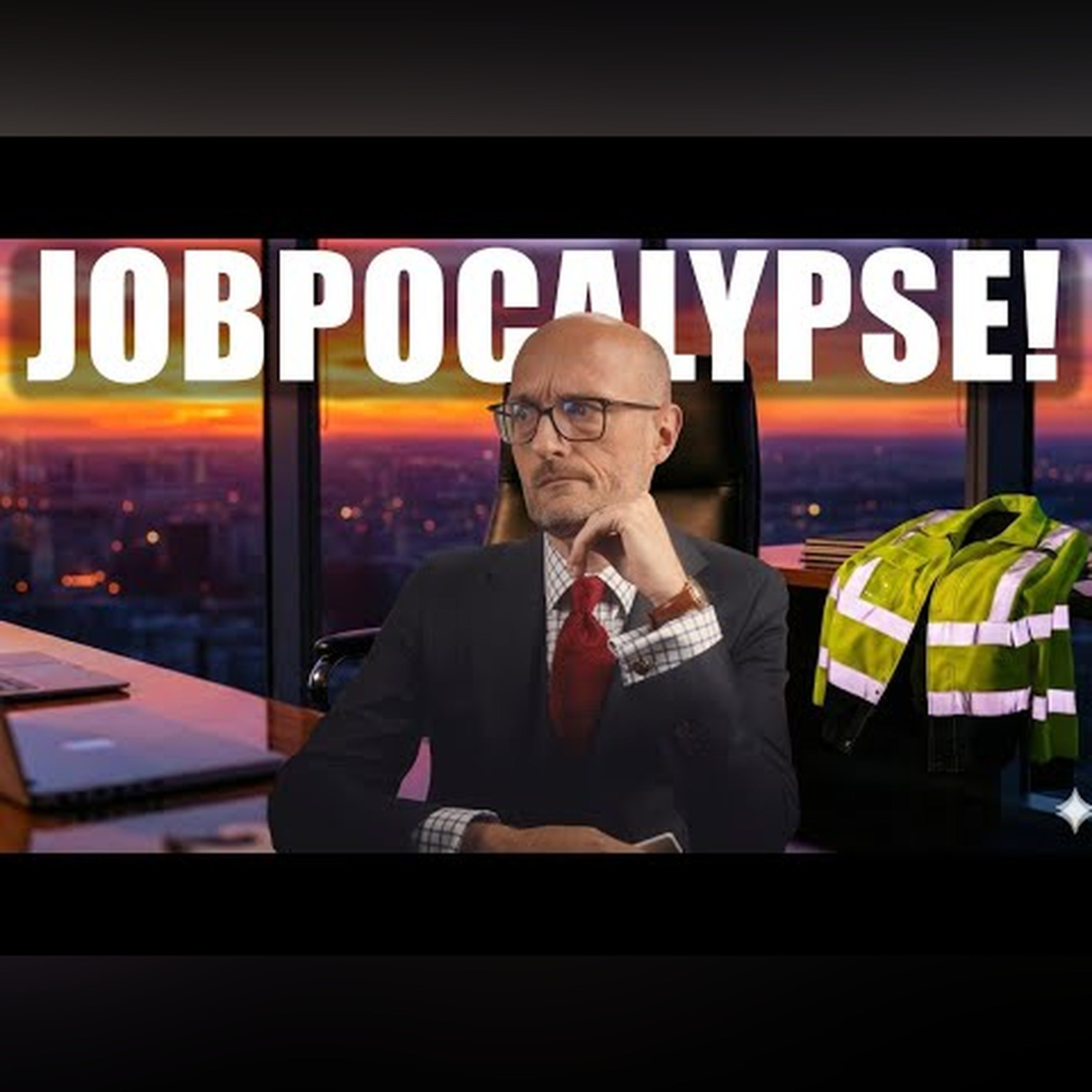
    AI and the Death of the Career Ladder

    Check out OpenDots ONE: https://sdqk.shokz.com/PatrickBoyle/ks9vcQRP?utm_content=link Get 30% OFF the OpenDots ONE. Save an extra 5% with my code PATRICK5, plus a limited Buy One, Get One (BOGO). For decades, a university degree was the golden ticket to a stable career and upward mobility. That promise is breaking down. Graduate unemployment is rising, entry-level jobs are disappearing, and automation is hollowing out the first rung of the corporate ladder. Patrick's Books: Statistics For The Trading Floor: https://amzn.to/3eerLA0 Derivatives For The Trading Floor: https://amzn.to/3cjsyPF Corporate Finance: https://amzn.to/3fn3rvC Ways To Support The Channel Patreon: https://www.patreon.com/PatrickBoyleOnFinance Buy Me a Coffee: https://www.buymeacoffee.com/patrickboyle Visit our website: https://www.onfinance.org Follow Patrick on Twitter Here: https://bsky.app/profile/pboyle.bsky.social Business Inquiries ➡️ sponsors@onfinance.org Patrick Boyle On Finance Podcast: Spotify: https://open.spotify.com/show/7uhrWlDvxzy9hLoW0EYf0b Apple: https://podcasts.apple.com/us/podcast/patrick-boyle-on-finance/id1547740313 Google Podcasts: https://tinyurl.com/62862nve Join this channel to support making this content: https://www.youtube.com/channel/UCASM0cgfkJxQ1ICmRilfHLw/join Learn more about your ad choices. Visit megaphone.fm/adchoices

  • Thursday · 33 min

    Is Ireland Really the World's Richest Country?

    Head to https://brilliant.org/patrick/ to start your free 30-day trial. The first 200 of you will get 20% off Brilliant's annual premium subscription. Oil rich countries have long used sovereign-wealth funds to store their windfall profits from periods of high prices for future years when hard times might arise. Ireland on Tuesday created its own sovereign wealth fund thanks to outsize tax revenues from international companies seeking to lower their tax bills. In the past eight years, the country of five million people has watched its corporate tax income triple to the tune of 22.6 billion euros last year, equivalent to almost $24 billion—giving it a budget surplus last year of a comfortable €8 billion euros. According to GDP per capita statistics, Ireland is the wealthiest country in the world. Could this be true? Patrick's Books: Statistics For The Trading Floor: https://amzn.to/3eerLA0 Derivatives For The Trading Floor: https://amzn.to/3cjsyPF Corporate Finance: https://amzn.to/3fn3rvC Ways To Support The Channel Patreon: https://www.patreon.com/PatrickBoyleOnFinance Buy Me a Coffee: https://www.buymeacoffee.com/patrickboyle Visit our website: www.onfinance.org Follow Patrick on Twitter Here: https://twitter.com/PatrickEBoyle Patrick Boyle On Finance Podcast: Spotify: https://open.spotify.com/show/7uhrWlDvxzy9hLoW0EYf0b Apple: https://podcasts.apple.com/us/podcast/patrick-boyle-on-finance/id1547740313 Google Podcasts: https://tinyurl.com/62862nve Join this channel to support making this content: https://www.youtube.com/channel/UCASM0cgfkJxQ1ICmRilfHLw/join Learn more about your ad choices. Visit megaphone.fm/adchoices

  • Thursday · 51 min

    Finding a Job in Finance | Finding a Job During Coronavirus | How to Network

    In today’s video we are going to discuss how to find a job in finance in 2020 and particularly how to find a job in finance during difficult times like during the coronavirus pandemic. What to expect when looking for a job during coronavirus. Visit our website: www.onfinance.org Follow Patrick on Twitter Here: https://twitter.com/PatrickEBoyle Patricks’ Books: Derivatives: https://amzn.to/2yOdRoN Corporate Finance: https://amzn.to/2T56Syu Statistics for Traders https://amzn.to/3dUv8vn The US economy has shrunk almost 5% in the first quarter of 2020, many experts are predicting the worst economic recession "in our lifetime." The Bank of England is predicting the worst economic slowdown in 300 years. Right now, 33 million US workers are unemployed So, times are hard, or at least harder than normal, but that should in no way deter you. These jobs are always hard to find It usually takes 3 - 6 months to find a good job In difficult times you just must double your efforts Many of your competitors will feel discouraged and give up – you don’t have to. This job hunt will not be fun, but by the end of it you will have built an amazing skillset and be so much more resilient than before. You have a full-time job right now, and that job is the job hunt You are a salesperson! You will find that you will be selling for your entire career. The seven key steps in your job hunt: 1. Inventory your skills and work out how they could be useful to a variety of employers 2. Build a high quality cv, have friends check it, eliminate buzzwords and management speak 3. Create a list of firms you could apply for. There are lots of great firms that you just haven’t heard of. 4. Read the financial press, look for firms that are growing or expanding. They should be high on your list. 5. For phone interviews, use “cheat sheets” 6. Apply online to all the big firms 7. Find an exhaustive list of big firms on Wikipedia. 8. Seek Internships and full-time jobs That is the easy stuff out of the way. You need to set goals, the goals need to be short term and achievable. You need to break complex tasks down to their simple components. What is the first step? Step 1: get a meeting. Step 2: Then lots of meetings. Build a written plan, judge yourself against it be systematic Set short term goals 1-5-day goals Find jobs that have not yet been advertised Contact real people not companies Have a spreadsheet or word file where you keep detailed notes of your meetings. Judge your progress by the results you see, not by the number of applications The job hunt is a numbers game, the moor meetings you get the better your odds are. Prepare for an interview with a friend Search online for how the interview process works at the firms you are applying to. Find the typical questions Research the firm and the people interviewing you Prepare for well-known interview questions, prepare genuine good answers. Keep searching right up until the moment you have signed an employment contract – don’t slow down just because you had a good interview The harder you work at your job-hunt the more likely you are to be successful. Learn more about your ad choices. Visit megaphone.fm/adchoices

  • Thursday · 48 min

    John Law - The First Financial Engineer - A History of Paper Money and The Mississippi Bubble

    John Law was a Scottish monetary reformer and originator of the “Mississippi scheme” for the development of French territories in America. After killing an adversary in a duel, he fled to Amsterdam, where he was a professional gambler and learned about banking operations. A decade later he returned to Scotland and wrote his best-known work, Money and Trade Considered, with a Proposal for Supplying the Nation with Money (available on Amazon at this link https://amzn.to/2Wkts7p). He submitted his banking reform plan to the English and Scottish parliaments, but it was rejected. After several other rejections, Law received permission in 1716 to try his plan in France. The French government was heavily in debt as a result of the extensive wars of Louis XIV, who died in 1715; and Law’s program, which promised to reduce the public debt, held obvious appeal. With Law, however, lowering the public debt was somewhat incidental. He shared with his mercantilist contemporaries a belief that money is a creative force in economic development and that an increase in its quantity would stimulate a larger national product and would increase national power. He differed from other mercantilists in looking upon a central bank as an agency for manufacturing money in the form of bank notes that would circulate in place of gold and silver, which were scarce. In Paris, Law founded a bank with authority to issue notes. Later he combined with his bank the Company of the West (better known as the Mississippi Company), which had exclusive privileges to develop the vast French territories in the Mississippi Valley of North America. Law’s plan worked well for a few years but ran afoul of speculative complications and political intrigue, neither of which were directly attributable to Law. As the author of the program, popularly known as the “Mississippi Bubble,” Law was responsible and was forced to flee France in 1720. He died in Venice a poor man. Patreon Page: https://www.patreon.com/PatrickBoyleOnFinance Patrick's Books: Statistics for Traders: https://amzn.to/3eerLA0 Financial Derivatives: https://amzn.to/3cjsyPF Corporate Finance: https://amzn.to/3fn3rvC Visit our website: www.onfinance.org My favourite book on John Law and the Mississippi Bubble was Millionaire by Janet Gleeson: https://amzn.to/3oSu7sU Follow Patrick on Twitter Here: https://twitter.com/PatrickEBoyle Patreon Page: https://www.patreon.com/PatrickBoyleOnFinance Learn more about your ad choices. Visit megaphone.fm/adchoices

  • Thursday · 1 hr 22 min

    Applied Portfolio Management - Class 7 - Hedge Fund Strategies - How Hedge Funds Invest

    All slides are available on my Patreon page: https://www.patreon.com/PatrickBoyleOnFinance Applied Portfolio Management - How Hedge Funds Invest. In todays class we learn what a hedge fund is, we learn why people invest in them, and how hedge funds and other alternative investments might add value in a diversified portfolio. We will talk about a number of hedge fund strategies such as long-short equity or market neutral, convertible bond arbitrage, fixed income arbitrage, macro investing, managed futures or CTA's volatility arbitrage and capital structure arbitrage. We will learn how these strategies work, and what the returns look like. Tune in to tomorrows video to learn about more hedge fund strategies. Books mentioned in todays video: When Genius failed by Roger Lowenstein https://amzn.to/2WZt28h Buy Patrick's Book Here: https://amzn.to/2J2kF3A Visit our website: www.onfinance.org Follow Patrick on Twitter Here: https://twitter.com/PatrickEBoyle Learn more about your ad choices. Visit megaphone.fm/adchoices

  • Thursday · 54 min

    Unknown Market Wizards - Jack Schwager - The Worlds Greatest Unknown Traders

    Market Wizards - Jack Schwager on the worlds greatest unknown traders. An interview with Jack Schwager, the author of The Market Wizards series of books, on his new book, Unknown Market Wizards. Jack has been involved in financial markets for over 45 years, he worked as a market analyst, a trader, managed institutional portfolios of managed accounts, and has written extensively on the futures industry. He is most famous for his Market Wizards series of books, interviews with great traders in all financial markets. He has just released the newest installment of that series Unknown Market Wizards, which I reviewed in my Top Ten Books for Traders list earlier this week. Schwager has interviewed Bruce Kovner, David Shaw, Paul Tudor Jones, Ed Seykota, Michael Steinhardt, William O’Neill, William Eckhardt, Monroe Trout, Stanley Druckenmiller, Mark Ritchie, Blair Hull, Larry Hite, Jim Rogers, Edward Thorp, Richard Dennis, and many more of the worlds most famous and highest returning traders. Patrick Boyle asks Jack about the characteristics these great traders have in common, what it takes to be a great trader, and what kind of returns do market wizards make in the long run. They discuss the efficient markets hypothesis, risk management, and how markets change over time. Unknown Market Wizards by Jack Schwager: https://amzn.to/3om6SHJ Jack Schwager Author Page on Amazon: https://amzn.to/3mBTq1L Jack's Website: https://jackschwager.com/ Patrick's Books: Statistics for the Trading Floor: https://amzn.to/3eerLA0 Derivatives for the Trading Floor: https://amzn.to/3cjsyPF Corporate Finance: https://amzn.to/3fn3rvC Visit our website: www.onfinance.org Follow Patrick on Twitter Here: https://twitter.com/PatrickEBoyle Patreon Page: https://www.patreon.com/PatrickBoyleOnFinance Learn more about your ad choices. Visit megaphone.fm/adchoices

  • Thursday · 1 hr 7 min

    Are Ray Dalio's Principles the Secret to His Success?

    Sign up for Compounded Daily at this link: https://www.compoundeddaily.com/ Since founding Bridgewater nearly 50 years ago, Ray Dalio has become one of the world’s richest investors. He is widely credited with having predicted and profited from both the 1987 crash and the 2008 financial crisis. He is the founder of the world’s largest hedge fund and is one of the most successful businessmen alive, yet he professes to be seeking something more meaningful than just money or business success. According to Dalio, his main interest, over the last twenty years is to lead others toward “meaningful lives” and “meaningful relationships” through the application of his principles. He has written a number of books and given a Ted Talk on this topic. Rob Copeland is a journalist at the New York Times and was previously the longtime hedge fund beat reporter at The Wall Street Journal. In his new book “The Fund” he smashes through some of the mystique built up around Ray Dalio in recent years. He argues that very little of Dalio’s success is due to his widely promoted “Principles” and can be better explained by his ability to befriend influential people and impress them with his broad knowledge of the world, his skill at getting good publicity, and his early investment success. Rob interviewed hundreds of Bridgewater employees in order to write this unauthorized biography that shows Ray Dalio in a very different light. Dalio declined to be interviewed for the book and has threatened a lawsuit against Rob and his publisher. In today's video I interview Rob to hear his account of life at Bridgewater and whether he believes Ray Dalio’s principles are worth following. The Fund by Rob Copeland: https://amzn.to/40qLMMk Principles by Ray Dalio: https://amzn.to/46WTO22 Patrick's Books: Statistics For The Trading Floor: https://amzn.to/3eerLA0 Derivatives For The Trading Floor: https://amzn.to/3cjsyPF Corporate Finance: https://amzn.to/3fn3rvC Ways To Support The Channel Patreon: https://www.patreon.com/PatrickBoyleOnFinance Buy Me a Coffee: https://www.buymeacoffee.com/patrickboyle Visit our website: www.onfinance.org Follow Patrick on Twitter Here: https://twitter.com/PatrickEBoyle Patrick Boyle On Finance Podcast: Spotify: https://open.spotify.com/show/7uhrWlDvxzy9hLoW0EYf0b Apple: https://podcasts.apple.com/us/podcast/patrick-boyle-on-finance/id1547740313 Google Podcasts: https://tinyurl.com/62862nve Join this channel to support making this content: https://www.youtube.com/channel/UCASM0cgfkJxQ1ICmRilfHLw/join Learn more about your ad choices. Visit megaphone.fm/adchoices

  • Thursday · 24 min

    Inflation - A New Era?

    Unprecedented stimulus measures to help the global economy recover from the pandemic are fueling price rises in many major economies. This week we examine whether this is just temporary, or if inflation is back for good. Is this a new era of hyperinflation? Interview With Manoj Pradhan: https://www.youtube.com/watch?v=SHf0oma3QDA&t=605s Book by Manoj Pradhan - The Great Demographic Reversal: https://amzn.to/2TBpGsa Patrick's Books: Statistics For The Trading Floor: https://amzn.to/3eerLA0 Derivatives For The Trading Floor: https://amzn.to/3cjsyPF Corporate Finance: https://amzn.to/3fn3rvC Patreon Page: https://www.patreon.com/PatrickBoyleOnFinance Visit our website: www.onfinance.org Follow Patrick on Twitter Here: https://twitter.com/PatrickEBoyle Patrick Boyle On Finance Podcast: Spotify: https://open.spotify.com/show/7uhrWlDvxzy9hLoW0EYf0b Apple: https://podcasts.apple.com/us/podcast/patrick-boyle-on-finance/id1547740313 Google Podcasts: https://tinyurl.com/62862nve Join this channel to support making this content: https://www.youtube.com/channel/UCASM0cgfkJxQ1ICmRilfHLw/join Learn more about your ad choices. Visit megaphone.fm/adchoices

Showing 101–120 of 479 episodes