Skip to content
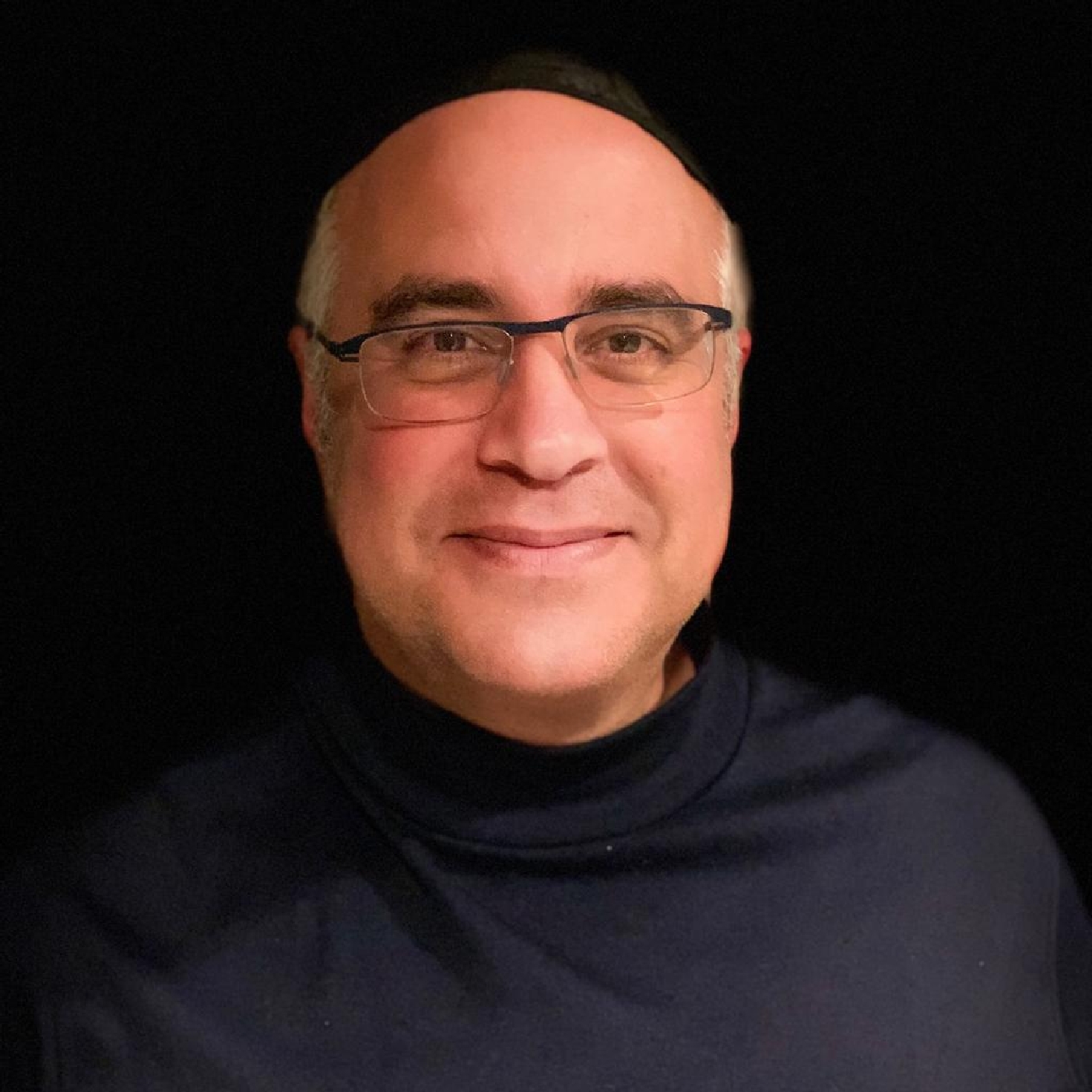
Artwork for Parsha with Rabbi David Bibi

Parsha with Rabbi David Bibi

JewishPodcasts.fm

Join as we explore the weekly parasha from a Kabbalistic perspective and attempt to simplify the secrets of the Torah

Play
  • 21 episodes
  • Avg 19 min
  • English
Counted on this page — what you have heard stays on this device, so it is not something the list can be paged by.
  • Yesterday · 14 min

    BEFORE THE FIRST MITZVAH — Why the Torah Begins with People - BERESHIT

    BEFORE THE FIRST MITZVAH — Why the Torah Begins with People If the Torah is our book of mitzvot, why does it begin with stories? The first Rashi explains why we need the account of creation—but why not then jump straight to “Haḥodesh hazeh lakhem,” the first commandment given to the Jewish people as a nation? In Wednesday morning’s Breakfast & Class, we explore a beautiful question and insight shared by Rabbi Mordechai Kamenetzky in our conversation Tuesday night: perhaps understanding Who created the world is only the beginning. We also need to learn how to live in it. Through the lives of Avraham, Yitzḥak, and Yaakov, we discover why Bereshit is called Sefer HaYashar—the Book of the Upright. Avraham pleads for Sedom, Yitzḥak makes room for peace, and Yaakov works honestly for a dishonest employer. Their stories bring the lesson into our own homes, businesses, and relationships: devotion to Hashem must shape how we treat people, especially when honesty, compassion, and restraint are difficult.

  • Tuesday · 53 min

    WHO IS HOLDING THE STRING? Three Years After October 7 — Providence, Free Will, and the 50/50 World

    In our Tuesday morning Safra Class, three years after October 7, we step back from the individual headlines and ask a larger question: What happens when we stop looking at each event separately and begin looking at the pattern? From the extraordinary turns in Israel’s war to Rav Yosef Zvi Rimon’s idea of the “Divine puzzle,” we explore a world in which every individual event may have a perfectly reasonable natural explanation—and yet, when the pieces are placed beside one another, we are left asking: Who is holding the string? But Bereishit reminds us that Hashem created man be-tzelem Elokim, with genuine beḥirah, and therefore history can never be a simple story of puppets and miracles. Drawing on the Rambam, the story of Kayin, Rabbi Asher Abittan’s unforgettable teaching of the “50/50 world,” and the contrasting responses of Yitro and Amalek, we ask how Divine Providence and human freedom can exist together—and why two people can witness the same events and see completely different realities. Ultimately, the question is not only whether we can recognize Hashem in the story, but whether, after everything we have lived through, we can recognize one another again.

  • Tuesday · 12 min

    BERESHIT — THE LIGHT HIDDEN IN THE DARKNESS

    This morning at Breakfast & Class, we went back to the very beginning—to the first two verses of the Torah. God creates heaven and earth, and yet almost immediately we encounter tohu vavohu: chaos and emptiness, darkness and an unfathomable abyss. Why would a perfect Creator begin His world this way? Our Sages reveal something remarkable: hidden within these words is not only the story of Creation, but the entire story of Jewish history—our exiles, our darkness, and ultimately our redemption. BERESHIT — THE LIGHT HIDDEN IN THE DARKNESS explores the sparks of holiness concealed within a broken world, the astonishing secret hidden in the word meraḥefet, and the Midrash’s teaching that even while darkness covers the abyss, the spirit of Mashiaḥ is already hovering above it. Perhaps Bereshit is teaching us one of life’s most important lessons: darkness does not mean that God has disappeared. Sometimes the light is already there, waiting for us to uncover it—one mitzvah, one act of ḥesed, one page of Torah, and one spark at a time.

  • Friday · 13 min

    Taking the Fire Home - Esh Dat Lamo - simchat torah

    What does it really mean when the Torah describes itself as “Esh Dat Lamo” — a Torah of fire? As we reach the final words of the Torah on Simḥat Torah, we discover a remarkable tradition surrounding the Baal Shem Tov and the name of his daughter, Adele—a name connected to the very letters of Esh Dat Lamo. From Ḥanokh the shoemaker to a pair of torn shoes that changed a family’s future, an unexpected thread begins to emerge: Torah is not meant simply to be studied or even held. It is meant to become a fire that we carry into ordinary life and then pass forward. For me, this teaching became deeply personal. My mother was Adele, and she lived to 98. At 95, she was still working out and teaching women a fifth of her age how to train safely with weights—and there is a photograph I treasure of her at that age holding her tiny great-granddaughter, Orly Adele. This week, another Adele in our family celebrates with her husband the brit milah of their long-awaited first child. On Simḥat Torah we finish the Torah and immediately begin again, because in Judaism nothing holy is meant simply to end. The greatest blessing is not merely that our children carry our names. It is that they carry our fire.

  • October 1 · 20 min

    BRING IT BACK TO THE HEART The Secret of the Lulav, the Circle, and Hoshana Rabbah

    BRING IT BACK TO THE HEART The Secret of the Lulav, the Circle, and Hoshana Rabbah What would a stranger think walking into synagogue on Sukkot morning? A room full of intelligent, serious people holding palm branches and a strange yellow fruit, moving them in every direction—and then marching in circles around the Torah crying הוֹשַׁע נָא — “Please save us!” We have performed these rituals since childhood, but perhaps familiarity has caused us to stop seeing just how extraordinary they really are. In this class, we follow the Ben Ish Ḥai and the teachings of the Arizal into the hidden meaning of these movements: the Or Makif of the sukkah that surrounds us, the shefa we spread outward with the lulav, and the holiness we draw back toward the heart. From the walls of Yericho to the protective circle of a marriage, from thirteen hakafot of אֶחָד and אַהֲבָה to the intimacy of Shemini Atzeret, we discover that Sukkot is teaching us which walls must come down, which walls must remain—and how to gather the scattered pieces of ourselves and bring them back to the heart.

  • September 29 · 34 min

    FIFTEEN STEPS TO JOY - The Secret of the Water, the Broken Name, and Why We Are Never Alone

    Why did the greatest sages of Israel dance through the night over a pitcher of ordinary water? Why were there fifteen steps in the Beit HaMikdash, fifteen Shir HaMa’alot, and five days between Yom Kippur—the tenth of Tishrei—and Sukkot on the fifteenth? And why does the Mishnah make the astonishing claim that someone who never witnessed Simḥat Beit HaSho’evah “never saw joy in his life”? This holiday Breakfast & Class became much more personal than I expected. We journey from the waters that cried at Creation, to David HaMelekh and the fifteen Songs of Ascent, from a childhood memory of hearing my neighbor hammer together his sukkah immediately after Yom Kippur, to a Holocaust survivor riding endlessly on a Madison Avenue bus—and finally to my own experience of returning from Israel this year while my wife, children and grandchildren remained behind. Somewhere along those fifteen steps lies a remarkable Sukkot lesson: simḥah is not the absence of difficulty or loneliness. Simḥah is what happens when what appears separated discovers that it was connected all along. And perhaps the greatest discovery of all is realizing that we are never truly alone.

  • September 25 · 18 min

    Step Into the Cloud - Sukkot

    Step Into the Cloud What exactly are we entering when we walk into the sukkah? The Torah tells us to remember the Ananei HaKavod, the Clouds of Glory—but why commemorate the clouds rather than the manna that fed us or the miraculous water that sustained us? Perhaps because the manna said, “HaShem feeds us,” and the well said, “HaShem sustains us,” but the cloud said something entirely different: HaShem is here. And according to the Vilna Gaon, Sukkot does not merely celebrate the cloud that protected us in the desert. After the sin of the Golden Calf, the clouds disappeared—and after Yom Kippur, they came back. Yom Kippur tells us, “We are forgiven.” Sukkot tells us something even more intimate: HaShem still wants us close. In this Erev Sukkot Breakfast & a Class, we explore the remarkable secret of the sukkah: Sukkah equals 91—the combined numerical value of Havayah and Adnut, and the numerical value of Amen. The Ben Ish Ḥai describes the sukkah as an Or Makif, a Divine light that surrounds us. We don’t merely perform this mitzvah; we walk completely inside it. And perhaps that changes the way we understand the Ushpizin as well. Avraham, Yitzḥak, Yaakov, Moshe, Aharon, Yosef and David aren’t simply coming to visit our sukkah. We have stepped into the cloud, into the shade of the Shekhinah—and they are coming there too. For seven days, HaShem invites us to bring our families, our meals, our laughter, our worries and our lives beneath His cloud and simply experience: HaShem is here.

  • September 20 · 12 min

    A Kabbalah and the Silver Dollar

    Everyone in the tavern thought Yankel was the town fool. Night after night, they offered him a choice: a twenty-dollar bill, a ten, a five, or one shiny silver dollar. And every night, to their enormous amusement, Yankel chose the silver dollar. Until one day the bartender pulled him aside and begged him to take the twenty. Yankel smiled. “If I take the twenty once, the game is over. As long as I take the dollar, they keep coming back.” Perhaps Yankel understood something that we desperately need to remember as we enter Yom Kippur: sometimes the little thing we collect every day is worth far more than the big thing we grab once. Every Yom Kippur we are tempted to make enormous promises—to change everything, fix everything, become someone completely different. But HaShem asks us to open an opening ke-hudah shel mahat—as small as the eye of a needle—and He promises to open the rest. Maybe this year we don’t need the twenty-dollar kabbalah that disappears a week later. Maybe we need one silver dollar: one small, specific change we can repeat tomorrow, and the next day, and the day after that. Because a tiny commitment kept every day doesn’t remain tiny. By next Yom Kippur, we may discover that the smallest kabbalah was the one that changed us most.

  • September 20 · 14 min

    The Prayer That Reopened the Case

    Can a judgment that has already been made be reconsidered? Rosh Hashanah has passed. The books have been opened. Yom Kippur is approaching. And perhaps we wonder: if the judgment has already been written, what can another prayer, another tear, another act of teshuvah possibly accomplish? An extraordinary story in the Zohar, set in the ancient Galilean village of Peki’in, gives us a remarkable answer. A little boy stands before HaShem with nothing but Torah, tears, and a prayer — and somehow, the case is opened again. This week, Chantelle and I found ourselves climbing the narrow mountain roads into Peki’in, walking through a place where the world of our Ḥakhamim suddenly felt very close. There I was reminded of the story of Rabbi Yossi of Peki’in and the child who refused to accept that the story was over. It may be one of the most powerful lessons we can carry into Yom Kippur: as long as there can be another tefillah, another tear, another act of teshuvah, there can be new evidence. And perhaps the question is not simply whether HaShem will give us another year — but what unfinished purpose we can place before Him as the reason we are asking for it.

  • September 16 · 17 min

    The Door Yom Kippur Cannot Open

    We spent Rosh Hashanah in Givot Eden, and what was supposed to be a short two-day trip through northern Israel somehow became a journey filled with enough stories for weeks. Most of that was because of my wife Chantelle, who has a wonderful habit of making me stop when I am ready to keep driving. One of those stops brought us to the extraordinary Tunisian synagogue in Akko, a building covered from floor to ceiling with millions of tiny mosaic stones. And because Chantelle insisted that we stay, we found ourselves listening to an Israeli Air Force officer speaking to a group of young men and women about Yom Kippur—and teaching a lesson I needed to hear myself. We can fast for twenty-five hours. We can beat our chests, cry through Kol Nidrei, confess every sin and remain in synagogue until the final HaShem Hu HaElokim. But the Mishnah teaches that there is one door Yom Kippur cannot open for us: עֲבֵירוֹת שֶׁבֵּין אָדָם לַחֲבֵירוֹ—the hurts that remain between one person and another. Before we ask HaShem to forgive us, there may be a phone call we need to make, an apology we need to offer—or perhaps an old resentment we finally need to put down. In this morning’s Breakfast & a Class, The Door Yom Kippur Cannot Open, we discuss forgiveness, reconciliation, and what those millions of stones in an Akko synagogue can teach us about repairing the mosaic before Yom Kippur.

  • September 8 · 17 min

    When the Excuses Run Out - Ha’azinu, Rabbi Elazar ben Dordaya, and the Courage of Teshuvah

    When the Excuses Run Out We all have explanations for why we are the way we are. It was our parents. It was the home we grew up in. It was our environment, our circumstances, our personality, perhaps even our DNA. And sometimes those explanations are absolutely true. But somewhere between understanding where we came from and deciding where we are going, explanation can quietly become excuse. In this morning’s Breakfast and a Class, as we prepare for Rosh Hashanah through the opening words of Ha’azinu, we meet one of the most unlikely heroes of teshuvah in the entire Talmud: Rabbi Elazar ben Dordaya. He first turns to the mountains, then Heaven and Earth, then the sun and moon, and finally the stars, begging each of them to help him. Until suddenly there is nowhere else to turn and no one else to blame. And then he speaks five words that change his eternity: אֵין הַדָּבָר תָּלוּי אֶלָּא בִּי — “The matter depends on no one other than me.” Perhaps that is where teshuvah really begins—not when we deny our past, our wounds, or the forces that shaped us, but when we realize that none of them gets to write our future. Join us for “When the Excuses Run Out.”

  • September 6 · 20 min

    Why Some Don’t Dip the Apple in Honey

    Ask almost any Jewish child what we eat on Rosh Hashanah and the answer comes immediately: apples and honey. It is one of the most beloved and recognizable customs of the year. But not every Jewish community followed that tradition. In Baghdad, in Aleppo, in Damsacas and throughout the near east, following the custom recorded by the Ben Ish Chai, the apple was cooked in sugar rather than dipped in honey. In our own family, we never used honey at the Rosh Hashanah table; even after coming to America, our great-grandparents continued the tradition of using sugar instead. Why would anyone avoid honey on the very night when we are asking Hashem for a sweet year? The answer takes us from the ancient customs of Ashkenaz to the Kabbalists of the Sephardic world, and reveals two remarkably different ways of understanding honey, judgment, and sweetness. Along the way we discover why bee honey may actually be the perfect symbol of transforming din into rachamim, why the Ben Ish Chai preferred white sugar, and why the apple itself—with its taste, appearance, and fragrance—carries a much deeper Rosh Hashanah message than we might ever have imagined. Two customs, two approaches, and ultimately one prayer: שנה טובה ומתוקה — a truly good and sweet year.

  • September 4 · 16 min

    Closer Than We Think — What Torah Is Trying to Make of Us - Nesavim

    As we approach Rosh Hashanah, we naturally begin thinking about what needs fixing. The mistakes we need to correct. The habits we need to break. The parts of ourselves that still need work. But what if that is only half the story? What if Torah was not given merely to make us less bad, but to help us discover how much greater we are capable of becoming? In this morning’s Breakfast & Class, we explore a remarkable teaching of Rabbi Frand built around the words לֹא בַשָּׁמַיִם הִוא — “It is not in Heaven.” Why did HaShem create us unfinished? Why does the Torah hide an allusion to milah inside the words “Who will ascend for us to Heaven?” And if the angels have no yetzer hara, why did they want the Torah? The answers lead to a beautiful message for these final days of Elul: HaShem gave us wheat and asks us to make bread. He did not create us finished—He created us with the extraordinary ability to become.

  • September 1 · 20 min

    Open the Gates — The Secret of the Tehilim of Parnassah And Finacial Success

    Open the Gates — The Secret of the Psalm of Parnassah Why did לְדָוִד מִזְמוֹר, לַה׳ הָאָרֶץ וּמְלוֹאָהּ become one of our great prayers for parnassah? We say it every Sunday as we begin a new week. In Moroccan communities it is recited as Shabbat departs and we return to the working world. And on Rosh Hashanah, in the Syrian community, people will bid extraordinary sums for the privilege of opening the Heikhal as we recite this Psalm and pray for financial blessing for the coming year. But there is something strange: the Psalm never actually asks for money. In this morning’s Breakfast & Class, Open the Gates — The Secret of the Psalm of Parnassah, we discover that perhaps this is precisely the point. David HaMelekh begins by reminding us Who owns everything, asks whether our hands are clean enough to receive His blessing, and finally calls upon the gates to open. But when those gates open, it isn’t money that comes through: וְיָבֹא מֶלֶךְ הַכָּבוֹד — “Let the King of Glory enter.” Perhaps the greatest secret of parnassah is not simply asking HaShem to send us more, but inviting Him into the way we earn, spend, give—and live.

  • August 31 · 18 min

    When the Rebel Says Amen - Can the Yetzer Hara Become the Yetzer Tov?

    When the Rebel Says Amen Can the Yetzer Hara Become the Yetzer Tov? Every morning, we wrap the tefillin shel-yad around our arm and then place the tefillin shel-rosh upon our head. We have done it thousands of times. But what if hidden inside that simple order is an entire philosophy of how we are supposed to fight—and ultimately transform—the yetzer hara? In this morning’s Breakfast & Class, based on a beautiful teaching of Rabbi Pinḥas Friedman, we discover the Ḥatam Sofer’s remarkable image: before we can crown the King, we first have to bind the rebel. But Judaism asks us to go even further. The ultimate goal is not simply to defeat the yetzer hara, but to harness its fire and teach it to serve HaShem—until, like the “bad angel” who accompanies us home on Friday night, even the rebel learns to say Amen.

  • August 26 · 6 min

    When You Can’t See the Runway

    When You Can’t See the Runway What happens when we find ourselves flying through the clouds — unable to see what lies ahead, frightened by the turbulence, and unsure whether we are even heading in the right direction? A remarkable story told by Rabbi Shlomo Landau about two young men trapped in a small airplane with an unconscious pilot gives us a powerful way to understand one of the great challenges of life: learning to listen to the Voice that knows exactly where we are and exactly where we need to go. The Torah never promises that there won’t be a war. It never promises that there won’t be clouds. And it never promises that we won’t be frightened. But as we enter Elul and read כִּי תֵצֵא לַמִּלְחָמָה, perhaps we are being reminded that even when we cannot see the runway, Hashem can. Our task is to keep fighting, keep moving forward — and above all, keep listening.

  • August 26 · 21 min

    Why Does Amalek Never Go Away?

    Inthis morning’s Breakfast & Class, we confront one of the Torah’s most difficult questions: Why does Amalek never go away? Why does the Torah command us not simply to remember what Amalek did, but לֹא תִּשְׁכָּח — never to forget? And why, after thousands of years, does the hatred represented by Amalek continue to reappear in different countries, different generations, and under entirely different disguises? Drawing on the insights of Rabbi Yoseph Geisinsky, Rabbi Jonathan Sacks z”l, and Rabbi Adin Steinsaltz z”l, we explore three remarkable approaches to Amalek: the danger of misplaced compassion, the difference between hatred that has a reason and hatred that has none, and the deeper idea that Amalek’s battle is ultimately not only against the Jewish people, but against what the Jewish people represent. And as antisemitism once again finds a comfortable home on opposite ends of the political spectrum, the Torah’s ancient command feels frighteningly contemporary: זָכוֹר — Remember. Not so that we live with hatred, but so that we recognize it, confront it, and never allow it to change who we are.

  • August 23 · 23 min

    The Sound of Emunah - Ki Tavo

    This morning’s Breakfast & Class begins with a few simple words from Parashat Ki Tavo: וְהָיָה אִם־שָׁמוֹעַ תִּשְׁמַע בְּקוֹל ה׳ אֱלֹהֶיךָ — “If we will surely listen to the voice of HaShem.” Before the Torah promises all of its extraordinary blessings, it gives us a strategy for everything that follows: begin with emunah. There is a God. He is our God. There is no other. And perhaps every time we answer one small word — אָמֵן — we are practicing that faith all over again. From a remarkable story about Rav Yeḥezkel Levenstein and the difference between seeing and hearing, to the mesorah we receive from our parents and grandparents, to simply making the effort to come to synagogue on a stormy morning, we explore what it means to walk toward HaShem even when we cannot see everything clearly. And ultimately we arrive at the sound we are preparing to hear on Rosh Hashanah: לִשְׁמֹעַ קוֹל שׁוֹפָר. We cannot see what the Shofar accomplishes. We hear — and we believe. The Sound of Emunah: the faith that allows us to hear.

  • August 20 · 14 min

    Two Wars — And Who Is Left Behind? Ki Tesse

    This morning’s Breakfast & Class on Parashat Ki Tetze began with a curious question: Why does the Torah introduce two different sections, almost back-to-back, with virtually the identical words — “Ki tetze la-milchamah al oyevekha”, “When you go out to war against your enemies”? And why does the mysterious episode of Eglah Arufah, the unidentified murdered traveler, stand between them? We discovered that the Torah may actually be describing two wars and one great responsibility: the war against the enemy outside us, the far more personal war against the enemy within us, and the obligation never to forget the person struggling behind us. And that brings us to the final words of the parashah — Zakhor et asher asah lekha Amalek. Amalek specifically attacks the tired, the weak and those left at the rear of the camp. As Elul begins, perhaps one of the most important questions we can ask is not only, “What do I need to change?” but also, “Who have we left behind?”

  • August 19 · 23 min

    Can Something Small Really Make a Difference?

    What can one small mitzvah possibly accomplish? We say Tehillim for a refuah, give tzedakah in someone’s zechut, dedicate Torah learning to someone who is ill—and yet the question remains: how can something so small affect something so large? This class begins with the Zera Shimshon on Shiluach HaKen, who teaches that the problem may be in the question itself. What looks small to us may carry enormous weight in Shamayim. From the mother bird of Parashat Ki Tetzei, we move to the metzora, Rachel Imeinu, Mashiach, the hidden storehouse of neshamos, and the mystery of how mitzvot create zechut. The central message is simple and powerful: never measure a mitzvah by how small it looks from here. We see the bird; HaShem sees the worlds it moves. May this Torah be a zechut for לְכָל חוֹלֵי עַמּוֹ יִשְׂרָאֵל.

Showing 1–20 of 21 episodes