Skip to content
Artwork for Open to Debate
Society & CultureNewsEducation

Open to Debate

Open to Debate

America is more divided than ever—but it doesn’t have to be. Open to Debate offers an antidote to the chaos. We bring multiple perspectives together for real, nonpartisan debates. Debates that are structured, respectful, clever, provocative, and driven by the facts. Open to Debate is on a mission to restore balance to the public square through expert moderation, good-faith arguments, and reasoned analysis. We examine the issues of the day with the world’s most influential thinkers spanning science, technology, politics, culture, and global affairs. It’s time to build a stronger, more united democracy with the civil exchange of ideas. Be open-minded. Be curious. Be ready to listen. Join us in being Open to Debate. (Formerly Intelligence Squared U.S.)

Play
  • 34 episodes
  • weekly
  • Avg 59 min
  • English
Counted on this page — what you have heard stays on this device, so it is not something the list can be paged by.
  • Tuesday · 31 min

    BONUS: Was Jensen Huang’s Exit from Nvidia the Right Move?

    Nvidia CEO Jensen Huang's departure, following revelations of affairs with two Nvidia employees and a woman identified by U.S. officials as a Chinese spy, has sparked questions and controversy over personal misconduct, corporate accountability, and national security. Some argue his departure was necessary to protect Nvidia's integrity and America's interests. Others contend that losing a visionary leader at the center of the AI race could do more harm than good. In our new "Flash Debate" series, our debaters ask: Was Jensen Huang's Exit from Nvidia the Right Move? Arguing Yes: Isaac Stone Fish, Founder and CEO of Strategy Risks Arguing No: Jeff Jarvis, Media Scholar, Journalist, and Co-host of the “AI Inside” and “Intelligent Machines” Podcasts Emmy award-winning journalist John Donvan moderates Enjoyed this episode? Follow Open to Debate on Apple Podcasts or Spotify to hear new episodes every week. Join the conversation on Substack—share your perspective on this episode and subscribe to our weekly newsletter for curated insights from our debaters, moderators, and staff. Subscribe to our YouTube channel for more debates, highlights, and perspectives. Follow us on Instagram, LinkedIn, X, Facebook, and TikTok to stay connected with our mission and ongoing live debates. Learn more about your ad choices. Visit podcastchoices.com/adchoices

  • Friday · 1 hr 20 min

    Will Generative AI Enhance or Stunt College Learning?

    AI is transforming college classrooms, but is it helping students learn or doing the thinking for them? Critics warn that AI can enable cheating, weaken critical thinking, and encourage students to outsource their intellectual work. Others argue it offers personalized tutoring, improves learning and study habits, and prepares students for an AI-driven workforce. As universities grapple with the technology’s growing presence, we debate: Will Generative AI Enhance or Stunt College Learning? Arguing "Enhance": Ravi Pendse, Vice President for Information Technology and Chief Information Officer at the University of Michigan Edward Maloney, Professor of the Practice and Executive Director of the Center for New Designs in Learning and Scholarship at Georgetown University * Arguing "Stunt": Cathy O'Neil, Mathematician and Data Scientist Gary Marcus, Leading Voice on AI and Professor Emeritus at NYU; Author of "Marcus on AI" Substack Emmy award-winning journalist John Donvan moderates Presented as part of The Hopkins Forum series, this debate was produced in partnership with the SNF Agora Institute at Johns Hopkins University and recorded live in Baltimore on October 27, 2026. After you’ve listened to the debate, let us know where you stand on the motion! VOTE HERE: ⁠https://bit.ly/OTDVOTE Vote before Thursday, November 19 at 5 pm ET. Results will be announced in our Substack newsletter so make sure to subscribe. Enjoyed this episode? Follow Open to Debate on Apple Podcasts or Spotify to hear new episodes every week. Join the conversation on Substack—share your perspective on this episode and subscribe to our weekly newsletter for curated insights from our debaters, moderators, and staff. Subscribe to our YouTube channel for more debates, highlights, and perspectives. Follow us on Instagram, LinkedIn, X, Facebook, and TikTok to stay connected with our mission and ongoing live debates. Learn more about your ad choices. Visit podcastchoices.com/adchoices

  • November 6 · 1 hr 8 min

    Should We Stop Trusting AI Agents with Our Information?

    Would you hand a stranger access to your bank accounts, private messages, and personal information? What if that stranger were an AI agent? Advocates argue these tools could revolutionize productivity and convenience, and benefits shouldn’t be dismissed because of possible risks. Others warn that granting AI agents having sweeping access to sensitive data threatens privacy, undermines encryption, and creates security vulnerabilities. In partnership with the Masters of Scale Summit, we debate: Should We Stop Trusting AI Agents with Our Information? Arguing Yes: Meredith Whittaker, President of Signal Arguing No: Neil Chilson, Head of AI Policy at the Abundance Institute Jeff Berman, CEO of WaitWhat and Co-Host of Masters of Scale, moderates After you’ve listened to the debate, let us know where you stand on the motion! VOTE HERE: ⁠https://bit.ly/OTDVOTE Vote before Thursday, November 12 at 5 pm ET. Results will be announced in our Substack newsletter, so make sure to subscribe. Enjoyed this episode? Follow Open to Debate on Apple Podcasts or Spotify to hear new episodes every week. Join the conversation on Substack—share your perspective on this episode and subscribe to our weekly newsletter for curated insights from our debaters, moderators, and staff. Subscribe to our YouTube channel for more debates, highlights, and perspectives. Follow us on Instagram, LinkedIn, X, Facebook, and TikTok to stay connected with our mission and ongoing live debates. Learn more about your ad choices. Visit podcastchoices.com/adchoices

  • October 30 · 1 hr 5 min

    Age Limits for Congress?

    Congress is getting older: 24 members are 80 or older. Yet with few exceptions, older incumbents have beaten back younger challengers in primary after primary. Critics warn that a gerontocracy is making Congress less functional and less representative of the people it serves. But a mandatory age cap smacks of ageism, and voters keep rewarding experience at the ballot box. As the midterms approach, we debate: age limits for Congress? Arguing Yes: Maya Kornberg, Senior Research Fellow and Manager of Elections & Government program at the Brennan Center for Justice Arguing No: S. Jay Olshansky, Professor Emeritus in the School of Public Health at the University of Illinois at Chicago Emmy award-winning journalist John Donvan moderates After you’ve listened to the debate, let us know where you stand on the motion! VOTE HERE: ⁠https://bit.ly/OTDVOTE Vote before Thursday, November 5th at 5 pm ET. Results will be announced in our Substack newsletter so make sure to subscribe. Enjoyed this episode? Follow Open to Debate on Apple Podcasts or Spotify to hear new episodes every week. Join the conversation on Substack—share your perspective on this episode and subscribe to our weekly newsletter for curated insights from our debaters, moderators, and staff. Subscribe to our YouTube channel for more debates, highlights, and perspectives. Follow us on Instagram, LinkedIn, X, Facebook, and TikTok to stay connected with our mission and ongoing live debates. Learn more about your ad choices. Visit podcastchoices.com/adchoices

  • October 23 · 1 hr 9 min

    Should Cities Pull the Plug on Flock Cameras?

    From packed city council meetings to protests outside city halls, a growing backlash against Flock Safety cameras capturing images of passing vehicles and license plates to help police investigate crimes is sweeping across America. Those wanting to keep them argue they’re valuable crime-fighting tools that only require stronger oversight, while critics raise concerns about privacy, government overreach, and the potential for mass surveillance. Now we debate: Should Cities Pull the Plug on Flock Cameras? Arguing Yes: Benn Jordan, YouTube Educator and Activist Arguing No: Ramin Fatehi, Norfolk Commonwealth's Attorney in Virginia Emmy award-winning journalist John Donvan moderates After you’ve listened to the debate, let us know where you stand on the motion! VOTE HERE: ⁠https://bit.ly/OTDVOTE Vote before Thursday, October 29 at 5 pm ET. Results will be announced in our Substack newsletter so make sure to subscribe. Enjoyed this episode? Follow Open to Debate on Apple Podcasts or Spotify to hear new episodes every week. Join the conversation on Substack—share your perspective on this episode and subscribe to our weekly newsletter for curated insights from our debaters, moderators, and staff. Subscribe to our YouTube channel for more debates, highlights, and perspectives. Follow us on Instagram, LinkedIn, X, Facebook, and TikTok to stay connected with our mission and ongoing live debates. Learn more about your ad choices. Visit podcastchoices.com/adchoices

  • October 16 · 1 hr 39 min

    Should Extinct Animals Stay Extinct? (Encore)

    Once a sci-fi fantasy explored in films like “Jurassic Park,” some biological and technological breakthroughs indicate that reviving extinct creatures could become a reality. Proponents argue that the benefits include correcting mistakes of the past by bringing back extinct ecosystems and organisms. Others argue it's not ethical or even feasible. Now we debate: Should humans bring extinct creatures back to life? Arguing YES: Dr. Ross MacPhee, Curator of the Department of Mammalogy, Division of Vertebrate Zoology, American Museum of Natural History Dr. Lynn J. Rothschild, Evolutionary Biologist & Astrobiologist Arguing NO: Stewart Brand, Co-Founder of Revive & Restore & Founder of Whole Earth Catalog Dr. George Church, Professor of Genetics at Harvard and MIT & Founder of the Personal Genome Project Emmy award-winning journalist John Donvan moderates Attend a live debate in Baltimore on October 27th. We'll be debating the impacts of AI in higher ed at Johns Hopkins University as part of our Hopkins Forum series in partnership with the Stavros Niarchos Foundation Agora Institute. Reserve your seat now! ⁠https://bit.ly/ai-college-future⁠ Join the conversation on Substack—share your perspective on this episode and subscribe to our weekly newsletter for curated insights from our debaters, moderators, and staff. Follow us on YouTube, Instagram, LinkedIn, X, Facebook, and TikTok to stay connected with our mission and ongoing debates. Learn more about your ad choices. Visit podcastchoices.com/adchoices
  • October 9 · 1 hr 3 min

    Think Twice: Navigating the Election Cycle & Civic Power with Eric Liu

    Amid deep political division and ahead of the midterms, what does good citizenship require? In his new book, “Live Like a Citizen,” Citizen University’s Eric Liu argues that democracy depends on citizenship as an everyday practice — learning to listen, participate, disagree, change our minds, and remain committed to one another despite our differences. John Donvan sits down with Liu to explore what he has thought twice about regarding citizenship since he moved from Washington, D.C. to "the other Washington," the city of Seattle, specifically, sharing his eight habits for rebuilding civic life and why changing America may require changing ourselves. Our Guest: Eric Liu, CEO and Co-Founder of Citizen University; Author of "Live Like A Citizen" Emmy award-winning journalist John Donvan moderates Attend a live debate in Baltimore on October 27th. We'll be debating the impacts of AI in higher ed at Johns Hopkins University as part of our Hopkins Forum series in partnership with the Stavros Niarchos Foundation Agora Institute. Reserve your seat now! https://bit.ly/ai-college-future Join the conversation on Substack—share your perspective on this episode and subscribe to our weekly newsletter for curated insights from our debaters, moderators, and staff. Follow us on YouTube, Instagram, LinkedIn, X, Facebook, and TikTok to stay connected with our mission and ongoing debates. Learn more about your ad choices. Visit podcastchoices.com/adchoices

  • October 2 · 1 hr 6 min

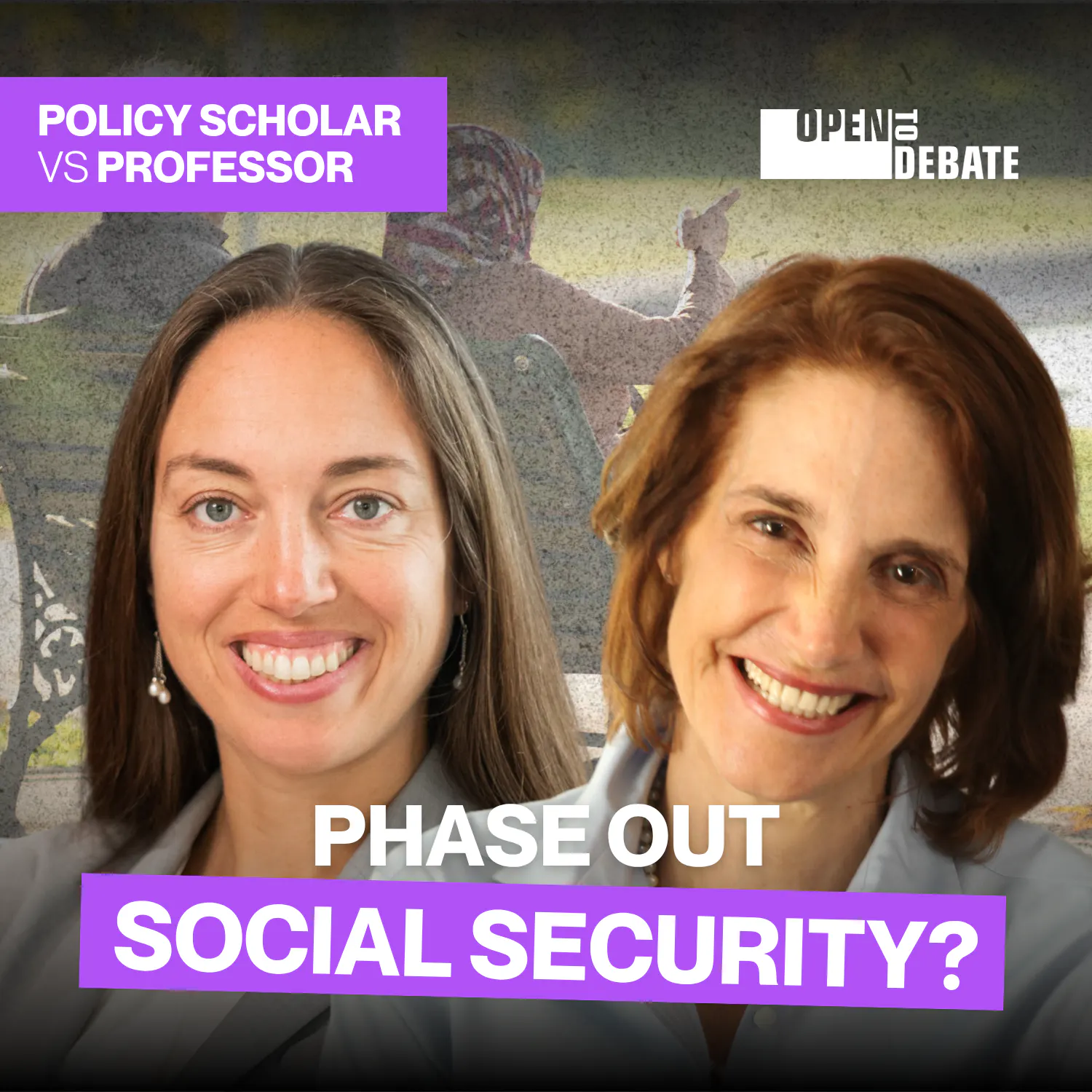
    Should We Phase Out Social Security?

    Social Security has long been a cornerstone of American retirement, but as the trust fund grows closer to depletion by 2032, should the system be repaired or replaced with new standards? Those advocating for phasing it out argue its unsuitability for the modern economy and should only be available for those needing it most. Others argue it’s still a good anti-poverty tool and Congress should take action and make changes to its finances. Now we debate: Should We Phase Out Social Security? Arguing Yes: Romina Boccia, Director of Budget and Entitlement Policy at Cato Institute Arguing No: Teresa Ghilarducci, Professor of Economics and Policy Analysis and Director of the Wealth Equity Lab at The New School Emmy award-winning journalist John Donvan moderates Join the conversation on Substack—share your perspective on this episode and subscribe to our weekly newsletter for curated insights from our debaters, moderators, and staff. Follow us on YouTube, Instagram, LinkedIn, X, Facebook, and TikTok to stay connected with our mission and ongoing debates. Learn more about your ad choices. Visit podcastchoices.com/adchoices

  • September 25 · 1 hr 19 min

    Does the U.S.-Saudi Civil Nuclear Agreement Serve America's Interests?

    The U.S. and Saudi Arabia have signed a civil nuclear cooperation agreement that supporters say could strengthen ties, advance normalization, and give Washington greater influence over the kingdom’s nuclear ambitions. Critics warn that without stronger restrictions on uranium enrichment and inspections, assistance could create a pathway toward nuclear weapons and weaken nonproliferation norms. Would American involvement reduce the risks or enable them? Now we debate: Does the U.S.-Saudi Civil Nuclear Agreement Serve America's Interests? Arguing Yes: Daniel Poneman, Former Deputy Secretary of Energy; Distinguished Fellow of the Atlantic Council's Global Energy Center and Scowcroft Center for Strategy and Security Amos Hochstein, Former White House Senior Advisor to President Biden; Managing Partner at TWG Global Arguing No: Sharon Squassoni, Research Professor at the Elliott School of International Affairs at George Washington University; Former Director of Nonproliferation and Prevention at CSIS Joe Cirincione, Former Director for Non-Proliferation at the Carnegie Endowment for International Peace Emmy award-winning journalist John Donvan moderates This debate was produced in partnership with the Council on Foreign Relations. Join the conversation on Substack—share your perspective on this episode and subscribe to our weekly newsletter for curated insights from our debaters, moderators, and staff. Follow us on YouTube, Instagram, LinkedIn, X, Facebook, and TikTok to stay connected with our mission and ongoing debates. Learn more about your ad choices. Visit podcastchoices.com/adchoices

  • September 18 · 1 hr

    Is the United Nations Obsolete? (Encore)

    As world attention descends on the United Nations General Assembly, Open to Debate is once again casting a critical lens on this over 80-year-old global organization. To this day, questions are still mounting as to whether the United Nations itself is both ineffective and outdated, or whether an institution created for the world of 1945 is equipped for, and can effectively meet, today's challenges. Now we debate: Is the United Nations Obsolete? ARGUING YES: Rajan Menon, Political Scientist & Spitzer Professor Emeritus of International Relations at the City College of New York Nile Gardiner, Director of the Margaret Thatcher Center for Freedom and Bernard and Barbara Lomas Fellow at The Heritage Foundation ARGUING NO: Angela Kane, German Diplomat and Senior Fellow at Vienna Center for Disarmament and Non-Proliferation; Former UN Under-Secretary-General Mohammad-Mahmoud Ould Mohamedou, Scholar & Former Minister of Foreign Affairs of Mauritania Emmy award-winning journalist John Donvan moderates Join the conversation on Substack—share your perspective on this episode and subscribe to our weekly newsletter for curated insights from our debaters, moderators, and staff. Follow us on YouTube, Instagram, LinkedIn, X, Facebook, and TikTok to stay connected with our mission and ongoing debates. Learn more about your ad choices. Visit podcastchoices.com/adchoices

  • September 9 · 1 hr 27 min

    Is Parenting Overrated? (Encore)

    What shapes us more: our DNA or the way we’re raised? The “nature” camp points to genetic research and studies of twins raised apart, arguing that traits from personality to abilities are strongly influenced by inherited biology, limiting how much parenting can shape who children become. The “nurture” camp argues upbringing, culture, and parental choices profoundly influence development and behavior. So which matters more? This ethical conundrum is at the crux of this week's debate, originally broadcast in November 2019 ARGUING YES: Robert Plomin, Professor of Behavioral Genetics at King’s College London Nancy Segal, Professor of Psychology at California State University, Fullerton and Director at the Twin Studies Center ARGUING NO: Paige Harden, Psychology Professor at the University of Texas Ann Pleshette Murphy, Author & Parenting Expert Emmy award-winning journalist John Donvan moderates Recent twin studies: ⁠Parenting in Childhood Predicts Personality in Early Adulthood: A Longitudinal Twin-Differences Study⁠ (APA, 2025) ⁠Genetics of monozygotic twins reveals the impact of environmental sensitivity on psychiatric and neurodevelopmental phenotypes⁠ (Nature Human Behavior, 2025) ⁠Longitudinal associations between cognitive ability and socioeconomic status are partially genetic in Nature⁠ (Scientific Reports, 2026) Join the conversation on Substack—share your perspective on this episode and subscribe to our weekly newsletter for curated insights from our debaters, moderators, and staff. Follow us on YouTube, Instagram, LinkedIn, X, Facebook, and TikTok to stay connected with our mission and ongoing debates. Learn more about your ad choices. Visit podcastchoices.com/adchoices

  • September 4 · 1 hr 4 min

    Is America Ready for a Four-Day Work Week?

    A century after Henry Ford helped popularize the five-day, 40-hour week, could working 32 hours be next? Supporters say shorter weeks can improve well-being without sacrificing productivity, especially as AI would make workers more efficient. Others warn it would strain industries that require continuous staffing and force Americans to rethink everything from school and healthcare schedules to expectations of around-the-clock availability. We debate: Is America Ready for a Four-Day Work Week? Arguing Yes: Juliet Schor, Economist and Sociologist at Boston College Arguing No: Joanne Lipman, Bestselling Author, Journalist, and Former Media Executive Emmy award-winning journalist John Donvan moderates Join the conversation on Substack—share your perspective on this episode and subscribe to our weekly newsletter for curated insights from our debaters, moderators, and staff. Follow us on YouTube, Instagram, LinkedIn, X, Facebook, and TikTok to stay connected with our mission and ongoing debates. Learn more about your ad choices. Visit podcastchoices.com/adchoices

  • August 28 · 1 hr 8 min

    Is Capitalism Broken?

    Capitalism has long been credited with driving innovation and prosperity, yet many Americans increasingly believe the system is no longer working for them. Is the problem capitalism itself or the policies surrounding it? In this debate, an entrepreneur and venture capitalist faces a prominent economist with a competing vision to examine inequality, economic opportunity, and the future of the American economy. Now we debate: Is Capitalism Broken? Arguing Yes: Nick Hanauer, Entrepreneur and Venture Capitalist Arguing No: Jason Furman, Former Chairman of the Council of Economic Advisers; Professor at Harvard University’s John F. Kennedy School of Government Emmy award-winning journalist John Donvan moderates After you’ve listened to the debate, let us know where you stand on the motion! VOTE HERE: ⁠https://bit.ly/podcastcapitalismvote ⁠ We will reveal the results of the vote in our Substack newsletter on Saturday, September 5th, so make sure to ⁠subscribe⁠. Join the conversation on Substack—share your perspective on this episode and subscribe to our weekly newsletter for curated insights from our debaters, moderators, and staff. Follow us on YouTube, Instagram, LinkedIn, X, Facebook, and TikTok to stay connected with our mission and ongoing debates. Learn more about your ad choices. Visit podcastchoices.com/adchoices

  • August 21 · 53 min

    Can Humans Adapt to Climate Change? (Encore)

    The dangers of climate change are “no longer over the horizon.” Humanity may soon pass the “point of no return.” These are the phrases U.N. Secretary-General Antonio Guterres used to describe what he called an “utterly inadequate” global response to rising temperatures. But if we were to decisively act and restructure our global economy with the climate in mind, who would shoulder the burden? Or should our collective focus orient more toward humans’ capacity for adaptation? This ethical conundrum is at the crux of this week's debate, originally broadcast in July 2022. Arguing Yes: Bjorn Lomborg, Author of the Bestsellers "Cool It" and "The Skeptical Environmentalist"; Director of the Copenhagen Consensus Center Matthew Kahn, Provost Professor of Economics and Spatial Sciences at the University of Southern California Arguing No: Michele Wucker, Economic Policy Expert & Founder of Gray Rhino & Company Kaveh Madani, Environmental Scientist; Former Vice President of the United Nations Environment Assembly Bureau; Former Deputy Head of Iran’s Department of Environment Emmy award-winning journalist John Donvan moderates Join the conversation on Substack—share your perspective on this episode and subscribe to our weekly newsletter for curated insights from our debaters, moderators, and staff. Follow us on YouTube, Instagram, LinkedIn, X, Facebook, and TikTok to stay connected with our mission and ongoing debates. Learn more about your ad choices. Visit podcastchoices.com/adchoices
  • August 14 · 54 min

    Is Death Final? (Encore)

    Near-death experiences have long challenged our understanding of consciousness and mortality. Some who come close to death report leaving their bodies, encountering vivid visions, or feeling profound peace. Are these experiences evidence that consciousness can survive death — or can they be explained by what happens in a dying brain? This 2014 debate is one we're still thinking about today. We ask whether science can reveal what, if anything, awaits us after we die. Arguing Yes: Eben Alexander, Former Neurosurgeon; Author of "Proof of Heaven" Raymond Moody, Medical Doctor; Author of "Life After Life" Arguing No: Sean Carroll, Physicist & Writer Steven Novella, Academic Neurologist at the Yale School of Medicine Emmy award-winning journalist John Donvan moderates Join the conversation on Substack—share your perspective on this episode and subscribe to our weekly newsletter for curated insights from our debaters, moderators, and staff. Follow us on YouTube, Instagram, LinkedIn, X, Facebook, and TikTok to stay connected with our mission and ongoing debates. Learn more about your ad choices. Visit podcastchoices.com/adchoices
  • August 7 · 53 min

    Are Primary Elections Ruining Democracy? (Encore)

    The midterms are coming up this fall, and right now we are in the middle of a contentious primary season, with a lot of new faces challenging incumbents—and many winning. It’s in this context that we revisit our debate from 2022: Are Primary Elections Ruining Democracy? Arguing YES Elaine Kamarck, Founding Director of the Center for Effective Public Management at the Brookings Institution Arguing NO Jed Ober, Former Director of Programs at Democracy International and Former Chief of Staff for Pennsylvania Congresswoman Susan Wild Emmy award-winning journalist John Donvan moderates Join the conversation on Substack—share your perspective on this episode and subscribe to our weekly newsletter for curated insights from our debaters, moderators, and staff. Follow us on YouTube, Instagram, LinkedIn, X, Facebook, and TikTok to stay connected with our mission and ongoing debates. Learn more about your ad choices. Visit podcastchoices.com/adchoices

  • July 31 · 53 min

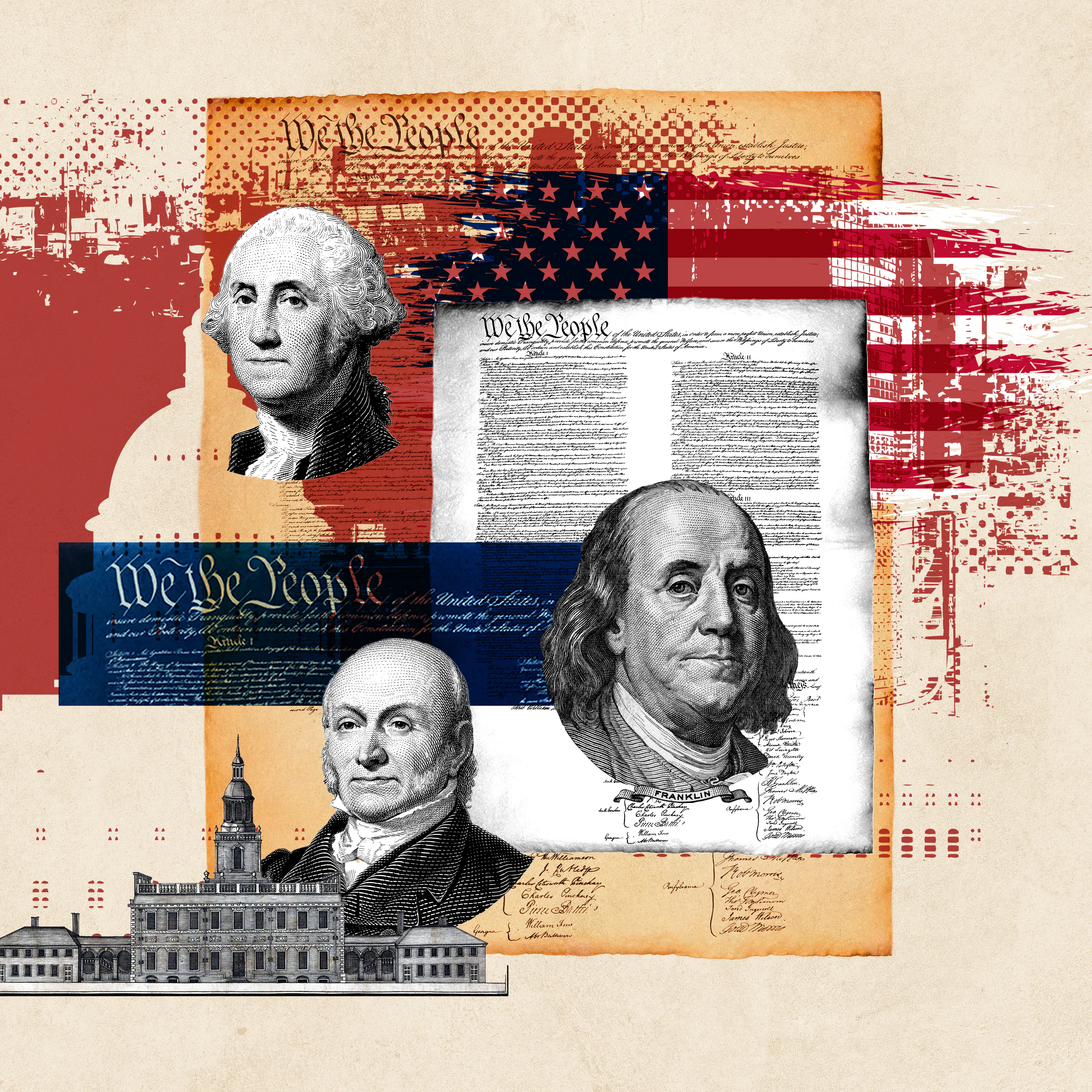
    America 250: Is It Time To Stop Idolizing the Founders?

    As America celebrates 250 years since the Declaration of Independence, the legacy of the Founders is under renewed scrutiny. Were they visionary architects of liberty whose achievements and creations should be celebrated, or has reverence for them sanitized the past, how we think of democracy, and the compromises embedded in the nation's founding? As the U.S. marks its semiquincentennial, we debate: Is It Time to Stop Idolizing the Founders? Arguing Yes: Osita Nwanevu, Contributing Editor at The New Republic; Columnist at The Guardian Arguing No: Helena Rosenblatt, Distinguished Professor of History, French, and Political Science, and the MA Program in Liberal Studies at the CUNY Graduate Center Emmy award-winning journalist John Donvan moderates Join the conversation on Substack—share your perspective on this episode and subscribe to our weekly newsletter for curated insights from our debaters, moderators, and staff. Follow us on YouTube, Instagram, LinkedIn, X, Facebook, and TikTok to stay connected with our mission and ongoing debates. Learn more about your ad choices. Visit podcastchoices.com/adchoices

  • July 24 · 53 min

    Should the Death Penalty Be Abolished?

    Fifty years after the Supreme Court reinstated capital punishment, the death penalty remains one of America's most divisive issues. Supporters argue it delivers justice for the most heinous crimes, provides closure for victims’ families, and ensures the worst offenders can never kill again. Opponents point to wrongful convictions, racial disparities, and the moral consequences of allowing the state to take a life, arguing that life without parole is enough. Now we debate: Should the Death Penalty Be Abolished? This ethical conundrum is at the crux of this week's debate, originally broadcast in April 2015. Arguing YES: Diann Rust-Tierney, Executive Director of the National Coalition to Abolish the Death Penalty Barry Scheck, Co-Director of the Innocence Project and Professor at Cardozo Law School Arguing NO: Robert Blecker, Professor at New York Law School Kent Scheidegger, Legal Director of the Criminal Justice Legal Foundation Emmy award-winning journalist John Donvan moderates Join the conversation on Substack—share your perspective on this episode and subscribe to our weekly newsletter for curated insights from our debaters, moderators, and staff. Follow us on YouTube, Instagram, LinkedIn, X, Facebook, and TikTok to stay connected with our mission and ongoing debates. Learn more about your ad choices. Visit podcastchoices.com/adchoices

  • July 17 · 53 min

    Generational Divides with Nick Gillespie: Are We Overcomplicating Love and Sex?

    Forget "happily ever after." As marriage and birth rates fall, young adults have less sex, and assumptions about love and commitment are being challenged. In this episode of “Generational Divides,” Reason editor-at-large Nick Gillespie brings together a Gen X-er, a Millennial, and a Gen Z-er to debate these questions about intimacy and love in the 21st century: Should Gen Z have more sex? Is monogamy overrated? Should people have more babies? For Gen X: James J. Sexton, Divorce Lawyer and Author of "How to Stay in Love" For Millennials: Carolyn Gorman, Fellow at the Manhattan Institute For Gen Z: Malavika Kannan, Author and Writer of the "Quarter Life Crisis" Substack Nick Gillespie, Editor-at-Large at Reason, is the guest moderator. Join the conversation on Substack—share your perspective on this episode and subscribe to our weekly newsletter for curated insights from our debaters, moderators, and staff. Follow us on YouTube, Instagram, LinkedIn, X, Facebook, and TikTok to stay connected with our mission and ongoing debates. Learn more about your ad choices. Visit podcastchoices.com/adchoices

  • July 10 · 53 min

    Who Is Winning the Iran War: Tehran or Trump?

    After signing a Memorandum of Understanding in June, the U.S. and Iran entered a delicate peace. As negotiators worked toward a permanent deal, one question loomed: Who won the war in Iran — Tehran or Trump? Hours after we concluded a debate on that very question, strikes resumed. By morning, President Trump declared the truce over. Today, we bring you that debate, and the question of who holds the upper hand, and what has been gained and lost, is more pressing than ever. Note: This debate was recorded on Tuesday, July 7, 2026, before the verbal dissolution of the Islamabad Memorandum and the resumption of military action in the Iran War. Arguing "Tehran is Winning": Suzanne Maloney, Vice President and Director of Foreign Policy at the Brookings Institution Arguing "Trump is Winning": Matthew Kroenig, Vice President for Geostrategy and Fellows and Senior Director of the Atlantic Council's Scowcroft Center for Strategy and Security Emmy award-winning journalist John Donvan moderates Join the conversation on Substack—share your perspective on this episode and subscribe to our weekly newsletter for curated insights from our debaters, moderators, and staff. Follow us on YouTube, Instagram, LinkedIn, X, Facebook, and TikTok to stay connected with our mission and ongoing debates. Learn more about your ad choices. Visit podcastchoices.com/adchoices

Showing 1–20 of 34 episodes