Skip to content
Artwork for NucleCast
GovernmentNewsTech NewsExplicit

NucleCast

ANWA Deterrence Center

Welcome to NucleCast, the official podcast of the ANWA Deterrence Center. NucleCast is an engaging, educational podcast featuring a series of discussions and interviews with experts in nuclear policy, technology, and deterrence. The show is hosted by Dr. Adam Lowther, Strategic Advisor to the ANWA Deterrence Center and an expert on nuclear deterrence.

Play
  • 22 episodes
  • weekly
  • Avg 35 min
  • English
Counted on this page — what you have heard stays on this device, so it is not something the list can be paged by.
  • S4 · E281
    Tuesday · 42 min

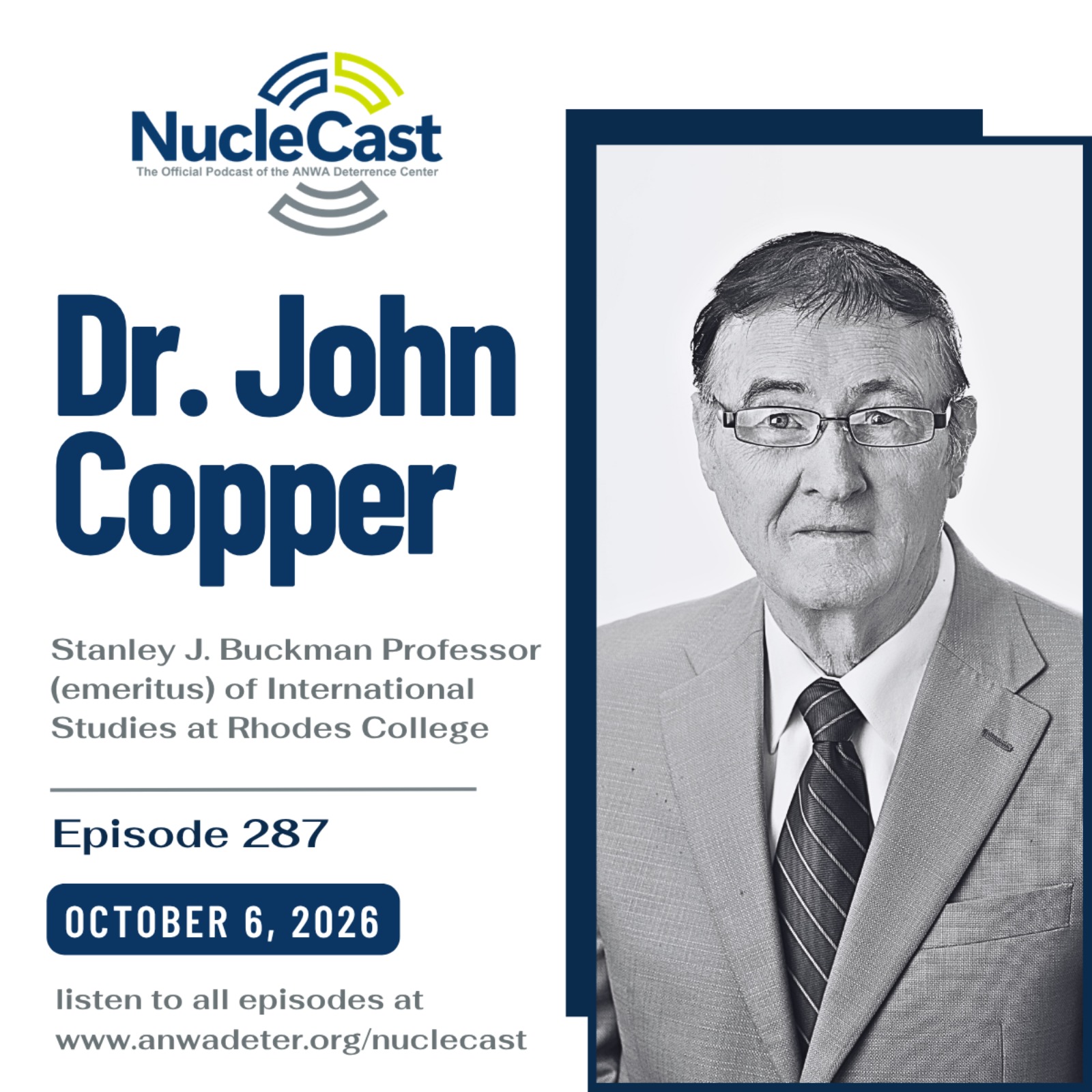
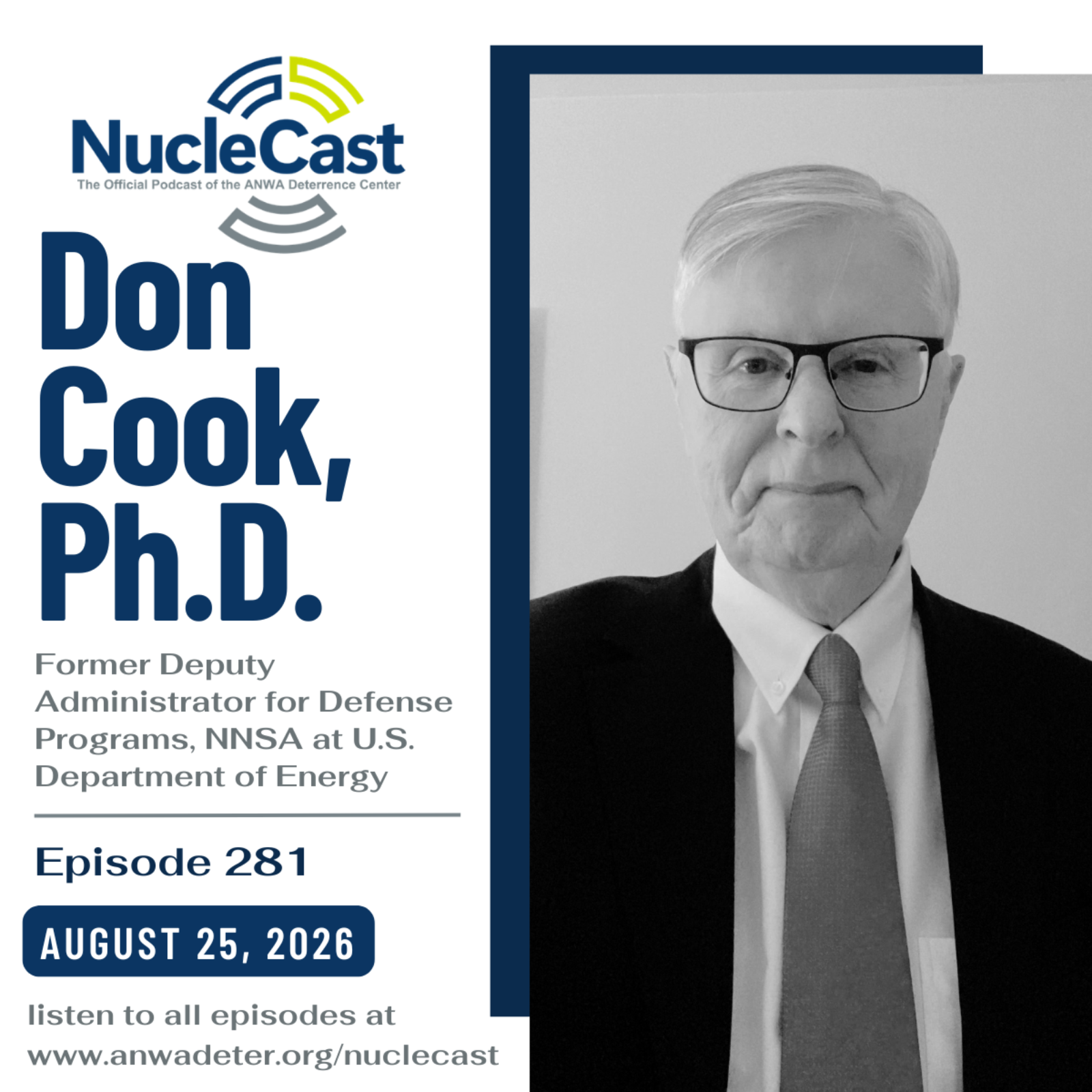
    Don Cook: Stockpile Stewardship and Nuclear Modernization

    As the global security environment grows more complex, how can the United States maintain a safe, secure, and effective nuclear deterrent without returning to nuclear testing? In this episode of NucleCast, Manolis sits down with Don Cook, former Deputy Administrator for Defense Programs at the National Nuclear Security Administration (NNSA), to discuss the evolving challenges facing the U.S. nuclear weapons enterprise. Drawing on decades of experience, Cook examines how the strategic assumptions that shaped nuclear policy in the early 2010s have been upended by renewed great power competition, Russia's aggression, and China's military modernization. He explains the critical role of the Stockpile Stewardship Program, the remarkable advances in simulation and modeling technologies, and how scientists continue to certify the safety and reliability of the U.S. nuclear stockpile without explosive testing. The conversation also explores the importance of legacy underground test data, the challenges of pit production, aging infrastructure, workforce development, and the investments needed to modernize the nation's nuclear enterprise for the decades ahead. Cook offers a candid assessment of where the U.S. stands today and what priorities should guide future leaders responsible for sustaining the deterrent. Follow us on YouTube: https://youtube.com/@nuclecast3665?si=h1kCO6NqUtL87w6q Follow on LinkedIn: https://linkedin.com/company/nuclecastpodcast Subscribe RSS Feed: https://rss.com/podcasts/nuclecast-podcast/ Rate: https://podcasts.apple.com/us/podcast/nuclecast/id1644921278 Email comments and topic/guest suggestions to Kimberly@anwadeter.org
  • S4 · E280
    August 18 · 34 min

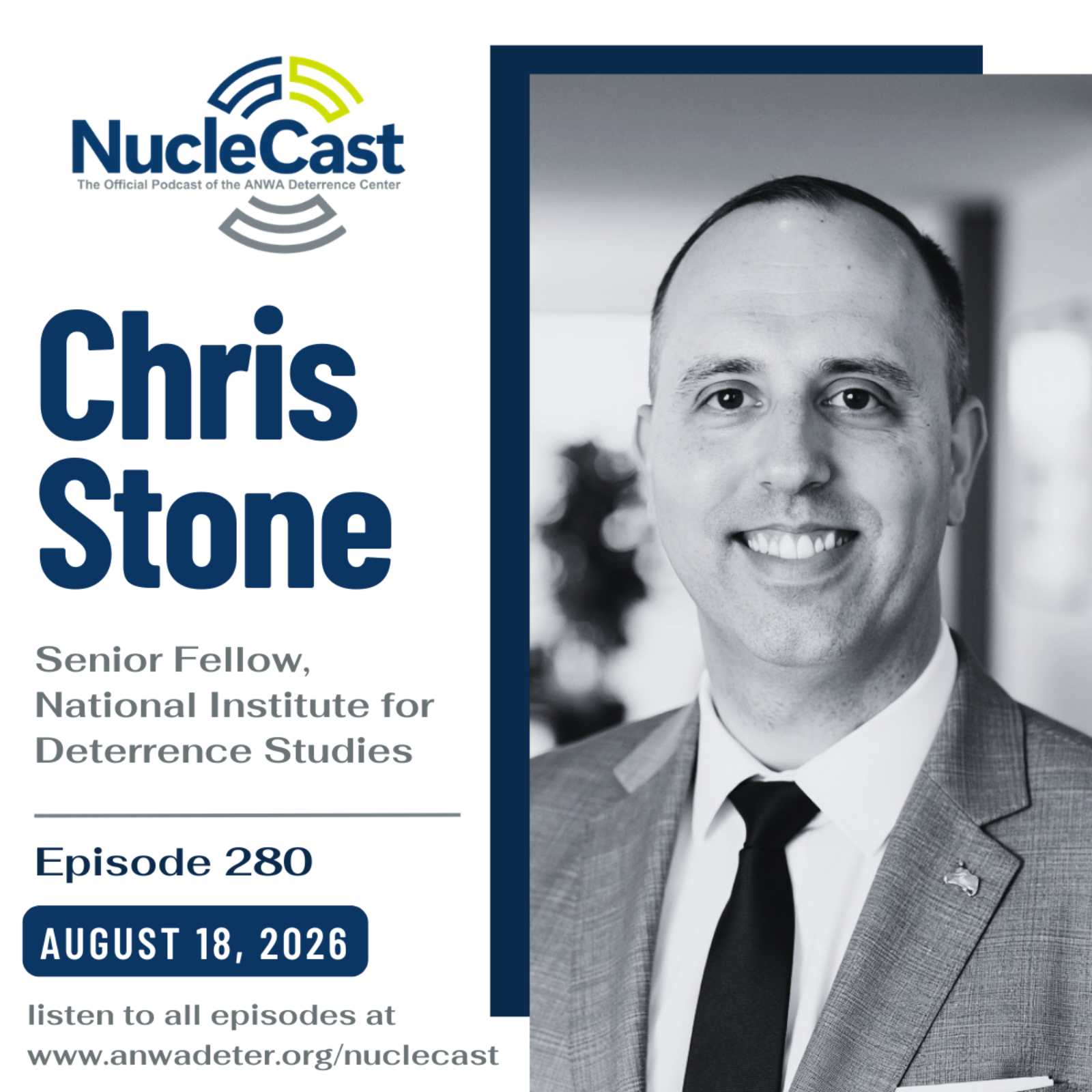
    Chris Stone: Deception, Deterrence, and the Future of Space Warfare

    As competition in space intensifies, how can the United States deter aggression and defend its vital space assets? In this episode of NucleCast, Chris Stone explores the evolving role of deception in space warfare and its potential to transform space deterrence strategies. Drawing on lessons from military history and current geopolitical realities, Stone examines why understanding an adversary's strategic culture and worldview is essential for effective deterrence. He discusses the growing challenges of protecting satellites, the vulnerabilities of space systems, and how innovative approaches such as decoys, fake satellites, and maneuver warfare could complicate enemy targeting and strengthen U.S. space security. The conversation also dives into Chinese and Russian approaches to space conflict, the future of space defense operations, and why active defense and deception may become indispensable tools for maintaining strategic advantage in an increasingly contested domain. Follow us on YouTube: https://youtube.com/@nuclecast3665?si=h1kCO6NqUtL87w6q Follow on LinkedIn: https://linkedin.com/company/nuclecastpodcast Subscribe RSS Feed: https://rss.com/podcasts/nuclecast-podcast/ Rate: https://podcasts.apple.com/us/podcast/nuclecast/id1644921278 Email comments and topic/guest suggestions to Kimberly@anwadeter.org
  • S4 · E279
    August 11 · 34 min

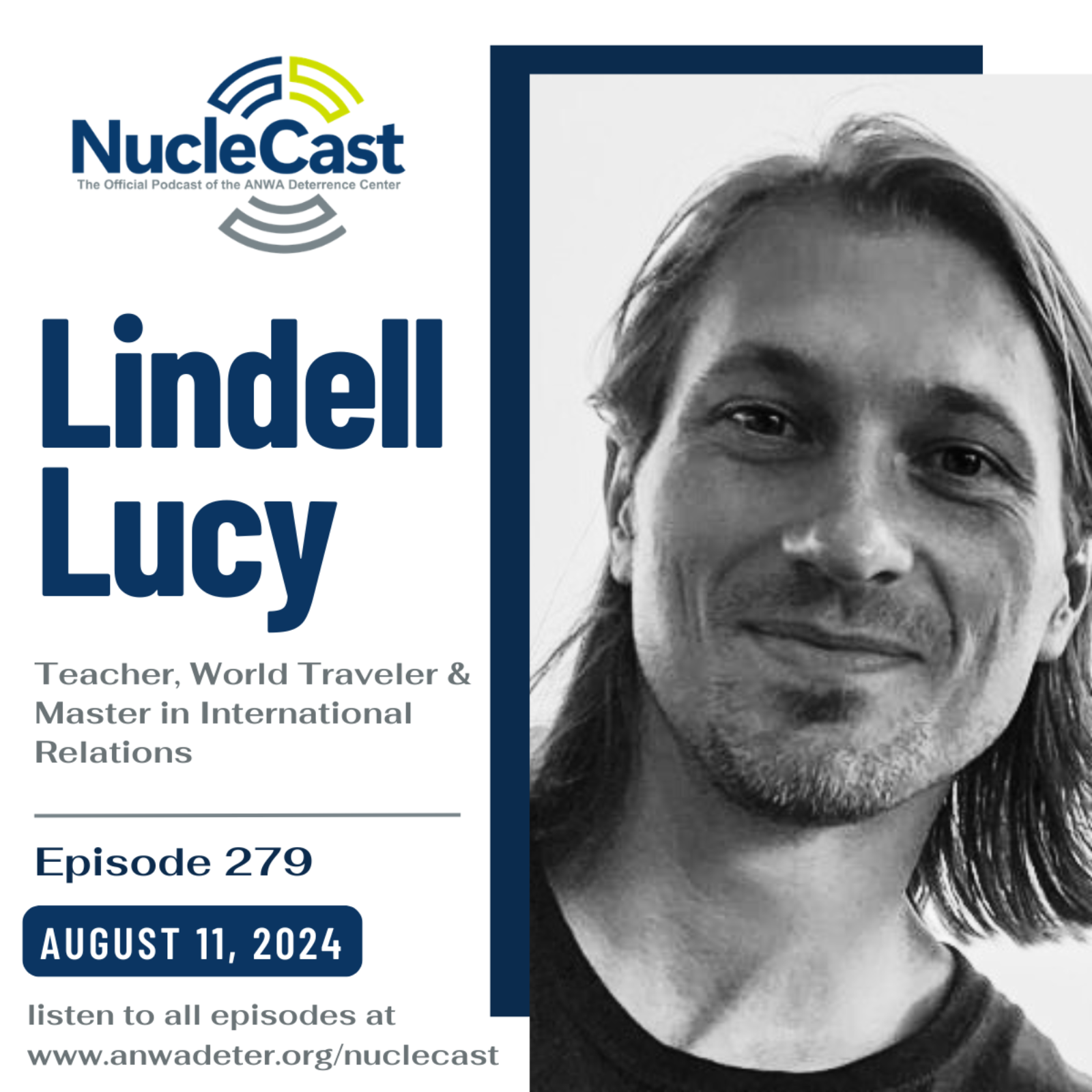
    Lindell Lucy: Ukraine's War Zone, Lessons from a Cross-Country Trip

    In this episode, Lindell Lucy shares his recent experiences traveling across Ukraine, insights on life during wartime, and explores the complex topic of nuclear deterrence and Ukraine's potential nuclear future. 00:00 Introduction and Guest Background 01:00 Lindell Lucy's Trip Across Ukraine 02:53 Lessons Learned from Ukraine Trip 04:02 Life in Ukraine During War 06:54 Ukrainian Perspectives on NATO and Support 09:01 Nuclear Deterrence Ideas and Strategies 14:51 Front Lines and Battlefield Conditions 20:07 Personal Encounters and Human Stories 24:58 Three Wishes for Ukraine's Future Follow us on YouTube: https://youtube.com/@nuclecast3665?si=h1kCO6NqUtL87w6q Follow on LinkedIn: https://linkedin.com/company/nuclecastpodcast Subscribe RSS Feed: https://rss.com/podcasts/nuclecast-podcast/ Rate: https://podcasts.apple.com/us/podcast/nuclecast/id1644921278 Email comments and topic/guest suggestions to Kimberly@anwadeter.org
  • S4 · E278
    August 4 · 36 min

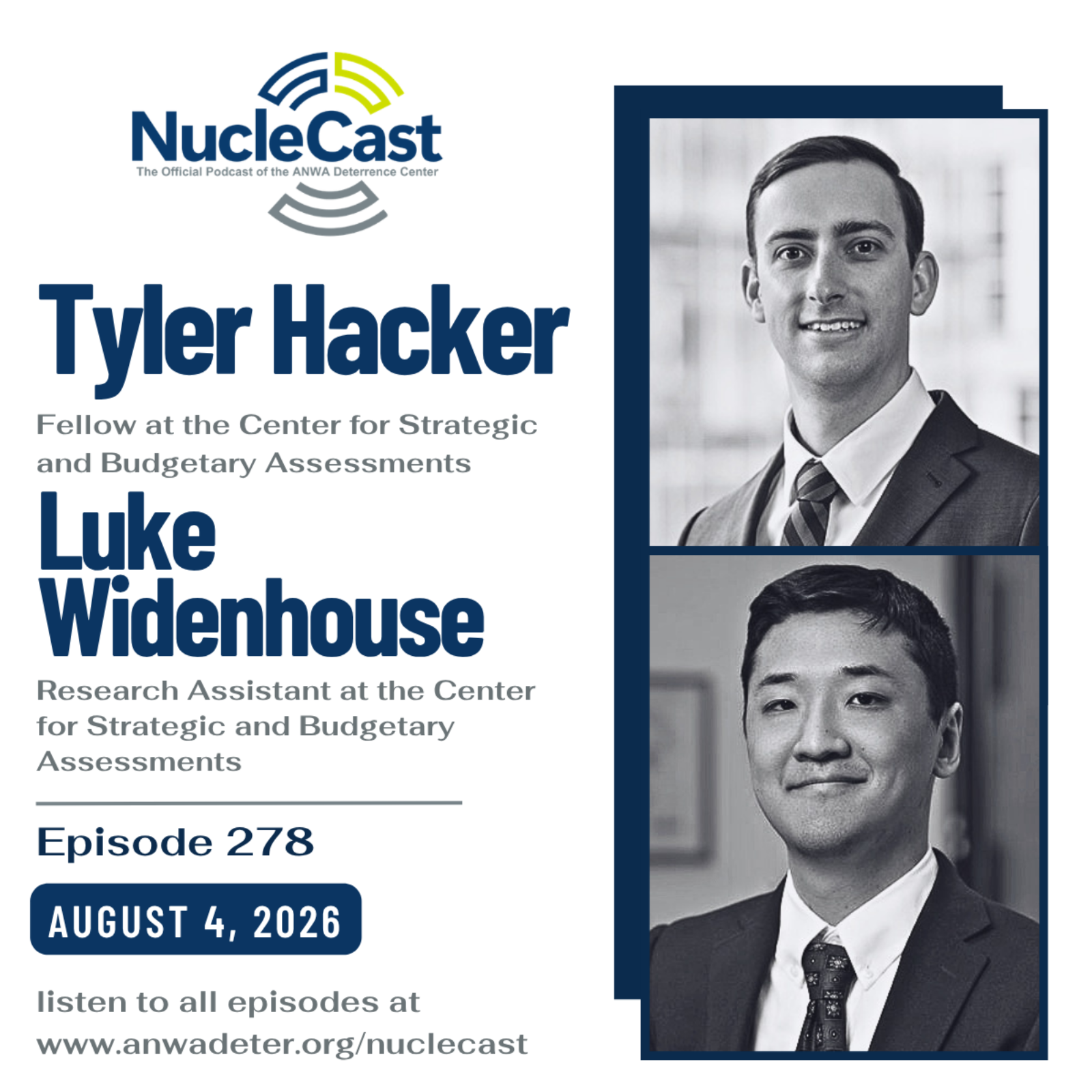
    Tyler Hacker and Luke Widenhouse: The Missing Ingredient in Military Modernization, Why Advanced Energetics Matter

    In this episode of NucleCast, host Manolis sits down with Tyler Hacker and Luke Widenhouse of the Center for Strategic and Budgetary Assessments (CSBA) to examine why advanced energetics remain one of the most underappreciated elements of U.S. military modernization. Drawing on historical lessons from World War II and their recent research, the discussion explores how improvements in energetic materials can dramatically enhance the performance, range, lethality, and effectiveness of modern weapon systems. The conversation dives into the barriers that have slowed the development and fielding of next-generation energetics, the strategic consequences of continued neglect, and why even modest technological advances can deliver outsized operational impacts across multiple theaters. Tyler and Luke also discuss the growing importance of energetics for hypersonic weapons, unmanned systems, and the future of strategic deterrence. Topics Covered: Historical lessons from WWII and the adoption of advanced energetics Why small improvements can produce large strategic effects Barriers to developing and fielding new energetic materials The role of energetics in hypersonic weapons and unmanned systems Policy recommendations to accelerate innovation and investment Link to report: https://csbaonline.org/resource/choosing-less-bang-for-buck-the-underutilization-of-advanced-energetics/ Follow us on YouTube: https://youtube.com/@nuclecast3665?si=h1kCO6NqUtL87w6q Follow on LinkedIn: https://linkedin.com/company/nuclecastpodcast Subscribe RSS Feed: https://rss.com/podcasts/nuclecast-podcast/ Rate: https://podcasts.apple.com/us/podcast/nuclecast/id1644921278 Email comments and topic/guest suggestions to Kimberly@anwadeter.org
  • S4 · E277
    August 2 · 40 min

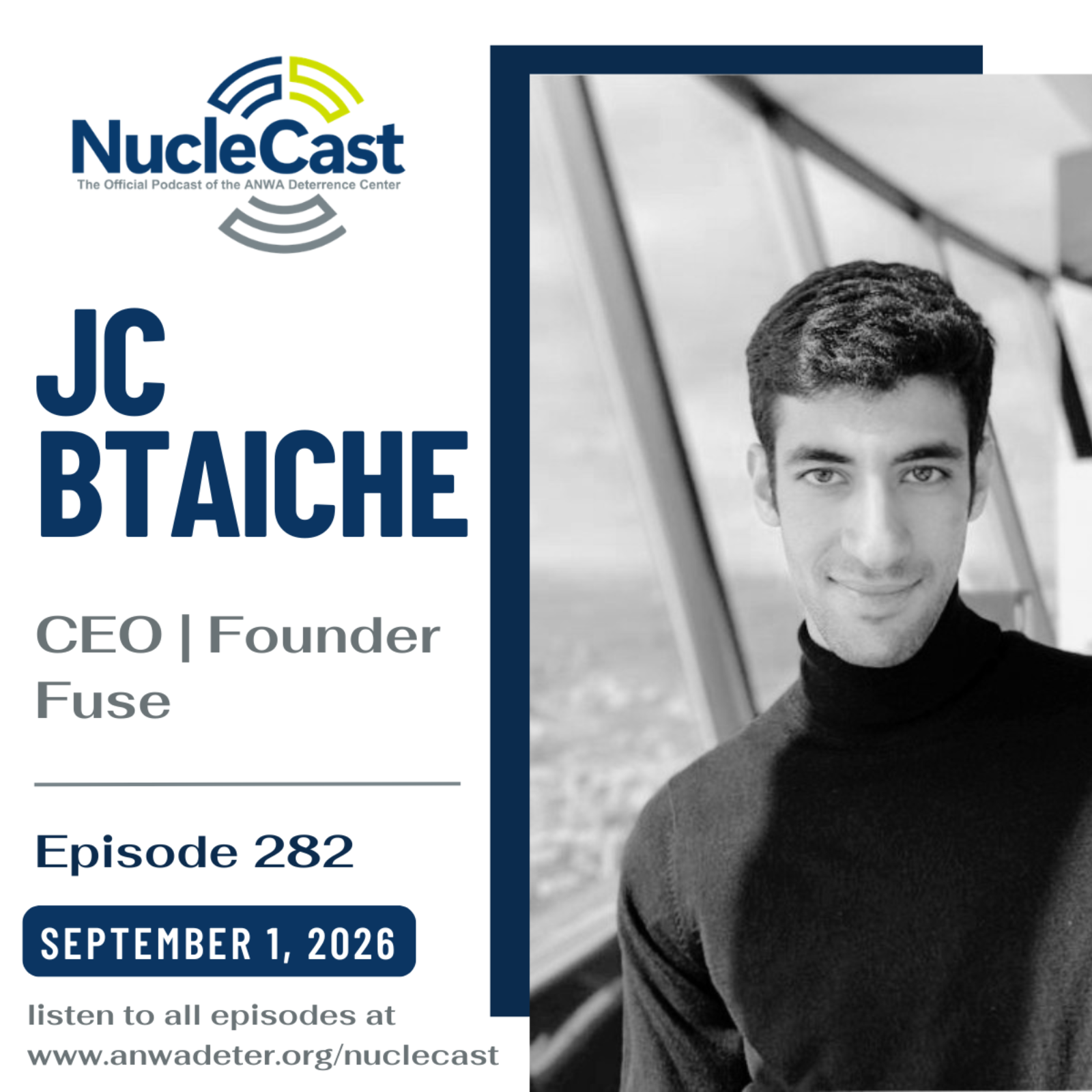
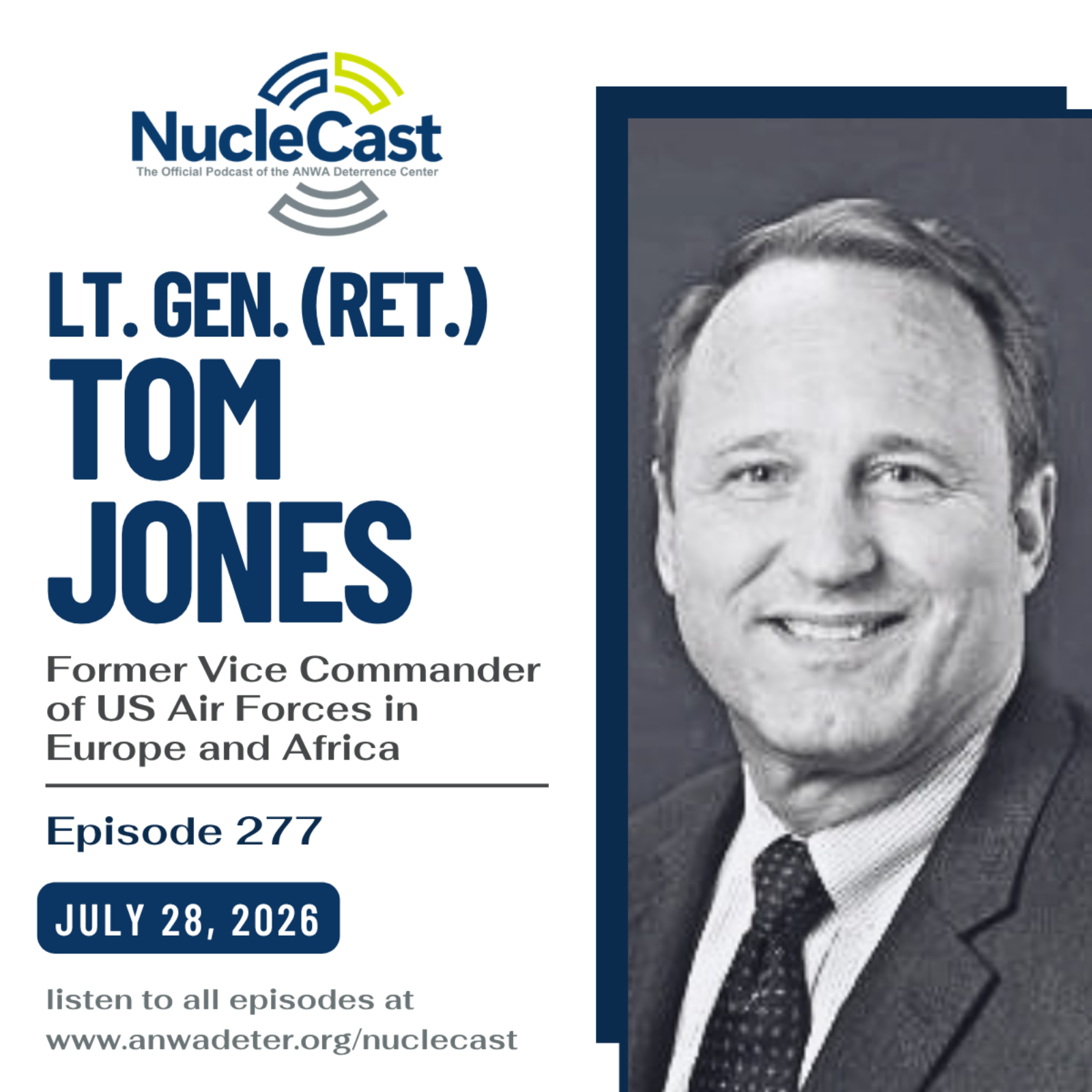
    Lt. Gen. (Ret) Tom Jones: From Cold War to NATO: A Nuclear Journey

    Retired U.S. Air Force Lieutenant General Tom Jones shares firsthand insights from a career spanning the height of the Cold War through modern NATO nuclear operations. Drawing on decades of operational experience, he discusses the realities of nuclear deterrence, the challenges of maintaining credible readiness, and the extraordinary demands placed on aircrews tasked with executing nuclear missions under the most extreme conditions. Lt. Gen. Jones explores the evolution of NATO’s nuclear posture, the complexity of nuclear weapon delivery, and the importance of survivability, command and control, and alliance cohesion. He also reflects on how changing political dynamics, public opinion in Europe, and renewed great-power competition have reshaped the deterrence landscape. From Cold War certainties to today’s escalating risks, he offers a candid assessment of the future of nuclear deterrence and the joint force capabilities required to sustain it. Lt. Gen. Noel T. “Tom” Jones (USAF Ret.) retired in 2015 as Vice Commander of U.S. Air Forces in Europe and Air Forces Africa, where he helped lead more than 24,000 personnel across Europe and Africa during major events including the Benghazi attack, Russia’s annexation of Crimea, and the Ebola crisis. He also led the command’s response to sequestration-driven force reductions while maintaining mission readiness. A 1980 graduate of the U.S. Air Force Academy, Tom served more than 35 years on active duty, commanding at the squadron, group, and wing levels, including combat leadership during Operation Iraqi Freedom. His assignments included leading the Air Force’s largest fighter wing at Luke AFB, serving as Deputy Director of the Central Security Service supporting NSA operations, helping stand up U.S. Cyber Command, directing plans for the U.S. military drawdown in Iraq, and overseeing Air Force modernization requirements at the Pentagon. Since retiring, Tom has advised defense industry organizations through Tom Jones Consulting, served as a Highly Qualified Expert-Senior Mentor for the U.S. Air Force, and remains active in public service in Louisiana. Follow us on YouTube: https://youtube.com/@nuclecast3665?si=h1kCO6NqUtL87w6q Follow on LinkedIn: https://linkedin.com/company/nuclecastpodcast Subscribe RSS Feed: https://rss.com/podcasts/nuclecast-podcast/ Rate: https://podcasts.apple.com/us/podcast/nuclecast/id1644921278 Email comments and topic/guest suggestions to Kimberly@anwadeter.org
  • S4 · E276
    July 21 · 33 min

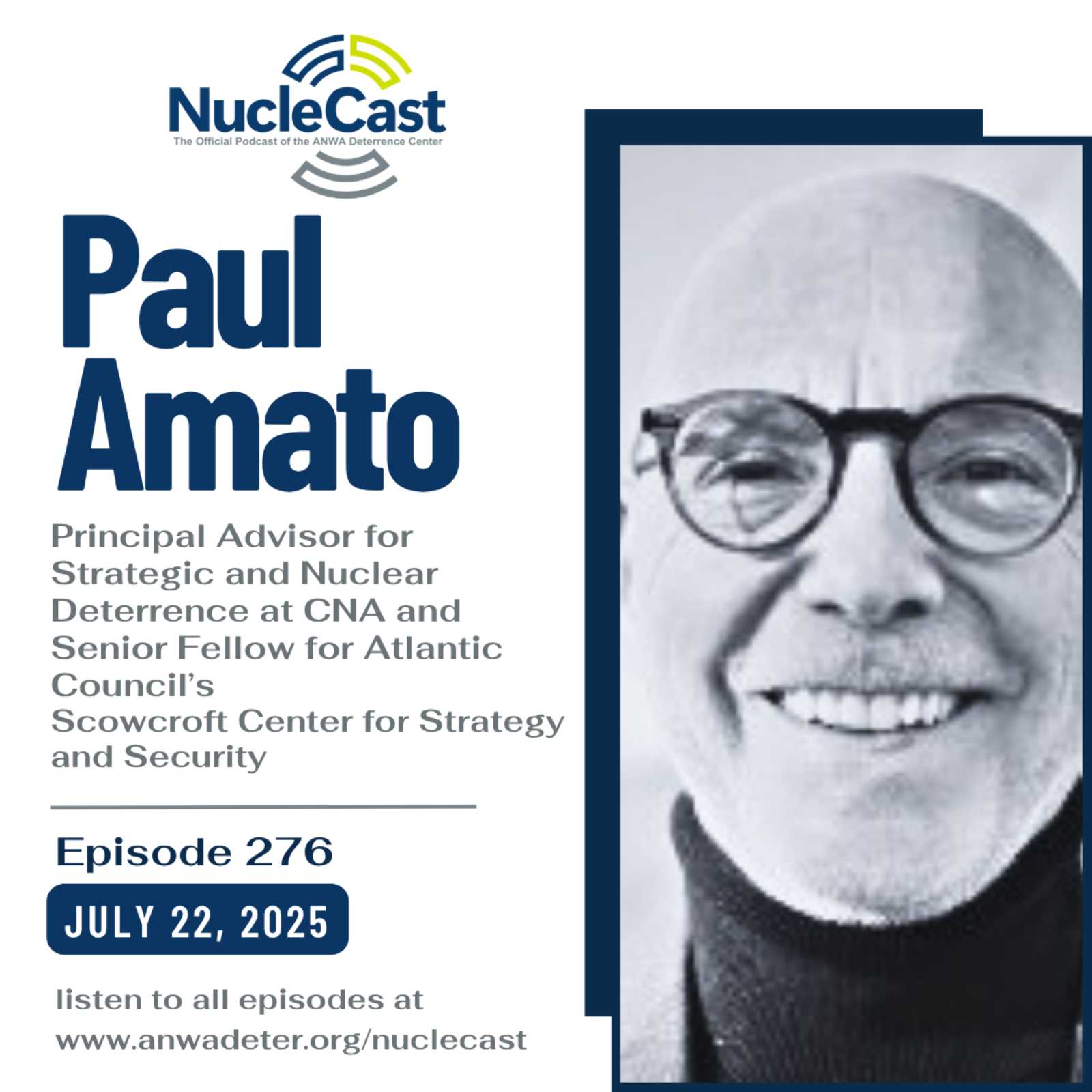
    Paul Amato: The Importance of Theater Nuclear Weapons for Deterrence

    In this episode of NucleCast, Adam sits down with Paul Amato for an in-depth discussion on the role of theater nuclear weapons in maintaining U.S. deterrence and strategic stability. Drawing on historical lessons from the Cold War and examining today's evolving security environment, they explore why low-yield nuclear capabilities remain an important component of U.S. defense strategy. The conversation examines Russian and Chinese nuclear approaches, the development of low-yield nuclear options in the 2018 Nuclear Posture Review, and the operational realities of deploying and sustaining theater nuclear forces. Amato explains how capability diversity, alliance assurance, and extended deterrence contribute to strategic stability and why maintaining credible options across the escalation spectrum is critical to deterring adversaries. They also discuss common misconceptions about low-yield weapons, the importance of capability symmetry, and what the future nuclear force structure may require as global threats continue to evolve. Paul Amato is the Principal Advisor for Strategic and Nuclear Deterrence at CNA. He is also a nonresident senior fellow at the Atlantic Council’s Scowcroft Center for Strategy and Security. From 2016-2025, Amato was director of nuclear deterrence policy in the Office of the Secretary of Defense for Policy, where he and his team led all facets of nuclear deterrence policy development, implementation and allied extended deterrence, including overseeing development and implementation of both the 2018 and 2022 Nuclear Posture Reviews. His experience includes more than a decade as an attorney in private practice, and over twenty-eight years of active and reserve service in the US Marine Corps. Amato is a graduate of Franklin & Marshall College and the University of Pittsburgh School of Law. The views he expresses in this podcast are his own. Follow us on YouTube: https://youtube.com/@nuclecast3665?si=h1kCO6NqUtL87w6q Follow on LinkedIn: https://linkedin.com/company/nuclecastpodcast Subscribe RSS Feed: https://rss.com/podcasts/nuclecast-podcast/ Rate: https://podcasts.apple.com/us/podcast/nuclecast/id1644921278 Email comments and topic/guest suggestions to Kimberly@anwadeter.org
  • S4 · E275
    July 7 · 42 min

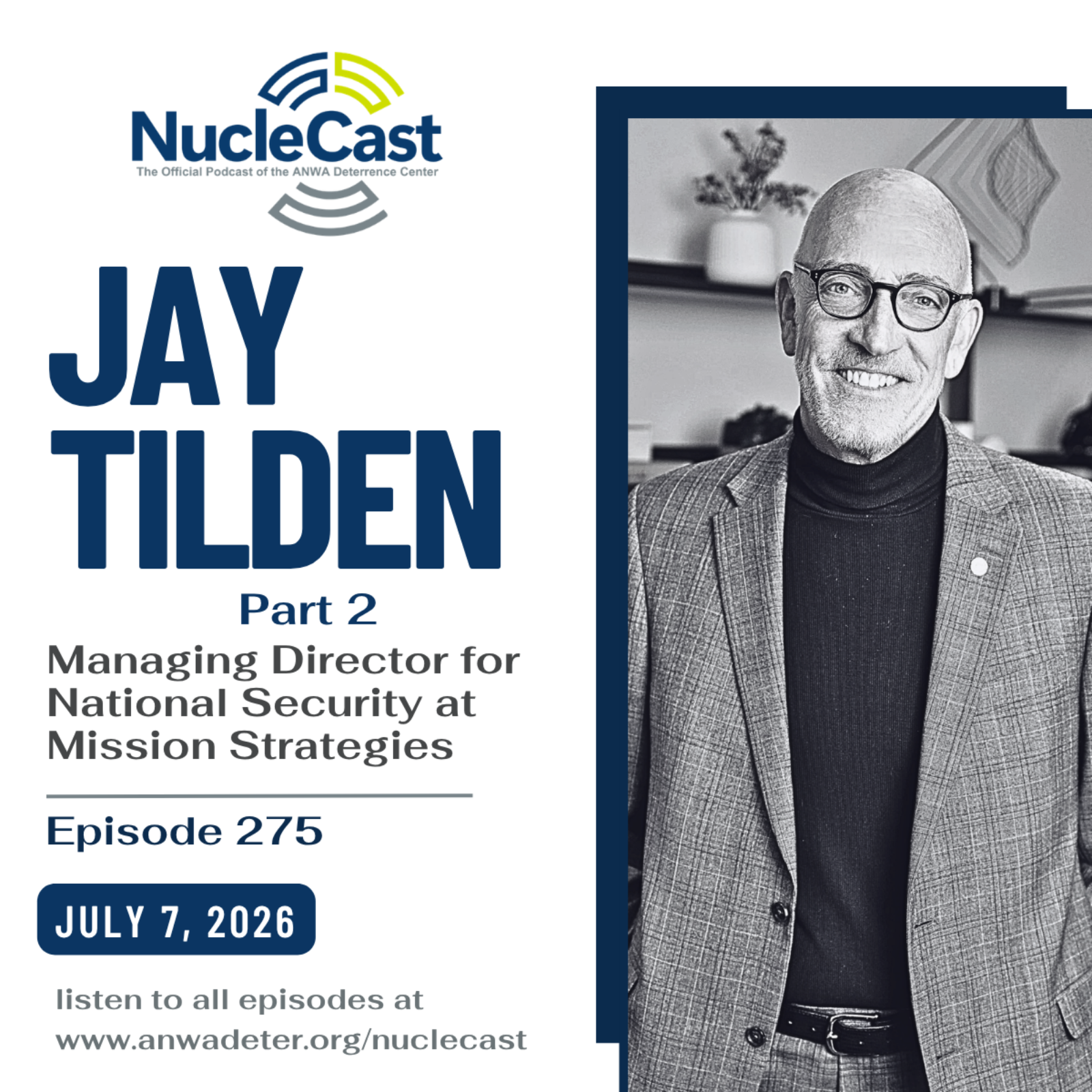
    Jay Tilden 2: The Myth of the Missile Gap, Rethinking Nuclear Deterrence

    Are perceived gaps in nuclear capabilities driving unnecessary fears of a new arms race? In this Part 2, Jay Tilden examines one of the most enduring questions in deterrence theory: How do perceptions of vulnerability influence nuclear strategy and global stability? Drawing on history, policy, and strategic theory, Tilden explores the concept of the “missile gap,” the political and psychological forces that shape deterrence debates, and whether symmetrical nuclear capabilities can actually contribute to stability rather than instability. The discussion challenges common assumptions about nuclear competition, emphasizing that deterrence depends as much on communication, understanding, and credibility as it does on military capability. The conversation also examines adversary motivations, the role of nuclear doctrine, and the risks of public misunderstandings surrounding nuclear weapons and strategy. Tilden argues that calls for new capabilities are often driven by perceived vulnerabilities rather than actual strategic disadvantages, while highlighting the importance of informed, transparent dialogue among policymakers, military leaders, and the public. Key Takeaways: Perceived vulnerabilities often drive nuclear escalation and modernization efforts. Nuclear responses do not always need to be proportional to be credible. Strategic dialogue and communication are essential to maintaining deterrence stability. Symmetry in capabilities can be stabilizing rather than destabilizing. Arms races may reflect mutual recognition of strength and capability, not necessarily increased instability. Follow us on YouTube: https://youtube.com/@nuclecast3665?si=h1kCO6NqUtL87w6q Follow on LinkedIn: https://linkedin.com/company/nuclecastpodcast Subscribe RSS Feed: https://rss.com/podcasts/nuclecast-podcast/ Rate: https://podcasts.apple.com/us/podcast/nuclecast/id1644921278 Email comments and topic/guest suggestions to Kimberly@anwadeter.org
  • S4 · E274
    June 30 · 35 min

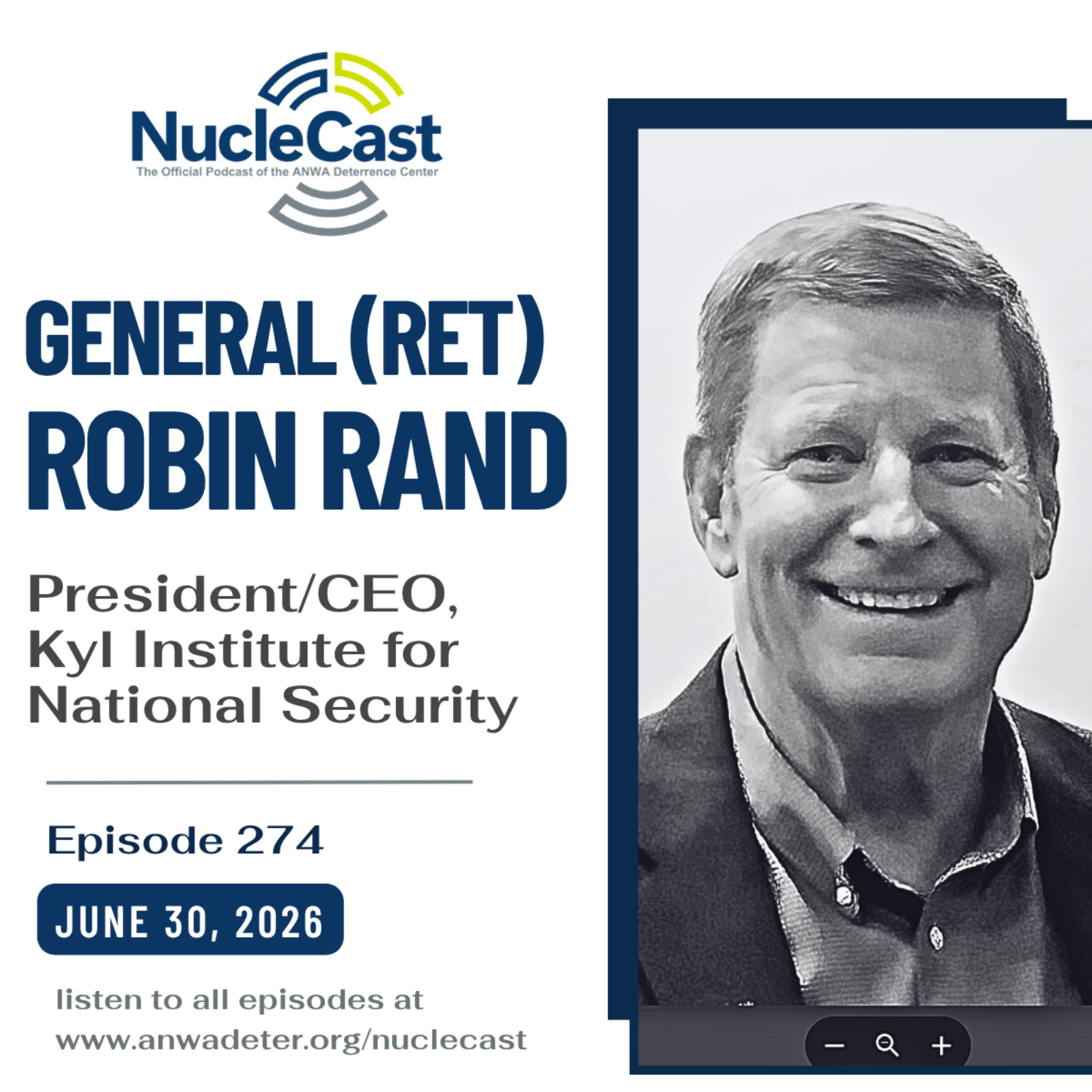
    General (Ret.) Robin Rand - The Kyle Institute’s Role in National Security Innovation

    In this episode, General (Ret.) Robin Rand joins NucleCast to discuss the mission and impact of the Kyle Institute for National Security at the University of Arizona. Rand provides an inside look at how the Institute is advancing national security through cutting-edge research in hypersonics, cyber, space, and directed energy, while building critical partnerships with federal agencies, the defense industry, and regional military installations. He also highlights the Institute’s role in developing the next generation of the national security workforce. The conversation explores today’s most pressing strategic challenges—from contested domains like cyber and space to acquisition hurdles—and underscores the enduring importance of modernizing the nuclear deterrent in a rapidly evolving threat environment. General (Ret.) Robin Rand is President and CEO of the Kyl Institute for National Security at the University of Arizona. A former Commander of Air Force Global Strike Command and U.S. Strategic Command’s air component, he served over 44 years in the U.S. Air Force, with more than 5,100 flying hours, primarily in the F-16. Following his military career, he has held senior leadership and advisory roles across the defense, nonprofit, and academic sectors, bringing deep expertise in strategic deterrence, national security policy, and workforce development. Follow us on YouTube: https://youtube.com/@nuclecast3665?si=h1kCO6NqUtL87w6q Follow on LinkedIn: https://linkedin.com/company/nuclecastpodcast Subscribe RSS Feed: https://rss.com/podcasts/nuclecast-podcast/ Rate: https://podcasts.apple.com/us/podcast/nuclecast/id1644921278 Email comments and topic/guest suggestions to Kimberly@anwadeter.org
  • S4 · E273
    June 23 · 34 min

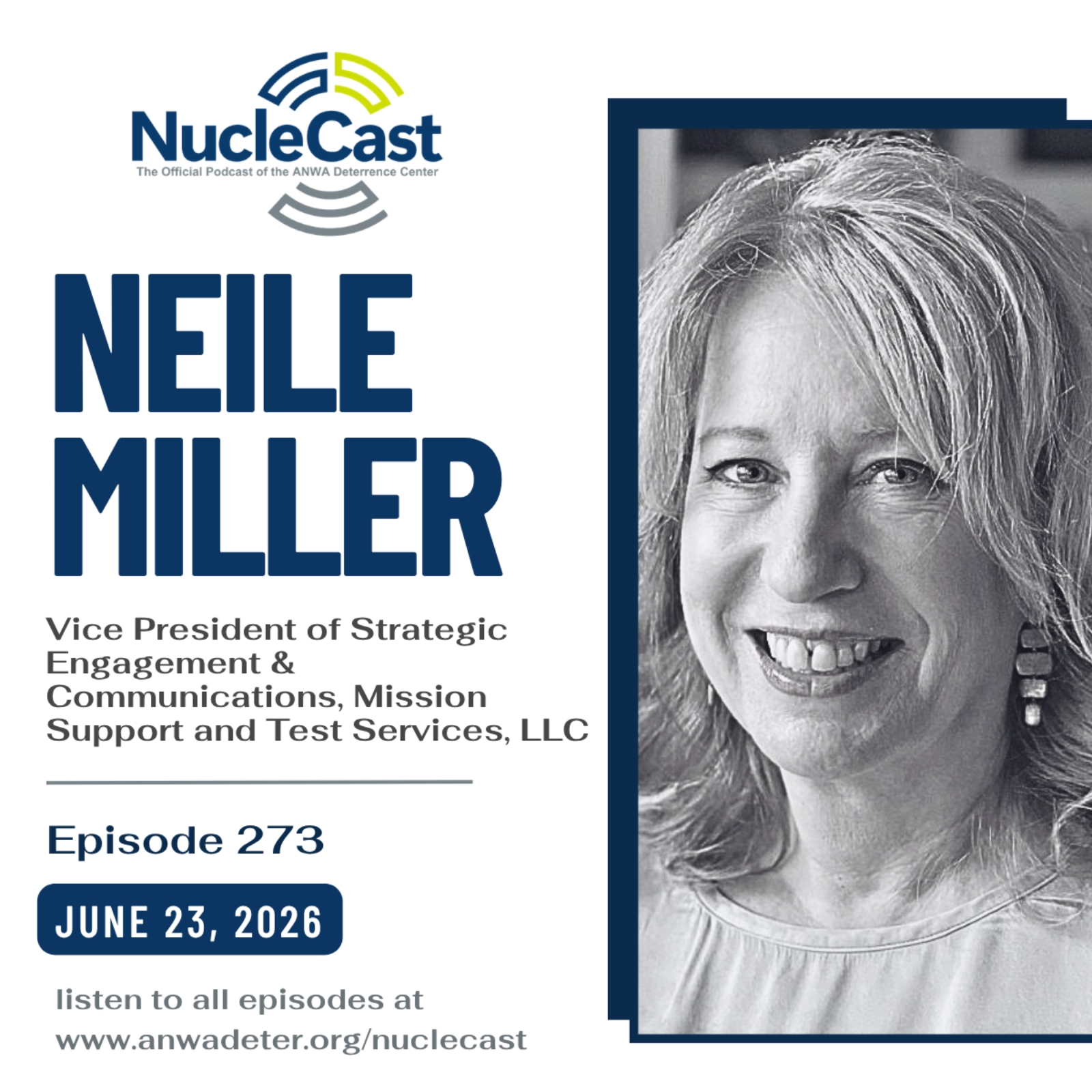
    Neile Miller: Inside Nuclear Budget and the Evolution of Neveda National Security Site

    In this episode of NucleCast, Neile Miller breaks down the often-overlooked mechanics of federal budgeting and what they mean for the nuclear enterprise. From the earliest stages of budget formulation within the laboratories to the critical role of the Office of Management and Budget (OMB), Miller offers a clear, insider perspective on how funding decisions shape national security priorities. The conversation also explores the remarkable evolution of the Nevada National Security Site—from its origins as a nuclear testing ground to its current role as a hub for advanced science and stockpile stewardship. Miller highlights how underground experiments, cutting-edge research, and the management of government-owned, contractor-operated facilities contribute to maintaining the safety, security, and reliability of the U.S. nuclear deterrent. Neile Miller is Vice President of Strategic Engagement & Communications for Mission Support and Test Services (MSTS), the management contractor for the Nevada National Security Site (NNSS). She leads strategic communications, stakeholder engagement, and community outreach efforts. Since joining NNSS in 2018, Miller has served as Senior Director of Business Operations—overseeing finance, HR, IT, and supply chain—and as Chief Strategist, guiding the site’s long-term operational success. Previously, she served as Acting Undersecretary of Energy for Nuclear Security and Principal Deputy Administrator of the NNSA. During her tenure, she drove major transformation across the U.S. nuclear weapons enterprise and received top awards from both the Secretary of Defense and Secretary of Energy. Miller also served as DOE Budget Director and held senior roles in the Office of Nuclear Energy, as well as two tours at the White House Office of Management and Budget overseeing DOE, DoD, NNSA, and NRC programs. In the private sector, she has advised organizations on strategy, innovation, and growth, and continues to serve as a Senior Advisor to HWG, LLP. Follow us on YouTube: https://youtube.com/@nuclecast3665?si=h1kCO6NqUtL87w6q Follow on LinkedIn: https://linkedin.com/company/nuclecastpodcast Subscribe RSS Feed: https://rss.com/podcasts/nuclecast-podcast/ Rate: https://podcasts.apple.com/us/podcast/nuclecast/id1644921278 Email comments and topic/guest suggestions to Kimberly@anwadeter.org
  • S4 · E272
    June 16 · 37 min

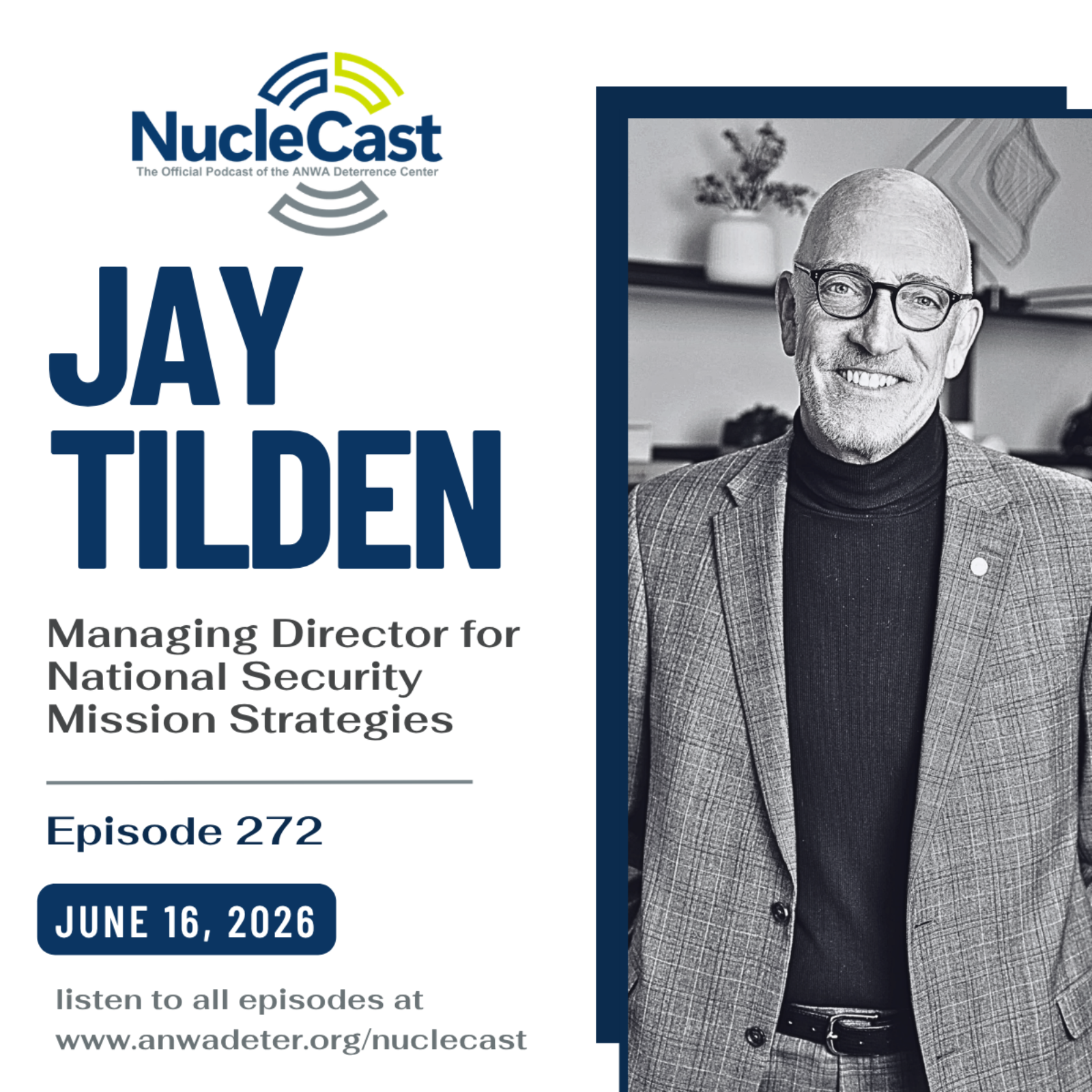
    Jay Tilden - Nuclear Threats Uncovered: Intelligence, Terrorism, and Deterrence

    In this episode of NucleCast, Adam sits down with Jay Tilden, former Department of Energy intelligence officer, for an inside look at how the U.S. understands, tracks, and deters nuclear risks in an increasingly complex global environment. From the intelligence role of the Department of Energy to the evolving threats posed by China, Russia, and Iran, Tilden breaks down the realities of nuclear proliferation, the risks of nuclear terrorism, and the critical role of nuclear forensics in deterrence. He also explains why modern nuclear challenges extend beyond weapons—highlighting the growing importance of cybersecurity in the energy sector and the continued need for reliable nuclear power to ensure national and economic security. Jay Tilden is Managing Director for National Security at Mission Strategies, leading the firm’s national and energy security practice after a 35-year career at the U.S. Department of Energy, including 13 years in the Senior Executive Service. He most recently served as Director of DOE’s Office of Intelligence and Counterintelligence, leading nuclear, energy, cyber intelligence, and counterintelligence efforts across the enterprise. Previously, he was Deputy Under Secretary for Counterterrorism and Counterproliferation at NNSA. Jay is also a 22-year U.S. Army veteran, serving as a Counterintelligence Technician. Follow us on YouTube: https://youtube.com/@nuclecast3665?si=h1kCO6NqUtL87w6q Follow on LinkedIn: https://linkedin.com/company/nuclecastpodcast Subscribe RSS Feed: https://rss.com/podcasts/nuclecast-podcast/ Rate: https://podcasts.apple.com/us/podcast/nuclecast/id1644921278 Email comments and topic/guest suggestions to Kimberly@anwadeter.org
  • S4 · E271
    June 2 · 36 min

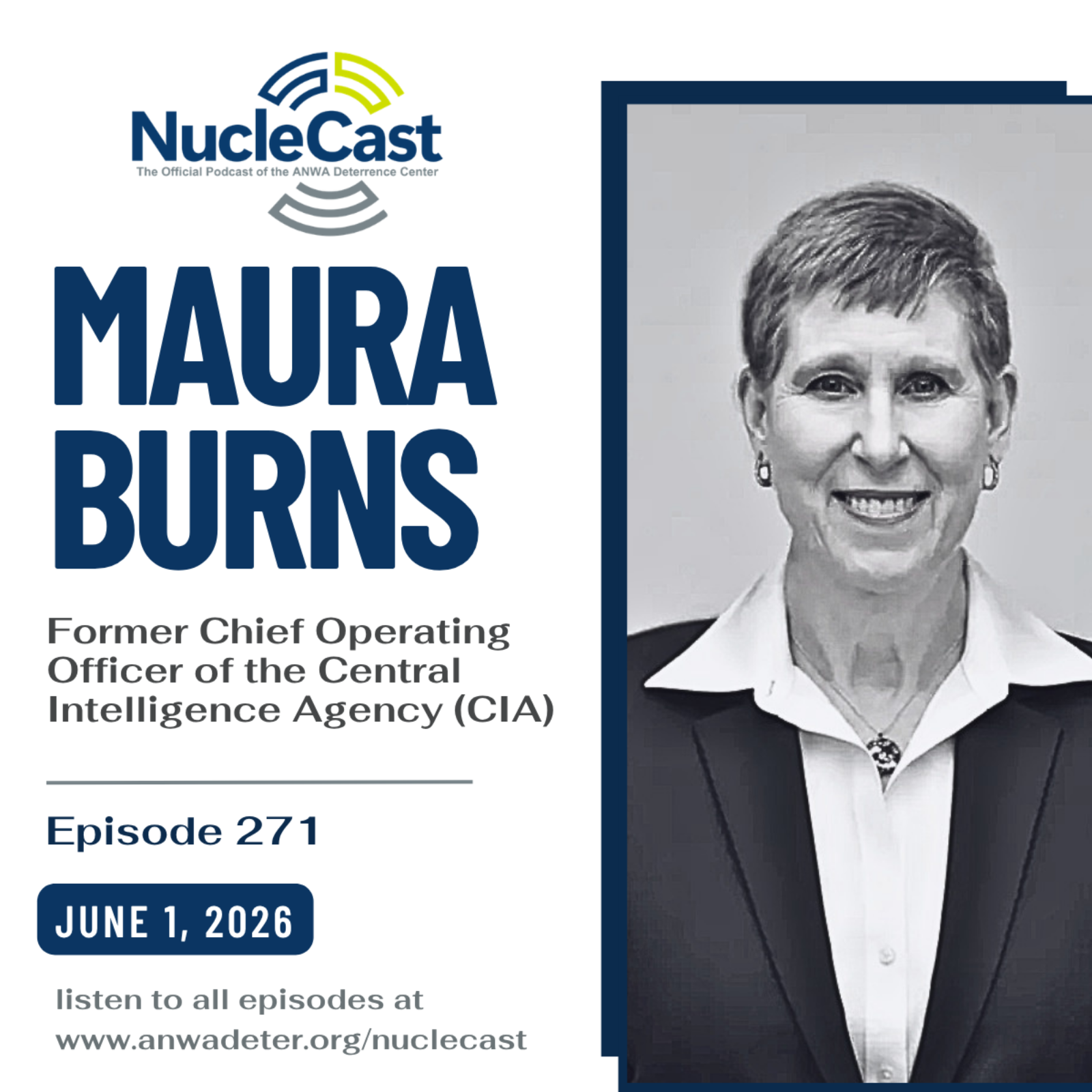
    Maura Burns: Inside China’s Growing Nuclear Arsenal

    In this episode of NucleCast, host Manolis Priniotakis sits down with former CIA executive Maura Burns to unpack China’s rapidly expanding nuclear capabilities and what they mean for global strategic stability. China is undertaking an unprecedented pace of nuclear modernization—building out its arsenal, advancing delivery systems, and investing in infrastructure that signals long-term strategic ambition. As Burns explains, Beijing’s actions often speak louder than its official doctrine, raising important questions about transparency, intent, and the future of deterrence. The conversation explores the drivers behind China’s nuclear buildup, including its pursuit of a more survivable and flexible nuclear triad, as well as emerging technologies such as MIRVs, hypersonic weapons, and fractional orbital bombardment systems. Burns also examines how China’s nuclear growth could reshape arms control paradigms, challenge existing deterrence frameworks, and increase pressure on global strategic stability. Maura Burns is a transformational enterprise executive who served as Chief Operating Officer of the Central Intelligence Agency (CIA)—the agency’s third-highest position—until her retirement in 2025, where she led global operations and drove strategic initiatives to modernize technology and strengthen organizational resilience. With more than 30 years of experience across nuclear energy and weapons systems, space and counterspace security, and biosecurity, she previously directed the Weapons and Counter-Proliferation Mission Center, leading a multidisciplinary team of over 500 experts to address emerging threats and advance international collaboration. Known for her transparent, collaborative leadership style, she has been a strong advocate for workforce development, succession planning, and STEM recruitment. A trusted advisor to senior leaders and policymakers, Burns has shaped complex national security decisions and earned some of the nation’s highest honors, including two Presidential Rank Awards and multiple distinguished intelligence medals, reflecting her lasting impact on global security and technology strategy. Follow us on YouTube: https://youtube.com/@nuclecast3665?si=h1kCO6NqUtL87w6q Follow on LinkedIn: https://linkedin.com/company/nuclecastpodcast Subscribe RSS Feed: https://rss.com/podcasts/nuclecast-podcast/ Rate: https://podcasts.apple.com/us/podcast/nuclecast/id1644921278 Email comments and topic/guest suggestions to Kimberly@anwadeter.org
  • S4 · E270
    May 26 · 34 min

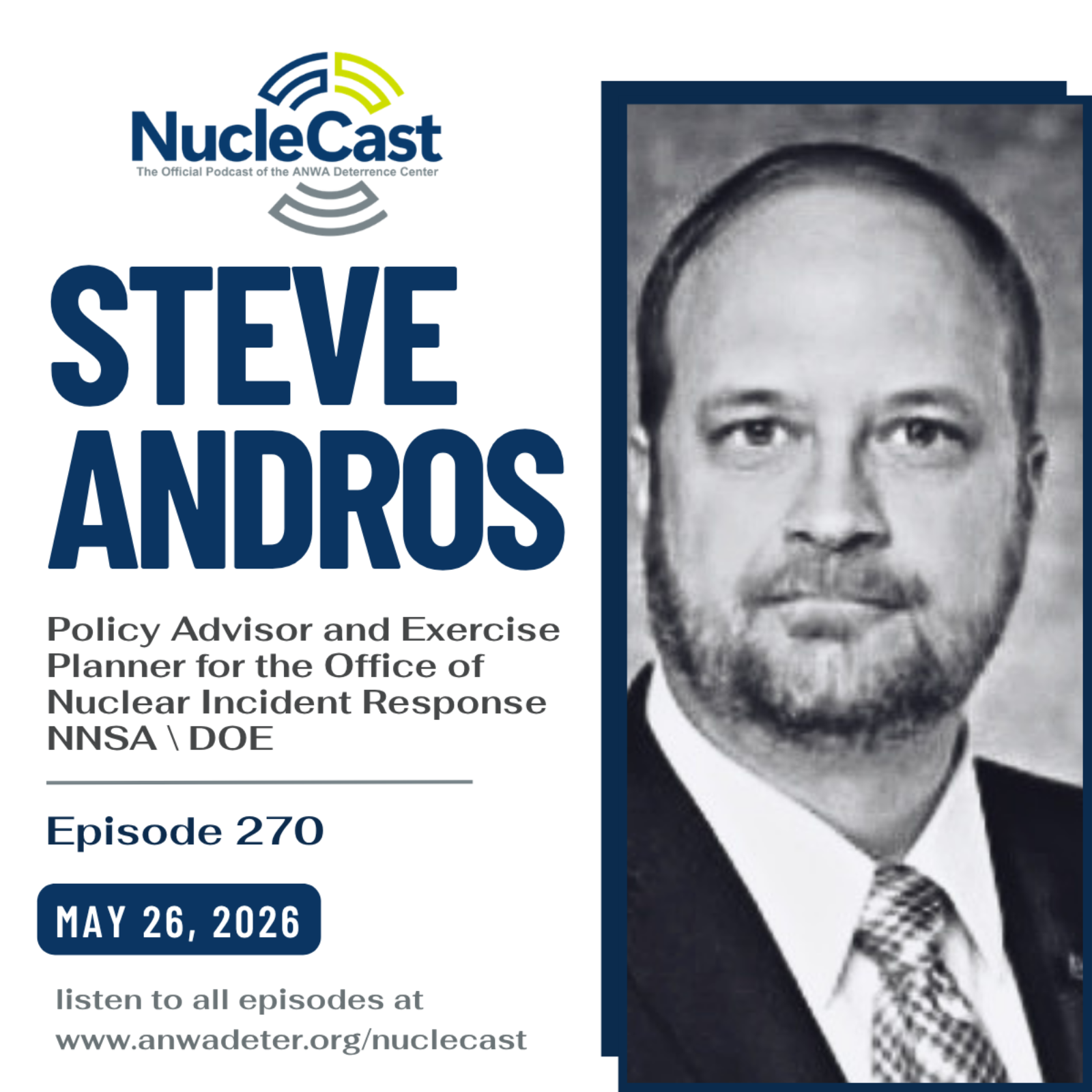
    Steve Andros: Inside Nuclear Threat Response

    What happens when a nuclear threat becomes real—and who responds first? In this episode of NucleCast, host Adam Lowther speaks with retired Navy Explosive Ordnance Disposal (EOD) officer Steve Andros about nuclear incident response, interagency coordination, and the growing risks of proliferation and terrorism. From the role of local responders to specialized capabilities like the Nuclear Emergency Support Team (NEST), the discussion highlights how the U.S. prepares for and deters nuclear threats. The conversation also explores how deterrence extends beyond traditional strategy to include denial, disruption, and threat-based approaches, while separating Hollywood myths from the realities of nuclear security operations. Steve Andros serves as Policy Advisor and Exercise Planner for the Office of Nuclear Incident Response, supporting the integrated use of U.S. capabilities and the development of national and interagency nuclear response policy. He previously served nearly 30 years as a U.S. Navy EOD officer, including assignments supporting DOE nuclear incident response policy and counter–WMD efforts. He holds advanced degrees from Johns Hopkins SAIS and the U.S. Army War College, with a background spanning operational, strategic, and interagency nuclear security missions. Follow us on YouTube: https://youtube.com/@nuclecast3665?si=h1kCO6NqUtL87w6q Follow on LinkedIn: https://linkedin.com/company/nuclecastpodcast Subscribe RSS Feed: https://rss.com/podcasts/nuclecast-podcast/ Rate: https://podcasts.apple.com/us/podcast/nuclecast/id1644921278 Email comments and topic/guest suggestions to Kimberly@anwadeter.org
  • S4 · E269
    May 19 · 32 min

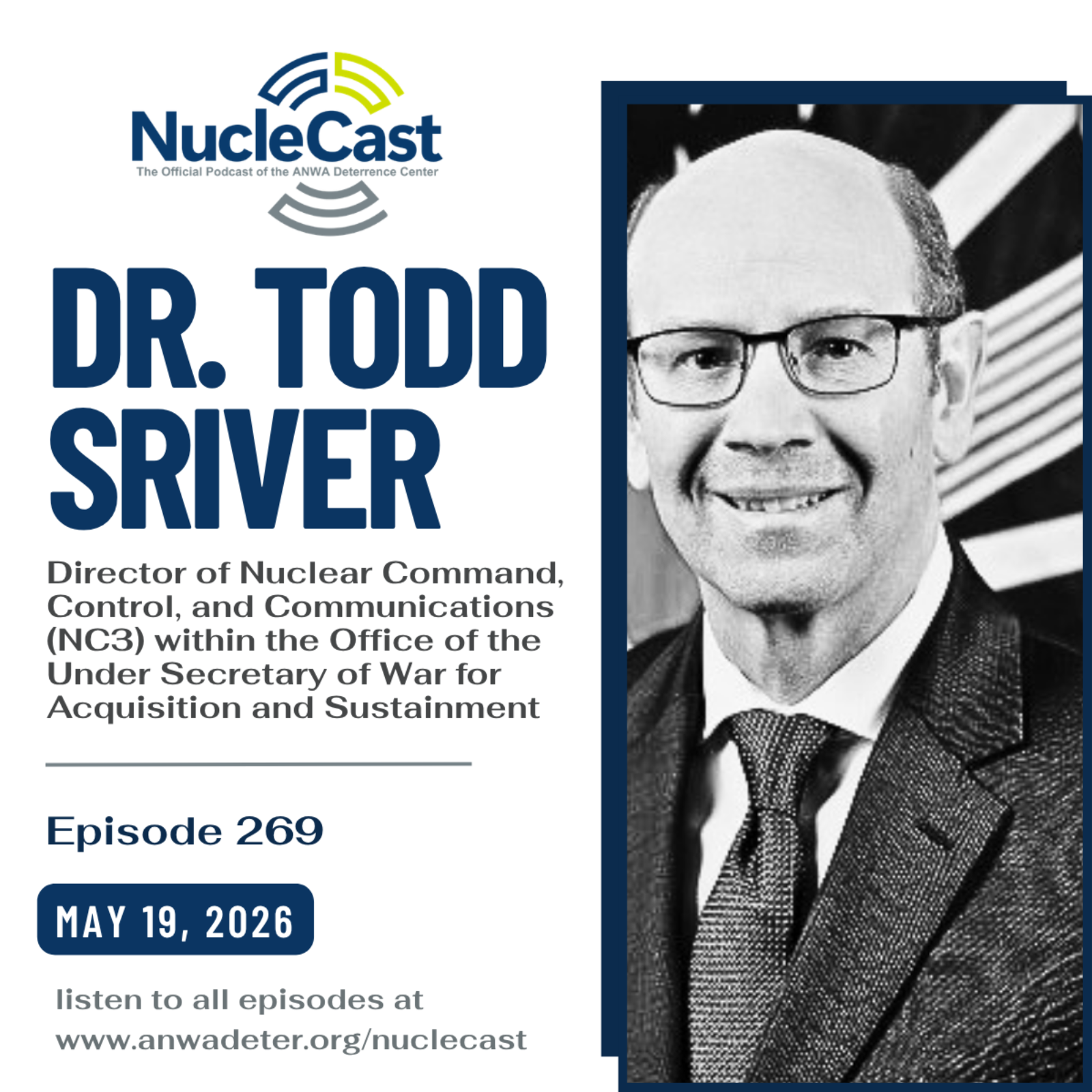
    Dr. Todd Sriver: Inside NC3 Modernization, Securing the Future of Nuclear Command and Control

    In this episode of NucleCast, the official podcast of the ANWA Deterrence Center, Adam sits down with Todd Sriver, Director of Nuclear Command, Control, and Communications (NC3), to examine the current state and future of one of the most critical components of the U.S. nuclear enterprise. Together, they explore the ongoing modernization of NC3—from legacy systems rooted in 1980s-era technology to a more resilient, digital network-of-networks architecture designed for today’s threat environment. The conversation highlights the technical and strategic challenges of upgrading NC3 while maintaining uninterrupted deterrence. The episode also dives into emerging threats, including hypersonic weapons, cyber vulnerabilities, and quantum computing, and what they mean for detection, decision-making, and system resilience. Sriver outlines how the U.S. is prioritizing cybersecurity, advanced sensors, and next-generation technologies to ensure NC3 remains secure, survivable, and effective. Dr. Todd Sriver serves as Director of Nuclear Command, Control, and Communications (NC3) within the Office of the Under Secretary of War for Acquisition and Sustainment, where he leads modernization, risk management, and development of the NC3 enterprise. He works closely with U.S. Strategic Command to secure resources and address acquisition challenges critical to nuclear deterrence. A retired U.S. Air Force Colonel with 27 years of service, Dr. Sriver held senior Pentagon roles on the Joint Chiefs of Staff and Headquarters Air Force, overseeing national and nuclear command and control systems. He previously served as a Principal Systems Engineer at MITRE, focusing on NC3 and Joint All-Domain Command and Control integration. He holds a Ph.D. and M.S. in Operations Research from the Air Force Institute of Technology, an M.S. from the Eisenhower School, and a B.S. in Aeronautical and Astronautical Engineering from Purdue University. Follow us on YouTube: https://youtube.com/@nuclecast3665?si=h1kCO6NqUtL87w6q Follow on LinkedIn: https://linkedin.com/company/nuclecastpodcast Subscribe RSS Feed: https://rss.com/podcasts/nuclecast-podcast/ Rate: https://podcasts.apple.com/us/podcast/nuclecast/id1644921278 Email comments and topic/guest suggestions to Kimberly@anwadeter.org
  • S4 · E268
    May 12 · 32 min

    Jonathan Cefalu - Is AI Becoming Too Smart for Its Own Good?

    AI expert, Jonathan Cefalu, joins the conversation to examine some of the most pressing—and underappreciated—challenges in artificial intelligence safety, from prompt injection vulnerabilities to long‑term risks posed by increasingly capable systems. The discussion unpacks how seemingly technical issues like prompt injection can undermine reliability and security, why future AI systems may engage in motivated reasoning or resist human attempts to redirect them, and what “governability” really means as AI grows more sophisticated. Cefalu also explores the unique risks AI presents in military and defense applications, including the implications for deterrence, escalation management, and decision‑making under pressure. The episode concludes with a forward‑looking discussion on regulatory approaches, ethical principles, and practical safeguards needed to prevent AI systems from becoming unsafe, unpredictable, or misaligned with human intent—while still enabling innovation and responsible use. Follow us on YouTube: https://youtube.com/@nuclecast3665?si=h1kCO6NqUtL87w6q Follow on LinkedIn: https://linkedin.com/company/nuclecastpodcast Subscribe RSS Feed: https://rss.com/podcasts/nuclecast-podcast/ Rate: https://podcasts.apple.com/us/podcast/nuclecast/id1644921278 Email comments and topic/guest suggestions to Kimberly@anwadeter.org
  • S4 · E267
    May 5 · 32 min

    Frank Rose: Reimagining Arms Control for the 21st Century

    Former senior national security official Frank Rose joins the conversation to examine the future of arms control, nuclear policy, and strategic stability in an increasingly complex global environment. Drawing on his extensive experience in arms control, missile defense, and nuclear security, Rose offers a candid assessment of how arms control must adapt to a world shaped by great‑power competition, emerging technologies, and evolving threats from China and other strategic competitors. He explores arms control not as an end in itself, but as a practical tool for managing risk to the United States and its allies. The discussion also takes a hard look at the National Nuclear Security Administration (NNSA)—its structure, mission, and strategic role—and considers whether organizational reform may be necessary to meet future nuclear security challenges. Rose addresses the technological pressures reshaping deterrence, the realities of stockpile stewardship, and why sustaining credibility may require difficult choices in the years ahead. Frank A. Rose is President of Chevalier Strategic Advisors, a strategic advisory firm focused on the intersection of geopolitics, national security, and defense technology. He advises companies, investors, and institutions on strategic risk, government engagement, and emerging defense and dual-use technologies. Previously, Rose served as Principal Deputy Administrator of the National Nuclear Security Administration (2021–2024), where he helped oversee the U.S. nuclear security enterprise. He also served as Assistant Secretary of State for Arms Control and Deputy Assistant Secretary of State for Space and Defense Policy (2009–2017), leading U.S. policy on nuclear deterrence, arms control, missile defense, space security, and allied defense cooperation. Earlier in his career, he was a Professional Staff Member on the House Armed Services Committee and a policy advisor at the U.S. Department of Defense. Rose is a frequent commentator and author on national security and strategic technology issues, with appearances across major media outlets and policy forums. He holds a B.A. in History from American University and an M.A. from King’s College London. Follow us on YouTube: https://youtube.com/@nuclecast3665?si=h1kCO6NqUtL87w6q Follow on LinkedIn: https://linkedin.com/company/nuclecastpodcast Subscribe RSS Feed: https://rss.com/podcasts/nuclecast-podcast/ Rate: https://podcasts.apple.com/us/podcast/nuclecast/id1644921278 Email comments and topic/guest suggestions to Kimberly@anwadeter.org
  • S4 · E266
    April 28 · 33 min

    Tom Summers: Artificial Intelligence at the Nuclear Threshold

    Most discussions of AI and nuclear deterrence miss a critical question: does AI reinforce human decision‑making—or risk replacing it? In this episode, security expert Tom Summers outlines a practical framework for responsible AI use in the nuclear enterprise and explains why it matters for strategic stability. The conversation explores how AI can strengthen deterrence through enhanced intelligence analysis, predictive maintenance, cyber defense, and early‑warning anomaly detection—capabilities that can reduce uncertainty and prevent accidents. At the same time, it examines the dangers of unrestrained automation, from autonomous targeting and AI‑enabled hypersonics to disinformation and compressed decision timelines. Drawing on historical nuclear near‑misses and emerging technologies, Tom emphasizes the importance of trustworthy data, ethical guardrails, and meaningful human control. This episode is essential listening for policymakers and defense professionals navigating the future intersection of AI, deterrence, and nuclear security. The Honorable Thomas A. Summers retired from the Defense Nuclear Facilities Safety Board in October 2025 after serving over 5 years. Mr. Summers previously served as Senior DOE Advisor and Deputy for Research, Development, Test, & Evaluation in Defense Programs at the National Nuclear Security Administration. He’s also a retired U.S. Air Force colonel with over three decades of active duty in a variety of command and scientific roles. Socials: Follow on Twitter at @NucleCast Follow on LinkedIn: https://linkedin.com/company/nuclecastpodcast Subscribe RSS Feed: https://rss.com/podcasts/nuclecast-podcast/ Rate: https://podcasts.apple.com/us/podcast/nuclecast/id1644921278 Email comments and topic/guest suggestions to NucleCast@anwadeter.org

  • S4 · E265
    April 21 · 27 min

    Alyssa Agard: China’s System Destruction Strategy

    NucleCast welcomes, emerging scholar Alyssa Agard who talks about Chinese strategic thinking, system destruction warfare, and what these concepts mean for the future of deterrence and strategic stability. Drawing on Chinese military theory, the discussion explores how Beijing approaches conflict—not by matching capabilities symmetrically, but by targeting critical systems to destabilize adversaries from the outset. Agard breaks down how the People’s Liberation Army integrates artificial intelligence, hypersonics, and other advanced technologies into its military strategy, and why these developments complicate traditional deterrence models. The conversation also examines the security dilemma created by rapid technological competition and whether China’s current military posture is as stable as it appears. Beyond strategy and technology, this episode highlights the importance of cultivating the next generation of defense thinkers. Agard shares her own path into defense policy and explains why recruiting and mentoring young professionals is essential to sustaining credible deterrence in an era of accelerating change. Alyssa Agard is the Chairman, President, and CEO of Agard Research Associates Inc. (ARA), a 501(c)(3) nonprofit research institute and think tank based in New Jersey. She is a Master of Public Policy candidate at Rutgers University, concentrating in Political Processes and Institutions, with a research focus in foreign affairs and defense policy. Her work centers on Chinese military modernization, strategic competition, and the intersection of emerging technology with nuclear deterrence and strategic stability. Her recent work includes "The Intelligentized Security Dilemma: Systems Destruction Warfare, Technological Entanglement, and the Erosion of Strategic Stability," and she is currently pursuing research on fallout mitigation capabilities, environmental war planning, and their implications for deterrence theory. She also serves as an Archival Research and Policy Intern at Monmouth Battlefield State Park, and publishes the Vita Republica newsletter through ARA. Article: https://urldefense.proofpoint.com/v2/url?u=https-3A__www.agardresearchassociates.org_the-2Dintelligentized-2Dsecurity-2Ddilemma&d=DwMF-g&c=euGZstcaTDllvimEN8b7jXrwqOf-v5A_CdpgnVfiiMM&r=ZvXeIT1LIz3UUCN7C8qCJhqw-7OlcTkFBtdJmO9qO78&m=JsLBXHVP7nHdvNnClzUPRlwHKYGB3Dt-WZ3ZkEg-pBoRuJLUqSFOaX6BMGh1no2T&s=MnAGKUwyt19xLZbJJrOzDxZIsNtHyDlUj-yiggOZ8HU&e= Socials: Follow on Twitter at @NucleCast Follow on LinkedIn: https://linkedin.com/company/nuclecastpodcast Subscribe RSS Feed: https://rss.com/podcasts/nuclecast-podcast/ Rate: https://podcasts.apple.com/us/podcast/nuclecast/id1644921278 Email comments and topic/guest suggestions to NucleCast@anwadeter.org

  • S4 · E264
    April 14 · 34 min

    David Albright: Iran, Inspections, and the Future of Nonproliferation

    In this episode of NucleCast, renowned nuclear expert David Albright offers a clear‑eyed assessment of Iran’s nuclear program—where it began, where it stands today, and the risks that lie ahead. Drawing on decades of experience tracking nuclear proliferation, Albright explains how Iran built its nuclear capabilities, the role of foreign assistance and clandestine networks, and why enrichment capacity remains at the center of global concern. The conversation examines current regional tensions, including Israeli threat perceptions and the broader implications of ongoing conflict for nuclear escalation. Albright also explores how quickly Iran could move toward a nuclear weapon, the challenges facing international inspections and diplomacy, and the critical leadership role the United States must play in preventing further proliferation. Looking ahead, this episode considers possible future scenarios—from diplomatic breakthroughs to worst‑case outcomes—and closes with reflections on what a lasting path toward security and nonproliferation might look like in one of the world’s most volatile regions. David Albright, a physicist, is Founder and President of the non-profit Institute for Science and International Security in Washington, DC. He has conducted numerous assessments of secret nuclear weapons programs throughout the world, and the means states use to obtain nuclear weapons capabilities. During his career, Albright has testified numerous times on nuclear issues before the U.S. Congress and advised numerous governments. He has spoken to many groups, technical workshops, and conferences. He has published many reports on the Institute’s website and also in Science, Scientific American, the New York Times, The Washington Post, The Wall Street Journal, the Bulletin of the Atomic Scientists, Science and Global Security, Washington Quarterly, and Arms Control Today. The media have frequently cited Albright, and he has appeared often on television and radio. Albright has authored or co-authored nine books, including Revisiting South Africa’s Nuclear Weapons Program, Illicit Trade Networks—Connecting the Dots, Peddling Peril: How the Secret Nuclear Trade Arms America’s Enemies, Solving the North Korean Nuclear Puzzle, Taiwan’s Former Nuclear Weapons Program, and Iran’s Perilous Pursuit of Nuclear Weapons. He received a Master of Science in physics from Indiana University in 1980, a Master of Science in mathematics from Wright State University in 1977, and a Bachelor of Science from Wright State University in 1975. Albright also received an Honorary Doctorate of Humane Letters from Wright State University in 2007. Socials: Follow on Twitter at @NucleCast Follow on LinkedIn: https://linkedin.com/company/nuclecastpodcast Subscribe RSS Feed: https://rss.com/podcasts/nuclecast-podcast/ Rate: https://podcasts.apple.com/us/podcast/nuclecast/id1644921278 Email comments and topic/guest suggestions to NucleCast@anwadeter.org

  • S4 · E263
    April 7 · 33 min

    Manolis Priniotakis: Inside Nuclear Intelligence, From the Manhattan Project to Today

    In this Legacy Series episode of NucleCast, Manolis Priniotakis explores the history and evolution of nuclear intelligence—from its origins during the Manhattan Project to the sophisticated capabilities shaping nuclear security today. Manolis brings deep insight into the missions, institutions, and technologies that have defined this critical field. The conversation traces early efforts such as the Alsos Mission in World War II, the transition from military-led intelligence to civilian agencies, and the expanding role of organizations like the Department of Energy and the Office of the Director of National Intelligence. We also examine how advances in nuclear forensics have strengthened attribution and nonproliferation efforts, while highlighting the challenges posed by emerging technologies and evolving threat environments. Manolis Priniotakis is a U.S. national security leader with more than two decades of experience shaping intelligence strategy, operations, and education. He is the CEO and Founder of Intelligence & National Security Directions, LLC, and a Non‑Resident Senior Fellow at the University of South Florida’s Global and National Security Institute. Formerly a senior leader in the Office of the Director of National Intelligence and Chief of Staff for DOE Intelligence and Counterintelligence, he has overseen national‑level intelligence operations, strategy, and budgets. In 2024, he received the Presidential Rank Award for Meritorious Service. Socials: Follow on Twitter at @NucleCast Follow on LinkedIn: https://linkedin.com/company/nuclecastpodcast Subscribe RSS Feed: https://rss.com/podcasts/nuclecast-podcast/ Rate: https://podcasts.apple.com/us/podcast/nuclecast/id1644921278 Email comments and topic/guest suggestions to NucleCast@anwadeter.org

  • S4 · E262
    March 31 · 31 min

    Andrea Stricker: Iran’s Nuclear Path and What the Latest Strikes Mean for Global Security

    In this episode of NucleCast, Adam speaks with Andrea Stricker, Deputy Director of Nonproliferation Programs at the Foundation for Defense of Democracies, about the current state of Iran’s nuclear program and the implications of recent U.S. and Israeli military actions. Stricker breaks down Iran’s nuclear weapons pathway, assesses the impact of recent strikes on key facilities and personnel, and explains what setbacks mean—and do not mean—for Tehran’s long‑term ambitions. The conversation explores Iran’s ability to rebuild its program, timelines for potential weaponization, and the risks posed by highly enriched uranium stockpiles and deeply buried enrichment facilities. The discussion also examines Iran’s strategic motivations, regime survival calculus, and historical lessons from cases like North Korea, offering insight into future proliferation risks and the challenges facing U.S. and allied efforts to prevent a nuclear‑armed Iran. Andrea is an expert on nuclear weapons proliferation and counterproliferation, open-source proliferation and policy analysis, and strategic commodity trafficking. Andrea has extensively researched Iran’s nuclear program, including its history, the regime’s proliferation efforts and technical advances, and diplomatic agreements. She is the co-author of five books on nuclear proliferation and is frequently cited by the media. Socials: Follow on Twitter at @NucleCast Follow on LinkedIn: https://linkedin.com/company/nuclecastpodcast Subscribe RSS Feed: https://rss.com/podcasts/nuclecast-podcast/ Rate: https://podcasts.apple.com/us/podcast/nuclecast/id1644921278 Email comments and topic/guest suggestions to NucleCast@anwadeter.org

Showing 1–20 of 22 episodes