Skip to content
Artwork for Nourishing Ideas
BusinessEntrepreneurshipScienceNature

Nourishing Ideas

Hans Hallengren

Nourishing Ideas is a podcast about people who act now — building thriving communities, businesses, and relationships rooted in food, place, and care. We meet those who don’t wait for “the right technology,” but create real solutions with courage and creativity. Listen, get inspired, and see how regeneration begins — right where we are.

nourishingideas.substack.com
Play
  • 20 episodes
  • Avg 1 hr 26 min
  • English
  • S4 · E67
    July 26 · 32 min

    ENG #67 Hans Hallengren, Nourishing Ideas - Standing in the Friction

    There’s a moment in every farmer’s year when the field looks fine on the surface and is dying underneath. A plow pan — invisible, compacted, formed by doing the same right thing at the same depth for too many years in a row. Roots can’t break it. Water can’t drain through it. And you’d never know, unless you went looking with a penetrometer, or a shovel, or the humility to ask whether the thing you’ve always done is still the right thing to do. This Substack is reader-supported. To receive new posts and support my work, consider becoming a free or paid subscriber. This episode isn’t about one guest. It’s about twenty-five of them — from Allan Savory in Zimbabwe to Jesper Andersson at Skattegården, from Helena Norberg-Hodge’s fifty years watching globalization arrive village by village, to Nick and Justine building a birch-named community in the Jämtland forest. Listening back to this whole stretch of Nourishing Ideas, one thread kept surfacing that I hadn’t planned for: almost everyone I talked to is living inside a contradiction they’ve stopped trying to resolve. They’ve learned instead to stand in it — in the friction between control and trust, extraction and regeneration, structure and surrender — and to treat that friction as the actual site of the work, not an obstacle to it. This episode is my attempt to follow that thread all the way through: the life underground we don’t see and don’t vote for, what it costs us to give it a voice anyway, and the very concrete tools — cooperation, local ownership, breaking up plow pans literal and institutional — that the people in this feed are actually using to build something that outlasts them. Three ways to go deeper with this one: 🎧 Listen to the full episode — thirty minutes, best with a cup of something warm and nowhere to be immediately after. 💬 Share the one line that stopped you — reply to this post or tag me on Instagram with the sentence from the episode you’re still chewing on. I read every one. 🌱 Go back to the source conversations — if one of the twenty-five voices in this episode pulls at you, the full individual interviews are all in the feed. Start with whichever name you can’t stop thinking about. Before you press play — sit with this one question, and let it travel with you through the whole episode: What is the “plow pan” in your own life or work right now — the thing that looks fine on the surface but hasn’t let anything new take root underneath for a long time? Thanks for reading! This post is public so feel free to share it. Nourishing IdeasSupport the podcast — by subscribing and/or contributing on a yearly or monthly basis: For entrepreneurs For one-time donations:💸 Swish (in Sweden): 070-6092464 (Hans Hallengren)☕️ Buy Me A Coffee Besides the podcast, you’ll soon find — during Q2 2026— an educational program on how to build a regenerative business or create a sustainably functioning company. The interviews will continue to be freely available to everyone, and we truly appreciate any kind of support — whether through subscribing or contributing financially in any way. Some reflection episodes, which will form part of the educational material I’ll start publishing this fall, will be available exclusively to paying subscribers.If you want to listen to those — this is a good time to become a subscriber! In addition to the interviews, there will be a learning program open to everyone, but I’ll also mix in deeper-dive episodes on specific topics, which will be reserved for paying subscribers. Follow me hereJoin the subscriber chat 🎵 The music was produced by Victor-Alan Weeks (SENA HERO) I’m Hans Hallengren, the host of Nourishing Ideas. Learn more about me hereand follow Nourishing Ideas on LinkedIn Get full access to Nourishing Ideas at nourishingideas.substack.com/subscribe
  • July 19 · 1 hr 5 min

    ENG Dubbed #66A Massimiliano Solano Valdibella - The Price of Food Is Either Money Here or Life Somewhere Else

    In the hills of Camporeale, Sicily — a territory shaped by decades of mafia control, social distrust, and agricultural anonymity — a cooperative was born that refused to follow any existing model. Massimiliano Solano, third-generation farmer turned agroecology pioneer, co-founded Valdibella in 1998 with a simple but radical premise: farmers should know who eats their food, and eaters should know who grows it. What started as six producers helping at-risk youth find dignified work has grown into a network of fifty families producing wine, pasta, oil, and grain — not for the industry, but for the people. This Substack is reader-supported. To receive new posts and support my work, consider becoming a free or paid subscriber. At the heart of Valdibella’s philosophy is a refusal to sell raw and remain anonymous. Massimiliano describes how conventional agriculture hands power entirely to industrial brands — the farmer disappears, the territory disappears, and the price is set by others. Valdibella built a different architecture: direct purchasing groups, a producer-owned food hub, partnerships like Crowd Container in Switzerland, and an agroecology school now running its first full curriculum. Every link in the chain is designed so that Valdibella’s identity, values, and producers remain visible and accountable all the way to the final consumer. What makes this conversation especially rich is how Massimiliano draws from nature itself as the governing logic of the business. Every element in a living system has a function that serves the whole — no entity causes the collapse of the system around it. That, he argues, is the only honest model for agriculture: find your function, do it in service of collective good, and let complexity be the plan rather than the problem. In a world where food is either something you pay for consciously, or something whose true cost is paid in suffering somewhere else, Valdibella is a quiet proof that the alternative already exists. Three things that make this episode worth your time: * How a territory historically controlled by the mafia became the ground for one of Italy’s most interesting regenerative cooperatives — and why the timing matters * Why Massimiliano believes organic certification, while founded on good principles, became a discipline that allowed minimalist application — and what Valdibella is doing instead * How Valdibella programs production together with its farmers so that no one grows blindly, and why that alone changes everything about who holds power in the food system 3 CTAs * If you’ve ever wondered why your food is cheap — this episode will make the cost structure of industrial agriculture impossible to ignore. Listen and share with someone who buys food every day (that’s everyone). * Know a farmer, food entrepreneur, or cooperative builder? Send them this episode. Massimiliano’s reflections on pricing sovereignty, seed autonomy, and consumer-producer dialogue are rare, practical, and honest. * Follow Valdibella’s work at valdibella.it — and if you’re in Europe, look into Crowd Container and the Valdibella food hub network to become part of the chain they’re building. Curiosity-driven closing question What if the anonymity of your food isn’t just a marketing problem — but the root cause of why farmers disappear, soils degrade, and rural communities hollow out? And what would change if you, as a consumer, saw yourself as a co-author of the food system rather than a passive buyer at its end? Valdibellas homepage Massimiliano Solano LinkedIn Valibellas Instagram Top 50 Farmers Thanks for reading! This post is public so feel free to share it. For entrepreneurs For one-time donations:💸 Swish (in Sweden): 070-6092464 (Hans Hallengren)☕️ Buy Me A Coffee Besides the podcast, you’ll soon find — Q2 2026 — an educational program on how to build a regenerative business or create a sustainably functioning company. The interviews will continue to be gifts available to everyone, and we truly appreciate any kind of support — whether through subscribing or contributing financially in any way. Some reflection episodes, which will form part of the educational material I’ll start publishing this season, will be available exclusively to paying subscribers.If you want to listen to those — this is a good time to become a subscriber! In addition to the interviews, there will be a learning program open to everyone, but I’ll also mix in deeper-dive episodes on specific topics, which will be reserved for paying subscribers. Follow me hereJoin the subscriber chat 🎵 The music was produced by Victor-Alan Weeks (SENA HERO) Get full access to Nourishing Ideas at nourishingideas.substack.com/subscribe

  • S4 · E66
    July 19 · 1 hr 39 min

    ENG ITA #66 Massimiliano Solano Valdibella - The Price of Food Is Either Money Here or Life Somewhere Else

    In the hills of Camporeale, Sicily — a territory shaped by decades of mafia control, social distrust, and agricultural anonymity — a cooperative was born that refused to follow any existing model. Massimiliano Solano, third-generation farmer turned agroecology pioneer, co-founded Valdibella in 1998 with a simple but radical premise: farmers should know who eats their food, and eaters should know who grows it. What started as six producers helping at-risk youth find dignified work has grown into a network of fifty families producing wine, pasta, oil, and grain — not for the industry, but for the people. This Substack is reader-supported. To receive new posts and support my work, consider becoming a free or paid subscriber. At the heart of Valdibella’s philosophy is a refusal to sell raw and remain anonymous. Massimiliano describes how conventional agriculture hands power entirely to industrial brands — the farmer disappears, the territory disappears, and the price is set by others. Valdibella built a different architecture: direct purchasing groups, a producer-owned food hub, partnerships like Crowd Container in Switzerland, and an agroecology school now running its first full curriculum. Every link in the chain is designed so that Valdibella’s identity, values, and producers remain visible and accountable all the way to the final consumer. What makes this conversation especially rich is how Massimiliano draws from nature itself as the governing logic of the business. Every element in a living system has a function that serves the whole — no entity causes the collapse of the system around it. That, he argues, is the only honest model for agriculture: find your function, do it in service of collective good, and let complexity be the plan rather than the problem. In a world where food is either something you pay for consciously, or something whose true cost is paid in suffering somewhere else, Valdibella is a quiet proof that the alternative already exists. Three things that make this episode worth your time: * How a territory historically controlled by the mafia became the ground for one of Italy’s most interesting regenerative cooperatives — and why the timing matters * Why Massimiliano believes organic certification, while founded on good principles, became a discipline that allowed minimalist application — and what Valdibella is doing instead * How Valdibella programs production together with its farmers so that no one grows blindly, and why that alone changes everything about who holds power in the food system 3 CTAs * If you’ve ever wondered why your food is cheap — this episode will make the cost structure of industrial agriculture impossible to ignore. Listen and share with someone who buys food every day (that’s everyone). * Know a farmer, food entrepreneur, or cooperative builder? Send them this episode. Massimiliano’s reflections on pricing sovereignty, seed autonomy, and consumer-producer dialogue are rare, practical, and honest. * Follow Valdibella’s work at valdibella.it — and if you’re in Europe, look into Crowd Container and the Valdibella food hub network to become part of the chain they’re building. Curiosity-driven closing question What if the anonymity of your food isn’t just a marketing problem — but the root cause of why farmers disappear, soils degrade, and rural communities hollow out? And what would change if you, as a consumer, saw yourself as a co-author of the food system rather than a passive buyer at its end? Valdibellas homepage Massimiliano Solano LinkedIn Valibellas Instagram Top 50 Farmers Thanks for reading! This post is public so feel free to share it. For entrepreneurs For one-time donations:💸 Swish (in Sweden): 070-6092464 (Hans Hallengren)☕️ Buy Me A Coffee Besides the podcast, you’ll soon find — Q2 2026 — an educational program on how to build a regenerative business or create a sustainably functioning company. The interviews will continue to be gifts available to everyone, and we truly appreciate any kind of support — whether through subscribing or contributing financially in any way. Some reflection episodes, which will form part of the educational material I’ll start publishing this season, will be available exclusively to paying subscribers.If you want to listen to those — this is a good time to become a subscriber! In addition to the interviews, there will be a learning program open to everyone, but I’ll also mix in deeper-dive episodes on specific topics, which will be reserved for paying subscribers. Follow me hereJoin the subscriber chat 🎵 The music was produced by Victor-Alan Weeks (SENA HERO) Get full access to Nourishing Ideas at nourishingideas.substack.com/subscribe

  • S4 · E65
    July 12 · 1 hr 43 min

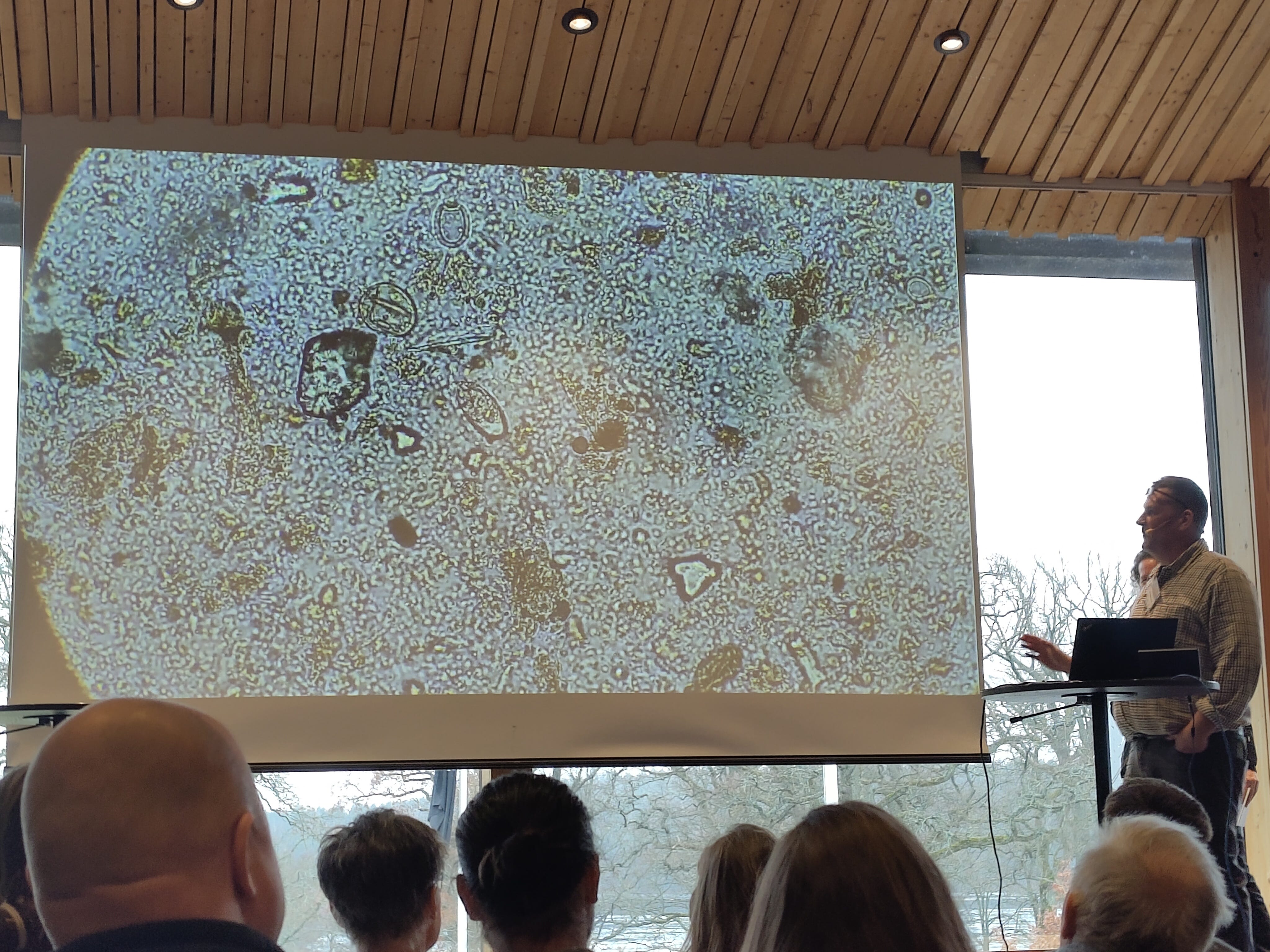
    SWE #65 Jesper Andersson, Skattegården - Kompost, extrakt och mikroskop – ett samtal om jordhälsa från grunden

    Jordhälsa, biologi och regenerativt lantbruk I det här avsnittet av Nourishing Ideas möter vi Jesper Andersson, ekologisk köttproducent på Skattegården utanför Falköping i Västergötland. Jesper driver sin verksamhet sedan tidigt 1990-tal och har under de senaste åren fördjupat sig i jordhälsa och jordbiologi på ett sätt som förändrat hela hans syn på vad ett lantbruk kan och bör vara. Via YouTube-kanaler, internationella forskare och till sist Soil Food Web School – där han nu genomgår sin avslutande kursomgång – har han steg för steg övergett föreställningen att jord är ett passivt substrat och börjat förstå den som ett levande, självorganiserande system This Substack is reader-supported. To receive new posts and support my work, consider becoming a free or paid subscriber. .Samtalet rör sig mellan teori och praktik: från protozoers roll i kväveförsörjningen till hur man bygger sin egen kompostextraktor av traktordysor och kaffefiltrar, från mykorrhizasvamparnas känslighet för anaeroba förhållanden till hur en plogsula kan orsaka grundvattenförluster. Jesper delar observationer från sin egen gård, från grannar som arbetar med Holistic Management och från fallstudier i Indien och Australien där regenerativt tänkande bokstavligen räddat bönder från konkurs och förtvivlan. Det här är ett avsnitt för dig som är nyfiken på vad som verkligen händer i marken under fötterna på oss – och vad det skulle innebära om vi slutade behandla jord som ett bekostnadsproblem och började se den som det mest värdefulla kapitalet vi har. Jesper är inte klar med sin resa, men han vet tillräckligt för att vara övertygad: det finns inget tillbaka. I detta avsnitt: * Hur jordbiologin – bakterier, protozoer, mykorrhizasvampar och nematoder – samverkar för att försörja växter utan konstgödsel * Konkreta steg för att börja reparera jordhälsa, oavsett om du är ekobonde eller konventionell lantbrukare * Varför kompost, extrakt och mikroskopet är Jespers viktigaste verktyg – och hur han konstruerat dem själv Lyssna på avsnittet och följ med ner i jordens värld – du kommer aldrig se ett fält på samma sätt igen. Dela avsnittet med en lantbrukare, en trädgårdsodlare eller någon som funderar på vad regenerativt jordbruk egentligen innebär i praktiken. Prenumerera på Nourishing Ideas för fler samtal om de system som bär upp vår mat, vår jord och vår framtid. Om en jord med 0,2 % mullhalt på 150 år kan bli ett varningens exempel – vad är det vi egentligen håller på att tappa, och hur lång tid har vi på oss att vända det? Jesper Anderssons Facebook Soil Food Web School The Andhra Pradesh Community-Managed Natural Farming (APCNF) Thanks for reading! This post is public so feel free to share it. Nourishing IdeasSupport the podcast — by subscribing and/or contributing on a yearly or monthly basis: For entrepreneurs For one-time donations:💸 Swish (in Sweden): 070-6092464 (Hans Hallengren)☕️ Buy Me A Coffee Besides the podcast, you’ll soon find — during Q2 2026— an educational program on how to build a regenerative business or create a sustainably functioning company. The interviews will continue to be freely available to everyone, and we truly appreciate any kind of support — whether through subscribing or contributing financially in any way. Some reflection episodes, which will form part of the educational material I’ll start publishing this fall, will be available exclusively to paying subscribers.If you want to listen to those — this is a good time to become a subscriber! In addition to the interviews, there will be a learning program open to everyone, but I’ll also mix in deeper-dive episodes on specific topics, which will be reserved for paying subscribers. Follow me hereJoin the subscriber chat 🎵 The music was produced by Victor-Alan Weeks (SENA HERO) I’m Hans Hallengren, the host of Nourishing Ideas. Learn more about me hereand follow Nourishing Ideas on LinkedIn Get full access to Nourishing Ideas at nourishingideas.substack.com/subscribe
  • S4 · E64
    July 5 · 1 hr 30 min

    SWE #64 Patrik von Corswant, Regenerativt Lärande - Hand, hjärta, hjärna: om kunskap som inte går att googla

    I dagens avsnitt, live från Almedalen 2026, av Nourishing Ideas möter vi Patrik von Corswant, femte generationens lantbrukare på Stafvagård i Gotland och styrelseledamot i en Waldorfskola i Visby. Patrik har en bakgrund som spänner från konventionellt storskaligt jordbruk till regenerativ djurhållning och Holistic Management – och han bär med sig samma frågor in i skolvärlden som han brottats med på gården: hur hanterar man komplexitet utan att försöka kontrollera den ihjäl? This Substack is listener-supported. To receive new posts and support my work, consider becoming a free or paid subscriber. Samtalet rör sig mellan gårdens historia, generationers kamp med skuld och skam, och en oväntad övergång till pedagogik när Patrik blev ordförande för en Waldorfskola. Han delar tankar om Rudolf Steiners metod, om hand, hjärta och hjärna som likvärdiga kunskapsvägar, och om varför dagens betygssystem och AI-användning riskerar att tömma lärandet på subjektiv erfarenhet. Det blir ett samtal om polarisering, intuition och vad det egentligen innebär att vara förberedd för livet – inte bara för arbetsmarknaden. Det här är ett avsnitt för dig som funderar på hur vi lär oss, vad skolan egentligen ska forma människor till, och hur principer från regenerativt jordbruk – tålamod, observation, att arbeta med snarare än mot komplexa system – kan appliceras långt utanför gården. Patrik erbjuder inga enkla svar, men han ställer några av de viktigaste frågorna. I detta avsnitt: * Hur Holistic Management och regenerativt tänkande formade Patriks syn på utbildning * Waldorfpedagogikens grund i hand, hjärta och hjärna – och varför det utmanar det konventionella skolsystemet * Vad AI gör med vår förmåga till subjektiv erfarenhet och intuition Lyssna på avsnittet för att höra hela samtalet om gårdens och skolans gemensamma lärdomar. Dela avsnittet med någon som brottas med frågor om lärande, kontroll och komplexitet – i skolan eller i arbetslivet. Prenumerera på Nourishing Ideas för fler samtal om regenerativa system, lärande och framtiden. Vad skulle hända om vi lät skolan – och oss själva – misslyckas lite oftare, på samma sätt som naturen gör? Stafva Gård Instagram Bild: Sophie Jonasson Thanks for listening! This post is public so feel free to share it. Nourishing IdeasSupport the podcast — by subscribing and/or contributing on a yearly or monthly basis: For entrepreneurs For one-time donations:💸 Swish (in Sweden): 070-6092464 (Hans Hallengren)☕️ Buy Me A Coffee Besides the podcast, you’ll soon find — during Q2 2026— an educational program on how to build a regenerative business or create a sustainably functioning company. The interviews will continue to be freely available to everyone, and we truly appreciate any kind of support — whether through subscribing or contributing financially in any way. Some reflection episodes, which will form part of the educational material I’ll start publishing this fall, will be available exclusively to paying subscribers.If you want to listen to those — this is a good time to become a subscriber! In addition to the interviews, there will be a learning program open to everyone, but I’ll also mix in deeper-dive episodes on specific topics, which will be reserved for paying subscribers. Follow me hereJoin the subscriber chat 🎵 The music was produced by Victor-Alan Weeks (SENA HERO) I’m Hans Hallengren, the host of Nourishing Ideas. Learn more about me hereand follow Nourishing Ideas on LinkedIn Get full access to Nourishing Ideas at nourishingideas.substack.com/subscribe
  • S1 · E63
    June 28 · 1 hr 56 min

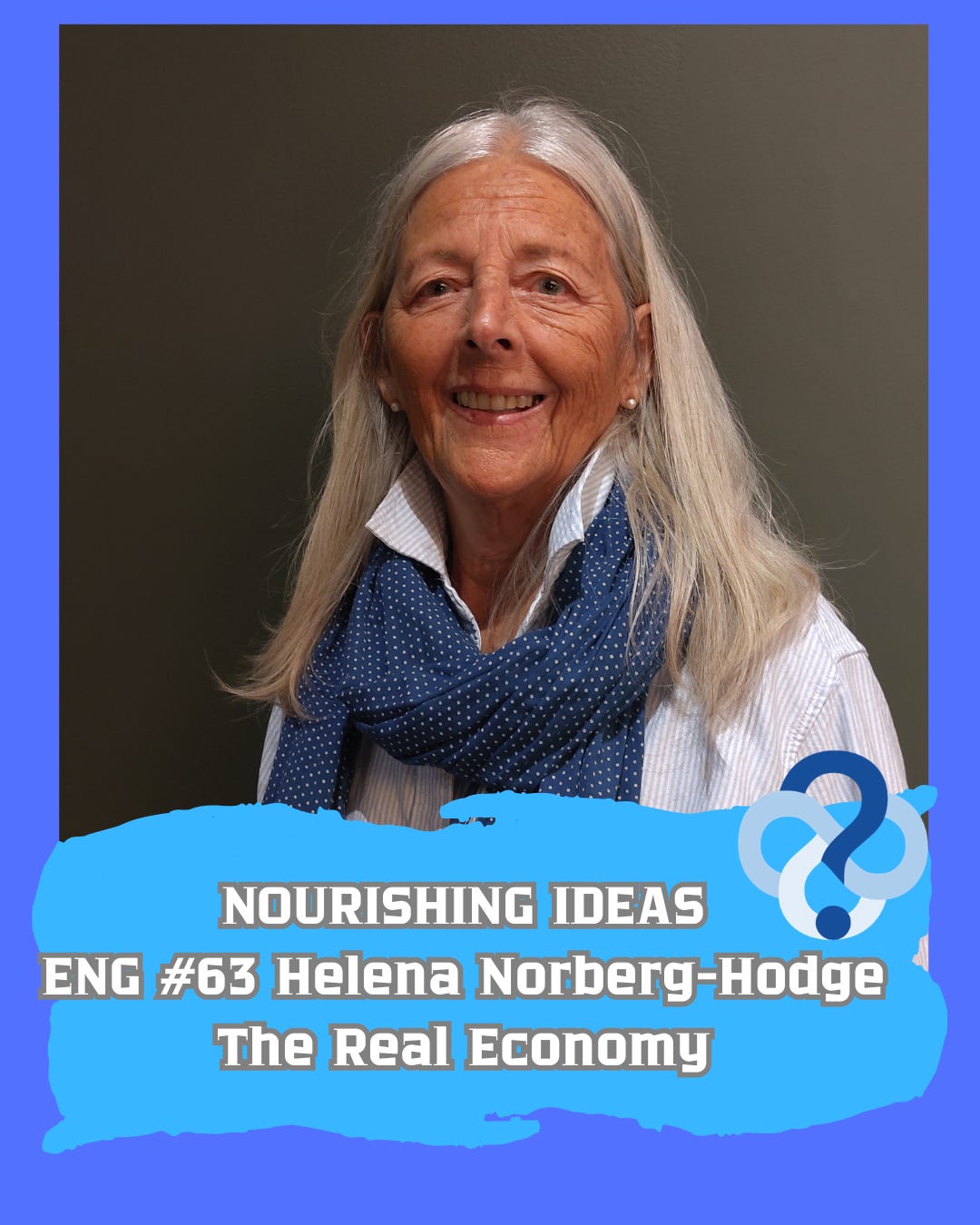
    ENG #63 Helena Norberg-Hodge The Real Economy - Localization Is Not Nostalgia: A Radical, Evidence-Based Path Out of the Polycrisis

    Helena Norberg-Hodge has spent fifty years doing something almost no one else has done: witnessing, from the inside, what happens when a thriving, self-sufficient culture collides with the global consumer economy. She arrived in Ladakh in 1975 as part of a film team and never fully left. She learned the language. She built relationships. And she watched — over decades — as the people she had come to love went from being among the most content on earth to experiencing depression, divisiveness, and suicide. Not because of poverty. Because of the story they were told about themselves. This Substack is reader-supported. To receive new posts and support my work, consider becoming a free or paid subscriber. That experience became the foundation for everything Helena has built since — her organization Local Futures, her landmark book Ancient Futures, her Right Livelihood Award, and now the Real Economy campaign, recently launched in Sweden. In this conversation with Hans, she traces a clear, unflinching line from the colonization of indigenous cultures to the trade treaties most governments don’t even understand they’ve signed, from the burning of the witches to the rise of AI as the latest mechanism for extracting wealth upward and replacing human connection with dependency. It’s a big-picture conversation that never loses touch with the ground. What makes Helena’s perspective rare is that it’s not ideological — it’s observational. She has seen what a genuinely wealthy, low-consumption, high-connection society looks like. She has seen what destroys it. And she has spent half a century mapping the path back. Three things you’ll carry with you from this conversation: * Why localization isn’t a right-wing idea, a nostalgic fantasy, or a lifestyle choice — it’s a structural demand that society, not corporations, sets the rules for business * How the ISDS — Investor-State Dispute Settlement — works as a silent coup, allowing global corporations to sue governments for threatening their profits, and why most people in government don’t even know it exists * What the Ladakh exchange taught Helena about greed — it isn’t human nature, it’s what you get when you destroy the conditions that make generosity possible CTA 1 — Action Helena mentions two places to go after this conversation: localfutures.org for her full body of work — including her conversations with Ian McGilchrist, Gabor Maté, and others — and realeconomy.earth to sign the statement and join the campaign in Sweden and beyond. If this episode moved you, that’s the next step. CTA 2 — Community World Localization Day is June 21, every year — the summer solstice. You don’t have to organize anything big. A meal with neighbors made mostly from local food. A conversation. A film screening. You can register it at localfutures.org and become part of what’s already a global, largely invisible movement of people choosing differently. If you’re doing something — tell me. I’d love to share it here. CTA 3 — Share This episode is for the person in your network who cares deeply about justice, about food, about climate, about community — but hasn’t yet connected those concerns to the economic architecture that produces them all. Forward them this. It might be the conversation that ties it together. What’s the question this episode leaves sitting with you? “What would you have to stop believing about progress — and about yourself — for a genuinely local, genuinely human economy to feel possible rather than naïve?” CLOSING CURIOSITY QUESTION “If the system we’ve been living inside was designed — not discovered — what becomes possible the moment you stop treating it as inevitable?” 👉 Listen now to one of the most important conversations we’ve had on this podcast. 💬 Share this episode with someone who believes the system is too big to change. Helena has spent fifty years proving otherwise — one community, one conversation, one farmer’s market at a time. 🌍 Visit localfutures.org and realeconomy.earth — sign the statement, register for World Localization Day (June 21), and find out what’s already happening near you. Nourishing IdeasSupport the podcast — by subscribing and/or contributing on a yearly or monthly basis: For entrepreneurs For one-time donations:💸 Swish (in Sweden): 070-6092464 (Hans Hallengren)☕️ Buy Me A Coffee Besides the podcast, you’ll soon find — during Q2 2026— an educational program on how to build a regenerative business or create a sustainably functioning company. The interviews will continue to be freely available to everyone, and we truly appreciate any kind of support — whether through subscribing or contributing financially in any way. Some reflection episodes, which will form part of the educational material I’ll start publishing this fall, will be available exclusively to paying subscribers.If you want to listen to those — this is a good time to become a subscriber! In addition to the interviews, there will be a learning program open to everyone, but I’ll also mix in deeper-dive episodes on specific topics, which will be reserved for paying subscribers. Follow me hereJoin the subscriber chat 🎵 The music was produced by Victor-Alan Weeks (SENA HERO) I’m Hans Hallengren, the host of Nourishing Ideas. Learn more about me hereand follow Nourishing Ideas on LinkedIn Get full access to Nourishing Ideas at nourishingideas.substack.com/subscribe
  • June 14 · 1 hr 6 min

    SWE #62 David Roxendal Humble Habitat - Justin Beaver och konsten att bygga på rätt plats

    David Roxendal tillbringade 20 år som IT-konsult i Stockholm — duktig på sitt jobb, men innerst inne hungrig på något annat. Det var brodern som drog honom tillbaka, en sommar 2012 på ett permakulturläger i Garpenberg som förändrade allt. Inte ett aha-moment utan ett långt, sammanhängande sådant. Han beskriver det som att komma tillbaka till scouterna — men med mer mening. Det tog inte lång tid innan han aldrig ville gå tillbaka. This Substack is reader-supported. To receive new posts and support my work, consider becoming a free or paid subscriber. I dag driver David och hans partner Eliza Humble Habitat, ett 12 hektar stort skogsbruk utanför Garpenberg. Här håller de kurser i vildympning, naturbygge och permakultur, hyr ut stugor och bygger just nu ett Earthship-inspirerat hus med timmer från den egna skogen och lera istället för plast. Bävern finns med som granne och medarbetare. David kallar det för att spela med platsen — och menar det bokstavligt. Allt är ett experiment. Allt är på riktigt. Det finns en röd tråd i samtalet som är svår att missa: frihet, lek och närvaro. David pratar om hur han vaknar med en inre drivkraft varje morgon, hur han värderar att styra sin egen tid över att tjäna mer pengar, och hur han börjar förstå att ett regenerativt liv kräver lika mycket ett regenerativt socialt liv som en regenerativ jord. Den ensamma vintern på landet är en utmaning han inte blundar för. Lindy Hop är en del av lösningen. * Hur en IT-nörd från Stockholm slutade med webbchatt och startade om med lövtäkt, lera och en bäver som granne — och varför han aldrig tittat bakåt * Vad ett Earthship-inspirerat hus byggt med egna fallna träd faktiskt innebär — och hur du kan vara med och bygga det nästa vecka * Det som ingen pratar om när de romantiserar livet på landet: den regenerativa sociala ekonomin och varför den är minst lika viktig som komposten 🎧 Lyssna på hela samtalet — David berättar mot slutet om det han kallar “Frankenforest”, ett vildympningsexperiment som börjar blomma för första gången i år. Det är värt att höra. 🌿 Prenumerera om du vill ha fler samtal med människor som bygger sina liv på riktigt — med händerna i leran, med skogen som granne och med visionen om en annan slags ekonomi. 📩 Känner du någon som funderar på att byta bana, flytta ut eller bara börja odla? Dela det här avsnittet med dem. Det kan vara precis det de behöver höra just nu. Vad skulle hända om du tog en enda liten del av ditt liv och lät den bli mer levande — inte perfekt, bara mer på riktigt? Humble habitat hemsida Humble Habitat Instagram Davids Instagram Thanks for reading! This post is public so feel free to share it. Nourishing IdeasSupport the podcast — by subscribing and/or contributing on a yearly or monthly basis: For entrepreneurs For one-time donations:💸 Swish (in Sweden): 070-6092464 (Hans Hallengren)☕️ Buy Me A Coffee Besides the podcast, you’ll soon find — during Q2 2026— an educational program on how to build a regenerative business or create a sustainably functioning company. The interviews will continue to be freely available to everyone, and we truly appreciate any kind of support — whether through subscribing or contributing financially in any way. Some reflection episodes, which will form part of the educational material I’ll start publishing this fall, will be available exclusively to paying subscribers.If you want to listen to those — this is a good time to become a subscriber! In addition to the interviews, there will be a learning program open to everyone, but I’ll also mix in deeper-dive episodes on specific topics, which will be reserved for paying subscribers. Follow me hereJoin the subscriber chat 🎵 The music was produced by Victor-Alan Weeks (SENA HERO) I’m Hans Hallengren, the host of Nourishing Ideas. Learn more about me hereand follow Nourishing Ideas on LinkedIn Get full access to Nourishing Ideas at nourishingideas.substack.com/subscribe
  • S3 · E61
    June 7 · 1 hr 32 min

    SWE #61 Amilcare Astone Radici – Från mozzarella till systemförändring

    Amilcare Astone lämnade juristkarriären i Neapel, packade ihop sitt liv och startade om i Sverige vid 36 års ålder. Det som verkade vara en enkel affärsidé – att importera mozzarella – förvandlades till något djupare. Han insåg snabbt att varje råvara har en social historia bakom sig: vem odlade den, under vilka villkor, och på vilkens bekostnad? Från dag ett vägrade han samarbeta med producenter som inte var transparenta mot sina anställda. This Substack is reader-supported. To receive new posts and support my work, consider becoming a free or paid subscriber. I dag driver Amilcare ett importföretag som banar väg för regenerativt och biodynamiskt odlad mat i Sverige. Han introducerade Europas första olivolja med regenerativ ekologisk certifiering. Men för honom är maten inte bara en produkt – det är ett verktyg för att uttrycka värderingar, bygga relationer och visa att ett annat livsmedelssystem är möjligt. Han ser på jord och människa som oupplösligt sammanflätade, och yrkar på att vi måste återläphabetisera vårt sätt att förstå mat. Det nuvarande livsmedelssystemet, menar Amilcare, är genomkorrupt – dominerat av finansiella intressen, oligopol och en ingenjörslogik som maximerar volym och centralisering på bekostnad av biologisk mångfald, folkhälsa och bönders överlevnad. Vi betalar för maten fyra gånger: i skatt, i kassan, i miljöskador och i sjukvårdskostnader. Hans vision är att koppla ihop konsumenter direkt med producenter via en öppen digital plattform, och att göra bondebeslut till en politisk och moralisk handling. 3 bulletpoints * Varför Europas första regenerativt certifierade olivolja skapades av en före detta politisk aktivist från Neapel – och vad det säger om vad vi kallar “hållbart” * Hur livsmedelssystemet gör att vi betalar för maten fyra gånger – och vad du kan göra åt det redan i veckan * Det som din farmor visste om mjölk som Arla helst inte pratar om – och varför det handlar om mer än smak CTA Ø Lyssna på hela samtalet – Amilcare delar på slutet något från kvantfysiken som förändrar hur du ser på varje möte du har. Det är värt att höra med egna öron. Ø Prenumerera om du vill ha fler samtal som rör vid det som faktiskt spelar roll – mat, jord, ansvar och vad det innebär att vara människa i vår tid. Ø Dela avsnittet med någon som jobbar inom restaurang, livsmedel eller jordbruk. Det här samtalet behöver höras av fler i branschen. Vad händer när vi slutar se mat som en vara och börjar se den som ett förhållande – till jord, till bonde, till oss själva? Amilcare Astone LinkedIn Radici hemsida Thanks for reading! This post is public so feel free to share it. Nourishing IdeasSupport the podcast — by subscribing and/or contributing on a yearly or monthly basis: For entrepreneurs For one-time donations:💸 Swish (in Sweden): 070-6092464 (Hans Hallengren)☕️ Buy Me A Coffee Besides the podcast, you’ll soon find — during Q2 2026— an educational program on how to build a regenerative business or create a sustainably functioning company. The interviews will continue to be freely available to everyone, and we truly appreciate any kind of support — whether through subscribing or contributing financially in any way. Some reflection episodes, which will form part of the educational material I’ll start publishing this fall, will be available exclusively to paying subscribers.If you want to listen to those — this is a good time to become a subscriber! In addition to the interviews, there will be a learning program open to everyone, but I’ll also mix in deeper-dive episodes on specific topics, which will be reserved for paying subscribers. Follow me hereJoin the subscriber chat 🎵 The music was produced by Victor-Alan Weeks (SENA HERO) I’m Hans Hallengren, the host of Nourishing Ideas. Learn more about me hereand follow Nourishing Ideas on LinkedIn Get full access to Nourishing Ideas at nourishingideas.substack.com/subscribe
  • May 31 · 1 hr 55 min

    ENG #60 Amit Paul Innrwrks – From Pop Star to Planetary Thinker

    Amit Paul has lived more lives than most — chart-topping pop star, polymer chemistry CEO, sustainability entrepreneur, and now one of the most quietly radical thinkers working on the future of business. In this episode of Nourishing Ideas, Amit takes us from a basement audition in Stockholm to touring with Britney Spears, from battling the petrochemicals industry to discovering a completely different way of seeing the world — one where companies are organisms, control is an illusion, and the most powerful thing a leader can do is get genuinely curious. This Substack is listener-supported. To receive new posts and support my work, consider becoming a free or paid subscriber. What emerges is a conversation about living systems, regenerative business, and why the frameworks we’ve built our economy on are not just outdated — they’re creating the very crises we’re trying to solve. Amit introduces the concept of the Regenerative Community Organism, talks about why composting companies might be more valuable than scaling them, and makes a compelling case for why hope isn’t the antidote to despair — presence is. This isn’t a feel-good episode about sustainability buzzwords. It’s a rigorous, honest, sometimes uncomfortable rethinking of what it means to create value in a world that’s changing faster than our institutions can process. Three things you’ll take away from this conversation: * Why “control” is the most expensive belief in your organization — and what to replace it with when everything becomes unpredictable * The difference between complicated and complex — and why that distinction changes everything about how you lead, plan, and measure success * How to start a company (or restart one) as a living organism — including the three foundational moves Amit recommends before you write a single business plan Ø Listen now and discover why the river doesn’t need pushing. Ø Share this episode with a founder, a leader, or anyone who’s ever felt like they’re doing everything right — and still hitting a wall. Ø Subscribe to Nourishing Ideas for conversations with thinkers who are rebuilding the world from its foundations up. What’s alive in you after listening? What question does this episode leave you sitting with? “What if the thing you’re trying to control is the very thing that’s blocking the emergence you’re looking for?” Amit Paul LinkedIn Innrwrks homepage World of Wisdom Podcast For entrepreneurs For one-time donations:💸 Swish (in Sweden): 070-6092464 (Hans Hallengren)☕️ Buy Me A Coffee Besides the podcast, you’ll soon find — Q2 2026 — an educational program on how to build a regenerative business or create a sustainably functioning company. The interviews will continue to be gifts available to everyone, and we truly appreciate any kind of support — whether through subscribing or contributing financially in any way. Some reflection episodes, which will form part of the educational material I’ll start publishing this season, will be available exclusively to paying subscribers.If you want to listen to those — this is a good time to become a subscriber! In addition to the interviews, there will be a learning program open to everyone, but I’ll also mix in deeper-dive episodes on specific topics, which will be reserved for paying subscribers. Follow me hereJoin the subscriber chat 🎵 The music was produced by Victor-Alan Weeks (SENA HERO) Get full access to Nourishing Ideas at nourishingideas.substack.com/subscribe

  • S3 · E59
    May 24 · 1 hr 28 min

    ENG #59 Nick Viney Artist & Regenerative farmer - Only Art and Beaver Will Save Us

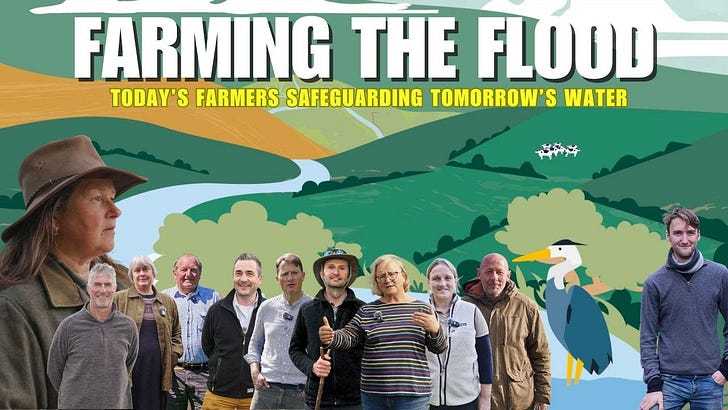
    Nick Viney farms on the edge of Dartmoor in Devon — a valley so wet it floods from both rain and its neighbours’ runoff. Thirty years ago she ran the place like everyone else: shedges clipped at sharp right angles, livestock on the land year-round, tidiness the measure of a good farmer. Then, with three kids under a year old, she was forced to de-stock. Three months later she walked into a field and found a stand of early purple orchids she had never seen in her lifetime. That moment changed everything. What followed was a decades-long dive into holistic management, permaculture design, and what Nick calls “adaptive multi-paddock grazing” — moving animals the way predators once did, giving land long rest periods, reading soil through her feet rather than data sheets. She now shares cattle with her neighbour, runs part-time pigs as living bulldozers, and uses sheep hooves to burnish pond liners into waterproof clay. Her metric for success? The number of anthills she can keep alive each year. Nick is also a founding farmer of EARA, the European Alliance for Regenerative Agriculture, and a live-painting storyteller whose show is called “Only Art and Beaver Will Save Us.” Her vision for scaling is not through 100-shectare efficiency but through what she calls cellular reproduction — small, mixed farms replicating like healthy cells across the landscape. Her argument: we don’t need to feed the world, we need to feed our valley, and trust that someone over the hill is doing the same. 3 bullet points Ø Nick discovered regenerative farming by accident — forced to de-stock her farm, she returned three months later to find orchids she had never seen in 30 years, triggering a complete rethink of how she managed land. Ø Her approach uses animals as precision tools: cattle for soil impact, pigs to dig natural ponds, sheep hooves to waterproof them with clay — all mimicking the role predators and wild sherds once played on British landscapes. Ø She argues that “scaling” regenerative agriculture means cellular replication — many small, mixed farms feeding their own communities — not chasing industrial efficiency on larger plots. 3 Call-to-Actions Ø Listen to the full episode and hear Nick describe the moment she walked into a field and saw orchids growing for the first time in her lifetime — and why that single walk changed 30 years of farming practice overnight. Ø Share this with a friend who buys food but has never thought about where the water in that food came from — Nick’s answer to “how do we feed the world” will genuinely surprise them. Ø Subscribe so you don’t miss the next episode — we keep finding people quietly rebuilding the relationship between land, water, and food, one valley at a time. Curiosity question If the land you walk on every day could speak — what would it say it needs from you, right now? Photo - Groundswell Artist in Residence/ Keynote speaker offer- Live painted journey towards regeneration.www.nickviney.co.ukReimagining your land. Fresh eyes and ideas to help you step onto your regenerative journey. www.nickviney.co.ukInsta @nickvineyartistGlamping www.rewildingfutures.co.ukwww.LeewoodStudios.co.uk2025 Film ‘Farming The Flood’ Nature connection creativity courses through Art & Beaver #onlyartandbeaverwillsaveus For entrepreneurs For one-time donations:💸 Swish (in Sweden): 070-6092464 (Hans Hallengren)☕️ Buy Me A Coffee Besides the podcast, you’ll soon find — Q2 2026 — an educational program on how to build a regenerative business or create a sustainably functioning company. The interviews will continue to be freely available to everyone, and we truly appreciate any kind of support — whether through subscribing or contributing financially in any way. Some reflection episodes, which will form part of the educational material I’ll start publishing this season, will be available exclusively to paying subscribers.If you want to listen to those — this is a good time to become a subscriber! In addition to the interviews, there will be a learning program open to everyone, but I’ll also mix in deeper-dive episodes on specific topics, which will be reserved for paying subscribers. Follow me hereJoin the subscriber chat 🎵 The music was produced by Victor-Alan Weeks (SENA HERO) Get full access to Nourishing Ideas at nourishingideas.substack.com/subscribe

  • S3 · E58
    May 17 · 1 hr 26 min

    SWE #58 Elina Eriksson KTH - Fickor av mänsklighet – om att odla liv på KTH

    Elina Eriksson är forskare och lärare på KTH – men hon är också någon som väcktes till liv av sin sons framtid, av en vän som köpte mark i Västergötland, och av insikten att rationaliteten inte räcker hela vägen. I det här avsnittet berättar hon om resan från datavetenskap till hållbarhetsforskning, och varför ett gårdsbesök i Järna kan förändra hela frekvensen du lever på. This Substack is reader-supported. To receive new posts and support my work, consider becoming a free or paid subscriber. På KTH har Elina och hennes kollega Daniel tagit det otänkbara steget att bädda in Art of Hosting – en faciliteringsmetodik för djupa dialoger och kollektivt lärande – som obligatorisk kurs i ett masterprogram. Studenterna som mött den här pedagogiken beskriver det som frigörande, gränssläckande och ibland “vuxendagis”. Men framförallt: det förändrar dem. En student som gick odiagnosticerad ADHD genom hela sin utbildning fick äntligen en pedagogik som mötte kroppen, inte bara hjärnan. Elina talar inte om mål – hon talar om intentioner och riktningar. Om att lyssna bättre, om regenerativt ledarskap, och om att skapa “fickor av mänsklighet” mitt i en teknisk värld som går allt snabbare. Och om att det kanske är vi – de 10 % rikaste i världen – som behöver förändras mest och snabbast. Inte för att vi måste. Utan för att det finns någonting på andra sidan ekorrhjulet som vi inte ens kan föreställa oss än. Tre skäl att lyssna * ◆ Hur en KTH-forskare kombinerar planetära gränser, Art of Hosting och regenerativt ledarskap – och varför det faktiskt fungerar. * ◆ Elina delar den exakta stunden då klimatångesten blev personlig – och hur hon omvandlade den till undervisning. * ◆ Om varför riktig förändring börjar med att bli mer sårbar, inte mer effektiv. Uppmanande fråga Vad skulle hända om du bytte ut ett av dina effektivitetsmål mot en intention – och lät riktningen vara nog? Tre CTA Ø Lyssna på hela samtalet och låt Elinas ord sjunka in – det här är ett avsnitt du inte vill ha på dubbel hastighet. Ø Dela avsnittet med en kollega som fortfarande tror att teknologin ensam löser klimatkrisen. Det kanske startar ett samtal. Ø Skriv ner en sak du är tacksam för idag – inspirerat av den promenad i Lill-skogen som förändrade en students vardag för gott. Elina Eriksson LinkedIn KTHs Mastersprogram för Sustainable Digitalisation Thanks for Listening! This post is public so feel free to share it. Nourishing Ideas I’m Hans Hallengren, and this podcast is my way of exploring ideas that matter — conversations about regenerative business, sustainable thinking, and what it really means to build something that lasts. All interviews are, and will always be, freely available to everyone. But if this work resonates with you, your support means the world — it’s what keeps these conversations going. Ways to support the podcast: 🎙️ Become a subscriber — monthly or yearly, for entrepreneurs or individuals ☕️ Buy Me A Coffee — for one-time contributions 💸 Swish (Sweden): 070-609 24 64 (Hans Hallengren) As a paying subscriber, you’ll also get access to: Exclusive reflection episodes that go deeper on specific topics — the kind of slower, more personal thinking that doesn’t quite fit the interview format, but that I find just as valuable. Coming in Q2 2026: A learning program, Nourishing Ideas Compass, on how to build a regenerative business or create a company that functions sustainably. Parts of it will be open to everyone; the deeper-dive episodes will be for subscribers. If you’ve been on the fence about subscribing — now’s a great time to jump in. 👉 Follow me here 💬 Join the subscriber chat 🔗 Follow Nourishing Ideas on LinkedIn Music by Victor-Alan Weeks (SENA HERO) Get full access to Nourishing Ideas at nourishingideas.substack.com/subscribe

  • S3 · E57
    May 10 · 1 hr 23 min

    SWE #57 Erika Hombert Regenerativa Investeringar - om investeringar bortom tillväxtjakten

    Det här samtalet med Erika Hombert handlar om kapital, investeringar och den stora frågan: vad händer när pengar inte längre bara ska växa, utan också bidra till liv? Från impact-investeringar, foodtech och riskkapital rör sig samtalet mot något djupare – en kritik av den logik som säger att allt måste skalas snabbt, växa maximalt och ge hög avkastning på kort tid. This Substack is listener/reader-supported. To receive new posts and support my work, consider becoming a free or paid subscriber. Erika beskriver sin resa från att arbeta med startups och investeringar till att börja ifrågasätta själva spelplanen. För vad händer med alla goda initiativ som inte passar in i riskkapitalets modell? Vad händer med lokala, relationella och regenerativa verksamheter som kanske inte ger 15 gånger pengarna – men som bygger jordhälsa, gemenskap, motståndskraft och framtidstro? Det blir ett samtal om stewardship ownership, nya former av ägande, långsiktigt kapital, intuition, ledarskap, systemskiften och behovet av att våga ta modigare samtal. Kanske är den verkliga frågan inte bara hur vi investerar smartare – utan hur vi riktar kapital, tid och energi mot det som gör livet möjligt. I avsnittet pratar vi om: * Varför impact-investeringar ofta fortfarande bygger på samma gamla tillväxtlogik. * Hur regenerativa investeringar kan skapa värde bortom pengar. * Varför entreprenörer behöver välja kapital lika noggrant som kapital väljer entreprenörer. CTA Lyssna på samtalet med Erika Hombert om kapital, liv och regenerativa investeringar.Prenumerera på Nourishing Ideas om du vill följa fler samtal om entreprenörskap som bygger framtid.Dela avsnittet med någon som funderar på pengar, ägande och vilken värld vi egentligen investerar i. Regenerativ fråga Vad skulle förändras i ditt företag om kapitalets uppgift inte var att växa snabbast – utan att stärka livet omkring dig? Erika Hombert LinkedIn Innwrks Ledarskapskurser/events Thanks for listening! This post is public so feel free to share it. Nourishing IdeasSupport the podcast — by subscribing and/or contributing on a yearly or monthly basis: For entrepreneurs For one-time donations:💸 Swish (in Sweden): 070-6092464 (Hans Hallengren)☕️ Buy Me A Coffee Besides the podcast, you’ll soon find — during Q2 2026— an educational program on how to build a regenerative business or create a sustainably functioning company. The interviews will continue to be freely available to everyone, and we truly appreciate any kind of support — whether through subscribing or contributing financially in any way. Some reflection episodes, which will form part of the educational material I’ll start publishing this fall, will be available exclusively to paying subscribers.If you want to listen to those — this is a good time to become a subscriber! In addition to the interviews, there will be a learning program open to everyone, but I’ll also mix in deeper-dive episodes on specific topics, which will be reserved for paying subscribers. Follow me hereJoin the subscriber chat 🎵 The music was produced by Victor-Alan Weeks (SENA HERO) I’m Hans Hallengren, the host of Nourishing Ideas. Learn more about me hereand follow Nourishing Ideas on LinkedIn Get full access to Nourishing Ideas at nourishingideas.substack.com/subscribe
  • S3 · E56
    May 3 · 1 hr 24 min

    SWE #Johanna Hofring Långbro Gård – Kan en gård visa vägen till ett rikare företagande?

    Långbro gård framträder i det här samtalet som mycket mer än en gård. Det är en växande mötesplats där jordbruk, mathantverk, kurser, kultur och vardagsliv får leva sida vid sida. Johanna Hofring berättar om hur platsen utvecklats tillsammans med markägare, hantverkare, bagare, odlare och andra entreprenörer – inte utifrån en färdig masterplan, utan genom att låta platsen, människorna och möjligheterna växa fram steg för steg. This Substack is reader-supported. To receive new posts and support my work, consider becoming a free or paid subscriber. Det mest intressanta i samtalet är kanske inte bara vad de gör, utan hur de gör det. Här möts olika perspektiv: det mer traditionellt lantbruksmässiga och det mer alternativa, kreativa och gemenskapsorienterade. Resultatet blir inte konflikt, utan en plats där hållbar odling, lokala råvaror, kooperativa tankesätt, småskaligt företagande och levande möten kan samexistera. Långbro gård blir ett exempel på att entreprenörskap inte alltid måste börja med snabb tillväxt – det kan börja med jord, relationer, mod och en vilja att skapa något meningsfullt tillsammans. Samtalet rör sig också mot större frågor om framtidens företagande och livsform. Vad händer när vi bygger verksamheter som inte bara ska sälja något, utan också återknyta människor till plats, mat, hantverk och varandra? Vad blir möjligt när vi delar på resurser, ansvar och infrastruktur istället för att alla ska bära allt själva? Det här avsnittet är för dig som vill förstå hur regenerativt entreprenörskap kan se ut i praktiken – inte som teori, utan som en levd och pågående process. 3 bullet points * Hur en gård kan bli en levande nod för mat, hantverk, kurser, konferenser och gemenskap. * Varför småskaligt och samverkande entreprenörskap ofta blir starkare än att försöka bära allt själv. * Vad som händer när företagande får utgå från platsens möjligheter, människors styrkor och en rikare syn på värde. 3 CTA * Lyssna på avsnittet för att få en konkret bild av hur en plats kan växa fram genom samarbete. * Dela avsnittet med någon som drömmer om att bygga något lokalt, småskaligt och meningsfullt. * Prenumerera på Nourishing Ideas för fler samtal om regenerativt entreprenörskap, mat och framtidens livskraftiga verksamheter. Uppmanande frågaVad skulle kunna växa fram i ditt entreprenörskap om du började med platsen, människorna och relationerna – istället för med skala och tempo? Långbro Gårds hemsida Instagram Eldrimner Coompanion Nourishing IdeasSupport the podcast — by subscribing and/or contributing on a yearly or monthly basis: For entrepreneurs For one-time donations:💸 Swish (in Sweden): 070-6092464 (Hans Hallengren)☕️ Buy Me A Coffee Besides the podcast, you’ll soon find — during Q2 2026— an educational program on how to build a regenerative business or create a sustainably functioning company. The interviews will continue to be freely available to everyone, and we truly appreciate any kind of support — whether through subscribing or contributing financially in any way. Some reflection episodes, which will form part of the educational material I’ll start publishing this fall, will be available exclusively to paying subscribers.If you want to listen to those — this is a good time to become a subscriber! In addition to the interviews, there will be a learning program open to everyone, but I’ll also mix in deeper-dive episodes on specific topics, which will be reserved for paying subscribers. Follow me hereJoin the subscriber chat 🎵 The music was produced by Victor-Alan Weeks (SENA HERO) I’m Hans Hallengren, the host of Nourishing Ideas. Learn more about me hereand follow Nourishing Ideas on LinkedIn Get full access to Nourishing Ideas at nourishingideas.substack.com/subscribe
  • April 26 · 1 hr 29 min

    SWE#55 Åsa Lockner Mellösaverken - Hur bygger man något som andra vill tillhöra?

    Det här samtalet med Åsa Lockner på Mellösaverken handlar om mycket mer än att förvalta en gammal industribyggnad. Det handlar om vad som händer när en plats får bli något mer än fastighet, verksamhet och kvadratmeter. När den i stället blir ett nav för relationer, skapande, vardagsliv och nya möjligheter. I Mellösa växer något fram som inte riktigt låter sig fångas i vanliga affärsbegrepp – men som samtidigt säger mycket om framtidens entreprenörskap. This Substack is reader-supported. To receive new posts and support my work, consider becoming a free or paid subscriber. Åsa berättar om vägen från Stockholm till Mellösa, om hantverk, konstnärligt arbete, renovering, struktur, osäkerhet, mod och långsam utveckling. Samtalet rör sig mellan det mycket konkreta – lokaler, hyresgäster, ateljéer, residens, ekonomi och vardagslogistik – och det större: vad ett samhälle behöver för att människor ska vilja stanna, delta och känna att de hör hemma. Här blir entreprenörskap inte bara en fråga om att sälja något, utan om att skapa sammanhang där fler kan leva, verka och bidra. Det här är också ett avsnitt om vilken sorts framtid vi faktiskt vill bygga. Om lokal ekonomi, delande, återbruk av det som redan finns, och om att göra plats för fler livsformer än det effektiva storstadslivet. För den som funderar på företagande, omställning, mötesplatser eller hur en liten ort kan få nytt liv, finns här många tankar att bära med sig. Tre punkter från avsnittet * Platser kan vara mer än lokaler – de kan bli bärare av relationer, idéer, arbete och tillhörighet. * Entreprenörskap handlar inte bara om tillväxt – det kan också handla om att skapa livskraft, sammanhang och lokal relevans. * Framtiden kan byggas med det som redan finns – gamla hus, befintliga miljöer, lokala nätverk och människors initiativkraft. CTA-förslag * Lyssna på avsnittet om du är nyfiken på hur entreprenörskap kan se ut när plats och relationer får stå i centrum. * Prenumerera på Nourishing Ideas för fler samtal om regenerativa idéer, lokala initiativ och nya sätt att bygga företagande och samhälle. * Dela avsnittet med någon som funderar på att skapa en plats, starta något eget eller bidra till mer liv i en liten ort. Uppmanande fråga Vad skulle bli möjligt om vi började se entreprenörskap mindre som expansion – och mer som förmågan att skapa liv, relationer och riktning på en plats? Mellösaverken hemsida Åsas konsthantverkssida Davids hemsida Instagram Facebook Åsa Lockner LinkedIn Thanks for reading! This post is public so feel free to share it. Nourishing IdeasSupport the podcast — by subscribing and/or contributing on a yearly or monthly basis: For entrepreneurs For one-time donations:💸 Swish (in Sweden): 070-6092464 (Hans Hallengren)☕️ Buy Me A Coffee Besides the podcast, you’ll soon find — during Q2 2026— an educational program on how to build a regenerative business or create a sustainably functioning company. The interviews will continue to be freely available to everyone, and we truly appreciate any kind of support — whether through subscribing or contributing financially in any way. Some reflection episodes, which will form part of the educational material I’ll start publishing this fall, will be available exclusively to paying subscribers.If you want to listen to those — this is a good time to become a subscriber! In addition to the interviews, there will be a learning program open to everyone, but I’ll also mix in deeper-dive episodes on specific topics, which will be reserved for paying subscribers. Follow me hereJoin the subscriber chat 🎵 The music was produced by Victor-Alan Weeks (SENA HERO) I’m Hans Hallengren, the host of Nourishing Ideas. Learn more about me hereand follow Nourishing Ideas on LinkedIn Get full access to Nourishing Ideas at nourishingideas.substack.com/subscribe
  • S3 · E54
    April 19 · 1 hr 13 min

    ENG#54 Jessica Sunnebo EdenHill – From Business Model to Life Model

    This conversation with Jessica Sunnebo Edenhill is not just a story about starting a place—it’s a story about learning to listen to life. From a life shaped by city, career, and structure, toward a more place-based, relational, and exploratory way of living and working. Eden Hill in Tiveden is emerging as a living experiment—where nature, people, and ideas meet and evolve together. What becomes clear is that regenerative entrepreneurship doesn’t begin with a business model—it begins with a shift in perspective. From control to listening. From growth to aliveness. From individual to community. Here, the business becomes a result of relationships, the conditions of place, and a desire to create more life—not just reduce harm. The conversation moves between the deeply personal and the systemic. From life choices, divorce, and new direction—to food systems, local economies, and societal transition. Somewhere in between, a different understanding of what “value,” “growth,” and “impact” actually mean begins to take shape. Three takeaways: * Regeneration starts with relationships—to place, to people, to yourself * Small local initiatives are not small—they are the building blocks of a new system * “Return” can be aliveness, meaning, and more living relationships CTA:Listen to the episode and reflect: what in your life or work are you trying to control that actually wants to be listened to? Regenerative question:What would change if you started building your work from what wants to grow—rather than what you think you should create? Eden Hill Homepage Facebook Instagram Jessica Sunnebo LinkedIn Onställningsnätverket/Transition network The Conference The Great Simplification Nate Hagens Nourishing IdeasSupport the podcast — by subscribing and/or contributing on a yearly or monthly basis: For entrepreneurs For one-time donations:💸 Swish (in Sweden): 070-6092464 (Hans Hallengren)☕️ Buy Me A Coffee Besides the podcast, you’ll soon find — Q2 2026 — an educational program on how to build a regenerative business or create a sustainably functioning company. The interviews will continue to be freely available to everyone, and we truly appreciate any kind of support — whether through subscribing or contributing financially in any way. Some reflection episodes, which will form part of the educational material I’ll start publishing this fall, will be available exclusively to paying subscribers.If you want to listen to those — this is a good time to become a subscriber! In addition to the interviews, there will be a learning program open to everyone, but I’ll also mix in deeper-dive episodes on specific topics, which will be reserved for paying subscribers. Follow me hereJoin the subscriber chat 🎵 The music was produced by Victor-Alan Weeks (SENA HERO) I’m Hans Hallengren, the host of Nourishing Ideas. Learn more about me hereand follow Nourishing Ideas on LinkedIn Get full access to Nourishing Ideas at nourishingideas.substack.com/subscribe
  • S3 · E53
    April 12 · 1 hr 28 min

    SWE #53 Thomas Björklund Warbro Kvarn - När motgång blir motor: entreprenörskap, mjöl och mening

    Det här avsnittet handlar inte om mjöl.Det handlar om entreprenörskap på riktigt. This Substack is reader-supported. To receive new posts and support my work, consider becoming a free or paid subscriber. I samtalet med Thomas Björklund på Warbro Kvarn får vi följa en resa som sträcker sig långt bortom affärsplaner och strategier. Det är en berättelse om att bygga något över tid – med rötter i platsen, relationerna och en tydlig riktning. Warbro Kvarn har vuxit fram i skärningspunkten mellan lantbruk, biologi och företagande. Genom att arbeta med kulturspannmål, ekologiska principer och lokala samarbeten har de skapat mer än en produkt – de har byggt ett system. Ett sätt att tänka kring mat, värde och resiliens. Men det som verkligen sätter allt på prov är motgången.När stora delar av verksamheten brann ner 2022 försvann mycket – men inte det viktigaste. Riktningen fanns kvar. Människorna fanns kvar. Och beslutet att bygga upp igen. Det här är ett avsnitt för dig som bygger något som ska hålla.Inte bara växa. 🔹 Du får med dig: * Hur man bygger ett företag utifrån plats, relationer och kvalitet * Vad entreprenörskap kräver när verkligheten utmanar * Varför resiliens och lokal produktion blir allt viktigare framåt 🔹 Ta med dig vidare: * Vad i ditt företagande skapar verkligt värde – bortom volym? * Hur ser din affär ut om du bygger för motståndskraft istället för snabb tillväxt? * Vad i din verksamhet sitter i människor och kultur – inte i strukturer? 🔹 Reflektionsfråga: Vad i ditt företag behöver få djupare rötter för att kunna växa starkare framåt? 👉 Lyssna på avsnittet och se vad som händer med dina egna svar. Warbro Kvarn Hemsida Instagram Facebook Warbro Kvarn LinkedIn Thanks for reading! This post is public so feel free to share it. Nourishing IdeasSupport the podcast — by subscribing and/or contributing on a yearly or monthly basis: For entrepreneurs For one-time donations:💸 Swish (in Sweden): 070-6092464 (Hans Hallengren)☕️ Buy Me A Coffee Besides the podcast, you’ll soon find — this fall — an educational program on how to build a regenerative business or create a sustainably functioning company. The interviews will continue to be freely available to everyone, and we truly appreciate any kind of support — whether through subscribing or contributing financially in any way. Some reflection episodes, which will form part of the educational material I’ll start publishing this fall, will be available exclusively to paying subscribers.If you want to listen to those — this is a good time to become a subscriber! In addition to the interviews, there will be a learning program open to everyone, but I’ll also mix in deeper-dive episodes on specific topics, which will be reserved for paying subscribers. Follow me hereJoin the subscriber chat 🎵 The music was produced by Victor-Alan Weeks (SENA HERO) I’m Hans Hallengren, the host of Nourishing Ideas. Learn more about me hereand follow Nourishing Ideas on LinkedIn Get full access to Nourishing Ideas at nourishingideas.substack.com/subscribe
  • S3 · E52
    April 5 · 1 hr 19 min

    SWE#52 Märta Jansdotter Aguirre Gröna Gårdar - Vi borrar hål i våra barns livbåt – och kallar det billig mat

    Det här samtalet med Märta Jansdotter på Gröna Gårdar handlar egentligen om mycket mer än kött. Det handlar om värde, kultur och vad som händer när ett samhälle tappar kontakten med naturens logik. Från köksbordet på gården i Bohuslän växer en berättelse fram om familjejordbruk, gräsbetande djur, kvalitet, långsiktighet och varför dagens matsystem pressar både natur, djur och människor hårdare än vad som syns på prislappen. This Substack is reader-supported. To receive new posts and support my work, consider becoming a free or paid subscriber. Märta sätter ord på en obekväm sanning: vi har byggt ett system där maten ska vara billig, men där någon annan betalar det verkliga priset. Det kan vara bonden, djuren, jordhälsan, landskapet eller framtiden. Samtidigt visar Gröna Gårdar att det går att tänka annorlunda — med direktkontakt till kund, högre krav på kvalitet, respekt för hela djuret och ett affärstänk där smak, näring, ekologi och ekonomi måste hänga ihop på riktigt. Men samtalet stannar inte i kritik. Det pekar också mot en annan riktning: att börja lyssna inåt, återknyta till det lokala, förstå komplexa system bättre och våga värdera det som faktiskt bär liv. Det här är ett avsnitt för dig som vill förstå mat, företagande och hållbarhet på en djupare nivå — och som anar att framtiden inte byggs genom att pressa mer ur systemet, utan genom att reparera relationen till det som håller oss vid liv. * Billig mat är ofta dyr på riktigt – när prispressen flyttar kostnaden till jord, djur, bönder och framtida generationer. * Kvalitet börjar i systemet – inte i marknadsföringen. Smak, näring, djurvälfärd och jordhälsa hänger ihop. * Hållbara företag kräver rimlig lönsamhet – utan ekonomiskt utrymme går det inte att bygga vare sig levande landskap eller långsiktiga verksamheter. Frågor att ta vidare * Vad händer med ett samhälle när maten blir billigare men relationen till naturen svagare? * Hur bygger vi affärsmodeller där både producent, kund och ekosystem faktiskt vinner? * Vad är “lokalt” på riktigt — geografi, kretslopp eller relation? * Hur mycket av dagens ohållbarhet är egentligen ett kulturproblem, inte bara ett produktionsproblem? * Vad skulle förändras om vi började värdera mat som en investering istället för en kostnad? Uppmanande fråga Vad är du själv beredd att värdera högre — bekvämlighet och lägsta pris, eller mat som bygger livskraft över tid? Gröna Gårdar hemsida Instagram Bjällansås Gård Märta Jansdotter Aguirre LinkedIn Savory Institute där kan ni hitta boken samt mer information om Holistic Management Podden med Alan Savory Podd med Leon Bucher mer om Holistic Management Thanks for listening! This post is public so feel free to share it. Nourishing IdeasSupport the podcast — by subscribing and/or contributing on a yearly or monthly basis: For entrepreneurs For one-time donations:💸 Swish (in Sweden): 070-6092464 (Hans Hallengren)☕️ Buy Me A Coffee Besides the podcast, you’ll soon find — this fall — an educational program on how to build a regenerative business or create a sustainably functioning company. The interviews will continue to be freely available to everyone, and we truly appreciate any kind of support — whether through subscribing or contributing financially in any way. Some reflection episodes, which will form part of the educational material I’ll start publishing this fall, will be available exclusively to paying subscribers.If you want to listen to those — this is a good time to become a subscriber! In addition to the interviews, there will be a learning program open to everyone, but I’ll also mix in deeper-dive episodes on specific topics, which will be reserved for paying subscribers. Follow me hereJoin the subscriber chat 🎵 The music was produced by Victor-Alan Weeks (SENA HERO) I’m Hans Hallengren, the host of Nourishing Ideas. Learn more about me hereand follow Nourishing Ideas on LinkedIn Get full access to Nourishing Ideas at nourishingideas.substack.com/subscribe
  • S3 · E51
    March 29 · 1 hr 34 min

    SWE#51 Marica Möller & Olle Göransson Torfolk gård - Det börjar inte i systemet. Det börjar runt ett köksbord.

    Det här avsnittet visar vad som händer när idéer om hållbar mat inte stannar i teori – utan byggs, testas och levs i över 40 år. På Torfolk gård berättar Marica och Olle om en resa som börjar i gröna vågen men landar i något betydligt mer relevant idag: hur vi faktiskt bygger fungerande lokala matsystem. Genom decennier av försök, misstag och justeringar har de gått från självhushållning och kooperativt liv till företagande, nätverk och nu vidare mot matgemenskaper. This Substack is reader-supported. To receive new posts and support my work, consider becoming a free or paid subscriber. Det som blir tydligt är att omställning inte sker genom en enskild lösning – utan genom relationer, uthållighet och förmågan att anpassa sig över tid. Samtidigt pekar deras erfarenhet på en större rörelse: att framtidens matsystem sannolikt behöver bli mer lokala, mer distribuerade och mer mänskliga. Det här är ett samtal som flyttar fokus från idé till praktik – och från individ till gemenskap. Du får med dig: * Hur småskaliga initiativ kan påverka och forma större system * Varför direkt relation mellan producent och konsument blir allt viktigare * Vad som krävs för att bygga långsiktig lokal resiliens CTA Lyssna på avsnittet och se vad som blir möjligt när man börjar där man står – tillsammans med andra. Fråga att ta med sig: Vad i din närmiljö kan du börja stärka – så att det växer över tid, inte bara används? Torfolk gård Torfolk & Vänner SoL-nätverket Boken Smittsam Generositet Foto: Pella Thiel Thanks for reading! This post is public so feel free to share it. Nourishing IdeasSupport the podcast — by subscribing and/or contributing on a yearly or monthly basis: For entrepreneurs For one-time donations:💸 Swish (in Sweden): 070-6092464 (Hans Hallengren)☕️ Buy Me A Coffee Besides the podcast, you’ll soon find — this fall — an educational program on how to build a regenerative business or create a sustainably functioning company. The interviews will continue to be freely available to everyone, and we truly appreciate any kind of support — whether through subscribing or contributing financially in any way. Some reflection episodes, which will form part of the educational material I’ll start publishing this fall, will be available exclusively to paying subscribers.If you want to listen to those — this is a good time to become a subscriber! In addition to the interviews, there will be a learning program open to everyone, but I’ll also mix in deeper-dive episodes on specific topics, which will be reserved for paying subscribers. Follow me hereJoin the subscriber chat 🎵 The music was produced by Victor-Alan Weeks (SENA HERO) I’m Hans Hallengren, the host of Nourishing Ideas. Learn more about me hereand follow Nourishing Ideas on LinkedIn Get full access to Nourishing Ideas at nourishingideas.substack.com/subscribe
  • S0 · E50
    March 22 · 1 hr 46 min

    #50 Emilia Rekestad Art of Hosting - Mellan kontroll och kaos finns en annan väg

    Vad händer när vi slutar se människor, organisationer och natur som maskiner att styra — och i stället börjar möta dem som levande system? I det här samtalet möter jag Emilia Rekestad, facilitator, folkbildare och regenerativ praktiker med rötter i Järna, folkbildningen och ett djupt utforskande av hur vi människor kan leva, leda och lära i bättre relation till varandra och till livet självt. Vi rör oss genom Emilias resa från att växa upp som “annorlunda”, till möten med urfolk i Ecuador, vidare till folkbildning, trädgård, meditation, Art of Hosting och regenerativa perspektiv på förändring. Det blir ett samtal om varför så många förändringsprocesser fastnar i kontroll, varför verklig utveckling kräver tillit och varför de viktigaste frågorna sällan ger snabba svar. Det här avsnittet är för dig som vill förstå mer om: * hur levande system faktiskt fungerar – i grupper, organisationer och samhällen * varför kraftfulla frågor kan öppna mer än färdiga svar * hur regenerativt ledarskap kan hjälpa oss skapa mer liv, mening och riktning Emilia sätter ord på något många känner men få kan förklara: att hållbar förändring inte kan pressas fram mekaniskt. Den behöver bjudas in, hållas, lyssnas fram och samskapas. Och den börjar ofta i det mest grundläggande: hur vi är med oss själva, med varandra och med det större sammanhang vi är en del av. CTA:Läs, lyssna och dela gärna vidare till någon som arbetar med ledarskap, lärande, omställning eller regenerativa perspektiv — och som behöver nya språk för det som faktiskt vill växa. Regenerativ fråga att avsluta med:Vilket av dina sammanhang behöver mindre kontroll och mer liv just nu? Art of Hosting Kaordiska vägen4 fold practice Permkulturens principerEmilia Rekestad LinkedIn Nourishing IdeasSupport the podcast — by subscribing and/or contributing on a yearly or monthly basis: For entrepreneurs For one-time donations:💸 Swish (in Sweden): 070-6092464 (Hans Hallengren)☕️ Buy Me A Coffee Besides the podcast, you’ll soon find — this fall — an educational program on how to build a regenerative business or create a sustainably functioning company. The interviews will continue to be freely available to everyone, and we truly appreciate any kind of support — whether through subscribing or contributing financially in any way. Some reflection episodes, which will form part of the educational material I’ll start publishing this fall, will be available exclusively to paying subscribers.If you want to listen to those — this is a good time to become a subscriber! In addition to the interviews, there will be a learning program open to everyone, but I’ll also mix in deeper-dive episodes on specific topics, which will be reserved for paying subscribers. Follow me hereJoin the subscriber chat 🎵 The music was produced by Victor-Alan Weeks (SENA HERO) I’m Hans Hallengren, the host of Nourishing Ideas. Learn more about me hereand follow Nourishing Ideas on LinkedIn Get full access to Nourishing Ideas at nourishingideas.substack.com/subscribe
  • March 15 · 1 hr 22 min

    ENG#49 Yasemin Kirec Anatolian Grassland – Stop measuring what’s convenient

    In this episode of Nourishing Ideas, I speak with Yasemin Kirec, who leads systems-change work at Anatolian Grasslands (Anadolu Meraları) in Turkey. Her journey moves from corporate life in Istanbul to beekeeping, holistic management, and eventually building bridges between farmers and large agricultural companies. This Substack is reader-supported. To receive new posts and support my work, consider becoming a free or paid subscriber. What stands out is her refusal to romanticize regeneration. For Yasemin, it’s not about becoming a farmer or using the right label. It’s about redesigning relationships — between soil and business, farmers and corporations, work and life. It’s about patience. About staying with something long enough for it to become real. We talk about impact beyond numbers, the tension between CSR and actual transition, and why five years of consistent follow-through matters more than one impressive season. At its core, this is a conversation about mutuality: moving from extraction to relationship — and building systems that make both land and people more alive. In this episode: * Why regeneration is systems change, not a technique * What impact really means (and why time is the hidden KPI) * How to work with large companies without losing integrity CTA Subscribe to Nourishing Ideas for more conversations on regenerative leadership, food systems, and business as a force for renewal. Regenerative question: Where in your life or business are you still operating in a one-way relationship? Linkedin Anadolu Meraları Instagram Anadolu Meraları Homepage Anadolu Meraları Yasemin´s LinkedIn Person and other stuff mentioned Alan Savory Durukan Dudu Ashoka Thanks for reading! This post is public so feel free to share it. Nourishing IdeasSupport the podcast — by subscribing and/or contributing on a yearly or monthly basis: For entrepreneurs For one-time donations:💸 Swish (in Sweden): 070-6092464 (Hans Hallengren)☕️ Buy Me A Coffee Besides the podcast, you’ll soon find — this fall — an educational program on how to build a regenerative business or create a sustainably functioning company. The interviews will continue to be freely available to everyone, and we truly appreciate any kind of support — whether through subscribing or contributing financially in any way. Some reflection episodes, which will form part of the educational material I’ll start publishing this spring, will be available exclusively to paying subscribers.If you want to listen to those — this is a good time to become a subscriber! In addition to the interviews, there will be a learning program open to everyone, but I’ll also mix in deeper-dive episodes on specific topics, which will be reserved for paying subscribers. Follow me hereJoin the subscriber chat 🎵 The music was produced by Victor-Alan Weeks (SENA HERO) I’m Hans Hallengren, the host of Nourishing Ideas. Learn more about me hereand follow Nourishing Ideas on LinkedIn Get full access to Nourishing Ideas at nourishingideas.substack.com/subscribe
Showing 1–20 of 20 episodes