Skip to content
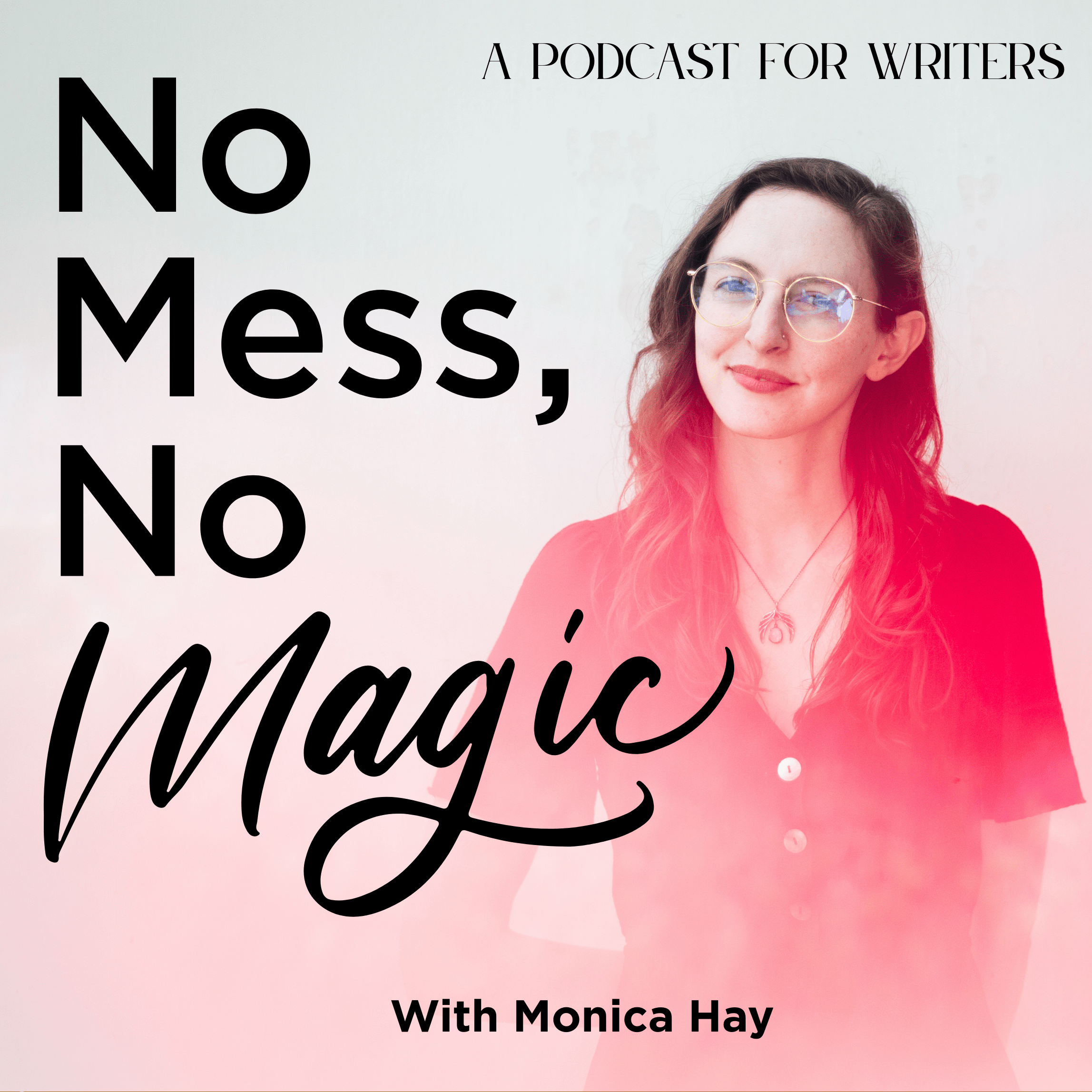
Artwork for No Mess, No Magic
ArtsEducationSelf-ImprovementExplicit

No Mess, No Magic

Monica Hay

No Mess, No Magic is a podcast for writers who want to embrace the messy, imperfect process of writing.

Hosted by writing coach Monica Hay, this show is for writers who want to stop waiting for perfect conditions and start building a writing practice in the middle of busy lives, rough drafts, and creative resistance.

You won’t find rigid writing rules or productivity perfectionism here. Instead, we talk about the real work of being a writer: showing up when you feel uninspired, writing through doubt, and learning how to keep going when the process gets uncomfortable.

Because books aren’t written by people who feel magically inspired every day.

They’re written by people who keep showing up in the mess.

If you’re a writer who wants to stop waiting for perfect conditions and start building a writing practice that works in real life…

You’re in the right place.

Messy drafts welcome.

Play
  • 18 episodes
  • weekly
  • Avg 49 min
  • English
  • August 20 · 1 hr 2 min

    Why Movement Matters for Writers with Doctor Chelsea

    Us writers are good as disconnecting from our bodies. We surface from a writing session in shrimp posture. This week, I'm joined by Chelsea of Chelsea Fit & Flex to all about movement. Chelsea breaks down exactly what happens in your body when you sit and type for hours (compression of the diaphragm, chest breathing, restricted blood flow) and what even small movements can do for your creativity. This is NOT a hustle culture, "body maxxing" conversation. Fuck that. It's about how all movement is good movement. In this episode we go into: Why writers are so good at leaving their bodies behind The science of sitting: breathing, the vagus nerve, blood flow, and brain fog Dopamine and BDNF (the "steroid for helping your brain write better") Why your best ideas come on walks, in the shower, and at the sink (boredom is a feature) The honest difference between avoiding your writing and fueling it Chelsea's five-minute reset between writing sprints: calf raises, squats, push-ups, shoulder blade squeezes, chin tucks, and breath work The most common writing-related injuries — carpal tunnel, tennis elbow, and what's happening to your spine Desk setup when you're very tall or very short, and the truth about standing desks and walking pads We also have a lil mid-episode squat, talk Enneagram types, and more. About Chelsea: Writer, audiobook narrator, and Doctor of Physical Therapy, Chelsea fuses adventurous storytelling and fitness expertise in Chelsea Fit & Flex, an online platform for writer wellness. After many conversations with fellow writers about their writing-related injuries, she founded a space for their physical and mental needs because she believes creativity thrives when we care for our ourselves intentionally. Find Chelsea: Website: chelseafitandflex.com StoryFit Studio: https://storyfitstudio.vhx.tv/ Instagram: https://www.instagram.com/chelseafitandflex/

    • Transcript
  • August 12 · 59 min

    Everything Is Writing Time: How Creative Play Fuels Your Stories

    Your other hobbies aren't distracting you from writing! They might actually (almost certainly) help your writing. This is THE episode to listen to when you have guilt around PLAY. In this episode of No Mess, No Magic, I’m joined by author and story coach Megan Fuentes to talk about experimenting with other creative mediums, and why stepping away from your WIP might actually help you come back to it with more ideas, energy, and excitement. We talk about the discomfort of being a beginner (and being very, very bad at things), why creative hobbies aren't necessarily a distraction from your writing, and how everything from baking and Canva to crochet, drawing, short stories, and solo journaling RPGs can feed your storytelling. We also get into finishing projects, using your own hobbies to understand your characters, borrowing expertise from the people around you, and what to do when sitting at your desk and trying harder simply isn't working. Plus: chess-induced tears, pancake-mix banana bread, Dutch honesty, Dungeons & Dragons, hard-won dopamine, and the realization that sometimes the best way to get unstuck creatively is to go do something completely different. Because as Megan reminds us: your creativity doesn't only exist when you're sitting down to write. About Megan: Megan Fuentes is an author and story coach who teaches writers how to craft the kind of character arcs that make books compulsively readable. With over a decade of pulling stories apart and reworking them from the inside out, her one-on-one clients describe her as electric in a brainstorm, with a sixth sense for asking the question that cracks the whole book wide open. Learn more about Megan here: https://subscribepage.com/storycoachingbymeganfuentes

    • Transcript
  • July 31 · 46 min

    It's Never Too Late to Create

    In this episode, I'm joined by author, writing coach, and filmmaker Beth Barany for a conversation about something I hear from writers all the time: "Is it too late for me?" Beth didn't begin filmmaking until her fifties. Today she's producing a fantasy film, building a creative team, and pursuing a dream she'd put on the shelf for years. We talk about what it actually feels like to become a beginner again, why so many artists convince themselves they've missed their chance, and how creativity often deepens with age. We also dive into: Why "too late" is usually a story we tell ourselves Becoming a beginner without letting your ego get in the way Finding creative confidence after years (or decades) away How to keep creating while running a business and managing everyday life The grounding practices that help us come back to ourselves as artists If you've ever wondered whether you've missed your opportunity to write the book, make the film, start the business, or pursue the creative life you really want, this episode is for you. About Beth: I’m an award-winning science fiction and fantasy novelist, run a successful business as a coach and consultant for authors, have taught hundreds of students through my online school and in person for organizations and conferences. I host the podcast "How To Write The Future," tips and tools for fiction writers and forward-thinking organizations. I use my creativity to serve others and bring joy into my life and into the lives of others. I collaborate one-on-one with writers as well as in groups. You can find Beth here: https://bethbarany.com/newsletter/

    • Transcript
  • July 13 · 1 hr 3 min

    Shadow Work, Part 2: Why Play Matters

    Last week, Chelsea Pippin Mizzi introduced us to the idea of shadow work. This week, we're getting practical. If you've ever wondered why sharing your writing feels so vulnerable, why play feels "unproductive," or why perfectionism keeps stealing the joy out of creating...this conversation is for you. Chelsea shares practical ways to begin exploring your own shadow, why making bad art might be one of the healthiest things you can do as a writer, and how curiosity is what unlocks creativity. We also talk about why you don't have to become an expert in psychology to understand yourself, why writers need a creative practice that exists outside of publishing, and how some of the parts we most want to hide are often the ones that make our work feel most alive. In this episode, we discuss: The biggest fears people have about trying shadow work Why play isn't a distraction from your writing How to build a creative practice that isn't tied to productivity What happens when you're afraid to share your work publicly Why making "bad art" is actually a good thing The difference between accepting your shadow versus trying to "fix" yourself A simple journaling exercise you can try today to begin exploring your own shadow Why curiosity is one of the most powerful creative tools you have About Chelsey: Chelsey Pippin Mizzi is an author, tarot reader, and wellbeing practitioner supporting writers, artists and small business owners to unblock and unlock creative magic. Her books include The Tarot Spreads Yearbook - a #1 Amazon bestseller; Tarot for Creativity - runner-up for Best Tarot Book at the 2024 TABI International Caromancy Awards; and most recently, The Shadow Path. Her writing and tarot work have appeared in New York Magazine, Literary Hub, Craft Magazine and other titles. She also publishes The Shuffle, a bestselling Substack exploring the intersection of spirituality and creativity through weekly journaling sessions, tarot-led interviews with creatives, and regular insights on creative living. Her Substack: https://theshuffle.substack.com/p/weekly-tarot-journaling Chelsey's IG: https://www.instagram.com/pipcardstarot/

    • Transcript
  • July 6 · 46 min

    Shadow Work with Chelsey Pippin Mizzi - Part 1

    When you hear the words shadow work, what comes to mind? For a lot of people, it's trauma. Darkness. Digging up painful memories. That's not the whole story. In this episode, I sit down with my dear friend Chelsey Pippin Mizzi to talk about the surprising connection between shadow work and creativity. Chelsey explains how our "shadow" isn't just the parts of ourselves we don't like—it's often the parts we've simply hidden away. Our curiosity. Our voice. Our weirdness. Our creativity. We talk about why perfectionism keeps so many writers stuck, how writer's block might actually be pointing you toward something important, and why your most authentic work often comes from the parts of yourself you've learned to keep quiet. In this episode, we discuss: What shadow work actually is (and why it's probably not what you think) The connection between shadow work and the creative process Why writers often hide their most original ideas How perfectionism and people-pleasing show up on the page The relationship between shadow work and writer's block Why authenticity creates stronger stories The difference between writing what people want versus writing what you need to say This is Part One of our conversation! About Chelsey: Chelsey Pippin Mizzi is an author, tarot reader, and wellbeing practitioner supporting writers, artists and small business owners to unblock and unlock creative magic. Her books include The Tarot Spreads Yearbook - a #1 Amazon bestseller; Tarot for Creativity - runner-up for Best Tarot Book at the 2024 TABI International Caromancy Awards; and most recently, The Shadow Path. Her writing and tarot work have appeared in New York Magazine, Literary Hub, Craft Magazine and other titles. She also publishes The Shuffle, a bestselling Substack exploring the intersection of spirituality and creativity through weekly journaling sessions, tarot-led interviews with creatives, and regular insights on creative living. You can find Chelsey's Substack here: https://theshuffle.substack.com/p/weekly-tarot-journaling And her Instagram here: https://www.instagram.com/pipcardstarot/ And her podcast, The Shuffle, here: https://open.spotify.com/show/3ihjj08uB6h1NRSlO6iHiI?si=d65ff24be590473d

    • Transcript
  • June 24 · 58 min

    The Truth About Author Platforms and Writing in the Margins

    In this episode, I'm joined by author Hannah Callan to talk about writing in the margins of life, and building an author platform. We discuss what it looks like to pursue creative dreams while juggling work, family, social media, overwhelm, and all the other responsibilities that come with being a human being. We also dive into author platform-building and some of the biggest misconceptions writers have about social media. Hannah shares how she built an audience online, how that audience helped her during the querying process, and why building a platform doesn't have to mean living on Instagram 24/7. We talk about: Why writers often have an all-or-nothing mindset around creativity The myth of needing huge blocks of uninterrupted time to write Building an author platform without losing yourself in the process The difference between an audience and a community Writing during busy seasons of life Working with fragmented creativity instead of fighting it Hannah's querying journey, including agent requests that came through social media If you've ever found yourself thinking, "I'll write when life calms down," this episode is for you. About Hannah: Hannah Callan is a jack of many creative trades—she spent ten years working as a graphic designer, ran her own wedding photography business, and received her bachelor's degree in Editing and Publishing. Now she's an agented author with her first novel out on submission to publishers, and a language nerd with linguistics research up for publication with Cambridge University Press. Above all, she believes stories to be one of the most powerful tools we have in passing on the things we've learned and building stronger communities. Hannah's Instagram: https://www.instagram.com/hannahcallanwrites/ Hannah's YouTube: https://www.youtube.com/@hannahcallanwrites Hannah's Newsletter: https://substack.com/@hannahcallanwrites Hannah's Website: https://www.hannahcallan.com/

    • Transcript
  • June 17 · 47 min

    Building an AuDHD Friendly Practice with Dr. Bailey Lang

    Many writers spend years trying to force themselves into writing routines that simply don't fit how their brains work. In this episode, Monica sits down with Dr. Bailey Lang—book coach, writing studies scholar, and self-described literary witch—to discuss why traditional writing advice often fails neurodivergent writers and what to do instead. Together, they explore the overlap between ADHD, autism, and AuDHD, the damage caused by shame-based writing advice, and how writers can build sustainable practices that honor their energy, creativity, and real lives. Topics discussed include: • The differences between ADHD, autism, and AuDHD • Why so many neurodivergent writers feel broken by traditional writing advice • The problem with "just be more disciplined" messaging • Discipline vs. devotion in a writing practice • Creating flexible routines that work with your brain instead of against it • Red-light, yellow-light, and green-light planning for fluctuating energy levels • Why fantasy writing routines often fail in real life • Burnout, overachievement, and recovering from perfectionism • Permission-giving as a creative practice • Ritual, magic, and creating meaningful writing habits • How to stop comparing your process to everyone else's Connect with Dr. Bailey Lang: Dr. Bailey Lang is the Literary Witch—a book coach who helps authors build sustainable, magical writing practices that take their books from draft to done. With a focus on mindset, practice, and craft, Bailey combines research with intuitive, client-led wisdom to guide writers as they step into their creative power. Bailey's website: https://literary-witch.kit.com/profile

    • Transcript
  • June 9 · 49 min

    The Writing Lessons Hidden in Hard Seasons

    What happens when life forces you to stop writing? In this episode of No Mess, No Magic, I sit down with developmental editor and story scientist Lori Puma to talk about creativity, rest, uncertainty, and what happens when your plans are completely upended. After being diagnosed with a brain tumor in 2018, Lori underwent an eight-hour brain surgery that changed her life overnight. For years afterward, she could only manage about 30 minutes of activity per day before exhaustion and cognitive symptoms took over. Writing, reading, socializing, and even everyday tasks suddenly looked very different. Together, we explore what it means to live through seasons of illness, grief, burnout, and uncertainty. We discuss: Why time away from writing isn't wasted The difference between rest and "creative death" How difficult seasons deepen emotional complexity in your stories What brain surgery taught Lori about creativity and identity Learning to trust yourself when life doesn't go according to plan The surprising ways writers can stay connected to creativity during periods of rest Why your most difficult experiences can become your greatest creative assets Whether you're navigating illness, burnout, caregiving, grief, a demanding season of life, or simply feeling frustrated that you're not writing as much as you'd like, this conversation is a powerful reminder that creativity doesn't disappear when you stop producing. Connect with Lori: Lori Puma helps experienced indie authors write novels that make readers skip bathroom breaks and ignore their smartphones. She started her career publishing scientific papers, then spent years helping data tell stories, and now she's a Visual Story Scientist and developmental editor who uses infographics and science to help genre fiction authors write novels that aren't just addictive, they're unforgettable. Free quiz - Breakout Novel X-Ray: https://loripuma.com/quiz Infographic Guide to Standout Plots: https://lori-puma.kit.com/products/infographic-guide-to-standout-novels

    • Transcript
  • June 2 · 44 min

    The Mindset Shifts That Help You Finish Your First Book

    Writing a first book isn't just about learning craft. There's a lot of mindset work involved, and a lot of it feels invisible. It's about learning how to keep going when your brain is telling you you're not talented enough, your book isn't good enough, and maybe you should quit altogether. In this episode, I'm joined by author, writing coach, and founder of First Book Finish, Rhonda Douglas. We talk about the mindset shifts that help writers move from "I want to write a book someday" to actually finishing one. In this conversation, we discuss: Why so many writers wait for permission before taking their creative dreams seriously The identity shift from wanting to write a book to calling yourself a writer Common fears first-time authors face (and why they're normal) How perfectionism keeps writers stuck Why your brain tries to convince you to quit The emotional roller coaster of drafting and revision Fear of failure, fear of success, and fear of being judged Why you're not "too late" to write a book The truth about writing a book in 30 days How to keep going when everything you've written feels like trash If you've ever wondered whether you're a "real writer," worried your book isn't good enough, or felt tempted to abandon your manuscript for a shiny new idea, this episode is for you. About Rhonda: Rhonda is an award-winning author of fiction and poetry. She's the host of The Resilient Writers Radio Show and the founder of the First Book Finish program. Find Rhonda here: https://offers.resilientwriters.com/diyretreat

    • Transcript
  • May 23 · 1 hr

    Intuitive Outlining: How to Use Story Structure Without Feeling Trapped by It

    If you've ever opened a beat sheet, stared at a plotting template, and immediately wanted to throw your laptop out a window, this episode is for you. (This is how I am lol) In this conversation, I sit down with book coach and editor Lewis Jorstad to talk about intuitive outlining—a flexible approach to story development that helps writers create stronger stories without sacrificing creativity, curiosity, or the joy of discovery. We explore why traditional outlining methods work brilliantly for some writers and completely fall flat for others, the difference between developing a story and plotting a story, and how to use story structure as a tool rather than a cage. Lewis also shares his approach to "waypoint scenes," how character motivations shape plot, and why there may be thousands of good versions of your novel! Along the way, we discuss: Why some writers feel stuck by traditional outlining methods The difference between plotting, outlining, and story development How to use character motivations to create organic plot What to do if your ideas only show up while you're actively drafting Why perfectionism keeps writers trapped in endless outlining and revision The "helicopter vs. forest" analogy for understanding your natural writing process (I was obsessed with this!) How to know when you're ready to start drafting Why discomfort is a normal part of writing—and how to tell when it's helping you grow Whether you're a dedicated plotter, a die-hard pantser, or someone who's tried both and hated both, this episode offers a refreshing perspective on finding a writing process that works for you. About Lewis Jorstad Lewis Jorstad is the editor and book coach behind The Novel Smithy, where he helps debut fiction writers turn their messy drafts into finished novels they’re proud to publish. With over eight years of experience, Lewis has edited 250+ manuscripts, written seven bestselling writing guides, and supported over 2,000 writers around the world. These days, he's on a mission to help writers embrace their brain’s intuitive way of telling stories, while also creating page-turning novels readers can’t put down. Check out Lewis's offers here: https://thenovelsmithy.com/ Find Monica's website here: https://monicahay.com/ Monica's Instagram: https://www.instagram.com/monicahayauthor/

    • Transcript
  • #8
    May 14 · 41 min

    Writing Novels With Your Voice with Sarah Elisabeth Sawyer

    In this episode of No Mess, No Magic, Monica talks with fiction author and educator Sarah Elisabeth Sawyer about dictation, accessibility, and why writing with your voice is still writing. Sarah shares how she went from struggling with dictation for seven years to using it to draft 14 books, and now teaches other authors how to make the shift from typing to speaking their stories. Together, Monica and Sarah explore dictation as a sustainable writing tool, especially for writers with disabilities, chronic pain, ADHD, autism, screen fatigue, or anyone who feels chained to their desk. They also talk about oral storytelling traditions, why “shortcuts” aren’t cheating, the learning curve of dictation, Sarah’s DRAFT framework, and how writers can practice dictation without putting pressure on their current work-in-progress. Want to learn to dictate? Sarah us offering a HUGE discount on her Fictation Course exclusively for listeners of No Mess, No Magic. Check it out here: https://fictioncourses.thrivecart.com/fictation-digital-course-coupon/?coupon=NOMESSNOMAGIC Find Sarah's freebies here: https://www.fictioncourses.com/dictation Find Monica at the links below: Monica's website: https://monicahay.com/ Book a Curiosity Call: https://monicahay.com/curious Monica's Instagram: https://www.instagram.com/monicahayauthor/ Waitlist to join the Writer's Way Community: https://www.monicahaycoaching.com/communitywaitlist Takeaways Dictation as a writing method Overcoming challenges in dictation Practice and repetition are essential for skill development Dictation can be a valuable tool for writers Chapters 00:00 Introduction and Friendship 07:00 Overcoming Resistance to Dictation 13:29 Beginner's Curve in Dictation 21:24 The Importance of Practice and Repetition 29:02 Tools and Techniques for Dictation 35:22 Learning Dictation and Where to Find Resources

    • Transcript
  • #7
    May 7 · 51 min

    Writing for Approval Is Killing Your Creativity with Rachel May

    We get SPICY in this one! About Rachel: Rachel May is a published author and powerhouse coach who brings a refreshingly down-to-earth approach to writing craft, mindset, and process. As a writer with ADHD, Rachel is intimately familiar with the frustrations that traditional writing “rules” can bring—especially for writers who feel like they just don’t fit the mold. Rachel’s sessions go beyond typical craft lectures; they’re about healing writing roadblocks, creating a process you’ll actually want to stick with, and building momentum toward the book you’ve always dreamed of finishing. To check out Rachel's work, click here: https://goldenmayediting.com/ The conversation delves into the challenges of being a high achiever and the impact of achievement on creativity. It also explores the journey of overcoming the need for external validation and approval, focusing on self-love and self-acceptance. We talk self-love and creativity, exploring the impact of perfectionism, and the fear of failure. We also examine the influence of capitalism on creativity and the societal pressure to achieve success. Find Monica's website here: https://monicahay.com/ Find Monica's Instagram: https://www.instagram.com/monicahayauthor/ Want good shit in your inbox? Subscribe to Monica's newsletter: https://www.monicahaycoaching.com/newsletter Want to explore working with Monica? Book a curiosity call here: https://calendly.com/monicahay/discovery-call Takeaways High achiever challenges Self-validation and approval Self-love and creativity Perfectionism and fear of failure Chapters 00:00 Overcoming the Need for Validation 25:40 Embracing Self-Love and Creativity 36:31 Impact of Capitalism on Creativity

    • Transcript
  • #6
    April 27 · 43 min

    Self Publishing and Successful Marketing with Annie Abel

    About Annie: Annie is a German-born author who now lives in the Netherlands, where she cycles through the countryside like a main character in a moody indie film—if that character were also late to school pickup and covered in cat hair. She writes romcoms full of grumps, banter, and emotional chaos, because love should come with laughter and a mild identity crisis. She lives with her British husband, two small tornadoes disguised as children, and exactly two cats. When she’s not writing or drawing, she’s watching drag and pretending her fictional characters didn’t just emotionally damage her. Find her website here! Annie Abel discusses her book 'Two Truths and a Lie' and her experience with self-publishing and audiobooks. She also shares insights on creative freedom, marketing, and the indie publishing community. The conversation covers topics such as marketing strategies for indie authors, staying true to one's creative vision, self-publishing advice, and managing a busy life as a writer. Anne-Marie Alcott shares insights on book launches, writing processes, and the challenges of balancing family and writing career. She also emphasizes the importance of authenticity and creativity in the writing process. Takeaways Creative freedom in self-publishing allows authors to take risks and write stories they want to read. Networking and seizing opportunities play a key role in indie book marketing. Marketing strategies for indie authors Staying true to creative vision Self-publishing advice Balancing family and writing career Chapters 00:00 Introduction and Book Overview 07:55 The Audiobook Journey 15:01 Creative Freedom in Self-Publishing 22:20 Approach to Marketing and Networking 31:39 Self-Publishing Advice 37:20 Balancing Family and Writing Career

    • Transcript
  • #5
    April 14 · 1 hr 5 min

    What My Mom Taught Me About Creativity (and Sacrifice)

    Join this conversation with my mommyyy, Stacy Blum-Hay. What happens to creativity over a lifetime? Visit my mom's website here. The conversation explores the therapeutic nature of art, the influence of family on artistic pursuits, the challenge of overcoming critical self-perception, the balance between art and family responsibilities, and the impact of education on creativity. The conversation delves into the importance of education and its impact on creativity, the influence of society on creative pursuits, the challenges of pursuing creative writing, the role of art in society, raising creative children, the impact of stability on creativity, the need for support and recognition of the arts, and encouraging creativity and artistic expression. The discussion emphasizes the significance of education in fostering creativity and the societal impact on artistic pursuits. Takeaways Art as Therapy The Impact of Family on Art Overcoming Critical Self-Perception Supporting creativity The impact of education on creativity Chapters 00:00 Art as Therapy 09:35 Overcoming Critical Self-Perception 17:39 Balancing Art and Family 26:16 Creativity and Education 31:39 The Importance of Education and Creativity 40:19 The Role of Art in Society 45:31 The Need for Support and Recognition of the Arts 52:16 Encouraging Creativity and Artistic Expression

    • Transcript
  • #4
    April 4 · 1 hr 2 min

    Making Peace With Your Writing Pace with Gala Russ

    Join Monica and Gala for a low-key chaotic discussion about the writing life. Gala Russ helps creatives understand how they work and build sustainable creative lives and businesses that fit them. After writing and publishing nine romance novels under the pen name Willa Drew, she developed a practical path to help writers start their novels and bring them into the world. Through workshops, small groups, and one-on-one coaching, she teaches writing craft, storytelling fundamentals, and creative systems so creativity becomes part of everyday life—not something squeezed into the margins. The conversation covers the journey of a writer and the impact of life transitions on the writing process. It explores the concept of making peace with one's writing practice and the influence of emotional bandwidth on writing pace. The conversation covers the themes of self-compassion, creativity, writing process, and originality in writing. It delves into the importance of self-compassion in creative pursuits, the challenges of finding time for creativity, and the process of discovering one's unique writing voice and niche in the market. Takeaways Writing pace varies based on individual factors such as writing speed, book length, and writing frequency. Life transitions and emotional bandwidth can significantly impact a writer's pace and writing process. Self-compassion is essential for making space for creativity in times of uncertainty. Discovering and embracing one's unique writing voice and niche is crucial for successful and fulfilling writing endeavors. Chapters 00:00 Journey as a Writer and Writing Practice 08:31 Making Peace with Writing Practice 24:41 Impact of Life Transitions on Writing Pace 32:07 Self-Compassion and Creativity Get Gala's Write Your Novel Check In Follow Monica on Instagram Monica's Website Want to explore working with Monica? Click here to book a curiosity call!

    • Transcript
  • #3
    March 25 · 44 min

    What If Writing Is Actually Channeling?

    Today we have guest Dani Fankhauser! Dani is a writer and energy healer. Her fiction has been published by NonBinary Review, HAD, Sheepshead Review, and Nightshade Publishing, and long listed by Uncharted Magazine. Sister Earth is her first novel. Learn about Dani and find her book here. Want to learn about working with Dani? Click here. The conversation explores the spiritual side of writing and channeling, discussing the impact of social media on writers' ability to connect with themselves and their intuition. It delves into the struggle to write, the path to channeling, energy healing, meditation, and the process of channeling in writing. Additionally, it addresses the learning process of channeling and overcoming the inner critic, as well as creating inner and outer changes for channeling. The conversation delves into the healing process of creativity, the distinction between intuition and fear, the recognition of channeling in writing, and the spiritual practice of writing. It explores the frustration and clearing of the subconscious in creativity, as well as the surprise and recognition of channeling in the writing process. The discussion also highlights the role of writing as a spiritual practice and the importance of honesty as a high vibration in creativity. Takeaways Channeling and writing are interconnected The impact of social media on writers' ability to connect with themselves and their intuition Honesty as High Vibration Channeling and Writing as a Healing Process Chapters 00:00 Introduction to Spiritual Writing 06:30 Social Media and Distraction 13:01 Understanding Channeling in Writing 19:00 Learning to Channel and Overcoming Inner Critic 24:30 The Healing Process of Creativity 30:25 Distinguishing Intuition from Fear and Anxiety 35:29 Recognizing Channeling in Writing Monica's Links: Website Instagram Subscribe to the Literary Lantern

    • Transcript
  • #2
    March 14 · 20 min

    The Case for Half-Assing It

    We talk about why lowering the bar sets you up for success in your writing life! Subscribe to my newsletter Check out my Instagram! Website New here? Hi, I'm Monica! I'm a writing coach who specializes in helping writers overcome resistance. I help writers finish drafts even when their brains are screaming “maybe reorganizing the spice cabinet would be better right now.” Because here's my take: Writing isn’t hard because you don’t know enough craft or because you're not skilled yet. Writing is hard because: it’s vulnerable it’s uncertain your brain wants to protect you from failure So I help writers build systems, friendships, and practices that let them keep writing anyway. Mess and all.

    • Transcript
  • #1
    March 8 · 28 min

    Nine Unsexy Truths About Being a Writer

    Today, we’re covering the 9 unsexy truths I’ve learned from being a writer the last 10+ years. And I introduce myself and what this podcast is all about!

    • Transcript
Showing 1–18 of 18 episodes