Skip to content
Artwork for Nina’s Notes Podcast
TechnologyScience

Nina’s Notes Podcast

Nina Patrick

A weekly, non-technical podcast on health, longevity & psychedelics.

www.ninasnotes.xyz
Play
  • 21 episodes
  • fortnightly
  • Avg 40 min
  • English
Counted on this page — what you have heard stays on this device, so it is not something the list can be paged by.
  • August 19 · 44 min

    #195: 🎙️This Bed Makes You Fall Asleep Fast | Igor Me from Neera

    How Neera's Vibroacoustic Bed Helps You Fall Asleep Faster "If you sleep this way, you wouldn't want to sleep another way.” When Igor said this, I had to go and try out the Neera bed myself, and afterward I interviewed Igor about the innovative science and technology behind Neera. It is a device designed to improve sleep through vibrational frequencies and personalized algorithms. In our conversation we explore how this technology can transform sleep quality and overall well-being. Topics: * Science of vibrational frequencies and sleep * Personalized algorithms for sleep optimization * Acoustic and mechanical engineering in sleep devices * The role of frequencies in regulating nervous system and chakras * User experience and self-reporting in sleep tech * Future developments in vibrational sleep technology Timestamps: * 0:33 Who Igor is and what Neera does * 1:19 Why he built it: devices measure, apparatuses act * 2:57 Why sleep is the highest-leverage longevity target * 4:05 “See how it feels” and the phrase that sold it * 5:30 Where standard sleep advice runs out * 6:32 The mechanism: frequencies through touch, not ears * 9:48 Do solfeggio frequencies and brainwaves connect? * 11:24 Making 2 Hz on a mattress without a giant speaker * 12:38 Composing a state, and AI programs on request * 15:02 Personalization: wearables, self-reporting, onboard sensors * 17:23 Nina’s session, and the cat purr program * 20:12 Chakra frequencies and the 96% blind test * 21:54 Inside the mattress: actuators and waveguides * 24:57 Validating with EEG and the cost of clean sleep research * 27:05 Day programs vs night programs * 28:43 Who it works best for: athletes, NSDR, day reboots * 29:58 Sleep inertia and the 3am wake-up * 32:53 Catching micro-wakeups and returning you to sleep * 35:06 The first week, and napping vs the 20-minute program * 39:12 Hardest part: hardware or software? * 41:15 The one non-responder * 42:09 Launch & Founders Club ABOUT IGOR: Igor is the co-founder of Neera. They are building nervous system regulation hardware for high performers. Over 15+ years in deep tech, he was design director on YotaPhone, the first dual-screen smartphone, and co-founded Gero (disease prediction from wearable movement data) and Atmotube (air quality sensing, 70,000+ units shipped, used in research at Stanford and Harvard). CONNECT WITH NEERA: * Website: https://neeralab.com/ * Neera LinkedIn: https://www.linkedin.com/company/neerasleep/ * Igor’s LinkedIn: https://www.linkedin.com/in/igorme/ ABOUT NINA'S NOTES: Nina's Notes explores the intersection of longevity science, neuroscience, and human optimization. Hosted by Nina Patrick, PhD in pharmaceutical sciences and longevity researcher, each episode translates cutting-edge research into actionable insights for living longer, better. CONNECT WITH NINA'S NOTES * Newsletter:https://www.ninasnotes.xyz * LinkedIn:https://www.linkedin.com/in/ninapatrick/ * Website:https://www.ninapatrick.xyz Get full access to Nina’s Notes at www.ninasnotes.xyz/subscribe
  • August 5 · 57 min

    #193: 🎙️ The Next Currency in Healthcare is Cells | Drew Taylor from Acorn Biolabs

    I asked Drew if we were heading toward a future where my younger cells become a currency I could trade. He didn’t say “no”. There’s a version of you from ten years ago. Skin that bounced back, hair that grew in thick, cells that healed fast and inflamed less. That version is gone. Unless you saved it. This week on the Nina’s Notes Podcast, I sit down with Drew Taylor, CEO of Acorn Biolabs, whose team figured out that the stem cell goldmine we’ve been drilling into hip bones to reach has been sitting at the root of your hair this whole time. With their protocol, you pluck about hairs from the back of your head at your doctor’s office, the follicles get shipped to a lab, checked for viability, and dropped into liquid nitrogen at -196°C. At that temperature there’s no metabolism. No aging. Nothing. A version of you, frozen mid-sentence in storage for when you need it. And, banking those cells costs less than Netflix. $190 a year for frozen storage. Acorn has already taken plucked hair follicles, turned them into iPSCs (induced pluripotent stem cells which can become anything) and turned them into cartilage, bone, fat, and neurons. They even pushed those neurons into the exact dopamine-producing cells that Parkinson’s destroys. Acron is also exploring using their protocol to create pancreatic cells for type 1 diabetes, and natural killer cells that hunt down senescent and cancerous cells, the same population that falls off a cliff as we age. Oh, and three patients have reported their gray hairs coming back. Nobody was tracking for that! I also asked - Who actually owns your cells if the company gets acquired? Does banking at 12 versus 45 create a two-tier longevity system? He answered both without flinching. Watch & listen to the whole episode on 🔴YouTube 🟢 Spotify, 🟣 Apple Podcasts, 🟠 Substack Podcasts Timestamps 00:00 Introduction to the future of healthcare and cell currency 02:05 The significance of cells in regenerative medicine 06:19 Innovative methods for stem cell collection from hair follicles 08:26 From plucked hair to banked cells: the process explained 15:31 The secretome: what it is and how it benefits skin and hair 24:40 Protocols and treatments for skin and hair regeneration 28:30 Using AI to enhance regenerative medicine workflows 37:32 Future therapeutics: from 3D printed organs to cell therapies 44:28 Ownership, accessibility, and the future of cell banking 52:39 Sci-fi visions of medicine: bioprinting and organ regeneration 53:26 The importance of early cell banking and next steps LINKS Acorn Biolabs - https://acorn.me/ Cell Banking - https://acorn.me/cell-banking/ LinkedIn - https://www.linkedin.com/in/drew-taylor-65b6ab10/ ABOUT DREW TAYLOR: Dr. Drew Taylor is Founder and CEO of Acorn Biolabs, a regenerative medicine company pioneering the use of a person’s own cells to power longevity, aesthetics, and personalized healthcare. With a PhD in stem cell bioengineering, he leads development of the world’s first non-invasive platform for banking hair follicle stem cells and YOU™, an autologous secretome for skin rejuvenation, hair restoration, and recovery. His work has been featured in Forbes, Fast Company, and NewBeauty, and Acorn now partners with more than 200 medical practices across North America. ABOUT NINA’S NOTES: Nina’s Notes explores the intersection of longevity science, neuroscience, and human optimization. Hosted by Nina Patrick, PhD in pharmaceutical sciences and longevity researcher, each episode translates cutting-edge research into actionable insights for living longer, better. CONNECT WITH NINA’S NOTES Newsletter: https://www.niasnotes.xyz LinkedIn: https://www.linkedin.com/in/ninapatrick/ Website: https://www.ninapatrick.xyz Get full access to Nina’s Notes at www.ninasnotes.xyz/subscribe

  • July 22 · 1 hr 12 min

    #191:🎙️Why AI Looks Smarter Every Year | Neuroscientist John Krakauer

    John Krakauer, neuroscientist & neurologist, builds therapeutic games for a living, and he is also one of the most honest skeptics you will hear on what actually helps the brain. In this conversation we get into the messy truth behind brain training, why he does not buy most of the hype, and the one long-term study on dementia that he genuinely cannot explain away. From there we go somewhere bigger. We talk about why AI keeps looking smarter every year (and why part of that might be us getting a little dumber), why "uploading your brain" belongs in the same bucket as imagining a plane flying backwards, and why the whole idea of longevity might be a misnomer, since most people do not want more years, they want to be young again.In this episode you will learn:- How most brain training falls short of what it promises, and the surprising result that made Krakauer pause- Why language lets us describe impossible things fluently, and what that means for claims about consciousness and brain uploading- Why medicine reaches for the gadget and skips the hard behavioural work, and why it can be harder to rehabilitate doctors than patients- What immersive, almost psychedelic digital experiences might offer for healing without any drug involvedChapters00:00 Introduction to John and his work in neurotechnology02:06 Overview of the Champlimaud Institute for Brain Research and Repair03:59 Digital Neurotherapeutic Center and its impact06:51 Comparing Hopkins and Champlimaud's approaches to neurotherapy09:55 The concept of digital psychedelics and immersive experiences15:02 Decoupling psychedelic experiences from drugs19:52 Long-term effects of brain training and cognitive games24:50 The potential of digital psychedelics in stroke and neuroplasticity29:56 The importance of sleep, diet, and exercise for brain health34:58 The future of brain uploading and collective consciousness40:06 The role of exergaming and immersive therapy spaces44:48 Prevention and treatment of stroke and neurodegenerative diseases49:54 Barriers to behavioral change in medicine and wellness55:07 The cultural and societal aspects of longevity and aging01:00:09 The human desire for youth and the meaning of aging01:04:58 The limitations of AI and the imagination of future technology01:09:56 Book recommendations and reflections on culture and philosophy Thanks for reading Nina’s Notes! This post is public so feel free to share it. Get full access to Nina’s Notes at www.ninasnotes.xyz/subscribe

  • July 8 · 53 min

    #189: Why Your Doctor Might Be at Your Next Hotel

    In this episode, I sit down with Dr. Frederik Dierick, a family and sports medicine physician turned founder of Pioneer Wellness Group, to explore how hospitality could become one of the most effective (and most overlooked) tools for helping millions of people live longer, healthier lives. Listen & watch on 🔴YouTube 🟢 Spotify, & 🟣 Apple Podcasts Frederik makes the case that hotels and resorts are uniquely positioned to deliver science-backed longevity care at scale: guests arrive with time, attention, and motivation that almost never exists in a doctor’s office. We dig into what it actually takes to build a luxury wellness experience that’s grounded in real clinical science (not spa-day wellness theater), why nutrition is the most sensitive topic in medicine, where AI fits in as a health accountability partner, and what it will take to democratize longevity so it’s not just for the ultra-wealthy. CHAPTERS * 00:00 The Journey to Longevity Medicine * 05:47 Creating Transformative Experiences in Hospitality * 12:01 Practical Applications of Health in Hospitality * 18:00 The Future of Longevity in Hospitality * 23:57 The Challenges of Personalized Medicine * 29:10 Challenges in Patient Care and Systemic Issues * 38:35 Democratizing Longevity Medicine * 45:07 Nutrition: The Most Sensitive Topic * 51:16 The Future of Health Hospitality ABOUT DR. FREDERIK DIERICK Dr. Frederik Dierick trained as a family and sports medicine doctor before founding Pioneer Wellness Group, a consultancy on a mission to turn hotels and resorts into the world’s most powerful health platforms. He works at the intersection of clinical medicine and hospitality, helping brands build wellness experiences rooted in real science rather than trend-driven spa treatments. CONNECT WITH PIONEER WELLNESS GROUP: * Website: https://www.pioneerwellnessgroup.com * LinkedIn: https://www.linkedin.com/in/frederikdierick/ ABOUT NINA’S NOTESNina’s Notes explores the intersection of longevity science, neuroscience, and human optimization. Hosted by Nina Patrick, PhD in pharmaceutical sciences and longevity researcher, each episode translates cutting-edge research into actionable insights for living longer, better. CONNECT WITH NINA’S NOTESNewsletter: www.ninasnotes.xyzLinkedIn: https://www.linkedin.com/in/ninapatrick/Website: https://www.ninapatrick.xyz Keywords: longevity, health optimization, hospitality, wellness, science, experience, behavior change, AI health coaching, preventive medicine, luxury wellness Thanks for reading Nina’s Notes! This post is public so feel free to share it. Get full access to Nina’s Notes at www.ninasnotes.xyz/subscribe

  • July 1 · 58 min

    #188: The 5-Minute Brain Scan That Detects Dementia Early

    Can a 5-minute brain scan detect dementia years before symptoms? Jurij Dreo, co-founder and CTO of BrainTrip, draws on 20+ years of EEG research to reveal how brain activity can be measured, interpreted, and used to catch the earliest signs of cognitive decline and dementia — often before they’re visible or irreversible. In this episode of Nina’s Notes, host Nina Patrick (PhD) and Jurij explore the real potential of EEG technology, why it’s been underused in clinics, and where brain-health diagnostics are headed next. If you care about protecting your memory and measuring your cognitive capital, this one’s for you. 🎙️ Listen on Spotify, Apple Podcasts & YouTube. TIMESTAMPS 00:00 – The fascination with the brain 03:49 – Neuroscience vs. genetics in clinical practice 06:17 – Understanding EEG: the hidden talent 11:50 – EEG waves and brain health 18:31 – EEG in cognitive decline & dementia 25:32 – Cogniscore: a new approach to brain health 29:26 – Understanding Cogniscore & cognitive assessment 32:24 – The accessibility of EEG testing 35:34 – Advancements in EEG technology 38:24 – Interpreting cognitive assessment results 44:17 – Next steps after cognitive assessment 45:59 – When to get a Cogniscore assessment 47:43 – Daily practices for brain health 52:01 – The brain of Marie Curie WHAT YOU’LL LEARN * Why EEG beats other brain-imaging tools for early detection * How brain waves reveal your mental and cognitive state * The challenges of turning EEG research into clinical tools * How EEG can flag early dementia and cognitive decline * How AI and machine learning decode EEG data * Network-level brain activity and why it matters * How accessible EEG assessments are right now * The future of EEG for diagnosing brain disorders ABOUT JURIJ DREO Jurij Dreo is a Slovenian leader in neuroscience and brainwave analysis with over 20 years of experience. His work targets one of the defining health challenges of our time: cognitive decline. Through validated brain-monitoring methods, he’s built a system that detects the earliest signs of memory loss — making it possible to intervene before decline becomes irreversible. From clinical research to directing EEG labs, he bridges science and real-world application, setting new standards for how high performers protect and strengthen brain function over time. BrainTrip: https://braintrip.net/BrainTrip LinkedIn: https://www.linkedin.com/company/braintrip/Jurij Dreo LinkedIn: https://www.linkedin.com/in/jurij-dreo-38360b198/ ABOUT NINA’S NOTES Nina’s Notes explores the intersection of longevity science, neuroscience, and human optimization. Hosted by Nina Patrick, PhD in pharmaceutical sciences and longevity researcher, each episode translates cutting-edge research into actionable insights for living longer, better. CONNECT WITH NINA’S NOTESNewsletter: www.ninasnotes.xyz LinkedIn: https://www.linkedin.com/in/ninapatrick/Website: https://www.ninapatrick.xyz #EEG #BrainHealth #Dementia #CognitiveDecline #Neuroscience #Longevity #BrainTrip #Neurotech #MemoryLoss #NinasNotes #AIinHealthcare #Biohacking #HealthyAging #Neurotechnology #DigitalHealth Get full access to Nina’s Notes at www.ninasnotes.xyz/subscribe

  • June 3 · 48 min

    #184: 🎙️ Forget Your VO2 Max. This Scientist Says Your Social Score Matters More.

    Loneliness can cost you up to 20 years of healthy life. More than poor sleep. More than any supplement. And until now, there was no way to measure it. Dr. Axel Schumacher spent 25 years at the forefront of genomics and epigenetic clock research and says your social life is a more powerful longevity biomarker than anything in your bloodwork. In this episode, he walks through the Social Connectivity Value (SCV): a framework he developed to map your social network, identify the relationships that drain your energy, and turn your social health into a number you can actually track. What you’ll learn: * Why loneliness can cost 12–20 years of healthy life (men are hit harder than women) and why the “smoking 15 cigarettes a day” statistic doesn’t change behavior without a way to measure it * How to build a sociogram using Dunbar’s three layers, assign energy values to every person in your life (including the ones dragging you down), and calculate your SCV score * Why looking for a romantic partner through your close friends almost never works, and the “super connector” strategy that statistically gives you access to 150 new people from a single introduction What’s the link between loneliness, AI companions, and living to 150? We get into all of it.Timestamps * 00:05 – Intro * 01:35 – Meet Dr. Axel Schumacher * 02:21 – From Genomics to Social Science (The Pivot) * 04:28 – How Loneliness Affects Your Health Span * 06:36 – The Loneliness Epidemic & Declining Birth Rates * 07:47 – Why Is Social Health So Hard to Measure? * 09:56 – The Holt-Lunstad Meta-Analysis Explained * 10:47 – Introducing the Social Connectivity Value (SCV) * 12:44 – The Sociogram: Mapping Your Social World * 13:13 –Building Your Sociogram: Mapping Social Connections * 14:54 – The Dunbar Layers: Your 3 Social Circles * 15:22 – The Invisible Load: Identifying Energy-Draining Relationships * 17:03 – The Invisible Load of Toxic Relationships * 20:09 – The Role of Family and Close Connections * 22:38 – What Is Your SCV Score? * 24:51 – How Your Nervous System Responds to Others * 28:08 – Tracking Your Social Life Like a Biohacker * 30:44 – Introverts vs Extroverts & Social Energy * 31:49 – AI Companions & The Future of Connection * 35:31 – Should Your Partner Be Everything? * 37:34 – Weak Ties & Super Connectors * 41:37 – The Mathematical Magic of Super Connectors * 42:57 – Rapid Fire: Social Media — Net Positive or Negative? * 43:51 – SCV vs Epigenetic Clocks: Which Matters More? * 44:59 – The Best City for Human Connection * 47:12 – One Weekly Habit to Protect Your Social Health ABOUT DR. AXEL SCHUMACHER: Longevity scientist and epigenetics researcher with over 25 years of experience, believes the most powerful biomarker for how long you live isn’t in your blood it’s in your relationships. After decades at the forefront of genomics and biomarker discovery, he now focuses on quantifying human connection, developing the Social Connectivity Value (SCV), a first-of-its-kind framework to measure your social network as a health metric and longevity tool. RESOURCES MENTIONED: * Website: https://www.grailmaster.com * YouTube ‘Inside the Dating Mind’: https://bit.ly/4s2U2i4 * Axel’s Longevity Protocol: https://bit.ly/4qIL0pZ * Sociogram Preprint with DOI: https://doi.org/10.31235/osf.io/m6h58_v1 * X: https://x.com/TheGrailmaster * Instagram: https://www.instagram.com/the_grailmaster/ * LinkedIn: https://www.linkedin.com/in/draxelschumacher/ ABOUT NINA’S NOTES: Nina’s Notes explores the intersection of longevity science, neuroscience, and human optimization. Hosted by Nina Patrick, PhD in pharmaceutical sciences and longevity researcher, each episode translates cutting-edge research into actionable insights for living longer, better. CONNECT WITH NINA’S NOTES Newsletter: LinkedIn: https://www.linkedin.com/in/ninapatrick/ Website: https://www.ninapatrick.xyz Thanks for reading Nina’s Notes! This post is public so feel free to share it. Get full access to Nina’s Notes at www.ninasnotes.xyz/subscribe

  • May 20 · 52 min

    #182: 🎙️ What Menopause REALLY Does to the Female Brain with Nahid Zokaei

    This week on the Nina’s Notes Podcast, I sit down with Nahid Zoukaei, an Oxford researcher, cognitive neuroscientist, and founder of Cerebella, to explore why menopause may be one of the most overlooked neurological transitions in a woman’s life. We talk about the connection between menopause, brain fog, memory loss, and Alzheimer’s risk, why women are often dismissed when reporting cognitive symptoms, and how hormonal changes can directly affect the brain during midlife. Dr. Zoukaei also shares the science behind estrogen and brain health, the future of non-drug cognitive therapies, and what women can do today to better protect their long-term cognitive health. KEY TOPICS: * How hormonal changes during midlife affect memory, focus, mood, and cognition. * Why menopause-related brain fog is a real neurological symptom, not “just stress.” * Exploring why women make up the majority of Alzheimer’s patients. * How estrogen supports memory, cognition, and overall brain function. * Why women’s midlife health has been historically overlooked in science and healthcare. * How non-drug cognitive interventions may help support women’s brain health. * The importance of sleep, exercise, hearing health, and staying mentally active during midlife. TIMESTAMPS: * 00:00 – Why 60% of Alzheimer’s Patients Are Women * 00:39 – Leaving Academia to Build a Women’s Brain Health Startup * 05:13 – The Menopause–Alzheimer’s Link Explained * 06:27 – Understanding Menopause and Brain Health * 13:55 – Brain Fog Is Not Taken Seriously And What Brain Fog REALLY Means * 17:36 – Women Are Being Gaslit About Menopause Symptoms * 19:18 – Menopause as a Window to Prevent Alzheimer’s * 23:34 – Why Most Brain Training Apps Don’t Work * 29:06 – Building Brain Games for Women in Midlife * 35:11 – Early Symptoms Women Should NEVER Ignore * 38:35 – Why Women’s Health Research Is So Behind * 42:11 – What Women Can Do TODAY for Better Brain Health * 45:41 – Why So Many Women Quit Their Jobs During Menopause * 47:21 – The Worst Advice Doctors Give Women ABOUT NAHID ZOUKAEI: Nahid Zoukaei is a cognitive neuroscientist, Oxford researcher, and Founder of Cerebella, is focused on advancing women’s brain health through science-backed digital therapeutics and non-drug cognitive interventions. After more than a decade researching dementia, cognition, and aging, she now works at the intersection of neuroscience, menopause, and Alzheimer’s prevention helping redefine how women’s cognitive health is understood and supported during midlife. RESOURCES MENTIONED: Website: https://www.cerebella.health/ WhatApp Community: https://chat.whatsapp.com/H5tNvI5LPAE4OmOOeBrHc1 Professor Aimee Spector’s Lab: https://profiles.ucl.ac.uk/1239-aimee-spectorNahid Zoukaei Linkedin: https://www.linkedin.com/in/nahid-zokaei-b3795563/ ABOUT NINA’S NOTES: Nina’s Notes explores the intersection of longevity science, neuroscience, and human optimization. Hosted by Nina Patrick, PhD in pharmaceutical sciences and longevity researcher, each episode translates cutting-edge research into actionable insights for living longer, better. CONNECT WITH NINA’S NOTES Newsletter: https://www.ninasnotes.xyz LinkedIn: www.linkedin.com/in/ninapatrick/ Website: https://www.ninapatrick.xyz Thanks for reading Nina’s Notes! This post is public so feel free to share it. Get full access to Nina’s Notes at www.ninasnotes.xyz/subscribe

  • May 6 · 53 min

    #180: 🎙️ She Reversed Her Biological Age with Katrin Dreissigacker

    In this episode, I sit down with Dr. Katrin Dreissigacker, a plastic surgeon turned longevity architect and founder of Epigenedit, to explore why hyperbaric oxygen therapy may be one of the most overlooked tools in longevity science. We talk about her journey from a small village in East Germany to becoming known as the “Queen of Needles,” how she reversed markers of biological aging, improved her VO2 max in midlife, and why oxygen, mitochondria, skin health, resilience, and reinvention are all deeply connected. Key Topics: * Hyperbaric oxygen therapy and its role in longevity * Innovations in aesthetic medicine and needling techniques * The impact of oxygen saturation on aging and skin health * Biomarkers of aging and how hyperbaric oxygen influences them * The use of peptides and biohacking for healthspan extension Timestamps: * 00:00 – Reversing Biological Age? The Power of Oxygen * 00:30 – From East Germany to Elite Medicine * 02:30 – Why She Chose Medicine (Unexpected Path) * 02:57 – What Is Aesthetic Medicine (Beyond Vanity) * 05:14 – “Queen of Needles” & Revolutionizing Fillers * 08:46 – First Encounter with Hyperbaric Oxygen Therapy * 11:24 – From Pandemic to Longevity Innovation * 12:43 – Why She Built Her Own HBOT Chamber * 16:22 – Can HBOT Really Improve VO2 Max? * 18:02 – How HBOT Actually Works (Simple Explanation) * 20:11 – Mild vs Medical HBOT: What’s the Difference? * 21:23 – What It Improves: Sleep, Recovery & Aging * 24:00 – How Often Should You Do HBOT? * 26:17 – Risks, Side Effects & Common Fears * 30:40 – The Real Benefits (Why You Don’t Feel It Immediately) * 33:29 – Skin, Collagen & The ‘Glow Effect’ * 36:04 – Who Should NOT Use HBOT? * 38:22 – Peptides: Hype or Breakthrough? * 42:48 – Biggest Misconceptions About HBOT * 44:24 – Most Overused Aesthetic Treatment Today * 47:10 – Daily Habits for Longevity & Energy * 48:08 – What Shows Up on Your Skin the Most? * 49:49 – Reinvent Yourself at Any Age ABOUT DR. KATRIN DREISSIGACKER: Physician, pioneer in aesthetic medicine and Co-Founder of EpigenEdit, believes ageing is not something to fight but something to design. After three decades at the forefront of aesthetics, she now focuses on longevity science, using tools such as mild hyperbaric oxygen therapy to support cellular regeneration, performance, and vitality from within. RESOURCES MENTIONED: * www.epigenedit.com * Instagram: @epigenedit_europe / @katrin_dreissigacker * LinkedIn: www.linkedin.com/in/katrin-dreissigacker * Katrin’s individual practice: www.katrin-dreissigacker.com ABOUT NINA’S NOTES: Nina’s Notes explores the intersection of longevity science, neuroscience, and human optimization. Hosted by Nina Patrick, PhD in pharmaceutical sciences and longevity researcher, each episode translates cutting-edge research into actionable insights for living longer, better. CONNECT WITH NINA’S NOTES Newsletter: www.ninasnotes.xyz LinkedIn: www.linkedin.com/in/ninapatrick/ Website: www.ninapatrick.xyz Thanks for reading Nina’s Notes! This post is public so feel free to share it. Get full access to Nina’s Notes at www.ninasnotes.xyz/subscribe

  • April 1 · 53 min

    #175: 🎙️ INTERVIEW | The Power of Early Prevention and Stem Cells with Dr. Yi Song, Author of The Regeneration Effect and Founder of Zenerchi

    Hey friends, Dr. Yi Song has spent her career bridging Eastern and Western medicine. What she’s found is that most people are already losing the health game before they feel a single symptom. In this conversation, Dr. Song breaks down why treating symptoms is not the same as healing, what stem cell therapy can actually do (and what the industry gets dangerously wrong), and how meditation and energy flow aren’t just ancient metaphysics - they’re measurable, teachable tools for longevity. If you’ve ever wondered whether regenerative medicine is real or hype, or how to find a clinic you can actually trust, this episode will sharpen your thinking. Key Topics: * Why early prevention is the most overlooked lever in healthcare * Stem cell types, functions, and what mesenchymal stem cells can treat * How stem cell production declines with age — and what to do about it * Navigating the unregulated stem cell clinic landscape safely * The six principles of natural longevity from The Regeneration Effect * Meditation, energy flow, and metaphysical states of consciousness Timestamps: * 00:00 The Intersection of Eastern and Western Medicine * 08:05 The Importance of Early Prevention in Healthcare * 13:19 Exploring Stem Cell Therapy and Its Benefits * 16:18 Understanding Stem Cells: Types and Functions * 19:56 Applications of Mesenchymal Stem Cells in Treatment * 22:39 Preventative Measures for Joint Health and Aging * 28:05 The Decline of Stem Cells with Age * 29:17 Skepticism and FDA Approval in Stem Cell Therapy * 30:58 Quality Control in Stem Cell Treatments * 33:45 Identifying Reputable Clinics for Stem Cell Therapy * 35:21 The Importance of Personalized Treatment * 38:12 The Regeneration Effect: Principles for Longevity * 40:46 Six Principles for Health and Longevity * 46:24 Rapid Fire Longevity Questions * 49:52 Myths and Realities of Stem Cell Therapy RESOURCES MENTIONED: The Regeneration Effect Book — https://book.regenerationeffect.com StemCell Therapy Experts — https://stemcelltherapyexperts.com Cell Therapy Experts Podcast — https://youtube.com/CellTherapyExperts Free Regeneration Effect eBook — https://gift.regenerationeffect.com Connect with Dr. Song: https://regenerationeffect.com ABOUT DR. YI SONG: Dr. Yi Song is a regenerative medicine physician and author of The Regeneration Effect. Drawing on decades at the intersection of Chinese medicine and modern science, she guides patients through personalized stem cell protocols and holistic longevity frameworks at StemCell Therapy Experts. ABOUT NINA’S NOTES: Nina’s Notes explores the intersection of longevity science, neuroscience, and human optimization. Hosted by Nina Patrick, PhD in pharmaceutical sciences and longevity researcher, each episode translates cutting-edge research into actionable insights for living longer, better. CONNECT WITH NINA’S NOTES LinkedIn: https://www.linkedin.com/in/ninapatrick/ Website: https://www.ninapatrick.xyz Key Words holistic health, early prevention, stem cell therapy, meditation, longevity, Chinese medicine, regenerative medicine, energy flow, aging, biohacking Get full access to Nina’s Notes at www.ninasnotes.xyz/subscribe

  • March 18 · 44 min

    #173: 🎙️INTERVIEW | What Actually Happens at a Psychedelic Retreat?

    Plant medicine is moving from the fringe into the mainstream. In this episode of the Nina’s Notes Podcast, I speak with Danny and Sarah, founders of Behold Retreats, who have guided more than 1,500 people through plant medicine ceremonies around the world. Their participants range from professional athletes and high performers to people seeking deep emotional healing. We explore what actually happens inside a psychedelic retreat, how medicines like ayahuasca, psilocybin, and Bufo are used in ceremonial contexts, and why these experiences are attracting people interested in healing, personal growth, and expanded consciousness. Danny and Sarah also explain the concept of ego dissolution, the importance of integration after psychedelic experiences, and the difference between using these medicines for healing versus expansion. Topics we discuss: • What happens during a plant medicine retreat• The meaning of ego dissolution (sometimes called “ego death”)• The biggest misconceptions about psychedelics• Why athletes and high performers explore plant medicine• Healing versus expansion in psychedelic experiences• Why integration is essential after ceremony Plant medicines have been used for thousands of years in indigenous traditions. Today, they are becoming part of a growing conversation around mental health, consciousness, and human potential. Learn more about Behold Retreats: https://bit.ly/4rwJszz Thanks for reading Nina’s Notes! This post is public so feel free to share it. Get full access to Nina’s Notes at www.ninasnotes.xyz/subscribe

  • March 11 · 36 min

    #172: 🎙️ INTERVIEW | You'll Be Disabled at 62 - Unless You Fix This in Your 40s with Roderick Lambert, Founder of Midlife Metabolic Health

    Hey friends, Most longevity conversations focus on labs, supplements, and biomarkers. This week’s guest, Roderick Lambert, goes deliberately upstream of all of that. After 15 years of struggling with obesity and a doctor warning him at 35 that he could have a heart attack within five years, Roderick overhauled his life, lost 24kg in seven months, and never looked back. Today he coaches people aged 40–60 on the root causes of metabolic decline and accelerated aging. The calories in, calories out model isn’t just bad advice. It’s physically inaccurate. You’ll discover: * Why mitochondrial dysfunction is the root cause of most chronic diseases * How fat produces up to 6x more usable energy than glucose * Why the 40–60 window is your last real chance to turn back the clock * The role of light, circadian biology, and coherence in cellular health * Why “you can’t get well in the environment you got sick in” * How to build habits that stick, without willpower Cheers, Nina Timestamps: * 00:00 Roderick’s Journey: 15 Years of Obesity * 05:30 The Doctor’s Warning That Changed Everything * 12:00 Why Calories In/Out Is Inaccurate Physics * 18:00 Mitochondria: Far More Than the Powerhouse of the Cell * 25:00 Accelerated Aging and the 40–60 Window * 31:00 Food First: Fat vs. Glucose as Fuel * 38:00 Light Diet and Circadian Biology * 44:00 Fasting, Movement, and Building Habits * 50:00 Accountability as the Missing Link ABOUT RODERICK LAMBERT: Roderick Lambert is a metabolic health coach and founder of Midlife Metabolic Health. After reversing his own metabolic syndrome in his early 40s, he now works with clients aged 40–60 to address the root causes of accelerated aging through first principles nutrition, light biology, movement, and mindset. ABOUT NINA’S NOTES: Nina’s Notes explores the intersection of longevity science, neuroscience, and human optimization. Hosted by Nina Patrick, PhD in pharmaceutical sciences and longevity researcher, each episode translates cutting-edge research into actionable insights for living longer, better. CONNECT WITH RODERICK LAMBERT Website: https://midlifemetabolichealth.com Facebook: https://www.facebook.com/MidlifeMetabolicHealth/ LinkedIn: https://www.linkedin.com/in/rodericklambert/ Get full access to Nina’s Notes at www.ninasnotes.xyz/subscribe

  • February 11 · 9 min

    #168: ☀️ Joyspan vs Lifespan: What Makes Aging Worthwhile | READ ALOUD

    Living longer isn't the same as living well. In this episode, I explore a concept that might matter more than your health span or lifespan: your joy span, the years you spend actually liking your life. Dr. Kerry Burnight, professor of geriatric medicine at UC Irvine, argues that how we respond to aging determines whether we thrive or suffer. And the good news? You can lengthen your joy span at any age through everyday choices. What You'll Learn: - The difference between lifespan, health span, and joy span - Dr. Burnight's 4 non-negotiable actions: Grow, Adapt, Give, Connect - Why asking questions makes you more likeable (science-backed) - How to continue learning as you age (including free college options for 60+) - Why I believe this matters at 38, not just in your later yearsIn The Video, I Share Practical Challenges: - Journal prompts to assess your current joy span - How to adapt when life throws you curveballs - Creative ways to stay connected and give back - Dr. Burnight's quizzes to get your baseline (link below) Timestamps: 00:00 Understanding Joy Span vs. Health Span 01:00 The Four Non-Negotiable Actions for Thriving 03:36 Adapting and Growing as we Age 05:35 The Book of the Week 07:15 Check this Out Links Joyspan Quizzes: https://www.hachettebookgroup.com/wp-content/uploads/2025/07/JoyspanExtendedExcerpt.pdf CONNECT WITH ME Newsletter: https://www.ninasnotes.xyz LinkedIn: https://www.linkedin.com/in/ninapatrick/ Website: https://www.ninapatrick.xyz joy span, health span, aging, quality of life, mental health, connection, lifelong learning, geriatric medicine, Dr. Kerry Burnight, thriving, Nina’s Notes Get full access to Nina’s Notes at www.ninasnotes.xyz/subscribe

  • February 4 · 51 min

    #167: 🎙️ INTERVIEW | Why Preventative Healthcare Is Only for the Rich (And How to Change That) with Emilian Popa, Founder of Expand Health

    Preventative healthcare isn’t just for the wealthy few, it can be accessible to everyone who needs it most. In this episode, Nina sits down with Emilian Popa, founder of Expand Health, for a candid conversation about democratizing longevity and preventative care. From his early days as an entrepreneur in Romania to working in venture capital and finally building his own healthcare company, Emilian reveals the critical gaps in our current healthcare system and how technology can bridge them. This isn’t about boutique longevity clinics charging $10,000 for annual memberships. It’s about making evidence-based preventative care accessible and affordable for the middle class, the people who need it most but are currently priced out of the market. Emilian explains why behavior change is the hardest part of healthcare transformation, how AI is revolutionizing patient experience and cost structures, and why the fundamentals of nutrition, movement, and sleep remain non-negotiable. You’ll discover what’s actually stopping people from accessing preventative care, how healthcare will evolve over the next decade, and why brain health deserves more attention in the longevity conversation. Timestamps: 00:00 Emilian’s Entrepreneurial Journey 05:47 Building Expand Health: A New Approach to Healthcare 12:11 Behavior Change and Health Span 20:24 Innovations in Preventative Care 25:43 Scaling Preventative Health Across Continents 30:57 The Cost of Healthcare and Access to Testing 32:31 Democratizing Healthcare: Bridging the Gap 34:59 Behavior Change: The Key to Health 37:16 The Future of Work: Balancing Productivity and Health 41:05 Foundational Health: Nutrition, Movement, and Sleep 43:33 Emerging Technologies in Health and Longevity 48:15 Advice for Individuals in the Longevity Space 52:58 The Importance of Brain Health and Future Innovations Where to find Emilian Popa: * Expand Health * LinkedIn Where to find Nina Patrick, PhD: * Newsletter * LinkedIn * Website Get full access to Nina’s Notes at www.ninasnotes.xyz/subscribe

  • January 28 · 10 min

    #166: 🤖 We Expect Perfection out of AI and Not of Humans, Why? | READ ALOUD

    In this conversation, I explore a fascinating paradox in our relationship with artificial intelligence. Why do we demand absolute perfection from AI while accepting human error as inevitable? When an LLM hallucinates or cites fake sources, I get frustrated. But when a colleague misspeaks or misremembers, I give them grace. Why the double standard? I walk through the reality of human error across industries: * Diagnostic mistakes happen in 5-20% of doctor visits * 80% of aviation accidents trace back to human error * 20% of Big Four audits have significant deficiencies * Even elite professionals only achieve 90-95% accuracy. The thread tying all of this together is simple but uncomfortable: our imperfections are what make us human and interesting. AI-generated content feels soulless. You can sense it. It lacks emotion, depth, playfulness, and personality. I believe we’re heading toward an age where we’ll pay a premium for human-generated content, art, and music. We think we can scale the human experience with AI, but what we’ll find instead is an overly perfect, emotionless dark age of art and culture. The choice isn’t between perfect AI or imperfect humans. It’s about deciding which imperfections we’re willing to live with. TIMESTAMPS 00:00 Hello from Australia! 01:16 We Expect Perfection out of AI and Not in Humans, Why? 06:41 The Paradox of Perfection in AI and Humanity 07:05 Mentoring Opportunities 07:26 The Book of the Week 08:34 Grab My Guidebooks 08:51 Check this out Links https://www.who.int/news-room/fact-sheets/detail/patient-safety https://www.sciencedirect.com/science/article/pii/S2666691X23000246 https://tax.thomsonreuters.com/news/audit-deficiency-rate-drops-in-2024-in-sign-of-improvement/ https://www.researchgate.net/publication/1907590_Thinking_is_Bad_Implications_of_Human_Error_Research_for_Spreadsheet_Research_and_Practice CONNECT WITH ME Newsletter: https://www.ninasnotes.xyz Longevity.Technology Unlocked Podcast: https://longevity.technology/unlocked/ Longevity Guidebooks: https://ninapatrick.xyz/guidebooks Mentoring: https://ninapatrick.xyz/startup-mentor/ LinkedIn: https://www.linkedin.com/in/ninapatrick/ Website: https://www.ninapatrick.xyz Get full access to Nina’s Notes at www.ninasnotes.xyz/subscribe

  • January 21 · 43 min

    #165: 🎙️ INTERVIEW | Training Your Brain with Neurofeedback Pioneer Ariel Garten on Focus, Sleep & Brain Optimization

    What if you could actually see your brain activity in real-time and learn to control it like adjusting a thermostat? In this episode, Nina sits down with Ariel Garten, neuroscientist and founder of Muse, for a deep dive into how neurofeedback technology is revolutionizing the way we train our brains. From her early work making buildings light up with brainwaves at the 2010 Winter Olympics to creating a headband used by half a million people worldwide, Ariel reveals how accessible brain training has become. This isn’t science fiction, it’s neuroscience made practical. Ariel explains how three to five minutes of daily brain training can improve focus, enhance sleep quality by 20%, and even help you fall asleep 55% faster. You’ll discover what your brain really looks like during sleep, why most of us aren’t getting “textbook” sleep, and how emerging technologies like deep sleep stimulation could change how we age. Timestamps: 00:00 Introduction to Muse and Neuroscience 01:50 The Journey of Muse: From Concept to Reality 04:29 User Experience: Feedback and Interaction with Muse 06:54 Training the Brain: Techniques and Processes 09:44 Understanding Calmness: EEG Insights and Metacognition 12:12 Evolution of Use Cases: Meditation to Sleep Optimization 14:52 The Muse S: Enhancing Sleep Quality 17:35 The Complexity of Sleep: Insights from EEG Studies 22:10 Transforming Sleep Through Mindfulness 24:33 Understanding Calmness and Anxiety 26:06 Enhancing Focus and Productivity 27:52 The Role of Muse in Daily Life 29:19 Exploring ADHD and Focus 31:30 The Future of Brain Diagnostics 34:01 Innovations in Brain Measurement 36:34 The Limits of Brain Training 39:30 Best Practices for Brain Training CONNECT WITH ARIEL GARTEN Website: https://choosemuse.com Linkedin: https://www.linkedin.com/in/arielgarten/ Twitter: @choosemuse Instagram: @choosemuse CONNECT WITH NINA’S NOTES Newsletter: LinkedIn: https://www.linkedin.com/in/ninapatrick/ Website: https://www.ninapatrick.xyz Get full access to Nina’s Notes at www.ninasnotes.xyz/subscribe

  • January 14 · 13 min

    #164: 🤩 The Estrogen-ADHD Connection That No One Talks About | READ ALOUD

    In this episode of Nina’s Notes (#164), I dive into the crucial but under-researched connection between estrogen and ADHD in women. After conversations with friends and audience questions at my recent talk, I dug into the scientific literature - and ladies, we were right, the two are very connected. KEY TOPICS COVERED: • Why ADHD gets missed in women and girls • How hormonal fluctuations impact ADHD symptoms throughout your cycle • The follicular phase advantage vs. luteal phase challenges • ADHD during pregnancy: what the limited research shows • Perimenopause and menopause: the hormone hurricane effect • Why estrogen is crucial for cognitive function and dopamine regulation • Practical symptom tracking strategies using apps like Clue or Flo TIMESTAMPS: 00:00 Introduction to New Podcast Launch 01:40 Exploring the Estrogen-ADHD Connection 03:27 How Hormones Affect ADHD 04:55 Hormonal Changes and ADHD Symptoms 08:27 Managing ADHD Through Hormonal Awareness 09:03 Do you want to improve your health and wellness in 2026? 09:31 The Book of the Week 09:59 Book Review: The Secret of Secrets 11:09 Mentoring with Nina 11:31 Check This Out CONNECT WITH ME Newsletter: https://www.ninasnotes.xyz LinkedIn: https://www.linkedin.com/in/ninapatrick/ Website:https://www.ninapatrick.xyz Get full access to Nina’s Notes at www.ninasnotes.xyz/subscribe
  • Dec 17, 2025 · 27 min

    #163: 🌈 Are Psychedelics The Fountain of Youth? | READ ALOUD

    In this conversation, I cover the emerging science on psychedelics. Not the hype, but the data. How these compounds interact with the brain, reopen windows of neuroplasticity, and appear to influence aging, neurodegenerative disease, mental health, trauma, and resilience in ways we’re only beginning to understand. I walk through studies looking at psychedelics in neurodegenerative disease, stroke recovery, and end-of-life care, specifically improvements in Parkinson’s, life extension in cells and mice, and cancer patients losing their fear of death. The thread tying all of this together is simple but uncomfortable: longevity isn’t just about adding years to the body. It’s about tending to the nervous system, the mind, and the stories we carry. If we want to live longer and better, we may need to stop treating biology and psychology as separate systems, and start designing a more integrated, humane approach to aging. Timestamps: 00:00 Introduction to Epigenetics and Longevity 02:42 The Intersection of Psychedelics and Longevity 05:36 Understanding the Hallmarks of Aging 08:51 Mental Health, Neuroplasticity, and Aging 11:45 Psychedelics and Neurodegenerative Diseases 14:46 Psychedelics in Stroke Recovery 17:33 Psychedelics and Trauma Healing 20:30 Psychedelics in End-of-Life Care 23:41 The Future of Longevity and Psychedelics CONNECT WITH NINA’S NOTES Newsletter: https://www.ninasnotes.xyz LinkedIn: https://www.linkedin.com/in/ninapatrick/ Website: https://www.ninapatrick.xyz Get full access to Nina’s Notes at www.ninasnotes.xyz/subscribe

  • Dec 10, 2025 · 52 min

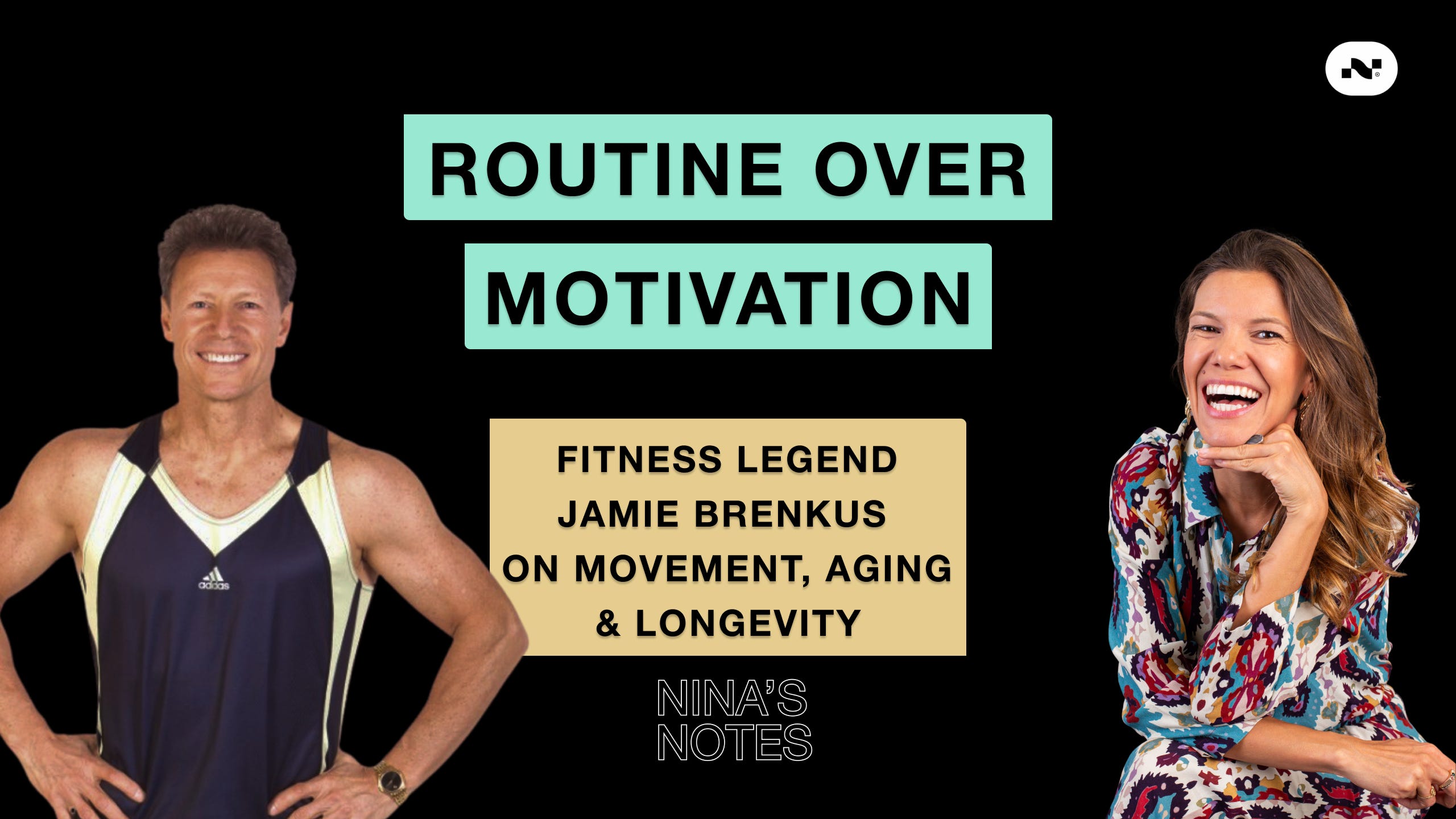
    #162: 🎙️ INTERVIEW | Routine Over Motivation with Fitness Legend Jaime Brenkus on Movement, Aging & Longevity

    What if the secret to aging well isn’t about crushing yourself in the gym, but about simple, consistent movement that you can sustain for life? In this episode, Nina sits down with Jaime Brenkus, the fitness pioneer behind 8 Minute Abs, for a refreshingly honest conversation about what actually matters for longevity and health. Jamie challenges conventional fitness wisdom and reveals why routine beats motivation, why resistance training becomes non-negotiable as we age, and how the choices we make today directly impact how we’ll feel decades from now. This isn’t about achieving the perfect body, it’s about building sustainable habits that let you wake up with energy, move with confidence, and age with vitality. Timestamps: 00:00 Introducing Jaime Brenkus 02:21 Changing The Way You Age 02:36 What’s The Real Cost Of Aging? 03:35 People Don’t Die Of Old Age, They Die Of Inactivity 03:41 If You Don’t Make Time For Your Wellness, You’re Going To Make Time For Your Illness 05:26 The Science Of Powerful Workouts 07:41 Move Every Hour On The Hour (Ehoh) 08:16 Jaime’s Daily Routine 09:20 The Power Of Routine Over Motivation 11:44 Resistance Training Is The Key To Build Muscle 18:15 The Impact Of Aging On Fitness 19:31 Your Diet Is Just As Important As Your Fitness 20:27 You Have To Think Like A Lean Person 23:35 Don’t Compare Yourself To Others 24:49 If Exercise Is King, Nutrition Is Queen 26:34 Jaime’s Principles To Eat Healthy - Lean, Green & Clean 27:21 Nutrition: The Key To Longevity 30:16 Portion Control Tips 31:36 Your Waistline Is Your Lifeline 36:28 Refuel Your Body, Don’t Fool Your Body 36:47 The Importance Of Resistance Training 41:59 Wake Up With A Grin Or A Groan In The Morning 43:35 Consistency Beats Intensity 44:31 Routine Over Motivation 45:55 Lessons From Jack LaLanne 50:11 First Steps To Fitness Transformation 51:03 Don’t Forget The Resistance Training CONNECT WITH JAIME BRENKUS Website: https://jaimebrenkusfitness.com/ Linkedin: https://www.linkedin.com/in/jaime-brenkus-3494422/ Online Coaching: https://www.subscribepage.com/meetjaime CONNECT WITH NINA’S NOTES Newsletter: https://www.ninasnotes.xyz LinkedIn: https://www.linkedin.com/in/ninapatrick/ Website:https://www.ninapatrick.xyz Get full access to Nina’s Notes at www.ninasnotes.xyz/subscribe
  • Dec 3, 2025 · 15 min

    #161: 🫩 The Power of Boredom | READ ALOUD

    What if the key to creativity, meaning, and happiness isn’t doing more, but doing less? When I realized I was spending 10 hours a week on Instagram, I knew something had to change. But instead of replacing it with more productivity hacks, I discovered something counterintuitive: my brain needs boredom. In this episode, I explore why eliminating boredom from our lives might be the root cause of modern depression and anxiety, and how embracing those uncomfortable moments of “doing nothing” can unlock creativity, meaning, and happiness. What You’ll Learn: * Why humans prefer electric shocks over being alone with their thoughts * The Default Mode Network and what happens when your brain has nothing to do * Why eliminating boredom might be causing our epidemic of depression * How Agatha Christie, Neil Gaiman, and Kate Nash used boredom to fuel their creative breakthroughs * Practical challenges to reclaim boredom in your life Timestamps: 0:00 - My 10-hour Instagram problem 2:15 - What happens when you’re bored 4:30 - The electric shock experiment 6:45 - Why we’ve engineered boredom out of our lives 9:20 - The boredom challenge 11:40 - How to get bored more often 14:15 - Famous creators who credit boredom for their success 17:30 - Book of the Week: Unreasonable Hospitality 21:45 - Check This Out: 10-minute endometriosis test breakthrough Links ☀️ Are You Wasting Your Dopamine Budget Before Breakfast? - https://www.ninasnotes.xyz/p/153-are-you-wasting-your-dopamine 48-Hour Phone Detox - https://www.ninasnotes.xyz/p/128-48-hours-unplugged CONNECT WITH ME Newsletter: https://www.ninasnotes.xyz LinkedIn: https://www.linkedin.com/in/ninapatrick/ Website: https://www.ninapatrick.xyz Get full access to Nina’s Notes at www.ninasnotes.xyz/subscribe
  • Nov 26, 2025 · 47 min

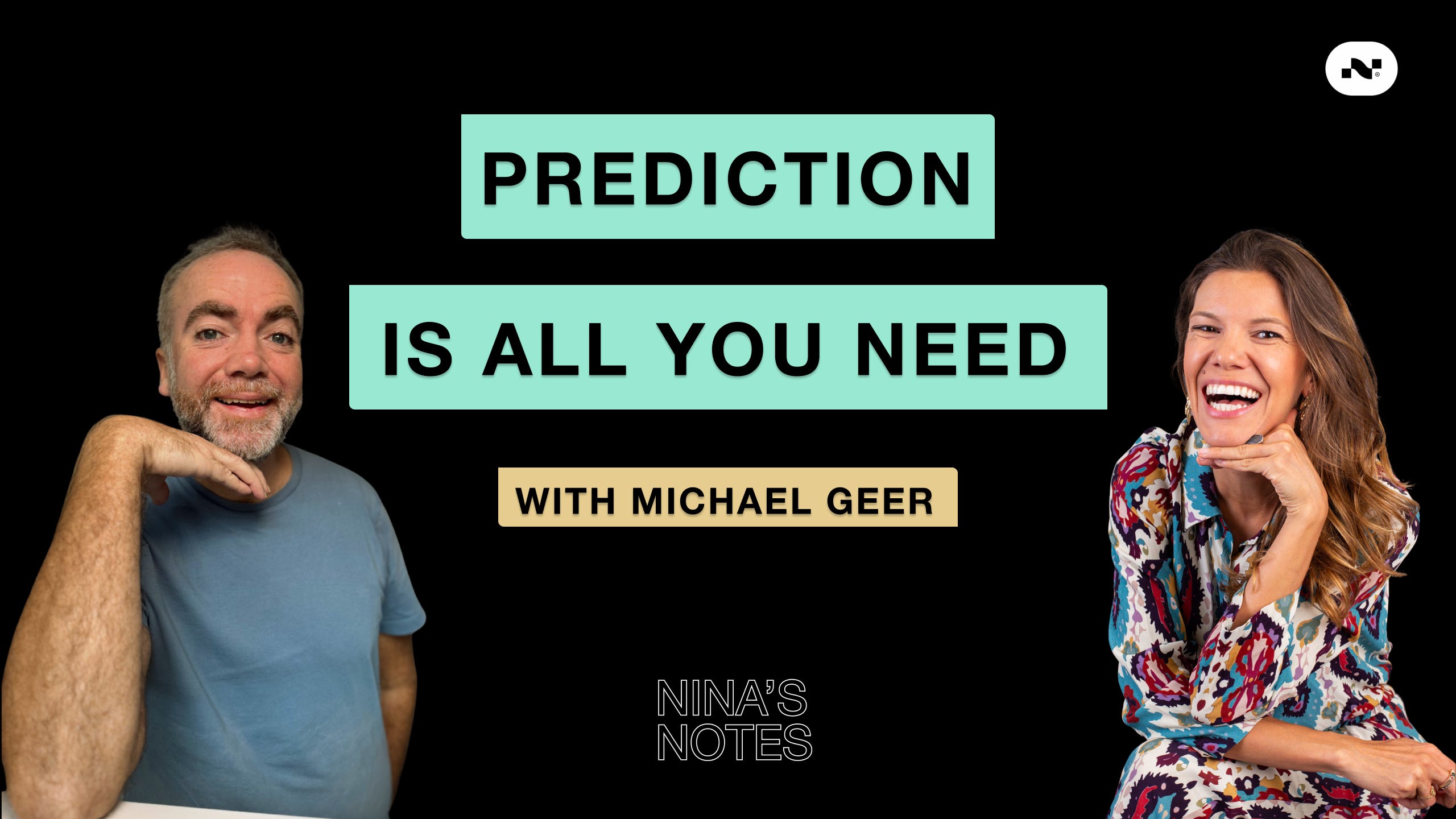
    #160: 🎙️ INTERVIEW | Prediction Is All You Need with Michael Geer, Co-Founder of Humanity

    What if healthcare could predict your future instead of just treating your present? In this episode, I’m joined by Michael Geer, co-founder of Humanity, to explore how AI is transforming healthcare from reactive treatment to predictive prevention. Michael and I discuss how large biological models, similar to large language models like ChatGPT, are making it possible to predict future health outcomes with unprecedented accuracy. We explore biological age versus chronological age, why personalized health recommendations will replace one-size-fits-all advice, and how AI literally saved Michael from permanent nerve damage. This conversation gets into the weeds of transformers, attention mechanisms, and the future of medicine, but don’t worry, we keep it accessible and practical. Key topics: biological age, large biological models, AI in healthcare, predictive medicine, personalized health, digital twins, preventive care, longevity science About the guest: Michael Geer is co-founder of Humanity, a company building tools to measure and reverse biological aging. Before Humanity, he helped grow Badoo to over 300 million users. Connect with Michael at mg@humanity.email or learn more at humanity.health Timestamps: 00:00 Introduction to Predictive Healthcare 02:28 The Motivation Behind Humanity 05:39 The Shift from Reactive to Predictive Healthcare 08:05 Understanding Biological Data and Predictions 12:00 The Importance of Context in Health Predictions 16:35 The Role of Doctors in a Predictive Framework 21:42 Open Source Biological Models and Their Impact 24:25 Digital Twins and Future of Treatment Predictions 26:16 The Impact of Health Data on Treatment Predictions 27:58 Exploring Longevity and Biological Age Predictions 31:06 Modeling Interventions and Supplements for Health 35:07 The Role of AI in Personalized Medicine 39:06 The Future of Healthcare with Predictive Models Links #80: 🎙️ INTERVIEW | Your Rate of Aging with Michael Geer, Co-Founder of Humanity CONNECT WITH ME Newsletter: https://www.ninasnotes.xyz LinkedIn: https://www.linkedin.com/in/ninapatrick/ Website: https://www.ninapatrick.xyz YouTube: https://www.youtube.com/@Ninas-Notes Get full access to Nina’s Notes at www.ninasnotes.xyz/subscribe
Showing 1–20 of 21 episodes