Skip to content
Artwork for Next Mile
BusinessInvestingMarketingTechnology

Next Mile

Milemarker

Next Mile is a podcast about bringing together the people and technology shaping the wealth management industry. Brought to you by Milemarker.

Play
  • 21 episodes
  • weekly
  • Avg 36 min
  • English
Counted on this page — what you have heard stays on this device, so it is not something the list can be paged by.
  • Tuesday · 34 min

    How to Turn Client Conversations into Better Financial Advice with Melissa Caro

    Episode 159: This week, Kyle Van Pelt talks with Melissa Caro, Founder at My Retirement Network. For the past decade, Melissa has studied real advisor conversations to understand what communication behaviors build stronger client relationships. Today, she helps advisory firms close the client language gap through digital learning, live coaching, conversation analysis, and AI-powered insights that turn real client meetings into learning opportunities. Melissa talks with Kyle about why the best financial advice starts with the right conversation. They explore why wealth management is a people business first, how to make discovery meetings feel less like data collection and more like meaningful conversations, and how advisors can use AI and technology to create more room for human connection. In this episode: (00:00) - Intro (02:08) - Melissa's money moment (04:15) - What Melissa learned on the trading floor (05:50) - Melissa’s transition from equity trading to advisor coaching (08:06) - What separates elite advisors from the rest (10:14) - How to make discovery conversations more engaging (14:36) - Why soft skills are as important as technical skills (17:45) - Practical ways for new advisors to build communication skills (19:41) - The difference between coaching next-gen and seasoned advisors (22:59) - How AI is changing the dynamics of human connection (25:19) - How overbuilt, poorly integrated tech stacks hurt advisor behavior (28:24) - Melissa's outlook about the future of wealth management (30:51) - Melissa's Milemarker Minute Key Takeaways Put the relationship before the financial plan. The strongest advisors know that trust and engagement come first, and then use their technical knowledge to support the relationship. Turn data gathering into a conversation. Instead of treating discovery as an intake form, use open-ended questions and genuine curiosity to uncover what actually matters to clients. Don't rush past the important moments. A simple answer—like a client's expected retirement date—can open the door to deeper conversations about identity, fears, goals, and expectations. Those insights can make the financial plan feel collaborative rather than prescriptive. Use technology to become more present, not less. AI can remove administrative work such as note-taking, but advisors need to retrain themselves to use that extra capacity for deeper client engagement. Quotes "The real elite advisors know that you need to engage with people, build trust, and build those relationships first." ~ Melissa Caro "What makes a great associate isn't necessarily the same as the characteristics you translate into what makes a great lead advisor." ~ Melissa Caro "You can turn anything that is considered a hard data point into a soft data point if you just ask open-ended questions. That's where the moment is—that's where your gold is." — Melissa Carro Links Melissa Caro on LinkedIn My Retirement Network Julie Littlechild on LinkedIn Pink Floyd - The Dark Side Of The Moon The StorySelling Method On the Shortness of Life Connect with our hosts Milemarker.co Kyle on LinkedIn Jud on LinkedIn Subscribe and stay in touch Apple Podcasts Spotify YouTube Produce game-changing content with Turncast Turncast helps your company grow by producing top-quality content and fostering transformative conversations. We specialize in content generation, podcasting, digital strategy, and audience growth for fintech and financial services companies. Learn more at Turncast.com.
  • August 18 · 37 min

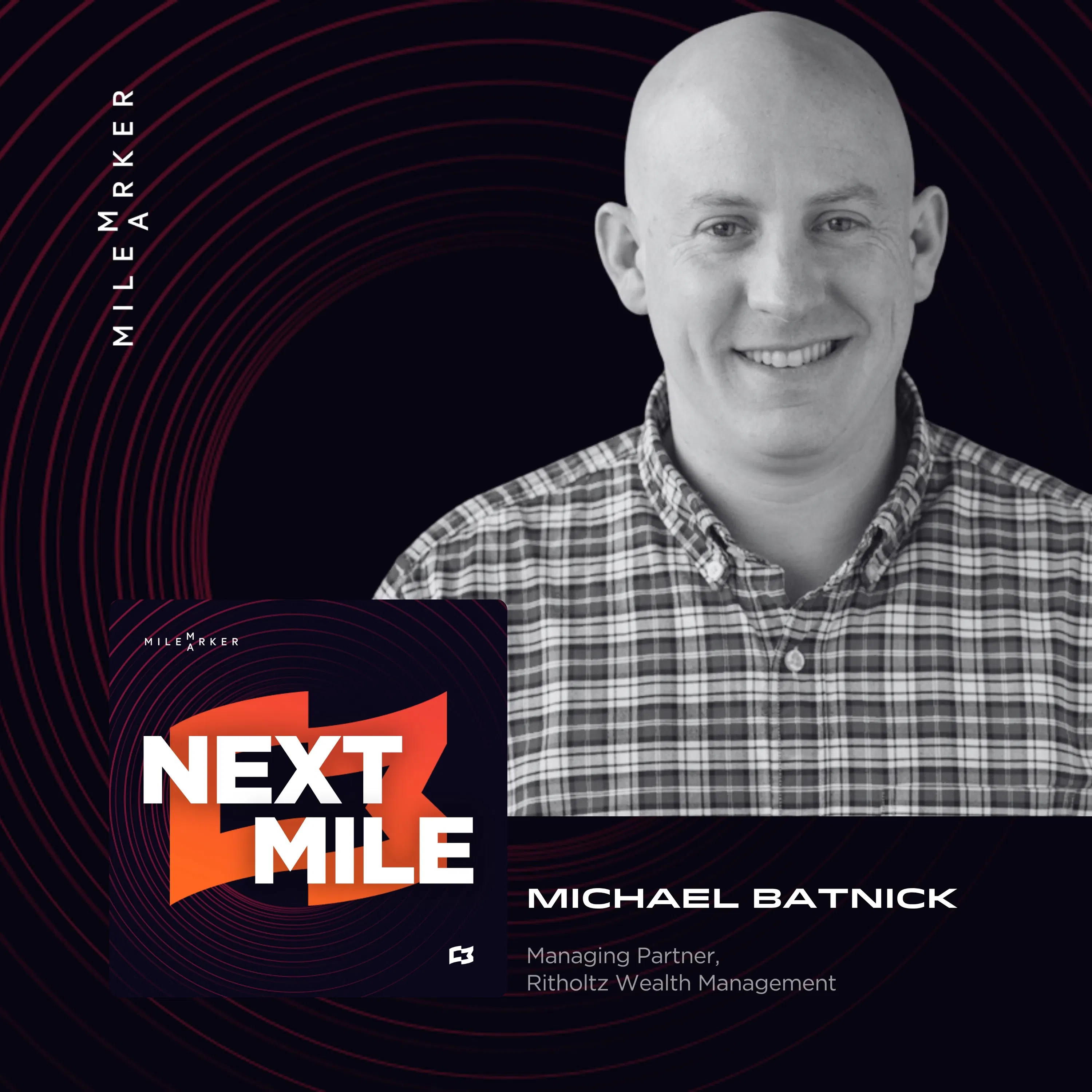
    Navigating the Next Era of Advisor Technology with Michael Batnick

    Episode 158: This week, Kyle Van Pelt talks with Michael Batnick, Managing Partner at Ritholtz Wealth Management. Michael began his career in sales at a life insurance company. Today, he focuses on helping clients navigate the challenges of long-term investing and achieve their financial goals. Michael talks with Kyle about how AI is disrupting the wealth management industry. He discusses the realities of rising technology spend, the limits of AI-driven efficiency in human relationships, and how firms can use AI to improve advisor training. Michael also shares the concept behind Exhibit A—Ritholtz's custom-branded visual storytelling and charting software platform—and the importance of building intuitive technology that genuinely makes people's lives easier. In this episode: (00:00) - Intro (02:26) - Navigating AI hype vs. operational realities (04:24) - Michael's thoughts on technology spending (07:01) - Why AI won't systematically double an advisor's client capacity (11:21) - How AI could transform training for young advisors (15:57) - Private equity and the changing advisor landscape (19:24) - The debate between cash flow and enterprise value (23:09) - The concept behind Exhibit A (25:52) - Are RIAs becoming wirehouses in disguise? (28:32) - Why large RIAs struggle to reach the public markets (31:19) - Michael's outlook for the wealth management industry (32:38) - The future of multi-custodial RIAs (35:23) - Michael's Milemarker Minute Key Takeaways Don't confuse efficiency with capacity. AI can automate preparation, documentation, and follow-up, but human capacity for real, meaningful conversations has a ceiling regardless of how much prep work gets automated. Rethink how you train the next generation of advisors. Build a training engine, not just a productivity tool. If AI tools can simulate practice scenarios and give real-time coaching feedback, use them to compress the learning curve for junior talent instead of burning your best chances on people who might not be ready yet. Question industry narratives before adopting them. Just because a structure worked for someone else doesn't mean it's automatically right for your business. Figure out what you actually need. Make technology so intuitive that clients barely notice it. When software is genuinely easy to use, adoption grows, support needs drop, and businesses can scale more sustainably. Quotes "There's never been more excitement and also more confusion about the future of where we're going." ~ Michael Batnick "I think a lot of people are really excited about the promise of AI and what it's going to do to change our industry, our jobs, our margins, and the way that we communicate with clients. But I don't think we know what that looks like, which is fine, totally fine and normal." ~ Michael Batnick "Dealing with clients is exhausting, mentally and emotionally. It takes a lot out of you." ~ Michael Batnick Links Michael Batnick on LinkedIn Ritholtz Wealth Management Future Proof Matt Cerminaro Exhibit A For Advice Ian Wenik Creative Planning Altruist Jason Wenk Powerhouse by James Miller Connect with our hosts Milemarker.co Kyle on LinkedIn Jud on LinkedIn Subscribe and stay in touch Apple Podcasts Spotify YouTube Produce game-changing content with Turncast Turncast helps your company grow by producing top-quality content and fostering transformative conversations. We specialize in content generation, podcasting, digital strategy, and audience growth for fintech and financial services companies. Learn more at Turncast.com.
  • August 11 · 27 min

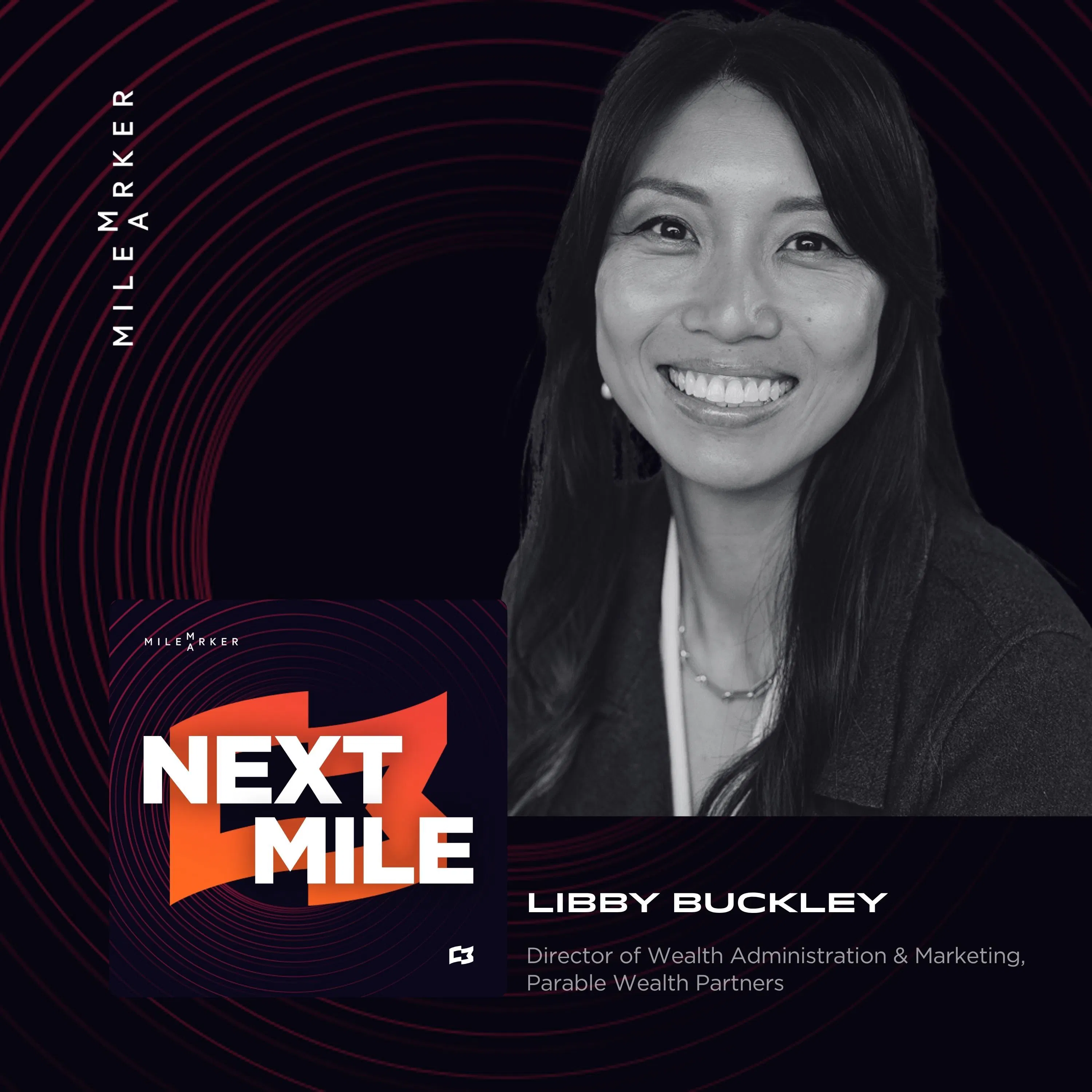
    The Power of Radical Hospitality in Financial Advice with Libby Buckley

    Episode 157: This week, Kyle Van Pelt talks with Libby Buckley, Director of Wealth Administration & Marketing at Parable Wealth Partners. Libby leads the firm's client experience and team culture, bridges connections between clients, partner businesses, and non-profits, and creates experiences that help people rethink their wealth's potential to create change. Libby talks with Kyle about how radical hospitality translates into the wealth management space. She discusses how firms can preserve high-touch, authentic human relationships as AI adoption accelerates, how to design thoughtful and memorable client experiences, and how organizations can scale without losing sight of their core purpose. In this episode: (00:00) - Intro (00:57) - Libby's money moment (05:32) - Libby's definition of radical hospitality in wealth management (08:05) - Client events that create meaningful connections (09:56) - Why AI makes authenticity even more valuable (11:52) - Practical advice for building soft skills and radical hospitality habits (16:12) - How culture drives Parable's organic growth (18:31) - Scaling without losing authenticity (21:08) - Libby's outlook on the future of the financial services industry (24:08) - Libby's Milemarker Minute Key Takeaways Use efficiency to create better relationships. AI can save time, but its greatest value is giving leaders more opportunities to invest in conversations, trust, and meaningful client experiences. People remember how you made them feel. Exceptional service solves problems, but genuine hospitality creates lasting relationships by helping people feel seen, understood, and valued. Culture is something you protect. As organizations scale, intentional hiring, regular team development, and shared purpose become essential for maintaining the culture that fuels long-term success. Personalization goes beyond using someone's name. Understanding people's preferences, interests, and communication styles creates experiences that feel thoughtful instead of transactional. Quotes "We think of money as the invitation, not the destination. So, wealth is not something to accumulate, but something to activate." ~ Libby Buckley "If you don't know who you are, who you want to serve, and how you're going to do that uniquely, quit. Authenticity is going to matter so much more moving forward." ~ Libby Buckley "How do you show up, and how do you want to show up for clients and your team, I think is going to be one of the biggest contenders moving forward." ~ Libby Buckley Links Libby Buckley on LinkedIn Parable Wealth Partners Unreasonable Hospitality Paterson Center The Ideal Team Player The Art of Gathering Chief Joy Officer Connect with our hosts Milemarker.co Kyle on LinkedIn Jud on LinkedIn Subscribe and stay in touch Apple Podcasts Spotify YouTube Produce game-changing content with Turncast Turncast helps your company grow by producing top-quality content and fostering transformative conversations. We specialize in content generation, podcasting, digital strategy, and audience growth for fintech and financial services companies. Learn more at Turncast.com.

  • August 4 · 36 min

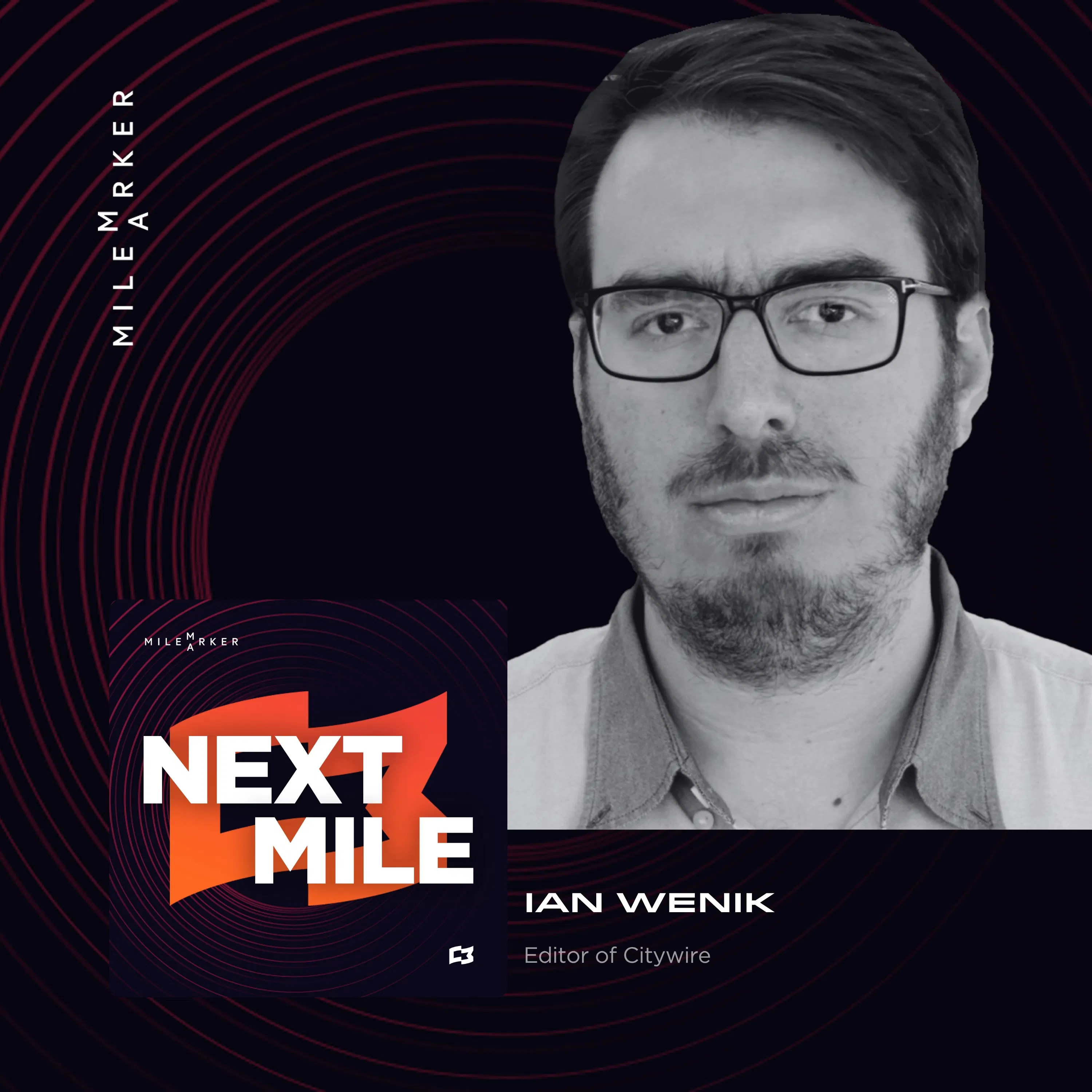
    What the Fastest-Growing RIAs Are Doing Differently with Ian Wenik

    Episode 156: This week, Kyle Van Pelt talks with Ian Wenik, Editor at Citywire. Ian covers the independent wealth management industry with a focus on RIAs, mergers and acquisitions, advisor technology, and the business forces reshaping financial advice. Through his reporting and conversations with industry leaders, he has developed a front-row view of the trends driving growth across the advisory landscape. Kyle and Ian explore what separates today's fastest-growing RIAs from the rest of the industry. They discuss why competition for acquisitions continues to intensify, how firms can balance scale with independence, and why organic growth remains the ultimate differentiator. They also examine Schwab's latest referral changes, AI's potential to level the playing field for mid-sized firms, emerging technology trends, and what Ian believes the future holds for advisors building the next generation of great firms. In this episode: (00:00) - Intro (03:25) - A preview of Citywire's fastest-growing RIAs report (05:47) - Why the M&A market is becoming more competitive (08:00) - Why large RIAs struggle to reach the public markets (11:02) - Are RIAs becoming the new wirehouses? (13:21) - Deal structures that don't work (16:05) - Schwab's referral changes and what they mean for RIAs (22:06) - What's driving organic growth today (25:21) - How AI can help mid-sized firms compete (27:00) - Ian's advice for firms that want to stay independent (27:58) - Technology trends among the fastest-growing firms (29:16) - Ian's outlook on the future of the financial services industry (30:41) - Ian's Milemarker Minute Key Takeaways Deep expertise creates opportunities. Whether investing, acquiring businesses, or serving clients, deep subject-matter expertise allows firms to spot hidden value and underrated talent before the broader market takes notice. Ownership drives commitment. If you want entrepreneurial people to stay engaged, give them meaningful opportunities to build equity rather than relying solely on compensation. Optimize organic growth strategies for modern discovery. Traditional search and referral channels are evolving. To maintain a strong pipeline, leaders must diversify their acquisition strategies—leveraging digital media, strategic partnerships, and AI-driven search visibility. Use AI to create more time for people, not less. Automating operational work improves efficiency, but relationships and trust remain the foundation of exceptional client service. Let AI handle the back office so you can spend more time on the conversations that actually grow the business. Quotes "For the public markets to open up to RIAs, you need a really strong, well-capitalized firm, a strong balance sheet, a clean operating and capital structure, strong cash flows, and high organic growth." ~ Ian Wenik "The reason that we've seen so many transactions fail is that the transactions are structured in a way where it's cash-heavy, short earn-out. It allows the founders to cash themselves out. They peace out after maybe a year, and you have a second generation that's actually managing the underlying client book of business that has no incentive to stick around." ~ Ian Wenik "Invest in what you do best. Remember why you got into this business. If you focus on that core business, as long as you maintain a baseline level of profitability, a lot of things will fall into place." ~ Ian Wenik Links Ian Wenik on LinkedIn Citywire Edelman Financial Engines Focus Financial Partners Creative Planning Cerity Partners LPL Financial Morgan Stanley Future Proof Joshua Brown Goldman Sachs Moneta Group Carson Group Peter Mallouk Charles Schwab Orion Advisor Solutions Movement Connect with our hosts Milemarker.co Kyle on LinkedIn Jud on LinkedIn Subscribe and stay in touch Apple Podcasts Spotify YouTube Produce game-changing content with Turncast Turncast helps your company grow by producing top-quality content and fostering transformative conversations. We specialize in content generation, podcasting, digital strategy, and audience growth for fintech and financial services companies. Learn more at Turncast.com.
  • July 28 · 31 min

    How Behavioral Data Creates Better Client Relationships with Julie Littlechild

    Episode 155: This week, Kyle Van Pelt talks with Julie Littlechild, Founder and CEO at Absolute Engagement. Julie is a recognized leader in client engagement, investor behavior, and referral growth. Through years of advisor and investor research, she has helped firms better understand the emotional drivers behind client decisions and build stronger, more personalized advisory relationships. Kyle and Julie explore why understanding how clients feel is just as important as understanding their financial goals. Julie explains how behavioral data—especially around confidence and concerns—helps advisors uncover more meaningful conversations, personalize communication, and strengthen trust over time. They also discuss why client experience is becoming a key competitive advantage, how AI should enhance rather than replace human connection, and practical ways firms of every size can create experiences that resonate with both today's clients and the next generation. In this episode: (00:00) - Intro (01:33) - Julie's money moment (04:52) - Understanding the confidence and concern indices (04:52) - Understanding the confidence and concern indices (06:52) - Using behavioral data to personalize the client experience (10:00) - Why CRM integrations make behavioral data more actionable (14:35) - The growing role of client experience leadership (17:04) - Why efficiency alone isn't a competitive advantage (19:18) - Practical ways smaller firms can elevate the client experience (22:06) - Making client appreciation events more meaningful (25:21) - Generational shifts and the "juggle generation" (27:54) - Julie's outlook on the future of financial services (29:23) - Julie's Milemarker Minute Key Takeaways Behavioral data creates better conversations, not just better reporting. Measuring client confidence and concerns gives advisors a practical starting point for uncovering what clients are truly thinking and feeling, leading to deeper, more meaningful relationships. Personalization starts with understanding what matters most. Advisors who know what clients are worried about can tailor conversations, communication, events, and resources in ways that feel genuinely relevant instead of generic. Technology should amplify human connection. AI and behavioral insights are most valuable when they create more time—and better context—for advisors to build trust, empathy, and lasting relationships. Client experience is becoming a true competitive advantage. Operational efficiency is increasingly expected. The firms that stand out will be the ones that consistently make clients feel understood, supported, and confident about the future. Quotes "Think about the experience not only as the conversations that advisors have with their clients, but the communications they share, the events that they run, and the offer that they have in place." ~ Julie Littlechild "We are at a point now where we can see the connection between data, technology, and human connection. I think we're starting to understand that, 'If I can capture this insight and have this data and do that effectively, comfortably, and consistently, I can create a more human experience.'" ~ Julie Littlechild "Efficiency does not set you apart. No one ever said, 'My life has been impacted by my advisor because they have some incredible workflows.'" ~ Julie Littlechild Links Julie Littlechild on LinkedIn Absolute Engagement Good to Great Connect with our hosts Milemarker.co Kyle on LinkedIn Jud on LinkedIn Subscribe and stay in touch Apple Podcasts Spotify YouTube Produce game-changing content with Turncast Turncast helps your company grow by producing top-quality content and fostering transformative conversations. We specialize in content generation, podcasting, digital strategy, and audience growth for fintech and financial services companies. Learn more at Turncast.com.
  • July 21 · 38 min

    Why Insurance Is the Most Overlooked Growth Strategy in Wealth Management with Jason Borek

    Episode 154: This week, Kyle Van Pelt talks with Jason Borek, Chief Growth Officer at The Pinnacle Group. Jason has extensive experience in the financial services industry, with a focus on distribution and sales. At The Pinnacle Group, he is responsible for implementing the firm's enterprise-level business strategies. Jason talks with Kyle about why insurance remains dramatically underutilized in wealth management, why advisors struggle to implement it, and what needs to change for it to become a meaningful part of holistic planning. He also shares how Pinnacle closes the gap between insurance manufacturers and financial advisors, where AI and technology fit into the future of distribution, and why emotional intelligence will define the next generation of great advisors. In this episode: (00:00) - Intro (01:17) - Jason's money moment (04:38) - Inside The Pinnacle Group's core businesses (06:35) - Why only 2% of wealth management firms use insurance (09:59) - How and when should insurance be used in client portfolios (15:21) - How AI and data impact the future of advisor workflows (21:17) - Will technology replace distribution in asset management or enhance it? (23:52) - Jason's thoughts on emotional intelligence—innate or taught (27:32) - Jason's outlook on the future of wealth management (30:55) - What it takes to run a multicustodial firm (33:51) - Jason's Milemarker Minute Key Takeaways Lead with culture and language, not product. The industry's biggest mistake has been pushing solutions before understanding the people they're meant for. Breaking into new markets isn't about forcing a pre-existing product. It's about learning how your audience thinks, operates, and communicates. Real traction comes from building bridges, not delivering pitches. Don't confuse education with implementation. Education alone doesn't move people to action. Pair any new strategy or message with real people who can sit in the room and walk clients or stakeholders through the hard follow-up questions. Materials build awareness. People build trust. Treat clean data as your foundation, not an afterthought. You cannot begin to solve a client's problem or identify new opportunities without clean, accurate data. Clean data is the modern business currency. Without it, organizations cannot deliver true, personalized value. Don't mistake efficiency for engagement. Technology creates capacity. But its value only shows up if you reinvest that time into deeper relationships. Otherwise, you're not more effective, you're just more efficiently absent. Quotes "About 2% of revenues come from the sale of insurance products within the wealth management space. And part of the reason why is that our industry is terrible at listening. The insurance industry has forever been a hammer looking for a nail." ~ Jason Borek "If we're going to move into a marketplace where 97% of the people who do business with us do not sell insurance as their primary means of revenue, we'd better take some time to understand how they communicate." ~ Jason Borek "Without the technology creating more client engagement, all you've then become is more efficiently absent." — Jason Borek Links Jason Borek on LinkedIn The Pinnacle Group New York Life Insurance Holland & Knight Marshall & Stevens Angeles Investments Cameron Rogers Altruist Jason Wenk Nimesh Patel The Explicit Gospel Connect with our hosts Milemarker.co Kyle on LinkedIn Jud on LinkedIn Subscribe and stay in touch Apple Podcasts Spotify YouTube Produce game-changing content with Turncast Turncast helps your company grow by producing top-quality content and fostering transformative conversations. We specialize in content generation, podcasting, digital strategy, and audience growth for fintech and financial services companies. Learn more at Turncast.com.

  • July 14 · 35 min

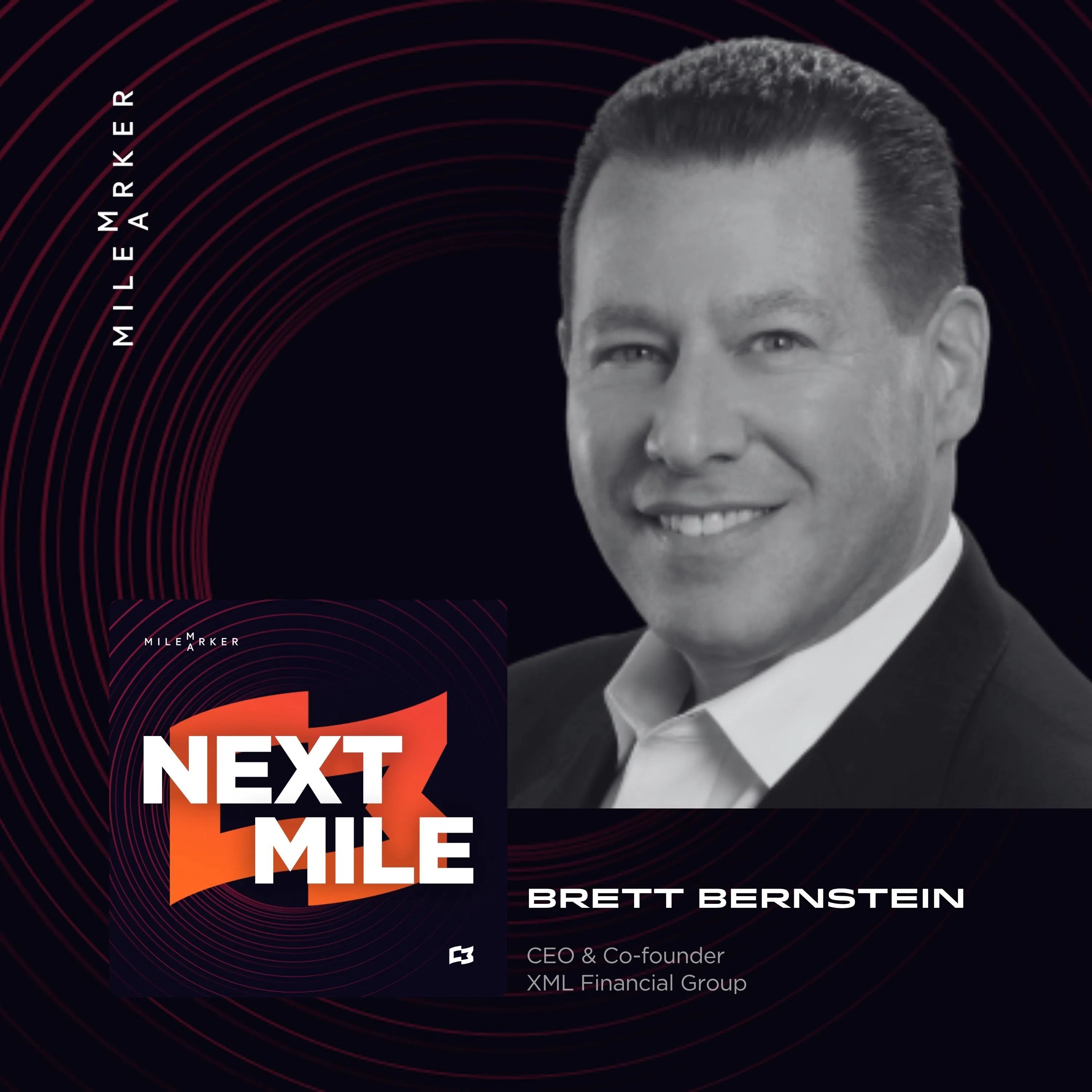
    How to Build a Thriving Independent Wealth Management Firm with Brett Bernstein

    Episode 153: This week, Kyle Van Pelt talks with Brett Bernstein, CEO & Co-founder at XML Financial Group. Brett is an active financial advisor assisting clients with his holistic approach to goal-setting and problem-solving. Before co-founding XML in 2004, he was a Vice President and Senior Financial Advisor at Merrill Lynch. He is also a serial entrepreneur, actively investing in many startups, and has led his firm through three acquisitions. Brett talks with Kyle about why advisors are going independent. He discusses why independence continues to attract both advisors and clients, what it takes to build trust and brand recognition as an independent advisory firm, and how firms can balance scale with personalization. Brett also addresses the realities of scaling a modern advisory firm, including aligning operations across multiple teams, attracting the next generation of investors, investing in cybersecurity, and thoughtfully adopting AI without compromising compliance. In this episode: (00:00) - Intro (02:03) - Brett's money moment (05:34) - How to build brand credibility and trust as an independent firm (07:52) - How Brett defines independence (11:36) - Unifying operations and compliance while preserving advisor autonomy (13:15) - XML's social media and content strategy (18:15) - Referrals, seminars, and community-driven growth strategies (20:04) - How to build a successful business from the ground up (22:08) - Cybersecurity as a non-negotiable investment (25:02) - How XML adapts to technology and AI (27:17) - Leading with compliance: XML's approach to using AI (29:16) - What Brett thinks about data and AI (31:24) - What the future holds for XML Financial Group (33:53) - Brett's Milemarker Minute Key Takeaways Don't chase growth. Build for it. Sustainable growth starts from the ground up. Focus on your real costs, your people, and your clients’ needs first. Then let those realities define your growth targets. Reach the next generation before you need to. If your client base is aging, the clock is ticking. The children and grandchildren of your current clients are the next relationship to build. Connect and meet them where they're at. Invest in expertise where it matters most. Cybersecurity, compliance, and technology aren't DIY functions. The cost of not investing is far greater than the cost of doing it right. Technology is a multiplier, not a replacement. AI and automation should enhance your ability to serve clients, not replace human relationships. Human connection, trust, and community engagement will always be core to advisory businesses, no matter how advanced technology becomes. Quotes "More money has been going to independent platforms. More people are starting their own firms. They're realizing that independence is a lot of times better for the client." ~ Brett Bernstein "I want the people to continue doing what made them great and what the clients love." ~ Brett Bernstein "AI needs to be your partner. Don't look at it as a replacement. And if you can lean into it as your partner, you're going to be better as a firm and better for your client." ~ Brett Bernstein Links Brett Bernstein on LinkedIn XML Financial Group Merrill Lynch So What Else Focus Financial Partners Connect with our hosts Milemarker.co Kyle on LinkedIn Jud on LinkedIn Subscribe and stay in touch Apple Podcasts Spotify YouTube Produce game-changing content with Turncast Turncast helps your company grow by producing top-quality content and fostering transformative conversations. We specialize in content generation, podcasting, digital strategy, and audience growth for fintech and financial services companies. Learn more at Turncast.com.
  • July 7 · 21 min

    The Human Side of Scaling Great Advisory Firms

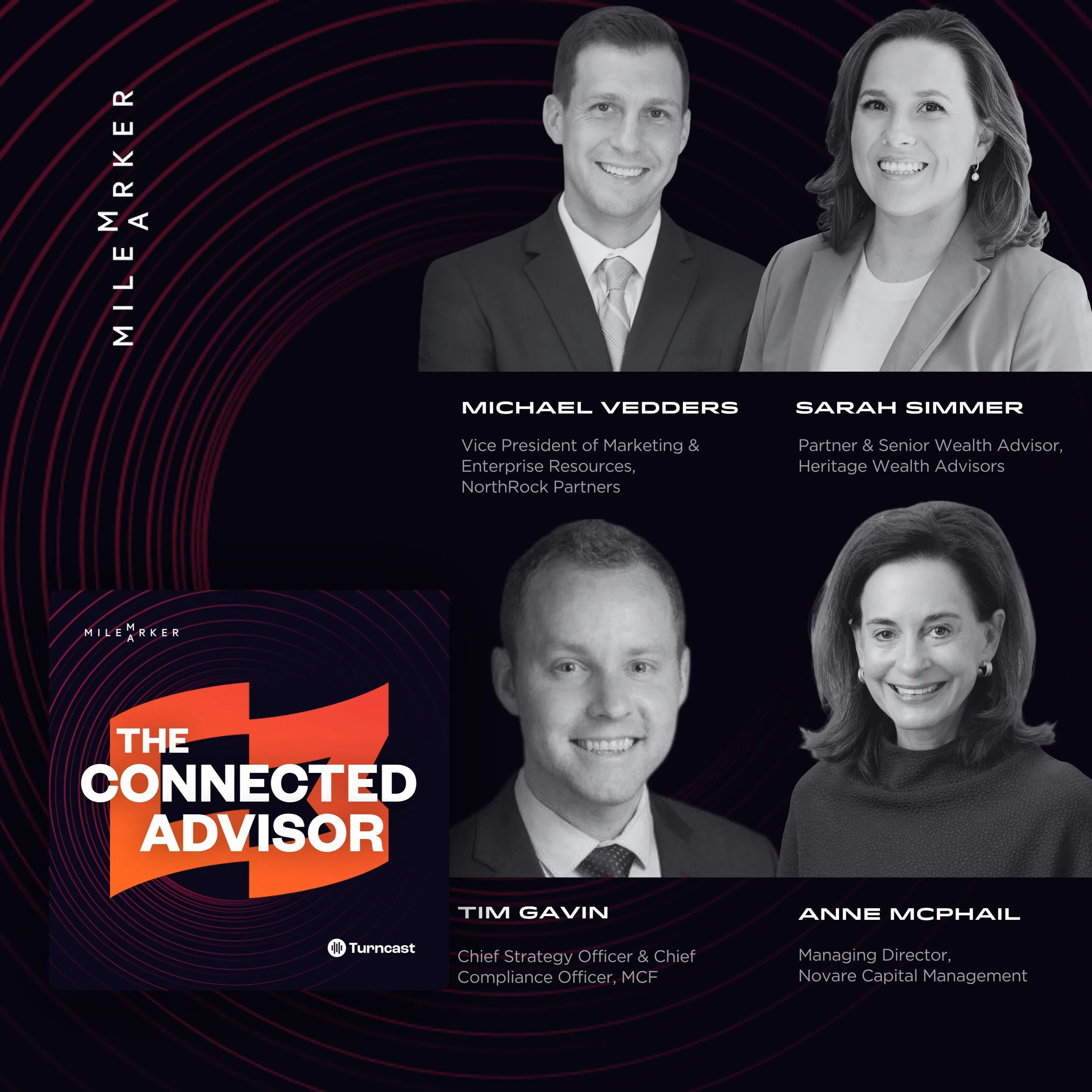
    Episode 152: In this special compilation episode, Kyle Van Pelt and Jessica Perez revisit four conversations centered on one of the biggest challenges facing advisory firms today: scaling while maintaining exceptional client service. Anne McPhail shares why intentional leadership and culture create lasting organizations. Michael Vedders explains how thoughtful planning and advisor development lead to stronger firms. Tim Gavin explores the operational mindset required to build sustainable growth. And Sarah Simmer reveals how world-class client experience can be delivered consistently, even as firms expand. Together, these conversations highlight that sustainable growth isn’t driven by technology alone—it’s built on people, process, and purpose. In this episode: (00:00) – Intro (00:51) – Anne McPhail on building a culture that scales with the firm (04:33) – Michael Vedders on developing advisors for long-term growth (07:22) – Tim Gavin on creating operational excellence that supports scale (10:34) – Sarah Simmer on delivering white-glove client experiences at scale Links Anne McPhail on LinkedIn Novare Capital Management Michael Vedders on LinkedIn NorthRock Partners Tim Gavin on LinkedIn MCF Advisors Sarah Simmer on LinkedIn Heritage Wealth Advisors Connect with our hosts Milemarker.co Kyle on LinkedIn Jud on LinkedIn Jessica on LinkedIn Subscribe and stay in touch Apple Podcasts Spotify YouTube Produce game-changing content with Turncast Turncast helps your company grow by producing top-quality content and fostering transformative conversations. We specialize in content generation, podcasting, digital strategy, and audience growth for fintech and financial services companies. Learn more at Turncast.com.
  • June 30 · 41 min

    How Independent Advisors Can Thrive in A World of Mega Firms with Eric Amar

    Episode 151: This week, Kyle Van Pelt talks with Eric Amar, Founder & CEO of Accelerated Wealth Partners, about the shifting dynamics between massive corporate firms and independent boutique RIAs. He discusses the balance between scale and personalization, the rise of mega RIAs, and the trade-offs advisors face when choosing independence. From his front-row seat at Focus Financial Partners during its explosive growth to launching his own firm, Eric shares his unfiltered perspective on what's really driving industry consolidation, why EQ beats IQ in this business, and where the real opportunity lies for entrepreneurial advisors. In this episode: (00:00) - Intro (01:00) - Eric's money moment (04:44) - The EQ vs. IQ debate: Why emotional intelligence matters (06:45) - Why Eric founded Accelerated Wealth Partners (12:25) - The client's dilemma: Choosing between independent RIAs vs. big brands (16:23) - Are RIAs becoming the new wirehouses? (23:09) - The "breakaway of the breakaways" trend: Why advisors are leaving (26:49) - What sets Accelerated Wealth Partners apart from other firms (33:24) - Eric's outlook on the future of the wealth management industry (38:20) - Eric's Milemarker Minute Key Takeaways Don't underestimate the power of EQ in business. Technical expertise might get you in the room, but emotional intelligence is what builds trust, influences decisions, and drives long-term success. People don't choose advisors based on credentials. They choose based on trust. Even with access to top-tier platforms and resources, clients often make decisions based on personal connection and confidence in the advisor. Technology is leveling the playing field. Smaller independents today can access capabilities that once required the resources of a major institution. The infrastructure gap is closing fast, and the firms that move quickly will compete at a level that wasn't possible before. Know what you're building before you build it. Growth requires intentional design. At every stage, leaders must decide what they're building, who they serve, and how they want to operate. Quotes "Advisors have to understand their clients' motivations and really get them to agree and to get on board with the program. You can give the best advice. But if they don't listen to you, it doesn't matter." ~ Eric Amar "RIAs never won on size. They never won by being bigger, by having more resources. They won by saying, 'I'm like you, I'm here, I'm in your community, I'm in your industry, or I know how you think.'" ~ Eric Amar "The beauty of the independent space for smaller firms right now is that the technology is going to get them there much faster. The ability to leverage these tools gives you a lot more resources today as a smaller independent than you ever had before." ~ Eric Amar Links Eric Amar on LinkedIn Accelerated Wealth Partners Focus Financial Partners Morgan Stanley Future Proof Joshua Brown Connect with our hosts Milemarker.co Kyle on LinkedIn Jud on LinkedIn Subscribe and stay in touch Apple Podcasts Spotify YouTube Produce game-changing content with Turncast Turncast helps your company grow by producing top-quality content and fostering transformative conversations. We specialize in content generation, podcasting, digital strategy, and audience growth for fintech and financial services companies. Learn more at Turncast.com.
  • June 23 · 29 min

    From Big Firms to RIA Success: Lessons in Leadership, Operations, & Growth with Kathy Longo

    Episode 150: This week, Kyle Van Pelt talks with Kathy Longo, President & Founder at Flourish Wealth Management. Kathy has a remarkable talent for distilling complex financial concepts into simple, easily digestible concepts. She built Flourish Wealth Management out of a passion for making financial management more enjoyable. Kathy talks with Kyle about how building a strong operational foundation early paves the way for sustainable growth. She shares how her early experiences at large firms shaped her approach to leadership, operations, and long-term growth. From implementing enterprise-level systems as a solo founder to navigating the tension between visionary thinking and operational execution, Kathy offers an inside look at building a firm from the ground up, leadership growth, and team development. In this episode: (00:00) - Intro (02:09) - Kathy's money moment and career journey (05:34) - Key operational lessons Kathy learned from big firms (07:36) - Bringing generational planning and philanthropy into client relationships (10:55) - Managing the natural tension between the visionary and integrator seats (15:37) - Flourish's hiring matrix (18:36) - Flourish's growth strategy (20:18) - How Kathy uses technology and AI to improve client experience (22:39) - Kathy's outlook on the future of the financial services industry (26:16) - Kathy's Milemarker Minute Key Takeaways Build the foundation before you need it. Don't wait for revenue or asset milestones to establish mature processes. Implementing robust operating systems, strategic planning, and clear cultural guidelines in the early years lays the foundation for seamless scaling in the future. Decouple the visionary and integrator roles. As a founder, it's easy to get trapped trying to be both the big-idea generator and the daily executor. Founders must learn to balance big ideas with the reality of getting things done, whether that means stepping into operational roles or empowering others to do so. Protect team culture with rigorous hiring frameworks. Emotional interviewing leads to bad hires. Utilizing objective, multi-layered personality and behavioral assessments helps ensure that candidates fit the team's technical and behavioral needs. Let technology automate, let humans connect. AI cannot replace the true value of a leader or advisor. The ultimate goal of integrating advanced tech and AI should be to eliminate administrative friction, allowing professionals to focus 100% of their energy on emotional intelligence and deep human connection. Quotes "Coming from big firms, I knew that the earlier you create systems and processes and think about how to run a business, will give you that foundation to really run it like a well-established firm." ~ Kathy Longo "Let the technology take away all of the parts that don't really need as much thinking, and really get the advisors to be so attuned to the emotional conversation." ~ Kathy Longo "I would love to see us spend all our time developing our planner skills and being present for those clients. Because the piece I don't think will ever get replaced is human interaction with our clients and the value we add—to hold space for them through all of life's ups and downs and transitions." ~ Kathy Longo Links Kathy Longo on LinkedIn Flourish Wealth Management Deloitte Future Proof The Prophet Connect with our hosts Milemarker.co Kyle on LinkedIn Jud on LinkedIn Subscribe and stay in touch Apple Podcasts Spotify YouTube Produce game-changing content with Turncast Turncast helps your company grow by producing top-quality content and fostering transformative conversations. We specialize in content generation, podcasting, digital strategy, and audience growth for fintech and financial services companies. Learn more at Turncast.com.

  • June 16 · 38 min

    How Content Drives Growth, Trust, and Client Acquisition with Ben Carlson

    Episode 149: This week, Kyle Van Pelt talks with Ben Carlson, Director of Institutional Asset Management at Ritholtz Wealth Management. Ben is the author of five books on investing, including his newest, Risk and Reward. He's the creator of the blog A Wealth of Common Sense and co-host of the Animal Spirits podcast. Ben talks with Kyle about how content has become a powerful engine for growth, clarity, credibility, and connection. He discusses the value of consistency, how to structure content for different generations, and why showing up to solve client problems before they even arise builds an enduring business. Ben also talks about why in-person connection still matters in a digital-first world and how AI is changing the advisor-client dynamic. In this episode: (00:00) - Intro (01:07) - Ben's money moment (03:45) - How content became a growth engine for institutional business (05:19) - Inside Ben’s content creation process (07:13) - Why Ben started blogging (09:13) - Why blogging became Ben’s medium of choice (10:15) - Why podcasts create a stronger audience connection (12:06) - How Ritholtz approaches content strategy (17:03) - How Ben came up with the idea for his book (24:10) - Future Proof: Building a conference that almost never happened (27:08) - Why in-person experiences matter more than ever (31:11) - Ben's outlook on the future of wealth management (35:12) - Ben's Milemarker Minute Key Takeaways Create before you're ready and keep going longer than feels comfortable. Most content starts in silence. The early phase, where no one is watching, is actually an advantage. It lets you refine your voice without pressure. Consistency compounds, even when feedback doesn't. Make complexity understandable, not simplified. Clients don't need jargon. They need clarity. The ability to explain complex ideas in plain language is a competitive advantage, especially in industries built on trust. You can't predict what will resonate. So, publish anyway. The best strategy isn't perfection. It's volume, variety, and consistency. Play the long game with audience building. People don't convert overnight. They show up after years of listening, reading, and observing, often triggered by a life event. Content builds familiarity long before action. Quotes "Whatever format you use for content, make sure it's something that you enjoy first and do it for yourself first and foremost before thinking about trying to build an audience or build a brand." ~ Ben Carlson "You never really know what piece of content is going to resonate with someone. You never really know what will work and what will not. And that's why I think casting such a wide net is helpful." ~ Ben Carlson "No piece of technology is ever going to help people get more comfortable with the 'Am I going to be okay' question. That's what everyone wants to know when they get advice." ~ Ben Carlson Links Ben Carlson on LinkedIn Ritholtz Wealth Management Risk and Reward Michael Batnick Joshua Brown Barry Ritholtz Matt Middleton Future Proof Band of Brothers Connect with our hosts Milemarker.co Kyle on LinkedIn Jud on LinkedIn Subscribe and stay in touch Apple Podcasts Spotify YouTube Produce game-changing content with Turncast Turncast helps your company grow by producing top-quality content and fostering transformative conversations. We specialize in content generation, podcasting, digital strategy, and audience growth for fintech and financial services companies. Learn more at Turncast.com.

  • June 9 · 35 min

    How to Build a Scalable Firm Without Tech Overload with Dan Johnson

    Episode 148: This week, Kyle Van Pelt talks with Dan Johnson, Senior Managing Director and Head of Wealth Management Practice at F2 Strategy. Dan is an industry leader in portfolio management systems implementation, investment performance conversions, centralized portfolio management, and integrations with advisor-driven toolsets. Dan talks with Kyle about scaling the wealth and asset management business without technology overload. From the pitfalls of shiny object syndrome in tech to the discipline required to scale, Dan discusses the real role of technology, not as a collection of tools, but as a strategic amplifier of a firm's value proposition. He also shares the powerful shift in the industry from "next best actions" to "next best experiences," where advisors use technology and data not just to optimize operations but to create meaningful, human-centered client relationships. In this episode: (00:00) - Intro (01:13) - Dan's money moment (03:56) - Are RIAs just reinventing wirehouses? (06:06) - The challenges of becoming the accidental CEO and CTO (10:22) - Scaling through discipline and reducing tech bloat (14:18) - How to evaluate technology effectively (19:40) - How AI is driving change in wealth management today (27:52) - Why data strategy is the foundation of AI (31:38) - Dan's outlook about the future of the financial services industry (32:31) - Dan's Milemarker Minute Key Takeaways Stop trying to be great at everything. The best firms intentionally choose two to three areas where they'll be exceptional and accept being average everywhere else. Focus creates differentiation. The firms that scale well identify their true differentiators and build their tech stack around those. "Interesting" doesn't build your business—"useful" does. It's easy to get caught in the hype of AI and emerging tech. But if it doesn't improve efficiency, increase margin, or drive revenue, it's just noise. There's a difference between being curious about AI and actually deploying it in a way that moves the needle. The next frontier isn't efficiency, it's experience. AI is already proving its worth in the back office. The real opportunity now is using that freed-up capacity to create genuinely memorable client experiences. Think less "next best action" and more "next best experience." Data is no longer optional. It's the foundation. AI is only as powerful as the data behind it. Firms that own, structure, and govern their data effectively will be the ones that actually unlock value from AI. Quotes "Technology is meant to amplify your value proposition to your client." ~ Dan Johnson "You can't be exceptional at everything. Pick two or three areas where you're going to hang your hat, and they're going to be unique components when it comes to technology." ~ Dan Johnson "If you don't invest, take it seriously, and put together proper data structures, you're never going to get the AI." ~ Dan Johnson Links Dan Johnson on LinkedIn F2 Strategy Joshua Brown Doug Fritz Dennis Moseley-Williams Unreasonable Hospitality Connect with our hosts Milemarker.co Kyle on LinkedIn Jud on LinkedIn Subscribe and stay in touch Apple Podcasts Spotify YouTube Produce game-changing content with Turncast Turncast helps your company grow by producing top-quality content and fostering transformative conversations. We specialize in content generation, podcasting, digital strategy, and audience growth for fintech and financial services companies. Learn more at Turncast.com.

  • June 2 · 46 min

    The Hidden Economics Behind High-Growth Advisory Firms with Patrick Kelly

    Episode 147: This week, Kyle Van Pelt talks with Patrick Kelly, Co-Founder and CEO of Signal Advisors. Patrick started his career as a financial advisor at Northwestern Mutual before becoming an independent advisor. Before Signal, Patrick founded RepPro, the first electronic application platform for fixed and fixed index annuities in the IMO business. Patrick talks with Kyle about the hidden economics behind high-growth advisory firms. He discusses why some of the fastest-growing advisors integrate insurance, annuities, and investment management into a cohesive strategy, and how pairing this with recurring revenue can unlock both growth and enterprise value. Patrick also explores how technology simplifies operations, improves visibility into marketing performance, and ultimately helps advisors make better business decisions and enhance client experiences. In this episode: (00:00) - Intro (02:02) - Patrick's money moment (05:06) - Where Signal Advisors fits in the modern advisor ecosystem (07:11) - Why insurance technology still lags behind wealthtech (10:52) - The hidden limitations of basic data feeds (15:12) - Rethinking the commission vs. fee-based debate (17:10) - The evolution of fee-based annuities and advisor adoption (19:47) - The real engine behind advisor growth and enterprise value (21:07) - How Signal Advisors survived its early cash flow challenges (28:25) - Building a tech stack around advisor economics and visibility (34:01) - Why advisors work with so many carriers (36:14) - Patrick’s vision for the future of Signal Advisors (40:35) - Why AI should improve experience before efficiency (43:37) - Patrick's Milemarker Minute Key Takeaways Great advisors solve for human outcomes, not just portfolio performance. Clients are often seeking confidence, stability, income, or peace of mind—not simply maximum returns. The firms growing fastest understand how to align financial solutions with real human concerns. The divide between insurance and investments is disappearing. High-growth advisory firms increasingly integrate annuities, insurance, and investment management into a single client strategy instead of treating them as competing business lines. Enterprise value comes from scalable growth, not just recurring revenue. Predictable revenue matters, but the firms commanding premium valuations are the ones pairing recurring income with strong acquisition systems, marketing visibility, and operational leverage AI’s biggest opportunity is improving the client experience. Efficiency matters, but the real long-term advantage comes from creating smoother, faster, and more personalized experiences for both advisors and clients. Efficiency is simply the downstream effect. Quotes "In a world where you don't differentiate on products, where you really differentiate is on your financial planning prowess and how you actually help individuals solve problems in their lives." ~ Patrick Kelly "If you're taking commissions, you're reducing the enterprise value of your business because people who buy businesses want recurring revenue." ~ Patrick Kelly "You shouldn't use AI to create efficiency. You should use AI to create a better user experience. Efficiency is a second-order effect of AI." ~ Patrick Kelly Links Patrick Kelly on LinkedIn Signal Advisors Northwestern Mutual American Equity DTCC Michael Kitces Empire of the Summer Moon Connect with our hosts Milemarker.co Kyle on LinkedIn Jud on LinkedIn Subscribe and stay in touch Apple Podcasts Spotify YouTube Produce game-changing content with Turncast Turncast helps your company grow by producing top-quality content and fostering transformative conversations. We specialize in content generation, podcasting, digital strategy, and audience growth for fintech and financial services companies. Learn more at Turncast.com.
  • May 26 · 35 min

    How Modern RIAs Can Scale Fast with Vib Arya and Sean Meighan

    Episode 146: This week, Kyle Van Pelt talks with Vib Arya and Sean Meighan of Envestnet. As Head of Strategic Relationship Management, Vib is a seasoned wealth and investment management leader with more than 25 years of experience driving innovation and efficiency across RIA, institutional, wirehouse, and fintech channels. As Head of RIA Distribution, Sean has spent his career helping advisory firms navigate growth, technology adoption, and operational strategy within the evolving RIA landscape. Vib and Sean talk with Kyle about how modern RIAs can scale fast. They explore how technology has evolved from a support function into a true growth multiplier, powering efficiency, enabling personalization at scale, and helping firms navigate complexity. They also discuss the ongoing battle against tech sprawl and how Unified Managed Accounts (UMAs) act less like a product and more like an automated trading chassis capable of handling everything from high-net-worth personalization to account efficiency. In this episode: (00:00) - Intro (01:11) - How technology fits into the RIA growth equation (02:34) - Designing the ideal advisor workflow (04:00) - What shaped Sean’s and Vib’s technology philosophy (08:49) - Diagnosing tech stacks and aligning them with firm strategy (13:00) - The hidden cost of tech sprawl (18:01) - How UMAs are evolving for modern RIAs (24:29) - Separating AI hype from practical application in wealth management (31:49) - Vib’s and Sean's Milemarker Minute Key Takeaways The best tech decisions begin with a clear vision of the client and advisor experience. Workflow clarity should dictate your tech stack, not the other way around. Don't let tech sprawl slow you down. Chasing best-in-class tools can create fragmented systems that are hard to manage. At some point, simplicity and integration become a competitive advantage. UMAs are evolving into a flexible growth engine. What used to be a high-net-worth solution is now becoming a scalable infrastructure for firms of all sizes, handling everything from simple ETF models to complex multi-manager portfolios. Ground AI in workflow and data basics. With AI moving at a rapid pace, firms seeing the most meaningful AI opportunities are the ones that already have clean data, intentional systems, and clearly defined processes. Quotes "RIA growth is going to be driven by scale, consistency, and risk control. But you can't do that without technology." ~ Sean Meighan "The UMA is a tech chassis that can solve a myriad of problems an RIA faces today." ~ Sean Meighan "There's an opportunity for Envestnet to provide RIAs and advisors with as much complexity, personalization, and sophistication as they would like, and as simple a form as possible, with one account having multiple strategies and multiple sleeves." ~ Vib Arya "As client demands become more sophisticated and complex, the UMA is a perfect ecosystem to provide all of that, and we're proud to offer it." ~ Vib Arya Links Vibhaw Arya on LinkedIn Sean Meighan on LinkedIn Envestnet Shufro Rose Tamarac | Envestnet Good to Great The Game Connect with our hosts Milemarker.co Kyle on LinkedIn Jud on LinkedIn Subscribe and stay in touch Apple Podcasts Spotify YouTube The information, analysis and opinions expressed herein are for informational purposes only and do not necessarily reflect the views of Envestnet. These views reflect the judgement of the author as of the date of writing and are subject to change at any time without notice. Nothing contained in this piece is intended to constitute legal, tax, accounting, securities, or investment advice, nor an opinion regarding the appropriateness of any investment, nor a solicitation of any type. Intended for investment professionals only. Past performance is not indicative of future results.

  • May 19 · 34 min

    The Hidden Infrastructure Powering Modern Advisory Firms with Aaron Wormus

    Episode 145: This week, Kyle Van Pelt talks with Aaron Wormus, Chief Technology Officer at SMArtX Advisory Solutions. Aaron has spent years building technology infrastructure for the financial services industry, from hedge fund platforms to enterprise-grade advisory systems. At SMArtX, he focuses on solving the operational and data challenges that prevent advisory firms from scaling efficiently while helping advisors access institutional-quality tools once reserved for large enterprises. Kyle and Aaron explore the growing shift from fragmented advisory technology toward unified enterprise infrastructure. Aaron breaks down how UMA architecture changes the advisor experience, why portfolio accounting engines power real-time innovation, and how firms can build modern “advisor-built enterprise platforms” using best-of-breed technology. They also discuss AI, data orchestration, operational toil, and why the firms most open to technology and experimentation will have a major advantage in the years ahead. In this episode: (00:00) - Intro (01:13) - Aaron’s money moment and the early days of SMArtX (03:15) - Is SMArtX a TAMP, a fintech platform, or something else entirely? (04:37) - What actually makes technology “enterprise-grade” (06:24) - Why UMA architecture changes everything (09:26) - The hidden infrastructure powering modern advisory platforms (12:20) - The rise of the advisor-built enterprise platform (15:15) - Why portfolio accounting engines matter so much (19:05) - How SMArtX and Milemarker fit together (21:00) - Why the entire industry is moving toward unified infrastructure (22:24) - AI, orchestration layers, and the future of connected systems (25:51) - Turning hand-drawn ideas into live AI-powered workflows (27:31) - AI guardrails, security, and enterprise data protection (28:34) - Aaron’s predictions for the next three years of wealth tech (30:27) - Eliminating “toil” inside advisory firms (32:13) - Aaron’s Milemarker Minute Key Takeaways The next generation of advisory firms will behave more like technology companies. Advisors increasingly want flexible infrastructure that lets them combine best-of-breed tools into a unified client experience instead of operating inside rigid “walled garden” ecosystems. Real-time experiences depend on invisible infrastructure. Portfolio accounting, reconciliation, trading order sequencing, and data normalization may not sound exciting, but they are the foundational systems that make modern advisory experiences possible. AI’s biggest impact may be removing operational friction rather than replacing advisors. Aaron repeatedly returns to the idea of eliminating “toil”—the repetitive operational work that slows firms down and distracts advisors from relationships and growth. Clean, secure, accessible data is becoming the real competitive advantage. AI tools are only as useful as the infrastructure and guardrails surrounding them. Firms with reconciled data and strong architecture will be positioned to move significantly faster than firms still trapped in disconnected systems. Quotes "We're in a new space where the people who are open to technology, open to building, really are the ones who win." ~ Aaron Wormus "Most advisors want to become advisors so they can help people. They want to go out and solve problems. They don't want to spend all their time rebalancing stuff or using spreadsheets." ~ Aaron Wormus "Being able to have that reconciled data, being able to know that the data is good, being able to provide that data into different systems, that's really where that key component is." ~ Aaron Wormus Links Aaron Wormus on LinkedIn SMArtX Advisory Solutions Fidelity Investments Charles Schwab Goldman Sachs Claude Red Notice Connect with our hosts Milemarker.co Kyle on LinkedIn Jud on LinkedIn Subscribe and stay in touch Apple Podcasts Spotify YouTube Produce game-changing content with Turncast Turncast helps your company grow by producing top-quality content and fostering transformative conversations. We specialize in content generation, podcasting, digital strategy, and audience growth for fintech and financial services companies. Learn more at Turncast.com.

  • May 12 · 33 min

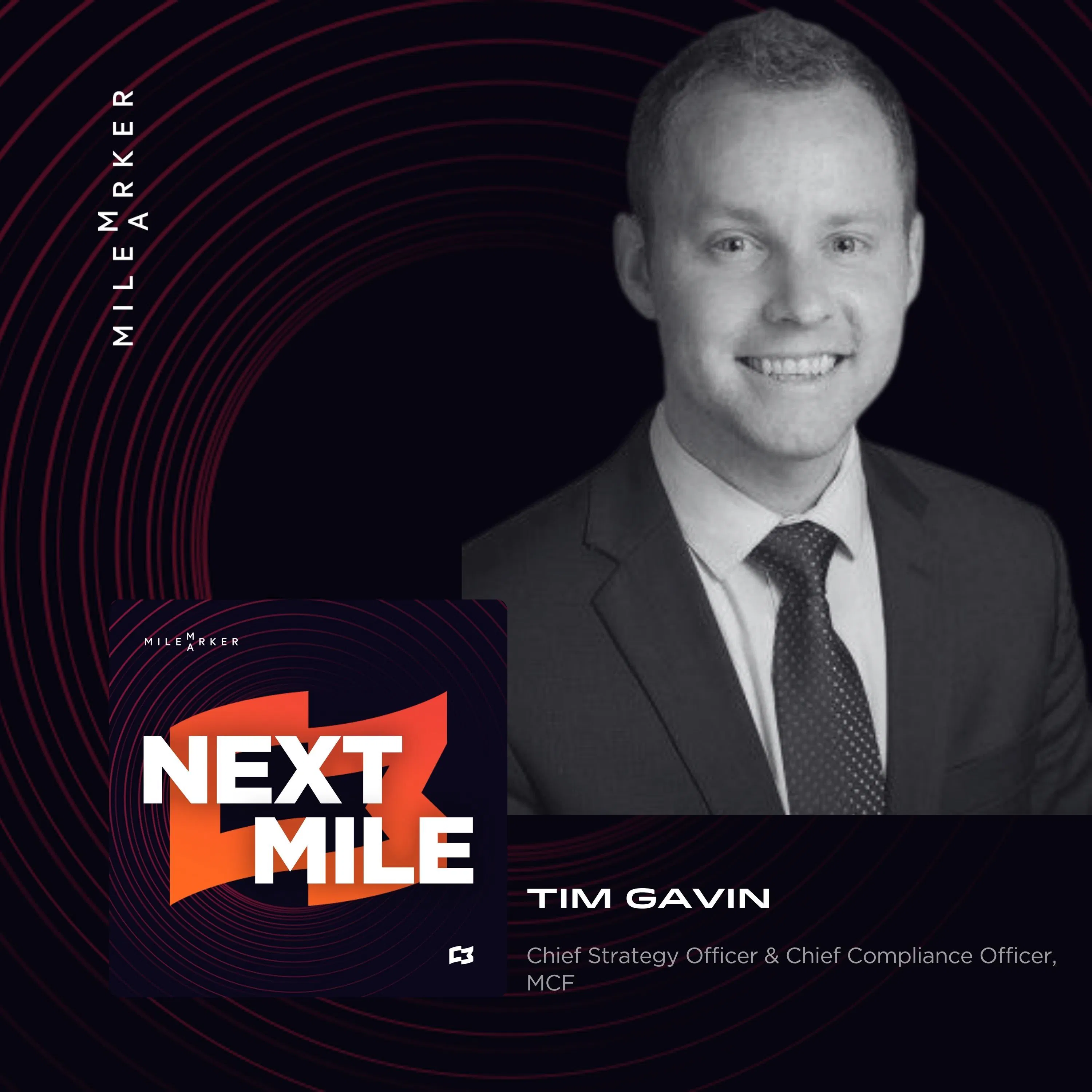
    The Difference Between Growing Fast and Growing Well with Tim Gavin

    Episode 144: This week, Kyle Van Pelt talks with Tim Gavin, Chief Strategy Officer & Chief Compliance Officer at MCF. Tim helps lead the firm’s long-term strategic direction across operations, compliance, advisor support, technology, and growth initiatives. Kyle and Tim discuss what sustainable growth actually looks like inside a modern advisory firm. Tim explains why organic growth creates stronger long-term enterprise value, how firms should think about operational capacity before scaling, and why successful change management starts with team buy-in—not software purchases. They also explore AI adoption, technology fatigue, client experience design, and the growing divide between firms that strategically invest in technology and firms that fall behind. In this episode: (00:00) - Intro (01:26) - Tim’s money moment (02:51) - Why compliance can become a strategic advantage (03:56) - MCF’s acquisition of Wealth Planning Corporation (05:37) - Defining intentional growth (07:31) - Measuring operational efficiency and capacity (09:53) - Organic growth vs. inorganic growth (12:41) - The hidden operational risks of scaling too quickly (14:41) - Why change management is harder than buying technology (17:30) - Building a tech stack that actually supports growth (21:38) - AI adoption, due diligence, and compliance concerns (23:33) - Responsible AI use and protecting client trust (26:34) - Tim’s outlook on the future of financial services (28:31) - Why client experience is the real product (29:42) - Tim’s Milemarker Minute Key Takeaways Organic growth compounds differently than acquisition growth. Firms that build referral systems, operational consistency, and advisor enablement create more durable enterprise value over time. Scaling exposes operational weaknesses. Growth only works when firms proactively manage advisor capacity, workflows, onboarding systems, and internal communication. Technology should reinforce strategy—not dictate it. Tim emphasizes evaluating tools through the lens of client impact, operational fit, and long-term scalability rather than reacting to hype cycles. Great client experience extends beyond meetings. The real question is how clients feel between interactions—whether they trust the plan, understand what’s happening, and feel connected to the firm even when they’re not actively engaging. Quotes "We don't want to grow just to grow. It's about how many clients we can impact and provide real value to them." ~ Tim Gavin "Everybody wants to talk about acquiring a firm. But at the end of the day, to really say you have scale, it means having systems in place that can generate organic growth." ~ Tim Gavin "You have to revisit your processes very frequently because technology changes constantly." ~ Tim Gavin Links Tim Gavin on LinkedIn MCF Advisors Salesforce Power BI Think and Grow Rich Connect with our hosts Milemarker.co Kyle on LinkedIn Jud on LinkedIn Subscribe and stay in touch Apple Podcasts Spotify YouTube Produce game-changing content with Turncast Turncast helps your company grow by producing top-quality content and fostering transformative conversations. We specialize in content generation, podcasting, digital strategy, and audience growth for fintech and financial services companies. Learn more at Turncast.com.

  • May 5 · 45 min

    Growth, Alignment, and the Future of Advisor-Led Wealth Firms with Scott Schwartz

    Episode 143: This week, Kyle Van Pelt talks with Scott Schwartz. Scott is one of the Managing Partners and a Wealth Management Advisor at OnePoint BFG Wealth Partners. With more than 40 years of experience in helping clients achieve their financial planning goals, Scott has created tailored financial plans that empower clients to make informed decisions. Scott talks with Kyle about what it takes to build a modern, scalable wealth management firm. He shares how his team thinks about growth, why alignment and shared equity matter more than titles, and what it looks like to create a firm designed for long-term impact rather than short-term recognition. Scott also explores the realities of scaling firms to a national level and the role of technology and AI as powerful force multipliers for efficiency and better client experience, not as replacements for advisors. In this episode: (00:00) - Intro (02:21) - Scott's money moment (07:59) - The history and evolution of the Bleakley Financial Group (10:40) - Rebranding Bleakley Financial Group to OnePoint BFG Wealth Partners (13:37) - The turning point at which Scott began building a scalable firm (18:19) - Transitioning from a 1099 model to a W-2 firm (24:57) - OnePoint's growth goals and expansion strategies (30:55) - What it takes to become a national firm (33:42) - The role of technology in OnePoint's growth (38:25) - Scott's outlook on the future of the financial services industry (41:39) - Scott's Milemarker Minute Key Takeaways Never underestimate the power of relationships. At the end of the day, trust and consistency drive long-term success more than any strategy or product ever will. Don't just build income, build infrastructure. Scaling a business requires moving beyond individual production. Invest in systems, people, and processes that support growth. Build with legacy in mind. Short-term wins matter, but the real impact comes from building something sustainable and meaningful over time. AI is an efficiency engine, not a relationship substitute. It can streamline processes and reduce operational burden, but it can't replace trust, empathy, or meaningful conversations. Quotes "We want to grow your business much faster than you could on your own." ~ Scott Schwartz "My clients work with me because they feel trust and they feel comfort. They know they don't have to follow what's going on every day. They just know that they trust me and they know that we're going to do our level best to make sure they have the outcome they want." ~ Scott Schwartz "We're here to take the anxiety out of money for our clients. Our clients are busy, good people. They don't want to worry about money." ~ Scott Schwartz Links Scott Schwartz on LinkedIn OnePoint BFG Wealth Partners Northwestern Mutual Joe Duran Rise Growth Partners Kyle Wesley Practifi The Psychology of Money Connect with our hosts Milemarker.co Kyle on LinkedIn Jud on LinkedIn Subscribe and stay in touch Apple Podcasts Spotify YouTube Produce game-changing content with Turncast Turncast helps your company grow by producing top-quality content and fostering transformative conversations. We specialize in content generation, podcasting, digital strategy, and audience growth for fintech and financial services companies. Learn more at Turncast.com.
  • April 28 · 1 hr

    From Scale to Impact: Purpose-Driven Growth in Wealth Management with Nate Angelo

    Episode 142: This week, Kyle Van Pelt talks with Nate Angelo, CEO of Composition Wealth. Nate brings a diverse background spanning institutional investing and advisory leadership, with a focus on building firms that balance growth, culture, and client experience. His career reflects a commitment to thoughtful leadership and long-term value creation in the RIA space. Nate talks with Kyle about how to grow with purpose in today's wealth management landscape. He shares how leaders can build purpose-driven careers, lead with conviction and humility, and navigate transformational change without losing cultural integrity. Nate also discusses how data, AI, and integrated technology can enhance client experience while reinforcing that real success still comes down to human connection, trust, and empathy. In this episode: (00:00) - Intro (01:36) - Nate's money moment (04:38) - Nate's early career development at Russell Investments (07:44) - Why personal context should come before financial strategy (09:53) - Nate's transition from institutional investing to advising (13:05) - Foundational leadership skills: mindset, mentors, and risk (19:40) - Building a brand with meaning and resonance (24:27) - Defining growth beyond traditional metrics (30:33) - Maintaining consistency in inorganic growth (35:19) - How accountability and rigor shape better acquisition decisions (38:37) - Differentiating through technology and client experience (43:32) - Integrating tax services for seamless advice (47:46) - The move toward holistic client relationships (51:19) - Using frameworks to manage uncertainty and client emotions (54:32) - Nate's outlook on the future of wealth management (57:41) - Nate's Milemarker Minute Key Takeaways Growth only matters when it's tied to purpose. Growth for the sake of growth is empty. The real question leaders should ask is: Are we growing in a way that actually improves the lives of the people we serve? Growth becomes meaningful when it's intentional, disciplined, and tied directly to impact. Start with the person, not the spreadsheet. Data and optimization matter, but they should never come first. The most effective decisions result from understanding values, emotions, and behaviors before applying financial frameworks. Holistic advice is no longer optional. Clients today want a single, trusted relationship, not a fragmented network of professionals. Integrating services like tax and estate planning is becoming table stakes. The future is AI-powered, but human-led. AI will handle more of the repetitive, operational work. But empathy, trust, and human understanding will become even more valuable and more differentiating. Quotes "If I can leave a little mark in this space, it's really to help financial advisors never lose sight of the intimate relationship they have with clients and the ability to impact their lives." ~ Nate Angelo "We're in the business of managing human psychology and helping people stay engaged and invested. And there's a real strategic decision in doing nothing with your portfolio and just bringing your emotional level back to a rational state." ~ Nate Angelo "We as humans long to be seen, heard, and known. And technology is going to power the advisor and that relationship and interaction in unique and dynamic ways." ~ Nate Angelo Links Nate Angelo on LinkedIn Composition Wealth Russell Investments RBC Wealth Management Brock Moseley Corsair Capital The Go-Giver Connect with our hosts Milemarker.co Kyle on LinkedIn Jud on LinkedIn Subscribe and stay in touch Apple Podcasts Spotify YouTube Produce game-changing content with Turncast Turncast helps your company grow by producing top-quality content and fostering transformative conversations. We specialize in content generation, podcasting, digital strategy, and audience growth for fintech and financial services companies. Learn more at Turncast.com.

  • April 21 · 32 min

    How Advisors Can Beat the Biggest Retirement Risk with Erik Brenner

    Episode 141: This week, Kyle Van Pelt talks with Erik Brenner, CEO, President, and Founding Partner at Hilltop Wealth and Tax Solutions. With more than 30 years of experience, Erik has assisted thousands of individuals in integrating retirement, tax, and estate strategies. At Hilltop, he blends leadership and client advisory responsibilities, shaping the firm's future vision and strategies while providing personalized financial guidance to select clients. Erik talks with Kyle about what happens when advisory firms stop treating tax and wealth management as separate conversations and start thinking holistically. He discusses the strategic decisions that helped transform Hilltop, including integrating in-house tax services, rethinking the client experience, and doubling down on education-driven growth. Erik also shares how to run great seminars and use technology to keep up with business complexities. In this episode: (00:00) - Intro (01:06) - Erik's money moment (03:30) - Hilltop's one-stop model: Integration of tax and wealth management (07:13) - How Hilltop manages large wealth with tax problems (09:35) - How the SECURE 2.0 Act impacts generational wealth (16:37) - Using seminars as a modern growth engine (20:28) - What makes a 5-star seminar experience (23:39) - Managing tech across multiple business lines (25:29) - Navigating the transition from being an advisor to a CEO (27:33) - Erik's outlook on the future of the financial industry (29:03) - Erik's Milemarker Minute Key Takeaways Don't outsource critical expertise that directly affects client outcomes. If a core part of your value—like tax strategy—is outside your control, alignment becomes difficult. Integrate tax and wealth management to deliver truly holistic advice. When strategy and execution live under one roof, decisions become more coordinated, proactive, and impactful for clients. For many retirees, taxes are their biggest expense. Plan accordingly. Investment returns matter, but unmanaged tax exposure can quietly erode wealth faster than most clients realize. Education builds trust faster than selling ever will. Whether it's seminars or client meetings, people lean in when they feel informed, not when they feel pitched. Teach first, and the business follows. Quotes "For most of our clients who are into retirement, taxes are their number one expense." ~ Erik Brenner "If you don't know the right questions to ask about how laws are changing, even the most powerful AI won't be able to help you." ~ Erik Brenner "Marketing is about getting the ball rolling. You want to get that ball rolling, but you do not want the snowball to melt." ~ Eric Brenner Links Erik Brenner on LinkedIn Hilltop Wealth and Tax Solutions Holistiplan The Personal CFO Revolution Connect with our hosts Milemarker.co Kyle on LinkedIn Jud on LinkedIn Subscribe and stay in touch Apple Podcasts Spotify YouTube Produce game-changing content with Turncast Turncast helps your company grow by producing top-quality content and fostering transformative conversations. We specialize in content generation, podcasting, digital strategy, and audience growth for fintech and financial services companies. Learn more at Turncast.com.

  • April 14 · 36 min

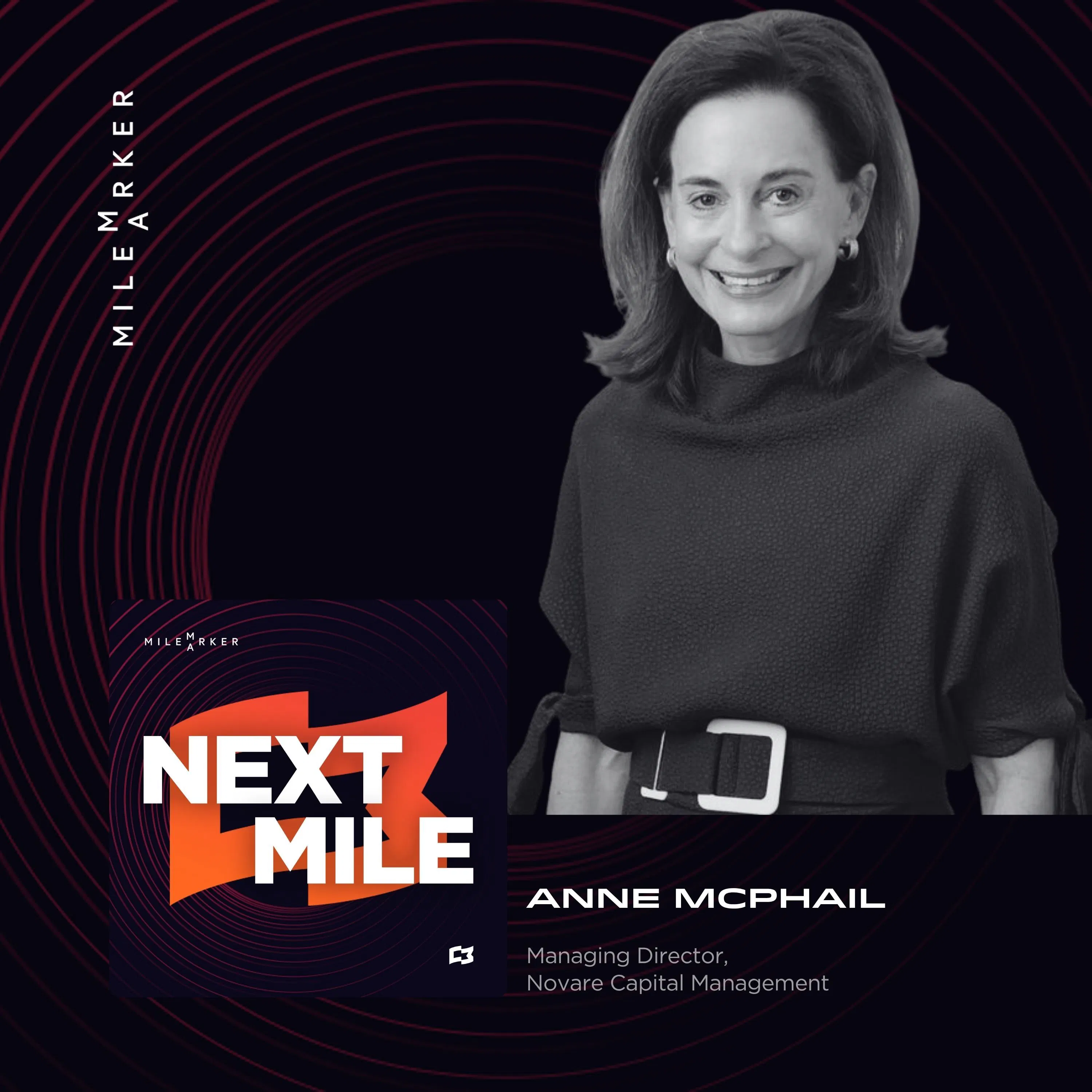
    Serving Clients in Life's Most Difficult Moments with Anne McPhail

    Episode 140: This week, Kyle Van Pelt talks with Anne McPhail, Managing Director at Novare Capital Management. With more than 30 years of experience across corporate banking and wealth management, Anne brings deep experience in wealth management, with a focus on guiding clients through major life transitions and building advisory relationships rooted in trust, empathy, and long-term perspective. Anne talks with Kyle about what it truly means to serve clients through life's most important and often most difficult moments. She shares how genuine empathy and thoughtful financial strategy come together to create meaningful client relationships, how leading advisory firms deliver a consistent, high-touch experience at scale, and how Novare develops the next generation of advisors without compromising trust. In this episode: (00:00) - Intro (01:43) - Anne's money moment (04:18) - Novare's life transition playbook (07:13) - Scaling personalized service across the firm (09:06) - Anne's advice for young wealth professionals (11:19) - Developing the next generation of advisors (18:28) - Staying current in a changing industry (21:17) - Integrating planning into every aspect of clients’ lives (25:00) - Building trust that lasts through life's uncertainties (25:56) - Philanthropy, community, and relationship building (30:37) - Anne's outlook on the future of financial services (33:50) - Anne's Milemarker Minute Key Takeaways Lead with empathy before expertise. When clients face major life transitions—loss, divorce, uncertainty—they don't want spreadsheets. They want reassurance. Great leaders and advisors meet people where they are emotionally before guiding them analytically. Build systems that deliver consistent excellence. Scaling a high-touch experience isn't about doing more. It's about doing things intentionally. Clear processes, defined roles, and shared standards create consistency across every client interaction. Pair experience with a fresh perspective. Blending seasoned professionals with next-gen talent creates both trust and innovation. It allows firms to evolve without losing credibility. The value isn't in the plan, but in the conversation. Financial plans change. Life changes. What matters most is the ongoing dialogue and adaptability, not the static document. Quotes "You cannot manage a client or a family's money if you do not know their goals and objectives." ~ Anne McPhail "The mistake that a lot of firms make is meeting with a client who's lost their spouse, and the first thing they do is prepare a financial plan and give a Monte Carlo analysis. That's completely overwhelming to someone." ~ Anne McPhail "When you're trying to develop centers of influence, look for people who are about your age and stage of life who are trying to build their careers alongside you." ~ Anne McPhail Links Anne McPhail on LinkedIn Novare Capital Management Wells Fargo eMoney Advisor Charles Schwab Charlotte Family Housing Good Friends Charlotte Arts+ Theo of Golden Connect with our hosts Milemarker.co Kyle on LinkedIn Jud on LinkedIn Subscribe and stay in touch Apple Podcasts Spotify YouTube Produce game-changing content with Turncast Turncast helps your company grow by producing top-quality content and fostering transformative conversations. We specialize in content generation, podcasting, digital strategy, and audience growth for fintech and financial services companies. Learn more at Turncast.com.

Showing 1–20 of 21 episodes