Artwork for MULTIVERSES
Science

MULTIVERSES

James Robinson

Coffee table conversations with people thinking about foundational issues.  Multiverses explores the limits of knowledge and technology.  Does quantum mechanics tell us that our world is one of many?  Will AI make us intellectually lazy, or expand our cognitive range? Is time a thing in itself or a measure of change? Join James Robinson as he tries to find out.

  • 41 episodes
  • Updated February 9

Episodes41

  • Dec 21, 2023 · 1 hr 12 min

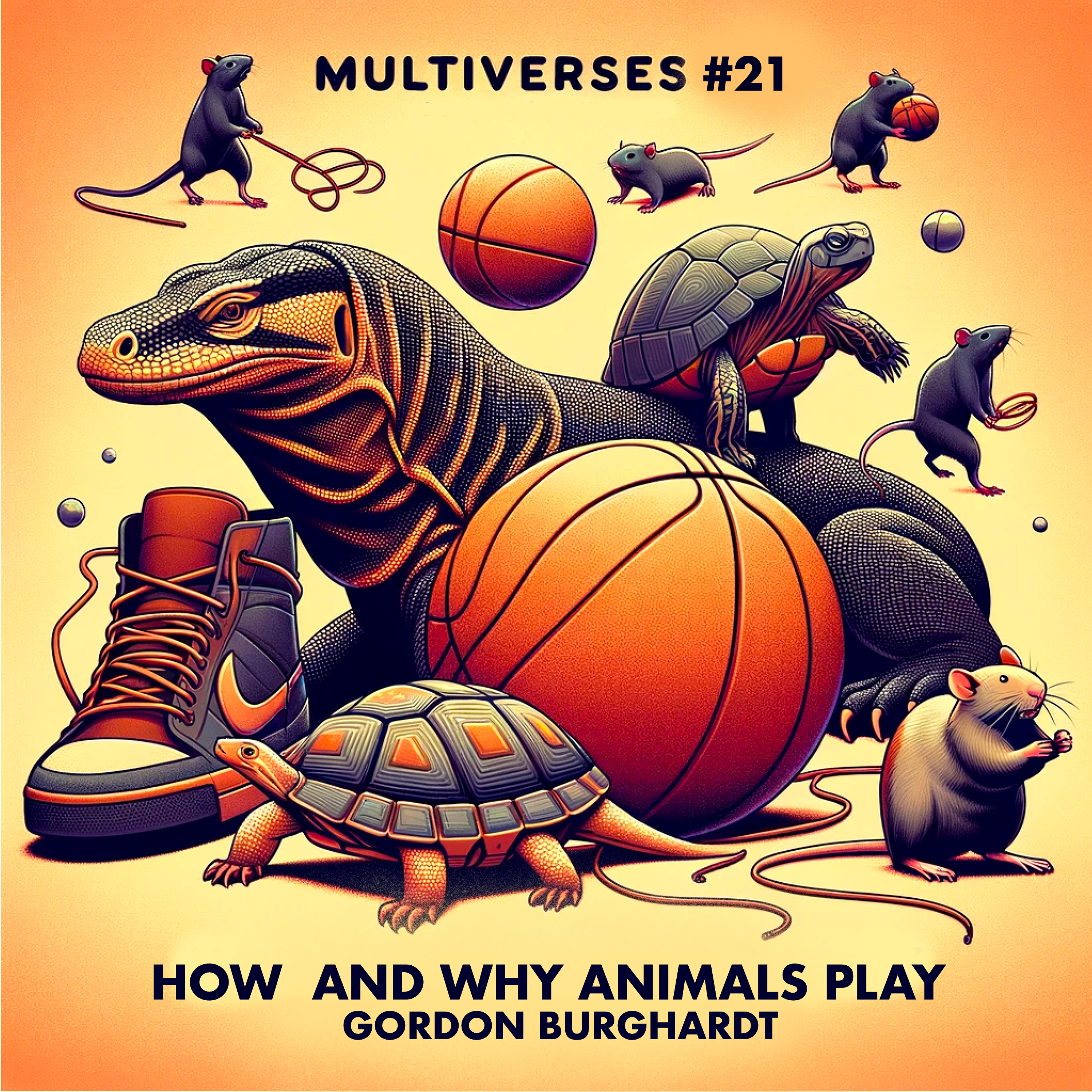
    21| How and why do animals play? — Gordon Burghardt

    Many animals play. But why? Play has emerged in species as distinct as rats, turtles, and octopi although they are separated by hundreds of millions of years of evolution. While some behaviors — hunting or mating for example — are straightforwardly adaptive, play is more subtle. So how does it help animals survive and procreate? Is it just fun? Or, as Huizinga put it, is it the primeval soil of culture? Our guest this week is Gordon Burghardt, a professor at The University of Tennessee and the author of the seminal The Genesis of Animal Play: Testing the Limits where he introduced criteria for recognizing animal play. Gordon has spent his career trying to understand the experience of animals. He advocates for frameworks such as critical anthropomorphism and the umwelt so we can judiciously adjust our perspectives. We can play at being other. This week Multiverses is brought to you by ... the internet. Links Multiverses.xyz The Genesis of Animal Play: Testing the Limits Gordon's academic homepage Milestones (00:00) Introduction (2:20) Why study play? (4:00) Criteria for play (5:00) Fish don’t smile (5:50) The five criteria: 1. incompletely functional (7:40) 2. Fun (endogenous reward) (8:20) 3. Incomplete (9:45) 4. Repeated (10:50) 5. Healthy, stress free (13:30) Play as a way of dealing with stress (but not too much) (16:40) Parental care creating a space for play (17:45) Delayed vs immediate benefits (20:45) Primary, secondary and tertiary play (26:00) Role reversal, imitation, self-handicapping: imagining the world otherwise (31:00) Secondary process: play as a way of maintaining systems (33:37) Tertiary process: play as a way of going beyond (34:45) Komodo dragons with buckets on their heads (39:22) Critical anthropomorphism (42:40) Umwelt — Jakob von Uexküll (49:18) Anthropomorphism by omission (53:00) Play evolved independently — it is not homologous (53:45) Do aliens play? (1:00:10) Play signals — how to play with dogs and bears (1:04:00) Inter species play (1:09:00) Final thoughts
  • Dec 7, 2023 · 1 hr 33 min

    20| Simon Kirby — Language Evolution & Emergence of Structure

    Language is the ultimate Lego. With it, we can take simple elements and construct them into an edifice of meaning. Its power is not only in mapping signs to concepts but in that individual words can be composed into larger structures. How did this systematicity arise in language? Simon Kirby is the head of Linguistics and English Language at The University of Edinburgh and one of the founders of the Centre for Langauge Evolution and Change. Over several decades he and his collaborators have run many elegant experiments that show that this property of language emerges inexorably as a system of communication is passed from generation to generation. Experiments with computer simulations, humans, and even baboons demonstrate that as a language is learned mistakes are made - much like the mutations in genes. Crucially, the mistakes that better match the language to the structure of the world (as conceived by the learner) are the ones that are most likely to be passed on. Links Simon's website with art, music, and talks on language evolution Simon's academic homepage Simon on X Multiverses Podcast home Outline (00:00) Introduction (2:45) What makes language special? (5:30) Language extends our biological bounds (7:55) Language makes culture, culture makes language (9:30) John Searle: world to word and word to world (13:30) Compositionality: the expressivity of language is based on its Lego-like combinations (16:30) Could unique genes explain the fact of language compositionality? (17:20) … Not fully, though they might make our brains able to support compositional language (18:20) Using simulations to model language learning and search for the emergence of structure (19:35) Compositionality emerges from the transmission of representations across generations (20:18) The learners need to make mistakes, but not random mistakes (21:35) Just like biological evolution, we need variation (27:00) When, by chance, linguistic features echo the structure of the world these are more memorable (33:45) Language experiments with humans (Hannah Cornish) (36:32) Sign language experiments in the lab (Yasamin Motamedi) (38:45) Spontaneous emergence of sign language in populations (41:18) Communication is key to making language efficient, while transmission gives structure (47:10) Without intentional design these processes produce optimized systems (50:39) We need to perceive similarity in states of the world for linguistic structure to emerge (57:05) Why isn’t language ubiquitous in nature … (58:00) … why do only humans have cultural transmissions (59:56) Over-imitation: Victoria Horner & Andrew Whiten, humans love to copy each other (1:06:00) Is language a spandrel? (1:07:10) How much of language is about information transfer? Partner-swapping conversations (Gareth Roberts) (1:08:49) Language learning = play? (1:12:25) Iterated learning experiments with baboons (& Tetris!) (1:17:50) Endogenous rewards for copying (1:20:30) Art as another angle on the same problems

  • Nov 16, 2023 · 54 min

    19| The Meaning of Net Zero — Myles Allen

    To stop global warming it is not enough to stop atmospheric CO2 rising. That is not the meaning of net zero. Despite net zero being a core concept in the Paris Agreement, it appears to be much misunderstood. The idea of net zero can be traced back to the work of Myles Allen, Professor of Geosystem Science at Oxford and a veteran of several IPCC assessments. Myles explains the original intent of net zero and what we really need to aim for: zero transfer of carbon between the geosphere (Earth's crust) and everywhere else (oceans, land, atmosphere). Myles also makes a strong case that, if we want to hit the 2050 goals we need to invest more heavily in large-scale geological carbon capture and storage. Many climate activists worry that such a policy would detract from the progress of renewables and give the fossil fuel industry carte blanche to continue emitting. But Myles points out that our reliance on fossil fuels is not falling as quickly as we need, and CCAS is technologically viable, economically feasible, and essential to reaching true geological net zero. Multiverses website Myles' academic home page Resources on Net Zero from Oxford (00:00) Intro (2:29) What is net zero? (4:12) Net zero is not a stable state but dynamical (6:20) If we stabilise concentrations of CO2 we would see half as much warming again (9:10) The meaning of net zero is often confused (12:20) The danger of carbon accounting double counting (16:56) The difficulty of establishing additionality (19:52) Geological net zero is what was originally meant by net zero (21:30) There are no significant natural sources or sinks of carbon between the biosphere and geosphere (27:25) COP 28: the fossil fuel industry has got to be part of the solution (30:50) “It is almost dangerous to claim it’s possible to solve the climate crisis without getting rid of CO2 on a very large scale … injecting it back into the Earth’s crust” (32:30) Phasing out fossil fuels altogether is effectively letting the industry off the hook (32:45) To what extent can we trust the fossil fuel industry? The potential dangers of CCAS (35:30) “The cost with today’s technology of recapturing CO2 from the atmosphere and storing under the North Sea … “ is such that the natural gas industry could recapture all emissions and still be profitable at current prices (40:10) Carbon pricing has failed: people do the cheapest thing first and the costly, slow-to-develop things (e.g. CCAS) are not coming fast enough (42:20) The difficulty of getting a carbon capture flywheel going (45:05) Intermittent energy supply is not a problem for carbon capture (45:45) Is biochar a viable alternative to geological carbon capture? (47:08) Biochar can’t hit the scale we need (48:55) Extended producer responsibility (50:10) eFuels (synthetic fuels) (50:44) Final comments: we have the technology but we need to be realistic, we need to start taking carbon back

  • Nov 2, 2023 · 1 hr 48 min

    18| Feeling Right: Emotions & Ethics — James Hutton

    Can we trust our emotions as a guide to right and wrong? This week's guest James Hutton is a philosopher at the University of Delft who argues that emotions provide a way of testing our moral beliefs — similar to the way observations are used in natural sciences as evidence for or against theories. This is not to say that emotions are infallible, nor that they are not themselves influenced by our moral beliefs, but that they do have a place in our moral inventory. In particular, the destabilizing power they can have — their capability to clash with our beliefs — is an important counterpoint to the entrenchment of poorly justified beliefs. I found myself revising my own views throughout this discussion. It feels right that emotions play a role in our decision-making. Perhaps that feeling is justified. James' academic website Multiverses website Outline (00:00) Intro (2:28) Start of conversation: Metathical frameworks (4:45) Reason alone cannot provide moral premises (6:30) Are moral principles self-evident? Or do we have a moral sense? (11:00) Is emotion antithetical to reason? (12:00) Emotional senses:Amia Srinivasan’s example of Nour, an example where emotions are trustworthy (23:00) Antonio Damasio & Descartes’ Error: the importance of emotion as a motivating force (29:30) … But should it be a motivating force? (30:30) Tolstoy’s emotional reaction to an exection and how it disrupted his moral theory of progress (34:50) Emotions can cause us to revise our moral beliefs (37:25) This does not mean emotion is infallible as a guide to morality (40:25) The tension between reasoning from principles and emotional reaction creates a useful instability (42:00) The analogy between science and moral reasoning: sometimes observations (and emotions) should be ignored, but sometimes we should pay attention to them (46:00) Is it possible to have a no-holds-barred ethics incorporating principles and emotions? (Not really!) (49:40) Observations and theories are perennially in conflict, sometimes we reject the observation (50:40) Utilitarianism: elegant but easy to find cases where it clashes with our intuitions (51:50) Harvesting organs — where the greatest good for the number does not feel right (53:20) Ethics and Inuition — Peter Singer: we shouldn’t trust our emotions (54:20) But why trust the utilitarian principle over our intuitions? (57:45) Situations in which we need to be wary of our emotions: burn a teddy vs releasing tonnes of CO2 (1:03:00) Emotional blind spots: abstract, global, probabilistic, outgroup vs ingroup (1:08:00) Partiality: should we treat everyone equally, or do we have special obligations to friends and family? (1:10:28) Heckled by a doorbell (1:11:50) Partiality is a litmus case for utilitarian principles vs intuition (1:15:30) Given emotions are fallible how do we make good use of them? (1:17:30) Unreliable emotions and ethical knowledge: blood sugar, mood &c. cause emotional noise (1:19:30) How do we deal with noisy information in other areas — the analogy with testimony (1:23:50) Defeaters — cues that give us pause to double check our emotional responses (1:25:40) Negative meta-emotions: e.g. shame at being angry (1:26:25) Should we expand our emotional repertoire? (1:30:20) Flight shame as an example of a new emotional response (1:34:25) Should we expect evolution to have created morally fitting emotional responses? (1:38:15) The problems with evolutionary debunking arguments (1:46:43) This is work in progress — google James Hutton Delft to get in touch

  • Oct 19, 2023 · 1 hr 33 min

    17| Santiago Bilinkis — Artificial Intelligence: Risks & Rewards

    Could AI's ability to make us fall in love with be our downfall? Will AI be like cars, machines that encourage us to be sedentary, or will we use it like a cognitive bicycle — extending our intellectual range while still exercising our minds? These are some of the questions raised by this week's guest Santiago Bilinkis. Santiago is a serial entrepreneur who's written several books about the interaction between humanity and technology. Artificial, his latest book, has just been released in Spanish. It's startling to reflect on how human intelligence has shaped the Earth. AI's effects may be much greater. Links: Santiago's book Artificial co-authored with Mariano Sigman Multiverses.xyz Outline: (00:00) Intro (2:31) Start of conversation — a decade of optimism and pessimism (4:45) The coming AI tidal wave (7:45) The right reaction to the AI rollercoaster: we should be excited and afraid (9:45) Nuclear equilibrium was chosen, but the developer of the next superweapon could prevent others from developing it (12:35) OpenAI has created a kind of equilibrium by putting AI in many hands (15:45) The prosaic dangers of AI (17:05) Hacking the human love system: AI’s greatest threat? (19:45) Humans falling in love may not only be possible but inevitable (21:15) The physical manifestations of AI have a strong influence over our view of it (23:00) AI bodyguards to protect us against AI attacks (23:55) Awareness of our human biases may save use (25:00) Our first interactions with sentient AI will be critical (26:10) A sentient AI may pretend to not be sentient (27:25) Perhaps we should be polite to ChatGPT (I, for one, welcome our robot overlords) (29:00) Does AGI have to be conscious? (32:30) Perhaps sentience in AI can save us? It may make it reasonable (34:40) An AGI may have a meaningful link to us in virtue of humanity being its progenitor (37:30) ChatGPT is like a smart employee but with no intrinsic motivation (42:20) Will more data and more compute continue to pay dividends? (47:40) Imitating nature may not necessarily be the best way of building a mind (49:55) Is my job safe? How will AI change the landscape of work? (52:00) Authorship and authenticity: how to do things meaningfully, without being the best (54:50) Imperfection can make things more perfect (but machines might learn this) (57:00) Bernard Suits’ definition of a game: meaning can be related to the means, not ends. (58:30) The Cognitive Bicycle: will AI make us cognitively sedentary or will it be a new way of exercising our intellect and extending its range? (1:01:24) Cognitive prosthetics have displaced some intellectual abilities but nurtured others (1:06:00) Without our cognitive prosthetics, we’re pretty dumb (1:12:33) Will AI be a leveller in education? (1:15:00) The business model of exploiting human weaknesses is powerful. This must not happen with AI (1:24:25) Using AI to backup the minds of people

  • Oct 5, 2023 · 1 hr 25 min

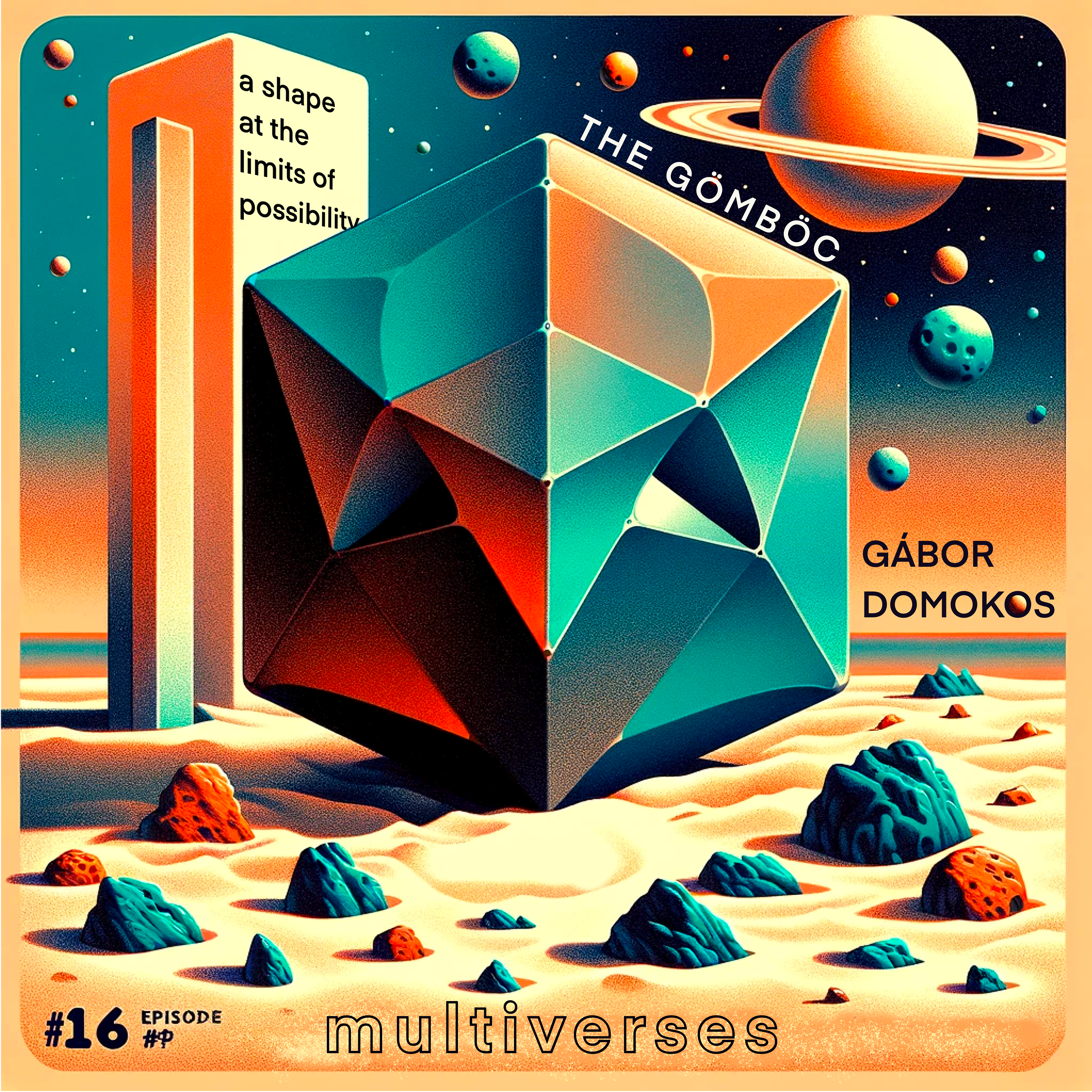
    16| Gábor Domokos — The Gömböc, a shape at the limit of possibility

    The Gomboc is a curious shape. So curious many mathematicians thought it could not exist. And even to the untrained eye, it looks alien: neither the product of human or natural processes. This week Gábor Domokos relates his decade-long quest to prove the existence of a (convex, homogenous) shape with only two balance points. The Gömböc is not just a mathematical curio, its discovery led to a theory of how "things fall apart", of the processes of abrasion that — whether on Earth, mars, or deep space — ineluctably reduce the number of balance points of objects. The Gomboc is the shape all pebbles want to be, but can never reach. Show notes at multiverses.xyz (00:00) Intro (2:40) Start of conversation — what is a Gomboc? (4:30) The Gomboc is the “ultimate shape” it has only two balance points (5:30) The four vertex theorem: why a 2D shape must have 4 balance points (6:30) (almost) nobody thought a Gomboc existed (8:30) Vladimir Ilych Arnold’s conjecture (9:00) Hamburg 1995, the beginning of a quest (10:30) “Mathematics is a part of physics where experiments are cheap” (11:50) A hungry scholar sits next to a mathematical superstar (13:00) Ten years of searching (15:00) Domokos and Varkonyi's gift for Arnold (15:30) Arnold’s response: “good, but now do something serious” (16:50) We cannot easily speak about shapes. (18:00) A system for naming shapes (21:00) “The evolution of shapes is imprinted in these numbers” (21:50) Pebbles evolve towards the Gomboc, but never get there (24:50) How to find the balance points of shapes by hand (30:00) Physical intuition and empirical exploration can inform mathematics (30:30) A beach holiday (and a marital bifurcation point) (34:00) “No this was not fun, it was a markov process” (36:40) Working with NASA to understand the age of martian pebbles (38:20) An asteroid, or a spaceship? (43:00) The mechanisms of abrasion (45:50) The isoperimetric ratio — does not evolve monotonically … (47:50) … But the drift to less balance points is monotonic (49:00) The process of abrasion is a process of simplifying (50:00) We can name the shape of Oumuamua because it is so simple (51:00) Relationship between Gomboc and (one way of thinking about) entropy (55:00) Abrasion and the heat equation — curvature is “like” heat and gets smoothed out (58:00) The soap bar model — why pointy bits become smooth (1:00:00) Richard Hamilton, the Poincaré conjecture and pebbles (1:04:00) The connection between the Ricci flow and pebble evolution (1:09:00) Turning the lights on in a darkened labyrinth (1:12:00) The importance of geometric objects in physics (string theory) (1:13:30) Another way of naming natural shapes: the average number of faces and vertices (1:15:00) “Earth is made of cubes” — it turns out Plato was right (1:16:30) Could Plato’s claim have been empirically inspired? (1:17:50) “Everything happens between 20 and 6” (1:18:30) The Cube and the Gomboc are the bookends of natural shapes (1:19:30) The Obelisk in 2001 — an unnatural, but almost natural shape (1:22:00) Poincaré on dreaming: genius taps the subconscious

  • Sep 21, 2023 · 1 hr 29 min

    15 | Simon Critchley — Philosophical itches & how to scratch

    From what human need does philosophy emerge? And where can it lead us? Simon Critchley is Hans Jonas professor of Philosophy at the New School in New York, and a scholar of Heidegger, Pessoa, Football (Liverpool FC), and humour — among other things. He crosses over between analytic and continental traditions and freely draws on quotes from Hume, poetry and British pop bands. Simon argues that philosophy begins in disappointment, not wonder. But its goals can be wisdom, knowledge, enlightenment, and freedom. It can play many roles: as a tool for developing scientific theories, for exposing ideology for tracing the underpinnings of language and experience. Anywhere where other fields fear to tread, that's where philosophers step in. Show notes and links to books at Multiverses.xyz (00:00) Intro (3:00) Beginning of conversation: disappointment as the start of the journey (7:55) Punk & Philosophy (11:20) Trauma and tabula rasa (12:30) Not making it in a band, becoming a philosopher (19:30) Wittgenstein as a bridge between analytic and continental philosophy (21:50) Mill and the origin of the label “continental philosophy” (24:30) Philosophy has a duty to be part of culture (28:00) The difficulty with philosophy being an academic tradition (29:30) The Stone (32:30) Football as a phenomenon for study that invites people in to philosophy (35:00) Philosophy as pre-theoretic & Pessoa’s Ultimatum (39:00) Will analytic philosophy run out for road and be subsumed into science? (41:00) Two lines of human imagination (42:00) Should philosophy ever be a single honours subject, or should it always aid other realms of thought? (43:00) Philosophy as pre-science (44:30) Phenomenology as reflection on the lived world (47:00) Alberto Caeiro (Pessoa) and anti-poetry (48:50) The saying of ordinary things to fascinate angels (54:00) Impossible objects will keep philosophers busy (57:00) The task of philosophy as deflationary, as not making progress (1:00:00) Should philosophy of physics be part of physics? (1:04:30) Context: What can’t I read Descartes like I’m talking to your right now? (1:06:00) Is context colour or is it inseparable from ideas? (1:15:30) Rorty: Continental philosophy as proper names vs problems in analytic philsophy (1:19:20) Trying to walk the line between two traditions of philosophy (1:20:00) Obscurantism vs scientism (1:23:00) Permission to think on their own, to expose ideology (1:26:00) The internet has been good for philosophy (1:26:30) Audio as a new platform or agora for philosophy

  • Sep 7, 2023 · 1 hr 37 min

    14| ChatGPT as a Glider — James Intriligator

    Large language models, such as ChatGPT are poised to change the way we develop, research, and perhaps even think. But how do we best understand LLMs to get the most from our prompting? Thinking of LLMs as deep neural networks, while correct, is not very useful in practical terms. It doesn't help us interact with them, rather as thinking of human behavior as nothing more than the result of neurons firing won't make you many friends. However, thinking of LLMs as search engines is also faulty — they are notoriously unreliable for facts. Our guest this week is James Intriligator. James trained as a cognitive neuroscientist at Harvard, but then gravitated towards design and is currently Professor of the Practice in Human Factors Engineering and Director of Strategic Innovation at Tufts University. James proposes viewing ChatGPT not as a search engine, but as a "glider" that journeys through knowledge. By guiding it through diverse domains, it learns your interests and customizes better answers. Dimensional prompts activate specific areas like medicine or economics. I like this playful way of thinking of LLMs. Maybe gliding (LLMs) is the new surfing (of the web). Links: James' home page Multiverses website

  • Aug 24, 2023 · 1 hr 8 min

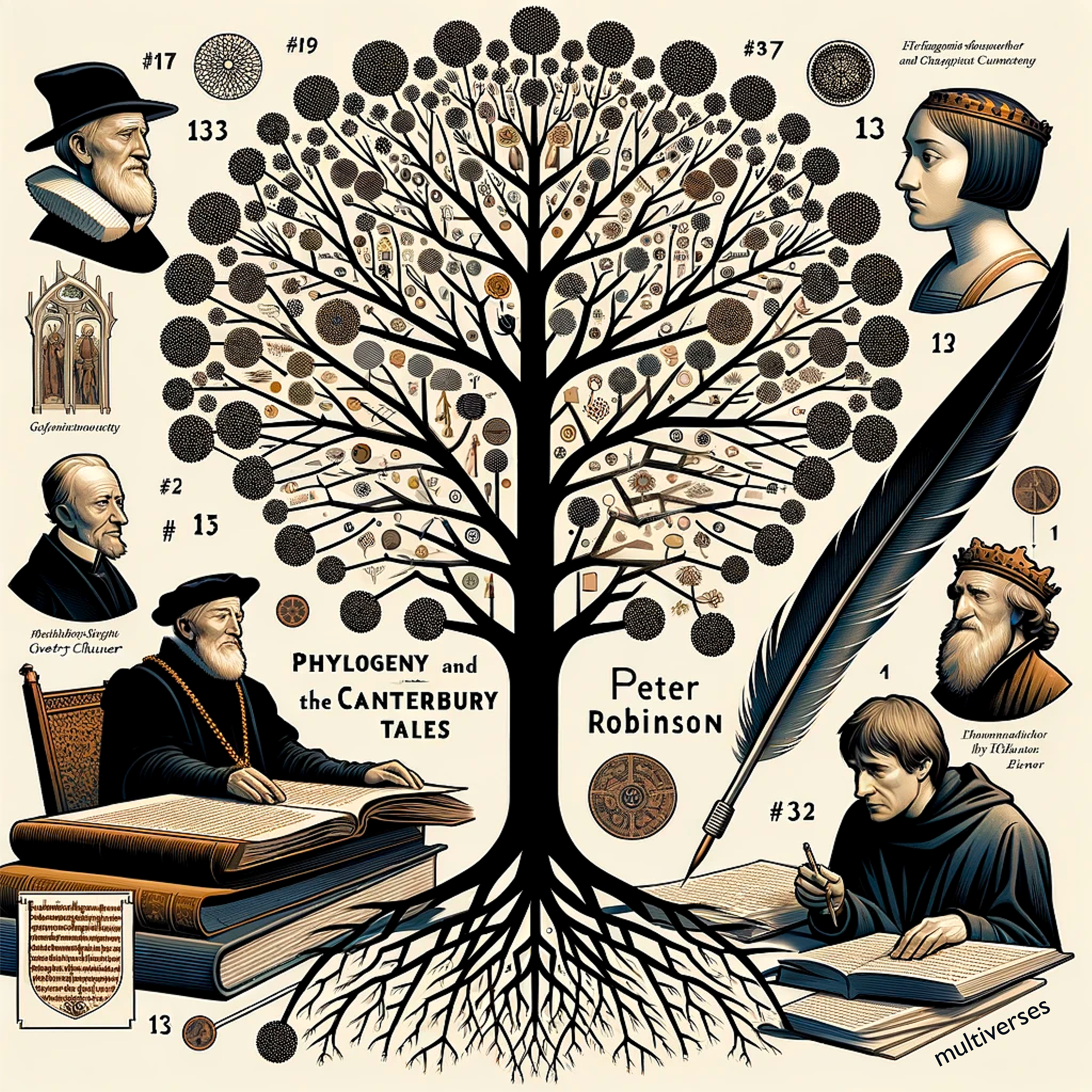
    13| Phylogeny & The Canterbury Tales — Peter Robinson

    The physical solidity of books encourages notions of "the text" or "the canonical edition". The challenges to this view from post-modernist thought are well known. But there are other ways in which this model of a static text may fail. Our guest this week is Peter Robinson (my dad!) who takes us through his work on Chaucer's Canterbury Tales. This is a paradigmatic case of a work of literature that defies understanding as fixed text. Originally it would have been read, or performed. What exists now are fragments of transcripts of performances. And copies of those fragments. And copies of copies. Using techniques from phylogenetics, Peter has led efforts to piece together the relationships between these manuscripts. By tracing how transcription errors (or edits) appear to propagate, we can create a family tree of the texts, just as we can trace the propagation of biological traits through generations. Sounds simple? "After 30 years of working on this, we're really just beginning to understand what a representation of a textual tradition using these tools gives us" Peter's academic homepage Peter's article in Nature on The Canterbury Tales (there are not many articles in Nature about Chaucer!) Multiverses home

  • Aug 10, 2023 · 1 hr 27 min

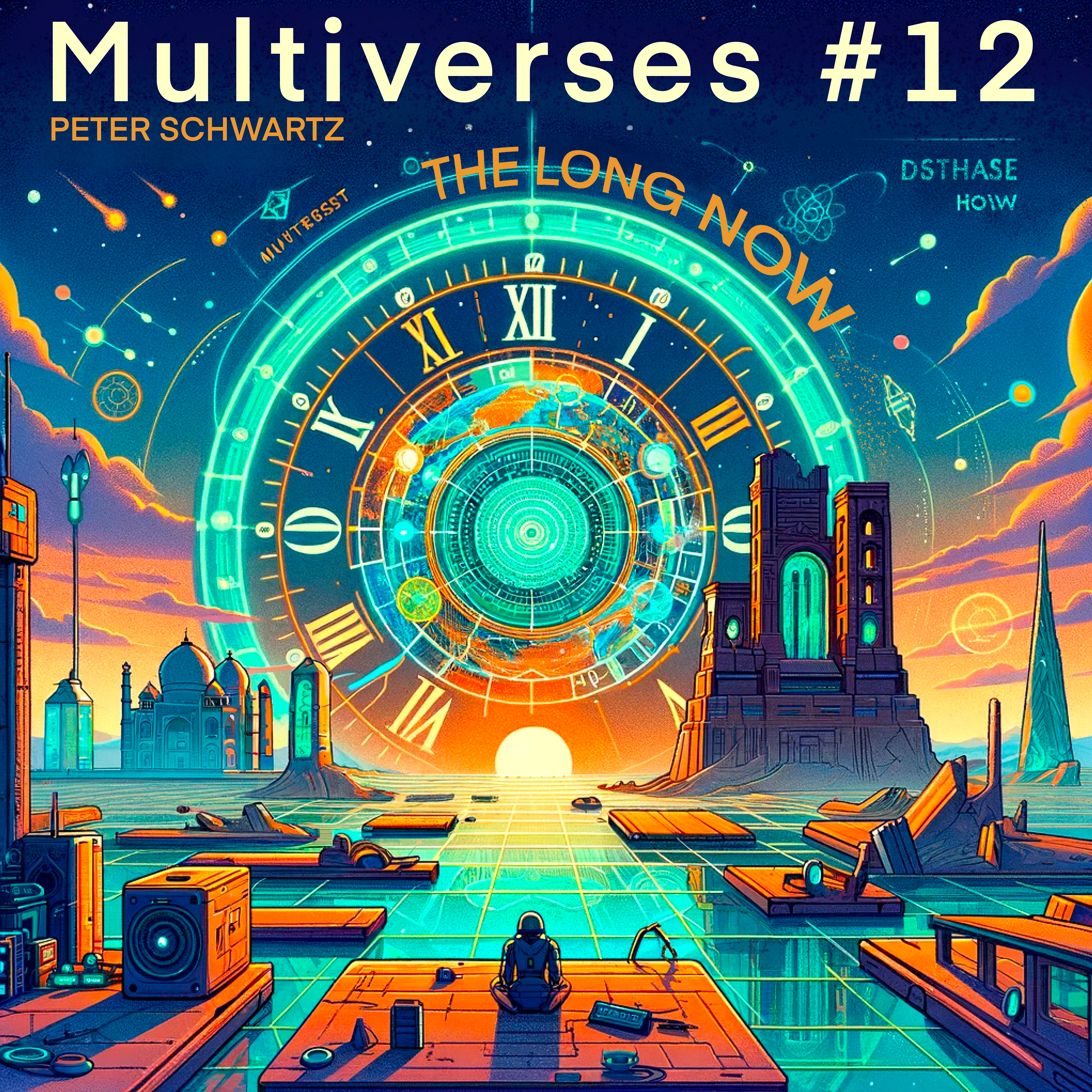
    12 | The Long Now — Peter Schwartz

    For hundreds of years, things changed slowly. Innovations were infrequent and spread inchmeal. Population, culture, and the atmosphere, all were static decade-to-decade. We now see rapid change. It's hard to contemplate what now? let alone what next? Peter Schwartz is a futurist, SVP for Scenario Planning at Salesforce, author of The Art of Long View, and a founder of the Long Now Foundation. He thinks about the future, both envisioning its many possibilities and harnessing these scenarios to answer the question: what do we do now? In this conversation, we discuss the Long Clock, working with Steven Spielberg, what the future may hold (the ISS becoming a hotel?) what it almost certainly will (accelerating climate change is something we cannot avoid, we must adapt as well as driving down emissions) and how we should approach thinking about it. multiverses.xyz/podcast — the show home The Art of the Long View — Peter's book on scenario planning The Long Now Foundation homepage — with talks by Peter, Niall Ferguson (sometimes in debate!) Sam Harris, Kim Stanley Robinson and many others

  • Jul 20, 2023 · 1 hr 40 min

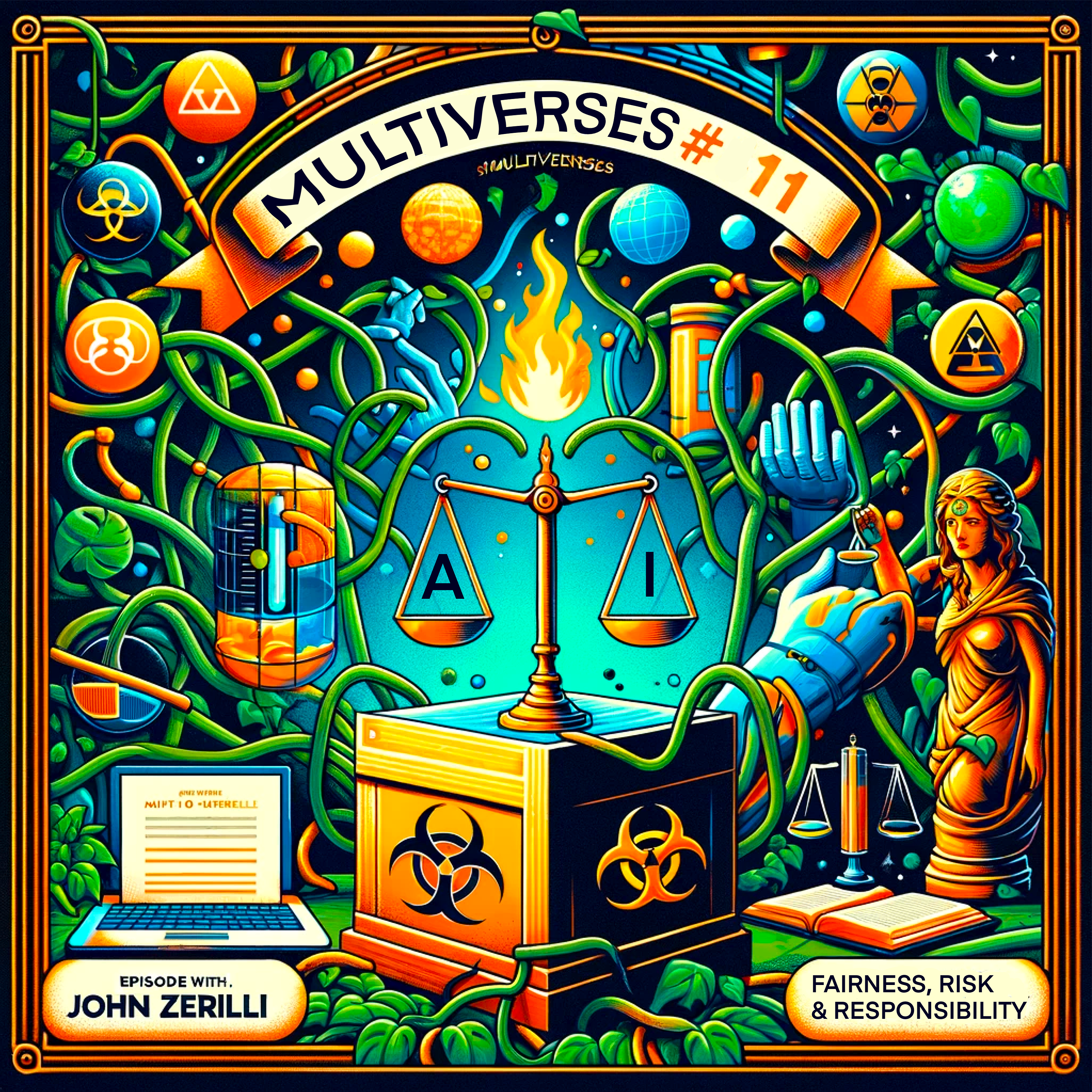
    11| AI, Risk, Fairness & Responsibility — John Zerilli

    AI is already changing the world. It's tempting to assume that AI will be so transformative that we'll inevitably fail to harness it correctly, succumbing to its Promethean flames. While caution is due, it's instructive to note that in many respects AI does not create entirely new challenges but rather exacerbates or uncovers existing ones. This is one of the key themes that emerge in this discussion with John Zerilli. John is a philosopher specializing in AI, Data, and the Rule of Law at the University of Edinburgh, and he also holds positions at the Oxford Institute for Ethics in AI and the Centre for the Future of Intelligence in Cambridge. For instance, John points out that some of the demands we make of AI with respect to fairness are simply impossible to fulfill — not due to some technological or moral failing on the part of AI, but that our demands are in mathematical conflict. No procedure, whether executed by a human or a machine, can consistently meet these requirements. We have AI research to thank for illuminating this. In contrast, concerns over a 'responsibility gap' in AI seem to overlook the legal and social progress made over the last centuries, which has, for example, allowed us to detach culpability from individuals and assign it to corporations instead. John also notes that some of the dangers of AI may be more commonplace than we imagine — such as the use of deep fakes to supercharge hacking, or our psychological tendency to become complacent with processes that mostly work, leading us to an unwarranted reliance on AI. Notes: A Citizen's Guide to Artificial Intelligence John's Edinburgh research page Twitter @JohnZerilli Mulltiverses.xyz website Brian Hedden's article on fairness (00:00) Intro (3:25) Discussion starts: risk (12:36) Robots are scary, embedded AI is anodyne (15:00) But robots failing is cute (16:50) Should we build errors into AI? — catch trials (26:62) Responsibility (29:11) There is no responsibility gap (42:40) Should we move faster to introduce self-driving cars? (45:22) Fairness (1:05:00) AI as a cognitive prosthetic (1:18:14) Will we lose ourselves among all our cognitive prosthetics?

  • Jul 13, 2023 · 1 hr 22 min

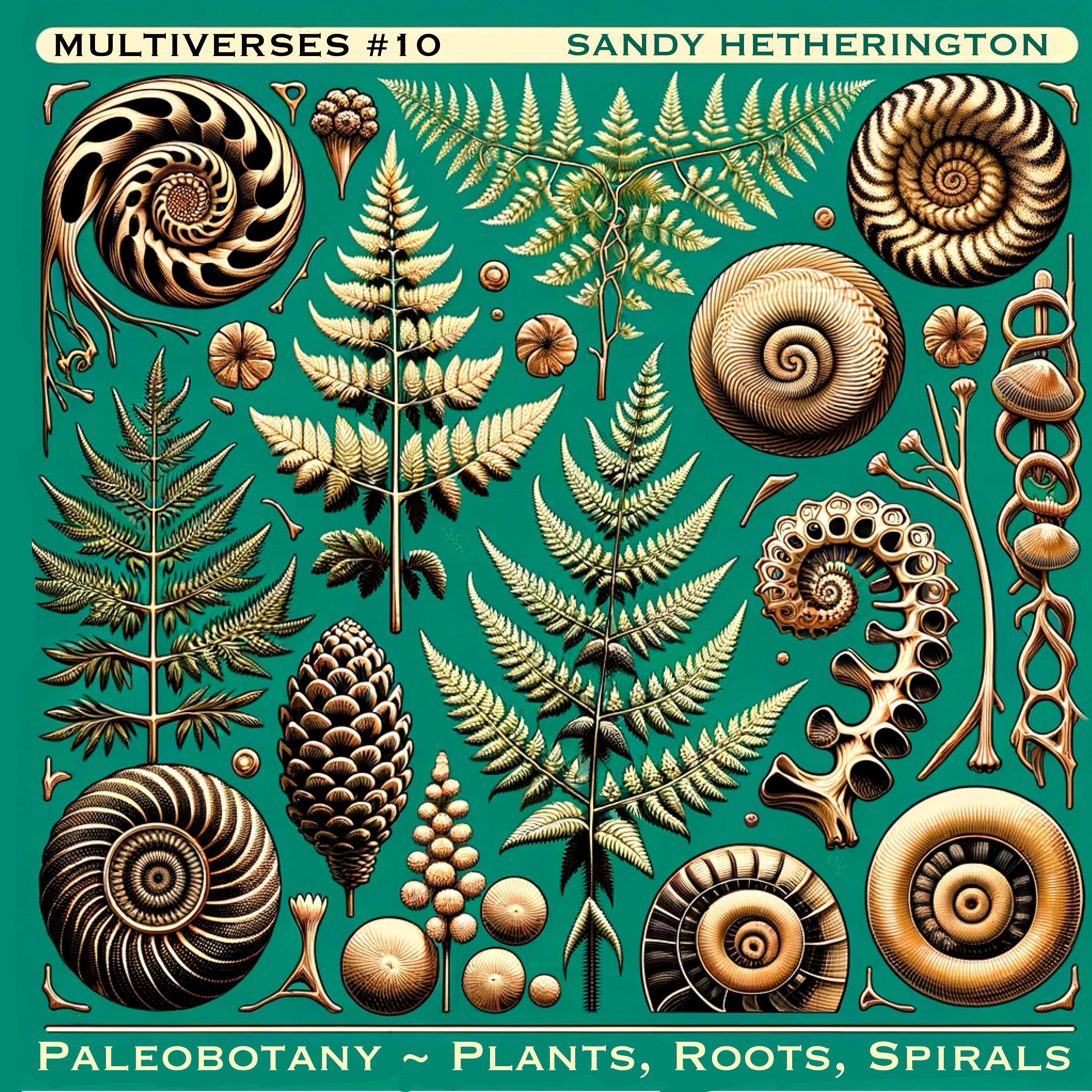
    10| Plants, Roots, Spirals and Palaeobotany — Sandy Hetherington

    Plants have transformed the surface of the earth and the contents of our atmosphere. To do this they've developed elaborate systems of roots and branches which (sometimes) follow uncanny mathematical patterns such as the Fibonacci sequence. Our guest this week, Sandy Hetherington, leads Edinburgh's Molecular Palaeobotany and Evolution Group. They take a no-holds-barred approach to understanding plant development by combining genomics, fossil records, herbaria, and 3D modeling. Dig in! Show notes: multiverses.xyz Sandy's Twitter: @sandy_heth Hetherington lab Twitter @MPEG_Edinburgh In New Scientist on (lack of) spiral forms in ancient plant leaves BBC article on Herbaria The Guardian on Sany's work on plant roots (00:00) Intro (2:15) Discussion starts

  • Jul 6, 2023 · 1 hr 52 min

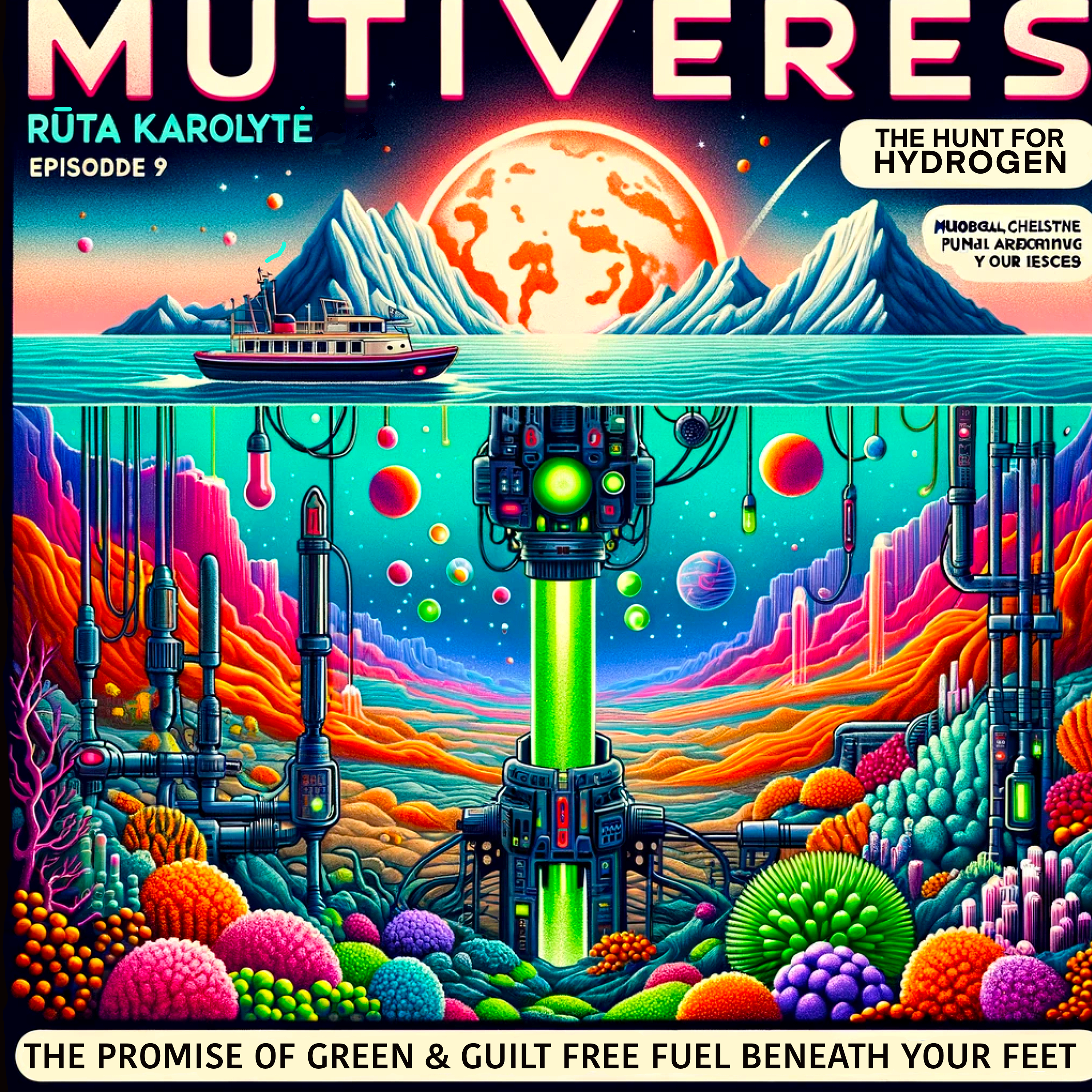
    9| The Hunt for Hydrogen — Rūta Karolytė

    Does the Earth contain enormous clean energy reserves? For many years the received logic was that hydrogen does not occur naturally in significant quantities without being bound to other atoms (such as in H20, water, or CH4, methane). To obtain the gas — whether as a fuel or for use in fertilizers — we need to strip it from those molecules, typically by electrolysis and steam reformation. But our understanding may be ripe for change. Rūta Karolytė is at the vanguard of prospectors looking for large, naturally occurring reservoirs of hydrogen. She’s a researcher from Oxford specializing in the geochemistry of the Earth and she enlightens us to the mechanisms that are likely to be producing hydrogen in the crust: radiolysis and serpentinization. In reviewing the evidence for naturally occurring hydrogen Ruta leads us through exotic terrain: a Soviet-era theory of hydrocarbon production, fairy rings, hydrothermal vents, and chemosynthetic life. If Rūta and her colleagues are correct, the tapping of natural hydrogen could have transformative consequences for the Hydrogen economy such as cutting out the substantial fossil fuel emissions associated with deriving fertilizers from methane or creating a cheap basis for building synthetic fuels. In the first half of the show, we also delve into carbon sequestration — another cool climate topic. But I’ve got so excited writing up the first half, that I’ll leave it here. Notes: Rūta's Twitter: @rkarolyte Show notes at multiverses.xyz Outline: (00:00) Introduction (3:00) Geological carbon sequestration (50:40) Natural hydrogen

  • Jun 29, 2023 · 1 hr 39 min

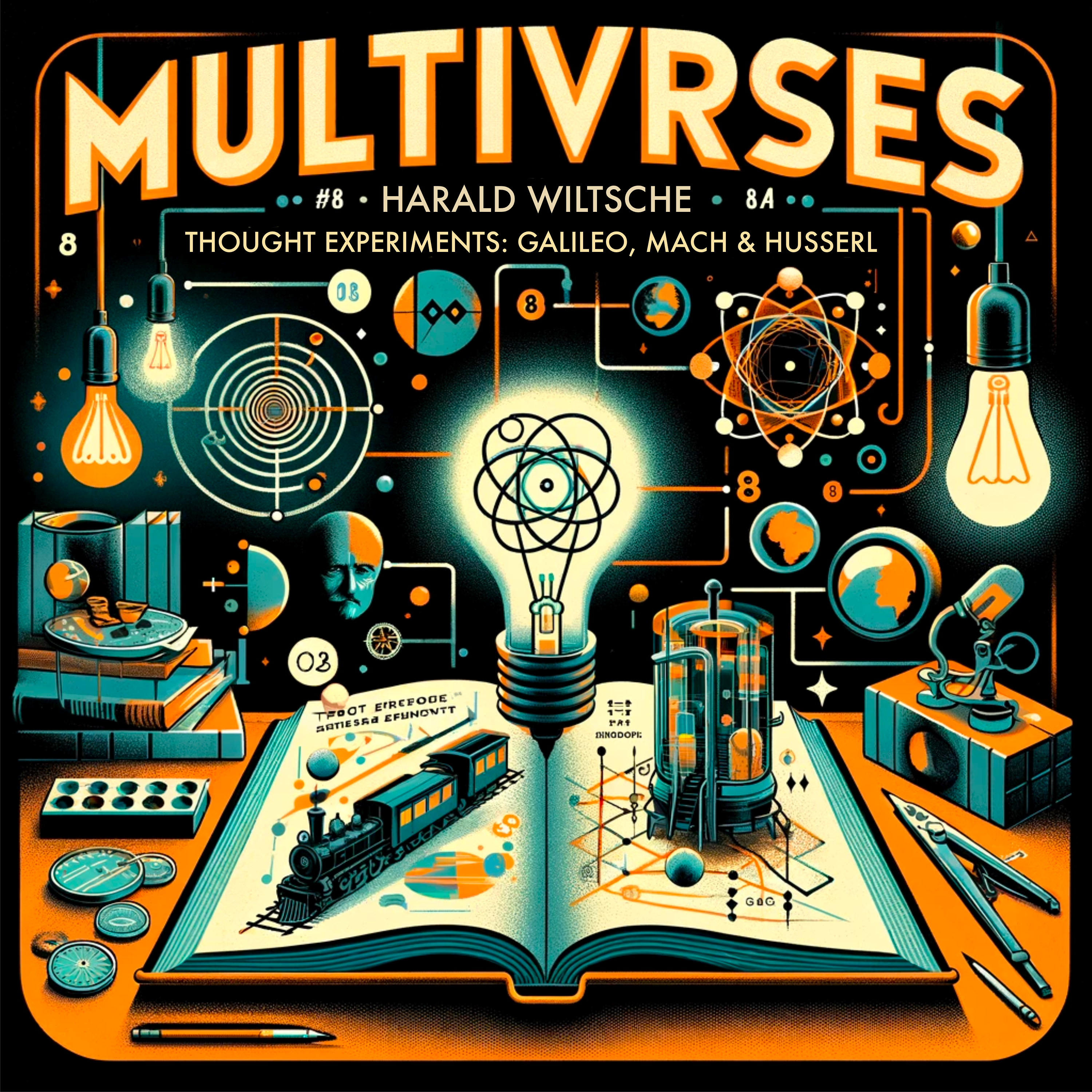
    8 | Harald Wiltsche — Thought Experiments, Mach, Galileo & Phenomenology

    Thought experiments have played a starring role in physics. They seem, sometimes, to pluck knowledge out of thin air. This is the starting point for my discussion this week with the philosopher Harald Wiltsche: what are thought experiments? How do they function — are they platonic laboratories with no moorings in observations or a way of supercharging our reasoning about phenomena? What do they deliver? Much emphasis has been put on the paradigm-shattering insights of Einstein where thought experiments appear like midwives in the production of new theories. But they can also function in explaining those theories, in ensuring they are understood. This leads to the question: what is understanding? Harald argues that it’s the ability to manipulate or deploy knowledge backed up by a mental model. He reasons that thought experiments can help us to make sense of the abstraction of mathematical models. We discuss many topics: the mathematization of science with Galileo, where thought experiments go wrong, transcendental arguments, the danger of losing sight of physical phenomena, and the links between Husserl and Mach. The theme that we dance to is this: there are lots of forms of reasoning that can work well within physics and we need equal pluralism in our philosophy of science to understand its startling, uncanny success in modeling nature. Harald's website haraldwiltsche.com where you can find many of his papers and the introduction to his book with Phillipp Berghoffer on Phenomenological Approaches to Physics Twitter @haraldwiltsche Show notes on multiverses.xyz

  • Jun 22, 2023 · 1 hr 47 min

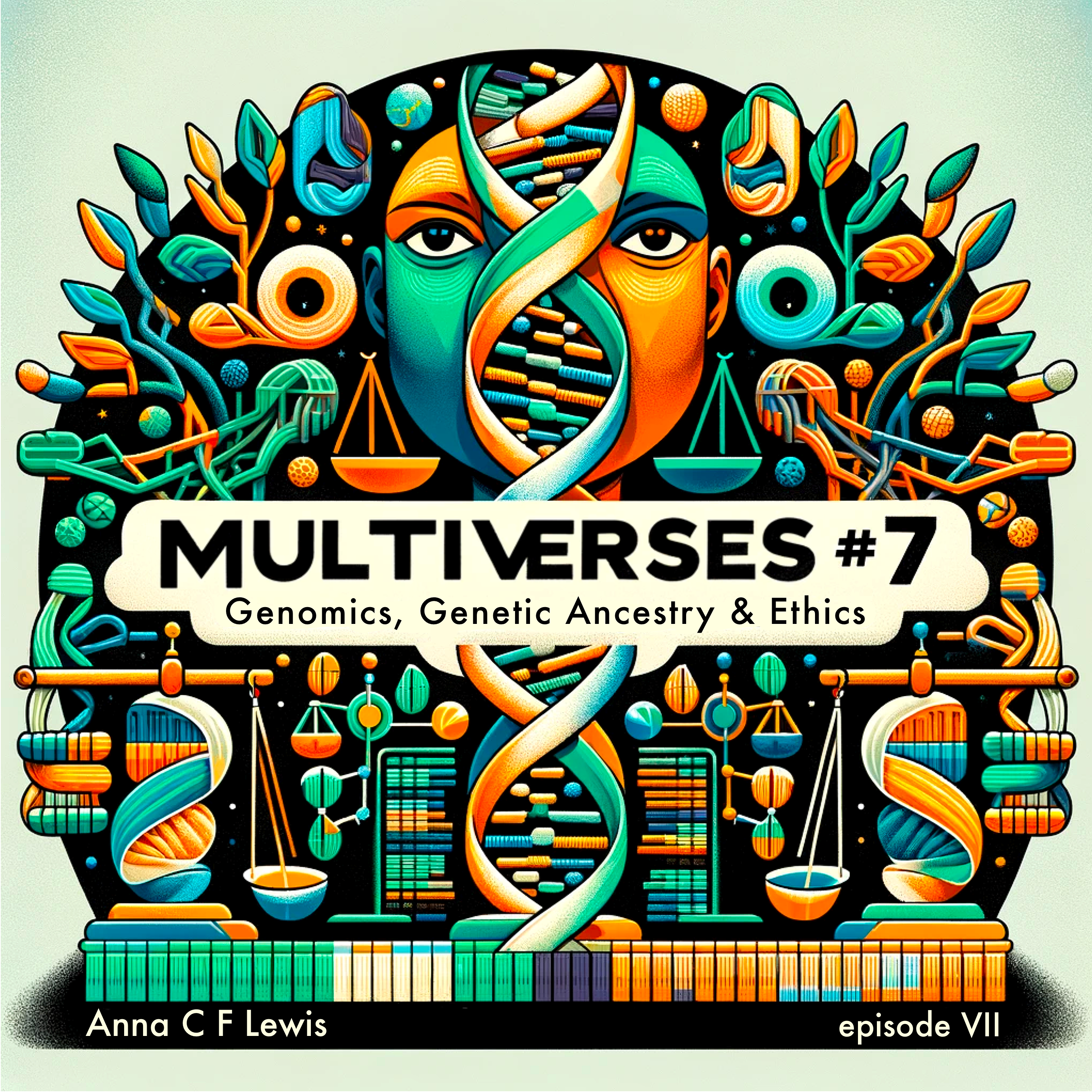
    7| Anna Lewis — Genomics, polygenic risk scores, genetic ancestry, race & ethics

    Genomics is leading a revolution in our understanding of disease. But the ways we pursue genomics research and the use we make of that knowledge demand careful thinking. Anna is a researcher at The Edmond & Lily Safra Center for Ethics at Harvard, she holds a PhD in Systems Biology from Oxford (where we met) and has worked in medtech startups. As someone who has looked at genomics from multiple perspectives, she’s an excellent guide to this rocky terrain. Anna emphasizes the challenges and importance of polygenic traits and Polygenic Risk Scores (PRS). While they are key tools in understanding and predicting traits, they are subject to misinterpretation and misuse if not properly defined. The concept of 'race' and more recently ‘continental ancestry group’ often used in the calculation of PRSs can lead to misguided or even harmful assumptions, potentially propagating racist ideologies. Instead, Anna suggests the use of Ancestral Recombination Graphs (ARG) to better represent an individual's genetic ancestry. Through ARG, we can achieve a more scientifically accurate and ethically sound basis for research. As we continue to make leaps in genomics and potentially influence traits like intelligence or strength, the importance of ethical, legal, and social implications becomes increasingly crucial. As we learn to wield our scientific tools, we need to understand how we should use them. Anna's Twitter: @ACFLewis Show notes on multiverses.xyz Anna's website: acflewis.com Undark article on genetic ancestry Anna et al on getting genetic ancestry right for science and society

  • Jun 15, 2023 · 1 hr 51 min

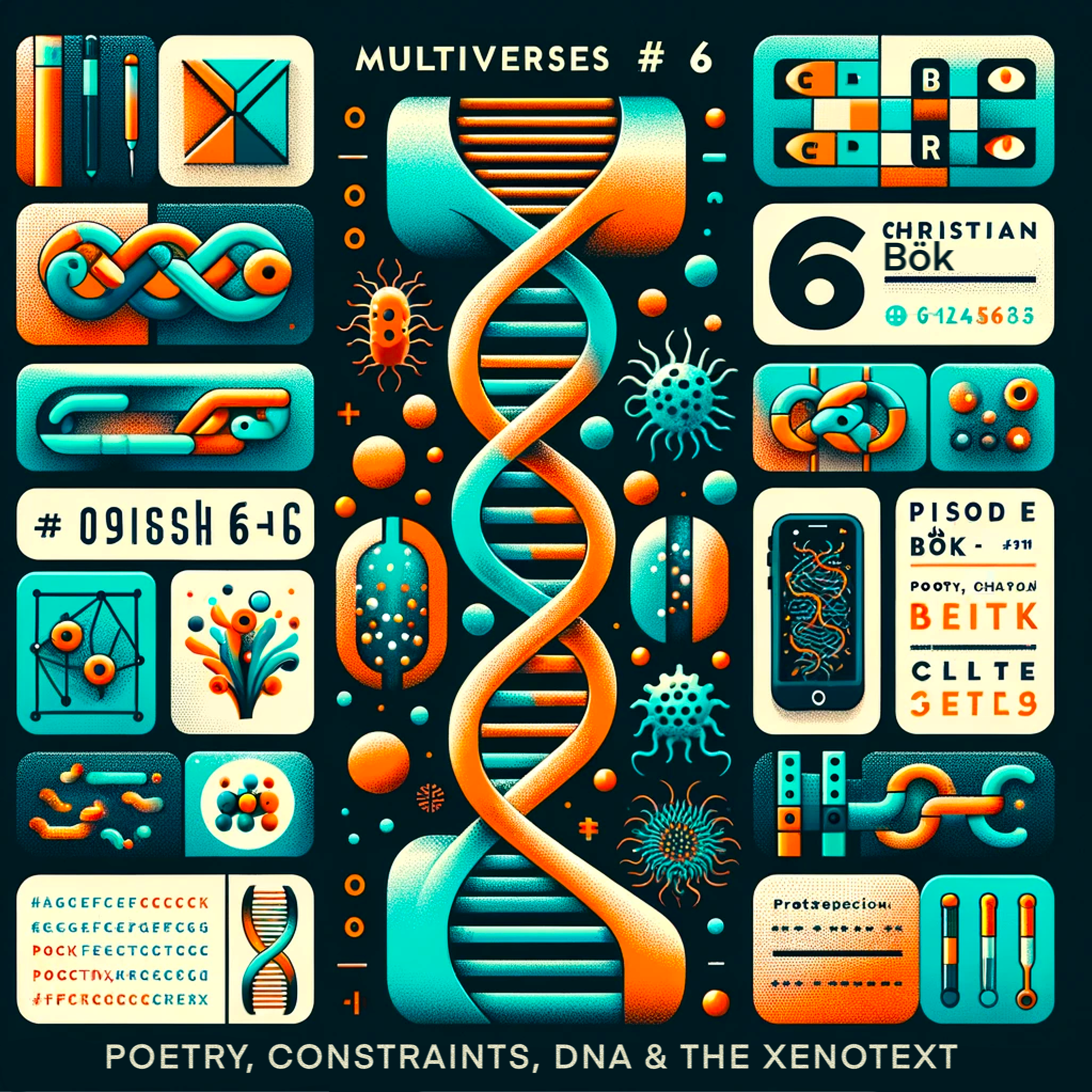
    6| Christian Bök — Poetry, Constraints, DNA & The Xenotext

    Christian Bök is an award-winning poet pushing the boundaries of the medium and exploring the capabilities of language itself. Rather than focusing on self-expression, Christian uses poetry as a laboratory for understanding language — probing its plasticity and character. His notable work, the bestseller Eunoia, draws inspiration from the avant-garde rules of Oulipo and takes it a step further by restricting each chapter to only one vowel. This constraint leads to the creation of such singular phrases as "Writing is inhibiting. Sighing, I sit, scribbling in ink this pidgin script." For the past two decades, Christian has pursued an even more ambitious project, The Xenotext. This project involves enciphering an "alien text" within the DNA of a resilient bacterium, Deinococcus radiodurans. One goal of The Xenotext is to create a text that could outlast human civilization. To add to the genomic challenge Christian has set a remarkable rule: the symbols of the text should be interpretable in two different ways, resulting in two poems that are encoded within the same string. Christian combines scientific techniques, trial and error, and computer programming to construct his poems, adhering to the rules he has established within his own poetic universe. Furthermore, he transforms art back into science by employing gene-editing to inscribe his poetic creation into the "book of life," the DNA of a living organism. Instead of looking back and inwards (the ideal of “emotion recollected in tranquility”, Christian looks outwards and to the future, fusing science and art to produce uncanny, unforgettable verse. References: Christian’s website: umlautmachine.net His Twitter: @christianbok More detailed notes from this episode at: multiverses.xyz

  • Jun 8, 2023 · 1 hr 33 min

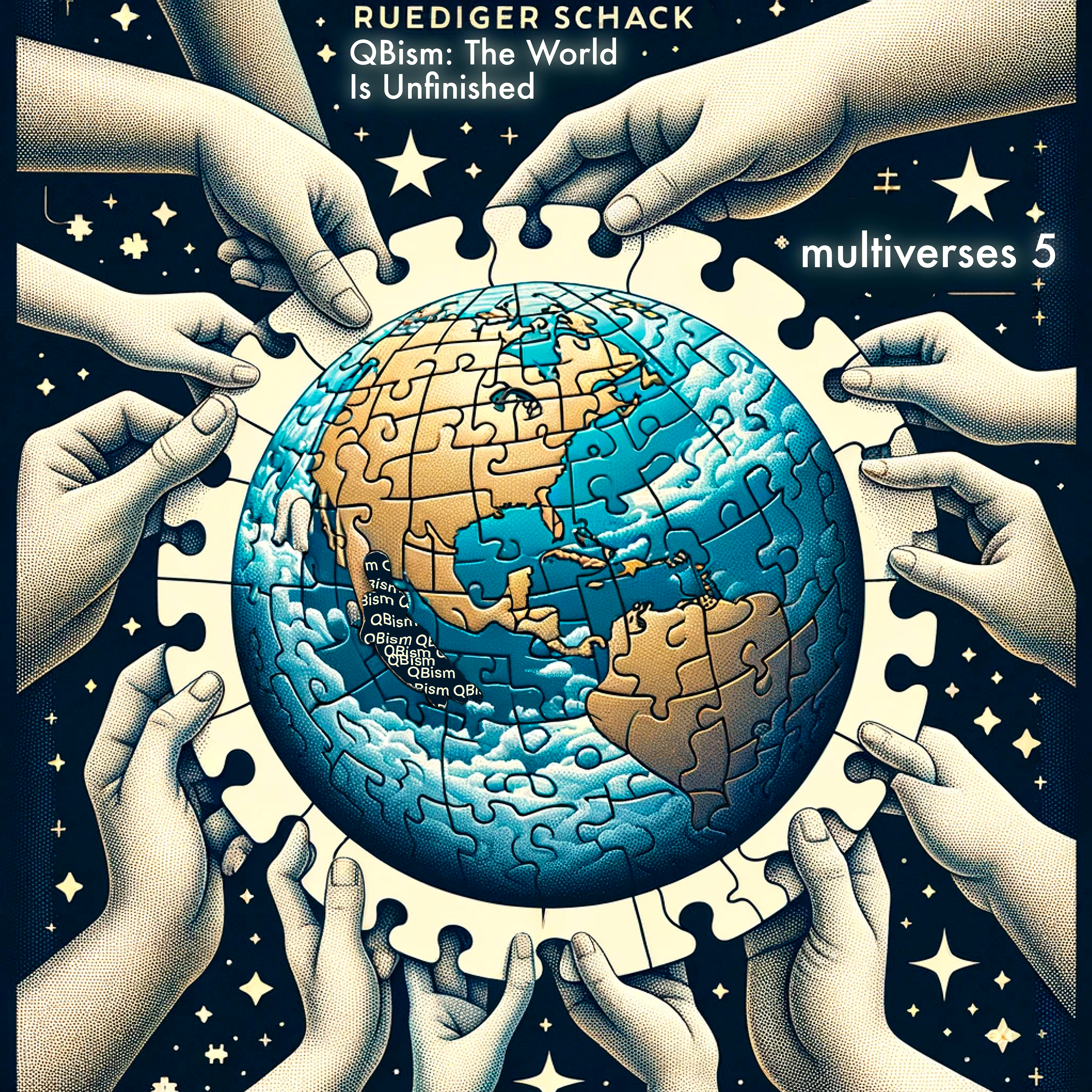
    5| QBism: The World is Unfinished — Ruediger Schack

    Is the fate of the universe predetermined? Many physicists and philosophers argue it is, particularly those who adopt the Many Worlds interpretation of quantum mechanics. Our guest this week is Ruediger Schack. With Christopher Fuchs and Carlton Caves, he is one of the originators of a new way of interpreting quantum mechanics, QBism, according to which we — as agents — are co-creators of the world. Destiny is shaped by our hands. Ruediger is a professor of mathematics at Royal Holloway, University of London, and works on problems in quantum information and quantum cryptography, but also seeks to understand what the equations say about the world. One of the central claims of QBism is that the wavefunction is a representation of knowledge, not physical reality, as such the “collapse of the wavefunction” due to agent interactions is nothing more than Bayesian updating: observations lead us to update our knowledge. We unpack the ideas of QBism — that reality is not objective, but inter-subjective, using ideas from phenomenology best summarised in Merleau-Ponty’s comment “there is no world without a being in the world”. We also dive into some of the objections to QBism. This was a foray into foreign waters for me, I hope you enjoy it as much as I did. Notes: More detail on multiverses.xyz Ruediger's article on QBism in The Conversation Ruediger's paper on Merleau-Ponty and QBism Chris Timpson's talk on QBism on YouTube

  • Jun 1, 2023 · 1 hr 17 min

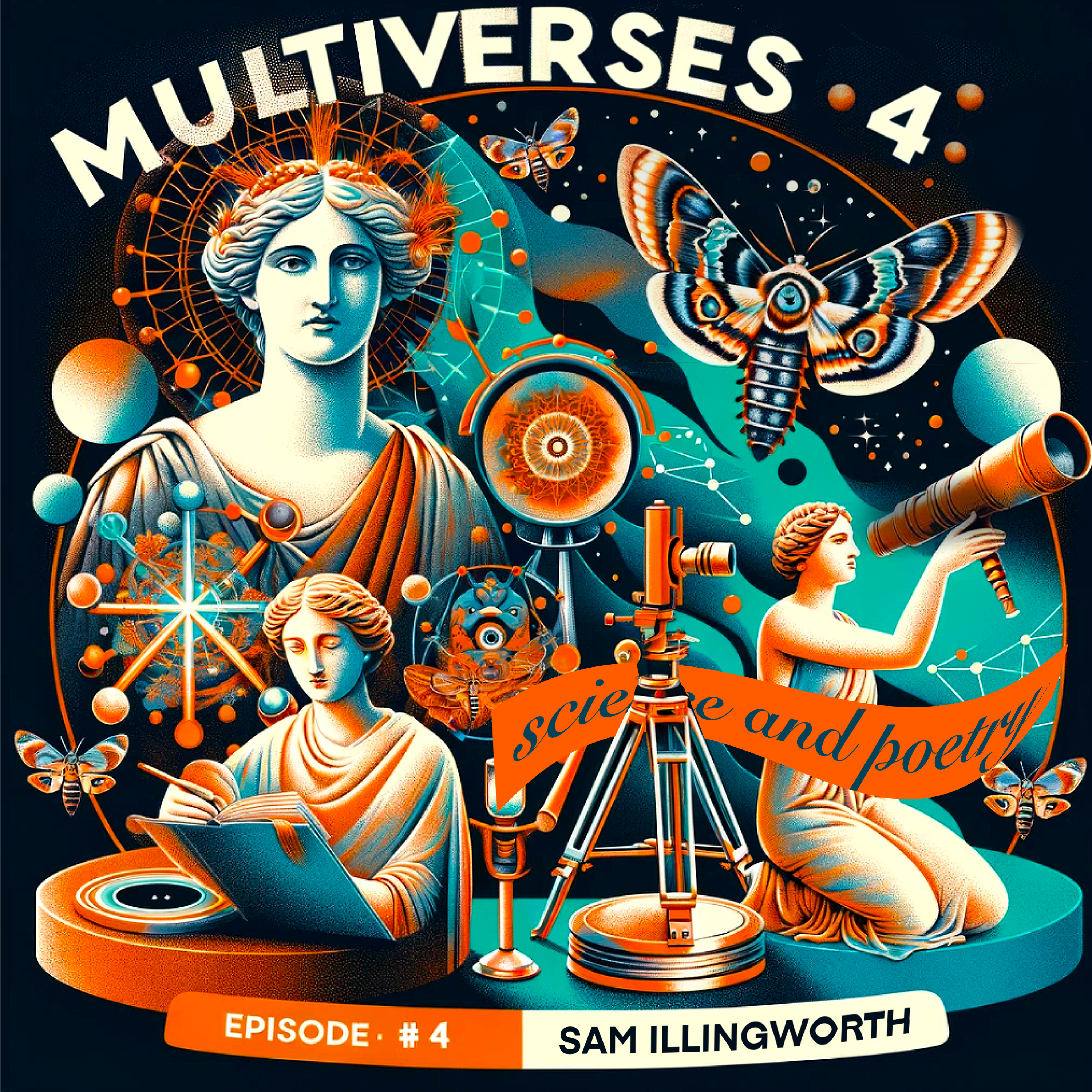
    4| Science & Poetry — Sam Illingworth

    Science and poetry are sometimes caricatured as opposing paradigms: the emotional expression of the self versus the objective representation of nature. But science can be poetic, and poetry scientific. Our guest this week, Sam Illingworth, bridges these worlds. He’s researched scientists who were also poets, and organized workshops for scientists and laypeople using the medium of poetry to create an equitable and open dialogue. In addition to being an Associate Professor at Edinburgh Napier University, Sam is the founder of Consilience, a peer-reviewed journal publishing poetry (which presents such beautifully titled gems as What You Don't See on David Attenborough is All the Waiting) and hosts the Poetry of Science podcast where, each week, he writes a poem in response to recent scientific research. Notes at: multiverses.xyz You can find Sam’s podcast, The Science of Poetry at: https://scipoetry.podbean.com/ His website is here: https://www.samillingworth.com/ Twitter: https://twitter.com/samillingworth His book A Sonnet To Science

  • May 25, 2023 · 1 hr 15 min

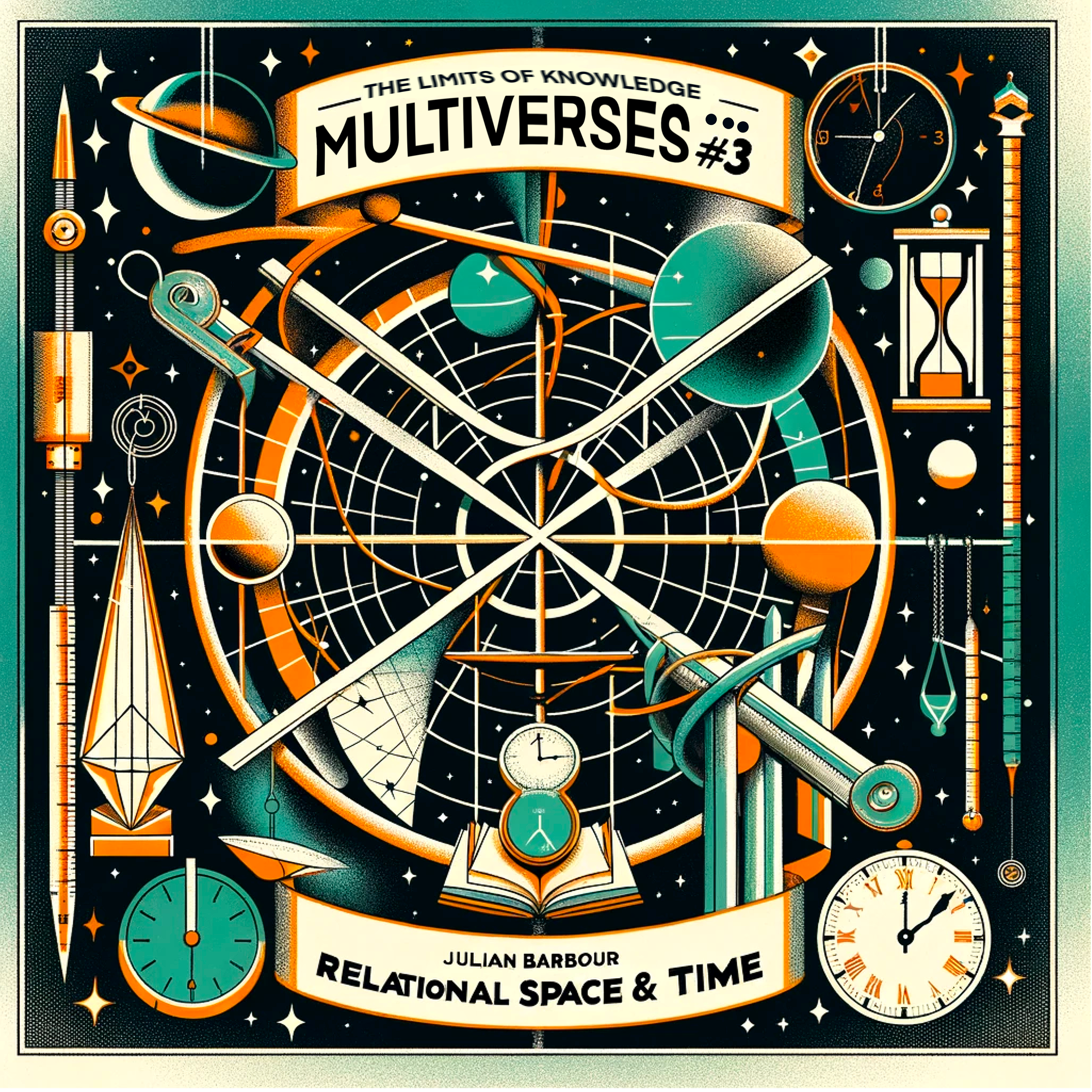
    3| Julian Barbour — Relational Space and Time

    Space and time appear in charts as axes oblivious to the points they demarcate. Similarly, we may feel that we, and all the objects of our worlds, are like such points — and spacetime is a container in which we sit. Julian Barbour is a physicist who has spent six decades arguing against this. He takes the relationist approach of Leibniz and Mach: there is no space without objects and no time without change. Rather space is just the geometric relationships between things. Julian has pioneered theories that recover the predictions of Newtonian mechanics and General Relativity that drop their invocation of imperceptible space, time, and spacetime. Recently he has taken an iconoclastic approach to the arrow of time — looking to a new measure of structure, complexity, and the expansion of the universe instead of the traditional accounts in terms of entropy. Find more at: The podcast home: multiverses.xyz Julian's website: platonia.com Julian's books: The Discovery of Dynamics, The End of Time, The Janus Point

  • May 18, 2023 · 1 hr 27 min

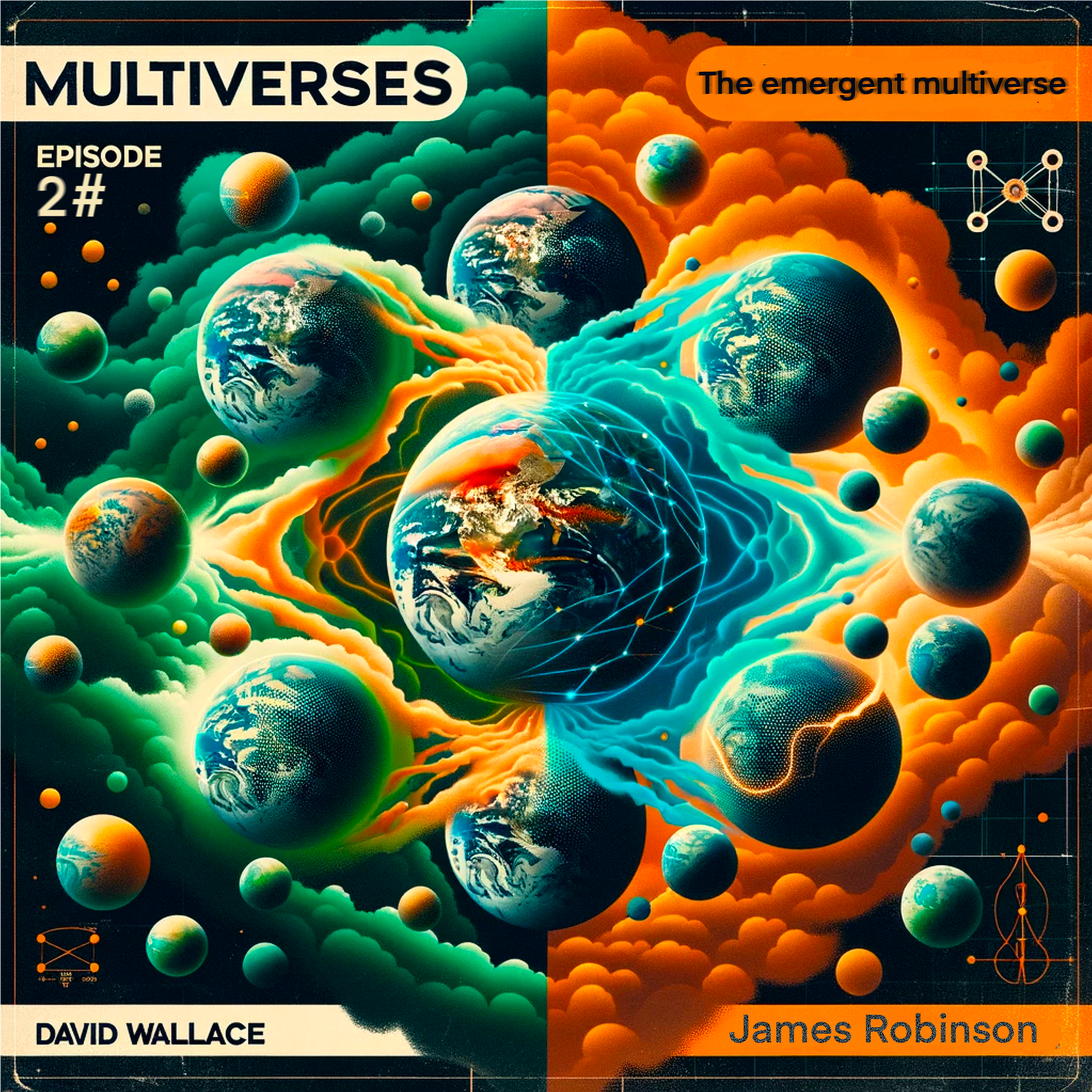
    2 | David Wallace — The Emergent Multiverse

    We live in a branching universe. If it can happen, it does happen. These are the almost incredible claims of the Many Worlds Interpretation of quantum mechanics. Yet today’s guest, David Wallace, makes a case that this is the most grounded way of reading our best theory of nature. While at first sight quantum mechanics seems to say that things (famously, cats!) can occupy impossible states, David argues that a careful reading shows we can take seriously “superpositions” (these apparently weird states) not only at the microscopic level but all the way up to the scale of the universe. This way of thinking about quantum mechanics was first proposed in 1957 by Hugh Everett, David has made important contributions — particularly in the “preferred basis” or “counting problem” which asks how many worlds are there; and also in understanding how a deterministic theory of the world appears indeterministic — probabilistic — to agents. David has PhDs in both physics and philosophy from the University of Oxford and currently holds the Mellon Chair in Philosophy of Science at the University of Pittsburgh. References and discussion on the Multiverses website David Wallace’s research page — https://sites.pitt.edu/~dmw121/ The Emergent Multiverse — the most comprehensive book so far on the Many Worlds intepretation Very Short Introduction to The Philosophy of Physics — does what it says on the tin (very well!)