Skip to content
Artwork for Mike Drop
Society & CulturePersonal JournalsNewsPoliticsExplicit

Mike Drop

Mike Ritland

Mike Drop, hosted by former Navy SEAL and bestselling author Mike Ritland, is a no-holds-barred platform that dives deep into the stories and experiences of extraordinary individuals. Known for his candid and unfiltered approach, Mike interviews guests ranging from special operations veterans and elite athletes to renowned authors and thought leaders, offering listeners a exclusive glimpse into the human side of those who have excelled in their fields. Whether it's discussing the intense challenges of combat or the resilience required to overcome personal adversity, Mike Drop provides a space where real conversations happen.

Play
  • 93 episodes
  • daily
  • Avg 1 hr 8 min
  • English
Counted on this page — what you have heard stays on this device, so it is not something the list can be paged by.
  • Yesterday · 15 min

    Iran’s 48-Hour Ultimatum, a Blockade Strike and Qatar’s Peace Plan | Mike Drop Newsroom

    A U.S. warplane fired on a ship trying to run the blockade on Iran, and Tehran answered with a 48-hour ultimatum and a promise to "rain down hell." MIKE DROP NEWSROOM | 09 NOVEMBER 2026 CENTCOM says a St. Kitts-flagged cargo ship in the Gulf of Oman ignored repeated warnings and tried to break the naval blockade, so U.S. forces ordered the crew clear and a U.S. warplane disabled it with precision munitions. Since July, the blockade has redirected 147 commercial ships and disabled five. Iran's foreign minister says Iran's two-day proposal stands and warned that otherwise "Iran's warriors will rain down hell," while President Trump says new strikes are "highly unlikely" to be necessary and three carriers in the region are "locked and loaded." Mike Ritland breaks down what the 48-hour clock really means for U.S. sailors and air crews, why Iran's threats often don't match its follow-through, and why the third carrier group steaming in from the South China Sea could decide the timing. Also covered: - The debate over whether Russia can actually hand Iran the S-400 - Task Force Iron Gate and the push to hit Iran's land routes - A drone that knocked out power to most of Iraq's Kurdish region, where U.S. troops have long been based - Qatar's peace plan at the White House: lifting the blockade and releasing about $8 billion in frozen Iranian assets - Trump's planned talks with Xi Jinping and Putin at APEC - The White House's $1.5 trillion defense budget request and the December 11 funding deadline Should releasing Iran's frozen money be part of any deal? Tell us in the comments. Subscribe for daily breakdowns of the stories that matter to America's military. Want ad-free Newsroom updates? Join our YouTube membership: https://www.youtube.com/@mikeritland/join 0:00 U.S. warplane fires on a blockade runner; Iran's 48-hour ultimatum 2:27 Can Russia really give Iran the S-400? 4:07 Task Force Iron Gate update 5:29 Drone knocks out power in Iraq's Kurdish region 7:50 Qatar's peace plan at the White House 11:00 Trump to meet Xi and Putin at APEC 13:20 The $1.5 trillion defense budget request Advertising Inquiries: https://redcircle.com/brands Privacy & Opt-Out: https://redcircle.com/privacy

    • Transcript
  • Sunday · 25 min

    Iran Lifts Its Missile Limit as U.S. Strikes Qeshm | Mike Drop Newsroom

    Iran's Revolutionary Guard says it has lifted its self-imposed missile range limit for the United States, putting more U.S. bases inside the danger zone. MIKE DROP NEWSROOM | 08 NOVEMBER 2026 CBS News, citing the AP, reported that an IRGC spokesman said Iran's roughly 1,200-mile missile range limit has been lifted for the United States. Iran has not shown a new missile, but in March it fired two missiles toward Diego Garcia, about 2,400 miles away. Meanwhile U.S. strikes hit Qeshm Island, a U.S. aircraft disabled a blockade runner in the Gulf of Oman, and CENTCOM stood up a new task force to choke off Iran's land routes. Mike Ritland breaks down why he sees the range threat as mostly rhetoric, whether U.S. air defenses have enough interceptors to cover a 2,500-mile radius, and what a CENTCOM task force aimed at Iran's land routes could mean for U.S. forces. Also covered: two more tankers hit mines near Hormuz and what is missing from Iran's seven demands, Gadi Eisenkot's push to replace Netanyahu and what it means for a U.S.-Iran deal, reports that Iran wants Russia's S-400 air defenses, and Congress returning with a December 11 funding clock and an impeachment push against War Secretary Pete Hegseth. Do U.S. bases farther from Iran need to plan as if they're targets now? Tell us in the comments. Subscribe for daily breakdowns of the stories that matter to America's military. Want ad-free Newsroom updates? Join our YouTube membership: https://www.youtube.com/@mikeritland/join 00:00 Iran says it lifted its missile range limit 00:50 What it means for U.S. bases, and the Diego Garcia precedent 02:30 Do U.S. air defenses have enough interceptors? 03:40 U.S. strikes Qeshm and disables a blockade runner 04:50 Task Force Iron Gate targets Iran's land routes 07:40 Could it lead to boots on the ground? 09:15 Two more tankers hit mines near Hormuz 11:10 What's missing from Iran's seven demands 12:35 Eisenkot tapped to replace Netanyahu 13:45 Does a new Israeli leader change a U.S.-Iran deal? 15:45 Russia's S-400 and pipeline lifeline for Iran 17:00 What the S-400 means for U.S. pilots 21:45 Congress returns: funding clock and Hegseth impeachment 24:20 Is the war budget worth it? 25:30 Wrap-up Advertising Inquiries: https://redcircle.com/brands Privacy & Opt-Out: https://redcircle.com/privacy

    • Transcript
  • Friday · 22 min

    CENTCOM Gets Ready to Strike Iran Again | Mike Drop Newsroom

    U.S. Central Command is finalizing preparations to restart major operations against Iran, and President Trump says Americans will know "soon enough." MIKE DROP NEWSROOM | 06 NOVEMBER 2026 U.S. officials told Axios that CENTCOM is finalizing preparations for a possible return to major operations against Iran, though no new order has been given. President Trump met with his national security team Wednesday and Thursday, and officials pointed to the November 9 new moon as favorable for operations. Meanwhile tankers are still burning in the Strait of Hormuz and Iran says its seven conditions must be met before the strait reopens. Mike Ritland breaks down why the new moon matters, what "finalizing preparations" means for U.S. troops in the region, and whether the carrier group headed for the Gulf signals strikes are coming. Also covered: Iran's nuclear proposal through Qatar and its security chief's meeting with Putin, Turkey's parliament approving a defense pact with Saudi Arabia and Pakistan and why a NATO ally in the fight changes everything, War Secretary Pete Hegseth's $350 billion request and the impeachment push, and Gov. Gavin Newsom emptying California's death row. Is the carrier heading to the Gulf a sign strikes are coming, or is there still an off-ramp? Tell us in the comments. Subscribe for daily breakdowns of the stories that matter to America's military. Want ad-free Newsroom updates? Join our YouTube membership: https://www.youtube.com/@mikeritland/join 00:00 CENTCOM finalizes preparations to strike Iran again 01:10 Why the Nov. 9 new moon matters 02:30 What "finalizing preparations" means for troops 03:00 Tankers burn as the U.S. blockade holds 03:50 Iran's seven conditions and the stalemate 05:45 Does the carrier group mean strikes are coming? 06:40 Iran's nuclear offer through Qatar and Putin 10:20 Turkey joins the Saudi-Pakistan defense pact 12:25 Why a NATO ally in the fight changes everything 14:25 Hegseth's $350 billion request and the impeachment push 17:25 Is it worth it? What success looks like 19:40 Newsom empties California's death row 22:05 Wrap-up Advertising Inquiries: https://redcircle.com/brands Privacy & Opt-Out: https://redcircle.com/privacy

    • Transcript
  • Thursday · 23 min

    Iran Says It Took Two U.S. Drones as Tankers Burn in Hormuz | Mike Drop Newsroom

    Iran says it took control of two U.S. attack drones over the Strait of Hormuz as the U.S. military finishes preparations for possible resumed major combat. MIKE DROP NEWSROOM | 05 NOVEMBER 2026 Iran's Revolutionary Guard says its navy's electronic warfare unit took control of two U.S. LUCAS one-way attack drones in the Hormuz area, part of the low-cost drone force the Pentagon has been ramping up. U.S. officials say the military is finishing preparations for possible resumed major combat, while President Trump says there are no immediate plans to strike. Mike Ritland breaks down why U.S. forces need to know now if Iran can really grab drones in flight, why the daily attacks on tankers point to a stalemate in the strait, and whether the administration ramps up or backs off before the December 11 war funding fight. Also covered: two more tankers on fire after mine strikes and the U.S. blockade at six months, impeachment talk building around War Secretary Pete Hegseth, China surging ships and aircraft around Taiwan and whether the Navy can cover two fronts, the Houthis claiming a strike on Riyadh's airport, and Vice President Vance saying the war cost Republicans the midterms. Between now and December 11, do you expect more U.S. strikes on Iran, or a pullback? Tell us in the comments. Subscribe for daily breakdowns of the stories that matter to America's military. Want ad-free Newsroom updates? Join our YouTube membership: https://www.youtube.com/@mikeritland/join 00:00 Iran says it seized two U.S. attack drones 00:50 Why the LUCAS drone program matters 02:30 Strikes before December 11, or a pullback? 04:30 Tankers burn in the strait as the blockade holds 05:25 Qatar's draft deal and the stalemate 09:05 Impeachment talk builds around Hegseth 14:10 China surges ships and aircraft around Taiwan 15:25 Can the Navy cover two fronts at once? 16:40 Houthis claim a strike on Riyadh's airport 18:20 December 11: Congress and war funding 22:50 Wrap-up Advertising Inquiries: https://redcircle.com/brands Privacy & Opt-Out: https://redcircle.com/privacy

    • Transcript
  • Wednesday · 21 min

    Israel Warns of Iranian Chemical Weapons, NATO Warns Poland, and the New Congress | Mike Drop Newsroom

    Democrats won control of Congress, putting war funding for the Iran conflict on the table, while Israel warns that Iran is weighing chemical weapons. MIKE DROP NEWSROOM | 4 NOVEMBER 2026 Democrats won control of both the House and Senate on Tuesday. Current government funding runs out December 11, and the new Congress is sworn in January 3, with Democrats promising bills to end the Iran war. Meanwhile, Israel has told the U.S. and Gulf states that Iran is considering chemical weapons if full-scale fighting resumes, though some U.S. officials doubt the intelligence. Mike Ritland breaks down why the short window before the funding deadline could raise the risk to U.S. troops, what a chemical weapons threat would mean for forces in the region, and why both parties should treat the election as a lesson, not a victory lap. Also covered: an update on the EUCOM warning to troops and families in Europe, Poland reinforcing its border with Russia after a warning from NATO's top commander, and Trump saying $4 billion a year in military aid to Israel will end. Is Israel's chemical weapons warning a credible threat, or a push to pull the U.S. back into the fight? Tell us in the comments. Subscribe for daily breakdowns of the stories that matter to America's military. Want ad-free Newsroom updates? Join our YouTube membership: https://www.youtube.com/@mikeritland/join 0:00 Democrats win Congress; war funding deadline December 11 0:45 Mike's take on the election 9:15 Update: the EUCOM warning in Europe 11:50 Israel warns Iran is weighing chemical weapons 16:20 Poland reinforces its border after NATO warning 18:55 Trump says $4 billion a year in aid to Israel will end 20:30 Wrap-up Advertising Inquiries: https://redcircle.com/brands Privacy & Opt-Out: https://redcircle.com/privacy

  • November 3 · 20 min

    Iran Fires on a U.S. Jet, the U.S. Hits Qeshm Island, and Military Families Go on Alert | Mike Drop Newsroom

    Iran fired a surface-to-air missile at a U.S. fighter jet over the Strait of Hormuz, and U.S. forces struck back at Qeshm Island on the eve of Election Day. MIKE DROP NEWSROOM | 3 NOVEMBER 2026 U.S. officials say Iran's Revolutionary Guard fired on an American jet Monday evening, and U.S. forces answered with a limited strike on Qeshm Island, the largest island in the Persian Gulf. Officials called it defensive and say it does not signal a return to major combat. In Europe, U.S. European Command launched a "See Something, Do Something" campaign urging troops and families to vary their routes, turn off geotagging on fitness apps and limit posts about travel. Mike Ritland breaks down whether a measured response is enough of a deterrent when Iran is still shooting at U.S. aircraft during talks, why EUCOM's warning to families in Europe is a big deal, and why letting aid lapse for Navy families evacuated from Bahrain would be an unforced error. Also covered: Navy families evacuated from Bahrain could lose safe haven housing aid, Russia's posture ahead of talks with the U.S. and the future of U.S. support for Ukraine, China hosting Oman's sultan and Iranian officials as it pushes to reopen Hormuz, and Election Day. Should the U.S. answer Iran with a measured strike, or take the gloves off? Tell us in the comments. Subscribe for daily breakdowns of the stories that matter to America's military. Want ad-free Newsroom updates? Join our YouTube membership: https://www.youtube.com/@mikeritland/join 0:00 Iran fires on a U.S. jet; U.S. strikes Qeshm Island 4:05 EUCOM warns troops and families across Europe 9:05 Navy families evacuated from Bahrain could lose housing aid 12:40 Russia, Ukraine and the upcoming U.S.-Russia talks 17:20 China steps into the Hormuz fight 19:55 Election Day Advertising Inquiries: https://redcircle.com/brands Privacy & Opt-Out: https://redcircle.com/privacy

  • November 3 · 3 hr 1 min

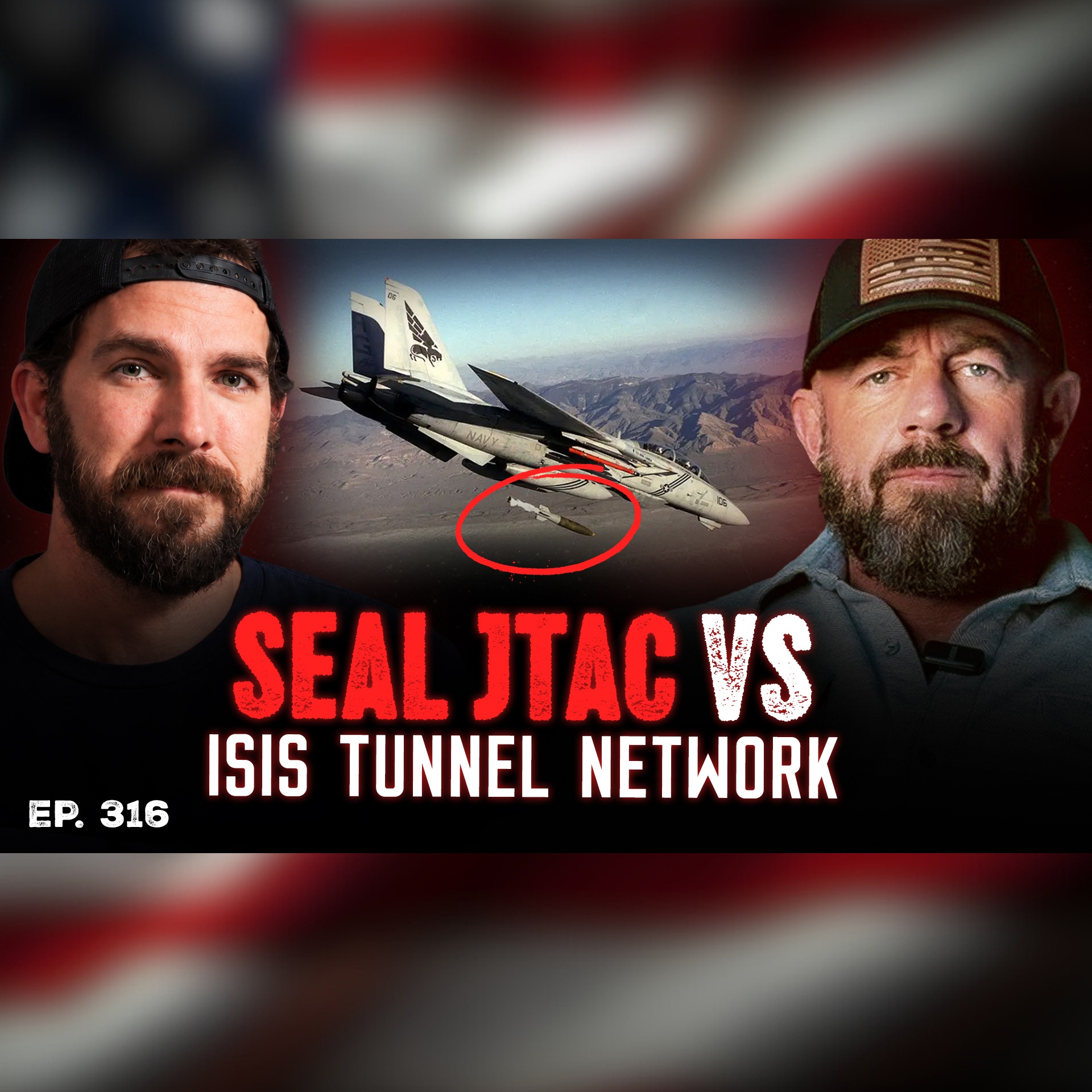
    Navy SEAL JTAC Reveals the Mistake That Exposed ISIS's Hidden Tunnel Network | EP 316

    Former Navy SEAL Justin Hughes, BUD/S Class 293, SEAL Team Five, JTAC, and BUD/S second phase instructor, informally known as a professional drowner, joins Mike Ritland. He’s also a self-taught oil painter, and Mike calls his work spectacular. They dig into second phase training and the pool comp test, where students get bloody noses, teeth ripped out, and end up throwing up underwater and blacking out. Justin also explains how often he had to pull drowning students up and resuscitate them, and why he refused to lower the standard. Advertising Inquiries: https://redcircle.com/brands Privacy & Opt-Out: https://redcircle.com/privacy

    • Transcript
  • November 2 · 18 min

    Iran Threatens Strikes Anywhere. The 14-Day Plan for Your Home | Mike Drop Newsroom

    Iran's Supreme Leader has ordered an immediate response with no geographic limit to any new attack, and Mike Ritland lays out how he thinks about being ready at home. MIKE DROP NEWSROOM | 2 NOVEMBER 2026 Iran's Supreme Leader ordered the military to meet any attack with an "immediate, impactful and geographically unrestricted response," and to update its target bank so all kinds of U.S. and Israeli assets are within reach. President Trump says one or two sites in Iran remain, including Pickaxe Mountain, and Secretary of State Marco Rubio says no decision has been made on resuming strikes. Mike Ritland breaks down what an unrestricted threat could mean here at home, then answers the question viewers keep asking: what does being prepared actually look like? He walks through a simple 10-to-14-day plan for water, power, food, medical supplies and light, plus what to do if it runs longer than two weeks. For deeper training, he points viewers to Clint Emerson and Mike Glover. Also covered: the standoff in the Strait of Hormuz as both sides claim control; North Korea's latest weapons test; China's coast guard pressing in off Taiwan; and why the U.S. is getting involved in Russian gas to Europe. Could your household last 14 days with no power and no store runs? Tell us what's in your kit in the comments. Subscribe for daily breakdowns of the stories that matter to America's military. Want ad-free Newsroom updates? Join our YouTube membership: https://www.youtube.com/@mikeritland/join 0:00 Iran orders a response with no geographic limit 1:30 Prepping at home: the 14-day plan 3:15 Water first 5:35 Food and power 6:30 Medical, firearms and light 8:15 Past two weeks: a secondary location 10:20 Hormuz standoff: who controls the strait? 12:20 North Korea tests during U.S. air drills 13:25 China's coast guard off Taiwan 16:45 Russian gas, Europe and the U.S. Advertising Inquiries: https://redcircle.com/brands Privacy & Opt-Out: https://redcircle.com/privacy

    • Transcript
  • November 1 · 18 min

    Iran Blinded U.S. Radars, Then Hit 26 Bases | Mike Drop Newsroom

    Iran went after America's radars first, then hit hangars, warehouses and troop housing at 26 bases across the Middle East. MIKE DROP NEWSROOM | 1 NOVEMBER 2026 A new AP satellite analysis found more than 115 drone and missile strikes claimed by Iran or its militias damaged or destroyed structures at 26 bases and sites with U.S. equipment through August. Iran hit early-warning radars first, including a radar in Jordan that is one of only 13 the Army owns, then went after aircraft hangars, warehouses and barracks. Ali Al Salem Air Base in Kuwait was hit at least 30 times, and a Congressional Research Service report says 15 U.S. aircraft were damaged. Mike Ritland breaks down why the order of those strikes matters: it is the same playbook the U.S. uses, and it shows Iran can now reach every base in the region if strikes resume after Tuesday's election. He also explains why he doesn't think the Pentagon should publish its own damage assessments. Also covered: Trump says the U.S. still has one or two sites to hit in Iran, including Pickaxe Mountain; the Navy blockade has now turned back 144 ships as Iran offers to reopen the Strait of Hormuz; a report that Russian satellites helped Iran's allies target Saudi Arabia; the U.S., South Korea and Japan on North Korean denuclearization; and what Tuesday's midterms mean for war powers and the troops. Should the Pentagon tell Americans how badly our bases were hit, or keep it classified? Tell us in the comments. Subscribe for daily breakdowns of the stories that matter to America's military. Want ad-free Newsroom updates? Join our YouTube membership: https://www.youtube.com/@mikeritland/join 0:00 Iran hit U.S. radars first, then 26 bases 5:15 Trump: one or two sites left, including Pickaxe Mountain 7:40 Navy blockade turns back 144 ships 10:45 Report: Russian satellites helped Iran's allies 13:35 North Korea denuclearization talks 15:55 Tuesday's midterms and the war decision Advertising Inquiries: https://redcircle.com/brands Privacy & Opt-Out: https://redcircle.com/privacy

  • October 30 · 23 min

    A U.S. General LEAKED Iran War Secrets. Now DOJ Has the Case | Mike Drop Newsroom

    The Pentagon's top war planner has been fired and his case referred to the Justice Department after he was accused of leaking classified information about the Iran and Ukraine wars. MIKE DROP NEWSROOM | 30 OCTOBER 2026 Army Lt. Gen. Brett Sylvia, the Joint Staff's director for strategy, plans and policy, coordinated the options for the Iran campaign. A Pentagon official accused him of leaking classified information to reporters, and an internal investigation report seen by Axios says he admitted it. Pentagon spokesman Sean Parnell said classified information is "not personal property." Mike Ritland breaks down why a leak like this could cost U.S. lives, why the punishment at the top looks lighter than it would for a lower-ranking service member, and whether this should be treated as treason. Also covered: about $35 million in U.S. military aid to a Cameroonian unit tied to a third-country deportation deal, U.S. economic growth of 3.4% last quarter, the national debt passing 100% of GDP, and a federal judge refusing to set aside 20,000 California ballots the administration says are linked to non-citizens. Should leaking war plans be prosecuted as treason, or is firing enough? Tell us in the comments. Subscribe for daily breakdowns of the stories that matter to America's military. Want ad-free Newsroom updates? Join our YouTube membership: https://www.youtube.com/@mikeritland/join 00:00 Pentagon's Iran war planner fired over leaks 04:33 Military aid to Cameroon tied to deportations 16:03 U.S. economy grows 3.4% 16:55 National debt passes 100% of GDP 19:59 Judge rejects bid to set aside California ballots Advertising Inquiries: https://redcircle.com/brands Privacy & Opt-Out: https://redcircle.com/privacy

  • October 29 · 19 min

    Iran Dared CENTCOM Over Hormuz. Now U.S. Forces Are Lining Up to Strike AGAIN | Mike Drop Newsroom

    The U.S. has told Middle East allies to prepare for renewed strikes on Iran after the Nov. 3 elections, and for Iran and its proxies to hit back. MIKE DROP NEWSROOM | 29 OCTOBER 2026 Two diplomats told the AP that U.S. officials warned allies a new round of strikes could last several days, with Iranian retaliation expected against energy sites and critical infrastructure. The USS Theodore Roosevelt and amphibious ships with Marines are already in the region, and President Trump has not made a final decision. Meanwhile, Iran's Revolutionary Guard claims three tankers caught fire after hitting mines in the Strait of Hormuz and dared CENTCOM to prove the strait is clear. CENTCOM calls the claim false. Mike Ritland breaks down whether Iran strikes before the U.S. does, what units actually do in the days before a strike, and why even a false claim in Hormuz can choke off shipping. Also covered: Hegseth fires the Pentagon's top war planner days before the possible strike window, Netanyahu falls short of a majority but stays in charge, the U.S. ties Russian satellite help to Houthi strikes on Saudi airports, and a breach exposes about 40,000 DHS employees, including ICE and Border Patrol. Should the U.S. strike first, wait until after the election, or try to negotiate? Tell us in the comments. Subscribe for daily breakdowns of the stories that matter to America's military. Want ad-free Newsroom updates? Join our YouTube membership: https://www.youtube.com/@mikeritland/join 00:00 U.S. tells allies to prepare for new Iran strikes 04:28 Iran dares CENTCOM over Hormuz mines 07:52 Hegseth fires the Pentagon's top war planner 11:38 Netanyahu falls short of a majority 12:53 Houthis, Saudi airports and Russian satellites 17:45 DHS breach exposes 40,000 employees Advertising Inquiries: https://redcircle.com/brands Privacy & Opt-Out: https://redcircle.com/privacy

  • October 28 · 19 min

    5 Army Bases Get Nuclear REACTORS as the Pentagon Preps for a Grid Attack | Mike Drop Newsroom

    Five Army bases are first in line for their own nuclear reactors as the Pentagon plans for every major U.S. base to run on its own for 90 days if the grid goes down. MIKE DROP NEWSROOM | 28 OCTOBER 2026 The Army has paired five companies with Fort Bragg, Fort Campbell, Fort Hood, Fort Benning and Fort Drum to build nuclear microreactors, a deal worth up to $2.2 billion, with the first reactor targeted for 2028. It's the first concrete piece of FORTRESS America, the Pentagon's plan to make stateside bases self-sufficient for power, water, fuel and communications for at least 90 days, with no price tag announced yet. Mike Ritland breaks down why the Pentagon is preparing U.S. bases to stand alone now, what it signals about threats to the homeland, and why the same small-reactor model could help states fix their strained power grids. Also covered: two men facing new charges in the Iran-linked RAF Fairford incident and who should guard U.S. bases overseas, Israel's election ending with no clear majority, U.S. forces telling ships to stay clear of the Strait of Hormuz as oil stays high, and the Iran war's cost topping $47 billion. Do you live near one of these five bases? Would you want a microreactor next door? Tell us in the comments. Subscribe for daily breakdowns of the stories that matter to America's military. Want ad-free Newsroom updates? Join our YouTube membership: https://www.youtube.com/@mikeritland/join 00:00 Nuclear reactors for 5 Army bases and the 90-day FORTRESS plan 07:17 RAF Fairford: Iran-linked plot and who guards U.S. bases abroad 11:30 Israel's election: no clear majority 13:12 Ships told to stay clear of Hormuz as oil stays high 13:55 Iran war cost tops $47 billion Advertising Inquiries: https://redcircle.com/brands Privacy & Opt-Out: https://redcircle.com/privacy

  • October 27 · 3 hr 51 min

    FBI Negotiator Reveals What REALLY Happened During the Boston Bomber's Capture | Ep. 315

    Airborne Ranger, FBI Hostage Rescue Team operator, sniper, breacher, and FBI Crisis Negotiation Unit veteran Kyle Vowinkel, author of the upcoming book Shaping Chaos, sits down with Mike Ritland to break down the night he was called in to talk to the most wanted man in America. With 400 officers on scene, a dozen flashbangs thrown into the boat, and nothing working, the call came down from the FBI director to try talking. Kyle walks through the ten minutes of dead silence, the word that finally broke it, and the hour and a half that followed. Advertising Inquiries: https://redcircle.com/brands Privacy & Opt-Out: https://redcircle.com/privacy

    • Transcript
  • October 26 · 18 min

    The Pentagon Is Preparing U.S. Bases to Survive ALONE for 90 Days | Mike Drop Newsroom

    U.S. forces in the Middle East could launch a major new strike on Iran within 96 hours of a presidential order, and the target list now includes Iran's energy infrastructure. MIKE DROP NEWSROOM | 26 OCTOBER 2026 According to CNN, U.S. officials say forces already in the region could launch a bigger operation than past strikes within 96 hours of an order, with a target list covering energy infrastructure, military sites and nuclear facilities. Some officials think an order could come before the year ends, most likely after the Nov. 3 midterms. Mike Ritland breaks down what the new readiness posture signals, why he doesn't think this is only pressure for a deal, and why Iran's track record of dragging out talks makes him doubt another round of negotiations. Also covered: the Houthis firing a missile barrage at Saudi Arabia and why they're the most likely group to hit U.S. ships and Gulf bases if strikes resume; a Pentagon plan for major U.S. bases at home to run on their own power, water and fuel for 90 days; Saudi, Pakistani and Turkish officials meeting Iran in Tehran; and Brazil's presidential runoff. Strike now, or try for one more deal? Tell us in the comments. Subscribe for daily breakdowns of the stories that matter to America's military. Want ad-free Newsroom updates? Join our YouTube membership: https://www.youtube.com/@mikeritland/join 00:00 U.S. forces could strike Iran within 96 hours 00:50 Intel warnings and the Riyadh embassy drawdown 01:15 Why this posture is different 02:30 Can pressure force a deal? 03:20 Strike now, or one more deal? 04:25 Houthis fire a missile barrage at Saudi Arabia 05:15 Why the Houthis are the biggest threat to U.S. forces 06:15 U.S. missile defense stocks 07:05 How U.S. forces could hit the Houthis 08:45 Pentagon: bases must run 90 days on their own 10:00 Why that's never happened before 11:15 What it means for civilians near bases 13:15 U.S. partners meet Iran in Tehran 14:35 Help or hurt U.S. pressure? 16:40 Brazil's election 18:20 Wrap-up Advertising Inquiries: https://redcircle.com/brands Privacy & Opt-Out: https://redcircle.com/privacy

  • October 24 · 10 min

    Iran Bars U.S. Warships From the Gulf as Plots Against Americans Advance | Mike Drop Newsroom

    Iran's armed forces chief says U.S. warships will never be allowed in the Persian Gulf, as a U.S. envoy says strikes on Iran could come this weekend. MIKE DROP NEWSROOM | 24 OCTOBER 2026 Iran's armed forces chief of staff, Ali Abdollahi, says Iran will not allow U.S. military ships in the Persian Gulf under any circumstances. Hours earlier, U.S. ambassador to Turkey Tom Barrack said a U.S. strike on Iran could "absolutely" come this weekend, while President Trump said he didn't know anything about it and has said strikes would wait until after the Nov. 3 midterms. Mike Ritland breaks down the mixed signals, why he doesn't think strikes are likely before the election, and why he believes election timing shouldn't drive military decisions. Also covered: an intelligence memo from DNI Jay Clayton warning that Iranian plots to kill Americans abroad have reached "advanced stages," the State Department cutting embassy staff across the region, why the memo was made public, and Houthi missiles fired toward Saudi Arabia's Red Sea route around Hormuz. Should election timing play any role in when the U.S. strikes Iran? Tell us in the comments. Subscribe for daily breakdowns of the stories that matter to America's military. Want ad-free Newsroom updates? Join our YouTube membership: https://www.youtube.com/@mikeritland/join 00:00 Iran: no U.S. warships in the Gulf 00:25 U.S. envoy: a strike could come this weekend 00:50 Mixed signals on strike timing 01:40 Why the administration is waiting 02:05 Should politics drive war timing? 03:45 Iranian plots against Americans reach "advanced stages" 04:10 Embassies and bases cut staff 04:35 Why make the memo public? 06:15 Building the case for strikes? 07:05 How the FBI handles plots at home 07:55 Houthis target Saudi Arabia's Hormuz bypass 08:45 Iran's reach through the Houthis 09:10 U.S., UK and France after Nov. 3? 09:35 Wrap-up Advertising Inquiries: https://redcircle.com/brands Privacy & Opt-Out: https://redcircle.com/privacy

  • October 21 · 16 min

    U.S. Sends 10,000 More Sailors and Marines Toward Iran as Oil Stays Over $100 | Mike Drop Newsroom

    Roughly 10,000 more U.S. sailors and Marines are headed for the Middle East with the USS Theodore Roosevelt and the USS Makin Island, as the buildup around Iran grows. MIKE DROP NEWSROOM | 21 OCTOBER 2026 The USS Theodore Roosevelt carrier strike group and the USS Makin Island amphibious group, with the 13th Marine Expeditionary Unit, are headed for the Middle East and expected by the end of November, joining the USS George H.W. Bush and USS George Washington. Mike Ritland breaks down what the added carrier and amphibious package signal to Iran, what a Marine Expeditionary Unit brings that air power can't, and why any move toward troops on the ground would change the cost of this war. Also covered: Iran keeps hitting ships in Hormuz even as Gulf oil exports climb back above pre-war levels, why oil is still over $100 a barrel, the administration's shift on Russia and Ukraine, and reports that Elon Musk pushed to slow the military version of Starlink that Ukraine relies on. Will resumed strikes on Iran bring oil prices down, or push them higher? Tell us in the comments. Subscribe for daily breakdowns of the stories that matter to America's military. Want ad-free Newsroom updates? Join our YouTube membership: https://www.youtube.com/@mikeritland/join 00:00 10,000 more sailors and Marines head toward Iran 01:40 What a Marine Expeditionary Unit adds 02:55 Why troops on the ground change everything 04:10 Headlines vs. opinions 05:50 Iran keeps hitting ships, but more oil gets out 06:40 Why oil is still over $100 08:20 Can strikes bring prices down? 09:35 The shift on Russia and Ukraine 10:50 Musk and the Starlink slowdown 12:55 The U.S., Russia and China at one table 14:35 Gas prices and how Americans vote 15:50 Your take Advertising Inquiries: https://redcircle.com/brands Privacy & Opt-Out: https://redcircle.com/privacy

  • #314
    October 20 · 4 hr 21 min

    Delta Force Veteran Reveals Why Some Teammates Called Him a Traitor | Ep. 314

    In this episode, retired U.S. Army veteran Tom Spooner discusses his 21 years in the 82nd Airborne, 7th Special Forces Group, and Delta Force, and how he was an alcoholic who still crushed it in the 82nd. He explains how a sponsor, a notebook, and a very different idea of God helped him get sober. He also covers the Gulf War, going through Delta selection right around 9/11, and the 2006 mortar strike that left him with an undiagnosed brain injury, along with the moral injury that came with it. The conversation also explores Iran, whether the Iraq War was worth it, and the work Spooner is doing now as co-founder and president of Warriors Heart. Advertising Inquiries: https://redcircle.com/brands Privacy & Opt-Out: https://redcircle.com/privacy

    • Transcript
  • October 20 · 12 min

    Hegseth’s Secret Israel Trip, Iran’s Reaper Claim and Britain Steps In | Mike Drop Newsroom

    Secretary of War Pete Hegseth made an unannounced visit to an Israeli air base that hosts U.S. tankers and fighter jets, as the U.S. and Israel discuss resuming major combat operations against Iran. MIKE DROP NEWSROOM | 20 OCTOBER 2026 Hegseth met Israeli Prime Minister Benjamin Netanyahu at Ovda Air Base in southern Israel, with UAE officials present, according to Axios. Mike Ritland breaks down why a trip like this usually means plans are already in motion, why any decision lands on U.S. troops in the region first, and whether the U.S. should finish the job in Iran now or keep up the economic pressure. Also covered: Iran's claim that it shot down a U.S. MQ-9 Reaper over the Strait of Hormuz, and Britain sending fighter jets to defend Saudi Arabia after a Houthi missile strike killed dozens of Yemeni soldiers. Finish the job in Iran now, or keep the pressure on and wait? Tell us in the comments. Subscribe for daily breakdowns of the stories that matter to America's military. Want ad-free Newsroom updates? Join our YouTube membership: https://www.youtube.com/@mikeritland/join 00:00 Hegseth's unannounced trip to Israel 00:45 What it means for U.S. troops 01:40 Why go in person, and why now? 02:30 Finish the job or keep the pressure on? 05:00 Is Iran comparable to World War II? 06:30 Iran claims it shot down a U.S. Reaper 09:10 Houthi strike kills dozens; Britain sends jets to Saudi Arabia 11:15 Will the U.S. get pulled in? 11:40 Wrap-up Advertising Inquiries: https://redcircle.com/brands Privacy & Opt-Out: https://redcircle.com/privacy

  • October 19 · 19 min

    Iran Demands U.S. Forces Leave Hormuz, Ships Attacked Again | Mike Drop Newsroom

    Iran says the Strait of Hormuz reopens only if the U.S. lifts its naval blockade and leaves the region, as attacks on ships near the strait hit a record for the war. MIKE DROP NEWSROOM | 19 OCTOBER 2026 Iran's foreign minister laid out Tehran's conditions on Sunday: lift the U.S. blockade of Iranian ports, lift oil sanctions and end hostilities, while an Iranian army spokesman said the strait opens when U.S. forces leave. Mike Ritland breaks down whether the blockade still serves the goal of a non-nuclear Iran, and what it costs to keep U.S. sailors in range of drones, fast boats and mines while the war drags on. Also covered: the State Department's warning to Americans across the Middle East as the Houthi-Saudi fight widens, the airman killed in a rappelling demonstration before the Navy-UTSA game, and the rioting sweeping France. Is the Hormuz blockade still worth it? Tell us in the comments. Subscribe for daily breakdowns of the stories that matter to America's military. Want ad-free Newsroom updates? Join our YouTube membership: https://www.youtube.com/@mikeritland/join 00:00 Iran: Hormuz reopens when the U.S. leaves 00:58 Is the blockade still necessary? 03:30 Waiting until after Nov. 3 04:45 U.S. troops in range of drones, boats and mines 05:50 State Department warns Americans across the Middle East 08:40 Airman killed in Alamodome rappelling demonstration 12:25 Rioting sweeps France 14:30 Immigration and capacity 19:30 Wrap-up Advertising Inquiries: https://redcircle.com/brands Privacy & Opt-Out: https://redcircle.com/privacy

  • October 18 · 12 min

    Iran’s New Defense Chief Threatens U.S. Troops, Tankers Burn in Hormuz | Mike Drop Newsroom

    Iran's new defense minister, a veteran of its missile program, says the U.S. will take casualties if strikes resume, as new details emerge about the Kuwait attack that killed six American troops. MIKE DROP NEWSROOM | 18 OCTOBER 2026 Iran's parliament confirmed Mehrdad Akhlaghi Ketabchi, a U.S.-sanctioned veteran of its missile program, as defense minister, and his first message was a threat aimed at American troops in the region. Mike Ritland breaks down why that threat deserves attention, and what the Kuwait strike that killed six U.S. troops says about the countermeasures still protecting our bases. His take: it's not a reason to back off, but leadership can't leave gaps in force protection again. Also covered: two more tankers burning in the Strait of Hormuz as the U.S. and Iran disagree on what hit them, $10 gas and $110 oil, and President Trump's order exempting Russia from new sanctions as Washington looks for relief at the pump. Are U.S. bases in the region better protected now than they were in March? Tell us in the comments. Subscribe for daily breakdowns of the stories that matter to America's military. Want ad-free Newsroom updates? Join our YouTube membership: https://www.youtube.com/@mikeritland/join 00:00 Iran's new defense chief threatens U.S. troops 01:25 The Kuwait strike: a husband's question for JD Vance 02:50 How seriously to take Iran's threats 03:45 Force protection can't have gaps 04:30 Two more tankers burning in Hormuz 05:20 $110 oil and $10 gas 07:25 Trump exempts Russia from new sanctions 10:25 "It's the economy, stupid" 11:40 Your take Advertising Inquiries: https://redcircle.com/brands Privacy & Opt-Out: https://redcircle.com/privacy

Showing 1–20 of 93 episodes