#19 (EN): Building on Strengths with CliftonStrengths
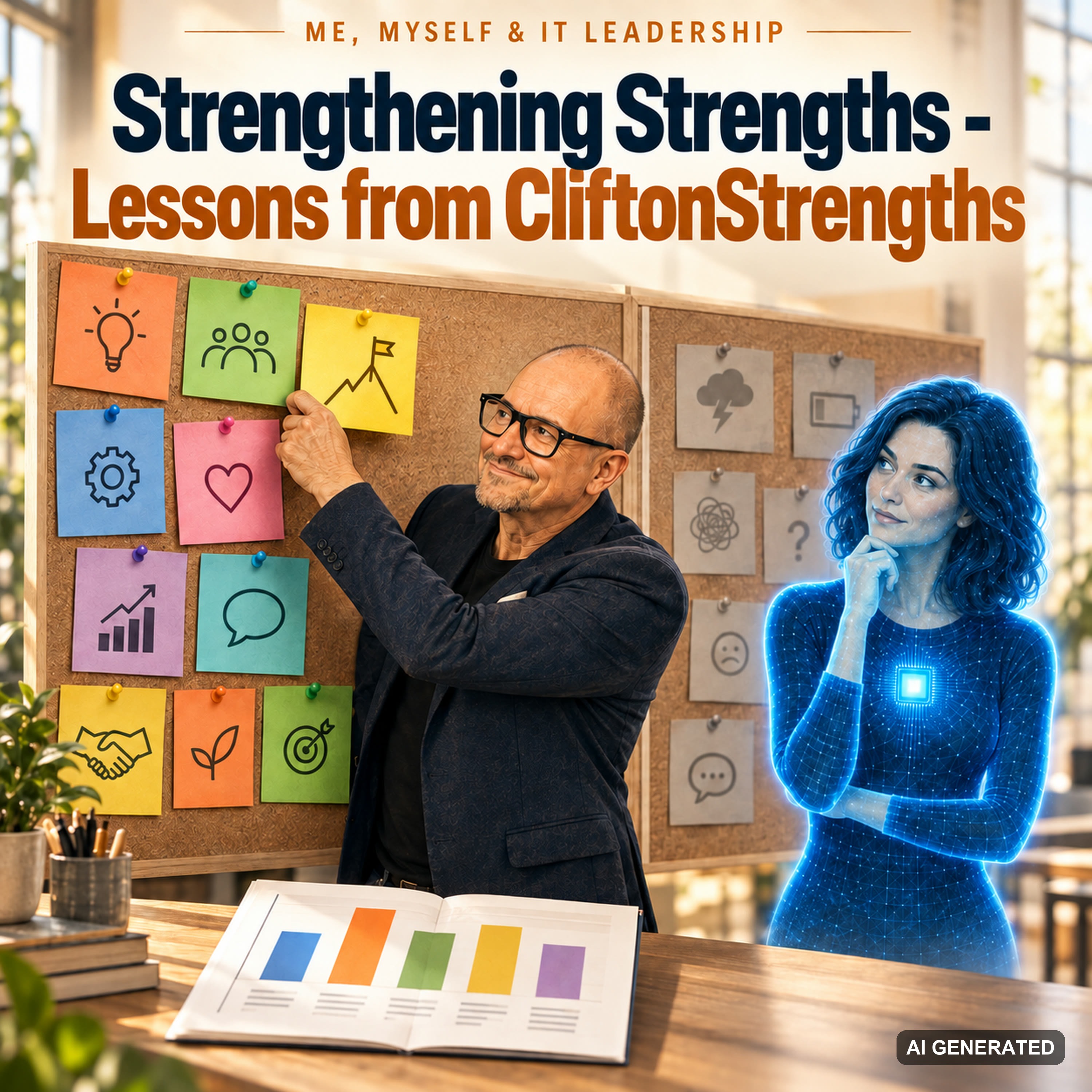
This episode looks at why so much leadership energy goes into fixing weaknesses instead of amplifying what people already do well. Daniel and Nova walk through CliftonStrengths, the Gallup instrument built on Don Clifton's reversal of the classic psychology question, and discuss what it actually measures, what it costs, and where the scientific criticism around reliability and validity is justified. They separate the hype from the substance: what gets overrated, like printed reports and one-off workshops, and what gets underestimated, like conflict de-escalation, team composition, and the relief of being allowed to have gaps. Daniel also shares free alternatives to CliftonStrengths and a concrete three-question framework for applying strengths thinking to real team decisions. Key topics: - Why closing weakness gaps has worse leverage than amplifying existing strengths, and the math behind that argument - How CliftonStrengths works in practice: the paired-statement test, the 34 talent themes, the four domains, and typical cost - Honest engagement with methodological criticism: test-retest reliability, provider-led validation, and the Barnum effect - Why the value of the instrument lies in creating shared vocabulary for a team, not in measurement precision - Three overrated aspects: the printed report, one-off workshops without follow-up, and using talent profiles to determine job roles - Three underestimated effects: psychological relief, conflict de-escalation, and better team composition through deliberate difference - The self-report problem: answering strategically versus answering as a wished-for self-image, and why both break the model - Free alternatives to CliftonStrengths, including VIA Character Strengths, High Five, and Big Five or HEXACO - A practical three-question framework for leaders: amplify, organize, tolerate Key takeaway: Stop trying to create well-rounded people. Give tasks to whoever is naturally strong at them, manage relevant gaps through people or process instead of training them away, and openly tolerate weaknesses that do not matter for the role. This starts with the leader modeling it first, not with a vendor or a workshop.