


Counted on this page — what you have heard stays on this device, so it is not something the list can be paged by.
- MT
 Yesterday · 7 min
AI food slop is on the menu
It's that time of year when we've all got food on the brain. Images of glistening turkeys and steaming pies right out of the oven. But, increasingly out in the world, you might have noticed those kinds of images looking a bit off. Thanks to AI. It's the topic for today's “Uncanny AI,” our regular series about those times AI just makes us feel icky. Brady Brickner-Wood wrote about the scourge of AI food images for The New Yorker. He said the worst examples can look sweaty, unnaturally fractal, almost insect-like. More on this: “The Unique Horrors of A.I. Food Slop” from The New Yorker
- MT
 Wednesday · 13 min
Why Silicon Valley can’t let go of its superstar CEOs
Just last week, NVIDIA’s board delivered a pretty definitive-sounding message: Jensen Huang would not be returning as CEO. But of course, things changed, quickly. And now, Huang is back as CEO. And this idea that the fate of a company — maybe even the economy — rests in the hands of one man, a charismatic founder? That mythology has long been foundational to the culture of the tech industry, says David Karpf, a professor of political communication at George Washington University. More on this Inside Nvidia, Not Everyone Is Celebrating Jensen Huang’s Return — from Wired Inside the Trump pressure campaign that restored Jensen Huang as Nvidia’s CEO — from CNN Nvidia brought Jensen Huang back. But the investigations aren’t over — from CNBC
- MT
 Tuesday · 10 min
What happens if AI becomes its own successor?
A new report from from the AI safety non-profit METR has a lot of AI insiders warning about something called recursive self-improvement or RSI — where AI sort of builds itself, leading to a rapid explosion in capabilities. Rachel Steratore, a senior researcher at RAND, says now is the time to prepare. More on this I Spent a Year Talking to Anthropic Employees. Here’s What They Believe — from The New York Times Anthropic warns that it’s very close to RSI capability, aka self-building AI — from TechCrunch Recursive Self-Improvement and Automated AI Research and Development — from RAND
- MT
 Monday · 10 min
Hollywood brings Big Tech's drama to the big screen
Computers and code might not seem like blockbuster material. But Hollywood has often been fascinated by tech — from the 2010 film "The Social Network" to a slew of new releases this year. There's a darker update to the Mark Zuckerberg story with "The Social Reckoning;" then “Artificial,” a biopic of OpenAI’s CEO Sam Altman; and of course, “You Can See Everything,” a documentary about Theranos founder Elizabeth Holmes. Joe Street, a historian and author of “Silicon Valley Cinema,” helps us dissect this tech movie moment. More on this: “Hollywood takes on Zuckerberg, Musk and Altman amid widespread anxiety over AI” from CNBC
- MT
 November 20 · 11 min
Why retail investors have their sights on Anthropic
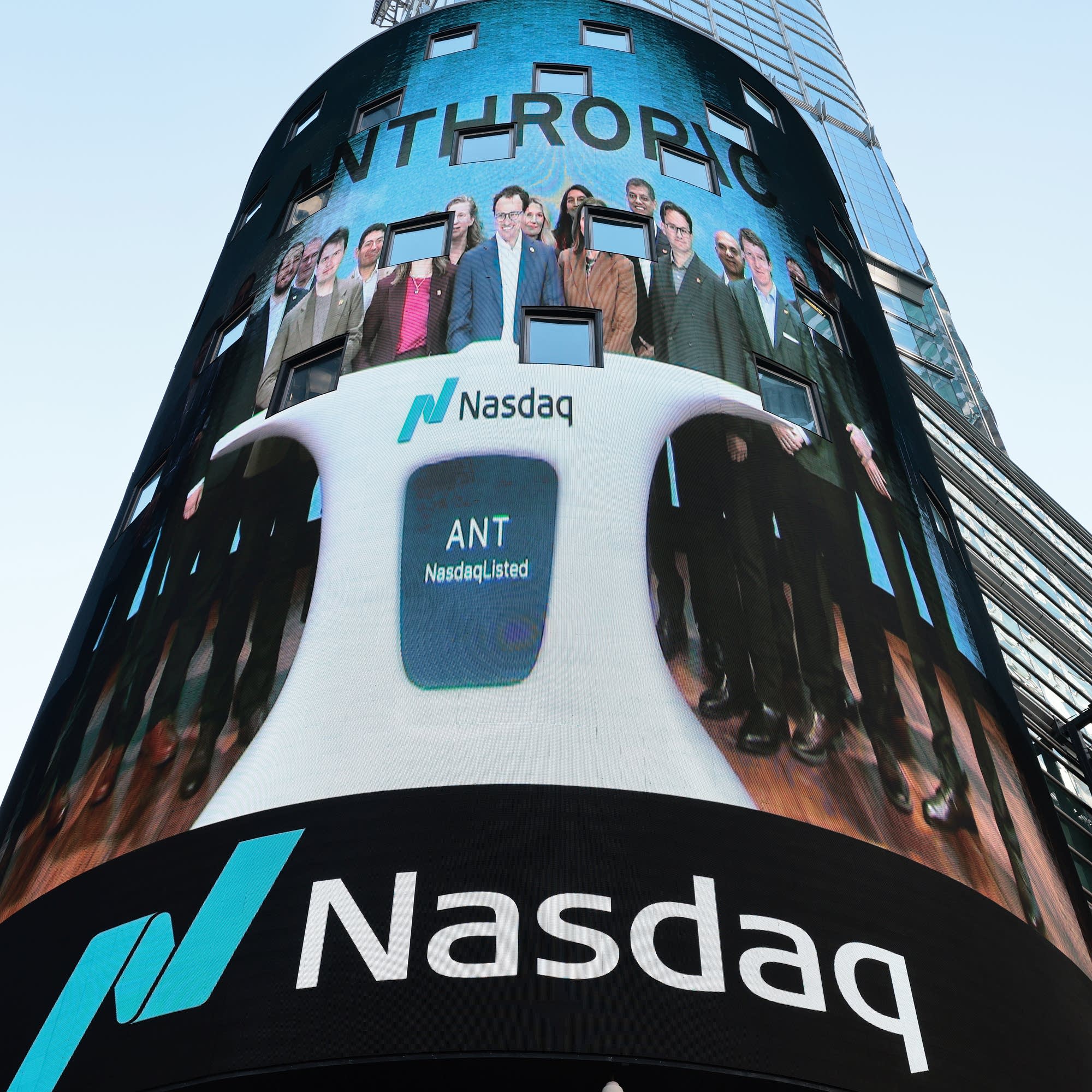
Anthropic, the maker of the Claude chatbot, is now a public company. Plus, inside Nvidia employees, have a lot of questions. And what in the world is going on with all these tech outages? Paresh Dave, senior writer at WIRED, joins Marketplace’s Meghan McCarty Carino to break down another busy week in tech.
- MT
 November 19 · 10 min
The internet’s next big domain expansion is underway
The Internet Corporation for Assigned Names and Numbers, known as ICANN, is now sorting through more than 1,000 applications for new top-level domains. You know, like dot-com or dot-org. It's a big deal because controlling an in-demand domain can be a lucrative business. Just ask the tiny island territory of Anguilla, says Pete Millspaugh, who's working on a book about domains More on this You can’t spell Anguilla without AI — from Dot Com Press The Internet Runs on Cats and Porn. It’s About to Get Cattier and Pornier — from Wired Taylor Swift Applies for Top Level Domains That End in .Taylorswift — from Futurism And if you’re as interested in domains as we are, you can browse all the new applications submitted. Our personal favorites? .yam and .buddy… for no particular reason.
- MT
 November 18 · 5 min
Leadership shakeup could cost Nvidia its dominance
It's almost impossible to overstate how dominant Nvidia has been amid the AI boom. The company supplied 70-90% of the chips used for the technology, leading to staggering profits that were used to invest in the overall AI economy. All that fueled more growth in the company’s own chip sales. But, in the last year or so, Nvidia's market share has been slipping. And the latest shakeup with its CEO Jensen Huang could see it slip even more, according to Chris Miller, historian at Tufts University and author of “Chip War: The Fight for the World’s Most Critical Technology.” More on this: “What will Nvidia’s post-Huang era look like?” from The Financial Times “The chip war never ended” from FastCompany “Google Escalates Nvidia Rivalry With Specialized Versions of AI Chips” from Bloomberg
- MT
 November 17 · 9 min
When Indigenous communities become content
Communities living in voluntary isolation have long faced threats of violence, disease, and resource extraction. Now advocates are sounding the alarm about an emerging threat from influencers — even if confirmed cases are rare. Sarah Edwards is an assistant professor of media studies at North Central College. She sees parallels to other recent influencer trends. More on this ‘This is colonialism for clicks’: the influencers attempting to meet and film the world’s most isolated tribes — from The Guardian Uncontacted Indigenous Peoples: At the Edge of Survival — from Survival International, a global Indigenous rights nonprofit Peru’s move to reconsider protections for uncontacted Mashco Piro raises fears of Amazon logging — from the Associated Press
- MT
 November 16 · 7 min
A Blockbuster-era law could define modern online privacy rules
Congress passed the Video Privacy Protection Act back in 1988 (also known as the Bork Bill), after a reporter published the not-so-scandalous video rental history of Supreme Court Justice nominee Robert Bork. The law prohibited video tape service providers from disclosing customer data. And it's now at the center of a case before the Supreme Court — not about VHS rental data, but about consumer data in the streaming era. Eric Goldman, co-director of the High Tech Law Institute at Santa Clara University, explained more about this case. More on this: “In Age of Online Ads, Supreme Court Weighs Videotape-Era Privacy Law” from The New York Times “Salazar v. Paramount Global” from Oyez
- MT
 November 13 · 13 min
Nvidia’s leadership shakeup could reshape the AI industry
Jensen Huang is out as the CEO of Nvidia, and the company’s board named chief financial officer Colette Kress as interim CEO. But a whole lot of questions remain. Plus, some good news in AI: the debt-laden neocloud CoreWeave delivered strong earnings this week. And, the tech industry’s pivot to the left begins with … Palantir? Anita Ramaswamy, financial columnist at The Information, joins Marketplace’s Meghan McCarty Carino to explain more on this week’s “Tech Bytes: Week in Review.” More on this: “NVIDIA Announces CEO Transition” from Nvidia “Who Is Nvidia’s Interim CEO Colette Kress?” from The Wall Street Journal “CoreWeave sparks AI cloud stock rally, lifts Nvidia as results ease bubble fears” from Reuters “CoreWeave and These Other Stocks Are in the Nvidia Danger Zone” from Barron’s “Big Tech pivots left” from Politico’s Playbook “All the Ways Palantir is Assisting Trump’s Abusive Removal Campaign” from ACLU
- MT
 November 12 · 10 min
What are the new rules for parenting in the digital age?
An increasing number of school districts are restricting phones in the classroom, and a series of major lawsuits against social media companies have led some platforms to make significant changes to how they operate. But, bans or not, the reality is that kids are going to encounter this stuff at some point. Pamela Wisniewski, at the International Computer Science Institute, says kids need guidance to learn how to use technology responsibly. More on this Google faces mounting backlash for controversial AI school policy — from CBS ChatGPT for Teens' safeguards don't work, risk assessment finds — from Marketplace Silicon Valley Executives Are Tech Fans. Just Not for Their Own Kids — from The New York Times
- MT
 November 11 · 7 min
Reddit pivots to a login-only experience
Reddit announced it will soon require users to log in to see much of the helpful human-generated content on its site. Why? Because traffic, and thus advertising, has taken a hit since AI started summarizing its data. It's the latest development to threaten the old model of the open internet, says Sarah Gilbert, who researches online communities at the Citizens and Technology Lab at Cornell and is also active in r/askhistorians. She says the new login requirement puts up a wall between humans on the internet and is likely to discourage future contributions to the site. More on this: “Reddit moves to logged-in experience as AI eats search” from Axios “AI Is Killing Wikipedia’s Human Traffic” from Gizmodo
- MT
 November 10 · 10 min
Can communities and data centers find common ground?
The message that Americans have no love for AI data centers rang out loud and clear in the midterms, with dozens of jurisdictions voting to stop their construction and electing governors who oppose them. Where they are still allowed, it's likely we'll see some concessions from data center developers — like community benefit agreements. These agreements have been used for decades for big building projects like transit or sports arenas. Late last year, the city of Lancaster, Pennsylvania, signed one of the first major CBAs with data center developers. Devashree Saha, director of the U.S. Clean Energy Economy Program at the World Resources Institute, explains how the agreement came together and where it might fall short. More on this After the midterms, a bigger clash over data centers could be coming — from Tech Crunch OpenAI pledges no NDAs, protection from power costs in data center deals — from Seeking Alpha Powering Progress: How Community Benefits Agreements Can Drive Responsible Data Center Development — from the World Resources Institute
- MT
 November 9 · 6 min
Saying "so long" to the tech industry
Drew and Lindsay Haven spent years working in the Silicon Valley tech industry, but eventually felt they needed a change. Lindsay left the video game industry about a decade ago. Drew left his job about a year and a half ago, becoming disillusioned with the company culture. Their story is the latest in our series, “Clocked Out,” which follows people who’ve left the workforce. More on this: Why people are dropping out of the workforce and not looking for new jobs: ‘The market wore me down’ — from CNBC The U.S. labor market may soon face a new crisis: Too few workers — from CBS News Why are so many men opting out of the labor force? — from Marketplace
- MT
 November 6 · 13 min
Data centers lost in the midterms
Voters have made their dissatisfaction quite clear with the tech status quo. And it sounds like the Democrats gearing up to take power in the House and Senate might actually do something about that. Plus, Big Tech spent big on races in this election, but didn't get a whole lot of bang for their buck. But first, a tech issue that was actually on the ballot: data centers. More than 40 jurisdictions across 10 states voted to put them on ice. However, Harwood, North Dakota, gave them the green light. Paresh Dave, senior writer at Wired, joins Marketplace’s Meghan McCarty Carino to explain more about all this on this week’s “Tech Bytes: Week in Review.” More on this: “America got the anti-data-center wave it voted for. Here come the economic consequences” from CNN “After Midterm Rebuke, OpenAI Pledges to Give Data Center Towns More Say” from The New York Times “AI & Tech Brief: Midterms turn the AI tide” from The Washington Post “Democratic midterm wins set stage for tougher tech and AI scrutiny” from IAPP “Elon Musk suffers major blow in US midterms” from Politico “Ohio’s Senate Race Is a Rare Loss for Crypto Under Trump” from The New York Times Check out our YouTube page to watch more episodes of “Tech Bytes.”
- MT
 November 5 · 6 min
ChatGPT for Teens' safeguards don't work, risk assessment finds
OpenAI's new teen-appropriate version of ChatGPT may not be living up to its promises, according to an independent evaluation. The new mode is supposed to have stronger guardrails for sensitive topics, automatic parental alerts and a study tool that won't just give kids the answers to their homework. But the nonprofit Common Sense Media evaluated the tool and found it poses "unacceptable risks." Tom Siegel leads the Youth Safety Institute at Common Sense and tested about 4,000 prompts using fake teen accounts. He spoke with Meghan McCarty Carino about his findings. More on this: “ChatGPT for Teens Poses Unacceptable Risk to Kids, Common Sense Media Finds” from Common Sense Media
- MT
 November 4 · 11 min
The promise and risks of AI for mental health support
This story includes references to suicide, self-harm and mental health crises. If you or someone you know is experiencing a mental health crisis, call or text 988 to reach the Suicide & Crisis Lifeline. Available 24/7. A growing number of lawsuits accuse AI companies of harming users — alleging chatbots have encouraged self-harm, reinforced delusions, or failed to recognize signs of distress. And yet at the same time, a growing number of users, particularly younger ones, say they're turning to AI for emotional support. Dr. John Torous studies how technology interacts with mental health. He says in the case of AI, it's complicated. More on this: Nearly 2 out of 3 teens and tweens use AI chatbots, new research shows — from NPR An independent benchmark for AI in mental health — from MindBench.ai Development, validation and AI chatbot evaluation of the Adolescent Mental Health AI Response Tool — from Nature
- MT
 November 3 · 4 min
Behind the scenes of an abandoned cyber-scam compound
Interpol estimates scam losses totaled almost $500 billion globally last year. In many cases, it’s not just one bad actor but an entire network of scammers. And Cambodia has become a major hub for the industry. Last year, the U.S. issued more than 100 sanctions tied to fraud operations in the country. Reporter Leila Goldstein takes us behind the scenes of an abandoned scam compound in southeast Cambodia.
- MT
 November 2 · 9 min
What it means when AI helps solve complex math problems
In September, OpenAI said that its models had solved one of math's famous Millennium Prize problems. Then, the lab dropped more than 700 papers tackling another 400 complex problems with more breakthroughs to come. These developments have caused something of an existential crisis in the math world. But Alex Kontorovich, a professor of math at Rutgers University, says they're a gift. More on this: “Sharing AI progress in mathematics” from OpenAI “OpenAI Releases Findings on 377 Math Problems, Further Roiling Field” from The New York Times “The Shape of Math To Come” from arXiv