Skip to content
Artwork for Manufacturing the Future
Manufacturing the Future · June 18 · 14 min

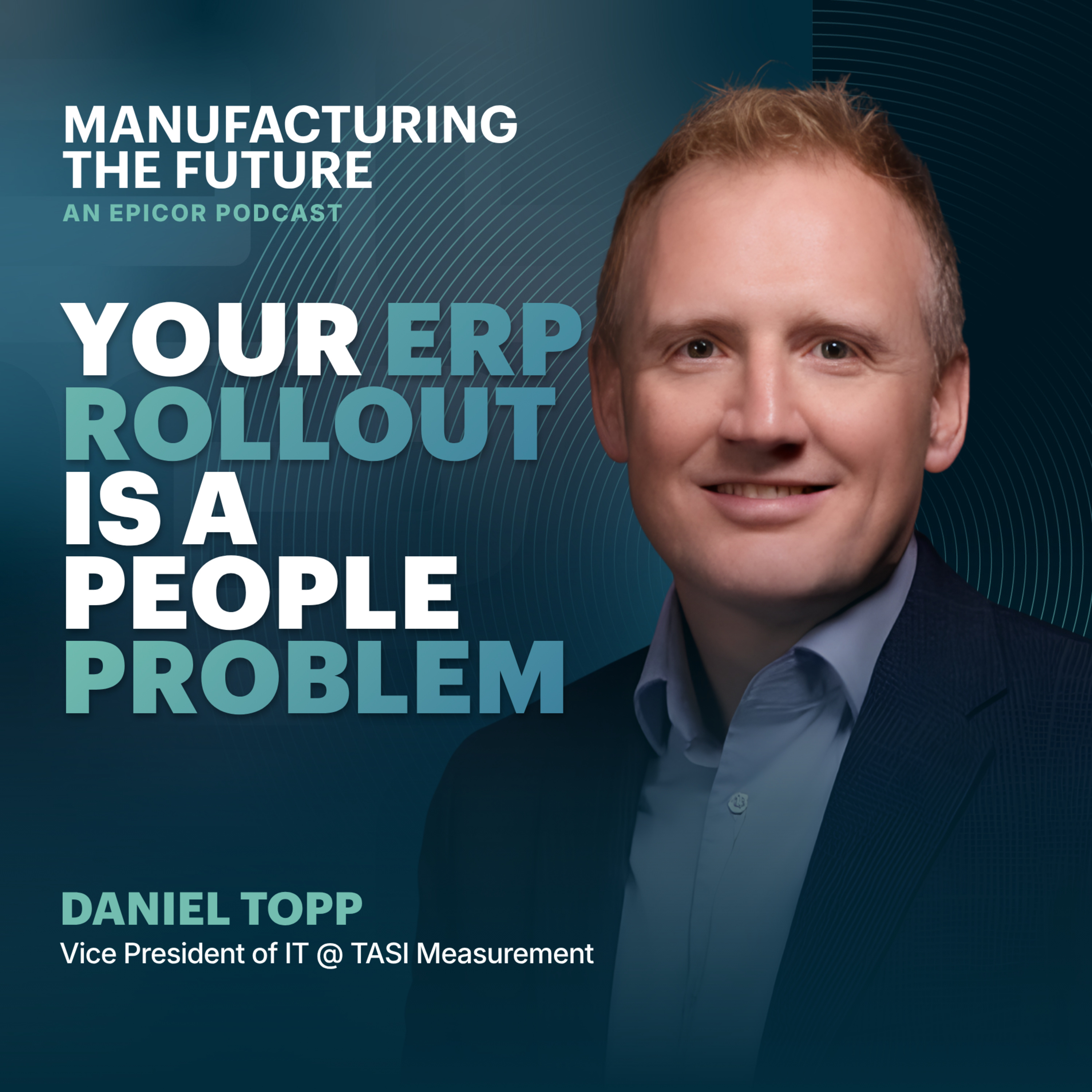
Daniel Topp on why ERP projects fail at training, not technology

"We're common where possible and unique where necessary." A deceptively simple principle from Daniel Topp, VP of IT at TASI Measurement, that gets very complicated when you're managing ERP across 16 autonomous business units and integrating newly acquired companies on a rolling basis. The real question is how you operationalize it so it doesn't collapse under the weight of competing business unit priorities and leadership requests for customization. TASI Measurement is a global industrial measurement holding company with more than 1,000 employees, headquartered in Largo, Florida, operating through a highly decentralized structure where each business unit runs independently under the broader group. In This Episode: Daniel walks through the specific systems he's built to keep ERP standardization from becoming a constant negotiation. That includes a formal customization approval process requiring sign-off from key stakeholders before any deviation from off-the-shelf is permitted, and a 30-60-90 day acquisition integration playbook that separates non-negotiables like IT security tools from ERP decisions, which get evaluated through a risk and value heat map. He explains why data migration is where repeat ERP transformations actually improve, and why building a dedicated headquarters-level migration team, rather than relying on business unit staff, is what makes the process repeatable and scalable. He also makes the case that locking in structural decisions like chart of accounts early in a project is the difference between finishing on time and losing months at the end. On AI, his position is direct: having it available inside your ERP without a structured rollout plan is a liability, not an advantage. Topics: Why ERP projects fail at training and change management, not implementation Formal customization approval process requiring stakeholder sign-off 30-60-90 day acquisition integration playbook and what's non-negotiable from day one Risk and value heat map for sequencing ERP integration priorities across acquisitions Gold standards center of excellence and how it serves newly acquired businesses Why locking in decisions like chart of accounts early can make or break a project timeline Building a dedicated, headquarters-level data migration team as a repeatable capability Unstructured AI rollout inside ERP as an organizational liability Translating IT efficiency into quantified dollar savings to shift IT from cost center to strategic partner Meta Description: A conversation with Daniel Topp, VP of IT at TASI Measurement, about how he built repeatable systems for managing ERP standardization and acquisition integration across 16 autonomous business units, and what it actually takes to position IT as a strategic partner in a decentralized global organization. Download, Listen, and Subscribe Apple | Spotify | YouTube Or search “Manufacturing the Future” wherever you listen to podcasts!
0:00-14:03

transcript

No transcript — this publisher did not publish one.

show notes

"We're common where possible and unique where necessary."

A deceptively simple principle from Daniel Topp, VP of IT at TASI Measurement, that gets very complicated when you're managing ERP across 16 autonomous business units and integrating newly acquired companies on a rolling basis. The real question is how you operationalize it so it doesn't collapse under the weight of competing business unit priorities and leadership requests for customization.

TASI Measurement is a global industrial measurement holding company with more than 1,000 employees, headquartered in Largo, Florida, operating through a highly decentralized structure where each business unit runs independently under the broader group.

In This Episode:

Daniel walks through the specific systems he's built to keep ERP standardization from becoming a constant negotiation. That includes a formal customization approval process requiring sign-off from key stakeholders before any deviation from off-the-shelf is permitted, and a 30-60-90 day acquisition integration playbook that separates non-negotiables like IT security tools from ERP decisions, which get evaluated through a risk and value heat map. He explains why data migration is where repeat ERP transformations actually improve, and why building a dedicated headquarters-level migration team, rather than relying on business unit staff, is what makes the process repeatable and scalable. He also makes the case that locking in structural decisions like chart of accounts early in a project is the difference between finishing on time and losing months at the end. On AI, his position is direct: having it available inside your ERP without a structured rollout plan is a liability, not an advantage.

Topics:

  • Why ERP projects fail at training and change management, not implementation

  • Formal customization approval process requiring stakeholder sign-off

  • 30-60-90 day acquisition integration playbook and what's non-negotiable from day one

  • Risk and value heat map for sequencing ERP integration priorities across acquisitions

  • Gold standards center of excellence and how it serves newly acquired businesses

  • Why locking in decisions like chart of accounts early can make or break a project timeline

  • Building a dedicated, headquarters-level data migration team as a repeatable capability

  • Unstructured AI rollout inside ERP as an organizational liability

  • Translating IT efficiency into quantified dollar savings to shift IT from cost center to strategic partner

Meta Description:

A conversation with Daniel Topp, VP of IT at TASI Measurement, about how he built repeatable systems for managing ERP standardization and acquisition integration across 16 autonomous business units, and what it actually takes to position IT as a strategic partner in a decentralized global organization.

Download, Listen, and Subscribe

Apple | Spotify | YouTube

Or search “Manufacturing the Future” wherever you listen to podcasts!

links3