Skip to content
Artwork for Macro N Cheese
EducationNewsPoliticsHistoryExplicit

Macro N Cheese

Steven D Grumbine

A podcast that critically examines the working-class struggle through the lens of MMT or Modern Monetary Theory. Host Steve Grumbine, founder of Real Progressives, provides incisive political commentary and showcases grassroots activism. Join us for a robust, unfiltered exploration of economic issues that impact the working class, as we challenge the status quo and prioritize collective well-being over profit. This is comfort food for the mind, fueling our fight for justice and equity!

Play
  • 20 episodes
  • weekly
  • Avg 1 hr 6 min
  • English

Support the show

Goes straight to the publisher. podnod takes nothing.

  • #393
    August 22 · 1 hr 4 min

    Ep 393 - Money Manager Capitalism: Ponzi Finance in the Shadows with Eric Tymoigne

    **Join us on Tuesday to discuss this episode in our online gathering, Macro 'n Chill. August 25, 8pm ET / 5pm PT. Register here: https://us06web.zoom.us/meeting/register/NGxWl6qMTaKXPhR51uHkwA If public power repeatedly stands behind private finance when it fails, shouldn't that same power be directed toward employment, productive capacity, and human need? So why isn't it? Economist Eric Tymoigne returns to the podcast to examine the rapid growth of private credit and private equity through Hyman Minsky’s theory of money manager capitalism. Eric argues that the expansion of payment-in-kind interest, securitization, layered leverage, and dependence on rising asset prices are signs that Ponzi finance is becoming increasingly embedded in private markets, making the financial system more fragile. He warns that efforts to “democratize” these markets by opening them to ordinary savers will broaden the pool of investors available to absorb risks and losses (which should really be borne by the wealthy.) The conversation then moves from financial instability to political economy. Through an MMT lens, Eric explains the enormous potential capacity of a currency-issuing government to contain financial crises, sustain incomes, and direct investment toward public purposes. Again we must ask why it doesn't happen. This raises the deeper question of whose purposes the state serves. Steve and Eric discuss public investment, community banking, the federal job guarantee, the influence of wealth on political decision-making, and the limits of electoral democracy in a capitalist system. Eric Tymoigne is an Associate Professor of Economics at Lewis & Clark College, Portland, Oregon; and Research Associate at the Levy Economics Institute of Bard College. His areas of teaching and research include macroeconomics, money and banking, and monetary economics. Find him on Twitter @tymoignee

    • Transcript
    • Chapters
  • #392
    August 15 · 1 hr 18 min

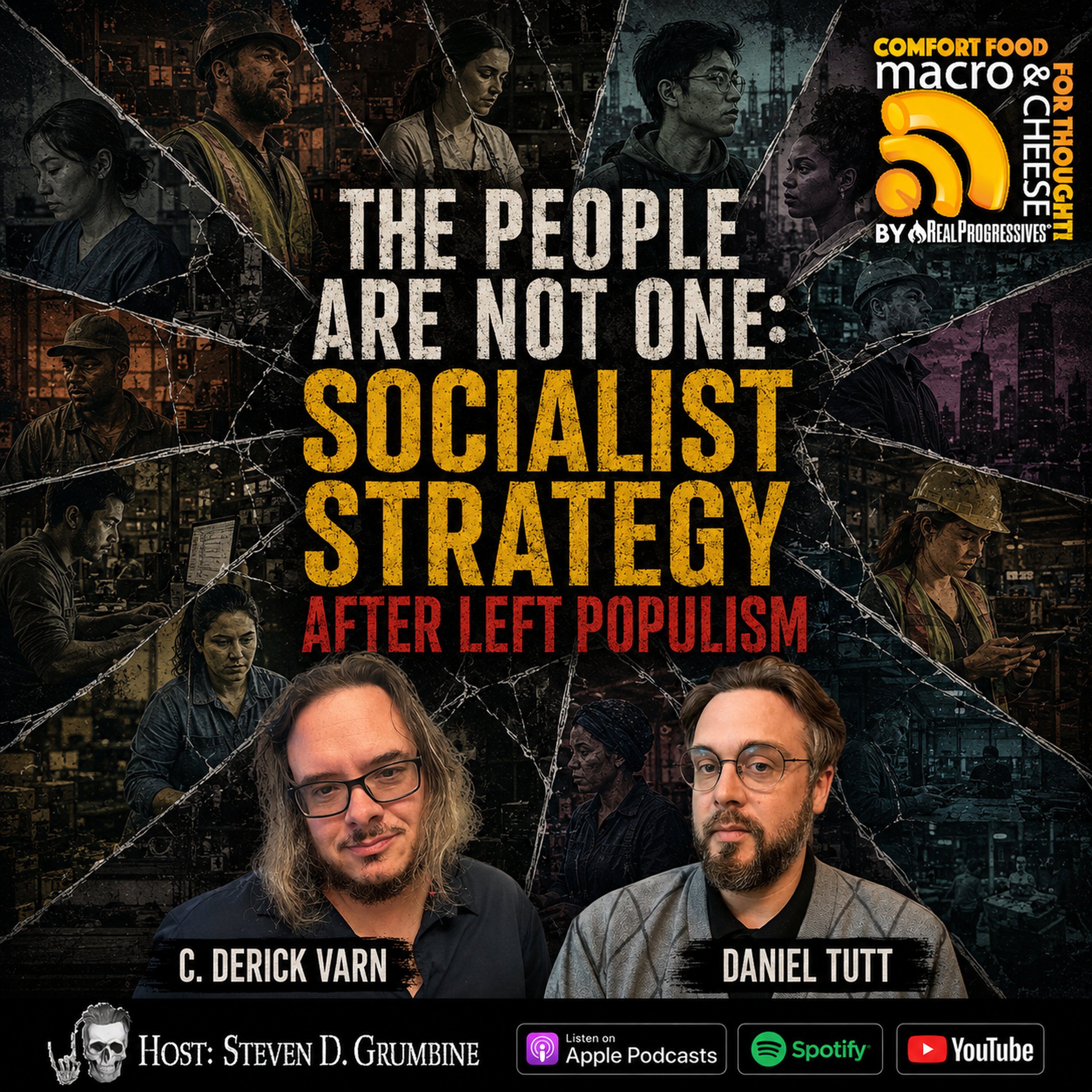
    Ep 392 - The People Are Not One: Socialist Strategy After Left Populism with Daniel Tutt & C. Derick Varn

    Daniel Tutt and returning guest C. Derick Varn join Steve to discuss their new book, The People Are Not One: Socialist Strategy After Left Populism, whose title states its thesis outright. When the left speaks of a unified people confronting a corrupt elite, it conceals the real stratifications inside the working class and borrows a Manichean framework that functions identically on the right. Their argument: since 2008, from Occupy through Syriza, Podemos, Corbyn, and Sanders, left populism has served to extinguish the class antagonism at the center of socialism, operating as a new Popular Front in which liberalism holds the upper hand. The conversation lands directly on this show's own history. Varn is blunt about his long-running argument with MMT advocates: he never disputed the nature of the currency, he disputed the analysis of power. They are not going to let you have a Job Guarantee, because it removes their ability to discipline workers. Steve agrees, describing his own path out of economism and the trap of thinking a basket of policies and a few more progressives in office adds up to a threat to capital. On class consciousness, Varn is careful with a term he calls one of the most abused in socialist history. The reason to organize around the working class is not its victimhood. It is that the working class already possesses, collectively, the skills to reproduce society. The differences within the working class are resolvable. The difference between the working class and those who live off its labor is not. They close on electoralism. Varn's formulation: electoralism is a tactic, not a principle. Democracy is the principle. Tutt points to Lenin's actual position, that ballots are justified only alongside extra-parliamentary means and on terms of strict class independence. The Popular Front let liberalism lead. The United Front did not. If you've followed this show from Ep 218 - Beware! the Counter-Revolution with C. Derick Varn, through Ep 318 - The Death of the Left? with Simon Winlow & Steve Hall, Ep 371 - You Can't Vote Away Colonialism with Fadhel Kaboub, and Ep 388 - From Theory to Praxis: Lenin's Revolutionary Formula with Breht O'Shea, this episode is the strategic argument those conversations kept circling. Daniel Tutt is the author of Psychoanalysis and the Politics of the Family and How to Read Like a Parasite. His writing has been featured in Jacobin, Current Affairs, Philosophy Now and Aeon Magazine. He is the host of the Emancipations podcast and study group collective. Find him on Twitter @TuttReal or his Substack: https://danieltutt.substack.com/about C. Derick Varn is an author, poet, and educator, and host of the podcast Varn Vlog, where he publishes podcasts and series on the great thinkers, and interviews authors and academics. He is the author of Apocalyptics and Liberation and All That Bright Etc. He has been a union rep for the past six years. Find him on Twitter @TheRealVarnVlog or his podcast https://varnvlog.buzzsprout.com/

    • Transcript
    • Chapters
  • #391
    August 8 · 1 hr 10 min

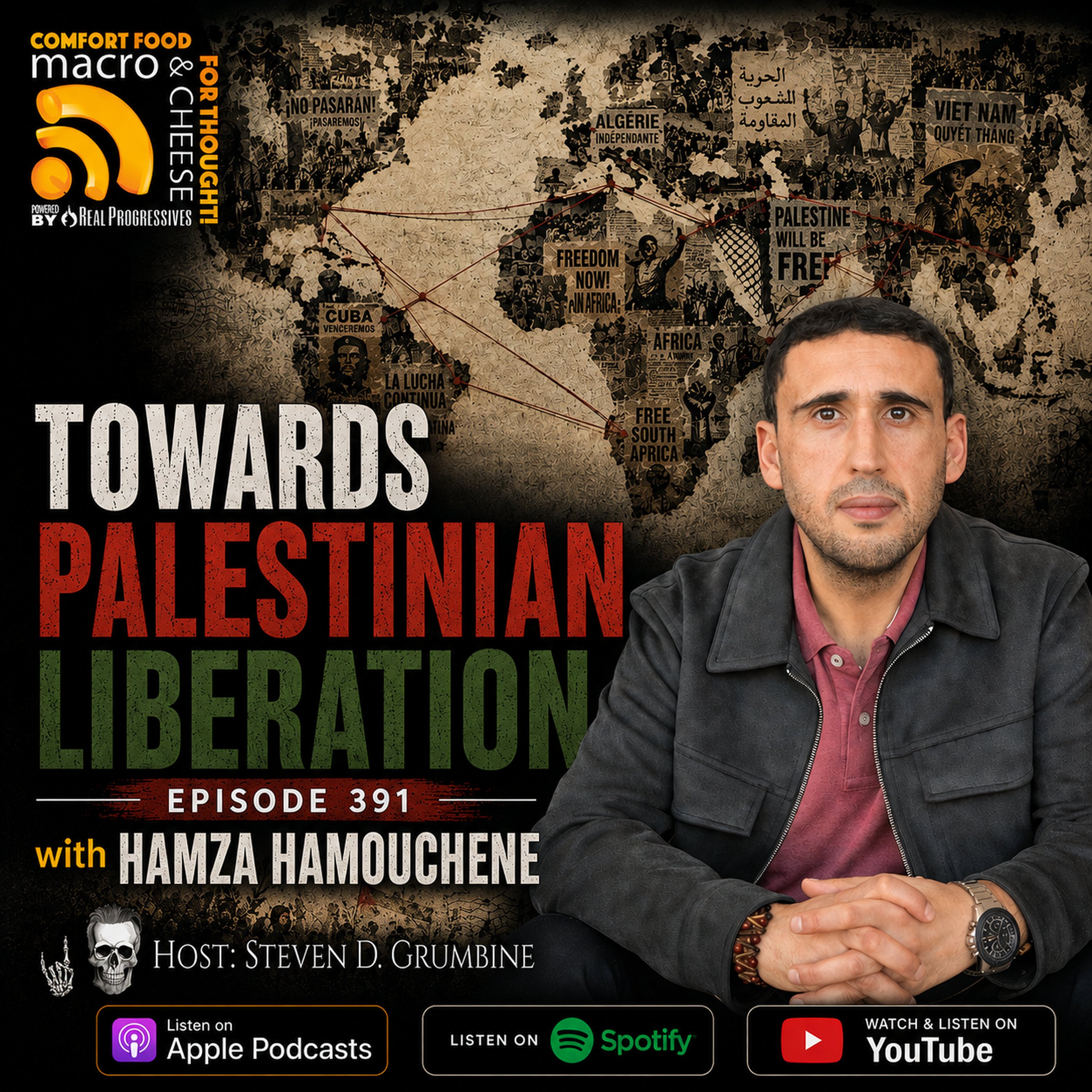
    Ep 391 - Towards Palestinian Liberation with Hamza Hamouchene

    This week, Hamza Hamouchene returns to the podcast to talk about Towards Palestinian Liberation: Global Perspectives on Anti-Colonial Resistance and Solidarity, the new collection he co-edited with Abi Bae. Palestine, he argues, cannot be understood simply as a “conflict” or humanitarian crisis, but as a national liberation struggle against settler colonialism embedded in a larger system of Western imperialism and global capitalism. Hamza traces Israel’s role within the imperial order, the class interests of Arab ruling elites, and the political economy of occupation and dispossession. Drawing connections to Algeria, Vietnam, South Africa, and other anti-colonial struggles, he emphasizes the revolutionary potential of international solidarity and the necessity of connecting struggles against colonialism, capitalism, and imperialism. Steve brings MMT into the discussion, arguing that an analysis of real resources is incomplete without confronting the imperial power and violence through which those resources are controlled. The conversation ultimately points beyond solidarity with Palestine toward a larger project of liberation. As Hamza wraps it up: “We need to be in solidarity with movements that are fighting for their rights, fighting against land grabs, against extractivism, against neocolonial plunder. Be with the Palestinians in their struggle for liberation. Because what we want, Steve, is not just a liberated Palestine. We want a liberated Palestine in a liberated world.” Too often, mainstream narratives on Palestine are narrowly focused on Israel, the West Bank, and Gaza. Solidarity is reduced to a matter of human rights and international law violations. Hamza stands firm in his refusal to treat Palestine as an exception to the global struggle against imperialism. Dr. Hamza Hamouchene is a London-based Algerian researcher-activist, commentator and a founding member of Algeria Solidarity Campaign (ASC), Environmental Justice North Africa (EJNA) and the North African Food Sovereignty Network (Siyada). He is currently the Arab region Programme Coordinator at the Transnational Institute (TNI). His work is focused on issues of extractivism, resources, land and food sovereignty as well as climate, environmental, and energy justice in the Arab region. He is the author/editor of five books: “Towards Palestinian Liberation: Global Perspectives on Anti-Colonial Resistance & Solidarity” (2026), “Dismantling Green Colonialism: Energy and Climate Justice in the Arab Region” (2023), “The Arab Uprisings: A decade of struggles” (2022), “The Struggle for Energy Democracy in the Maghreb” (2017) and The Coming Revolution to North Africa: The Struggle for Climate Justice (2015).

    • Transcript
    • Chapters
  • #390
    August 1 · 1 hr 6 min

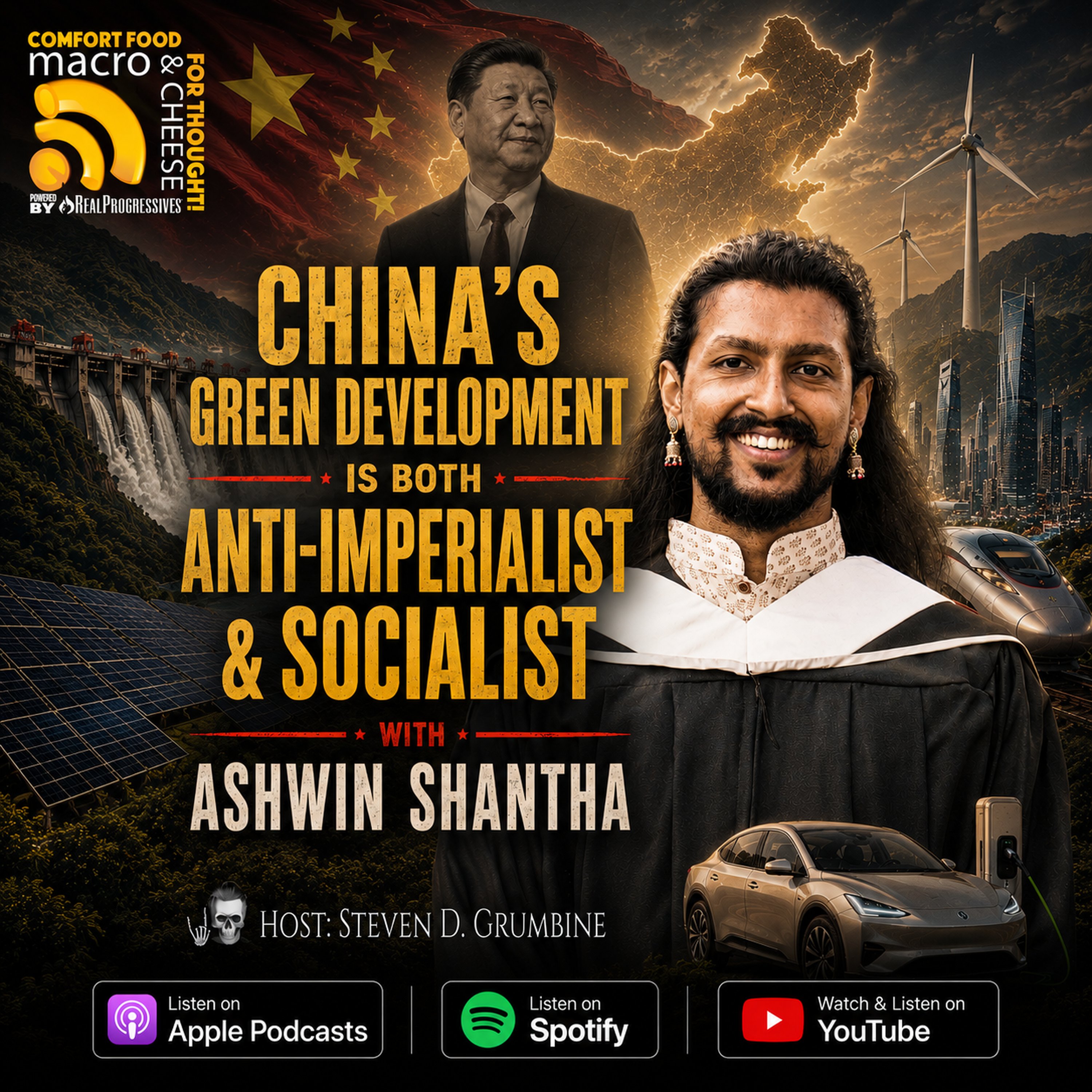
    Ep 390 - China's Green Development is Both Anti-Imperialist & Socialist with Ashwin Shantha

    ** Do you want to talk about this episode with us? Come to Macro ‘n Chill, our online gathering. Tuesday, August 4, 8pm ET/5pm PT. Register here: https://us06web.zoom.us/meeting/register/nLks4k8gQWKQzTAn0CEsoA Ashwin Shantha joins Steve for a discussion challenging Western narratives on China – particularly the all-too-common opinions that dismiss its socialist character. This episode makes the case that China is a genuine socialist project where the state disciplines capital rather than being governed by it. Ashwin illustrates how China's green industrial revolution—driven by rapid progress in electric vehicles and renewable energy—marks a qualitative break from capitalist development paths. Unlike the Global North's extractive model, China's centrally planned approach prioritizes use-value objectives (clean air, energy self-reliance, and technological independence) over exchange-value maximization. The state constructs markets strategically, using mechanisms like the dual-credit policy to force both domestic and foreign automakers toward sustainable production targets. While the episode isn’t focused on MMT, it highlights how China's monetary sovereignty enables fiscal space for long-term industrial planning. The nation's ability to issue its own currency and direct credit toward clean development highlights a crucial distinction from Global South countries trapped in IMF-imposed structural adjustment programs. This self-determined policy space, which is denied to nations like India and much of Africa, allows Beijing to absorb neoliberal shocks while maintaining state control over the economy. China's sustainable growth model is anti-imperialist in two key ways. First, energy independence reduces reliance on imported fossil fuels that expose the country to geopolitical leverage through choke points like the Malacca Strait. Second, technological autonomy focuses on developing indigenous productive forces that break the Western monopoly over clean technology. By keeping private capital subordinate to state priorities, China shows that socialist modernization offers a workable alternative for the Global South, avoiding the de-development and resource plunder that characterizes Western industrialization. China's model may still have some contradictions, but it continues to show what is possible when state power is wielded in the interests of the working class. Ashwin Shantha (they/them) is a doctoral student whose research focuses broadly on the political economy of sovereign development in the global South, focusing specifically on China and South Asia. Some of their existing work has researched South-South development cooperation between China and Pakistan through the Belt and Road Initiative, as well as, more recently, China's state-led green industrial revolution in the electric vehicles and renewable energy sectors. Ashwin is also the host of the International Solidarity Podcast, which focuses on the politics of anti-imperialism and socialism in the global South. YouTube: https://www.youtube.com/@journalofintlsolidarity Instagram: https://www.instagram.com/journalofintlsolidarity Substack: https://intlsolidarity.substack.com/

    • Transcript
    • Chapters
  • #389
    July 25 · 1 hr 8 min

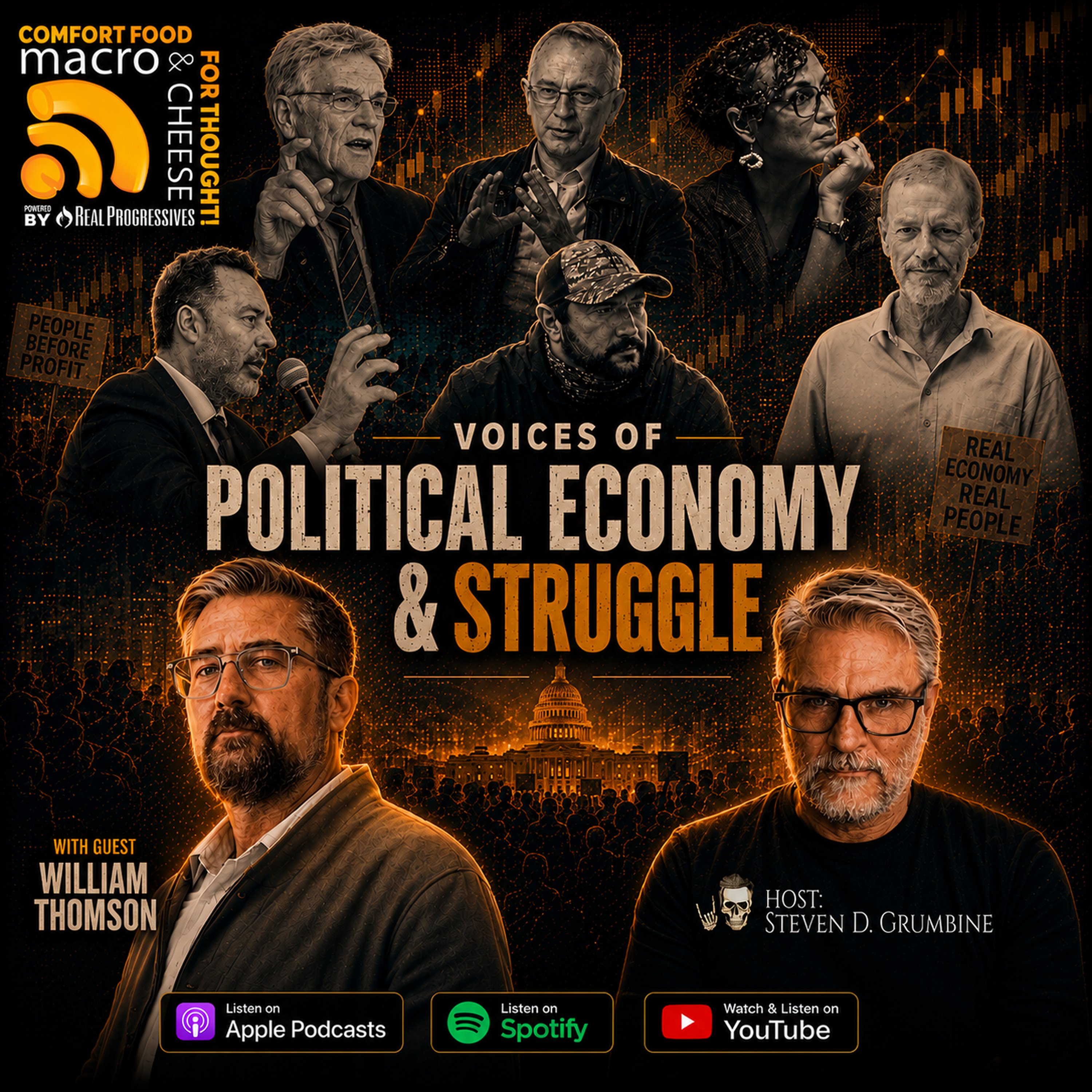
    Ep 389 - Voices of Political Economy & Struggle with William Thomson

    This week we’re releasing an episode from Scotland‘s Political Economy podcast. Host William Thomson invited Steve to join him to compare and reflect on their favorite interviews and the thinkers who most shaped their worldviews – from Clara Mattei and Fadhel Kaboub to Bill Mitchell, Jason Hickel, and Marxist-Leninist thinkers. They explore the limits of MMT without class analysis, the capture of academic and political institutions by oligarchic interests, and the importance of historical materialism, Gramsci, and Lenin in understanding how power truly operates. The episode looks at the evolution of the two independent podcasters, their intellectual awakenings, and their shared conviction that the fight is not for better policy within capitalism, but for a fundamental transformation of the system itself. And for listeners to Macro N Cheese, it provides insight into Steve’ seven-year journey, taking the podcast from a strict MMT focus to a broader political economic analysis rooted in class struggle, revolutionary theory, and a critical view of electoral politics. William Thomson is a political economist focused on the political economy of Scotland. His work considers how the economy actually operates, how decisions are made, and how power, institutions, and policy shape outcomes across Scotland. Support his work at patreon.com/Scotlandspoliticaleconomy @Williamgallus on X

    • Transcript
  • #34
    July 18 · 1 hr

    Ep 34 - The Legal Nature of Money and the History of the Federal Reserve with Rohan Grey

    **Classic episode re-release! Originally published Sept, 21, 2019** Legal scholar Rohan Grey knows how to use analogies to give shape to an idea. He illustrates his points with references to popular films, folklore and lyrical poets. With experience in the realms of music, early childhood education, political economy, and jurisprudence, he brings Modern Monetary Theory to life in unexpected ways. Throughout this conversation with Steve, he connects economics and the law by illustrating subtle conceptual parallels. The episode begins where any discussion of macroeconomics should begin — talking about money. Instead of thinking of it as a “thing,” or a store of value, Rohan asks us to think of money as a series of relationships, structured by law. He calls it a web of invisible filaments. The MMT story starts with state-created money. While the original logic had to do with tax obligations, the desire for money takes on a life of its own. We don’t wake up thinking about wanting money to pay taxes. We want it for all those other goods and services we need and desire. Steve asks Rohan to discuss talk about the Federal Reserve, an institution often misunderstood by even the sharpest political minds. The rest of this episode takes us through its history and before, beginning with the earliest years of the American colonies, when states were developing their own economies. This was a time when local governments were still relatively accountable to their constituents and the democratic process was vibrant. The constitution was designed in large part to move monetary powers from the state level up to the federal level. In fact, Rohan says that, in contrast to the American revolution, the creation of the US Constitution was a counter-revolution. There’s far too much history to recount here. Rohan takes us through Lincoln’s creation of greenback dollars, the Federal Reserve Act of 1913, FDR, and the decades-long bitter political battle for supremacy between the Department of Treasury and the Fed culminating in the Treasury-Fed Accord of 1951. The struggle to create a central bank was basically a power grab by the capitalist class. Throughout its history, the Fed has zealously guarded its autonomy just as the Supreme Court has done; each determined to remain unaccountable to democratic forces. Both institutions employ the same tactic, convincing the public that they alone have the unique expertise to deal with complex matters. Ultimately Rohan maintains that the Federal Reserve adds no real value to the government or the economy. Our listeners will surely agree. Rohan Grey is an assistant professor at Willamette University College of Law, where he teaches contracts, business associations, financial institutions, and a seminar on law, money and technology. Find his work and an expanded bio at rohangrey.net @rohangrey on Twitter

  • #388
    July 11 · 1 hr 46 min

    Ep 388 - From Theory to Praxis: Lenin's Revolutionary Formula with Breht O'Shea

    **We’re listening to and discussing this episode on Tuesday, July 14 at 8pm ET/5pm PT, in our online gathering Macro ‘n Chill. We’ve invited Breht to join us, so bring your questions. Register here: https://us06web.zoom.us/meeting/register/PXkazv5WTWW7b7kMExA8uw "From each according to their ability, to each according to their need." Steve's guest, Breht O’Shea of Rev Left Radio and Red Menace podcast, believes that dedicating one's life to fighting for this vision, even without knowing the outcome, is more meaningful than pursuing capital's vision of wealth and status. Steve invited Breht to help tackle one of the most misunderstood and weaponized texts in Marxist theory: Vladimir Lenin's Left-Wing Communism: An Infantile Disorder, a book sometimes misused as a cudgel to pressure leftists into voting for the Democratic Party. To set the record straight, Breht places the 1920 pamphlet in its proper historical context. It was written after the successful Bolshevik Revolution to advise European socialist movements on how to avoid fatal mistakes. Together, Breht and Steve break down Lenin's dual critique: the ultra-left "infantile" error of purity-spiraled sectarianism, and the right-wing "opportunist" error of liquidating the revolutionary movement into bourgeois liberal politics. Lenin's strategic genius lies in maintaining firm revolutionary principles while remaining tactically flexible. The discussion extends beyond the text to cover the necessity of organization and discipline (democratic centralism), the constant threat of counter-revolution, the failure of social democracy, and how fascism functions as capitalism's immune response to left-wing threats. Breht O’Shea is the host of Rev Left Radio, the co-host of the Red Menace podcast, and author of the upcoming book “Letters to a Young Revolutionary” published by Iskra Books. Breht is also a longtime organizer in Omaha, Nebraska, a union electrician, and married father of three.

    • Transcript
  • #387
    July 4 · 1 hr 4 min

    Ep 387 - Judgment of Gender with Allison Butler

    **Tuesday evening, at 8 pm ET/5 pm PT, we’ll be listening to this episode and discussing it during our online gathering, Macro ‘n Chill. Bring your thoughts, your insights, your questions. July 7th at at 8 pm ET/5 pm PT. Use this link to register: https://us06web.zoom.us/meeting/register/ay2YXuCvRLOp1dV5yh8HKw Women in politics, media, and public life are often placed at the center of the spectacle while being silenced on the issues that matter. Media scholar Allison Butler talks to Steve about her book, Judgment of Gender, exposing how patriarchal power and capitalist media institutions weaponize pop culture and construct narratives that fixate on appearance, personality, and scandal while obscuring questions of class and power. The conversation reveals a core dialectical contradiction: women are centered in media only to be silenced. Their personhood is reduced to superficial tropes. The critiques of political candidates Hillary Clinton, Kamala Harris, and even Nikki Haley, focus on pantsuits, headbands, voice, and age instead of their actual policies, their service to capital, and their imperialist actions (hello? Clinton's role in Libya? “We came, we saw, he died.”) The media's obsession with superficiality silences substantive class-based critique. Allison’s highlights the crisis of missing and murdered Indigenous women. This is critical. It is not a fringe issue but a stark example of state-sanctioned violence and the super-exploitation of the most oppressed. That the legacy media's silence on this horror renders these lives invisible is a feature, not a bug, of a system that treats Indigenous lives as disposable Allison Butler is a Senior Lecturer, Associate Chair, and the Director of the Media Literacy Certificate Program in the Department of Communication at the University of Massachusetts Amherst, where she teaches courses on critical media literacy and representations of education in the media. She serves as Vice President on the board of the Media Freedom Foundation. She is the author of numerous articles and books on media literacy, and she is a co-author of multiple practical resources for media literacy education. IG: @atbutler5 LinkedIn: https://www.linkedin.com/in/allison-butler-190882108/ Project Censored IG, X, Facebook: @projectcensored

    • Transcript
  • #386
    June 27 · 58 min

    Ep 386 - Who Do You Serve: Neoliberalism & Oligarchy Through an MMT Lens with Bill Mitchell

    Modern Monetary Theory explains how sovereign currency systems work, but it doesn’t tell us who controls the state or whose interests state power serves. Economist Bill Mitchell suggests that a dialectical understanding of capitalism is essential for answering that question. He and Steve discuss MMT not as a policy prescription but as a lens to dissect the capitalist state, not a neutral arbiter but an instrument of class conflict. Bill traces the motion of capital from the post-WWII "Golden Age," which was a temporary compromise forced by a strong working class. He takes us through what he calls the neoliberal counter-revolution, epitomized by the Powell Memorandum, wherein capital consciously exercised control to reverse social gains and redistribute income upward. The government’s “fiscal crisis” is an ideological fiction (a fetish of money) that obscures the material reality: a currency-issuing government faces no inherent financial constraint, only real resource limits. From the erosion of labor power and the rise of think tanks to militarism, financialization, climate crisis, and AI-driven social control, Bill contends that today's crises are not policy mistakes but the logical outcomes of capitalism's extreme contradictions. The conversation explores why understanding monetary sovereignty is only the beginning, but reformism and electoralism are insufficient. The material conditions are driving toward a necessary rupture. William Mitchell is Professor of Economics and Director of the Centre of Full Employment and Equity (CofFEE) at the University of Newcastle, NSW Australia. He is also the Docent Professor of Global Political Economy at the University of Helsinki, Finland, and Guest International Professor at Kyoto University, Japan. He is one of the founders of Modern Monetary Theory (MMT). His daily blog is one of the world’s leading economics blogs. Follow Bill’s work and find his books at https://billmitchell.org/blog/

    • Transcript
  • #385
    June 19 · 1 hr 2 min

    Ep 385 - MAGAcademy: The Hostile Takeover of Higher Ed with Nolan Higdon

    ** Don't forget about Tuesday’s Macro ‘n Chill, the online gathering where we listen to the podcast together and discuss the issues it covers. Bring your insights, questions, and good-faith disagreements. June 23, 8pm ET/5pm PT. Use this link to register https://us06web.zoom.us/meeting/register/yI-UE7W1TcGglJSZ2l-Ffg As much as we'd like to blame Donald Trump for the near-destruction of higher education, the rot set in long before he ever set foot in the White House. Political analyst and author Nolan Higdon is back to talk with Steve about his new book, MAGA Academy: How Corporatism Paved the Way for the Hostile Takeover of Higher Ed. Nolan makes the case that Trump's hostile takeover of the academy was only possible because fifty years of neoliberal corporatization had already reduced universities to profit-driven enterprises. (He also points out that this was spearheaded largely by so-called liberal Democrats.) From the weakening of faculty power and the crushing weight of student debt to the erosion of academic freedom and the treatment of students as mere customers, the stage was set long before MAGA became a political force. If higher education had a civic mission, it has been gutted. Critical inquiry is replaced by vapid careerism and market logic. Steve and Nolan examine how federal funding and corporate influence turned campuses into compliant institutions, more concerned with their bottom line. Steve brings the crucial macro-economic, challenging the false scarcity that puts the kibosh on public investment in education. As he often reminds us, the federal government is the issuer of the currency. It is not revenue-constrained, yet we continue to accept austerity and tuition hikes as if there were no other way. The conversation highlights how higher education reflects broader class relations and power structures within capitalism. MAGA's higher education agenda is part of a longer historical process that leads to today's intensified struggles over knowledge, ideology, and power. Nolan Higdon is a prominent political analyst, author, and media scholar. He teaches in Merrill College and the Education Department at the University of California, Santa Cruz. A veteran of the "corporate university" era, Higdon has authored numerous books, including The Anatomy of Fake News and Surveillance Education. His latest work, MAGAcademy, exposes the bipartisan neoliberal roots of the modern authoritarian shift in American higher education. Find his work on Substack: nolanhigdon.substack.com @NolanHigdonCML on X

    • Transcript
  • #384
    June 13 · 1 hr 4 min

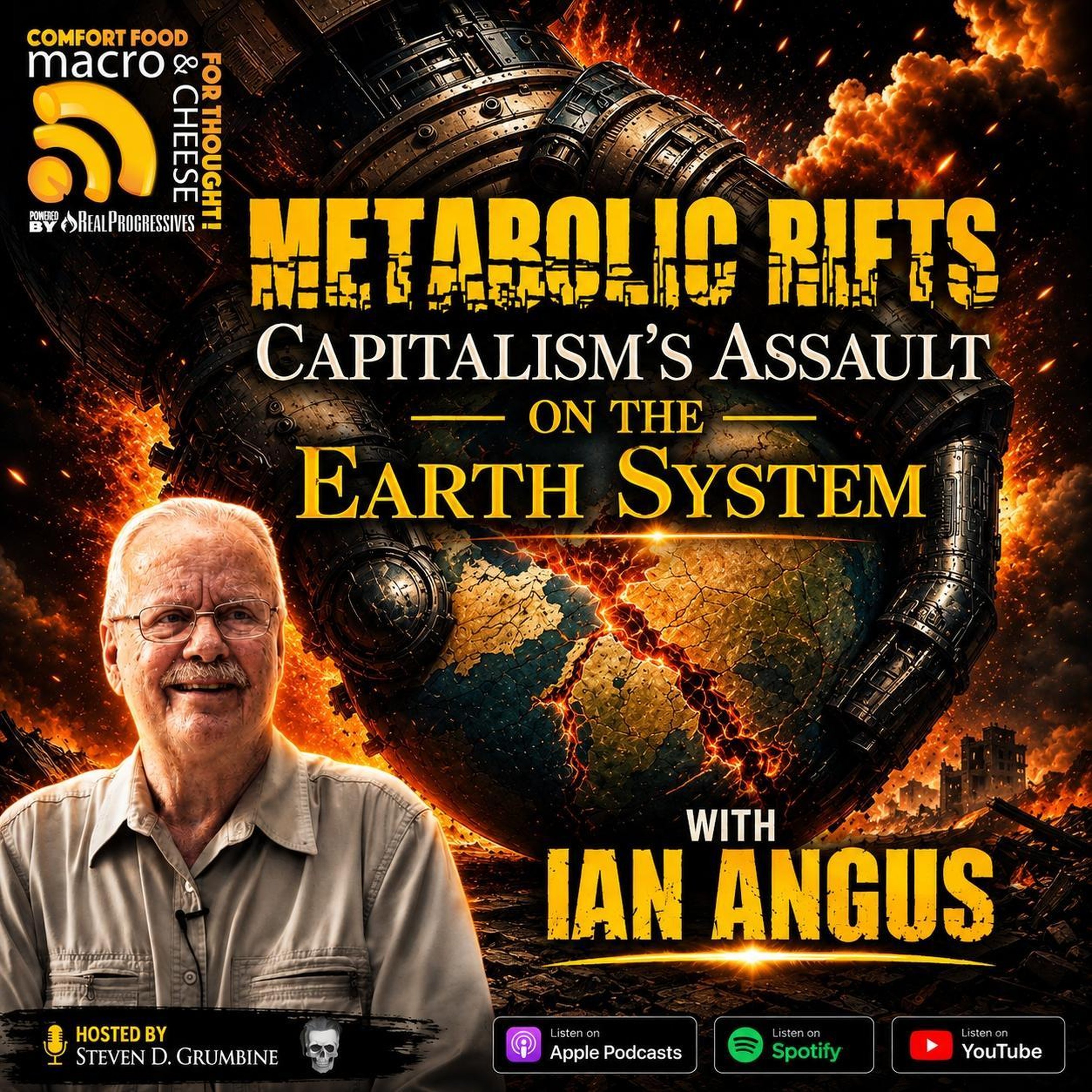
    Ep 384 - Metabolic Rifts: Capitalism's Assault on the Earth System with Ian Angus

    ** Come to Macro ‘n Chill, the online gathering where we listen to the podcast together and discuss what we learned and where we agree or disagree. Tuesday, June 16, 8pm ET/5pm PT. Use this link to register: https://us06web.zoom.us/meeting/register/Qm85bGIOSF2H_uNMwOmWtQ Ecosocialist author, Ian Angus, talks with Steve about his book Metabolic Rifts: Capitalism's Assault on the Earth System. They explore the deep, sometimes invisible ways that capitalism disrupts the planet’s fundamental life cycles –– from soil depletion and artificial fertilizers to the carbon cycle driving global warming. Ian traces the concept of “metabolic rift” from Marx and Engels through a long socialist lineage, making the case that ecological critique has always been central to the Marxist tradition. (Indeed, some Marxists might argue that “eco-” is an unnecessary qualifier; “socialism” is enough!) Steve brings up the MMT basics challenging the austerity narrative that blocks ecological reconstruction. He reminds us that the state, as the currency issuer, can de-commodify the essentials of life, namely food, water, housing, and healthcare. However, as Ian bluntly states: “The problem is that it’s not our government, it’s their government.” Reformism and electoralism are dead ends. While listeners may disagree with some of Ian's interpretations of Soviet history, those comments do not negate the episode's compelling analysis that capitalism’s DNA demands endless accumulation and profit. Combating the ecological crisis is inseparable from the struggle to overcome capitalism. Ian Angus is founder and editor of the online ecosocialist journal, Climate & Capitalism and a founding member of the Global Ecosocialist Network. Among his many books are The War Against the Commons: Dispossession and Resistance in the Making of Capitalism (Monthly Review Press, 2023), A Redder Shade of Green: Intersections of Science and Socialism (Monthly Review Press, 2017) and Facing the Anthropocene: Fossil Capitalism and the Crisis of the Earth System (Monthly Review Press, 2016). His most recent is Metabolic Rifts: Capitalism’s Assault on the Earth System. (Monthly Review Press, 2026), @ecosocialism1 on X

    • Transcript
    • Chapters
  • #383
    June 6 · 1 hr 3 min

    Ep 383 - The Complicit Lens with Robin Andersen

    Join us Tuesday, June 9th, at Macro ‘n Chill, the online gathering where we’ll listen to and discuss this episode. 8pm ET/5pm PT. Register with this link: https://us06web.zoom.us/meeting/register/L40tjKhOSCGCJTR-R-QJvw The title of Robin Andersen’s upcoming book (published next week) is The Complicit Lens: US Media Coverage of the Genocide in Gaza. You can see why Steve wanted to talk with her. Their conversation looks at how the corporate media helped manufacture consent for Israel’s war on Gaza by erasing historical context. It is tasked with enforcing cultural hegemony à la Gramsci, and defending the interests of the imperial core. Robin goes into examples of how the media has been used to erase Palestinian history and justify war crimes. Terms like "occupation," "apartheid," and "genocide" are scrubbed from discourse to maintain ideological control. It allows the ongoing dispossession and ethnic cleansing of Palestinians to go unchallenged. As MMTers we understand – and Steve emphasizes – how state resources are mobilized without hesitation for war and geopolitical control, while austerity is imposed at home as a political choice rather than an economic necessity. In this time where journalists are under attack (literally) the episode urges solidarity with truth-tellers like Francesca Albanese who confront imperialist violence. Robin Andersen is professor emerita of media studies at Fordham University and an award-winning author of a dozen single- and co-authored books. Her work examines film, television, and media coverage of war, the environment, politics, and elections. She edits the Routledge Focus Book Series on Media and Humanitarian Action, serves as a Project Censored Judge, and contributes to the annual State of the Free Press. Andersen is on the Board of Directors of Fairness and Accuracy in Reporting (FAIR), where she also writes regularly, and is an Izzy Award Judge for the Park Center for Independent Media. Her writing has appeared in CounterPunch, LA Progressive, The Progressive, Salon, Common Dreams, and ScheerPost, among others. @MediaPhiled on X

    • Transcript
  • #382
    May 30 · 1 hr 2 min

    Ep 382 - Yellow Vests & the Battle for Democracy: Beyond the Ballot Box with Ida Susser

    **Every Tuesday we hold an online gathering where we listen to and talk about the episode while building community. Share your insights and questions as we educate ourselves and each other. Macro ‘n Chill, June 2, 8pm ET/5pm PT. Register here: https://us06web.zoom.us/meeting/register/OEYtu7v-SciBITwiIWwdzw A frequent theme of our podcast revolves around the contradiction between formal political rights and the material realities of the working class. This week, our guest Ida Susser talks to Steve about the French Yellow Vest movement as a reaction to the contradictions of late-stage financial capitalism which has systematically gutted the welfare state, dismantled public services in the provinces, and further abandoned the universalist promises of the French Republic. Ida, an anthropologist, is author of the book The Yellow Vests and the Battle for Democracy: Taking to the Streets of Paris in the 21st Century. Moving beyond the liberal fetish of the ballot box, the conversation explores how the Gilets Jaunes, or Yellow Vests, built horizontalist, leaderless power from the grassroots. They blockaded traffic circles, constructed makeshift commons, and forged bonds of class solidarity across regional and ethnic lines. Ida contrasts this bottom-up mobilization with the top-down, cultish nature of MAGA; she points out that the French movement’s refusal of vanguardism did not prevent it from “thresholding” into a broader, anti-neoliberal bloc. Steve introduces the MMT lens to expose the ideological confusion around taxation and public spending. Is it possible the Yellow Vests’ defense of the social wage and their rage against the Macronist oligarchy represent a necessary, if incomplete, rehearsal for working-class power? Ida Susser is Distinguished Professor of Anthropology at Hunter College and the Graduate Center, CUNY. She has conducted ethnographic research in the U.S., Southern Africa and Puerto Rico, France and Spain with respect to urban social movements and the urban commons, gender, the global AIDS epidemic and environmental movements. She is the author of numerous books, chapters, and articles, including The Tumultuous Politics of Scale (Routledge Press, 2020) co-edited, and Norman Street: Poverty and Politics in an Urban Neighborhood (Oxford University Press, 2012. Her most recent is The Yellow Vests and the Battle for Democracy: Taking to the Streets of Paris in the 21st Century. (Routledge, 2026).

    • Transcript
  • #381
    May 23 · 1 hr 1 min

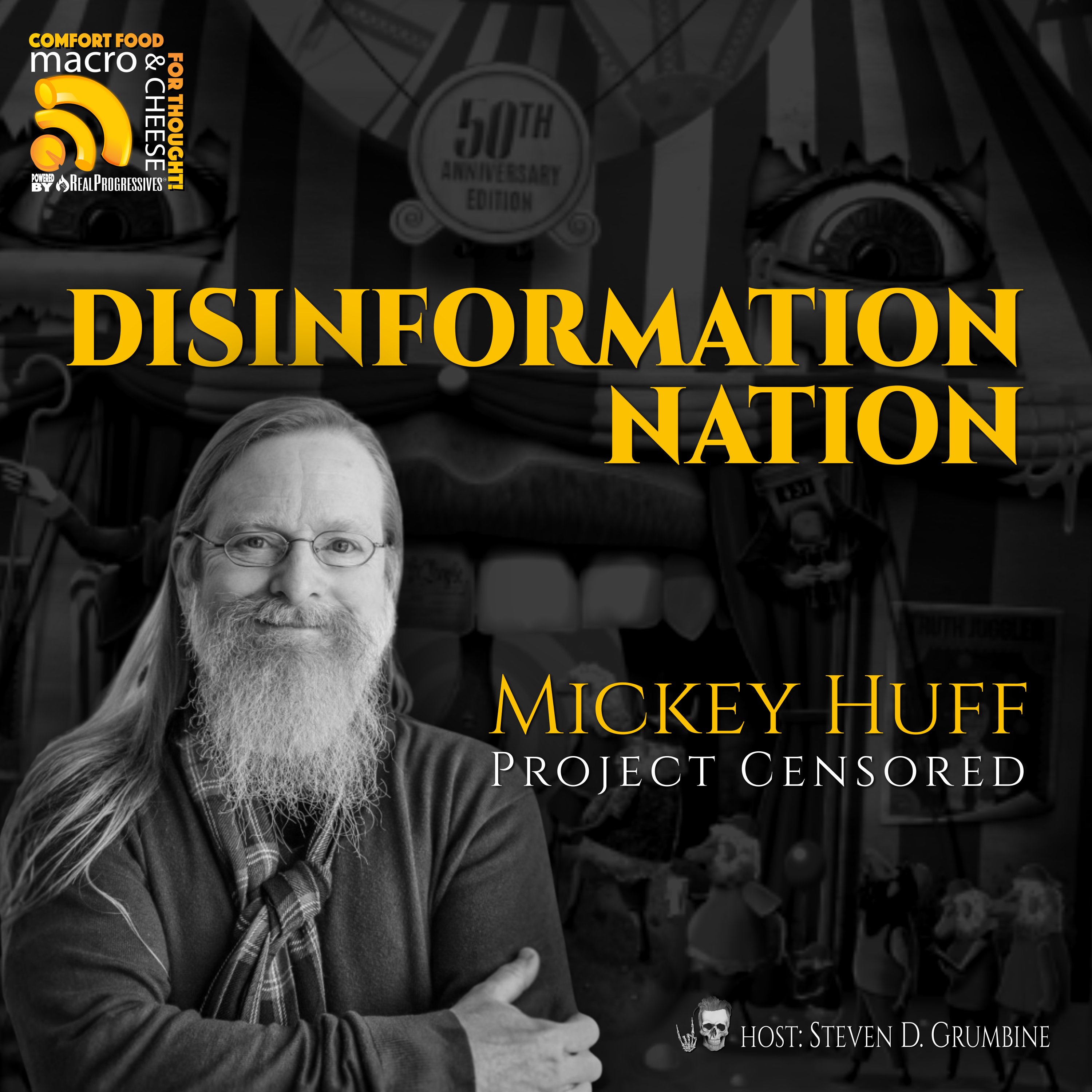
    Ep 381 - Disinformation Nation with Mickey Huff

    **Will we see you at Macro ‘n Chill on Tuesday? You’re invited to join our online gathering where we listen to the episode together and share our insights and questions. May 26 at 8pm ET/5pm PT. Use this link to register https://us06web.zoom.us/meeting/register/UHE6NoSDRbibqXYAeJJ8gQ Disinformation is neither an accident nor excess; it is the normal functioning of late capitalism’s media apparatus. Our friend Mickey Huff, executive director of Project Censored, talks with Steve about the machinery of modern propaganda, algorithmic control, and billionaire-owned media ecosystems. Their conversation highlights key tensions of a base and superstructure in decay. Mickey lays out the historical continuity of media manipulation, and they bring up surveillance as a class weapon and electoral distraction as a dead end. (Mickey may be the first guest to mention Gilens and Page before Steve does.) From Silicon Valley oligarchs and tech monopolies to the collapse of local journalism and the rise of curated realities, Steve and Mickey frame today’s information war as a struggle over who gets to shape “common sense.” Critical media literacy is not about neutral fact-checking but about exposing whose interests a narrative serves. Mickey Huff is Executive Director of Project Censored, President of the nonprofit Media Freedom Foundation, and Distinguished Director of the Park Center for Independent Media at Ithaca College Find his full bio at https://www.projectcensored.org/mickey-huff/ @ProjectCensored on X

    • Transcript
  • #380
    May 16 · 1 hr 14 min

    Ep 380 - Struggle & Resistance: Retelling Vietnam with Luna Nguyen

    ** This Tuesday, come to Macro ‘n Chill, our online gathering. Bring your insights and questions about this episode. May 19 at 8pm ET/5pm PT Use this link to register: https://us06web.zoom.us/meeting/register/AIz56SKPT6Gfh0pXhs3PTw You may know Luna Nguyen as Luna Oi, the YouTuber and member of the Non-Compete content collective who creates videos about culture, history, and politics in Vietnam, as well as panels and interviews with indigenous activists and comrades in the Global South. Steve asked her to come onto the podcast because, as a Vietnamese Marxist-Leninist, she can take us beyond US propaganda and into the lived history of Vietnamese resistance. The conversation goes into Ho Chi Minh's revolutionary development, the application of Marxism-Leninism to Vietnam's reality, French colonialism and Japanese fascism, the 1945 famine and August Revolution, US betrayal after WWII, the fabricated Gulf of Tonkin incident, the nature of the "Resistance War Against Imperialist USA," and the post-war embargo and debt extortion. Luna shares deeply personal family history – her grandfather's death in the Tet Offensive and her mother's childhood survival of a US bombing – grounding the analysis in living memory. She also connects Ho Chi Minh Thought to dialectical and historical materialism, making the case that revolutionary movements must emerge from concrete material conditions. Born and raised in Vietnam, Luna Nguyen is a writer and creator on a mission to share her country’s perspective with the world. She’s currently tackling the ambitious project of translating Vietnam’s official Marxist-Leninist philosophy curriculum into English. In addition to her translation work, she also produces YouTube documentaries that dive into the intersection of Vietnamese culture and politics. Check out her channel https://www.youtube.com/LunaOi/ Free E-books available at https://www.banyanhouse.org/shop/

    • Transcript
  • #379
    May 9 · 54 min

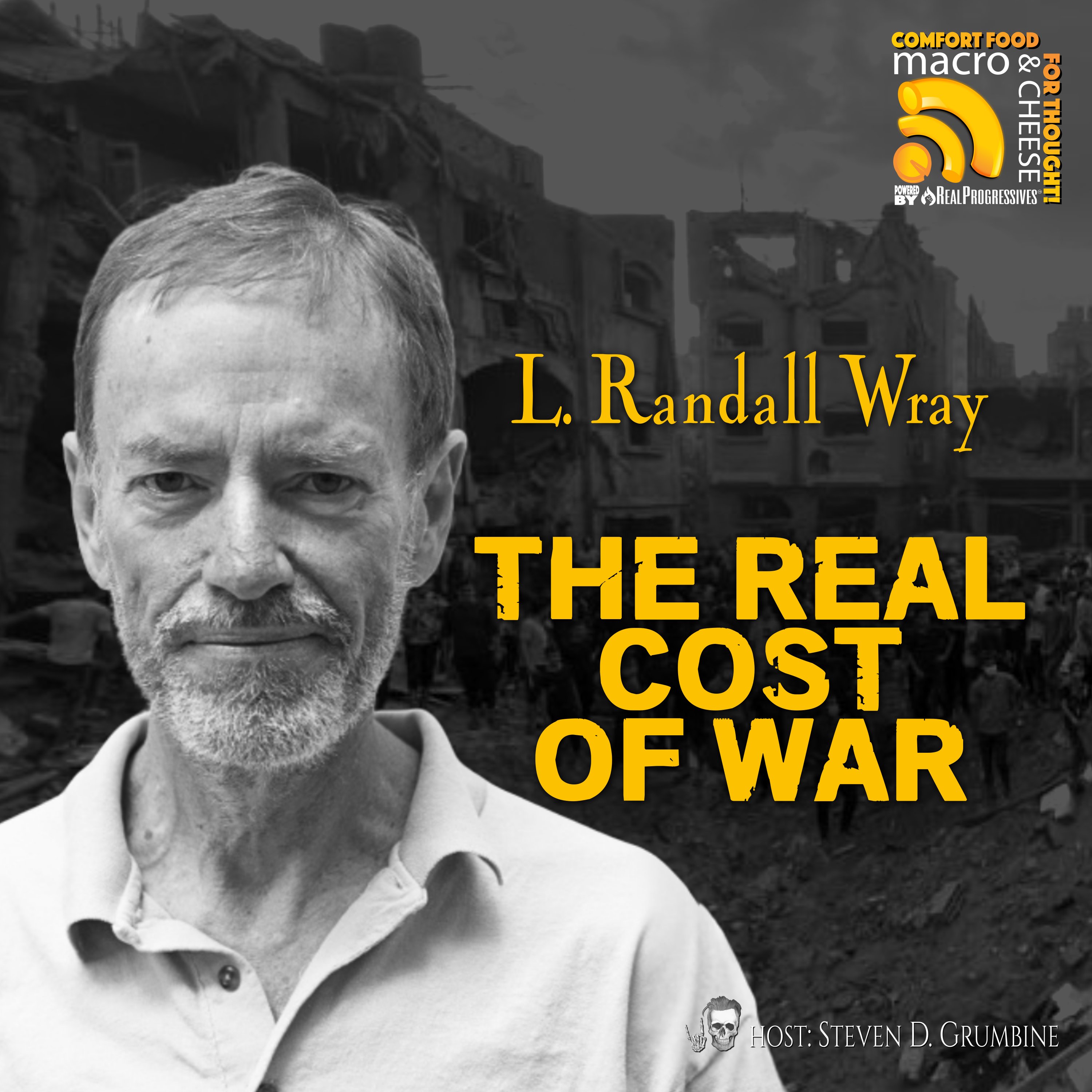
    Ep 379 - The Real Cost of War with L. Randall Wray

    ** This Tuesday, May 12, come to Macro ‘n Chill, our online gathering where we listen to and discuss this episode. Bring your questions and insights. 8pm ET/5pm PT. Use this link to register: https://us06web.zoom.us/meeting/register/rn_HAqgaSRGdj8W2UX9aKw Did you think we had abandoned MMT? Well, after a few weeks of tackling some rather prickly topics, we’re back to strictly non-controversial macroeconomics. Heh heh. Just kidding. Don’t get too comfortable. Our old friend Randy Wray is back, bringing his somewhat optimistic belief that a sound reality-based agenda might possibly succeed in the upcoming Congressional elections. But more on that later. First, he and Steve need to dissect Trump’s latest imperialist venture against Iran and expose the bipartisan lie that there are just enough of your tax dollars to pay for war; when it comes to affording social programs, the cupboard is bare. Claims of scarcity are pure ideology. MMT has taught us that the federal government faces no dollar constraints. The real cost of war is measured in diverted labor, wasted resources, destroyed infrastructure, and the steady cannibalization of society’s productive capacity. Not to mention human lives, disabled veterans, and a chain reaction leading to starvation in the Global South. Back to Randy’s guarded optimism, which Steve does not share. Rather than smooth over their differences, they lean into them. Randy believes an anti-neoliberal program could win congressional seats. It would require candidates to break out of the fiscal austerity frame. Steve counters by referring to the Gilens and Page study – showing policy has near-zero correlation with popular will – and a class-lens analysis of manufactured consent. He sees a theatrical oligarchy, not a reformable political system. Since both parties serve capital, there is no electoral path. No possibility of reallocating resources from bombers to bread. The conversation represents an unresolved, essential tension inside the MMT-Marxist synthesis: is monetary sovereignty a tool for working-class liberation blocked only by bad ideas, or is the entire political theater designed to ensure those ideas are never acted upon? L. Randall Wray is a Senior Scholar and Professor of Economics at the Levy Economics Institute of Bard College, and Emeritus Professor at University of Missouri-Kansas City. He is one of the developers of Modern Money Theory and his most recent book on the topic is Understanding Modern Money Theory: Money and Credit in Capitalist Economies (Elgar, 2025). Find his work at https://www.levyinstitute.org/people/lrandall-wray/

    • Transcript
  • #378
    May 2 · 1 hr 4 min

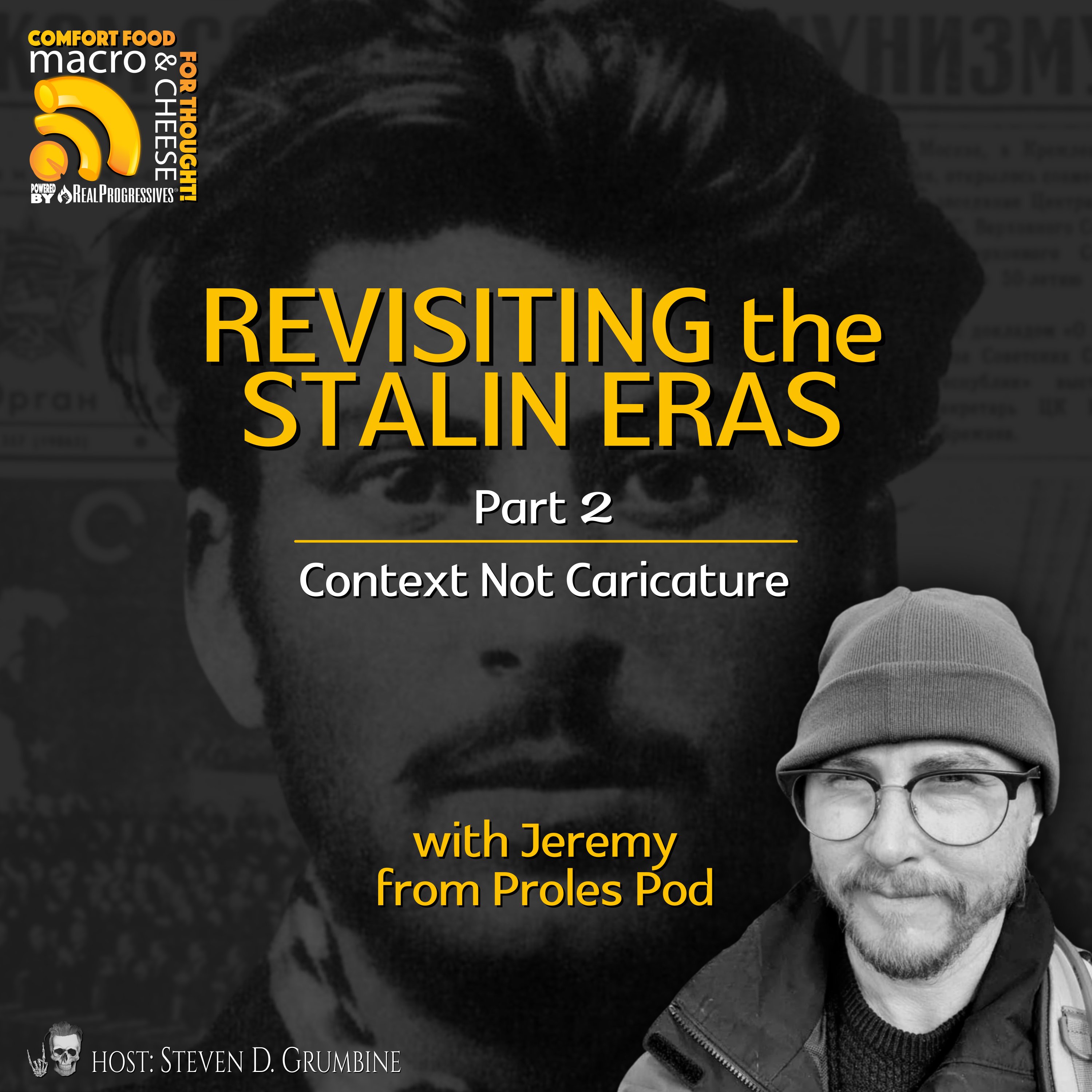
    Ep 378 - Revisiting the Stalin Eras Part 2: Context Not Caricature with Jeremy of Proles Pod

    ** Macro ‘n Chill is our weekly online gathering where we listen to the podcast episode and talk about it among friends. This Tuesday, Jeremy of Proles Pod will be with us to answer questions. May 5 at 8pm ET/5pm PT Use this link to register: https://us06web.zoom.us/meeting/register/gCOXxGttQryRnQNq-A3NbA This is Part 2 of Steve’s interview with Jeremy, co-host of Proles Pod, talking about their exhaustive series on the Stalin Eras. It's a nuanced, de-stigmatized discussion about Joseph Stalin and the political reality of the Soviet Union. They begin by dismantling Western misconceptions of dictatorship to explain the actual Leninist methodology of democratic centralism, contrasting it with Western parliamentary systems. Rather than asking whether Joseph Stalin was good or evil, the conversation reframes the question entirely. It situates the Soviet project within the pressures of counter-revolution, imperial encirclement, and internal struggle, while investigating how decisions were actually made inside a socialist state. Jeremy calls out indefensible behavior and debunks long-standing myths. The result is a dialectical examination of power, democracy, and historical development. Proles Pod is an explicitly anti-capitalist, anti-imperialist podcast run by four ADHD-addled individuals. Although the foundation of Proles was built on the topic of history, more recently they have branched out into theory, politics, and culture. You can find them anywhere fine podcasts are distributed. Join their Patreon https://www.patreon.com/c/ProlesPod/posts Check out a teaser for their series, The Stalin Eras: https://www.instagram.com/reels/DP81SiTjQry/

    • Transcript
  • #377
    April 25 · 55 min

    Ep 377 - Revisiting the Stalin Eras Part 1: Understanding Democratic Centralism with Jeremy of ProlesPod

    ** Come to Macro ‘n Chill, our online community gathering, where we listen to and discuss the current episode. This week, Jeremy of Proles Pod will be joining us. If you have questions for him, bring them! Tuesday, April 28th, at 8pm ET/5pm PT. Register here: https://us06web.zoom.us/meeting/register/G7ijDSVmTcKeDc82AAs0XQ Last year, Proles Pod completed a multi-part series on The Stalin Eras. Now Jeremy, one of the co-hosts, joins Steve for a conversation about it, resulting in a two-part dialectical excavation of Joseph Stalin and the Soviet Project. The purpose of this exploration is neither to sanctify nor condemn, but to strip away bourgeois mythologies and ground the discussion in material conditions and collective processes. In Part One, Jeremy and Steve look at democratic centralism, where rigorous debate is followed by unified action, then contrast it with the false choice offered by US electoral politics. They draw on Rosa Luxemburg, Julius Nyerere, and materialist analysis of US history (slavery, settler colonialism, Jim Crow as inspiration for Nazi laws), and agree that both Democrats and Republicans serve the same capitalist-oligarchic permanent state. Proles Pod is an explicitly anti-capitalist, anti-imperialist podcast run by four ADHD-addled individuals. Although the foundation of Proles was built on the topic of history, more recently they have branched out into theory, politics, and culture. You can find them anywhere fine podcasts are distributed. Join their Patreon https://www.patreon.com/c/ProlesPod/posts Check out a teaser for The Stalin Eras https://www.instagram.com/reels/DP81SiTjQry/

    • Transcript
  • #376
    April 18 · 1 hr 2 min

    Ep 376 - Modern Monetary Theory & the Question of Democracy with Jim Byrne

    ** Questions about MMT? Thoughts about the episode? Come to our online gathering, Macro ‘n Chill. Tuesday, April 21, 8pm ET/5pm PT. Use this link to register: https://us06web.zoom.us/meeting/register/RkspaP0RSNajdc69bqUmkA Jim Byrne of MMT101 is back for a conversation that moves beyond the technical mechanics of Modern Monetary Theory to ask the tough questions. While affirming MMT’s core insight that a currency-issuing government doesn’t face financial constraint, only real resource limits, they argue that this knowledge is politically neutered by the structures of capitalism. Jim lays out a clear, accessible primer on how money actually works and breaks down the scarcity myth. But the real question isn’t can governments act, it’s who they serve when they do. Looking at the failure of bourgeois democracy, they talk about cultural hegemony and neoliberal ideology as well as class struggle vs. gradualism. The discussion touches on Scotland as a colony of Westminster and the limits of referendums under an imperial state structure. Ultimately, this is a dialogue that pushes beyond MMT’s insights and asks whether those tools can mean anything without a rupture in the underlying political and economic order. Jim Byrne has developed an MMT foundation course aimed at beginners and intermediate learners as well as people who already know about economics but are curious about Modern Monetary Theory. Follow his work and the MMT101 podcast at mmt101.substack.com @MMT101DotORG on X

    • Transcript
    • Chapters
  • #375
    April 11 · 1 hr

    Ep 375 - (R)evolutionary Struggle with Steve Grumbine

    ** This week’s Macro ‘n Chill might shake us up. Some of us, at least. Come discuss the episode with the community. Tues, April 14, 8pm ET/5pm PT. Use this link to register: https://us06web.zoom.us/meeting/register/PIf2VnjBS-mwX-Bd4BwWYQ In a solo episode, Steve sets out to describe and explain some of the shifts in direction for Real Progressives and the podcast, mirroring his own changing perspective. He reflects on a decade or more of championing Modern Monetary Theory, while grappling with a dawning realization. Despite MMT’s crystal clear insights into sovereign currency with the potential for popular federal programs and public investment, the political system itself is a scam. He describes a journey of discovery (yeah, we know that sounds corny) peeling away the layers to explain the Gilens and Page study and global events. Gaza, US foreign policy, austerity, racism, empire, ramping up of brutal law enforcement within the US... each question leads to another. Weekly guests for Macro N Cheese help provide answers. Significantly, they contribute to the building of an analysis. Give a man a fish and you feed him for a day. Teach a man to fish and you feed him for a lifetime. Accepting that the US is not a functioning democracy but an oligarchy serving capital, Steve critiques electoralism as a false promise and diversion. He calls for building parallel institutions and class consciousness over 'vote harder' strategies. Real Progressives remains rooted in MMT while integrating revolutionary theory, resistance, and an unsentimental understanding of capitalism. Steve Grumbine is founder and CEO of Real Progressives and host of Macro N Cheese podcast. Find his work at realprogressives.org and realprogressives.substack.com @sdgrumbine on X

    • Transcript
    • Chapters
Showing 1–20 of 20 episodes