Agent Graph Engineering, Part 1: The AI Agent Stack I Wish I'd Had Five Years Ago
transcript
show notes
This story was originally published on HackerNoon at: https://hackernoon.com/agent-graph-engineering-part-1-the-ai-agent-stack-i-wish-id-had-five-years-ago.
AI agent demos are easy. Production systems aren't. Explore the Python frameworks, architecture, testing, and observability needed to ship reliable agents.
Check more stories related to machine-learning at: https://hackernoon.com/c/machine-learning.
You can also check exclusive content about #ai-agent, #langgraph, #python, #ai, #architecture, #ai-agent-architecture, #python-ai-agents, #ai-agent-evaluation, and more.
This story was written by: @huynguyengl99. Learn more about this writer by checking @huynguyengl99's about page,
and for more stories, please visit hackernoon.com.
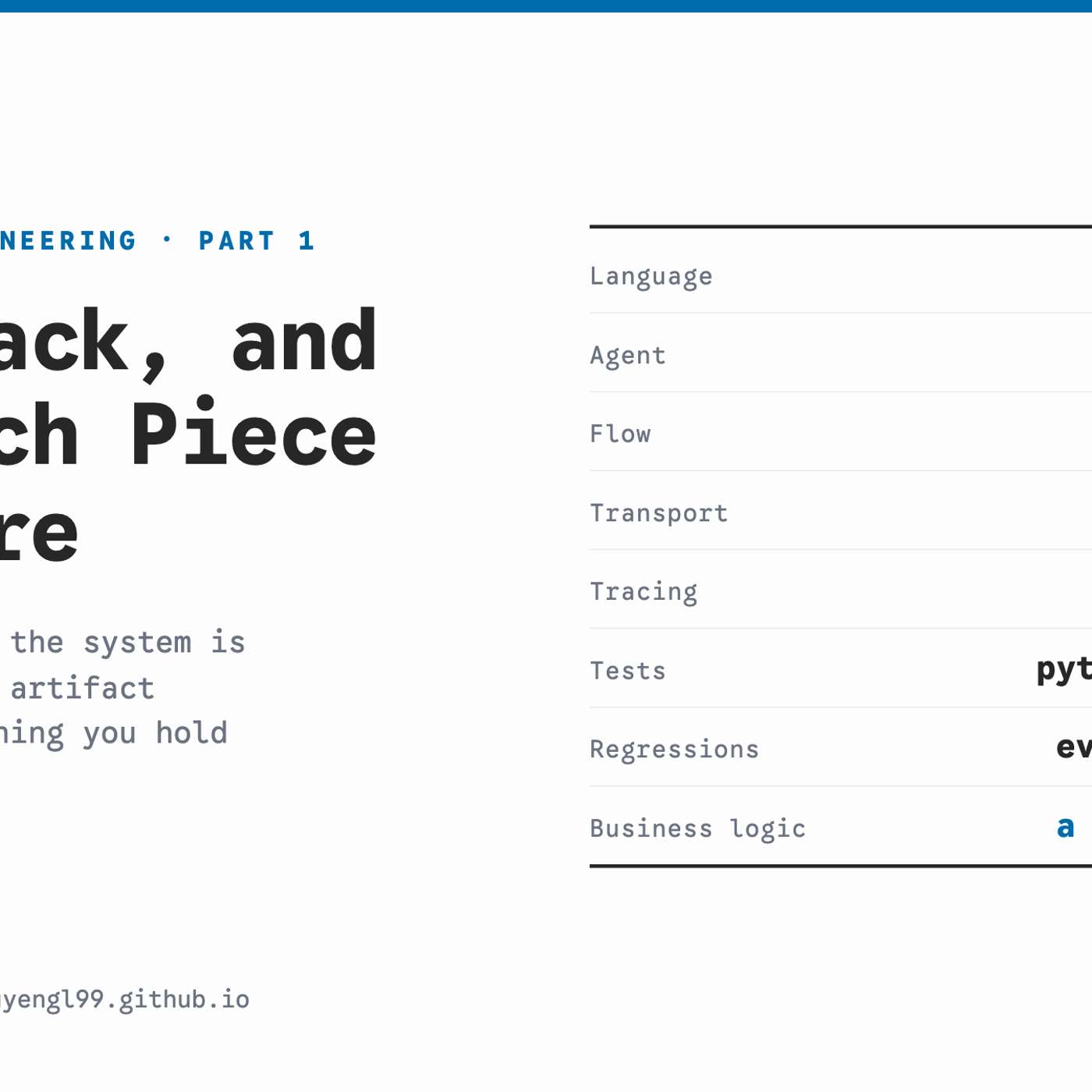
The stack is Python, Pydantic AI for agents, LangGraph for the flow, chanx for typed streaming WebSockets and a generated frontend contract, OpenTelemetry into a trace store you own, pytest with a mocked LLM for fast tests, and real-model evals for regressions. Business logic stays in a separate service from the agent graph. The single idea holding it together: every boundary in the system is a declared, typed artifact rather than something you hold in your head. This post makes the case for each piece so you can bring it to your team, then lays out what we build in the rest of the series.