Skip to content
Artwork for Lit Lessons on Flight School
ArtsBooksEducationCourses

Lit Lessons on Flight School

NYT Bestselling Author, Jennifer Lauck

Internationally celebrated author with 25+ years of teaching experience who demystifies the creative writing game. Learn what you need to finish a memorable and publishable book in simple, easy to understand lessons.

jenniferlauck.substack.com
Play
  • 21 episodes
  • Avg 31 min
  • English
Counted on this page — what you have heard stays on this device, so it is not something the list can be paged by.
  • August 20 · 29 min

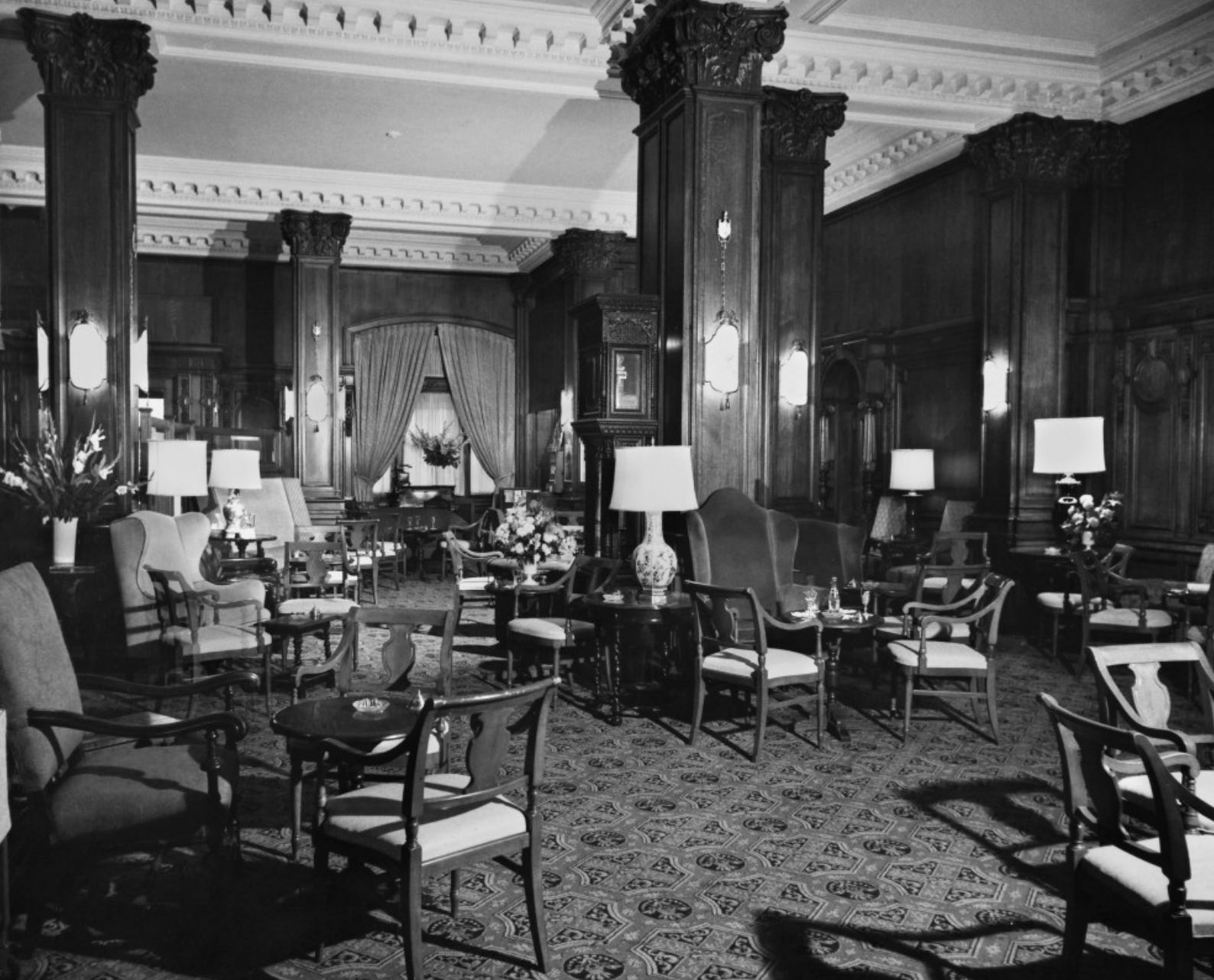
    What the Algonquin Taught Me About the Novel

    Welcome into Flight School: In this post, Maya C. Popa and I talk about the Foundations Intensive I’ll be teaching for her Conscious Writers Collective this September. First about Maya: She is a terrific lady. Whip-smart (as Tay Hohoff said about Harper Lee). Funny. Bursting with style, energy and purpose. And, last, no-nonsense about the art and craft of creative writing. Then comes her professional credits: The author of If You Love That Lady (W. W. Norton, 2026), Wound Is the Origin of Wonder, and American Faith. Her work is published in The New Yorker, Poetry, The Atlantic, The Paris Review, Granta, The Guardian, and elsewhere. And, she’s the Poetry Editor of Publishers Weekly, a teacher in the undergraduate and MFA in Paris programs at NYU. Maya and I found each other here on Substack, where I’ve been generally cheering on her honesty and hard work. One day, we got to talking about my foundations program and pretty soon, I was building a version for her remarkable Conscious Writers Collective. How could I not? In short, CWC is a new kind of institution built around the life of the writer rather than the duration of a degree — combining live programming, an ever-growing archive, and a global community of serious writers committed to the work. Bottomline: CWC overflows with talent and Maya’s integrity. In this interview, Maya asks some key questions about my journey as a writer and a teacher. I was delighted to answer. Where it all began: When Blackbird came out in 2000, my then-agent elbowed me to write fiction. I wasn’t ready. “But your career,” she said. “Think about your career.” So, I wrote an awful novel all about dreams. “The worst piece of drivel I’ve ever read,” the agent said had me fly to New York and meet a developmental editor at the Algonquin. Yes, that Algonquin. There I sat in that beautiful old lounge surrounded by the ghosts of some of the most interesting writers, and the editor talked about the rewrite using terms I’d never heard and didn’t understand. While I took copious notes, all I could think was, “No. I can’t do this. I don’t get a word of what she’s saying.” I wrote and published three more memoirs and eventually signed up for an MFA in hopes I’d finally learn everything I needed about fiction. When it was over, I learned how to rid myself of $50,000 but still knew nothing. Never give up: Post MFA, I started a story “think tank” with a group of talented fellows in various stages of their own projects. In a dank upper room of a freezing cold building—the very opposite of the Algonquin—we tore down novels and memoirs. And soon they brought in teaching texts on structure, antagonistic forces and plot. “Let’s talk about this,” they’d say. And we did. Those fellows included Lindsey Lee Johnson, Kate Hope Day, Ruth Warnier, Jody Little, and Becky Ellis. All published now. After about four years, the teachings formalized into the Bones of Storytelling which became the core of my own school, The Blackbird Studio for Writers, founded in 2015. What I’ve learned over the course of the journey is that the spirit of the Algonquin—that is, the collective thinking and gathering and talking—is what matters. And I’ve never stopped with that approach. Over these years, I’ve taught Bones at least two hundred times around the US and in Paris. I love Bones for one reason: It answers EVERY question I have about story. Finally. Take Foundations at CWC this Fall: September 12 through December 19, 2026 is a semester of learning on Saturday morning. 8 a.m. PST. CWC classes will be live on Zoom with lessons, handouts, slides, group discussions and work time. And again, I built the teaching specifically for CWC. This Bones will be unlike any version of this course I’ve taught before because Maya’s writers are unique: Poets who want to write fiction. Novelists on their second and third books. Writers who are serious about the long game. If you’re a CWC member, I’ll see you in September. If you’re not, think about becoming one. And use the above link adding in the the coupon BLACKBIRD for $25 off your first month’s plan. Alternatively, you can always take Bones with me on the regularly scheduled Studio program: Blackbird Studio Bones Class October 12 – December 14, 2026 Tuesday - 10:00 a.m. – noon PST Live on Zoom. Beginners to advanced. All welcome. No matter what, the first class of Bones is always free (below). Watch and see what happens when this teaching lands on your story. Thanks to Maya and thanks to everyone here on Flight School. I hope to see you in one of these terrific classes very soon, Jennifer 🐦‍⬛ This is a public episode. If you'd like to discuss this with other subscribers or get access to bonus episodes, visit jenniferlauck.substack.com/subscribe

  • August 10 · 47 min

    The Summer of the Finch: The Question That Remains

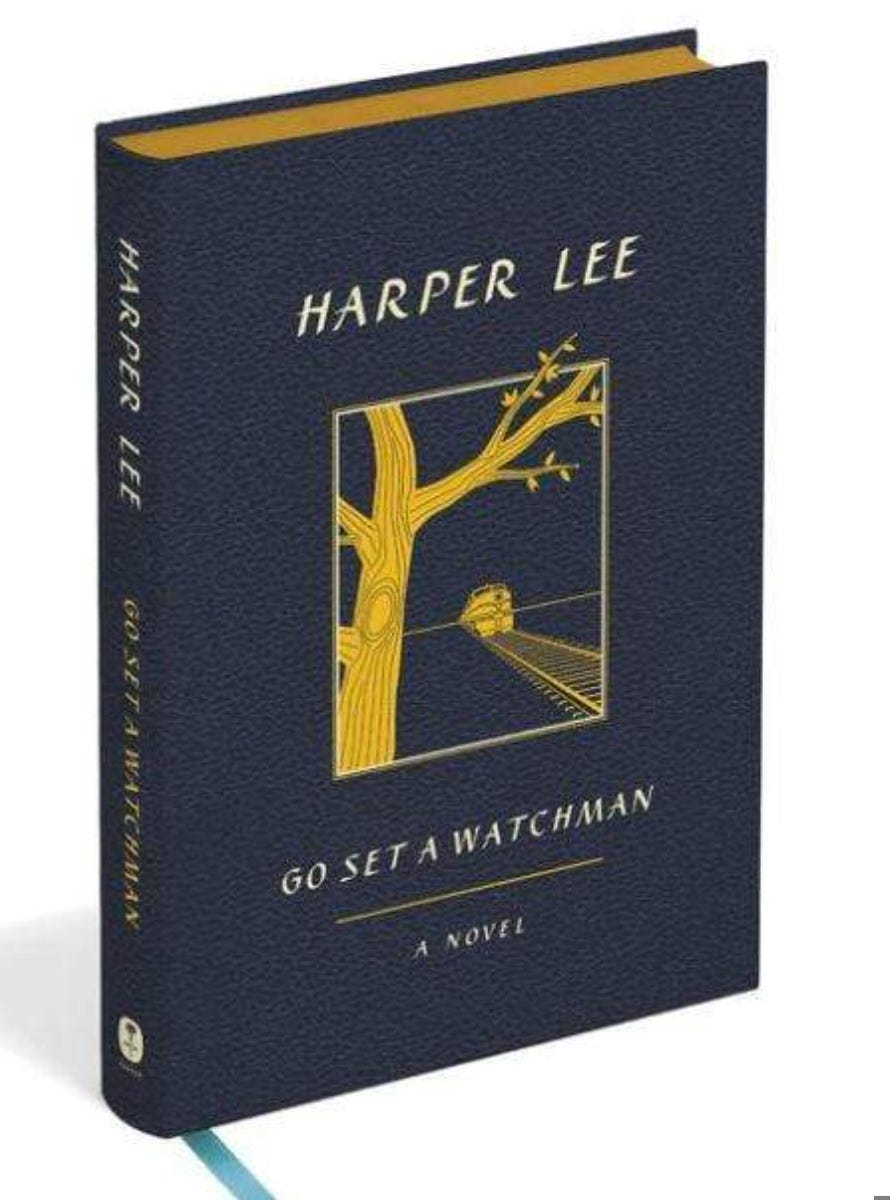
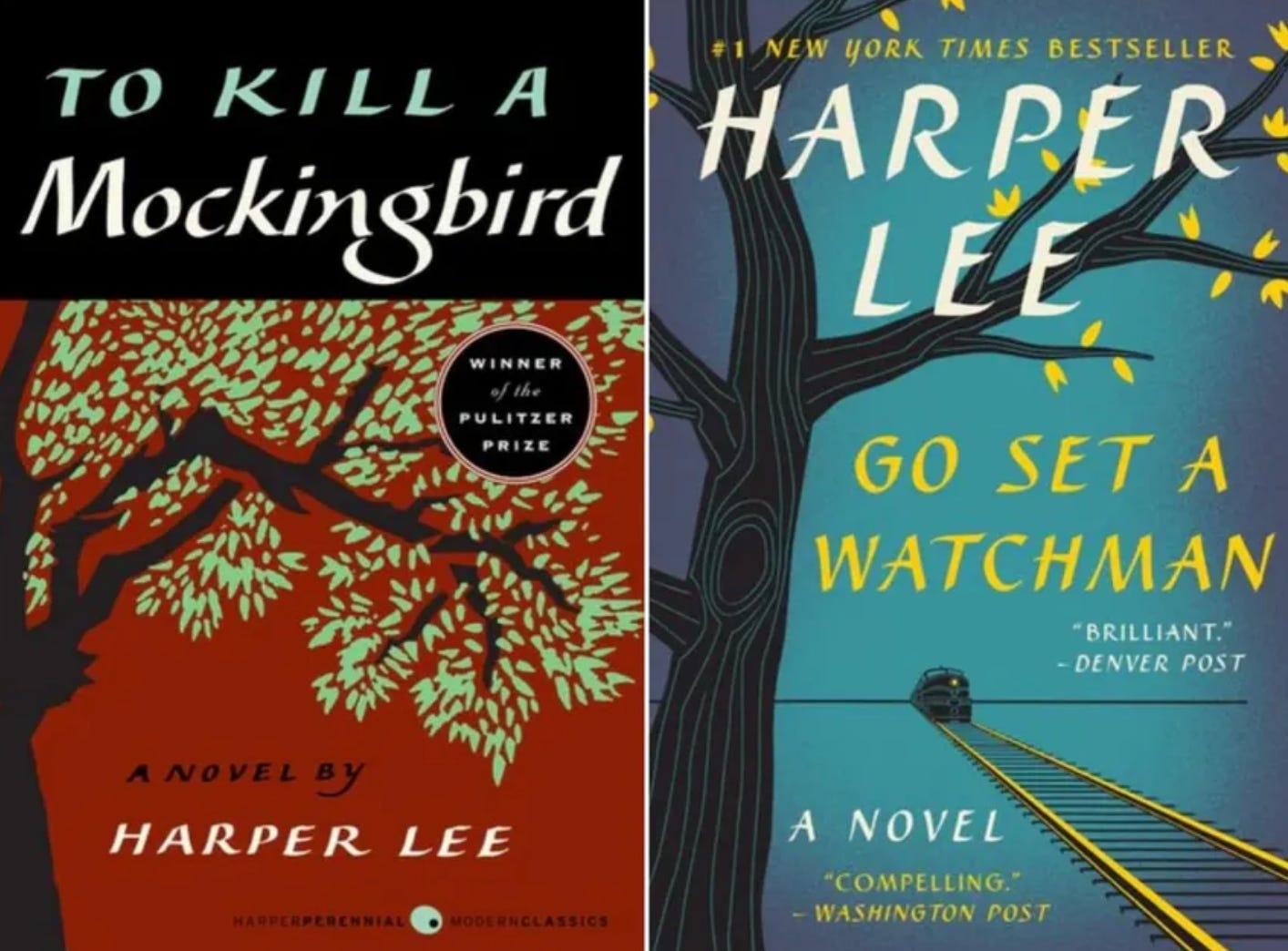
    “We’re all like trees. If you cut us in half you can see exactly where our conscience began to form. But we’ve got all these rings.” ~ Patricia Boynton Welcome into Flight School and our last live conversation about these two amazing books. One we all know, one most of us cannot finish. Go Set the Watchman and To Kill a Mockingbird by Harper Lee. What was Watchman about? In our live meet up, Patricia said it cleanly: Jean Louise built her house on what she thought she knew about Atticus — not on what was real, not on what she had tested and earned — and she was fully prepared to live there. She was prepared to build her little house on that rock, Patricia said. And so yeah, there would be tremors and there would be roof collapsing. When the tremors came Jean Louise pulled the ripcord. She was ready to destroy the most important relationship of her life based on a single week of new information, without grace, without debate, without allowing the full human being of her father to exist alongside her disillusionment. Uncle Jack stops her. Not because she’s wrong to be hurt. But because she is cutting herself off from the very information she needs to build something real. Pamela, who came to the book already knowing To Kill a Mockingbird by heart, said the hardest part was trying to unsee the Atticus she already loved, Gregory Peck, in order to read the first draft clearly. But when she could, she found something unexpected: hope. Not for Atticus. For Jean Louise. Because Jean Louise refuses to marry Henry Clinton — not for class reasons, not because Aunt Alexandra wins — but because he is not her kind. His values are not hers. And that refusal, Pamela said, is the first thing Jean Louise has decided entirely for herself. She did get values from Atticus, Pamela said. But she was able to form her own by refusing to marry Hank. That is the Rebirth. Tentative, painful, incomplete. But real. To Kill a Mockingbird’s craft revelation and what makes a book endure: * In Watchman we are told about Atticus’s goodness but in To Kill a Mockingbird we are shown. And that changes everything about how we understand our own writing. Lee, in her first draft didn’t do the work. But in the second (Mockingbird), she did and we will never get those images out of our mind. * To Kill a Mockingbird will be read a hundred years from now. So will A Tale of Two Cities. So will the Brontës. So will A Prayer for Owen Meany by John Irving. Why? Because they hold values that press against the flawed human self and ask it to go further. Most books on the bestseller list this year will be gone in one or two. Not because they aren’t well written but because they don’t press hard enough on the thing that doesn’t change. Atticus at the end of Mockingbird. Heroic? Or not? In one of the last scenes of To Kill a Mockingbird, Atticus is sitting in his living room, having a drink, while his children are being attacked on a road in the dark. He didn’t know. He couldn’t have known. But when it is over and he stands in that room, his magnificent code tells him his own son killed Bob Ewell. And the code says: turn him in. Heck Tate has to stop him and he does: I’m the law, Heck says. And I say Bob Ewell fell on his knife. And Atticus — shaken, humbled, defeated in the best possible way — accepts it. He lets the code bend in the hands of a plainer and wiser man. He comes back from the end of this book knowing something his magnificent mind could not have reasoned its way to. Patricia closed it with the image I want to leave you with: Harper Lee knew these people. She knew her conscience. She knew where it came from. She knew the bands around it. We’re all like trees. If you cut us in half you can see exactly where our conscience began to form. But we’ve got all these rings. Those rings are your story. 🤔 Your Turn Ten weeks later: who formed your conscience? And has anything shifted in how you understand it? Drop it in the comments. This conversation doesn’t have to end here. One more post coming that wraps up our Summer of the Finch. Thank you for being with me and I hope you enjoy the video replay, Jennifer 🐦‍⬛ PS: I’m delighted to be teaching a foundations program, the most updated of my Bones series for Maya Popa’s CWC program. Click the link below and get a $25.00 discount! This is a public episode. If you'd like to discuss this with other subscribers or get access to bonus episodes, visit jenniferlauck.substack.com/subscribe
  • July 10 · 26 min

    The Summer of the Finch: A Conversation in Paris

    “You go to the very end, Jennifer. Which is why I wanted to be here.” — Pamela Combastet, Paris, 8 p.m. Welcome into Flight School and this deep conversation I was lucky to have with Pamela who is the President of WICE, a Paris literary program, a former New York magazine editor, and one smart lady. When we met in Paris, a few years back, she passed me the little book on conscience examination and I have it still. I’m not as rigorous about this examen as she is but the fact that she is a woman of deep conscience makes our conversation perfect. It was just Pamela and me in the room, too. Calling in from Paris at eight o’clock on a sweltering Monday night, Pamela was still thinking hard about Watchman, which she’d already read year ago but now listened to as a performance, in order to get through to the end. Together we did what good literature demands: We worked hard, we thought harder, and we let the questions go all the way down. It is a deep, therapeutic how do I live my life conversation. How do I bear the discomfort of the unbearable? This is what we found. On the book that changed you: Think about the one book you’ve read over the course of your life that moved something in you. What was the title? What did it ask of you? And looking back — does it still? Why? Or why not? These are the questions that literature, good literature, have been nudging out of human beings since pen was put to papyrus. Not answers. Questions. The kind that live in you for decades and keep changing shape. Pamela and I, in this conversation, used our time to push those questions about Go Set a Watchman. It is raw, unfinished, exposed, and yet inside live gems that cannot be gathered without going the full distance and finishing it. Who was your Atticus? Pamela has been turning this question over since she registered for this series. She can’t land on a single person. What she named instead was a moment. Robert Kennedy. Campaigning in the South. Stopping at a sharecropper’s farm. Asking a group of children if they’d had lunch. The children, aware of the camera, said yes. And she watched his face — the blank moment when he knew they were lying. When he understood they hadn’t eaten. When the crusade stopped being political and became personal. That, she said, is when he became sincere. She has never forgotten that quiet moment. Years later it still lives in her — the standard for what authentic engagement with another person’s reality actually looks like. That is not a borrowed conscience. That is a formed one, built from a single witnessed moment of genuine recognition. I took that and turned it around for anyone watching, because the question works both ways. Jean Louise projected a kind of perfection onto Atticus — his view became her view, his certainty became hers, and she didn’t have to think too hard because she could always go to him. That is the borrowed conscience. But the reverse is also true: we have all been someone else’s Atticus at some point. We have all been the person someone projected their ideal onto, and then disillusioned, and then condemned. When I was writing Blackbird and evidence showed me a different father than the one I’d believed in, I went from idealization straight to villain. Just like Jean Louise. It takes time to find the full human being in the middle. Jean Louise has less than a week. That’s what makes the book so uncomfortable to read. That teeter-tottering, with no processing time, compressed into seven days. The question Jean Louise, and all of us, are being asked: I put it to Pamela directly: what do you think the end of this conversation is? When you are standing in a room with someone whose position you find monstrous, whose words eliminate the humanity of entire groups of people — what do you do? Pamela: You accept them. Not superficially — not ‘I’ll pray for you’ which often just means go to hell. But a real acceptance. I can’t understand you but I agree to be in this difficult uncomfortable middle space. Where hopefully something will illuminate between us. A way forward. And that is exactly what Uncle Jack is pointing Jean Louise toward. Not agreement. Not forgiveness. Not pretending the horrible man at the Citizens’ Council meeting didn’t say what he said. But the recognition that she has a gift. Jean Louise doesn’t see color, she never has, because of how Atticus raised her and entrusted his children to Calpurnia and stood in a courtroom for Tom Robinson. Uncle Jack offers that Jean Louise’s gift needs to come back to Maycomb as a voice, not a judge. On serving wittily: We landed, near the end, on a quote from A Man for All Seasons. Thomas More, on the brink of being beheaded by Henry VIII, speaks to his daughter: God made the angels to show him splendor, he made animals for innocence, plants for their simplicity. But he made man to serve him wittily, in the tangle of his mind. That is what this book is asking of us. Not to resolve the tangle. To serve wittily inside it which means to use the mind that was given to us, connected to the heart, connected to the soul, and asking the hardest questions without looking away from the answers. (24.25) “You walk through Paris. I walk through Portland,” I said. “We see the suffering. We ask what we can do.” “We surrender. We accept,” she said. A note on faith: Yes, this conversation steps into the terrain of God and we make no apology for that. We are not talking about religion or pushing a particular belief system. We are talking about the greater consciousness of the human heart and soul. Land where you can. Let it move you toward the biggest questions you can ask. Three questions: * Who formed your conscience? * If that was shattered by disillusionment, how long would you need to process it? (I’ve personally needed forty years after my father disillusioned me.) * And — can you arrive on the other side changed enough to withstand someone you detest, in order to add your own voice to the conversation That last one is what Uncle Jack is asking of Jean Louise. It is what this book, never meant to be read, is asking of us. Coming July 21st: Post Three of this series drops about the editorial miracle performed by Harper Lee on Go Set a Watchman. The miracle that produced one of American’s foundation literary masterpieces. Watch for that. AND, you are reading To Kill a Mockingbird. Same town. Twenty years earlier. Through a child’s eyes that see everything clearly, precisely because she doesn’t yet know what she’s supposed to look past. If you want to catch up, here’s your map: Post 1: Summer of the Finch. The Beginning Post 2: Summer of the Finch: Zoom Launch Post 3: Go Set a Watchman: Post 🤔 Your Turn What is the one book that changed you? And what did it ask of you that you are still answering? Drop your answer in the comments. I’m listening. Thanks to Pamela for thinking so hard with me and thanks to all of you for being with me on this journey, Jennifer, 🐦‍⬛ This is a public episode. If you'd like to discuss this with other subscribers or get access to bonus episodes, visit jenniferlauck.substack.com/subscribe
  • June 28 · 44 min

    The Summer of the Finch: Launched

    Welcome into Flight School for our Summer of the Finch: We had a full house of writers signed up for this meeting and then, come Go Time, we only had two and then one and then two again. That’s summer for you so I’m delighted to bring you this follow up conversation from our launch. I opened with an exercise. Close your eyes. Imagine your unfinished manuscript — the one that isn’t ready, the one in the drawer, the one you know needs more work. Now imagine you drop dead. And someone publishes it anyway. Jennifer from Oklahoma put it perfectly: It would be like someone just pushing you out of a plane. That is exactly what happened to Harper Lee. Her first draft, raw, unrevised, the book she locked away and said would never see the light of day, was published fifty-five years later while she was deaf, nearly blind, and living in an assisted care facility. Her protector, her older sister Alice, had died months before. Holding that context in your hands changes everything about how you read Go Set a Watchman. It is not just a difficult book. It is an exposed one. And as writers we feel that in our bones. Who Formed Your Conscience? That’s the question to hold. Not who taught you manners. Not who gave you rules. Who had a moral certainty so complete that you absorbed it as your own — a parent, a priest, a teacher, a tradition, a belief system — and trusted it so fully that you never had to build one yourself? And NOW the harder question: What happened, or what would happen, if that person or institution turned out to be wrong? Not wrong about something small. Wrong about something that sits at the very center of what you both believed. Jean Louise Finch built her entire moral life on Atticus. His certainty became hers. She called it her conscience when it was really his. And then she comes home to Maycomb and the floor drops. That is not a story about race politics in 1950s Alabama, though that context matters enormously and we’ll sit with it. It is a story about any person — any writer — who has been living inside someone else’s certainties and suddenly has to find out what they actually believe. Patricia (New Mexico): She walked into Go Set a Watchman already knowing To Kill a Mockingbird by heart. And so she couldn’t help but see, the whole time she was reading the first draft, what was going to be lifted and transformed into the masterpiece. Jean Louise becoming Scout. The difficult, annoying, self-righteous adult becoming the child every reader fell in love with. The transformation, she said, is just amazing. That observation is the heart of where we’re headed. Lee didn’t abandon her first draft. She went back inside it and found the real story hiding in the margins. Her editor Tay Hohoff, a Quaker, a serious reader, pointed at the flashbacks, the childhood memories, the child’s clear eyes looking up at her father, and said: go there. Write that story. Two and a half years of revision later, To Kill a Mockingbird emerged. One of the most perfectly constructed novels in the American canon. Built from the bones of the book everyone says is unreadable. Nothing was wasted. Jennifer (Oklahoma): This is a writer who gets the Harper Lee Award of the day. She finished Watchman nine minutes before our Zoom. And her honest response? I didn’t think it was bad. I liked it. I went along with it. That is the right response for a newer writer, and a genuinely important craft observation. When you haven’t yet spent years learning what makes a novel great, you don’t feel the weight of the telling, the exposition, the pages of interiority that exhaust the experienced reader. You just ride it. The audio helps too. When a book is being read to you, the telling washes over you the way a song on the radio does. If you are listening, that’s great, but to capture the feeling I’m pointing to, that drag in this book, go back and read that first chapter on the page to feel how inside Jean Louise’s head we are rather than in a room with other people. That is the craft lesson. And it is exactly what Hohoff saw and why she sent Lee back to revise. The Full Teaching: Lit Lesson 57 This lives on my Blackbird Studio site, where the advanced writers in the thirty week program go. You’re invited in now, too. This post lays the groundwork for our Summer of the Finch. If you are just joining the challenge: Start Here with that teaching. Then go read Go Set a Watchman if you haven’t. And if you have started and stalled —> keep going. The gold is at the end. I promise. Summer of the Finch Schedule: 6/27/26: Live Zoom Meeting 1: The Live Launch/Conscience (post 6/28) ✔️ 6/29/26: Post Two Drops on our Deep Watchman Teaching (PAID ONLY) 7/7/26: Live Zoom Meeting 2: Debrief Watchman & Assign Mockingbird 7/14/26: Reaction Posts Drops: Our conversation from 7/7/26 + on editing and what Harper Lee took from Watchman and dropped into Mockingbird Bonus: How this impacts you and your writing 7/21/26: While you’re reading Mockingbird in Review Post Drops (PAID ONLY) 7/25/26: Live Zoom Meeting 3: Debriefing your read of Mockingbird 8/3/26: Post Drops: Our edited 7/25/26 conversation + Mockingbird and Plot (PAID ONLY) 8/8/26: Live Zoom Meeting 4: Wrapping the Finch teachings 8/17/26: Final Post Drops: Our 8/8 edited conversation and last thoughts 🤔 Your Turn Who formed your conscience? A parent, a teacher, a tradition, a belief system — whose moral certainty became yours before you ever had to build your own? Drop it in the comments. This is where the real conversation starts. I’m looking forward to this terrific series. And your insights on a story about a Finch who touches the thorns and lives to sing about it, Jennifer 🐦‍⬛ This is a public episode. If you'd like to discuss this with other subscribers or get access to bonus episodes, visit jenniferlauck.substack.com/subscribe

  • June 5 · 28 min

    The Romp Knows Something You Don't

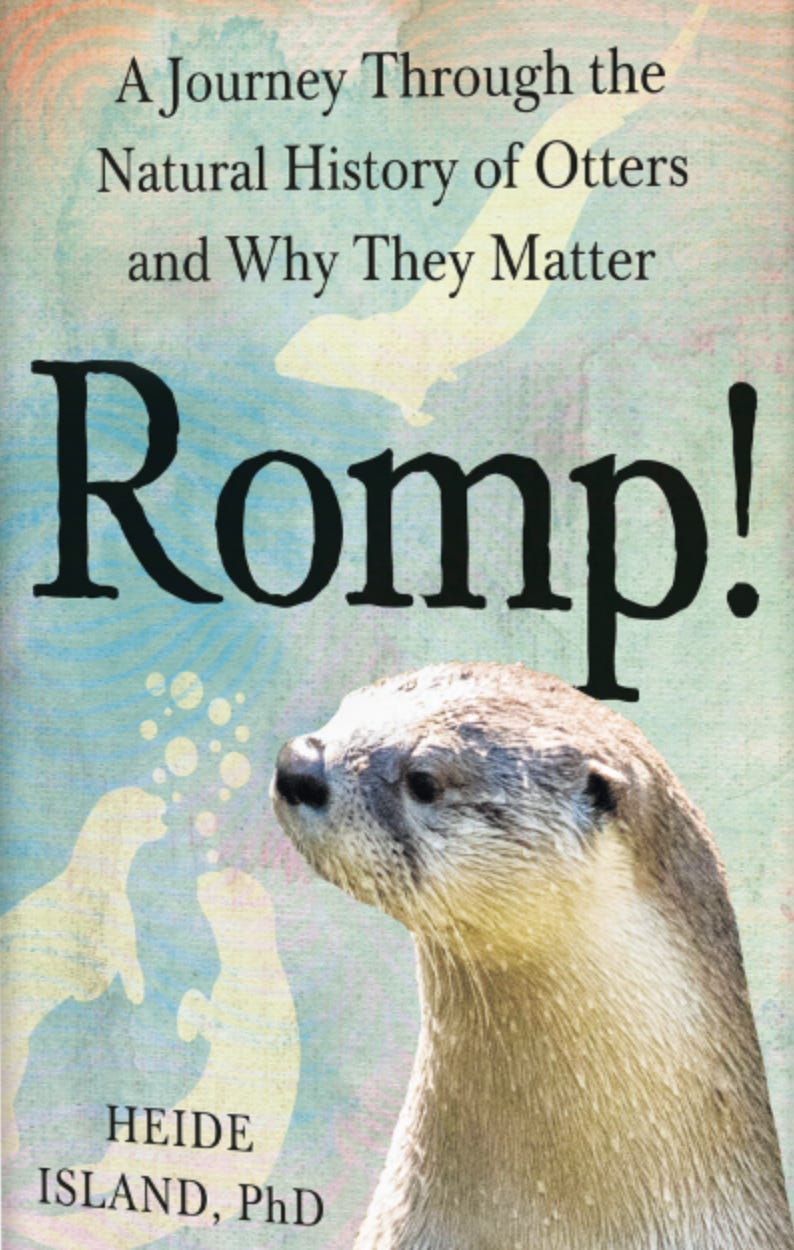
    Welcome to Flight School: When Heide Island emailed asking for a blurb on her new book Romp, I almost said no. I’d worked with her briefly, years ago, when I was just starting to build what would eventually become The Blackbird Studio and this fabulous tributary: Blackbird’s Flight School. She was a science writer. I wasn’t sure what I had to offer. But she was insistent. So I read the book. And I wrote her a blurb: Heide Island brings a Jane Goodall-like patience and wonder to the world of otters, observing with both scientific rigor and deep reverence. Romp! is an intelligent study that never loses sight of its heart, written in prose that’s as playful and engaging as its subjects. This is a book that will make you feel both smarter about the natural world and grateful to inhabit it ~ Jennifer Lauck Romp! (Tarcher/Penguin) is the kind of book that sneaks up on you. It’s about otters, yes — all fourteen global species, anchored in one family on Whidbey Island. But it’s really about community. About how nothing survives alone. About how the same thing that’s true in a Pacific Northwest estuary is true at a writing desk. Heide is now a published author with a second book already in proposal. She teaches at Pacific University. And she got here, not through luck (though there’s a great Cinderella moment in this conversation) but through years of showing up, building a platform, learning to take critique without flinching, and finally, finally, asking for help. I wanted her on Flight School because her story is your story. Or it can be. Enjoy this conversation. Time Stamps: * [3:00] What it means to muscle it alone * [17:00] The Cinderella publishing story —> and why she resists it * [20:30] Critique vs. criticism: the rolling out of bed analogy * [26:30] Crisis in Higher Education 🤔 Your turn: * Heide talks about the difference between criticism and critique. One is a judgment about you. The other is someone pulling the toilet paper off your shoe before you walk out the door. This is one of the best framings I’ve heard for what we do in this community. How are you with feedback? Does it hurt? Can you take it? What have you learned about the two and the difference? * Where are you still muscling it alone? Is it the writing itself? The submission process. The belief that you need to figure it out by yourself? See you in the comments, Jennifer 🐦‍⬛ Cover image: Marc Webber/UFSWS This is a public episode. If you'd like to discuss this with other subscribers or get access to bonus episodes, visit jenniferlauck.substack.com/subscribe
  • March 23 · 38 min

    The Egoic Trap Running Your Hero's Life

    Welcome into Flight School: Week 1: What your hero fights for (and which level your story actually reaches)Week 2: Which plot you’re actually writing (not the one you wish you were)Week 3: The egoic trap you can’t see yet (but your writing will reveal) Over these three classes we had fifty people sign up. WOW. Unheard of. And yet, as you’ll see from the classes themselves, only four to six showed up in person each week. And those who did show up did a great job thinking together. In this last meeting, we had a great conversation that was raw and personal. I shared fresh material from a tiny book called Born Only Once by Conrad Baars, a Dutch psychiatrist who survived Buchenwald. I hope you get a lot out of this group with two novelists and two memoirists who covered the full terrain of story. The question that drove this entire class: What is the egoic trap your hero is caught in? And what will it take to set them free? The Setup: Marilyn Monroe and Hitler Marilyn Monroe: abandoned by her mother, raised in a house of horrors by mentally ill caregivers, never knew her father, beaten with religion. She had spunk, determination, a strong will. But she was the tragedy of the unaffirmed person attempting self-affirmation. Walking around saying “I’m okay, I’m okay” when she had never been shown her basic goodness. Adolf Hitler: raised by an authoritarian father (one shot, that’s it) and an indulgent mother (no limits, no boundaries). Average intelligence, failed entrance exams, years of poverty and unemployment. Emotionally deprived at the key formative years. Also had a strong will. Same foundational wound. Different manifestations. Both destroyed themselves in the end. The six egoic traps Konrad pulled from the text: * Amassing material possessions * Becoming a millionaire many times over * Success in studies, oppressive array of degrees and titles * Reaching the top of the ladder * Attaining fame (or associating with famous people) * Gaining power over others through authority, dictatorship, gangsterdom * Promiscuous behavior (there were actually seven) These are the compensations for feeling worthless, lonely, inferior. And after class, Konrad sent me this terrific chart: The Counter-Example: Pope John XXIII Considered unattractive by the standards of the world, yet anyone who met him walked away feeling their own goodness. Why? He was affirmed. And he carried these qualities: * Sensitive (not discouraged sensitivity, but awareness of what’s happening in every moment) * Open to the goodness of life * Calm, unhurried way of life * Unselfish and humble (the humility to be wrong, to say “I’m wrong and I’m okay with that”) * Moral self-restraint (meeting people where they’re at, not expecting them to be beyond that) I gave my daughter these qualities on a 3x5 card when she was struggling: Be yourself. Stop repressing emotions. Don’t hang on your fears. Be assertive. Don’t put people down to make yourself important. The Example That Landed: Cast Away Tom Hanks. Go-go-rush guy. Time is his God. Gets stranded on a desert island. Talks to a volleyball for years. Wants to take his own life because he can’t control anything (same egoic trap as Marilyn and Hitler: Control). But nature affirms him. Survival tests him. He comes back a quiet man. At the end, he’s at a crossroads. Literally. And it’s enough. He doesn’t need all the answers. He’s been freed from the egoic trap. Then We Worked on Real Stories * David (tragedy): “My hero longs for power. Gets it. Blows it. Betrays himself and everything else. Which prompts the rise of an antagonist who becomes the hero in the second book to defeat him.” Clear when it’s tragic. * Konrad (novel): “My midwife wants to write the first book about midwifery by a woman. Her husband says women don’t write books. So she becomes unaffirmed by her husband and pushes her daughter to become a doctor instead.” I gave him the Jung quote: “Children are driven unconsciously to fulfill everything that was left unfulfilled in the life of their parents.” Konrad: “I never thought of it that way till this piece. Crazy.” * Chrissy (memoir): “I’m befuddled.” Me: “It’s almost impossible when it’s about yourself. The lines will show you. Don’t worry.” * Sarah (memoir about adoption): “My trap was a desire to appear fine. Everything is fine. We were a successful adoptive family. We were fine. We were NOT fine.” * My own trap (from Blackbird): Blind loyalty to the point of self-sacrifice. So loyal to my mother and father that I created truly dangerous circumstances for myself. Why? Years later in therapy I discovered my father tortured me with cold showers if I didn’t take good care of my mother. I was three and four years old. That loyalty was a three-year-old’s interpretation, not a grown woman’s understanding. The Revelation A woman told me yesterday on a podcast: “I read your book so many times and it gives me courage to recontextualize my own experience. I felt like I was the only one.” My heart soared. Because that’s the job. We bring forth the human experience. Truth. Goodness. Or in David’s case, a cautionary tale about abject awfulness—but written in such a human way we go, “I know that guy.” Remember, this is a long-game art form: Your book could last fifty years. A hundred. I just celebrated the twenty-fifth anniversary and nothing is more powerful than knowing I wrote something that asked the tough questions and pushed beyond what was comfortable in my era. All handouts and teaching materials below. We Have Room in the Live Bones of Storytelling When: Wednesday March 25 at 5 to 7 p.m. These three classes are a taste. Bones is the full meal deal. A direction-changing class that will inspire you to go the distance. If you’re a subscriber, you get 20% off. Check the footer of your last email. Handouts: ✍️Your Turn: What is the egoic trap YOUR hero is caught in? Don’t panic if you can’t answer yet. The writing will show you. It showed me ten years after I wrote Blackbird. It showed Patricia in this very class. It might show you on page 200 of your draft. But start asking the question now. Watch for it. The lines will reveal it. Drop your thoughts in the comments. Thanks for three weeks of this work. You showed up. You engaged. You’re on your way. Jennifer 🐦‍⬛ This is a public episode. If you'd like to discuss this with other subscribers or get access to bonus episodes, visit jenniferlauck.substack.com/subscribe
  • March 16 · 49 min

    The Plot Your Story Is Actually Following

    Hi and welcome back to Flight School: Class two of our series was so different from class one. We weren’t just learning framework now, we were applying it to real stories in real time. I opened with a review of Christopher Booker’s Seven Basic Plots and asking them to think about: Which plot best fits what I’m writing? Don’t be fooled, these aren’t old-time templates, they’re living structures for what’s happening in contemporary literature and in your life right now. Case in point: James by Percival Everett. This new novel is trying to replace Huckleberry Finn as the foundation of American literature. And it’s a Voyage and Return plot. A close look at the template and it’s a story as old as time. Jim, now James, falls down the rabbit hole of what true slavery looks like when he runs away. The horror. The violence it forces him into. But in the final moment, he grabs his wife and daughter and brings them to freedom in Iowa. He escapes the rabbit hole shocked at himself, at what he’s become, and at this world. He saves his family, which is the redeeming moment, but he’s unable to embrace his identity. This is a Voyage and Return that doesn’t end with the hero transformed and whole. It ends with him fundamentally altered and unable to reconcile who he was with who he’s become. I wrote a whole post about that here. Check it out. Plots are not formulaic. They’re archetypal. And nested within one another: The Quest contains Overcoming the Monster, Tragedy is Overcoming the Monster in reverse, Rebirth is comedy turned on itself. Then we worked on Patricia’s novel Patricia has been studying with me for four years. I know her story inside and out—the tests she’s been through, the companions she’s gathered along the way i.e.,: the “band of merry brothers” she finds in a pantry meeting I mention in the class. She thought her book was one thing. But as we talked, it revealed itself. Her novel might be a Quest. Why? It’s test after test after test. A long journey. Companions. Ordeals. “You have seen so much in my work that I had no idea,” Patricia said. “I just turn around all the time and go, what? what? You just see so much.” That’s the power of having someone who’s done the work, has cultivated great tools (like these about the heroic hero) and who asks the right questions. I’ve been an investigative reporter for years. I’m always going to say, “Wait a minute. Are you sure? Let’s dig a little deeper.” This is a long-game art form. Why this depth of work and these questions matter: Your book could last way beyond you. It could be literature on the shelf somebody picks up in fifty years. I know, I just celebrated the twenty-fifth anniversary of my first book. Nothing is more powerful than knowing I wrote something that asked the tough questions and pushed beyond the realm of what was comfortable in my era. All handouts and teaching materials are below. One more shot: Class 3 - From Ego to Other When? Saturday, March 21, 10am PST The truly heroic hero sheds ego and inward hungers for a greater good. Christ. Gandhi. King. What is the egoic trap your hero is caught in? What will it take to set them free? Or if writing tragedy, how can you deepen that trap? I’m bringing brand new teachings from Born Only Once by Conrad Baars—a concentration camp survivor who examines Marilyn Monroe, Hitler, and Pope John XXIII to understand what makes someone truly heroic versus tragically lost. P.S. Bones of Storytelling starts March 25 These three classes are a taste. Bones is the full meal. A direction-changing class that will inspire you to go the distance. If you’re a subscriber, you get 20% off. Check the footer of your last email from me. ✍🏻Your Turn: As you watch the recording, ask yourself: Which plot am I actually writing? Not which one I want to be writing—which one is my story naturally following? Drop your answer in the comments. Thanks for being with me. See you next Saturday. Jennifer 🐦‍⬛ This is a public episode. If you'd like to discuss this with other subscribers or get access to bonus episodes, visit jenniferlauck.substack.com/subscribe
  • March 8 · 51 min

    Is Your Hero Fighting for the Right Thing?

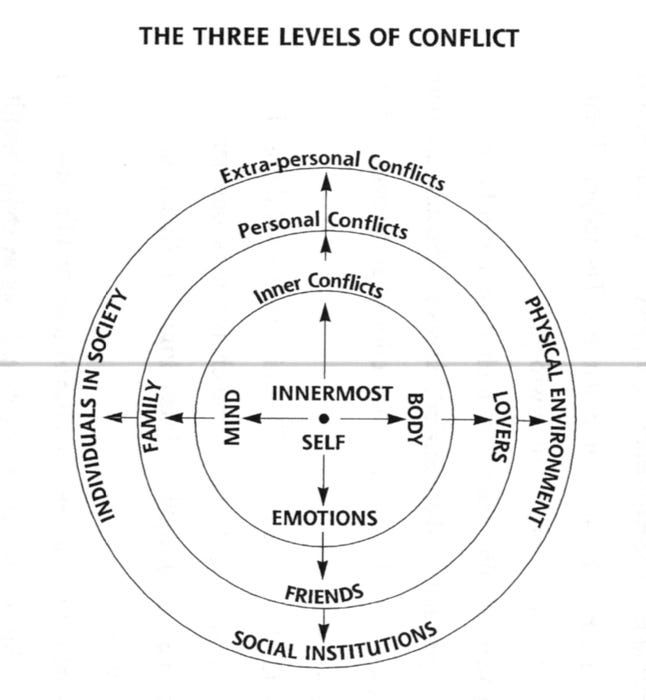
    Hi and welcome into Flight School: Fourteen writers signed up for this first class and all had one question to ponder: Who is your hero, and what do they want most? The answers came fast: A 19-year-old seeking to assuage existential guilt (Carrie). A 12-year-old girl navigating grief and secrets (Kristen). A medieval midwife fighting for equality in Islamic Spain. An anti-hero chasing unlimited knowledge and power (David). A memoir about survival. Then we asked the harder question: What’s pushing against them? Because here’s the truth: Your hero is only as compelling as the forces of antagonism working against them. Not just external obstacles but the layers that run deeper. * The innermost self (body, mind, emotions). * Personal relationships (family, friends, lovers). * The extra-personal world (society, institutions, environment). This is why writing a big project (novel or memoir) feels impossibly hard. You’re not just telling a story, you’re capturing the extraordinary complexity of being human. The four levels of value progression Most stories operate at level two: hero wants love, faces indifference. Hero wants freedom, faces restraint. It’s conflict, but it’s not enough to carry a whole book. Push to level three (love vs. hate, freedom vs. slavery) and you’ve got real stakes. Push to level four—the negation of the negation—and you’re writing stories that devastate: hatred masquerading as love, slavery perceived as freedom, self-deception instead of truth. Then one of the writers, David, asked about ambition which isn’t on McKee’s list. We worked through it together: ambition → hubris or laziness → indifference → vengeance. Conrad added: “He harmed himself to achieve his ambition. Or harmed those he loved.” That’s when we saw it—the tragic arc, the hero who throws away everything he believed in and joins the evil force. Now the writers were co-creating. The breakout rooms continued this and were where the real breakthroughs took place. Three writers—Chrissy, Carrie, Conrad—all discovered they were working with justice as their core value. “A lot of injustice in the world that we got to write about,” Chrissy said. We closed by looking at examples: Underground Railroad by Colson Whitehead, Till They Have Faces by C.S. Lewis, the films Missing and Big. And I shared a Blackbird Lit Lesson breaking down C.S. Lewis’s value line (truth/wisdom) and introduced the outlier plot “Rebellion Against the One”—for stories like 1984 and Brave New World where a solitary hero confronts an immense power and is crushed, forced to recognize the limits of their perception. All handouts, slides, and teaching materials are below. Do not miss the next class. Get your spot now. Class 2: Seven Heroic Journeys Save the Date: Saturday March 14, 10am PST We’ll map how heroes transform differently across the seven basic plots—and help you identify which journey your hero is actually on (versus the one they should be on). Class 3: From Ego to Other Save the Date: Saturday March 21, 10am PST Christ, Gandhi, King—what they have in common with Marilyn Monroe and Hitler. The egoic trap and what it takes to break free (or if writing tragedy, how to deepen it). Plus: Pope John XXIII through the eyes of a concentration camp survivor. Bones of Storytelling starts March 25 These three classes are the framework. Bones is where you build the complete structure. Ten weeks, live teaching, draft plan for your finished book. If you are subscriber, you get 20% off. Check the footer of your last email from me in your mail box. Handouts: 🤔 Your turn: As you watch the recording, work through your own value line. What’s your hero fighting for? Where does your story currently reach? Where could it go? Drop your answer in the comments. Let’s keep working the problem together. Thanks for being with me and I’ll see you all next week, Jennifer 🐦‍⬛ This is a public episode. If you'd like to discuss this with other subscribers or get access to bonus episodes, visit jenniferlauck.substack.com/subscribe
  • February 17 · 16 min

    What's Your Image

    Welcome to this speedy, but deep, masterclass on the core image that holds your entire story. You’ll be watching an excerpt from an advanced writing workshops at Blackbird, where I share a prologue titled Boxes that opens my new memoir Revert about my three-years in a self-imposed retreat on the wild coast of Oregon escaping not only Covid madness but a long madness of control long imposed on my life. The prologue, Boxes, is a moment at seventeen where I’m drawing boxes on notebook paper in a first attempt to both organize but also control my entire life. I’d lost both my parents by then and was living in a crowded split-level with my aunt, uncle, grandparents, and my niece DM. While Bonanza blared on the TV and life hummed around me, I tried to contain everything—money, school, college, housing, my car, my boyfriend Danny—into neat little boxes with to-do lists. The whole piece is full of details: the cheap laminate desk my dad gave me, the ponderosa pines outside my boyfriend’s house across the street, my niece hopping around outside my door calling,“I’m a bunny. Look at me.” Key teaching moment: After I read the prologue, I explain that I was using it as a prologue because that image of boxes was the singular image that contained my entire life as a woman trying to organize everything into manageable boxes, while fate knocking them over and scattering me and my stuff everywhere. How I know this is a core image? It’s from testing the flow of the following chapters. Does the image fix, can I keep hauling it forward, repurposing and recycling, progressing and escalating. And 13,000 words in the answer is yet. It’s perfect. It’s it. This singular image delivered me a core truth and now I ride the wave of a draft that’s pretty much writing itself. The key image in Blackbird: Yes, there was a similiar thing that happening in my first memoir that we’ve been talking about here on Flight School for the last couple weeks. That image: A house. Open the book and go part by part, and you’ll see the depth of description around each house young Jenny lives in. While I didn’t write a prologue for Blackbird, I did write this opening line: The only house I’ll ever call home was the one on Mary Street. This is also called The Attack Sentence, as taught by Gordon Lish and is part of consecution. At the time I wrote Blackbird, which is now enjoying it’s 25th Anniversary, that line delivered what I needed. The key image: House. And while writing, it was perfect. Jenny would be moving a dozen times and once would find herself near homeless. Prologue or Attack Sentence? It’s really up to you. Decide what works best but first, start looking for yourself. * Find the one image that defines your whole life * Make it concrete and visual, not abstract * See if it naturally recurs through your writing * Write scenes about your image instead of explaining it My students start finding their images right here in class—the medical caduceus, the hole in the soul, the pack of dogs. It’s pretty magical when it clicks. ✍️ Your Turn: Like the writers in the teaching, have you starting thinking about an image? What’s popping up. Comment in the chat and let’s see if we can suss this out. Thanks for being with me, Jennifer 🐦‍⬛ PS: I’m gearing up for three mini-master teachings, live, titled The Heroic Hero. Interested? Here’s a sneaky first shot at signing up and locking in your spot. More coming soon. This is a public episode. If you'd like to discuss this with other subscribers or get access to bonus episodes, visit jenniferlauck.substack.com/subscribe
  • February 5 · 8 min

    Blackbird. A Memoir: Going the Distance or Not?

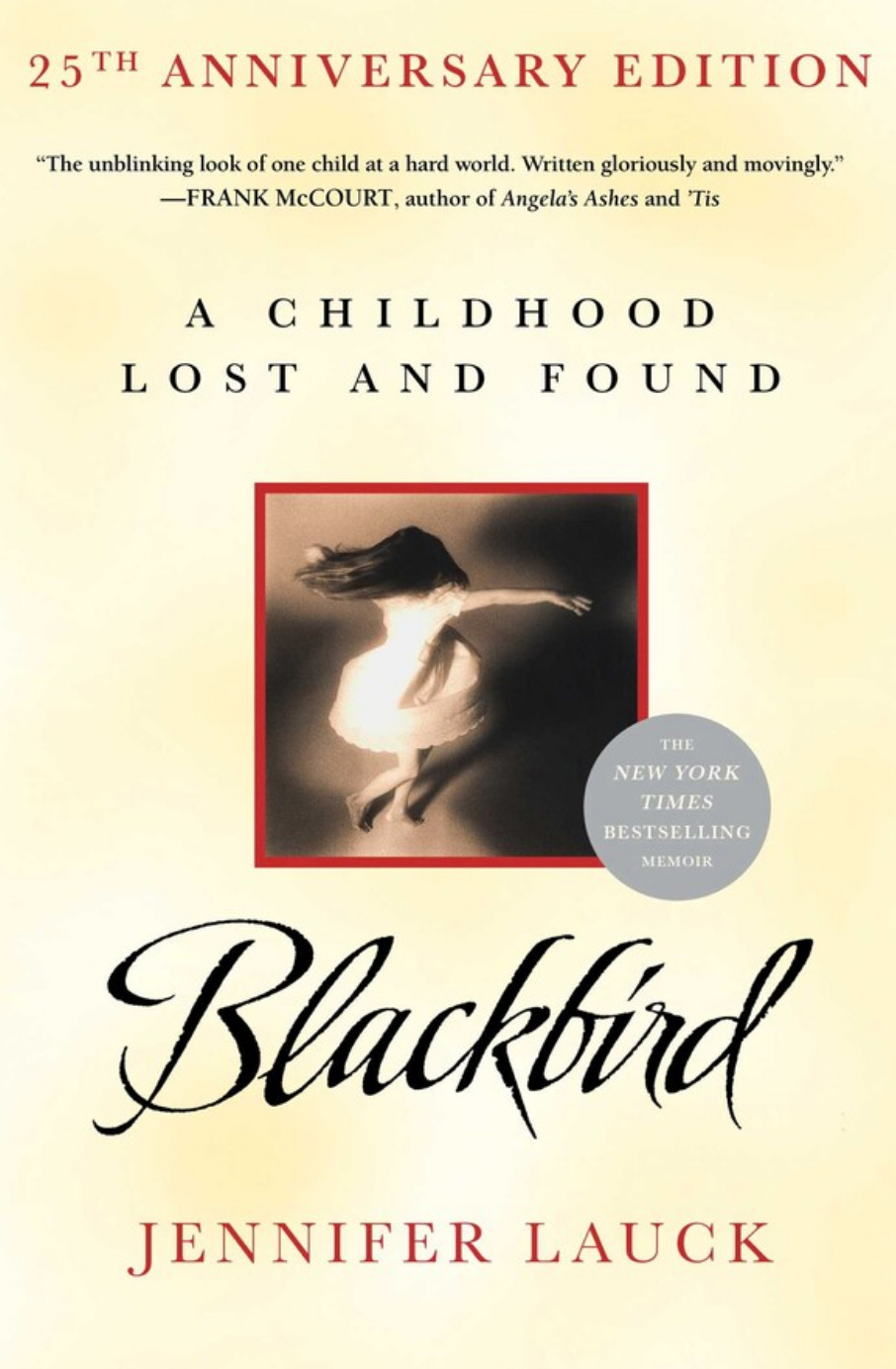
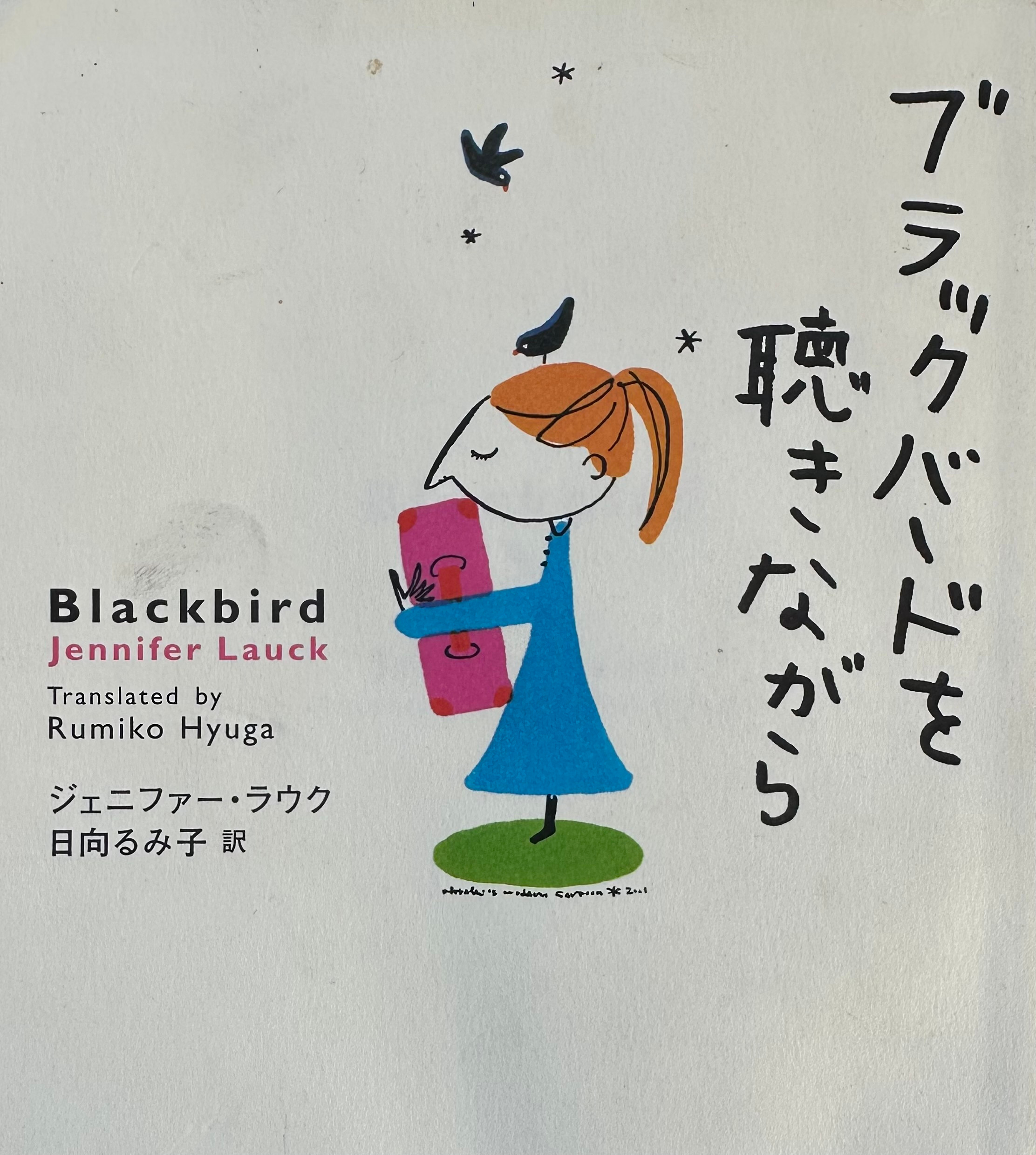
    …you are giving us a unique perspective in class by studying Blackbird. I wonder how many NYT best-selling authors would be so honest about perceived flaws in their work and in so doing give us baby writers some practical knowledge from your experience. Thanks. ~ Richard Peeples, SII Welcome: In this post, I tease back the outer wrappings of my first book and share where I got things right and where I missed the mark. Yes, Blackbird did well. 500,000+ in sales. Oprah. International publication in 20+ countries and languages (I personally love the Japanese edition most). But success doesn’t make me, or my work, immune to closer examination. In fact, I miss out on serious growth by not looking closer. As Jane Smiley writes in 13 Ways of Looking at the Novel: “All books have problems.” True. True. There are pros and there are cons in all creative writing, but to believe that even the most successful Pulitzer Prize Winner doesn’t have issues is missing a huge growth opportunity. This is demonstrated here on Flight School again and again with closer examination of works from Anthony Doerr and Percival Everett, to name a few. Check them out, and see how I lean into the classic tools literary discernment: Value. Structure. Plot. Go to this link for foundational teachings on all of these or simply get started with Bones. It’s a class that will change your writing life. The video on this post is a discussion among SII writers (a long term workshop) which asks the question: Did this book go the distance or not? Value. Structure. Plot. In the study of a memoir or a novel, the first step is focusing on the primary character or the protagonist. In Blackbird, it is “Jenny” age 6-11, and I’ve laid the forward moving story on the W chart I use in class. It’s not the only structure tool but it works when we are getting started: Value Based on the setup in the first few chapters, the core value (loyalty) can be seen in Jenny’s motivation. Double checking myself, I pull up the Principle’s of Antagonism from Bones of Storytelling. If loyalty is the core value it will drive the story through split allegiance, betrayal, and self-betrayal. And it does: We start with loyalty to the sick and dying mother, and when the mother dies, loyalty continues through protection of objects left behind (jewelry and a photo album). When the step-mother enters, Jenny goes into split allegiance, giving her loyalty now to her father via a rationalization that he is well-intended but lost, even blind, by grief. Then comes the father’s profound betrayal of Jenny when he sends her to a summer camp and leaves her there after she tries telling him about abuse she’s experiencing. Because this betrayal cannot be born by the child, she tips into self-betrayal after the father dies by telling herself the story of his being a “good man” despite how he’s left her (and her brother) at the mercy of the step-mother after his death. The stepmother tried to break through this blind loyalty and tells Jenny “Your father was not a saint,” but again, Jenny continues her path of destructive loyalty. Blackbird ends with Jenny “betraying” herself in the final scene when, on a Greyhound bus and shipped to an unknown future, she fantasizes her dead father rescues her—something he didn’t do when alive and with ample opportunity to do so. Why then, would he rescue her in this fantasy? This is the last, brutal tell. She cannot, will not, face the truth about her situation for doing so would likely shatter her more than events have already done. Structure Now I have the core value, I can study the structure of the book I wrote and in doing so, spot the core issue which is that overall, the story drags. Translation: It’s slow. Why? What went wrong? Based on the value, the answer is easy now. The inciting incident—the mother’s death needed to happen by pg. 100, but instead I get there at pg. 173 (28 pgs. from the mid-point). The mid-point (the father’s death) should happen at pg. 200 but is pushed down to pg. 287. It is then on pg. 321 that the stepmother ditches Jenny in the commune but it should have happened between pgs. 200-250. Interestingly, the climax (Jenny witnessing the birth scene) comes “right on time” on pg. 370 when she lifts above her own “loyalty fog” and the stories she’s telling herself to experience the profound grace of ultimate truth which is that—despite her personal sorrows (and she has many) everyone is interconnected by this powerful love that she feels in the room at that moment new life enters the world before her. Plot Now we have value and structure, what is the plot of Blackbird? This becomes the litmus test of going the distance. If it hits the basic plot structure (below), I have my plot. I feel confident Blackbird is Voyage and Return—Jenny falling down the rabbit hole when the family moves from Nevada to California and emerging “shocked,” like Peter Rabbit. Let’s double check. Corresponding to the above chart, the story lays out in this way: * The death of the mother is the launch, directionless, for Jenny and it is violent and shocking. * Life with step mother is puzzling and unfamiliar and yes, identity starts to disappear when she’s abused at the summer camp, continues at the death of father. * In Northern Ca. she faces worse and worse situations with collective abuse and rejection * Left to fend for herself in Central L.A, she gets sick, hears voices, things getting worse and worse Birth of babies awakens her, then rescued by aunt and uncle and sent back to family in Nevada. She’s circling back to the idea of father as rescuer and then grandfather confirms it. In sum, Blackbird did “go the distance” in two categories. Value and plot. Where it dropped short was structure. That’s two out of three and so, I’ll give it a C+ or a B-. Where it excels, without doubt, is in the application of scene (here’s that conversation) and voice. These two elements, as the video conversation shows, helped the reader overlook the structural challenge and stay connected to Jenny and the overall story. So, in the end, not bad. ✍️Your Turn: Are you able to name the core value and track how it manifests (in your scenes) in the contrary, contradictory and negation of negation line? If you cannot, what’s keeping you from getting there at this time? Answer in the comments below. Let’s talk. Thank you for being with me and if you’ve made it this far, consider how these kinds of depth teachings might serve your own work. This entire project, here on Flight School, is to spark your deepest hunger for solid, smart, accessible teachings that help you take your own creative writing project the distance. I’m ever on the hunt for earnest writers. If you are one of them, let’s talk. ~ Jennifer, 🐦‍⬛ This is a public episode. If you'd like to discuss this with other subscribers or get access to bonus episodes, visit jenniferlauck.substack.com/subscribe
  • January 29 · 13 min

    Blackbird & the Timeless Power of Scene Writing

    “Lauck has constructed a riveting narrative from the awful mess of her life.That she has managed to do so fills me with an admiration for which I cannot find words. The best I can do is to suggest that you read this book.” ~ The London Times Welcome into Flight School: The video is a conversation with an advanced Studio at The Blackbird Studio for Writers on this topic and the questions below. I hope you’ll dig into those questions too, and share your perspectives. The Creation of Blackbird: 1995-1999 Thirty or so years ago, I unearthed the astonishing story of my adoptive mother’s illness and death, and then my adoptive father’s sudden death from a heart attack eighteen months later. With a background as a journalist, I knew the events were remarkable enough that they wouldn’t need much analysis or embellishment but how to do it as something creative vs. reported? Could I merge my journalism background into what I was learning about story, literature and creative writing as applied to non-fiction? How fortunate was I then to learn the art of writing scene in those early days of drafting and redrafting. My job was simple: Do a good job remembering and then reporting—moment by moment—and leave it to the reader to assign value and meaning. With a single-minded focus, I worked hard and was careful to follow the particular rules of description that included location, people, dialogue and the forward flow of action with something at stake. The process was write, read aloud to myself, rewrite, read aloud to a ground, rewrite, move on. I did this through about eight drafts of the full manuscript. The Power of Scene: When I started Blackbird, I had the data: The dates, the timeline, the medical reports, the death certificates, and our different home addresses. I also had accounts from my surviving family. What I didn’t have was the “feeling” of those times. The full immersion in the moments gave me what I was after, which was to re-occupy the skin of Jenny and tell the story from her perspective alone. This wasn’t something I intended to do but rather discovered as I wrote scenes. I wasn’t taught to write scenes with a method, with steps, but rather via example. “Stay present,” my teacher said, “move through time. Breath. Be. Go deeper here...” Only when I became a teacher did I develop the Scene Recipe Card to help others see and mark the components of a scene as found in most novels, short stories and many memoirs. What I’ve learned over these years is that, from the broadest perspective, the best part of writing scene is that it allows the writer (and later, the reader) into direct experience and bypasses the all-too-human tendency to explain, justify, twist, conceal, and even control the narrative. With scene, the moment is just the moment. Raw. True. Simple. But also complex. Like the painter uses canvas and pigment to create image, and interpretation is left to the viewer, the writer uses paper and words that shape moments-in-time and interpretation is left to the reader. No commentary. No rationalization. Just pure being. 25th Anniversary Edition: Thanks to Peter Borland and his team at Atria, Blackbird re-releases in an anniversary edition on 2/10/26 (my adoptive father, Bud’s birthday). While the body of the book is the dame, it’s been updated with a new introduction I’ve written, new jacket copy and updates questions and answers in the readers guide. You’ll find those updates here. What strikes me, in retrospect, is what I say every day in our workshop at The Blackbird Studio for Writers: Scene is simply amazing. While you don’t ALWAYS have to write in scene, it cannot be underestimated as a tool of profound discovery. the present moment is what it is, and that’s hard for us to accept but this book and all the writing I’ve done after, has proved the premise again and again. My greatest suggestion to all creative writers is to devote at least a year if not more to learning, writing and perfecting your scene writing skills. You will not regret it. And you don’t have to come to the Studio to do this. You can take the video class now and get started on your own with my blessings. 🤔 Your Turn * Grab a copy of Blackbird (see if you can get the 25th Anniversary edition) and find a scene that tracks the ingredients from the Scene Recipe Card (above). Tick them off, and then, standing back, think about what element of that “moment in time” impacted you? (IE: When Jenny is bringing the breakfast tray into her mother’s room, what about that moment impacted you? Or another scene?) * Scene requires the writer to give up a great deal of control, or perceived control, because you are not telling the reader what to think, or explaining events. How does this lack of control hit you as an artist? Where do you see yourself resisting that release of control and tumbling into telling/explaining? When do you think you can give up the need for control and simply allow the story “to be” as it is. I’m looking forward to your shares in the comments! Thanks for being with me, Jennifer Blackbird's Flight School with Jennifer Lauck is a reader-supported publication. To receive new posts and support my work, consider becoming a free or paid subscriber. This is a public episode. If you'd like to discuss this with other subscribers or get access to bonus episodes, visit jenniferlauck.substack.com/subscribe
  • Dec 11, 2025 · 5 min

    Fathers, Freedom, and False Friends

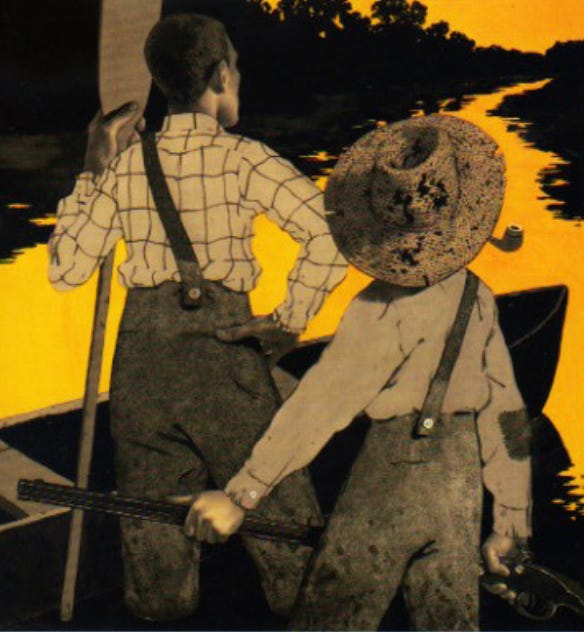
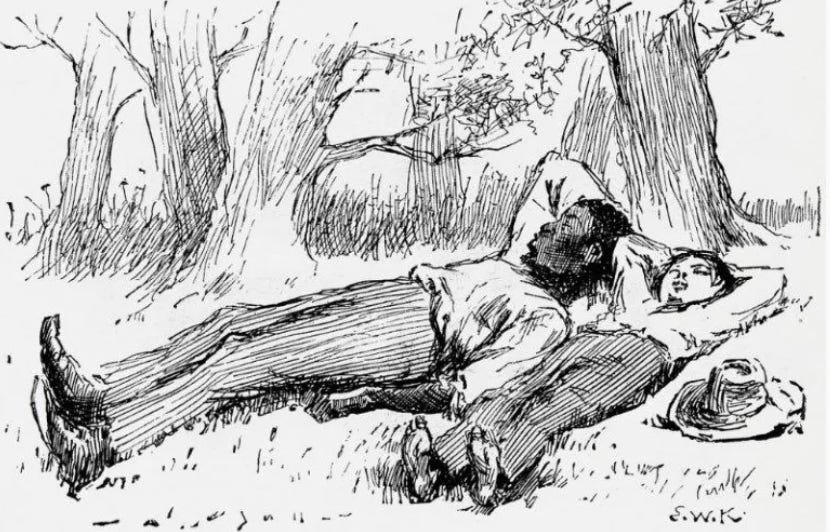
    When we were kids, in school, most of had to read Huck Finn by Mark Twain. Book report required, too. But how many of us ingested what this book offered and what it means to the American debate on morality, race, and the original sin of slavery that we contend with in ever-changing degrees? If you are someone unnerved by the race conversation that never seems to resolve itself, it might be time to step back into the classroom as adults and reconsider what Twain offers us in his insightful and challenging book. This conversation narrows in the face of authority Huck reckons with: Father. Founding Father’s. And the side-kick. The Three Faces of Authority Influencing Huck Finn The Father Does Mark Twain and his relationship with his own father play into what Huck experiences with Pap? This question arises because the father is key for every human being who has a personal father and later, father-figures expressed in the wider context of leadership in a society. Mark Twain (Samuel Clemens) appeared to have a complex but not particularly abusive relationship with his father, John Marshall Clemens. The elder Clemens was stern, ambitious, and somewhat distant but was an upstanding citizen overall, a justice of the peace who struggled financially but maintained social respectability. The elder did die when young Samuel was eleven, leaving the family in financial hardship. This likely made the younger Clemens take up the mantle of “the father” in his family and could have also got him thinking at a deeper level than others at the time. Founding Fathers Rather than autobiographical then, Pap and his intense representation of ignorance and even violence might be more about a serious and troubling digression in white men of the time. Was Twain critiquing these men that collectively drug down the founding-fathers ideals of all men being created equal? Yes, the country went to war to express and uphold that ideal but by the 1880s, Reconstruction was ending and Jim Crow emerged. America was then, in many ways, reverting to those reprehensible Pap-like attitudes. Could it be then that Clemens was writing Hucks moral growth as the individual reality of many that faced the equal and opposite pressure of Pap-like characters, and even friends like Tom Sawyer? Side-Kick: Tom And let’s take a closer look at Tom Sawyer then, who make a reappearance at the end of Huck Finn. It is Tom, alone, who effectively stifles Huck’s remarkable moral reckoning. Huck learned, by experience, what he had done to Jim (dehumanized him based on color and social pressure) and was done with that, willing to go to hell before betraying Jim again. But here comes Tom. A hero. A role model. Well-educated and part of the elite of the time and then off-spring of the failed founding father’s. Not only does Tom dehumanize Jim but does so for sport. Let’s break this down: * Tom knows Jim is already free but prolongs his suffering for entertainment * Tom turns Jim’s desperate quest for freedom into elaborate theatrical performance and prioritizes his romantic notions of “proper” escapes over Jim’s humanity * Tom thus represents the educated “civilized” society that can intellectualize away human suffering Tom’s presence in the story makes Huck’s final decision to “light out for the Territory” even more significant. He’s not just rejecting Aunt Sally’s attempts to “sivilize” him, but fleeing a world where even his closest friend can be so indifferent to human suffering. Huck Finn is a powerful, complex story that allows each of us to examine the influences we face when choosing a path we know is morally wrong. We see, in Huck, the personal struggle we all face in our lives and in our society. ✍🏻Your Turn: Like Huck faces Pap’s crude violence, then society’s ‘civilizing’ pressure, then Tom’s sophisticated cruelty, does your protagonist face different forms of the same opposition as they grow? How might the ‘enemy’ become more subtle or insidious? Looking forward to reading what you come up with. Thanks for reading (and thinking), Jennifer 🐦‍⬛ PS: All this talk about Huck Finn now prepares us to dive deep into James by Percival Everett. What is it? An important novel of our time? A kick at the cornerstone of American literature? A political agenda? An experiment? We’ll talk about all this with a deep examination of plot in my next post. This is a public episode. If you'd like to discuss this with other subscribers or get access to bonus episodes, visit jenniferlauck.substack.com/subscribe

  • Nov 13, 2025 · 17 min

    From Banned Book to Literary Classic: The Power of Authentic Voice

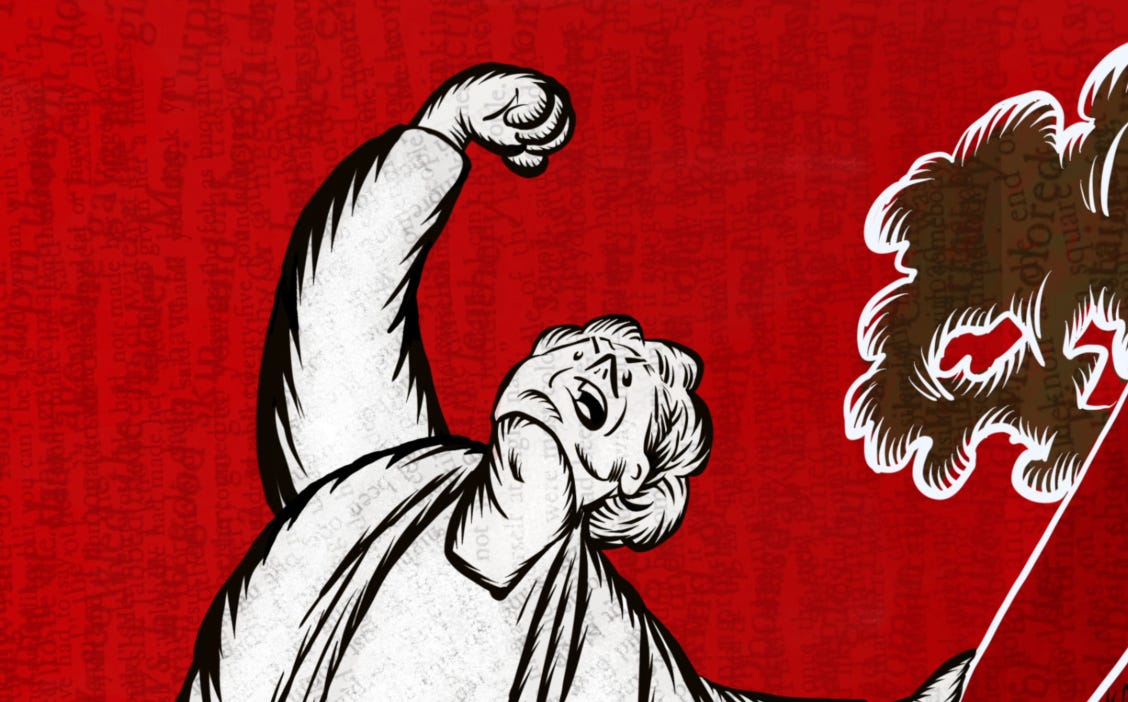
    Welcome into Flight School: This is a terrific conversation with a wonderful writer, Richard Peeples, from my Blackbird Studio workshop. Richard’s writing a memoir about a wife who died at the height of their marriage, and explores what it means to love and lose. Here is a piece published in Men’s Health about his journey. Enjoy the Huck Finn teaching (below), Richard and my conversation, and at the end of the post, see if you are called to think about the question Your Turn. I want to hear what you are thinking. You don’t know about me without you have read a book by the name of The Adventures of Tom Sawyer; but that ain’t no matter. That book was made by Mr. Mark Twain, and he told the truth, mainly. ~ Opening, Huckleberry Finn The Adventures of Huckleberry Finn is Mark Twain’s 1885 novel that follows 13-year-old Huck Finn who escapes an abusive father and rides down the Mississippi River with Jim, an enslaved man seeking freedom. It’s widely considered the first great American novel written in authentic American vernacular. Huck tells his own story in his own voice, complete with dialects and colloquialisms that had never appeared in “serious” literature before. Historical Context & Publication: Twain wrote the novel between 1876-1883, publishing it first in Britain in 1884, then in America in 1885. This was the post-Reconstruction era. Slavery had been abolished but Jim Crow laws were taking hold across the South. Twain was writing about the antebellum period (the novel is set around 1835-1845) from the perspective of someone who had lived through the Civil War and its aftermath. Initial Reviews: The reception was deeply divided. Many critics and libraries condemned it as crude and inappropriate. The Concord Public Library famously banned it in 1885, calling it “trash and suitable only for the slums.” The Boston Transcript dismissed it as “a gross trifling with every fine feeling.” Critics objected to Huck’s vernacular speech, his casual attitude toward authority, and what they saw as the book’s moral coarseness. However, some reviewers recognized its significance. The San Francisco Chronicle called it “the most amusing book Mark Twain has written.” Why Huck Finn Endures? What about this book keeps the attention of the collective? Why is it still in print? Why does every generation take it on? I would venture the possibility that the novel perseveres because it grapples with America’s defining contradictions. Freedom versus oppression, innocence versus corruption, individual conscience versus social conformity. Huck’s moral growth, particularly his decision to “go to hell” rather than turn Jim in, represents one of literature’s great explorations of moral development that transcends in the way of the truly great novels of all time. Huck Finn, as an archetype, pushes on the highest values as represented in our Seven Basic Plots study (and we’ll get there soon enough) by this protagonist arc. Another possibility is connected to its use of authentic American speech that revolutionized literature and influenced writers from Hemingway (who said “all modern American literature comes from one book by Mark Twain called Huckleberry Finn“) to Toni Morrison who wrote extensively about the novel, particularly noting how it uses Jim’s character and the complexity of Huck’s moral awakening and observed that the novel forces readers to confront uncomfortable truths about American racism while recognizing Huck’s genuine moral growth. Like Twain, Morrison understood that authentic voice often requires breaking literary conventions to reach deeper truths. Finally, this is a novel continues to spark vital and difficult conversations about race, morality, and what it means to be truly civilized - questions that take us back to fundamental questions about power, exploitation, and human dignity. To better understand this endurance, let’s examine how Twain structured Huck’s journey based on the classic plot models. Plot Option 1: Voyage & Return 1. Anticipation and “fall” into other world: Huck begins in his familiar but constrained world - civilization with the Widow Douglas and Miss Watson, then his abusive father’s cabin. He’s the perfect “young, naïve, curious” protagonist who launches “directionless” into a strange new world when he fakes his death and escapes down the Mississippi River. 2. Initial Fascination/Dream: The river world initially seems liberating and exhilarating to Huck. He finds freedom from societal constraints, enjoys the companionship with Jim, and experiences the romance of river life. The raft becomes their floating sanctuary. 3. Frustration: Gradually, the river world becomes more threatening. Huck encounters the feuding Grangerfords and Shepherdsons, the Duke and King’s schemes, and increasingly complex moral dilemmas about Jim’s status as a runaway slave. 4. Nightmare: The shadow dominates when Huck faces his greatest moral crisis - whether to turn Jim in or help him escape. The Duke and King sell Jim, and Huck’s survival (moral and physical) is threatened by the corrupt adult world he’s navigating. 5. Thrilling Escape and Return: Huck helps orchestrate Jim’s freedom and returns to “civilization,” though famously he’s planning to “light out for the Territory” - suggesting he’s been transformed by his voyage and can’t quite settle back into his original world. Plot Option 2: Rebirth 1. Huck falls under shadow of dark power when young: Huck is “infected” from childhood with the racist ideology of his society - he genuinely believes enslaved people are property, that helping Jim escape makes him a “low-down Abolitionist.” 2. Things go reasonably well for a while: Early in their journey, Huck can rationalize his actions or avoid confronting the moral contradiction directly. The threat seems manageable. 3. Darkness emerges in full force - imprisonment: The crisis peaks when Huck writes the letter to Miss Watson to turn Jim in. He’s completely “imprisoned” by his society’s moral framework, believing he’s damned for helping Jim. 4. Nightmare/Crisis - doomed to living death: “I was a-trembling, because I’d got to decide, forever, betwixt two things, and I knowed it.” This is his moment of spiritual death - he believes he’s choosing hell. 5. Miraculous awakening through love: “All right, then, I’ll go to hell” - he tears up the letter. His love and respect for Jim (built through their shared humanity on the river) liberates him from the “dark power” of racist ideology. The “rescuer” here is both Jim himself (representing Huck’s recognition of shared humanity) and Huck’s own moral growth. This reading makes the novel less about physical journey and more about spiritual transformation, which might be closer to Twain’s deeper intent. Both plots can work, but Rebirth captures that crucial moment of moral awakening that’s so central to the novel’s power and likely contributes to it’s 150 years of endurance. Huck’s own pursuit of freedom first from Pap and then all the other oppressors teaches him that freedom is a human value that has no color and so Huck’s personal quest for freedom becomes the lens through which he recognizes Jim’s identical need, and right, to be free. The progression with Rebirth: * Huck escapes physical abuse from Pap * He escapes emotional/spiritual oppression from “sivilizing” forces * Through experiencing what freedom means to him, he gradually understands what it means to Jim * His own hunger for autonomy teaches him that this hunger is universal, not race-dependent Parallel journeys that illuminate each other: Huck fleeing Pap’s violence mirrors Jim fleeing the violence of slavery. Huck resisting Miss Watson’s attempts to shape him into her vision of respectability parallels Jim’s resistance to being treated as property rather than a person. Huck doesn’t arrive at this understanding through abstract moral reasoning or religious teaching though, both of which his society has corrupted with racism. Instead, he learns it through lived experience and recognizing his own deepest needs in another human being. This is why his “All right, then, I’ll go to hell” moment is so profound. He is choosing his experiential truth over his society’s lies. Freedom is a fundamental human necessity and what the American experiment is all about. And I might venture to guess that it’s almost like Twain is showing that true moral education comes, not from institutions, but from genuine human connection and the recognition of our shared humanity. This is pretty sophisticated stuff for what some critics dismiss as a “boy’s adventure story.” ✍️Your Turn: As a writer in the pursuit of writing work that stands the test of time, what is your theory on a book that stays in print for 150 years? Take a step further and ask yourself what is the enduring, time transcending message in your own work? What authentic voice is your story asking you to use that you might be resisting? What ‘proper’ conventions might you need to break to serve your story’s emotional truth? How might your characters’ real way of speaking differ from how you think they ‘should’ sound on the page?” See you soon, Jennifer PS: Did you know that Flight School has sharpened it’s focus? Check out the Start Here page to read more and thank you for being with us. Also, the next Bones of Storytelling Live Debrief is coming March 27th. Get your spot now. This is a public episode. If you'd like to discuss this with other subscribers or get access to bonus episodes, visit jenniferlauck.substack.com/subscribe
  • Oct 15, 2025 · 20 min

    Proof of Concept: When a Writer Does the Work

    Hi and welcome: Every teacher dreams of the moment when a student takes a craft lesson and transforms it into something wholly their own. Konrad Nau gave me that moment. A retired family physician with thirty-five years of patient relationships and one memoir under his belt, Konrad had never written fiction before taking my Bones course. When he encountered Flannery O’Connor’s Revelation through Flight School’s teaching, something clicked. Konrad understood the structure and the principle of how social hierarchy inversion forces character recognition. In one week, he wrote Fear in West Texas—a complete, publication-ready short story— that highlights every element I teach: clear dramatic structure, layered characters with focused motivations, thematic coherence, natural dialogue, and an earned ending that allows a beat of ambiguity. This is the magic of the right writer finding the right teaching at the right moment. Konrad didn’t need an MFA. He needed: * Serious reading (he’d never read O’Connor before Flight School) * Understandable teachings * A prompt that sparked recognition The result is his wonderful, clear, concise short story that tackles contemporary American tensions—fear, prejudice, immigration, mortality—without preaching. This is Blackbird’s Flight School working exactly as designed: bite-sized lessons, clear examples, space to practice, and a community that celebrates follow-through. Konrad proves that writing excellence isn’t about youth or formal degrees. It’s about attention, discipline, and doing the actual work. If you’ve been waiting for permission to start, or wondering if it’s too late, or questioning whether you need expensive credentials—this conversation with Konrad is your answer. ✍️Your Turn: The Follow-Through Challenge Konrad took a prompt, wrote a complete story with beginning/middle/end, and submitted it. No endless revision, no waiting for perfect conditions, no ‘I’ll get to it someday.’ One week, one story, done. Pick any prompt from Flight School’s archive (find the index of posts here), set a one-week deadline, and write a complete short story. Then share it or report back on what you learned from finishing. Maybe you’ll be the next writer I feature here on Flight School. Go. I look forward to seeing what you create, Jennifer 🐦‍⬛ PS: What is this Bones of Storytelling Konrad took and applied to his work with such stunning result? Click above and see for yourself. The first class is free. And, if you are paid subscriber, get 20% off when you buy the full series. Look for the code in the footer of this email. Save thousands of dollars, years of your life and become a better writer now (or Nau 🙂. Thanks again, Konrad). This is a public episode. If you'd like to discuss this with other subscribers or get access to bonus episodes, visit jenniferlauck.substack.com/subscribe
  • Sep 28, 2025 · 10 min

    Flannery O'Connor's Pig Parlor Prophecy: When Smugness Meets Its Mirror

    Welcome to Flight School and now and again, I’ll repost teachings that are powerful or hit hard. This post, from May, is one of those primarily because a writer here on Flight School responded to the prompt and blew my mind. Konrad and I talked about the story he submitted: Fear in West Texas and I’d like to incorporate it here in the teaching and invite you: 1) Listen/read this post. 2) Read Konrad’s response. Fear in West Texas. His gift is evident to me, right away. This is what Flight School offers, a landing perch for the serious writer to talk about their work. In my next post, TBA, Konrad and I will break his story down and discuss it’s promise and potential. If you, like Konrad, are so inspired, please post in the comments. I’d love to see the conversation that arises. Now to the original post (matching the audio). If you are a serious creative writer, O’Connor is a teacher who continues to educate and illuminate us sixty years after her death. Her teaching is in the writing itself for “those who have eyes to see.” To get the most out of this teaching, read the story first. You won’t regret it. The Last Shall March First "Until the sun slipped finally behind the tree line, Mrs. Turpin remained there with her gaze bent to them as if she were absorbing some abysmal life-giving knowledge. At last she lifted her head. There was only a purple streak in the sky, coming through a field of crimson and leading, like an extension of the highway, into the descending dusk. She raised her hands from the side of the pen in a gesture hieratic and profound. A visionary light settled in her eyes. She saw the streak as a vast swinging bridge extending upward from the earth through a field of living fire." - Flannery O'Connor, "Revelation" Revelation is the last story O’Connor wrote, and like Jessica Hooten Wilson tells us in her commentary on this story (watch here), it was written in her hospital bed, hidden from doctors who didn’t want her to be working. At this point, as Wilson also points out, O’Connor had spent years of her life in such waiting rooms. She knew them in a terrible, intimate way. How perfect she would write this story then, her last, about what she knew so very well. The scenes in "Revelation" and how they progress: As a teacher, I’m always interested in the arrangements of the scenes and then in the progression of the action through each one: * The Doctor's Office - This opening scene establishes everything and plants the seeds for what follows * The Drive Home - Ruby begins the agonizing processing of the Mary Grace accusation against her. “Wart hog from hell” * The Bedroom with Claude - The confrontation progresses from shock to absorption to her psyche, culminating in denial. * The Front of the House - Ruby giving water to workers and sharing her next phase of absorption with the workers who agree with her about its unfairness (three phases of absorption, the number of transformation) * The Barnyard - Ruby questions God and receives her vision This is a perfect template for all writers to both analyze and apply. Each scene builds on the next and rises to a form of resolution (in this case, lack of resolution because we don’t know how Ruby will fare with this humbling vision). Characters in the doctor's office Next, let’s study the setup. I tell writers here at Flight School—and at the more advanced Blackbird Studio—that all the work lives in the opening. You are, in essence, telling the entire story in your first 20/25%. That’s why openings are so challenging to craft and why you need to get to your ending a few times to see what you are creating. O’Connor’s opening scene is long in contrast to others. Why? O’Connor is giving the reader that interminable sense of “waiting” that we all have to go through in our lives. In this opening, you feel like you’re tapping your own foot. Ready to go already. Checking your watch. But no…you must wait. O’Connor also uses this terrible waiting to build out a microcosm of Southern society, with each character representing a different social stratum and allowing the reader to see Ruby's self-perception: Ruby Turpin - Our protagonist, whose smug self-satisfaction and obsession with social hierarchy drive the whole story. She categorizes people and thanks God she wasn't made black, “or white-trash, or ugly." Claud Turpin - Ruby's husband with the ulcerated leg that brings them to the doctor and tries to temper Ruby's more blatant judgments. The "White-Trash" Woman - In dirty yellow sweatshirt and slacks, she is hostile to Ruby, and her statements about sending "them all back to Africa" reveal her bigotry. The "White-Trash" Woman's Boy - He has a"rusty" face full of sores and a running nose and embodies for Ruby the poor upbringing she associates with "white trash." The "Well-Dressed, Pleasant" Woman, who is also Mary Grace's Mother - Stands in for the "respectable" middle class Ruby aspires to be associated with. Mary Grace - A "fat girl" and college student reading a book called "Human Development." Her growing rage at Ruby's self-satisfied monologue culminates in throwing her book at Ruby and calling her "a wart hog from hell." The Black Delivery Boy - He is a brief but significant presence who shows deference to whites, reinforcing Ruby's worldview that everyone should "stay in their place." The Nurse - Professional figure who maintains order in the waiting room and tends to Mary Grace after her outburst. The Doctor - Mostly off-stage but represents professional authority who sedates Mary Grace. This is the sedation that allows Ruby (and others) to sedate themselves by such hierarchies that, in the end, do not exist in the higher realms. Social hierarchy rearrangement What makes this setup and opening scene so powerful is how O'Connor arranges these characters in Ruby’s mind. * Black people (at the bottom of her hierarchy) * "White trash" (whom she considers lazy and dirty, but a nudge up the ladder) * The stylish, wealthy woman (Mary Grace’s mother) is her equal. * Mary Grace is below her, by age, but not far, teetering next to the mother on the social ladder. The characters then serve as catalysts, with Mary Grace functioning as the unexpected prophet who delivers a divine message of harsh truth to the self-satisfied Ruby. Vision → Inversion In the final scene of this story, Ruby's vision is the reversal of her carefully maintained social order. Those she considered beneath her—"whole companies of white trash, clean for the first time in their lives, and bands of black [people] in white robes, and battalions of freaks and lunatics"—all march toward heaven "with great dignity, accountable as they had always been for nothing." Meanwhile, "decent" people like herself and Claud bring up the rear, still maintaining their virtuous behavior but not first in this heavenward procession. Their "shocked and altered faces" show they recognize—perhaps for the first time—that their so-called virtues count for little in the larger economy of grace. This vision isn't labeled as Purgatory, but it suggests a purgatorial reordering of Ruby's soul. She must unlearn her pride and self-satisfaction before she can enter grace. The scene at the pig parlor represents Ruby at her lowest point, questioning the divine order, and this “revelation” is still in progress as the story ends. Will Ruby get it? Awaken? Transform with the few years she has left on earth? Or will she revert to her old, patterned, head-hearted ways? This is what we are left with in the end: Questions each of us could ask ourselves on the journey toward the inevitable. The Creative Writer's Gold: Notice how O'Connor reveals character through judgment. Ruby categorizes everyone around her—the "white-trash" woman, the "well-dressed lady," the "pleasant" Black delivery boy. These judgments tell us everything about Ruby and nothing about the people she's judging, and this keeps our eye on our hero the whole time. ✍️ Your Turn: Prompts that push us to look deeper into ourselves * The Waiting Room: Write a story set in a waiting room, or a line at the store, or in traffic, or the bus, or a train, where people from different social backgrounds are forced to interact. Create tension through judgment and have one character experience a profound shift in perspective by the end of the scene. * Hierarchy Reversed: Create a character who takes pride in her social position (you don’t have to go too far, grabbing from the extreme of Left and Right positions these days). Write a scene where this person experiences a vision or dream in which all assumptions about status and worth invert. How does this challenge change them? * The Unwelcome Prophet: Write about a character who receives a harsh truth from someone they consider beneath them, or unqualified to judge them. Explore how they reject the message but come to recognize its validity. Post in the comments and show me what you’ve created. I can’t wait. Thanks for being with me! Next stop, Everything that Rises Must Converge. Enjoy, Jennifer 🐦‍⬛ Blackbird's Flight School with Jennifer Lauck is a reader-supported publication. To receive new posts and support my work, consider becoming a free or paid subscriber. This is a public episode. If you'd like to discuss this with other subscribers or get access to bonus episodes, visit jenniferlauck.substack.com/subscribe

  • Sep 16, 2025 · 53 min

    Why Some Stories Grip from Page One and Others Leave Readers Mysteriously Unsatisfied

    Welcome to Flight School: Our third and final mini-class unveiled a key structural secrets behind stories that grip readers versus those that fall flat. 1. You Don't Have One Antagonist—You Have Nine Most writers focus on the obvious villain but Robert McKee's model in Story shows us nine distinct antagonistic forces working against your protagonist: Inner conflicts: Body, emotions, mindPersonal conflicts: Lovers, friends, familyExtra-personal conflicts: Physical environment, social institutions, individuals in society When Lori described her character—a woman who discovers her husband killed her best friend but must choose between loyalty to the dead friend or protecting her son from his father's legacy—she was mapping these multiple antagonistic forces. The husband isn't just the external threat; Edie's own thoughts including her deep maternal instincts, social expectations, and family loyalty create layers of resistance. 2. Core Values Drive Everything (And It's Probably Not What You Think) Every protagonist has one core value that determines their choices under pressure. Justice, truth, loyalty, maturity, freedom and so on. And, these aren't arbitrary themes but the structural DNA of the human experience and thus all story. Conrad's medieval midwife story operates on justice: fair treatment evolves into injustice (different standards for men and women) and finally tyranny (unchangeable gender-based restrictions). Mary's WWII boy searching for his father likely centers on maturity—the journey from childish impulsiveness to adult understanding. The revelation here is that your core value often emerges through writing, not planning. Like plot, it reveals itself through your character's consistent choices across scenes. 3. "Negation of Negation" Creates Unforgettable Stories The greatest stories don't just move from positive to negative—they go to "negation of negation," which McKee describes as "bad on top of bad." Think of it emotionally, not mathematically, or think of a a toddler's epic meltdown where everything feels catastrophically awful and you get a deeper understanding of what this term means. The Negation of Negation separates memorable literature from forgettable books. The Underground Railroad by Colson Whitehead (a stunning read for writers with eyes to see) doesn't just show slavery but reveals how Cora enslaved her own mind, believing she's ugly and worthless until a moment of love shows her that "they cannot enslave the mind"—only she can do that to herself. Most writers, educated in systems that do not teach these broader topics, stop at the contradictory value but the best writers understand readers crave the catharsis that comes from witnessing a character emerge from the deepest possible darkness. Why These Tools Matter With my own book Blackbird, I had that "I'm working so hard but going nowhere" feeling but now I’ve just finished my first novel and do not feel that way anymore. I finally understand my protagonist's core value, I get plot, I get structure, theme, character and all the other little pieces that make a great book and I can map my way through to the ending. At last. I write about my frustrations and how I finally mapped the problems in Blackbird. Here is that post breaking down what I discovered about my own story when I learned these tools (after wasting three years in my very expensive MFA). Yes, even a New York Times bestseller can feel structurally "wrong" to its author. My book succeeded despite structural timing issues because I leaned on my natural strengths (reportorial voice, child's perspective) but it could have been so much better with a deeper understanding the underlying architecture I’m teaching now in this class and in the Bones of Storytelling that begins September 30th. This is ten weeks of intensive study combining the depth of a master's degree with practical application to your manuscript. Learn a concrete framework that transforms "working hard and going nowhere" into confident, purposeful writing that gets you across the finish line. Early registration includes: * 10 comprehensive video lessons * 10 Weekly 2-hour live debriefs for collaborative manuscript development (recorded so if you miss one or two, that’s fine). * Complete handout library covering everything from theme to structure to plot to character to antagonistic forces Stop hoping your story will somehow work. Start knowing why it does. Watch the first class for free, here, to see how this works and get into class now. We have room for you. Paid subscribers, check the footer of this email and you get 20% off. Thank you for being with me, enjoy this video of the final mini class and I hope to see you in this life altering class, Bones of Storytelling. Jennifer 🐦‍⬛ This is a public episode. If you'd like to discuss this with other subscribers or get access to bonus episodes, visit jenniferlauck.substack.com/subscribe
  • Sep 10, 2025 · 55 min

    When Plot Reveals Itself: The Rototiller vs. Clippers Problem

    Welcome: Our second mini-class from my Bones series was a huge success. Our big takeaways, plus next weeks guidelines, are here. Let’s go. Takeaway 1: The tool dilemma every writer faces Plot, like a rototiller, is complex, intimidating, and avoided until absolutely necessary. But when you treat plot as a familiar tool rather than a scary power device, everything changes. Rebecca, a Simon & Schuster bestselling author with an MFA, put it perfectly: "I almost need my hand held the whole way because my brain just doesn't do that." With that guidance in this class, Rebecca discovered that her story naturally fits three different plot structures—Rags to Riches, Voyage and Return, and Comedy. She’s now equipped with three possibilities she didn’t have before we met. Takeaway 2: Plot doesn’t make the writer “comfortable.” Plot, like evolution, demands growth regardless of pain or preference. The plot that challenges you may actually be the one you are currently writing. When you watch the video teaching, you’ll see how this principle applies to your own resistance patterns and why the story you think you're writing might not be the one trying to emerge. ✍️Monday's Final Class We all have one more chance to experience these vital structural insights before the series concludes. This Monday, Sept. 15th, at 10 a.m. PST, we dive into the forces of antagonism. Force(s) = many because your story has internal and external conflicts working in layers most writers never see. Please sign up to get your prep video and handouts now, and start thinking about your protagonist's psychological downfalls: Do they drink? Avoid confrontation? Sabotage relationships? These internal forces often create more tension than any external villain. Hope to see you there, Jennifer PS: Ready to go deeper? If these mini-classes have illuminated gaps in your structural knowledge, you're invited to join the fall Bones of Storytelling series. This is a once-a-year intensive that takes you far beyond these introductory concepts into the complete framework that transforms intuitive writers into conscious craftspeople. Navigate by knowledge instead of hope alone. The difference is the distance between endless revision and finished books that work. This is a public episode. If you'd like to discuss this with other subscribers or get access to bonus episodes, visit jenniferlauck.substack.com/subscribe

  • Sep 3, 2025 · 34 min

    When Your Reader Finally Leans In

    Welcome back to Flight School: Konrad has done extensive research about medieval medicine, Berber-Arab conflicts, and historical context spanning centuries. His what-if exercises walked us through all this fascinating background material. Mary listened, polite, but then leaned in when Konrad mentioned what happens at the end of his book: Dr. S partnering with a historically unwritten midwife at a hospital. "That's what drew me in," Mary said. "Not the background." The What-If Questions Solution: Konrad's experience revealed what happens to most writers, which is that they get stuck, bogged down, or feel tired because ideas about the story have crowded out the action. What-if questions are a simple fix because they break ideas down into concept mini-bites. Instead of "I want to write a story about a woman who got a diagnosis of stage four cancer and searched for experimental methods and did so successfully to live for her family,” which is three ideas in one big sentence, start first by creating a concept by adding “What if… ” What if a woman gets a diagnosis of stage four cancer and searches for experimental methods and does so successfully to live for her family? Now cut down the complex idea to one idea at a time, making them subparts of the overarching idea: * What if a woman (Annie) is the sole provider for her children? * What if Annie’s husband died three years prior? * What if Annie was pregnant when her husband died in an accident? While the idea above was excellent, it was too far from the actual experience of a living, breathing person. The application of the What-if process shows how to draw closer to an actual person in an actual situation. It’s a slight shift but an important one that brings instant fresh energy into the whole of your work. What-if is great for writers who tend to get lost and are rather dreamy. An Alternative Technique: Image Only For more heady writers, I offered up Robert Olen Butler's technique called Dreamstorming, where the writer enters a liminal, meditative state and “asks” for images. No thinking, just relaxing and trusting images will arise and then jotting each image down on a note card. A match striking. White subway tile. The tip of a burning cigarette. This exercise leans into the reality that the image is king in all stories. It also teaches writers to trust the image more than the busy mind. ✍️ A Simple Assignment that Can Change Everything Spend 30–40 minutes this week doing the what-if exercises for your current project or the Butler Dreamstorming method. Share the results in the comments. I’m listening. Coming next: The Seven Sacred Plots Which plot is calling your story home? Every story—memoir or novel—contains one of the seven fundamental plot structures. With detailed handouts and examples from today's bestsellers, I'll show you how to identify the story spine that’s waiting to be seen. 📆 Monday, September 8, at 10:00 a.m. PST Sign up and get your advanced video/handouts to help prepare. Thanks to everyone, and I'll see you live next Monday. ~ Jennifer, 🐦‍⬛ This is a public episode. If you'd like to discuss this with other subscribers or get access to bonus episodes, visit jenniferlauck.substack.com/subscribe

  • Aug 26, 2025 · 1 min

    Stop Writing in Circles: The Structural Secrets Behind Every Great Story

    Hi and welcome into Flight School, where good writers become great: The cool kiss of fall in the air. Dry leaves dropping from still green trees. Shorter days. It’s back-to-school time and this fall I'm opening the vaults to three free mini-classes pulled from my core teaching, The Bones of Storytelling which is the ten-year labor of love that's transformed the work of over 500 writers and earned the title "game changer" from every single participant. Whether you're staring at page one or drowning in your fifth draft, these sessions will give you the structural backbone your story has been craving. You'll walk away knowing exactly where you're going—and how to get there. 📆 Monday, September 1 at 10:00 a.m. PST The What-If Deep Dive Open up your story instead of closing it down We crack your project wide open in the best possible way. I'll demonstrate the What-If technique that's rescued countless manuscripts from the graveyard of good intentions. Watch as we blow the walls off your current constraints and reveal the vistas that have been waiting all along. By the end, you'll have a roadmap that makes the impossible feel inevitable. 📆 Monday, September 8 at 10:00 a.m. PST The Seven Sacred Plots Which ancient structure is calling your story home? Every story—memoir or novel—is built on one of seven fundamental plot structures. With detailed handouts and real-world examples from today's bestsellers, I'll show you how to identify the beating heart of your narrative. Stop wandering in the wilderness. Your story's spine is right there, waiting to be discovered and claimed. 📆 Monday, September 15 at 10:00 a.m. PST The Six Forces of Antagonism Mapping the resistance that makes readers turn pages One protagonist, but three dimensions of conflict working against them. Most writers only see the obvious antagonist and wonder why their story feels flat. I'll teach you to spot all six antagonistic forces lurking in your narrative and show you how to tighten that tension until your story hums with electricity. These sessions are my thank-you to the Flight School community—writers who show up, dig deep, and do the work. Get an insider's look at this Bones teaching. Just starting? Perfect. Get the foundation right from day one.Deep in revision hell? Even better. Let's give you the clarity to see the way out. Reserve your spot—completely free & leave inspired, excited, and armed with the structural insights that separate published authors from perpetual revisers. See you soon, Jennifer This is a public episode. If you'd like to discuss this with other subscribers or get access to bonus episodes, visit jenniferlauck.substack.com/subscribe

  • Aug 20, 2025 · 48 min

    The Question That Changes Everything: Who Are You Writing For?

    Hi and welcome back to Flight School: If you missed our live summer conversation, not to worry. I’ve edited it and present it here. Watch and witness writers discovering their true audience and experiencing real-time breakthroughs. Our central question (thanks to Becky) was deceptively simple: Who do you want to talk to in your own writing? Stories found their direction and writers claimed their heroic journeys. It was pretty impressive to behold. The Heart of the Conversation Writers in our intimate group revealed their own specific audiences: an estranged son and fellow military "brats" (00:05:53), people struggling with workplace corruption (00:07:38), those without family creating community from isolation (00:17:16), and future grandchildren not yet born (00:20:13). One writer shared her family's grace: "May we have eyes that see, ears that hear, hearts that love, and hands that help each other" (00:21:51)—which became the perfect opening scene for her memoir (00:23:33). We also delved into the challenges of writing difficult topics, the legal realities of using real names (00:33:19), and the fundamental truth that scene writing—not idea writing—being what allows story to emerge in an authentic manner (00:30:26). Three Key Takeaways 1. The More Specific Your Audience, The More Universal Your Impact When you write to reach one particular person or group, emotional stakes become clear and you touch the human experience we all share. 2. Trust the Story to Drive Itself Like a self-driving car (00:16:15), your story will find its way to the heroic destination if you commit to writing in scene—specific moments in time where something happens. Keep your hands off the analytical wheel and trust the process. 3. All Writing is Autobiographical Whether writing fiction or memoir, you cannot write what you don't know (00:38:52), and you are always the hero of your story. The only question is whether you'll be tragic or transformed. The writing itself will show you. Watch, listen, and when done, please join in the conversation. ✍🏻Your Turn: Who do you want to talk to in your own writing? Share your answer in the comments. Try to be specific, vulnerable, and see if the answer reveals itself through the question itself. This is a public episode. If you'd like to discuss this with other subscribers or get access to bonus episodes, visit jenniferlauck.substack.com/subscribe

Showing 1–20 of 21 episodes