
Skip to content
Artwork for Listen Frontier
NewsBusinessGovernment

Listen Frontier

The Frontier

Listen Frontier is a podcast exploring the investigative journalism of The Frontier and featuring conversations with those on the frontlines of Oklahoma's most important stories. At The Frontier, our mission is to hold public officials accountable, give a voice to the powerless and tell the stories that others are afraid to tell, or that illuminate the lives of people in our community. We will shine a light on hypocrisy, fraud, abuse and wrongdoing at all levels in our community and state. We will delve into complex issues and explain them to our readers, arming them with the information they need to make change.

Play
  • 20 episodes
  • Avg 27 min
  • English
  • Wednesday · 21 min

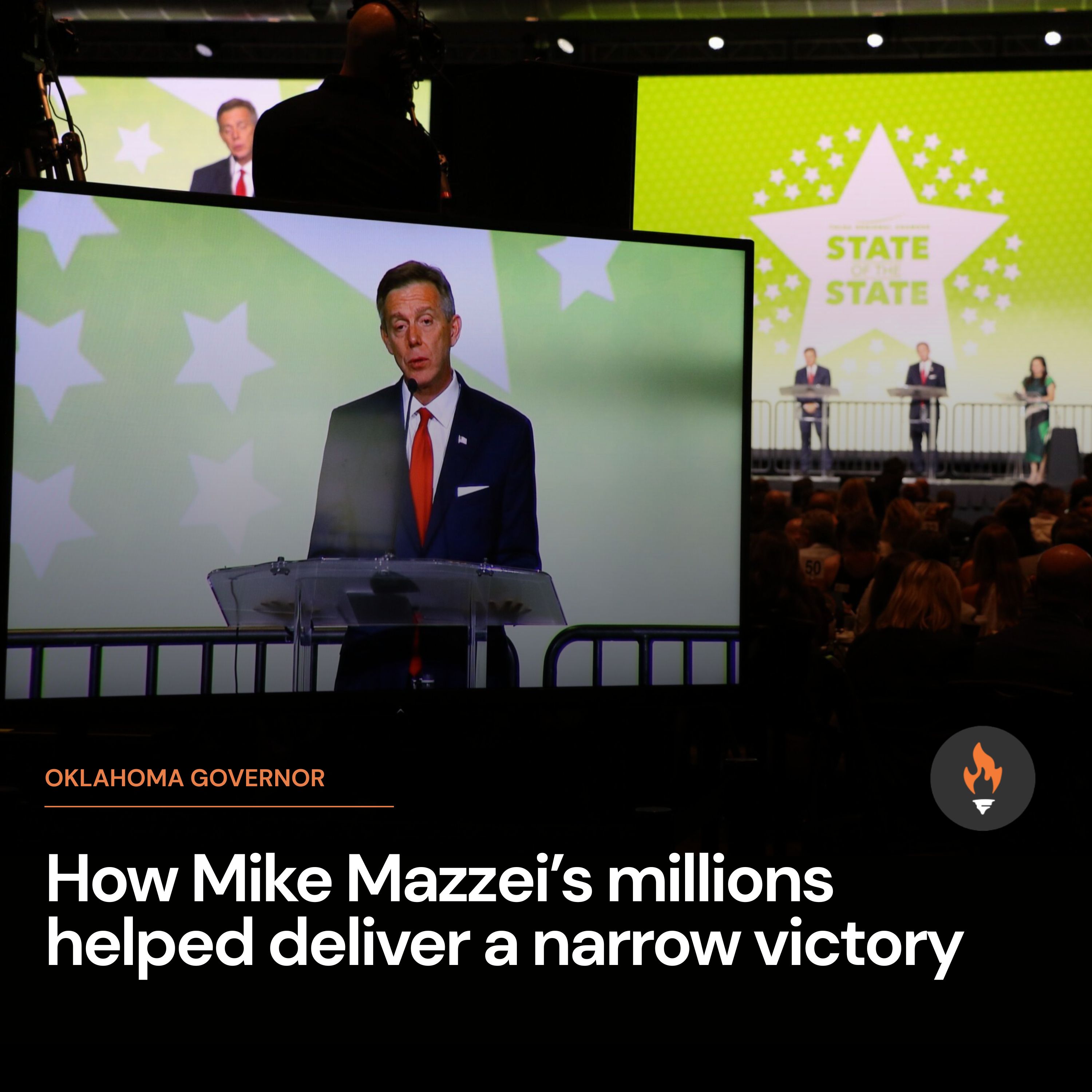
    ‘He needed all of it’: How Mike Mazzei’s millions helped deliver a narrow victory

    The Frontier spoke with pollster Pat McFerron about Mike Mazzei’s slim win over Gentner Drummond to secure the Republican nomination for governor. McFerron is president of the Oklahoma-based polling firm Cole Hargrave Snodgrass & Associates. For the full interview, listen to our podcast. Dylan Goforth: Let's talk about what we saw last night. It's funny: There were a lot of eyes on the election, but not so many votes. Once again, turnout in an Oklahoma runoff wasn't great, but everyone was paying attention to what happened. When you look at the runoff results, what do you think Oklahoma voters told us? Pat McFerron: I think the key takeaway is a little bit of a repudiation of the Freedom Caucus. Obviously, everyone wants to talk about the governor's race, which was very, very close. I believe it's the closest Republican runoff election we've had in the state for governor. But I think the continuation last night of support for Senate Pro Tem Lonnie Paxton — and voters increasingly siding with him over the Freedom Caucus — is probably the biggest takeaway. That, and I think you hit on it a little bit, is how few people are participating. I do think the Republican runoff election exceeded some people's expectations, but you're still talking about less than 10% of Oklahoma residents participating. It's a larger percentage of voters, but we're talking about a state of 4 million people. Less than 10% decided who is likely to be the next governor of the state. Dylan: Looking at the governor's election, Mazzei won by essentially half a percentage point. Does that look like basically a coin flip, or did you see something in the results that explains why Mazzei was able to hold off Drummond, even by the slim margin that he did? Pat: If you compare the margins — if you took out the other candidates in June and looked at the margins Drummond and Mazzei had vis-à-vis each other, then looked at what happened last night — the southeastern part of the state turned out pretty solidly and really moved toward Mazzei. In McCurtain County alone, Mazzei won by a little over 2,000 votes. He picked up 779 net votes there. So he picked up more than a third of his statewide margin in McCurtain County alone. Dylan: Do you think that's the Trump endorsement? I know southeastern Oklahoma, and I don't think of Mazzei as your typical southeastern Oklahoma candidate. Pat: It is the most Trumpian. I think the Brecheen endorsement there mattered. You also had the late Markwayne Mullin endorsement. Those are the last two congressmen there. Especially in McCurtain County, which is in the Shreveport media market, they're not seeing quite as much television advertising as some of the others are. I think they rely a little more on endorsements. So, yes, I do think that's a key part of it there. Dylan: Let's talk about the money, because I think that's an interesting part of the results. There was a lot of spending. I think Mazzei took out almost $12 million in loans. The Associated Press reported more than $14 million in television and digital advertising during the runoff, with many more millions spent before that. What did Mazzei actually buy with that money? Pat: When a race is this close, any decision on financing probably makes a difference. So, yes, I would argue that he needed it all to get there. That being said, you may recall I released numbers three weeks out that had it at 44-44. I did two other surveys that I did not release that had it at 45-45, and the last survey I did, which I finished last Thursday, had it at 45-45. That makes you wonder whether the money was wasted. But if it hadn't been there, you don't know what would have happened on the other side. It looks to me like he needed all of it—or almost all of it—to be successful. Dylan: Taking out $12 million in loans is enough to give you stress. But I guess when you win by 2,000 votes, you don't look back and regret taking out those loans. Pat: The worst feeling — and I've been on campaigns that have done this before—is to say, “I should have done something else. I should have put in another $100,000, or I should have done X, Y or Z. If I'd bought broadcast television in Shreveport, maybe I would have done better in McCurtain County.” Those are the things that drive you crazy. Very seldom do I have someone say, “We paid for a landslide, and I'm upset about it.” Dylan: I love a close race because it gives you so much to think about and dwell on. When you're talking about 2,000 votes, anywhere you're picking up votes is relevant, important and probably meaningful. One thing I was thinking about last night was the polling you released before the runoff. These guys had essentially been tied for a long time. I remember seeing numbers in June, and the June election results were close. What do last night's results — and the way the last six months played out — tell you about where the supporters of the other candidates went? Pat: Obviously, it means they split rather evenly. I haven't gone down to this level yet, but looking at the maps, it appeared Drummond ended up winning out west, where (Jake) Merrick and (Chip) Keating had done well. Mazzei did well on the eastern side of the state, where McCall had more support. For example, in Atoka County, it wasn't a huge difference, but compared with June, Mazzei picked up a net 294 votes. In a county where only about 1,600 people voted, that's a pretty big margin. Dylan: For people looking through the numbers today and trying to sort this out, are there any obvious mistakes you would caution them against making when interpreting the numbers? Pat: One thing that's interesting in a race this close is looking at local elections. That's something I always advise people to do. Look at the turnout in Ottawa County, for example. We actually had 58% more people vote in the August Republican runoff than voted in the June primary. They had a much larger turnout because there was a local sales-tax issue on the ballot that got 94% of the vote, I think. Their sheriff had been sued, and everybody was going to pay this big settlement through property taxes. They decided to pay it off with a sales tax instead. That meant a lot more people voted in Ottawa County. We saw the same thing in Adair County and Tahlequah, where there were some very important school bond issues on the ballot. Those were also places where more people voted in August than in June. Looking at some of those things matters when you get into a race that's this close. That's all short-term. Long term, I think one of the keys will be the involvement of the metro areas in nominating Republicans in the future. We'll see what happens with Cyndi Munson, and all due respect there, but if you look at the residents of Oklahoma, Tulsa, Cleveland and Canadian counties, they account for about 48% or 49% of all the residents in the state. They accounted for only 42% of the Republican primary voters. If you change that—and given that Drummond won those counties—he might be the nominee. Oklahoma County did turn out quite a bit more in the runoff than it did in the primary. Tulsa County did a little more, percentage-wise. But to me, that's a big question: Are we going to continue to be a state with rural dominance even though the metro areas are becoming more populated? Dylan: I want to look ahead to November. If you're advising Cyndi Munson, what does such a close split in the Republican runoff tell you about Mazzei's strengths and possible vulnerabilities? Is there anything in the results that gives a Democrat an opening or hope? Last night, I went back to look at the split between Drew Edmondson and Kevin Stitt in the 2018 governor's election. Obviously, the Munson campaign isn't going to say, “Our goal is to lose by less than Edmondson lost by.” But is that a good starting point for them to look at those results? What would you tell her to do over the next few months? Pat: I will tell you, 2018 is a lot different from 2026. With the teacher walkout and everything else, our generic-ballot test in 2018 had only about an eight-point Republican advantage. I'm at a 20-point Republican advantage in 2026. I think you have to create your own hope. But I don't think the opportunity for the Munson folks is necessarily the Gentner Drummond voters. I think it's the Republicans who stayed home, and they're a tougher group to reach as well. They're a little less engaged. They will vote Republican, but I think it'll take a little while to happen. I think we'll see the Republicans come back together.
  • April 6 · 29 min

    Why Tulsa is hitting pause on data centers

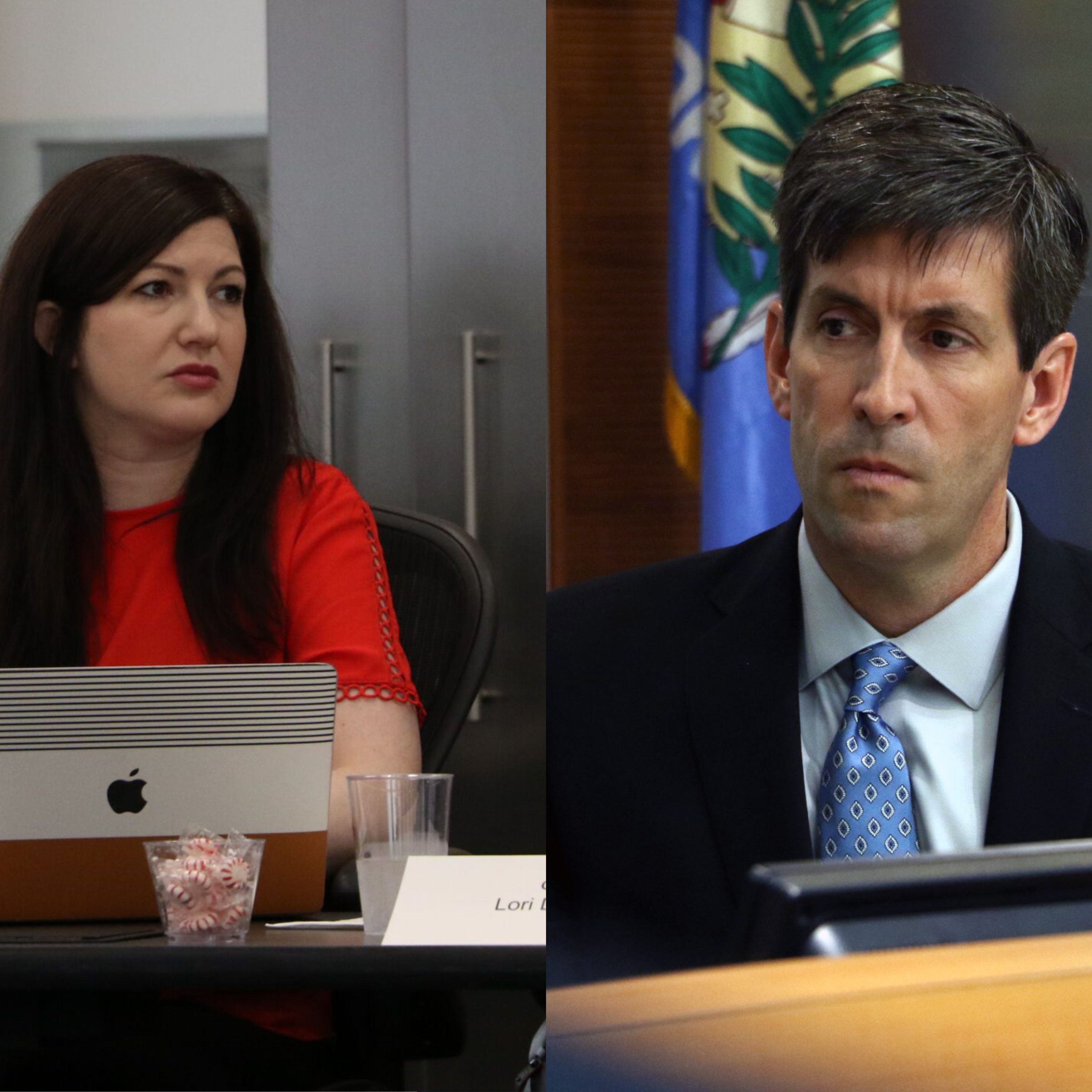
    Data centers are coming to Tulsa. Eventually. But that momentum has hit a pause. City leaders have unanimously approved a temporary moratorium on new data center development, stepping back amid growing concerns about what these massive projects could mean for Tulsa’s power grid, water supply and long-term growth. At the same time, data centers promise jobs, investment, infrastructure and a foothold in a rapidly expanding industry. But they also come with enormous demands. So where does Tulsa go from here? On this episode of Listen Frontier, we’re talking with Tulsa City Councilors Phil Lakin and Laura Bellis about why they supported the moratorium, what questions still need answers, and what it would take for them to feel comfortable moving forward with data center development in Tulsa. Tulsa District 4 City Councilor Laura Bellis Dylan: What does the moratorium actually do and what does it not stop? Laura Bellis: Project Anthem’s Phase One is still moving forward, and potentially Phase Two depending on future approvals. What the moratorium does is create a nine-month pause so our planning office can update how data centers are handled in our zoning code. Right now, our code treats them like light industrial uses, which assumes they won’t have off-site impacts like noise or vibration. But that’s not what we’re seeing with large-scale, hyperscale data centers. So this pause gives us time to study best practices and update our policies. During the moratorium, no new permits can be pulled for data centers. The goal is that when it ends, we’ll have clearer rules about where they can go and whether our community has the capacity to support them. Dylan: Are there limits to what this moratorium can accomplish? Laura Bellis: This is a good first step, but it’s not a complete solution. Technology, especially AI and data centers, is evolving faster than regulation. At the city level, we can address land use and zoning, but we really need broader policy at the state and federal levels as well. My hope is that during this time, we can learn from other communities, see what works elsewhere, and start building a more comprehensive approach. Dylan: What does success look like when the moratorium ends? Laura Bellis: Success would mean we have clear definitions in our zoning code for different types and sizes of data centers, along with requirements to mitigate impacts. Ideally, we’d limit where hyperscale data centers can go and have a better understanding of how many our region can realistically support, especially when it comes to water and power. We’ll also have more information from things like the Cherokee Nation’s upcoming study and potential state legislation. Right now, we just don’t capture the nuance. By the end of this process, we should. Tulsa District 8 City Councilor Phil Lakin Dylan: What led you to support the moratorium? Phil Lakin: I supported it, but really as a way to take time and get policy right. The final version was the result of compromises, and that’s why it passed unanimously. Our zoning code wasn’t written with data centers in mind, and right now they could potentially be built next to neighborhoods or existing businesses. This gives us time — about 270 days — to fix that. It also allows projects already in the pipeline to continue, which was an important consideration. Dylan: How did you balance economic opportunity with community concerns? Phil Lakin: That was a big part of the discussion. On one hand, data centers bring investment, property tax revenue and franchise fees from electricity use. Those can be meaningful for the city. On the other hand, there are concerns about water use, power demand and proximity to neighborhoods. For me, the key was balance. We want to remain open for business, but we also want to be thoughtful about where these projects go. A moratorium gives us time to get that planning right instead of reacting after the fact. Dylan: What does success look like after the moratorium? Phil Lakin: The most important thing is getting the zoning code right, clearly defining where data centers can and can’t go. Beyond that, I think success is having a better public understanding of both the benefits and the downsides. A lot of people focus on one side or the other, but we need to look at the full picture. We all use data centers every day, whether it’s cloud storage, Google searches or AI. So part of this is helping people understand both the impact and the role they play in our daily lives.

  • March 6 · 21 min

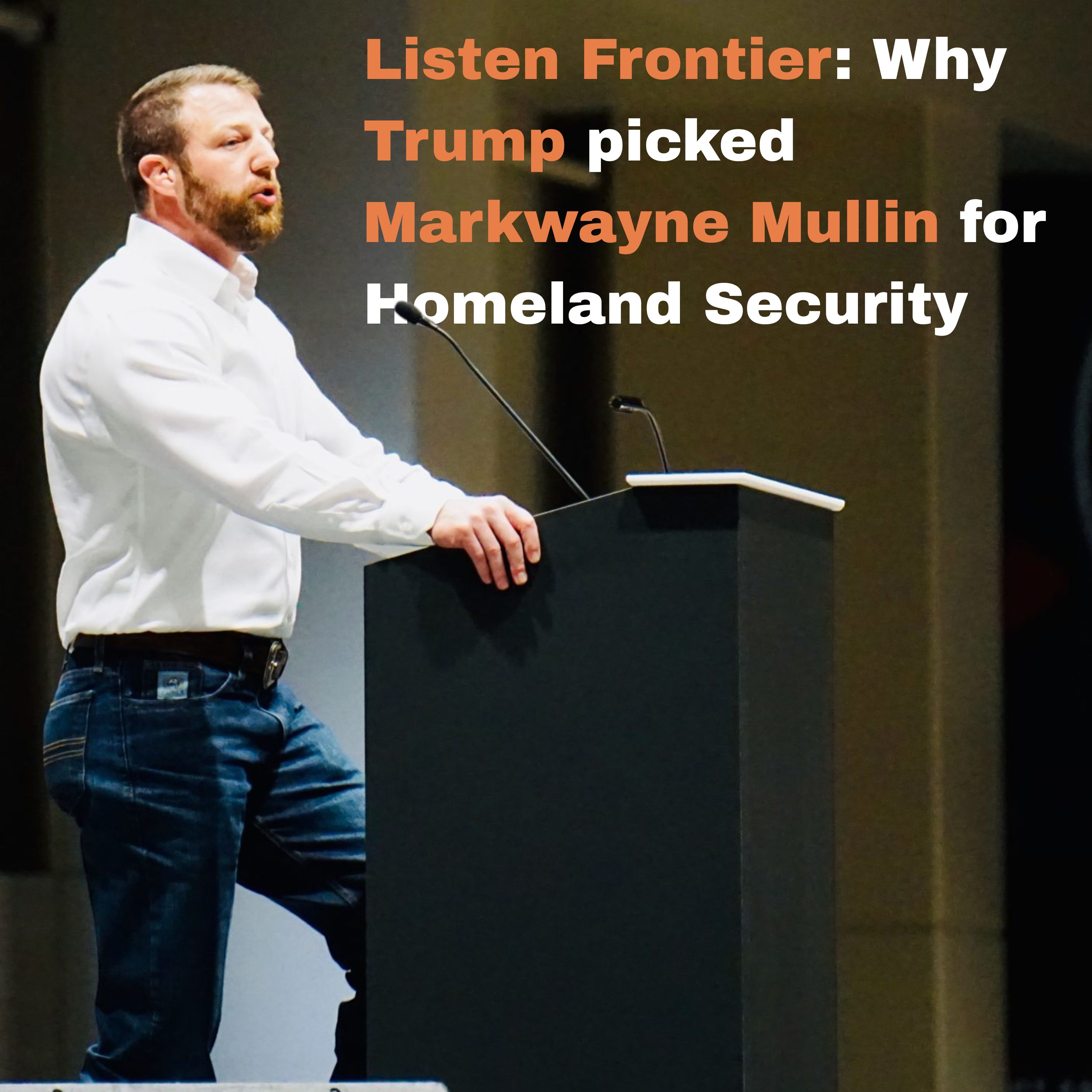
    Why Trump picked Markwayne Mullin for Homeland Security

    Today on the Listen Frontier podcast, we’re talking about one of the more surprising political shakeups in Washington — the firing of Kristi Noem and the appointment of Oklahoma Sen. Markwayne Mullin to replace her. Noem was abruptly pushed out of her role leading the Department of Homeland Security by President Donald Trump, setting off a scramble over who would take over one of the federal government’s most powerful agencies — responsible for border security, immigration enforcement, disaster response and counterterrorism. Trump’s pick of Oklahoma Senator Markwayne Mullin stunned many. If confirmed, Mullin would leave what is often considered one of the most secure jobs in American politics — a U.S. Senate seat — to take on a Cabinet position in an administration known for frequent turnover. To help us break down what happened, why Mullin might take the job, and what it could mean for Oklahoma politics, I’m joined by Reese Gorman. Reese is a national political reporter for NOTUS covering Congress and the Trump administration. Before that, he worked here in Oklahoma as a reporter for The Frontier.

  • February 11 · 21 min

    Salty, oily drinking water left sores in their mouths. Oklahoma refused to find out why.

    In our latest investigation, reporter Nick Bowlin digs into a troubling question: What happens when families report salty, oily drinking water that leaves sores in their mouths — and the state declines to determine the cause? In “Salty, oily drinking water left sores in their mouths. Oklahoma refused to find out why,” Nick traces complaints of oilfield contamination, examines how regulators responded and explains why key questions remain unanswered. In this conversation, he takes us behind the scenes of the reporting, the documents that shaped the story and what it reveals about oversight of oil and gas pollution in Oklahoma. Dylan Goforth: When you first heard about the Boarmans’ situation, what made you think this wasn’t just a private well problem but a story about the state’s oil and gas regulator? What was the moment where the story “clicked” for you? Nick Bowlin: After my initial conversations with Tammy and Chris, I sent in an open records request with the state. Once I got the files and began to read, the click happened pretty fast. I saw that officials at the OCC had found strong signs of oil and gas pollution using a number of different metrics and tests. And this was for a house that sits in the middle of a legacy oilfield, drilled in the 1940s. Old wells plugged with mud – a common practice at the time – surround their house. But all this evidence didn’t seem to lead to urgent action. The agency slow-walked testing nearby oil and gas operations and water sampling for heavy metals. And when they finally ran those tests, they found problems. People all over the state are dealing with pollution threats from historic and current oil and gas. Tammy and Chris were unusually proactive in pushing the state to help them and trying to learn all they could about their situation. If this is how the state handled the Boarmans’ case, it didn’t bode well for other Oklahomans coming to the OCC for help. Dylan: A huge part of this story relies on internal emails, test results and agency reports. How did you go about getting those records, and what was the most surprising or revealing document you found? Nick: I relied primarily on open records requests to the OCC. My first one took a while, since my request covered over a year of agency work on the Boarmans’. But after that, I could submit requests covering only a few months at a time and the agency tended to return these promptly. To my mind, the most revealing set of emails come from September 2024, after the Boarmans’ state senator got involved. His arrival seemed to spur the state to finally order long-delayed tests. I was also struck by the electromagnetic survey images: For the most part, oil and gas reporters don’t get to see the pollution we report on. Leaks happen deep below our feet, while CO2 emissions are invisible. But those images taken by the agency offered a rare and disturbing picture of the pollution plume contaminating the Boarmans’ drinking water. Dylan: There are several points in the story where agency staff appear to know more than the Boarmans do about what’s happening to their water. How did you piece together that timeline of who knew what, and when? Nick: I built out a detailed chronology, based on the records I received and interviews with the Boarmans’. It wasn’t hard to do that with the agency emails. But I also built a timeline of the evidence. There isn’t a single test that definitively proves oil and gas contamination. Instead, the state relied on an accumulation of data, evaluating things like salts, the presence of certain metals, chemical ratios and the belowground electromagnetic maps. That was a useful exercise: to see the growing pile of evidence pointing to oil and gas, compared to the agency’s handling of the Boarmans’ pollution case. Dylan: The McCoon injection well becomes central to the story. How did you figure out it might be a key suspect, and what did you have to learn about injection wells and groundwater science to understand what was going on? Nick: I looked into the McCoon simply because the state flagged it as a problem well. Internal emails noted its checkered operational history and proximity to the Boarman house. And a report commissioned by the state about the Boarman case offered a number of recommendations; the McCoon was the only nearby well singled out for further testing. But near the McCoon are a number of poorly plugged wells, all of them potential pollution threats. It’s not hard to envision these wells working together, with wastewater rising up the poorly plugged wellbores. The report I mentioned just now talks about the pollution possibly spreading through“complex pathways.” That’s the thing about these oil and gas pollution cases: they’re incredibly complex and definitively proving a culprit is an enormous challenge. The state ultimately told Tammy and Chris that it could not find where the pollution originated and closed their case. Dylan: Tammy herself becomes almost an investigator in this story, combing through records late at night. How did your reporting overlap with her own digging, and how did you verify what she was finding? Nick: Tammy has a second career as a reporter if she wants one. She probably filed more records requests than I did, and she spent many hours learning about oil and gas operations and the pollution threats they pose. In many cases, we had the same sets of documents, since I obtained her case files independently of her. So, after our interviews, it was easy to fact-check things she’d told me, and pull up the relevant documents to get to the primary source. She was also good about taking pictures of signs of the pollution around her house, helping me verify anecdotes before I began speaking to her. Dylan: You tie this one family’s ordeal to a much larger problem — tens of thousands of unplugged wells and weak oversight statewide. How did you balance telling such a personal story while also showing readers the systemic picture? Nick: This story is one in a series about oilfield pollution, produced by The Frontier and ProPublica, so I have the benefit of being able to do different types of stories about different facets of this issue. The first story in this series took an expansive, statewide view of the oilfield wastewater blowouts called purges, so, for this one, I was interested in doing a zoomed-in look at the toll of pollution on a single family. Those are the stakes of bad regulation: everyday people are harmed. But I wanted to make clear that Tammy’s story isn’t just an outlier, so we made sure to talk about the issues with legacy oilfield pollution elsewhere in the Edmond area. The West Edmond Field was one of the state’s most important oil plays in the 1940s, and now, new homes are being built on land littered with orphan and mud-plugged wells, especially in the Deer Creek neighborhood. And no one knows how much old contamination there is beneath the surface. Dylan: After months of reporting, what part of this story surprised or frustrated you the most as a reporter? Nick: I definitely felt anger at the uncertainty of it all, a lesser version of the frustration that’s been eating at Tammy and Chris for years: there’s an obvious problem with their water, the state didn’t do everything it could to investigate it and now we will likely never know the source of the contamination. And now they just have to live with it – until they can get on rural water. In that sense, the Boarmans’ are lucky. I’ve interviewed other homeowners dealing with industry pollution on their properties who have no hope of cleanup or are too far out in the country to hook up to a water system. It’s hard to witness people forced to resign themselves to such hopeless circumstances.

  • January 21 · 27 min

    ‘The risk is moving too slow’: How Oklahoma's government wants AI to reshape the state's economy

    Frontier: Hey everyone. Welcome to another episode of listen frontier today. I am joined by Hart Brown, the president of artificial intelligence and transformation at Saxum. He also helped author Governor Stitt's Artificial Intelligence strategy for the state. Thanks for joining us today. I wondered if you would tell us a little bit first about yourself, your background and how you got involved in this project and in this area. Hart Brown: You bet. Coming out of school, I was doing a lot of work in what we now refer to as predictive analysis, so algorithmic based decision making, using math to help understand what's likely to happen and then make the best decisions you possibly can. I had a number of people come to me and say Hart, can you build an artificial intelligence system that can do what you do on paper in real time? I answered. I said let's find out. It sounds really interesting. At that time, there was really only one system that anybody could really use, and that was IBM Watson. And so I built an artificial intelligence system on top of IBM Watson to be able to leverage this algorithm in real time. And got very good success. Frontier: So let's talk about the governor's report a little bit. The document calls itself a forward thinking approach, which is right means, in a lot of ways, that some of it is aspirational in a sense that we're at a point where we don't exactly know where we're going to end up with AI. What are some of the concrete things that Oklahoma could do in the next six months, 12 months that are realistic to embrace AI better or better understand how it’s shaping Oklahoma? Hart Brown: It’s really important to understand that we're really talking about a longer timeline. So some elements of that are going to happen closer to a two year time frame. Some may be a little bit further out now. We're transitioning from a period of time where artificial intelligence really kind of felt like a toy. It was interesting, it was fun. We all started to use it. We downloaded the apps. We were making pictures and lots of different things. Oklahoma is in a relatively low unemployment environment, meaning it's hard for Oklahoma employers to find good people to hire, and so with that, let's use the technology. Let's grow the businesses as quickly as we can by leveraging that in a responsible and reasonable way. Frontier: Is it even possible at this point to have guardrails, or to know what the guardrails would even be? At some point, it will start to affect people's jobs. You mentioned low unemployment, people having difficulty filling some of these positions that maybe AI could replace, but at some point people's jobs will be what's being replaced. And so are there guardrails to protect workers? Or how should people approach that part of the discussion? Hart Brown: From an economic productivity perspective, I need everybody working and I need everybody using the technology. If the technology replaces people in this ecosystem, I don't get the economic value out of the system at the end of the day. And really what we're seeing in the next two to three years, whichever country maximizes its potential related to artificial intelligence, is likely to be the dominant economic country for the next 75 to 100 years. So first and foremost, I need everybody in the ecosystem being productive. It doesn't make sense for us to have a broad based disruption of the employment environment, because we don't win at the end of the day. We won't be the dominant economic country. So I'm very optimistic that if we do see that turbulence, that we have enough opportunities to resolve that before it really becomes a problem. Frontier: Looking at the strategy and at this report, if we revisit it in five or 10 years, what would success look like in Oklahoma, and what would count as a failure that Oklahoma should be willing to try to avoid? Hart Brown: Five years is a great horizon. What I would love to be able to say is that Oklahoma is at the forefront of artificial intelligence and advanced technology for the country and the world, which absolutely we have that that opportunity, I would say, from an economic perspective, that we've grown our economy by 40% here in the state overall by being able to do This, and that is a benefit to every single individual here in the state. So those two things, I think, are incredibly important for us moving forward, and we can accomplish that in a five year window.

  • Dec 19, 2025 · 8 min

    Inside the legal fight over immigration detention in Oklahoma

    Immigration detention usually happens out of public view — inside private prisons, through sealed court filings, and far from scrutiny. But in Oklahoma, those cases are starting to surface. In recent months, immigrants who’ve lived in the U.S. for years — some for decades — have been jailed for months without bond hearings, even when they have no criminal convictions and deep ties to their communities. Their only path to release has been through habeas corpus petitions filed in federal court. At the same time, Oklahoma is becoming a growing hub for immigration detention as private prison companies expand their footprint. Our reporter, Ari Fie, has been digging into these cases to understand who’s being detained, why this is happening now, and what it means for due process. I spoke with her about what she found.

  • Dec 12, 2025 · 16 min

    Listen Frontier: Clifton Adcock on the Real Impact of Oklahoma’s Data-Center Explosion

    For the past several months, Frontier reporter Clifton Adcock has been digging into one of the fastest-moving — and least transparent — developments in Oklahoma: the rapid rise of data centers. These facilities promise big investment, but they also bring enormous demands for power and water, and much of the planning has happened out of public view. In this week’s Q&A, Clifton walks us through how he pieced this story together: from tracking down hard-to-find utility filings to decoding dense regulatory documents and uncovering data center projects that weren’t publicly disclosed. He also talks about the challenges of explaining highly technical issues in a way readers can understand, and what surprised him most as he followed the money, energy, and incentives behind Oklahoma’s data-center boom. Read the story: Oklahoma’s data center boom is about to hit the grid — and your power bill

  • Oct 17, 2025 · 21 min

    Listen Frontier: Are Oklahoma classrooms too wired for learning?

    Frontier: We spoke back in the spring about the cellphone bill you ran that would remove cell phones from classrooms. Catch our listeners up on where that stands today. Seifried: It’s been in effect for almost two months in Oklahoma, and the results and the feedback have just been amazing. I heard from schools and administrators early on, talking about the lunchrooms being louder and the hallways being more crowded. My favorite recent anecdote is library books are being checked out at a higher frequency than at this point last year, so a lot of really positive feedback. Frontier: That kind of leads us into what we're talking about today, which is you have an interim study about technology in schools. So tell us a little bit about that study and what you hope to learn from it. Seifried: Yeah, this study sort of really dovetails off of my work on removing cell phones, because as I went around the state and talked about it over the last two years, I would meet with parents who were concerned about the use of screens and laptops in their child's classrooms. And they would question if learning was happening, or how much students are using screens. And at first, I sort of didn't want to become the anti-screens girl. But I think it's a good conversation to have. This study got to be a little bit more academic. We got into the neuroscience of how we learn and or how we don't learn. I also serve as chair of the technology committee, so I sort of get to wear these two really fascinating hats. As we're trying so desperately to increase our academic achievement, I want us to make sure that we're doing the right things. And maybe the right thing isn't the new and shiny technology or the new and shiny software, or this platform that promises the moon. Frontier: That’s not only a conversation that's taking place as it relates to schools. Right now, what's the main conversation we’re having in the state? It's AI, it's about data centers, the impact of this technology and this industry. And there is that discussion among adults, too, about the use of AI as a tool. Is it productive to give your creative juices to a computer as opposed to just doing this yourself? How much of our brain power are we giving over to computers? And does that, in a sense, make us less human? You have mentioned technology and how it should be used, with caution, as a teaching tool. And I just kind of wondered at this point in this process, what evidence would you want to see before deciding if a specific type of technological platform or in-class technology is truly improving learning outcomes? Seifried: One of the main things that we really took away was there are a lot of things that can improve educational outcomes. Like the air conditioning, or just a little bit of extra tutoring that kind of moves the needle. But what we should be asking, really, is not, does this move the needle, but does this move the needle better than something else. So for example, if we spend $10 million on this software across the state of Oklahoma, is that going to move the needle for our students more than taking that $10 million and investing it into our teachers or our reading specialists or giving stipends to teachers who are just crushing it in the classroom? AI is an amazing tool. But you have to master those foundational educational blocks, right? You have to be able to do the hard thing first. One of our speakers likened it to learning how to drive. If you learn to drive a stick shift, and then you go to automatic, no problem. But if you start with an automatic and you go stick, you have so much more difficulty going backwards and mastering those topics. And so I just wondered, do these softwares and platforms and AI chat bots really help us learn more than a quality teacher sitting down and working with your student? Frontier: You're essentially talking about opportunity cost here. If you’ve got $10 million to add some technology to classrooms, could that $10 million get you better results in another way? You’ve mentioned investing in some proven supports, like reading specialists,or upping teacher pay, instead of this theoretical technology that might possibly make something in the classroom better. Do you think that maybe there's too much focus or too much spending on tech for classrooms, and not enough focus and not enough spending on more traditional support systems for students? Seifried: That's a really hard question. But that was my point – I want to start talking about it, because I want to start framing these discussions and investments. I've been on the Appropriations Committee, and everyone has the best shiny thing, that this will be the silver bullet, and this will be the unicorn. And I think sometimes just the old fashioned way (is best.) And so I started to take that same principle into spending. Sometimes just hard work, or doing it the old fashioned way, is actually the right way. Frontier: I think that's probably a good lesson for everyone in every walk of life. Change is not necessarily always synonymous with progress. So being willing to take a critical look, even backwards, is always helpful. And you mentioned AI in your last response, and I want to talk about that a little bit, because when it comes to AI in classrooms, the toothpaste is sort of out of the tube at this point. But do you see the potential for AI to enhance teaching and learning? Or at this point, are you more concerned about its risks and limitations? Seifried: Can I answer yes to both of those? We had people at this study who didn't all agree on policy or on their approach to technology. But we had one teacher talk about her previous district, that software where she was able to monitor what each student was doing on their laptop in their class, in her classroom. And I thought to myself, we are experiencing a severe teacher shortage. We know that teachers are getting burned out at a higher frequency. So I said how can you possibly teach a classroom and teach a lesson plan and watch each student and observe and see look in their eyes and figure out, okay, this student's getting the lesson. And then also observe some software that's making sure that they're doing what they're supposed to be doing? It's so nuanced, but I think this will be a topic of conversation we'll be talking about for many years. Frontier: We talked about that a little bit with your cell phone ban bill, that if everyone continues to kick this can down the road, eventually it becomes too late to untie that knot. Seifried: There absolutely is a place (for technology and AI,) but it can't replace a teacher. And so we talked a little bit also about how learning should be cognitively demanding. It should be a challenge. And if you put students on computers where it's challenging, and that same computer offers that kind of dopamine hit of like, oh, I can also go and do this application, or I can check my phone … they can kind of just zone out for a little bit and sort of back away from the challenge. That means they’re not progressing and moving forward. There's just sort of that human element that you can't replicate in computers. It just sort of solidified for me that the number one factor in a student's education and their success is the teacher. And we're asking teachers to do more and I totally understand why they're like, this is too much Frontier: We're preparing these kids for the future, and they are going to get into a job market where they have to be comfortable and familiar with technology, but you’re saying it does them no good to be familiar with technology but not have learned the things necessary to actually be productive as an adult. Even in journalism, people get left behind if they can’t keep up with technology. So it is about finding a balance. Seifried: I want to teach our Oklahoma students how to think, not what to think, right? They'll be able to intuitively adjust with technology as it advances. I'm don’t think we need to introduce technology earlier and earlier, or that they need to be using it earlier and earlier, because they need to be prepared for something that's going to happen in 10 and 15 years. That isn’t quite as compelling to me as focusing on getting the foundations of learning down. Frontier: I’ve seen that in my son. He’s 6 years old and if you know any 6-year-old boys, you know what they're like with technology. Even when he was younger I would have to watch him, because I would think my 4-year-old doesn't need to be on the phone watching YouTube. And somehow, if he got my phone, he knew how to find YouTube and to find a video he wanted to watch. But as good as he is with technology, the biggest change I've seen in him in the last six months is that he learned how to read. And I saw how the world sort of opened up to him because of that ability to read in a way that dwarfed the way that world opened up to him through technology. Seifried: We talked about how computers are a production tool. They're not a learning tool, but they're also an extremely narrow learning environment, because you're staring at a screen? Whereas, if you're up and you're talking, you're listening to the teacher, you're kind of observing the classroom. Maybe you're writing notes, depending on your age, maybe you're doing something else. And so there's a little bit more of a tactile learning environment when you're doing that. If you're a thoughtful person who has the foundations, who can problem solve, you'll be successful in life. But if you don't have that etched into you, then it will be a struggle. Frontier: At this point are there any policy changes or any legislative ideas for the future on this topic that you came out of that study with? Seifried: No, I think this topic is just still so new. My personal next steps will be to check in with my local superintendents and teachers and kind of get feedback. What's hard is that I represent the whole state. So that means you have to put something in statute that is applicable to everyone. It took me two years to pass something as easy as removing cell phones from classrooms. So I think this will be a long term project.

  • Oct 8, 2025 · 39 min

    Numbers Game: Drummond, McCall, and the road to the 2026 Oklahoma Governor election

    klahoma voters won’t choose their next governor for another year, but the Republican primary is already heating up. Recent polling from former Oklahoma House Speaker Charles McCall’s campaign suggests the race between McCall and Attorney General Gentner Drummond is closer than you might think. But as other candidates begin to join the fray, the Drummond camp says that’s not true. The survey, conducted September 23–25, found Attorney General Gentner Drummond leading with 35% support, closely followed by House Speaker Charles McCall at 33%, while 32% of respondents remained undecided. The Frontier spoke with pollster Chris Wilson about his recent survey for the McCall campaign and Matthew Parker, Drummond’s campaign chairman, about how the candidates are positioning themselves to voters. The following is a condensed transcript of the conversation. For the full interview, listen to our podcast. The margin of error is 3.5%.

  • Sep 15, 2025 · 37 min

    Stitt defends Tulsa homeless crackdown as local shelter calls for empathy

    This week on Listen Frontier, we’re looking at Operation SAFE, Governor Kevin Stitt’s effort to clear homeless encampments in Tulsa with the help of the Oklahoma Highway Patrol. The Frontier sat down with Gov. Stitt, who told me the operation isn’t about solving homelessness, but about enforcing the law. He said Oklahomans are experiencing “compassion fatigue,” and that many of the people removed from encampments “didn’t want help.” We also spoke with Steven Whitaker, CEO of Tulsa’s John 3:16 Mission, who offered a different view. Whitaker acknowledged the risks of being too compassionate, but stressed that the people living on Tulsa’s streets are our neighbors, and most of them are in desperate need of empathy, shelter, and support. Together, their perspectives paint a complicated picture of homelessness in Tulsa, and the deep divide over how the state and city should respond.

  • Sep 11, 2025 · 28 min

    Power, water, and secrecy: Data centers are in Oklahoma. What now?

    Oklahoma is racing to attract data centers, facilities that store and process the information powering everything from streaming services to artificial intelligence, to the Sooner State. Governor Kevin Stitt has touted them as a cornerstone of economic growth, but as more projects roll into communities, residents and lawmakers are asking questions: How much water and electricity will these centers consume, and why is so much of that information kept under wraps? Cities and companies often sign nondisclosure agreements, meaning details about utility use and long-term costs are hidden from the public. That lack of transparency has fueled concern from those who worry about higher bills, strained resources, and the environmental impact of these projects. At the same time, state leaders see them as a chance to make Oklahoma a national hub for tech investment. Today on Listen Frontier, we’re joined by Representative Amanda Clinton, a Tulsa Democrat hosting an interim study on data centers, and Frontier reporter Kayla Branch, who’s been covering the issue. We’ll talk about what’s known, what’s still secret, and why the fight over data centers is really a debate about policy, accountability, and public trust.

  • Aug 26, 2025 · 27 min

    Tulsa’s panhandling debate: Two councilors, two perspectives

    On Wednesday, Tulsa’s City Council is set to vote on an ordinance that would limit what Tulsans can do on sidewalks and medians. The proposed ordinance comes after two incidents, one in 2023, and one in 2024, where two separate people were killed while standing in center medians. Councilor Phil Lakin, who spoke to The Frontier on Monday about the ordinance, said it was about public safety. Many medians in Tulsa are narrow, and in zones where the speed limit is above 25 miles per hour, he believes standing in the median is a safety hazard. The ordinance would also potentially apply to sidewalks that are within 18 inches of the street as well. But when it comes to enforcement, some, including City Councilor Laura Bellis, fear the ordinance will only be applied to those panhandling, and she fears fines associated with the ordinance could prove too costly. On this episode of Listen Frontier, we hear from Bellis, Lakin, and Deputy Council Administrator Sarah Davis ahead of Wednesday’s meeting. This is Listen Frontier, a podcast exploring the investigative journalism of the Frontier and featuring conversations with those on the frontlines of Oklahoma’s most important stories. Listen to us Apple Podcasts, Spotify, and Stitcher. To donate to The Frontier and help support our efforts to grow investigative journalism in Oklahoma, click here.

  • Aug 18, 2025 · 34 min

    Beyond McGirt: How local governments keep testing tribal rights

    Five years after the U.S. Supreme Court’s landmark McGirt v. Oklahoma decision affirmed much of eastern Oklahoma as Indian Country, some towns are still issuing traffic and municipal tickets to tribal citizens. In this episode, we talk with reporters Clifton Adcock and Allison Herrera about their investigation into why this happens, how it plays out in municipal courts, and what that means for tribal sovereignty. The conversation looks into the tension between local governments and tribal nations, the burden on everyday citizens caught in the middle, and the patchwork of settlements and agreements reshaping law enforcement. We also explore whether tribal courts and police departments have the resources to handle the cases being shifted their way, and what models of cooperation might point the way toward a lasting solution. This is Listen Frontier, a podcast exploring the investigative journalism of the Frontier and featuring conversations with those on the frontlines of Oklahoma’s most important stories. Listen to us Apple Podcasts, Spotify, and Stitcher. To donate to The Frontier and help support our efforts to grow investigative journalism in Oklahoma, click here.

  • Aug 5, 2025 · 31 min

    ‘We’ve lost five years’: Cherokee Chief says new governor must rebuild tribal relations

    Chuck Hoskin Jr. has served as Principal Chief of the Cherokee Nation since 2019, leading the tribe through a period of historic legal shifts, economic investment, and political tension. At the center of much of it is McGirt v. Oklahoma, the landmark 2020 U.S. Supreme Court decision that affirmed much of eastern Oklahoma remains reservation land. That ruling reshaped how justice is administered in Indian Country and how tribal sovereignty is understood and exercised today. On this episode of Listen Frontier, Hoskin pushed back on critics who claim the McGirt decision led to “legal chaos.” He also reflected on the strained relationship between tribal nations and Gov. Kevin Stitt, discussed how he hopes the next governor will mend that relationship, and talked about how the Cherokee Nation is working to lift up long-neglected communities while simultaneously facing the challenges that come with increased jurisdictional authority. This is Listen Frontier, a podcast exploring the investigative journalism of the Frontier and featuring conversations with those on the frontlines of Oklahoma’s most important stories. Listen to us Apple Podcasts, Spotify, and Stitcher. To donate to The Frontier and help support our efforts to grow investigative journalism in Oklahoma, click here.

  • Jul 29, 2025 · 45 min

    Listen Frontier: Oklahoma’s Social Studies rewrite sparks backlash

    Oklahoma has officially adopted new social studies standards that require public school students to be taught about "discrepancies" in the 2020 presidential election — language critics say mirrors debunked conspiracy theories. Despite the lack of evidence supporting claims of widespread voter fraud, the state’s new standards embed references that educators and parents fear could mislead students and turn classrooms into ideological battlegrounds. The standards, approved earlier this year by the Oklahoma State Department of Education, include mandates criticized for their similarity to talking points from conservative media outlets rather than academically sound instruction. Teachers, parents, and education experts worry the inclusion of partisan narratives threatens the integrity of education and places pressure on educators. On this episode of Listen Frontier, we speak with Aaron Baker, an Oklahoma-based U.S. History teacher, Sandra Valentine, whose daughter is entering high school and will soon be taught these concepts, and Heather Goodenough, President of the Oklahoma Council for the Social Studies.

  • Jun 25, 2025 · 31 min

    🏀 Oklahoma City Mayor David Holt on the Thunder’s historic championship

    In this episode of Listen Frontier, we sit down with Oklahoma City Mayor David Holt just days after the Thunder captured their first NBA championship — a moment that’s left the city buzzing. Holt reflects on what this unforgettable Finals series meant not just for basketball fans, but for the city itself. We talk about the energy in the arena, the grit of the team, and how the Thunder's run became something bigger than sports — a symbol of how far Oklahoma City has come. We also dive into the deeper story behind the celebration. Holt opens up about how this moment of triumph connects to Oklahoma City’s long journey since the bombing 30 years ago — and why he sees the Thunder’s win as a powerful chapter in that story of resilience.

  • Jun 4, 2025 · 24 min

    Polling shows Gentner Drummond with a large lead over fellow Republicans in the 2026 race for governor

    Gentner Drummond. Ryan Walters. Matt Pinnell. A year out from the 2026 primary elections, those three names have emerged as leaders to be Oklahoma’s next Republican candidate for governor. The catch? Only one of them has officially declared their candidacy. Drummond, Oklahoma’s Attorney General, has a large -— though not insurmountable lead — according to polling released Wednesday by Sooner Survey, which asked 500 registered Republican voters in Oklahoma about their thoughts on likely GOP candidates for governor. Walters, Oklahoma’s state schools superintendent, and Pinnell, the lieutenant governor, lag behind Drummond. This is Listen Frontier, a podcast exploring the investigative journalism of the Frontier and featuring conversations with those on the frontlines of Oklahoma’s most important stories. Listen to us Apple Podcasts, Spotify, and Stitcher. To donate to The Frontier and help support our efforts to grow investigative journalism in Oklahoma, click here.

  • Apr 28, 2025 · 29 min

    Cyndi Munson talks education, abortion and why she thinks a Democrat can be Oklahoma’s next governor.

    House Minority Leader Cyndi Munson has entered a growing contest to replace Kevin Stitt as Oklahoma’s next governor. The odds are stacked against Munson - when election day rolls around next year, it will have been 20 years since Oklahoma last elected a Democrat as Governor. But that’s not slowing down Munson, who said she hopes to provide an alternative to the conservative candidates currently duking it out ahead of next summer’s primary elections. This is Listen Frontier, a podcast exploring the investigative journalism of the Frontier and featuring conversations with those on the frontlines of Oklahoma’s most important stories. Listen to us Apple Podcasts, Spotify, and Stitcher. To donate to The Frontier and help support our efforts to grow investigative journalism in Oklahoma, click here.

  • Mar 25, 2025 · 23 min

    ‘Bell to bell’ cellphone ban could be coming to Oklahoma schools. How would it work?

    Sen. Ally Seifried, R-Claremore, told The Frontier she hopes her bill will help Oklahoma schools limit cellphone use and increase learning outcomes. This is Listen Frontier, a podcast exploring the investigative journalism of the Frontier and featuring conversations with those on the frontlines of Oklahoma’s most important stories. Listen to us Apple Podcasts, Spotify, and Stitcher. To donate to The Frontier and help support our efforts to grow investigative journalism in Oklahoma, click here.

  • Mar 7, 2025 · 21 min

    Senate President Pro Tem Lonnie Paxton "cautious" but supportive of income tax cut

    Senate President Pro Tem Lonnie Paxton is “100 percent on board” with Oklahoma Governor Kevin Stitt’s proposed half-percent income tax cut – but it’s a cautious 100 percent. Paxton told The Frontier that recent Board of Equalization figures, which show Oklahoma’s budget to be short of expectations following last year’s grocery tax cut, make him wary of the possibility of a return to the state’s budget woes of last decade. “I can easily say I’m 100% in favor of an income tax cut,” Paxton told The Frontier. But he also remembers when the state was facing a more than $1 billion budget deficit in 2016. Stitt has pushed for “half and a path,” his term for a half-percent cut and a path toward eventually eliminating personal income taxes. Recent Board of Equalization figures show Oklahoma’s revenue projections are less than anticipated, though the state has about $4.6 billion in reserves. Those figures come after the state eliminated its portion of the grocery tax last year, which resulted in a loss of more than $400 million in tax revenue. Stitt, while urging a cut to personal income taxes, has also called for state agencies to have flat budgets for this fiscal year. On this episode of Listen Frontier, I talk to Paxton about what an income tax cut might mean - both good and bad - for Oklahomans. This is Listen Frontier, a podcast exploring the investigative journalism of the Frontier and featuring conversations with those on the frontlines of Oklahoma’s most important stories. Listen to us Apple Podcasts, Spotify, and Stitcher. To donate to The Frontier and help support our efforts to grow investigative journalism in Oklahoma, click here.

Showing 1–20 of 20 episodes