Skip to content
Artwork for Life Science Talent Talks
BusinessEntrepreneurship

Life Science Talent Talks

Life Science Talent Ecosystem

We want to build a community to inspire life science professionals and leaders through talent talks and organized events. Share knowledge across the life science community through personal stories of their journey.

𝗕𝗲𝗰𝗼𝗺𝗲 𝗽𝗮𝗿𝘁 𝗼𝗳 𝘁𝗵𝗲 𝗟𝗶𝗳𝗲 𝗦𝗰𝗶𝗲𝗻𝗰𝗲 𝗧𝗮𝗹𝗲𝗻𝘁 𝗘𝗰𝗼𝘀𝘆𝘀𝘁𝗲𝗺:

Take part in shaping this community by sharing your feedback, questions or ideas. This you can do through our community page:

https://www.linkedin.com/groups/12717528/

Follow us:

Nehar: https://www.linkedin.com/in/neharmortuza/

and

Søren: https://www.linkedin.com/in/soren-spanner-bach/

Play
  • 20 episodes
  • Avg 41 min
  • English
  • #72
    August 20 · 53 min

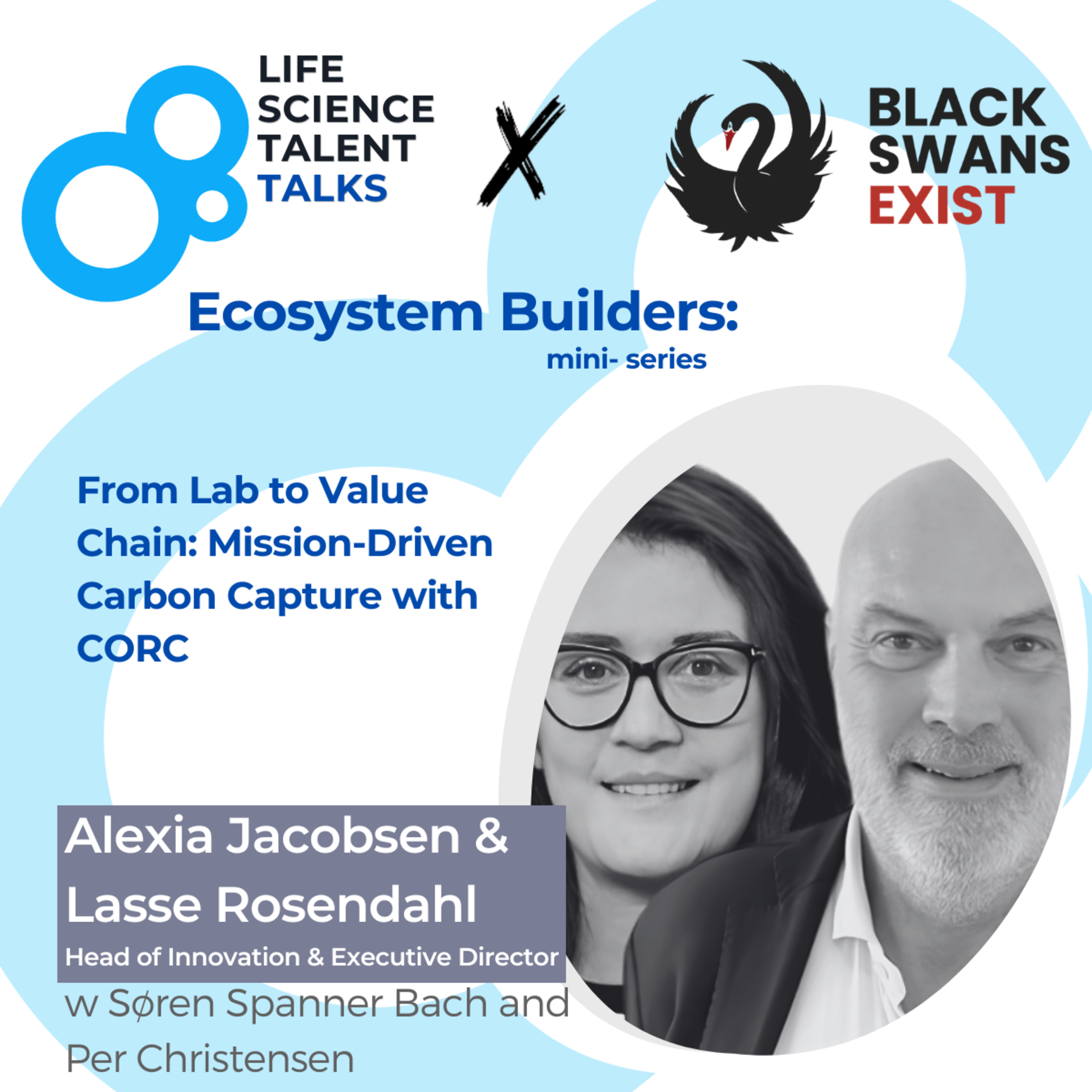
    E72 #Ecosystem Builders “From Lab to Value Chain: Mission-Driven Carbon Capture” with CORC's Lasse Rosendahl & Alexia Jacobsen

    In this podcast episode on turning research into societal value, host Søren Spanner Bach is joined by co-host Per Christensen of Black Swans Exist and guests Lasse Rosendahl, Director of CORC, and Alexia Jacobsen, Head of Innovation at CORC - the Novo Nordisk Foundation CO2 Research Center, headquartered in Aarhus with partner institutions across Europe and the US. The conversation centres on a deceptively simple question: what does it actually take to translate CO2 research into real-world impact when the value chain you need doesn't yet exist? Lasse and Alexia walk through the full journey - from TRL 1 microbe experiments exploring how to transform CO2 into methane, to a 200x scale-up pilot facility at Campus Viborg that is already testing market viability by exploring the sale of carbon credits and offtake products at pilot scale. A key theme throughout is that the TRL ladder is not linear: scaling up consistently surfaces new fundamental questions, sending research back down before moving forward again. Iteration is the design, not the exception. The bottleneck in commercializing carbon utilization is less about technology maturity and more about the near-complete absence of governmental verification frameworks for CCU and CCC in Europe - and the missing value chains that spin-outs need to survive. Alexia also introduces CORC's approach to impact measurement: rather than imposing performance indicators that produce what you measure rather than what you want, the team is developing key value measures in direct dialogue with researchers. And critically, the innovation team's role is to remove the administrative and legal obstacles from the researcher's path - so that scientists can stay focused on the science while still contributing to real-world impact. ⏱️ TIMESTAMPS 01:26 What Is CORC? — Mission, Funding and International Scope 04:11 Why CO₂ Research Matters — And What TRL Actually Means 06:45 TRL in Practice — From Lab-Scale Microbes to Pilot Reactors 10:42 The Real Bottleneck — Value Chains That Don’t Exist Yet 17:13 What Can Industry Do? — Spin-Ins, De-Risking and Ecosystem Building 21:57 Researcher KPIs vs Real-World Impact — How to Navigate Both 25:20 CORC’s Four Mission Streams — Interdisciplinary Design 29:01 Keeping Researchers Mission-Aligned — Annual Meetings and Shared Direction 35:00 What Europe Can Learn from the US — Entrepreneurship and Failure Culture 38:21 Coalition on Advancing Research Assessment — Rethinking Researcher Metrics 41:46 Selling Credits at Pilot Scale — Testing the Market Before It Exists 43:15 Excel ERIC — Sharing Infrastructure Across Europe 45:29 Why Aarhus? — Location, Ecosystem and Production Pipeline 46:41 Impact by 2028 — Technologies Out, Value Chains Built, Knowledge Compounded 50:14 Target Industries and Products — What CORC Is Looking For 💡 QUOTES "If we are not successful in bringing down atmospheric CO2 levels, it will have consequences — not for the planet, which will survive — but for the way we as humans inhabit the Earth." — Lasse "If the value chain is not there, we set spin-outs up to fail. That's essentially what we're doing." — Alexia Ideas for future podcast guests or themes? 💡 We want to co-create this podcast with you. We’d therefore love to hear your suggestions for future podcast guests, ecosystem builders, or deep tech themes. Feel free to share in a private message or leave a comment below 🙏🏼 (It's also ok to invite yourself 😉) Call to Action If this episode sparked your interest: Share it with someone working in science, startups, or innovation Follow the miniseries for more conversations with ecosystem builders
  • S1 · E71
    August 13 · 58 min

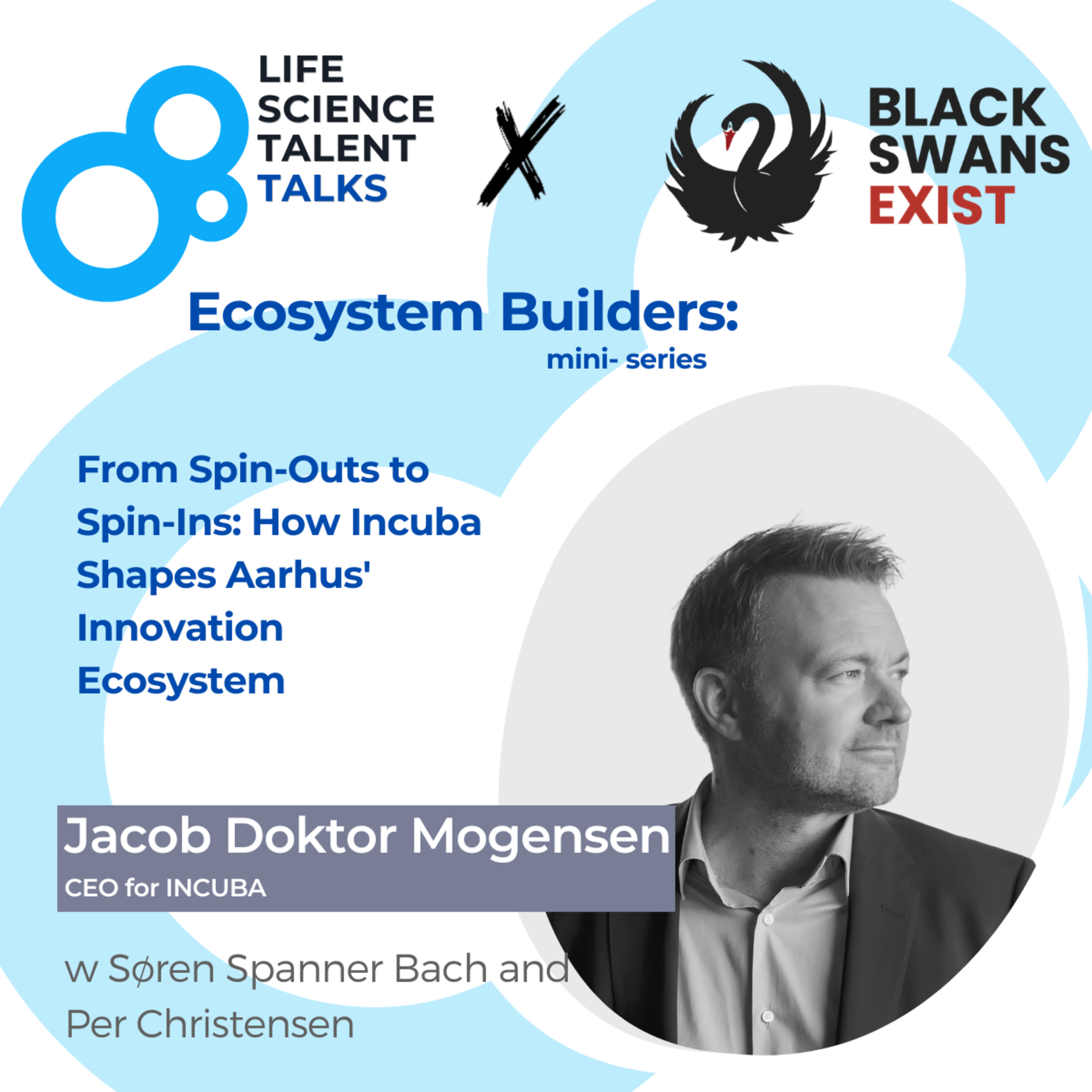
    E71 #Ecosystem Builders "From Spin-Outs to Spin-Ins: How Incuba Shapes Aarhus' Innovation Ecosystem" with Jacob Doktor Mogensen

    Jacob Doktor Mogensen, CEO of Incuba, joins the show to unpack how Aarhus's science park model turns university research into scaled companies. The conversation moves from Incuba's problem-first, hands-on approach to acceleration, through real cases like Coana and CrowdStrike/Humio, to the harder question of why Danish companies sell out to international capital - and what "spinning in" corporate innovation could change. Listeners get a grounded look at what actually moves a startup from idea to exit. Episode Timestamps (09:37) Concrete support: financing, applications, introductions (10:49) The Investor Hub: proximity that closes deals (27:26) Success story: Quana's journey and US sale (41:39) Defining "spin-in" innovation (46:14) Spin-in success story: CrowdStrike and Humio (50:01) Turning company problems into student projects (55:00) Aarhus' innovation ecosystem over the next 10 years Guest Bio Jacob Doktor Mogensen is CEO of Incuba, the Aarhus-based science park connecting university spin-outs, established companies, and investors across three hubs. Before Incuba, he spent fifteen years in Danish innovation clusters and science parks, including time in the food industry. Resources Mentioned Incuba (Incuba.dk) — science park hubs at Katrinebjerg, Navitas, and Skejby Incuba on LinkedIn Coana — Aarhus University spin-out and EU Horizon-funded case study CrowdStrike / Humio acquisition Delfinus Venture Capital InnoFonden, InnoBooster, Horizon Europe funding programs Startup Aarhus Aarhus Investor Summit (October 8) Ideas for future podcast guests or themes? 💡 We want to co-create this podcast with you. We’d therefore love to hear your suggestions for future podcast guests, ecosystem builders, or deep tech themes. Feel free to share in a private message or leave a comment below 🙏🏼 (It's also ok to invite yourself 😉)

  • S1 · E70
    August 6 · 1 hr 11 min

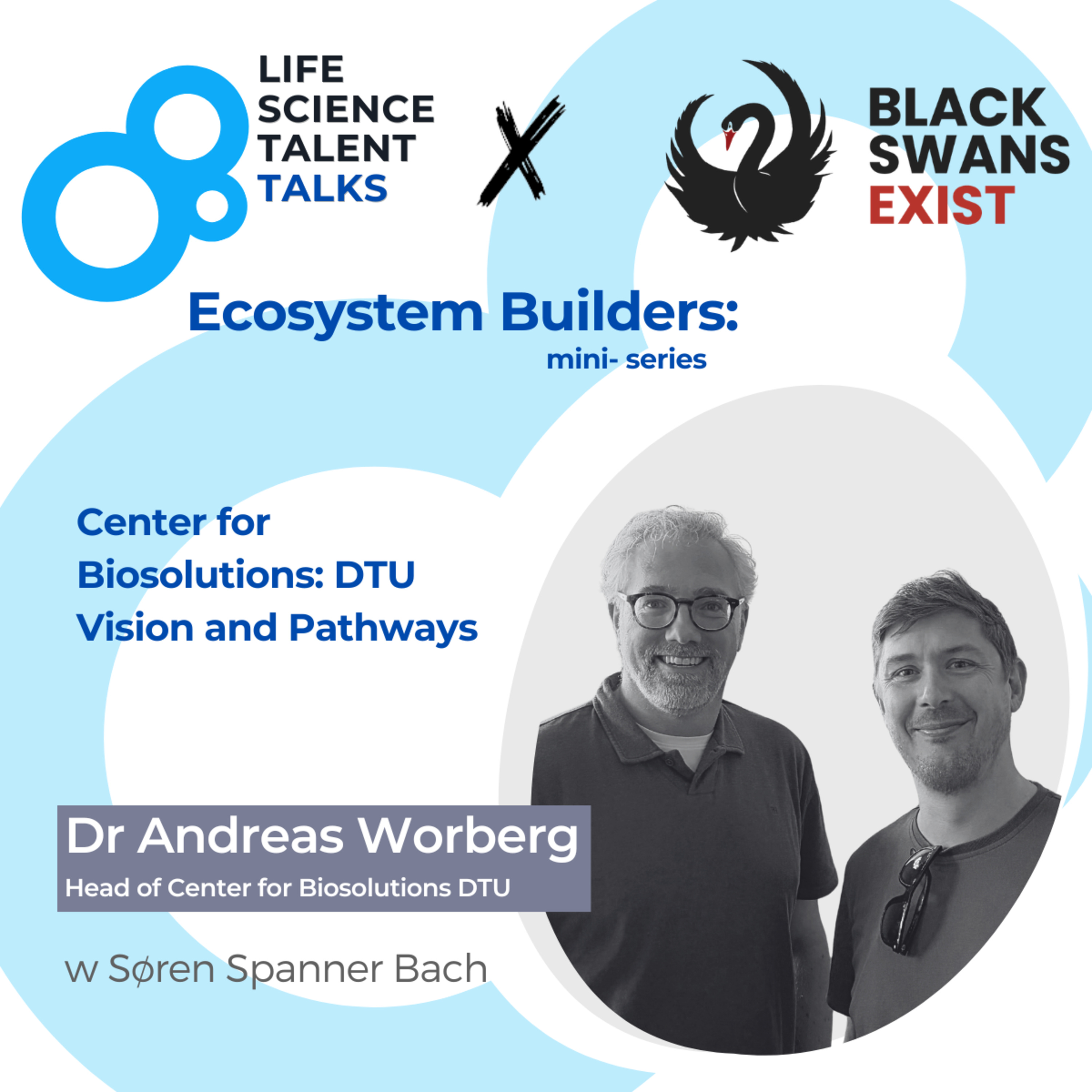
    E70 #Ecosystem Builders “Center for Biosolutions: DTU Vision and Pathways” with Andreas Worberg

    In this podcast episode on turning fragmented world-class research into a connected biosolutions ecosystem, host Søren Spanner Bach is joined by guest Andreas Worberg, the driving force behind the new Center for Biosolutions at DTU (Technical University of Denmark) - a cross-departmental initiative uniting eight departments and close to 2,000 researchers under DTU's non-medical biotechnology efforts. Andreas shares candid reflections on why DTU, despite ranking as Europe's best engineering university and fifth in the world for biotech, has struggled to make that strength visible and legible to industry, policymakers, and the public - and what the new center is doing to fix it. Key structural challenges discussed include the internal fragmentation of a large polytechnical university where departments rarely know what their neighbours are working on, a publication-driven incentive structure that pushes researchers toward papers over spin-outs, and years of specialised equipment sitting underused in campus vaults due to legal and liability hurdles around sharing it. Andreas also reflects on the trust-building work required to make collaboration feel like an opportunity rather than a threat to a researcher's own career and turf. Andreas draws a striking comparison to the arrival of ChatGPT, arguing biotechnology is nearing its own inflection point as AI, quantum computing, and biotech converge - and cautions that businesses investing heavily in AI and quantum while overlooking biotech may be missing where the next wave of disruption actually lands. His closing message: DTU has been playing the long game in biosolutions for years, and now, with a center to make that work visible, Denmark's biosolutions ecosystem is ready to be discovered. ⏱️ TIMESTAMPS 04:26 Why Biology Is the Next Manufacturing Platform 10:11 Why Commercialization Boosts a Researcher's Academic Footprint 28:06 Closing the Non-Medical Biotech Innovation Gap 32:57 Papers vs. Spin-Outs: You Get What You Measure 34:28 The Biosustain Lesson: Freedom Breeds Entrepreneurs 53:00 The Innovation Pillar: Learning From MIT's Playbook 57:06 Student-Driven Startups vs. Top-Down Innovation 💡 QUOTES "Large diverse universities... have the challenge that often the right hand does not necessarily know what the left hand is doing." — Andreas Links: https://biosolutions.dtu.dk/ Guest Bio Andreas trained as a biologist, with a doctorate in Germany spanning botany and molecular biology. He spent ten years at a large German engineering company, where he helped design, build, and operate large-scale biochemical plants as its first biologist. He joined DTU in 2017, spending eight years at DTU Biosustain, and today also connects non-medical biotech to defense applications through NATO. Ideas for future podcast guests or themes? 💡 We want to co-create this podcast with you. We’d therefore love to hear your suggestions for future podcast guests, ecosystem builders, or deep tech themes.

  • #69
    June 25 · 41 min

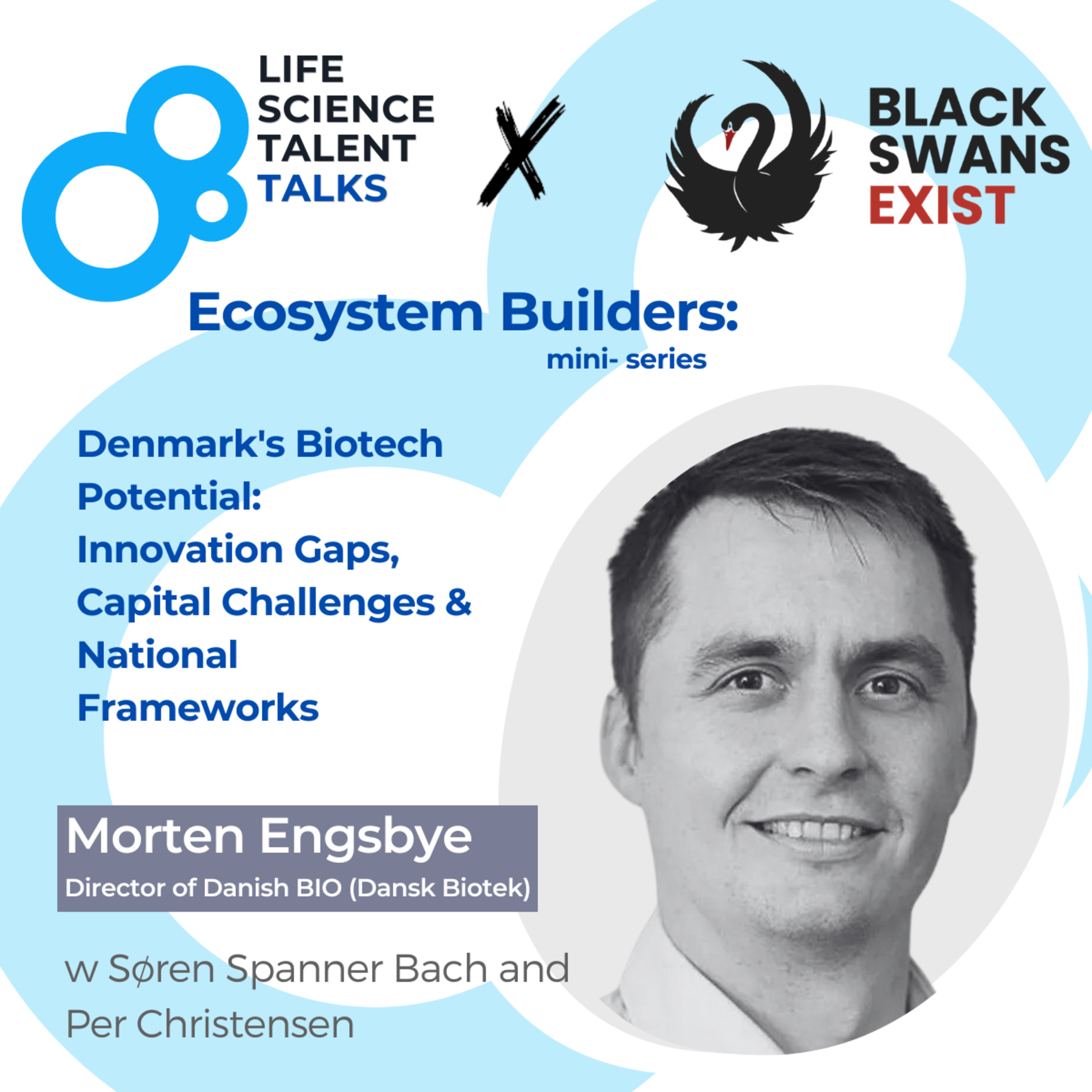
    E69 #Ecosystem Builders "Denmark's Biotech Potential: Innovation Gaps, Capital Challenges & National Frameworks" with Morten Engsbye

    In this podcast episode on turning research into societal value, host Søren Spanner Bach is joined by co-host Per Christensen of Black Swans Exist and guest Morten Engsbye, CEO of Danish BIO (Dansk Biotek) - the industry association representing over 190 pharmaceutical and industrial biotech companies in Denmark. Morten shares candid reflections on why Denmark, despite being Europe's #2 nation for per-capita life sciences publications, consistently underperforms at translating that world-class research into new companies - and what it will take to fix it. Key structural challenges discussed include the cultural gap between academic excellence and entrepreneurial ambition, the scarcity of early-stage capital as late-stage companies attract the lion's share of investment, and Denmark's 42% capital gains tax making biotech investment unattractive compared to property or neighbouring Sweden. In a world premiere, Morten also unveils Danish BIO's proposal for direct cash grants to university departments that successfully spin out companies - a mechanism designed to make innovation a leadership priority at department level, not just an individual pursuit. Morten also sounds the alarm on Denmark's GDP dependency on a small number of blockbuster drugs - life sciences now accounts for approximately 60% of all Danish GDP growth - and makes a compelling case for unlocking the country's 4.5 trillion DKK in pension fund assets, currently investing just 0.018% into venture compared to 1.9% in the US. His closing message: Denmark is a life sciences nation in every metric that matters. It just hasn't realised it yet. TIMESTAMP 00:00 Morten Engsbye and Danish BIO 02:00 The Translation Gap: World-Class Research, Not Enough Companies 03:00 Why Other Countries Are Better at Spinning Out Science 06:00 World Premiere: Danish BIO's Department-Level Spin-Out Incentive Proposal 09:00 Freedom vs Mandates: Why Incentives Beat Obligations 11:00 Genmab, Myelomatosis & What Biotech Success Really Looks Like 13:00 The GDP Time Bomb: When Patents Expire, Markets Collapse 17:00 The Capital Crisis: $2.1 Billion to Bring a Drug to Market 19:00 A Schizophrenic Capital Market: Late-Stage Flush, Early-Stage Starved 20:00 Where Should the Capital Come From? The Draghi & Letta Reports 21:00 Capital Gains Tax: 42% in Denmark vs 27% in Sweden 23:00 Pension Funds: 4.5 Trillion DKK Doing Very Little for Denmark 24:00 The 100x Gap: US vs European Pension Funds in Venture 26:00 Ferrari vs Denmark: One Fund's Investment Priorities 29:00 Forcing vs Incentivising Pension Funds: The Italian Model 30:00 Why It Should Be a Slam Dunk — Jobs, Patients, Returns 34:00 Denmark as a Life Sciences Nation — and Why Politicians Don't See It 36:00 Call to Action for Academics and Department Leaders 40:00 Brain Drain: How Danish Taxpayer-Funded Research Ends Up in Boston Quote: "We pay for the research. They build the company here. Then, because there's no capital market, they leave for Boston — pay their taxes there, create all the jobs there. And we sit back holding the bill." — Morten Engsbye Ideas for future podcast guests or themes? 💡 We want to co-create this podcast with you. We’d therefore love to hear your suggestions for future podcast guests, ecosystem builders, or deep tech themes. Feel free to share in a private message or leave a comment below 🙏🏼 (It's also ok to invite yourself 😉) Call to Action If this episode sparked your interest: Share it with someone working in science, startups, or innovation Follow the miniseries for more conversations with ecosystem builders
  • #68
    June 18 · 43 min

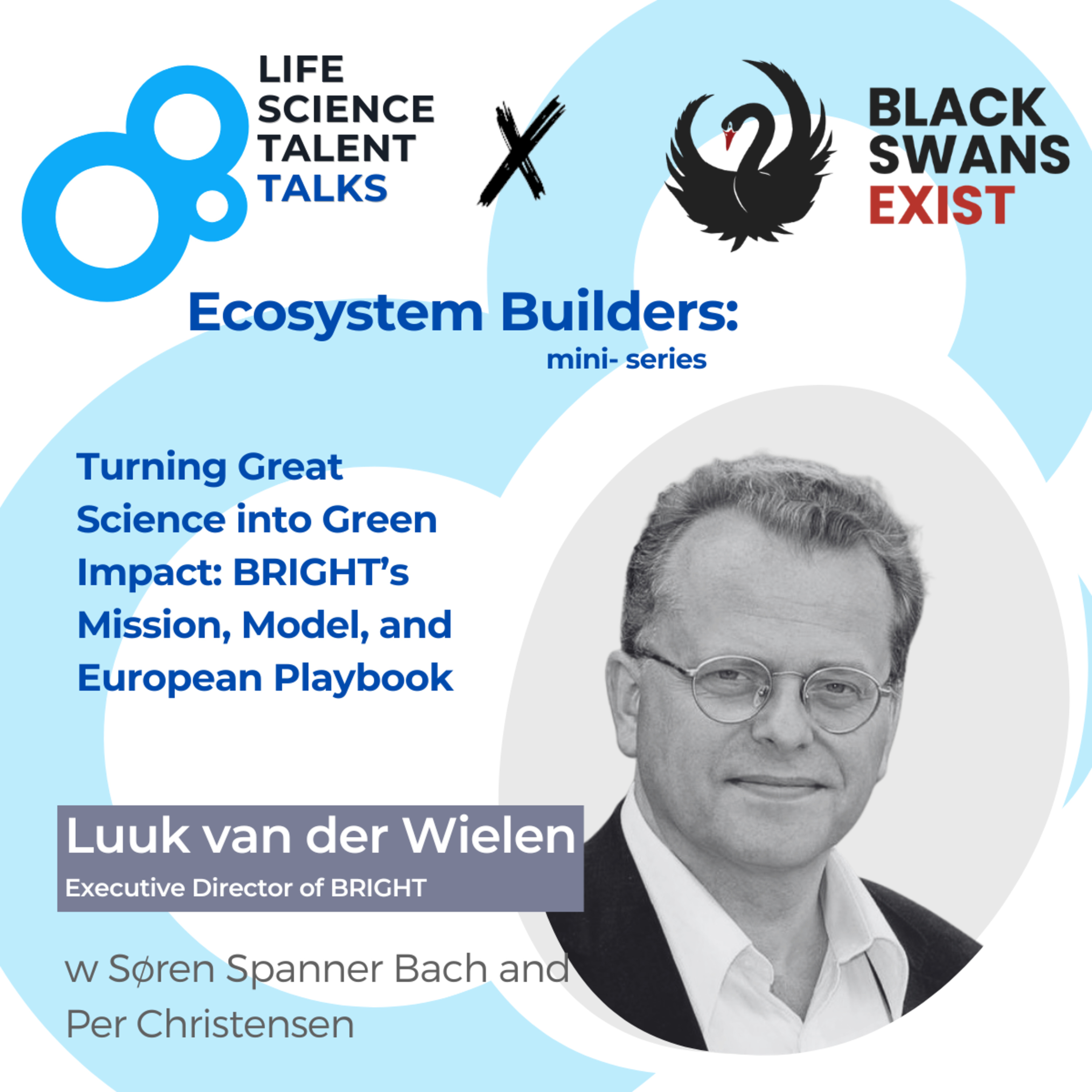
    E68 #Ecosystem Builders "Turning Great Science into Green Impact: BRIGHT’s Mission, Model, and European Playbook” with Luuk van der Wielen

    In this episode, Luuk van der Wielen, Head of BRIGHT (Novo Nordisk Foundation Biotechnology Research Institute for the Green Transition), joins Søren Spanner Bach and Per Christensen from Black Swans Exist in collaboration with Life Science Talent Talks to unpack what it will take for Europe to turn biotech innovation into real, sustainable economic value. Luuk introduces BRIGHT's core mission: helping Europe reduce emissions, strengthen resource autonomy, and build a more resilient industrial base - not through isolated breakthroughs, but through the kind of system-level change that reshapes technology, supply chains, regulation, incentives, and social behavior all at once. The conversation draws on powerful historical precedents - Brazil's Proálcool biofuel program and Denmark's biogas infrastructure - to illustrate why lasting green transitions are never built on a single "silver bullet" product, but on coordinated, long-term ecosystem thinking. Luuk also shares how BRIGHT itself is evolving: moving beyond its Biosustain roots and a science-and-startup model toward more open public-private collaboration, scenario-based "reverse design" roadmaps anchored in 2050 goals, and impact-focused KPIs that go well beyond publications and patents. The episode explores BRIGHT's three strategic focus areas - sustainable materials, microbial and sustainable foods, and zero-emission agriculture - and what it means to build research infrastructure that is measured by real-world outcomes. Finally, Luuk issues a direct invitation to potential partners and makes a compelling case for deeper European collaboration and a fairer, continent-wide level playing field for biotech innovation. ⏱️ TIMESTAMP 00:00 Series Kickoff 00:36 Meet Pierre and Black Swans 01:13 Luuk’s Career Journey 04:03 What BRIGHT Does 06:28 Innovation for Green Transition 06:51 Brazil’s Biofuel Lesson 08:52 Systems Change Not Silver Bullets 10:20 BRIGHT’s Origin Story 11:56 From Startups to Partnerships 13:22 Biogas to High Value Proteins 16:04 Key Ingredients for Collaboration 17:42 Sustainable Innovation Office 18:22 Reverse Designing the Roadmap 20:28 Scenario Planning and Outreach 21:37 Tech Plus Policy and Society 22:33 Policy Targets and Autonomy 24:02 Biogas Infrastructure Strategy 26:40 Future Scenarios and Innovations 30:00 Impact Metrics in Academia 34:47 Europe Collaboration and Equity 38:03 Ecosystem Gaps and Level Playing Field 39:48 Bright Partnerships and Missions 💡 Quote: "Innovation is important in the systems change, but also the regulatory system, the financial system. You don't solve it with one super plastic that comes from BioSolutions. You have to look at the total systems change." - Luuk van der Wielen Ideas for future podcast guests or themes? 💡 We want to co-create this podcast with you. We’d therefore love to hear your suggestions for future podcast guests, ecosystem builders, or deep tech themes. Feel free to share in a private message or leave a comment below 🙏🏼 (It's also ok to invite yourself 😉) Call to Action If this episode sparked your interest: Share it with someone working in science, startups, or innovation Follow the miniseries for more conversations with ecosystem builders
  • #67
    June 12 · 35 min

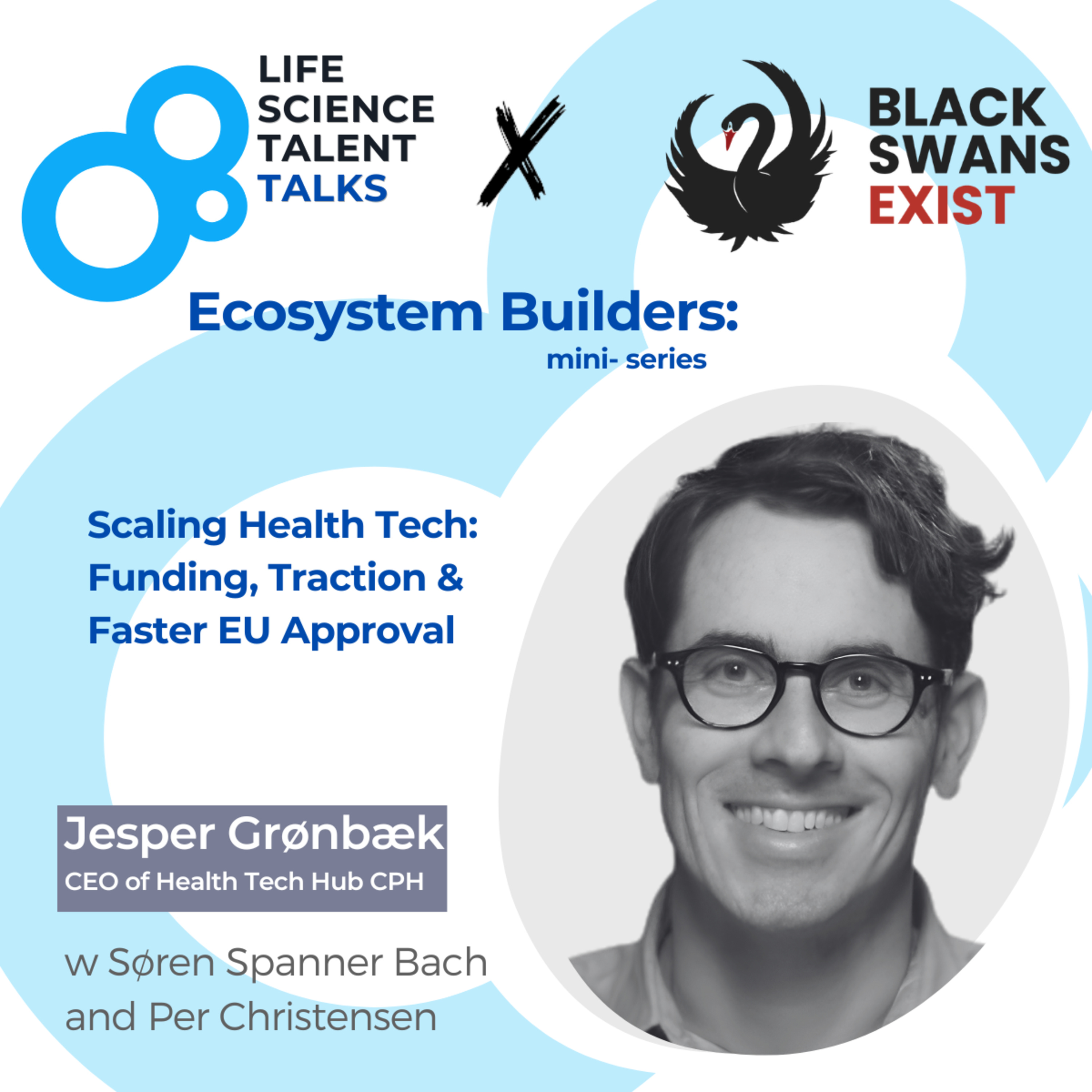
    E67 #Ecosystem Builders "Scaling Health Tech: Funding, Traction & Faster EU Approval" with Jesper Grønbæk

    In this podcast episode on turning research into societal value, host Søren is joined by co-host Per Christensen of Black Swans Exist and guest Jesper Grønbæk, CEO and founder of the nonprofit Health Tech Hub Copenhagen (supported by the Danish Industry Foundation and the Novo Nordisk Foundation). Jesper shares key learnings from supporting 100+ health tech startups and scale-ups, as well as collaborating with hospitals, pharma, insurers, and a 200+ investor network - including enabling hospital “speed-dating” access in markets like Germany. Key pitfalls discussed include solving “nice-to-have” problems instead of top-priority hospital needs, failing to secure an influential key opinion leader early, starting fundraising too late while overlooking non-dilutive “soft money” grants, and lacking commercial traction due to staying overly project-focused. He emphasizes the importance of early investor relationship-building, being selective with investors, and maintaining a strong commercial focus - sometimes even launching below MDR/CE-mark requirements first. Jesper also introduces the upcoming Health Tech Pathways platform, which uses expert-trained AI to guide EU MDR medical device regulation and improve documentation quality - ultimately reducing the time and cost associated with today’s multi-year EU processes. TIMESTAMP 00:42 Meet Health Tech Hub 01:47 Ecosystem Connections 02:47 Hospital Access Speed Dating 03:50 Why Jesper Started 05:42 Healthcare Pressure Ahead 06:23 Mistake One Nice to Have 08:43 Key Opinion Leaders 10:12 Mistake Two Fundraising 10:53 Soft Money and Accelerators 12:14 Choosing Investors Wisely 14:48 Mistake Three Commercial Traction 16:42 Traction Under Regulation 18:18 Consumers Paying for Health Apps 19:14 Who Pays for Health Tech 19:56 Building Health Tech Pathways 21:27 MDR Explained and Risk Classes 22:38 Why EU Approval Takes Longer 23:50 Ideal Users and Early Strategy 24:32 Plain English Plus Compliance 26:56 AI Powered Regulatory Guidance 27:38 Cutting Time with Better Docs 28:31 Ecosystem Wishlist Reimbursement 30:33 Community Call to Collaborate 31:30 Denmark Strengths and Next Steps Quote: "Finding a co-founder is like finding a spouse — it's somebody you want to work with for a very long time in a harsh environment." — Jesper Ideas for future podcast guests or themes? 💡 We want to co-create this podcast with you. We’d therefore love to hear your suggestions for future podcast guests, ecosystem builders, or deep tech themes. Feel free to share in a private message or leave a comment below 🙏🏼 (It's also ok to invite yourself 😉) Call to Action If this episode sparked your interest: Share it with someone working in science, startups, or innovation Follow the miniseries for more conversations with ecosystem builders
  • #66
    June 3 · 53 min

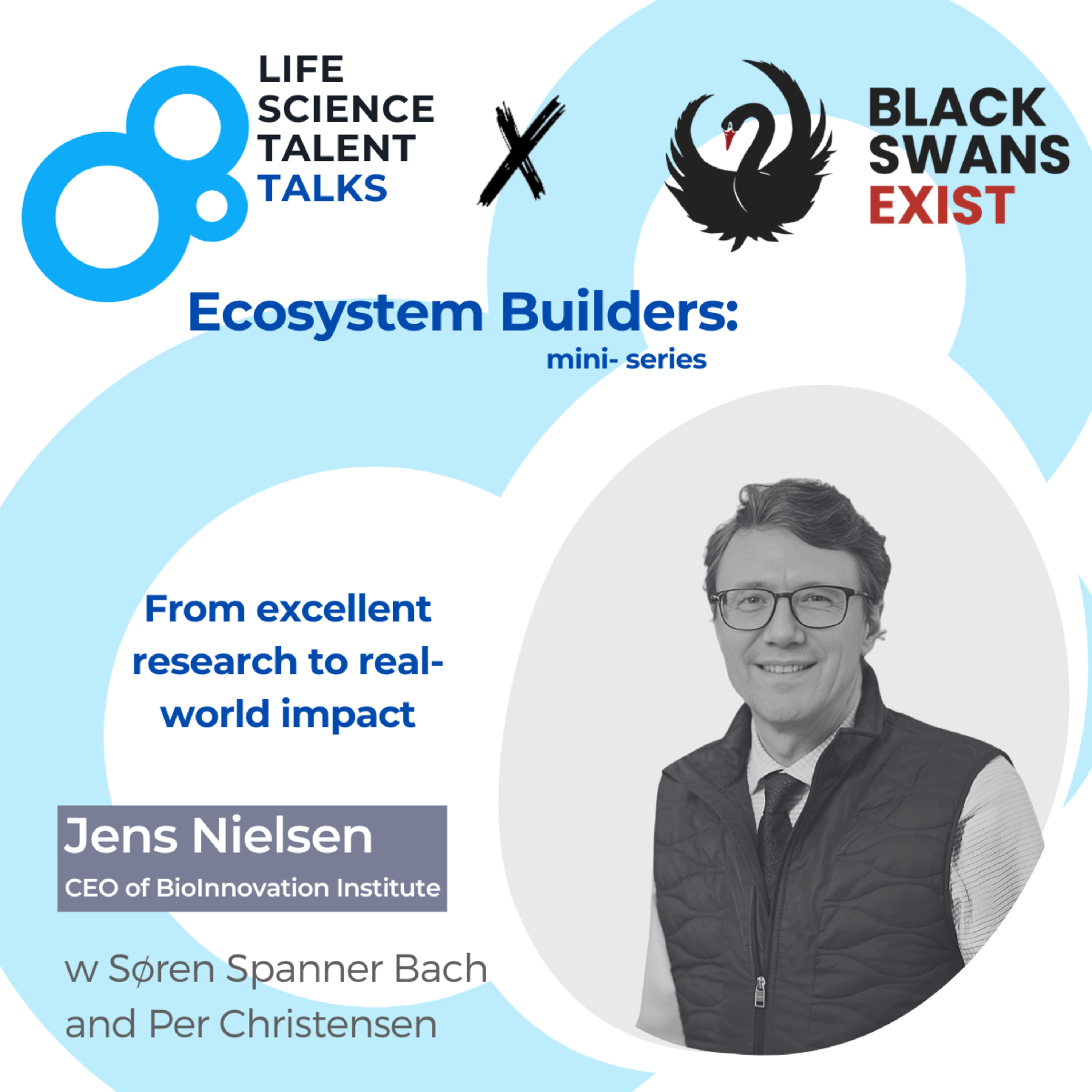
    E66 #Ecosystem Builders "From excellent research to real-world impact" with Jens Nielsen

    In this episode, Jens Nielsen, CEO of BioInnovation Institute, joins Søren and Per Christensen from Black Swans Exist to share how Denmark built one of the world’s leading life science startup ecosystems - and how that model is now being expanded into quantum and deep tech. Jens reflects on his journey from academic researcher and professor in engineering biology to serial entrepreneur and ecosystem builder. He discusses how his passion for translating science into real-world impact led him to found multiple companies and eventually help build BII as a launchpad for early-stage innovation. The conversation explores how ecosystems are formed, what makes academic science commercially viable, and why the combination of talent, capital, and institutional support is critical. Jens also explains why Denmark has been uniquely successful in scaling biotech startups and what lessons can be transferred to emerging fields like quantum technology. A central theme is how scientists can transition into entrepreneurship - not just through training, but through mindset shifts, feedback culture, and selecting the right people with coachability, curiosity, and resilience. The episode also dives into team dynamics, founder evolution, and why most startup challenges ultimately come down to people rather than technology. Finally, Jens shares a broader reflection on Europe’s opportunity in deep tech and why researchers must take responsibility for translating their own work into societal impact. ⏱️ TIMESTAMP 00:00 Introduction – Life Science Talent Talks Miniseries & Ecosystem Builders 01:00 Jens Nielsen’s Background - Engineering Biology, Academia & Entrepreneurship 03:00 The Birth of BioInnovation Institute (BII) 06:00 Why Denmark Became a Life Science Startup Leader 07:00 From Life Science to Quantum Ecosystems 12:00 Ingredients of a Strong Deep Tech Ecosystem 21:00 Selecting Scientific Entrepreneurs - Science + Market Fit 30:00 Rethinking Startup Education - From Lectures to Gap Analysis 32:00 Mindset of Scientific Entrepreneurs 35:00 Founder-to-CEO Evolution in Scaling Companies 39:00 Cap Tables, Equity & Managing Founder Expectations 41:00 Investor Dynamics & Founder Role Transitions 44:00 Culture, Leadership Principles & Scaling Challenges 48:00 Academic Training as Entrepreneurial Advantage 50:00 Europe vs US in Deep Tech Innovation 💡 Quote: “You cannot find a better entrepreneur to translate science than the person who actually did the science - because they know it deeply and care about making it matter.” - Jens Nielsen Ideas for future podcast guests or themes? 💡 We want to co-create this podcast with you. We’d therefore love to hear your suggestions for future podcast guests, ecosystem builders, or deep tech themes. Feel free to share in a private message or leave a comment below 🙏🏼 (It's also ok to invite yourself 😉) Call to Action If this episode sparked your interest: Share it with someone working in science, startups, or innovation Follow the miniseries for more conversations with ecosystem builders
  • #65
    June 3 · 8 min

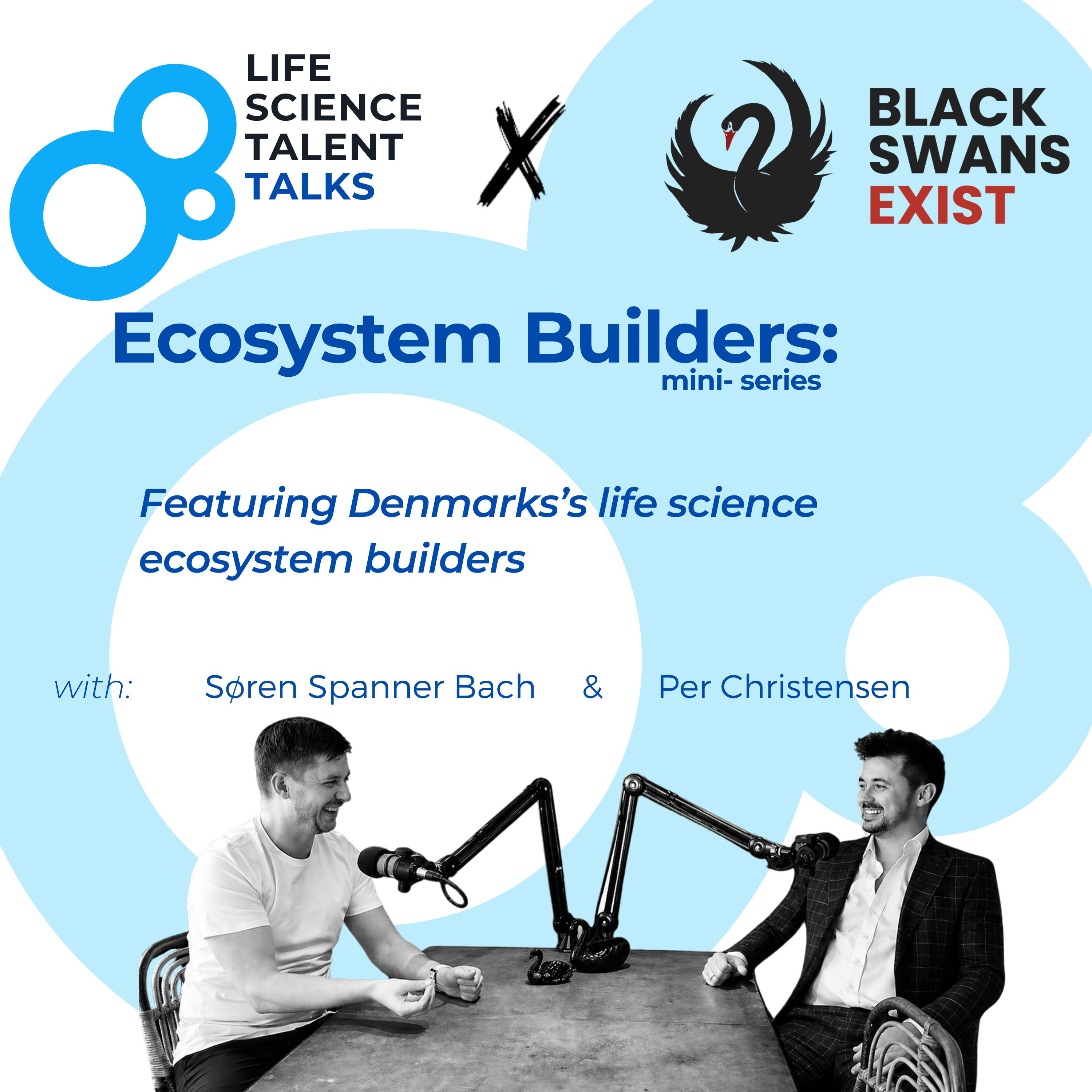
    E65 #Ecosystem Builders "Bridging Innovation: From Academia to Life Science Startups" with Søren Spanner Bach & Per Christensen

    In this miniseries episode of Life Science Talent Talks, hosted by Soren in collaboration with Black Swans Exist, we explore how scientific innovation moves from universities and research hubs into real-world companies. Soren and Per Christensen (co-founder of Black Swans Exist) discuss the “bridge” between academia and industry - where great ideas are created, but not always scaled - and why talent, execution, and cross-sector collaboration are key to turning research into impactful solutions. The conversation also touches on Europe’s innovation challenges, the startup ecosystem, and the need for more entrepreneurial courage in science and academia. Timestamps 00:30 – Meet Per Christensen & his background 01:00 – Purpose of the mini-series: bridging innovation and execution 01:14 – What Black Swans Exist does in the ecosystem 02:15 – The “bridge” between academia and real-world application 02:50 – Gaps in innovation vs. execution 03:00 – Untapped innovation potential within universities 03:35 – Talent, funding, and enabling innovation 04:00 – Why this podcast exists 04:19 – Importance of ecosystem builders & shared perspectives 04:30 – Inspiring entrepreneurship and showcasing role models 05:15 – Breaking silos & sharing actionable learnings 05:42 – What to expect from the conversations in this series 06:00 – Entrepreneurial mindset in academia 06:24 – Innovation and the future economy 06:51 – Are we doing enough in innovation? 07:00 – Europe’s strengths vs. commercialization challenges 07:44 – Regulation vs. innovation discussion 08:00 – Driving societal change & the need for innovators 08:39 – Closing remarks Key Takeaways Innovation often exists in universities - but scaling it requires the right people and structures Talent acquisition is a critical bottleneck in life science and deep tech startups Europe has strong research output but struggles with commercialization and execution Cross-sector collaboration can unlock faster innovation Inspiration and role models can encourage more people to start companies Bridging academia and industry is essential for future economic growth Notable Quotes “If we inspire just one person to start a company, it’s a success.” “We need innovators and brave people willing to take risks.” Call to Action If this episode sparked your interest: Share it with someone working in science, startups, or innovation Follow the miniseries for more conversations with ecosystem builders
  • S1 · E64
    February 24 · 41 min

    E64 #StartupStory "Building Biotech from Scratch: The Immunordic Journey" with Emil Arvedsen & Jannik Faliu

    In this episode, Emil and Jannik, co-founders of Immunordic share their journey of building a startup in the biotech industry. They discuss the challenges they faced while developing a technology platform for identifying protein binders using limited resources. The conversation covers their initial focus on building synthetic libraries and wet lab methods, the pivot to an AI and machine learning-based approach, and the lessons learned from both successes and setbacks. Key insights include the importance of networking, how to build a lab on a tight budget, and the value of persistence and passion in driving a startup forward. They also outline their current focus and future directions, aiming to provide accessible scientific tools for diagnostics, therapeutics, and academic research. 00:40 Founders' Backgrounds 02:29 Immunordic's Mission and Services 03:32 The Origin Story 06:08 Early Challenges and Lessons 11:17 Building the Lab 18:43 Funding and Resources 20:52 Understanding Through Teaching 21:55 Enrolling and Guiding New Lab Members 22:35 Identifying Student Drives and Aligning Projects 23:40 Challenges and Successes with Student Projects 24:39 The Pivot to In Silico Prediction 25:19 Building Synthetic Libraries and Bio Panning 26:08 Challenges with Wet Lab Services 27:50 Transitioning to Scalable Solutions 28:37 Adopting In Silico Methods 30:40 Client and Market Reactions to the Pivot 39:10 Future Plans and Collaborations Ideas for future podcast guests or themes? 💡 We want to co-create this podcast with you. We'd therefore love to hear your suggestions for future podcast guests or themes. Feel free to share in a private message or leave a comment below 🙏🏼 (It's also ok to invite yourself 😉) Join Our Life Science Talent Ecosystem We want to build a community to inspire life science professionals and leaders through talent talks and organized events. Share knowledge across the life science community through personal stories of their journey. We encourage you to take part in shaping this community by sharing your feedback, questions, or ideas. This you can do through our LinkedIn⁠⁠⁠⁠⁠⁠⁠⁠ ⁠⁠community page⁠⁠⁠⁠⁠⁠⁠⁠⁠⁠⁠. Warm Regards from your podcast hosts: ⁠⁠⁠⁠⁠⁠⁠⁠⁠Nehar Mortuza⁠⁠⁠⁠⁠⁠⁠⁠⁠⁠⁠⁠ and⁠⁠⁠ ⁠⁠⁠Søren Spanner Bach

  • S1 · E63
    Dec 4, 2025 · 52 min

    E63 #Leadership “Future-Ready Leadership In The Era Of AI” with Marcelina Dutkiewicz

    In this conversation, Marcelina outlines a practical roadmap for AI transformation within life sciences organizations, emphasizing that real progress begins with leadership alignment and people-centric change management. She explains that senior leaders must first gain a foundational understanding of AI—ideally becoming super users—to communicate vision, reduce uncertainty, and guide their teams effectively. People leaders then play a crucial role in translating strategy into day-to-day meaning for employees, influencing priorities, workflows, and professional development. Marcelina also highlights the importance of governance, data readiness, and collaboration between C-suite leaders and boards, many of whom acknowledge the need for AI upskilling. She stresses that successful AI adoption requires tailored training, not generic programs, referencing research that shows customized learning dramatically increases the number of super users and hours saved weekly. Throughout the discussion, she shares insights from her book It Starts With Vision, including interviews with senior leaders across pharma, data science, IT security, and organizational transformation. She encourages leaders to begin with curiosity, assess their organization’s current maturity, and use surveys and strategic sparring to design transformations that avoid wasted investment and maximize impact. Key Topics Covered: 00:32:38 Why messaging from senior leadership and people leaders matters most in AI transformation. 00:34:00 Building the AI roadmap: upskilling senior leaders, creating super users, and enabling informed conversations. 00:35:32 The role of boards in guiding AI strategy and the increasing need for board-level AI literacy. 00:36:53 Training leaders, preparing for employee concerns, and aligning grassroots initiatives with strategy. 00:38:32 Why organizations start at different points in their AI journey and how to avoid siloed efforts. 00:40:15 Introduction to Marcelina’s book and why AI must be treated as a human-centered transformation. 00:42:21 Interviews inside the book: data science, pharma innovation, IT security, and change leadership. 00:46:02 Where to buy the book and why it’s a limited-edition release. 00:47:31 Why generic AI guidance fails—and how job-specific training changes adoption outcomes. 00:49:20 How Marcelina uses surveys to diagnose readiness and provide targeted leadership support. 00:51:29 Final call to action: read the book, take the survey, and seek tailored support. Notable Quotes: “This is a people-centric transformation—employees deserve to be led well through it.” “Senior leaders don’t need to be specialists, but they must understand AI well enough to speak its language.” “Tailored, job-specific training creates super users—generic AI training does not.” “We need governance that can say yes and no to grassroots AI initiatives with confidence.” “Once employees understand AI, they become drivers of process optimization instead of blockers.” CTA: Download the AI readiness survey to assess your AI maturity. Follow Marcelina on LinkedIn for weekly insights on AI, leadership, and transformation. Get the limited-edition book It Starts With Vision before the next print run out. Exclusive treat: Apply TALENT10 at checkout for 10% off!

  • S1 · E58
    Aug 6, 2025 · 31 min

    E62 #StartupStory “AI-Driven Antibody Design: A Journey from Academia to Industry” with Rahmad Akbar Senior data scientist at Novo Nordisk

    In this episode of Life Science Talent Talks, host Nehar Mortuza sits down with Rahmad Akbar, Senior Data Scientist in Antibody Design at Novo Nordisk. Rahmad shares his remarkable journey from his roots in Indonesia to his pivotal role at the forefront of machine learning-driven protein engineering. Together, they explore how AI is revolutionising antibody design — from the technical advances and current challenges to the growing role of generative models in creating next-generation therapeutics. Rahmad offers insights into how these technologies are accelerating drug discovery, improving patient outcomes, and shaping the future of healthcare. He also speaks candidly about his transition from academia to industry, the personal motivations that fuel his work, and why collaboration and innovation are more essential than ever in the life sciences. Whether you're passionate about biotech, data science, or career development, this episode is packed with valuable perspectives you won't want to miss. Timestamp and Show notes: 00:38 Meet Our Special Guest: Rahmad Akbar 02:19 Rahmad's Journey: From Indonesia to Novo Nordisk 03:35 The Role of Coding in Biotechnology 04:45 Antibody Design: Challenges and Innovations 06:48 Generative AI in Drug Design 10:04 Future Trends and Democratizing AI 19:00 Personal Motivations and Career Reflections 24:31 Transitioning from Academia to Industry 29:47 Final Thoughts and Takeaways Ideas for future podcast guests or themes? 💡 We want to co-create this podcast with you. We'd therefore love to hear your suggestions for future podcast guests or themes. Join Our Life Science Talent Ecosystem We want to build a community to inspire life science professionals and leaders through talent talks and organised events. Share knowledge across the life science community through personal stories of their journey. We encourage you to take part in shaping this community by sharing your feedback, questions, or ideas. This you can do through our LinkedIn⁠⁠⁠⁠⁠⁠⁠⁠ ⁠⁠community page⁠⁠⁠⁠⁠⁠⁠⁠⁠⁠⁠. Warm Regards from your podcast hosts: ⁠⁠⁠⁠⁠⁠⁠⁠⁠Nehar Mortuza⁠⁠⁠⁠⁠⁠⁠⁠⁠⁠⁠⁠ and⁠⁠⁠ ⁠⁠⁠Søren Spanner Bach

  • S1 · E61
    Aug 6, 2025 · 31 min

    E61 #StartupStory "Mmimetika's science based dietary supplement that mimics the body’s natural response to exercise and fasting" with Thomas Poulsen & Mogens Johannsen

    In this episode, we take you inside the story of Mmimetika, a biotech venture co-founded by researchers Mogens Johannsen and Thomas Poulsen. What began as a bold university lab project has grown into a breakthrough company developing a compound that mimics some of the key health benefits of exercise and fasting. By combining ketones and lactate in a single, novel molecule, Mmimetika's lactate | ketone non-medicinal supplement provides promising support for metabolic control and longevity. We dive into their journey from academic discovery to commercial reality — securing patents, scaling production, attracting investors, and building a business team around their scientific vision. Now on the cusp of regulatory approval, Mmimetika is actively searching for a dynamic CEO to lead the charge into market launch and long-term growth. Whether you're curious about biotech entrepreneurship, metabolic health innovations, or how groundbreaking research turns into real-world solutions, this is a story you won’t want to miss. Shownotes and Timestamps [00:00:00] Company Introduction [00:01:12] Mimicking Exercise and Fasting [00:04:08] Current Status and Journey [00:05:54] Product Superiority and Development [00:08:13] Competition and IP [00:10:18] Funding and Investor Relations [00:11:17] Technical Aspects of the Product [00:13:00] Clinical Evidence and Scientific Approach [00:14:22] Non-Medical Claims [00:15:29] Market Focus and Positioning [00:17:58] Roadmap and Milestones [00:21:22] Organizational Structure and Key Risks [00:23:00] CEO Transition and Future Roles [00:25:04] Company Culture and CEO Profile [00:27:26] Soft Skills and Ideal Timing for CEO [00:29:42] How Listeners Can Support Ideas for future podcast guests or themes? 💡 We want to co-create this podcast with you. We'd therefore love to hear your suggestions for future podcast guests or themes. Feel free to share in a private message or leave a comment below 🙏🏼 (It's also ok to invite yourself 😉) Join Our Life Science Talent Ecosystem We want to build a community to inspire life science professionals and leaders through talent talks and organized events. Share knowledge across the life science community through personal stories of their journey. We encourage you to take part in shaping this community by sharing your feedback, questions, or ideas. This you can do through our LinkedIn⁠⁠⁠⁠⁠⁠⁠⁠ ⁠⁠community page⁠⁠⁠⁠⁠⁠⁠⁠⁠⁠⁠. Warm Regards from your podcast hosts: ⁠⁠⁠⁠⁠⁠⁠⁠⁠Nehar Mortuza⁠⁠⁠⁠⁠⁠⁠⁠⁠⁠⁠⁠ and⁠⁠⁠ ⁠⁠⁠Søren Spanner Bach

  • S1 · E60
    Jul 4, 2025 · 44 min

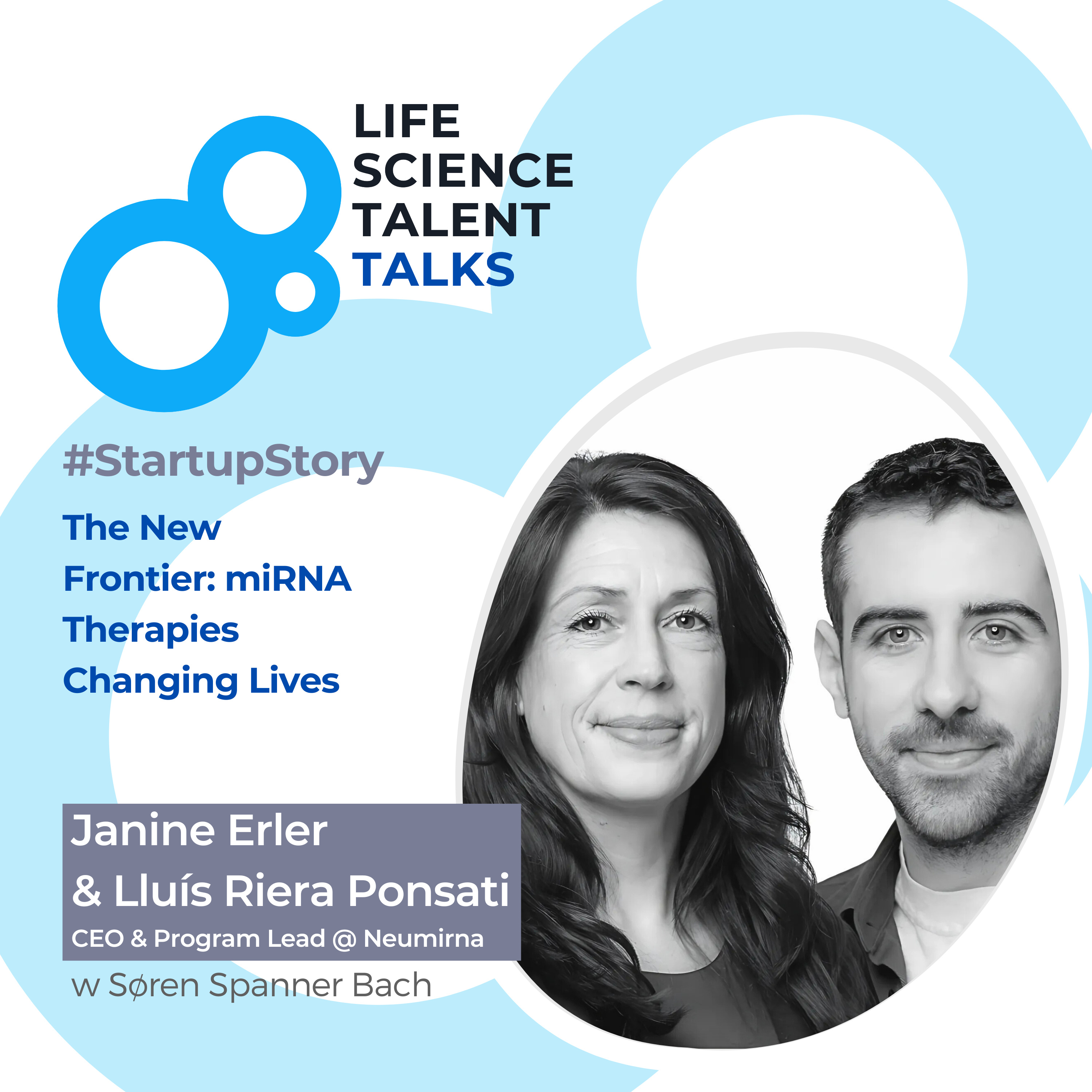
    E60 #StartupStory "The New Frontier: miRNA Therapies Changing Lives" with Janine Erler & Lluís Riera Ponsati

    In this episode, we sit down with Janine Erler, CEO, and Lluís Riera Ponsati, Program Lead at NEUmiRNA Therapeutics to discuss their groundbreaking work in developing disease-modifying RNA therapies for neurological disorders. From their startup journey to the intricate science behind their therapies, the conversation spans key milestones, technology challenges, and the unique patient-focused culture at Neumirna. Janine and Lluís share insights on their successful fundraising, the impact of their microRNA-based approach, and the practical aspects of going from academic research to clinical applications. They also discuss the organizational dynamics, collaborations, and future aspirations of the company, making this a compelling listen for any life sciences professional interested in the transformative potential of RNA therapies. Show notes & Timestamp 00:43 Introducing Neumirna Therapeutics 02:10 Founding Story of Neumirna 03:29 Key Milestones and Team Growth 06:50 Challenges and Collaborations 15:23 Technology Behind Neumirna's RNA Therapies 23:19 Focus on Neurological Diseases 24:57 Exploring the Potential of ASO Technology 25:26 The Future of RNA Therapies 27:44 Navigating Regulatory Challenges 28:37 Team and Culture at Neumirna 35:23 Hiring and Onboarding at Neumirna 37:36 Proud Moments and Achievements 43:02 Immediate Priorities and Challenges 44:43 Connecting with the Community 45:51 Conclusion and Final Thoughts Ideas for future podcast guests or themes? 💡 We want to co-create this podcast with you. We'd therefore love to hear your suggestions for future podcast guests or themes. Feel free to share in a private message or leave a comment below 🙏🏼 (It's also ok to invite yourself 😉) Join Our Life Science Talent Ecosystem We want to build a community to inspire life science professionals and leaders through talent talks and organized events. Share knowledge across the life science community through personal stories of their journey. We encourage you to take part in shaping this community by sharing your feedback, questions, or ideas. This you can do through our LinkedIn⁠⁠⁠⁠⁠⁠⁠⁠ ⁠⁠community page⁠⁠⁠⁠⁠⁠⁠⁠⁠⁠⁠. Warm Regards from your podcast hosts: ⁠⁠⁠⁠⁠⁠⁠⁠⁠Nehar Mortuza⁠⁠⁠⁠⁠⁠⁠⁠⁠⁠⁠⁠ and⁠⁠⁠ ⁠⁠⁠Søren Spanner Bach

  • S1 · E59
    Jun 22, 2025 · 39 min

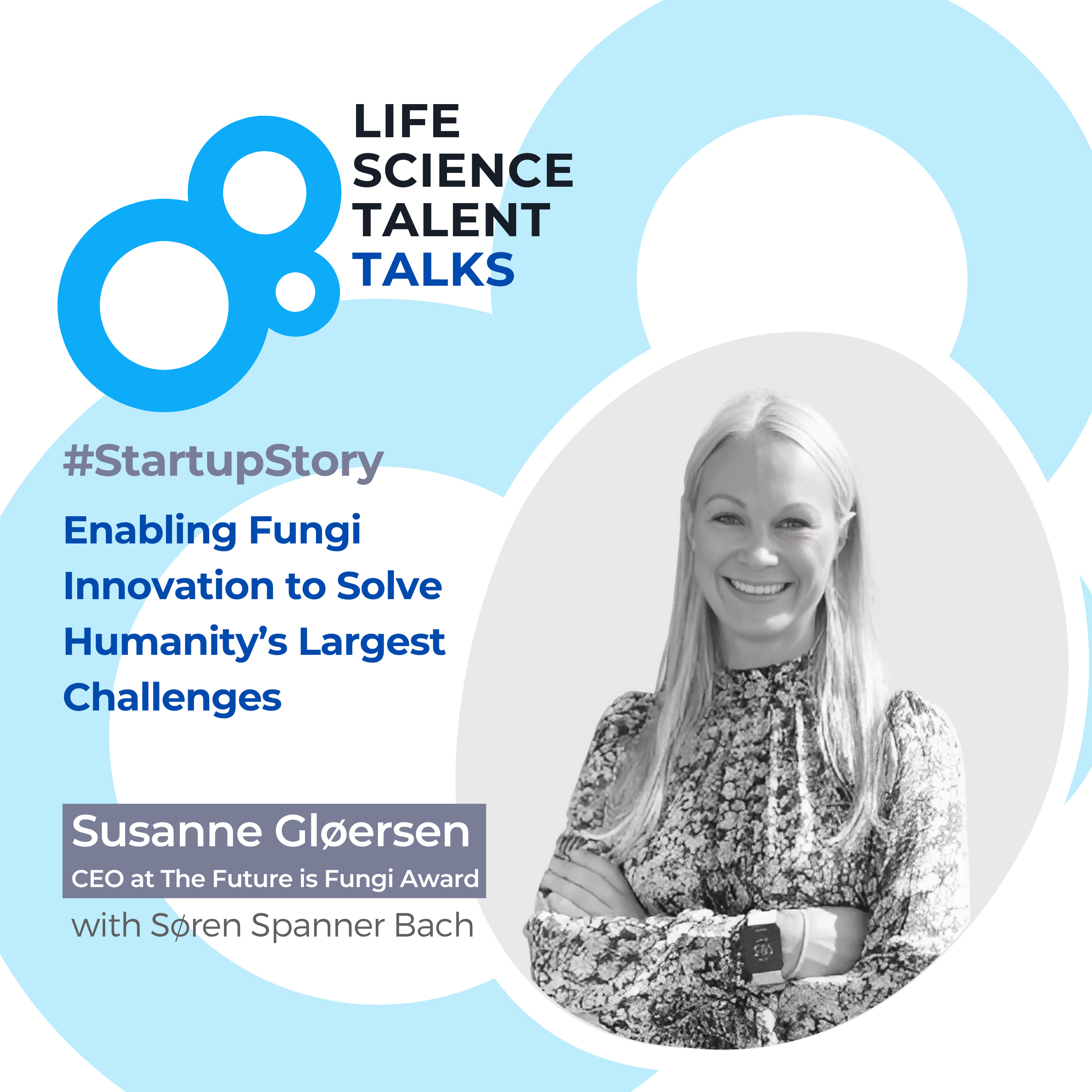
    E59 #StartupStory "Enabling Fungi Innovation to Solve Humanity’s Largest Challenges" with Susanne Gløersen

    In this episode, Susanne Gløersen, founder of The Future of Fungi Award and Fungi Investment Collective, discusses her mission to build a global ecosystem fueled by fungi innovation. The conversation covers the multifaceted applications of fungi, from food and materials to packaging and environmental remediation. Susanne shares the origins of her passion for fungi, the purpose and success of the Future Fungi Award, and the criteria for selecting award winners and investment opportunities. She emphasizes the role of fungi in addressing pressing environmental issues and the importance of collaboration and community in advancing fungi innovation. Additionally, Susanne dives into the workings of the Fungi Investment Collective, highlighting how it supports pioneering scientists and startups with funding and resources. Essential for anyone interested in sustainable innovation, this episode unveils the transformative potential of fungi and how it can drive us towards a more balanced and nature-cooperative economy. Shownotes and Timestamps 00:55 Introduction and Overview of Fungi Innovation 01:55 Susanne's Background and Journey into Fungi 04:48 Mission and Vision for Fungi Innovation 06:38 The Future Fungi Award 08:07 Highlighting Award Winners and Their Innovations 15:06 Support and Collaboration Opportunities 19:22 Introduction to the Fungi Investment Collective 24:46 Building a Network of Science Venture Partners 25:30 Investment Priorities and Criteria 26:54 Funding Ranges and Case Dependency 27:54 Connecting with the Fungi Investment Collective 28:55 Opportunities for Aspiring Venture Partners 32:33 Proud Accomplishments and Network Effects 36:27 Challenges and Learnings as a First-Time Entrepreneur 41:12 Future of Fungi Innovation and Exciting Startups 46:33 Conclusion and Call to Join the Movement Resources Mentioned: Awards, Collectives, and Initiatives - Fungi Investment Collective - Venture Builder Pilot Program (for top scientists) - The Mycelium Network (community concept) Podcasts & Media - The Future is Fungi Podcast Notable Startups & Projects - Jens Laurids Sørensen (battery out of fungi) - Nova Biome (textile waste to bioactive compounds for cosmetics, in L'Oreal's accelerator) - Line Kloster Pedersen, Visibuilt (Danish startup making mycelium binder for asphalt production) - William Newell, Electromicrobial CO2 fixation project (Imperial College of London) - Nomy (Norwegian Mycelium, feed for aquaculture) - Michael Lever (German company, surfactants from fungi) Conferences & Events - ChangeNow (largest accessibility conference) - IMC12 (International Mycology Congress) - Brilliant Minds (an event where Obama and Malala have spoken) Corporates & Partners - L'Oreal (accelerator) - Novo Holdings (jury pre-screening) - SEB (Green Tech VC, large Nordic Bank) Book Recommendations -Entangled Life by Merlin Sheldrake Other - LinkedIn (The Fungi Investment Collective) - Fungi Investment Collective website/contact form - Email: Suzanne@fungiinvestmentcollective.com Ideas for future podcast guests or themes? 💡 We want to co-create this podcast with you. We'd therefore love to hear your suggestions for future podcast guests or themes. Feel free to share in a private message or leave a comment below 🙏🏼 (It's also ok to invite yourself 😉) Join Our Life Science Talent Ecosystem We want to build a community to inspire life science professionals and leaders through talent talks and organized events. Share knowledge across the life science community through personal stories of their journey. We encourage you to take part in shaping this community by sharing your feedback, questions, or ideas. This you can do through our LinkedIn⁠⁠⁠⁠⁠⁠⁠⁠ ⁠⁠community page⁠⁠⁠⁠⁠⁠⁠⁠⁠⁠⁠. Warm Regards from your podcast hosts: ⁠⁠⁠⁠⁠⁠⁠⁠ Nehar Mortuza⁠⁠⁠⁠⁠⁠⁠⁠⁠⁠⁠⁠ and⁠⁠⁠ ⁠⁠⁠Søren Spanner Bach

  • S1 · E58
    May 26, 2025 · 19 min

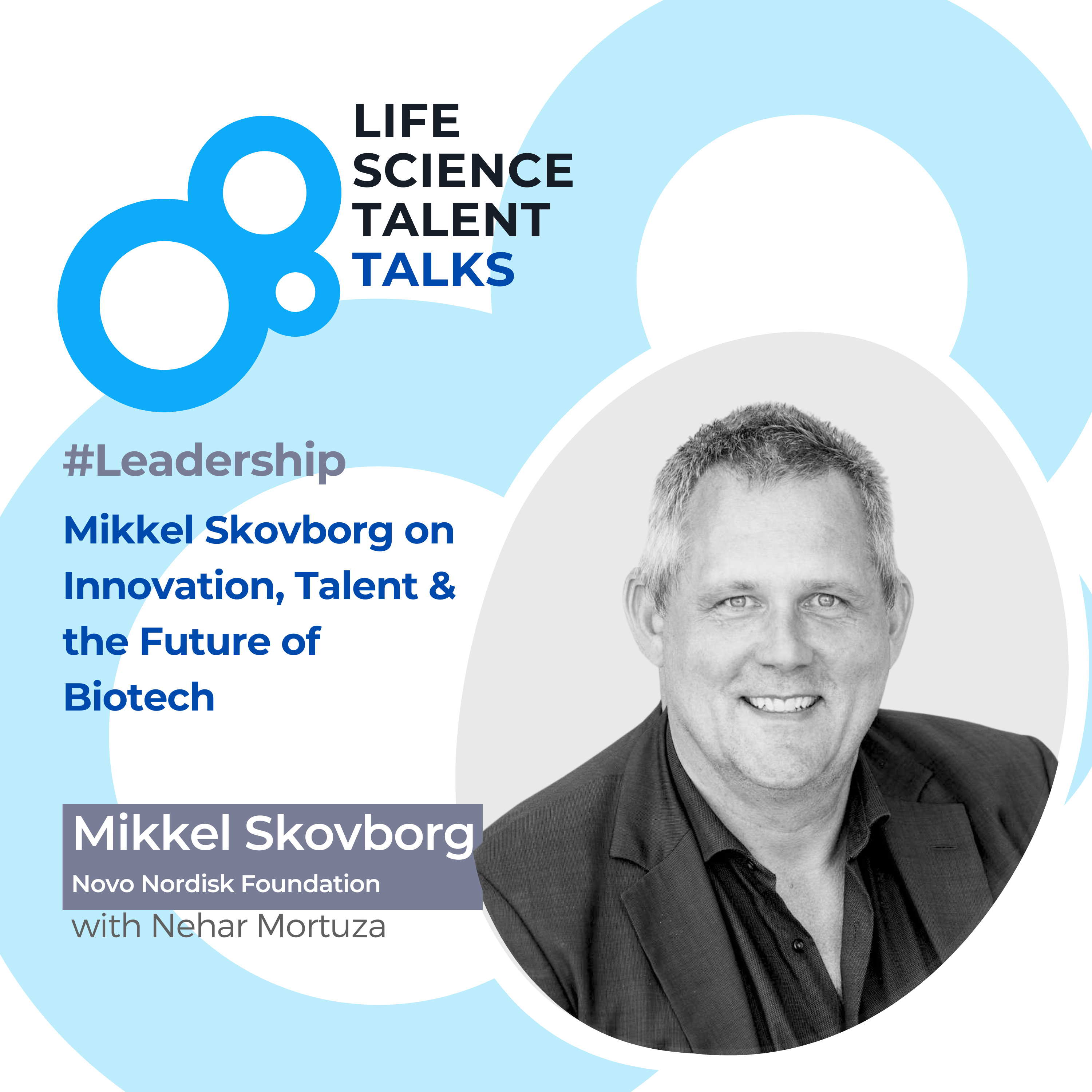
    E58 #Leadership “Life Science Talent Talks: Mikkel Skovborg on Innovation, Talent & the Future of Biotech”

    In this episode of Life Science Talent Talks, Nehar Mortuza looks into the dynamic world of life sciences with special guest Mikkel Skovborg, Vice President at the Novo Nordisk Foundation. Mikkel shares his journey from academia to industry and discusses the foundation’s mission to foster innovation, entrepreneurship, and scientific research. He highlights key initiatives like the Bio Innovation Institute (BII) and public-private partnerships that aim to enhance the life science ecosystem in Denmark and beyond. The conversation covers the impact of regulatory challenges, the promise of emerging technologies such as quantum computing and gene cell therapy, and the importance of global talent and collaborations. Mikkel also provides insights on the evolving landscape of life sciences, offering advice to aspiring professionals and reflecting on the lessons learned throughout his career. Timestamps: 00:45 | Introducing Our Guest – Mikkel Skovborg 01:36 | Career Journey & Influences – From Academia to Industry 04:15 | The Mission & Impact of the Novo Nordisk Foundation 07:22 | Challenges & Opportunities in the Life Science Sector 14:03 | Denmark’s Role as a Hub for Startups & Talent 16:19 | Personal Insights & Reflections from Mikkel Skovborg 19:20 | Conclusion & Key Takeaways Ideas for future podcast guests or themes? 💡 We want to co-create this podcast with you. We'd therefore love to hear your suggestions for future podcast guests or themes. Feel free to share in a private message or leave a comment below 🙏🏼 (It's also ok to invite yourself 😉) Join Our Life Science Talent Ecosystem We want to build a community to inspire life science professionals and leaders through talent talks and organized events. Share knowledge across the life science community through personal stories of their journey. We encourage you to take part in shaping this community by sharing your feedback, questions, or ideas. This you can do through our LinkedIn⁠⁠⁠⁠⁠⁠⁠⁠ ⁠⁠community page⁠⁠⁠⁠⁠⁠⁠⁠⁠⁠⁠. Warm Regards from your podcast hosts: ⁠⁠⁠⁠⁠⁠⁠⁠⁠Nehar Mortuza⁠⁠⁠⁠⁠⁠⁠⁠⁠⁠⁠⁠ and⁠⁠⁠ ⁠⁠⁠Søren Spanner Bach

  • S1 · E57
    May 16, 2025 · 41 min

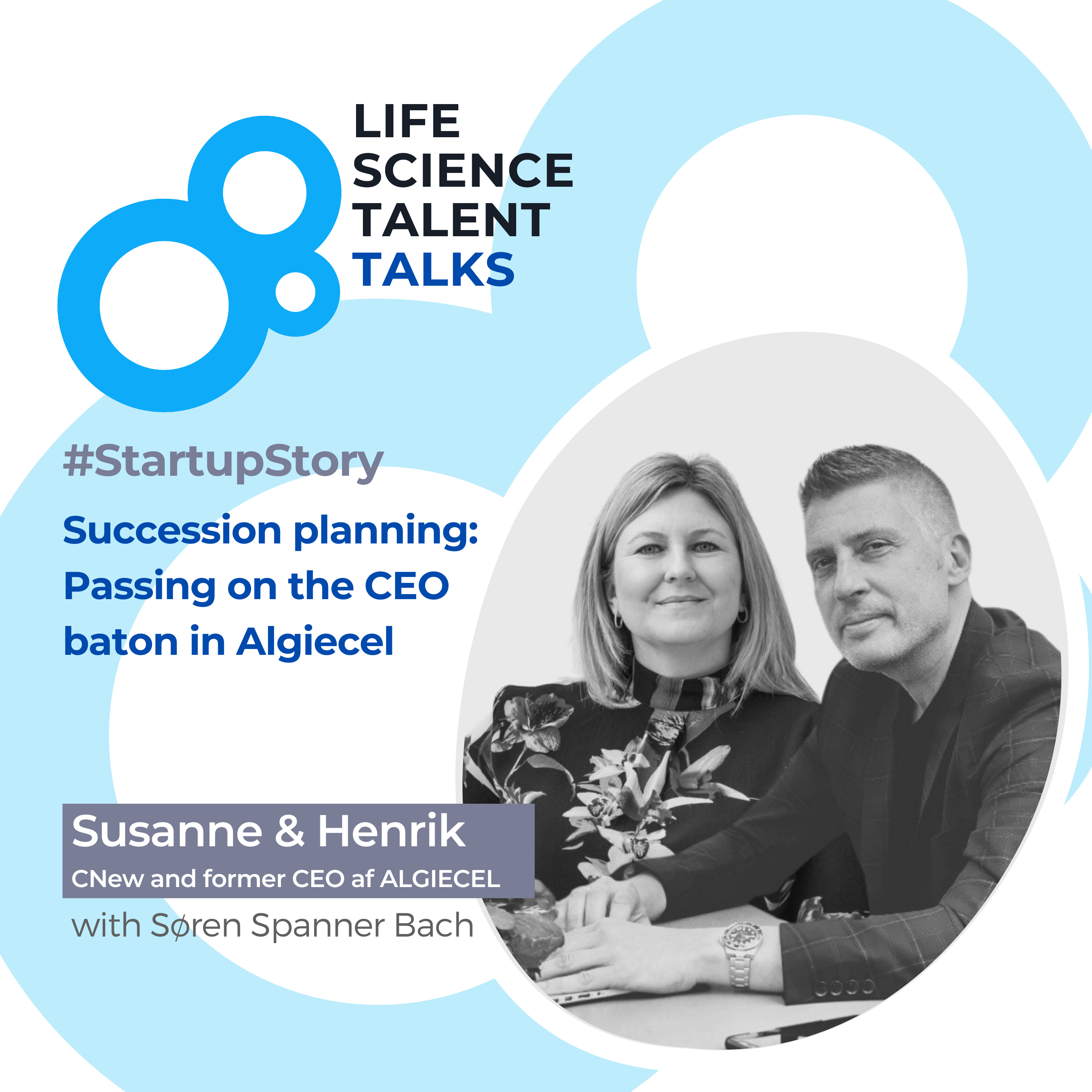
    E57 #StartupStory "Succession planning: Passing on the CEO baton in Algiecel" with Susanne Palsten Buchardt & Henrik Busch-Larsen

    Guests: Susanne Palsten Buchardt (Incoming CEO) & Henrik Busch‑Larsen (Founder, former CEO at Algiecel) Episode in a Tweet When a founder steps aside, how do you keep the vision alive? Hear how Algiecel is turning a CEO hand‑over into rocket fuel for growth — while scaling microalgae tech that captures CO₂ and feeds the world. What You’ll Learn How Algiecel’s photo‑bioreactor technology converts industrial CO₂ into high‑value microalgae ingredients. The behind‑the‑scenes playbook for planning a smooth CEO succession. Why trust, transparent communication, and role clarity made the hand‑over a win‑win. Susanne’s journey from strategy consultant to CCO to CEO—and Henrik’s new focus on partnerships & investment. Actionable advice for founders preparing their own succession road‑map. 00:00 Intro – Welcome & episode set‑up 02:04 Algiecel’s Mission & Tech – Microalgae, CO₂ utilisation, and photo‑bioreactors 04:45 Origin Story – Henrik’s eco‑vision and the company’s early pivots 09:08 Why Succession & Why Now? – Spotting the right moment for change 12:56 From CCO to CEO – Susanne’s growth path and leadership style 16:05 Building the Dream Team – Diversity, healthy debate, and shared values 21:10 Board & Investor Alignment – Governance during leadership change 22:40 Redefining Roles – Henrik’s shift to partnerships & thought leadership 25:02 Stakeholder Communications – Keeping customers & partners in the loop 30:12 Founders’ Advice – Mentorship, self‑awareness, and planning ahead 36:47 Future Road‑map – Scaling tech, funding, and global impact 38:50 Lightning Round & Wrap‑up – Quick takes and final thoughts Resource Mentioned: Unibio – Single‑cell protein pioneers BioInnovation Institute (BII) – Life‑science venture lab Ideas for future podcast guests or themes? 💡 We want to co-create this podcast with you. We'd therefore love to hear your suggestions for future podcast guests or themes. Feel free to share in a private message or leave a comment below 🙏🏼 (It's also ok to invite yourself 😉) Join Our Life Science Talent Ecosystem We want to build a community to inspire life science professionals and leaders through talent talks and organized events. Share knowledge across the life science community through personal stories of their journey. We encourage you to take part in shaping this community by sharing your feedback, questions, or ideas. This you can do through our LinkedIn⁠⁠⁠⁠⁠⁠⁠⁠ ⁠⁠community page⁠⁠⁠⁠⁠⁠⁠⁠⁠⁠⁠. Warm Regards from your podcast hosts: ⁠⁠⁠⁠⁠⁠⁠⁠⁠Nehar Mortuza⁠⁠⁠⁠⁠⁠⁠⁠⁠⁠⁠⁠ and⁠⁠⁠ ⁠⁠⁠Søren Spanner Bach

  • S1 · E56
    May 14, 2025 · 1 hr 6 min

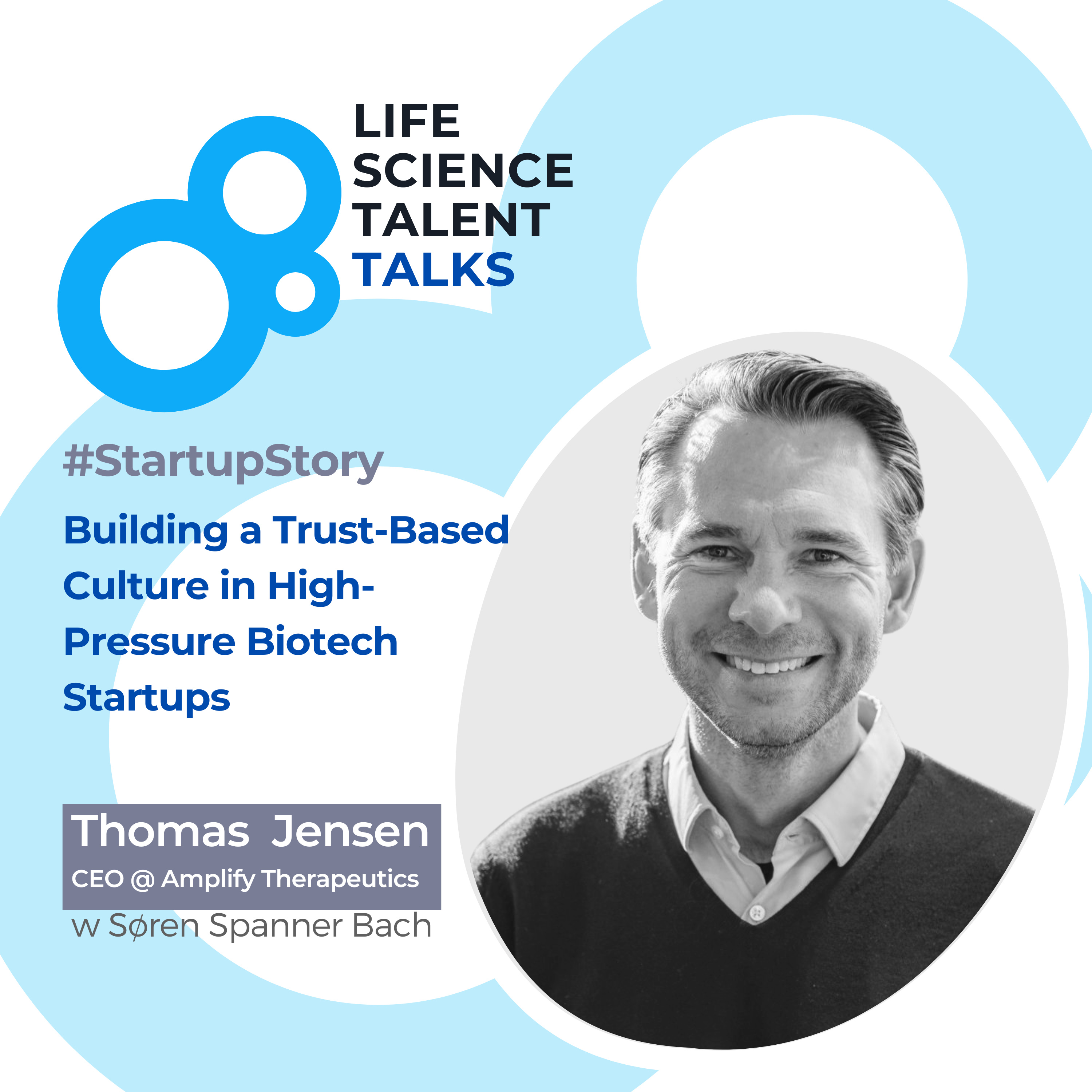
    E56 (Full) #StartupStory “Building a Trust-Based Culture in High-Pressure Biotech Startups” Insights from Thomas Kirkegaard Jensen CEO of Amplify Therapeutics

    In this episode of Life Science Talent Talks, Thomas Kirkegaard Jensen, CEO of Amplify Therapeutics and a seasoned entrepreneur in the life science startup world, joins Søren for an in-depth conversation about building healthy company culture in high-pressure environments. Drawing on over 15 years of experience—including his pivotal role at Orphazyme, where he contributed to the development and FDA approval of a groundbreaking rare disease treatment (now part of Zevra Therapeutics through acquisition) The discussion explores how to foster trust-based, high-performance cultures, with a focus on psychological safety, clear communication, competence mapping, and managing the organizational challenges that come with growth. Thomas reflects on his leadership style, the importance of understanding personal strengths and blind spots, and the tools and systems he uses to shape team culture intentionally. Thomas shares practical insights on when to begin deliberately cultivating culture, how Amplify Therapeutics approaches team dynamics, and the key lessons he’s learned from leading in both startup and scale-up phases. The conversation also touches on milestones in team development and R&D, and Thomas’s vision for the company’s future. This episode is especially relevant for startup leaders and life science professionals interested in entrepreneurship, innovation, and building strong, sustainable teams in complex, high-stakes environments. Timestamp and Shownotes: 00:43 – Thomas’s Journey in Biotech 02:04 – Deep Dive into Amplify Therapeutics 06:53 – The Birth of Amplify Therapeutics 16:40 – Building a Healthy Startup Culture 34:23 – Specialization and Responsibility Shifts 35:33 – Leadership and Organizational Growth 38:05 – Competence Mapping and Skills Assessment 39:33 – Trust and Communication in Teams 45:22 – Balancing Fast Decisions with Thoughtfulness 52:28 – Reflections on Achievements and Culture 55:18 – Advice for First-Time CEOs 56:43 – Future Challenges and Opportunities 58:15 – Support and Career Opportunities 01:02:39 – The Reality of Working in Biotech Ideas for future podcast guests or themes? 💡 We want to co-create this podcast with you. We'd therefore love to hear your suggestions for future podcast guests or themes. Feel free to share in a private message or leave a comment below 🙏🏼 (It's also ok to invite yourself 😉) Join Our Life Science Talent Ecosystem We want to build a community to inspire life science professionals and leaders through talent talks and organized events. Share knowledge across the life science community through personal stories of their journey. We encourage you to take part in shaping this community by sharing your feedback, questions, or ideas. This you can do through our LinkedIn⁠⁠⁠⁠⁠⁠⁠⁠ ⁠⁠community page⁠⁠⁠⁠⁠⁠⁠⁠⁠⁠⁠. Warm Regards from your podcast hosts: ⁠⁠⁠⁠⁠⁠⁠⁠⁠Nehar Mortuza⁠⁠⁠⁠⁠⁠⁠⁠⁠⁠⁠⁠ and⁠⁠⁠ ⁠⁠⁠Søren Spanner Bach

  • S1 · E56
    May 14, 2025 · 14 min

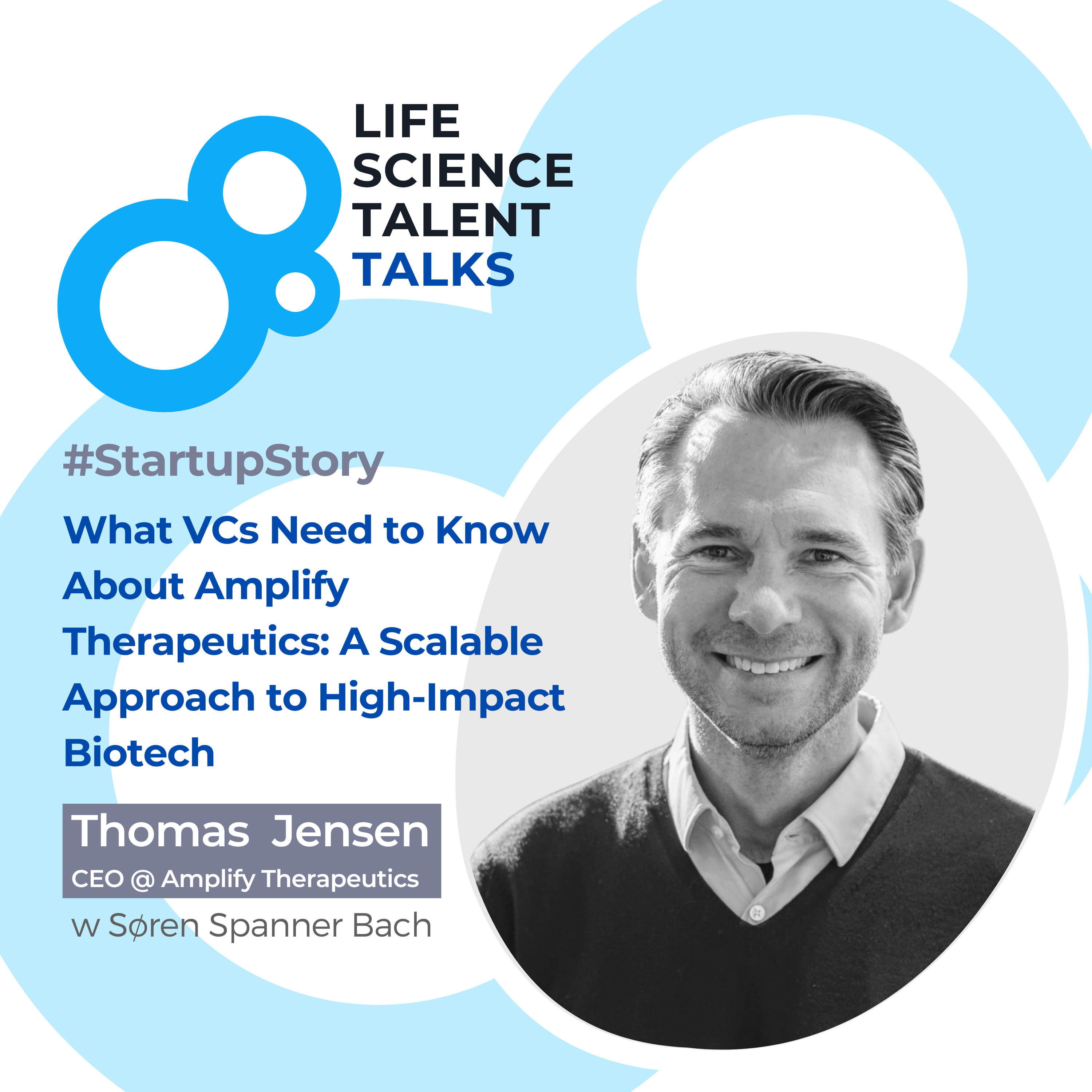
    E56 (Teaser) #StartupStory “Amplify Therapeutics: A Scalable Approach to High-Impact Biotech” with Thomas Kirkegaard Jensen CEO of Amplify Therapeutics

    15 min teaser episode. Listen to the full episode in EP56 (Full). Today we're diving into a biotech story that should be on every venture capitalist’s radar: Amplify Therapeutics. This is a company that’s shaking up drug development for neurodegenerative diseases—think ALS, Parkinson’s, frontotemporal dementia—not by throwing money at the problem, but by building smarter, faster, and more efficiently. Founded by Thomas Kirkegaard Jensen—yes, the same scientific mind behind the legacy of Orphazyme—Amplify is zeroing in on lysosomal function and proteostasis, two mechanisms that hold huge promise across multiple disease areas. But here’s the kicker: they’re doing it lean. They’ve built a capital-efficient model, using validated targets and real-world biomarkers to reduce risk and speed up timelines. This isn’t a moonshot—it’s a well-designed, data-driven platform with serious scalability. And with their first program heading into the clinic, Amplify is already primed for partnerships, licensing deals, and smart funding. Add a leadership team with deep regulatory experience and a proven track record of exits, and you’ve got a company that’s not just ready for the next phase—it’s ready to lead. For VCs looking for high-impact biotech with serious upside, this is one worth watching. Stay tuned—Amplify is just getting started. Timestamp and Shownotes: 00:00:41 – Thomas shares his entry into biotech via Orphazyme 00:02:00 – Thomas emphasizes the importance of trust-based and healthy team culture for high-performance in biotech environments. 00:02:09 – Thomas explains Amplify’s mission: to develop medicines for genetically defined neurodegenerative diseases by targeting lysosomal biology. 00:03:00 – Discussion on whether Amplify is a platform-based company or asset-driven. Thomas describes their diversified small-molecule approach grounded in deep lysosomal expertise. 00:04:00 – Thomas shares how he reacquired assets from Zevra after Orphazyme's dissolution and spun them into a new company, Amplify Therapeutics. 00:06:00 – Licensing + Foundation of Amplify 00:06:33 – Thomas outlines how he secured a startup grant from BioInnovation Institute (BII) in Copenhagen while finalizing the licensing deal. 00:07:51 – Early Team Building 00:08:33 – Thomas discusses balancing speed, flexibility, and internal know-how through selective in-house work. 00:09:41 – Thomas explains their hybrid approach: outsourcing standard assays, while keeping complex, specialized biology assays in-house for better agility and knowledge retention. 00:11:12 – Current Pipeline Overview Amplify’s portfolio includes three projects: Lead program with multiple chemistries Oxford University collaboration Potential Danish Cancer Society program 00:12:14 – Amplify is preparing for a fundraising round to scale operations and advance pipeline development Ideas for future podcast guests or themes? 💡 We want to co-create this podcast with you. We'd therefore love to hear your suggestions for future podcast guests or themes. Feel free to share in a private message or leave a comment below 🙏🏼 (It's also ok to invite yourself 😉) Join Our Life Science Talent Ecosystem We want to build a community to inspire life science professionals and leaders through talent talks and organized events. Share knowledge across the life science community through personal stories of their journey. We encourage you to take part in shaping this community by sharing your feedback, questions, or ideas. This you can do through our LinkedIn⁠⁠⁠⁠⁠⁠⁠⁠ ⁠⁠community page⁠⁠⁠⁠⁠⁠⁠⁠⁠⁠⁠. Warm Regards from your podcast hosts: ⁠⁠⁠⁠⁠⁠⁠⁠⁠Nehar Mortuza⁠⁠⁠⁠⁠⁠⁠⁠⁠⁠⁠⁠ and⁠⁠⁠ ⁠⁠⁠Søren Spanner Bach

  • S1 · E55
    Apr 10, 2025 · 37 min

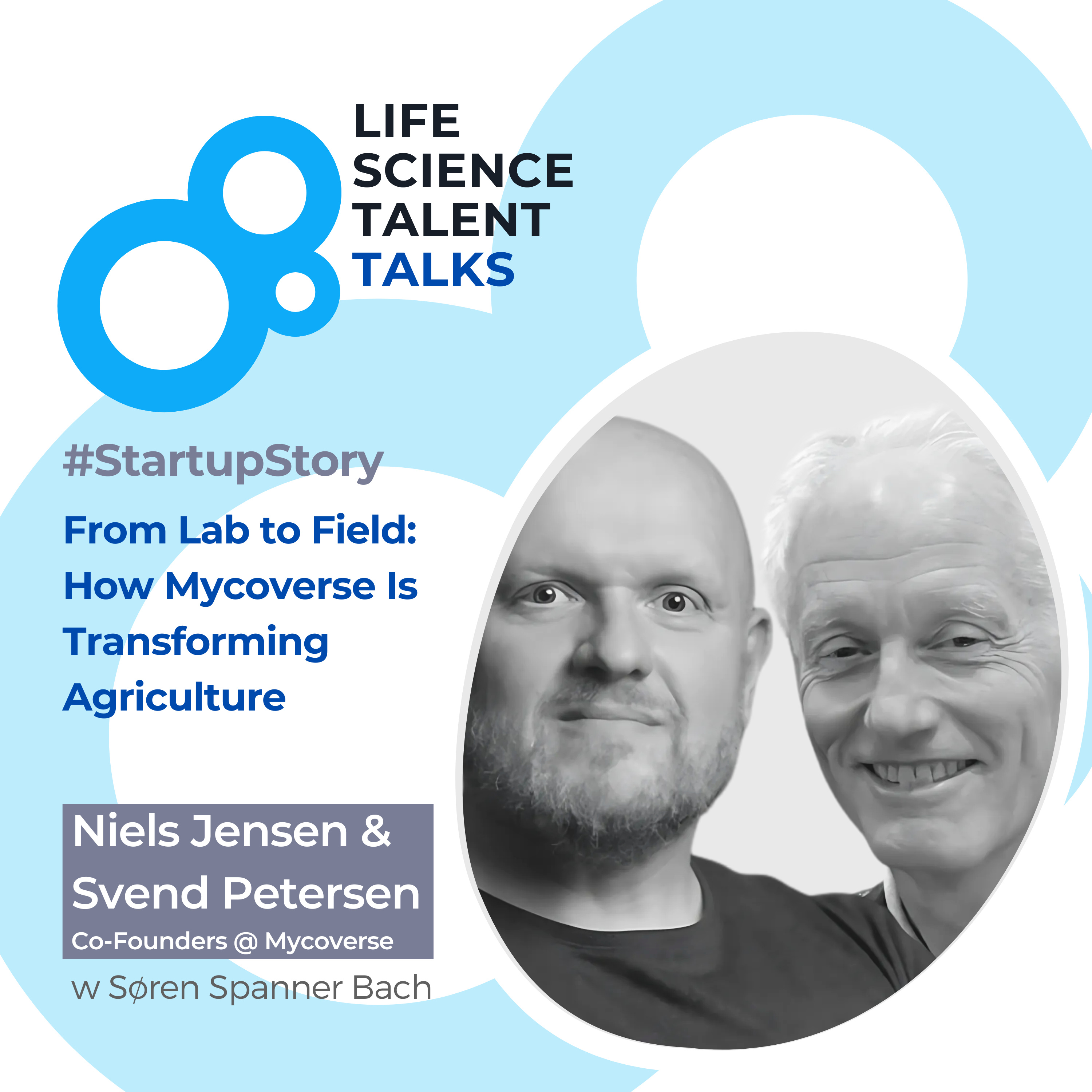
    E55 #StartupStory “How Mycoverse Is Transforming Agriculture” with Svend Petersen and Niels Bjerg Jensen, Co-Founders of Mycoverse

    In this episode of Life Science Talent Talks, Søren welcomes Svend Petersen and Niels Bjerg Jensen, the pioneering co-founders of Mycoverse, to explore the entrepreneurial journey of building a life science startup that bridges cutting-edge biotechnology and sustainable agriculture. Mycoverse is at the forefront of innovation, leveraging high-throughput screening technology to develop natural solutions for fungal disease control — tackling one of the most pressing challenges in global food security while ensuring environmental safety. But transforming a scientific breakthrough into a viable commercial venture is no small feat. In this conversation, Svend and Niels share the origin story of Mycoverse, tracing their journey from identifying a critical gap in the market to securing exclusive technology licenses and assembling a team dedicated to reshaping the agricultural landscape. They discuss the defining moments that drove them to build this company, the biggest challenges they’ve faced—including regulatory hurdles, investor skepticism, and early-stage pivots — and the strategies they’ve used to navigate these complexities. Svend and Niels reflect on the personal lessons learned throughout their entrepreneurial journey — the resilience, adaptability, and vision required to drive innovation in the life sciences sector. They’ll also share their outlook on the future of Mycoverse, from immediate priorities to long-term goals, and offer insights for aspiring founders navigating similar challenges in this space. If you’re passionate about the intersection of science, entrepreneurship, and the future of sustainable agriculture, this episode is packed with valuable takeaways on what it really takes to turn groundbreaking research into a thriving startup. Stay tuned for an inspiring and in-depth conversation with the minds behind Mycoverse, right here on Life Science Talent Talks. Timestamps: 00:39 Introduction to Mycoverse and Its Founders 02:04 Mycoverse's Mission and Technology 03:51 The Entrepreneurial Journey 05:01 The Birth of Mycoverse 08:09 Challenges and Milestones 12:46 Business Model and Future Plans 17:06 Funding and Investor Relations 18:46 Market Opportunities and Unique Positioning 19:45 Biologicals Discovery Platform: High-Throughput Screening on Filamentous Fungi 20:09 Regulatory Approval and Market Strategy 21:09 Non-GMO and EU Market Considerations 22:14 Partnerships and Customer Dialogues 25:31 Investor Concerns and Speed to Market 29:45 Proud Moments and Team Dynamics 33:39 Future Plans and Challenges Ideas for future podcast guests or themes? 💡 We want to co-create this podcast with you. We'd therefore love to hear your suggestions for future podcast guests or themes. Feel free to share in a private message or leave a comment below 🙏🏼 (It's also ok to invite yourself 😉) Join Our Life Science Talent Ecosystem We want to build a community to inspire life science professionals and leaders through talent talks and organized events. Share knowledge across the life science community through personal stories of their journey. We encourage you to take part in shaping this community by sharing your feedback, questions, or ideas. This you can do through our LinkedIn⁠⁠⁠⁠⁠⁠⁠⁠ ⁠⁠community page⁠⁠⁠⁠⁠⁠⁠⁠⁠⁠⁠. Warm Regards from your podcast hosts: ⁠⁠⁠⁠⁠⁠⁠⁠⁠Nehar Mortuza⁠⁠⁠⁠⁠⁠⁠⁠⁠⁠⁠⁠ and⁠⁠⁠ ⁠⁠⁠Søren Spanner Bach

  • S1 · E54
    Apr 3, 2025 · 48 min

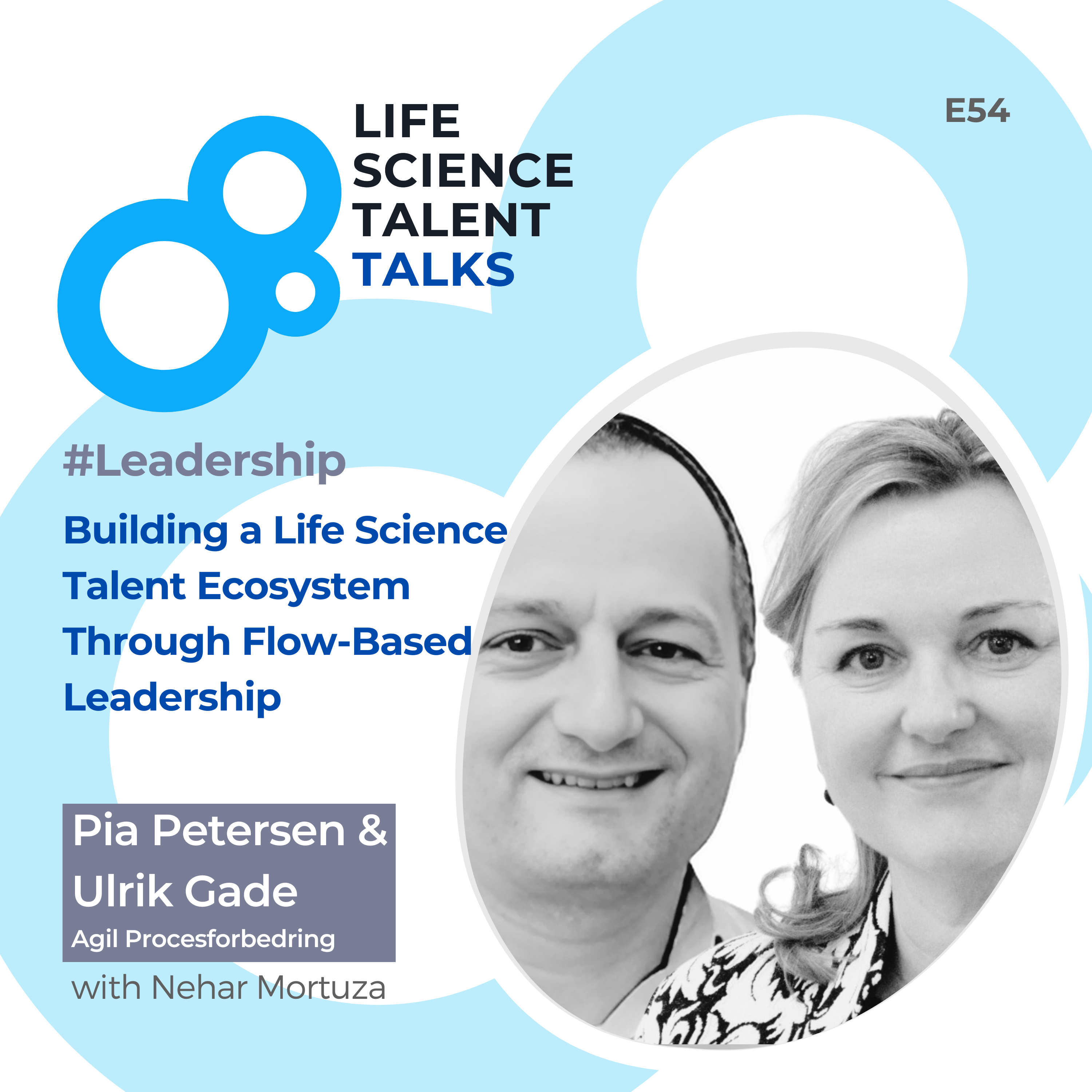
    E54 #Leadership “Building a Life Science Talent Ecosystem Through Flow-Based Leadership” with Pia Petersen & Ulrik Gade

    In this episode of Life Science Talent Talks, Nehar explores the development of a dynamic life science talent community. They are joined by Pia Petersen and Ulrik Gade, who share their expertise on agile methodologies, flow-based leadership, and organizational psychology. The discussion delves into their professional journeys, the founding of Agil Procesforbedring, and the challenges they have navigated. A key focus is how leadership and self-organization can foster innovation and efficiency within life science organizations. The conversation highlights the importance of transparency, trust, and continuous improvement in building engaged, high-performing teams. Throughout the episode, Pia and Ulrik offer practical insights and real-world examples of effective management practices applicable to both startups and large enterprises. The episode concludes with book recommendations and actionable advice for life science professionals looking to enhance leadership and organizational effectiveness. Timestamps: 00:59 Introduction to Our Guest: Pia Petersen 02:06 Ulrik Gade Journey into Agile and Leadership 04:02 Founding Agil Procesforbedring 07:57 Challenges and Focus of the Company 09:55 Leadership and Self-Organization 17:37 Measuring the Value of Facilitation 21:14 Continuous Improvement and Action Learning 23:51 The Conscious Leader's Dilemma 24:35 Stop Starting, Start Finishing 28:19 The Importance of Transparency 30:53 Engagement and Strategy in the Workplace 33:44 Self-Organization and Task Management 35:24 Operational and Strategic Contexts 38:15 Challenges and Excitements in Leadership 43:03 Final Thoughts and Takeaways Ideas for future podcast guests or themes? 💡 We want to co-create this podcast with you. We'd therefore love to hear your suggestions for future podcast guests or themes. Feel free to share in a private message or leave a comment below 🙏🏼 (It's also ok to invite yourself 😉) Join Our Life Science Talent Ecosystem We want to build a community to inspire life science professionals and leaders through talent talks and organized events. Share knowledge across the life science community through personal stories of their journey. We encourage you to take part in shaping this community by sharing your feedback, questions, or ideas. This you can do through our LinkedIn⁠⁠⁠⁠⁠⁠⁠⁠ ⁠⁠community page⁠⁠⁠⁠⁠⁠⁠⁠⁠⁠⁠. Warm Regards from your podcast hosts: ⁠⁠⁠⁠⁠⁠⁠⁠⁠Nehar Mortuza⁠⁠⁠⁠⁠⁠⁠⁠⁠⁠⁠⁠ and⁠⁠⁠ ⁠⁠⁠Søren Spanner Bach

Showing 1–20 of 20 episodes