Skip to content
Artwork for Librivox Audiobooks
ArtsBooks

Librivox Audiobooks

Librivox Audiobooks

Free classic audio-books available, narrated by real people and distributed for free, in audio format on the internet. Over 40,0000 classic Audio-books as Sherlock Holmes,Pride and Prejudice,Dracula,The Time Machine in English,Spanish,German,French and 40 other variety of main spoken languages.
Thanks for Listening!

Play
  • 55 episodes
  • daily
  • Avg 5 hr 36 min
  • English
Counted on this page — what you have heard stays on this device, so it is not something the list can be paged by.
  • #3
    August 29 · 6 hr 1 min

    Don Quijote ,Vers 2 (Pt.3)

    Don Quijote 2 Miguel de Cervantes Saavedra (1547 - 1616) Don Quijote de la Mancha (ortografía y título original —1605—, El ingenioso hidalgo Don Quixote de la Mancha) es una de las obras cumbre de la literatura española y la literatura universal, el libro más traducido después de la Biblia, escrito por Miguel de Cervantes. La novela consta de dos partes: la primera, El ingenioso hidalgo don Quijote de la Mancha, fue publicada en 1605; la segunda, El ingenioso caballero don Quijote de la Mancha, en 1615. La primera parte se imprimió en Madrid, en casa de Juan de la Cuesta, a fines de 1604. Salió a la venta en enero de 1605 con numerosas erratas, a causa de la celeridad que imponía el contrato de edición. Esta edición se reimprimió en el mismo año y en el mismo taller, de forma que hay en realidad dos ediciones de 1605 ligeramente distintas. Se sospecha, sin embargo, que existió una novela más corta, que sería una de sus futuras Novelas ejemplares. (Resumen de Wikipedia) Genre(s): Action & Adventure Fiction, General Fiction Language: Spanish Keyword(s): literature (1964), adventure (1092), spanish (49), quijote (2)
  • #2
    August 28 · 6 hr 35 min

    Don Quijote ,Vers 2 (Pt.2)

    Don Quijote de la Mancha (ortografía y título original —1605—, El ingenioso hidalgo Don Quixote de la Mancha) es una de las obras cumbre de la literatura española y la literatura universal, el libro más traducido después de la Biblia, escrito por Miguel de Cervantes. La novela consta de dos partes: la primera, El ingenioso hidalgo don Quijote de la Mancha, fue publicada en 1605; la segunda, El ingenioso caballero don Quijote de la Mancha, en 1615. La primera parte se imprimió en Madrid, en casa de Juan de la Cuesta, a fines de 1604. Salió a la venta en enero de 1605 con numerosas erratas, a causa de la celeridad que imponía el contrato de edición. Esta edición se reimprimió en el mismo año y en el mismo taller, de forma que hay en realidad dos ediciones de 1605 ligeramente distintas. Se sospecha, sin embargo, que existió una novela más corta, que sería una de sus futuras Novelas ejemplares. (Resumen de Wikipedia) Genre(s): Action & Adventure Fiction, General Fiction Language: Spanish Keyword(s): literature (1964), adventure (1092), spanish (49), quijote (2)
  • #1
    August 27 · 9 hr 27 min

    Don Quijote ,Vers 2 (Pt.1)

    Don Quijote 2 Miguel de Cervantes Saavedra (1547 - 1616) Don Quijote de la Mancha (ortografía y título original —1605—, El ingenioso hidalgo Don Quixote de la Mancha) es una de las obras cumbre de la literatura española y la literatura universal, el libro más traducido después de la Biblia, escrito por Miguel de Cervantes. La novela consta de dos partes: la primera, El ingenioso hidalgo don Quijote de la Mancha, fue publicada en 1605; la segunda, El ingenioso caballero don Quijote de la Mancha, en 1615. La primera parte se imprimió en Madrid, en casa de Juan de la Cuesta, a fines de 1604. Salió a la venta en enero de 1605 con numerosas erratas, a causa de la celeridad que imponía el contrato de edición. Esta edición se reimprimió en el mismo año y en el mismo taller, de forma que hay en realidad dos ediciones de 1605 ligeramente distintas. Se sospecha, sin embargo, que existió una novela más corta, que sería una de sus futuras Novelas ejemplares. (Resumen de Wikipedia) Genre(s): Action & Adventure Fiction, General Fiction Language: Spanish Keyword(s): literature (1964), adventure (1092), spanish (49), quijote (2)
  • August 26 · 7 hr 40 min

    The Voyages of Doctor Dolittle

    The Voyages of Doctor Dolittle Hugh Lofting (1886 - 1947) Doctor John Dolittle is the central character of a series of children's books by Hugh Lofting. He is a doctor who shuns human patients in favour of animals, with whom he can speak in their own languages. He later becomes a naturalist, using his abilities to speak with animals to better understand nature and the history of the world.(summary from Wikipedia) Genre(s): Children's Fiction, Action & Adventure Language: English Keyword(s): children (1126), adventure (1092), animals (417), lofting (1) Group: Newbery Medal and Honor Books

  • #4
    August 25 · 6 hr 17 min

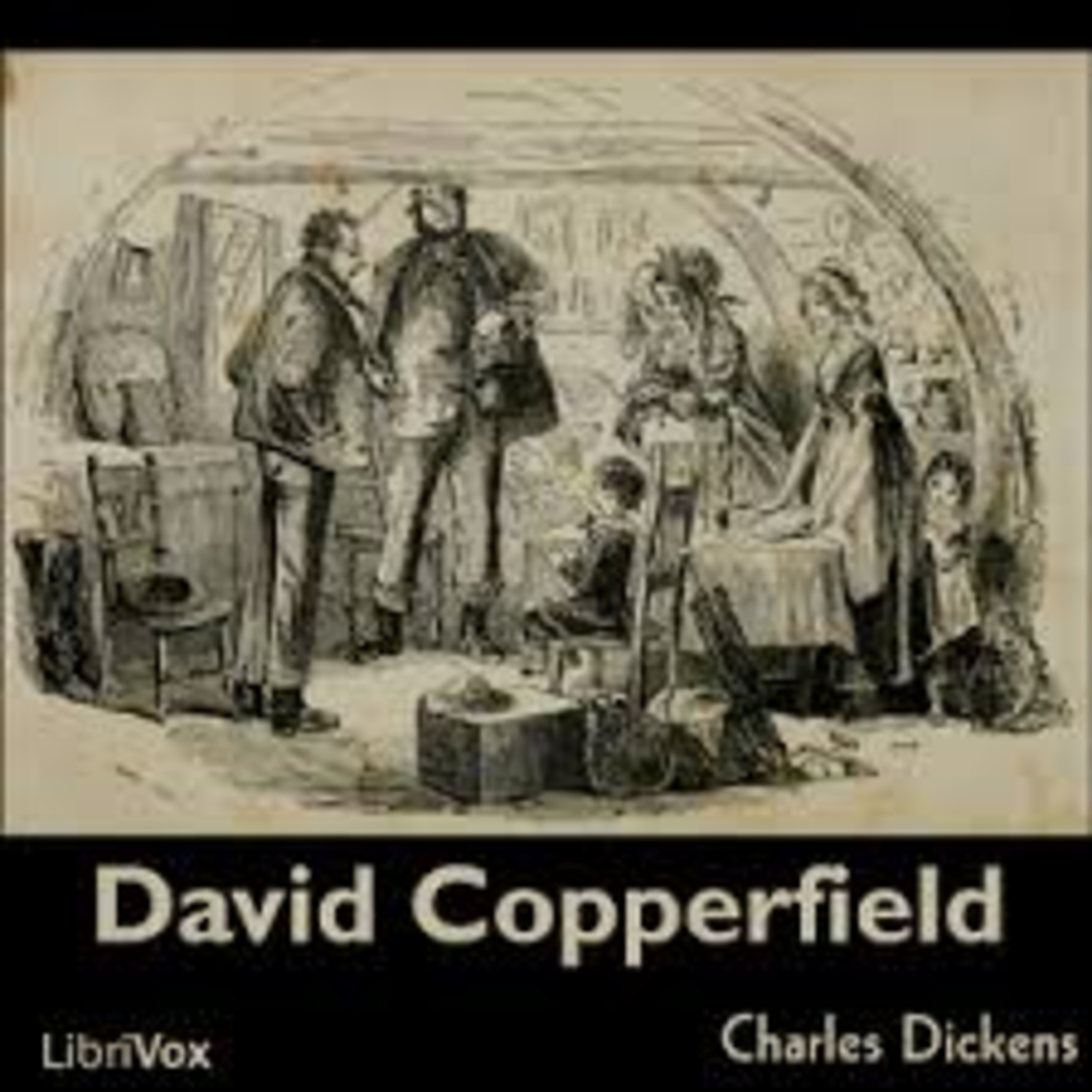
    David Copperfield, Version 1 (Pt.4)

    "David Copperfield" or "The Personal History, Adventures, Experience and Observation of David Copperfield the Younger of Blunderstone Rookery" was first published in 1850. Like all except five of his works, it originally appeared in serial form. Many elements within the novel follow events in Dickens' own life, and it is probably the most autobiographical of all of his novels. It is also Dickens' "favorite child." (Summary adapted from Wikipedia) Genre(s): Published 1800 -1900 Language: English Keyword(s): ⁠⁠novel⁠⁠ (163), ⁠⁠dickens⁠⁠ (67), ⁠⁠Victorian novel⁠⁠ (24)

  • #3
    August 24 · 10 hr 39 min

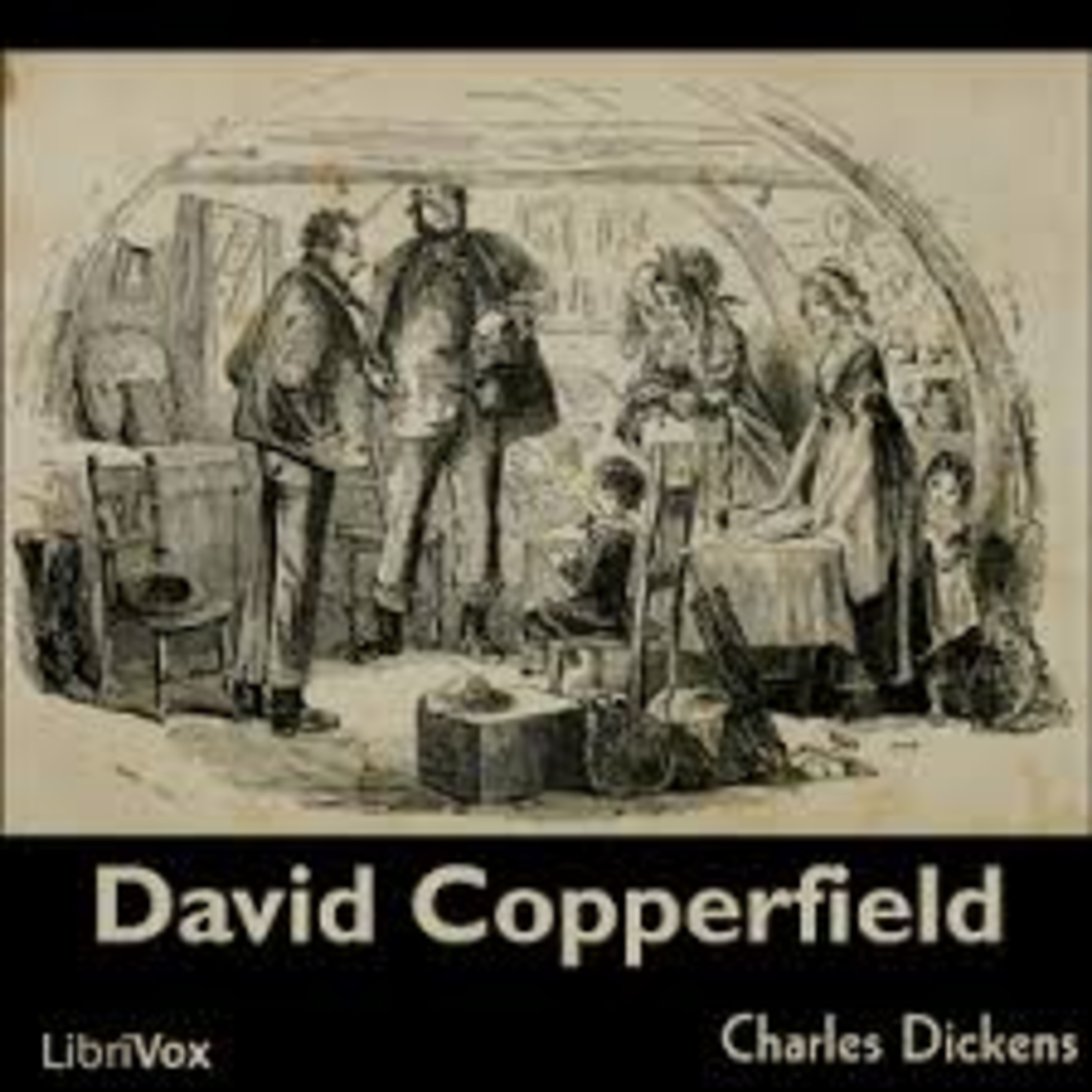
    David Copperfield, Version 1 (Pt.3)

    "David Copperfield" or "The Personal History, Adventures, Experience and Observation of David Copperfield the Younger of Blunderstone Rookery" was first published in 1850. Like all except five of his works, it originally appeared in serial form. Many elements within the novel follow events in Dickens' own life, and it is probably the most autobiographical of all of his novels. It is also Dickens' "favorite child." (Summary adapted from Wikipedia)

  • #2
    August 23 · 9 hr 31 min

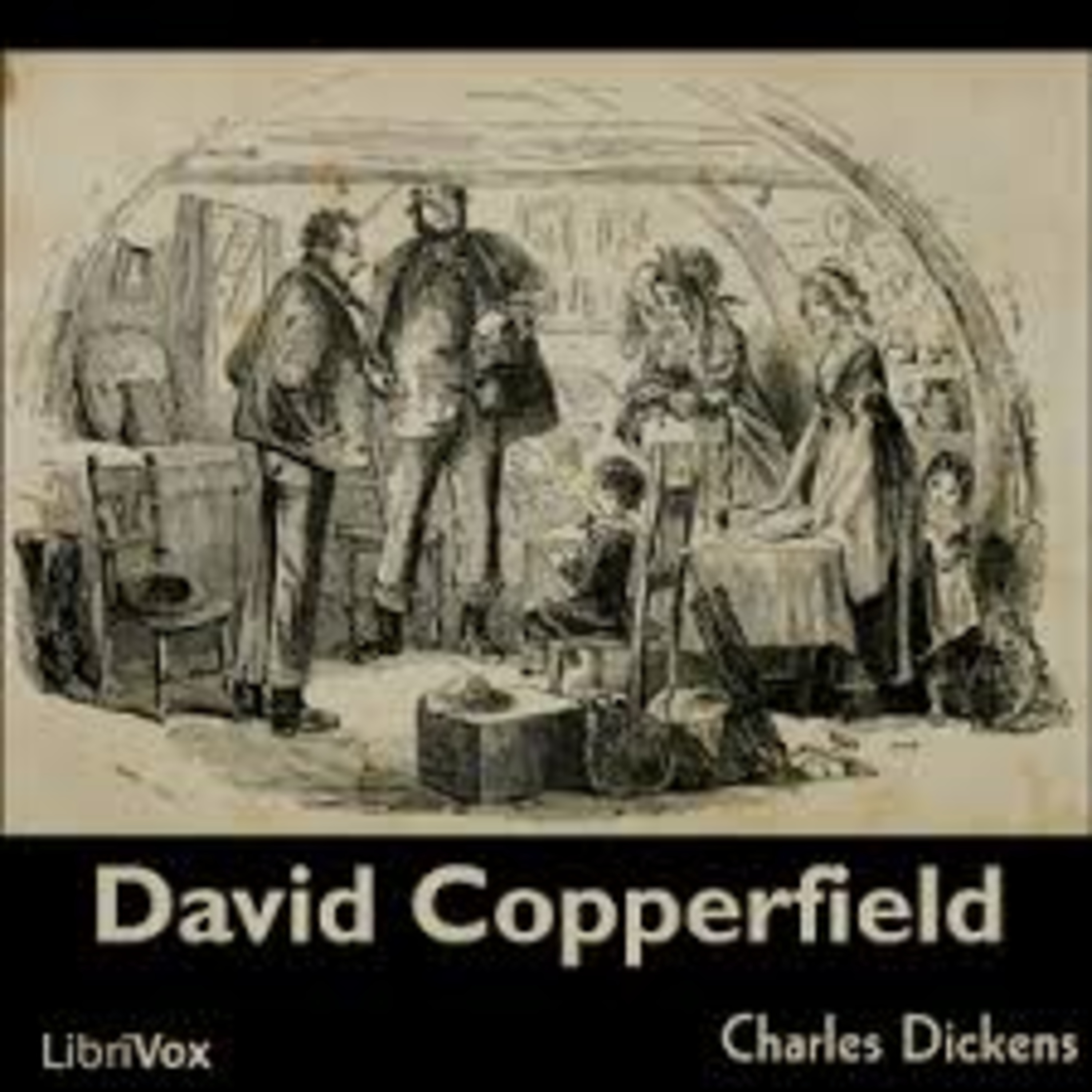
    David Copperfield, Version 1 (Pt.2)

    "David Copperfield" or "The Personal History, Adventures, Experience and Observation of David Copperfield the Younger of Blunderstone Rookery" was first published in 1850. Like all except five of his works, it originally appeared in serial form. Many elements within the novel follow events in Dickens' own life, and it is probably the most autobiographical of all of his novels. It is also Dickens' "favorite child." (Summary adapted from Wikipedia) Genre(s): Published 1800 -1900 Language: English Keyword(s): ⁠novel⁠ (163), ⁠dickens⁠ (67), ⁠Victorian novel⁠ (24)

  • #1
    August 22 · 9 hr 2 min

    David Copperfield, Version 1 (Pt.1)

    "David Copperfield" or "The Personal History, Adventures, Experience and Observation of David Copperfield the Younger of Blunderstone Rookery" was first published in 1850. Like all except five of his works, it originally appeared in serial form. Many elements within the novel follow events in Dickens' own life, and it is probably the most autobiographical of all of his novels. It is also Dickens' "favorite child." (Summary adapted from Wikipedia) Genre(s): Published 1800 -1900 Language: English Keyword(s): novel (163), dickens (67), Victorian novel (24)

  • August 21 · 6 hr 1 min

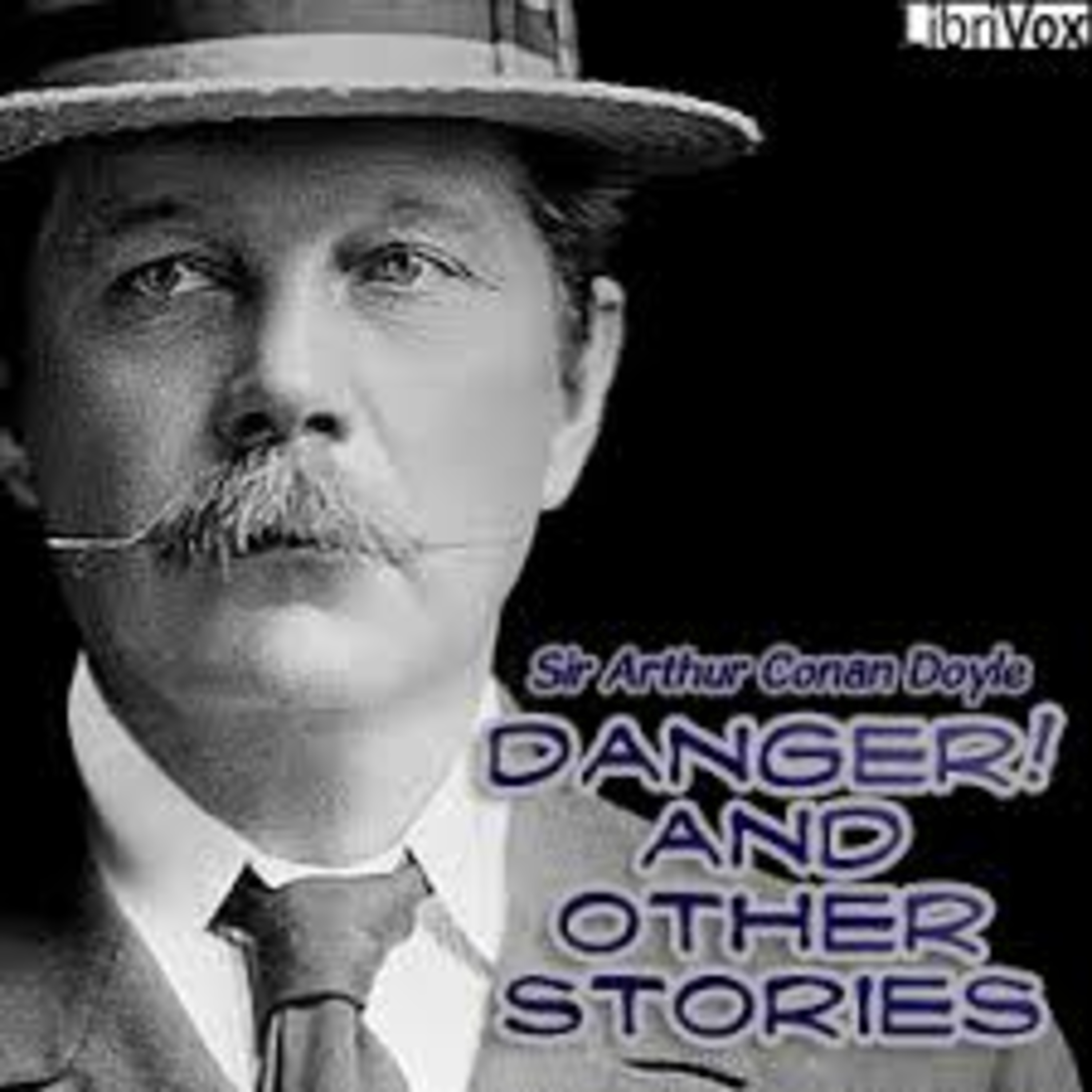
    Danger! and Other Stories

    This is a volume of short stories by the famous Arthur Conan Doyle. - Summary by Carolin Genre(s): Single Author Collections Language: English Keyword(s): short stories (751), danger (12)

  • August 20 · 3 hr 4 min

    The Dancing Mania

    The Dancing Mania Justus Hecker (1795 - 1850) Translated by Benjamin G. Babington (1794 - 1866) Numerous theories have been proposed for the causes of dancing mania, and it remains unclear whether it was a real illness or a social phenomenon. One of the most prominent theories is that victims suffered from ergot poisoning, which was known as St Anthony's Fire in the Middle Ages. During floods and damp periods, ergots were able to grow and affect rye and other crops. Ergotism can cause hallucinations, but cannot account for the other strange behaviour most commonly identified with dancing mania. Many sources discuss how dancing mania, and tarantism, may have simply been the result of stress and tension caused by natural disasters around the time, such as plagues and floods…people may have danced to relieve themselves of the stress and poverty of the day, and in doing so, attempted to become ecstatic and see visions. Sources agree that dancing mania was one of the earliest forms of mass hysteria, and describe it as a "psychic epidemic", with numerous explanations that might account for the behaviour of the dancers. Another popular theory is that the outbreaks were all staged, and the appearance of strange behaviour was down to its unfamiliarity. Religious cults may have been acting out well-organised dances, in accordance with ancient Greek and Roman rituals. Despite being banned at the time, these rituals could be performed under the guise of uncontrollable dancing mania. (Introduction from Wikipedia, slightly adapted.) Genre(s): *Non-fiction, History, Psychology Language: English Keyword(s): psychology (127), medieval history (10), History of Medicine (4), medieval religion (1), mass hysteria (1)

  • August 19 · 3 hr 15 min

    The Dance of Death

    The Dance of Death August Strindberg (1849 - 1912) Translated by Edwin Björkman (1866 - 1951) The Dance of Death is a play in two parts by the Swedish dramatist August Strindberg, written in 1900. It depicts the dissolution of a marriage between Edgar, an artillery captain, and Alice, a former actress. Increasingly isolated in their fort-like house, they manipulate and bait each other, until the unexpected arrival of Curt, Alice's cousin. His presence creates a tense triangular relationship that escalates throughout Part One, and is complicated with the introduction of two of the trio's children, Allan and Judith, in Part Two. (Summary by Elizabeth Klett) Cast Edgar: Bob Neufeld Alice: Elizabeth Klett Curt: Bruce Pirie Jenny: Availle Old Woman: Bev J. Stevens Allan: mb Judith: Arielle Lipshaw Lieutenant: Victoria Narrator: Sean Daley Audio edited by Elizabeth Klett Genre(s): Plays Language: English Keyword(s): marriage (159), relationships (54)

  • August 18 · 4 hr 35 min

    Current Superstitions

    No matter how enlightened, chances are you've been raised around superstitious lore of one kind or another. Fanny Dickerson Bergen was one of the original researchers of North American oral traditions relating to such key life events and experiences as babyhood and childhood, marriage, wishes and dreams, luck, warts and cures, death omens and mortuary customs, and "such truck," as Huck Finn would say. You'll be surprised at how many of these old saws you'll know. Here's a quote from Chapter One, Babyhood: Monday’s child is fair of face, Tuesday’s child is full of grace, Wednesday’s child is sour and sad, Thursday’s child is merry and glad, Friday’s child is loving and giving, Saturday’s child must work for a living; But the child that is born on the Sabbath day Is blithe and bonny, good and gay. --Baldwinsville, N. Y. All of these readings are as short as 5 minutes and no longer than 15 minutes, with plenty of pithy one-liners in the form of proverbs, always given with the locale they came from in Canada or the United States (with clear influences in British tradition). (summary by Denny Sayers) Genre(s): *Non-fiction, Social Science (Culture & Anthropology) Language: English Keyword(s): classic (43), tradition (6)

  • August 17 · 8 hr 3 min

    The Cruise of the Snark

    The Cruise of the Snark (1913) is a memoir of Jack and Charmian London's 1907-1909 voyage across the Pacific. His descriptions of "surf-riding", which he dubbed a "royal sport", helped introduce it to and popularize it with the mainland. London writes: Through the white crest of a breaker suddenly appears a dark figure, erect, a man-fish or a sea-god, on the very forward face of the crest where the top falls over and down, driving in toward shore, buried to his loins in smoking spray, caught up by the sea and flung landward, bodily, a quarter of a mile. It is a Kanaka on a surf-board. And I know that when I have finished these lines I shall be out in that riot of colour and pounding surf, trying to bit those breakers even as he, and failing as he never failed, but living life as the best of us may live it. (Excerpted from Wikipedia) Genre(s): Memoirs Language: English Keyword(s): literature (1964), memoir (103), island (23), Pacific (8)

  • August 16 · 5 hr 50 min

    The Crowd: A Study of the Popular Mind

    "Civilisations as yet have only been created and directed by a small intellectual aristocracy, never by crowds. Crowds are only powerful for destruction. Their rule is always tantamount to a barbarian phase. A civilisation involves fixed rules, discipline, a passing from the instinctive to the rational state, forethought for the future, an elevated degree of culture — all of them conditions that crowds, left to themselves, have invariably shown themselves incapable of realising. In consequence of the purely destructive nature of their power crowds act like those microbes which hasten the dissolution of enfeebled or dead bodies. When the structure of a civilisation is rotten, it is always the masses that bring about its downfall." - Gustave Le Bon, from Introduction Genre(s): Psychology, Social Science (Culture & Anthropology) Language: English Keyword(s): democracy (17), communism (14), aristocracy (13), criminology (5), Fascism (5), group psychology (1), oligarcy (1)

  • August 15 · 6 hr 5 min

    Crome Yellow

    Crome Yellow, published in 1921 was Aldous Huxley’s first novel. In it he satirizes the fads and fashions of the time. It is the witty story of a house party at ‘Crome’ where there is a gathering of bright young things. We hear some of the history of the house from Henry Wimbush, its owner and self appointed historian; Apocalypse is prophesied, virginity is lost, and inspirational aphorisms are gained in a trance. Our hero, Denis, tries to capture it all in poetry and is disappointed in love. The author, Aldous Huxley, was born in 1894 and began writing poetry and short stories in his early twenties; this was his first novel and established his literary reputation. (Summary by Martin Clifton) Genre(s): Satire Language: English Keyword(s): literature (1964)

  • June 29 · 10 hr 4 min

    The Crimson Fairy Book

    he Crimson Fairy Book contains thirty-six stories collected from around the world and edited by Andrew Lang. Many tales in this book are translated, or adapted, from those told by mothers and nurses in Hungary; others are familiar to Russian nurseries; the Servians are responsible for some; a rather peculiarly fanciful set of stories are adapted from the Roumanians; others are from the Baltic shores; others from sunny Sicily; a few are from Finland, and Iceland, and Japan, and Tunis, and Portugal. No doubt many children will like to look out these places on the map, and study their mountains, rivers, soil, products, and fiscal policies, in the geography books. The peoples who tell the stories differ in colour; language, religion, and almost everything else; but they all love a nursery tale. The stories have mainly been adapted or translated by Mrs. Lang, a few by Miss Lang and Miss Blackley. (Summary from the preface) Genre(s): Myths, Legends & Fairy Tales Language: English Keyword(s): children (1119), fairy tales (283), andrew lang (8), crimson fairy book (1) Group: Andrew Lang's Fairy Books

  • #3
    June 28 · 6 hr 29 min

    Crime and Punishment (Pt.3)

    Crime and Punishment (Pt.3) Fyodor Dostoyevsky (1821 - 1881) Translated by Constance Garnett (1861 - 1946) Crime and Punishment focuses on the mental anguish and moral dilemmas of Rodion Romanovich Raskolnikov, an impoverished St. Petersburg student who formulates and executes a plan to kill a hated, unscrupulous pawnbroker for her money, thereby solving his financial problems and at the same time, he argues, ridding the world of evil. Crime and Punishment is considered by many as the first of Dostoevsky's cycle of great novels, which would culminate with his last completed work, The Brothers Karamazov, shortly before his death. (Summary from Wikipedia) Genre(s): Published 1900 onward Language: English Keyword(s): literature (1959)

  • #2
    June 27 · 7 hr 32 min

    Crime and Punishment (Pt.2)

    Crime and Punishment (Pt.2) Fyodor Dostoyevsky (1821 - 1881) Translated by Constance Garnett (1861 - 1946) Crime and Punishment focuses on the mental anguish and moral dilemmas of Rodion Romanovich Raskolnikov, an impoverished St. Petersburg student who formulates and executes a plan to kill a hated, unscrupulous pawnbroker for her money, thereby solving his financial problems and at the same time, he argues, ridding the world of evil. Crime and Punishment is considered by many as the first of Dostoevsky's cycle of great novels, which would culminate with his last completed work, The Brothers Karamazov, shortly before his death. (Summary from Wikipedia) Genre(s): Published 1900 onward Language: English Keyword(s): literature (1959)

  • #1
    June 26 · 9 hr 23 min

    Crime and Punishment (Pt.1)

    Crime and Punishment (Pt.1) Crime and Punishment focuses on the mental anguish and moral dilemmas of Rodion Romanovich Raskolnikov, an impoverished St. Petersburg student who formulates and executes a plan to kill a hated, unscrupulous pawnbroker for her money, thereby solving his financial problems and at the same time, he argues, ridding the world of evil. Crime and Punishment is considered by many as the first of Dostoevsky's cycle of great novels, which would culminate with his last completed work, The Brothers Karamazov, shortly before his death. (Summary from Wikipedia)

  • June 25 · 1 hr 30 min

    Creditors

    Creditors August Strindberg (1849 - 1912) Translated by Edwin Björkman (1866 - 1951) Creditors is a tragicomedy by August Strindberg that plumbs the depths of the twisted triangular relationship between Tekla, her husband Adolph, and her ex-husband Gustav. (Summary by Elizabeth Klett) Cast: Tekla: Elizabeth Klett Adolph: mb Gustav: Bruce Pirie Narrator: Diana Majlinger Audio edited by: Elizabeth Klett Genre(s): Comedy, Tragedy Language: English Keyword(s): drama (199), strindberg (4), creditors (2)

Showing 21–40 of 55 episodes