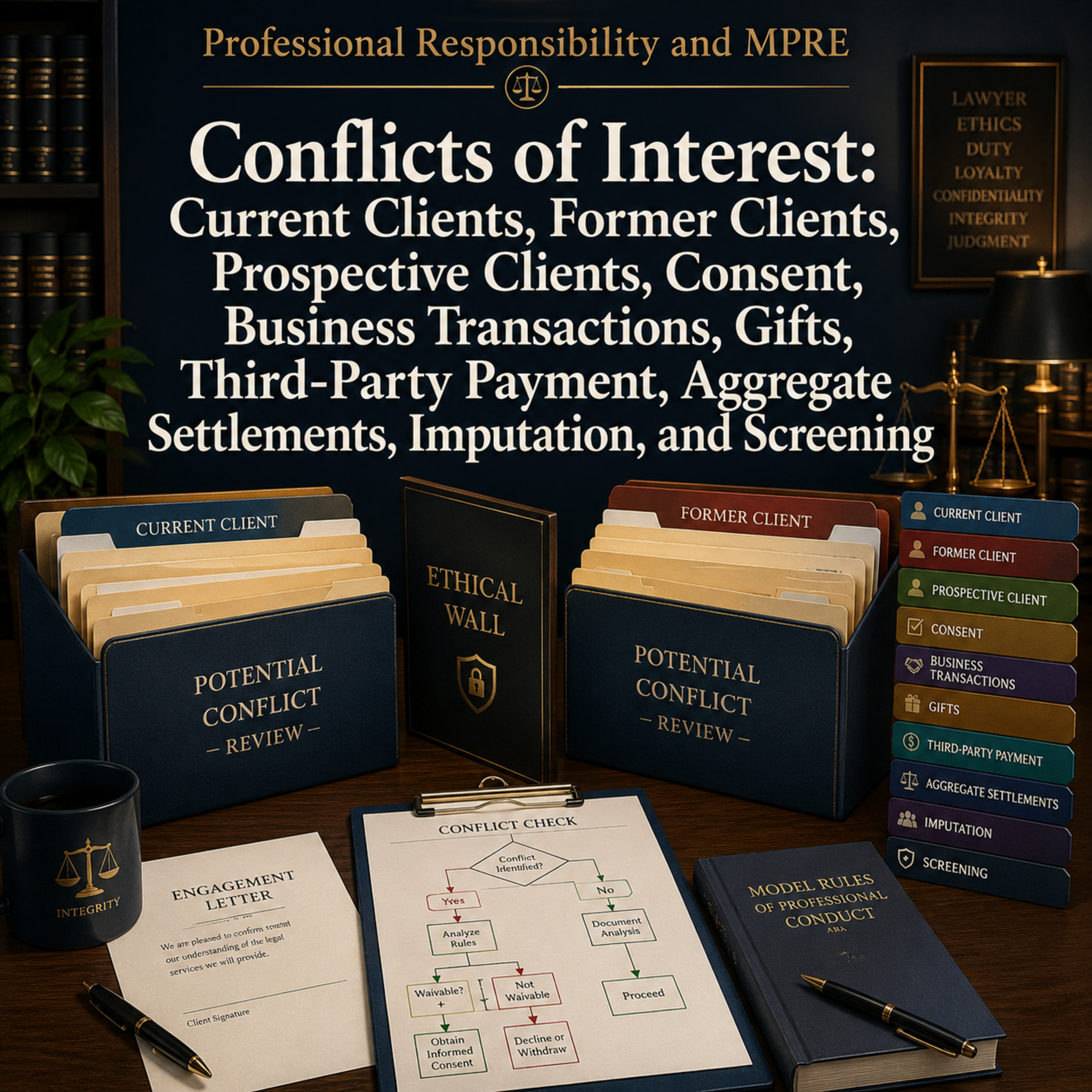
Professional Responsibility & MPRE: Conflicts of Interest - Current, Former & Prospective Clients, Consent, Business Transactions, Gifts, 3rd-Party Payment, Aggregate Settlements, Imputation, & Screen
Streams straight from the publisher. PodNod never proxies or re-hosts episode audio.
▬▬▬▬▬▬▬▬▬▬
EPISODE SUMMARY
Conflicts of interest protect loyalty, confidentiality, independent professional judgment, and client trust. A conflict may arise from direct adversity, material limitation, former-client duties, prospective-client information, personal interests, business transactions, third-party payment, or imputation within a firm.
A current-client conflict exists when representation is directly adverse to another current client or when there is a significant risk that representation will be materially limited by duties to another client, a former client, a third person, or the lawyer’s own interests. Some conflicts are consentable, but only if the lawyer reasonably believes competent and diligent representation is possible, the law does not prohibit the representation, and the matter does not involve one client asserting a claim against another client in the same proceeding.
Informed consent requires explanation of material risks and reasonably available alternatives. When required, consent must be confirmed in writing.
Business transactions with clients require fair and reasonable terms, written disclosure, written advice to seek independent counsel, reasonable opportunity to do so, and signed informed consent. Lawyers must not misuse client information, solicit substantial gifts, acquire literary rights during representation, improperly provide financial assistance, or allow third-party payers to control the representation.
Aggregate settlements require informed written consent from each client after full disclosure. Limiting malpractice liability and settling malpractice claims with clients or former clients require special safeguards. Sexual relationships with clients are generally prohibited unless the relationship predated representation.
Former-client conflicts bar materially adverse representation in the same or substantially related matter without informed consent confirmed in writing. Prospective-client conflicts may arise when the lawyer receives significantly harmful information. Imputation can spread conflicts within a firm, though screening may be available in some circumstances.
The MPRE lesson is classification. Identify whether the conflict involves a current client, former client, prospective client, personal interest, business transaction, third-party payer, aggregate settlement, or firm imputation. Then ask whether the conflict is consentable and whether the required consent or screening has occurred.
📘VIEW THE COMPANION STUDY GUIDE📘[💡FREE💡]
thelawschoolofamerica.com