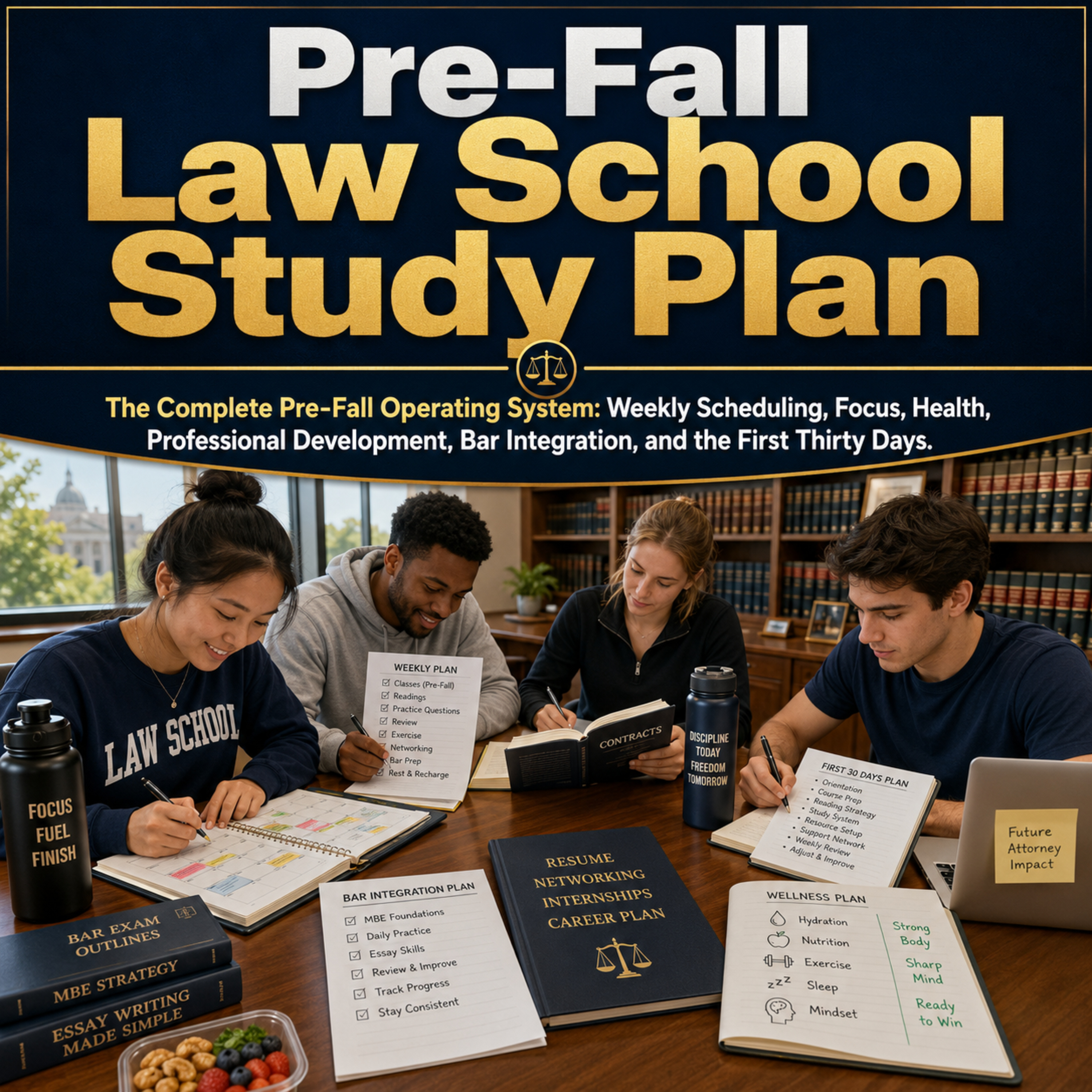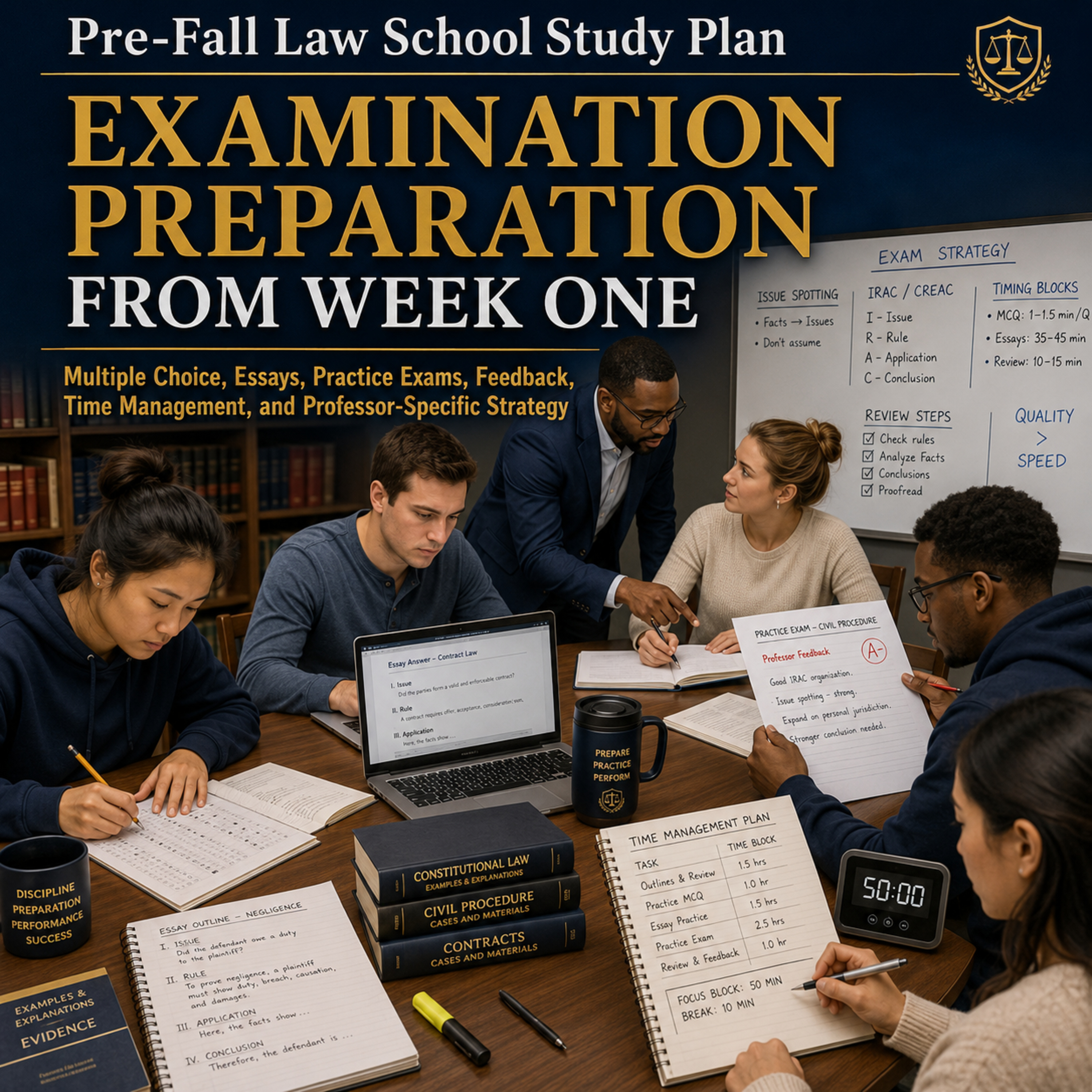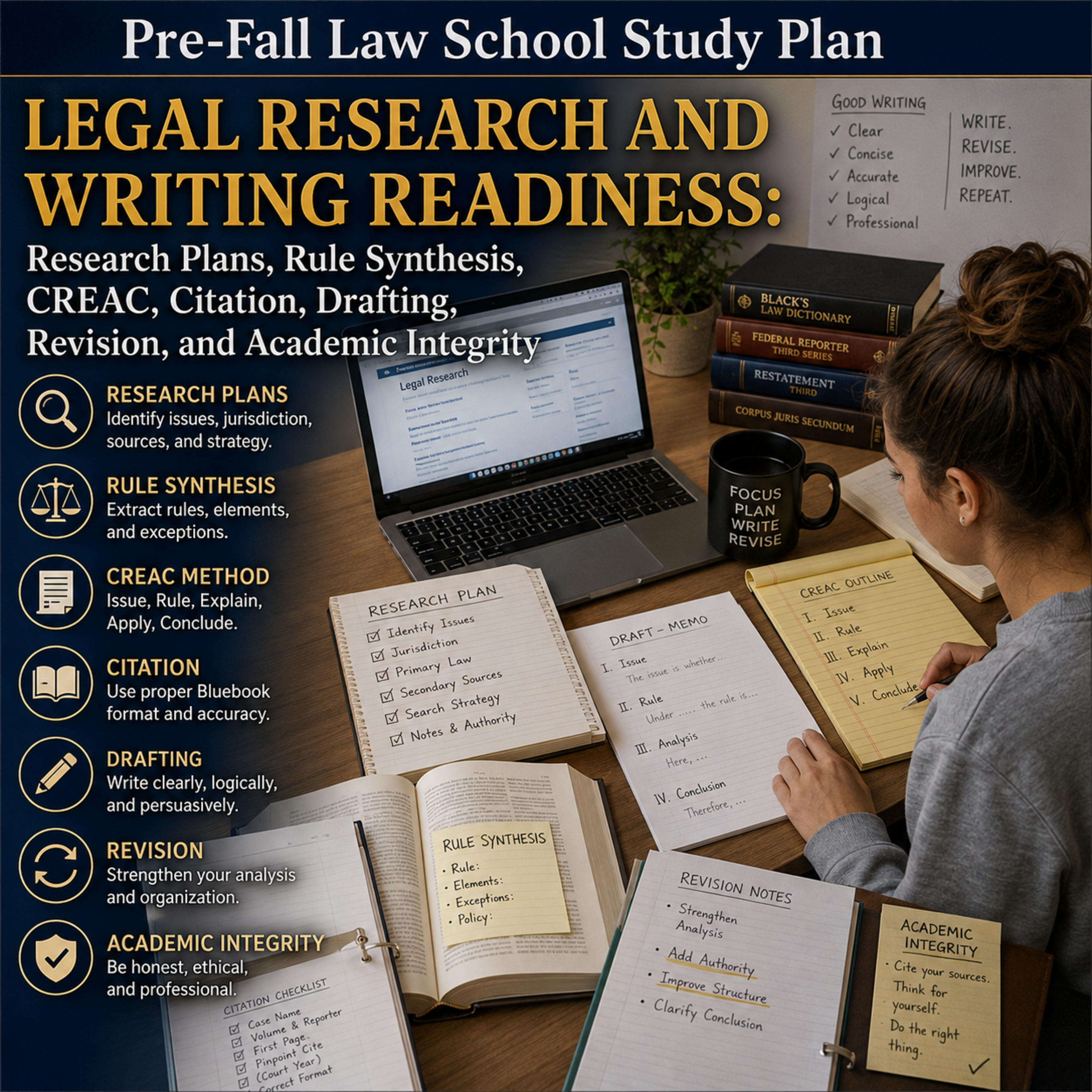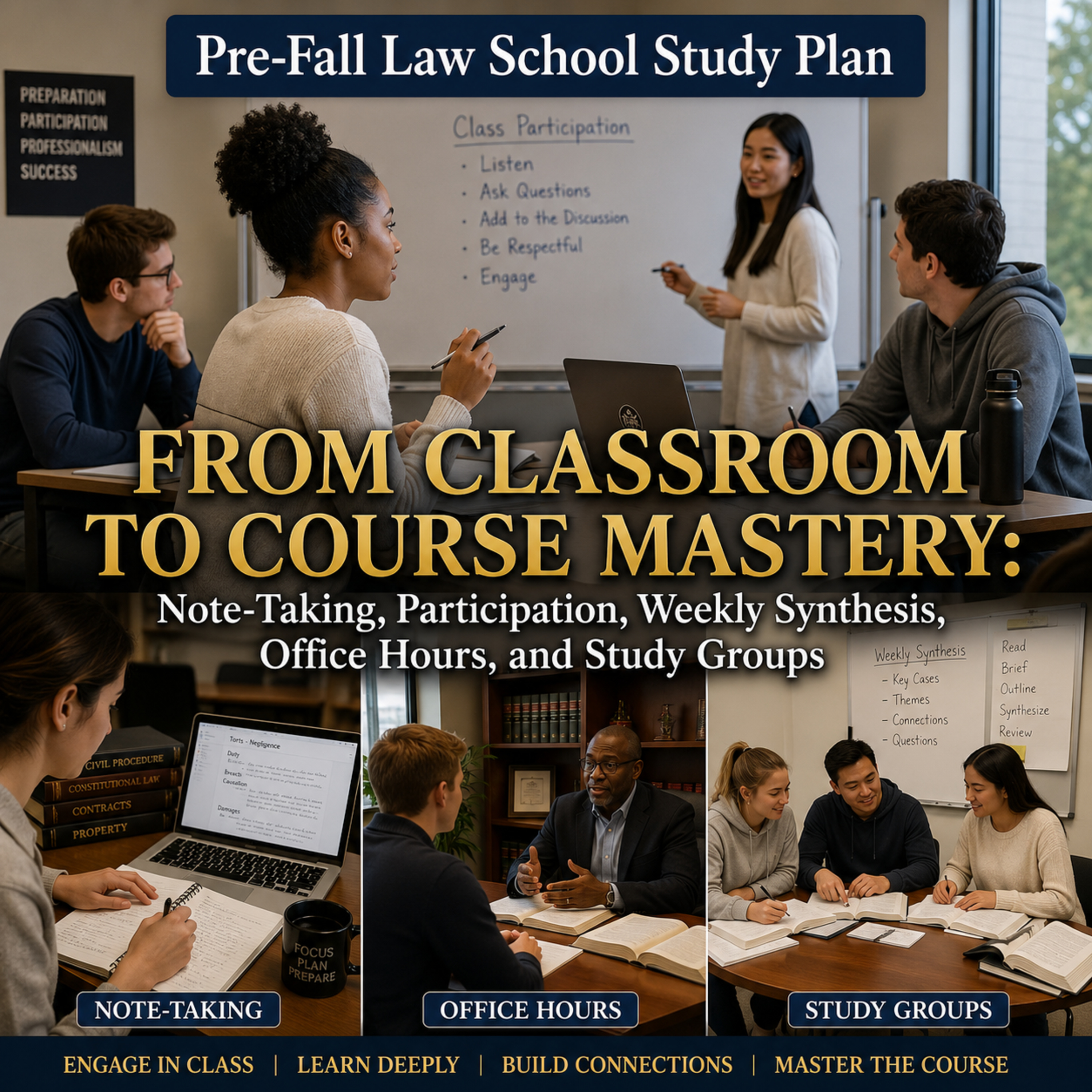
Pre-Fall Law School Study Plan: Outlining From the First Week: Full Outlines, Attack Outlines, Checklists, Flowcharts, Rule Statements, and Active Recall
transcript
show notes
📘 FREE COMPANION STUDY GUIDE 📘
👉 CLICK HERE TO OPEN YOUR FREE STUDY GUIDE 👈
Turn this episode into an exam-ready study plan.
🎧 EPISODE SUMMARY 🎧
A law-school outline is an organized statement of the law. It is not a stack of case briefs or a chronological transcript of class.
The full course outline should contain the professor’s organization, major topics, rules, elements, definitions, exceptions, defenses, statutes, case illustrations, commentary, policy, minority approaches, remedies, and doctrinal connections.
The outline should generally follow the professor’s course structure. Commercial outlines may help clarify doctrine and identify gaps, but they should not replace the student’s synthesis.
Outlining should begin during the first or second week and continue weekly. The goal is to maintain a current map, not to create an immediately perfect product.
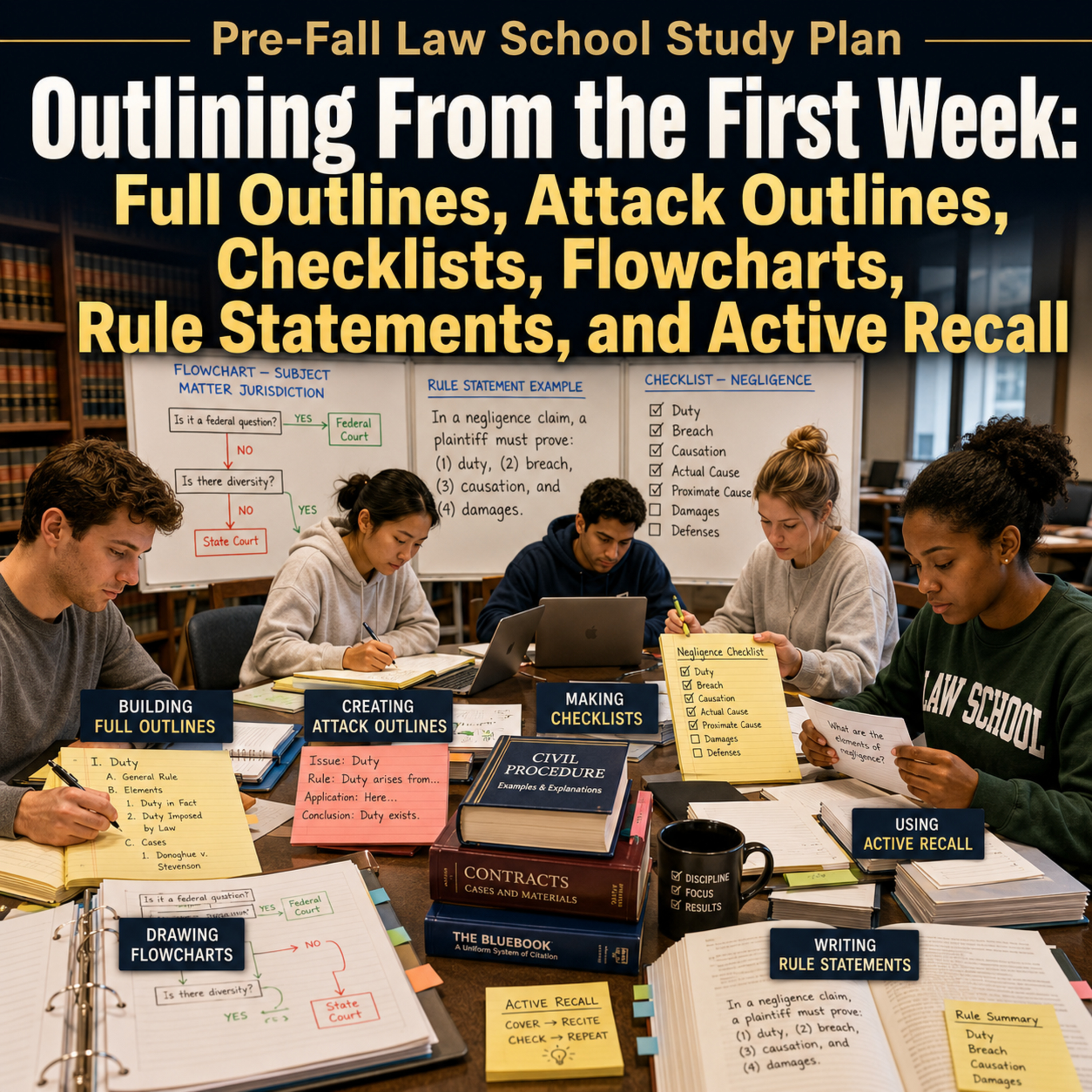
Every major doctrine should be reduced to an examination-ready rule statement identifying the governing standard, required elements, definitions, exceptions, burdens, and legal consequences.
Cases should illustrate rules rather than overwhelm the outline. The student should preserve the case’s decisive facts and doctrinal contribution instead of inserting full briefs.
An attack outline is a compressed issue sequence designed for examination execution. It should be short enough to use under pressure. A checklist supplies legal triggers for issue spotting. A flowchart organizes doctrines that require sequential decisions.
Students should not rely on rereading. Active recall requires retrieving rules without first looking at the answer. Useful methods include blank-page writing, flashcards, self-quizzing, oral explanation, practice questions, flowchart reconstruction, and teaching another student.
Spaced review revisits doctrine at expanding intervals. Interleaved practice mixes topics so that the student must identify which rule applies instead of being told the category.
Open-book examinations still require rule mastery. The student should use a clear table of contents, headings, page numbers, tabs or hyperlinks, attack sheets, and quick-reference charts. Materials should verify details rather than replace knowledge.
Closed-book examinations require rule memorization, attack outlines, spaced recall, timed writing, and selective mnemonics.
The outline should be revised through a feedback loop. Missed issues, unclear rules, hidden exceptions, sequence errors, retrieval failures, and weak applications require different corrections.
The central lesson is that outlines are built to produce analysis. A useful outline makes the law easier to retrieve, organize, apply, compare, and write under time pressure.
ℹ️ INFORMATION, PRIVACY POLICY & TERMS OF USE
Website Purpose
The Podcast and 1L Study Aide webpage supplements law-school and Bar Exam study with strategies, condensed rules, quizzes, and flashcards.
Educational Disclaimer
Content is for educational and informational purposes only. It is not legal advice, creates no attorney-client relationship, and does not guarantee law-school or Bar Exam success.
Privacy Policy
- No account or login is required.
- This webpage uses no forms or analytics to collect personal information.
- Quiz and flashcard activity stays in your browser and may clear when local site data is removed.
Terms of Use
By using this webpage, you agree to use its content only for lawful, personal, noncommercial educational purposes. It supplements—not replaces—courses, textbooks, official materials, or qualified instruction.