S3 · E1
Sunday · 21 min
Tales of Interest!!! From medieval history to my own history, sit down and get entertained!
Welcome to the podcast!! Unadulterated pure European hardcore history baby!! That and stories from my life as a travelling street musician. Find me on YouTube => Kobi One Podcast Show your support with buying me a coffee. https://buymeacoffee.com/kobecooman3 This is a public episode. If you'd like to discuss this with other subscribers or get access to bonus episodes, visit kobione.substack.com/subscribe
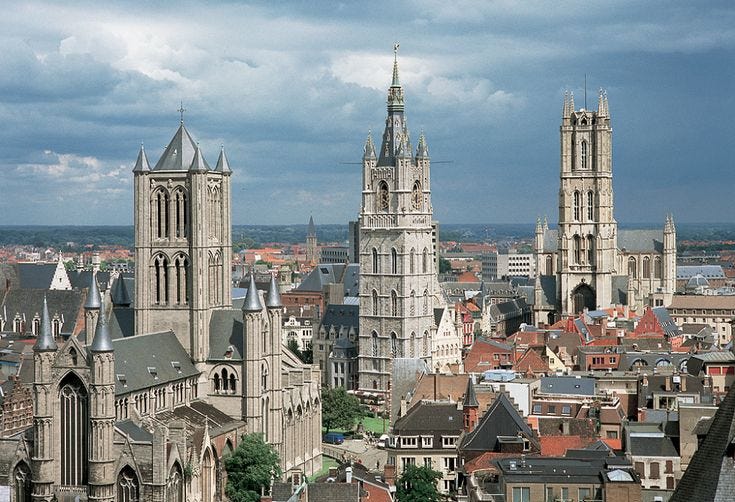
This is the story of Charles V, the man that would rule the world. And how he was born on a toilet...Find out why, his father, Pihlip's death leads to Flamenco here; https://kobione.substack.com/p/strange-origins Feel free to buy me a coffee, lord knows I don't get enough sleep! https://buymeacoffee.com/kobecooman3 This is a public episode. If you'd like to discuss this with other subscribers or get access to bonus episodes, visit kobione.substack.com/subscribe

The Interview This was looking to become the most difficult job interview of my life. What had I expected anyway? I had studied French in school, like everyone else in Belgium. This did not equate to speaking it well. More like, not at all. I had sent my résumé ahead of time, from Belgium. I cheated. My French girlfriend had done all the translating and error correcting. I thought, if I don’t land that job, it’s the ski-season, I will find something else. When I got to the town, I understood, it’s gonna be this job or I will be stuck in the French mountains with no job, no money and no car, in winter time. The town was the smallest little town you can imagine, a mountain removed from anywhere else. There wouldn’t be loads of other job opportunities just waiting around for me. This was it. Ok, I was going to play this by ear. This was just an application like any other. The questions were the same, the idea was the same, it was just in French. They were basically going to ask me questions and I could simply hope for as much yes or no questions as humanly possible. I just needed to fake speaking decent French for long enough to get hired. “Euh, oui!” “Eumh.. Non, non!” And on the bright side, this being a small town probably also meant they wouldn’t have a lot of other applicants, right? Why import someone from all the way over in Belgium, Flanders if you are simply overflowing with workers? Let’s do this, baguette baguette fromage oui oui!! She looked a bit like a bulldog with glasses on and ginger hair. He looked as if he had walked straight out of a Disney movie and used to play a friendly bear, but now he just worked the kitchen and ate the cheese. They looked friendly. I find out they are actually Belgians, from over on the French-speaking side. I get a strong feeling they are totally psyched to get someone over from Belgium, the motherland. In fact, my spider-senses are tingling and I feel a weird mix of desperation and relief emanating from them. I don’t know exactly how I pulled it off but soon as I was in, I was back on my way out. I got the job. Only afterwards do I find out why they felt a bit desperate. Turns out they were aiming for three employees, they get two. One of them leaves within the first week, pissed off at the bosses for how much they are making him work for his money. The other one is me. So, for three months it’s Chantal, Henry et moi. They overestimated my French and I underestimated the job. They basically teach me French, mainly kitchen and bakery jargon. Seeing as they had expected three employees and get only me, I end up doing the work of three. I often clock about 80 hours a week. In the morning, 7h30 AM, baker’s assistant. From 11 AM onwards, sous-chef for lunch. Around lunch-time, I become two people, sous-chef and waiter. I do both, at the same time. Tensions sometimes run high, as they often do in kitchens. We yell at each other, we curse, we smile politely at the customers, we run back and yell some more. Then quiet comes. The afternoon has arrived. I clean up the restaurant, do the dishes as fast as one can. The sooner I finish, the longer my break. Depending on what needs to be done still, I am free for about two hours in the afternoon. Time to go home, eat something quick and walk Loeka. In the morning she only gets about 15 minutes. So when I get home for my break, I spend it all on her and sometimes Zion as well, my girlfriend’s dog. Me and Loeka are staying in an “apartment” that has mad ‘Harry Potter’s little room under the stairs’ vibe. The room is literally only about 2 meters on 3. I have a couch/bed, a stereo and laptop and I brought my record-player and some records with me. My brother drove me all the way up here with all my stuff. He acts tough most of the time but he’s one of the sweetest peas in any pod. Afternoon hits before I know it and I am back at it. Waiter and sous-chef until the kitchen closes and then bartender until the bar closes. It’s late in the evening by the time I get home. Loeka still needs a walk. I eat, have a glass of wine or two and I’m off into the winterscapes for third time of the day. It’s the only time there is no rush, so I relish it. Don’t push my buttons and just push this button! The Night It’s beautiful here at night. It’s always beautiful here but there is something special about a cloudless, star-woven, open sky over a virgin-white and blissful snowscape. I just need to walk about 15 minutes and there is no light pollution what so ever. I go past Chloé’s place to pick up Zion for the late night walk. Chloé acts cold. She’s been like this ever since I arrived. I originally thought we’d be shacking up together but now I am already happy with the least bit of attention when I pick up or drop off her dog. Not the winter I expected but I roll with the punches. The night is exceptionally beautiful and I adventure deep into the French mountains. Loeka jumps at Zion and they start rolling in the snow, downhill. I jump into the rolling heap of fur and we roll down, fighting, laughing, alive. Somewhere in all of it, I lose my phone. I walk back to Chloé’s. It’s around midnight. I borrow her phone and hike all the way back thinking; “It’s dark, it’s quiet. If I can’t hear the phone, I will surely see it. It’s a Nokia 3310, indestructible. I will find it.” Pablo, Loeka and ZionMay all three bark in peace I don’t find it. I had put it on mute and it must be laying face-down in the snow. What the hell, let’s have fun then. I jump at Loeka the way she jumped Zion earlier. Bam, we are rolling again. As I stop fighting, I stay down, flat on my back and look up at the stars. How long have we been looking up at these same stars? How many of us are connected through time and space by these little holes in the sky? As I get up, I see the contours of something squat and black outlined in the snow. It’s my phone. I can not believe it. I pick it up and take a good look around. On a mountain face, in the pitch-black darkness, illuminated only by the stars, I find my phone not by looking for it. By rolling around. There you have it. You never know what will get the results. Better do the things you want to do first. The rest may very well just be lying next to you already. This is a public episode. If you'd like to discuss this with other subscribers or get access to bonus episodes, visit kobione.substack.com/subscribe
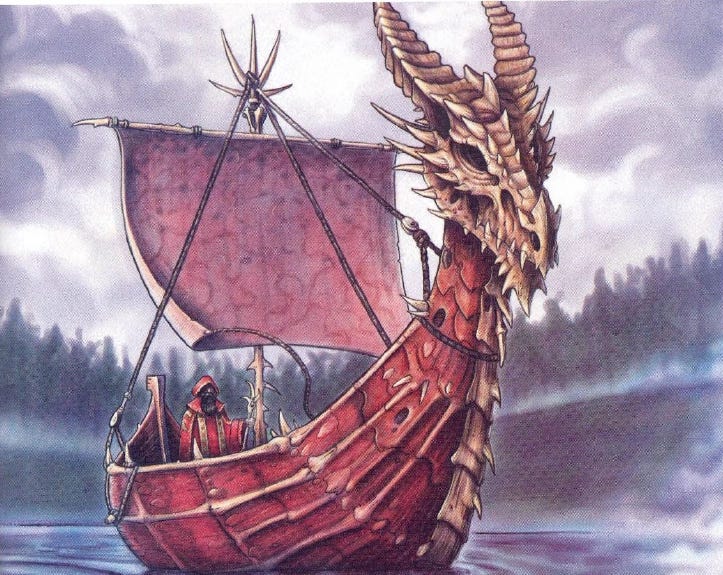
Disclaimer; I mostly followed one Saga, the Saga of the Greenlanders, for this article. Sometimes the lines between fact and interpretation will blur. It was all a long time ago. This is th story about the Vikings meeting the Native-Americans a century ago, and how it did not end well; ...somewhere in the middle of it, a pregnant woman named Freydís stands alone against attackers who expected her to run. She doesn’t. If you enjoy my work, make sure to get me a coffee, espresso will do! Coffee time!! This is a public episode. If you'd like to discuss this with other subscribers or get access to bonus episodes, visit kobione.substack.com/subscribe

If you haven’t heard of the Burgundians yet, are you in for a treat!! Here is the original article;Trying to get this baby uploaded through my RSS feed Oh!!! and do be sure to get me a coffee, my baby needs a new pair of shoes (kind of not kidding here!!) This is a public episode. If you'd like to discuss this with other subscribers or get access to bonus episodes, visit kobione.substack.com/subscribe
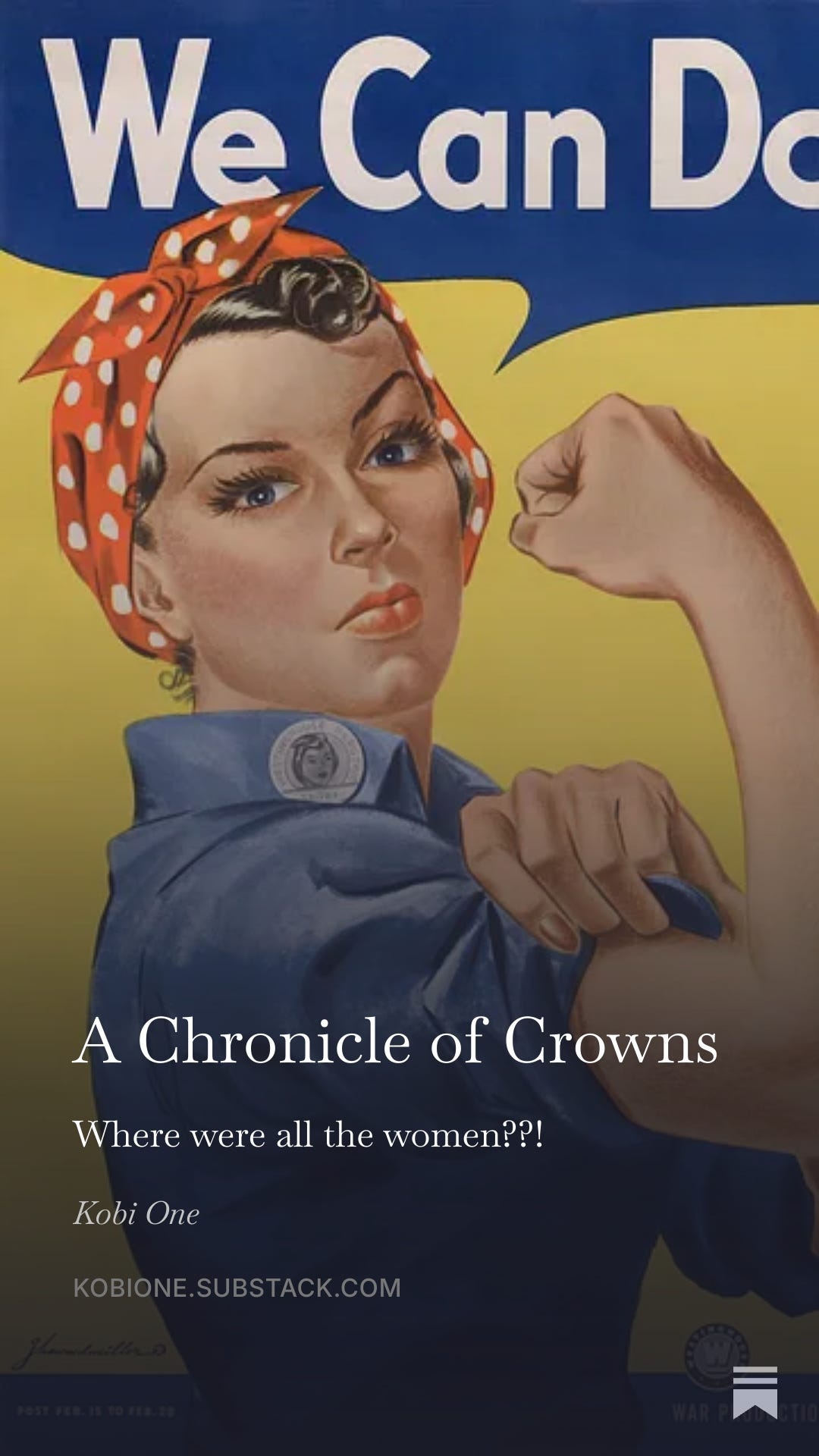
You can always buy me a coffee!! https://buymeacoffee.com/kobecooman3 By Jupiter and Mars! Could it be that he heard her voice cut through the sounds of battle much like their longswords cut through flesh? Hell knows no fury like a woman scorned, but this cannot rightly be the work of a mere mortal woman? Her tall, imposing figure, her great mass of fiery red hair, eyes that stared right through you, into another realm. Are we so unused to hearing a woman’s battle cry? Whatever it was that commanded this beast of a woman, she seemed to draw strength from the gods themselves!! Now here he stood, he, Suetonius! Here he is, watching, from a safe distance of course, the cities Nero himself had made him regent over, being sacked and burned and burned again. By that blasted woman! First to fall was Camulodunum (Colchester), pushing the Romans towards Gaul. Then Londinium (London) and Verulamium (St. Albans) fell, and they fell hard. Whoever was left to defend the Roman cities seemed to have a choice: stay and die, or run as far away from Boudica and her assorted Britons as their legs could carry. After the cities were successfully sacked, the false idols these invaders worshipped so vehemently were given the same treatment as the inhabitants before them, they became the object of utter annihilation. Roman cemeteries were desecrated, statues mutilated, tombstones broken. Suetonius had not accounted for this when he started taking what he considered to rightfully belong to him. Queen Boudica ruled alongside her husband, King Prasutagus, in equal measure over the Iceni tribe. Already something hard to comprehend for a true Roman governor, a woman having equal rights to power as a man. He used to scoff at the thought. No more, today. What had happened is that King Prasutagus had made a deal with Nero himself and had granted him co-regency over his regions. At the hour of the King’s death, the governor, ruling only by Nero’s decree, thinks: Rome is far away, and wouldn’t Nero prefer sole regency anyway? Why wait for instructions, we could be waiting a long time. Let’s take their regions now! And let’s take their daughters too, for so it is so often when bloodthirsty men come knocking: blood is not the only thing they thirst for. Queen Boudica was publicly flogged and watched in horror as her daughters were raped over and over again by the men who served these Roman monsters. Officers and slaves alike went pillaging and plundering, taking whatever and whomever they so desired. These men truly had no idea of the fury that would be unleashed shortly after their transgressions. They would eventually learn about the epic power that is a woman. Or in Suetonius’ case, women. For here they were, Boudica and her daughters, riding round in their chariot, driving up the men of all tribes, shouting at them that “win the battle or perish — that is what I, a woman, shall do! You men can all live on in slavery, if that is what you want.” Suetonius could swear he heard her voice, stern, strong, unyielding. He had fled the falling cities to amass an army 10,000 strong. By all rights, he has nothing to fear. Be still my heart, he quivers. And then, the battle is upon them. The Britons storm the lines of defense, and Roman orders are given. All at once, several thousand heavy Roman javelins meet the scarcely armed Britons. How many of them fold like bloody napkins, yet those who stand continue their assault, unblinking. This is where their bravery, however grand, leads to their downfall. So many were they, they got trapped between themselves and the facing javelins. Not enough room to thrust their mighty longswords, their attack became a slaughter. This slaughter was sealed by the Roman cavalry, released in time to encircle the falling Britons and mow them down from all sides. The bloodthirst within the Romans having reached its pinnacle, Tacitus records that some 80,000 Britons were killed, while the Romans themselves suffered but 400 casualties. Even taking Tacitus’ words with a grain of salt, as one should, these numbers still speak to an absolute massacre. Boudica was never caught or killed; her body was never found. She is rumoured to have poisoned herself rather than let herself be ravaged once more. What she left behind is so epic in nature, the name could not be more apropos: the Boudican destruction horizon. Wherever you start to dig in the cities she once laid waste to, you eventually get to a layer in the sediment that is just a thick band of red, burnt ash. The fires she sprung on these cities burned with such intense heat that they melted glass, scorched building materials, and baked the earth. Today, archaeologists use this distinct, blackened layer of scorch and ash to mark a specific point in time. A woman’s revenge so thorough, its precise moment in time is baked into the soil on which many empires have been built thereafter. This podcast is dedicated to all the women, named and unnamed, who have shaped history and formed our reality. Welcome to ‘A Chronicle of Crowns — Where Were All the Women?’ History belongs not to men alone Though it is even called his-story, her story seems at least of as much importance, does it not? Something occurred to me whilest writing A Chronicle of Crowns, women are often glossed over, often named only for having given birth to the men of whom I so often speak, that it almost seems conspiritorial in nature. I myself am guilty of my own charge. My one podcast dedicated to a woman is a truly sad affair. It’s about Juana la Loca. Mentioned in that very podcast however there are two women who stand out mighty and tall throughout our timeline and who shape it to an insane extent. So merely glossing over these women seems dishonorable. Let’s set that record straight. Isabella of Castilia Rise to power Isabella was not born wearing a crown. Succession through female side was a thing in Spain but when her half-brother Enrique IV dies on December 11, 1474, the kingdom splits in twain. His daughter, named Juana, just like Isabella would name her own unlucky daughter later on, claims the throne alongside Isabella. Already a decade now, rumors have spread of her potential not-so-royal origins but Isabella had put herself in a not so much better position. In fact, she would have had total, uncontestable claim to the throne if she hadn’t married Fernando in secret, against the signed and agreed upon contract with her half-brother. It boiled down to this, her half-brother named her heir, as long as she would only marry someone of his choosing. Chances are Isabella saw this as abdicating the throne to one of her half-brother’s friends and having to spend her entire life married to the b*****d on top. She choose her own husband and they married in secret. Juana was put back on top of the list, Isabella scratched off it.Then Enrique IV dies and turmoil once more hits the continent! Or at least, that is how the chroniclers write it. I doubt the men and women working day in day out, surviving off of turnips and onions, ever had strong feelings about the political games of musical chairs that kept happening in the powers-that-be, but then again, I might be very wrong. It’s sad we will never get to hear their account. Either way, both women were proclaimed Queen by their own factions and war ensued. Nothing but rivers of blood coursing through his/herstory’s timescape it seems. The King of Portugal, Afonso V, came to Juana’s aid. A marriage between them had been arranged, though it required Papal dispensation seeing as they were directly related. This is what moved an internal succesion dispute into an all out international war. So the peasants did probably pay some mind to the political happenings of the day through their version of twitter, which was mostly men with loud voices, which again sounds just like twitter. Even France got involved and seeing as at the head of the French, there were the French Royals, they choose in favor of the incest-team. Thus began a war called ‘The War of Castillian Succession’. Yeah, I know, not the most creative war-title ever but at least it does say exactly what it was all about. Well, leaving out the incest of course but I’m sure that was not intentional. The war ended with the Treaty of Alcáçovas (September 4, 1479): Portugal recognized Isabella as queen of Castile in exchange for Atlantic territorial concessions (Guinea, Cape Verde, Madeira, the Azores, and a claim on Fez), plus a large cash indemnity. Juana was required to remain in Portugal rather than return to Castile. Her marriage to Afonso, never consummated, was annulled by Pope Sixtus IV under pressure from Isabella. Juana took the religious name Sister Juana at a Franciscan convent in 1480 and continued to sign her correspondence “la Reina” (the Queen) until her death in Lisbon in 1530, having never formally renounced her claim until 1522. The marriage contract Isabella’s marriage to Ferdinand was negotiated, not romantic, and the terms were unusual for the period. The agreement kept Castillia and Aragon as legally distinct crowns under joint rule rather than merging Ferdinand’s authority over Isabella’s kingdom. Isabella retained full sovereign authority within Castillia, all decrees, appointments, and governance there required her assent, not Ferdinand’s alone. The two crowns were only unified administratively over subsequent generations; formally they stayed separate polities sharing a monarchy. This is why I believe Isabella to be strong, wilfull and smart. She had a chance at an easy crown, marry whom you are told and take the terms dictated to you or.. choose your own man and set your own terms and fight till you die defending them. This warrior spirit becomes apparent when in August 1476 a rebellion broke out in Segovia but Fernando was elsewhere, staving off the Portuguese forces. Isabella rode out herself and stumped out that rebellion like a bad roll-up. She was a woman who knew how to get stuff done and didn’t mind doing it herself. The war against the Moors It cannot be overstated how epic in proportions was the collaborate effort of Isabella and Fernando to win the ten year war in Granada against the Moors. The European powers-that-shouldn’t-be were really needing a victory and since the fall of Constantinople they weren’t getting any, until now. Having name to this victory sets her apart from other rulers of that time already, but let’s not forget, she is a woman, she went furthur and beyond just rivers of blood. Contemporary chronicler Fernando del Pulgar records that during the siege of Álora (1484), Isabella sent six large tents to the field along with physicians, surgeons, medicine, and attendants, and ordered that treatment be free, with the crown covering the cost. These tent hospitals were referred to at the time as “the Queen’s Hospital.” At the fall of Málaga in 1487, the Queen’s Hospital followed the army into the city in a train of 400 supply wagons. This is generally cited as the first documented field hospital system attached to an active military campaign in European history, predating later, better-known field medicine reforms by centuries. Isabella is also credited, alongside logistical reforms in supply, with converting Castile’s forces from loosely coordinated noble militias into something closer to a standing, centrally organized army: permanent units, crown-appointed officers, and the capacity to sustain multi-season campaigns rather than short seasonal raids. Isabella was present at multiple sieges in person, including extended stretches at the camp during the six-month siege of Baza (1489), where her presence is credited by chroniclers with sustaining morale among both nobles and common soldiers during a siege that badly strained Castilian finances. The inquisition And here, as a character, Isabella falls apart for me. It would be dishonest to include the parts of her I like and gloss over something important once more, just to prove a point. Isabella has a direct hand in one of the most brutal and coordinated expulsions of the old world. Isabella and Ferdinand petitioned Pope Sixtus IV for authority to establish an independent Inquisition under crown rather than papal control, citing reports (from 1475 onward) of conversos, Jews converted to Christianity, many under earlier waves of persecution going back to 1391, secretly continuing to practice Judaism. Sixtus IV granted the bull *Exigit sincerae devotionis affectus* on November 1, 1478, authorizing the monarchs to appoint their own inquisitors. Then, after the fall of Granada, the Alhambra decree was issued, in fact in the exact same year as where Isabella funded Columbus’s voyage. Oh, for newcomers to the Kobi One Podcast, that is another feather in this lady’s cap, she is directly responsible for the (re-)discovery of the America’s. The decree ordered all Jews in Castilia and Aragon who had not converted to Christianity to leave by July 31, 1492, under threat of death, and barred them from taking gold, silver, or horses out of the kingdom. Contemporary chroniclers’ estimates range as high as 300,000–800,000; modern historians generally put the figure closer to 40,000–100,000 expelled which should already sound like a lot even for today, but back then, by golly… A further 40,000–50,000 ended up converting to remain. The decree stood, formally, until it was rescinded by the Spanish government on December 16, 1968. Margaretta of Austria Where she came from When the last Burgundian Duke of Flanders fell, stabbed to death, frozen in a ditch, face eaten off by wolves, the last Burgundian Duchess, his daughter Mary, faces some serious trouble. She needs an army to fend off the French. She marries Maximilian of Austria because of his great, big, standing… army and he, he was in it for the money. They had two children together; Philip the Handsome and Margaretta of Austria. Marry dies in a strange riding accident. She falls from her horse and breaks her neck. She leaves behind but whispers of a family that once stood tall amongst Kings and Queens. Nothing but whispers… and her poor children. Margaretta is but two years old. She was taken from Ghent under armed guard as a toddler specifically so Maximilian couldn’t change his mind about a treaty he had made with the French King himself. A treaty marrying her off to the King’s firstborn to establish some peace in the regions and amongst the families. She travelled with a governess by the name of Madame de Bouzanton, and was formally handed over at Hesdin to agents of Louis XI, who would become famous as le roi plus le terrible qui fut jamais, in the presence of Anne de Beaujeu and her husband. She entered Paris on 2 June 1483 to public acclaim, dressed in black satin with gold thread, and was betrothed the next day at Amboise, after which she was addressed as “Madame la Dauphine”, Lady Female Dolphin, jup. When Louis XI died two months later, she was now, by name alone, Queen of France though still a toddler. Anne de Beaujeu, who effectively ran France as regent for her younger brother, personally inspected the child for physical deformities (standard practice for a future queen) and found none, then took charge of her education: French language, reading, writing, embroidery, painting, music, and a custom-made bow for archery. The finest education money and power could procure so she could be moulded into a perfect queen. So many hours, so much effort. And all of it, for absolutely nothing. The younger brother came of age, Charles VIII, and he wanted Britanny. Could not get enough of ‘Baby hit me one more time’. He could marry Anne of Brittany and steal her from under the nose of his nemesis, Maximilian, whom was already engaged to Anne himself, while, at the same time, dropping Max’s daughter, Margeretta, like a stone. The sheer drama alone, is this Jersey Shore or what? She wasn’t immediately released, even after the annulment. France kept her as a hostage for two more years specifically to leverage the return of her dowry lands (Artois and Franche-Comté). During this limbo she reportedly wrote to her father: “I want to go home, even if it is only in my chemise”. She would get her wish in May of 1493, when she was finally released together with her dowry. She has now been “engaged” once. She will still marry twice. Marriage Numero Uno She married Juan of Asturias, heir to Fernando and Isabella, in April 1497. He was 18, reportedly fell for her almost instantly, and by every account this was the one marriage in her life built on real mutual affection rather than pure statecraft. It lasted six months before he died (likely tuberculosis or a similar wasting illness, accounts vary). She was pregnant at his death; the pregnancy ended in stillbirth, meaning she lost both husband and child within a short span. She stayed at the Spanish court for roughly two more years before leaving in September 1499. For readers of the last episode, Juan stood first to inherit the Spanish crowns and his death eventually leads to the brutal story of Juana la Loca. The Second one Then, she married Philibert II of Savoy in 1501. He died in 1504 of pleurisy after a hunting-related chill. They had fostered no children. After this, Margaretta refused all further marriage offers, including a serious push to marry the widowed Henry VII of England. She committed to a permanent black mourning dress that would have made Johny Cash proud. Francis Weyns dedicates a chapter in his book ‘De Zinderende Zestiende Eeuw’ to Margaretta and named it very aptly; Back in Black. After her second husband’s death, Margaretta plunged herself to her own supposed death through a window, only to be saved in the nick of time by a man in her guard. I suspect this, like so many things in this lady’s life and carreer, to have been a purposeful and political piece of theater for her own advancement. Wouldn’t it be both tragic and epic at the same time? Rise to Power Philip the Beautiful (her brother) died in September 1506 in Spain, of reasons unknown though heavily speculated, at the age of 28. He left behind a widow, Juana la Loca, the star of my previous Chronicle of Crowns, and young children including Charles V. Margaretha was formally installed as regent/Governor of the Netherlands in 1507 as a direct consequence of his death, not a year after. As Charles V comes of age, the whispering in ears by malevolent, powerhungry advisers starts. You can imagine whichever favorite ‘evil advisor’ from whichever favorite book or film, they will probably fit the description rather well. The man in question here was named Guillaume de Croÿ, the lord of Chièvres. He wanted to oust Margaretta A.S.A.P. so he could bend and mend pro-French sentiment within the Flemish courts. For a moment, it worked. Charles V was young, easily manipulated. Guillaume had managed to toss Margaretta out of Flanders and put Charles V in direct opposition to his own grandfather. It doesn’t fare well, it never does when foreigners try to worm there way into Flanders. This time, no rivers of blood though. The gap between Flanders and the people supposedly governing it became too big and then Ferdinand of Aragon, the father of Juana la Loca, croaks and drops all of the crowns he was juggling on Charles V. His empire just grew very big. And indeed very unruly. He needed people who he could trust, who were rooted well in the regions they would rule or he would lose control over all of it. He asked Margaretha back onto his council in 1517, restored her ability to sign state papers and control finances, and gave her a substantial annuity. This functioned effectively as an admission that dropping her had been a mistake. In 1518 it was made official, Margaretta was back, in black. Her full regency powers were restored and they would stay so until the day of her death. Maximilian dies Charles V lands in Spain in 1517. That’s when he requires Margaretta’s aid so deerly, for this is when the man that has showed up in so many episodes of ‘A Chronicle of Crowns’ already, Maximilian, dies. He dies leaving the title of Holy Roman Emperor to blow in the political wind and whoever catches it first gets to keep it. This title, this crown, was not hereditary, you see, so the game was on. Margaretta had been trained her whole life for this moment, having spread her web all over, having learned from the best there was around, she sets to oil the political and financial machinery until it hums and purs and resonates to the Habsburgian tunes. She is recounted to be one of the biggest sources of help in securing Charles’s election against Francis I of France and Henry VIII. Imperial elections at this level were essentially bought via bribing the Electors and she was directly involved in that campaign. Charles won on 28 June 1519. It pays off big time. She became the only person, let alone woman, ever that was granted regency without a time limit by Charles V. Every single other regent throughout the world, from Europe to Latin America, to Asia (The Philipines were named by Charles V after his firstborn son, Philips II), to North Africa, had been given fixed or conditional terms. Not Margaretta. She was in for life. Her journey is one of being stolen away as a baby, to being married off twice, The first marriage was reported to be full of happiness, it ends in death. The second one, merely political, ends in death as well. She then went on to potentially stage being so grief struck by the death of her second husband that she would manage to convince her father, the man of the marriage-machine, to allow her widowship for life. And then she used this status and all the contacts and wisdom the years and her entourage had endowed her with to grow in the political ranks. She still gets ousted, but had made herself so unmissable that she is reinstated. She then goes on to win and safeguard one of the biggest titles out there in the annals of history for the boy she herself had help raise and is then rewarded with power for life. BOO YEAH! If that isn’t an epic woman and her-story I don’t know what else to tell you. But the question I ask in the title of this installment is not ‘Where were all the wealthy women?’. So, where was everybody else? The answer is like so very often, the women were out there doing the heavy lifting, pulling the weights and getting little to no mention in the history books for it. Keeping the world running seems to be an unthankful job, at times. Where were all the (not-so-wealthy) women? Women’s rights in the middle ages, specifically in the low countries, weren’t as non-existent as one might suspect at first. They were still quite confusing and wildly degrading when looked at through our modern lens. Still, they were a great deal more existent then in most other parts of medieval Europe. Here in the low countries there was a law for women, stating they were entitled to certain privileges, such as being compensated financially for work done and having zelfbeschikkingsrecht/right of self-determination. Two big caviats; these rights and privileges would disappear as snow before the sun, soon as a woman married. Then, the man would retain all rights in the woman’s name. They were also, generally speaking, not allowed to form a guild or to be part of guild-life. Here is some of the jobs done by women back then. * Yarn and wool preparation workers — the keures (civic ordinances) from Ghent and Bruges barely bothered to regulate spinning and wool-prep compared to weaving and fulling, because officials didn’t consider these low-level, non-guild occupations important enough to document closely, which is itself the point: women’s labor undergirded the entire Flemish cloth economy and left almost no paper trail because no one thought it worth recording. * Yarn market sellers — Ghent, Bruges, Aardenburg, Arras, and Saint-Omer all had dedicated yarn markets, with a 1282 Bruges ordinance directing yarn buyers and sellers to a specific area by St Salvator’s churchyard, this is where a lot of women’s independent small-scale trading actually happened, outside guild structures. * Brewsters/alewives — women dominated small-scale ale brewing until the trade professionalized and guilds centralized it in the 16th century, at which point men increasingly took over a trade that had previously been dominated by women. Widowed or otherwise independent brewsters had more stability than unmarried ones. So you were able and allowed to the trade as an unmarried woman, out on her own, but you had serious disadvantages still. Sounds familiar. * Fishwives — visual record survives via a 1570 sketch by Flemish expatriate Lucas de Heere, showing a London fishwife’s dress closely resembling garments in Flemish paintings of the period. * Widowed tradeswomen taking over husbands’ businesses — a very common pattern, especially in victualing trades (innkeepers, taverners, cooks, fishwives, brewsters) and textile trades. As Margaretta’s life demonstrates; widowhood was often the only legal loophole into visible economic power for women. * Guild-restricted specialty roles — and here it gets particularly stupid. A female dyer, for instance, wasn’t permitted to lift cloth from the vats, and a female pastry-maker could only carry one box of biscuits through town at a time. This paints a very clear ‘apartheid’ picture does it not? Such absurdly specific restrictions show exactly how guilds actively worked to keep women in production but out of authority. * Silk-weaving — one genuine exception: medieval silk-weaving guilds had women controlling the entire process, with female supervisors and guildmasters as the norm rather than the exception. * Debt collection proxies — a small but sharp detail: men were sometimes formally authorized to collect debts on behalf of businesswomen, because women weren’t permitted to demand payment themselves in person. Good illustration that, though women were allowed compensation for work, they still were made to jump hoops soon as the work involved higher echelons of society. I will finish this list with an example that mostly survived in folklore. The problem with Flemish history, a lot of it got destroyed during the protestant rebellion of the 16th century, the French Revolution and the Industrial Revolution. Sometimes folklore is all we have left. But this folklore is so widely spread and occiasionally referenced that there is a good amount of certainty about it. After you had just, for instance, sailed the Northern Sea from Great-Brittain into Bruges, you would most likely take your charge and load it into some smaller canal boats. These would in turn have to be pulled from Bruges and its seaport, over a series of wooden roads, toepaths, lining the canals. Most of the time the people pulling these boats would be women, often in their later teens or early twenties, ie., before getting wed. Can you imagine the sheer amount of work that goes into tugging boats with ropes over, for instance, the canal connecting Bruges to Ghent, which was 45 km or 32 miles long? Tough ladies to be sure. But once more, being wed put an end to these outrageous shenanigans of a woman earning herself a living by doing the jobs nobody else could be bothered to do. This led a certain woman to go on one of the oldest recorded feminist campaigns ever. Her name is Anna bijns and she was definitely kick-ass. Better off without a man Anna Bijns was a famous poetess and teacher from the 16th century, Antwerp. In part famous for a poem advising women; ‘Ongebonden best, weeldig wijf sonder man’. This could be translated rather loosely to ‘Unbound is best, a prosperous woman without a man’. As soon as you married, you lost any and all rights or privileges you had as a woman, however few they were. The worst part, this law stayed in effect in Belgium until 1958. If you wanted to open a bank account in Belgium, as a married woman, in the year 1957, you needed your husband’s express permission first. So Belgium in the middle ages, quite progressive. Later on, hmm not as much.. This is why some women banded together in, for instance, the ‘Groot Begijnhof’ in Mechelen. A beguin order that housed 1500 women or more at any given time for a good four centuries. These were all women that sought freedom and zelfbeschikkingsrecht/right of self-determination. They could live a religious life without permanent vows. They took life at the margins a couple of steps further. Further away from the world of men and closer towards independence. They ran their own micro-society, built their own communities where they literally ran their own somewhat seperate economies and answered mostly only to themselves, and God. Honestly, it sounds absolutely awesome. It is, or at least is close to, the single most enormous example of organised female independence in the whole of the medieval Low Countries. And it happens to be in Mechelen. The same Flemish city that probably hired the very first municipal musician, a carilloneur, in the world aaand the exact same city where Margaretta of Austria would be found raising Charles V. Mechelen sounds like it was quite the place to be way back when. FYI! It is still a beautiful place to visit today, if there are travellers amongst you seeking beauty. It was also the seat of power for our dear Margaretta of Austria throughout her entire political carreer. This seat would not be just your average household seat.. Margaretta might have been simply back in black when it came to her mourning clothes she always dressed in, but she had some swag, ladies and gentlemen, she had some swag. Let’s visit her place in Mechelen to see just how far a woman could make it in a world constructed to keep her small. Medieval Swag Just like the monasteries that the Habsburgs helped build and made their early fortune through, Margaretta’s household was run like a well-oiled machine you could quite literally set your clock to. Here is what that looks like as a time-table. Information collected from Francis Weyns’ book ‘De Zinderende Zestiende Eeuw’. 5:00 AM — the day beginsThe very first ordinance of the day dictated the rhythm: once she’d risen, her bedchamber door would be opened and no one else admitted; chamberlains and stewards guarded the door so nothing could interrupt the routine. Breakfast (ontbijt)Taken privately during her own extended toilette/dressing routine. Not a communal meal, more like a private ritual before she was formally “on.” Mass (de mis)Followed breakfast, before the day’s public business began. Lunch / midday meal (middagmaal) — the big one In Mechelen, they knew how to lunch, let me tell you. In summer they would start at 10:00 AM, in winter at 11:00 AM. The lunch would then last for two to three hours, every single day again. This meal was in fact public, and quite grand and indeed very performative. At lunch, hierarchy and sex-based segregation were mixed in with medieval tradition to form a true dance-choreography, merely to get seated. People had to show up an hour ahead of time, to be able to be assigned their seats according to rank and gender. Margaretta would be seated at the head, on a little platform, so she could see the entire room's seating arrangement play out in front of her, reinforcing that the hierarchy was for her benefit to observe as much as it was for the participants to perform. The book details an oddly specific piece of ceremony: the "bread master" (broodmeester) had to carry the salt cellar between his fingers in a prescribed way, the wine master and the glass-servant stood only to the side of the salt cellar (not directly at it), and a taste-testing glass was held in the right hand throughout. This reeks of a poison-precaution ritual dressed up as ceremonial choreography, the kind of thing that starts as security and calcifies into pure theater over a generation or two. Supper (souper) Supper would be served at 7:00 PM sharp. It was a much smaller and often lighter meal than lunch. In Margaretta’s household, the day would always end in music. The perfect que for escorting the children off to their own bit of medieval theatre and entertainment before bed. Gates closedAfter all of that, the court gates were shut for the night and stayed shut until the next morning’s routine restarted. The household itself was massive, too. Up to 150 people were in the house on a day-to-day basis. The library counted 340 manuscripts and 46 printed books, including chronicles, romance literature, and a goddamn Mappae Mundi, I am not jealous. This was one of the first serious princely libraries in the Netherlands and it functioned as a real research/reference collection, not decoration. Margaretta even had a Wunderkammer before it was cool. Her collection is directly credited by art historians as the founding instance of the Habsburg Kunstkammer tradition, the format later famous at Vienna and Ambras. Spread across multiple rooms on the first floor of her residence, it held books, tapestries, paintings, sculpture, scientific instruments, medals, naturalia, and objects in ivory, silver, and gold, all deliberately encyclopedic. She owned an Aztec feather shield and a stuffed quetzal bird from Central America. The Spanish had literally only just gotten to Latin America 25 years earlier. Talking about ‘ahead of the curve’. A 2005 Mechelen exhibition cataloguing her and Margaret of York’s combined holdings (”Dames met Klasse”), ran to over 150 surviving objects across every category; playing cards, prayer nuts, pomanders, chasubles, sculptures, tapestries, game boards, you name it, they got it. We could be here for some time more but I consider the point now firmly made, she made it big and she did it herself. Conclusion Time So it seems that women were all over the place in the middle ages, who would have guessed? And much like it still is today, their stories remain mostly unsung because they were out there keeping that world turning, doing the dirty jobs, the heavy jobs no one else could be bothered to do, and earning themselves very few lines in his-story for doing so. My mother is one of those kick-ass ladies of today and very much an inspiration for this piece. My father and her had 8 children together. Because my father faced his own physical and inhibilitating battles, a lot of weight came crashing onto her. She carried it with pride and dignity. Often working two jobs and doing most of the household, cleaning, cooking, everything. Six of my seven siblings are girls. Can you imagine the household of six girls plus two boys? No, you can’t, trust me. And I will never understand how she did it, but at least hereby, an official record of her unbelievable achievement exists. So, can you imagine all the unsung women out there that kicked ass and helped put all those men of power on their thrones after they had cleaned their diapers and fed them their porridge to then go off tugging boats, brewing beer and throwing themselves out of windows at the chance of some political freedom? I hope after this article, now you can. Listen, you can pretend you don’t want to, but why pretend? Click it already!! Thank you for reading. See you in the next one!! This is a public episode. If you'd like to discuss this with other subscribers or get access to bonus episodes, visit kobione.substack.com/subscribe
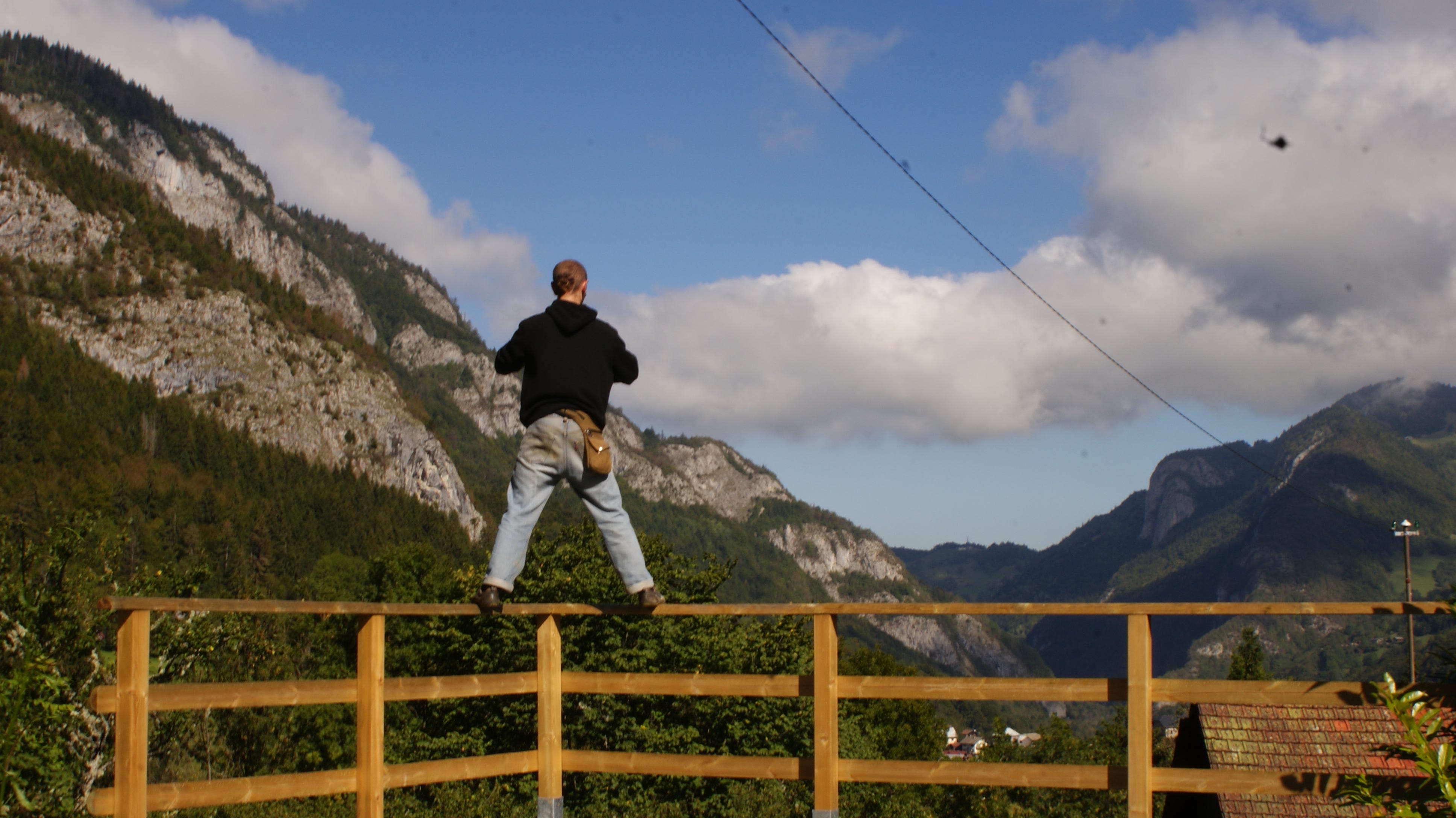
Help me out and buy me a coffee!! Every little bit helps me and my family towards a better life!! https://buymeacoffee.com/kobecooman3 “So, where do you need to go?” “Well, eventually, Belgium, Ghent.” “I can’t take you that far.” “How far can you take me?” “I live about half an hour that direction.” I think to myself, for a place that is about a 17 hour drive, 30 minutes any direction won’t make a huge difference. Then again, this is the first car to stop in dog’s ages. “Do we pass a lake or anything?” “Sure do.” “Alright, I’m in.” Loeka and I both hop in the car and off we go. As the man strikes up conversation I silently bless the hours passed in torment at the dinner table. You see, I didn’t speak French all that well and having ended up in the French mountains with Chloé’s family speaking French to me, at me and around me, I had adapted rather quickly. I can tell you, I hate not speaking a language that surrounds me. Well, I wish I could speak all languages really, but it only bugs me when the people in my direct and less direct vicinity are all conversing in a language I do not speak. Which secrets are being kept? Which jokes have I missed? Maybe I feel verbal communication is roundabout all I manage to do well, my one and only true strength, I can talk my way into, or out of, most things. A knife that cuts two ways, to be sure. Or indeed, that is as blunt as a pillow-fight is fluffy in this particular case. For I could not for the life of me follow the conversations around me. Well, at least when it was one to one, I could understand what was being said and could reply, in sorts. And bungling and stumbling my way through this awkward ordeal, French did start slowly, but surely, to make more sense. I had followed Chloé to France, for I wanted to go to Italy. This will sound bad. There is no way around the truth however. I had fallen in love with an Italian girl by the name of Rebecca, much to the demise and detriment of the relationship I already had back home. I had never cheated on somebody before and I felt like s**t. And then it got worse. I decided to go to Rebecca in Italy, I let her know in advance, I generally have little means of communication once on the road. We hardly knew each other but I am quite hopelessly romantic really. On my way, I meet this cool chick named Chloé that promises me a ride all the way to the Mont Blanc. We start seriously hitting it off though and I find myself stopping over at her family’s house before continuing my road. This is where I get lost in the French. I decide not to make the same mistake and do things the wrong way once again, so before anything serious happens, I get my impossible behind to Italy and once more break it off with someone. Ciao, Italia! Bonjour, France. me in those very French mountains I end up staying for a while with Chloé afterwards, me and Loeka that is. Long enough to pick up some French. Long enough to run out of money and start feeling the call of Belgium. That’s where I am now, on my way home after this pilgrimage of intrigue, romance and heartbreak. And all of it has left me melancholic. And truth be told, hitchhiking with a great big beast of a dog isn’t the easiest. The man that had picked me up and I converse as much as we can and feel the need to. We get to the bend where the road home for him becomes the road further away from home for me. The lake is gorgeous and just what Loeka and I need. An enormous lake surrounded by road and trees, reflecting the late-spring sun up into the very trees surrounding it and up into my happily receiving eyes. After days on the road, a swim will do us good. A wash is surely needed. Last time I washed was in Switzerland, Grenoble, and it has been some days since then. The lake is cold and refreshing. Beautiful though it is, I don’t feel like camping here. I can get some mileage out of this day still. As me and Loeka watch the few cars that race past, do exactly that, I start giving up hope. Then I hear first and see second. SCHREEEEEEEUUUCH!! A car coming from the opposite direction throws itself, drifting and screeching, from his lane into the opposite direction and stops right next to me. The window rolls down and then... “Tu vas où!?” “La Belgique.” “Allez, saute.” The man introduces himself as Vincent and explains we will first go to the supermarket and then he has some time to kill, he can drive me up a bit. He stocks up on fizzy drinks and premade sandwiches. I do the usual, sardines in a can on sunflower oil, a baguette and dog food. I still have a bit of cheese and a bit of red wine in the bag. As we leave the supermarket he says something about an ex-girlfriend and he speeds his car into a one-way street, stops at a house, and starts shouting at the top of his lungs, which is answered by a window opening and a girl shouting back in the same manner. Are we on candid camera, I wonder. He backs up out of the one-way street, at full speed, and starts munching on his premade, triangular, LIDL sandwiches. He starts then to explain how he was a professional boxer but he took a really bad hit to the head. He says he hardly notices a difference, but he has medical leave from work and he’s paid by the government for disability. He goes on to explain how he casually started using heroin because life without boxing is boring as hell. He tells me all of this until his phone rings. I take the moment to tell Loeka that I love her and if we die in this car, I know she knows it’s all my fault. Vincent accidentally ends up breaking his sunglasses whilst driving, so now he is having a phone call, smoking, driving and fixing his sunglasses all at the same time. I decide to relax, if today is my day then so be it. He hangs up the phone and we start talking to each other and amidst all of the noise he drops this one sentence that just feels like a Chinese proverb, epic in its simplicity. He says to me: “Chacun son style mec.” To each, his style. To each his style indeed, Vincent. He drops me off in a place that is at least in the top 10 of worst places to have been dropped off after hitchhiking. At least in my personal list, that is. It’s a small, eerie looking town with nowhere in the vicinity a good place to camp. At least there is a train station, maybe I have enough money left for a ticket out of here on the morrow. There is however the night to deal with first, where oh where shall we sleep, Loeka. Let’s roll. First place I find was a park with a gazebo that had been turned into an impromptu campsite for a group of gypsies. I approach them carefully, in what I hope is a respectful manner. I tell Loeka to stay behind a bit, no need for getting a big dog involved, and she is quick to defend me when need be, I remember her jumping the cops at the Swiss border when they woke us up in the middle of the night. Gave me quite the scare. I explain how I am only seeking shelter for the night, I don’t mind setting up camp on the other end of the park if they don’t mind. They agree. And so I find myself setting up camp at the edge of this park. There is hardly any light but I know the tent inside and out and setting up is fast. Loeka and I are hungry so I give her some dry food. I open the can of sardines and put some toilet paper on the oil, I light the paper and the can of sardines is now a candle that will give me 15 minutes of candlelight to read by and then grilled sardines for me and Loeka to celebrate after. The night came fast and sweet. Loeka kept me warm. The day came like it went, smoothly and without causing a stir. Sudden too. An exit like that is called a French exit, though in France they call it “filer à l’anglaise,” which is an English exit. Maybe it takes a Belgian person to see the humor there. Regardless, I chuckle and think about coffee, apparently out loud, for Loeka gives me a little eyeroll. ‘Nough said, let’s check out that train station, there is bound to be coffee there. Eureka! Coffee and baguette, fresh out the oven. When you have almost no money, spending what little you have seems of little consequence and hardly a thought passes. A second coffee won’t hurt my chances of being able to pay busfare now will it? Well, I found out just after that it was pretty close, actually. The fare for the farthest bus out was all the money I had left. Loeka, being big, needed her own ticket. The ticket seller was adamant she be muzzled. Loeka was used to almost never wearing a leash, let alone being muzzled, so of course I had no such thing on me. I created a muzzle-like-thing with some rope and a sock and hoped for the best. I almost hugged the bus driver when I showed him my jury-rigged MacGyver-muzzle and he just scoffs at it and motions me to get in the bus and not trouble him anymore with these trivial matters such as who sits on the bus wearing what exactly. Next stop, misremembered random town! Off we go! The bus ride itself was relaxing and pleasant. As we get to the final stop, we arrive in a town that looks indistinguishable from the previous town, I fear for a second that we just went around and ended up where we started, but there are minute differences, such as the entirely different town’s name for a start. We get our bearings and head for the closest, biggest road, looking to find a good hitchhiking spot. After traversing what seemed to be an endless journey of streets leading to nowhere in particular we find a place that isn’t perfect but the road leads directly to a big national road and allows people to stop over easily, if indeed so they intend. While walking over to it, the police stop their car next to us and beckon me over to them. The cop asks if I am an HSDF. I say, “Pardon?” “Homme sans domicile fixe.” Oh yeah, everybody knows that abbreviation. They were wondering if I was homeless. I say, not at all, it’s just that I am a long way from home, poor and hungry, so if they are feeling very Samaritan, they are free to drive me to Belgium. They leave me to my own devices and not long after a man stops over. His hair is half long, well kept, he’s wearing glasses and looks halfway between a sports enthusiast and a banker. There is a dirty mountain bike on the car but other than that he and the car look inconspicuous and clean. “Alors, tu vas où?” “La Belgique.” “Je vais jusqu’à Nancy.” That’s perfect, Nancy is practically Belgium, right next door to Metz. The Flemish Burgundian dukes of yore meet their end there a long time ago. So it was close enough to march an army to from Ghent. If I got really fed up with the hitchhiking, I could resort to normal hiking from there, I think to myself, only half joking. The man introduces himself as Vincent and I almost choke. What are the chances? This man looks like a poster boy for health and fine taste. He just went mountain biking for the weekend in the south and is on his way home to his family and his desk job. Banker/sports enthusiast wasn’t far removed from the truth. Listening to Glenn Miller, conversing softly and being interested mostly in what inspired me onwards in this hitchhiking lifestyle, he could not have been more pleasant if he tried. He tells me that we will get to Nancy late, too late for me to still hitchhike or find a place to camp, so if I want, I am welcome to camp in the garden. He warns me that his wife loves animals and is in fact vegan, but for reasons beyond her control, she is terrified of dogs. I am welcome to come in and eat and wash up if I so desire, but Loeka stays outside. I find this to be an excellent deal, Loeka is used to waiting for me in the appropriate place, usually my tent, so this won’t be a problem. When we arrive, the garden is just perfect and the family very welcoming. I am instantly reminded I am welcome to a shower and I take the hint and go and wash up. I explain to Loeka she will have to guard the tent for me and stay outside. She responds by collapsing into a pile of fur with a moan, so we have an agreement. As I return, Loeka is inside the house. I get pissed. “Loeka, we had a deal!” As I rally at Loeka, Vincent approaches me and says it was his wife who let her in and it’s okay. I don’t understand what happened, she seemed really scared of dogs. The wife herself walks in and catches the conversation. She says that Loeka was laying at the doorstep with such a sad and longing look, she simply couldn’t resist and let her in, I should just keep her off the sofa. I think to myself, Loeka strikes again. She can literally look the burger out of your hands and into her mouth, seriously, this has happened already. I am invited to the dinner table and it must have been obvious to all that I was famished, for I ravaged that first plate like a Viking pillaging a monastery. They all looked with baffled and bemused eyes and the lady of the house tells me I am welcome to more. Then there was dessert, then fruit, then coffee. Silently, and hopefully not very obviously, I wept a single tear of joy. Two Vincents, a world away from each other, chacun son style. I walk into the living room to find Loeka IN THE COUCH! Bad dog! We get spoiled to death by this loving family and you repay them by breaking the one rule they gave us! The lady of the house walks in and stops me mid-rant. “No, no, don’t get mad! I couldn’t resist her look, I told her it was okay.” Loeka strikes again. I would be writing without you, but it would be WAY less fun! This is a public episode. If you'd like to discuss this with other subscribers or get access to bonus episodes, visit kobione.substack.com/subscribe
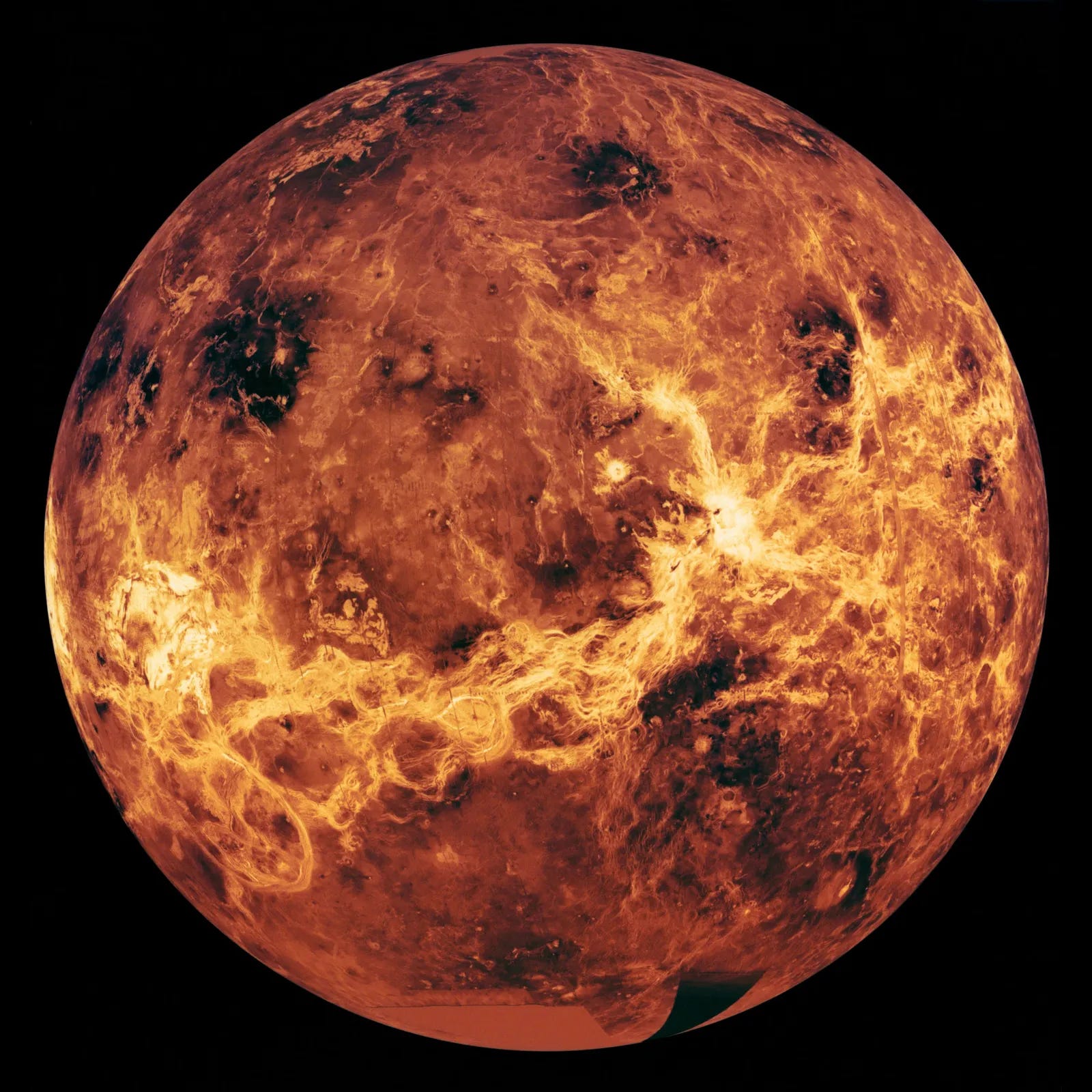
https://buymeacoffee.com/kobecooman3 The Codex Gigas Some men would gladly die, give up their life, for a chance at greatness. So what if you already know your life will be taken from you, and you haven’t reached that greatness yet. Would you call upon the devil and give up more than your life alone? Herman decided that yes, earthly greatness was worth your eternal soul. And so came about the creation of the codex gigas. Try this one on for size, but be careful, it’s definitely xxl. The codex gigas can be found today in the national library of Sweden, Stockholm. It weighs 74 kgs. For the pages, 320 of them, 160 donkey skins were used. To be able to open this book, you need two people at the least. According to modern calculations it would have taken one man between 25 to 30 years to create. Yet the myth surrounding its creation begs to differ. Herman the recluse was a monk who had broken his vows and would see punishment in its most narrow way, immurement. Literally walling somebody up. They would be walled into a cell with a window for light to read by and receive food by. They could stand, kneel and pray or lie down. They got to read and eat. Herman would never write again. He makes a deal with the abbot, to give him one extra night wherein he would produce a book of such grandeur, it would give honor and respect to the monastery for all eternity. As morning approached, the book was nowhere near finished. Herman makes a deal with somebody else, the Devil. By the time Herman and the Devil were through the book contained close to all important knowledge of the day, around the 13th century. The book includes: * The complete Latin Vulgate Bible, both Old and New Testament * Josephus: Antiquities of the Jews * Josephus: The Jewish War * Isidore of Seville’s encyclopaedia Etymologiae * The Chronicle of Bohemia by Cosmas of Prague * A calendar * Medical texts * A guide to exorcisms * A list of the brothers of the Podlažice monastery * Various shorter texts on topics including alphabets and other reference material * And ever more remarkable, the only known full-length medieval portrait of the Devil himself on page 290, and the Heavenly City depicted on the facing page. What is missing: 10 to 12 pages containing information too dangerous to be allowed to roam freely. Herman makes a deal with the Devil and leaves the only known full-length medieval portrait of said Devil in his contemporary shape as a thank-you note. Now, all of what you just read is most likely nothing but a myth. The reality is, I think, almost more unbelievable. One of the details that made so many people believe this myth, even though no original source was ever found, is that the handwriting for the entire book is steady and unchanged. If one man wrote it, he defied aging or accidents or all the things that would obviously alter a person’s handwriting, for three decades. Nobody could believe it. And that might be one of the saddest things afflicting modern man. Our incapacity to believe that civilisations before us were capable of feats of such grandeur, they outshine both our personal achievements as our collective achievements. The pyramids were built by aliens, the codex gigas was written by the devil and even Robert Johnson, the famous blues guitarist, had to sell his soul to be able to play the guitar that well. There is a pattern here. Mankind, or one of its representatives, achieves greatness, and years later the Devil, or occasionally other potential culprits, run off with the honor. So too it was with the missing pages containing the information too dangerous to be released. They probably never existed neither. The more likely explanation there is that they contained the Benedictine Rule, the code of conduct governing monastic life, removed quietly when the manuscript changed hands between monasteries. Yet once more the Devil claiming his prize after the facts. Where the hell did he come from? One of the first mentions of a devil-like persona is the Hebrew ha-Satan, which means something along the lines of ‘the accuser’ or ‘adversary’. The ‘ha’ functions as a role or job description without actually naming the entity. His job was close to modern day prosecutors, but by Godly employ. In the book of Job, he is the one who is tasked, by God, to test Job’s righteousness. Ha-satan was not perpendicular to or in contrast with God. There was no dichotomy between good and evil. The ancient Hebrew texts portray more of a holistic way of viewing religion. God is all, good and evil are but manifestations of the same divinity. And then, the Jews were taken into Babylon. When Cyrus the Great, the great Persian ruler, went on his rampage of epic proportions and vanquished the Lydian kingdom in the west, he stretched out his empire all the way till the shores of the Aegean sea. All that now stood before him was the colossal power of the neo-babylonian empire, the head of the snake, the main force behind the mesopotamian civilisation. You might remember the mesopotamians from gifting us the world’s oldest customer complaint in cuneiform tablets. Imagine being immortalized as that guy that sold low quality ish back in the day. Woops. I digress. The Persians start getting biblical on the Babylonians and install Persian rule and zoroastrianism, which has nothing to do with Antonio Banderas in a mask mind you. The captive jews spend 50 years under zoroastrian rule and the Tanakh starts incorporating things such as the zoroastrian Ahura Mazda, pure good, and Ahriman, pure evil. Ideas such as cosmic dualism, free will, final judgment, heaven and hell were not featured in Hebrew texts until the confluence between the Jews and the Persians occurred in old Babylon. God’s persecutor becomes a representative of the dark side. The split between good and evil came through conquest, war and blood. How fitting. Lucifer The origins for the term lucifer is one of the worlds oldest recorded burns. It was actually a political poem, which sounds mutually exclusive to me, mocking the king of Babylon. Soon as he rose to power, he lost his empire to the Persians, hence the name Helel ben Shachar, Shining One, son of the Dawn. ’T was a poetic reference to the morning star, Venus, which rises brilliantly, only to disappear short after, at sunrise. The king of Babylon, too, rose to power quickly and brilliantly, and he too fell just as quickly. From Hebrew to Greek to Latin, the concept and description was handed down and translated manifold times. The translations stayed quite accurate across many generations and languages, until the chroniclers of the new testament. They started using the image of a star falling from heaven as a metaphor for Satan’s expulsion, connecting it to the passage of Isaiah in the bible. Lucifer was Latin for morning star or light-bearer and was thusly connected to Venus. In other words, Lucifer was still a wink towards the fallen Babylonian king. Early Christians then started associating this roast on a king who rose brilliantly and fell with the falling of that angel we came to know as Satan or, now also, Lucifer. It was a misattribution, but it stuck. It was then popularized by a man believed by some to have been a closet-satanist, Milton and his epic poem ‘Paradise Lost’. Milton’s poem reads like a Greek epic wherein the devil takes the place of the hero, or better yet, the anti-hero. The poem depicts Satan’s fall from heaven and subsequent journey and struggles. We find Satan traversing the boundless deep and facing many adversaries, amongst others the main men themselves, God and even Death. The opinions here differ. There are some claiming that the framing of Satan as the protagonist in this 17th century Hero’s Journey gives way to sympathy for the Devil. There is others who view this as Milton saying that if even Satan can be personified into a hero, maybe our view on what a hero entails is wrong and should be re-examined. With a writer this great, I am tempted to believe that, his personal beliefsystem aside, he just found a great story and ran with it, whichever direction it would lead to. Until now, there wasn’t a lot of POV’s on Satan’s journey. I will use Dante as contrast. In Dante’s inferno Satan is a large, looming monster that feels more mechanical than anything else. He is purely one side of the Godly coin, there is no personality to ‘it’. Milton’s Lucifer however is overflowing with personality, dynamic, charismatic, easily liked even. This is supposedly fuel for the ‘Milton loved Satan’ argument. Personally, I believe once more that Milton once more saw a character that was as of yet, underdeveloped and could use his entree into the world of actual characters with something to say, think and feel. This gives way to the possibility that Milton understood evil to be different from Dante’s description. Hell does not feel evil in Dante’s world, it just is, it is part of the universe in which we roam. Milton’s is more malevolent. Evil perpetrated by someone we can sympathize with lies, as an idea, much closer to the reality of evil. Where the devil did he get his looks from? Like so often with the Catholic Church, its inspiration was almost entirely drawn from the civilisations they were conquering and assimilating, just like the Romans did with Greek Gods and somewhat like the Assyrians did to everybody, though the Assyrian version was way cooler. I might one day write on these civilisations, but there is already an abundance of good podcasts there so I will just say that the way they tackled competing civilisations and their respective gods was simply wild. Even their capital city became an actual deity. I recommend you check out History Time or Fall of Civilisations if your interest is piqued. The modern day devil is mostly a Frankenstein’s monster of pagan gods, such as Pan and the satyrs, all horns and cloven hooves. His red complexion can be traced back to Roman Mars and the pitchfork has Poseidon written all over it. The devil makes his first appearance in his more or less current form in the very Codex Gigas discussed here above. The fact that on the facing page, the Heavenly City is depicted is of course not random. This dichotomy between good and evil would become Catholic lore. Nothing showcases this more beautifully than Bosch’s painting ‘The Earthly Delights’. I will paraphrase and transcribe some passages on the painting from the book on Bosch by Stefan Fisher. Bosch’s Hell panel (the right wing of The Garden of Earthly Delights, c. 1503) is built around a brutal irony: the instruments of pleasure become the instruments of punishment. As the book’s author puts it, the figures tormented here are souls who in life “bombarded” others with their “more gigantesque” music, the joke being one of scale and inversion. Where heaven gets harps and choirs, Bosch’s damned get the same instruments turned into machinery of torture. The instruments themselves carry a hierarchy of shame. The author notes that alongside the major instruments, Bosch includes the “lower” kind too; drum, harp, lute, vielle, and bagpipe, instruments tied to the disreputable “vilaine auberge”, itself a recurring symbol of music’s links to lechery and disorder. The body becomes the instrument. One of the most striking moves the book describes is how Bosch fuses anatomy and instrument, bodies and music literally interpenetrate, so that being “played” and being tortured are the same act. The text draws a direct line to scripture here, citing Matthew 5:27–30 (the “if your right eye causes you to sin, tear it out” passage) as the likely source for the mutilation imagery, severed limbs and organs standing in for the castration-as-punishment tradition associated with adultery in medieval thought. The general thesis put forward by Bosch, it seems to me, is that within music it is as within man; there exists good and evil and they both exist as polar opposites on the spectrum of morality. You can position all instruments along the circle of godliness and assess its piety. Some instruments or holier than others. In my last strange origins I propose that man installed God’s time in church towers through bells and accidentally left the doors open. Time escapes and distorts into music, thusly inviting the devil to join the party. It seems Bosch would have agreed. I just think we might have differed in musical preferences. If he thought the lute belonged in hell, I wonder what he would have thought of my band... Satan loves music, baby Bosch put all lesser instruments, according to him at least, and their players in hell to be tormented forever. Ever since then (or who knows for how long, really) Satan and music have been linked and rocking out together. Take for instance the ‘Diabolus in Musica’, which is a tritone interval that was banned from medieval church music because it was literally considered to contain the devil himself. It had not been banned from pop music however. It is the opening interval of Black Sabbath’s first song. When searched, it can be found in Hendrix too, West Side Story, the Simpsons theme, the list is quite long. Then there is that quite diabolical looking man, knighted by Queen Alizardbeast herself, Mick Jagger and his song ‘Sympathy for the Devil’. He wrote it after finishing the book ‘Master and Margarita’, written by Bulgakov, wherein the devil himself arrives in Stalinist Moscow as a charming professor. And lest we forget the OG soul-selling myth, Robert Johnson. A man fabled to have been around musicians all the same but not knowing how to play, disappearing for some time and then returning as one of the most talented, quick-fingered Blues-guitarists of his time. Once more, post-humously, this was explained by the man selling his soul to the devil at a crossroads. There ain’t no thing like practice makes perfect, just draw that pentagram already! I think I have managed to make my point, Satan and music were a match made in, uhum, heaven. Since the devil has been claiming almost all that was contrarian or just simply hard to explain or difficult to believe, he and the esoteric and mystic symbols often linked to him, have just been overflowing in all artforms and often remarked upon by conspiracy theorists that dabble in the occult. The all seeing eye, the pyramid, 666 etc. Most of this can be attributed to a man that is silently adored by many famous artists through out modern time and that died as a poor, heroin addicted man in the suburbs of England, Aleister Crowley. That was however not his original name, but a name chosen on its numerical qualities. A name purposefully chosen for fame. It seems to have worked. Crowley wrote many books and was a member of almost every single secret society he could get in to. He was thrown out of most of them as well. His most famous quote was stolen from a 16th century monk, Rabelais, who had used it as satire; Do what thou wilt shall be the whole of the Law. The music and art scenes are riddled with references to this man. A few of the more commonly known examples; * Beatles: face on Sgt Pepper cover, 20th anniversary of his death, Lennon paraphrased the maxim in Playboy. * Led Zeppelin: Page bought Crowley’s Boleskine House on Loch Ness, had motto inscribed in Led Zeppelin III vinyl. * Bowie: Let’s Dance paraphrases Crowley’s 1923 poem. * Jay-Z: wore Do What Thou Wilt hoodie publicly, Rocawear line uses eye of Horus, all-seeing eye, Baphomet head. How the tables have turned After two thousand years of accidental, yet elaborate construction the devil has been transformed from a burn on a Babylonian king into a contracted hype guy for artists. In the meantime taking many forms and claiming many prizes for grand achievements on the backs of mankind’s endeavors. Persian theology, a Hebrew job title, a mistranslated Babylonian taunt, Greek god’s body parts, one monk’s midnight bargain, a Flemish painter’s hell panel, not to mention all folkloric myth, like the Venetian grandmother’s folk tale, which you might want to look for and read for yourself, very amusing indeed. The devil did it all. That is why in Flemish you call a jack-of-all-trades a devil-who-does-all, een duiveltje doet al. One of Ghent’s most famous knights, Gerard Villain, aka, Gerard the devil, potentially earned his nickname thusly. It might have something to do with him killing his father for not wanting to go on the crusades and kicking his wife to death in a drunken rage after she had birthed a child of a complexion much too black for Gerard’s taste. Pictures of his epic castle, still to visit until today attached just underneath. I will make an account of this man and his castle in my soon to be released Ghent Unguided PDF. Thousands of years of running amok and claiming human achievements as his own has made the devil into a template for coolness. You wanna be cool? Put some damn sixes in there and make sure you close one eye, the devil will get you famous! It seems the devil got whipped. What in tarnation you waiting for?! I don’t need your soul, just your eyes This is a public episode. If you'd like to discuss this with other subscribers or get access to bonus episodes, visit kobione.substack.com/subscribe
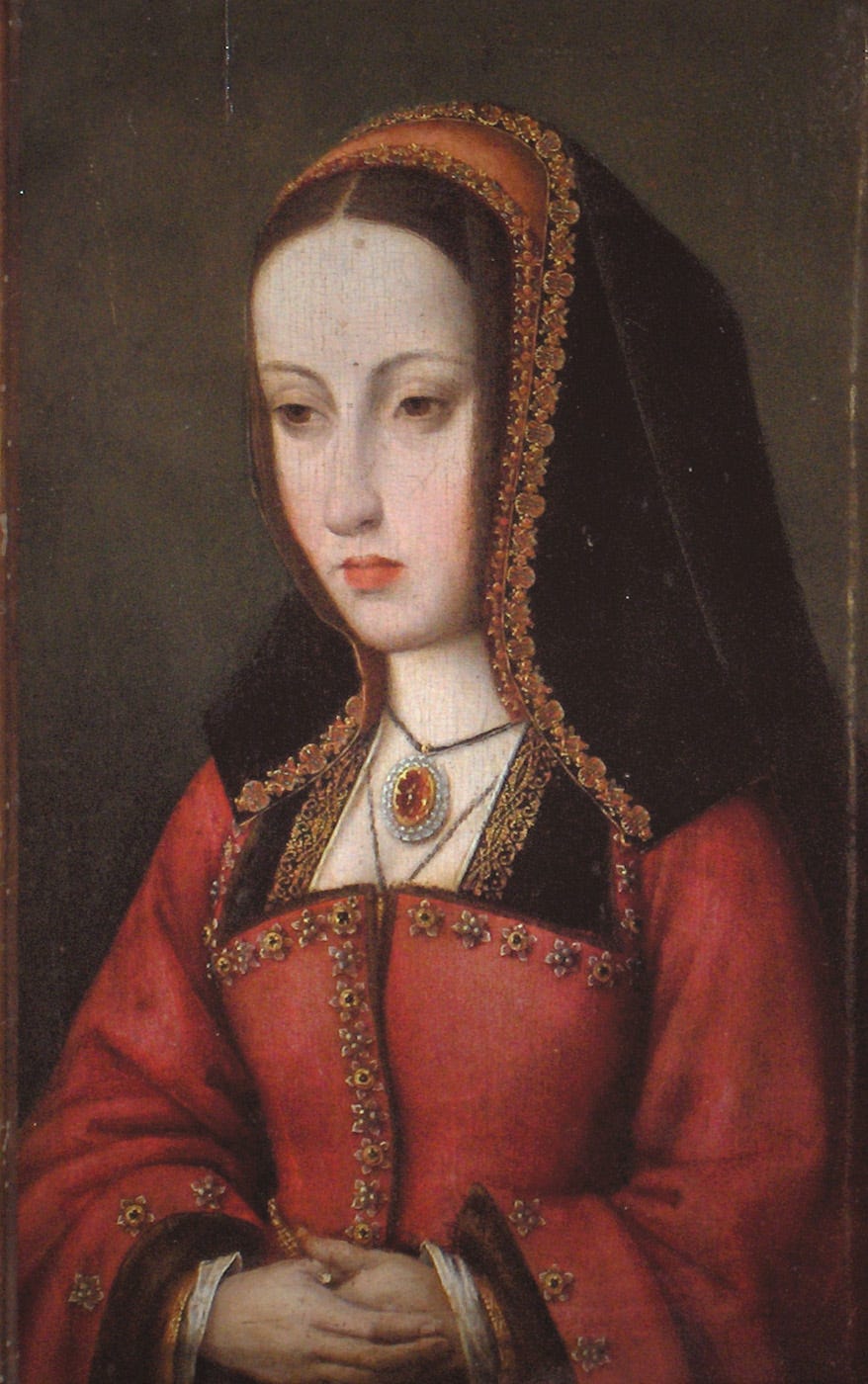
FIND ME ON SUBSTACK TIKTOK BUYMEACOFFEE ====>>>>>>> KOBI ONE Every single man in her life had brought her closer to ruin and had plotted to take from her everything, sanity included. It was all she had left to think about now. Endlessly wandering these corridors of the Royal Palace of Santa Clara in Tordesillas, Spain, time had left this once so fine a mind as to be almost void, nothing but some grief and a lot of cold hatred. Whenever she sat in her chaise-longue, here in this prison of a room, she was confronted with the ghost of one of these men. Just outside her window, but ten metres removed from her windowpanes, lies her dead husband, Philip the Handsome. May he rot in anguish. For her, there is no escape, no solace, no refuge. She has lost all but her life and she will hold on to it for as long as she can, even if it is just to spite the men that still live. Intermezzo The woman you have just met, imprisoned in a Royal Palace, is none other than Juana la Loca. She will sit in this palace for 46 years with almost no visitors, no contact with the outside world and absolutely no freedom. This is her epic and extremely tragic story. Buckle in. Act One — Maximilian and the Wedding Machine He didn’t get this far without having to suffer for it at the hands of the people of Bruges first, during the initial rebellion against Habsburg take-over. But now that he had ironed out every fold in this finely woven tapestry of Flemish cloth, it was Habsburg business as usual. The wedding machine kicks back into fifth gear and Europe shakes in its boots, while shaking those very same boots to a political game of musical chairs. Maestro, cue the wedding music. The Habsburg motto of the era: Bella gerant alii, tu felix Austria nube. Let others wage war. You, happy Austria, marry. Max would stay true to this established Habsburg tradition. His firstborn is a man some of you will already know as he who accidentally gave way to ‘Flamenco’, the name we gave to that fiery dance and music of the Andalusian Roma gypsy’s. This is mentioned in my first installment of Strange Origins. His name is Philip the Handsome. A nickname easily earned when one stems from the Habsburg dynasty, a family known for many things. Beauty not being one of them. In the spirit of full disclosure and honesty, the chroniclers, such as Venetian ambassador Querini, indeed describe him as to be genuinely beautiful. Readers of my latest Sunday article will know the worst king to have ever lived, which was roundabout his actual nickname, Louis XI, who tried to steal the regions of the fallen Burgundian duke. Now in direct opposition of Maximilian, who married this duke’s daughter and reclaimed all the territories for himself. To undermine the authority of Maximilian and his now firstborn son, he spread rumours that Philip was in fact a girl. Medieval gossip, surviving the tooth of time. Oddly enough, later on in his life, during his actual reign, Philip the Handsome would foster relationships with France, in stark opposition to his very anti-French father, Max. Max’s daughter was named Margaret, later known as the Lady of Mourning, which bodes well for her love life, does it not? The nickname was given to her by her own court poet, which is a job I am willing to take if you are employing. She earned the nickname by jumping out of a window after her second husband, Philibert of Savoy, dies. She was saved and had her husband’s heart embalmed to keep it with her forever. She vowed then and there never to marry again and became a very successful and respected woman in politics. All this leads me personally to believe she was much more clever and cunning than most historians give her credit. I believe the window-jumping and coincidental surviving was all staged as a political move towards independence, claiming her right to not be married off again in her father’s political aspirations and if so, Margaret, I applaud thee. Her first marriage explains her father’s resentment for the French and her own resentment towards her father and fight for independence. To calm both sides of the Burgundian borders, the French king on one side and soon to become Holy Roman Emperor, Maximilian of Austria, on the other, Max married off his daughter to Louis XI’s Dauphin, which indeed means both dolphin as does it mean the firstborn of the French king. She was sent off to the French court to be raised there, at the age of three. So she just tragically lost her mother and is now sent to a different country to be raised by a family that was hitherto a mortal enemy of hers, at the age of three. Dang these middle ages… Worst of all, nine years later, Max makes a political move that Louis XI didn’t like all that much so Louis calls off the wedding and sends Margaret packing, back “home” after nine years. She is now twelve years old. Fernando and Isabella — The Other Side of the Deal Back in Spain, the country is being united under one crown for the first time in its history, not counting old Rome or the Visigoths for technical reasons. The king of Aragon, named unsurprisingly Fernando, married the queen of Castilia, Isabella and they each ruled over their own regions, while establishing one empire. As of yet, two crowns. These would merge into one in just a generation. When Isabella and Fernando take back Granada and such from the Muslims, from the Moors, Europe rejoices. This is the first time since the fall of Constantinople that a Christian emperor manages to kick the Islamic infidels off of mainland Europe. Isabella is also the woman that would finance the trip overseas of none other than Columbus himself. All the spoils and riches that would flow to Spain afterwards can be accredited to Isabella. She is yet another phenomenally successful woman from the middle ages with claim to her name both the discovery of the Americas and the first defeat of the Muslims since the fall of Constantinople. Here their children in birth order: Isabella (eldest daughter), Juan (the heir, Prince of Asturias), Juana (third child, second daughter), Maria, and Catherine, who will become Catherine of Aragon, first wife of Henry VIII of England. Isabella and Fernando take a look across the borders and find Maximilian looking back at them. Nothing but those pesky French in between them. France would become stuck in a medieval, political, wall of death. The Double Wedding — 1496 The deal was made, they somehow managed without having read Trump’s book ‘The Art of the Deal’, amazing. The arrangement was as follows: Philip marries Juana of Castilia. Margaret marries Juan of Castilia. Two Habsburgs into Spain, two Trastámaras into the empire. France encircled on two sides without a single battle fought. While growing into his role as a leader, Philip the Handsome danced a beautiful, and historically extremely boring, rope-dance between his Spanish engagement and his pro-France stance. His Spanish princess, Juana, sailed from Laredo in August of 1496 with a fleet of 120 ships and 15,000 soldiers. A massive storm completely derails the schedule, wrecks big parts of the fleet and totally destroys one ship, killing its 700 passengers. She actually goes through hell the moment she sets forth towards this marriage of hers. Eventually Juana does indeed arrive, presumably at the port of Antwerp, where her soon to be husband is not even awaiting her. She travels with her entourage to Lier, modern day Belgium, where finally they meet. And the historians would have us believe that soon as their eyes lock ZAP electricity sparks. She is 16 years of age, he is 18, they are both chronicled to have been beautiful and intelligent. A priest is demanded on the spot to wed them there and then. The consummation of the wedding was also derailed from its schedule and accidentally managed to happen before the actual wedding. Must have been a medieval glitch in the matrix. Love was in the air, for Juana, that is. For Philip it was more a sexy start to a political marriage. The reality, sadly enough, was that Philip would never be able to fully comprehend his beautiful and extremely intelligent wife’s past and how it led her into his arms. She grew up in a dogmatic and extremely strict religious culture. She was the type of intelligent that does not fare well with dogmas. Though receiving the best education medieval Europe had to offer, or maybe because of it, she estranged from the church as far as politically possible and with it estranged from her family. Something obvious to us today, seeing as we have a paper trail of her parents paying a spy to actually stalk her and assess her piety. She gets a golden ticket out of this rotten family and the first thing that happens to her is witness 700 people die in bloody agony. She arrives in a world vastly different from hers where she recognizes nothing and then, the man she is betrothed to just stirs something in her soul. She is home now, here, with him. And he shows every sign of feeling the exact same way, for now. It would not last. Part Two — Juana, Who She Actually Was Childhood and Character Juana was born in Toledo, Spain on the sixth of November, 1479. Strawberry-blonde hair, blue eyes, fair skin, she looked a lot like her mother. She inherited from her mother more than just her looks alone. The same strong, independent disposition that led her mother to the top might well be what caused the first rift between her and her parents, mostly with her father. Her father had married Isabella for clear political and military purposes but had not counted on such a strong adversary of a wife. His wife kept ‘undermining’ his authority, so his youngest child, who was already last in line and acted so much like her troublesome mother, would never be meant to wield any power. Not if he could help it. Her education was exceptional. Isabella ran a humanist court and surrounded her children with serious intellectuals; Lucio Marineo Sículo, Pietro Martire d’Anghiera, the Geraldini brothers. Juana studied canon and civil law, genealogy and heraldry, grammar, history, mathematics, philosophy. She spoke five languages: Castilian, Catalan, Galaico-Portuguese, Latin, and French. She played the clavichord, harp, and lute. She rode horses and flew falcons. By her teenage years she was discussing statecraft with her tutors. By almost every account, she was the brightest of Fernando and Isabella’s children. And yet she was also the most difficult, sullen, withdrawn, bookish, preferring solitude and books to court life. Her aloofness was so total that people mistook it for exaggerated royal dignity. She travelled constantly with her parents between palaces, cities, and military camps. She grew up witnessing the annexation of Granada, and Columbus arriving in Barcelona with news of a new world. Religious Skepticism In a court built on the Inquisition, burning heretics, expelling Jews, defining Spain through Catholic orthodoxy and all that other good old Catholic stuff, Juana asked uncomfortable questions about God. She was reportedly impious, often expressing religious doubt that made her parents nervous. Her parents apparently dispatched a Dominican prior, Tomás de Matienzo, the aforementioned spy, to Brussels in 1499 specifically to report on her piety or lack thereof. Some historians believe this was actually political cover for concern about Philip’s behaviour, but the religious skepticism was real enough to generate official concern. Later in Tordesillas her refusal of sacraments would be weaponised as further evidence of madness. In reality she reportedly expressed nothing but doubt about Catholic dogma and rule rather than outright atheism. The powerful have known for a long time that perception of power is one of the most incredible tools in a monarch’s toolbox. Just ask Xi Jinping why Winnie the Pooh was outlawed in China a couple of years ago. If you rule by the grace of God, then casting doubt on God is casting doubt on your right to rule. Seeing as Juana was an obvious humanist, she probably did doubt somewhat her own Godly right to rule. The seed was planted, Juana was an unstable, impious woman, one to be wary of. The Deaths That Changed Everything Juana was the third child. She was never meant to rule. Her value was wholly assessed through the all-mighty marriage machine. Two birds with one stone. Get rid of the outlier by sending her to the other side of the world and use her to strengthen bonds and gain territories at the same time. All was planned, all was well. Fate rolls the dice and the other players, sat round the table of the universe, hold their breaths as they look at the outcome. Juan, her brother, dies in 1497, aged only 19. Her older sister, Isabella, dies while delivering upon this world her child, Miguel, who would have united Spain and Portugal when he came of age. He never does. He dies two years later. Three deaths in three years. The third child educated for a useful marriage and never expected to inherit anything is suddenly the sole heir to Castilia, Aragon, Naples, Sicily, Sardinia, and the expanding empire in the Americas. A generation earlier, Mary had to marry Max, tongue-twister-time, in order to save Burgundy. No succession through the female side was allowed there. The same counted not for Spain. Philip had, quite accidentally, married the most powerful woman in Europe. He has no interest whatsoever in sharing that power with her and her very own parents had been helping him build the narrative that would drag her asunder, namely that she is stark raving mad, crazy, bonkers I tell you!! Life in Flanders — The Unravelling So, now all pawns are in place for this Greek Epic checkers-board of life to unfold and spin Juana’s sad fate before our very eyes. Juana is completely cut off and isolated at the Flemish court. Everything is foreign, the language, the food, the awful Flemish weather, the drinking, the Burgundian debauchery. No friends, no family, no allies. She is surrounded by Philip’s people and Philip, well, let’s take a look at Philip’s behaviour. Although Philip is a serial cheater, jumping from one mistress to the other and flaunting his affairs openly in court and public, he still manages to keep Juana pregnant for the better part of a decade. Six children between 1498 and 1507: Eleanor (1498), Charles (1500), Isabella (1501), Fernando (1503), Mary (1505), Catalina (1507). All six survive and all six become emperors or queens, an extraordinary dynastic record not often matched. One day, Juana simply has had enough of the total disrespect and confronts one of the mistresses and publicly cuts her hair off. Honestly, for the level of disrespect given, this was not even overly dramatic but the drama builds. The next mistress she confronts is reportedly struck in the face and another might even have been stabbed. Constantly pregnant, constantly being cheated on openly, she goes stretches without eating, without sleeping. She stalks and wanders the corridors at night, sobbing, screaming out in rage and fury. Eventually she starts throwing herself at walls and things start seriously escalating. A normal and decent man might start taking actions towards change or divorce but this is the middle ages, and these are the Habsburgs. Philip couldn’t have had it better if he would have planned it all out. He locks her in her rooms and deprives her of the only thing she is actually craving, his attention and love. He has his treasurer keep a meticulous diary, which would become the nail in her political coffin, a testament to her madness. Grief, trauma, isolation and a constant barrage of hormone deregulation due to all the pregnancies and the incredible side effects of giving birth such as post-natal depression kept battering at the walls of her sanity and eventually, something broke. Modern psychologists suggest bipolar disorder and/or schizoaffective disorder. She was basically kidnapped and isolated and constantly humiliated until her mind coped with the trauma through disorder. Part Three — The Double Crosses Isabella Dies — November 26, 1504 The queen, Isabella of Castilia, dies and her death leaves a gaping hole in the political ecosystem, the game of musical chairs is now being played to the tunes of some Norwegian black metal band or other, things are starting to get real gritty. Because of primogeniture, the law of succession, the crown now officially passed to Juana, with Fernando, her father, acting as regent. This is where it gets hairy. The empire was not as of yet united under one crown. Fernando ruled over his part and only had influence over the other through his now deceased wife. Soon as Juana would take her seat as queen, she would push out her own father from both regions at once by uniting them under one crown. This was always the plan, Juana was just not meant to be the one executing it. Before her death, Isabella had explicitly named Juana as the heir to the throne, adding a clause that makes a whole world of a difference. The clause stated that Fernando would act as regent if Juana was absent, unwilling or unable to rule. Isabella had presumably added this clause for when her daughter would be residing in Flanders, half a world away, so that stability could be kept. Fernando read the clause as a thank-you-note for years of planning and scheming. Unable could also mean not mentally able, you see. Meanwhile, over in that half a world away, Flanders, our dear Philip is having the very same thoughts. He, of course, has a desire for the very same crown, wouldn’t you? And here he happens to be, having kept a diary as a testament to exactly how unfit Juana is to rule. He has the right cards in hand for a power-grab. He keeps the news of her mother’s death from Juana for some time and he plots and he broods. Fernando moves first. He has coins minted with his own name and face, alongside Juana’s. He positions himself as regent, citing her instability. Philip then does the old ‘if he does it, I will do it too’ routine and starts minting his own coins. His specific coins were minted in Antwerp and Bruges and named him alongside Juana as monarchs of Spain. The power of minting your own coins, having your right to rule printed on the legal currency everyone traded in, was enormous. Both men made sure the coins were there to back their claims. Here in Ghent, we still have an entire shopping street named after the mint where the residing men and women of power would mint their coins. It’s called the Lange Munt and this street is also the introduction in my soon to be released Ghent Unguided. More information on that another time. Both men sign documents as though the queen is an inconvenience rather than the actual monarch. By the time Juana is actually told about the death of her mother, she sees rather quickly and easily what is going on. She was not oblivious. She writes a letter to a nobleman named Señor Vere, explicitly denying madness. She says she has jealousy issues, claiming she probably inherited them from her mother. She is lucid, precise, and furious. It must have been horrible to realise nobody cared about reality. Her father and her husband proceeded to arrange a meeting concerning the fate of Spain and the queen. The trip is well documented and will have you at the edge of your seats, if ever a Hollywood producer decides to actually make a new movie of some calibre again. Until then you might want to read my first installment of ‘Strange Origins’ where I, myself, detail the voyage overseas, and some of its strange consequences. Through representatives, two treaties were signed. The Treaty of Salamanca was signed first. In this document both men were equally recognised as co-regent in Juana’s name. Neither man trusted the other or intended to share a crown. After arrival in Spain, the next treaty is signed. Both parties sign, each from a different city and one day apart from each other. Fernando arrived with a small party carried by mules. Philip arrived with an army of men on horseback. Philip wanted to show force, something Fernando had accounted for. That’s why he played the role of the sympathetic, Spanish father that was being bullied by the foreigner. The treaty they both sign was a formal document declaring Juana mentally incapable of ruling Castilia. Fernando renounces the governorship entirely. Philip is proclaimed king jure uxoris, through his wife’s right, not in his own. Juana keeps the royal title on paper. But she loses what little else she had left. The very same day that Fernando signs the treaty, a day ahead of Philip and in a different city altogether, he secretly writes documents saying he signed the treaty under coercion. He states the treaty does ‘enormous damage to the said most serene Queen, my daughter, and me.’ He files the repudiation and says nothing, he bides his time. The political theater is genius. Philip marching into town the next day armed on horseback proves what Fernando was already stating. Now he would slowly but surely gather forces and position his pawns correctly. Like every single plan this man ever came up with, it was brilliant, and it totally failed. Fate rolled its dice and laughed out loud when she looked at the other players’ faces. Philip is proclaimed King of Castilia by the Cortes of Valladolid on July 12, 1506. He is, however, never formally crowned. He has the title for an entire 75 days. The Death of Philip — September 1506 For the sake of newcomers to the Kobi One podcast I will read an excerpt here from that first ‘Strange Origins’ mentioned above. On September 14, 1506, after lunch with his prime minister, he played a ball game, medieval tennis, with a group of gentlemen. Back then the king always had a group of friends called ‘les mignons de couche’, because they would even share the king’s bed at night, comment later on if you want me to elaborate further. Being overheated from the game of tennis, he drank a glass of cold river water and immediately felt unwell. He died eleven days later on September 25, aged 28, the exact cause of death still being debated. Often the death is acclaimed to stem from drinking the cold river water after heat and this leading to pneumonia. A good story for a joke on why Flemish people mostly drink beer but it never sat comfortably with me nor a lot of historians. A Spanish historian, José María Doussinague, dedicated an entire book to the case for poisoning; Un proceso por envenenamiento: La muerte de Felipe El Hermoso (1947). Fernando was conveniently in Naples. The secret repudiation was already written and waiting. He had already undermined the treaty on the day it was signed. Philip dying within 75 days of being proclaimed king, of drinking a glass of water, with Fernando positioned to benefit immediately, the timing is, at minimum, extraordinary. Fernando returns to Castilia in 1507, during plague and famine, as the apparent saviour. He meets Juana face to face for the first time since Philip’s death. A year had passed already. The records of this meeting are vague. The Coffin and the Pilgrimage of Hell The morning after Philip’s death, two surgeons opened his body completely to remove the entrails, then cut open his calves, legs and remaining flesh to drain every single droplet of blood and slow decomposition. We had learned by then, much thanks to William the Conqueror of England, that royal corpses should be stripped of their insides as soon as possible. In William’s case the surgeons overlooked it. When the attendants tried to force the swollen body into a stone sarcophagus that turned out to be too small, the bloated abdomen burst under the pressure. Contemporary chronicler Orderic Vitalis describes the stench as filling the entire church and the mourners fleeing. Philip’s body was embalmed, dressed in a royal robe of brocade with ermine, a crucifix on the chest, laid on a bier. His heart was placed in a lead casket and transported to Brussels, to be interred in the Church of Our Lady in Bruges beside his mother Mary of Burgundy. It had become Burgundian tradition for the heart to be buried apart from the body. The powerfully deceased would have their corpses boiled in a great kettle, filled with boiling water and wine, to rid it of the flesh and then the bones would be transported elsewhere. The heart would be taken out first of course. Together, they would be transported in lead containers to their final destination. Quite some of these hearts and bones can be visited until this very day. Three months after Philip’s death, Juana insists on having the casket opened to ‘verify he is really there’ and she ends up kissing the dead man’s feet. Wow that was intense, coffee? With Philip properly prepared, the real journey commences. Juana sets out towards Granada, with Philip’s remains in a leaden casket. They travelled only by night to keep the body out of the day’s heat and to avoid the plague ravaging the lands. They have a 700 km walk ahead of them. According to the chronicler Peter Martyr, Juana would regularly hold religious services for Philip in the many churches they would take their rest at during the days. Hundreds and hundreds of candles would be lit, possibly to keep at bay the horrible stench of the rotting carcass of her husband. The procession left the church each time so blackened by smoke Martyr accounted: “Our skin has been completely blackened by the smoke as if from Abyssinians.” If we are to believe the chroniclers, she actually believed her husband would rise again. She would leave two churches completely burned down in her wake. During the last one, Philip’s casket caught fire and was only narrowly saved. She would have the casket opened every so often to check in on him and kiss his feet. Come December, when the casket was opened for yet another check-up, Peter Martyr stated he could by then only vaguely see the shape of a human being, let alone recognise Philip. With all the wax and smudge it looked a bit like a face made out of plaster. Juana would give birth to Catalina, the future Queen of Portugal, during this horrible pilgrimage. Her father pauses the monstrous quest for a year and a half before letting it finally resume again. It is speculated he did this to keep Juana out of the hands of other power-hungry men seeking to marry into Spain. All the while, the casket stays with Juana. When she sets off once again, she takes another year and a half to reach Tordesillas, arriving in 1509. Philip died in September 1506. She has officially guarded the body day and night for three years, letting almost nobody else ever near it. Eventually the body was moved to the chapel in Granada in 1525. The pilgrimage had come to a close. Part Four — Tordesillas Imprisonment Begins — 1509 Fernando has his daughter confined, once and for all it will turn out, to the Royal Palace of Santa Clara in Tordesillas in February 1509. A convent town on the river Duero in Castilia, about 30km southwest of Valladolid. Her remaining faithful servants are all dismissed. A small retinue loyal to Fernando is installed. And then the doors of Santa Clara close. Fernando is named administrator of the kingdom by the Cortes of Castilia in 1510. Archbishop Cisneros governs in practice. All documents are issued in Juana’s name but signed with Fernando’s signature: ‘I the King.’ Juana rebels by raging against her jailer Luis Ferrer and once more, refusing to eat or sleep. Life Inside Tordesillas Under Fernando, she had her youngest daughter Catalina with her and her older daughter, Eleanor, had created a semblance of a household within the convent rooms. By the time her son, Charles V, takes over, it got progressively worse. Windowless rooms. No more daylight. No more visitors without special permission. No news from court. Not allowed to sign decrees or read government papers. Correspondence monitored or intercepted entirely. Clothing regulated. Long stretches where she saw no one but her daughter and some assorted nuns. Charles wrote to the Convent of Santa Clara caretakers: ‘It seems to me that the best and most suitable thing for you to do is to make sure that no person speaks with Her Majesty, for no good could come from it.’ She apparently became convinced some of the nuns wanted to kill her. Given what was being done to her, this may not have been entirely paranoia. It was never proved either way. She was not told her father Fernando had died in 1516. She may have died believing he was still alive. Philip’s coffin was buried just outside her window. She never once asked to visit his grave. She ends up spending the rest of her life, 46 years, locked up as a political prisoner. Her death becomes a footnote in the annals of history. Juana died on Good Friday, April 12, 1555, aged 75. She had been Queen of Castilia for 51 years and had governed for none of them. She outlived her father, Fernando (died 1516), her husband Philip (died 1506), and nearly outlived her son. Charles V abdicated his entire empire in 1555, broken by age and illness, just months after his mother’s death. She was buried in the Royal Chapel of Granada, beside Philip, exactly as she had always insisted. No grand procession. No public mourning. The empire was busy. Part Five — The Verdict The first Dutch biography of Juana was written in 1940 by a Dutch man named Johan Brouwer. I will translate a passage here: “What a fact, for a romantic poet! The nightly entry of the mistrustful, grief-driven queen, the funeral carriage, flickering torches, monks, prelates, noblemen, soldiers and musicians. An old village, a sloping landscape. A frightened farming population. Old women whispering of the mysterious powers about death. And then, suddenly, while the dark silhouette of the church where the dead king lay opened, and the dark flames from the tower set…” We can even directly quote an English king, Henry VII, for making a case against Juana’s supposed madness. He is known to have said of Juana “not mad but a prisoner”. Let’s line up the known culprits. Philip: needed her declared incapable to rule Castilia alone through her right. Had his treasurer document every episode of distress. Signed the Treaty of Villafáfila declaring her unfit. Fernando: needed her declared incapable to maintain the regency of Castilia after Philip’s death. Spread the coffin procession rumours deliberately across European courts. Had her imprisoned in 1509. Issued all documents in her name. Charles: needed her declared incapable to rule Spain and the Holy Roman Empire without challenge. Kept her imprisoned for 46 years. Ordered that no one speak to her. Stripped her possessions. Took her daughter. All three men benefited directly from her incapacity. All three men signed or endorsed documents declaring her mad. Modern scholarship describes this as a conspiracy; documented, systematic, and devastatingly effective. The Case Against Madness Earlier in the article, I mention the Señor Vere letter, wherein Juana explicitly denies her own insanity and tries to establish her clarity of mind. This on its own does not mean all that much, seeing as many “mad” people do not consider themselves as such. What for me lends actual credence to her claim is her obvious self awareness. She mentions her own jealousy and notes how she probably inherited it from her mother. During her imprisonment, she features in a document known as the Comuneros testimony of 1520. The document is notarised and shows her speaking, after 11 years of solitary confinement, with clear intelligence and sound judgement. The document itself is quite an important one and will be further investigated at a later time, for different purposes. The Treaty of Villafáfila itself also tells us something. Fernando secretly repudiated it on the day of signing. If he genuinely believed his daughter to be so mad, why bother repudiating? The repudiation reveals the declaration was but a political move, not a medical one. Then, our smoking gun, the Bergenroth finding: she never asked to visit Philip’s grave despite it being only ten metres from her window. This directly contradicts the entire romantic madwoman narrative. She supposedly spent three years walking around with a corpse because of romantic jealousy and such. She couldn’t part with his body, she kept believing he would reappear yada yada yada. Yet here she is, locked away forever with nobody but that husband she kept loving so intensely after his death. I don’t believe it for a second. The Case For Mental Illness Too many different sources and on too many different occasions, is Juana chronicled to have thrown herself against walls, refusing to eat or sleep, confront mistresses physically, wander the corridors at night, constantly sobbing, all the while being pregnant for most of it. The unstable behaviour, though extremely understandable, was quite real. Her family had a documented history of mental illness, her grandmother Isabel of Portugal suffered severe depression and paranoia, spending her final years in seclusion in Arévalo. Juana spent part of her childhood there with her. Modern psychologists working from the historical record suggest bipolar disorder or schizoaffective disorder, characterised by mood episodes and symptoms overlapping with schizophrenia. These are manageable conditions, not grounds for 46 years of imprisonment. The key question is not whether she had some form of mental illness. The question is whether any illness she had was genuinely incapacitating, or whether it was amplified, weaponised, and manufactured into political justification by men with everything to gain. The Scholarly Verdict The definitive academic work comes to us through Bethany Aram’s Juana the Mad: Sovereignty and Dynasty in Renaissance Europe (Johns Hopkins University Press, 2005). Aram spent years in Spanish state archives. The conclusion she finally draws, the very same conclusion I have been making a case for here, is that Juana was neither the romantic madwoman of legend nor simply a victim. She was a complicated political actor who used pious practices, strategic silences, and careful refusals to defend her own interests and secure her children’s succession. She was misunderstood and mostly, very much abused, rather than mad. For centuries this misunderstanding lingered and gave way to oh so many plays and poems. Bergenroth called her behaviour heresy, Gachard named her a lunatic, Rodriguez Villa calls her an exceptionally devoted wife and then Von Höfler says she was consumed by love. Something that stands out, these were once more all men, possibly themselves still something to gain from Juana’s supposed madness, fame and admiration. Only when another woman, Aram, takes a closer look, the world slowly opens its eyes. Aram broke the mould. The quote that sits at the centre of the modern rehabilitation: ‘Madness, like gender, proved a flexible concept in the realm of sovereignty.’ I think that sums it up better than I ever could. Part Six — The Holy War, or What Has Juana Wrought? Now, I have been slowly dancing around a name this entire article. A name dropped here and there but never fully explained in more than a couple of sentences. His name is Charles V, the son of Juana that would inherit everything and unleash upon this world a fury that would see the European continent and half of the world soaked in blood for years to come. What has Juana wrought? Both devastatingly nothing and at the same time, one of the most brutal eras in modern history. Her legacy is very much the legacy of her son, Charles V. All that Juana does and does not leads to Charles V taking the throne of Spain and establishing the biggest empire the world had ever seen. Stretching from places like the Philippines, named after his first-born, Philip II, to Latin-America, north-Africa and half the European continent. Discontent and disarray have been spreading over the European continent. Monarchs, so often far removed from the places they rule over, physically, mentally and culturally, have been taxing their subjects into oblivion and the people start rising up. In Spain, we have the Comuneros rebellion. In Ghent, the great revolt that would see its proudest citizens parade through the streets with nooses around their necks. And in 1517, which is coincidentally the very same year Charles V arrives in Spain from Flanders, Martin Luther nails his 95 Theses to the door of the Castle Church in Wittenberg. Grinning from ear to ear, wild-eyed, Fate picks up the dice. And she rolls. You’d be mad not to subscribe This is a public episode. If you'd like to discuss this with other subscribers or get access to bonus episodes, visit kobione.substack.com/subscribe
For a look @ the article visit https://kobione.substack.com/p/strange-origins?r=3emhb2 This is a public episode. If you'd like to discuss this with other subscribers or get access to bonus episodes, visit kobione.substack.com/subscribe
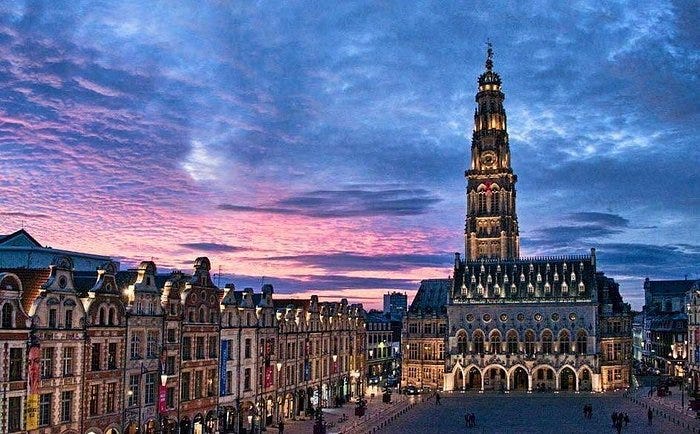
We arrive once more at the gates of Nancy, France and witness the defeat of the army of Charles of Burgundy. The fall of one man set into motion so many entangled events, most of them grandiose in nature, it reminds me of the 2000’s domino craze. The fall of Charles the Bold was almost exactly like one of those televised Guinness world record domino attempts. Only with a bit more blood. One easily overlooked dot in a sea of connecting points is the city of Arras. As the Duke of Burgundy falls, the French leave no time at all to start picking at the borders and pushing into Burgundian territory. The French king then was Louis XI, later called ‘le roi le plus terrible qui fut jamais’ — the most terrible king that ever was. Honestly, there have been an extreme amount of terrible kings and who knows, I might one day set up a real contest. But as far as evil monarchs go, Louis XI contended nicely. The Burgundian cities were proud and loyal. The last standing duke might have fallen but his daughter still lived and would soon be wed to the Habsburg Maximilian, allowing the Duchess to officially resume control. They would not yield to Louis. Louis had some ideas as to persuading these cities. In the city known as Beaune, he offered people the choice between crippling taxation or death. The city Dôle he had burned to ashes, inhabitants and all. But Arras, also known as Atrecht when belonging to the Low Countries, was Louis’ pièce de résistance. When the city chose in favour of their Burgundian dynasty, the French stormed the gates and razed the walls. Louis vowed to have the city entirely erased. He was mayhaps a sorry excuse of a human being generally, but he was indeed a man of his word. In the year 1479, every single citizen of the city was banished and expelled. The city was endowed with different privileges, given a new coat of arms and city seal and even renamed to Franchise, which back then meant something along the lines of exemption or right to asylum. Round about 12,000 men, women and children, mostly cloth traders and artisans, were taken from all over France and moved into this new city. Entire families were ripped apart. All of this was done in but three months, a remarkable feat for the 15th century. The experiment was an absolute disaster. The rebellion had left the city in rags and ruin. Its newfound inhabitants came from all possible corners of France and today, someone from Paris has a hard time understanding a farmer from La Giettaz next to the French Mont Blanc. So imagine fifteenth century people, from a time where there was no such thing as standardised French, having to understand each other, let alone live together in a city. To make matters worse, most cities had been asked to pay for the moving of their former citizens into Franchise. So instead of sending the promised merchants and artisans, the cities chose to get rid of their beggars, drunks and mentally unstable. If they were having to pay, might as well get something out of the deal, right? In less than a year of its existence, the fit of body and mind ran for it and abandoned the city. Those that remained, well, you by now get the point, the city would have scored badly on your average travel guide. As you might know from my Chronicle of Crowns series, Maximilian and the Burgundian Duchess do get married and Maximilian takes control over the Flemish regions and fourteen years after this catastrophic experiment starts, the city is handed to the Habsburgs and all former inhabitants are allowed to return. The Long Tail Arras spends another two centuries passing between hands before finally becoming French for good in 1659. The resentment for French royalty by now so ingrained into its history, that the city produces a man that would see an end to the French kings forevermore. Another Max to feature in yet another Chronicle of Crowns at a later date, one about, you might have guessed, the French Revolution. I guess you will have to tune in to the Kobi One podcast again if you want to find out who Maximilien Robespierre is. See you then. You can sub for free make me happy This is a public episode. If you'd like to discuss this with other subscribers or get access to bonus episodes, visit kobione.substack.com/subscribe

FOLLOW ME @SUBSTACK => Kobi One A Pittance for a Beggar As of late, I long for thought Yet I wear naught but Wear and tear Throw that frisbee Into the general direction Of me And all that I entail Slowly I long for thoughts Fine fickle frail Flabbergastingly ferocious Something to put your teeth in Something that bites back The thoughts that long For me In comparison, they pale To the prospect of Never reaching The devil In the detail This is a public episode. If you'd like to discuss this with other subscribers or get access to bonus episodes, visit kobione.substack.com/subscribe This is a public episode. If you'd like to discuss this with other subscribers or get access to bonus episodes, visit kobione.substack.com/subscribe
Bad luck comes in threes. I just lost my camper van in the same week as where I dropped my phone in the river and my shoulder inexplicably became totally useless and pain-ridden. Bad luck comes in threes, but you decide what comes out of it. I am reminded of my podcasts on the Burgundians and the Habsburgs. Both of these families suffered a threefold defeat at their beginnings. One family perished and is almost unknown to most, the other went on to conquer the world. What makes the difference? What you learn and how you respond to your environment. I personally don’t believe in bad luck, really, I don’t. To me it seems that life keeps doling out messages and lessons. We either pay attention and learn and evolve or we lose the game of life. Let’s go back to the summer of 2019, the 9th of July, my birthday. My ex, of whom I generally have little good to say after our six years together, had organised a surprise birthday party at the squat. Seeing as she generally did not like birthday parties and did not very often do nice things for me, it really did come as a surprise, or rather, shock. The squat we lived in was called Epanage. It used to be a towing service, which in French and Flemish is called a depanage. The D had long ago fallen off the building. It had a huge garden in which we had many vans and caravans set up. We had built a beautiful stage from scrap wood collected from all over, building sites where the left-over wood had no purpose. A lot of friends came by, more than I would have thought, including even my by now wife and her then boyfriend. We had concerts and DJs. I even played a very memorable Kobi One electric live set, even though that name had yet to be born. The afternoon bled into the night and before I knew it, had turned into morning. I was well on my way to lovely pastures of my dreamscape but Clara wouldn’t let me sleep. She couldn’t sleep so why should I? She tried to keep me awake by poking and prodding in a supposed cheerful manner at my half sleeping body. Eventually she resigned to pinch me with all of her might, right in the balls. That kept me awake alright. As I screamed out in pain she said I shouldn’t be such a pussy but now that we were up we could go walking the dogs, so off I stumbled. During the walk she started dredging up this thing that happened during the early hours where she started making out with one of the girls that lives with us and literally pulled me into it. I think to myself, this has drama written all over it, but it is my birthday after all, so I cave and I join in. The party is interrupted by one of the sleeping drunks not being very sleepy anymore upon discovering what is happening next to him. He tries to join in and gone is the moment. By now, hours later, I am being assaulted over this very situation. I try to explain that being jealous is a bit strange, seeing as she initiated the whole thing. Her response: ‘Yeah, but only because I knew you would want it. And see, you joined in, didn’t you? I knew you thought she’s hot, I just knew it.’ There is no reasoning with madness, but it took me years to figure that out. The next day my testicle had swollen to a good three or four times its regular size. I presumed, very wrongly apparently, this was a direct result of the pinch given by Clara. I continue life and wait for my ball to heal. It doesn’t. A week or more later, I am talking about it to my parents, too ashamed to admit it was Clara who did it, I spin a story of sitting on it on the bicycle. They say, go to the doctor so, off I stumble. The doctor seems worried. He sees no signs of direct physical trauma and refers me to the hospital. Turns out I’ve got cancer. I can’t believe it at first. The ball was normal until she pinched it. Within one night it grew four times in size, bigger than a goose egg, and it’s cancer? I go back to the squat and I want to tell people but they seem too busy. I take the dogs to the park and I cry, for about five minutes. Then I tell myself, you survived so much already, you got this. I took off my shoes and vowed to discharge electrically, literally ground myself with my bare feet in the dirt, more often again from now on. I got this. The trip itself, losing my first testicle, then the chemotherapy, the most hardcore chemo doctors are allowed to give, the cancer was in my lymphomas, all of that will get its own episode but one thing I will say. I never gave up. I am too impatient. Sick? Forget it. No hair, pale as a ghost, Nosferatu looked like Adonis in comparison, I kept hosting jams in the squat, I kept rehearsing with my band, named Kobi One & the Full Sacks in honour of my fallen testi, I would not be defined or restrained by my body. I dictate the terms around here. People that got to know me then, thought that was just how I looked. When they eventually found out I was going through chemotherapy, they couldn’t believe it. I have today a friend, one of our very best friends, and she is going through something similar as we speak. She too, is impatient. I couldn’t be more proud. She is stuck at home and she can’t wait to get better. Literally. She can’t. She just went to a concert, in a wheelchair, with my wife and son just yesterday. At home she is making music, reading or writing. She feels sick, she is in constant pain and she doubts herself and if she is anything like me she wants to curse this body of hers. But instead, she stays busy with what she loves and passion and love will eventually prevail. She will heal because she turns bad luck into positive change. I had cancer three times. In two testicles. What are the chances? First time, we remove the testicle, we put agent orange on my garden to destroy the naughty weeds and everything else alongside it. I don’t know if I will ever be able to have children after so, I save some seed first. I get better, I change my life and find my wife. She gets pregnant, naturally, with us hardly even trying. Hooray, I am still fertile! While my wife is still pregnant, the doctor does a routine check, explaining to me that he is considering never doing it again because his entire career, he has never seen someone have the second testi hit by cancer as well. He finds cancer that same day. We save the ball by cutting the cancer away and I walk around with pain between my legs for months. And then, we find cancer again. I lose my last testicle. I am now forever sterile and dependent on testosterone from a lab. I fought my entire life for independence and have dependency thrust upon me in this manner and what say I? Bring it on baby. I have things to learn still and I am greatly impatient, just like Philip the Bold from my last Strange Origins. Moult me tarde. Three battles, three times cancer, and it has left its marks. These marks have become the roadmap to my soul and as I walk the lines, my soul and I inch closer to one another. Whatever has happened to you, and whatever will happen still, does not define you. You define you. All the s**t the world keeps throwing at you will only break you if you try to carry it around like luggage. Learn what you need and do what you love as much as you can. Or do something else all together, you choose. You got this. This is a public episode. If you'd like to discuss this with other subscribers or get access to bonus episodes, visit kobione.substack.com/subscribe
One day, humanity will find that grinding meat, through peculiar trades, to make ends meet destroys our faith and what we seek may come too late FEAR NOT! there is always more meat for the grinder but here is a noble reminder that but a dot, a speck of cloud we are no more than only one And I for one am very proud! That throughout these tears and blood stained times comes an era of truth and beauty mind of hymns and hers and brightly colored things of swing and jazz and everything that makes the meat but a fling a briefly colored amourette an amour passé that our lives once met and throughout this ever clinking ever dwindling past sinks a truth that will godlike last Throughout our souls into our now So may I remind you, of your beauty somehow? This is a public episode. If you'd like to discuss this with other subscribers or get access to bonus episodes, visit kobione.substack.com/subscribe
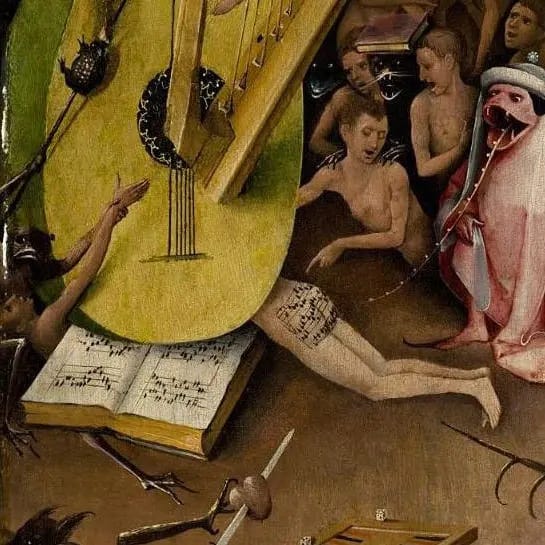
It never stopped, the chanting was continuous, all encompassing, eternal, as in God’s own image. They are called the Acoemetae, the sleepless ones, and they aren’t your average old normal monks. THE LAUS PERENNIS Time, my friends, is not easily described. The more we know about it, the less we know of it. For the aboriginals, time as a concept did not even really exist. For them it lives as much in man’s collective imagination as does Winnie The Pooh. So how then did this beast finally succumb to the will of man? Did we frame time and with it, tame it as well? Or did time enslave us to its will? Let’s dive in to the sea of time and see which creatures therein lurk. Let us start with Alexander. Now here is a man with a serious set of ye old cojones. It is recorded that this man set out, off into the desert, to convert some hardened desert hoodlums and robbers into christianity. ‘Hey crooks and robbers! Have you heard about Jesus?’ He actually came back out of the desert with a good three to four hundred followers. Thusly the Acoemetae were founded around 400AD. Alexander, bold as ever, then went on and took his newly found Christians back into his native, and not incredibly Christian, Constantinople, where they were in turn driven out. Shocking, I know. They then went on and got themselves settled into a real monastery at the Black Sea, in Gormon. This is where they got serious about praising the Lord and his dominion over this world. The practice was named eternal praise and you’re probably going to want to fact-check me later, I’m sure. These monks sang their praise to God non-stop, 24/7. Of course one person could not sing indefinitely, so the monks were divided into six rotating choirs, each one relieving the other. In a way they literally embodied God’s time by singing praise throughout it continuously. Their bodies became God’s clockwork, each breath a second, each exhale a note to mark time passing. They continued their eternal praise from the fifth century on until somewhere in the 1960s. That, ladies and gentlemen, is a solid 1,445 years of singing without ever stopping. Ludicrous. As a potential direct result, one of the French Benedictine monasteries (no relation to eggs Benedic t) collapsed of fatigue. It seems time finally caught up with them. GOD OWNS TIME Friends, the hour is upon us. I mean that quite literally. The medieval day was divided into eight canonical hours for the same reason as with the eternal praise, to mark the times at which monks were required to pray. Matins, Lauds, Prime, Terce, Sext, None, Vespers, Compline. The monastery bell announced each one. The city organised itself around it. People did not own clocks. God owned time and the Church administered it through sound. This sound had a name long before it had a tower. The word bell comes from the Old English belle, likely from Proto-Germanic balljo, to roar, to bellow. The same root that gives you the bellowing of an animal, the belly that resonates, the ball of sound expanding outward. A bell does not ring. It roars. It seems we tried to domesticate the word the same way the Church tried domesticating the thing. Noon, as in midday, comes directly from None, for ninth hour. Originally this was around 15h in the afternoon, the ninth hour after sunrise, but for a plethora of potential reasons it drifted earlier and earlier and became our lunchtime. As the Church tried to structure society through time and domesticate its flock thusly, the human spirit reared its beautiful, artistic head. The importance of punctual prayer in medieval Europe is not to be understated. Some of you might still express your faith through routine prayer till this very day and understand what I mean. If you were out and about toiling in the fields and you missed two strikes of the bell, or was it three? You see, people needed to know when to start counting. Didn’t pay attention and you might well tick off God. So something named a quatrion (for Latin quaternionem, four times) was installed. A set of four distinct different bells that would ring before the hour, so everybody got a heads-up. All in the name of giving structure to society, music accidentally was born. THE CARILLON Bells, by their very nature, are beautiful. When they ring, our souls resonate. The quatrion evolved into what we today call a carillon. The original quatrion were four stationary bells, hung high up in the tower, struck by a mechanical hammer, triggered by the same mechanism that moved the clock hands. The clock told time, the bells announced it, and the four pitches together formed the quatrion. Functional yay or nay, the sound was mesmerizing. Bell makers started fooling around with pitches. More bells were added. Still mechanical, still clock-driven, still automatic. But now the mechanism had a barrel, a large rotating cylinder studded with pins, each pin triggering a specific bell at a specific moment. The same principle as a music box, scaled up to the size of a tower room. You programmed the melody by repositioning the pins. The church tower had become, without anyone quite deciding this, a programmable instrument. Then came the keyboard. The clavier. A manual console of wooden levers, each one connected by a wire to the clapper of a specific bell. Now a man sat inside the tower and played. Not with his fingers, the levers were too stiff and heavy for that, but with his fists and feet, striking the keys with the padded side of his hand, operating the largest bells with foot pedals below. The physical effort was considerable. The carillonneur did not sit at his instrument so much as wrestle with it. By 1480, somewhere in Flanders, possibly Aalst or Antwerp, the carillon had grown to somewhere between twenty and thirty bells, spanning two octaves, enough range to play actual music. Recognisable melodies. Things people knew. The same tower that told you when to pray was now playing you music from the skies and heavens, quite literally. Mechelen made it official in 1557, appointing the first municipal carillonneur. A civic employee. A musician on the city payroll. The instrument kept growing. A full modern carillon has anywhere from forty-seven to seventy-seven bells, spanning four to six octaves, the largest bells weighing several tonnes, the smallest the size of a teacup. The biggest bell in the Ghent carillon weighs over six thousand kilograms. You can hear it from eight kilometres away on a still day. And now we know, God owns time and through it, gifted us rock and roll as well. PHILIP THE GOOD AND HIS LUGGAGE Kobi One frequenters might be familiar with the Burgundians already. In my first episode of Chronicle of Crowns, I unravel the mystery of who the Burgundians were and I mention Philip the Bold, often called the Brave by yours truly, and his obsession with time. I did more research and have to set the record straight. It was his grandson, Philip the Good, who was obsessed with time. Now, seeing as they are all named either Philip or Charles, I ask humbly for your forgiveness. Philip the Good. Duke of Burgundy from 1419 to 1467, apparently put on a pair of embroidered scarlet leather slippers, hung his portable clock on the wall and went to sleep in a woollen nightcap. If he went out, he brought his clock with him. That clock would be the Burgunderuhr, the Duke of Burgundy clock, made around 1430. It is the oldest surviving spring-driven clock in the world. It is shaped like a Gothic cathedral, made for Philip the Good, and features the Burgundian lion coat of arms on two surmounting spires and the symbol of the Order of the Golden Fleece. He was both extremely religious and absolutely captivated by the future. He kept with him at all times, together with the clock, his Book of Hours, a lavishly illuminated manuscript structured around the eight canonical hours, the same hourly divisions of our sleepless ones. Philip the Good carried God’s time in a book in one hand and his own mechanical time on the wall in the other. He was hedging. A man smart enough to keep one foot in the old world while building the new one. His obsession with the future resulted in him and me sharing a fascination, one for automata. The party of the century was hosted in 1454, in modern day France, Lille, by none other than Philip the Good and his son, Charles the Bold. The Feast of the Pheasant was one of the most spectacular banquets in medieval history, with automata, mechanical sculptures driven by hydraulic and mechanical systems, providing entertainment between courses. Moving mechanical figures at a dinner table in 1454. This man had the world’s first clock and robots? Go on, fact-check me by now. Time moved from the towers of God into the hands of men. The corset of time that the Church was dressing civilisation in changed hands, seemingly overnight. THE CORSET OF TIME The aboriginals did not believe in time. A society built around the eternal now seems something beautiful, somehow. Yet I sincerely do not know how it would look. Time dictates our society. We live in a world where we can predict the arrival of a bus within actual minutes. The sheer cooperation and human predictability needed to achieve that amount of timing and accuracy is absolutely astounding. But all of that cooperation and effort is dictated by time. So who dictates time, dictates society. He who tailors the corset of time, can tailor society to their will. And I am left to wonder if there could really be such a thing as man dictating time, controlling it, or if I just summarized mankind’s hubris and folly or potentially mine own? We went from the monks singing their eternal praise to smartphone algorithms nudging our behaviour as we nudge theirs and did we gain any real control in the process? A moment or two these thoughts plague me and soon as they showed, they were defeated by a grander thought altogether. Whilst the Church and the dukes were seeking to control time and prayer, the builders out there, the creatives out there, were doing what mankind does best: fool around until something cool happens. The Church installs bells to ring out God’s time, medieval engineers come up with the idea for the quatrions so everybody can actually follow. The artisans start building an instrument out of it. Man tries to tame time, reinvents music and loses control of both time and music in the process. Time and time again, man tries to steer the world. And we usually succeed too. We just never end up where we thought we would. THE ESCAPE The bells of God ring out and strike a chord in the hearts of men. So too, the hearts of men and women in taverns, where the bells start finding the hurdy gurdy and the lute to accompany them. People’s emotional response to the sounds resonating within their souls finds a way to their legs and arms and we rejoice. Song and dance, rediscovered and reinvented once more. And so God’s voice escapes the compound and resounds distorted through medieval rock and roll. This was no longer God’s work. A new player enters the game. God’s music released becomes uncontrollable, ungovernable, chaos released, the Devil takes control. To punish the harbingers of doom, an apt description of musicians, Hieronymus Bosch puts every musician in hell in his masterpiece The Garden of Earthly Delights, aka De Tuin der Lusten. I will refrain from entering his awesome hellscape during this article though one detail stands out, the butt music. Marks painted on a sinner’s backside in the hell panel, transcribed in 2014 and posted online as the 500-Year-Old Butt Song from Hell. It went viral. Scholars confirmed Bosch never intended the marks to be readable music. It is the appearance of notation, not actual notation. The internet decided it was real anyway. Time made its sweet escape from the church into people’s pockets and with it, convinced music to escape into people’s hearts. The door through which they departed was left as an open invitation to the Devil himself. Let’s find out what he has to say on the matter, in the next Strange Origins. See you there. This subscribe button is so ticklish wooh. This is a public episode. If you'd like to discuss this with other subscribers or get access to bonus episodes, visit kobione.substack.com/subscribe
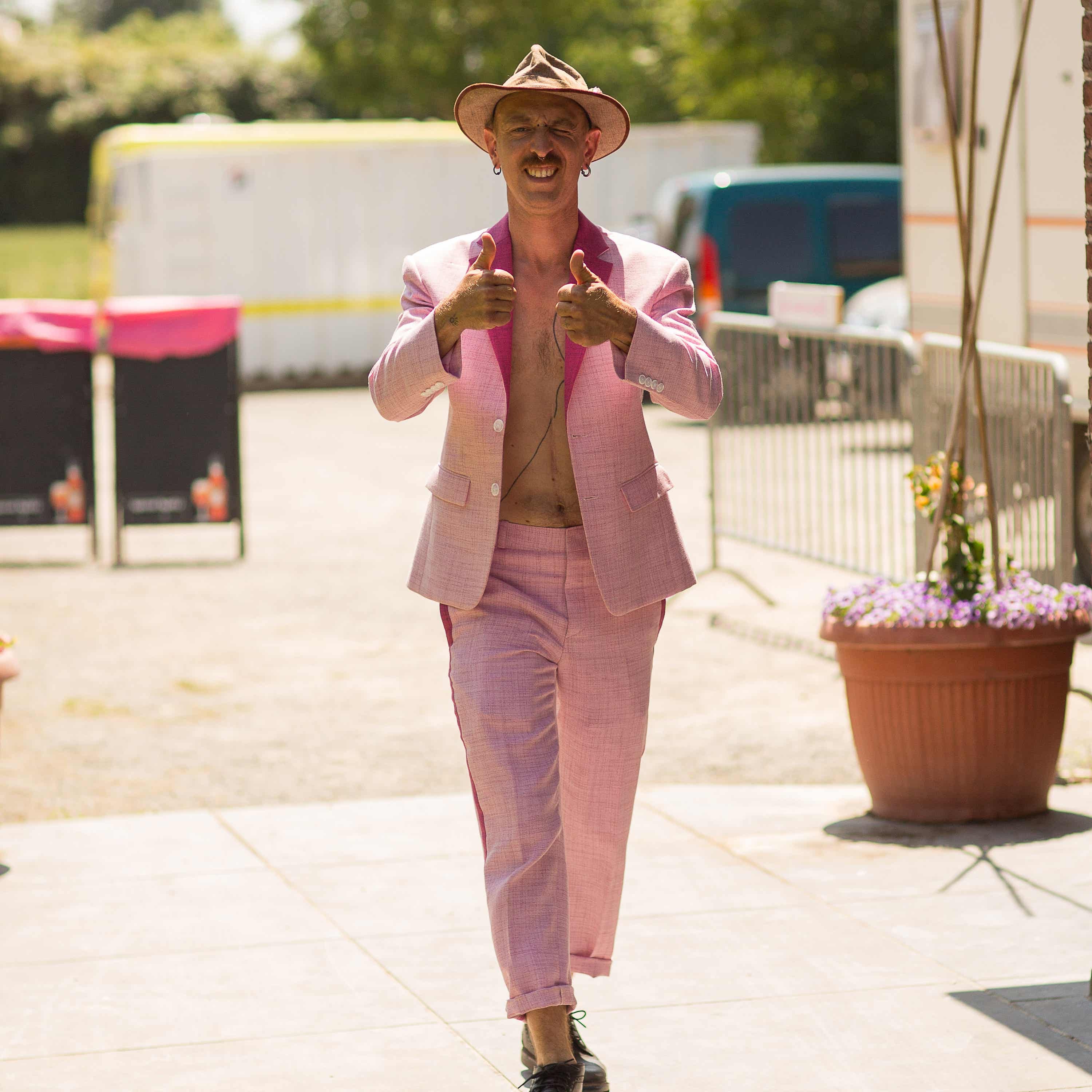
I'm secretly writing messages hidden in the sky trying to catch the early bird hoping you would pass me by I'm looking for excuses I'm looking for a fight I wanna kiss the deadly charmes of that darkest starlit night I wanna breath red into the daylight and white into your eyes I'm getting awfully good at these immaculate goodbyes I wanna dance on that sunlight, sliding across Lisboa I wanna chance upon a daydream think myself into a coma Forget about that world so transparent to my eyes with the sun as the great painter removing my poems from the skies the night still leaves it's mark but it's life is now a lie I'm getting awfully good at these immaculate goodbyes This is a public episode. If you'd like to discuss this with other subscribers or get access to bonus episodes, visit kobione.substack.com/subscribe
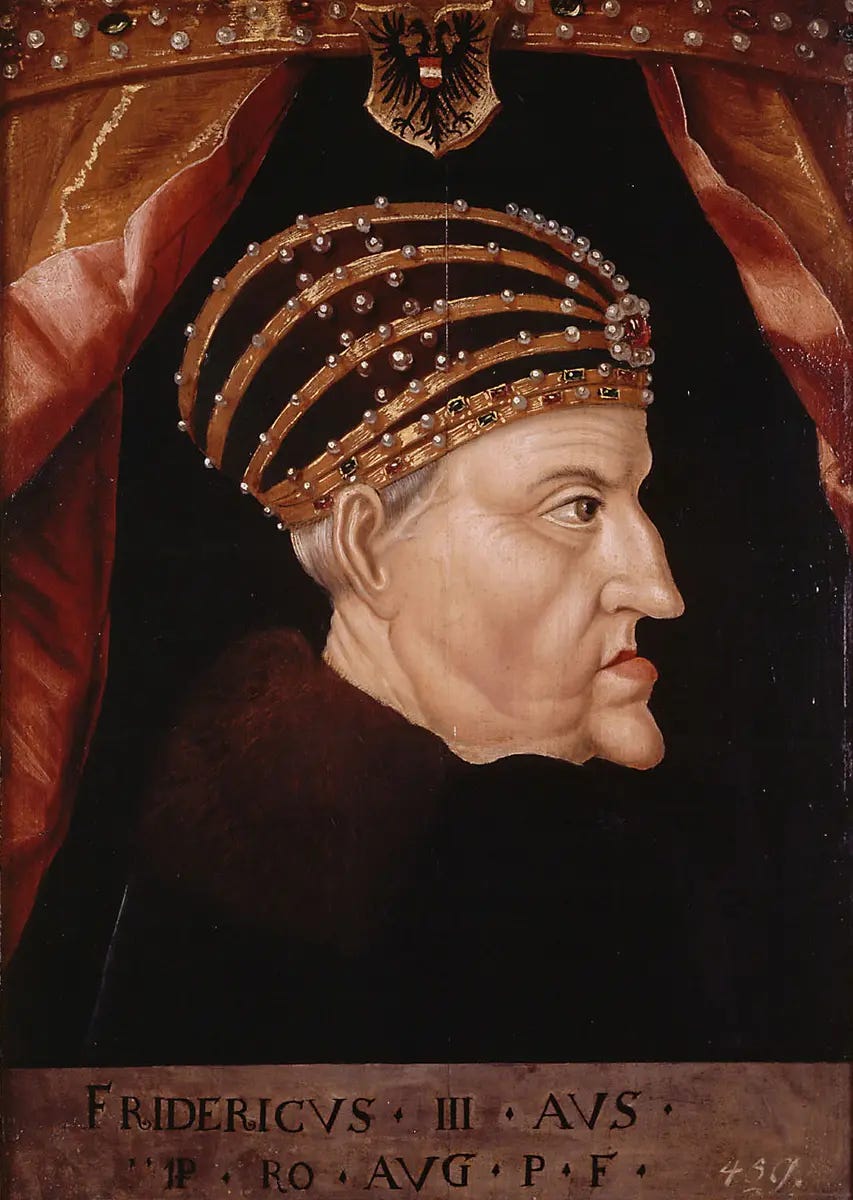
He wakes up, sunlight already creeping through the shutters, something forces itself upon his consciousness. A blood-curdling scream. And people, a great big many of them, cheering. How long did he sleep? What was going on? He opens the shutters, the morning sun blinds him for some seconds. Then, terror sets in. On the wooden post in the centre of De Markt, the main square of Bruges, he sees his friend, his confidant, his sheriff, Pieter Lanchals. The guilds of Bruges were having the sheriff tortured right there, on the square in front of this newfound prison, to send a bloody message. The message was clear. The guilds were reclaiming power from Habsburg control. And here he was, stuck in the Craenenburg House, watching idly by in helpless terror as his friend was bled dry in his name over the same post where they, together, did the very same to many others before. Those of you that were there for part 1 of this series might have surmised who this man is, watching his friend being tortured in public, imprisoned in Bruges. His name, Maximilian of Habsburg. And he is not feeling too great at the moment. But he will have his day of revenge, the echoes of which still reverberate in Bruges, hundreds of years later. Before we get that far however, we take a couple of steps back, back into the far-flung past of the Habsburg dynasty. We go, to Switzerland! Better dress appropriately, it will be cold up in the mountains. ACT ONE — WHO WERE THE HABSBURGS? It’s around 1025 AD, we are in the Swiss cantons at a height of 505 meters and through the foggy mist of time we close in on a keep. Looking down from the walls of this perfectly situated and grand tollhouse you could see the beautiful river Aar carving out its legacy in stone through these cantons for thousands of years already. And with it come merchants from high and low. And here they were, Count Radbot of Klettgau and his brother-in-law Werner, Bishop of Strasbourg, the brothers of the Habichtsburg, ready to tax the ever living daylights out of all who passed. The castle sat on the hill above the Aar River and the road that ran alongside it. Both the river and the road were major trade routes connecting the Alpine passes to the Rhine and onward to the North Sea markets; wool, grain, salt, silver, wine, all moving through this corridor constantly. Anyone who wanted to use the ford or the road paid. The count’s men would be stationed at the crossing point below the castle. You couldn’t cross the river or pass through without going through the checkpoint. The castle above was both the administrative centre and the visible threat. You want to pass? You pay. And you get a good look at what’s coming for you if you don’t. Military intimidation itself wasn’t the only power wielded, however. The bishop of Strasbourg, Radbot’s brother-in-law who co-founded the castle, gave the whole operation a religious legitimacy. Church involvement in toll collection was quite commonplace and very useful. You didn’t mess with God and if you did, man would be ready to defend God’s honour. Read: steal your money. The rivers were particularly valuable because boats carried much larger loads than carts. A toll on river traffic at a controlled crossing point was passive income at scale. You built the castle once and the trade routes did the work for you indefinitely. Which is exactly what the Habsburgs did. Build once, collect forever. The same logic they later applied to marriage; acquire the asset and let it generate returns. This worked well for quite some time, until the Swiss did what they would do to Charles The Bold of Burgundy 60 years later, push them out of the cantons. In fact, those that remember from the previous episode, our Charles the Bold’s defeat was threefold, three battles lost. Though less dramatic and much slower, the Habsburgs, here in their infancy as a dynasty, lose their grip on the cantons in a threefold defeat as well. First two battles occurred, be they 71 years apart, Morgarten 1315 and Sempach 1386. These were the first two blows. The nail in the coffin for the version 1.0 of the Habsburg-Swiss edition, came in 1415 with the loss of Aargau. Duke Frederick IV, nicknamed the Duke of Empty Pockets because of the glaring hole therein, supported the wrong side during a Church council dispute. That was all it took. The perfect excuse for the perfect storm. The Swiss Confederacy, called upon by the Holy Roman Emperor, reclaimed Aargau and the Habichtsburg with it. The Habsburgs were driven towards Austria. Before we dutifully follow them there, I find of note, the two different ways of writing the original name of this tollhouse, this keep on the Aar; the Habichtsburg or the oldest recorded version, Havichsberch. Number one would be the keep of the hawk, after a hawk that once sat perched on the castle walls, which seems to be trying too hard. Number two then, the oldest version, would refer to the castle at the crossing, which seems to do all the work and none of the effort. Named after a tollhouse would be very fitting. Scholars and historians went with number one, I am neither. ACT TWO — THE AUSTRIAN HABSBURGS I mention in part 1 how there is a difference between old Rome and Julius Caesar and the Roman-Catholic empire of the middle ages. To understand where the Habsburgs came from, we have to understand this difference better. Old Rome, the Roman Empire This is the empire that Julius Caesar and Augustus built. At its height it controlled everything from Britain to Mesopotamia. It split into Western and Eastern halves in 285 AD. The Western Roman Empire collapsed in slow motion forever and ever and some people stipulate it just moved to Great Britain and afterwards America. Either way, the official date of death for Rome is pinpointed at 476 AD, when the last emperor was deposed by a Germanic chieftain. Also that is quite the statement seeing as the Eastern half, with Constantinople already being the capital of the empire, continued as the Byzantine Empire for a long time after. That Rome that is so heavily romanticised — pun intended — the legions, the senate, the emperors in togas, that was officially out the door. I will make a podcast episode on both Julius Caesar and his business with the old Belgians, the Belgae, and how the collapse of the Western Roman Empire wasn’t a collapse but a slow dance between the old Romans and the Germanic tribes such as the Franks and the Burgundians. Both these stories deserve their telling in full. The Holy Roman Empire, the confusing one In 800 AD the Pope crowned the Frankish king Charlemagne, also known as Charles the Great, as Emperor of the Romans in an attempt to revive the idea of a unified Christian empire in the West. It had nothing to do with the original Rome geographically or institutionally. It was a Germanic-based collection of kingdoms, duchies and city states in central Europe held together loosely by the idea of Christian unity and the authority of the emperor. It was a power move. Voltaire famously said it was neither holy, nor Roman, nor even an empire. Here, he finds a friend in me. The Habsburgs moved to Austria and continued building their riches in the same way as before, build once, collect forever. They built, and paid for, monasteries all throughout Europe. Then they offered them protection in return for a percentage on whatever they made. The Holy Roman Emperor Frederick II and the Habsburgs got quite close and when he died, terminating a 30 year stretch, the Holy Roman Empire collapsed like an unlucky crème brûlée. After changing emperors like a merry-go-round, an emperor was decided upon. There existed in this Roman-Catholic order no hereditary passing of the crown. This is how Rudolf of Habsburg became the Holy Roman Emperor many years after Charlemagne, in 1273. He was but a minor Swiss count, his family previously driven out by the Swiss Confederacy on behalf of the — yes — Holy Roman Emperor, with no long standing ties or deep-seated roots in these regions. He seemed like a perfect candidate to become that very Holy Roman Emperor. He was elected by seven Prince-Electors, who hoped this fragile and weak looking man would be easily steered, easily controlled. They were wrong. The world mistook his physical frailty for him being easily manipulated, malleable. Rudolf was however very wealthy, shrewd and quite ruthless. Through diplomacy and marriage, he expanded his family’s holdings significantly. His daughters ventured out into every single powerful dynasty available. Within a single generation, the tentacles of the Habsburg Hydra had spread and attached itself to all of Austria and were worming their way through half of Europe. The marriage machine was put on extra time. The Prince-Electors knew by now what they had wrought and did what they had done before. Soon as Rudolf died, they opted out of Habsburg control and went with Adolf of Nassau. Rudolf’s son Albrecht, the One-Eyed, had set his heart on the crown however and had orchestrated a battle in which he defeats and kills Adolf of Nassau in 1298 and steals back from him the crown he so desired. The Dutch royals of today are still far-flung family members of this now deceased Adolf of Nassau. The now One-Eyed emperor Albrecht himself was brutally murdered by his own nephew, Johan, but a decade later, in 1308. Not happy with the way the emperor, his uncle, handled his inheritance, by not giving any of it to him directly, he and his accomplices awaited him at a bridge and cleaved his head right in twain. Revenge was swift and brutal. Albrecht’s children decapitated Johan’s entire family and court, they left not a man woman or child alive. This did not help the Habsburg desire for the crown however. It would take the dynasty 132 years to reclaim it for themselves. Do not however for a second think they sat idly by. The grandson of mister one-eye, yet another Rudolf — yeah, not great when it comes to creativity, but very good at recycling, very avant-garde — would forge a document known as the Privilegium Maius. In this document many wondrous claims are made, such as the Habsburgs being actually descended from Julius Caesar himself, amongst others. All hogwash and poppycock to be sure. Oh by the way, poppycock isn’t nearly as posh as it sounds. It stems from Dutch pappe kak, which means diarrhoea. Rudolf the howevermanieth even invented a new title of Archduke. If he couldn’t be emperor he was still damn well going to be more duke than all the other dukes. Sadly enough for him, the documents were provably falsified and the world kind of told him to get arch-duked. During this period the dynasty came very close to its end for no male heirs were forthcoming until Cymburgis of Mazovia, wife of Archduke Ernst of Austria, popped out a boy. I use the term popped rather loosely because Cymburgis is chronicled to be an insanely energetic woman known to crack nuts with her fingers whilst whistling and hammer nails into wood with her fists. Though Cymburgis was clearly first in line whilst God was handing out energy levels and strength, her son seemed to have missed the queue altogether. Frederick III, Cymburgis’ son, would be chosen as emperor in the year 1440. Enough time had passed and the Prince-Electors had forgotten that appearances might well lead you astray. Frederick III had inherited none of his mother’s energy and all of her looks. He was a chubby, introverted boy with a big and very long nose and already plagued by the now infamous Habsburg jaw. He would pale easily at the prospect of any real physical exercise and preferred gardening. He appeared so sleepy he earned himself the nickname of Heiligen Römischen Reiches ErzSchlafmütze, The Holy Roman Archsleepyhead. They thought, now here is a malleable son of a gun. History does not repeat, man indeed does. To make the irony all the more sweet, Frederick III was crowned by papal decree, by the big man himself, Pope Nicholas V. Crowned and cloaked with Charlemagne’s swag, it was now official. The Habsburgs now had the made-up title of Archduke, the actual title of Holy Roman Emperor — which was then again totally made up 600 years earlier, but I digress — and had officialised the entirely fabricated Privilegium Maius, which embedded the dynasty with a right to rule that would plague the world for centuries to come. And this, my friends, is where we find our protagonist of part 1, Charles the Bold and his meet-up in Trier with none other than mister Archsleepyhead himself, Frederick III and his son, Maximilian of Austria. Here we are back at the meeting that leads directly to the demise of the Burgundian era. The fall of Burgundy was, for the Habsburgs, accompanied by the sound of victorious trumpets for they scored the marriage of the century because of it. Mary of Burgundy marries Maximilian of Austria after the death of her father to keep the French talons from gripping into Burgundian flesh and it actually worked. The French were kept at bay and Ghent rejoices, flowers greet Maximilian when he first arrives in Ghent. Maximilian had never seen Mary before this day, nor had he ever set foot in the palace of Ghent, Hof ter Walle, before. If he hadn’t realised just yet the unimaginable wealth he had married into, the sight of this palace would have set him straight. It counted a good 300 rooms, 28 chimneys, a private zoo containing amongst others a bear and lions, and had within the palace grounds its very own lake, which in turn had its own island, reachable only by boat. Wealthy did not quite cut it. In part 1 we touched upon the proxy marriage, so it would be fitting to include here a detail of the actual wedding ceremony. Love was in the air it seems, when they met at the gates of Hof ter Walle. Though Max had that distinct Habsburg jaw, he was, unlike his father, blessed with his grandmother’s energy and strong physique. Mary only spoke French and Max only spoke German so their first conversation was probably not of note, but the total bungling of the wedding ceremony by Maximilian’s unpractised hands is. Mary had hidden in her corset a carnation and Max was supposed to liberate it from Mary’s hidden corners. He had been duly briefed by Mary’s handmaidens on the general whereabouts thereof but seemed unable to locate it at all. Luckily the Bishop of Trier jumped in to assist the bumbling Max. He asked of Mary to open her corset a bit more and out came the flower. The relationship would be chronicled to be quite amorous and they seemed genuinely keen on each other but alas, Mary falls from a horse during the hunt, breaks her neck and dies. When the Flemish cities found out about the last-minute clause that she had added very shortly before her death, they went into an uproar. The cities had been persuaded to allow Mary and Max to exercise an equal amount of power, to rule together equally, and for their Ghent-born children to be next in line. At Mary’s death, they would normally elect a steward and regent for Ghent until Philip the Handsome came of age. But Mary had apparently signed over regency of Ghent to Max in the event of her death. So now Ghent, and with it all other major Flemish cities, were ruled over by an Austrian Habsburg who had no interest whatsoever in the welfare of the cities and their inhabitants but a great deal of interest in all the money they were generating. The fire was lit, the pressure cooker was almost exploding and then... POP ACT THREE — THE REBELLION We are back in Bruges in the year 1488. Ghent had started yet another rebellion against the Habsburgs and Maximilian had assembled the Staten-Generaal (the prelude to the Belgian form of government) to discuss the Ghentian rebellion and what to do to stop it. The people of Bruges were also fed up with being lorded over by a foreigner. Who did this Austrian man think he was anyway, waving his chin around these parts? The people of Bruges hounded Maximilian into the Craenenburg House on De Markt of Bruges — a house you can visit to this day — and Max refused negotiations. This is how we get to the wooden post. Or almost. First, it is important to state that Bruges, Ghent and Ypres were three of the biggest cities in all of Europe during this period. When, in the 14th century, Amsterdam counted but 3,000 inhabitants, Ghent stood tall at 65,000 inhabitants, only to be surpassed by Paris at 80,000. Ypres, a city remembered by few today, was as big as London in those days. And between the cities there was serious cooperation. The people of Bruges and Ghent had, in the 12th century, connected the seaport of Bruges all the way to the heart of the Ghentian grain harbour through a manmade canal that was 45 kilometres long, dug entirely by hand. That is 17 years of digging, 17 years of sweating together. The people of Bruges, and all the other major Flemish cities, sided with Ghent. All but Antwerp. This is of note for our story. As Maximilian sat in the same house he and his now deceased wife had so often frequented and stayed at, he refused to cave to the cities’ and the guilds’ demands. He put his foot down and that was where it stayed. No negotiating with terrorists. For three long months he watched his friends and men being taken to the wooden post and tortured and eventually, after a lot of anguish and pain, killed. And now it was his dear friend Pieter Lanchals who was screaming out in pain. When his head was taken, all strength and will had left Maximilian and he finally caved to all the demands made by the cities. During all of this, while Maximilian sat imprisoned, Ghent was in the throes of a siege. Maximilian’s father, Archduke sleepyhead, had rallied an army of mercenaries. When he called out for help, none of the Flemish cities came to his aid except for Antwerp. The Austrians and the Antwerpians laid siege to Ghent from what we today call Wondelgem. If you were to follow the route the old canal made from the old seaport of Bruges via Damme towards Ghent, you would cross Wondelgem just before arriving at the walls of the city, about 2 to 3 kilometres from the walls. This was an excellent place for a siege, thought Frederick III. Cut them off from the most important trade route they have, starve the city financially and threaten the city militarily. But the Austrian had not studied up on his etymology. The Ghentians are Flemish, which can trace its name back to mean the people of the flooded land. We know a thing or two about water. The canal they were now blockading had been dug as a cooperative effort between Ghent and Bruges. To get from one place to the other, they had to dig through hills and such. The water level was far from even, so waterlocks were installed. Primitive, single-gated waterlocks. Built into the main walls of the city, 2 to 3 kilometres removed from where the Austrians and their mercenaries now sat, stood a massive wooden waterlock. Whilst being besieged, the Ghentians opened their lock and left it open, letting water gush out to an epic extent. All of a sudden the Austrians found themselves laying siege in a swamp. Cut off from fresh supplies, the water getting to what food they had, the moisture becoming a breeding ground for disease, and then the secret army of female spies destroyed from within. Eighty women, paid the same wage as their male colleagues, infiltrated the Austrian mercenary camps, carried intelligence between the cities, sowed confusion and discord from inside the enemy lines. One of them, Josine Hellebout from Ypres, carried out eleven separate missions between June 1488 and October 1489 alone. The siege lasted but 40 days and was abandoned. Max caved. The siege failed. The cities took the upper hand once again. But Pope Innocent VIII excommunicated the rebels, chose in favour of Max and repudiated all the concessions that had been wrested from him under duress. Everything Maximilian had promised and admitted under the pressure of captivity was now officially void. And then, the curse. After his release Maximilian’s soldiers plundered Bruges and tore down its fortified walls. In memory of Pieter Lanchals, Long Neck, the swan on his coat of arms, Maximilian decreed that the people of Bruges must keep 100 white swans on the canals of the city for all eternity. If the number dropped below 100, Bruges would fall to ruin and never recover. Approximately 250 swans roam the canals of Bruges to this day. The municipality takes the curse seriously and actively maintains the population. But Maximilian’s revenge on Bruges went further than swans and soldiers. In 1488, infuriated by his conflicts with Bruges, Maximilian ordered all foreign merchants to move fifty miles east to Antwerp. Bruges was already suffering from the silting of the Zwin, the tidal channel that gave it access to the sea, whereas Antwerp’s deep river docks were easily accessible on the tide. The Zwin, the Golden Inlet, was the channel that had made Bruges the richest city in northern Europe. A storm in 1134 had created it, opening a natural channel that stretched to Damme, which became the commercial outpost for Bruges. For three centuries it was the economic artery of the city and became nicknamed the warehouse of Europe. Large ships stopped at Damme and transferred their cargo to smaller boats that could reach Bruges through the locks. The 45 kilometre canal that the people of Bruges and Ghent had dug together by hand ran through this same system. The Zwin had been silting up for decades. Money and maintenance could have slowed it, but Maximilian conducted a kind of economic warfare against the rebellious towns of Flanders. He ordered foreign merchants to leave Bruges in favour of Antwerp. His blockade of Sluis, the port town of Bruges, continued until October 1492. The city that had imprisoned him lost its merchants by imperial decree. The city that had stayed loyal, Antwerp, inherited them. The sea today sits approximately 20 kilometres from Damme. The Zwin is a nature reserve for birds. The canal connecting Bruges and Ghent barely exists. The seaport that made Bruges the Venice of the North disappeared because one man had gotten his feelings hurt. In 1480 Antwerp had 33,000 inhabitants. By 1526 it had almost doubled in numbers to a staggering 55,000. Within forty years of Maximilian’s decree, Antwerp had become the largest city in the world. The water giveth, and the water taketh. Control the waterways, control the world, classic Habsburg. And as you might know from the first instalment of Strange Origins, this is by far not the end of the Habsburg tale. In fact, from my perspective, this is where it all really sets off. The Spanish have finally warded off the Moors and got unified. The king and queen of the two respective halves make a deal with the marriage machine devil and wed their daughter, in succession to the crown of Spain, to a Habsburg known as Philip the Handsome. And here the political dance of chairs becomes almost comical in nature and so over the top dramatic, almost as if scripted from a tragic Greek epic. The marriage between Philip the Handsome and Juanita la Loca, Joanna the Mad, and all the madness that would ensue would become food for many a play, book or in this case podcast. But that podcast will be in a next edition of the Kobi One podcast, A Chronicle of Crowns, part 3. Thank you and see you then. SONG @ THE CURSE => PYREX - THE CURSE https://www.youtube.com/watch?v=HNI-EGQBfL4&list=RDHNI-EGQBfL4&start_radio=1 All other music either not copyrighted or my own; https://open.spotify.com/album/5szDxctMvey8k3K6EBZTp1?si=nGxu5QKDSWmwlSWXF9hKqg BUY ME A COFFEE BABY!! buymeacoffee.com/kobecooman3 READ MORE @ https://substack.com/@kobione This is a public episode. If you'd like to discuss this with other subscribers or get access to bonus episodes, visit kobione.substack.com/subscribe
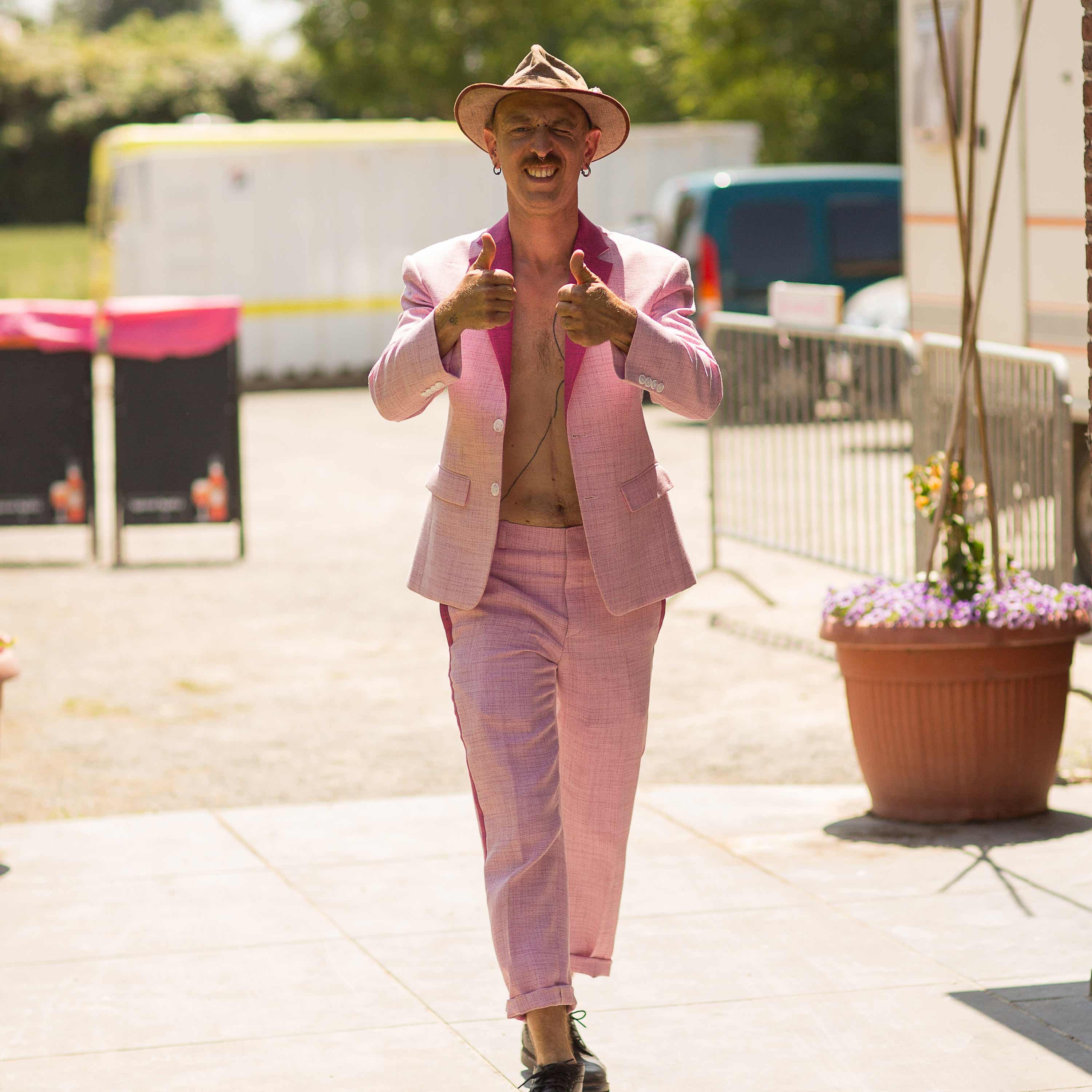
Will I still know you? When I have struck a match between the now and then,in that darkness that time casts upon our imagination,will you defeat the odds, or simply perish?Will I bridge the gap and extend my soul as to link two hearts together?Will time forever cease or will it, eventually, take its toll upon my in romance drenched heart? Questions fill my lungs and a breath I deeply takeI exhale, and the moment comes to life.Stripped of its uncertainty it is as plain as it is holy. Wholly insignificant yet, all there really is.Stripped bare of our illusions there lies the eternal knowledge, forever lost in translation as our senses distort the now. But where does that leave me?Me, amongst this chaotic shrapnel of the explosion we call lifeAm I lostor simply all of it? And where does that leave you?Where I have always believed you to be?In my heart and mind? As I dream the world, I so dream you in it. And as I stare into the abyss that is me I realize that here wait the stars.And so I realize that you are nothing but me myself,you are the embodiment of the discrepancy that exists between me and myself. And as you are meI am you too Therefore I cannot wait to meet myself again This is a public episode. If you'd like to discuss this with other subscribers or get access to bonus episodes, visit kobione.substack.com/subscribe
As sure as a shoreline twists and turns I long, I yearn I long, I yearn But learn I shall And with a YELL! abolish spells from whence they came They will rise again with different names always different always the same Yet I propose the path is clear through thorny bushes we must pluck a rose and with it, friend lend fragrance to fear This is a public episode. If you'd like to discuss this with other subscribers or get access to bonus episodes, visit kobione.substack.com/subscribe
And as the world held it’s breath I lay awake counting the stars in my head just drifting along to the tides of time who, ever so gently, envelope me and caress me into a slumber of timelessness ssss it goes and me, I stay awake in its wake This is a public episode. If you'd like to discuss this with other subscribers or get access to bonus episodes, visit kobione.substack.com/subscribe