Skip to content
Artwork for Klimatic Scale
TechnologyBusinessEntrepreneurship

Klimatic Scale

Klimatic Group

Klimatic Scale is a show about commercial scale in energy, built environment, and mobility innovation - the sectors core towards reaching net zero goals in Europe. So why are we stalling? Join award-winning ecosystem builders Aneri and Dash as they discuss best ways to scale with industry leaders, entrepreneurs, and experts. We cover: 1. Success stories and what works from pilot to scale 2. Specific industry cases & success stories, dissected and analyzed 3. What works best for speedy commercialization to get to net zero

klimaticgroup.substack.com
Play
  • 20 episodes
  • Avg 18 min
  • English
  • July 29 · 26 min

    Scaling EV Software in a Fragmented Infrastructure Landscape

    Chargetrip is an Amsterdam-based software company that provides a smart EV (Electric Vehicle) routing engine and e-mobility intelligence platform. Through its APIs and no-code tools, it helps automakers, fleet operators, and charging networks build custom route planners, simulate energy consumption, and predict accurate real-time driving ranges for over 1,500 EV models. Headquartered in the Netherlands, their technology is widely integrated into brand-owned apps, web-based route planners, and in-car navigation systems for companies like Porsche, Siemens, and Plugsurfing. Connect with Gideon van Dijk on LinkedIn. 00:00 – The Problem Chargetrip Solves03:45 – 10 Years Building in E-Mobility06:30 – What They Got Right (and Wrong) About EV Adoption08:00 – The First Customer: Norway’s EV Association11:00 – How Chargetrip’s Routing Engine Works14:00 – Different Customers, Different KPIs17:00 – The Hardest Part of Scaling19:30 – Selling into Automotive and Energy Giants24:00 – Commercial EV Fleets: The Next Growth Frontier27:00 – Advice for Mobility Founders29:00 – Closing Thoughts & What’s Next The State of European EV Charging Infrastructure The electric vehicle (EV) market is transitioning from an early phase focused on mass deployment of charging points to a phase focused on expanding overall charging capacity, mainly through high-power charging. Consequently, local grid constraints are emerging as one of the main bottlenecks. State of the Market According to the International Energy Agency (IEA), global private charging points for light-duty vehicles (LDVs) reached over 43 million in 2025, supporting a global electric LDV fleet of roughly 76 million. Meanwhile, the public charging infrastructure expanded by more than 33% in 2025, surpassing 7 million public charging points worldwide. With the diversification and maturation of the EV market toward an economic mass market, the average price of a vehicle decreased while battery capacity and driving range remained broadly stable. At the same time, higher oil prices increased the financial attractiveness of EVs. The IEA notes that financial savings associated with driving an EV rather than a gasoline car have risen between 20% and 45% in most countries. Home vs. Public Charging Home charging remains the preferred and cheapest method. In Norway, 90% of EV owners can charge at home. Many European countries offer direct subsidies for charging at home. To prevent residential charging from overloading local grids, regulatory frameworks have been increasingly introduced in Europe: * Germany: Key regulations such as §14a of the Energy Industry Act (EnWG) incentivise grid-friendly charging and smart load management by allowing distribution system operators to temporarily control flexible loads during periods of grid congestion, in return for reduced grid charges. * The Netherlands: According to the Charging Report 2026 by gridX, the majority of home charging EV drivers already have solar (PV) systems, making smart home charging the standard baseline in the Netherlands. In contrast, public fast charging is associated with a considerable price premium. In some markets, public fast-charging tariffs can be up to 240% higher than residential electricity rates. The High-Power Transition Worldwide deployment is increasingly prioritizing high-power, ultra-fast charging. The IEA shows that the average speed of charging points worldwide increased by 15% in one year, rising from approximately 40kW in 2024 to nearly 50kW in 2025. * Germany: In Europe, Germany leads in the deployment of ultra-fast chargers, with its share of ultra-fast chargers increasing from 4% in 2020 to 19% in 2025. * The Netherlands: Following its leading position in Europe in terms of density, the share of high-speed chargers in the Netherlands doubled, while slow chargers experienced a relative decline. International Energy Agency (IEA) (2026). Licence: CC BY 4.0. Commercial Fleet Electrification While dedicated charging infrastructure for electric trucks and heavy commercial fleets grows steadily, overnight depot charging will remain the backbone of such fleets for many years. However, there is growing momentum behind heavy-duty vehicles (HDVs) charging corridors on the highways. * China: Leads global development with 5,000 to 9,000 public HDV charging stations – representing an estimated 70,000 individual charging points – supported by integrated grid planning. * Europe: Follows with over 4,000 public HDV charging points, supported by major EU funding commitments such as the Alternative Fuel Infrastructure Facility (AFIF). Smart Grids & Virtual Extension The most pressing constraint on the development of high-power fast charging remains the grid, as high-power fast charging also creates energy demand peaks. To bypass grid upgrade delays, digital and hardware solutions are increasingly gaining relevance: * Virtual Grid Extensions: Using battery energy storage systems (BESS) at charging stations to moderate power on-site. * Software Optimization: Implementing dynamic tariff management, peak shaving, and dynamic load balancing. Finally, fast-charging corridors are expanding providing more flexibility for EV users. Nevertheless, home charging remains the backbone of e-mobility, and private charging capacity is expected to increase almost ninefold by 2035. This is a public episode. If you would like to discuss this with other subscribers or get access to bonus episodes, visit klimaticgroup.substack.com

  • July 22 · 27 min

    Scaling Digital Solutions for EV Charging

    Gridio is an Estonian cleantech startup that builds software to optimize when electric vehicles (and other home devices) consume electricity, aligning usage with cheap, renewable-heavy hours to cut costs and ease grid stress. Gridio’s core product automatically schedules EV charging based on real-time electricity prices, grid congestion signals, and renewable availability, so cars charge when it’s cheapest and cleanest without user intervention. The software connects directly to OEM clouds (car manufacturers) and to solar/battery inverters, so users don’t need extra hardware to enable smart charging. It offers a consumer app across the EU and also provides API/white-label “smart charging as a service” for businesses with EV drivers (e.g., fleets, energy retailers, employers). Connect with Braeden Holmes on LinkedIn here. 00:00 – Introduction: Why EV Flexibility Matters02:20 – Building Gridio: From B2C Proof of Concept to B2B Scale05:30 – Solving the OEM Challenge09:15 – Selling to Utilities: The Long Road to Scale13:30 – Europe’s Innovation Landscape15:45 – The Biggest Scaling Challenge: Changing Minds19:00 – From Pilot to Procurement22:00 – Winning Tenders and Scaling Deployments25:00 – The Future of EV Flexibility28:00 – Advice for Climate Tech Founders The State of Vehicle-to-Grid Technologies Vehicle-to-Grid (V2G) is a smart charging system that enables a bidirectional flow of energy between EVs and the power grid. The EV can feed electricity back into the grid during peak demand hours, mitigating grid constraints. To achieve this the vehicle must be connected to a compatible bidirectional charging station, communicating with the local utility provider. According to the International Energy Agency (IEA), a regulatory milestone was reached when “Germany eliminated double grid fees for bidirectional charging points at the end of 2025”, effectively clearing the path for vehicle-to-grid (V2G) commercialization. Before this shift, electric vehicle (EV) owners were financially penalized, paying grid fees twice: once when charging the vehicle and again when feeding energy back into the system. Drawing from the latest reports by the IEA, this article breaks down how the technology works, the economic incentives and hurdles left to clear. BloombergNEF’s Electric Vehicle Outlook forecasts that the global EV fleet’s consumption will skyrocket from 367 terawatt-hours in 2025 to over 2,700 terawatt-hours by 2040. This is why the global grid infrastructure will require an investment of over $800 billion by 2040. Consequently, V2G can be seen as a significant opportunity for grid expansion. For instance, the Australian Renewable Energy Agency (ARENA) recently invested $16.8 million to expand residential V2G projects, accelerating the adoption of EVs as flexible energy assets. How It Works AC vs. DC Charging To enable bidirectional power transfer, power electronics must convert electricity, while strictly complying with utility grid standards. Currently, the market offers two technological paths: * AC (Alternating Current) Charging: In this setup, the vehicle converts the battery’s DC power to the grid’s AC power. The external charger acts merely as a communication link. * DC (Direct Current) Charging: Here the vehicle exports DC electricity straight out of the battery. The external DC charger converts the power to AC. The external charger is responsible for grid compliance and tracking real-time grid stability. The Rise of Dynamic Tariffs For individual EV owners, the transition from consumer to energy trader relies on software innovations. While retail consumers traditionally pay a flat rate for electricity, utilities trade on volatile energy exchange markets. During midday, when solar generation is high, the prices usually drop. In the evening peak hours, as people return home and switch on household appliances, demand increases, forcing utilities to turn on power stations. V2G eliminates this inefficiency through dynamic electricity tariffs, adjusting consumer electricity prices in short intervals based on the market conditions. The charging station management system (CSMS) calculates optimal charging schedules, allowing the vehicle to acquire energy when it’s cheapest and sell it back when demand is high. From Car Owner to Energy Trader The IEA estimates that EV owners participating in V2G grid services can generate revenues ranging to over $1000 per year. The EV owners can create revenue through three primary value streams: * Energy Arbitrage: Charging when demand is low and discharging when prices are high. * Ancillary Services: Providing frequency and voltage stability to grid operators, by adjusting charging times. * Blackout Support: Offer emergency power source to help restore electricity during grid failures. However, the window of high profitability may not last forever. As many more EVs join the grid and offer V2G, the supply of stability services will skyrocket, causing financial returns to eventually decline. But at the moment, vehicle availability remains scarce, less than 1,5% of all EV models possess V2G capabilities, representing only 22 models, as depicted by the IEA. International Energy Agency (IEA) (2026). License: CC BY 4.0. Challenges At the moment, V2G faces two main challenges: * Protocol Fragmentations: The universal communication standard for bidirectional charging, ISO 15118-20, is still inconsistently implemented. Additionally, most V2G offers remain isolated within single countries, due to different grid regulations. * Battery Degradation: EV owners have feared that V2G would destroy their battery’s health. However, smart charging can actually reduce capacity loss, compared to uncontrolled charging. Scaling of V2G relies on the integration of advanced battery management systems featuring predictive degradation models. All in all, with increasing demand for energy and a growing number of EVs on the road, V2G offers an opportunity to stabilize the grid, by adapting to dynamic electricity tariffs. Car owners can generate revenue, while optimizing the battery health. However, the international communication standard still requires global adoption. This is a public episode. If you would like to discuss this with other subscribers or get access to bonus episodes, visit klimaticgroup.substack.com

  • July 15 · 29 min

    Inside the Scaling Challenges of Sustainable Last-mile Delivery

    Finmile is an AI-powered logistics execution platform that serves as an operating system for last-mile delivery, dispatch, and field operations. It provides end-to-end management, including AI-driven route optimization, proof of delivery (ePOD), returns management, and real-time fleet tracking. Finmile has a strong footprint in London, Europe, and the US, helping logistics companies, e-commerce retailers, and delivery service providers (DSPs) cut costs by up to 42%. Connect with Rich Pleeth here on LinkedIn. 00:00 – Why last-mile logistics is one of climate’s biggest hidden challenges01:03 – The Problem: Why Logistics Still Runs on Spreadsheets06:02 – Building Finmile07:01 – Why Even Amazon Struggles with Last-Mile Logistics09:18 – Inside Finmile’s AI Operating System11:27 – What Agentic AI Actually Means for delivery workers13:30 – Selling Cost Savings, Delivering Climate Impact17:52 – Scaling Finmile21:22 – Customer Success Stories24:00 – Partnerships as a Growth Strategy25:33 – What’s Next for Finmile26:26 – The Future of Logistics28:06 – What Finmile is Looking For Efficient Logistics Routing - it’s also an environmental solution When we think of logistics, we usually picture a fleet of delivery vans dropping off packages on our doorsteps. But logistics involves much more than parcel deliveries. One often overlooked aspect of urban mobility is service logistics. Take your local plumber or electrician as an example. We have all experienced the typical 9 am to 1 pm arrival window, leaving us waiting at home for hours. Efficient service routing helps address this issue by providing more accurate estimated times of arrival. Essentially, this is achieved by combining route optimization with parts management. Even before the journey begins, the software ensures that the right parts are loaded onto the right van, preventing double-trips and therefore avoiding unnecessary CO2 emissions. While service logistics create opportunities for improving efficiency, delivery logistics show room for improvement as well. Consumers have become increasingly accustomed to same-day delivery, driven by what is often called the Amazon Effect. This shift is forcing more half-empty vans onto the road, which makes efficient routing even more important. From Static to Dynamic Routing According to Locus, routing inefficiency increases costs, causes longer delivery times, as well as low route adherence and increases fuel consumption. The European Commission also highlights that optimizing urban freight transport and last-mile delivery is instrumental in reducing congestion and emissions. By adjusting to real-time disruptions like traffic congestion and weather delays, as well as last-minute order changes, efficiency can be improved. Achieving this requires a shift from the current static system, where routes are planned the night before, to a more dynamic system which updates routes mid-journey with the help of AI. Route Optimization As explained by AREALCONTROL, route optimization relies on algorithms to improve delivery routes. These algorithms are designed to solve complex routing problems involving multiple vehicles. There are different kinds of algorithms: * Shortest path algorithms solve the problem of finding the best route between two locations. * Vehicle Routing Problem (VRP) solvers address a more complex optimization problem by determining optimal routes for multiple vehicles, while satisfying constraints such as vehicle capacity, driver working hours, and customer delivery time windows. * AI based methods - for situations where demand patterns change quickly, for example, same-day deliveries. The foundation of all optimization methods is high-quality data, including digital maps, GPS tracking, real-time traffic information, operational constraints, and other factors such as weather conditions. Source: World Economic Forum, Intelligent Transport, Greener Future: AI as a Catalyst to Decarbonize Global Logistics (January 2025). Potential Reduction in Emissions through AI According to the World Economic Forum, “the global transportation industry is responsible for up to 25% of all greenhouse gas emissions, with freight logistics accounting for 7-8% of global emissions.” AI offers a significant opportunity to reduce greenhouse gas emissions in the freight logistic sector. Enhancing the operational efficiency across road transport, maritime services, the aviation and rail transport, could reduce emissions by 4-7%. Further, improving capacity utilization could reduce global freight emissions by 2-4%. In total, the freight logistics industry could potentially reduce its emissions by 10-15%. The climate impact is clear: efficient logistics reduces greenhouse gas emissions, air pollution, and improves local air quality, especially in traffic-congested areas. This is a public episode. If you would like to discuss this with other subscribers or get access to bonus episodes, visit klimaticgroup.substack.com

  • July 6 · 7 min

    EP 10: The Future of BESS is About Systems

    As battery prices continue to fall, it’s easy to assume that cost remains the biggest factor in purchasing Battery Energy Storage Systems (BESS). But according to Martin Riegler, CEO of GridHive Energy, the conversation has fundamentally changed. At Intersolar Europe, we discussed why customers are increasingly looking beyond hardware and focusing on integrated, future-proof energy solutions that deliver value over the long term. Customers are buying outcomes, not batteries Only a few years ago, battery discussions were dominated by one question: How much does it cost per kilowatt-hour? Today, customers are asking something very different. Can this system adapt as my business grows? Will it integrate with future technologies? Can it continue delivering value over the next 10 to 15 years? For commercial and industrial customers, battery storage is no longer viewed as a standalone asset. It’s becoming part of a wider energy ecosystem that includes solar generation, electric vehicle charging, backup power, and energy management software. Turnkey solutions reduce complexity As energy systems become more sophisticated, businesses increasingly want a single partner who can deliver hardware, software, installation, and ongoing support. Martin explained that turnkey solutions simplify deployment while giving customers confidence that their systems will continue to evolve alongside changing technologies and operational needs. For many organizations—particularly small and medium-sized enterprises—this integrated approach reduces risk and makes the transition to electrification more manageable. Collaboration drives successful projects Technology alone doesn’t determine whether a BESS project succeeds. Martin emphasized that the strongest projects bring every stakeholder together from the very beginning: developers, grid operators, investors, technology providers, EPC contractors, and ultimately the asset owner. When technical, commercial, and operational priorities are aligned early, projects are more likely to perform successfully throughout their lifetime. It’s a reminder that successful energy infrastructure is built as much on collaboration as it is on engineering. Electrification is becoming a business decision One of the most optimistic parts of our conversation focused on why businesses are continuing to invest despite economic uncertainty. For many companies, electrification is no longer driven primarily by sustainability targets or government subsidies. It’s becoming a commercial decision. By combining solar generation, battery storage, backup systems, and fleet electrification, businesses can reduce their exposure to volatile energy prices while creating greater certainty over long-term operating costs. Rather than waiting for the next subsidy program, many organizations are recognizing that the economics of clean energy increasingly stand on their own. Final Thoughts The battery storage industry is entering a new phase of maturity. While falling battery prices have helped accelerate adoption, long-term success will increasingly depend on delivering integrated solutions that combine technology, software, service, and strategic partnerships. As Martin highlighted, the companies creating the most value won’t simply install batteries—they’ll help customers build resilient, future-ready energy systems that support their businesses for decades to come. 🎥 Watch the full interview to hear Martin Riegler share why turnkey energy solutions are becoming the new standard, what today’s customers expect from battery storage providers, and why electrification is increasingly driven by long-term business value rather than subsidies. This is a public episode. If you would like to discuss this with other subscribers or get access to bonus episodes, visit klimaticgroup.substack.com

  • July 6 · 5 min

    EP 9: The Role of Risk in Managing BESS Projects

    As Europe’s Battery Energy Storage System (BESS) market continues to expand, manufacturers are investing heavily in technology, production capacity, and new market opportunities. But according to Peter Hawranke of Sicher & Sicher Group, technical innovation is only part of the equation. At Intersolar Europe, we discussed why companies entering Europe—particularly international manufacturers—need to think beyond products and consider the legal, operational, and cybersecurity risks that come with operating in one of the world’s most highly regulated markets. Risk management starts long before something goes wrong For companies expanding into Europe, compliance can often feel like another administrative hurdle. Peter sees it differently. Strong compliance, governance, and risk management frameworks aren’t simply about satisfying regulations—they’re about ensuring a company can respond quickly and effectively when unexpected issues arise. Whether it’s a contractual dispute, an intellectual property claim, or a reputational issue on social media, having the right processes and protections in place can significantly reduce both financial and operational disruption. European customers expect more than a great product As battery manufacturers expand internationally, customers are increasingly asking questions that go far beyond product performance. Do you have the appropriate liability coverage? Can you demonstrate robust compliance procedures? How would you respond to a product recall? These are becoming standard due diligence questions for utilities, developers, and project partners across Europe. For international companies, particularly those entering the European market for the first time, preparing for these conversations is becoming just as important as demonstrating technical performance. Cybersecurity is becoming part of energy security One of the strongest themes from our discussion was cybersecurity. As battery storage becomes an integral part of critical energy infrastructure, the potential consequences of cyberattacks increase significantly. Battery systems are no longer standalone assets—they are connected to increasingly digital electricity networks, making cybersecurity an essential component of project development and long-term operations. Protecting infrastructure now means protecting both physical assets and the digital systems that control them. Planning for resilience While it’s impossible to eliminate every risk, organizations can build resilience through preparation. That includes: * Establishing clear governance and compliance processes. * Understanding customer and regulatory expectations. * Developing response plans for operational and reputational incidents. * Strengthening cybersecurity alongside physical safety measures. Companies that invest in these capabilities early are often better positioned to respond when challenges inevitably arise. Final Thoughts The battery energy storage industry is evolving rapidly, but success in Europe will depend on more than delivering innovative technology. As projects become larger, more connected, and more strategically important, manufacturers must also demonstrate that they can manage risk responsibly and operate with confidence in complex regulatory environments. Innovation may open the door—but trust, resilience, and preparedness are what sustain long-term growth. 🎥 Watch the full interview to hear Peter Hawranke discuss why risk management is becoming a strategic advantage for battery storage companies and how manufacturers can prepare for the legal, operational, and cybersecurity challenges of Europe’s evolving energy market. This is a public episode. If you would like to discuss this with other subscribers or get access to bonus episodes, visit klimaticgroup.substack.com

  • July 3 · 6 min

    EP 8: Why Battery Optimisation Is the Next Competitive Advantage for Independent Power Producers

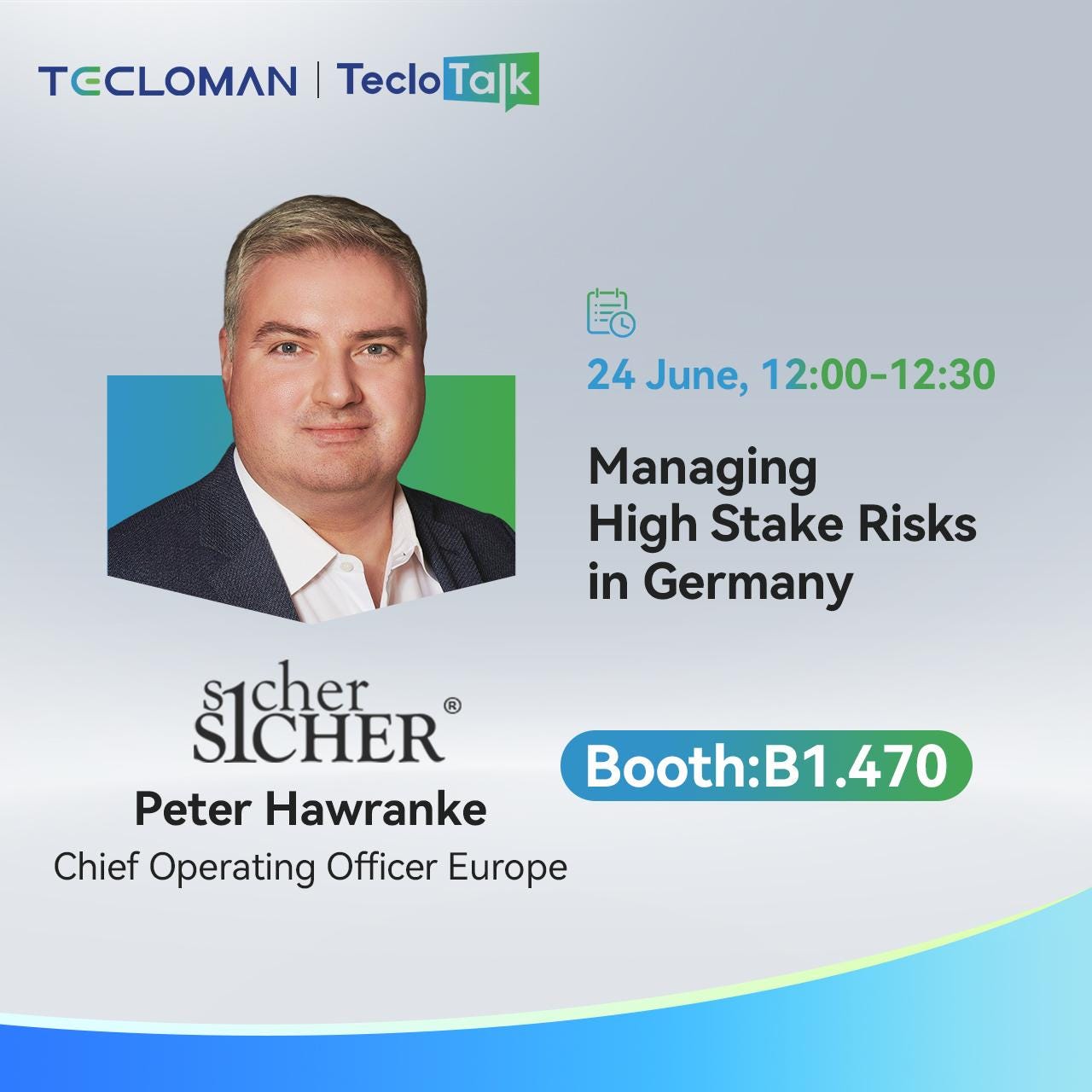
    Battery Energy Storage Systems (BESS) are transforming Europe’s electricity system, but simply owning a battery is no longer enough to maximize its value. At Intersolar Europe, Aneri spoke with Marco Svetina, Founder and Chief Product Officer at BMZ Solar, about why Independent Power Producers (IPPs) need to think beyond hardware and focus on optimization, agility, and market access. As Europe’s electricity markets become more dynamic, the real competitive advantage is no longer just battery capacity—it’s knowing how to use that capacity. The hidden challenge for Independent Power Producers According to Marco, one of the biggest barriers facing many IPPs isn’t technology—it’s access. Large utilities have spent decades participating across multiple electricity markets, allowing them to optimize assets and respond to changing market conditions. Many newer market entrants simply don’t have the same level of access or experience. Without the ability to participate across multiple revenue streams, battery owners risk leaving significant value on the table. As battery storage becomes more widespread, understanding market participation will be just as important as selecting the right technology. Optimization is about more than today’s revenue A common question for battery owners is whether they should maximize short-term profits or preserve battery life for the future. Marco argues that the answer isn’t necessarily choosing one over the other. Instead, success depends on understanding how electricity markets evolve over time. The value of flexibility changes rapidly, and operators need to anticipate where opportunities will emerge rather than relying on a single revenue source. This requires not only market knowledge, but also sophisticated forecasting and optimization tools that can respond to changing price signals. Agility is becoming a critical asset One of the most interesting insights from our conversation was Marco’s emphasis on agility. Historically, energy assets were designed around long-term forecasts and relatively stable markets. Today’s energy system looks very different. As renewable generation increases and electricity markets become more dynamic, battery operators need the flexibility to adapt quickly. That means being able to move between different market opportunities, respond to regulatory changes, and optimise performance in real time. Rather than committing to one market for the life of an asset, operators need the ability to pivot as conditions change. Software is unlocking the full value of batteries Battery storage is unique because it can respond almost instantaneously to changes in the electricity system. But unlocking that value depends on intelligent software. Marco highlighted the growing role of optimization platforms and artificial intelligence in helping operators determine where and when batteries should participate. These tools can analyze market conditions, automate decision-making, and maximize the value generated by a single asset. In other words, the future of battery storage isn’t just about better batteries—it’s about smarter operation. Final Thoughts As Europe’s energy transition accelerates, battery storage will play an increasingly important role in balancing renewable energy and supporting grid stability. But this conversation serves as an important reminder that success won’t be determined by hardware alone. The next generation of competitive advantage will come from intelligent optimization, access to diverse electricity markets, and the agility to adapt as the energy landscape evolves. For Independent Power Producers, that shift may prove just as important as the batteries themselves. 🎥 Watch the full interview to hear Marco Svetina explain why optimization, agility, and smarter market participation are becoming essential for battery storage owners in Europe’s rapidly evolving energy market. This is a public episode. If you would like to discuss this with other subscribers or get access to bonus episodes, visit klimaticgroup.substack.com
  • July 3 · 5 min

    EP 7: The Future Value of BESS is in how intelligently it is operated.

    Why Battery Optimization Is Becoming the Real Competitive Advantage As battery energy storage systems (BESS) become more widely deployed across Europe, simply owning a battery is no longer enough to maximise returns. At Intersolar Europe, Aneri spoke with Patrick from Marbl about why optimization is quickly becoming one of the most important drivers of project profitability—and why software is playing an increasingly central role in the energy transition. From single markets to multi-market optimisation In the early days of battery storage, operators could often participate in a single electricity market and generate attractive returns. Today, as more batteries enter the market and margins tighten, operators need to optimise across multiple revenue streams—from frequency regulation to intraday trading and energy arbitrage. Managing those opportunities manually has become increasingly difficult, making intelligent optimisation platforms essential. Simplifying complexity Connecting to multiple trading platforms, forecasting tools, and exchanges creates significant operational complexity. Patrick explained that optimisation platforms increasingly take on this responsibility, allowing asset owners to focus on managing their projects while automated systems handle market participation, trading, and communication across different energy markets. The future is integrated energy systems Looking ahead, Patrick believes new renewable energy projects will increasingly combine solar PV, battery storage, and long-term Power Purchase Agreements (PPAs) from the outset. As solar generation grows and midday electricity prices continue to fall, co-locating batteries with solar projects can help increase the value of renewable generation while providing more reliable green power to customers such as data centres and large industrial users. Final Thoughts The battery industry is entering a new phase where competitive advantage won’t come from hardware alone. Success will increasingly depend on intelligent optimization, integrated system design, and software that enables asset owners to extract the maximum value from every kilowatt-hour. As Europe’s energy markets continue to evolve, optimization is becoming just as important as the battery itself. 🎥 Watch the full interview to hear Patrick explain how optimization is transforming battery energy storage and why software will play a defining role in the next generation of renewable energy projects. This is a public episode. If you would like to discuss this with other subscribers or get access to bonus episodes, visit klimaticgroup.substack.com
  • July 2 · 3 min

    EP 6: Why an Ecosystem is Needed for BESS to Grow

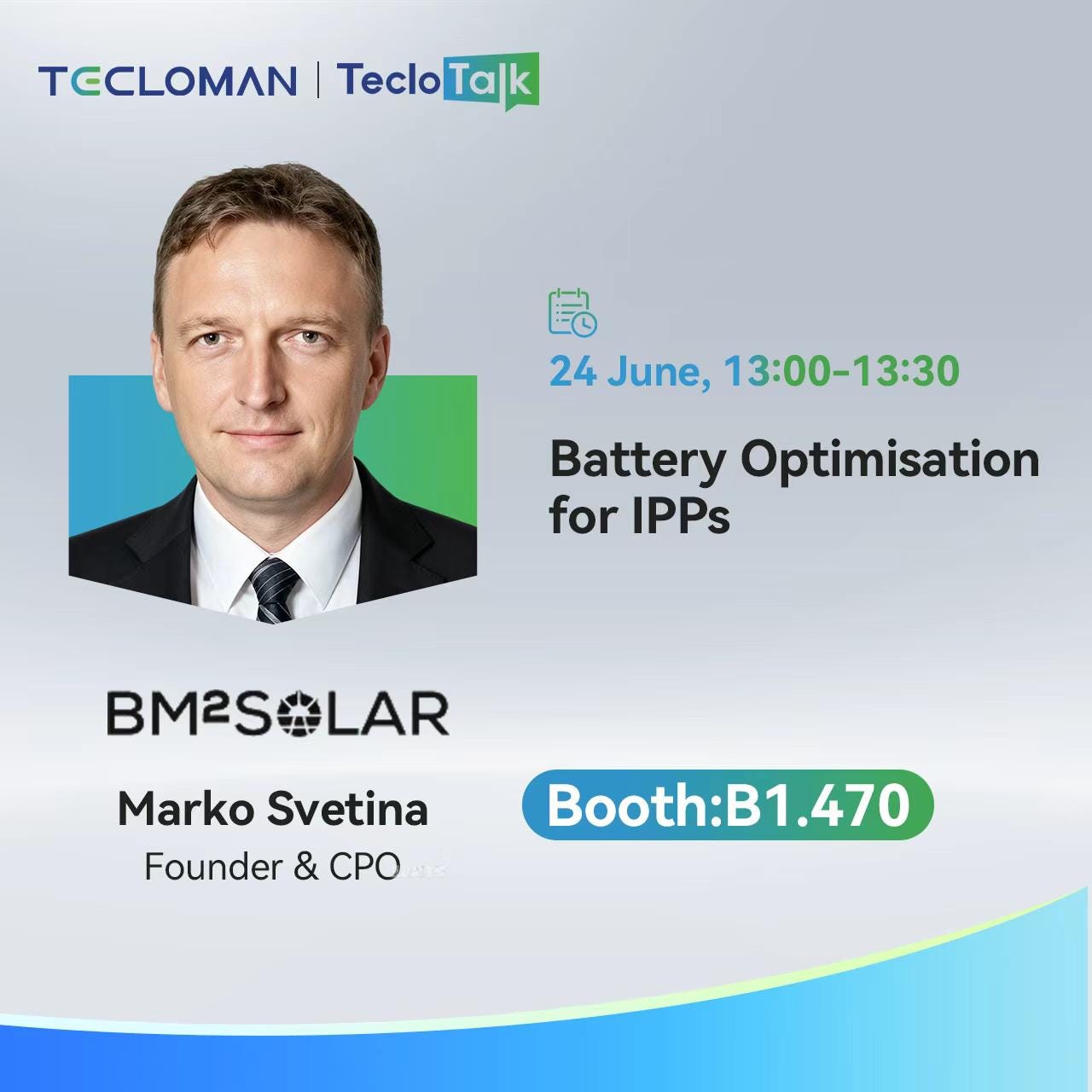
    Scaling Climate Tech Is About More Than Selling Products Behind every successful climate tech company is often an ecosystem of partners helping them grow. At Intersolar Europe, Aneri spoke with Jie Xiao from New Energy Nexus China (we are former colleagues!) about how the organization supported Tecloman during its early growth and how it continues to help clean energy startups expand into international markets. Building relationships before building markets One of the biggest misconceptions about startup accelerators is that they help startups sell. As Jie explained, New Energy Nexus takes a different approach. Rather than helping companies sell directly, they help founders understand new markets, build trusted relationships, and connect with investors, industry experts, and ecosystem partners. For companies entering unfamiliar markets, those introductions can be just as valuable as commercial leads. Preparing companies for international growth International expansion requires more than translating a website or attending a trade show. According to Jie, New Energy Nexus helps startups understand local business cultures, activate regional networks, and connect with stakeholders who can provide context long before commercial discussions begin. The goal is to help companies make informed decisions about where—and how—to grow. Trust is a competitive advantage A recurring theme throughout the conversation was the importance of trust. Whether introducing companies to new markets, facilitating conversations at international events, or connecting founders with local partners, relationships remain central to successful market entry. Technical expertise matters, but credibility and trusted introductions often determine whether those conversations become long-term partnerships. Final Thoughts As climate technologies become increasingly global, organizations like New Energy Nexus play an important role in helping startups navigate new markets. Their work highlights an important lesson: scaling climate innovation isn’t just about developing better technology. It’s about building the networks, partnerships, and trust that allow those technologies to succeed internationally. 🎥 Listen to the interview to hear Jie Xiao discuss how New Energy Nexus supports climate tech startups and why ecosystem building is essential for international growth. This is a public episode. If you would like to discuss this with other subscribers or get access to bonus episodes, visit klimaticgroup.substack.com

  • July 2 · 5 min

    EP 5: Why Better Coordination Could Unlock Europe's Energy Transition

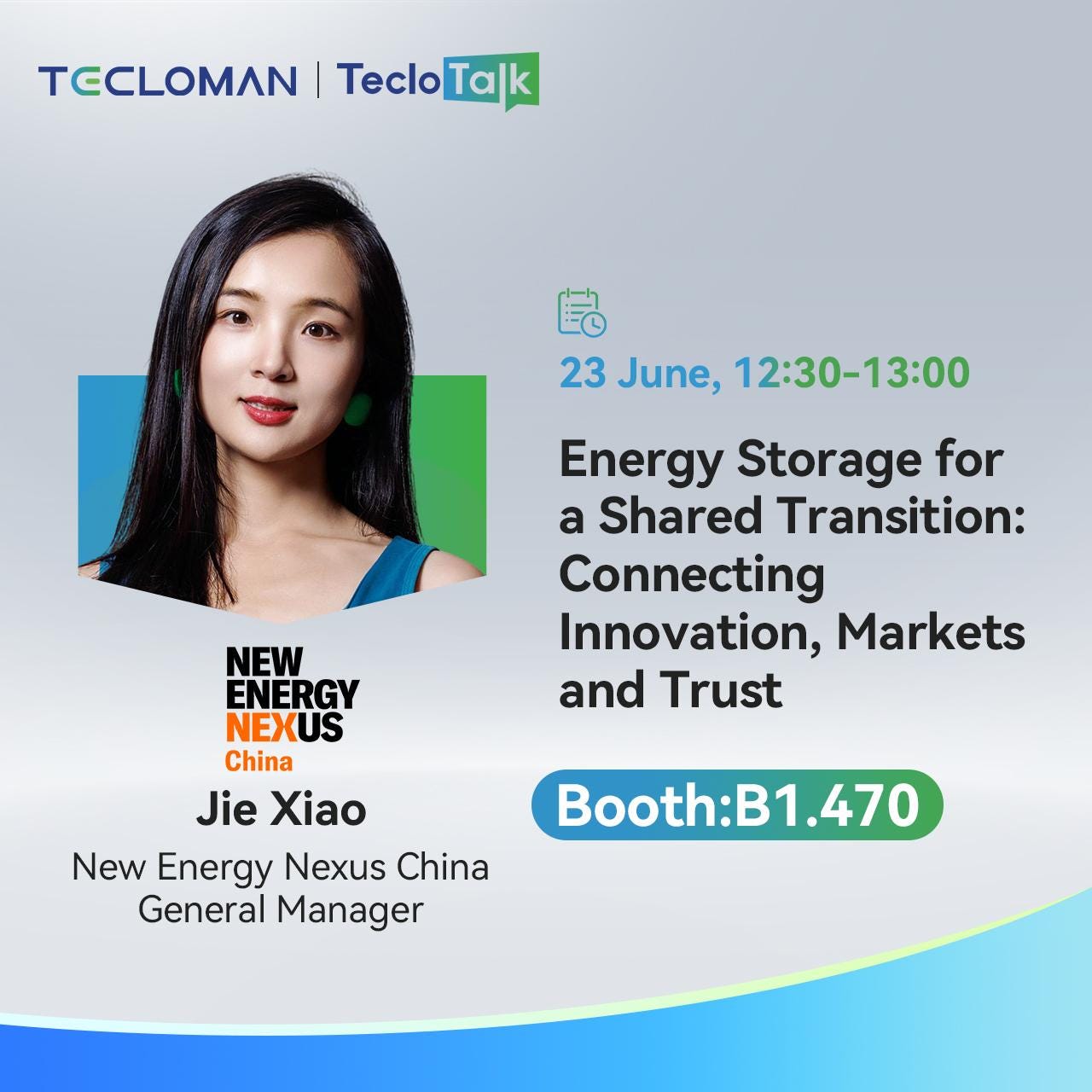
    Why Better Coordination Could Unlock Europe’s Energy Transition When we talk about accelerating the energy transition, the conversation often centers on new technologies—better batteries, smarter grids, or more renewable generation. But what if one of the biggest barriers isn’t technology at all? At Intersolar Europe, Aneri spoke with Daniel Schaub, co-founder of The Energy Bridge, about why coordination between policymakers, industry, researchers, and startups may be one of the most overlooked drivers of Europe’s clean energy future. Technology is moving faster than policy Innovation in the energy sector is advancing rapidly, but regulatory frameworks often struggle to keep pace. Daniel argues that policymakers face an incredibly difficult challenge: making decisions today that will shape energy infrastructure for decades. That makes stronger collaboration between government, industry, academia, and innovators essential for reducing uncertainty and unlocking investment. Europe’s next opportunity is smarter coordination Rather than focusing solely on building more infrastructure, Daniel believes Europe should also focus on making better use of the infrastructure it already has. Many emerging startups are developing software that can optimise grid operations, improve flexibility, and increase network capacity without requiring entirely new transmission assets. As Daniel puts it, the future is about “orchestrating electrons”—using intelligence to get more value from existing systems. Startups have an important role to play Daniel also highlighted the importance of bringing startups into policy and industry discussions earlier. Young companies often move faster than established organisations, developing new software, business models, and digital tools that can solve real challenges facing the energy sector. Better collaboration between innovators and decision-makers can help accelerate deployment while ensuring policy keeps pace with technological change. Final Thoughts The energy transition isn’t just an engineering challenge—it’s a coordination challenge. Success will depend on connecting policymakers with researchers, startups with utilities, and innovators with industry. By creating stronger links across the ecosystem, Europe can reduce risk, accelerate investment, and unlock the full potential of clean energy innovation. 🎥 Watch the full interview to hear Daniel Schaub share why coordination may be the missing piece in Europe’s energy transition and how stronger collaboration can accelerate innovation across the energy ecosystem. This is a public episode. If you would like to discuss this with other subscribers or get access to bonus episodes, visit klimaticgroup.substack.com
  • July 1 · 4 min

    EP 4: Grid-Ready Doesn't Mean Product-Ready

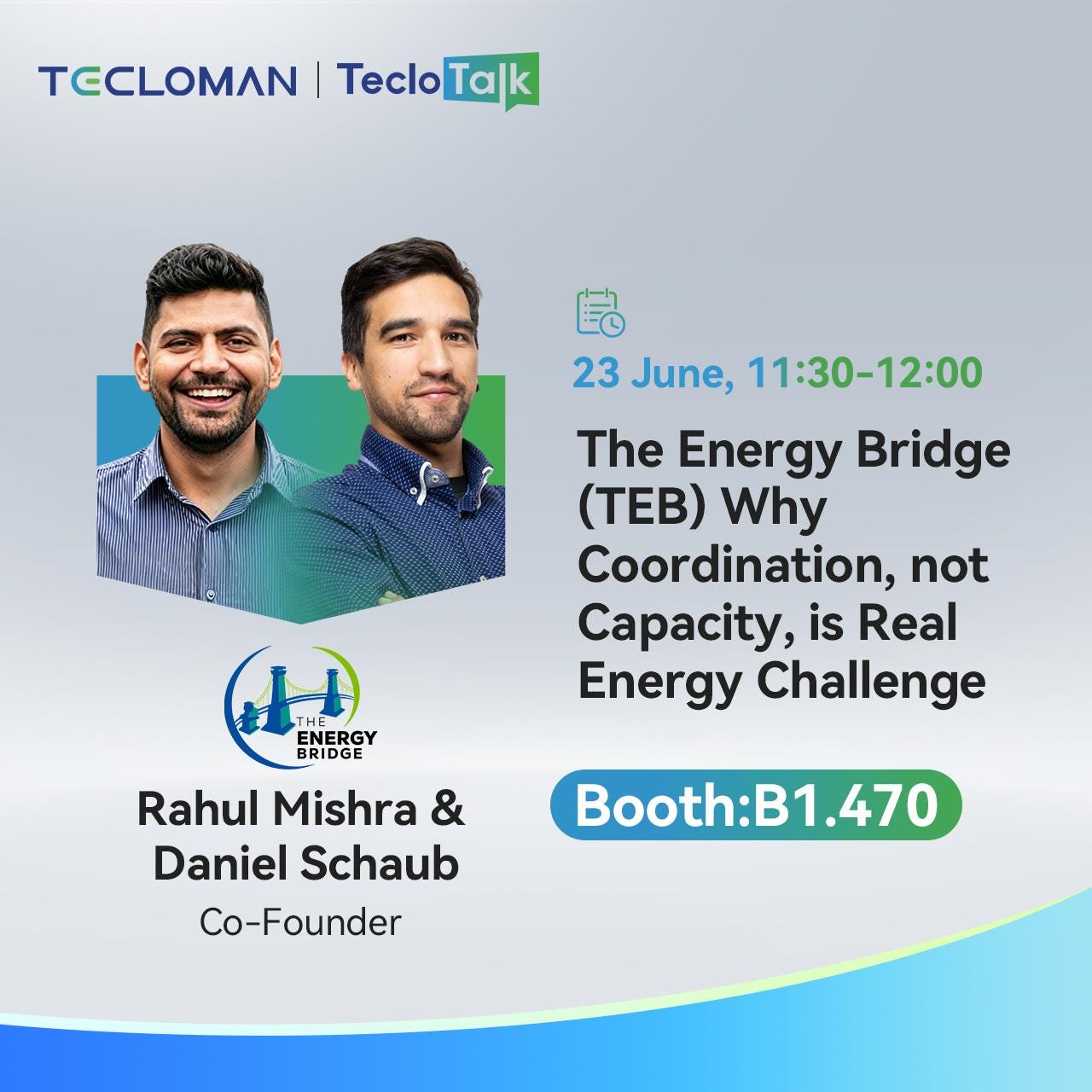
    Grid-Ready Isn’t Product-Ready: Why Integration Is the Next Challenge for Europe’s BESS Market Battery Energy Storage Systems (BESS) are being deployed across Europe at an unprecedented pace. But getting a battery system installed is only one part of the journey. The bigger challenge? Making sure that system is ready to operate within the requirements of the local electricity grid. At Intersolar Europe, Aneri spoke with Alper Nazli from Meteocontrol about what “grid readiness” really means, where projects encounter delays, and why Europe’s rigorous standards are laying the foundation for a more resilient energy system. Every grid is different It’s easy to assume that once a battery system is built, it’s ready to connect to the grid. In reality, every country—and sometimes every grid operator—has its own technical requirements. As Alper explained, manufacturers may deliver a complete battery system, but ensuring it complies with local grid codes, communication protocols, and operational requirements is a separate challenge altogether. For companies deploying projects across Europe, understanding these regional differences is becoming an increasingly important part of successful project delivery. Compatibility comes before deployment One of the less visible bottlenecks in the BESS industry is ensuring compatibility between battery systems and the software and control platforms that manage them. Before a project can move forward, solutions must be tested to confirm they work seamlessly together. With more manufacturers entering the market each year, that validation process is becoming increasingly important—and increasingly busy. While the technical integration itself can often be completed within a matter of weeks, broader project timelines are frequently influenced by regulatory approvals and utility requirements. Regulation isn’t the enemy As Europe looks to accelerate battery deployment, it’s tempting to view regulation as an obstacle. Alper offered a different perspective. Battery systems are expected to operate safely and reliably for 10 to 20 years. That means today’s decisions must account for long-term cybersecurity, future grid requirements, and evolving operating conditions. Moving faster is important—but not if it compromises quality or reliability. Rather than reducing standards, the focus should be on creating efficient processes that maintain confidence in the systems being connected to the grid. We’re still early in the journey Despite the rapid growth of battery storage across Europe, Alper believes the industry is still at an early stage of development. As deployment accelerates, grid operators, technology providers, and developers will continue refining standards, improving interoperability, and streamlining project delivery. The market is evolving quickly, but building a resilient energy system requires getting the foundations right from the start. Final Thoughts Battery Energy Storage Systems are often judged by their capacity, efficiency, or cost. But behind every successful project is a significant amount of engineering, testing, and coordination that ensures the system can operate safely within the electricity grid. As Europe’s storage market matures, grid readiness will become an increasingly important differentiator—not just for manufacturers, but for developers, utilities, and technology providers working together to accelerate the energy transition. 🎥 Watch the full interview to hear Alper Nazli explain what “grid-ready” really means, why compatibility testing is becoming more important as the BESS market grows, and how Europe can balance faster deployment with long-term reliability. This is a public episode. If you would like to discuss this with other subscribers or get access to bonus episodes, visit klimaticgroup.substack.com
  • July 1 · 11 min

    EP 3: Execution Matters when Building Utility-Scale BESS

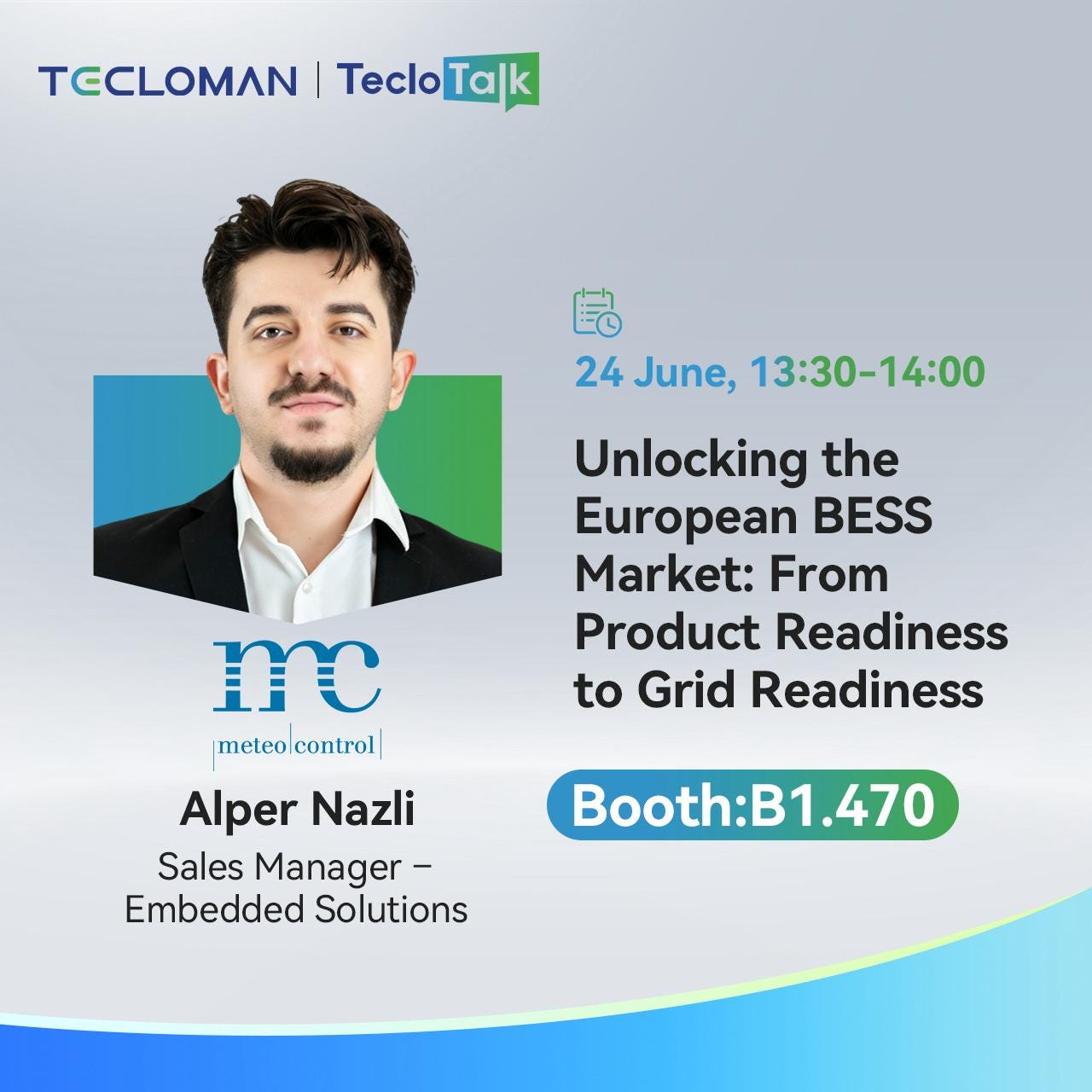
    What It Really Takes to Build a Utility-Scale Battery Storage Project Battery Energy Storage Systems (BESS) are becoming indispensable to Europe’s energy transition. But while headlines often focus on battery chemistry, capacity, or falling costs, the reality of delivering a successful project is far more complex. At Intersolar Europe, Aneri spoke with Mohsen Tabrizi of BESS EPC, who has spent years developing and commissioning utility-scale battery projects across Europe. From grid approvals to commissioning and workforce development, our conversation highlighted the often-overlooked challenges that determine whether a project succeeds—or never gets built. Here are the biggest takeaways. Energy storage isn’t optional anymore One of Mohsen’s strongest messages was that battery storage has moved beyond being a “nice-to-have.” As Europe adds increasing amounts of solar and wind generation, maintaining grid stability becomes significantly more challenging. Unlike conventional power plants, renewable generation contributes less system inertia, making the grid more vulnerable to disturbances. Battery Energy Storage Systems help bridge that gap by responding almost instantaneously to changes in grid frequency and demand. “The question isn’t whether we need energy storage anymore—it’s how quickly we can deploy it.” This growing importance is also driving demand for skilled professionals who understand not only battery technology but also how these systems interact with the wider electricity network. The biggest bottleneck isn’t the battery—it’s grid connection If there was one theme that came up repeatedly throughout our conversation, it was grid permitting. According to Mohsen, many developers spend months designing projects before fully understanding what the local grid operator will actually approve. That can lead to expensive redesigns, delays, or projects that simply cannot proceed as originally planned. His advice is straightforward: * Engage with grid operators early. * Understand local grid requirements before finalising system design. * Treat grid permitting as a critical project workstream—not an administrative task. As more battery projects compete for limited grid capacity across Europe, preparation is becoming a competitive advantage. Commissioning is where everything comes together Receiving planning approvals is only one milestone. Commissioning—the stage where batteries, power conversion systems (PCS), transformers, switchgear, and software are integrated and tested—is another major challenge. Every operating scenario needs to be validated before a project can officially connect to the grid. That includes testing: * Frequency response * Grid disturbances * Black start scenarios * Communication between all system components * Overall system performance As projects increase in scale, successful commissioning becomes just as important as successful engineering. Europe needs people as much as projects While much attention is given to manufacturing batteries, Mohsen believes one of the industry’s biggest shortages is skilled personnel. He highlighted growing demand for: * Commissioning engineers * Operations & Maintenance (O&M) engineers * Technical service specialists * Grid integration experts As thousands of battery systems are deployed over the coming decade, maintaining and operating these assets will become a significant industry in its own right. For engineers considering a career in clean energy, battery storage represents a rapidly expanding opportunity. The market is only getting started Despite rapid growth, Mohsen believes Europe remains at the beginning of its battery storage journey. Germany alone has ambitious deployment targets, while increasing renewable generation continues to create demand for flexible storage capacity. Equipment costs are expected to continue falling, permitting processes should become more efficient as regulators gain experience, and project pipelines will mature. Importantly, he cautioned against waiting for the “next generation” of battery technology. Innovation will never stop. Waiting for the next breakthrough simply means missing today’s opportunities while another technology is already around the corner. Final Thoughts One of the most valuable insights from this conversation is that successful battery projects depend on much more than selecting the right technology. They require expertise in permitting, grid integration, commissioning, operations, and long-term asset management. As Europe’s energy transition accelerates, the winners won’t simply be those with the best batteries—they’ll be those who know how to navigate the complexity of bringing large-scale energy storage projects from concept to commissioning. 🎥 Watch the full interview to hear Mohsen Tabrizi share practical lessons from developing utility-scale BESS projects, why grid permitting remains the industry’s biggest hurdle, and the skills the next generation of energy storage professionals will need. This is a public episode. If you would like to discuss this with other subscribers or get access to bonus episodes, visit klimaticgroup.substack.com
  • June 30 · 7 min

    EP 2: Three Trends Shaping the Next Wave of BESS

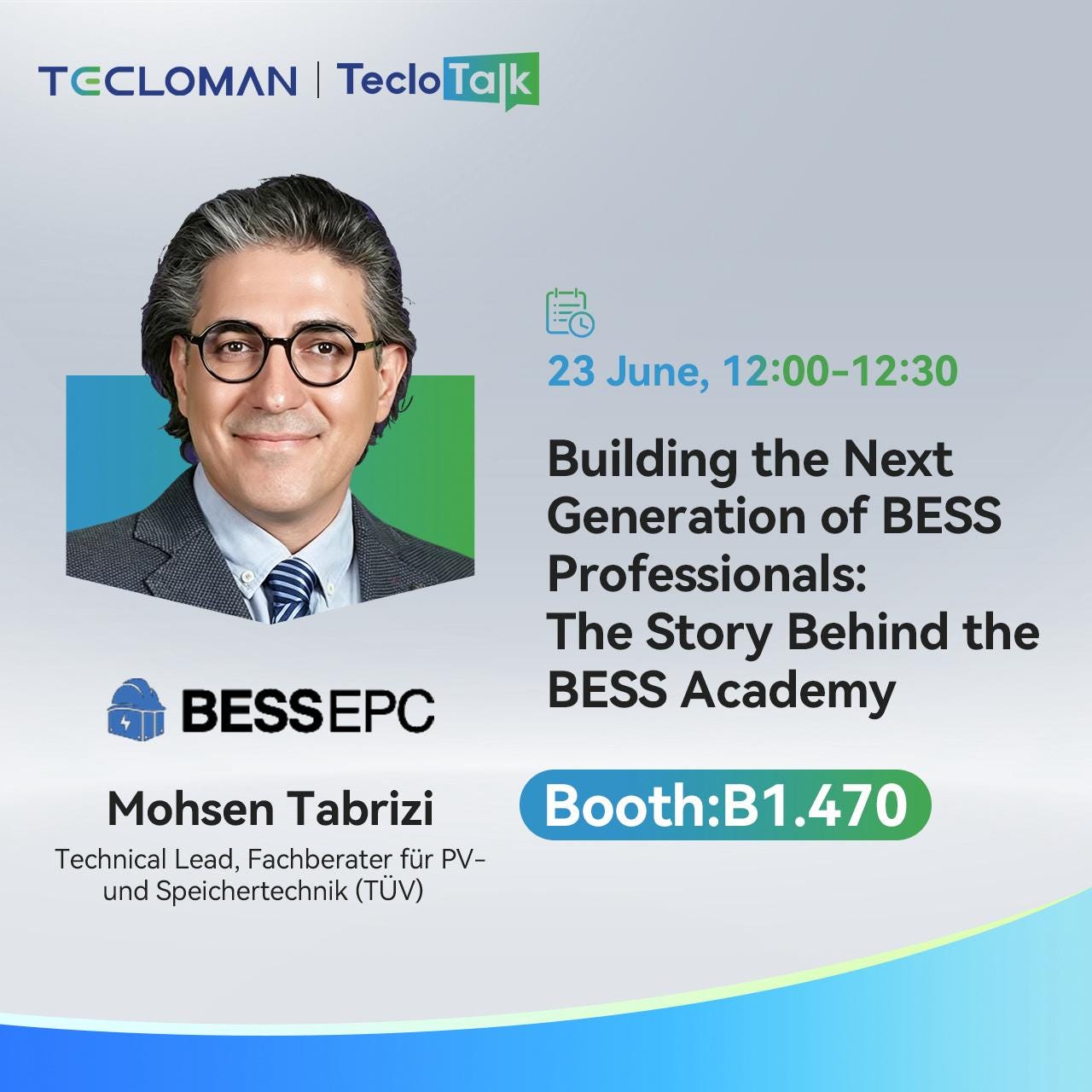
    Three Trends Shaping the Next Wave of BESS Battery energy storage has become one of the fastest-growing segments of Europe’s clean energy transition. But while discussions once focused on installing batteries, today’s conversations are increasingly about reliability, flexibility, and long-term performance. At Intersolar Europe, Aneri spoke with Feng Liu, Senior Solution Engineer at Tecloman, about how customer priorities are changing and where the industry is headed next. Here are three themes that stood out. 1. Battery storage is becoming critical infrastructure Just a few years ago, many developers viewed battery energy storage primarily as an opportunity for energy arbitrage—buying electricity when prices were low and selling when prices were high. Today, batteries are expected to do much more. Across Europe, battery energy storage systems (BESS) are increasingly supporting: * Grid balancing and frequency regulation * Capacity markets * Renewable energy integration * Grid stability and resilience * Revenue stacking across multiple applications As governments continue to introduce funding mechanisms and supportive policies, storage is becoming an essential part of the energy system rather than an optional investment. 2. The market is moving beyond hardware As battery technologies mature, product differentiation is becoming more difficult. According to Feng, customers are now looking beyond basic specifications and asking more strategic questions: * How safe is the system? * How easy is it to operate and maintain? * Can it be customized for my application? * Will the supplier provide long-term technical support? This reflects a broader shift happening across the industry. Competitive advantage is increasingly being created through system integration, engineering expertise, software, and lifecycle services—not simply the battery cells themselves. 3. The future belongs to intelligent, utility-scale systems Looking ahead, Feng sees three major trends defining the next generation of energy storage. Larger utility-scale projects will continue to dominate as grids require greater flexibility and storage capacity. Lower system costs will make battery deployment increasingly attractive across new markets and applications. And perhaps most importantly, software and artificial intelligence will play a much bigger role. As projects grow in size and complexity, intelligent energy management, predictive analytics, and automated system optimization will become key differentiators. Success will depend not only on the quality of the hardware, but also on the intelligence of the software managing it. Tecloman’s approach To address these changing market demands, Feng highlighted three areas where Tecloman is focusing its strategy: * Delivering fully integrated battery storage solutions rather than individual components. * Customizing systems to meet the operational requirements of different customers and applications. * Building on its growing portfolio of European projects to provide local experience and technical support across the region. Final Thoughts Europe’s battery energy storage market is entering a new phase of maturity. The conversation is no longer just about deploying more batteries. It’s about deploying smarter systems that are safe, flexible, and designed to deliver value over decades of operation. As storage becomes a cornerstone of Europe’s energy transition, the companies that combine strong engineering with intelligent software, customization, and long-term service will be best positioned to support the next generation of grid infrastructure. 🎥 Watch the full interview to hear Feng Liu share his perspective on Europe’s evolving BESS market, emerging technology trends, and why the future of battery storage extends far beyond the hardware. This is a public episode. If you would like to discuss this with other subscribers or get access to bonus episodes, visit klimaticgroup.substack.com
  • June 29 · 16 min

    EP 1: Why Energy Storage Success Is No Longer Just About Batteries

    Why Energy Storage Success Is No Longer Just About Batteries At Intersolar Europe, I sat down with Alexandra Hu, Vice President of Tecloman, to discuss how the European battery energy storage market is evolving and what it takes to succeed beyond simply manufacturing hardware. Here are the biggest takeaways from our conversation. 1. Energy storage is becoming a service business As battery technology matures, customers are no longer choosing suppliers based solely on hardware specifications or price. Instead, they’re asking: * Can you support the system over its entire lifetime? * Do you have a local service team? * Can you provide long-term maintenance and operations support? According to Alexandra, building trust through local presence and lifecycle support is becoming just as important as delivering the battery itself. 2. Batteries may be a commodity—but solutions aren’t While battery cells themselves have become increasingly standardized and price competitive, Alexandra argues that differentiation now comes from: * System design * Customization * Engineering expertise * Business model innovation * Long-term partnerships Rather than competing solely on cost, Tecloman is focusing on delivering tailored energy solutions for different industries and customer needs. 3. Europe remains a strategic growth market Despite slower project timelines compared to some global markets, Europe continues to represent a major opportunity for battery storage. Tecloman’s strategy includes: * Expanding its European team * Building local partnerships * Growing its service capabilities * Investing in long-term relationships across the ecosystem The company views ecosystem building—not just equipment sales—as essential to long-term success. 4. The industry is thinking beyond installation One theme that surfaced repeatedly was maintenance. As more utility-scale storage projects come online, ensuring systems continue performing over 10–20 years is becoming a major priority. Asset owners are increasingly focused on: * Monitoring * Preventative maintenance * Operational reliability * Asset lifecycle management The conversation is shifting from “How do we build projects?” to “How do we operate them successfully for decades?” 5. Energy security is driving the next wave of adoption Beyond decarbonization, energy storage is increasingly viewed as a resilience solution. As climate impacts intensify and energy markets experience greater volatility, batteries can help provide: * Energy independence * Greater resilience * Stable power supply * Reduced exposure to fuel price fluctuations For Alexandra, this makes battery storage both a climate mitigation tool and an adaptation strategy. Final Thought Perhaps the most interesting insight from our discussion was that the future of energy storage won’t be won by the companies selling the cheapest batteries. It will be shaped by those that build trusted partnerships, deliver reliable long-term performance, and help customers navigate an increasingly complex energy landscape. 🎥 Watch the full interview to hear Alexandra’s perspectives on Europe’s BESS market, Tecloman’s growth strategy, customization, partnerships, and where she believes the industry is headed next. This is a public episode. If you would like to discuss this with other subscribers or get access to bonus episodes, visit klimaticgroup.substack.com

  • June 3 · 29 min

    Inside Wien Energie’s Innovation Strategy: How utilities successfully source, pilot, and scale startup partnerships

    Wien Energie GmbH is the largest regional energy provider in Austria, supplying approximately two million customers with electricity, heating, cooling, electromobility, and telecommunications services. The company operates primarily in Vienna and the surrounding Lower Austria region. It is a wholly owned subsidiary of Wiener Stadtwerke GmbH. Connect with Fabian Kasicki on LinkedIn here. 00:02 Introduction & About Wien Energie03:55 Why Wien Energie Partners with Startups08:53 How Wien Energie Prepares Startups to Understand Their Problems10:34 Success Story: Kauz AI & the Digital Product Advisor11:54 The Pilot Process: Structure & Timeline14:37 Getting Top Management Buy-In for Scale16:09 Startup Positioning Tips: How to Get Beyond Pilot17:34 Success Story: Kraken & Sustainable Procurement20:56 Tips for Preparing RFPs — Tecloman Case Study22:12 Wien Energie’s Four Innovation Focus Areas23:23 Active Searches: EV Charging AI & Solar Forecasting24:54 Biggest Unmet Opportunities in the Energy Ecosystem26:41 Advice for Early-Stage Companies Entering the Utility Space Check out our companion episode with Tecloman, a scaleup working with Wien Energie! The Heat Beneath the Surface: Why District Cooling & Heating Is the Startup Opportunity DACH Utilities Are Waiting For Vienna sits atop one of Europe’s most sophisticated thermal networks. Wien Energie operates the fifth largest district heating grid and the fourth largest district cooling grid in the entire European Union, serving millions of residents and businesses, fed partly by waste incineration plants that thermally treat roughly every fourth ton of waste generated in Austria. Yet for all its scale, the network is at an inflection point. In a recent conversation on the Klimatic Scale podcast, Fabian Kesicki, Head of Corporate Development at Wien Energie, named decarbonized and flexible district energy systems as one of the utility’s four core innovation focus areas. “We have very large district cooling and heating systems and we see big potential there,” he said, “particularly in the direction of decarbonized systems and flexible systems.” For startups working at the intersection of thermal infrastructure and clean technology, this signals something important: the demand is real, the budgets exist, and the utilities are actively looking. Why District Cooling & Heating Is Having Its Moment District energy, the centralized production and distribution of heating and cooling through underground pipe networks, is among the most overlooked levers in Europe’s decarbonization toolkit. Unlike rooftop solar or EV charging, it operates largely out of sight, which has kept it out of the startup conversation. That is changing fast, for three reasons. 1. The gas transition is creating a strategic gap. Most large DACH utilities still rely on gas-fired combined heat and power (CHP) plants as the backbone of their district heating systems. As gas becomes economically and politically untenable, these utilities face an urgent need to replace gigawatts of thermal capacity with alternatives: heat pumps drawing from rivers and aquifers, geothermal, industrial waste heat, and seasonal thermal storage. The technical complexity of this transition, and the speed at which it needs to happen, is far beyond what utility R&D teams can handle alone. 2. Cooling demand is surging. Central European cities were not designed for the temperatures they are now experiencing, especially experienced in the recent May 2026 heatwave where temperatures soared above 35 C. Vienna, Munich, Zurich, and Frankfurt are all investing heavily in district cooling capacity as the climate forces the issue. Wien Energie’s fourth-place EU ranking in district cooling is not a legacy position, it reflects years of deliberate investment. Across DACH, that investment is accelerating, and startups with solutions for efficient, low-carbon chilled water distribution, thermal storage, and demand-side management have a growing market. 3. The grid flexibility imperative. One of the most compelling dynamics Fabian highlighted is the growing frequency of negative electricity price hours across European markets, periods when supply from renewables exceeds demand and prices turn negative. District heating and cooling systems, with their large thermal mass, are natural flexibility assets: they can absorb excess electricity (via heat pumps or electric boilers), store it as heat or cold, and dispatch it later. “Using the flexibility potential of the heating sector is where we can still use some innovative ideas.” This positions district energy squarely within the broader energy system flexibility story, and opens a substantial commercial opportunity for startups that can help utilities unlock that value. What DACH Utilities Actually Need Based on what Wien Energie and similar utilities in Germany, Austria, and Switzerland are signaling, the most relevant startup categories for district cooling and heating break into several clusters: Decarbonization of heat sources. Replacing gas-fired generation with scalable, dispatchable alternatives. This includes large-scale heat pump technology adapted for utility-grade applications, aquifer thermal energy storage (ATES), deep geothermal, and industrial waste heat recovery. The challenge is not just the technology itself but integration with existing grid infrastructure, and managing the transition without compromising reliability. Grid intelligence and digital twins. Aging district energy networks were built before sensors were cheap and before machine learning existed. Startups offering real-time network monitoring, predictive maintenance, leak detection, and digital twin platforms find a receptive audience at utilities struggling to optimize grids that span hundreds of kilometers of underground pipe. The ability to ingest SCADA data, model thermal behavior, and surface actionable insights is in high demand. Demand-side flexibility and virtual thermal storage. Rather than building new physical storage, some of the most capital-efficient flexibility solutions exploit the thermal inertia that already exists in buildings connected to district networks. Startups with software that can coordinate building-level setpoints, hot water buffer tanks, and process heat loads to shift demand in real time, without degrading comfort, offer utilities a low-cost flexibility tool that complements generation-side assets. Seasonal thermal energy storage. For utilities with significant renewable heat sources (solar thermal, industrial waste heat), the mismatch between summer supply and winter demand is a persistent challenge. Pit thermal energy storage, borehole storage, and aquifer systems are gaining traction, but the planning, permitting, and optimization software to make these projects viable at scale remains underdeveloped. Cooling-as-a-service and building integration. On the cooling side, the interface between district networks and commercial buildings is surprisingly manual and inefficient. Startups that can automate substations, optimize heat exchanger performance, and offer data-driven service models to building operators are addressing a gap that utilities recognize but have limited capacity to fill internally. How to Actually Work With a DACH Utility Understanding the opportunity is one thing. Navigating the path from first conversation to signed contract is another. Fabian was refreshingly candid about what the process looks like from the utility side, and the lessons apply broadly across DACH. Start with the problem, not the product. The single quality that separates shortlisted startups from the rest, according to Fabian, is whether they have genuinely understood the utility’s challenge. “Is it just a standard slide deck, or have they understood what is the challenge that Wien Energie faces in this business unit?” Generic pitches do not advance. Problem-specific proposals, shaped by reading public materials and asking direct questions, do. Know that pilots run six to twelve months. Wien Energie’s standard pilot structure involves a shared problem definition, agreed KPIs, and a contractual framework established before work begins. Startups that push to skip the paperwork and “just start” create friction that slows everything down later. Embrace the process. Secure the department head, not just the innovation team. Wien Energie’s scaling decision requires an explicit commitment from the relevant department head, not just internal champions in the innovation group. The implication for startups is to make sure your solution addresses a problem that the business unit owner cares about, not just something the innovation team finds intellectually interesting. The innovation team’s job is to translate; your job is to give them something worth translating. Prepare for procurement reality. Once a pilot succeeds and a longer-term collaboration is on the table, a formal tender process typically follows. Startups that understand this, prepare their documentation early, and are willing to navigate the process (often partly in German) are far better positioned than those who treat it as an obstacle. Build relationships before you need them. Wien Energie runs its innovation process through a structured program (the Climate Lab, in partnership with Impact Hub Vienna) and publishes its challenge topics openly. The same pattern: open calls, published problem statements, multi-stage evaluation, applies across most major DACH utilities. Following these programs, engaging early, and showing up at industry events before an active procurement process is the most reliable way to be in the room when decisions are made. The DACH Landscape: Structural Advantages for Startups Beyond Wien Energie, the DACH region has structural characteristics that make it an unusually strong market for district energy startups. Germany has set binding targets for district heat to cover 50% of national heat demand by 2045 and has passed the Wärmeplanungsgesetz (Heat Planning Act), requiring municipalities above 100,000 residents to publish heat transition roadmaps by mid-2026. This creates a procurement wave that is just beginning. Austria has committed to phasing out oil and gas heating, and its alpine geography makes it an interesting testbed for combinations of hydropower, geothermal, and seasonal storage. Several Austrian Stadtwerke (municipal utilities) beyond Wien Energie are actively investing in network expansion and decarbonization. Switzerland, with its high energy costs and strong industrial base, offers particularly interesting opportunities in industrial waste heat recovery and premium district cooling for data centers — a fast-growing load in the arc from Zurich to Geneva. Across all three countries, the utility landscape is dominated by municipal players with long investment horizons, genuine sustainability mandates, and critically the balance sheets to pay for solutions that work. The market rewards startups that can demonstrate reliability and integration competence, not just novelty. The Window Is Open District cooling and heating is not a glamorous sector. It does not have the consumer visibility of EVs or the narrative heat of green hydrogen. But it is one of the largest addressable markets in the European energy transition, it is controlled by utilities that are actively seeking startup partners, and the technical problems are genuinely hard — which means the competitive field is less crowded than it should be. Fabian’s closing advice to early-stage companies was simple: understand the problem deeply, bring a concrete use case, play the long game, and invest in the relationship before expecting a return. “It’s about building relations,” he said. “Just bring this understanding to the table that it will take time.” For startups willing to do that work, the thermal networks under Europe’s cities represent one of the most durable opportunities in climate technology. This article was informed by the Klimatic Scale podcast episode with Fabian Kesicki, Head of Corporate Development at Wien Energie. Klimatic Group works with climate-focused startups and utilities across the DACH region. This is a public episode. If you would like to discuss this with other subscribers or get access to bonus episodes, visit klimaticgroup.substack.com

  • May 27 · 32 min

    Scaling Digital Grid Solutions: Inside E.ON One's Portfolio Strategy

    E.ON One is the digital arm of E.ON Group, one of Europe’s largest operators of energy networks and energy infrastructure, serving 50 million customers. E. ON One is focused on building software and platforms that help energy companies and grid operators manage the complexity of transitioning to renewable, decentralised energy systems. E.ON One provides an integrated, bundled portfolio of digital solutions that help organisations and companies master their journey in the energy transition. The focus areas span grid operations, grid connection, and energy management. Connect with Tim Van Amstel on LinkedIn. 00:00 What is E.ON One? Tim explains how E.ON One fits inside E.ON and why the platform was created.05:50 Why Utilities Need Digitization Now08:45 AI in Energy: Beyond the Hype10:35 How E.ON One combines utility expertise with startup speed and digital talent.11:45 How E.ON One Finds and Selects Scale-Ups15:10 Inside the Portfolio: Digitizing the Grid with Envelio - how digital twins and intelligent grid platforms are changing planning and operations.19:30 gridX and the Rise of Home Energy Management - connecting solar, EVs, heat pumps, and flexibility into one platform.21:00 Making EV Charging Profitable with evailable - why uptime and predictive maintenance matter more than ever in charging infrastructure.23:20 Why commercial talent and pacing growth may matter more than technology.27:10 What startups underestimate about working with energy incumbents.28:10 What Will Define the Utility of the Future?29:50 How Startups Can Work with E.ON Digitizing the Grid: Investor signals, market shifts, and what utilities are learning from scale-ups For years, the energy transition was framed as a hardware challenge. Build more renewables.Install more chargers.Deploy more batteries. That story is incomplete. The next bottleneck is increasingly becoming something less visible: the ability to operate a radically more complex energy system. The Grid Was Designed for Predictability. The Future Is Not. Historically, utilities operated in a relatively stable environment. Large centralized generation assets produced electricity and demand followed recognizable patterns. For example, in the morning demand is increased, whereas in the evening it peaks. And so operators planned accordingly. However, today’s grid must accommodate: * Distributed solar generation * Electrification of transport * Heat pumps * Flexible demand * Intermittent renewable generation * Consumers who are becoming producers As Tim explained: “The supply is changing to become more intermittent, decentralized… and the consumers have completely different patterns and changes.” This changes the operating equation. Utilities no longer need only generation capacity, they need decision-making capacity. The Investment Thesis: Data Is Becoming Grid Infrastructure One of the strongest themes emerging in digital energy investing is that software is shifting from optimization layer to operating layer. This is visible across categories: * Digital twins * Forecasting and simulation * Distributed energy orchestration * Grid flexibility platforms * AI-enabled maintenance * Home energy management systems The common thread between all these is to turn fragmented operational data into actionable decisions. A useful example is envelio, one of E.ON One’s portfolio companies. Distribution operators often store operational information across disconnected systems—ERP, GIS, SCADA, CRM. Tim explained the opportunity: “It is key to have all of your data stored in one platform, in one data format, in order to allow to build applications on top.” The outcome is more than visualization. Digital grid platforms create a real-time model of network behavior. According to Tim: “Back in the days… a proper calculation of the grid sometimes took weeks or months… now this can all be done relatively dynamically in split seconds.” That is a dramatic change in operational capability. AI’s Real Opportunity Is Not Replacing Operators AI discussions in energy often drift into speculation. What’s more interesting is where adoption is already happening. Tim’s observation was practical: “Technology wise, you can be much more efficient and much faster in employing solutions or analyzing scenarios… but also simply in doing your actual operational work.” The innovation imperative is in faster planning, scenario analysis, operational execution, maintenance prioritization, and customer optimization. AI appears strongest where decisions are repetitive, data-heavy, and operationally constrained. The Market Opportunity: Flexibility Is Becoming a Utility Capability If digitization is the enabler, flexibility is increasingly becoming the business model. Utilities are moving from selling energy to orchestrating flows. This is visible in platforms like gridX. Home energy management systems coordinate: * solar generation * batteries * EV charging * heat pumps * grid interaction As Tim described: “If the grid has a problem… use that electricity from the grid. And for all of that, you need a home energy management system.” This is where energy begins to resemble software markets: Value shifts from ownership to orchestration. Forecast: What Happens Next Over the next decade, expect utilities to compete less on assets alone and more on: * forecasting quality * flexibility management * operational intelligence * software ecosystems * customer orchestration Tim summarized the shift simply: “A successful utility needs to pivot relatively fast, test, and embrace technology. I really believe this whole flex topic… that is the future.” And only the companies that learn to digitize will define the next phase of the energy transition. This is a public episode. If you would like to discuss this with other subscribers or get access to bonus episodes, visit klimaticgroup.substack.com

  • April 30 · 31 min

    Lab to Industry: where biomimicry disrupts the construction industry

    Strong by Form is a materials technology company founded in 2018, originally in Santiago, Chile, and now operating across Europe with its headquarters in Madrid, Spain. At the heart of their work is a proprietary technology called Woodflow®. Woodflow is a biomimetic technology inspired by the structural genius of trees, combining digital fabrication with computational design to optimize wood’s natural properties and enable the creation of complex, high-performance components. The result is a material that is carbon-negative, using wood in more intelligent formats, such as chips or veneers, engineered to place material only where it’s needed, minimizing waste while maximizing carbon storage. The technology comes in two forms: Woodflow-skin, a cladding and surface product already commercially deployed, and Woodflow-core, a structural solution currently in advanced prototyping. Strong by Form has designed a structural floor piece that can span longer distances than existing engineered wood making it a viable replacement for steel or concrete, while being lighter than all three. Connect with Andres on LinkedIn here. 00:00 – Founder journey: from corporate venturing to deep tech 02:00 – Vision: decarbonizing the built environment at scale 03:44 – What’s broken in construction materials today 05:23 – The “lazy construction” problem 06:34 – Why concrete, steel & oil-based materials still dominate 09:12 – How Strong By Form’s technology works 12:08 – First pilot: Deutsche Bahn & the Berlin Südkreuz project 17:25 – Why pilots don’t scale and why that’s okay 18:28 – Certification: the hidden bottleneck 26:28 – “Sell nails, not furniture”: go-to-market insight 27:11 – What’s next: funding, certification, and scale-up 27:45 – What industry gets wrong about innovation The Material Shift: Why Sustainable Construction Starts with What We Build With The decarbonization of the built environment is often framed around energy efficiency, electrification, and smart systems. But there is a more foundational layer to address: the materials themselves. Steel, cement, aluminum, and plastics form the backbone of modern construction, and together, they account for a significant share of global emissions. Cement alone is responsible for roughly 7–8% of global carbon dioxide emissions. If the last decade was about how buildings operate, the next will be about what they are made of. Embodied carbon is becoming the new frontier. Embodied carbon, the emissions associated with material extraction, production, and construction, is emerging as the largest remaining source. In some new buildings, embodied carbon already accounts for up to 50% of total lifecycle emissions. Unlike operational emissions, which can be reduced over time, embodied carbon is locked in from day one. Once a building is constructed, those emissions are already in the atmosphere. This shifts the optimization problem. It is no longer just about designing better buildings, it is about choosing better materials. Traditional construction materials are carbon-intensive by design. Cement production requires high-temperature kilns powered largely by fossil fuels, while also releasing CO₂ through chemical processes. Steelmaking depends on coal-based blast furnaces. The result is a system optimized for cost, durability, and scale, but not for carbon. At the same time, global demand for construction materials is expected to double by 2060, driven by urbanization and infrastructure growth, particularly in emerging markets. Without intervention, this locks in decades of high emissions. The good news is innovation in sustainable materials is accelerating across multiple fronts, each targeting different parts of the value chain. * Low-carbon cement alternatives are reducing clinker content through supplementary materials such as fly ash, slag, and calcined clay, cutting emissions by 30–50%. * Green steel is emerging through hydrogen-based direct reduced iron (DRI) processes, with pilot plants in Europe already producing near-zero-emission steel. * Engineered timber (see episode), including cross-laminated timber (CLT), is enabling mid- and high-rise construction with significantly lower embodied carbon while storing carbon within the structure itself. * Carbon-cured concrete technologies inject captured CO₂ into concrete during production, permanently mineralizing it and improving material strength. * Circular materials, such as recycled steel, reclaimed aggregates, and reused structural components, are reducing the need for virgin resource extraction. Each of these innovations addresses a different constraint, whether it is emissions intensity, material performance, or resource scarcity. Together, they point toward a more diversified and resilient materials ecosystem. The cost curve is moving, but not evenly. One of the persistent barriers to adoption is cost. Low-carbon materials often carry a premium, particularly at early stages of deployment. Green steel, for example, can cost 20–50% more than conventional steel today, depending on energy prices and scale. However, this premium is not static. As production scales, supply chains mature, and carbon pricing mechanisms strengthen, the gap is expected to narrow. In some cases, it already is. Blended cements and recycled materials can be cost-competitive—or even cheaper—depending on local availability. The more important point is that cost cannot be assessed in isolation. Developers and contractors operate within tight margins, but they are also increasingly exposed to regulatory risk, carbon pricing, and investor pressure. A material that is slightly more expensive upfront may reduce long-term financial and compliance risks. The decision is shifting from lowest cost to lowest total risk. Adoption is a coordination challenge. The transition to sustainable materials is not blocked by a lack of innovation—it is constrained by fragmentation across the value chain. Architects specify materials, engineers validate them, contractors procure them, and developers absorb the costs. Each actor has different incentives, and no single player controls the entire decision. This creates a coordination problem. A developer may be willing to pay a green premium, but only if the materials are available at scale. A manufacturer may be ready to invest in low-carbon production, but only if there is predictable demand. Contractors may hesitate to adopt unfamiliar materials without proven performance and clear standards. Breaking this cycle requires alignment across multiple stakeholders at once. Policy is beginning to play that role. Governments are starting to move beyond operational energy codes toward embodied carbon regulations. France’s RE2020 and the Netherlands’ MPG standard already set limits on lifecycle emissions for new buildings. Public procurement is also emerging as a powerful lever, with cities and governments requiring low-carbon materials in infrastructure projects. These policies do not mandate specific technologies—they set performance targets. This creates space for multiple solutions to compete, whether it is green steel, timber, or novel cement alternatives. The signal is clear: carbon is becoming a design constraint. From niche to default. Sustainable materials are still a minority in global construction, but the trajectory is familiar. Early adoption is concentrated in pilot projects, flagship developments, and regions with strong policy support. Over time, as costs fall and standards evolve, these materials move into the mainstream. We have seen this pattern before with renewable energy and electric vehicles. What begins as a premium option becomes the default. The same shift is now underway in construction materials. What will determine the pace is not just technological progress, but system-level coordination—between policy, industry, and finance. The builders who move early will not just reduce emissions. They will shape supply chains, influence standards, and position themselves in a market where carbon constraints are tightening. Thanks for reading! Subscribe for episodes in your inbox. This is a public episode. If you would like to discuss this with other subscribers or get access to bonus episodes, visit klimaticgroup.substack.com
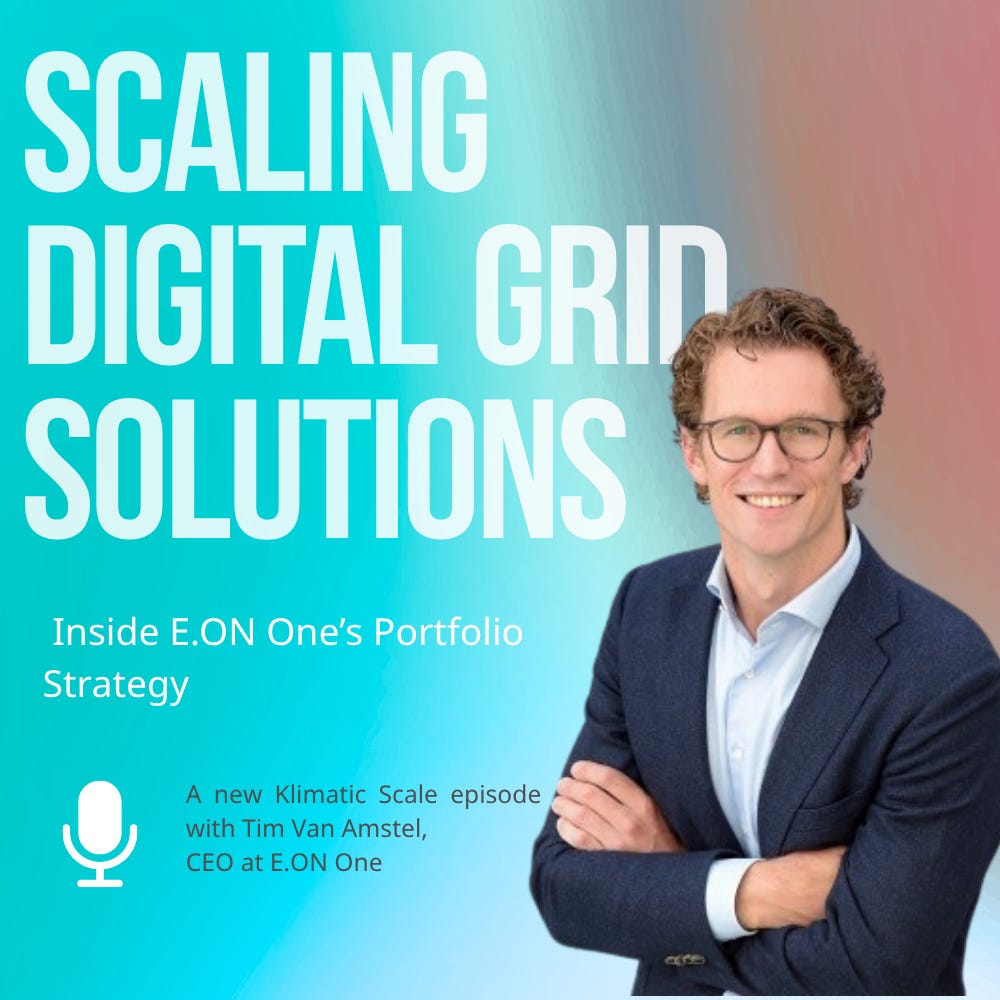
  • April 23 · 22 min

    Scaling circular construction with Concular

    Concular is a German climate tech company transforming the construction industry by enabling circular construction, keeping building materials in use instead of sending them to waste. Founded in 2020 and based in Berlin, Concular operates as a digital and physical ecosystem that connects demolition projects with new construction, ensuring materials are reused rather than discarded. 00:00 – Dominic’s journey: from Google to climate tech 02:31 – The real problem: construction as a climate driver 04:46 – The economics of waste: landfill vs reuse 06:29 – How Concular works (end-to-end model) 08:47 – Can circular construction actually scale? 09:01 – Regulation as the unlock (EU perspective) 12:12 – Why construction is so slow to change 12:50 – How to drive adoption in a risk-averse industry 14:05 – The insurance insight: building trust to sell innovation 16:02 – Scaling through standards (DIN example) 17:18 – What’s next for Concular (12–24 months) 19:26 – Open knowledge & building a movement 20:30 – How to access Concular’s resources 20:40 – Call to action: what the industry needs now From Waste to Supply Chain: The Secondary Markets for Construction Materials Most people think aviation is one of the biggest climate problems. But the construction sector is actually responsible for ~40% of global CO₂ emissions and ~60% of global waste (aviation is around 3%). And yet, every day, we demolish buildings, send valuable materials to landfill, and produce the same materials again. So how do we scale the secondary market for construction materials? Circular construction depends on one thing: a functioning market where materials from old buildings can be reused in new ones. Without that, materials get downcycled or landfilled. A functioning market is one where materials retain value, emissions drop, and costs go down. However, there are barriers in making a functioning market. * Supply is fragmented. Materials are hard to standardize, difficult to inventory, and time-sensitive (tied to demolition schedules). * Trust is low in secondary materials. Buyers ask if it’s certified, who takes liability, and what happens if it fails? Trust is the real bottleneck. * Virgin materials are too easy to procure. They are cheap, standardized, and always available. For reuse to win, it has to be better, cheaper, and lower risk. * Coordination challenges. Construction is project-based, risk-averse, and logistically complex. Regulation is critical for the secondary market to compete. The EU is requiring pre-demolition audits, which creates supply and CO2 limits for buildings, which creates demand. This combination creates an enabling environment that is policy-driven. The ROI of reused materials is also becoming evident. Financial calculations must be part of the solution to be viable to construction companies: * Cut embodied emissions by up to ~95% * Reduce deconstruction costs by up to ~30% * Compete with rising landfill and transport costs Last, secondary markets require infrastructure, taking the form of digital passports to match supply and demand, material passports to track their quality and origin, and physical hubs to store, refurbish, and redistribute materials. This is causing large construction and materials companies to invest in recycling and reuse, build refurbishment capabilities, and position themselves for a circular supply chain. Startups thus should prepare themselves to build a marketplace, not just a product. They must solve for supply aggregation, demand creation, trust (certification, insurance, guarantees), logistics and timing, and policy alignment. Concular is doing just that. Secondary markets have a way to go. They work in pockets, but are not yet fully mature. But policy is becoming aligned, economics are improving, and infrastructure is emerging, making this an exciting space for investors and policymakers to watch. This is a public episode. If you would like to discuss this with other subscribers or get access to bonus episodes, visit klimaticgroup.substack.com
  • April 17 · 36 min

    Wrapped Up in Energy | Urban Chapter

    In this episode of Klimatic Scale, Dash speaks with Brian Koh, an architect turned entrepreneur who founded Integra D&C after 27 years of designing sustainable buildings across the US and South Korea. Brian takes us inside his product IUES - a prefabricated modular envelope system that retrofits existing buildings fast, without the mess of conventional renovation. See the video of the installation here. 👉 Listen to find out why Brian thinks the slowness of the construction industry is actually a startup opportunity. 1:00 From architect to entrepreneur: Brian’s journey 5:00 Why pretty buildings are an energy disaster 9:00 The building envelope as an energy efficiency solution 13:00 IUES - a success case 17:00 Retrofitting a building in a summer break 25:00 What it takes to sell to the construction industry 30:00 Advice for built environment startups Connect with Brian if you want to continue the conversation! This is one of the episodes of the Urban Chapter of Klimatic Scale, where we talk to innovators in built environment, real estate, and construction. We show the toughest challenges and the best working solutions. See our previous episode in the Urban Chapter that shares the perspective of a real estate developer on the energy innovation in the built environment: This is a public episode. If you would like to discuss this with other subscribers or get access to bonus episodes, visit klimaticgroup.substack.com

  • April 9 · 32 min

    Built Up Energy | Urban Chapter

    In this episode of Klimatic Scale, Dash speaks with Sarah Perumalla, who leads innovation at DIEAG, a Berlin-based real estate developer that excels in high-value buildings and district projects. Sarah takes us inside a specific 1.4 billion project where the goal from day one was full energy self-sufficiency. She shares the key challenges and how innovation was managed to keep the project on track. 👉 Listen to find out how DIEAG prefers to work with startups. This is one of the episodes of the Urban Chapter of Klimatic Scale, where we talk to innovators in the built environment, real estate, and construction. We show the toughest challenges and the best working solutions. 1:00 Intro and cities of tomorrow 5:00 Energy self-sufficiency at district scale 9:00 Innovation challenge example: deep geothermal 12:00 25 stakeholders to the same table 17:00 How DIEAG works with startups 25:00 What startups get wrong when approaching real estate developers P.S. This episode was recorded in August 2025. Connect with Sarah if you want to continue the conversation! This is a public episode. If you would like to discuss this with other subscribers or get access to bonus episodes, visit klimaticgroup.substack.com

  • April 1 · 34 min

    Scaling Battery Tech to Meet the AI Transition's Energy Needs

    Nyobolt was founded in 2019 by Professor Dame Clare Grey and Dr. Sai Shivareddy, building on research from the University of Cambridge. Nyobolt is a battery technology company focused on ultra-fast charging, high-power energy storage. It builds battery systems and related power electronics for applications like data centers, electric vehicles, robotics, heavy-duty equipment, grid storage, and other industrial uses that need rapid charging and reliable uptime. The company develops proprietary battery materials, cell designs, and integrated software/power electronics to deliver very fast charging without the usual tradeoff of rapid battery degradation. Its technology is positioned for demanding use cases such as warehouse automation, commercial vehicles, grid support, and AI/data-center infrastructure. Connect with Annie on LinkedIn here. 00:00 Solving the problem03:48 Nyobolt’s solution06:10 Commercializing from the lab08:18 Figuring out where to start when there are many use cases09:33 Inbound to scaling step by step17:44: How to be disciplined with customer inquiry21:30: Defining success23:37: The power of testimonials and referrals Super-fast charging batteries are becoming infrastructure, not just a mobility feature For years, battery innovation was discussed primarily through the lens of electric vehicles: longer range, lower cost, faster charging. That framing is still relevant, but it is no longer sufficient. The real shift now underway is broader and more consequential. Super-fast charging batteries are emerging as critical infrastructure for data centers, robotics, and commercial electrification, sectors that increasingly run on the logic of always-on uptime rather than occasional use. That distinction matters. In an always-connected economy, the battery is no longer just a store of energy, it is a performance layer. It has to absorb power quickly, discharge predictably, survive repeated cycles, and integrate into systems where downtime is expensive and operational windows are narrow. For hyperscale data centers, warehouse robotics, and high-performance EVs, the demand is shifting from “Can it work?” to “Can it work fast, repeatedly, and at scale?” “We’re solving high-power, ultra-fast charging, long cycle life challenges for an always-on world.” - Annie Wechter That framing captures the market very well. The opportunity is not simply to build a better battery. It is to build a battery that matches the cadence of modern industry. The new demand profile The most important trend in super-fast charging is not just technical progress, it is demand pressure. AI has pushed data centers into a new power era, with GPU-driven workloads creating sudden and substantial spikes in electricity demand. Robotics fleets, meanwhile, are being asked to move faster, stay online longer, and complete more tasks with less human intervention. Commercial EV operators are facing the same expectation: more uptime, less waiting, and tighter total-cost-of-ownership discipline. “Charging taking hours rather than minutes doesn’t work for this new age of 24/7 operations” That is becoming the central business case for this category. Where traditional lithium-ion has been optimized for energy density and long range, these new use cases reward power density, thermal performance, and cycle life. This shift is also changing how customers buy. In the past, battery procurement might have been driven by spec sheets or lab performance. Today, buyers increasingly want proof that a battery can improve an operational metric: robot availability, rack resilience, fleet utilization, or avoided downtime. That changes the sales cycle, but it also creates a more durable value proposition. Data centers are the next battery frontier Among the most compelling new markets is AI infrastructure. Data centers historically relied on backup systems and predictable load profiles. AI is breaking that assumption. Training and inference workloads can create rapid fluctuations in demand, and hyperscalers are under pressure to keep systems stable while managing grid constraints, cost, and resilience. This is why battery companies are moving from EV adjacency into data center power. Annie described its “Dynamic Response System” as a rack-level solution designed to sit near GPUs and provide an additional power source when needed. The logic is straightforward: if compute demand is becoming more dynamic, the power architecture has to become more dynamic too. For investors, this is a meaningful signal. Data center power is no longer just a facilities issue. It is becoming an application layer for advanced storage and response technologies. Robotics is the clearest near-term use case If data centers represent the strategic frontier, robotics may be the clearest near-term commercial fit. Warehouse automation and industrial robotics live and die by utilization. Every minute a robot is charging is a minute it is not producing value. For fleet operators, the key metric is not battery capacity in isolation. It is how effectively the battery supports continuous operation across shifts, sites, and cycles. Nyobolt’s early market traction illustrates this well. Annie said one of its first customers came inbound after seeing a five-minute charging EV demonstration, then recognized that the same underlying performance profile could solve a warehouse robotics problem. The issue was familiar across the industry: existing technology could charge quickly, but it could not provide enough energy or range to complete the job. This is also where cycle life becomes especially important. Industrial customers do not want to replace batteries constantly. They want systems that can handle repeated, high-frequency charge-discharge behavior without degradation becoming the limiting factor. In a fleet environment, that is a direct economic lever. Check out our episode with ANYbotics where we discuss robotics for the energy sector. EVs still matter, but the bar is rising EVs remain the most visible battleground for fast-charging innovation, and they are still a major market driver. But the category is maturing. What once counted as a breakthrough, simply faster charging, is now becoming a baseline expectation in premium and performance segments. The next phase is more demanding. Fast-charging batteries now have to balance speed, durability, safety, and cost. They also have to work within increasingly complex vehicle architectures and charging networks. In other words, ultra-fast charging is no longer just a consumer convenience feature. It is part of a larger systems challenge across the transport stack. This is one reason the super-fast charging market is attracting both large incumbents and specialized startups. The startups are often moving faster on materials and system design, while established players have scale, manufacturing, and distribution. That creates a dynamic market, but also a crowded one. The companies most likely to win will be those that can prove not only technical superiority, but commercial readiness. What startups need to get right Nyobolt’s story highlights a lesson that applies far beyond one company: in deep tech, focus beats breadth. The company described a disciplined approach to customer selection, saying it prioritizes cases where the performance gap is large enough to justify bespoke development. That is smart strategy in a capital-intensive category. “The bigger the problem, the better the customer fit for us at this stage” That mindset is useful for startups across the sector. The best early customers are not necessarily the largest in the abstract. They are the ones with the most acute pain, the clearest validation pathway, and the strongest willingness to co-develop. Just as importantly, the winning companies are engineering-led but commercially disciplined. They need to balance lab innovation with field validation, certification, manufacturing readiness, and customer trust. In battery markets, a compelling demo is not enough. The real test is whether the product survives the real world. A market moving from promise to proof The deeper trend across data centers, EVs, and robotics is that battery innovation is becoming operational rather than speculative. Industries are no longer asking whether fast charging sounds impressive. They are asking whether it can reduce downtime, increase uptime, and fit into workflows that now run around the clock. That is what makes this moment interesting for industry players, investors, and startups. The technical problem is hard, but the market need is real and urgent. Super-fast charging batteries are moving from a niche feature into a critical enabler of the always-on economy. And that may be the biggest change of all: batteries are no longer just supporting products. In the right applications, they are becoming part of the infrastructure itself. This is a public episode. If you would like to discuss this with other subscribers or get access to bonus episodes, visit klimaticgroup.substack.com
Showing 1–20 of 20 episodes