

Skip to content
Artwork for Keep Going
BusinessEntrepreneurshipHealth & FitnessMental Health

Keep Going

John Biggs

When you're going through Hell, keep going." This is a podcast about failure and how it breeds success. Every week, we will talk to amazing people who have done amazing things yet, at some point, experienced failure. By exploring their experiences, we can learn how to build, succeed, and stay humble. It is hosted by author and former New York Times journalist John Biggs. Our theme music is by Policy, AKA Mark Buchwald. (https://freemusicarchive.org/music/policy/)

www.keepgoingpod.com
Play
  • 20 episodes
  • weekly
  • Avg 24 min
  • English
  • Yesterday · 28 min

    How Bailey’s CBD survived when the pet wellness market turned against it

    When Aaron Argueta and his business partner Jay started Bailey’s CBD for Pets, they had 50 bottles of CBD extract, about $500 and a dog named Bailey. Nearly a decade later, the company has more than 20 products and distribution in over 400 pet stores. Getting there, however, meant surviving an industry that seemed determined to put them out of business. On this episode of Keep Going, I spoke with Argueta, co-founder and CMO of Bailey’s CBD for Pets, about what happens when your payment processors stop working, your competitors have millions of dollars and you spend your days visiting pet stores that have absolutely no interest in what you’re selling. The story actually begins with music. Argueta and Jay met while touring in bands in 2013. Both had experience with California’s cannabis industry, and Jay had begun experimenting with CBD extracts at a time when the market was still developing. Customers occasionally asked whether he had something similar for their dogs, so he put together a product with his pug Bailey’s face on the label. The first batch consisted of just 50 bottles made in Jay’s kitchen. The response convinced them that there might be a real business there, and the two eventually reunited to launch Bailey’s CBD for Pets. Then things got difficult. When the money stopped coming in The period between 2018 and 2020 was particularly brutal for Bailey’s. Following the passage of the 2018 Farm Bill, CBD businesses were entering the market rapidly, but financial services companies remained reluctant to work with them. Argueta described how one payment processor, Elavon, abruptly stopped servicing smaller CBD businesses in 2019. Bailey’s lost its ability to process conventional credit card payments and relied on PayPal, which subsequently shut down its account as well. The company suddenly had a serious problem. It could make products and find customers, but collecting payments online had become extremely difficult. Worse, payment providers could hold funds for months, leaving the founders without working capital. At roughly the same time, California dispensaries began dropping hemp-derived CBD products because of regulatory restrictions. The company was losing sales channels just as competition was becoming more intense. And this wasn’t a market filled exclusively with small startups. Argueta recalled competing against CBD brands associated with Martha Stewart, Willie Nelson and other famous names with considerably more money to spend. For a business that had started with a few hundred dollars, those were difficult odds. Twenty-five stores and not a single sale Argueta’s response was to sell the old-fashioned way. He drove around Los Angeles and Orange County visiting pet stores, pitching products and trying to persuade owners to carry Bailey’s. Some days he visited 20 or 25 stores without securing a single account. Retailers were already overwhelmed with competing CBD products, and many were skeptical about the category altogether. Weekends weren’t much easier. Argueta and Jay attended farmers markets, dog events and retail pop-ups, selling products directly and explaining what CBD was supposed to do. Sometimes they would spend hours at a store that already carried their products without generating much interest. Argueta admitted that the constant rejection was disheartening. What helped was a community of other entrepreneurs facing similar problems, along with a determination to keep the business operating as cheaply as possible. They reduced expenses, took modest salaries and reinvested what they could. In the early days, Argueta said, there were times when even finding money for lunch was a concern. The founders also took on side work to bring in extra cash. Their strategy was relatively simple: survive long enough for the market to settle down. And eventually, it did. At the SuperZoo pet industry trade show in 2019, Argueta remembers seeing more than a hundred businesses offering CBD products. By 2022 and 2023, that number had declined considerably. At the most recent show, he estimated there were fewer than ten. Many competitors had disappeared. Bailey’s was still there. Finding a business beyond CBD Survival alone wasn’t enough. The company also had to find new ways to grow in a crowded market. One important change was moving away from generic CBD dog treats toward products marketed for specific purposes, including calming and hip and joint support. These formulations incorporated additional ingredients and gave customers a clearer understanding of their intended use. Argueta believes they should have made that change earlier. Instead of expecting customers to understand CBD and determine why they might want it, the company could explain what each product was designed for. Bailey’s also expanded beyond CBD into products such as probiotic chews and mushroom-based supplements. That opened sales channels that remained unavailable to CBD products, including certain wholesale marketplaces. Another opportunity came from manufacturing products for other brands. Argueta recalled losing an early contract because Bailey’s wasn’t organised to handle it. Rather than ignore the opportunity, the founders spent years building a private-label and contract-manufacturing operation. Today, he said, the company works with about eight consistent clients. It’s an interesting development for a business that once struggled to compete with other CBD brands. Now, some of its revenue comes from helping other companies make their own products. The problems haven’t disappeared Bailey’s still faces restrictions on advertising and distribution, and Argueta described the difficulties of competing for attention on Google when many major retail platforms don’t allow CBD products. The company has consequently invested heavily in organic search, blogging and website development rather than depending entirely on paid advertising. There have also been regulatory problems. Argueta said Bailey’s received an FDA warning letter roughly a year and a half before our conversation and has been working through the agency’s concerns. He described a slow process of submitting changes and waiting for responses, with the warning letter creating additional concerns among retailers and customers. These are reminders that surviving the initial wave of competition doesn’t mean the business suddenly becomes easy. But the company has also found opportunities. Argueta said sales grew significantly during the COVID-19 pandemic as more people adopted pets and sought products marketed for calming and wellness. More recently, Bailey’s has been expanding its affiliate relationships and looking for additional distribution channels. Why keep going? I asked Argueta why he and Jay were still building a CBD company when they could have moved into an entirely different business. His answer was the pet industry itself. Both founders enjoy working with pet owners, and Argueta said the customer feedback they receive continues to motivate them. He also spoke about Bailey, the original pug who inspired the business and died in 2024. The dog may be gone, but the company still carries his name. What I found most interesting about Argueta’s story is how little of it involves a sudden breakthrough. There was no enormous investment that solved everything, no single marketing campaign that transformed the business and no moment when the founders could stop worrying about money. Instead, they kept expenses low, found alternative ways to sell their products, built relationships with other operators and gradually expanded into new areas of the industry. A lot of their competitors didn’t make it through the difficult years. Bailey’s did, and that gave the company an opportunity to keep growing. This is a public episode. If you'd like to discuss this with other subscribers or get access to bonus episodes, visit www.keepgoingpod.com/subscribe


  • October 12 · 30 min

    Why should we still have hope? “Because we’re still fighting.”

    Esther Dyson has spent decades studying technology, business, and the ways both affect society. But she doesn’t consider herself a futurist. As she explains on this episode of Keep Going, she’s more interested in understanding the present and helping people change what comes next. Dyson, whose forthcoming book In Defense of Limits: Human Time and AI Scale examines the relationship between human life and technological growth, believes that American society has become increasingly focused on making money rather than creating value. People see enormous fortunes being made through cryptocurrency, financial speculation, and technology companies while ordinary workers struggle to get by. The result is a growing sense that the system is unfair and that individual effort no longer matters. One of Dyson’s central concerns is what she calls “information diabetes.” Just as processed food can damage physical health, she argues that a constant stream of simplified, fragmented information can damage our ability to think critically. AI-generated summaries, social media feeds, and business presentations filled with impressive numbers but little context encourage people to consume information without understanding it. She sees a similar problem in what she calls “money diabetes,” the accumulation of wealth through systems that extract money from other people’s activities without producing much value themselves. The problem isn’t capitalism itself, she argues, but a culture that increasingly treats financial success as proof that something is worthwhile. That concern extends to artificial intelligence. Dyson is less worried about machines becoming powerful enough to destroy humanity than about companies using AI to keep people dependent on their products. “I’m not worried about predatory AI, I’m worried about parasitic AI,” she says. These systems don’t need to destroy their users. They simply need to keep collecting small amounts of money, time, and attention from them. The conversation also turns to the growing loss of human agency. Dyson compares modern society to the social structure of medieval Europe, where a small ruling class held most of the power while ordinary people had little control over their lives. Today, she argues, many people feel similarly powerless in the face of governments, technology companies, and financial institutions. One possible response is what Dyson calls universal basic service. Rather than simply giving people money, she proposes a period of paid public service for young adults. Participants could work in parks, schools, public facilities, or other community settings, gaining experience while working alongside people from different backgrounds. The goal would be to restore a sense of shared responsibility and remind people that their time and attention have real value. Dyson also questions the modern obsession with eliminating friction from everyday life. Technology companies promise to make everything faster, easier, and more efficient, but not every difficult experience needs to be removed. Building relationships, raising children, learning new skills, and helping other people all require effort. That effort is often what makes those experiences meaningful. Despite her concerns, Dyson remains hopeful. She believes people are beginning to recognize the costs of systems that put growth and profit ahead of human well-being. Parents are questioning the effects of social media on their children, communities are demanding more control over decisions that affect them, and governments are slowly responding. When asked why people should still have hope, Dyson offers a simple answer: “because we’re still fighting.” For Dyson, progress isn’t about reaching a perfect future where every problem has been solved. It’s about doing useful work, making things better for other people, and passing that work along to the next generation. No individual can fix everything, but everyone can contribute to something worthwhile. In this episode of Keep Going, we talk about AI, cryptocurrency, inequality, public service, the value of human connection, and why the effort to improve the world matters more than any promise of a perfect future. This is a public episode. If you'd like to discuss this with other subscribers or get access to bonus episodes, visit www.keepgoingpod.com/subscribe

  • October 5 · 28 min

    What do you do when it’s time to retire and, well, you don’t want to

    What happens when you reach the end of a successful career and realize you’re not done working? On this week’s Keep Going, I talk with Alan Wexelblat, a longtime software engineer, UX leader, startup veteran, and MIT Media Lab alum who retired earlier this year. Instead of settling into retirement, Alan began volunteering full-time with organizations supporting immigrants and refugees. We talk about why he made that choice, what decades of building software taught him about failure, and why he thinks the best time to get involved is when you see something broken and can no longer accept living with it. We also get into AI and the future of work. Alan argues that AI is very good at producing output, but output isn’t the same thing as an outcome. Human judgment, experience, and an understanding of what people actually need still matter. For people starting careers right now, his advice is simple: stop worrying so much about preserving a job title and start asking where you can bring real value. It’s a conversation about work, retirement, technology, responsibility, and what success looks like after the résumé stops mattering. This is a public episode. If you'd like to discuss this with other subscribers or get access to bonus episodes, visit www.keepgoingpod.com/subscribe

  • September 28 · 28 min

    Perseverance pays

    What happens when a product takes ten years to become an overnight success? On this week’s Keep Going, I talk with Reid Robinson, founder of Robinson Exotech Corp. and creator of the X Leg, a wearable exoskeleton designed as a hands-free alternative to crutches. The idea came out of Robinson’s own recovery after a serious car crash in 2015 shattered his lower leg and ankle. Over the next two and a half years, he went through 13 surgeries while doctors tried to save his leg. Between surgeries, Robinson started wondering why there wasn’t a better way to remain mobile without putting weight on an injured leg. He sketched an idea, searched for an existing product and, when he couldn’t find one, decided to build it himself. The first X Leg was made in his garage from cut-up crutches, Home Depot aluminum, leather belts and an IKEA cutting board. It looked rough, but it allowed Robinson to cross the street and play soccer with his kids while his injured leg still couldn’t support even five pounds. That prototype turned into five years of research and development. Robinson tested five versions, worked with local patients and eventually secured patents in several countries. X Leg began selling in 2021, but Robinson continued working his IT job while running the company during evenings, weekends and lunch breaks. Until May of this year, he describes himself as effectively working three jobs: being a father, working in IT and building X Leg. This is the part of entrepreneurship that we don’t talk about enough. There is a popular idea that persistence is automatically admirable, but sometimes continuing with a company that isn’t working is simply wasting another year. I’ve talked to thousands of entrepreneurs, and after a decade of slow progress I would normally tell someone to seriously consider whether it is time to stop. Robinson’s story is different because there are signs that the underlying product works for at least some customers. People actively search it out after other mobility devices haven’t worked for them, and Robinson says customer messages about what they were able to do while using X Leg have kept him going during difficult periods. One customer told him the device allowed him to attend his daughter’s wedding in Europe. The problem is getting the product into the existing medical system. X Leg is still relatively expensive, isn’t automatically covered by insurance and needs more clinical evidence before Robinson can pursue the kind of dedicated insurance coverage that could make it easier for patients to obtain. Studies are underway or being planned in the US, Chile and Canada, and Robinson hopes those results will eventually help move X Leg toward standard care. Robinson has spent ten years trying to turn something he built for himself into something other people can use. There is still no guarantee that X Leg becomes a large company, and Robinson is very clear that the device doesn’t work for every injury. But there is an important distinction between blindly refusing to quit and continuing because customers keep giving you evidence that the thing you built solves a real problem. That’s what makes Robinson’s story interesting. Perseverance only pays when there is something worth persevering for. This is a public episode. If you'd like to discuss this with other subscribers or get access to bonus episodes, visit www.keepgoingpod.com/subscribe

  • September 21 · 27 min

    From a little red suitcase to a billion-dollar company

    What happens when you finally get everything you thought you wanted, and realize you want something else? Joe Spector came to America from the Soviet Union at ten years old. His family arrived with $100 each. Joe had a red suitcase. He studied his way into Berkeley, finished in three years, and landed a job at JP Morgan. It was the kind of secure, prestigious career his younger self thought meant he had made it. Then he realized he didn’t care about it. Joe left finance, moved into startups, and eventually helped build Hims, taking an idea around hair loss and sexual health and turning it into a public company. Then he left again. During COVID, a $2,000 emergency vet bill for his dog made him start asking questions about veterinary care. He took what he had learned building Hims and started Dutch, a pet telehealth company aimed at making veterinary care easier and less expensive. But one of Joe’s first lessons at Dutch was that past success does not give you a perfect playbook for the next company. He initially tried to copy the Hims model. It didn’t work. Pet care was different. So he changed the model and kept building. Joe’s story is about more than startups. It’s about refusing to confuse security with purpose. Sometimes the thing you worked years to reach turns out to be a place you need to leave. On this episode of Keep Going, Joe and I talk about immigration, Wall Street, building Hims, starting over with Dutch, getting things wrong, and why being an outsider can make taking risks a little easier. And we return to that ten-year-old boy carrying a red suitcase into a new country. What would Joe tell him today? Give yourself the freedom to look beyond what you think you need right now. There may be a much bigger life outside the path you can currently see. This is a public episode. If you'd like to discuss this with other subscribers or get access to bonus episodes, visit www.keepgoingpod.com/subscribe
  • September 14 · 30 min

    Scott Jordan built a brand and a million dollar business on a whim

    Note: The video portion of the interview failed so this is an old-fashioned audio podcast. Scott is a great guy so I wanted to share this regardless. What does success look like after 25 years in business? On this episode of Keep Going, I talk with Scott Jordan, founder of SCOTTeVEST and self-described “Chief Pocket Scientist,” about building a clothing company around a simple idea: people carrying a growing pile of technology needed somewhere to put it. Long before the iPhone, Scott was making vests for people hauling around Palm Pilots, Discmen, phones, and other gadgets. But the past 25 years haven’t been a straight line up. Scott talks about watching sales grind to a halt after September 11, betting heavily on publicity that failed to produce sales, losing millions during a bad stretch of television advertising, fighting legal battles, and facing moments when financing nearly disappeared. Through all of it, he kept returning to one basic rule: the company had to make money. Instead of chasing investors, he focused on profitability and built from there. Today, SCOTTeVEST is a multimillion-dollar company that Scott says operates with zero traditional employees. He and his wife Laura have moved much of the company’s work to contractors and outside specialists, creating a very different business from the one he started 25 years ago. We also talk about why starting a company may be harder today. Scott once built SCOTTeVEST through personal relationships, press coverage, word of mouth, and some wonderfully shameless PR. Now the company can spend around $2,500 a day on Facebook advertising just to generate roughly the same amount in immediate sales. Most important, Scott talks about giving up the idea that every founder needs to build the next billion-dollar company. After years of thinking about patents, investors, exits, and massive growth, he came to value something simpler: build a profitable company, do the work well, treat customers well, and create a life you actually want to live. As Scott puts it, sometimes success really is changing the world one pocket at a time. This is a public episode. If you'd like to discuss this with other subscribers or get access to bonus episodes, visit www.keepgoingpod.com/subscribe

  • September 9 · 37 min

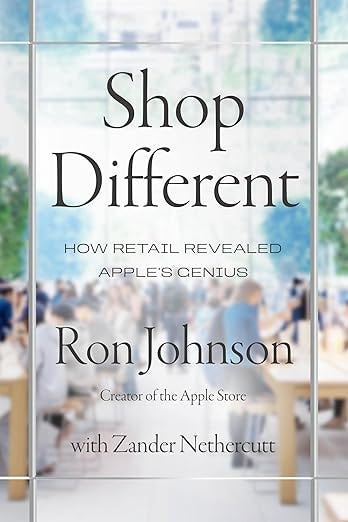
    How to build something as successful as the Apple Store

    Ron Johnson built the Apple Store, then watched the world copy it for two decades. In this episode of Keep Going, he walks through how that happened, starting with a choice he made early on: learn retail from the ground up, not from a spreadsheet. After Harvard Business School, he went to unload trucks in a Mervyn’s store, then rose through Target during its big 1990s run, where he helped push “design for all.” Ron is the author of an upcoming book, Shop Different, which is in pre-orders now. We got to talk to him before the book launch and I can’t begin to describe how cool it was to talk to someone like him for the pod. Back to his story. The Apple story turns on one conversation with Steve Jobs. Jobs thought stores could double Apple’s market share from five to ten percent. Johnson told him that was the wrong target. He pointed to the bigger opening, the half of Americans who had never bought a computer, and the fear of technology that kept them out of the category. That changed the entire store strategy. Put the stores where people already shop, in malls, make them big enough to feel like a major brand, and use the space for experiences, not shelves. The front half introduces people to technology, the back half deepens the relationship with support and learning. No commissions, because you cannot teach someone while you are trying to pick their pocket. Johnson also shares what it looked like when Apple was close to the bottom. In 2002, he says the company hit a point where it was trading at cash value, and Jobs was carrying the weight of a risky transition to Intel, OS X, new apps, and the early store rollout, all at once. He tells a scene from the morning the Soho store opened, when Jobs saw a small line and thought nobody cared anymore. A few hours later the store filled, and Jobs stayed for seven hours, talking to customers and watching the place work. Johnson describes it as a turning point, a moment where the “green shoots” mattered more than the quarterly numbers, and where Jobs doubled down on the stores as a core product, not just a sales channel. Then it gets harder. Johnson does not dodge JCPenney. He calls it his failure. He explains the vision, a “mall within a mall” with smaller branded shops, a town square feel, and simpler pricing. The mistake, he says, was speed and process. They changed pricing almost immediately, without time to communicate it or bring employees into the build. He contrasts that with Apple, where he could hire the team, shape the culture, and let the model mature. At JCPenney, he never had the internal support needed to make the change stick, and eighteen months later it was over. This episode is a clean reminder that “great strategy” is not enough. Execution is people, timing, and trust. You can be right about the idea and still lose if the team is not with you and the change moves faster than the organisation can absorb. This is a public episode. If you'd like to discuss this with other subscribers or get access to bonus episodes, visit www.keepgoingpod.com/subscribe

  • September 8 · 6 min

    How psychedelics changed my life

    This one is personal. I started working on Shroomies in 2018, after my dad died and I entered one of the darkest periods of my life. I was depressed. I was taking SSRIs. I was very close to self-harm. I didn’t feel like myself, and I didn’t know how to get back. Then a friend invited me to a psychedelic mushroom session. I thought it sounded ridiculous. I’m not a Burning Man guy. I’m not a hippie. I don’t like the Grateful Dead. I definitely don’t like Phish. But I went. What happened over the next six hours started a much longer process of figuring out what was happening inside my own head. I eventually had a few more experiences. Things changed. Some changes were good. Some were difficult. But I came out of that period knowing myself better. Most importantly, I’m still here. Book Party Fun! Are you in New York? I’ll be holding a book party in Brooklyn on September 24 and I need a rough headcount so please RSVP here! That experience also made me curious. What were these substances actually doing? Why were people using them for depression, PTSD, end of life care, relationships, and creativity? Why had something dismissed for decades suddenly become the subject of serious medical research? So I started reporting. The result is Shroomies, a book about psychedelic mushrooms, the people using them, the people studying them, and the strange cultural shift happening around them. It isn’t an argument that everyone should take mushrooms. Psychedelics carry real risks, and I would never recommend experimenting with them alone. It’s a book about what happens when people who have run out of answers start looking somewhere else. That feels very close to what Keep Going has always been about. Failure doesn’t always arrive as a failed company or a lost job. Sometimes it is much more subtle. Sometimes is that the status quo stops working for you, that your biggest enemy becomes yourself. Then you have to figure out what comes next. You don’t have to try mushrooms but please try my book. Shroomies is out today, September 8, in hardcover and on Kindle. If you’re a journalist or simply review books anywhere, I’m happy to send you a copy. Just drop me a line at john@biggs.cc. I hope you read it. As always, thank you for listening and supporting me. It means the world. This is a public episode. If you'd like to discuss this with other subscribers or get access to bonus episodes, visit www.keepgoingpod.com/subscribe

  • August 31 · 32 min

    A top-tier product manager tells us how to survive the AIpocalypse

    Melissa Mohr spent her early career at Amazon and built some amazing products before making the move to SVP of product at Vivint. Now she’s here to tell us how to maneuver office politics and survive the onslaught of AI Mohr studied animal science in college. She expected to spend her career working with horses. Instead, she ended up helping solve some of the strange problems that come with trying to change how millions of people shop and live. On Keep Going, Mohr talked about what she learned along the way. Much of it came down to a simple idea: careers are built as much from the things that go wrong as the things that go right. You Don’t Need to Know Everything Before You Start When Mohr joined Amazon’s Alexa smart home team, she had no professional background in smart home technology. In fact, she didn’t have any smart home devices in her own house. “I knew nothing about smart home,” she said. She joined anyway. She would spend roughly nine years working on Alexa, moving from the early days of asking Alexa to turn lights on and off toward much deeper home automation and personalization. Her career is a useful answer to one of the questions that stops people from making a move: Am I qualified enough? Sometimes you aren’t. The better question may be whether you can become qualified. Mohr credits part of her success at Amazon to the company’s willingness to put smart people into unfamiliar problems and allow them to figure things out. But that freedom came with responsibility. She had to understand the business, understand its numbers, understand the customer, and learn enough about each new field to make good decisions. The lesson isn’t to fake expertise. It’s almost the opposite. Know what you don’t know, then start learning. Progress Can Be Very Small Amazon Grocery presented a completely different problem. Selling books and toys online was one thing. Selling groceries meant dealing with expiration dates, shipping costs, inventory rotation, customer habits, and products that could become worthless before Amazon managed to sell them. There wasn’t one great idea that fixed everything. Mohr’s team tested somewhere around 20 or 30 user experience designs. Some worked. Plenty didn’t. Instead of waiting for a single major breakthrough, the team learned to pay attention to small signs that something was getting better. “Small progress” became something worth building on. That’s a useful way to think about almost any difficult project. We tend to want a clear win because wins are easy to understand. You launch the company. You get the job. You sell the product. You hit the number. Most meaningful work doesn’t happen that cleanly. You try something. It works a little better. You try again. Then you keep going. AI Is Changing Jobs, But That Doesn’t Mean You Stop Learning Mohr also has a useful view of the current fear around AI and employment. She doesn’t think AI simply replaces an entire employee in most cases. Instead, she sees it removing parts of jobs. Maybe 30 percent of someone’s work consists of tasks that aren’t particularly strategic. AI can take some of that work. That lets employees move faster, but it can also allow a company to accomplish the same amount of work with fewer people. That part shouldn’t be ignored. Mohr’s response, however, isn’t to resist the technology. It’s to learn how to use it. Her product teams can now turn an idea into an early app prototype in hours. She looks for job candidates who have experimented with AI and figured out how it can improve their work. The danger of refusing to experiment with AI, in her view, goes beyond AI itself. If someone refuses to try a new tool because they don’t like it or don’t understand it, what happens when the next major change arrives? Technology keeps moving. Careers have to move with it. You don’t have to believe every claim about AI. You don’t have to use it for everything. But you probably do have to understand it. Your Passion Might Not Be What You Think Mohr’s undergraduate degree was in animal science. She expected to become an equine vet. She also worked in thoroughbred racing after college. Then she learned something surprising. Turning something she loved personally into her profession wasn’t necessarily what made work satisfying. What actually interested her professionally was solving hard problems. “I think it’s finding something that you’re passionate about, but realizing that passion might not be a personal interest,” she said. That’s an important distinction. We’re often told to find the thing we love and make it our job. But loving horses doesn’t mean you have to work with horses. Loving hiking doesn’t mean you need to work for an outdoor company. You may love solving logistical problems. Or building products. Or fixing organizations. Or working with customers. Sometimes the subject changes while the kind of work that keeps you interested remains remarkably consistent. Ask Yourself Where You Failed One of Mohr’s habits is particularly relevant to Keep Going. Every year, she conducts a serious review of her own performance. What did she do well? Where did she fail her team? Where did she fail herself? Where did she fall short of what leadership expected from her? Then she asks why. Mohr has brought the same practice into her product teams. Even after a highly successful product launch, she wants a postmortem. Something could have been done better. This kind of review only works if failure isn’t treated as a verdict. A mistake gives you information. Use it. The Question Mark Email During her Amazon years, Mohr occasionally received one of Jeff Bezos’s infamous question mark emails. A customer complaint or some other problem would reach Bezos. He would forward it down the company with a single character: ? That was enough. The email would work its way through management. Suddenly everyone knew there was a problem. Mohr remembers them as terrifying. She also remembers something else. Bezos was usually right. “There was always a bigger gap underneath the question mark email,” she said. The frustrating part was realizing that Bezos had spotted something her team had missed.Those weren’t the comfortable moments of her career. Neither were the meetings where she got torn apart. Or the managers she disliked. Or the mistakes she made. Yet years later, those are often the experiences she values. “The worst meetings of my life, they’re very memorable to me,” Mohr said. When everything goes well, she argues, you often don’t improve very much. She sees the same thing when competing with horses. Winning feels good. Falling off or getting eliminated teaches her more. That doesn’t mean failure magically becomes pleasant. Mohr is careful about that too. Sometimes it takes a year or two before you can look back at a terrible experience and understand what it gave you. You don’t need to enjoy the bad meeting. You don’t need to pretend getting fired, losing, failing, or making a terrible decision feels good. Give yourself some time. Then ask what it taught you. This is a public episode. If you'd like to discuss this with other subscribers or get access to bonus episodes, visit www.keepgoingpod.com/subscribe

  • August 4 · 14 min

    Inside iWallet, the payment platform for contractors

    Jim Kolchin started iWallet because he knew the problem from the inside. Before he was building fintech software for contractors, he was a contractor himself. He started his first business in 2003, spent 15 years working in the field, and grew that business from nothing into an eight-figure company. That is where he saw the pain around checks, credit cards, receivables, and all the little financial tasks that slow down home service businesses. Kolchin describes iWallet as a new way for contractors to take payments, saving time and money on check processing and credit card processing. But the company is now growing into something bigger: a financial operating system for the home service industry, serving contractors, distributors, and manufacturers. That matters because home service businesses are still full of old payment workflows. Contractors mail checks, wait on lockboxes, process card payments, chase invoices, and deal with back-office systems that were not really built for the way field service companies operate. iWallet is trying to pull those pieces together in a way that fits how contractors actually work. Kolchin’s path into software was not straight. He came to the United States in 2002 and started with odd jobs: selling ice cream, washing cars, sweeping the boardwalk in New Jersey, and saving enough money to move to California. A year later, he started his first business. He liked contracting, but he eventually saw the limits. A contractor can build a good business, but labour does not scale like software. He had already learned that lesson through another startup, a hardware company that built an automated knife-sharpening machine and was later sold. Before that, he had tried a mailbox sensor, manufactured 100 units, launched a Kickstarter, and discovered that having a clever invention was not the same thing as having a market.That failure taught him one of the oldest startup lessons, but one that still has to be learned the hard way: make something people want. Kolchin said he originally thought like an inventor. If you had a patent, he believed, people would come looking for it. That was not how it worked. Over time, he learned that the customer matters more than the idea, and that the only way to know what people want is to talk to them directly. Surveys and gated forms are not enough. Real conversations are what count. For iWallet, that has meant trade shows. Kolchin said trade shows are one of the best places to meet contractors, talk to customers, test messaging, and understand whether the product is solving a real problem. But it only works if you work the room. You cannot sit behind the table and wait. You have to get up, talk to people, explain what you do, and push through the awkward first half hour until the conversations start to flow. That kind of direct selling is also how you find product-market fit. Kolchin pointed to the idea of the “unaffiliated dollar,” a dollar paid by someone who did not know you six months earlier and bought the product because you convinced them it solved a problem. For him, that was the real test. One unaffiliated customer can become another, and that is where momentum begins. After years of trying different ideas, Kolchin said iWallet found product-market fit about three years ago, became profitable, and began growing quickly. The company is now expanding beyond payments. Kolchin said iWallet is working on Repair AI, which he described as something like Harvey for legal or OpenEvidence for medical, but built for the home service space. The company has filed several patents around the idea and sees it as a major opportunity. At the same time, iWallet is building out more traditional financial products. Accounts receivable is core today, but the roadmap includes accounts payable, checking accounts, credit, and extended warranties. The goal is to give contractors a financial layer that understands their business instead of forcing them to stitch together tools built for everyone else. There is a simple founder lesson in Kolchin’s story. The first idea may not work. The second may work better. The third may reveal the market. What matters is learning fast enough to stop building only what interests you and start building what people will pay for. That is what iWallet is doing now. It began with contractor payments. It is becoming a larger financial system for an industry that still runs on too much paper, too many checks, and too many disconnected workflows. Kolchin built iWallet because he lived the problem. That is often where the best companies start. This is a public episode. If you'd like to discuss this with other subscribers or get access to bonus episodes, visit www.keepgoingpod.com/subscribe

  • August 3 · 35 min

    Making art out of pain

    Angie Elita Newell does not write easy books. Her novel, All I See Is Violence, is not a fantasy escape, which she joked about after finding herself surrounded by “sexy fairy” books at BookCon. It is a historical novel built from trauma, archival research, Indigenous memory, and the long shadow of state violence. Newell is a member of the Liidlii Kue Nation, part of the Dene linguistic group. Her mother was an Air Force pilot. Newell became a historian. Those facts sit close together in her life, but none of them came easily. On Keep Going, she talked about the residential school system, the Sixties Scoop, and the Canadian government’s removal of Indigenous children from their families. Her mother attended one of those schools, and Newell was later placed in a non-Indigenous household through the assimilationist child welfare system that followed. She described the damage from these policies as “monumental,” and said the goal was to either “annihilate or assimilate.” That is not abstract history to her. It is family history. It is community history. It is also the ground from which her work grows. Newell said she became “a very sad child” and then “a very angry teenager.” She dropped out of high school, travelled to Europe, became absorbed in Tolkien and Impressionist art, and eventually made her way to university in the UK after writing short stories for admission. She did not enter academia through the normal door. She found another way in. That route matters because her work is built around questions most institutions would rather avoid. Why were Indigenous children sent to residential schools? Why were reservations created? Why were treaties broken? Why are some histories documented and others buried? Newell said archival research kept pushing her back to the same question: “Why?” The answer, for her, is not just to expose trauma. It is to transform it. When I asked how someone turns pain into art, Newell said the first step is being able to digest it. Trauma can crush a person, she said, but when it can be integrated, it can be “transmute[d] to wisdom.” In its highest form, that wisdom can become art. That line is the whole interview. There is pain that breaks people, and there is pain that becomes a kind of knowledge. The difference is not neat. It is not easy. It is not a motivational poster. Newell worked with residential school survivors and Holocaust survivors, and she saw how survival required a capacity to integrate what had happened without being destroyed by it. Her influences reflect that. She talked about Primo Levi, Hemingway, Picasso’s Guernica, Monet’s darker paintings, and the way art can carry suffering without turning away from it. Great art, in her telling, does not decorate pain. It gives pain a structure strong enough to hold it. That is what she is doing in All I See Is Violence. The book moves through the Battle of Little Bighorn, Wounded Knee, the 1970s, the Vietnam War, Indigenous warriors, intergenerational trauma, and the violence that repeats itself across time. She said the novel is about 70% factual and that she spent two to three years doing archival research before another historian reviewed it. The history itself is full of things we are not usually taught. Newell became especially interested after a Cheyenne elder asked her whether she knew there were female warriors. She did not, and that question sent her into the archives. She found evidence that women fought at Little Bighorn and that they fought differently to make up for differences in size and strength. That is one of the gifts of the conversation. Newell is not interested in flattening history into heroes and villains. She is trained in archival research, but she is also a novelist, so she understands that history is not just dates and documents. It is motive, contradiction, greed, fear, faith, betrayal, survival, and the stories people tell afterward to make themselves feel clean. She said she tries to approach history neutrally, not by declaring what is good or bad, but by presenting what happened. That does not mean the work is emotionally neutral. It means she respects the reader enough to let the facts carry weight. What keeps her grounded is not social media or noise. She said she did not have Instagram until her book came out in 2024, and she had not really engaged with YouTube either. Instead, she reads, researches, walks in the woods, eats close to the earth, and stays connected to nature. Her daily life is built around attention.That matters because attention is a form of survival. Newell’s life could have pushed her toward distraction, bitterness, or collapse. Instead, she built a practice around reading, research, art, elders, history, and language. She followed the thing that kept calling her. “For me, it’s following your passion,” she said. “Everybody’s gonna have something that you’re really passionate about. And that’s probably a clue that that’s your life’s purpose.” That may sound simple, but her version is not soft. Following your passion, for Newell, meant walking into some of the darkest archives in North American history and staying there long enough to make something true. It meant looking at the violence directly without letting it define the whole story. Her next project is about Geronimo, Lozen, Nana, and the Apache resistance. Again, she is drawn to the places where official history has left people out, especially women, medicine people, warriors, and spiritual leaders whose lives were made smaller by the record. There is a lot of talk now about storytelling, usually in the corporate sense. Tell your story. Own your story. Build your brand. Newell is doing something older and harder. She is recovering stories that were damaged, hidden, misread, or ignored. She is taking inherited pain and turning it into art, not because art fixes the pain, but because art can keep it from disappearing. The bottom line? You take the thing that almost crushed you. You digest it. You transmute it. Then you write. This is a public episode. If you'd like to discuss this with other subscribers or get access to bonus episodes, visit www.keepgoingpod.com/subscribe

  • July 27 · 26 min

    The internet didn’t kill magazines. We did.

    I had one of my favourite conversations in a long time this week with writer and Full Bleed podcast host Arjun Basu. We both came from the magazine world. We remember the days when magazines had millions of readers, editors could call a trend before it happened, and entire industries waited to see what would appear in next month’s issue. Then the internet arrived. Most people tell that story as if technology simply destroyed print. Arjun had a more interesting take. He argues the first mistake wasn’t losing advertising. It was trying to make magazines behave like the internet. “The internet spent all that time just being like magazines and newspapers,” he told me. “And then slowly the ad dollars started going away.” That made me think. Every new technology seems to convince the old one to abandon what made it valuable. Magazines chased clicks. Newspapers chased page views. Television chased YouTube. Now everyone is chasing TikTok. Somewhere along the way we stopped asking whether we should. One thing Arjun said really stuck with me. “The publisher sort of forgot about the reader.” When advertisers paid the bills, readers became a metric instead of the customer. Today that’s changing again. The publications that are succeeding are asking readers to pay directly, which means they have to produce something worth paying for. The audience is back in charge. There’s another twist I didn’t expect. Many of the people buying independent magazines today aren’t Gen X nostalgics trying to relive the 1990s. They’re Gen Z. Magazine shop owners are finding their stores filling up with people in their twenties who are making zines, buying beautifully printed magazines and treating them as social spaces instead of relics. Maybe that’s because they grew up surrounded by screens. Maybe holding something real has become the novelty. I don’t think print will ever return to what it was. Neither does Arjun. “The days are over,” he said. “You are paying your penance, and I’m trying to bring it back.” He’s probably right. But perhaps that’s the wrong goal. The future isn’t recreating the old magazine industry. It’s taking what magazines were always best at, thoughtful curation, strong voices and memorable design, and building businesses around communities instead of advertising. That’s a much harder business. It also might be a much better one. This is a public episode. If you'd like to discuss this with other subscribers or get access to bonus episodes, visit www.keepgoingpod.com/subscribe

  • July 20 · 28 min

    Creators aren’t the new influencers, they’re the new media companies

    When most people hear the word “creator,” they think of someone promoting protein powder or the latest gadget. Tanya Cohen sees something very different. Cohen is the co-CEO of Made By Us Studios, a company trying to bridge Hollywood and the creator economy. On this week’s Keep Going, she made a simple point that explains why so much of the media business is changing. “Every creator can become an influencer, but not every influencer can become a creator.” That distinction matters. An influencer rents attention. A creator builds intellectual property. They create stories, characters, formats and communities that people return to again and again. Instead of simply recommending products, they’re building entertainment businesses. Some of the largest creators now attract billions of views every month. Their audiences rival traditional television networks, but without the overhead or the geographic limits. As Cohen put it, many creators have become media companies with a person at the centre instead of a corporate logo. That shift is changing advertising as well. For decades, brands paid millions to interrupt audiences with commercials. Today, many would rather become part of the content itself. Instead of producing a traditional advertisement, they’re giving creators the freedom to build stories that naturally include a product. When it works, viewers don’t feel like they’re being sold to. They feel like they’re watching the content they already came for. Trust is what makes that possible. “Trust is the only asset a creator cannot afford to lose,” Cohen said. Creators speak directly to their audiences every day. They know what resonates because they receive immediate feedback through comments, views and engagement. That relationship is difficult for traditional media companies to replicate. For anyone hoping to become a creator, Cohen offered surprisingly practical advice. Don’t worry about expensive cameras or production quality. Start with authenticity. Figure out what makes your voice different and show up consistently. Today’s audiences often prefer content that feels genuine over something that looks overly polished. With AI lowering production costs even further, the biggest advantage isn’t technology. It’s originality. One prediction stood out. Cohen believes we’re moving back toward a model where artists own more of their work, similar to the United Artists era of Hollywood. Instead of platforms controlling everything, creators will increasingly own their intellectual property while using digital platforms as distribution channels. Whether that prediction comes true or not, it’s clear the lines between Hollywood, YouTube, television and social media are disappearing. The next major entertainment company may not begin with a studio lot in Los Angeles. It may begin with someone holding an iPhone in their bedroom. This is a public episode. If you'd like to discuss this with other subscribers or get access to bonus episodes, visit www.keepgoingpod.com/subscribe

  • July 13 · 16 min

    Shutting down a business: What every founder needs to know

    Starting and running a business can be one of the most rewarding experiences, but knowing when and how to shut it down is equally crucial. In this post, we’ll explore key insights from Dori Yona, CEO and co-founder of Simple Closure, on navigating the often daunting process of business closure. You’ll learn about the common pitfalls, best practices, and how to ensure a smoother transition during this challenging time. This was an interesting interview and had a lot of info for folks who might be considering closing their businesses so I took some of the best practices from our conversation. Understanding the Need for Business Closure Every year, millions of businesses in the U.S. shut down for various reasons, from running out of cash to strategic pivots. Dori shares that many founders wait until it’s too late, leading to fines and penalties. The proactive approach involves assessing your business’s financial health and recognizing when it’s time to seek help. The earlier you start planning for closure, the better the outcome. The Simple Closure Process Simple Closure offers a streamlined process for shutting down a business. It starts with a quick onboarding, where you provide essential information about your company. This information is then analyzed in conjunction with public state databases to ensure no detail is overlooked. The result is a tailored shutdown plan that simplifies what is typically a complex process, reducing timelines from several months to just weeks. Best Practices for Preparing for Shutdown 1. Don’t Go It Alone: Dori emphasizes that founders often underestimate the complexity of shutting down a business. It’s essential to seek professional help to avoid costly mistakes. 2. Budget for Closure: Many founders mistakenly believe they can simply run their business until it’s out of money and then shut down. However, shutting down incurs costs such as taxes and employee severance. Dori advises ensuring you have adequate funds available to cover these expenses. The Importance of Knowing When to Shut Down Recognizing the signs that it’s time to close your business can be difficult. Dori explains that some founders may resist shutting down even when financial indicators suggest it’s necessary. It’s crucial to evaluate your situation honestly and make informed decisions. This might involve using tools or resources that can help calculate the best time to close based on your business’s specific circumstances. Conclusion: Key Takeaways for Founders Shutting down a business is never easy, but with the right guidance, it can be a manageable process. Here are the primary takeaways: - Be proactive and assess your business’s health regularly. - Don’t hesitate to seek professional help. - Ensure you have the funds necessary for a proper shutdown. - Understand your liabilities and plan accordingly. Frequently Asked Questions What are the first steps to take when considering shutting down a business? Start by assessing your financial situation and consulting with professionals who specialize in business closures to understand your options. Are there costs associated with shutting down a business? Yes, there are various costs, including taxes, employee severance, and potential fines, which is why it’s important to budget for the process. How long does it typically take to shut down a business? With Simple Closure, the process can be expedited from several months to just a few weeks, depending on the complexity of your business. What should I do with my business’s assets when shutting down? Services like Simple Closure can assist with monetizing your assets, ensuring that you get the most value out of your business before it closes. This is a public episode. If you'd like to discuss this with other subscribers or get access to bonus episodes, visit www.keepgoingpod.com/subscribe

  • July 6 · 16 min

    Why good is not enough

    Keith Wyche has had the kind of career that looks clean from the outside. Bell. IBM. Pitney Bowes. Grocery. Walmart. Board seats. Books. Big jobs. Big teams. The sort of resume that makes people assume there was always a plan and that the climb was smooth. It was not. Wyche told me something on Keep Going that I think a lot of ambitious people need to hear. Early in his career, he was getting results, but he was not getting promoted. He was young, talented, and frustrated. So he gave his boss an ultimatum. Promote me in three months, or I will promote myself. Three months later, he left. Then someone told him the truth. He was a bull in a china shop. He got results, but he abused his people. He fought with finance. He fought with other teams. It was all about him, his team, and winning. That stung. But it also changed him. Wyche realized that he had been copying the leadership models he had seen before him. Hard, military-style management. Beat your chest. Push harder. Win. He was younger than many of the people he led, so he overcompensated. He thought leadership meant force. It did not. That was the beginning of a different kind of career. He worked with an executive coach. He looked at his blind spots. He started to understand where the behavior came from. Maybe it was imposter syndrome. Maybe it was not being heard earlier in life. Maybe it was just immaturity. Whatever the source, he had to face it. That is the part people like to skip. They want the promotion, the title, the corner office, and the authority. They do not want the mirror. Wyche’s new book, Uncommon Leadership: A Blueprint for Restoring Integrity, Trust, and People-Centered Leadership, comes from that same place. He said he wrote it out of disappointment with leadership today. His grandson asked him whether the failures he saw among pastors, politicians, and corporate leaders were what leadership really was. Wyche had to sit with that question. His answer is no. Somewhere along the way, he said, we moved away from servant leadership and toward self-serving leadership. The work became about the leader instead of the people. The quarterly return mattered more than trust. Power mattered more than integrity. Output mattered more than engagement. But two things can be true. You can deliver results and still bring people with you. You can care about the business and care about the people doing the work. Wyche ran roughly 100 Walmart stores with 30,000 people reporting into his organization. If those people did not do their jobs, he could not do his. Leadership was not theoretical. It was operational. That came through clearly in his Walmart story. He joined Walmart in 2015, when Amazon was taking share and Walmart’s grocery business was under pressure. The company was built around stores, and there was real fear that e-commerce would cannibalize the core business. Wyche helped explain the change by telling the story of Sears. Sears had stores and a catalog. It had both the physical footprint and the home delivery model. Then it lost its way. The point was not to scare people. The point was to connect them to the vision. Here is why change matters. Here is how you can help. Here is what happens if we do not move. That is what leaders often miss. They announce the change, but they do not connect people to it. They talk about strategy, but not meaning. They talk about results, but not roles. People do not resist change only because they are stubborn. They resist change because they do not understand where they fit. That lesson matters right now because AI is creating the same kind of fear. People worry about their jobs. They worry about their value. They worry that the thing they trained for will disappear. Wyche does not pretend to know exactly where AI goes, but he has been through enough changes to know that humans are resilient. AI can handle administrative tasks. It can speed up work. It can process information. But it does not replace judgment, empathy, common sense, or the human touch. His line was simple. AI may know a tomato is a fruit, but common sense tells you not to put it in a fruit salad. That is a good leadership test for the next few years. The companies that handle AI well will not just install tools. They will help people understand how to work with those tools. They will help people stay current. They will help people find new ways to add value. Wyche’s advice to his grandson was the same advice he gives to people trying to build a career now. Be a continuous learner. Stay flexible. Do not lock yourself too tightly into one path. Look for ways to add value. Be willing to take the tough assignment nobody else wants. He also made another point that stuck with me. Careers are no longer ladders. They are lattices. You may move up, sideways, or even slightly down to build the experience that gets you where you need to go. The old straight-line career is mostly gone. The people who keep going are the ones who keep learning. That connects to one of Wyche’s earlier books, Good Is Not Enough. Performance matters, but it is not the whole equation. You also need exposure and perception. Are the right people aware of your work? Do they understand the value you bring? What is your brand inside the organization? Nobody breaks through the glass ceiling alone, he said. Someone on the other side has to see you, appreciate your value, and pull you through. That is not cynicism. It is reality. Good work matters. But good work hidden in a corner often stays there. The lesson from Keith Wyche is not that success is about being polished, perfect, or politically smooth. It is about learning. It is about taking correction. It is about understanding that leadership is not something you perform over people. It is something you practice through people. Early in his career, Wyche thought winning was enough. Then he learned that how you win matters. That is the uncommon part. This is a public episode. If you'd like to discuss this with other subscribers or get access to bonus episodes, visit www.keepgoingpod.com/subscribe

  • July 1 · 14 min

    WorkClaw wants to build an AI team for your team

    Everybody has heard the promise by now. AI is going to save time, reduce costs, and help businesses get more done. The problem is that most people still don’t know where to start. That’s the challenge Will Ruben is trying to solve with WorkClaw, a new product from Workmate Labs that turns AI agents into something closer to digital employees. Ruben describes WorkClaw as “an AI team for your team.” Instead of asking users to learn prompt engineering or build complicated workflows, the platform lets them create AI teammates with specific jobs. A florist could train an AI to process invoices. A marketer could create a content assistant. An engineer could build a coding partner. The goal is not to replace workers, but to give every company access to the sort of specialised support that was once available only to large organisations. The idea grew naturally out of Workmate, Ruben’s first product. Workmate focuses on scheduling, one of the most common tasks handled by executive assistants. After building an AI that could manage meetings and calendars, the company began looking at what else an AI teammate might be able to do. Recent advances in large language models made that expansion possible. One of the most interesting parts of our discussion centred on a problem many AI founders rarely talk about. Traditional software is predictable. AI is not. Ask a database the same question twice and you get the same answer. Ask an AI system twice and you might get two different responses. That creates challenges for companies trying to build reliable products. Ruben compares the situation to earlier machine learning systems, including the recommendation engines that power social media platforms. The answer, he argues, is measurement, testing, and designing systems that can recover gracefully when things go wrong. If an AI makes a mistake, users need a way to correct it, and the system needs to learn from that correction. That uncertainty also creates cost concerns. During our conversation I joked about running OpenClaw on a Raspberry Pi and accidentally generating a large OpenAI bill because a poorly configured process kept checking my email. Ruben believes those problems will become less significant as companies gain access to cheaper open source models and more efficient infrastructure. His view is that most business tasks do not require the most advanced models available today. Perhaps the biggest challenge facing AI startups now is not technology but distribution. Building software has become dramatically easier. Getting people to use it remains difficult. Ruben said Workmate Labs relies on a mix of product-led growth, advertising, traditional sales, and good old-fashioned conversations with users. One tactic that has worked particularly well is identifying companies that visit the website, understanding who they are, and following up before interest disappears. Looking ahead, Ruben says WorkClaw’s next step is reducing the friction involved in getting started. While the current product removes much of the technical complexity, users still have to decide what kind of AI teammates they want and how those teammates should behave. Future versions will offer ready-made AI roles, including executive assistants, marketers, engineers, salespeople, and operations staff, making it easier for businesses to start seeing value immediately. The broader question is whether people want another tool or whether they want something that feels more like a co-worker. Ruben is betting on the second option. If he’s right, the future of software may not be a collection of apps sitting on a desktop. It may be a collection of digital colleagues working quietly in the background, each trained to do a specific job and each getting a little better over time. That future is still taking shape. But products like WorkClaw suggest it may arrive sooner than many people expect. This is a public episode. If you'd like to discuss this with other subscribers or get access to bonus episodes, visit www.keepgoingpod.com/subscribe
  • June 24 · 19 min

    How Lium turns physical-world data into answers

    Josh Knutson and Ryan Thill are building Lium for a problem that sits just outside the usual AI demo. Most AI tools are very good at text, code, and spreadsheets. Lium is focused on the messier stuff, the huge physical-world data sets that sit inside farms, climate labs, energy systems, logistics networks, and other operations where the answers are buried under terabytes of data. Knutson, the CEO and co-founder, describes Lium as an “agent harness” or a cloud operating system for agents. The idea is to give language models the tools they need to work over large, complex data sets that they cannot handle well out of the box. Instead of asking a data scientist to build a pipeline every time someone has a question, Lium lets subject matter experts ask questions in natural language and then builds the tools and workflows needed to answer them. Thill, co-founder and president, said the core user is often not a software engineer. It is the person who knows the domain, knows the data matters, and knows there are answers inside it, but cannot easily get them out. He gave the example of a farm operator working with soil reports, NOAA data, tractor data, and crop performance information. The operator may know something is off, but does not have the time or technical skill to combine all those sources into a useful answer. That is where Lium is meant to fit. A user can describe what they want to know, and the system builds repeatable workflows around the data. Once those workflows exist, other people inside the organization can use them too. An analyst can build the tool, and a CEO can later ask a simple question that relies on the analyst’s work in the background. That shared layer is one of the more interesting parts of the product. Knutson described work with the North Carolina Institute for Climate Studies, where scientists and researchers built tools inside Lium, then on-screen meteorologists could ask questions and get answers using the right climate data without needing to understand every data source underneath. The company’s bet is not that AI replaces the expert. It is that AI needs the expert. Knutson said Lium is built around human-in-the-loop workflows because language models do not have enough training data to understand all the hidden patterns and details inside many physical-world data sets. The system has to know when to stop, ask the human for domain knowledge, and then turn that knowledge into a tool the system can use again. That point matters because the obvious fear is job loss. If a person’s job is to build reports, what happens when anyone can ask Lium for the same report? Knutson and Thill argue that the expert becomes more valuable, not less, because the tool captures and scales their knowledge. Thill compared it to software engineers using AI coding tools. The tools make people more productive, and that can create demand for more work that was not worth doing before. Lium is still early, but the founders say they are seeing strong interest. During private beta, around 50 groups worked in the platform. Now that it is public, the challenge is different. Instead of onboarding users by hand, the company has to explain the product clearly enough that people can find it, understand it, and get value without a sales call. That is not easy, because Knutson and Thill say many potential users do not know this kind of system is possible. For Lium, the main competitor is not another startup. It is the belief that this kind of data is too hard to work with. Fundraising followed a similar path. Knutson said early investors were skeptical because he and Thill did not have the usual Silicon Valley AI profile. They had startup experience, but not the standard AI pedigree. The company raised a smaller pre-seed round than it wanted, then came back after showing it could build things people did not think it could build. That proof changed the conversation. The company spent roughly 18 months learning and building before going public. Knutson said this was not the kind of product where you can ship a tiny version and see what happens. If someone brings a terabyte of data, the system has to work. That meant building alongside design partners until the product was strong enough to handle real use. Now the work is public. Lium is learning from users, tightening the funnel, and building around what people actually do with the product. The name, by the way, comes from language plus the suffix of physical elements, a nod to the company’s goal of connecting language to the physical world. This is a public episode. If you'd like to discuss this with other subscribers or get access to bonus episodes, visit www.keepgoingpod.com/subscribe

  • June 22 · 28 min

    The janitor, the professor, and the meaning of success

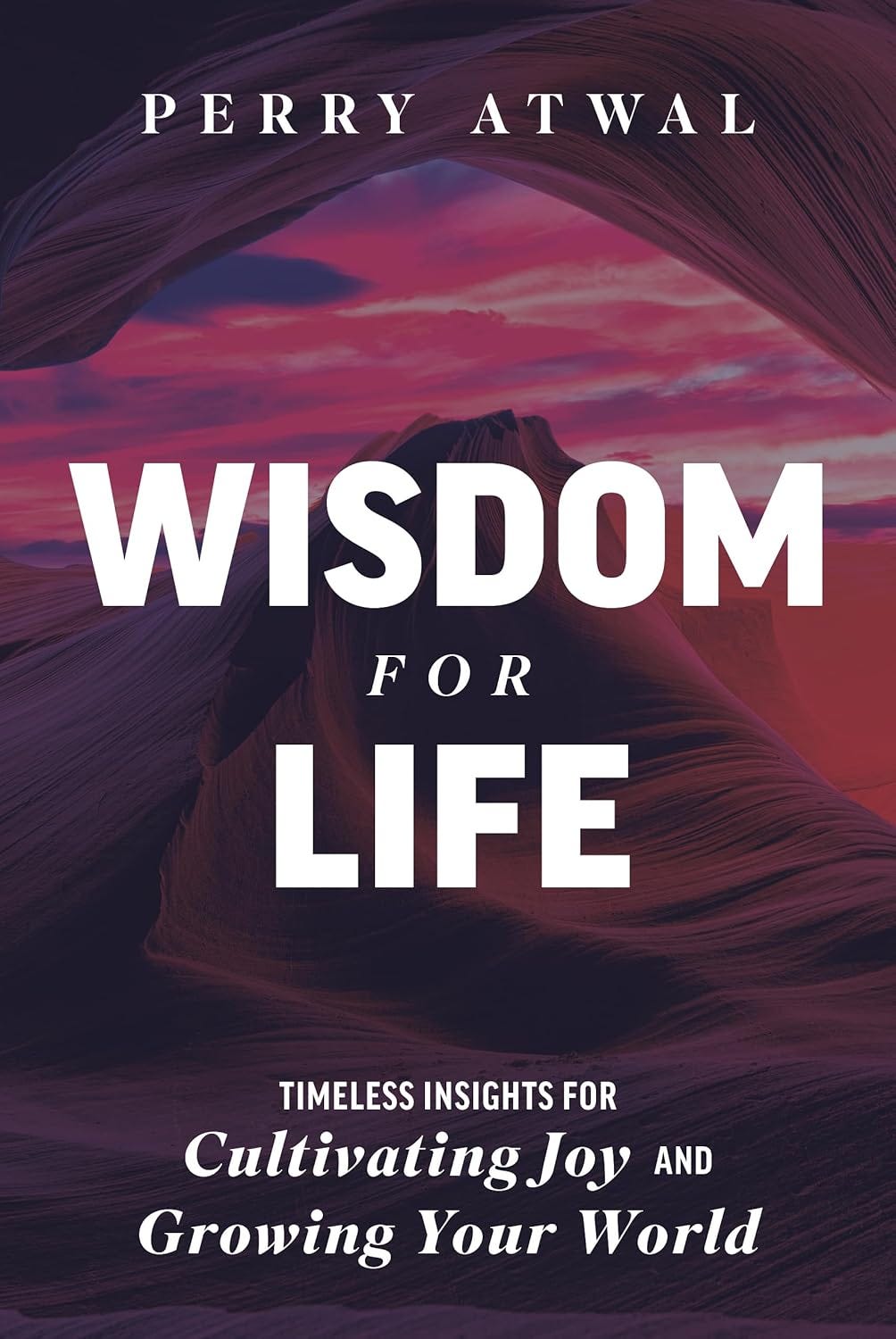
    Most of us spend a lot of time thinking about what we want. A better job. More money. A nicer house. More freedom. Less stress. Very few of us spend much time thinking about what a successful life actually looks like. That question came up during a conversation with Perry Atwal, a lecturer at the University of British Columbia and author of the upcoming book Wisdom for Life. After teaching more than 20,000 students around the world, Atwal has spent years looking for patterns in the people who thrive and the people who struggle. One of the most interesting things he said was that most of us are aiming too low. He asked a simple question: when you have no reason to feel anything, where is your energy level? On a scale from one to ten, are you ready to go back to bed, or are you bouncing off the walls? Most people, he said, live around a five or six. His argument is that we should be trying to live closer to a nine or ten. That idea stuck with me. A lot of us assume that energy comes from success. Atwal sees it the other way around. Energy creates success. The people who excel are often the people who bring more than what is asked of them. If an assignment calls for three things, they deliver five. They are curious. They stay engaged. They keep moving. His prescription is surprisingly simple. Take care of your health. Walk more. Spend time outside. Do work you genuinely enjoy. “I walk for two or three hours every day,” he told me. “Virtually every great thought I’ve had in the last twenty years has been on that walk.” That sounds almost too simple in a world obsessed with optimisation, AI, and productivity hacks. But perhaps that is the point. The most powerful part of our conversation came when we started talking about work and purpose. Many people feel trapped. They sit in offices wondering whether this is all there is. They worry they picked the wrong career. They worry they missed their chance. Atwal argues that the pressure to find the perfect path is largely self-imposed. Previous generations might have held two or three jobs during a lifetime. Today’s workers may have ten or twelve jobs and move across multiple industries. The first job does not have to be the perfect job. It only has to be the next step. He also believes we underestimate the power of perspective. One example from the interview has stayed with me. He talked about cleaners. Some people might look at a cleaning job and see failure. The happiest cleaners he knows see something completely different. They see buildings that people want to enter because of the work they do. They see value created. They see contribution. The job is the same. The story they tell themselves is different. That idea feels especially important right now. We live in a moment where every headline seems designed to convince us that the future is bleak. Economic uncertainty. Political conflict. AI replacing jobs. Constant disruption. Atwal’s response is not to ignore reality. It is to choose where to focus your attention. “The only constant really is change,” he said. That may be the closest thing to a universal truth. The people who flourish are rarely the people who predict the future correctly. They are the people who adapt. They keep learning. They develop skills that transfer from one job to another. They stay curious. They also let go. Let go of old habits. Let go of old assumptions. Let go of the idea that your life must follow a script. Atwal even applies that philosophy to his closet. If he hasn’t worn something in two years, it’s gone. The same rule probably applies to a lot more than clothes. If there was one lesson I took from our conversation, it was this: Success is not a destination. It is a way of moving through the world. Take care of your health. Do work that matters to you. Surround yourself with positive people. Focus on your strengths. Help others when you can. The details of your career will change. The technology will change. The world will change. The question is whether you will keep going. This is a public episode. If you'd like to discuss this with other subscribers or get access to bonus episodes, visit www.keepgoingpod.com/subscribe

  • June 17 · 14 min

    WorkClaw wants to build an AI team for your team

    Everybody has heard the promise by now. AI is going to save time, reduce costs, and help businesses get more done. The problem is that most people still don’t know where to start. That’s the challenge Will Ruben is trying to solve with WorkClaw, a new product from Workmate Labs that turns AI agents into something closer to digital employees. Ruben describes WorkClaw as “an AI team for your team.” Instead of asking users to learn prompt engineering or build complicated workflows, the platform lets them create AI teammates with specific jobs. A florist could train an AI to process invoices. A marketer could create a content assistant. An engineer could build a coding partner. The goal is not to replace workers, but to give every company access to the sort of specialised support that was once available only to large organisations. The idea grew naturally out of Workmate, Ruben’s first product. Workmate focuses on scheduling, one of the most common tasks handled by executive assistants. After building an AI that could manage meetings and calendars, the company began looking at what else an AI teammate might be able to do. Recent advances in large language models made that expansion possible. One of the most interesting parts of our discussion centred on a problem many AI founders rarely talk about. Traditional software is predictable. AI is not. Ask a database the same question twice and you get the same answer. Ask an AI system twice and you might get two different responses. That creates challenges for companies trying to build reliable products. Ruben compares the situation to earlier machine learning systems, including the recommendation engines that power social media platforms. The answer, he argues, is measurement, testing, and designing systems that can recover gracefully when things go wrong. If an AI makes a mistake, users need a way to correct it, and the system needs to learn from that correction. That uncertainty also creates cost concerns. During our conversation I joked about running OpenClaw on a Raspberry Pi and accidentally generating a large OpenAI bill because a poorly configured process kept checking my email. Ruben believes those problems will become less significant as companies gain access to cheaper open source models and more efficient infrastructure. His view is that most business tasks do not require the most advanced models available today. Perhaps the biggest challenge facing AI startups now is not technology but distribution. Building software has become dramatically easier. Getting people to use it remains difficult. Ruben said Workmate Labs relies on a mix of product-led growth, advertising, traditional sales, and good old-fashioned conversations with users. One tactic that has worked particularly well is identifying companies that visit the website, understanding who they are, and following up before interest disappears. Looking ahead, Ruben says WorkClaw’s next step is reducing the friction involved in getting started. While the current product removes much of the technical complexity, users still have to decide what kind of AI teammates they want and how those teammates should behave. Future versions will offer ready-made AI roles, including executive assistants, marketers, engineers, salespeople, and operations staff, making it easier for businesses to start seeing value immediately. The broader question is whether people want another tool or whether they want something that feels more like a co-worker. Ruben is betting on the second option. If he’s right, the future of software may not be a collection of apps sitting on a desktop. It may be a collection of digital colleagues working quietly in the background, each trained to do a specific job and each getting a little better over time. That future is still taking shape. But products like WorkClaw suggest it may arrive sooner than many people expect. This is a public episode. If you'd like to discuss this with other subscribers or get access to bonus episodes, visit www.keepgoingpod.com/subscribe

  • June 10 · 14 min

    How to move from the corporate world into a startup

    Andrew Reid has seen the supplements business from both sides, as a founder and as an operator inside a very large company, and he thinks the next step is personalisation that does not feel like homework. Reid is the CEO of Claer AI. The product is an AI-driven supplement regimen builder that asks for your health profile, matches it against a large library of peer-reviewed studies, then turns the recommendations into a practical plan, starting with sachets you can mix, and aiming later at a single personalised powder. He describes it as using AI like a nutritionist, then following that logic through a supply chain he already knows well. His origin story is straightforward. Reid says he built and sold a social media analytics company to Comscore, then later ended up running one of the world’s largest supplement companies as part of a small executive team. That role changed his view of supplements, not as gym culture products, but as widely applicable compounds with strong safety profiles and real evidence behind them. He uses his own experience as the hook, after adding basic products like protein and creatine, he says he saw a clear change in strength and mobility as he aged. The gap he wants to fix is trust and confusion. Reid calls the industry large but fragmented, and he points to consumer confusion as a driver. His claim is that people do not stick with one brand because the space feels like a Wild West, and they worry about doing something wrong or wasting money. Claer’s AI is meant to create a long-term relationship that adapts over time, including using biometrics from wearables and adjusting the regimen so users do not have to think about it constantly. The most concrete feature he described is interaction checking. A common fear is that a supplement will clash with a medication or another intervention. Reid says Claer uses a “currently updated” evidence base to flag these issues, and he thinks that capability has applications beyond supplements, especially anywhere medication regimens shift often. On funding, Reid says the company started self-funded, went through the ERA accelerator in New York, and that the health tech environment is active enough that fundraising is not the core problem. He frames the business model as bundles with solid margins and higher cart values, plus better retention because of the personalised front end. He also splits the company into two stages, first prove the commerce and retention dynamics, then raise larger funding later to personalise the manufacturing itself and deliver the single powder vision. Reid also made a broader point that fits the Innovators beat. He argues that AI lowers the cost of running an “antiquated” industry by replacing a stack of specialised SaaS tools across the whole value chain. He says that in his prior role he spent millions per year on specialised software, and he expects a large share of those tools to become unnecessary as teams build from basic AI primitives and open source components. This is a public episode. If you'd like to discuss this with other subscribers or get access to bonus episodes, visit www.keepgoingpod.com/subscribe

Showing 1–20 of 20 episodes