
September 22 · 12 min

Josh Czuba
Fiction writer helping you take back your mind with creativity.

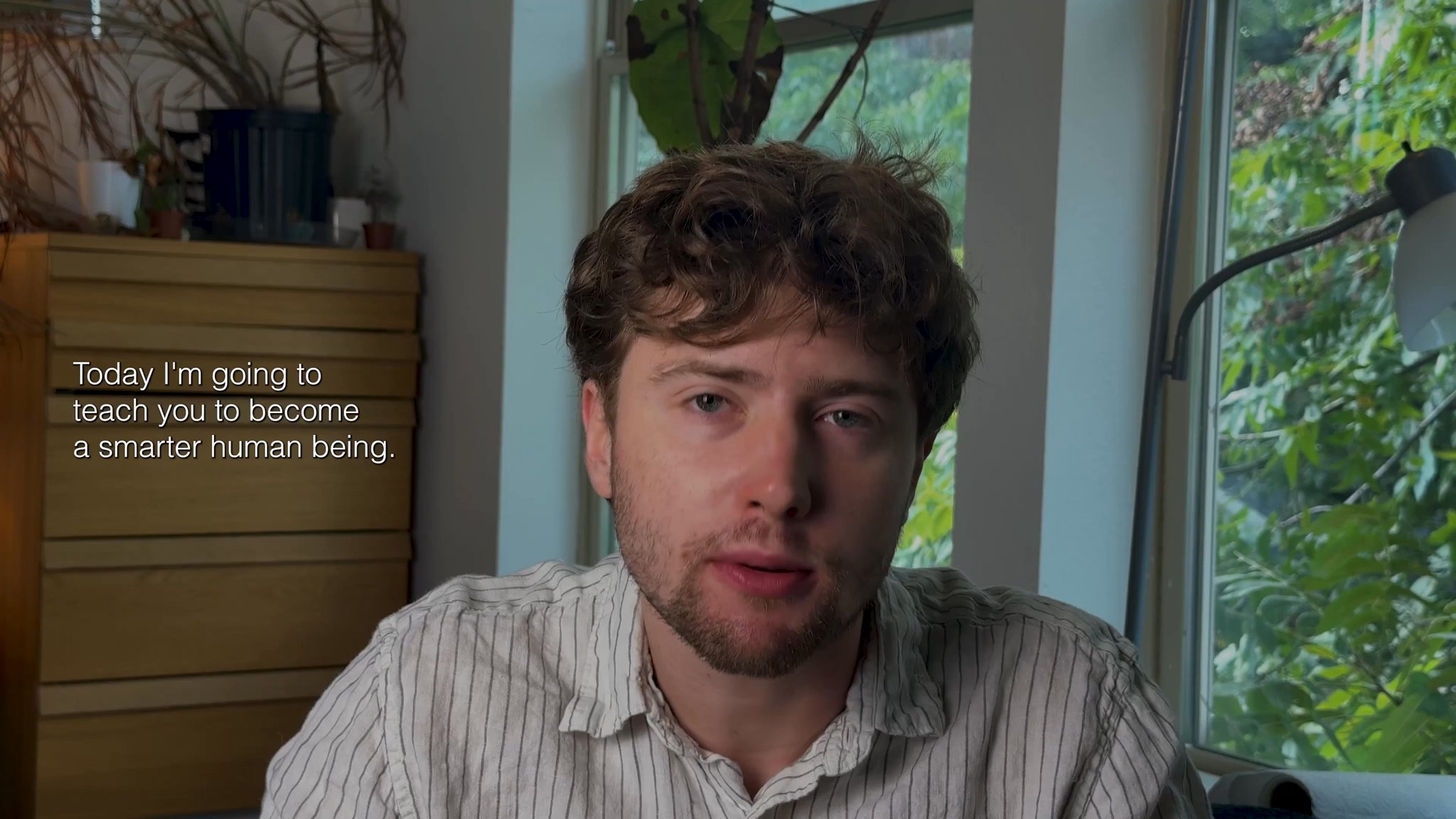


Every night I wake up at 4:48 on the dot. I try to go back to sleep, but I can’t. I’m drenched in cold sweat. My heartbeat is loud in my ears. It’s fast and arrhythmic. I can’t get out of bed. I can’t “walk it off.” It won’t be light outside for many hours. And my legs are shaking. I’m aware this is maybe not the best way to begin a conversation, but we don’t have time. What I hold in my hand right here is a bottle of the strongest sleep medication you’ve never heard of. I just took three capsules. Before you got here. That’s a macro dose. In a tight 15-20, my eyes will shut tight and they won’t open again. I’ll return to the real world. This stuff right here is not your standard issue Ambien. I moved on from that months ago. You develop a tolerance. No, this, you won’t find at your local pharmacy. No doctor can prescribe it. Won’t be on the FDA’s radar for another 6 months. Even I don’t know what it’s made of. All I know is that it will work. Of that, I am certain. I am certain because I believe. Don’t be afraid of that word. There are worse things to fear. If you’d seen what I’ve seen, you too, might grow desperate enough to believe. In something, anything. You too might feel like a stranger to Normal people. Try telling your boss you’re pushing four hundred something nights of the same bad dream. Your work friends, your colleagues, Mom, and Dad. They say they understand, they get it, they’re here for you. But they don’t, and they’re not. How could they. They’ll say “Poor you,” and “How can we help,” and “Maybe try laying off the stimulants?” But this performance lasts only so long. Sympathy’s got a shelf life. And can you blame them, really. Even my licensed clinical therapist doesn’t know what’s wrong with me. And before you start spouting off suggestions, like meditation or yoga or medical mary jane, I’ve tried it all. Falling asleep isn’t the problem. Au contraire, doctor. Insomnia would be a relief. Normal people can wrap their brains around insomnia. But try being a grown adult male who turns into bed every evening at 9 sharp, and still wakes up exhausted. Who can’t put his socks on in the morning without trembling. Who, sure, gets seven square hours of shut eye a night but still fails to reply in a timely manner. His hands are shaking. Try going about the today in a cold sweat panic, knowing full well what’s waiting for you tonight. Try sitting through the Monday morning status meeting without peeling the skin from your hands. Whispering to yourself the daily laundry list of empty litanies. Maybe I’ll get better. Maybe tonight will be different. Things could change. But deep down, you know the truth. Nothing in this world changes. You are Who you are What you are Where you are. Wake up. Wake up. Wake up. After I absorb the medicine I’ve swallowed, I’ll shut my eyes tight and lay down in the clothes I am wearing. I will not open my eyes again. But I will be far from dead. I don’t expect you to understand. Not if you’re Normal. If that sounds like you, then I offer one warning. Once you know these things, you cannot un-know them. Your ears will hear the Music. Your eyes will see only Signs. You will never be Normal again. You’ll be like me. Consider this your disclaimer on the back of the bottle. It’s up to you, the consumer, to do what you wish. My sole hope is that you choose wisely. Then maybe you’ll wake up too. This all started maybe a year ago. I was an entry level sales rep at an up-and-coming ad agency. My task was to promote a new brand of melatonin gummies, fresh on the market. Sleep Jellies, they were called. Something silly like that. To do my job, I thought I’d try the product myself. I did this a number of times. That was my first mistake. If only I had known. There’s no use complaining now. Hindsight and spilled milk and whatnot. Water under any number of metaphorical bridges. Spare me. I used the stuff for little more than a week before the dreams began. And once they started, they did not stop. Every night, it’s the same. I am seated in a waiting room. I am waiting for something but I don’t know what. The walls are tan, yellow, or beige. Something in between. I can hear the lights above me. The room is lined wall to wall with faded leather chairs. There are two doors. One behind me, and one in front of me. I am the only one here. In the dream I need help for something urgent. If I don’t get help, I will perish. Sometimes in dreams you just know things. In this dream, I am certain something is very, very wrong. But I cannot for the life of me remember what’s wrong. That is part of the reason I’m here. To learn what’s wrong with me and get help. The room is a degree or two too hot. I am sweating, but only slightly. I’m wearing my work clothes, the clothes I wore to the office. There’s a digital clock on the wall in front of me. It always reads 4:48. No AM or PM designation. The numbers do not change, but it makes a ticking sound. The clock and the lights above me. These are the only sounds in the room. To my right, is a woman at a desk behind a screen. Her face is blurred behind the screen. I can’t tell if she’s looking at me. I stand up and go to the desk behind the screen to ask the woman why I’m here, and how long I’ve been here, and if I’ll ever be seen and helped, but before I can get the words out, she hands me a clipboard and a thick stack of forms. She tells me to sit down and fill them out. There’s a pen fixed to the clipboard by a long, umbilical chain of metal spheres. I sit back down in a faded leather chair, and in the very same moment, I hear the rotary telephone cry out somewhere behind the screen. The woman rises to soothe it. I don’t see where she goes. The phone keeps ringing. The woman never comes back. I am alone in the room. The clock does not change. Nothing ever changes. In most Normal people’s dreams, time follows a loose set of guidelines. Hours go by unnoticed. But in my dream, I feel every second. Every tick of that great, unchanging clock on the wall in front of me. The door in front of me stands as tall as two of me. It’s made of steel the same color as the walls so it blends right in. It’s got a lever handle in the shape of an L, the kind that turns down to ninety degrees before it opens. If someone comes for me they will pass through this door in front of me. In the dream I know this. I sit there waiting. I tell myself it can’t be much longer before someone comes. I think, Maybe I’ll flip through a magazine while I wait. But there are none to read. I stand up to pace the room and then sit down again. No one comes in. The telephone is ringing. The lights are singing. Their bulbs are out of key. It must be an hour or two of waiting before I stand up to leave. I don’t want to be here anymore. I’ll come back another time. Whatever my problem is, I’ll live with it. I walk over to the door behind me. The door behind me is shorter than I am. I’d have to crouch to get out. It’s a wooden door painted yellow, and the paint is peeling. Its knob is round and brass. There’s a sign on the door that reads: THIS IS NOT AN EXIT. I put both hands on the doorknob. My hands are shaking. It occurs to me I have no earthly clue what’s waiting behind this door. I look at the sign again. It reads, clear as day, DO NOT OPEN DOOR OR ALARM WILL SOUND. I turn the handle to see if the door is locked. The knob turns with me. I could push slightly and the door would open. I could leave. I could walk right out. I look at the sign and the sign reads, clear as day, WRONG WAY, TURN BACK. It occurs to me if I walk through this door, I will be going the WRONG WAY. I will be going against the clear as day directions of the sign. Something bad will happen. In the dream I know this. I sit back down in a faded leather chair. Always there is the hum or whine or scream of the overhead fluorescent lights. I cover my ears with my hands. The hum is the same as it was before. Nothing changes. But it is this very absence of change that makes the sound deafening. The sameness itself becomes the killing thing. I stand up again. I cannot bear to sit. I pace the room with my ears in my hands. My clothes smell and feel three days old. They are not soiled. But they are stale, tired, spent. They itch. I unbutton and remove my shirt and then my pants and then my briefs and then stand there in the waiting room, naked. Somehow I am still too hot. It is at this point I might break into a fit of hopeless tears if it were not for the sudden click clack of a woman’s heels resounding from behind the second door. The door in front of me. The clicks are slow and measured. The clacks follow close behind. It’s louder than you’re imagining. Dial it up a notch. The sound is getting closer. The door could open any moment. I am now confronted by an altogether different fear. Here I am, naked, splayed, in a public place where I should not be naked and splayed. We’ve all had this dream. Why is it we only come to our senses when its already too late? I scramble to re-dress myself. Briefs, pants, belt, shirt. My hands are shaking. In the frenzy, I never pause to consider why the click clack of heels rings out so very loud and clear from behind the closed, locked steel door in front of me. The heels are now so close their sound might be coming from within my body. This cannot be the case. But in dreams you write these things off. You let details fade from view. It’s only later on the pieces come together. When I get my clothes back on I sit down in the chair I’ve been waiting in. The click clacks are right in front of my nose. I cross one leg over the other. I un-cross it. I place both my hands flat on my thighs and wait. It occurs to me the sound of the heels has stopped but the door has not been opened. I am possessed by the distinct sense that whatever I’ve been waiting for is, in fact, waiting for me behind that door. The music of the overhead lights has either cut out completely or I have simply stopped hearing it. Now the dream is silent. I am waiting for the door to open. The L-shaped lever handle of the door begins to turn down. Its motion makes no sound. The handle turns counter-clockwise, leftward. I can hear my heartbeat in my ears. The handle reaches ninety degrees and stops. That’s as far as it should go. This is where the door should open and I should see what’s behind it. But somehow, impossibly, the knob keeps turning. It winds round and round. It turns past the South Pole of its fixed orbit and ever leftward still. Slow, silent, round, and round. It is only now that I begin to scream. No sound escapes my lips. That’s when the door opens, revealing, finally, what’s waited for me all along. The figure is several feet behind the door. Down the long hallway with no light. A shadow upon shadows. It stumbles forward, out of rhythm. The woman in heels. The click clack of her feet doesn’t match her steps. Her movements lag behind. She is coming for me. It occurs to me I should not be here. I should have left this place when I had the chance. The door behind me was unlocked. I had my moment and the moment is gone. She is coming closer. She is nearly at the tunnel’s mouth. She is nearly through the door where she’ll soon be lit by the panels above. I’ll see the true nature of her face. I spring from the chair and rush to the door behind me, the door that is NOT AN EXIT. Even so late in the day, I pray. I pray the door is still unlocked, that some cruel trick has not been played against me. I get my hand on the knob and turn, and Thank God it turns, and I pull it back to flee, and right behind the door, of course, right in front of me, a foot from my face, is the figure, the shade, the woman in heels. I see the true nature of her face. Her arms reach out towards me. Her hands are older than the rest of her. Not a drop of blood inside them. Her face is broken in smile. It hurts to hold herself like this. She has been like this for a long, long time. In the dream I know this. Her eyes are lidless, bloodshot, screaming eyes. She has been in this place longer than I have. I see what has happened to her. I see what I will become. When she reaches for me, it happens slow. It might be a minute or an hour. But I cannot pull myself away. It’s as her fingers reach my throat that I wake in bed, alone. The clock reads 4:48. It’s dark outside the window. The only remnant from that place is my heart, still loud in my ears. I am embalmed in sweat. My body’s rigid shape, its flaccid geometry, printed, or etched, in the mattress below. Like the white chalk silhouette of a corpse on a crime scene. I lay there motionless for many minutes more. Until I’m certain I am awake. Every night it takes a little longer. My arms and legs shake with so much force I cannot even begin to consider getting up to relieve myself. I stay like that long after the war drum of my heart recedes. After my fingers and toes unclench and the sweat dries. And every night, I wait there, hoping, praying to drift off again. I wait til I feel that downward pull, the lightness of skull and body that precedes sleep. And it’s every night, as I begin to fade once again into blissful dark, that the morning alarm rings out. A loud, penetrating cry. Its melody is the default sound. It’s time to get out of bed. Today is a new day. It’s been four hundred something days and nights of this. I’ve learned to live with my ailment. As all cursed people do. We swallow our pride. We carry on. It was three days ago something changed. I was at the office. I had reached the bottom of my 97th bottle of over-the-counter sedatives. At the bottom of the bottle I found a small white scrap of lined paper, torn jaggedly on all five sides. I don’t know how it got there, but at this point I lacked the energy to ask questions. On it was a message assembled from the cut out letters of a popular self help magazine. “Having Trouble Sleeping?” I flipped the scrap over to read a sequence of 10 digits separated by dashes. I scrambled to my rotary telephone and dialed the number. Put the receiver to my ear. The phone rang and rang. I stayed on the line. When colleagues walked past my desk, I pretended I was on with a client. I waited for someone to pick up. I had to wait. I knew if I did not wait, if I hung up the phone before someone answered, I would never have another chance. If I called the number again, the phone might not even ring. Sometimes you just know things. It was after forty or fifty rings, there came a long crackling sound and a young man’s voice broke through the other end of the line. “Top of the morning to you.” It was 4:48 in the PM. The voice was faint, squeezed through a tiny hole in a distant wall. The connection was poor. “Hello. I found this number on a slip of paper at the bottom of my bottle of sleeping pills. It asked me if I was having trouble sleeping. I suppose you could say, I am.” The crackle was louder than the voice. But if I squinted I could hear words. “What seems to be the trouble?” “I have bad dreams. Sorry, dream. Singular. This has been going on for a year. Maybe more. If it goes on any longer, I’m not sure I will. Go on. I wake every night at the same time each night, always embalmed in sweat. Visceral terror. Can you help me?” “I’ll just ask you a few questions and see if we can assist you. That sound alright?” “That sounds alright.” “Describe the dream for me. Do you find yourself trapped inside a small box? Or are you standing at the sheer edge of a tall building in the sky, looking down? Or are you cast adrift in a vast ocean? Or something else. To say something else, you can dial 1 or say something else.” “Something else.” “I see. I’m guessing you’re a Waiter.” “Actually, I’m an Account Representative at an up-and-coming ad agency.” “In the dream, I mean. Stop me if this sounds familiar. Every night you find yourself alone in a yellow room. Waiting for hours on end to get help for something you can’t name. Does that sound about right?” “That sounds about right. How did you know?” “It’s not so uncommon in those who come to us.” “Us?” “We’d be happy to assist you with your trouble. Your medication will be waiting at your doorstep when you arrive home this evening.” “How do you know where I live?” The line had been disconnected. I put down the phone and shut off my computer. I sat there staring straight ahead for a minute or two. Then I got up and left the office. I drove straight home. Sitting outside my apartment door was a single envelope addressed to no one. It bore no message or return address. Only a stamp in the lower left corner. A black and white photo of a moth, fluttering at a streetlamp. I stared at this image for a minute or two. Then I crossed over into my apartment, tore open the envelope, and found a small bottle of pills, unlabeled. Inside the bottle was a scrap of jagged paper. A message made from cut-out letters. Instructions: Take one capsule per night. Do not exceed one capsule every 12 hours. I twisted the bottle. I struggled for some time with the Child Safety cap. When I got it open, I shook out a blue oblong pill and placed it in my mouth. I swallowed with my own saliva. Then I floated into the bedroom and sat on my bed in my work clothes. I laid down. I closed my eyes. I waited. When I open them again I am in a different bedroom. Everything about the room is the same. The plants. The total lack of wall hangings. The rug. But it is somehow different. That much, I know. I look to my left and there is a woman in bed next to me, sleeping. Martina. The receptionist from work with the copper curls, who doodles at her desk all day, who I turn to glance at every quarter minute or so between the hours of nine and five. This dream occurs to me in flashes. I blink and we’re kissing. Clothes come off in waves. I blink and we’re at the breakfast table over plates of poached eggs. The surfaces of the kitchen are marble or quartz. Smooth and shiny. I blink and I’m driving fast on the highway in a black matte Jaguar. I have an expensive looking rose gold watch on my wrist. I blink and I’m at work. Its the same workplace I go to every day of my life but its cleaner. Nicer. Everything in its right place. In this dream, I lead the status meeting. I have my own office with my name on the door and the desk. I blink and I’m back home with Martina. The walls of the house are made of glass and there are trees outside, everywhere. Martina is about to tell me something. Something beautiful and crucial. It’s as she opens her mouth, I blink. And I wake in my bed, alone. I could hear my heart in my ears. I was embalmed in sweat. But I was not afraid. I looked at the clock and saw it was 8:48 AM. I had slept through the night. And then some. I was late for work. I sprang from bed and drove to the office in the same set of clothes. I had not shit, showered, or shaved. I sat through the Friday morning status meeting with the dream images coursing through my mind. Then I sat at my desk and did the same thing. Many hours went by unnoticed. I could not bring myself to work. Could not reply to one email in a timely manner. Not after last night. The fabric of this day was artificial, false. Polyester when it should’ve been cotton. It didn’t feel real. Not quite. At some point, Martina stopped by my desk to ask if I was alright. Looked like I’d had a rough night, she said. She was being friendly. I told her No, actually, I slept great. Then I asked if she was free for dinner the following evening. She was taken aback by this. Her eyes went wide. She said, Took you long enough to ask. Meet me at California Pizza Kitchen at 8:48, I said. PM, I said. Yeah, duh, she said. It was cute the way she said it. I left work early that day and drove 15 over the limit to get home. I wanted to get back to sleep. When I got home, I poured out another blue pill and placed it in my mouth. I swallowed with spit. I sat on my bed in my work clothes. I closed my eyes. I waited. But when I didn’t feel that downward pull, the lightness of skull and body that precedes sleep, I figured I’d better take another. So I took another. One more couldn’t hurt. I sat, I laid, I waited. I closed my eyes. When I open them again, I am in the house of glass. There are trees everywhere. I look and smell like a man in a commercial. The walls are made of polished stone. The dream tonight does not occur in fragments. Life is one continuous chain of cause and effect. Martina is about to tell me something. Something beautiful and crucial. We talk about getting married. I drive to work and receive the promotion I’m up for. Martina and I get dinner at California Pizza Kitchen for the third time this week. We talk about life, and bringing new life into it. I’m an Account Executive now, and hey, why not bring a little guy or gal into the picture? Martina and I make love. We make love three times a week but no one’s counting. We’re painting the second bedroom tan or yellow or beige. We will impose neither blue nor pink on our little munchkin. Let them choose for themselves. I am promoted again. The agency now services every consumer packaged health brand in the Western hemisphere. And we are expanding East. Martina and I take in a rescue pup named Oskar, a Dachsund/Great Dane cross breed. On our first family Christmas, I stand at the head of the table to make a toast. Martina looks across at me from the other end. The long table is lined with relatives I’ve never met. I cannot see their faces. They are like the grown ups in children’s television programs. They exist but not fully. They are concepts. Martina smiles at me with full moon eyes. Then there’s the sound of a small splattering under the table. Her water is broken. We’ve got to get to the hospital. Its as my son, my baby boy, comes into the world that everything fades to black. And I wake once again in my bedroom, alone. I looked at the clock and saw that it was 4:48. PM. I had overslept. Thank God it was a weekend. I had less than 4 hours before my date with Martina. I scrambled out of bed to get to the rotary phone. I dialed the number. It rang only once. “Top of the morning to you.” “Hi. Hello. This is the gentleman with the same dream every night. We spoke the other day. I found your number at the bottom of a bottle of sleeping pills.” “I’m afraid you’re going to have to be more specific.” “Right. Of course. Well, listen, there’s a problem here. I just awoke from a dream that lasted a full year. Maybe longer. I was married, I had a life. It was more real than anything I’ve ever felt. And now it’s over. Just like that. I’m awake but I don’t feel awake.” “How many capsules did you take?” “Two.” “And how many capsules did the instructions instruct you to take?” “One capsule every 12 hours.” “So you’re seeing, I hope, the faint outline of the problem here.” “OK, yes. Responsibility taken. But responsibility aside, I need to get back to my life. My real life. I need to get back to the dream.” “Are you ready to commit?” “I’m sorry. What did you say?” “If you’re ready to commit to your real, true life, take three capsules. Do it tonight.” “Three capsules. Got it. I can do that.” “But I have to warn you of something. Consider this your disclaimer on the back of the bottle. If you take three capsules, you won’t come back.” “What do you mean I won’t come back?” “The life you return to will become your true one. The world you’re calling from now will be a faint dream you chose to forget. You’ll never again rise from bed unrested. If you take your new life to be your true one, you’ll always be awake.” “If I said I wasn’t following you before, that is nothing compared to the lack of following I’m experiencing now.” “What I’m telling you, good sir, is if you take the macro dose, you’ll sink into a sleep you’ll never wake from.” “You’re saying I’ll die.” “That’s not what I said. What I said was, You’ll never again open your eyes this side of the dream divide.” “So I’ll die.” “Has it ever once felt that way when you’ve woken from a dream?” I said nothing to this. I just listened to the crackle on the other end of the line. The sound was not unlike the cacophony hum of overhead lights. “Alright. I think I’m following you. Three pills. Tonight. I’m ready to commit.” “We’re glad to hear it. When you get here, I’ll make sure to come by and say hello. For a proper introduction.” “Wait. You never told me who you are.” But the line was dead. I hung up the phone for the last time. I began to to make arrangements. I went through the motions of shutting down my life. I hand-washed all the dishes in the sink. I took out the trash for the last time. I did not call Martina to let her know I wouldn’t make it to dinner. I would be seeing her shortly. I drew the blinds and locked the front door and barricaded the front door with furniture. Then I watered the plants. I swallowed the pills and floated into the bedroom. I locked the door behind me. I sat on the bed in my work clothes. I closed my eyes. I waited. When I opened my eyes again, I was alive.

Happy Saturday :) Here’s the latest short story. 18 year old Jeremy has a thing for older women. That becomes clear when he falls in love with his neighbor. You’ve heard of “the girl next door.” This is about the girl next door’s Mom. Strap in. You can watch it on YouTube or Spotify if you prefer. And here’s a link to get the book, the podcast, and everything else I do. Now, let’s get into the weirdest love story you’ve heard this week. Maybe ever. Love Potion I. I fell in love with the forty nine year old woman who lives next door. Her name is Julianne Mallard. She’s got a husband and a daughter about my age. I can’t remember her name. Her daughter’s name. Julie’s who I want. It’s not easy being in love. Love is complicated. Also: Costly. Painful. Distracting. I have more important things to worry about. I’m a young man in the prime of my life. I can’t afford to lose sleep over this. And I am losing sleep over this. If I was not heads-over-tails in love with my next door neighbor, I could focus on what matters: getting into college. Graduating with a 4.0. Finalizing my valedictorian speech. Instead, I’m up every night til the torturous rise of the sun straining my poor blistered fingers to write hundreds of hopeless letters I’ll never find the stones to even send. If I wasn’t in love, I wouldn’t be acting strange. I wouldn’t do things like press my face against the upstairs bathroom window for 30 to 40 minutes each morning, trying to get a glimpse. I wouldn’t spend every conscious minute of every day formulating plans. And I sure as hell wouldn’t be sitting here telling you about it. But here we are. I have to face the facts. Her name is Julie. She’ll be fifty next month. She wears business clothes, often pinstriped, and a pair of designer heels that go click clack click clack in perfect rhythm. She holds a high paying job in an office building downtown. She drives a Range Rover sport she payed for herself. She has a husband and a daughter. A pension. A cat. Her hubby teaches high school chemistry. Mr. Mallard. He wears a fanny pack at almost all times and keeps a sticker of the periodic table on the back windshield of his used Subaru. How a guy like that pulls Julie Mallard, I’ll never understand. But who am I to talk. I’m no Casanova. My real name is Jeremy. Jeremy Briefcase. The pleasure’s mine. I am 18 years old and have never once held carnal relations with a woman. Although that depends on how you define ‘carnal relations.’ Recall: there are zero universal accepted standards for first, second, third, or home base. Everyone’s got their own ideas. Ask 20 people, get 20 different answers. My main goal in life right now is to have my first carnal relation with a woman before I begin my studies at the University of Milan, Ohio, where I’ll double major in Human Resources Management and Improv. In my life I have kissed three girls, touched bosoms and backsides of the same three girls, deployed my tongue in two of those interactions, and received tongue-and-cheeks attention from one of those two. This occurred last April in the backseat of Mom’s Honda HR-V in an empty parking lot, at night. Although I was not exactly, shall we say, vascularly present for the experience. My blood vessels down south did not cooperate. So it was only a few minutes until Isabelle Fountaingreen grew weary of fondling what must have felt like an over-boiled gnocchi dumpling in her mouth, and let the soft, noodle-y thing slip out from her oral cavity, before asking its owner politely to drive her home. I drove her home. I don’t know what’s wrong with me. I don’t know why it happens. Why I go flaccid, dormant, limp, whenever I get even a little bit close to carnal relations. Maybe I’m cursed. The only other time I came reasonably close to sealing the carnal deal, I was so afraid of becoming vascularly absent at the critical moment, that ahead of time, I ordered and imbibed a masculine enhancement supplement I’d seen on a TV commercial. It was a blue oblong pill that came in a small black package. It cost me a week’s worth of mowing lawns. But even that didn’t work. When I picked up Clarice Menard from her house, I could already feel my total lack of blood down south, so I just drove her around the block three times, then pretended I was late for a dental appointment I’d forgotten, and dropped her off again. We didn’t even kiss. Then I ran three red lights back to back on my way to the family endocrinologist to get my testosterone tested, and when my bloodwork came back normal, I was sent home empty-handed, apart from a Post-Visit summary that told me my problem was probably: psychological. But that’s enough about me. II. I fell in love with Julie Mallard the day I first laid eyes on her. This was last week. How it happened was I walked across the street to mow their lawn. I own and operate a successful neighborhood landscaping business. I offer a number of boutique services. I walk dogs and feed cats. I sit babies. I knocked on the door and put on my best business smile. Mr. Mallard opened the door and said, “Well, hi there Jeremy. Funny seeing you here.” I told him I wanted to offer to mow his lawn. As a way of saying, Welcome to the neighborhood. He asked me how much it would cost him. I told him this one’s on the house. But if he liked the service he could purchase the biweekly package. “I’ll even throw in the Friends and Family discount,” I said. He agreed, shook my hand, and that was that was that. I got to work. Couldn’t have been seven minutes into mowing, I heard her voice call out behind me. “Care for a cold drink?” I turned to see her. Julianne Elizabeth Mallard. The first and last woman I’ll ever truly love. Her body was made of the most delicious geometry. Curves in all the right places. She was shaped like a treble clef. She held up a glass of colored fluid, rapidly condensating. She was dressed for work. Pinstripes. Heels. Her hair pulled back in a tall bun, on its tippy toes. What I think I found so enticing about her, and I’ve thought about this many hundreds of times since then, was that Julie was far from perfect. She was not optimal. She did not have the body of some 20 year old something who’s never known struggle. No. Here was a woman who’s brought life into the world. Who’s birthed, bathed, and nursed a child. Felt the weight of motherhood press down upon her like an industrial steel piston. Felt it crush her dreams to paste. A woman who’s kept that pain to herself, because how could she, a mother, possibly feel this way. Here’s a woman who’s maintained a lucrative career in a male-dominated field while raising from scratch her precious ray of oppositional defiant sunshine. A woman who’s clawed her way to the top of the ladder while still being the Mom who does it all. Who’s driven her little gal to soccer practice, dance class, jazz, ballet, and tap, week over week over month over year. A woman who’s been primary breadwinner for going on 14 calendar years. Who tells herself she doesn’t mind, it doesn’t matter, but is growing tired of convincing herself. Here’s a woman with flaws. Rough edges. Grey hairs from time and from stress. Stretch marks she’s earned and bled for. Pre-menopausal heat flashes she’s being real brave about. Here’s a woman who can feel the years passing through her fingers like dry sand. Who knows too well that bottom-of-belly dread on her first visit to the specialists’ office the very same day the crow’s feet appear. Who leaves the consult saying she’ll hold off for now. But every day since, looks closer and closer at the corners of her eyes, scanning the stained-glass mirror, squinting for signs of age, the scar tissue of time. A woman who, every day, applies a brave face and takes her pills before dis-embarking the bathroom to make her daughter breakfast. Then out the door to face the next series of fires. “Are you alright?” I heard Julie say from the porch. It occurred to me I had not moved or said anything for many several dozens of seconds. How long had I been standing there. I tried to speak but only hiccuped. I tried again and coughed. Then I managed to croak out, “Yep, I’m fine.” Julie descended the steps like an angel from heaven, floated up close to me and held out the sweating glass. She smiled. “You look like you’ve seen a ghost,” she said. It took every fluid ounce of focus to keep my legs from shaking. Knees from buckling. I could still not move. Guys tend to freeze up when brought face to face with the feminine ideal. This is a well-documented fact. Aphrodite drove the Sea God’s sons to madness. Medusa turned men to stone. And Julie Mallard, Executive Marketing Manager, managed to pull off both. She extended her hand to me. “Julie Mallard,” she said. “Jeremy Briefcase,” I said. Her hand was smooth from lotion but not damp. The exact perfect ratio of moisture to skin. She smelled like old lady perfume. It occurred to me my blood vessels had kicked into full gear. Overdrive. I was extremely vascularly engaged. This whole time, there was nothing wrong with me. I just needed the right woman. I needed Julie Mallard. There was now so much blood coursing through the South Pole of my body I had to pull my shirt down so as not to come on too strong. These things take time. “It’s a pleasure to meet you,” Julie said. “Trust me,” I said. “The pleasure’s mine.” Julie looked me up and down. She smiled once more. Then she got in her SUV and drove off. That was the day my life changed forever. I finished mowing the Mallard lawn and thought of nothing else. I began to formulate the plan. It had to be airtight. True love is no accident. You have to prepare. Fail to prepare and you prepare to fail. I had that printed on a poster on my bedroom wall where that afternoon I wrote out a logical sequence of steps. Strategic actions. Things that needed doing. Step One: I had to learn the mechanics of love itself. Now, you might say to me, mechanics of love? Love can’t be engineered. It’s a natural thing. But how about, let’s, you and I, cut the cow-dung. Love is not some great mystery. It’s a scientific phenomenon. A survival strategy. An adaptive trait that served the species well. It’s what kept us humping through the Stone Ages, the Dark Ages, the Reagan eighties. Love is not some magical gift bestowed by a heavenly Father. It’s Mommy Nature’s insurance plan to keep us reproducing on schedule. Amidst famine, pestilence, and plague. You see: romance, passion, “love.” I see: a delicate union of neurotransmitters in the brain. You may feel butterflies in your stomach, apples in your eyes, but at the end of the day folks, it really is all in your head. Dopamine. Serotonin. Oxytocin. Norepinephrine. Mix those bad boys together in the melting pot of your central nervous system and that is every first crush, summer fling, and destination wedding you could ever dream of. That’s what compelled your parents to produce you, and their parents produce them, and so on and so on, way back into humanity’s ancient past. Here was the key to everything. I didn’t need to sweep Julie off her feet. No quantity of handwritten letters could do that. I just needed to sweep Julie’s neural pathways off their feet. Their dendrites. Whatever. This is really a great segue into: Step Two: I had to create a love potion. That was the first real snag. Recall for a moment: I was on track to be a Human Resources major. I knew nothing of chemistry. But lucky for me, I knew just the person to ask. III. “Mr. Mallard, thanks for meeting with me.” I had stayed after class to ask a question. About an independent learning project. Mr. Mallard, I could tell, had always dreamed this day might come. The day a student would approach him on their own time, to inquire about something from a place of true, academic curiosity. No ulterior motive. He leaned over his desk with his fingers steepled, like that. I asked him, “How’s your lawn looking these days?” This was not my personal question. But I had to break the ice. Mr. Mallard’s eyes twinkled, kind of. “Let’s see, since you mowed it yesterday afternoon?” he said. “No complaints from me.” He laughed. His fingers were steepled with such force I could see red hot blood pooling in his nails. “You mentioned you had a question about neurochemistry,” he said. “That’s right,” I said. I”’m working on a hypothesis. For the upcoming State Science Fair. I’m looking to create a chemical model of the human love response.” “A chemical model of the human love response? What, like a love potion?” he said. “Huh. That’s funny,” I said. “I hadn’t thought about it that way. But I suppose you’re right. A love potion. Would you be open to helping me with that?” He was open to helping me with that. Mr. Mallard leaned back in his ergonomic rollie chair, folded his still-steepled fingers behind his head and imparted to me the exact chemical procedure I needed to manufacture love. He seemed almost too prepared for this. Like he had thought about it ahead of time. I nodded and smiled as he talked. I said Mhm in all the right places. I scribbled notes on a pad of paper. Then I thanked him for his help. Told him I’d better get to it. But just as I turned to leave, I remembered something else and said to him, “Mr. Mallard, as a token of appreciation for your help, I’d like to offer to mow your lawn, on the house, today. This very afternoon. And then, maybe, every Monday, Wednesday, and Friday of every week?” And he said, “Isn’t that, like, way too many times per week to cut grass? Surely it can’t grow back that quick.” But I told him I believed in being thorough. He seemed to accept that. After all, I was the local expert on suburban landscaping. He thanked me for the generosity. In the hallway, I was stopped dead in my tracks by a tall girl in a long black dress that covered every inch of her body, down to her feet. She wore one fingerless glove on her left hand and had black makeup caked on so heavy, the whites of her eyes shined like emergency vehicle headlights. Her unwashed hair hung low to the linoleum in a million lonely strands. This was Julie’s daughter. “Hi Jeremy,” she said. “Hi… buddy,” I said. I can never remember her name. Julie’s daughter spoke in a dead, flat monotone. She did not blink. “Do you have plans after school"?” she said. “I just got a new cat named Astaroth and I want to introduce you. He’s suffering some pretty shocking digestive symptoms. In response to a new brand of wet food, I think. I know you work with cats. So I just figured I’d ask.” This was the fourth time this month Julie’s daughter was trying to make a move on me. It was well past the point of obnoxious. How a woman so perfect as Julie Mallard could produce a daughter as strange and off-putting as Julie’s daughter is beyond me. I said to Julie’s daughter, “No. Sorry. I have plans.” “Plans?” she said. “That sounds fun. What kind of plans?” Some people can never take a hint. It’s enough to drive a man to the brink. “I’m working on a project,” I said. “A really serious, complicated science project with lots of steps and dangerous compounds involved. So I do really have to go. If you’ll excuse me.” I jerked my body bizarrely to the left to swivel around the shadowy mass of Julie’s daughter. I could feel her eyes piercing through my backpack, into my kidneys, as I booked it for the doors. But I had no time or available brain space to worry about it. I had to get to the local wholesale chemical supply store before they closed. I had work to do. IV. Now, for the moment you’ve all been waiting for: How to create a real life love potion. It’s really not so complicated if you follow the instructions and a handful of household chemicals. If I can do it, anyone can. The recipe is simple. First you need to extract dopamine and serotonin. These two alone can make a person addicted to you. To do this, you’ll need toluene. It’s a colorless, highly flammable liquid commonly used as paint solvent. One spurt to the nose shoots dopamine levels 300% above baseline. Then you get your hands on some nitrous oxide. This is the laughing gas they give you at the dentist. Mix it with a healthy dose of Esketamine, a nasal spray they use for treatment resistant depression. Makes you dizzy, light headed, sedated. The very same symptoms, you’ll note, as feeling “love sick.” Then you’ll need to add some adrenaline to the pot. Got to get Julie’s heart racing. True love should feel like you’re always right on the edge of fight or flight. Pay a visit to your local pharmacy, pick up your standard issue asthma inhaler and tear it to pieces with a pair of pliers you’ll find in your father’s tool bag. Inside the inhaler you’ll find a cartridge of pure, concentrated epinephrine. Lastly, and most elusive of all: oxytocin. The love chemical. The warm and fuzzies. This one’s impossible to fake. You can only truly get it from the loving touch of another human being. Is what I thought til I performed an internet search for synthetic oxytocin and navigated to SHOPPING. It also comes as a nasal spray, funny enough. It’s used to treat social anxiety and postpartum bleeding. Which lucky for me, I suffer one of those things. I secured a ninety day prescription after a five minute consultation with the automated chat feature. I paid twenty dollars extra for same day, within-the-hour delivery. There was no time to waste. V. By 1830 hours that evening I was marching back up to the Mallard estate. I switched on the lawnmower and began my work. There was very little grass to mow because I had just done this yesterday so I switched off the machine and pushed it up and down the lawn in straight, alternating lines. By 1839 hours, a lime green Range Rover sport pulled into the driveway. Five minutes ahead of schedule. I had broken into a light sheen of sweat. Julie stepped out of the car wearing a different pinstriped pantsuit. Just laying eyes on her was nearly enough to wipe my brain of the plan entirely and drop me to the short grass in a seizure. Love will do that to you. But I kept myself focused. Julie said from the car, “I didn’t expect to see you back here so soon.” I told her, “I believe in being thorough.” I walked up to the car. I walked very slowly. I’d rehearsed this part of the plan many times in my head over the last several hours. It was as Julie closed the driver’s side door that I produced the bottle of Bleu de Chanel full of translucent fluid that was not Bleu de Chanel. Julie turned to face me and I pressed down on the bottle, releasing one fast spurt of aerosol love across the window of empty space between us. I watched it drift across her perfect face. Her crow’s feet were really quite charming, actually. Julie took a step back into the closed door of the car. Her eyes went wide. Her pupils dilated. Her face went pale and then red. Like, really red. The lawnmower stood silent behind me. There was the distant sound of automatic water sprinklers coming from somewhere down the block. Julie’s pupils were now so large they had eclipsed all of her iris. Just two black-tar pools that saw nothing but me. She was breathing hard. I found myself not knowing what to say. I had not thought this far ahead. Julie’s breath was fast, now. I could hear voice in her breath. A low moan, a guttural thing. Then she began to laugh. She laughed hard, out of control. She did not blink while she laughed. I was afraid her pupils might grow even larger until they would eclipse even the whites of her eyes. That they would then become two all-consuming obsidian voids, animal eyes, estranged from verbal thought, human things. Julie was laughing like an insane person. So hard her chest and lungs might burst. I was laughing now too. Is this true love? Then, all at once, Julie stopped laughing and crumpled to the lawn below in a jumbled, flaccid pile. It was around this time Mr. Mallard pulled his used Subaru into the driveway. “Julie,” I said. “Julie, are you alright?” Her eyelids were shut tight and fluttering. She released short, fast breaths, not with ease. Mr. Mallard was out of the car and standing behind me. “Jeremy, lawn’s looking just stupendous!” Then he saw his wife on the ground. “Oh God, Julie, what’s happened? Is she OK?” My voice came out very calm. “We should go to the hospital,” I said. “What happened to her?” said Mr. Mallard. “I saw the whole thing happen, I said. She got out of the car and she fainted to the ground. She needs to go to the hospital.” One of my better qualities is my ability to remain incredibly calm under pressure. Mr. Mallard picked Julie up by her arms and I took her legs and we carried her like that to the car. We deposited her in the back seat. Mr. Mallard got behind the wheel and slammed on the ignition. I rode shotgun. It was a nine minute drive to the ER. Conversation was sparse. There wasn’t much to say. Mr. Mallard was navigating what I figured to be clinical shock. His face was blank, unreadable, but his eyes were real wide. If you’ve ever seen those black and white photos of soldiers returning from war, you’ll have some idea of what I mean. In this state, all he managed to ask me was “How’s your project coming along?” I told him I’d run into some problems. That early testing had not been successful. “That’s alright,” he said to me. “Early experimental trials always fail. It takes time to get the results you’re after. Just promise me you won’t give up.” I promised. Julie made no sound from the backseat or if she did, we did not hear it. VI. Julie woke at 2300 hours. She was in a hospital bed in the intensive care unit. The coma was breaking. I was right there waiting for her when her eyes opened. Sixty seconds earlier, the jury was still out on whether she’d pull through or not, and Julie’s daughter sat next to me in a plastic chair. I wished she wasn’t there, but was really in no position to ask her to leave. If I could’ve, I would’ve. Such is life. Julie’s daughter said to me, “I think it’s really brave how you were there for my Mom.” “Oh it’s nothing,” I said. “I did what anyone would have done.” “I’m just glad you were there,” she said. Then she placed her hand on my quadricep, lightly. She squeezed. “There’s something I’ve been meaning to tell you,” she said. Oh God. Not now. Of all times. “I have feelings for you, Jeremy. Strong feelings. And I’m tired of pretending I don’t.” As if she was any good at hiding it. Jesus. “Would you maybe want to, go to homecoming with me?” Then she just looked at me like that. Unblinking, expressionless, blank. It was right then the fever of the day broke. I was a man pushed to the brink. “Listen,” I said to Julie’s daughter. “I really think it’s better if we stay friends. You know, with us being neighbors and all. And plus, I’m really focused on that science project I told you about earlier. Your Dad’s helping me with it.” Mr. Mallard coughed or tried to cough. He was in the room with us. Standing by the window. He tried to look even harder out the window, if such a thing was possible. Julie’s daughter sat there with her mouth in an open grimace so unambiguous it made my stomach churn. “Do you not like me?” she said. Mr. Mallard sneezed or tried to sneeze. Then he turned to leave the room. “I’m gonna grab a pretzel bag from the vending machine,” he said. “Does anyone want anything?” The door closed behind him the very next second. “You can tell me the truth,” Julie’s daughter said. So I told her the truth. No sense in hiding it anymore. “I have feelings for someone else,” I said. “Strong feelings. And I intend to pursue those strong feelings with every ounce of my being. Her name is —” Julie’s daughter held up her half-gloved hand to stop me. “It’s OK,” she said. “Don’t tell me. I get it.” And then she too stormed from the room. It was right then that Julie’s eyes fluttered. She let out a murmur from the inclined bed. There was a series of beeps from the machine she was connected to. “Julie?” I said. “Can you hear me?” I sprang to my feet and stood above her. Her eyes opened halfway. She squinted in the overhead fluorescent light, blinked, saw me. Her pupils had returned to their default radius. The color of her face was normal, maybe a little pale. There was something new in her face though. Only the slightest thing. Something different. “Jeremy?” she said. “Is that you?” “It’s me,” I said. “Are you alright?” “I think so,” she said. She stretched her arms up, rubbed her eyes. “What happened to me?” I told her what she needed to hear. “You fainted. On the lawn this afternoon. Do you remember anything?” “I just remember laughing,” she said. “Something so funny, I couldn’t handle it. I can’t recall what it was. You were there though, weren’t you?” Julie squinted. She studied my face, my jaw. “Must have been something I said,” I said. I concentrated hard and tried to assemble my face into a boyish smirk. “I remember your cologne.” “My cologne?” “What was it you were wearing? It made me…” “Yes? Made you what?” Julie’s eyes bounced left and right about the ceiling above her. Then they landed on me again. “I’m not sure I have the words for it,” she said. “Where’s my husband?” “He’s not here right now,” I said. “But don’t worry. I’m here Julie. I’m right here. I’m not going anywhere.” We stayed quiet for a long time. I had my fingers crossed on both hands hoping neither Mr. Mallard nor Julie’s daughter would walk into the room. I had a strong suspicion this would be the critical moment. My blood vessels performed exactly as designed. I had never been more vascularly present in my life. Finally Julie spoke again. “Do you think you could wear it again? The cologne. The next time you come to cut the grass.” “Of course,” I said. “It’s real expensive stuff.” I uncrossed my fingers and let them graze Julie’s left hand, dangling over the bed. This was the critical moment. That moment where all of time and fate compresses into a narrow sequence of tiny actions with the potential to change everything, forever. The clock on the wall ticked. Every half inch of my physical body surged with blood. There were beeps from the machine Julie was connected to. The crow’s feet around her eyes were more pronounced than they were before. But they were perfect. She was perfect. I could pass from this earth right then and there and die a happy man. “I don’t care what it costs,” Julie said. “I’ll give you what you want.” The fingers of her dangling hand clasped down on my own and stayed there as the door opened once again behind us. “Don’t worry Julie,” I said. “There’s so much more where that came from.”

The latest short story. Video included if you want to watch or listen while you read. Hope you enjoy :) Interior Life I have not stepped foot outside my home in 6 years, 3 months, and 17 days. Nothing’s wrong with me. Look at me. I’m a normal guy. I am not plagued by strange and bizarre ailments. Just the opposite, actually. I’m in the best shape of my life. Physical, mental, spiritual. I’ve read more books than you can name, probably, and retained every word of them. It takes more than intelligence to act intelligently. That’s Page 224 of Crime and Punishment. Dostoevsky. Who all the kids are quoting these days? Have you read even one sentence of his work? Can you spell ‘bureaucracy’ without looking it up? ‘Quotidian?’ I haven’t seen another human face in 55,000 hours. Long enough to watch every episode of I Love Lucy back to back 733 times. I’m not recommending it. It gets old. I am not like you or anyone you’ve ever met. The Feng Shui of my apartment is harmonious. I do not hoard. I keep only the things I need. A working telephone. A $40 fountain pen. The Yellow Pages. My trains of thought are swift, straight, and run on time. The waters of my streams of consciousness flow crystalline clear. I can perform athletic feats you’d have to see to believe. I can hold my body upside down by my hands. I can balance on one foot for two and a half minutes straight if I keep my eyes fixed to one spot on the floor or wall. What I’m trying to get across to you is: I’ve never been happier. You might not believe me, but I don’t care. Look at my eyes. Listen to my voice. Hear that chipper vocal tenor. Notice the ruddy complexion in my face. Pretty vital, right? I wouldn’t expect you to understand. You don’t know the joy of never again having to look anyone in the eye. Of never again having to be seen, by anyone, out in the world, in your worst pajamas, on a bad hair day. I’ll never again wait in line for anything. Never again be forced to glance downward to avoid small talk with strangers in coffee shops, waiting rooms, banks. Never again will I sit and stew in gridlock traffic or trip over my words ordering at restaurants, or suffer the pounding heart, damp-palmed dread of, every day, failing to say even, “Hello,” to my beautiful coworker Ethel on our way into the office. Now I work from home. Already I can see you’re thinking to yourself: “What a horrid way to live!” “I’d lose my marbles if that were me!” “I’d rather be in prison! Prisoners get yard time!” But you don’t understand. Prison is a state of mind. And you shouldn’t speak of things you don’t understand. It’s poor form. Bad habit. Why don’t you shut your mouth and try to listen for once. Open your mind to new ways of living before you get all judgy. Save your comments til the end of the presentation. The inside of my apartment smells overwhelmingly of minced meat and a patina of patchouli incense working hard to cover it up. Your brain learns to block things out. I like it in here. I have everything I need. A working telephone. Refrigerator. Toilet. I have plants, the yellow pages, a walk-in closet. How many people on earth can say they have a walk-in closet. Less than 1% of the global population. If you look at the numbers. More important than anything else, I have routine. Routine is essential. Not just for me, for everyone. But especially for me. Here’s a list of things I do every day. I wake up at 7 sharp. I don’t set an alarm anymore. My body knows when its time. My eyes flash open as wide as they go and I gasp so hard my lungs fill to bursting. Then the dream fades back into nothingness before I can cling to it, crystallize it in memory. I get out of bed. I make the bed. I stretch, I piss, I hydrate. 30 ounces of filtered tap water and a sharp dose of sunlight through the window pane. Kickstarts the circadian rhythm. The groceries arrive on the doorstep at 7:05. There’s the knock at the door and there they are waiting for me in two sets of protective plastic shopping bags. Inside these bags I’ll find everything I need for the day ahead. Nothing more, and nothing less. I never see the man who delivers them. By the time I get to the door, he’s gone. This happens every morning. I grab the bags with two hands and yank them inside without stepping even one foot out. Then I close the door. 7:07, I water the plants. The plants purify the air so it doesn’t get stuffy. Then I sweep the floors and vacuum the floors and windex the windows. I drop the trash out the window so it lands squarely in the open dumpster below with a clank. I keep my home exceptionally clean. I keep myself exceptionally clean. I shower twice daily. Sometimes in the shower I slip into a long spell of totally-uncalled-for memory. I remember how I didn’t used to be like this. I used to be normal. I used to be like you. I used to wake up with a person next to me. I used to buy groceries in a big bright place with faded tile floors and tall ceilings. I used to fall asleep unmedicated. I used to drive to work and listen to songs on the radio. I used to sing along to them. My car has been parked in the lot outside for three individual seasons of Olympic games. I used to talk to people not through a telephone. I used to hear their voices unfiltered through endless tangled webs of copper wire. I used to say hello. Look them in the eye. In the shower I apply 3-in-1 Men’s shower product to my hair. Rinse, lather, and repeat. I used to feel at home in places that were not my home. Time is a cruel, erosive agent that rots away all we know and love within ourselves. But I am still here. Still human. And human beings are adaptive creatures who can make anything feel like home if we have to. I have been inside for two presidents. I am ready for my life to change. I say things like this to myself sometimes. Out loud sometimes. Then I wash the product out. When I get out of the shower I throw on the same collared shirt and khakis I’ve worn the last 2,301 rotations of this planet earth and I stare into the mirror, asking myself how I got here. I stand there a long time, perfectly still, waiting for an answer. Then I clear the scratch at the back of my throat and start from the beginning. Chapter One. How to disappear completely It was an experiment. I wanted to see how long I could go without leaving the house. How it started was one day I woke up a little under the weather. I had a sniffle. Just an itch at the back of my throat. The faintest thing. But I figured better safe than sorry, so I figured I’d better stay home. For my job I talk to people on the telephone and I happened to have a telephone in my apartment. So I figured I’d work from home. All would be right in the world. What’s funny is: I forgot to call and tell my boss I was staying home for the day. Even funnier is: nobody said anything. Not until END OF DAY when, funniest of all, I received a whole slew of messages from colleagues and coworkers telling me Good Job, Great Work Today, and See You Again Tomorrow, as if I did in fact make it in to the office. I thought that was odd. The next day I was feeling a little better but you know how these things go. You have to be careful. So I stayed home again. Got all my work done without even leaving my bedroom. Then, right on the dot of five o clock, in came the messages. From boss, from esteemed colleagues, from subordinates. Great work, they said. Phenomenal effort, they said. Way to show up today. All of them applauding both the quality and quantity of my output while failing to address any one specific aspect of said output. And when it happened the next day, and then the next day, and then every day for the rest of the week, that’s when I started wondering how far I could take things. My mind began to spin a wild web of plans in the periphery of my consciousness, assembling logistics, details, lists. I realized apart from work, I had no responsibilities to stop me. No wife, no children, no church. Did I ever have to step outside again? I began to make arrangements for an extended insulation. I flipped through the Yellow Pages and dialed numbers. I bought everything I thought I might need. A new plasma screen television. Wholesale quantities of white label hand soap, cleaning spray, toilet tissue. A lifetime supply of 3-in-1 men’s shower product. The Yellow Pages has it all. Let your fingers do the walking. I signed up for a grocery delivery service to drop off essentials every morning. You can get anything delivered to your door these days. I called the bank and switched to paperless account statements. I canceled my gym membership. I could work out at home. I sat in a chair by the door waiting for the supplies to arrive. I peeked through the window shades to watch for a delivery even though I had just placed the order. I couldn’t help myself. I didn’t want to miss it. I joggled both my feet up and down like I was riding a bicycle and could not stop them from joggling even if I tried. I tried. Then I went back to the telephone. I now had to deal with the people problem. People who might come looking for me. When you’ve made up your mind to disappear entirely, your only real threat comes from those who care about you. Those who know you exist. Cordelia was first on my list. Cordelia, that girl with the smeared eye makeup who always looks a little sleep deprived. You haven’t met her. She doesn’t talk to people like you. She smokes cigarettes from foreign lands and has a pink-tinted pentagram tattooed in a place you’d never want a needle going near. We had gone out twice the week prior. Breakfast and then lunch. That night we had plans for dinner. I’d booked us a table for two at California Pizza Kitchen. But my plans had changed. I was taking some time to myself. I thought about calling her. Let her know I couldn’t make it. Leave a message if she didn’t pick up. Hopefully she wouldn’t pick up. I’d leave a message and say something like: “Hey Cordelia, it’s me. Listen, I have to cancel dinner. I’m so sorry, but I double booked myself. Totally forgot I have plans to pack my earthly possessions into a series of corrugated cardboard boxes and move cross country to a remote corner of the Pacific Northwest where, I totally forgot to mention this but, I’ve always wanted to live, for like my whole adult life.” “Cordelia, it slipped my mind, but I just remembered tonight I’m throwing my hat in with a band of armed revolutionaries to liberate a cluster of cobalt mines in the Congo, rescue the children we find there, and then educate plus reintegrate them into society. So I won’t be able to make it dinner. Sorry to let you know so last minute.” I had the phone in my hand and was ready to dial. But then I remembered there was a non zero chance she would pick up the phone and I wouldn’t be able to leave a message. If she picked up the phone, then I’d have to talk to her which sounded horribly un-fun, so I hung up the phone. The strongest message I could send would be no message at all. I didn’t feel great standing her up like that. Leaving her hanging. But you have to make sacrifices sometimes. Omelettes and broken eggs and whatnot. Pick an expression. Anyway, then I had to deal with Mom and Dad. The thing with Mom and Dad is I couldn’t just leave one message on their answering machine and wipe my hands of them. This would be an ongoing project. My parents weren’t just going to let me disappear without explanation. I’d have to call biweekly, or triweekly, drip feed them endless little updates to let them know I’m alive. Not only alive, but well. Really well. Excellent. So outrageously excellent, that they’d grow almost a little peeved hearing about it all the time. If I could somehow overwhelm them with positive news and chipper, upbeat little messages, they might actually, eventually, want less of me. I’d have to send gifts and handwritten letters on birthdays and holidays. It would be a full time job, this disappearing act. What I did was I called and said I was embarking on a prestigious work trip to some foreign city. That I’d accepted a senior role in a non-profit dedicated to installing wells in drought-prone places in the far East or South or wherever and that I was right that very moment boarding a business class flight to some horrid corner of the world to begin my mission. I told them I was making a positive difference in the world, which is why I was doing it, even though I was also paid a lucrative, almost-impossible-to-believe monthly salary given my age and complete lack of experience, but no it’s really not about the money. It’s about the children. When you tell them good news, when you say it’s all gravy, they stay all the way out of it. People only get concerned when things go wrong. As far as Mom and Pop are concerned, the last 6 years have been real prosperous for me. I’ve been promoted twice and am now the youngest senior executive in company history (despite possessing only a BFA in Puppetry Arts,) and have since then been traveling the world at a pretty much nonstop rate, rescuing impoverished countries from themselves. And no, sorry Mom, I can’t make it home for Mother’s Day, as much as I wish I could. The mission demands I spend the weekend saving the lives of 600 Bangladeshi children, but I’ll call you as soon as I can. They tell me, We understand Son, it’s just unfortunate you’ll miss your sister’s doctoral graduation ceremony. We’re all so proud of her. But hey, we’re also proud of the work you’re doing! We always knew you’d change the world, kiddo. You just let us know if there’s anything we can ever do to support. And I say, There’s nothing I need from you guys, except perhaps a donation to the cause… I say this with a slight joking tone to my voice, but then, yeah, roughly 20 times a year, Mom and Pop wire over $500 to my personal checking account with a memo that reads: Save the Children. Bless their hearts. Anyway. That’s how I did it. How I disappeared from the world entirely. If I did it, so can you. It’s simple. Get what you need delivered to your doorstep, then take great strides to ensure everyone else stays way the hell away from it. That’s how it started. It was just an experiment. An experiment that did not end. Results were inconclusive. One day you wake up and think to yourself: I think I’ll leave the house today. This is as good a day as any to end the experiment. So you put on clothes, different clothes, something fresh for the day you step outside, but even as you dress yourself, you know in your bones you won’t. You’ve been far too long away from it all to ever go back to it all at all. You wouldn’t recognize the world out there. No one would recognize you. That’s when the fear sets in. The fear of what might happen if you even dared look someone in the eye. If you had to see and be seen. The fear of everything that lies outside your climate-controlled box of known terrain. The 500 square feet you call your habitat. Your enclosure. An extension of your body now. Your armchair, your sofa, your mattress, your limbs. This is who you are. This is what you know. And everything you don’t know, you fear. You spend hours of your days and nights with your face pressed up against the windowpanes, scanning for signs of life, whatever on earth goes on out there, watching for something, anything, and waiting for the courage to act. You tell yourself: Just Take One Step. One Step Is All It Takes. You tell yourself: Tomorrow. Then you return to work. Chapter Two. What I do for work At 8:59 every day, that’s when I start dialing. I’m what’s called a Corporate Contrition Expert. What I do is I dial the phone and apologize to upset customers. People who’ve been made unhappy by a certain product or service offered by whatever company I’m representing for that five minute window. Take Mrs. Mertz calling in from 623 East 68th Street, NY, NY. She lets me know in her menopausal old lady voice that her 17 year old daughter’s tangerine scented face wash dried her atopic skin to shit til it flaked and fell to the floor in paper-thin nickels of desiccated flesh. Like a napkin in a bonfire. Her words. This happened Senior Picture Day. Or here’s 79 year old Frederick whose, ahem, Masculine Enhancement Supplements worked a little too well and he’s been rocking a raging surplus of blood flow down south for going on 2 full months now. His wife Margaret has no complaints, sure, but poor Fred’s starting to get lightheaded. My job is: talk to these wayward consumer souls and get them to stay with the company. Maybe purchase another product from us while I have them on the phone. To do that, I deploy what we call in the industry “tactical apology.” I’ve got it down to a science. In five minutes or less, I can talk even the most irate buyer down from enraged to strongly worded letter to understanding to ready-to-purchase-something-new. No one this side of the Canadian border is a better apologizer than me. It sounds like this. Hello there! Is this Ricky? Well hi there Ricky, can I call you Ricky? Great. Listen, Ricky. Make sure you’re on a first name basis. Then, let them know you’re on the same page. Ricky, I’m calling on behalf of ______. We received a written complaint from you last Thursday where you told us you discovered a full 10 piece set of human toenail clippings sandwiched between the patties of your double cheeseburger? That sounds awful. You have to empathize with them. Let them know you feel their pain. Well rest assured, Ricky, the people responsible will be dealt with accordingly. You can best believe that. Someone must pay. Not you, but someone. Make sure they know blood will be spilt in their name. Allow me to introduce myself, Ricky. My name is _______. I’m the Vice President of Corporate Accountability here at Birth Control, The Fun Way, Incorporated. Normally I’d have one of my employees send you a letter of contrition in the mail, but I wanted to make this call personally. I can only imagine how that unfortunate series of small holes in the tip of your ribbed polyurethane condom negatively impacted you. Why don’t you share with me a little more about how this affected you? This is what’s called Acknowledgement of Harm. It’s the only part of the call that really drags. But you have to let them get it out of their systems. When you can hear them wrapping up, you say Gosh Ricky, I can’t tell you how sorry I am to hear that. This one’s on us. You trusted us. And we let you down. And that’s not OK. This is called Acceptance of Responsibility. From a legal perspective, it’s a bit of a gamble because technically it does give them the ammunition to sue us, but if you thread the needle right, they won’t. Just the opposite, actually. Here. Just watch. Ricky, you have my word we’re going to work hard to make sure this never happens again. And more important than that, we’re going to make things right with you. The person responsible for your present predicament Ricky, goes by the name of Ralph Ramsey and we’d like you to select the mode of punishment we’re going to put him through. We believe in justice, Ricky. So, what do you think? What should we do to Ralph, Ricky? And then: let them go. This is called Commitment to Making Amends. That sounds like a good plan Ricky. I’ve gone ahead and written all that down so I don’t forget anything. Does it feel better Ricky, knowing the person responsible will suffer greatly? Good. Good. I’m glad to hear that. Consider this our way of saying sorry. And we wish you all the best in your future gun shopping endeavors. We hope this never happens to you again. The trick is to never, ever, not under any circumstances ask for their business back. Do not say anything along the lines of, “As a token for your continued business with us….” Offering cheap gifts in exchange for forgiveness is not a real apology. In a real apology, you don’t ask for anything. It’s not about you. It’s about the other person. And that’s the beautiful part about what I do. If you leave out the ask, if you offer nothing but sincere condolences, if you acknowledge harm, accept responsibility, and commit to making things right, Ricky and Mrs. Mertz and all the rest of the lost souls, they all stay with the company. They say “OK,” and “Thank you for your help,” and “Just don’t let it happen again” And then you say Of course not Ricky. Never again, Ricky. But making sure it never happens again is neither my job nor my prob. Once Ricky’s accepted the apology, I hang up the phone and dial the following phone number on my long list of names and numbers. On to the next one. I work over 60 hours a week. I’ve never called in a sick day and I don’t take vacations. How many people can say that. I’m damn good at what I do. I’ve made over 50,000 successful apologies in the last 6 years and I am compensated appropriately. Now you might be wondering to yourself. Is work all you think about? Is this what your whole existence and sense of self and worldview rests upon? Do you not start to wig out and/or lose your marbles from doing nothing but sit inside and make apologetic phone calls? All valid questions. And look. Everyone needs balance. I cannot, unfortunately, insulate myself from my own biology. Believe me. I’ve tried. I’m not so different from you. I get a little burned out sometimes. That’s why I have Lucy. Chapter Three. Romance. I discovered Lucy at the very back of the yellow pages. This would have been about 45 minutes into my insulation. On the last page of the Yellow Pages in teeny tiny print is a number you’re not supposed to find or dial. But I found it. And I dialed it. It rang thrice and Lucy picked up. I asked her to walk me through how this thing worked. I’d never done this before. She told me it was three ninety nine a minute and I asked is there a decimal somewhere in there. I gave her my credit card number and told her I liked the sound of her voice. We talked for three hours that night. I told her everything. Since then, we’ve called three times a week every week. No secrets between us. Don’t let anyone tell you long distance doesn’t work. It works just fine as long you know how to communicate. Long as you both choose to be an active presence in each other’s lives. What I really like about Lucy is that she could be anyone. I’ve never seen her face, let alone held her palms, run my fingers down the mild arch of her back, kissed her softly in the first moments of summer rain. But she knows more about me than anyone else in the whole wide world. Especially you. So I don’t want to hear it. I’m a normal guy. I’m not all that different from you. How much time do you spend inside? How many hours a day do you keep your television on? I don’t even own a television. Perhaps the case could be made that my lifestyle is healthier than yours. Perhaps you should consider taking a page out of my book. It might do you good. Why don’t you just save your judgment til the end of the presenta— Chapter Four. The end of the presentation Look. I’m not a perfect person. But I’m doing my best. I’m being real brave in the face of all the threatening letters I’ve received in the mail twice a day for the last two weeks. Letters that say things like: I know what you did. I know who you are. I’m coming for you. I’m going to find you. You can hide, but you can’t run. Things like that. I open the letters right when they arrive and then let them fall to the floor when my hands go limp with fear. There’s quite a tall pile of them mounting in the living room. At noon and midnight there’s a loud knock at the door and I always spring up from my desk to see who’s there, only to find no postman in sight. Just another unmarked envelope on my welcome mat. Each letter is written with loopy, feminine handwriting, in pink glitter ink. Love hearts dot the eyes. I haven’t told Lucy about it. I wouldn’t want her to feel like someone or something was coming between us. I try to not let it bother me. I go one day at a time. One day at a time is how you endure anything. You can’t possibly begin to wrap your head around all the rest of the days of forever. Or you’ll lose it. Wig, spin, or crash out. All of the above. If you told me 6 years ago that I’d spend the next X days, hours, and seconds in the same box of X square feet I’d surely douse every inch of my apartment in high acetone nail polish remover and set it on fire with me inside it. Something real selfish and short sighted like that. So you simply don’t allow yourself to think like that. You focus your energy on doing the best you can right now, today. You let the future fall where it may. Anyone can do anything for one day. You take it minute by minute. Sometimes I begin to feel normal again. But then just before I drift back into sleep, before the dream begins, the telephone rings. Now, who could that be. Who could be calling at this time of night. Who could be calling me at all, in general. My telephone only works one way. I make the calls. Who would even have my number. The telephone is ringing and ringing and I am wholly unable to answer any one of these questions until I answer the telephone. So I kick back the covers and race to my desk to answer the telephone. “Hello?” “Hi honey.” “Cordelia?” “Hope I didn’t wake you. I know you go to bed early these days. For your health.” “Cordelia, how did you get this number?” “It wasn’t easy. But you can achieve anything you set your mind to. With enough time.” “What do you want?” “I just thought I’d say hello. See if you were free for dinner. I’m at CPK.” “CPK?” “California Pizza Kitchen.” “How long have you been there?” “I’ve been here a long time, honey. I’ve already finished all the rolls in the complimentary bread basket. Care to join me for a bite?” “Um. Well look, funny enough Cordelia, I’m actually in Bangladesh right now—” “I know perfectly well where you are, honey bun.” “How do you —” “I know about Lucy. I know everything now.” “Cordelia, what do you want me to say? Where do I even begin?” “You could begin by apologizing.” “Right. Well. I’m sorry for not calling you. For not leaving a message. I can imagine that left you feeling blindsided and/or discarded and/or worthless. Why don’t you tell me a little more about how my actions affected you, emotionally.” “Why don’t you come over this way and we can talk things over face to face.” “Just so you know, I take full responsibility for what I’ve done. This one’s on me.” “…” “And I want you to know, I’m committed to making things right between us. Just tell me what I can do. To fix things. Cordelia?” “I’ve already told you what you can do.” “Right, but. But Cordelia, I don’t think I can do that.” “You can, honey. You can achieve anything you set your mind to. Just take one step. That’s all you have to do. Hang up the phone and put on your shoes. Just take one step and the rest will take care of itself. We’ll pick things up where we left them. We’ll make things right.” “Alright. Just stay where you are, Cordelia. Don’t move a muscle.” “Don’t worry, honey. I’m not going anywhere.”

A story told through a series of uncomfortable phone conversations. To read the full written story, there's a PDF you can download at the bottom of this post. Hope you enjoy :)

I have not slept in three and a half weeks. That’s 25 days and 25 nights. 600 hours, almost. Maybe it’s been longer than that. I don’t know. What I do know is I am well past the current world record. No need to congratulate me. I am approaching the upper limit of sleeplessness the human mind can handle before it expires. Expires, as in: dies. I’ve got just under an hour til the lights flicker off one by one, frontal lobe to brain stem. 59 minutes. Which gives you and I just enough time. Everything I’m about to tell you is true. I am going to tell you things I’ve never shared with anyone. I have nothing to lose. The first step to recovery is honesty. I read that in a self help book. You have to start by telling the truth. You have to accept something is wrong with you. That you can’t figure it out all by yourself. If you want me to say it, I’ll say it. I need help. I am beginning to hallucinate shadowy figures creeping in from the corners of my vision and they’re not making very nice faces at me. I’m sick to my stomach with dread that I deserve what’s coming for me. I’ve done things I’m not proud of. Let’s start with the Facts. That which can be: Measured, Observed, Proven. Fact. I am a twenty seven year old American male living in a country far, far away. I used to be an accountant. Now I’m something else. I stand five foot seven inches tall and weigh one hundred fifty five on a good day. Pounds. I am only a little insecure about my height. Did you know over fifty percent of men in the Western world lie about their height? I never do. That’s one line I won’t cross. Fact. I have not slept a wink since the last US major holiday. At first, I thought it was too much caffeine. Or not enough exercise. Something simple, straightforward, easy to fix. So I cut out the coffee. Picked up jogging. I tried herbal remedies, over the counter medication, under the counter medication, a taser. I can now tell you with confidence my problem is not in any way simple, straightforward, or easy to fix. Please do not offer suggestions. I’ve tried it all. I’ve tried the mantras, the yoga, the glass of warm milk before bed. I know too well all the rhythmic breathing exercises that have ever been invented. Box breathing. Nadi Shodhana. In. Out. In. Out. I’m an expert in visualizing and then counting one by one an endless series of ovine shapes, always white, cloud-like things that go Bah. I’ve authored countless little high-pitched aphorisms you whisper to yourself in the dark to ward off the dread of what yet another night of no sleep will do to you. The first night you say to yourself: It's fine. It’s just one night. It happens to everyone from time to time. You say to yourself: Sure, you might be a little tired during the day, but hey! You’ll sleep like a baby because of it! But then you fail to fall asleep for the second night. And a small, dark voice in your mind begins to entertain the possibility that maybe something is really wrong with you. Like maybe you have some hidden problem, lying in wait, something way deeper and more malignant than you could ever imagine. It’s on the third night you think to yourself: Surely at some point my body will just knock me out, right? Animal instinct will kick in and I’ll just pass out. Basic survival function, right? But when, nope, that doesn’t happen, and you instead plod through another day of debilitating, soul level exhaustion paired evenly with red alert, panicked, cold sweat, wide eyed vigilance, and at this point are petrified of even the thought of attempting to lay down to pretend to sleep, when on that third night you lay there once again, it’s then you begin to wonder how long this might go on before you die. Before you blip out of existence. A halogen light bulb pushed to its limit. The answer, in our case: about 54 minutes. So, you start taking all number of sleep medications in, frankly, irresponsible doses. You take Temazepam and Trazodone and Zolpidem and several popular brands of melatonin gummies. The hours of every night begin to follow a pattern. You lay down. Close your eyes. Breathe. Try to ignore the ticking of the digital clock. Roll left. Roll right. Lay on your belly. Lay on your back. Sit up. Get up. Turn the lamp on. Read. Turn the lamp off. Close your eyes. Count sheep. Count cows. Count whatever you want. Turn on the radio. Turn off the radio. Turn on the white noise machine. Turn on the brown noise machine. Masturbate. Get up. Take a hot shower. Drink a warm glass of milk. Lay down. Get up. Take a cold shower. Drink a glass of cold milk. Masturbate. Read. Lay down on the couch. Lay down on the floor. Bang your head against the wall and then the headboard and then your desk and then the floor itself. Masturbate. This time, leave the tie around your neck when you’re done and get back in bed and pull on it as hard as you can to try and deprive your brain of oxygen so you can maybe then drift into a hazy, suffocated slumber. None of it works. As every true insomniac knows, the harder you try, the worse it gets. Which of course leads you to the bizarre act of trying to not try to fall asleep. Taoists call this process: Wu Wei. Americans call this process: Impossible. But one way or the other, you must stop trying. You must learn to surrender. I suppose that’s why I’m here. I’m surrendering up control to a higher power. Don’t let that get to your head. Fact. When I first arrived in this city with nothing but the clothes on my back, I had nowhere to stay. No plan. I figured I’d figure it out along the way. Lucky for me, I happened upon a young woman who happened to live alone. She had a lovely little studio apartment all to herself in the center of town and I happened to move in just as she happened to be moving out. The whole thing worked out. The young woman who used to live in my apartment had a flair for interior design. She’d managed to turn this small, dingy hole of a place into something totally livable and nice. I’ve kept it just the way she had it. Haven’t replaced a single piece of furniture, wall hanging, ceramic bowl, or potted plant. I haven’t changed the overhead light bulb. It could go out any moment now. The yogurt lid from the day she left this place is still in the trash. After she left this place, people came by looking for her. They’d knock at the door, ask me, Do I know where she’s gone. They hadn’t heard from her. I told them things like, I wish I could tell them. Friends, coworkers, one time lovers, they all came by to check on the young woman. Did I happen to know where she might have disappeared off to. I wish I could say, I’d say. Then I’d shrug, like this. Then I’d close the door. Visits like these dwindled as the months wore on. Now, no one comes at all. Fact. I don’t have many friends. Correction. I don’t have any friends. That’s the honest truth. I keep to myself. Nothing’s wrong with me. Nothing’s wrong with me. Nothing’s wrong with me. I’m just the kind of guy who can survive on his own. The young woman who used to live in my apartment had these bright green eyes that seemed to me distinctly feline. They lit up when she spoke. Her eyes. When she opened the door, she smiled wide, like really wide, like she was just thrilled to see you, even if you had only met once before, the day prior, at a cafe, in passing, and only briefly at that. She had a rare good nature about her, this young woman. I got the sense from talking to her she was the type of person who would go out of her way to help other human beings. Type of person to notice a cat trapped up in a tree and stop what she was doing to fetch a ladder. Or rush unfazed into a burning building to retrieve a child that wasn’t even her own. Her name was Harriett, I remember. Or Ellen. We’ve spoken only once since she left this place. I’ve made mistakes. I wish I could forget them. I can’t. They follow me. And you might say, Well, hey there, don’t beat yourself up, everyone’s made mistakes. No biggie. Have you considered cutting yourself some slack. But you don’t understand. These mistakes lie well outside the realm of normal or reasonable or “no biggie.” I am a liar. That’s my diagnosis. There. I just did your job. How much do I owe you. Fact. I’ve lied to everyone I’ve ever met. It’s not that I can’t help it. I can help it. I choose not to. I lie about inane, stupid, meaningless things. I have this thing where I introduce myself with a fake name. Every time. I don't know why I do it. Hi, My name is Devin/Carter/Jeremy/Phil. In the moment of first impression, you can be anyone you want. Most people don’t lie about things like this. Most people don’t lie about anything. They’ll say they don’t believe in lying. They’ll say they tell the truth because lying is wrong. But that in itself is a lie. The truth is: they’re afraid. Of bending reality to their will. They can’t stomach it. That’s why they give themselves away. They scratch their face when they lie. Scratch their nose. Avoid eye contact. Shift their stance left to right, back and forth like they have to piss, bad. They stutter. I don’t do any of that. I say what needs to be said in a low voice, without breaking my gaze, and people buy it. Every time. I’m not trying to brag. I’m just giving you the Facts. Fact. I remember every lie I’ve ever told. That’s the only way to get away with it. You have to remember everything. When you lie, you enter into a cosmic deal with the universe. A binding agreement between you and all the powers that be. Sure, you can bend reality to your will, no problem. But you have to keep track of the details. Who else is going to do it? Not God. No. You won’t find him here. Like all good things in life, you have to do it yourself. Fact. Every night, lying in bed, sleepless, instead of counting sheep, I play a little mental VHS tape of every lie I’ve ever told. Starting from the early days. Mom, I don’t know what happened to the birthday cake, really. When I got here it was already missing a chunk. I did let the cat out on schedule, Mrs. Atkins, I did. And rest assured, the gate was closed and locked. So no, I don’t know where the poor thing is. Really. I love you. I really love you. Hey, look at me. Do you hear me. I haven’t felt this way about anyone before, maybe ever. Are you 100% certain you closed the back gate? Because I’m certain I did. And I don’t mean to make you doubt yourself here, but consider that even the smallest margin of error on your part would have been enough for the poor thing to get out. No, I did not see where it went. I have no idea. Did I plagiarize my paper along with seven of my friends’ papers for money? No. Why would I do something like that? And what proof do you have? Baby, I’m not pretending. I know it’s not always easy to get through to me. But I’m telling you the whole truth. Nothing but. Look in my eyes. You can see, right? Take my hands. Come here. Yes Mom, I’m definitely going to be using the funds for college. But I want to make the payment myself. As a gesture of personal financial responsibility. So would you mind just wiring the full amount over to my personal checking? Thanks. Love you. I’m not going to leave you, baby. I’m with you for the long haul. Mrs. Atkins. I really am sorry about your cat. And the state you found her in. It’s a horrible thing that’s happened. It hurts me to see you hurt like this. Which is why I’m offering the next three months of my baby plus cat sitting services for 10% off. No need to thank me. It’s my pleasure. My name’s Carter/Aaron/Alan/Rick. It’s a pleasure to meet you. I love you. I realized early in life that lying was maybe the only thing I was really good at. The only downside, of course, is the fear of being discovered. You start to feel as if you’ve cheated the universe. Stuck the powers that be with the short end of a shitty deal and accrued for yourself something like a high-interest cosmic debt of, like, galactic proportions, and it’s only a matter of time before your credit defaults and the universe sends its collection agency (in the form of Karma or Fate) to break your legs or kneecaps or in some oblique way punish you for trying to pull a fast one over the very fabric of reality. And it could be any second that you hear a sudden knock at the door or a piercing ring on the telephone and, Oh, look who it is, it’s Karma/Fate here to pull the rug out from under you and bring that leaning tower of make-believe crashing down upon on your dishonest head, suffocating you in its rubble. Any second now. But hey. All that aside. Don’t let anyone tell you it’s not profitable. Here’s another fact. Lying is the single most valuable skill on this planet earth. Our whole civilization is built on it. We don’t call it lying, of course. We have other names for it. Positioning. Storytelling. Spin control. Mass media marketing. Want to make a shit ton of money? Learn to lie. Lawyers, politicians, corporate consultants. They know this better than anyone. Because when the real world is made up of information... when the very thing we call “reality” is nothing but pixels and data centers and zeroes and ones... when the “truth” becomes only that which can be influenced, bought, and sold… the liars, or sorry, the marketers, are the only ones who tell the “truth.” Truth is not something you can touch or feel or see. It contains no calories. Truth is what you can get people to pay for. Anyway. What was your question. What do I do for work. I guess you could say I’m a salesman. That sounds right. A man who sells. I talk to people on the phone and get them to invest in my product and/or services. Perfectly legitimate vocation. One of the oldest jobs in the book. Fact. Jesus Christ himself was a salesman. The young woman who used to live in my apartment left behind a black leather address book on the coffee table when she left this place. Every page was full of names, numbers, and addresses of people she used to know. One hundred fifty friends, family members, distant relatives, long-ago schoolmates. I used the computer in the young woman’s office to find out as much as I could about each name in the book before reaching out to them directly on the rotary phone. Every good salesman does his research. Today I’m calling the young woman’s old employer, a florist from the small, middle of nowhere Midwest town she came from. The trick is to call someone who’s not close enough to know the young woman’s parents. Someone who hardly even remembers the young woman herself. The florist picks up the phone, says Who is this. I ask her if she remembers the young woman. I mention the young woman by name. Ellen is her name, it turns out. I was right. The florist says No, she hasn’t heard from Ellen in years, she says. I tell her I wanted to reach out and introduce myself. I tell her I’m Ellen’s fiancee, and that We’re planning our wedding, actually. Florist asks if she can talk to her. It’s been so long. I tell her She’s out running errands right now but I’ll have her call you back as soon as she gets home, and that We’re overjoyed to invite you to our wedding. It’s at Niagara Falls this June and we’d love for you to join us. No pressure either way, just please RSVP by April 31st. You tell her The Save-the-Date is already in the mail. That the young woman who used to live in my apartment sent it over just yesterday, But I couldn’t resist calling everyone on the list to break the exciting news. Recall: there’s over one hundred fifty names in this black leather book, and on a good day I’ll get through about ten of them. So far today I’ve talked to the florist, the young woman’s old high school math teacher, and one of her old childhood friend’s Mom, Aunt, and Father. The young woman gathered so many names and numbers in these pages. She must have been quite the people person. You share a few intimate details about the young woman with the florist. Cheeky, gossipy things to make the conversation feel real. Things like: how she’s become so frazzled with all the wedding planning. How you find it adorable. How we just endured our first serious lover’s spat over where to host the wedding and how the both of us had to learn to compromise. But now, on the other side of the horrid conflict, our love bond has grown somehow even deeper. Saying things like this makes the florist more inclined to believe you when you get to the important part: Well, it’s been so lovely getting to know you, Miss [insert whatever the old bat’s name is, refer to the address book if you’ve forgotten] And I can’t wait to meet you face to face in Niagara! Oh, and one more thing. Shift your tone of voice. Like so. Ellen begged me not to mention this and I really wasn’t going to. But… our cat Delilah was struck by a fruit truck, if you can believe that, and her back half is totally paralyzed. In lieu of any wedding gifts, we’re just asking folks for donations to her recovery. And I really do hate to ask. I do. But her treatment is scheduled for next week. The florist will say, Oh no, I’m so sorry to hear that. You’ll say, The poor thing can’t move at all. We’ve been pushing her around in a low-friction laundry basket. It’s just awful. If we don’t get her the operation she needs, she’ll be... oh god... Leave a pause here for dramatic emphasis. But, you know, there is some hope. If we can just cover the down payment for the treatment, we can save her life. We have to get it in by tomorrow. Mention once more how much the young woman loves the cat and how sorry you are for bothering the florist about money because really this is not at all how you were raised, not at all how you like doing things, and if anything, Don’t even worry about the money, please just come to the wedding. That’s what matters most. But they’ll all say Yes. The florist, the old schoolteacher, the long-ago friends, all of them will say, No, Please, I’d be happy to help, and then you have to almost deny them the pleasure of helping out financially, because you’re so “embarrassed” about having to ask in the first place, until they’re the ones demanding you let them transfer over anything from 1 to 4 thousand dollars as a lump sum amount to save poor little Delilah’s dear little life. And when they finally get you to let them send the money for the paralyzed cat, you send them an encrypted private payment link over email. You never explicitly tell them to pay you over the phone. You just stay on the line. You make small talk about logistical details of the wedding, as if you forgot you were just talking about poor little Delilah, and you go on and on like this until the florist or whoever sends the payment just to get off the line with you, and you’ll say Thank you so much for saving little Delilah’s life and she’ll say, You’re welcome, and you’ll both hang up at the same time. I make about ten of these calls a day. I’m aware that one day I will run out of names in the book. But as every salesman knows, you’ve got to get while the getting’s good. And plus there’s always Eloise. Eloise is the young woman’s maternal grandmother. She lives in Fort Lauderdale, Florida and has stage four dementia and clearly not enough trusted family members checking in on her. If she had trusted family members checking in on her, they’d come to to find she’s been sending off her retirement savings account in three thousand dollar increments every Tuesday for the last two months, when she (every Tuesday,) gets a call from her dear granddaughter’s new fiancee introducing himself in a bright chipper voice and inviting Grandma Eloise to their upcoming wedding, always and forever to be held at Niagara Falls. She’s always so happy when she hears the news. Nothing less than geriatric ecstasy, each and every time. Which, at this point, is there an argument to be made that maybe I’m doing her a real service by giving her a ring every Tuesday? I mean, who else is making her smile on a regular basis? Certainly not Trina, her dialysis nurse. Who else offers her even one small dose of human connection in her otherwise dull and rapidly dimming interior life? Who else calls and checks in on her and says her name back to her once a week, every week, without fail? I talk to her more frequently, probably, than her own son. Or the young woman who used to live in my apartment. Certainly. Does that not warrant at least some kind of financial reward? And you might say, Well hey, all this sounds fine and good, but like, how do you sleep at night? And to that I say, very funny. But you don’t know what its like. To go almost a month with no sleep. How could you. You don’t know what it’s like to spend a full three hours staring at the same faint crack in the ceiling, begging God above for the love of God to conk you out. And to know, in your heart of hearts, he’s not listening. You don’t know what it’s like to sit up and stand up and put the same day’s clothes back on your unwashed body in the darkness of early morning. To take monumental care not to glance at the digital clock on the night stand or the microwave oven on your way out of the apartment. To drift down the empty streets of an empty city, peering into lit and unlit windows, unsure what you’re looking for. To feel the distinct churning in your guts, that vague hunch that someone or something is always right behind your back, as if sleep itself follows you now, taunting. But when you glance behind you again and again and again and again and again and again and again and again and again it is always only open air behind you. It’s on one of these night walks where I first see her. The young woman who works in the bread shop. She’s closing for the night. Or no. It’s early in the morning now. She must be opening the place. I see her unlock the door and I think about saying Hello, but I don’t. The young woman who works in the bread shop is there four days a week. She’s got a warm smile when she greets her regulars. She walks along the water alone after work, sometimes whistling. She lives across town in a brick building. On the third floor. There’s a lamp that casts a yellow glow out her window. Just one pinprick of light in a city asleep. She’s the kind of person who has cats, probably. I haven’t seen them. Just a feeling. She’s not the type of person who would talk to me. Not me. Never me. But maybe she’d talk to Jeremy Winthrop. Jeremy Winthrop practices what he says in the mirror before he says it. He’s one of my favorites. I haven’t taken him out for a spin in some time. He’s the kind of guy who would talk to a young woman like her. The young woman who works in the bread shop has a habit of going to one particular bar after work. A local spot on the water. That’s where I go up to her. I’m not the type of guy who’s capable of approaching a woman in a bar, but today I am Mr. Jeremy Winthrop, who is. I say hello. I buy her a drink. I ask her questions about herself and probe for a niche interest, like the Roman Empire or endangered animal protection or speed cubing and Wow, would you look at that, I happen to be interested in exactly the same thing. What are the odds of that. I invite her to come back to mine. She smiles, nods. She’s way more receptive to the notion than I might have guessed. Looks like Jeremy Winthrop’s still got it. And then we’re in the apartment, some time later, and she won’t look me in the eye. She doesn’t comment even once on the interior design. She goes out of her way to offer to make drinks for us, even though I’ve just offered to make drinks for us. She goes into the bathroom. I put my hands in my pockets and take my hands out of my pockets. I stand up and sit back down. She closes the door to the bathroom and turns the overhead fan on. I take the opportunity to go through her handbag that she’s left on the coffee table. In her bag I find a collection of small knives, zip ties, an opaque plastic bottle full of gasoline, a pantyhose mask. Then the door opens and she comes back into the room with drinks. I scramble back to my spot on the sofa. She offers me the drink in her left hand. She initiates a toast and we both take a sip. It’s just a little too bitter. I know what’s going on. I can see everything. I drink my drink. It takes thirty seconds for my eyelids to start fluttering. She whispers to me, Don’t go to sleep yet. Stay with me a little longer. I ask her what she’s put in the drinks. I ask her if she’s here on behalf of the universe, as in, like, is this my cosmic debt finally defaulting. Are you the collector, I ask. Here to punish me for my crimes against reality. She just smiles at this. Does she think I’m cute? Hard to say. I can’t think straight. For the first time in a long time, my head and eyelids grow heavy. They blink and then drop. When I open them again I’m restrained at the waist and ankles by black elastic tension cords. The young woman is in front of me. She makes it clear to me in one terse sentence that I am to confess. If I confess, I’ll be set free. But I have to be honest. I have to tell her everything. Things I’ve never shared with anyone. I tell her I’ve never done this, I’m no good at this, I don’t have much time. The young woman who used to live in my apartment sits down in the apartment and waits for me to speak. She looks the same as she did. I’ve kept the place exactly as she had it. I open my mouth to speak as the light blinks out.

When I was a kid in school there was a boy I knew who disappeared off the face of the earth and to this day no one knows where he went. He was the only child of the Leavitt family. They used to live in this town. Before you moved here. The kid’s name was Eric. We weren’t good friends but we’d said hello a couple times. He didn’t disappear the way you think of people disappearing. He wasn’t kidnapped or stolen or killed. He didn’t run away in the middle of the night. What happened to Eric was stranger than that. It started when he was a boy. His grandmother came to live with the family in their little house. She had grown ill and could no longer care for herself. Her lungs were all wrong. She had to wear tubes in her nose and lug around a big clanking machine that made horrible noises to keep her alive. She meant well. But she was worrying woman. She worried about everything. About things that had happened in the past, and things that could happen in the future. She’d worry that a car might fly off the road and crash through the kitchen wall right now, this instant. She’d worry little Eric hadn’t eaten enough for dinner. Here, have some more honey. He needs to eat. He’s a growing boy. More than anything, she worried about her things. Grandmother Leavitt had so many things. Hundreds of old dolls, faded black and white photographs in rusted metal frames, ceramic statues whose eyes followed you, every birthday card she’d ever received. She kept all of it. She kept things no one would ever in their right mind think to keep. She brought all her things with her into the house until there was hardly any room to walk through the hallways. When you visited, you had to be careful to watch your step or you’d trip over an ancient rocking chair, a mildewy pile of decades-old newspapers, maybe a wood crate full of baby dolls, some of them missing eyes. Every inch of space in the Leavitt home was swallowed by Grandma’s things. But even that that didn’t stop her worrying. The very day she set foot in there, she found something new to worry about. Little Eric Leavitt. The only child of Mr. and Mrs. Leavitt, he became the focal point of his Grandmother’s worry. She couldn’t bear the thought of anything ever happening to her grandson. He had become one of her precious things, one of her dolls, something she had to keep out of the light, out of reach of anything that could leave a scratch. She didn’t let him play outside. She never let him off on his own. Even seeing him get on the bus to school drove her crazy. Think of all the horrid things that could happen to Eric at school, she’d say. She tried everything to keep Eric at home. If the boy let out as little as a sniffle, his Grandmother insisted he needed to spend the day at home, or the week, to get back on his feet. When he stayed home from school, his grandmother fed him cookies and salt water taffy and fried eggs and anything and everything Eric wanted. She’d stuff it down his face like that would keep him safe from the dangers of the outside world. They’d sit together on the sofa and watch old black and white television programs til Eric’s parents returned home from work. And still, Grandmother Leavitt worried. Her worrying grew worse with age. So did her breathing. She let out these long, rattling breaths that sounded like some wild animal, close, circling. Her voice was old and strained, always getting in the way of things. Her smell preceded her by at least two rooms. But what can you do? You can’t kick out family. Where else would she go? But then one day, they woke up, the Leavitt’s, to find her body stiff and dead in her old wood bed. There was a look of disbelief frozen on her wrinkled, bloodless face. Her oxygen tubes must have fallen out of her nose during the night. Her eyes were wide open when it happened. They buried her that very week and carried on. Shortly after the funeral, when she was underground, Eric moved into his grandmother’s old room. In the basement. His parents found him in there before dinner. He told them this was going to be his new room, and they said it would be too cold for him, but Eric didn’t leave. The dark room was stuffed with all of Grandma’s things. And after Eric moved in, he did not leave. A week later, he got a little under the weather himself. He developed a sniffle. A real sniffle. The sniffle became a stuffy nose and the stuffy nose became a sore throat and not long after he was at home in Grandma’s old, wood bed with tubes in his nose. With every breath came a rasping growl. It started soft and grew to a loud, rattling thing by the end of it. He wore the tubes in his nose day and night. It was a good thing they had kept the oxygen machine after Grandmother died. Eric ate cookies in bed. He watched black and white programs on her old television. He did not go out to see his friends. Pretty soon, his friends stopped checking on him. All Eric did was stay in his room. In his bed. Not even dressed. He produced the strangest noises from behind the closed door. Don’t even ask about the smell. His parents brought him breakfast, lunch, and dinner on a tin tray. They’d leave the tray at the base of the door and take a few steps back from it, holding their breath. They’d hear him coming from several feet away. The door would open a crack and a pair of pale hands, hands that hadn’t seen sun in who knows how long, would snatch the tray and yank it into the darkness of that room. Then the door would close again. His parents could hear him from the dining room table which sat squarely on the patch of floor above Eric’s chamber in the basement. Ghastly noises. Growling, sniffling, the shuffling of furniture. Heavy things being moved across the floor. What was he doing down there? And always that rasping cough they could not get away from. He kept the lights off in that room so neither of them knew when he was awake or asleep. Months and years of sickness changed his voice. Anyone’s guess how or where he was going to the bathroom. In the mornings, Mr. and Mrs. Leavitt woke to find the refrigerator raided, empty sometimes, nothing but scraps left behind by whatever beast could have done this. Every night, the noises. The Leavitts couldn’t sleep. The sound traveled up and always seemed to find them. They tried a white noise machine. Ear plugs. Piling pillows over the sides of their heads. But they could not get away from the coughing, hacking, rasping. The floorboards of the basement room bumping up and down. Nails being hammered. Loud, deep creaking from the bowels of the house, their home itself beginning to cough. It was all they could do to hold each other tight til the sun came up. One night, Mr. Leavitt got out of bed and said Enough, and he went downstairs to the basement with his tool bag. He carried down heavy wooden clapboards and nailed them over the door. As if that might conceal the noise. They didn’t care about the things they’d left inside the room. They just wanted to try and forget about it. Carry on. But at night they heard it still. There was no escaping the noise. The Leavitts themselves stopped showing their faces at neighborhood parties. They stayed at home. They ate dinner, the two of them, and tried to ignore the sounds from below. They cleared the table. One day on his way home from work, Mr. Leavitt missed a turn and drove his car clean off the edge of a sheer cliff face. He died in the resulting crash. Mrs. Leavitt mourned privately. After the funeral, she left everything in the house exactly as it was. She left the clapboards nailed to the basement room door. Mrs. Leavitt was left alone with the noise. Not just coughing now. Other things. The distant whine of old television programs. The shattering of plates. The deep, intestinal groan of a capsized ship. Was the house sinking into the earth? There were also smells. Every night she could sense the odors of food she hadn’t cooked in years. Mrs. Leavitt learned to ignore these things. She learned to live like this. Time went on. She grew to be an old woman herself. And it was many more years later, you see, before Mrs. Leavitt finally ventured down into the depths of her own home to face what she’d chosen to forget. It was her son’s birthday. The day she went down there. He would have been how old now. She was a very old woman and not so steady on her feet. She did not know why she was doing this. But she brought a treat with her. A cupcake with a candle in it. Something special. She used her late husband’s hammer to pry off the nails of the clapboards on the door. In that room, that long dark room, everything lay exactly as it was. Nothing had changed. Except for all the things. Grandma’s things. They were all gone. Where had they gone? From the doorway, Mrs. Leavitt could see a square of pitch black beneath the old wooden bed. She crept up to it and pushed the bed aside to look at what it was. A big gaping hole that went way, way down into the earth. A spiral staircase winding down into the black. Each step made of mud and twigs and twisted hair. It went down so deep you couldn’t see the bottom. Mrs. Leavitt took a breath. She put her slippered foot on the first step, and then the next, and down she went into that hole in the floor, into the place she had left behind. How long she had to climb down into the depths no one knows. But long after she could no longer see her own two hands in front of her, Mrs. Leavitt saw a light at the bottom. A spark, something. It was the faint yellow light from one of Grandmother Leavitt’s old lamps. She descended the mud steps faster now to get closer to that light. There were sounds. Sounds that got louder as she stepped into the faint light.Scurrying feet, the frantic scratching of bare skin on wet earth. Hushed noises of some creature she could not yet see. It was when she reached the bottom that she saw what had been waiting for her all this time. All of Grandma’s things were here. The porcelain figurines, the clothes, the photo albums wrapped tight in plastic, the precious heirlooms, the ancient furniture. Dolls without eyes. All of it and more gathered here at the bottom of everything. There was so much of it. So much more than she remembered. It was stacked on top of each other. It formed walls and piles and long, shadowy hallways. All the things they’d left to rot. The scurrying was coming from inside here. Mrs. Leavitt could hear the footsteps but she couldn’t see who or what they belonged to. They were getting closer now, creeping through this labyrinth of forgotten things. Until Mrs. Leavitt turned and down one of the long corridors of junk, hundreds and hundreds of feet below that very room where she had once nursed her son, she saw the thing. Pale, gaunt, hunched over its precious things. Its breath came out as a rasp. Face and neck concealed by long, matted hair. She could see every knot in its twisted spine, skin so thin the bones were bursting out. The thing ran its bloodless hands over the walls of its things. So much stuff. Where had it all come from. Mrs. Leavitt knew at once she should not have come down here. She took a step back and then another. On her third step, her heel caught a shard of glass and released the faintest breaking noise. The thing turned its head and a pair of pale, cataract eyes locked in on Mrs. Leavitt standing there. It just looked at her. There was maybe the faintest hint of recognition in its eyes. But Mrs. Leavitt had already turned and begun to flee. Her bones and tendons were old, she could go only so fast. But she pushed with all her might towards the stairs that would take her back up, out of this place, away from this thing and all its things. Following just a few feet behind her was the rasp, the thing that had followed her. She could hear harsh flapping footsteps on the mud floor. It sounded as if it was running, or crawling on all fours, like an animal. Mrs. Leavitt reached the stairs and scrambled up. It was a much longer way than she remembered. How deep had she sunk. The thing was just behind her, even closer. All it would have to do is reach out and its long, thin fingers would reach her hair, her throat. Mrs. Leavitt did not stop. Her lungs burned. She held in a cough. She could once again start to see the light above, but just at that moment slipped on the earthen stairs and fell to her knees. She grunted and pushed herself back to her feet as the desperate, starving thing behind her closed the distance. She could smell it now. Feel its breath on her neck. She felt its hand catch her ankle, grip it tight, but she kicked hard and managed to yank free from its dead, cold hands. She kept scrambling. So did the thing. She was sure it would take her again. But somehow she reached the top of the stairs and managed to climb out of that gaping, black void she found in the floor. She rushed to the basement door, just as the thing clamored out behind her. She slammed the door shut and threw her thin frame against it. She could hear the growls coming from just the other side. The pounding of its body against the door. She tried to shut it out. The sound of the thing throwing itself against the wood. As if it felt no pain. She could hear its growls and recognized it as speech. It almost sounded as if it was saying Please, Please, Please. But Mrs. Leavitt did not let it through the door. She kept her full weight barricaded against the force of the thing. She reached down to the floor, picked up the hammer and began to nail the clapboards back onto the door. The whole house shook from the struggle. It took her a long time, but Mrs. Leavitt nailed each heavy wooden board back onto the door so that nothing could ever escape. Then she tossed the hammer aside, and turned away from the noise.

It started when I was a kid. I stole matches from the kitchen junk drawer. Birthday candles. Anything with a fuse. I gathered bundles of dry twigs from the yard and kept them in a locked toy chest under my bed. I stood on my tippy toes to take the kitchen lighter from its place in the world. Just to hold it in my hands for a minute. My parents told me cut it out, quit it, and I did for a while. I used to hate getting in trouble. But you can adapt to anything. Every fire is made from three elements. One: fuel. Things you can burn. Scrap wood, dry leaves, a three story bungalow in the suburbs. Anything and everything you’d ever want to remove from this earth forever. Two: oxygen. Air to feed the flames. Fire is a living thing, like you and me. It needs to breathe. Nothing catches in a vacuum. And three: combustion. The spark to light it up. If you build the fire right, you never need much. Just a tiny nip of heat in the right place and you can burn the biggest building in the world down to a thin black sheen of ash that drifts away to nowhere in the first slight wind. Everything good I’ve ever done in this life has been the product of these three things, combined in the right amounts in the proper order. Here is the trifecta my entire world rests upon. Fuel, Oxygen, Combustion. Father, Son, Holy Ghost. Adam Eleanor lives at 1337 Pinnacle Park Lane. It’s a three story bungalow made of wood, and drywall, and three other types of insulation. The wood of the house is very dry. It will catch quickly. If I had to guess, the whole thing could be engulfed in ten minutes, start to finish. I don’t know how I know this, but I do. It’s a warm night in late May and the breeze across town is strong. Adam Eleanor is throwing the last party of high school tonight. Everyone’s invited to the last party of high school. Even me. Unfortunately I can’t make it to the party. I have plans. In the first grade, I’d get home from school, dash up to my room, and set fire to my homework. I’d tear it up into tiny jagged triangles and light them off one by one with the matches I’d stolen at breakfast, while Mom wasn’t looking. The next day, I’d tell my teachers the dog ate it. But we didn’t have pets. One afternoon I accidentally set off the overhead smoke alarm and my parents rushed in to find me in the act. I still remember their faces. How they froze in place in the doorway when they saw me there with that burning teepee of multiplication tables and charred matches between my legs. The moment they registered once and for all this was going to be a whole thing. The cold recognition of what was now the capital P Problem they’d have to deal with for years to come. I remember before there was anger, scolding, punishment, before I feigned shame and contrition and endured the long time-out and first visit to a clinical specialist, before all of that, there was something else in my parents’ eyes. Something no Mommy or Daddy should ever feel toward their firstborn son. When they looked down at me in my room that day… for no longer than a fleeting moment… They were afraid of me. On the walk to Adam Eleanor’s house I already know This Is A Very Bad Idea. I know this because I’m saying to myself again and again, This Is A Bad Idea, This Is A Bad Idea. But whenever I say to myself This Is A Bad Idea, I always end up doing it. It’s like a fundamental law of the universe. I’m dressed all in black and have my hood up. No one would ever think to stop me. I’m in the suburbs. I think about if maybe I can still stop myself from doing what I’m about to do, but the little click’s taken place in my mind. The switch has been flipped. You can always feel when the decision’s made. I was nine years old and it was February and I turned the gas stove on and held my left hand over the fire for eleven seconds without moving. I could feel my skin melt and curl in on itself like a marshmallow you leave to die on the stick. I was tall enough now I didn’t have to stand on my tippy toes. I could just reach right over the electric blue flame. Most human beings have a built-in animal instinct to pull away from the heat. But I guess I’ve always been a little different. I have a patchy tattoo of mottled pink flesh right here to prove it. It’s not that I didn’t feel the pain. Those were real tears in my eyes. I just didn’t pull away from it. I could stay inside of it. Transmute it, kind of. It didn’t get me off though. I had to get my kicks from lighting other stuff on fire. Everyone’s got their thing. Most kids do things like: go to soccer practice or choir or chess club. I did things like: set off homemade fireworks in lidless public trash receptacles after dark. Sneak out way past my bedtime with my pockets full of lint from the dryer machine. Collect trash from the streets of my town and burn it all down to ash. Burn anything I could get my hands on. Even my own clothes if that’s what it took. Tell myself each and every time I lit up that this was the very last time I would ever light up. Shame, guilt, self loathing, these gifts came early. They come with the territory. I’d tell myself, This has to stop. This is very bad. This is not a good habit I’m developing here. But then again, nobody got hurt. Not yet, at least. These were the early days. There’s a narrow window of time where Adam and his goons are out buying surplus liquor for the party and the house is empty. I have fifteen minutes to get inside the house through the back door, prepare the building for its dramatic conclusion, and bounce. I don’t have to worry about cameras on the door or anywhere else because Adam’s already taken care of that. The windows are draped and there’s no visibility from the front. I slip around the side, unlatch the gate to the backyard, and stroll through to the sliding door. Yes, it is always this easy to break and enter a home in the suburbs. Except can you really call it “breaking” when everything’s unlocked? Valentine’s Day of third grade is when I really knew I had a problem. Picture it. All the kids milling about depositing bullshit Hallmark offerings into brown paper bags. Stickers, lollipops, little candy hearts made of colored chalk. You remember. There’s not much sentimental value to the ritual when you keep in mind every child is required to give one to everyone. No discrimination. Everyone gets a trophy. We’re 10 minutes into the festivities when Emily McBride yells out to the whole room, Who left a match in my bag? And everyone stops what they’re doing. God forbid someone exercise a little originality. Teacher looks inside Emily’s bag and frowns. Then she checks Arthur Dennison’s bag. Her forehead creases cut deeper into her face. She checks the next bag. The next. The downward slant of Teacher’s eyebrows becomes parabolic. She marches up to the front of the class and says Alright, who wants to speak up? Who put all these matches and fuses and homemade pocket explosives in everyone’s paper bags? No one says anything. So Teacher pulls the age old, Come forward now and you won’t be punished. Which, for the record: that promise has been kept exactly zero times in the history of elementary school. No one? she says. Alright then. She instructs the class to empty their bags. The perp will obviously be the only one who hasn’t deposited a match/fuse/pocket explosive into their own stash. Surely. Everyone groans and empties their bags. And sure enough, it’s in my brown paper bag they find something unexpected. Two things, actually. First, no one in the class has left me even one chalky pink heart or Hallmark card or offering of cheap candy. What happened to “No one gets left out on Valentine’s Day?” What they do find is: a small translucent bag of, what is that, gunpowder?, a juice box full of pure grain ethanol, two individual sets of flint and steel, and a tangled mess of unidentified multi-colored wires. Both my parents pick me up from the office. They say things like: Haven’t we talked about this, and We thought you were feeling better, and We’re not angry, honey, we’re just disappointed. There’s nothing I can say to get out of this one. I have to face the music. I have to go back to the listening experts that very afternoon. Later that night I hear my father break down into tears from the other side of the wall. Him and Mom are in their bedroom. I hear him collapse into these low, racking sobs, muffled by Mom’s arms wrapped around him. I can tell he’s been holding it in. No matter how well he hides it, my father’s cries have a way of echoing through the thin capillaries of our house. I grit my teeth and force myself to hear it all. I deserve this. There is something very, very wrong with me. This is the night I hold my arm over the stove. The first time. I’m dousing the floors, walls, and ceiling of the Eleanor estate in odorless combustible fluid. It’s a kerosene base with a number of other compounds mixed in to hide the scent. I’m not going to walk you through the whole process right now. I have a fifteen minute window, remember. But if you really want to hear about it, I prepare it at home in my room in small batch micro brews. It’s fast drying so I can cover every corner of the house and the kids won’t notice they’re standing and breathing in potent flammable aerosol spray until it’s ignited. I’m dousing the family photos hanging in the hallway. The marble countertops. Even though marble doesn’t burn. I don’t care. Douse it all. My nose drips a single tear of blood. I sniff it back up into my face. By the time I was 10, I’d learned how to keep my habit under wraps. How to lie to therapists, psychiatrists. Listening professionals. The trick is: you can’t ever be cheerful. When they ask you how you’re doing, how you’re feeling, you can never tell them just ‘good.’ They won’t buy it. You have to be a little unhappy. Not too unhappy or they’ll dig deeper. Adjust your medication. Diagnose you with something else. It has to be, Well I’m mostly good, but I’d feel better if… You have to be specific. My REM sleep has been inconsistent. I haven’t had much of an appetite. Sometimes I drift off in class. But then you have to say you’re working hard to feel better. You’re doing everything you can. You may not feel great, but you’re fighting like hell to get there. They appreciate this. You need to wince slightly while you talk, careful not to evoke self pity or melodrama. You need a certain “grin and bear it” disposition in the face of your psychic angst. This is how you lie to people who say they care about you. When you’re lighting up a suburban home, you don’t actually have to cover every inch of it in combustible fluid. Just the crucial parts to ensure the flames spread. The doorway. The porch. Most of the kitchen. Ceilings. Cover the basics and you’re good. You don’t actually have to go out of your way to douse sentimental items like the Eleanor family photo albums and antique dresses and this old wooden rocking chair you can tell was hand-built by someone in the family. That’s just a Me thing. When I’m done with Mr. and Mrs. Eleanor’s bedroom, I move into Adam’s. Here are the quarters of a perfectly well adjusted young male. A kid destined for OK things. He’ll go to college, work out 3 times a week, get married one day to someone he likes and says he loves. He’ll live with his parents for most of his twenties. But such are the times we live in. Have you seen the economy. I douse his room. Translucent, odorless aerosol fuel all over his checkered bedspread. All over the action figures he still has displayed on his desk. His computer. All of it must go. I finish off the can on his soccer trophies and then take out the next receptacle from my backpack. I need to pace myself. There’s a whole lot of house left. So much real estate, so little time. Another thing you learn with a condition like mine is how to smile so no one looking has any reason to question it. You learn how to live out loud. How to use enthusiasm as camouflage. You learn to play happy in a subtle way. To never look like you’re trying. Don’t smile too much. That’s a dead giveaway. Just a halfway smile and a thirty percent glint to your eyes. Laugh, but not heartily. Maintain eye contact with whoever’s listening. Nod at a constant rate, only slightly. Learn to ask adults questions that make them talk about themselves. Ask about their work, their interests. Keep your eyebrows furrowed and bottom lip clamped down with your two front teeth. Let them talk and talk. That’s how you avoid getting asked about yourself, your problem, how you’ve been feeling lately. Smile and nod and ask questions and they won’t ask if you’ve had any recent episodes. If someone was looking real closely, they’d see the floor and walls of the house kind of shine. They glint very slightly in the overhead light. But no one looks closely these days. I take three of my precious minutes to disable all the home’s smoke alarms. It won’t matter anyway. Force of habit, I guess. I do one more pass over Mr and Mrs Eleanor’s bed. I refrain from pocketing any of their jewelry, watches, or expensive, easy-to-pawn tchotchkes sitting on the nightstand. I don’t need it. Stealing is not my compulsion. Different strokes for different folks. I’ve never lit any animals on fire. Just so you know. Never anything living. Or nothing with a central nervous system, I should say. I have no interest in hurting, killing, or maiming. My problem has nothing to do with aggression. It’s not a sexual thing. Not in any direct way. It’s more like communion with a Power Greater Than Me. I want to feed it, this God of mine, the flames. I want to watch them eat and swallow and disappear whatever stands in their way. Until both consumer and consumed are gone, dust, ash. You know what I mean? In the beginning, it didn’t matter what I set fire to. I’d burn anything I could get my hands on. Then last Thanksgiving I lit up one of grandma’s old photo albums and felt what that was like. Torching something of sentimental value. It’s a whole different cocktail. A more potent experience than you can possibly imagine, unless you’ve tried it. From that point on, I could only get my hit from burning precious things. Heirloom furniture. Sister’s clothes. Mother’s clothes. Best friend’s father’s prized stamp collection. Doesn’t matter what it is. It just needs to matter to someone else. That’s how vices go. They escalate. You develop a tolerance. You start off burning scraps of your math homework and open your eyes one day to find yourself setting fire to Adam Eleanor’s family home. After a while, you just need something stronger. Party people will be back at the house in five minutes. I skip out the back door again. I leave a trail of fluid across the yard in a zig zag. I resist the urge to spell out a message. No. This act requires no words. Let it speak for itself. I trail it out to the the edge of the yard and then hop the fence into the neighbors’ yard. The neighbors are Ronald and Cara Bronner, both retired and not super involved in the community. Around this time of the evening, they’re both typically tied up with senior night pickleball which is why they’re not home to see me emptying my extra can of fluid in a thick puddle in the middle of their lawn. A lot of getting away with it depends on nailing the details. Getting the little things right. You have to pay attention. You have to know how people tick. Tomorrow, when it’s over, when there’s nothing left of the house, when the emotional vibe at the Eleanor’s has evolved from general horror, shock, and awe into the coping mechanisms of suspicion and investigation, they’ll notice the burnt black trail of dead grass leading from the charred remains of their home right into the Bronner’s backyard, and given Mr. Bronner’s recent age-related personality shift, they’ll have nothing to do but suspect the worst. Suspect the obvious. What else would people do? What would you do? It makes sense to go out with a bang like this. My cover’s starting to slip anyway. Last month I set fire to the full contents of my backpack inside a trashcan outside the school. I did it during lunch time after what had been a rough morning. The smoke came out black and floated up to heaven. All the kids in the North Caf crowded at the window to watch. Before security got to me, I’d made it out to the football field and doused the turf in kerosene all the way up to the forty yard line. They didn’t even have to tackle me. I was already on the ground. Hands up above my head, fingers together, clasped tight, as if in prayer. Samantha, Dorian, Yasmin, Clark are the first to arrive. It’s 10:30 PM. They’re followed closely by everyone else. Kids I’ve gone to school with since before my problem reared its ugly head. They arrive in threes and fours. Jared. Allie. Carson. Quinn. Kids I’ve learned world history with. Gone on ten years of field trips with. Here’s seventy adolescents right on the doorstep of the rest of their lives. Here’s me standing six inches behind the neighbors fence, watching the most epic, final party of high school gestate and be born just before its grand demise. From the back side of the house I can see clearly into all the rooms. For some reason, the back of the house is all glass. I see kids getting it on in each of the bedrooms, one on every floor. It never takes long for it to come to that. The kids drinking inside look like they’re imitating parties they’ve watched on television. Keg stands, beer pong, backwards baseball caps. I wonder if they are pretending or if they actually enjoy this and the movies just happen to get it right. Does art imitate life, or what? Don’t ask me. I’m just a guy with a raging problem. And about a thousand fluid ounces of combustible fluid waiting at home. Leftovers. I’ll have to get rid of that when I get back. Anyways. Tell you the truth, it’s been a bender of a week. Tuesday night, I burned to the ground the World War One monument in Alden Park and biked away before anyone saw me. They don’t have cameras at Alden Park. Well, now they do. What I did was I dusted the whole thing in thermite which is a powder of aluminum and iron oxide and you can use it to melt metal. I blew the mixture out of a homemade contraption I’d fashioned out of the family garden hose. Took me less than 30 seconds to cover every bronze edge of the thing, then use a good old fashioned match to ignite it. I indulged myself and stayed put for a full sixty seconds, watching the angular faces of our town’s veterans melt down into shiny putty before I got back on my bike and pounded the pedals home, arriving just in time to watch the story break on the evening news. 11:11 PM will be ignition time here at the Eleanor estate. I’m not into manifestation or anything. I just think it would be pretty funny. Imagine Donna Hardfeldt executing a private tarot reading in the first floor bathroom, eyes closed tight in total spiritual focus when her seance is interrupted by the dense and sudden smell of very real smoke and for a moment she’ll wonder, hey, is that my candle? And then she’ll open her eyes and step out of the bathroom and learn the truth at the same time as everyone else. Ten minutes on the clock. Every time I do it it’s the last time. Every time it’s “tomorrow I’ll change.” Tomorrow I’ll come clean. Get myself together. Lock in. Figure it out. I’ll work out and read books and do something else to blow off steam. Something well adjusted. Normal. By making each and every time I do it the very last time I ever do it, I get the best of both worlds. I get dopaminergic release plus the satisfaction of knowing I’ll fix myself tomorrow. It gives the whole experience a delicious finality. Ride high on the locked in imaginary future while reveling in the uninhibited thrill of doing the horrible, toxic, very bad thing, right now, today. And because it’s the last time every time, I have to use up all my supplies every time. So I don’t have any leftovers. So I’m not tempted to do it again tomorrow. This is always a bit of a challenge because I tend to over purchase supplies because my eyes are always bigger than my stomach. But I manage to do it. Every time. Seventy five 18 year olds chug and snort and try to dance. Unfortunately most of them grew up in families that didn’t possess a basic sense of rhythm. So the big kids inside just kind of slosh around like the cheap drinks they’re trying not to spill. I already have my 6 AM alarm set for tomorrow. Tomorrow I’m going to lock in. To lock in, I have to complete a select handful of rituals. I have to wake up early and go downstairs into the family home gym that used to be my Dad’s office. I have to do no less than one hundred chin-ups and two hundred push-ups and then take a cold shower and then put on all black, unbranded clothing and sit on the floor of my room where I used to flick sparks of flint and steel right onto the knotted hard wood below and I have to just sit there with my eyes closed and meditate for twenty minutes which means try very hard not to think. I have to say to myself Don’t Think, Don’t Think, Don’t Think. But it’s usually no use because my thoughts usually drift to girls or what I’m going to light on fire later, and please don’t be alarmed by those streams of thought being next to each other. They’re totally different urges and would never cross paths at the same point in the evening. Relax. It’s like thinking about sleeping with Sydney Sweeney and then separately thinking about the delectable munch and pull on a fresh mozzarella stick. Both awesome things. Tantalizing in different ways. Do you get what I’m saying? 11:04 PM. From behind the house, I can see into all the windows. It’s a beautiful tableau of drunk teenagers. Adam Eleanor himself is leaned up against a banister that can’t support his weight. He’s talking to Genevieve. Or trying to. Genevieve Holt. Say her name a million times and it won’t be enough. It’s hard to see her face from here, from behind the wood slats of the fence, but I’m trying. I can imagine her laughing, nodding, giving to Adam with her eyes more than the time of day, which is now 11:05 PM. Kyler Berry, a sophomore, attempts a keg stand but is unsupported by anyone so he folds forward and crashes down onto the coffee table below. He lands flat on his back with a smack and stays that way. No one looks into it. There’s something cliche about all the red solo cups. Something insincere about this whole affair. It’s a high school party that’s too self aware. The place is wreathed head to toe in tropes. I mean have you actually ever been to a party with a keg? Right. I didn’t think so. Tomorrow I’ll figure it out. Tomorrow I’ll get myself together. Tomorrow I’ll clean up my room and my habits and my life. Tomorrow. These are things I tell myself. People have isolated into cliques. They’ve found their little intra-party tribes. No one stands alone. Except for the guy behind the fence. But enough about me, right. 11:09 PM. Genevieve’s standing closer to the bannister now. Adam’s got a smirk on his face like he’s thinking of doing something cheeky. I still can’t see Genevieve’s face. But now he’s leaning in, getting close. There’s that moment where they’re about to kiss. Body language shifts. She flicks hair out of her eyes. Twelve years ago, when we were in the fifth grade, Adam and Genevieve played a game of tag, just the two of them, and I watched it happen. The game went on for months and months and it was clear-as-day fifth grade flirting. Only one time in my life did I ever manage to sit next to Genevieve on the bus and when I tried to talk to her the words came out stiff. Tomorrow I’ll find a better hobby and try to make something of my life. Tomorrow I’ll write handwritten apologies to everyone I’ve ever wronged. Tomorrow I’ll surrender up myself to a higher power, something that isn’t the flames. Tomorrow I’ll Adam’s leaning in for the kiss. I could just strike the match right now. One fluid motion. I could watch it burn for a moment. What bothers me about these people is that they did not have any involvement in turning out the way they are. It was not through any sum of their own personal choices they were born pretty, glistening, shiny people. They never had to develop personality as a survival mechanism. They didn’t work to become hot, naturally well-liked people. Although I guess I didn’t choose my predicament either. Maybe we’re all just born the way are and it’s up to us to learn to deal with it somehow. I strike the match and hold it in front of me. This is the moment of greatest potential energy. Maximum tension. Everything in the whole universe hangs in the balance in a moment like this.I’ m not looking in the window anymore. I drop the match. It mingles with the pool of fluid I’m standing next to and shoots out across the lawn in the zig zag I left behind. I press my face into the slats of the fence and keep my eyes open, refusing to blink. There is water in my eyes but I don’t let it spill out. I hold it there. Children rush from the home in droves. None of them work together. One dude shatters a window with a chair to escape though this is not in any way necessary. There are two sets of open doors to run through. He dashes out into the yard and almost sees me behind the fence, but takes a hard left and wraps around the house that way. He’s followed out the window by many others. Adam and Genevieve are lost in the mass exodus. I have to stop my eyes from searching for them so I can watch my flames eat the house. Wouldn’t want to miss the main event. Remember why we’re here. It takes nine minutes and forty seconds for the tendrils to take the house. To swallow it completely. How’s that for accuracy. I get home and lock my bike in the garage. I take off all my clothes and stand naked in the living room. I leave my clothes lying there in a loose pile. My parents are asleep by now, but I wouldn’t care if they found me like this. Tonight is supposed to be rock bottom. My nose is bleeding again. I drag my feet into the bathroom, turn the shower on, cold. I don’t even gasp when I get in. I just stand there under the stream with my head down. I drop to my knees. Clasp my hands and bow my head. I realize too late I don’t know how to pray. I get off my knees and turn the shower off. I do thirty pushups on my bedroom floor, naked still. I put on pajamas I used to wear when I was younger and drift into the kitchen to cook some ground beef. I put on the television so there’s noise in the room. The news is on and they’re covering the Eleanor house fire. I turn off the TV. Tomorrow I’ll get it together. I’ll wake up real early and go for a run and then take a cold shower and I won’t go on my phone, not even once, and I’ll make breakfast for Mom, tell her thank you for everything. Gratitude is the attitude. I’ll get rid of my supplies. I’ll put them in a bag and drop the bag in a lake. I just need to get a little momentum going in the right direction and I’ll be OK. That’s all it is. I just need to get myself together and stop doing things like binge eating cereal and scrolling on my phone and burning down the childhood homes of kids I don’t care for. I should start reading again. Certainly. That’s a no brainer. Fill my brain with all kinds of good things so I don’t have any room to think of the bad stuff anymore. That would be a good start.

The cycle of self improvement and self destruction has kept me trapped for years. I'm only now learning to let go of the strict, black and white duality of "locking in," and "falling off," in pursuit of a more sustainable personal narrative that keeps me connected to meaningful activities consistently. I hope you find this helpful.