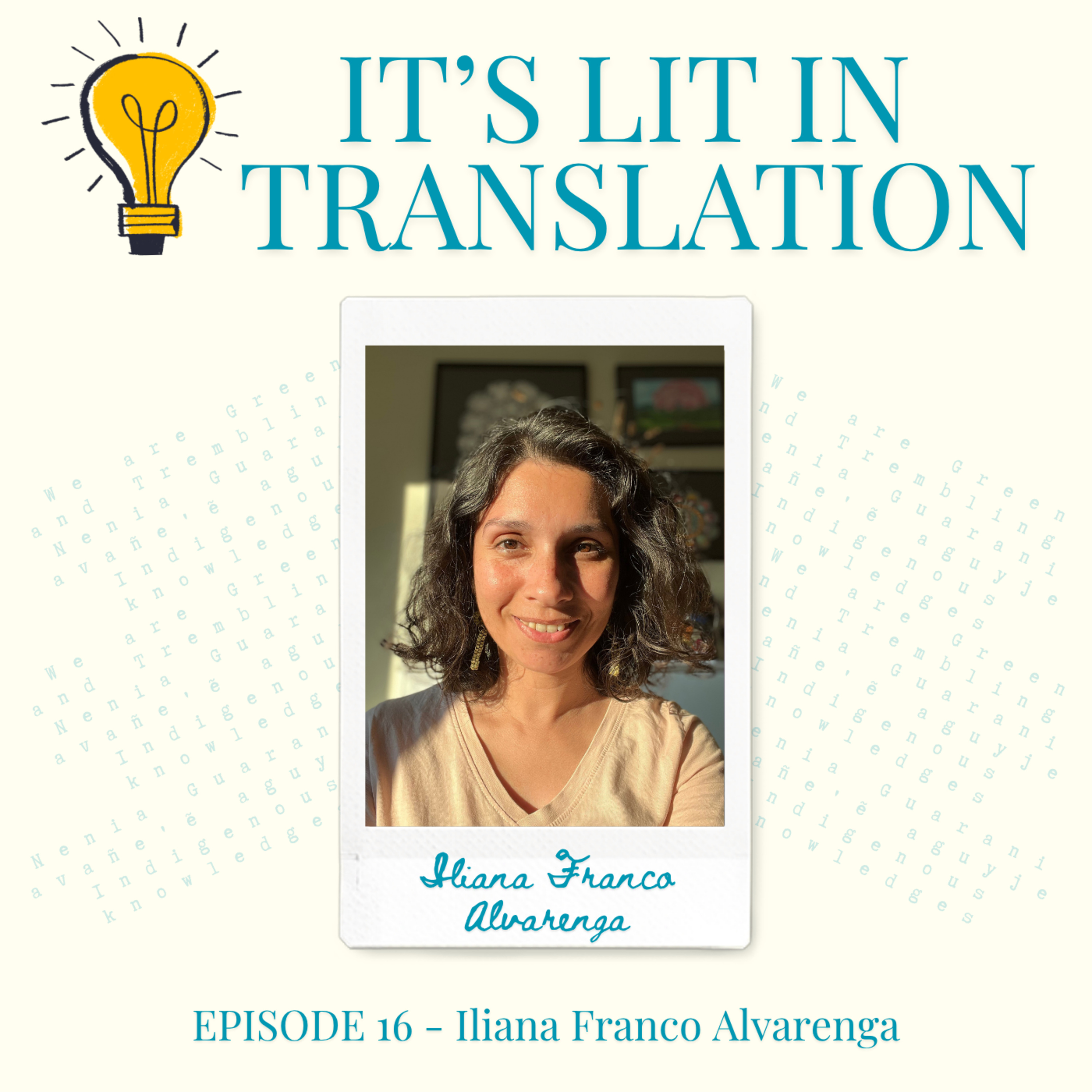
Iliana Franco Alvarenga on inguistic resistance, cosmoperceptions, and translating Guaraní
Welcome to It’s Lit in Translation. The podcast that champions literature in translation and the people who make it possible. In today’s episode, Guaraní translator and linguistic activist Iliana Franco Alvarenga joins the pod to discuss the Guaraní language, Paraguayan Spanish, and the complexities of translating between languages shaped by colonial histories. Iliana takes us through her relationship with Guaraní and her journey into translation, exploring the history of the language and the concept of linguistic pain, the generational trauma created when children are punished for speaking their mother tongue, and how this history can continue to influence the way families perceive their own languages and efforts towards language revitalisation. Together, we also explore the relationship between language and power, from the influence of institutions such as the Royal Spanish Academy to the role of artificial intelligence in determining which varieties of language are represented and prioritised. We discuss the politics behind linguistic standardisation and what happens when one variety of a language becomes treated as the default. The conversation also turns towards the ethics of literary translation, including the question of whether translators should reconsider language in older works when the social meaning of certain words has changed. We discuss the responsibility translators have towards their readers, authors, and the communities whose languages and cultures they are bringing into another linguistic context. Iliana also reflects on the invisibility of translators, sharing a particularly powerful moment from a book fair where she instinctively stepped behind the author she was translating, only for the author to take her hand and bring her forward. We explore what this reveals about the position translators have historically occupied within publishing, and the importance of recognising them as equal creative collaborators. Finally, Iliana shares her advice for aspiring translators, from learning to move away from the literal word to embracing rejection and accepting that every translation will inevitably contain something that only the translator notices. This is a fascinating conversation about language, power, colonialism, and the role translation can play in both preserving and challenging the ways we understand different cultures and their histories. I also loved learning more about how Guaraní operates as a language, and chatting through different examples of Guaraní cosmoperceptions that have traditionally been reduced on the page, and therefore have been lost, in translation. Iliana's approach to translating an indigenous language that exists beyond the page and working between the two worlds she inhabits is incredibly fascinating. — You can purchase a copy of We Are Green and Trembling by Gabriela Cabezon Camara, translated from Spanish by Robin Myers, which features Iliana's Guaraní translations, here: https://uk.bookshop.org/lists/it-s-lit-in-translation-podcast — Music from #Uppbeat (free for Creators!):https://uppbeat.io/ Photo Credit: Iliana Franco Alvarenga