Artwork for Instant Classics
History

Instant Classics

Vespucci

Join world-renowned classicist Mary Beard and Guardian chief culture writer Charlotte Higgins for Instant Classics — the weekly podcast that proves ancient history is still relevant. Ancient stories, modern twists… and no degree in Classics required.


Discover The Odyssey and join the book club at: https://www.exploringtheodyssey.com

  • 54 episodes
  • Updated Yesterday

Episodes54

  • Nov 13, 2025 · 29 min

    Boudica: The Woman Who Defied an Empire pt 1

    Boudica. Britain’s original badass. A warrior queen who almost defeated the Romans, gave voice to the oppressed and inspired countless school children ever since. But what do we really know about her? Mary and Charlotte trace her story, asking how much of the myth is true and whether we should really celebrate her today. History is told by the victors - and everything we know about Boudica comes from the Romans. It’s almost certain that there really was a woman called something like Boudica who drove terror into the hearts of the Roman colony in Britain. Archeological evidence also suggests the scale of the devastation she wrought. But beyond that, we cannot be certain. In this first episode of a two-part special, Mary and Charlotte look at the backdrop to her story - the Roman ‘conquest’ of a few patches of Britain, the delicate network of truces and bargains they forged with local leaders, and the emergence of Boudica as queen of a tribe called the Iceni. The episode ends with Boudica burning the Roman stronghold in (what is now) Colchester to the ground and marching towards London. @instaclassicpod for Insta, TikTok and YouTube @insta_classics for X email: instantclassicspod@gmail.com Mary and Charlotte recommend some further reading: The main ancient texts are: Tacitus, Agricola 14-16; Annals 14, 29-39; Dio Cassius, Histories of Rome 62, 1-2, all conveniently collected at https://www.roman-britain.co.uk/roman-conquest-and-occupation-of-britain/boudica-the-iceni-warrior-queen/boudica-classical-references/ Richard Hingley and Christina Unwin, Boudica: Iron Age Queen (Hambledon Continuum pb, 2006) is an accessible account of Boudica from the Iron Age to her modern representations. Hingley reviews the evidence and some of the books on the subject, including his own, at https://fivebooks.com/best-books/boudica-richard-hingley/ The archaeological evidence for the revolt is very clear but can be difficult to interpret in detail. Some fascinating recent discoveries at Colchester are described and well illustrated at https://the-past.com/feature/the-fenwick-treasure-colchester-during-the-boudiccan-war-of-independence/ Charlotte tells the story of Boudica, and discusses some of the ways she has been represented, in her book Under Another Sky: Journeys In Roman Britain (Vintage, 2014) Instant Classics handmade by Vespucci Producer: Jonty Claypole Executive Producer: Natalia Rodriguez Ford Video Editor: Jak Ford Theme music: Casey Gibson Production intern: Amelia Reichert Learn more about your ad choices. Visit podcastchoices.com/adchoices
  • Nov 6, 2025 · 46 min

    A Trip To The Underworld

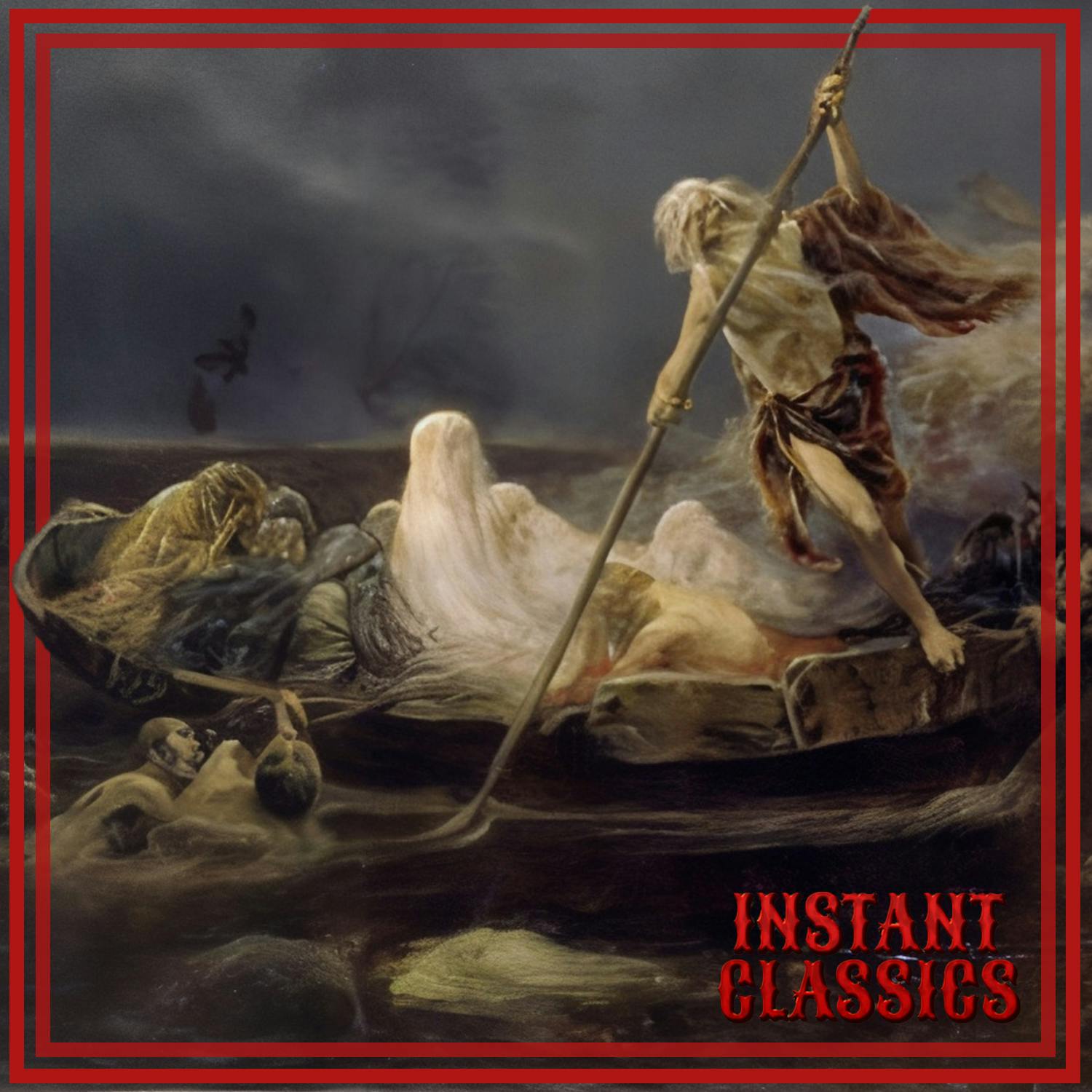
    Any Greek hero worth their salt makes a trip to the Underworld at some point during their adventures. Mary and Charlotte follow in their footsteps, crossing the River Styx to ask: what exactly was the Underworld? How was it different to the Judeo-Christian ‘Heaven’? And why has the idea of it proven so enduring even though nobody believes in it? The Underworld can’t be mapped (although some scholars have tried) because it didn’t exist, but there are consistent features in the many myths in which it features: the River Styx, Charon the Ferryman, the god Hades, his wife Persephone, and the numberless dead like autumn leaves. Orpheus and Theseus visited. Hercules - hard man that he was - went twice. A human princess called Psyche also went in search of her lover. Mary and Charlotte dwell on the longish accounts in Homer’s Odyssey and Virgil’s Aeneid. Through these stories they get some sense of what the Underworld really meant to the Ancient Greeks and Romans - and what it still means to us. @instaclassicpod for Insta, TikTok and YouTube @insta_classics for X email: instantclassicspod@gmail.com Mary and Charlotte recommend some further reading: We focus on Odysseus’ encounter with the dead in Homer, Odyssey Book 11, and on Aeneas’ visit to the underworld in Virgil, Aeneid Book 6. But there are more! https://www.thecollector.com/mortals-underworld-katabasis-greek-roman-mythology/ is an online, well-illustrated, article detailing 14 ancient visits to the underworld. Modern fictions of the underworld based on the Odyssey are the theme of one chapter of Edith Hall’s Return of Ulysses (available free at https://edithhall.co.uk/) Some of our very recent favourites are Carol Ann Duffy’s poem, “Eurydice”, from her collection, The World’s Wife (1999) and R. F. Kuang’s novel Katabasis (2025) Instant Classics handmade by Vespucci Producer: Jonty Claypole Executive Producer: Natalia Rodriguez Ford Video Editor: Jak Ford Theme music: Casey Gibson Production intern: Amelia Reichert Learn more about your ad choices. Visit podcastchoices.com/adchoices
  • Oct 30, 2025 · 37 min

    Roman Ghostbusters

    As the Halloween season hits, Mary and Charlotte turn to the wealth of ghost stories from the ancient world to ask: did the Greeks and Romans really believe in ghosts and why are their stories so similar to ours when many of our beliefs are so different? Mary and Charlotte recount a ghost story recounted by Pliny the Younger about a haunted house in Athens and the successful attempt by a philosopher to both encounter the ghost and lay its spirit to rest. They also tell the story, written down in Greece in the 3rd century CE, about a young man who is seduced by a vampire. And they discover the Roman methods of exorcism, which involves chewing on some beans and throwing them behind you. When it came to ghostbusting, then as now, don’t cross the beans! Some Romans even believed that the city itself was haunted by the restless spirit of Remus who - in one telling of Rome’s favourite origin story - was murdered by his brother Romulus to take sole control of the new city. @instaclassicpod for Insta, TikTok and YouTube @insta_classics for X email: instantclassicspod@gmail.com Instant Classics handmade by Vespucci Producer: Jonty Claypole Executive Producer: Natalia Rodriguez Ford Video Editor: Jak Ford Theme music: Casey Gibson Learn more about your ad choices. Visit podcastchoices.com/adchoices

  • Oct 28, 2025 · 1 min

    Special Announcement! - Instant Classics Live

    Exciting News! Vespucci, in collaboration with the City of London Corporation and the Culture Mile Business Improvement District, is thrilled to present the very first live recording of Instant Classics on November 26th, 2025. Join hosts Mary Beard and Charlotte Higgins as they journey back nearly two millennia to uncover what life was really like in Roman London. What did a typical night out look like for a Londoner in the first century CE? Were they cheering on gladiators, swapping gossip in the baths, or making offerings to mysterious gods? We’ll explore all this and more right where history happened, within the atmospheric remains of London’s Roman Amphitheatre at the Guildhall Art Gallery, dating back to the first century CE. Book Club Members: Check your inbox today for an exclusive early-access link to purchase tickets before the general release on Friday, October 31st. For those wanting to gain early access, you can join our Book Club at www.instantclassicspod.com. Spaces are limited, and this intimate setting promises an unforgettable evening. Have any questions? Drop us a line at instantclassicspod@gmail.com. We can’t wait to see you there and meet you in person (how novel). Learn more about your ad choices. Visit podcastchoices.com/adchoices
  • Oct 23, 2025 · 43 min

    Did Nero Really Fiddle While Rome Burned?

    ‘Fiddling while Rome burns’ is an accusation flung at every political leader at some point in their career. In this episode, Mary and Charlotte uncover the origins of this phrase and ask: why has it proved so resonant that it has carried through the centuries and right around the world? In 64 CE, a huge fire broke out in Rome. It lasted for over a week and devastated much of the city. Today, what is more famous than the fire itself is what the emperor Nero did while it was going on. He watched - and played his lyre. This story, perhaps more than any other, has given Nero a bad rap, but ancient writers also say that he supervised rescue efforts, gave free food to the people, introduced sensible planning regulations and was visionary in rebuilding the devastated areas. So why has the fiddling image won out and why is it used so often in contemporary political discourse? Mary and Charlotte explore these questions, pointing out in the process that fiddles hadn’t been invented at the time Nero is meant to have played one, that the Colosseum gets its name from a colossal statue of Nero, and that it’s the forgotten parts of the fiddling legend that make the modern use of the term so powerful. Finally, they ask: all things considered, did Nero REALLY fiddle while Rome burned? And they give an answer. Mary and Charlotte recommend some further reading The ancient sources are collected and analysed in detail here: https://dcc.dickinson.edu/tacitus-annals/introduction/annals-outline/annals-38-41-outline Nero has always attracted a LOT of academic interest. E. Champlin, Nero (Harvard UP, pb, 2005) is an accessible biography (rather favourable to Nero) For a focus on the fire itself, and its wider context, see: A. Barrett, Rome is Burning: Nero and the Fire that Ended a Dynasty (Princeton UP, pb, 2020) The history of modern cartoons of political leaders fiddling while Rome burned is explored by Ginna Closs here: https://eidolon.pub/x-fiddled-while-y-burned-80abf13e7c08?gi=5d659c5e2688 @instaclassicpod for Insta, TikTok and YouTube @insta_classics for X email: instantclassicspod@gmail.com Instant Classics handmade by Vespucci Producer: Jonty Claypole Executive Producer: Natalia Rodriguez Ford Video Editor: Jak Ford Theme music: Casey Gibson Learn more about your ad choices. Visit podcastchoices.com/adchoices

  • Oct 16, 2025 · 39 min

    Underneath The Toga

    Can it really have taken seven episodes of Instant Classics to get to everyone’s favourite Roman meme: the toga party? Mary and Charlotte grasp the thistle - or rather the sinus (fold at the front of a toga) - and ask what exactly is a toga? Who wore them and when? And how do you make one? In this fact-filled episode, we discover that - despite the antics of students around the world today - a toga wasn’t a bed-sheet turned into a sort of cheap tunic for getting blind drunk in, but an elaborate, woollen garment more like a cloak or robe that signified power. We find out how many kilometres of woollen thread were necessary to make a toga, where the word ‘candidate’ (as in political candidate) comes from and which Roman emperor wore platform shoes to make himself look taller. As they go deeper into the folds of the toga, Mary and Charlotte reveal how wearing one was about much more than looking smart but got to the very essence of what it meant to be Roman. And… in case you’re wondering… one of our hosts has been to a toga party. But can you guess whether it’s Mary or Charlotte? @instaclassicpod for Insta, TikTok and YouTube @insta_classics for X email: instantclassicspod@gmail.com Mary and Charlotte recommend some further reading Roman dress has been a bit of a boom area of study recently. Mary Harlow explains many of the practical aspects (including a fun video showing how to actually put one on) here: https://romanleicester.com/2020/06/30/dress-to-impress/ There is good, accessible stuff on the rights and wrongs of toga-wearing here: https://pressbooks.bccampus.ca/unromantest/chapter/the-roman-man-and-the-toga/ More specialised: Camilla Ebert, Sidsel Frisch, Mary Harlow, Eva Andersson Strand and Lena Bjerregaard (eds), Traditional Textile Craft: An Intangible Cultural Heritage? (Centre for Textile Research, University of Copenhagen, 2016) Judith Lynn Sebasta and Larissa Bonfante (eds), The World of Roman Costume (Wisconsin UP, pb, 1994) Jonathan Edmondson and Alison Keith (eds), Roman Dress and the Fabrics of Roman Culture (University of Toronto Press, 2008) If you want to follow up some ancient writers: the phrase ‘the race that wears the toga’ is from Virgil, Aeneid 1, 282; Augustus’ rules on wearing togas in the forum are mentioned at Suetonius, Augustus 40; Augustus keeping a handy toga at home at Suetonius, Augustus 73; Claudius’ rules in the court case at Suetonius, Claudius 15. There is a full translation of Tertullian’s (baffling) On the Pallium online here: https://www.tertullian.org/articles/hunink_de_pallio.htm Instant Classics handmade by Vespucci Producer: Jonty Claypole Executive Producer: Natalia Rodriguez Ford Video Editor: Jak Ford Theme music: Casey Gibson Learn more about your ad choices. Visit podcastchoices.com/adchoices
  • Oct 2, 2025 · 34 min

    How did Rome begin?

    We all know what Rome became - largest empire of the ancient world, public bathing, gladiators, aqueducts, excellent roads and all that - but how did it begin? Who founded it? When? And why? Mary and Charlotte sift through the various myths that give some insight to these questions. Peel back the layers of history and Rome’s origins are lost in the bog on which it was built. Archaeology offers us evidence of Bronze Age huts, burial practice and trade with neighbouring (and far-flung) lands, but leaves many of the big questions unanswered. This is a problem not only for classicists, but the countless men who apparently think of the Roman Empire several times a day. The Romans themselves struggled with their murky history. Even for them, the question of why they had risen to such extraordinary power was puzzling. The thought of humble origins sat uneasily with the grandeur and pomp of the imperial capital. So they did what many other cultures do and made up stories that explained their path to greatness. If you’ve heard of outcast babies Romulus and Remus being suckled by a wolf, that’s just the icing on the cake. Accounts of the Romulus myth vary wildly. In some versions, he eventually ascends to heaven as a god. In others, he is hacked to death by his disgruntled subjects. Other myths point elsewhere. The “Roman race” in Italy was founded by a Trojan exile called Aeneas, although he didn’t actually found the city of Rome itself. Maybe, that was a Greek called Evander, long before Romulus. It’s easy to dismiss these stories, but Mary and Charlotte argue that they tell us a great deal about how the Romans understood themselves and their city (whether there is some grain of literal truth in them, who knows?). Most of all they point to the way that, at some deep level, they considered themselves to be an immigrant culture - outcasts, exiles and opportunists - searching for a better life. @instaclassicpod for Insta, TikTok and YouTube @insta_classics for X email: instantclassicspod@gmail.com To join the Instant Classics Book Club and share our trip into Homer’s Odyssey, go to https://instantclassics.supportingcast.fm/ Mary and Charlotte’s recommended reads: There are many ancient accounts of the origins of Rome. Best known is Book 1 of Livy’s History of Rome which tells the story from Romulus to the last of the seven early kings (translations in Penguin Classics or Oxford World Classics, as The Early History of Rome and The Rise of Rome). For Aeneas, try Virgil Aeneid Books 2 and 8. Book 2 takes us to Aeneas’ flight from Troy. Book 8 pictures Evander, who is then living there, showing Aeneas around the future site of Rome). The beginning of Mary’s SPQR, written for non specialists, busts a few myths about the origins of the city. The Italian archaeologist Andrea Carandini takes a completely different approach. Try his (short) Rome: Day One. Interesting, but rather more specialist, books are: Catharine Edwards, Writing Rome (she is very good on the “Hut of Romulus” which supposedly was authentically preserved in Rome for hundreds of years); T. P. Wiseman, Remus (which has an off-beat line about the role of Remus in Roman history, but gives an eye-opening account of all the very different Roman traditions about the world and twins). Instant Classics handmade by Vespucci Producer: Jonty Claypole Executive Producer: Natalia Rodriguez Ford Video Editor: Jak Ford Theme music: Casey Gibson Learn more about your ad choices. Visit podcastchoices.com/adchoices

  • Sep 25, 2025 · 52 min

    Decoding The Parthenon

    The Parthenon is one of the most celebrated and recognisable buildings in the world, but what did it mean to the Ancient Greeks? What role did it play in Greek society? And what did it look like in its heyday?

  • Sep 18, 2025 · 47 min

    Free Speech - An Ancient History

    In the wake of recent conflicts over free speech and acts of political violence, Mary and Charlotte discuss how - then as now - free speech dominated the political agenda in the ancient world, with wildly different interpretations about what it meant and who got to decide. They discuss two distinct, yet complimentary principles in Ancient Athenian democracy: Parrhesia (free or frank speech) and isegoria (the equal right to speak). In theory, parrhesia preserved the right to speak truth to power, including the scandalous sexual jokes about public figures which pepper the comedies of the Greek stage. Tolerance of these plays suggested the Athenians generally recognised the validity of frank speech - and one of the state warships was even named parrhesia. Isegoria embodied the principle that any free man had an equal right to participate in public discourse, although in practice this was rarely the case. Polished public speaking came with a good education and those who lacked it could be physically silenced. The principles of free speech and equality are deceptively simple, and - as with today - interpretation and implementation varied wildly, depending on who held power. The life and death of the philosopher Socrates provides an interesting case study. He is often celebrated as a martyr of free speech, dying in its name, but on closer examination this isn’t exactly what happened. They also look at free speech in Ancient Rome and the sobering story of Cicero’s final hours, in which his tongue - allegedly - was stitched into silence. Join the Instant Classics Book Club here: https://instantclassics.supportingcast.fm/ Mary and Charlotte recommend some further reading Plato’s version of Socrates’ response to the charges against him is found in his Apology of Socrates (this, like all ancient works we mention here, is widely available in translation in print and online). NB in Greek apologia means “defence” not “sorry”. An important debate in the Athenian assembly that we reference in our discussion (on how to punish the people on Mytilene) is described by Thucydides, History of the Peloponnesian War Book 3, 36ff. The story of Cremutius Cordus is told in Tacitus Annals Book 3, 34-5; that of the tongue of Cicero by Cassius Dio, History of Rome Book 47, 8. Emily Wilson, The Death of Socrates (Profile/Harvard UP, 2008) is a good introduction to the issues of free speech in 399 BCE and their legacy. Content warning: references to political violence both in the ancient world and in the past week, and mild sexual innuendo. @instaclassicpod for Insta, TikTok and YouTube @insta_classics for X email: instantclassicspod@gmail.com [To join the Instant Classics Book Club and share our trip into Homer’s Odyssey, go to https://instantclassics.supportingcast.fm/ New episodes will be published every other Tuesday, and available exclusively for members beginning 30th September. Sign up now with the promo code EARLYBIRD25 to receive a 25% discount on membership.] Instant Classics handmade by Vespucci Producer: Jonty Claypole Executive Producer: Natalia Rodriguez Ford Video Editor: Jak Ford Theme music: Casey Gibson Learn more about your ad choices. Visit podcastchoices.com/adchoices

  • Sep 11, 2025 · 51 min

    What Sappho Still Teaches Us About Love

    In Ancient Greece, the Iliad was the poem above all other poems - an epic full of war and bloodshed that tells of the great heroes who fought and died for Troy. But not so long after the supposed composition of the Iliad, a woman on the Mediterranean island of Lesbos, close to the coast of modern-day Turkey, introduced a new and enduring note to poetry: desire. Her name was Sappho. She was revered through the Ancient World, but today only one work survives in its entirety: a poem usually known as the Hymn to Aphrodite. The rest is fragments - only about 600 lines of the 10,000 lines the Romans were still reading seven centuries after her death. Sappho lived in the 7th Century BCE, long before the rise of Athens as the dominant city-state in Ancient Greece. It was before democracy, before the Parthenon and, arguably, before the extreme subjugation of women common in the later “classical” period. Women weren’t exactly liberated in seventh century Lesbos, but it looks like they were a lot freer than in fifth-century Athens. From her poetry, we can tell she was an aristocrat, a singer, a lover, and a mother. Sappho, famously, loved women. And in this episode, Charlotte and Mary explain why they also love Sappho. Not only is she the great poet of desire, but she also writes about nature, motherhood, middle-age, bad knees, and why war - despite what her brothers might say - is boring. Charlotte and Mary recreate what they can of Sappho’s life and art. And they ask the big question: why is it that so little of her work survives compared to many male writers of the ancient world? Are medieval monks to blame? Was she, as Otis Redding sang, just too hot to handle? @instaclassicpod for Insta, TikTok and YouTube @insta_classics for X email: instantclassicspod@gmail.com To join the Instant Classics Book Club and share our trip into Homer’s Odyssey, go to https://instantclassics.supportingcast.fm/ New episodes will be published every other Tuesday, and available exclusively for members beginning 30th September. Sign up now with the promo code EARLYBIRD25 to receive a 25% discount on membership. Mary and Charlotte’s recommended reads: There are hundreds of translations and adaptations of Sappho. Two of Mary and Charlotte’s recent favourites are: Anne Carson: If Not, Winter: Fragments of Sappho and Stanley Lombardo: Sappho, Poems and Fragments In her book, Eros, the Bittersweet, Carson also asks what makes Sappho the great poet of desire. The world behind the poetry is the subject of Rosalind Thomas’s “Sappho’s Lesbos”, in The Cambridge Companion to Sappho. This is a fairly specialist collection of essays, but takes the story of Sappho’s influence right up to the present, from the USA to India, China and Latin America. For the controversies around the new discoveries of Sappho’s poetry made a decade ago, start with Roberta Mazza, Stolen Fragments (extraordinary detective work on the world of the illegal trade in ancient papyri). Three articles by Charlotte also discuss that “new” Sappho and lift the lid on the problems: https://www.theguardian.com/world/2014/jan/29/sappho-ancient-greek-poet-unknown-works-discovered https://www.theguardian.com/news/2020/jan/09/a-scandal-in-oxford-the-curious-case-of-the-stolen-gospel https://www.theguardian.com/books/2021/mar/25/doubts-cast-over-provenance-of-unearthed-sappho-poems Instant Classics handmade by Vespucci Producer: Jonty Claypole Executive Producer: Jo Meek Senior Producer: Natalia Rodriguez Ford Video Editor: Jak Ford Theme music: Casey Gibson Learn more about your ad choices. Visit podcastchoices.com/adchoices

  • Sep 4, 2025 · 42 min

    A Day At The Races In Ancient Rome

    Think ‘Roman sport’ and images of Kirk Douglas, Russell Crowe, Paul Mescal and other Hollywood gladiators may come to mind. But while the Romans were partial to blood-sports, chariot-racing was the really big thing. The archaeological remains of chariot-racing tracks have been found all over the Roman Empire, but none suggest a scale or grandeur close to the Circus Maximus in Rome. At full capacity, we think it could take a quarter of a million people - that’s twice the largest football stadium today. In this episode, Mary and Charlotte recreate what a day at the races was actually like for the Romans. They describe how chariot-racing worked as a sport, what the experience may have been like for the spectators (courtesy of the poet Ovid), although remain stumped by the not insignificant issue of how a quarter of a million people went to the loo when archeological labour has - so far - only discovered one, solitary toilet. They also describe how the chariot-racing industry worked, and the phenomenal wealth that prize charioteers acquired (Cristiano Ronaldo looks underpaid in comparison). Ultimately, it is impossible to draw comparisons with sporting events today because chariot-racing at the Circus Maximus was far more than entertainment. It played a hugely important role in the political life of the empire as one of the few places where the people in large numbers could encounter the emperor . As a consequence, it was not only a site for chariot-racing but for mass public protest. How the emperor behaved, before the gaze of the city, was critical to his popularity. While no emperor was ever unseated at the Circus Maximus, it gave his enemies a chance to see whether the people would mind if something unpleasant happened to him later. @instaclassicpod for Insta, TikTok and YouTube @insta_classics for X email: instantclassicspod@gmail.com To join the Instant Classics Book Club and share our trip into Homer’s Odyssey, go to https://instantclassics.supportingcast.fm/ New episodes will be published every other Tuesday, and available exclusively for members beginning 30th September. Sign up now with the promo code EARLYBIRD25 to receive a 25% discount on membership. Mary and Charlotte’s recommended reads: For good introductions to the “sport”, try: F. Meijer, Chariot Racing in the Roman Empire (Johns Hopkins, 2010) J. Toner, The Day Commodus Killed a Rhino: understanding the Roman Games (Johns Hopkins pb, 2015) The career of the super successful Diocles is the theme of an online article by Peter Struck: https://www.laphamsquarterly.org/roundtable/greatest-all-time Mary discusses the problems that emperors had at the races in her book Emperor of Rome (Profile pb, 2024) Instant Classics handmade by Vespucci Producer: Jonty Claypole Executive Producer: Jo Meek Senior Producer: Natalia Rodriguez Ford Video Editor: Jak Ford Theme music: Casey Gibson Learn more about your ad choices. Visit podcastchoices.com/adchoices

  • Aug 28, 2025 · 43 min

    Which Roman Emperor is Donald Trump?

    For a long time being a classicist didn’t exactly make you a hit at a party. Then along came Donald Trump and suddenly everybody wants to know: Which Roman emperor is he most like? In this inaugural episode of Instant Classics, Mary Beard and Charlotte Higgins confront the question they are asked the most. And, as ever when Mary Beard is involved, the answer isn’t always as simple as you might think. Mary and Charlotte explain how most of what we know about the emperors is unreliable. We do get some extraordinary glimpses behind the palace walls (Suetonius, the biographer of the first “12 Caesars” was a real insider – having worked as palace archivist and librarian). But almost all our accounts of them come from after their reign and are part of “posthumous reputation making”. Often, the way to keep bloke in power pleased was to trash his predecessors. Did Caligula really have all his soldiers pick up every shell on a beach or plan to make his favourite horse a consul? These stories may be fanciful, but they are hugely important nevertheless and were repeated for generations. They are some of the best evidence for Romans thought of their emperors, about their fears of imperial power and how it falls. So one to one, real life comparisons are always misleading (insists Mary!). But the wider patterns of political power can be similar then and now. Donald Trump plays many of the tunes that you find in the emperors’ playbook: capriciousness as a political tactic (they’re always changing their mind); Julius Caesar was one who made a point of speaking directly to the people to bypass political institutions (Trump does it through social media); wanton cruelty mixed with sudden acts of generosity. Charlotte doesn’t let Mary off the hook. Yes, it’s hard to draw direct comparisons, but - come on Mary! - which emperor is Trump most like? Answers are given! @instaclassicpod for Insta, TikTok and YouTube @insta_classics for X email: instantclassicspod@gmail.com Mary and Charlotte’s recommended reads: Suetonius, Lives of the Caesars. Written in the second century CE. There’s a new translation by Tom Holland, but plenty of others are available. It was written to be read from start to finish, but new readers might choose to start with the lives of Caligula, Nero or Domitian. The Lives of the Later Caesars (available in Penguin translation: its Latin title is the rather more opaque Historia Augusta). Much less well known, this is a series of ancient biographies of emperors after Hadrian that make Suetonius look very “proper”, with lurid anecdotes that no one has ever thought were true. If you want a good start, go to the life of Elagabalus (also called Heliogabalus). For those wanting to explore Elagabalus, there’s an awful lot of modern gossip-mongering masquerading as history. For a more reliable start, try Martijn Icks, The Crimes of Elagabalus (this is great on how he was represented in later art and culture), or Harry Sidebottom, The Mad Emperor. Advert alert: Mary discusses the stories told about Roman emperors, and how we can understand them in her book, Emperor of Rome. Instant Classics handmade by Vespucci Producer: Jonty Claypole Executive Producer: Jo Meek Senior Producer: Natalia Rodriguez Ford Video Editor: Jak Ford Theme music: Casey Gibson Learn more about your ad choices. Visit podcastchoices.com/adchoices

  • Aug 19, 2025 · 1 min

    Instant Classics - Trailer

    A new podcast hosted by Mary Beard and Charlotte Higgins. Ancient stories, modern twists… and no degree in Classics required. Episode 1 Available on Thursday, August 28th, 2025. Learn more about your ad choices. Visit podcastchoices.com/adchoices