Skip to content
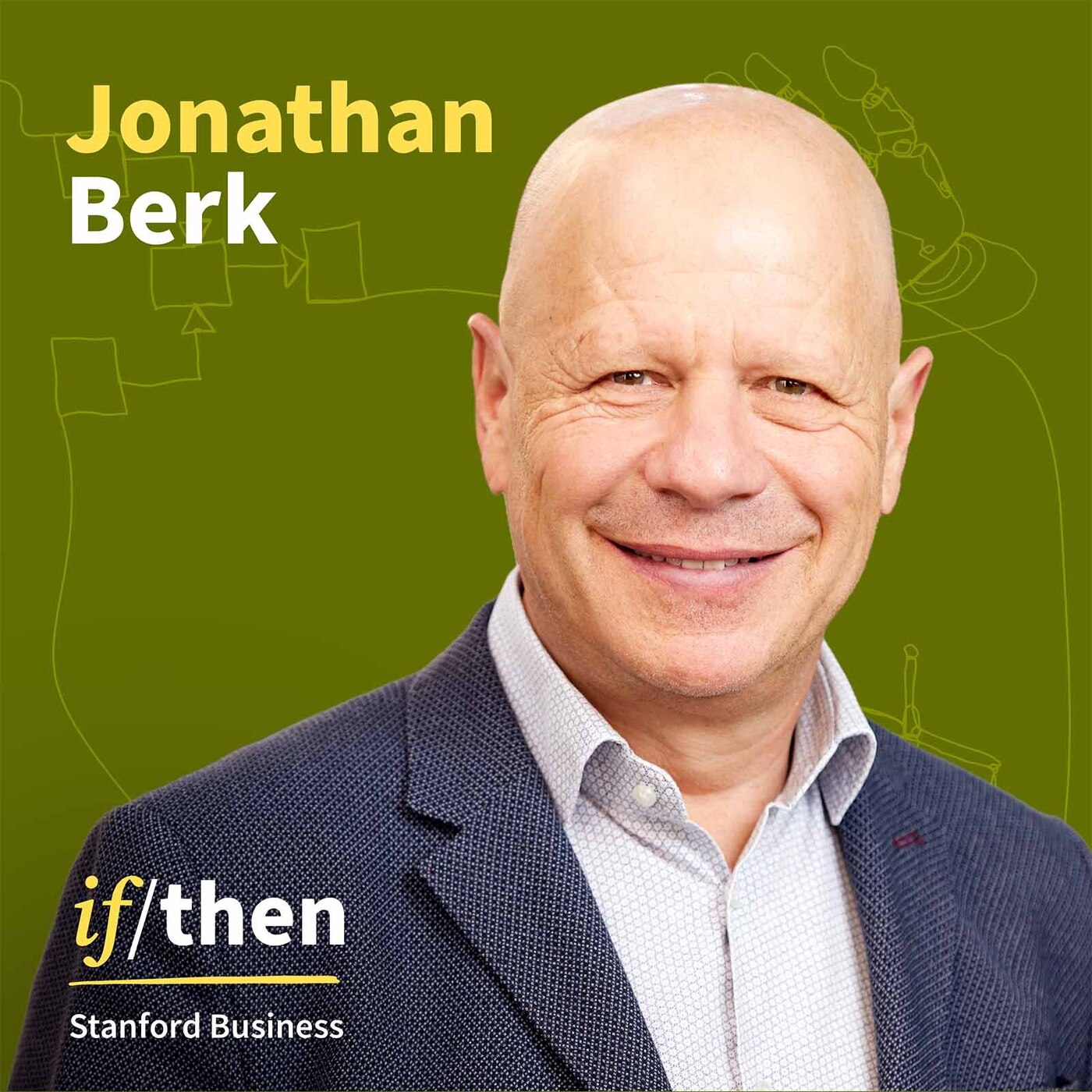
Artwork for If/Then
If/Then · May 6 · 26 min

Unconventional Wisdom

“I don’t see things like anybody else,” says Jonathan Berk, a professor of finance at Stanford Graduate School of Business. “And so I can see things people don't see.” On this episode, Berk explores recent research that pushes against conventional wisdom, from questioning the utility of the debt-to-GDP ratio to asking whether regulation is actually in the best interests of the consumer. “If you disagree with me… You have to write down a convincing theoretical model and analyze [it].” Berk admits his unique lens doesn’t always make life easy. But on the other hand, “it confers an enormous advantage” — and he believes that organizations which are able to harness the power of unconventional thinking can gain a competitive edge. “It’s allowed me to solve problems that other people couldn't solve,” he says. Has seeing the world differently helped you resolve a conundrum? Tell us more at ifthenpod@stanford.edu. Related Content: Jonathan Berk faculty profile What If We’re Looking at the National Debt All Wrong? Chapters: 00:00:00 The Fosbury Flop, innovation, & unconventional thinking 00:03:18 Introduction 00:04:24 Questioning conventional wisdom 00:04:57 Rethinking the debt-to-GDP ratio 00:08:21 A finance perspective on national debt 00:10:36 Why theory matters before alarm 00:12:38 Regulation, charlatans, & consumer interests 00:16:22 Licensing, certification, & competition 00:19:51 The cost of pushing back 00:21:16 Building organizations that welcome dissent 00:24:59 Conclusion If/Then, from Stanford GSB, features conversations with faculty that explore how their research deepens our understanding of business and leadership. See Privacy Policy at https://art19.com/privacy and California Privacy Notice at https://art19.com/privacy#do-not-sell-my-info.


0:00-26:11

transcript

No transcript — this publisher did not publish one.

show notes

“I don’t see things like anybody else,” says Jonathan Berk, a professor of finance at Stanford Graduate School of Business. “And so I can see things people don't see.” 

On this episode, Berk explores recent research that pushes against conventional wisdom, from questioning the utility of the debt-to-GDP ratio to asking whether regulation is actually in the best interests of the consumer. 

“If you disagree with me… You have to write down a convincing theoretical model and analyze [it].”

Berk admits his unique lens doesn’t always make life easy. But on the other hand, “it confers an enormous advantage” — and he believes that organizations which are able to harness the power of unconventional thinking can gain a competitive edge.

“It’s allowed me to solve problems that other people couldn't solve,” he says.  

Has seeing the world differently helped you resolve a conundrum? Tell us more at ifthenpod@stanford.edu.


Related Content:


Chapters:

00:00:00 The Fosbury Flop, innovation, & unconventional thinking

00:03:18 Introduction

00:04:24 Questioning conventional wisdom

00:04:57 Rethinking the debt-to-GDP ratio

00:08:21 A finance perspective on national debt

00:10:36 Why theory matters before alarm

00:12:38 Regulation, charlatans, & consumer interests

00:16:22 Licensing, certification, & competition

00:19:51 The cost of pushing back

00:21:16 Building organizations that welcome dissent

00:24:59 Conclusion


If/Then, from Stanford GSB, features conversations with faculty that explore how their research deepens our understanding of business and leadership.

See Privacy Policy at https://art19.com/privacy and California Privacy Notice at https://art19.com/privacy#do-not-sell-my-info.
links4