Skip to content
Artwork for IEA Podcast
NewsEducation

IEA Podcast

Institute of Economic Affairs

The Institute of Economic Affairs podcast examines some of the pressing issues of our time. Featuring some of the top minds in Westminster and beyond, the IEA podcast brings you weekly commentary, analysis, and debates.

economicaffairs.co.uk
Play
  • 22 episodes
  • Avg 41 min
  • English
Counted on this page — what you have heard stays on this device, so it is not something the list can be paged by.
  • Friday · 53 min

    Britain's Tax Burden Is the Highest Since 1947 | IEA Podcast

    In this Institute of Economic Affairs podcast, IEA Director Daniel Hannan is joined by Kristian Niemietz, IEA Head of Political Economy, and Maeve Halligan, IEA Spokesperson, who has just joined the Institute. They discuss intergenerational fairness, examining a report from the IPPR which proposes taxing older homeowners more heavily to help younger people, and the collapse in graduate job opportunities, with entry-level roles falling from 55,000 in 2017 to around 8,000 today. The conversation turns to the effect of minimum wage increases and higher employer National Insurance on youth unemployment, which has risen sharply since 2022. They also discuss the expansion of university education, arguing that too many young people are funnelled into degrees rather than apprenticeships or technical education, and consider the Government’s proposed mansion tax, including the prospect of tax inspectors assessing property values above £2 million. The discussion also covers why the UK’s tax burden, now around 40% of GDP, is at its highest level since 1947. The episode closes with a look at Iceland’s referendum on reopening negotiations to join the EU, weighing up what Iceland stands to gain or lose on fisheries, agriculture and trade if it were to give up its current arrangement within the European Economic Area. The Institute of Economic Affairs is a registered educational charity. It does not endorse or give support for any political party in the UK or elsewhere. Our mission is to improve understanding of the fundamental institutions of a free society by analysing and expounding the role of markets in solving economic and social problems. The views expressed here are those of the speakers alone, not those of the Institute, its Managing Trustees, Academic Advisory Council members or senior staff. This is a public episode. If you'd like to discuss this with other subscribers or get access to bonus episodes, visit economicaffairs.co.uk/subscribe
  • Thursday · 33 min

    Why Young People Can't Get Jobs Anymore | IEA Interview

    In this Institute of Economic Affairs interview, part of the Great Stagnation series, host Daniel Freeman speaks to Professor Len Shackleton, the IEA’s Head of Labour Economics, about how labour market regulation has affected UK economic growth. They discuss how Britain’s labour market has become steadily less flexible since the financial crisis, and what that has meant for redundancies, hiring, and how quickly employers can respond to economic change. Len explains why the minimum wage is more complicated than a simple “does unemployment spike or not” question, covering its effect on youth unemployment and NEETs, wage compression further up the pay scale, and how the minimum wage now effectively sets pay for around a quarter of private sector workers. He also looks at how the growth of employment mandates, from the Equality Act to unfair dismissal rules, has pushed up the cost of hiring, and argues that many of these costs end up being paid by workers themselves through lower wages rather than by employers. The conversation also covers the rapid rise of occupational licensing in Britain, which now covers 22% of the workforce, up from 13% in 2011, with examples including social work and undertaking. Len rates employment regulation as one of the more significant barriers to UK economic growth. If you would like to read Len’s chapter on labour market regulation, it is available in digital format now, with the full book, The Great Stagnation: Why Britain Stopped Growing, out in paperback on 2 September. The Institute of Economic Affairs is a registered educational charity. It does not endorse or give support for any political party in the UK or elsewhere. Our mission is to improve understanding of the fundamental institutions of a free society by analysing and expounding the role of markets in solving economic and social problems. This is a public episode. If you'd like to discuss this with other subscribers or get access to bonus episodes, visit economicaffairs.co.uk/subscribe
  • August 21 · 41 min

    Are We Becoming Two Nations? | IEA Podcast

    In this week’s IEA Podcast, Director General Lord Daniel Hannan is joined by regulars Dr Christopher Snowdon, Head of Lifestyle Economics, and Dr Kristian Niemietz, Editorial Director, to discuss the widening pay gap between the public and private sectors, the real cost of net zero, and the economics of gambling sponsorship in football. The panel opens with new earnings figures showing public sector pay rising faster than private sector pay, and examines how the Employment Rights Act has added hidden costs for employers that are being absorbed through slower wage growth rather than paid openly. They discuss why the number of people on the Government payroll has grown substantially over the past decade despite falling public sector productivity, and debate whether a smaller, leaner state might actually work harder. The conversation then turns to net zero, looking at new research on the costs it adds to household energy bills, before moving to a lighter discussion of gambling sponsorship in football, the economics of banning adverts for so-called sin industries, and what snooker’s history with tobacco sponsorship reveals about unintended consequences. The Institute of Economic Affairs is a registered educational charity. It does not endorse or give support for any political party in the UK or elsewhere. Our mission is to improve understanding of the fundamental institutions of a free society by analysing and expounding the role of markets in solving economic and social problems. The views represented here are those of the speakers alone, not those of the Institute, its Managing Trustees, Academic Advisory Council members or senior staff. This is a public episode. If you'd like to discuss this with other subscribers or get access to bonus episodes, visit economicaffairs.co.uk/subscribe
  • August 20 · 45 min

    Britain's Tax Burden Is at a Post-War High. Here's Why It Matters | IEA Interview

    In this Institute of Economic Affairs podcast, IEA Managing Editor Daniel Freeman speaks with Tom Clougherty, Independent Policy Analyst, about Britain’s tax system and its role in the country’s growth slowdown. Tom has written a chapter on this subject for the IEA’s forthcoming book, The Great Stagnation: Why Britain Stopped Growing. The conversation covers how Britain’s overall tax burden compares internationally and historically, why the design of the tax system matters as much as its overall level, and why some taxes do far more economic damage than others. Tom sets out a hierarchy of taxes from least to most damaging to growth, explaining why well-structured property taxes are the least harmful while stamp duty is, per pound raised, the most destructive tax in the system. He discusses why Britain raises more in property taxes than any other developed country while doing so in one of the most economically damaging ways possible, and makes the case for broadening the VAT base to fund cuts elsewhere. The discussion also covers the political reasons why the least damaging taxes tend to be the most unpopular, why governments have grown reluctant to make difficult trade-offs, and what a genuinely pro-growth tax system might look like, including a move towards a flatter income tax and lower taxes on investment. The Institute of Economic Affairs is a registered educational charity. It does not endorse or give support for any political party in the UK or elsewhere. Our mission is to improve understanding of the fundamental institutions of a free society by analysing and expounding the role of markets in solving economic and social problems. The views represented here are those of the speakers alone, not those of the Institute, its Managing Trustees, Academic Advisory Council members or senior staff. This is a public episode. If you'd like to discuss this with other subscribers or get access to bonus episodes, visit economicaffairs.co.uk/subscribe
  • August 18 · 43 min

    One in Four Britons Now Claim to Be Disabled | James Bartholomew | IEA Interview

    In this Institute of Economic Affairs podcast, IEA Director General Lord Hannan interviews James Bartholomew, author and leading expert on the UK welfare state, and director of the Museum of Communist Terror. The conversation covers the scale of Britain’s welfare crisis, competing reform proposals, the surge in mental health and disability claims, the minimum wage, school choice, and the case for teaching the history of totalitarianism. James traces the rise and fall of welfare reform since Iain Duncan Smith’s changes in the 2010s, and argues the system has drifted back out of control since. He sets out why he believes sanctions and “tough love” are essential to any serious reform, criticises the effect of a rising minimum wage on youth employment, and discusses what he calls middle class guilt as a driver of welfare failure. The discussion also covers school choice and the case for expanding the private and free school sector, before turning to James’s work memorialising the victims of communism, including the newly unveiled Tank Man statue. The Institute of Economic Affairs is a registered educational charity. It does not endorse or give support for any political party in the UK or elsewhere. Our mission is to improve understanding of the fundamental institutions of a free society by analysing and expounding the role of markets in solving economic and social problems. The views represented here are those of the speakers alone, not those of the Institute, its Managing Trustees, Academic Advisory Council members or senior staff. This is a public episode. If you'd like to discuss this with other subscribers or get access to bonus episodes, visit economicaffairs.co.uk/subscribe
  • August 14 · 55 min

    Why the NHS Isn't the Bargain You Think It Is

    In this Institute of Economic Affairs podcast, IEA Director General Lord Hannan is joined by Kristian Niemietz, Editorial Director and Head of Political Economy, and Christopher Snowdon, Head of Lifestyle Economics. The conversation covers Andy Burnham’s proposals to tighten planning rules on vape shops and betting shops, the debate over how Britain should pay for social care, and Vice President J.D. Vance’s recent criticisms of GDP and economic growth. Kristian and Christopher discuss whether Burnham’s high street crackdown is targeting a real problem or conflating legitimate businesses with criminal activity, and what the decline of the traditional high street actually means for housing and town centres. They then turn to social care, weighing up means testing, inheritance, and the case for a compulsory insurance model against the idea of a fully taxpayer funded national care service. The discussion closes with an assessment of J.D. Vance’s recent comments on GDP and economics, and what the growing rift between free market and nationalist conservatives means for the future of the political right. The Institute of Economic Affairs is a registered educational charity. It does not endorse or give support for any political party in the UK or elsewhere. Our mission is to improve understanding of the fundamental institutions of a free society by analysing and expounding the role of markets in solving economic and social problems. The views represented here are those of the speakers alone, not those of the Institute, its Managing Trustees, Academic Advisory Council members or senior staff. This is a public episode. If you'd like to discuss this with other subscribers or get access to bonus episodes, visit economicaffairs.co.uk/subscribe
  • August 13 · 32 min

    Net Zero Is Bankrupting Britain's Economy | David Turver | IEA Interview

    In this Institute of Economic Affairs interview, IEA Energy Analyst Andy Mayer speaks with David Turver, author and independent energy writer, about his chapter in the IEA’s forthcoming book, The Great Stagnation: Why Britain Stopped Growing. The conversation covers why the UK has the most expensive industrial electricity prices in the developed world, how renewable subsidies and grid costs have driven up bills, and why cheap, abundant energy is a fundamental requirement for a prosperous economy. David explains how energy use has declined per capita and in absolute terms since 2008, with the UK now using less energy per person than countries such as Belarus and Uzbekistan. He sets out the various renewable subsidy schemes, including the renewables obligation and contracts for difference, and how ballooning transmission costs are pushing bills higher still. The discussion also covers the practicalities and costs of alternatives such as nuclear power and gas, and how planning delays and regulatory hurdles are driving up the price of new infrastructure across the board. The interview concludes with a look at the wider consequences of high energy costs, including the decline of British steel and fertiliser production and the broader deindustrialisation of the economy. David argues that energy costs are one of the most significant, if underappreciated, drivers of the UK’s growth struggles since 2008. The Institute of Economic Affairs is a registered educational charity. It does not endorse or give support for any political party in the UK or elsewhere. Our mission is to improve understanding of the fundamental institutions of a free society by analysing and expounding the role of markets in solving economic and social problems. The views represented here are those of the speakers alone, not those of the Institute, its Managing Trustees, Academic Advisory Council members or senior staff. This is a public episode. If you'd like to discuss this with other subscribers or get access to bonus episodes, visit economicaffairs.co.uk/subscribe
  • August 10 · 58 min

    How to Win a Trade War, with Soumaya Keynes | IEA Interview

    https://www.amazon.co.uk/How-Win-Trade-War-Economic/dp/103509018X https://x.com/SoumayaKeynes In this Institute of Economic Affairs podcast, IEA Managing Editor Daniel Freeman is joined by Soumaya Keynes, economics columnist at the Financial Times and host of The Economics Show, to discuss her new book How to Win a Trade War. They cover the collapse of the old rules based global trading system, why the US lost faith in the World Trade Organisation’s dispute settlement process, and how the first and second Trump administrations approached trade policy differently. The conversation examines whether tariffs actually reduce a country’s trade deficit, the difference between bilateral and current account imbalances, and why China’s rerouting of supply chains through third countries has complicated efforts to reshore manufacturing. Soumaya sets out the case for and against trade barriers from a UK perspective, including the pressure Britain may face to align with EU trade defences against Chinese imports, and discusses the growing argument for protecting domestic industrial capacity on economic security grounds, drawing on historical examples including Germany’s dye industry before the First World War. The Institute of Economic Affairs is a registered educational charity. It does not endorse or give support for any political party in the UK or elsewhere. Our mission is to improve understanding of the fundamental institutions of a free society by analysing and expounding the role of markets in solving economic and social problems. The views represented here are those of the speakers alone, not those of the Institute, its Managing Trustees, Academic Advisory Council members or senior staff. This is a public episode. If you'd like to discuss this with other subscribers or get access to bonus episodes, visit economicaffairs.co.uk/subscribe
  • August 7 · 49 min

    Is America Really Richer Than Europe? | IEA Podcast

    In this Institute of Economic Affairs podcast, IEA Director General Lord Hannan is joined by Editorial Director Dr Kristian Niemietz and Head of Lifestyle Economics Christopher Snowdon. The conversation covers whether America is genuinely richer than Europe, the Government’s proposed changes to public procurement rules, and a recent case of academic misconduct at Cambridge. On the first topic, Kristian and Chris argue that America’s GDP advantage over Europe is real and widening, and push back on attempts to explain it away through hours worked, lifestyle preferences, or selective social comparisons. They point to lower energy costs, more liberal labour market institutions, and a stronger post-2008 recovery as key drivers of the gap. The discussion then turns to the Government’s “social value” procurement rules, which require companies bidding for public contracts to meet a wide range of non-economic criteria. Chris sets out how these requirements have expanded since 2012 and argues they function as a hidden tax that adds cost without adding value. The conversation closes with a discussion of a recent academic misconduct case, and what it reveals about institutional incentives and groupthink within universities. The Institute of Economic Affairs is a registered educational charity. It does not endorse or give support for any political party in the UK or elsewhere. Our mission is to improve understanding of the fundamental institutions of a free society by analysing and expounding the role of markets in solving economic and social problems. The views represented here are those of the speakers alone, not those of the Institute, its Managing Trustees, Academic Advisory Council members or senior staff. This is a public episode. If you'd like to discuss this with other subscribers or get access to bonus episodes, visit economicaffairs.co.uk/subscribe
  • August 6 · 24 min

    Why Is British Infrastructure So Expensive? | IEA Interview

    In this Institute of Economic Affairs interview, IEA Managing Editor Daniel Freeman speaks with Dr Valentin Boboc, Senior Economist at the IEA, about Britain’s infrastructure problem and why the country has become so slow and expensive at building. The conversation is part of a series accompanying the IEA’s new book, The Great Stagnation: Why Britain Stopped Growing, out on 2nd September, to which Dr Boboc has contributed a chapter. Dr Boboc explains how Britain moved from the rapid railway expansion of the Victorian era to a planning system defined by lengthy approvals, an ever expanding list of statutory consultees, and unpredictable, open ended costs. He argues that a single point of approval sits alongside a near limitless number of bodies able to demand mitigations, driving up costs without anyone weighing them against each other. Using HS2 and the associated “bat tunnel” as examples, he sets out how conservation and amenity demands from local campaigners can add huge sums with little central coordination. He also compares UK costs unfavourably with countries such as Norway, Japan and France, and highlights the Lower Thames Crossing’s approvals bill as an example of money spent before any construction begins. The discussion closes with reflections on how centralising financial risk within the Treasury discourages private investment, and what reforms, such as reducing statutory consultees and diversifying who can promote infrastructure projects, might help. The Institute of Economic Affairs is a registered educational charity. It does not endorse or give support for any political party in the UK or elsewhere. Our mission is to improve understanding of the fundamental institutions of a free society by analysing and expounding the role of markets in solving economic and social problems. The views represented here are those of the speakers alone, not those of the Institute, its Managing Trustees, Academic Advisory Council members or senior staff. This is a public episode. If you'd like to discuss this with other subscribers or get access to bonus episodes, visit economicaffairs.co.uk/subscribe
  • July 31 · 49 min

    A Million Young People Are Not in Work, Education or Training | IEA Podcast

    In this Institute of Economic Affairs podcast, Managing Editor Daniel Freeman is joined by Editorial Director Dr Kristian Niemietz and Head of Lifestyle Economics Dr Christopher Snowdon. The panel discusses New York Mayor Zohran Mamdani’s plan for state-owned grocery stores, Andy Burnham’s proposed reforms to secondary school education, and the Reform Party’s decision to report Green Party leader Zack Polanski to the police. The discussion opens with Mamdani’s pledge to sell goods 30% below market price in five city-owned stores, with Niemietz and Snowdon examining why the policy is likely to run into supply and cost problems, and why it functions more as a political message than a workable solution. They contrast this with the economic distinction between subject subsidies, where the state gives people money to spend as they choose, and object subsidies, where the state directly provides or subsidises a good, and explain why most economists favour the former. The conversation then turns to Burnham’s proposal to let 14 year olds pursue technical and vocational pathways in schools, set against the backdrop of NEET numbers passing one million in the UK. Niemietz and Snowdon disagree over whether the underlying problem is one of education supply or labour market demand, touching on youth unemployment, the minimum wage, and the Employment Rights Act. The episode closes with a discussion of the row over a T-shirt referencing violence against Nigel Farage, reported to the police by Reform after Polanski shared an image of it, and what the episode reveals about the state of free speech debate in Britain. The Institute of Economic Affairs is a registered educational charity. It does not endorse or give support for any political party in the UK or elsewhere. Our mission is to improve understanding of the fundamental institutions of a free society by analysing and expounding the role of markets in solving economic and social problems. The views represented here are those of the speakers alone, not those of the Institute, its Managing Trustees, Academic Advisory Council members or senior staff. This is a public episode. If you'd like to discuss this with other subscribers or get access to bonus episodes, visit economicaffairs.co.uk/subscribe
  • July 30 · 39 min

    Is This Why Britain Stopped Growing? | IEA Interviews

    In this Institute of Economic Affairs podcast, IEA Managing Editor Daniel Freeman speaks with Dr Kristian Niemietz, IEA Editorial Director, about his chapter in the forthcoming book The Great Stagnation. The conversation covers why Britain has struggled to build almost anything for decades, from housing to lab space to supermarkets, and how this shortage of building land helps explain the country’s weak economic growth. Kristian explains how the rationing of building land dates back to the nationalisation of development rights in the late 1940s, and how this has left Britain with smaller and fewer homes per person than most of Western Europe, a shortfall he puts at around 5 million houses. He argues this isn’t a problem of physical space, since only around a tenth of land in Britain is developed, but a political failure to release land in the places where growth is happening. The discussion also covers how the same constraints hit commercial and retail space, choking off growth in productive areas like Cambridge, and considers pushback points including why growth held up through the 1980s and 90s despite the same planning laws, and whether recent political enthusiasm for building more will actually be followed through. Kristian ends by rating land use regulation as roughly an eight out of ten barrier to UK economic growth. The Institute of Economic Affairs is a registered educational charity. It does not endorse or give support for any political party in the UK or elsewhere. Our mission is to improve understanding of the fundamental institutions of a free society by analysing and expounding the role of markets in solving economic and social problems. The views represented here are those of the speakers alone, not those of the Institute, its Managing Trustees, Academic Advisory Council members or senior staff. This is a public episode. If you'd like to discuss this with other subscribers or get access to bonus episodes, visit economicaffairs.co.uk/subscribe
  • July 24 · 41 min

    Andy Burnham's First Week as Prime Minister | IEA Podcast

    In this Institute of Economic Affairs podcast, IEA Director of Communications Callum Price is joined by Director General Lord Hannan and Head of Lifestyle Economics Dr Christopher Snowdon to discuss the first days of Andy Burnham’s premiership, Britain’s welfare crisis, and the reshuffle at the Department of Energy and Net Zero. The conversation opens with Burnham’s early policy moves, including the VAT cut on domestic fuel and the bus fare cap, before turning to the wider economic philosophy behind “Burnhamism” and its scepticism of 1980s privatisation. Lord Hannan and Dr Snowdon debate whether Burnham can govern within his own fiscal rules and backbench pressures, and whether an early general election is now more likely than markets expect. The discussion then turns to Britain’s welfare bill, examining why nearly one in four Britons now claim some form of disability, the incentives created by the benefits system since the pandemic, and the case for reform. The episode closes with a look at the new Secretary of State for Energy and Net Zero following Ed Miliband’s move to the Foreign Office, and what her background at the New Economics Foundation could mean for North Sea licensing, fracking, and the future of Britain’s net zero strategy. The Institute of Economic Affairs is a registered educational charity. It does not endorse or give support to any political party in the UK or elsewhere. Our mission is to improve understanding of the fundamental institutions of a free society by analysing and expounding the role of markets in solving economic and social problems. The views represented here are those of the speakers alone, not those of the Institute, its Managing Trustees, Academic Advisory Council members or senior staff. This is a public episode. If you'd like to discuss this with other subscribers or get access to bonus episodes, visit economicaffairs.co.uk/subscribe
  • July 24 · 31 min

    Why Is Britain Poorer Than Every US State? | IEA Interview

    Institute of Economic Affairs Managing Editor Daniel Freeman is joined by economic historian Tyler Goodspeed to discuss his chapter in the forthcoming book The Great Stagnation: Why Britain Stopped Growing. Their conversation examines why the UK economy never fully recovered from the 2008 financial crisis, and makes the case that post-crisis bank regulation, not austerity or planning laws, is the key driver of Britain’s growth slowdown. Tyler explains that the UK is now around 30% poorer than it would have been on its pre-2008 trend, and would rank as the poorest US state if it were one. He argues that the real culprit is a near two-decade credit crunch: Basel Accord capital rules pushed up the cost of lending to small and medium-sized businesses, and because British firms rely far more heavily on banks for financing than their American counterparts, the effect has hit UK growth much harder. The discussion covers why rejection rates on business loan applications have climbed sharply, why this has produced a long tail of low-productivity firms unable to scale, and what policymakers on both sides of the Atlantic could do differently, from being honest about regulatory trade-offs to moving away from a one-size-fits-all approach to bank capital requirements. The Institute of Economic Affairs is a registered educational charity. It does not endorse or give support for any political party in the UK or elsewhere. Our mission is to improve understanding of the fundamental institutions of a free society by analysing and expounding the role of markets in solving economic and social problems. The views represented here are those of the speakers alone, not those of the Institute, its Managing Trustees, Academic Advisory Council members or senior staff. This is a public episode. If you'd like to discuss this with other subscribers or get access to bonus episodes, visit economicaffairs.co.uk/subscribe
  • July 21 · 20 min

    8 Things Andy Burnham Could Do In His First 100 Days | IEA Briefing

    In this Institute of Economic Affairs briefing, IEA Director of Communications Callum Price speaks with Senior Economist Dr Valentin Boboc about a letter the IEA sent to Prime Minister Andy Burnham, setting out eight policies he could introduce in his first 100 days in office. They discuss reforming the non-dom tax regime, releasing greenbelt land near railway stations, accelerating the Fingleton Review, and raising childcare staffing ratios towards continental norms. The conversation also covers pausing yet-to-commence provisions of the Employment Rights Act, recognising the decisions of trusted foreign regulators to speed up drug and technology approvals, removing tariffs on consumer goods to ease the cost of living, and scrapping vehicle excise duty in favour of a road pricing system. Throughout, Callum and Valentin stress that each proposal comes at little to no cost to the Exchequer, making them realistic options for a Government inheriting a public debt of nearly 90% of GDP and almost no fiscal headroom. The Institute of Economic Affairs is a registered educational charity. It does not endorse or give support for any political party in the UK or elsewhere. Our mission is to improve understanding of the fundamental institutions of a free society by analysing and expounding the role of markets in solving economic and social problems. The views represented here are those of the speakers alone, not those of the Institute, its Managing Trustees, Academic Advisory Council members or senior staff. This is a public episode. If you'd like to discuss this with other subscribers or get access to bonus episodes, visit economicaffairs.co.uk/subscribe
  • July 17 · 1 hr

    Gary Stevenson's Wealth Tax Documentary, Fact-Checked | IEA Podcast

    In this Institute of Economic Affairs podcast, Managing Editor Daniel Freeman is joined by Editorial Director Dr Kristian Niemietz and Senior Economist Dr Valentin Boboc to break down three taxes that dominated the news this week: the wealth tax, new customs duties on small parcels, and the land value tax. They start with the wealth tax, prompted by Gary Stevenson’s Channel 4 documentary, examining his 2% levy on assets above £10 million and challenging the claim that wealth inequality is spiralling out of control. They then turn to the Government’s plan to extend customs duties to packages under £135 from 2028, dubbed the “Teemu tax,” and explain why the cost usually lands on the consumer rather than the foreign seller. The conversation closes with the land value tax, drawing on Dan Neidle’s recent report, weighing its efficiency case against the practical difficulty of transitioning from the current system without creating regional winners and losers. The Institute of Economic Affairs is a registered educational charity. It does not endorse or give support for any political party in the UK or elsewhere. Our mission is to improve understanding of the fundamental institutions of a free society by analysing and expounding the role of markets in solving economic and social problems. The views represented here are those of the speakers alone, not those of the Institute, its Managing Trustees, Academic Advisory Council members or senior staff. This is a public episode. If you'd like to discuss this with other subscribers or get access to bonus episodes, visit economicaffairs.co.uk/subscribe
  • July 15 · 55 min

    What Went Wrong After Brexit Won? Lord Elliot | IEA Interview

    In this Institute of Economic Affairs podcast, IEA Director General Lord Hannan interviews Matthew Elliott, Lord Elliott of Mickle Fell, president of the Jobs Foundation and former chief executive of Vote Leave. The conversation covers the ten-year anniversary of Vote Leave, marked by Elliott’s new book, and traces his path from Taxpayers Alliance founder to running the successful campaign against the alternative vote system, which he treated as a trial run for the EU referendum. Elliott discusses the internal tensions of the Leave campaign, including his account of clashes with Arron Banks and Leave.EU, the case for designation as the official Leave campaign, and the financial disadvantage Vote Leave faced against Remain. He shares his views on campaign strategy, including distilling messages down to their essence and hiring for enthusiasm over experience. The discussion also covers the aftermath of the referendum, including his frustration with Theresa May’s handling of Brexit negotiations and his assessment of what a Boris Johnson, Michael Gove or other leadership might have achieved differently. The interview concludes with a look at what has and has not been delivered since Brexit, including missed opportunities on deregulation and the habitats directive, and Elliott’s argument that the UK still lacks a Government able to make the case for growth. The conversation ends with reflections on the individuals who shaped the Leave campaign and Elliott’s final policy pick if he were in charge for a day. The Institute of Economic Affairs is a registered educational charity. It does not endorse or give support for any political party in the UK or elsewhere. Our mission is to improve understanding of the fundamental institutions of a free society by analysing and expounding the role of markets in solving economic and social problems. The views represented here are those of the speakers alone, not those of the Institute, its Managing Trustees, Academic Advisory Council members or senior staff. This is a public episode. If you'd like to discuss this with other subscribers or get access to bonus episodes, visit economicaffairs.co.uk/subscribe
  • July 13 · 32 min

    Is Britain Actually Neoliberal? The Spectator's Michael Simmons | IEA Interview

    In this Institute of Economic Affairs podcast, IEA Director General Lord Hannan interviews Michael Simmons, economics editor of The Spectator, about whether Britain has really been a neoliberal economy for the past forty years, or whether that claim gets the diagnosis badly wrong. The conversation covers the rise of regulation and price controls since the financial crisis, the perception gap between how wealthy people think Britain is and the fiscal reality, and why voters consistently overestimate profit margins at supermarkets and the NHS. Michael argues that living standards stalled not because of neoliberalism but because Britain stopped being a free market economy, drifting into a more heavily controlled and interventionist system well before the pandemic accelerated the trend. The pair discuss what a serious fiscal crisis might look like for the UK, comparing the sharp but effective austerity in Ireland with the drawn out and less successful approach in Greece, and consider whether Britain would follow the Irish or the Greek path if the bond markets turned. They also examine the political incentives that make honest arguments for smaller government difficult to sustain in office. The discussion closes with a wider look at the “socialism has never been tried” argument, comparing outcomes in North and South Korea and in East and West Germany, and asking why economic evidence so rarely changes public opinion. The Institute of Economic Affairs is a registered educational charity. It does not endorse or give support for any political party in the UK or elsewhere. Our mission is to improve understanding of the fundamental institutions of a free society by analysing and expounding the role of markets in solving economic and social problems. The views represented here are those of the speakers alone, not those of the Institute, its Managing Trustees, Academic Advisory Council members or senior staff. This is a public episode. If you'd like to discuss this with other subscribers or get access to bonus episodes, visit economicaffairs.co.uk/subscribe
  • July 10 · 41 min

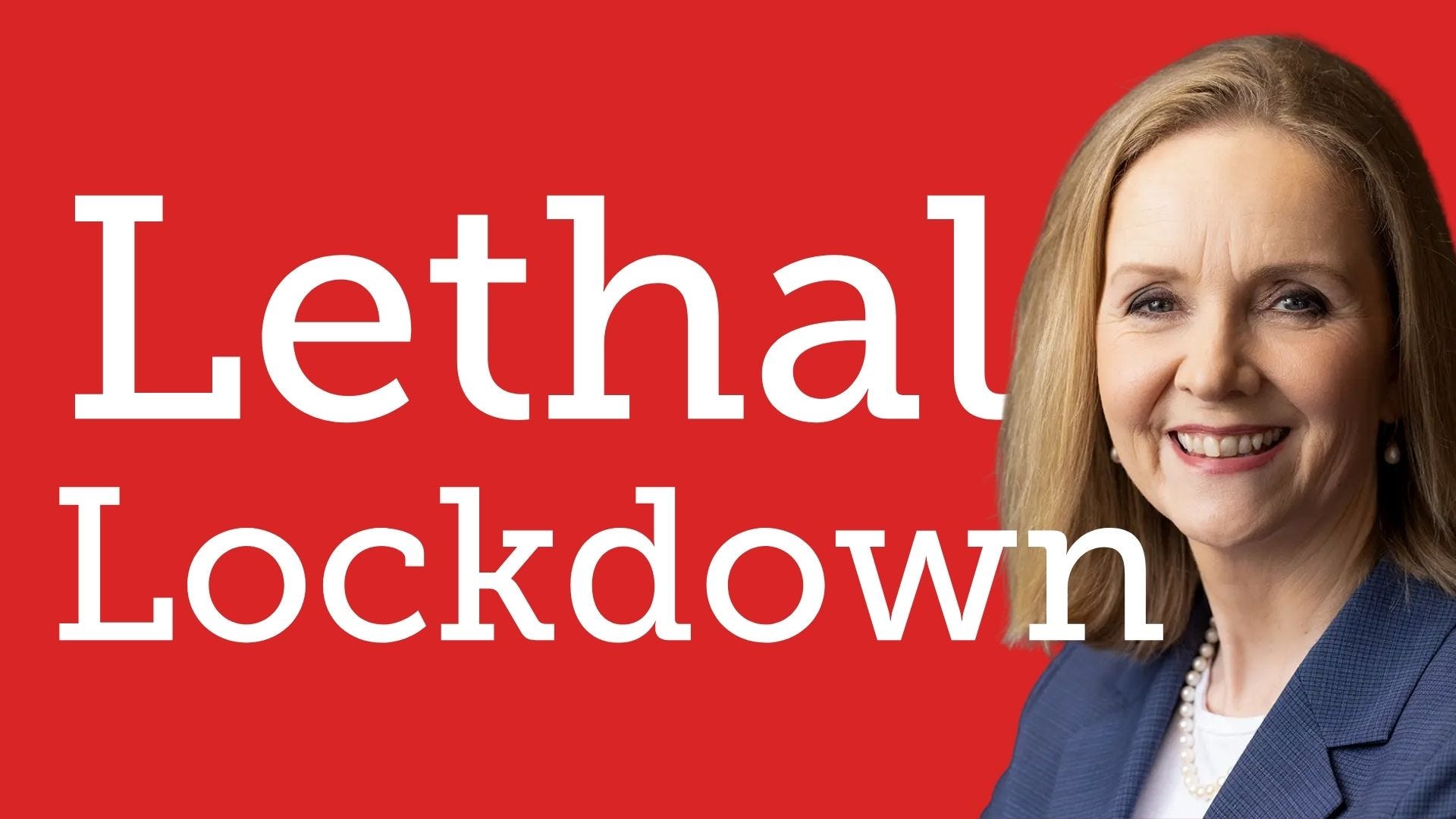
    Farage vs Binface, Wealth Inequality & Trickle-Down Myths | IEA Podcast

    In this Institute of Economic Affairs podcast, Director of Communications Callum Price is joined by IEA Director General Lord Hannan and Editorial Director Dr Kristian Niemietz. The panel discusses the Clacton by-election and the rise of joke candidates, the very different ways the populist left and right use the word “establishment,” the debate sparked by J.D. Vance over whether GDP is the right measure of a country’s success, and the Government’s proposals to make platforms promote public service broadcasters online. Callum, Lord Hannan and Kristian Niemietz begin with Nigel Farage’s resignation as an MP to force a by-election in Clacton, and what the contest reveals about how “anti-establishment” politics means very different things depending on which side is using it. They move on to a defence of economic growth, arguing that GDP scepticism usually rests on a strawman version of economics that no real economist holds, and that growth is what has given people leisure time, labour-saving technology and rising living standards. The conversation ends on the Government’s new Green Paper, which would require social media platforms to prioritise BBC, Channel 4 and Channel 5 content, and what that means for free expression, drawing on John Stuart Mill’s case for free speech and examples of “high status misinformation,” including claims about NHS privatisation and wealth inequality. The Institute of Economic Affairs is a registered educational charity. It does not endorse or give support for any political party in the UK or elsewhere. Our mission is to improve understanding of the fundamental institutions of a free society by analysing and expounding the role of markets in solving economic and social problems. The views represented here are those of the speakers alone, not those of the Institute, its Managing Trustees, Academic Advisory Council members or senior staff. This is a public episode. If you'd like to discuss this with other subscribers or get access to bonus episodes, visit economicaffairs.co.uk/subscribe

  • July 7 · 35 min

    Was New Zealand's Lockdown Worth It? | IEA Interview

    In this Institute of Economic Affairs interview, IEA Director General Lord Hannan speaks with Katherine Rich, Chief Executive of BusinessNZ and a former National Party Member of Parliament in New Zealand. The conversation covers the difference between being pro-market and merely pro-business, New Zealand’s decades-long shift towards deregulation, the rise of populism across Anglosphere politics, the long-term economic and social effects of Covid lockdowns, and the state of free trade in an increasingly protectionist world. Katherine explains how BusinessNZ, representing around 70,000 businesses, tries to resist the pull towards vested interests and protectionism that so often creeps into business lobbying. She and Lord Hannan compare New Zealand’s proportional voting system, which has produced separate parties for libertarian, conservative and populist voters, with Britain’s first past the post system. They also discuss the lasting damage from lockdowns, including welfare dependency, shoplifting and a coarsening of public life, and Katherine sets out why New Zealand’s export driven economy has had to stay nimble in the face of tariffs and rising protectionism, including a debate on the case for closer trade and travel ties between the UK, New Zealand, Australia and Canada. The Institute of Economic Affairs is a registered educational charity. It does not endorse or give support for any political party in the UK or elsewhere. Our mission is to improve understanding of the fundamental institutions of a free society by analysing and expounding the role of markets in solving economic and social problems. The views represented here are those of the speakers alone, not those of the Institute, its Managing Trustees, Academic Advisory Council members or senior staff. This is a public episode. If you'd like to discuss this with other subscribers or get access to bonus episodes, visit economicaffairs.co.uk/subscribe

Showing 1–20 of 22 episodes