transcript
show notes
THE INQUIRY
I’ve been working on this article for several months, and I decided to put it aside because too many things were unfolding at once. I needed some distance to observe what was happening to Bitcoin as a network, to its value, to the scarcity that has defined it as sound money, and to the way people were behaving around it. I was also noticing the polarity that was emerging and observing my own relationship to Bitcoin while all of it emerged. I have spent years studying Bitcoin through Austrian economics, evolutionary astrology, time and market cycles, and my own empirical observations, and I realized that if I remained too attached to what I thought Bitcoin was supposed to be, or to what connected me to it in the first place, I could miss what it was actually becoming.
That was practiced as distance, climbing to the top of the mountain to see the whole landscape un attached. I’ve always been able to read archetypes through time and recognize patterns, and with that comes a certain responsibility. I do not mean the accountability to predict what’s going to happen or to manipulate an outcome. I mean the obligations to observe carefully and make visible what I’m seeing, so somebody else may have access to information they have or not been able to distill from the same events because they’re standing from a different point of view.
Before 2020, I would clash much more with other ways of thinking because I considered that what I was seeing was more correct, and that was what I claimed as my truth. I would become a moral authority around ideas and ideologies and try to convince somebody else to see things differently. I am much more interested now in observing, listening, making my own decisions, and allowing others the responsibility of making theirs. I allow morality to exist outside of my own authority, for I live through my own integrity and the foundation of my principles and ethos.
Bitcoin has been perfect for me to observe this change because, other than being a sound asset, it became a state of consciousness where I could synthesize many things that I had already been practicing: my art, evolutionary astrology, Human Design, philosophy, and Austrian economics through subjective value, scarcity, incentives, responsibility, human action, sovereignty, trauma and the architecture of monetary systems.
When I ask, What is it becoming?, I’m also asking: what happens to an idea once millions of different people begin acting through it, assigning value to it, building around it, fighting over it, tweaking it and using it? At the end, all of those actions begin to define something that is already transformed, or perhaps is permanently in a state of transformation.
GENESIS
In Bitcoin’s Genesis chart, dated January 3, 2009, at noon London time, we see a large concentration in Capricorn, mostly in the sixth house. Pluto and Mars are in a new-phase relationship, so desire and evolution are being initiated through action, close enough to the Sun to push that impulse toward visible expression and validation through function. Jupiter sits at 29° Capricorn, asking whether this philosophy of value can become useful enough, disciplined enough, and repeatable enough to hold up in the real world. Between the Sun and Jupiter, Black Moon Lilith and Juno are conjunct at 21° and 22° Capricorn, bringing sovereignty, contract, commitment, and responsibility into the same field and asking how much of the original uncompromising principle can remain intact once it enters structure.
When Bitcoin came into existence, it was already carrying its own architecture: a protocol, rules, proof of work, verification, and a predetermined scarcity inside a network that depends on repeated participation. The North Node sits on the Descendant, while Mercury (6th house), Chiron, and Neptune are all in Aquarius in the seventh house, carrying another part of the story around freedom, decentralization, relationship, collective participation, and the future of sound money. The sixth-house concentration keeps bringing that philosophy down into practice: blocks have to be produced, transactions verified, miners have to mine, nodes have to enforce the consensus rules and relay valid information across the network, hardware has to work, and people have to maintain the infrastructure.
Through those repetitive actions, and through everybody’s accountability inside the network, we begin to see how Bitcoin moves from an idea into something that can actually evolve through time.
CYCLES
All things, objects, situations, and people on this Earth move. They are in constant motion. A natal chart, or an event chart such as Bitcoin’s, is a snapshot of how the sky was arranged at the moment of inception: an archetypal figure full of symbolism that can be read. Because motion continues, the chart also continues to unfold. Bitcoin is approaching eighteen years of existence, and in astrology we can follow part of that movement through secondary progressions.
Some of the original Capricorn emphasis on structure has already progressed into Aquarius. Jupiter had already moved there, followed later by the Sun, while Mercury has now regressed back into Capricorn and Mars still remains there. At the same time, in the last few years, transiting Pluto has entered Aquarius, coinciding with this progressive movement of the chart into the same territory. The Sun moving into Aquarius brings creative validation into networks, technology, decentralization, and collective participation, while Pluto is transforming that field at the same time.
Aquarius, through Uranus, carries a different relationship to time than Saturn and Capricorn. Saturn measures chronology, duration, maturation, and consequence; Aquarius moves through acceleration, discontinuity, long-term memory, and sudden changes in pattern. It can feel as if different timelines are moving at once, or as if information travels faster than the structures created to contain it. Bitcoin carries both rhythms at once: the Capricorn structure that is meant to hold through time, and the Aquarian movement that accelerates through networks, technology, collective behavior, and changing definitions of value.
Aquarius also carries a danger: when singularity is no longer expressed through individual accountability, a decentralized network can still behave like a mob, with people moving as a block and losing distinction between their own actions, motives, and responsibilities and those of the group. Mercury moving back into Capricorn changes the tone again, bringing meaning and communication back to questions of definition, structure, rules, and what Bitcoin is and is becoming.
THE PALACE
Saturn in Virgo in the second house asks for discernment around value, scarcity, responsibility, and what is worth preserving. Uranus in Pisces in the eighth house pushes toward freedom through shared systems, technology, collective capital, and porous boundaries. Venus in Pisces in the seventh brings relationship into the picture: the desire to merge, negotiate, belong, and enter agreements with others. The Moon in Aries in the ninth carries an instinctual emotional identity tied to belief, philosophy, and the need to define what Bitcoin means.
Bitcoin wanted to enter the big leagues. It wanted to be recognized, institutionalized, traded, held by governments, corporations, funds, and all the entities that once stood outside of its original culture. The question is what it was willing to sacrifice in exchange for that recognition while trying to be massively adopted.
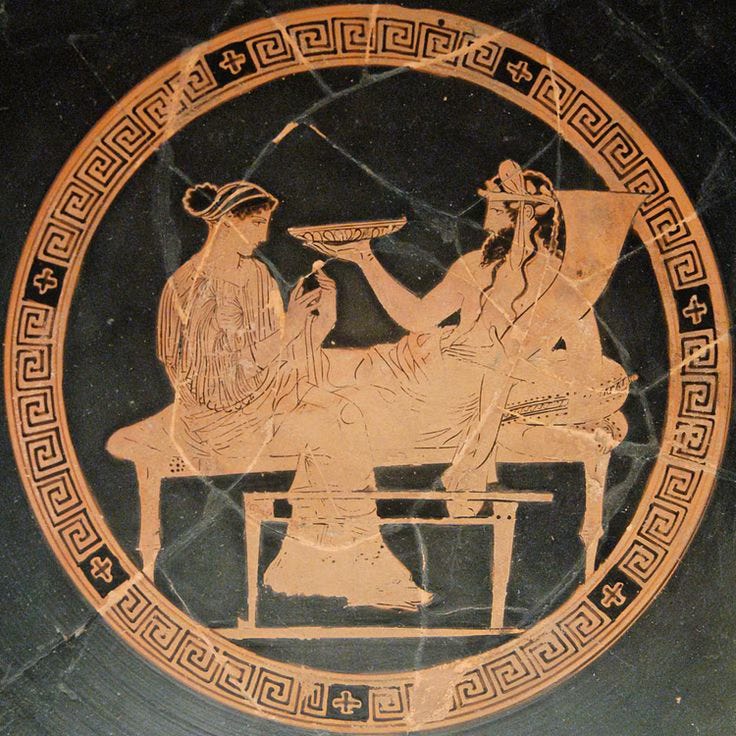
The image of the young maiden entering the palace is relevant here. She knows she has value and believes she can enter the larger society without losing herself. Then she gets there and realizes she is not the only concubine. Stable-coins are there, ETFs are there, derivatives, credit, corporate reserves, strategic reserves, governments, institutions, all kinds of paper bitcoin, and all the other instruments competing for value are already inside the room under the same roof. She wanted to marry the big man and discovered that the palace itself had a much more complicated architecture than the one she came from. Naïve? ambitious? a Trojan horse?
Saturn in Virgo in the second house asks her, and all Bitcoiners, to discern what her value actually is. Uranus in Pisces, opposing from the eighth, throws her/us into shared resources, collective capital, technological change, and financial entanglement. Venus in Pisces in the seventh wants an ideal, sublime, porous relationship. It wants to enter agreements, merge, participate, and encounter the other. Bitcoin has already entered structures that define value differently. What, then, remains essential?
SOVEREIGNTY
At the same time, Bitcoin is no longer sitting by itself inside a clean monetary experiment. AI, mining, energy, hardware, privacy, custody, data, and privacy/security are beginning to overlap. If sovereignty means holding your own assets, coins, and data, and taking responsibility for your own choices, how much of that sovereignty are we outsourcing to infrastructure controlled by somebody else? Are you running your own tools, your own node, your own miner, your own open-source llm autonomous models, your own custody, your own server, or are you voluntarily handing over your data, your behavior, your time, and your money to the same large systems you claim to distrust, from the tech bros to the government?
CREDIT (the filthy word)
Michael Saylor represents another branch of this evolution. He showed the corporate world how to use the fiat system itself to accumulate more Bitcoin and calls the architecture built around it digital credit. This is not a Misesian category. It is Saylor’s language for debt, preferred stock, securities, and other financial claims built on Bitcoin as the underlying capital base.
Saylor’s own chart repeats part of Bitcoin’s Virgo–Pisces polarity in reverse. His Mars, Pluto, and Uranus in Virgo oppose Saturn and Chiron in Pisces, echoing the same signs that hold Bitcoin’s Saturn–Uranus tension. That does not make him “right” or “wrong”; it places him inside the same archetypal field, acting out one possible version of Bitcoin’s relationship with engineering, institutions, credit, and shared capital.
Mises distinguished between commodity credit and circulation credit. Commodity credit is backed by existing wealth or savings; something real already exists behind the credit. Circulation credit is created without corresponding prior savings, effectively expanding purchasing power by creating new claims. In plain language: printing money. Saylor’s model sits somewhere between those two ideas depending on how each instrument is funded. Bitcoin can remain scarce while the credit built around it becomes elastic. He is an engineer applying an institutional strategy to an asset that was originally imagined outside that structure. I am less interested in judging the model than in observing what definition of Bitcoin it produces.
The twenty-one-million cap can remain intact while claims on Bitcoin multiply. ETFs, derivatives, custodial products, corporate securities, paper Bitcoin, and different forms of credit can create exposure to Bitcoin without changing the base supply. So scarcity becomes a more complicated question. Where does it actually live? In the asset? In the claims around it? In the relationship between the two?
Tether complicates the Bitcoin-versus-dollar story even further. Stablecoins connect digital monetary infrastructure directly to the dollar and to short-term Treasury markets, while some of the profits and reserves generated inside that structure flow back toward Bitcoin. The dollar and Bitcoin begin feeding into one another rather than behaving as two completely separate systems.
HUMAN ACTION
In one of the last seminar sessions, I was talking with Saifedean about something I had understood through Austrian economics: every decision belongs to the circumstances of that moment. What made sense ten years ago may no longer be the action required now because the conditions have changed. I told him that this was how I understood human action: the individual chooses according to what is needed at that specific moment. He agreed and said that was a good way of putting it.
Later in the same conversation, I said:
“Bitcoin is going to keep on changing. Not the network itself, but how people respond to it and how people react to it and how people deal with it.”
I then asked him what he meant when he called money a network good. His answer was simple:
“Money is a network good in that it’s your use of it and your choice of it depends on what others choose and what others use.”
That conversation also touched something I had already been observing around Saylor, Tether, and the dollar. I told him that Strategy and Tether may be doing very different things, but both are finding ways to use the existing fiat system to accumulate more Bitcoin. I do not think the dollar is going to disappear in our lifetime; what we may continue to see is different actors using the dollar system, credit, stablecoins, and Treasury markets while simultaneously accumulating Bitcoin.
There is no guru, no CEO, no god in Bitcoin. Each person chooses what to do with it, and those choices accumulate into the market, the culture, the institutions, and the network around it.
His more recent comments about mining and AI extend the same idea. If AI offers stronger incentives for energy and computing infrastructure that had previously been directed toward Bitcoin mining, some participants may redirect those resources. The same principle applies to stablecoins: people use them because they solve a need in a particular moment, even when they remain deeply connected to the dollar and Treasury system. Human action responds to incentives, opportunity cost, and circumstance. The protocol can remain fixed while the economic behavior around it keeps changing.
Principles remain, while the way they are applied changes with circumstances. If the purpose is sovereignty, sound money, individual responsibility, and the ability to act according to one’s own needs, then the form through which that purpose is expressed may continue changing. Human action is never frozen. Opportunity cost keeps moving with circumstance, and Bitcoin is moving inside that same field.
BECOMING
Bitcoin is approaching adulthood. What happens when an eighteen-year-old grows up and enters society? The original architecture is still there; the history is still there, the principles are still there. Then comes society: institutions, relationships, credit, governments, technology, power, alliances, mistakes, responsibility, and all the different people who want to use the same thing for different purposes. The eager young maiden who wanted to enter the palace is no longer protected by the mythology of origin. She has to discover what remains essential while everything around her becomes more complex.
Last year, transiting Saturn opposed Bitcoin’s natal Saturn in Virgo, and for me that was a pivotal point in understanding what was happening. Saturn confronts the structure it helped build: what has matured, what has hardened, what still works, and what can no longer be preserved simply because it belonged to the original design.
This summer culminated after months of arguments around spam, inscriptions, BIP 110, mining, and eventually the fork.¹ What I saw was a technical disagreement turning into a question about what Bitcoin is for. One side considered the monetary function important enough to justify restricting certain uses of blockspace; the other considered permissionlessness fundamental enough that deciding which transactions were legitimate already violated the principle of the network. The polarity also exposed people’s behavior at its lowest frequency. People who had once been friends were taking sides, hurting one another, becoming mean, and treating disagreement as if it required an enemy. I was watching people who had spent years speaking about sovereignty, freedom, and individual responsibility lose sight of those same principles in the way they treated one another. That became part of the phenomenon I was observing. The 2017 fork had centered largely on scaling and block size. This one reached further into definition: money, data, censorship resistance, governance, and who has the authority to interpret the original intention of Bitcoin almost eighteen years later. It also divided people who had participated in Bitcoin from very different moments in its history, including some of the early builders and a newer generation that inherited a network already carrying years of culture, assumptions, and ideology. I was less interested in choosing the correct camp than in observing what each position revealed about the meaning people had assigned to Bitcoin itself.
Around the same time, several security failures made the idea of self-custody feel much less simple. Coldcard had a firmware flaw that compromised seed generation and led to stolen Bitcoin. Liquid had a validation failure. Core Lightning had vulnerabilities serious enough to force upgrades, and tampered Ledger devices raised questions about the hardware itself. None of this changed Bitcoin’s protocol, but it exposed how much sovereignty still depends on tools, vendors, and systems outside the protocol. The astrology echoes that tension: Saturn in Virgo in the second wants precision, verification, custody, and control over what is owned, while Uranus in Pisces in the eighth opens that value into shared systems and porous technological boundaries. Neptune over the Moon can blur the instinct of what feels safe, Pluto approaching the Descendant brings power into the relationships and networks we depend on, and Chiron entering Taurus brings the question back to ownership, value, and material security. How sovereign are your coins if someone else still knows who you are, where they are, how you use them, and you do not really understand how any of this works?
I am still observing this phenomenon because there are too many moving parts to reduce it to one side, and I want to understand how they synthesize before deciding what position, if any, I need to take.
The next few years continue through the same symbolic field. Bitcoin approaches its first nodal return in 2027, bringing the original evolutionary axis back into focus. Neptune is moving across the Moon in Aries in the ninth house, dissolving certainty around emotional identity, belief, philosophy, and the meaning assigned to Bitcoin. Saturn moving through Aries asks what can actually hold once those assumptions have been dissolved. The progressed relationship between Venus and Uranus in Pisces brings another layer to shared value, alliances, money, and the unexpected forms those relationships can take. Saturn crossing the MC while Pluto hovers over the Descendant during April 2027, brings authority and power into tension with relationship and network: who defines the structure, who enters the field, and how much individuality can remain intact once power begins reorganizing the terms of participation.
Then January 2028 brings a solar eclipse in early Aquarius, close to the nodal axis and close to the territory Pluto is already transforming. In the United States chart I use, that same area is also close to the South Node. I do not read that as a prediction of one specific event. I see a period where questions around networks, government, collective power, decentralization, monetary systems, and individual sovereignty continue to be activated at the same time.
Bitcoin is the sum of the people who use it. Someone holds it in cold storage. Someone buys an ETF. Someone trades derivatives. Someone mines it. Someone issues credit against it. Someone uses Tether. Someone runs a node. Someone builds a company around it. Each action expresses a preference, and each preference assigns value. That is why I keep going back to human action. The network can remain mathematically precise while the people around it are changing, adapting, contradicting themselves, making mistakes, taking risks, and choosing according to their needs. The collective eventually reflects the quality of those individual actions.
Venus retrograde in Scorpio offers a good moment to look at that personally. Scorpio deals with shared resources, debt, taxes, dependency, entanglement, exchange, and the values we hold with others. So the question becomes very simple: what does Bitcoin actually mean in your own life? What are you using it for? What are you willing to risk? What are you protecting? What financial structures are you participating in? How much of your position comes from your own experience, and how much comes from identification with a group, a philosophy, or an idea of what a Bitcoiner is supposed to be?
Henri Bergson understood becoming through duration. The past does not disappear behind us. It continues into the present, accumulating, pressing forward, creating the conditions for something new to emerge.
“Duration means invention, the creation of forms, the continual elaboration of the absolutely new.”
Bitcoin carries its Genesis chart, its original architecture, its scarcity, its history, every fork, every disagreement, every person who has acted through it. None of that disappears as it moves forward. It becomes part of what is still unfolding, and every person is going to meet it where they are, according to their own accountability.
What is Bitcoin becoming cannot be separated from what we are becoming in relationship to it.
This is a public episode. If you'd like to discuss this with other subscribers or get access to bonus episodes, visit www.monikabravo.blog/subscribe