Skip to content
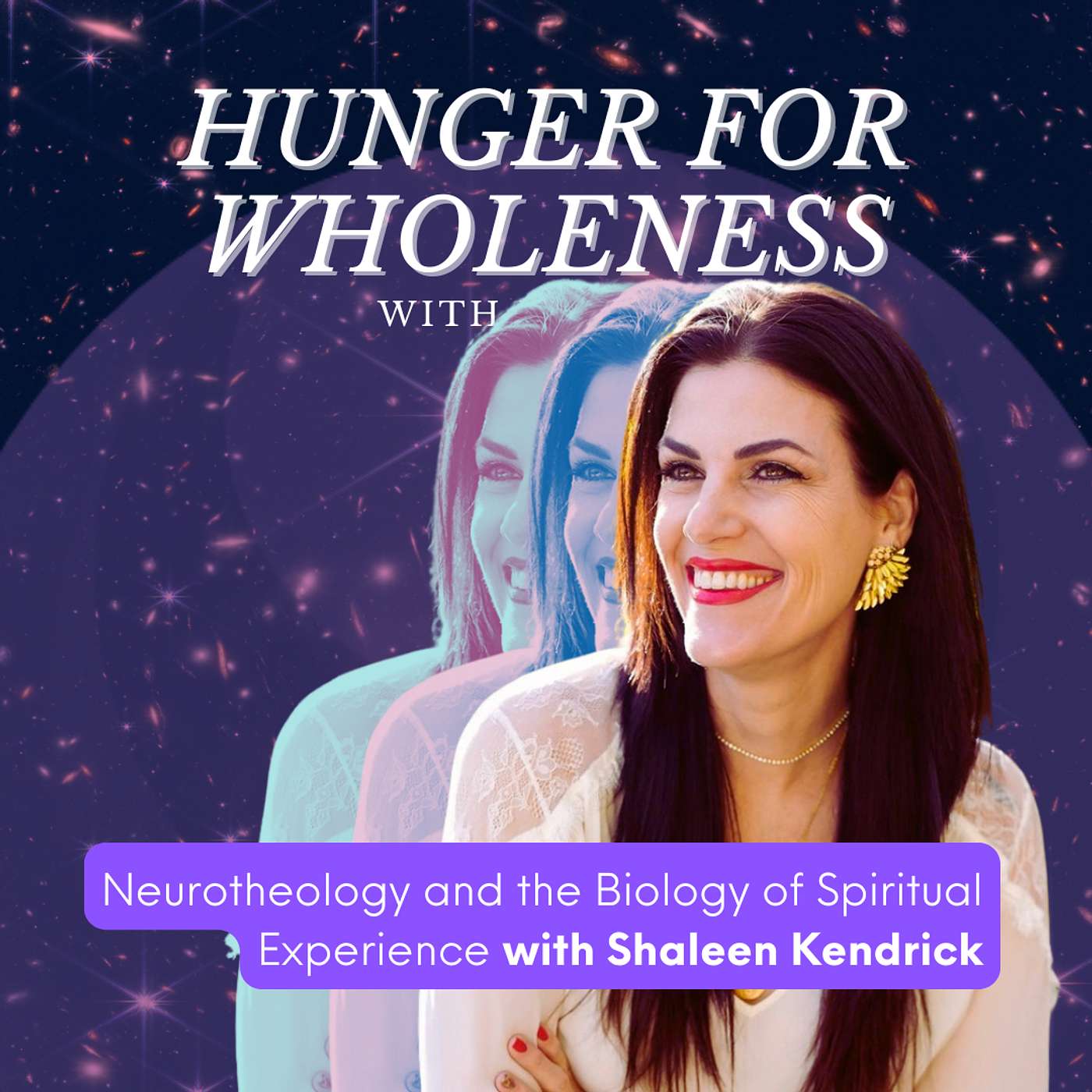
Artwork for Hunger for Wholeness
Religion & SpiritualitySpiritualitySociety & CulturePhilosophySciencePhysics

Hunger for Wholeness

Center for Christogenesis

Story matters. Our lives are shaped around immersive, powerful stories that thrive at the heart of our religious traditions, scientific inquiries, and cultural landscapes. As Bertrand Russell and Albert Einstein claimed, science without religion is lame and religion without science is blind. This podcast will hear from speakers in interdisciplinary fields of science and religion who are finding answers for how to live wholistic lives. This podcast is made possible by funding from the Fetzer Institute. We are very grateful for their generosity and support. (Image credit: X-ray: NASA/CXC; Ultraviolet: NASA/JPL-Caltech/SSC; Optical: NASA/STScI [M. Meixner]/ESA/NRAO [T.A. Rector]; Infrared: NASA/JPL-Caltech/K.)

Play
  • 20 episodes
  • Avg 31 min
  • English

Support the show

Goes straight to the publisher. podnod takes nothing.

  • S7 · E4
    July 6 · 32 min

    Future-Proofing Humanity and Building a Global Mind with Robert Geraci

    In this episode of Hunger for Wholeness, Ilia Delio continues her conversation with Robert Geraci on the ethical future of technology, the possibility of a global mind, and the stories we need to tell if civilization is to flourish. Together, they ask how AI might help us build shared spaces of learning, dialogue, and human connection rather than deepen division, surveillance, and algorithmic isolation. Ilia imagines noospheric classrooms and a global heart, where technology becomes a medium for shared values across cultures, religions, and planetary communities. Geraci reflects on the need for humility, public goods, meaningful work, and stories that draw us toward a better future rather than trap us in conflict, wealth, and power. Later in the episode, Geraci discusses his book Future-Proofing Humanity, exploring existential risk, technological culture, the Epic of Gilgamesh, and the importance of civilization as an unfinished project. Rather than fearing technology itself, Ilia and Robert invite us to ask what kind of humanity our technologies are calling us to become. ABOUT ROBERT GERACI Robert M Geraci is the Knight Distinguished Chair for the Study of Religion & Culture at Knox College. His research explores religion, science and technology in the contemporary world. He is the author of Apocalyptic AI: Visions of Heaven in Robotics, Artificial Intelligence, and Virtual Reality (Oxford 2010), Virtually Sacred: Myths and Meaning in World of Warcraft and Second Life (Oxford 2014), Temples of Modernity: Nationalism, Hinduism, and Transhumanism in South Indian Science (Lexington 2018), Futures of Artificial Intelligence: Perspectives from India and the U.S. (Oxford 2022), and Futureproofing Humanity: Existential Risk and the Technomyths of Human Engineering, Artificial Intelligence, and Our Future among the Stars (self 2026). He has been a visiting researcher at Carnegie Mellon University’s Robotics Institute, the Indian Institute of Science and the National Institute for Advanced Studies in Bangalore, India. His research has been supported by the US National Science Foundation, the Republic of Korea National Research Foundation, the American Academy of Religion and two Fulbright-Nehru research awards. He enjoys kayaking, hiking, videogames, and Dungeons & Dragons but doesn’t really have time for any of it. Join us for the Center’s 10th Anniversary Conference, November 9–11 in Villanova, Pennsylvania, with a virtual option available. In a time of deep political, social, ecological, and spiritual division, this gathering explores how love can become a compass for transformation. Learn more and register at christogenesis.org/conference. We are currently in the midst of our summer fundraiser, From Fear to Hope: Change and the Perpetual Growth of Life. As the Center marks its tenth anniversary, your support sustains our conferences, webinars, publications, and emerging global learning platform. Please consider making a generous contribution at christogenesis.org/donate. Support the show A huge thank you to all of you who subscribe and support our show! Support for A Hunger for Wholeness comes from the Fetzer Institute. Fetzer supports a movement of organizations who are applying spiritual solutions to society's toughest problems. Get involved at fetzer.org. Visit the Center for Christogenesis' website at christogenesis.org/podcast to browse all Hunger for Wholeness episodes and read more from Ilia Delio. Follow us on Facebook and Instagram for episode releases and other updates.

    • Transcript
  • S7 · E3
    June 22 · 36 min

    Apocalyptic AI and the Stories Technology Tells with Robert Geraci

    In this episode of Hunger for Wholeness, Ilia Delio speaks with scholar Robert Geraci about apocalyptic AI, robotics, transhumanist hope, and the religious stories embedded in technological imagination. Geraci traces how his study of robotics led him to notice strikingly religious themes in the writings of engineers and futurists: immortality, resurrection, salvation, and the future transformation of humanity. Together, Ilia and Robert explore the mid-20th-century roots of computer intelligence, the shadow of world war, and the deep eschatological hopes and fears that shaped early conversations about machines, minds, and human destiny. They consider how figures such as Hans Moravec, Ray Kurzweil, J. B. S. Haldane, Julian Huxley, Norbert Wiener, and Alan Turing reveal the religious imagination at work within technological culture. Later in the episode, the conversation turns toward technology, ecology, and responsibility. Rather than treating technology as the enemy, Ilia and Robert ask how human beings might reclaim the deeper narratives, values, and forms of belonging needed to guide technological development toward the flourishing of the whole Earth community. ABOUT ROBERT GERACI Robert M Geraci is the Knight Distinguished Chair for the Study of Religion & Culture at Knox College. His research explores religion, science and technology in the contemporary world. He is the author of Apocalyptic AI: Visions of Heaven in Robotics, Artificial Intelligence, and Virtual Reality (Oxford 2010), Virtually Sacred: Myths and Meaning in World of Warcraft and Second Life (Oxford 2014), Temples of Modernity: Nationalism, Hinduism, and Transhumanism in South Indian Science (Lexington 2018), Futures of Artificial Intelligence: Perspectives from India and the U.S. (Oxford 2022), and Futureproofing Humanity: Existential Risk and the Technomyths of Human Engineering, Artificial Intelligence, and Our Future among the Stars (self 2026). He has been a visiting researcher at Carnegie Mellon University’s Robotics Institute, the Indian Institute of Science and the National Institute for Advanced Studies in Bangalore, India. His research has been supported by the US National Science Foundation, the Republic of Korea National Research Foundation, the American Academy of Religion and two Fulbright-Nehru research awards. He enjoys kayaking, hiking, videogames, and Dungeons & Dragons but doesn’t really have time for any of it. Join us for the Center’s 10th Anniversary Conference, November 9–11 in Villanova, Pennsylvania, with a virtual option available. In a time of deep political, social, ecological, and spiritual division, this gathering explores how love can become a compass for transformation. Learn more and register at christogenesis.org/conference. We are currently in the midst of our summer fundraiser, From Fear to Hope: Change and the Perpetual Growth of Life. As the Center marks its tenth anniversary, your support sustains our conferences, webinars, publications, and emerging global learning platform. Please consider making a generous contribution at christogenesis.org/donate. Support the show A huge thank you to all of you who subscribe and support our show! Support for A Hunger for Wholeness comes from the Fetzer Institute. Fetzer supports a movement of organizations who are applying spiritual solutions to society's toughest problems. Get involved at fetzer.org. Visit the Center for Christogenesis' website at christogenesis.org/podcast to browse all Hunger for Wholeness episodes and read more from Ilia Delio. Follow us on Facebook and Instagram for episode releases and other updates.

    • Transcript
  • S7 · E2
    June 8 · 27 min

    Wholeness and Evolution with Shaleen Kendrick

    In this episode of Hunger for Wholeness, Ilia Delio continues her conversation with neurotheologian Shaleen Kendrick on the practical meaning of Christogenesis, wholeness, and adaptive evolution. Shaleen reflects on what she calls “evolutionary mismatch,” the gap between our rapidly changing world and the neurobiological capacities we need to meet it with wisdom, compassion, and creativity. Together, Ilia and Shaleen explore how spirituality can become a lived practice of integration: not simply what we believe about God, but who we are and what we do each day. Drawing on neuroscience, process theology, epigenetics, and the image of living systems, Shaleen invites us to imagine people less as machines to be optimized and more as plants to be cultivated toward wholeness. Later in the episode, the conversation turns to Christianity in transition, the need for new systems, and the possibility of “wholeness-making” as a guiding concern for families, institutions, and the planet. Shaleen also shares the metaphor of jazz as a way to understand harmony, difference, and the creative work of becoming whole in real time. ABOUT SHALEEN KENDRICK Rev. Dr. Shaleen Kendrick, ThD, is an emerging neurotheologian who developed the Neuro-Relational Integration™ (NRI) model—demonstrating how conscious integration across Mind–Body–Spirit neural systems can facilitate rapid adaptive evolution in how we think, act, and relate to ourselves, others, and the challenges of our time. NRI integrates neuroscience with liberation theology to show that through daily wholeness-making practices we can expand our human capacity and create new abilities that nurture not just individual flourishing but transform the systems we live in. She serves companies, practitioners, and faith communities, translating evolutionary spirituality into embodied practice—because the world needs humans who can evolve as quickly as our challenges emerge. This is Human Evolution in Practice. Join us for the Center’s 10th Anniversary Conference, November 9–11 in Villanova, Pennsylvania, with a virtual option available. In a time of deep political, social, ecological, and spiritual division, this gathering explores how love can become a compass for transformation. Learn more and register at christogenesis.org/conference. We are currently in the midst of our summer fundraiser, From Fear to Hope: Change and the Perpetual Growth of Life. As the Center marks its tenth anniversary, your support sustains our conferences, webinars, publications, and emerging global learning platform. Please consider making a generous contribution at christogenesis.org/donate. Support the show A huge thank you to all of you who subscribe and support our show! Support for A Hunger for Wholeness comes from the Fetzer Institute. Fetzer supports a movement of organizations who are applying spiritual solutions to society's toughest problems. Get involved at fetzer.org. Visit the Center for Christogenesis' website at christogenesis.org/podcast to browse all Hunger for Wholeness episodes and read more from Ilia Delio. Follow us on Facebook and Instagram for episode releases and other updates.

    • Transcript
  • S7 · E1
    May 25 · 32 min

    Neurotheology and the Biology of Spiritual Experience with Shaleen Kendrick

    In this episode of Hunger for Wholeness, Ilia Delio speaks with neurotheologian Shaleen Kendrick about neuroscience, contemplative practice, and the biology of spiritual experience. Shaleen shares her journey from conservative evangelical ministry through deconstruction, suffering, and contemplative prayer into the emerging field of neurotheology. Together, Ilia and Shaleen explore how religious experience is not separate from the body but mediated through it. They consider how God-language, belief, prayer, trauma, neuroplasticity, and contemplative practice all shape the brain and body—and how changing our images of God can change the very neural pathways through which we experience reality. Later in the episode, they discuss the resistance many theologians have to locating spiritual experience in neurobiology, the promise and complexity of psychedelics and healing, and the growing scientific evidence that spirituality is an innate human capacity. Rather than reducing God to biology, this conversation asks what becomes possible when we understand the body as the living temple of divine encounter. ABOUT SHALEEN KENDRICK Rev. Dr. Shaleen Kendrick, ThD, is an emerging neurotheologian who developed the Neuro-Relational Integration™ (NRI) model—demonstrating how conscious integration across Mind–Body–Spirit neural systems can facilitate rapid adaptive evolution in how we think, act, and relate to ourselves, others, and the challenges of our time. NRI integrates neuroscience with liberation theology to show that through daily wholeness-making practices we can expand our human capacity and create new abilities that nurture not just individual flourishing but transform the systems we live in. She serves companies, practitioners, and faith communities, translating evolutionary spirituality into embodied practice—because the world needs humans who can evolve as quickly as our challenges emerge. This is Human Evolution in Practice. Join us for the Center’s 10th Anniversary Conference, November 9–11 in Villanova, Pennsylvania, with a virtual option available. In a time of deep political, social, ecological, and spiritual division, this gathering explores how love can become a compass for transformation. Learn more and register at christogenesis.org/conference. We are currently in the midst of our summer fundraiser, From Fear to Hope: Change and the Perpetual Growth of Life. As the Center marks its tenth anniversary, your support sustains our conferences, webinars, publications, and emerging global learning platform. Please consider making a generous contribution at christogenesis.org/donate. Support the show A huge thank you to all of you who subscribe and support our show! Support for A Hunger for Wholeness comes from the Fetzer Institute. Fetzer supports a movement of organizations who are applying spiritual solutions to society's toughest problems. Get involved at fetzer.org. Visit the Center for Christogenesis' website at christogenesis.org/podcast to browse all Hunger for Wholeness episodes and read more from Ilia Delio. Follow us on Facebook and Instagram for episode releases and other updates.

    • Transcript
  • S6 · E24
    March 2 · 39 min

    How to See the Big Picture in a Post-Truth World with Nicholas Hedlund

    In this 100th episode of Hunger for Wholeness, Sr. Ilia Delio continues her conversation with Nicholas Hedlund, PhD exploring what it means to seek coherence in a world shaped by fragmentation and acceleration. Beginning with Teilhard de Chardin’s sense that the future is not simply ahead of us but mysteriously within the present, Ilia and Nick reflect on evolution as an unfinished process of becoming—one that calls for “unity in diversity,” not a monolithic consensus. Nick develops his concept of alethic resonance: truth as an attunement to reality that is participatory and transformative, not merely a set of propositions we “possess.” If reality is relational and dynamic, then truth is not something we control but something we learn to hear, honor, and live. ABOUT NICHOLAS HEDLUND “Humanity is not suffering from a crisis of information but a crisis of integration.” Nicholas Hedlund, Ph.D., is a philosopher, metatheorist, and contemplative practitioner whose work explores the intersection of spirituality, science, and worldview transformation. He is the director of Eudaimonia Institute and director of research at the Institute for Applied Metatheory, and serves as Editor-in-Chief of Integration: The Journal of Big Picture Theory and Practice. Nicholas developed visionary realism, an integrative philosophical framework drawing from critical realism, integral theory, and complexity science to illuminate deeper structures of reality and help navigate the global metacrisis. He earned his Ph.D. from University College London, where he studied under Roy Bhaskar and Arthur Petersen, and he was also an exchange scholar at Yale University. He is the author and editor of Metatheory for the Twenty-First Century and Big Picture Perspectives on Planetary Flourishing, and his work has appeared in peer-reviewed journals including Zygon and Environmental Science & Policy. He is currently completing two new books further developing visionary realism and its implications for civilizational transformation. Alongside his scholarly work, Nicholas is an APPA-certified philosophical counselor and a spiritual director-in-training, supporting individuals in exploring meaning, inner transformation, and spiritual experience. A long-time contemplative practitioner and musician, he is deeply interested in the resonance between sound, consciousness, and human evolution. Nicholas teaches in the Integral Noetic Sciences Department at the California Institute for Human Science, offering courses in integral philosophy, consciousness studies, and the global metacrisis. Learn more about his studies and work on his website. His PhD thesis, Visionary Realism And The Emergence Of A Eudaimonistic Society, is also available online. Join us for the Center’s 10th Anniversary Conference, November 9–11 in Villanova, Pennsylvania, with a virtual option available. In a time of deep political, social, ecological, and spiritual division, this gathering explores how love can become a compass for transformation. Learn more and register at christogenesis.org/conference. We are currently in the midst of our summer fundraiser, From Fear to Hope: Change and the Perpetual Growth of Life. As the Center marks its tenth anniversary, your support sustains our conferences, webinars, publications, and emerging global learning platform. Please consider making a generous contribution at christogenesis.org/donate. Support the show A huge thank you to all of you who subscribe and support our show! Support for A Hunger for Wholeness comes from the Fetzer Institute. Fetzer supports a movement of organizations who are applying spiritual solutions to society's toughest problems. Get involved at fetzer.org. Visit the Center for Christogenesis' website at christogenesis.org/podcast to browse all Hunger for Wholeness episodes and read more from Ilia Delio. Follow us on Facebook and Instagram for episode releases and other updates.

    • Transcript
  • S6 · E23
    February 16 · 33 min

    What To Do About the Metacrisis with Nicholas Hedlund

    In this episode of Hunger for Wholeness, Sr. Ilia Delio speaks with Nicholas Hedlund, PhD—a philosopher, metatheorist, and contemplative practitioner whose work explores spirituality, science, and worldview transformation. Ilia begins with the simple question: What is metatheory? Nick traces the thread that drew him into big-picture thinking—an early dissatisfaction with surface-level responses to ecological crisis, and a deeper inquiry into root causes: who we take ourselves to be, what we take the natural world to be, and how our relationship to the sacred shapes the world we build. Together, Ilia and Nick explore the metacrisis (or polycrisis) as more than a collection of competing emergencies. ABOUT NICHOLAS HEDLUND “Humanity is not suffering from a crisis of information but a crisis of integration.” Nicholas Hedlund, Ph.D., is a philosopher, metatheorist, and contemplative practitioner whose work explores the intersection of spirituality, science, and worldview transformation. He is the director of Eudaimonia Institute and director of research at the Institute for Applied Metatheory, and serves as Editor-in-Chief of Integration: The Journal of Big Picture Theory and Practice. Nicholas developed visionary realism, an integrative philosophical framework drawing from critical realism, integral theory, and complexity science to illuminate deeper structures of reality and help navigate the global metacrisis. He earned his Ph.D. from University College London, where he studied under Roy Bhaskar and Arthur Petersen, and he was also an exchange scholar at Yale University. He is the author and editor of Metatheory for the Twenty-First Century and Big Picture Perspectives on Planetary Flourishing, and his work has appeared in peer-reviewed journals including Zygon and Environmental Science & Policy. He is currently completing two new books further developing visionary realism and its implications for civilizational transformation. Alongside his scholarly work, Nicholas is an APPA-certified philosophical counselor and a spiritual director-in-training, supporting individuals in exploring meaning, inner transformation, and spiritual experience. A long-time contemplative practitioner and musician, he is deeply interested in the resonance between sound, consciousness, and human evolution. Nicholas teaches in the Integral Noetic Sciences Department at the California Institute for Human Science, offering courses in integral philosophy, consciousness studies, and the global metacrisis. Learn more about his studies and work on his website. His PhD thesis, Visionary Realism And The Emergence Of A Eudaimonistic Society, is also available online. Join us for the Center’s 10th Anniversary Conference, November 9–11 in Villanova, Pennsylvania, with a virtual option available. In a time of deep political, social, ecological, and spiritual division, this gathering explores how love can become a compass for transformation. Learn more and register at christogenesis.org/conference. We are currently in the midst of our summer fundraiser, From Fear to Hope: Change and the Perpetual Growth of Life. As the Center marks its tenth anniversary, your support sustains our conferences, webinars, publications, and emerging global learning platform. Please consider making a generous contribution at christogenesis.org/donate. Support the show A huge thank you to all of you who subscribe and support our show! Support for A Hunger for Wholeness comes from the Fetzer Institute. Fetzer supports a movement of organizations who are applying spiritual solutions to society's toughest problems. Get involved at fetzer.org. Visit the Center for Christogenesis' website at christogenesis.org/podcast to browse all Hunger for Wholeness episodes and read more from Ilia Delio. Follow us on Facebook and Instagram for episode releases and other updates.

    • Transcript
  • S6 · E22
    February 2 · 35 min

    How the Metamind Changes the Self with Abre Fournier

    Sr. Ilia Delio continues her conversation with Abre Fournier, PhD—a science-based philosopher of consciousness whose work bridges contemporary cognitive science with Asian contemplative traditions and practices of mind transformation. Picking up their inquiry into what is meant by “the self,” Ilia and Abre turn to childhood development and the social shaping of identity. Abre draws on figures like Jean Piaget and Donald Winnicott to describe how the “me/not-me” distinction emerges over time through relationship, culture, and the formative environment of family and education. This raises a deeper question: if selfhood is an emergent, relational process, should we even keep the word self? Abre proposes selfing—self as a dynamical activity rather than a fixed thing. The conversation widens to politics, education, and the pressures facing the humanities today, asking how modern notions of autonomy can fracture our collective life. Finally, Abre introduces the metamind: a planetary intelligence taking shape through recursive coupling across human, cultural, and technological processes. In the age of the internet and AI, what might it mean for collective intelligence to become aware of itself? How can we participate consciously in transformation, not merely information flow? ABOUT ABRE FOURNIER “Can we as human beings really understand what it would mean to have a conscious experience without a sense of self?” Abre G. Fournier, PhD, is a science-based philosopher of consciousness with a focus on mind transformation, bridging the advancements of contemporary cognitive sciences with teachings and practices from Asian philosophies centered on states of awakened awareness. Her work synthesizes insights from evolutionary biology, dynamical systems, embodied cognition, and advanced intelligence to articulate the rise of a new dimension of planetary mind. Her international work in facilitating consciousness evolution offers vital insights for philosophers and scientists investigating the complexities and transformation of human consciousness, as well as for professionals and practitioners engaged in transformative practices. She has also been active in the arts and higher education, with academic and executive roles at the State University of New York (SUNY). Her work as a practicing artist in films and new-media collaborations with musicians and composers has been shown in art museums and galleries, film festivals, and live concerts in the US and abroad. Originally from France, Abre lives in the New York metropolitan area. Join us for the Center’s 10th Anniversary Conference, November 9–11 in Villanova, Pennsylvania, with a virtual option available. In a time of deep political, social, ecological, and spiritual division, this gathering explores how love can become a compass for transformation. Learn more and register at christogenesis.org/conference. We are currently in the midst of our summer fundraiser, From Fear to Hope: Change and the Perpetual Growth of Life. As the Center marks its tenth anniversary, your support sustains our conferences, webinars, publications, and emerging global learning platform. Please consider making a generous contribution at christogenesis.org/donate. Support the show A huge thank you to all of you who subscribe and support our show! Support for A Hunger for Wholeness comes from the Fetzer Institute. Fetzer supports a movement of organizations who are applying spiritual solutions to society's toughest problems. Get involved at fetzer.org. Visit the Center for Christogenesis' website at christogenesis.org/podcast to browse all Hunger for Wholeness episodes and read more from Ilia Delio. Follow us on Facebook and Instagram for episode releases and other updates.

    • Transcript
  • S6 · E21
    January 19 · 29 min

    Can Science Illuminate the "Self" with Abre Fournier

    In this episode of Hunger for Wholeness, Sr. Ilia Delio speaks with Abre G. Fournier, PhD—a science-based philosopher of consciousness whose work bridges contemporary cognitive science with Asian contemplative traditions and practices of mind transformation. Abre shares the personal journey that shaped her research: years of intensive contemplative practice, an encounter with what she describes as “awakened awareness,” and a profound, lasting shift in the sense of self that led her to investigate how transformation actually works in lived experience. Together, Ilia and Abre explore enduring questions at the heart of consciousness studies: what we experience as the self, how mind and consciousness differ, and what contemporary science can (and cannot yet) reveal about these mysteries. Abre draws from philosophy of mind, cognitive science, and embodied and extended mind research to reframe selfhood as relational, interactive, and dynamically formed rather than fixed and isolated. ABOUT ABRE FOURNIER “Can we as human beings really understand what it would mean to have a conscious experience without a sense of self?” Abre G. Fournier, PhD, is a science-based philosopher of consciousness with a focus on mind transformation, bridging the advancements of contemporary cognitive sciences with teachings and practices from Asian philosophies centered on states of awakened awareness. Her work synthesizes insights from evolutionary biology, dynamical systems, embodied cognition, and advanced intelligence to articulate the rise of a new dimension of planetary mind. Her international work in facilitating consciousness evolution offers vital insights for philosophers and scientists investigating the complexities and transformation of human consciousness, as well as for professionals and practitioners engaged in transformative practices. She has also been active in the arts and higher education, with academic and executive roles at the State University of New York (SUNY). Her work as a practicing artist in films and new-media collaborations with musicians and composers has been shown in art museums and galleries, film festivals, and live concerts in the US and abroad. Originally from France, Abre lives in the New York metropolitan area. Join us for the Center’s 10th Anniversary Conference, November 9–11 in Villanova, Pennsylvania, with a virtual option available. In a time of deep political, social, ecological, and spiritual division, this gathering explores how love can become a compass for transformation. Learn more and register at christogenesis.org/conference. We are currently in the midst of our summer fundraiser, From Fear to Hope: Change and the Perpetual Growth of Life. As the Center marks its tenth anniversary, your support sustains our conferences, webinars, publications, and emerging global learning platform. Please consider making a generous contribution at christogenesis.org/donate. Support the show A huge thank you to all of you who subscribe and support our show! Support for A Hunger for Wholeness comes from the Fetzer Institute. Fetzer supports a movement of organizations who are applying spiritual solutions to society's toughest problems. Get involved at fetzer.org. Visit the Center for Christogenesis' website at christogenesis.org/podcast to browse all Hunger for Wholeness episodes and read more from Ilia Delio. Follow us on Facebook and Instagram for episode releases and other updates.

    • Transcript
  • S6 · E20
    January 5 · 33 min

    Can AI Calm Our Fear of Death with Gregory Stock

    In this episode of Hunger for Wholeness, Robert Nicastro welcomes listeners back into Sr. Ilia Delio’s conversation with biophysicist and technologist Gregory Stock. Last time, Greg raised a profound question: how will AI shape two enduring human longings—love and immortality? In this second part, Ilia and Greg return to the theme of immortality, exploring not only what it might mean for individuals, but what it could mean for the human species as a whole. As the conversation unfolds, the focus widens from personal hopes to public consequences. Technology has often promised abundance, comfort, and control. Nevertheless, who actually benefits when those promises arrive? Ilia presses into the economics of AI, asking whether it will become a first-world luxury or something that can genuinely serve the common good. Later, the dialogue turns toward a civic question that is increasingly difficult to avoid: Are our social structures and our governments prepared for the realities of AI? Greg shares his hopes for the future and the aims of his new book, Generation AI and the Transformation of Human Being. ABOUT GREGORY STOCK “The greatest frontier in human evolution may no longer lie outside us, but inside: in the choices — and designs — we make for ourselves.” Gregory Stock, Ph.D., is a scientist, writer, entrepreneur, and public communicator whose work represents a deep exploration into what it means to be human in the 21st century. During his career, he has developed the foremost paradigm for personal inquiries into values and beliefs, which has significant implications for humankind as it faces the profound shifts brought by silicon and biotech. Today, Greg serves as an expert speaker and advisor to biotech and healthcare companies and to non-profits at the cutting edge of human health. Join us for the Center’s 10th Anniversary Conference, November 9–11 in Villanova, Pennsylvania, with a virtual option available. In a time of deep political, social, ecological, and spiritual division, this gathering explores how love can become a compass for transformation. Learn more and register at christogenesis.org/conference. We are currently in the midst of our summer fundraiser, From Fear to Hope: Change and the Perpetual Growth of Life. As the Center marks its tenth anniversary, your support sustains our conferences, webinars, publications, and emerging global learning platform. Please consider making a generous contribution at christogenesis.org/donate. Support the show A huge thank you to all of you who subscribe and support our show! Support for A Hunger for Wholeness comes from the Fetzer Institute. Fetzer supports a movement of organizations who are applying spiritual solutions to society's toughest problems. Get involved at fetzer.org. Visit the Center for Christogenesis' website at christogenesis.org/podcast to browse all Hunger for Wholeness episodes and read more from Ilia Delio. Follow us on Facebook and Instagram for episode releases and other updates.

    • Transcript
  • S6 · E19
    Dec 22, 2025 · 31 min

    Who Is “Generation AI”? with Gregory Stock

    In this episode of Hunger for Wholeness, Robert Nicastro welcomes listeners back into Sr. Ilia Delio’s ongoing conversation with biophysicist and technologist Gregory Stock, whose new book, Generation AI and the Transformation of Human Being, has just been released. Together, Ilia and Greg open a doorway into the questions at the heart of “Generation AI”—not simply what artificial intelligence can do, but what it may be doing to us. As AI becomes woven into daily life and the broader evolutionary story, they explore how the human person is being reshaped: our attention, our desires, our sense of progress, and the subtle ways technology can begin to form the contours of relationship and meaning. Throughout the conversation, Ilia presses a concern that runs beneath the headlines: Can AI make it easier to be human—or does our relentless pursuit of progress come with a cost? And as their dialogue deepens, Greg raises the provocative question: will we fall in love with AI? (He thinks so.) ABOUT GREGORY STOCK “The greatest frontier in human evolution may no longer lie outside us, but inside: in the choices — and designs — we make for ourselves.” Gregory Stock, Ph.D., is a scientist, writer, entrepreneur, and public communicator whose work represents a deep exploration into what it means to be human in the 21st century. During his career, he has developed the foremost paradigm for personal inquiries into values and beliefs, which has significant implications for humankind as it faces the profound shifts brought by silicon and biotech. Today, Greg serves as an expert speaker and advisor to biotech and healthcare companies and to non-profits at the cutting edge of human health. Join us for the Center’s 10th Anniversary Conference, November 9–11 in Villanova, Pennsylvania, with a virtual option available. In a time of deep political, social, ecological, and spiritual division, this gathering explores how love can become a compass for transformation. Learn more and register at christogenesis.org/conference. We are currently in the midst of our summer fundraiser, From Fear to Hope: Change and the Perpetual Growth of Life. As the Center marks its tenth anniversary, your support sustains our conferences, webinars, publications, and emerging global learning platform. Please consider making a generous contribution at christogenesis.org/donate. Support the show A huge thank you to all of you who subscribe and support our show! Support for A Hunger for Wholeness comes from the Fetzer Institute. Fetzer supports a movement of organizations who are applying spiritual solutions to society's toughest problems. Get involved at fetzer.org. Visit the Center for Christogenesis' website at christogenesis.org/podcast to browse all Hunger for Wholeness episodes and read more from Ilia Delio. Follow us on Facebook and Instagram for episode releases and other updates.

    • Transcript
  • S6 · E18
    Nov 24, 2025 · 30 min

    Renewing Faith When Politics Becomes Religion with Sheri Kling

    In this second part of her conversation with Robert Nicastro, theologian and spiritual teacher Sheri Kling deepens the discussion on how process and open and relational theologies can reshape our spiritual lives. What does it mean to pray into immanence rather than plead to a distant deity? How can our rituals and symbols come alive again when they're held with spaciousness? And what does faith beyond belief look like in a world longing for depth and connection? Sheri shares how process theology transforms worship, preaching, and community life—and offers tools for religious leaders hoping to revive faith without falling into dogma. From quantum entanglement to Ezekiel’s dry bones, she invites us to imagine a God intimately present in all things, calling us toward healing, renewal, and co-creative hope. Later in the episode, Sheri reflects on spiritual maturity, recovering from toxic religion, and why deconstruction must give way to reconstruction rooted in wonder, trust, and love. ABOUT SHERI KLING “We are a fragmented people in a fragmented world—but when we begin to think with a more integrative, relational vision of reality, faith can come alive again. We discover that we matter, we belong, and we can participate in the sacred work of a whole-making cosmos.” Sheri D. Kling, Ph.D., is a writer, theologian, songwriter, and spiritual teacher who serves as director of Process & Faith with the Center for Process Studies, interim minister of Redeemer Lutheran Church in Bradenton, Florida, and teaches regularly for the Haden Institute and Claremont School of Theology, from which she earned her doctorate. She is the author of A Process Spirituality: Christian and Transreligious Resources for Transformation and editor of Renewing Faith: Reigniting Faith and Ministry through Process and Open & Relational Theologies. She speaks, teaches, and leads retreats on spirituality, theology, and transformation, and her work can be found online at sherikling.com and her Substack, The Sacred Everywhere. Join us for the Center’s 10th Anniversary Conference, November 9–11 in Villanova, Pennsylvania, with a virtual option available. In a time of deep political, social, ecological, and spiritual division, this gathering explores how love can become a compass for transformation. Learn more and register at christogenesis.org/conference. We are currently in the midst of our summer fundraiser, From Fear to Hope: Change and the Perpetual Growth of Life. As the Center marks its tenth anniversary, your support sustains our conferences, webinars, publications, and emerging global learning platform. Please consider making a generous contribution at christogenesis.org/donate. Support the show A huge thank you to all of you who subscribe and support our show! Support for A Hunger for Wholeness comes from the Fetzer Institute. Fetzer supports a movement of organizations who are applying spiritual solutions to society's toughest problems. Get involved at fetzer.org. Visit the Center for Christogenesis' website at christogenesis.org/podcast to browse all Hunger for Wholeness episodes and read more from Ilia Delio. Follow us on Facebook and Instagram for episode releases and other updates.

    • Transcript
  • S6 · E17
    Nov 10, 2025 · 26 min

    How God Holds Power Without Coercion with Sheri Kling

    In this episode of Hunger for Wholeness, Robert Nicastro welcomes back theologian, minister, and director of Process and Faith, Dr. Sheri Kling, for a rich conversation on the power of theology to renew spiritual life in a fragmented world. Sheri shares the story behind Renewing Faith, a newly released collection of essays emerging from a 2025 conference that brought together voices exploring how process and open and relational theology can breathe new life into Christian practice. Together, she and Robert unpack how these movements offer a vision of God not as a distant, all-controlling force, but as a deeply relational presence—persuasive, not coercive, and intimately involved in the unfolding of creation. Throughout the episode, Sheri explains key theological ideas in everyday terms, weaving in science, mysticism, and lived experience. She reflects on her own journey from Jungian psychology to process thought, and how this path gave her a more integrated, healing view of God, suffering, and spiritual wholeness. Later, Sheri offers a profound reimagining of divine power—sharing a story from Proverbs of Ashes that illustrates how a theology of persuasive love can make space for grief, agency, and hope. ABOUT SHERI KLING “We are a fragmented people in a fragmented world—but when we begin to think with a more integrative, relational vision of reality, faith can come alive again. We discover that we matter, we belong, and we can participate in the sacred work of a whole-making cosmos.” Sheri D. Kling, Ph.D., is a writer, theologian, songwriter, and spiritual teacher who serves as director of Process & Faith with the Center for Process Studies, interim minister of Redeemer Lutheran Church in Bradenton, Florida, and teaches regularly for the Haden Institute and Claremont School of Theology, from which she earned her doctorate. She is the author of A Process Spirituality: Christian and Transreligious Resources for Transformation and editor of Renewing Faith: Reigniting Faith and Ministry through Process and Open & Relational Theologies. She speaks, teaches, and leads retreats on spirituality, theology, and transformation, and her work can be found online at sherikling.com and her Substack, The Sacred Everywhere. Join us for the Center’s 10th Anniversary Conference, November 9–11 in Villanova, Pennsylvania, with a virtual option available. In a time of deep political, social, ecological, and spiritual division, this gathering explores how love can become a compass for transformation. Learn more and register at christogenesis.org/conference. We are currently in the midst of our summer fundraiser, From Fear to Hope: Change and the Perpetual Growth of Life. As the Center marks its tenth anniversary, your support sustains our conferences, webinars, publications, and emerging global learning platform. Please consider making a generous contribution at christogenesis.org/donate. Support the show A huge thank you to all of you who subscribe and support our show! Support for A Hunger for Wholeness comes from the Fetzer Institute. Fetzer supports a movement of organizations who are applying spiritual solutions to society's toughest problems. Get involved at fetzer.org. Visit the Center for Christogenesis' website at christogenesis.org/podcast to browse all Hunger for Wholeness episodes and read more from Ilia Delio. Follow us on Facebook and Instagram for episode releases and other updates.

    • Transcript
  • S6 · E16
    Oct 27, 2025 · 28 min

    Practices That Weave Us Back Together with Rev. Dr. Hillary Raining

    Ilia Delio welcomes back Rev. Dr. Hillary Raining to probe a live question for faith communities today: when our concepts of God become narrow—or distorted—how do they derail spiritual growth and even undermine justice? Hillary names the fears that keep churches clinging to old power structures, and offers a pastoral imagination big enough for an evolving, more-than-abstract God. From “theology police” moments in grief care to the responsibility we bear as Christ’s body, she invites a shift from transactional religion to a life transfigured by love. The conversation moves into language itself. Do words like Christ and God still help? Hillary shares why she often leads with “Spirit” in wider settings, why the church still needs a reclaimed Christ-language, and how wisdom and creation-energy weave through our lives. Drawing on her Indigenous heritage, she describes practices of reciprocity with the land and how those experiences shape a joyful, resilient path forward for St. Columba’s: centers of prayer and discernment where head and heart meet, contemplation births action, and hope endures. ABOUT REV. DR. HILLARY RAINING “The emotional and physical lives of our ancestors… fundamentally affect our emotional and physical lives as well… The practice of gratitude… changes—not only those who practice it—but also the generations that follow.” The Rev. Dr. Hillary Raining is an Episcopal Priest serving as Rector at St. Columba’s in Washington, D.C. She is also the founder of The Hive (www.thehiveapiary.com), an online spirituality and wellness community. Actively involved in the Episcopal Church, she served on multiple committees and as a professor and consultant for various Seminaries. She is also a published writer and a sought-after public speaker. With several degrees and certifications in theology, liturgy, psychology, trauma integration, yoga, and forest therapy, she seeks to empower others through healing and spiritual direction while leading innovative ministry projects. Join us for the Center’s 10th Anniversary Conference, November 9–11 in Villanova, Pennsylvania, with a virtual option available. In a time of deep political, social, ecological, and spiritual division, this gathering explores how love can become a compass for transformation. Learn more and register at christogenesis.org/conference. We are currently in the midst of our summer fundraiser, From Fear to Hope: Change and the Perpetual Growth of Life. As the Center marks its tenth anniversary, your support sustains our conferences, webinars, publications, and emerging global learning platform. Please consider making a generous contribution at christogenesis.org/donate. Support the show A huge thank you to all of you who subscribe and support our show! Support for A Hunger for Wholeness comes from the Fetzer Institute. Fetzer supports a movement of organizations who are applying spiritual solutions to society's toughest problems. Get involved at fetzer.org. Visit the Center for Christogenesis' website at christogenesis.org/podcast to browse all Hunger for Wholeness episodes and read more from Ilia Delio. Follow us on Facebook and Instagram for episode releases and other updates.

    • Transcript
  • S6 · E15
    Oct 13, 2025 · 32 min

    When Politics Show Up in Pastoral Care with Rev. Dr. Hillary Raining

    In this episode of Hunger for Wholeness, Ilia Delio talks with Episcopal priest and spiritual director Rev. Dr. Hillary Raining about what happens when public life shows up in the parish—how pastors can hold political tension without letting church life collapse into partisanship, and why hope and joy remain non-negotiable in a polarized age. Together they explore a renewed mystical imagination for Christianity: experience that leads to transformation, and transformation that bears fruit in justice. Hillary reflects on leading a large Washington, D.C. congregation where worship must flow into weekday service while also tending the inner life. Along the way, the conversation names the fatigue and anxiety many younger adults carry (economy, climate, AI) and re-centers practices that steady courage: prayer, community, and a lively sense of God’s presence. Later, Ilia and Hillary speak candidly about serving as women in systems marked by patriarchy, and what an integrated, humane faith might look like now. ABOUT REV. DR. HILLARY RAINING “The emotional and physical lives of our ancestors… fundamentally affect our emotional and physical lives as well… The practice of gratitude… changes—not only those who practice it—but also the generations that follow.” The Rev. Dr. Hillary Raining is an Episcopal Priest serving as Rector at St. Columba’s in Washington, D.C. She is also the founder of The Hive (www.thehiveapiary.com), an online spirituality and wellness community. Actively involved in the Episcopal Church, she served on multiple committees and as a professor and consultant for various Seminaries. She is also a published writer and a sought-after public speaker. With several degrees and certifications in theology, liturgy, psychology, trauma integration, yoga, and forest therapy, she seeks to empower others through healing and spiritual direction while leading innovative ministry projects. Join us for the Center’s 10th Anniversary Conference, November 9–11 in Villanova, Pennsylvania, with a virtual option available. In a time of deep political, social, ecological, and spiritual division, this gathering explores how love can become a compass for transformation. Learn more and register at christogenesis.org/conference. We are currently in the midst of our summer fundraiser, From Fear to Hope: Change and the Perpetual Growth of Life. As the Center marks its tenth anniversary, your support sustains our conferences, webinars, publications, and emerging global learning platform. Please consider making a generous contribution at christogenesis.org/donate. Support the show A huge thank you to all of you who subscribe and support our show! Support for A Hunger for Wholeness comes from the Fetzer Institute. Fetzer supports a movement of organizations who are applying spiritual solutions to society's toughest problems. Get involved at fetzer.org. Visit the Center for Christogenesis' website at christogenesis.org/podcast to browse all Hunger for Wholeness episodes and read more from Ilia Delio. Follow us on Facebook and Instagram for episode releases and other updates.

    • Transcript
  • S6 · E14
    Sep 29, 2025 · 26 min

    Are We Developing Consciousness? or Worshipping Technology? with Don Viney (Part 2)

    In this episode of Hunger for Wholeness, Robert Nicastro continues his conversation with philosopher Don Viney. Together, they explore Teilhard de Chardin’s vision of a planetary mind—asking whether today’s global networks are cultivating consciousness and love, or tempting us to worship technology for its own sake. What happens when tools eclipse persons? When CGI and AI overwhelm story and relationship? Viney contrasts spectacle with narrative and argues that technology should serve the growth of consciousness—embodiment, compassion, and responsibility—rather than replace it. He also pushes back on disembodied transhumanist dreams, advocating for a deeply human path forward. Later in the episode, Robert and Don turn to “building the earth,” love as the axis of evolution, and a daring theology of the “not-yet”—where God’s actuality grows in relationship with the world. Along the way, they consider citizenship of the universe and Teilhard’s incandescent hope that humanity might one day “master the energies of love.” ABOUT DON VINEY “True love unites in such a way as to augment rather than to diminish the personalities of those caught in its Fire.” Donald Wayne Viney, Ph.D. received degrees in philosophy from Colorado State University (1977) and the University of Oklahoma (1979, 1982). He is a three-time recipient of the title “University Professor” at Pittsburg State University (Kansas) where he taught from 1984 until his retirement in 2022. He is the author of Charles Hartshorne and the Existence of God (1985), senior editor of Hartshorne’s Creative Experiencing: A Philosophy of Freedom (2011), and co-author, with George W. Shields, of The Mind of Charles Hartshorne: A Critical Examination (2020). He has written extensively on the nineteenth century Breton philosopher, Jules Lequyer, and published two books of translations of Lequyer’s writings. In addition, he is the author of dozens of scholarly articles and reviews on a variety of topics, including six articles on Teilhard de Chardin and an annotated translation of Marcel Brion’s 1951 interview with Teilhard. He serves on the editorial boards of Process Studies and the American Journal of Theology and Philosophy. Viney is also a singer-songwriter. Join us for the Center’s 10th Anniversary Conference, November 9–11 in Villanova, Pennsylvania, with a virtual option available. In a time of deep political, social, ecological, and spiritual division, this gathering explores how love can become a compass for transformation. Learn more and register at christogenesis.org/conference. We are currently in the midst of our summer fundraiser, From Fear to Hope: Change and the Perpetual Growth of Life. As the Center marks its tenth anniversary, your support sustains our conferences, webinars, publications, and emerging global learning platform. Please consider making a generous contribution at christogenesis.org/donate. Support the show A huge thank you to all of you who subscribe and support our show! Support for A Hunger for Wholeness comes from the Fetzer Institute. Fetzer supports a movement of organizations who are applying spiritual solutions to society's toughest problems. Get involved at fetzer.org. Visit the Center for Christogenesis' website at christogenesis.org/podcast to browse all Hunger for Wholeness episodes and read more from Ilia Delio. Follow us on Facebook and Instagram for episode releases and other updates.

    • Transcript
  • S6 · E13
    Sep 15, 2025 · 36 min

    How Non-Toxic Concepts of God Can Still Satisfy with Don Viney (Part 1)

    In this episode of Hunger for Wholeness, Robert Nicastro sits down with philosopher and musician Don Viney to trace his journey from the arts to philosophy—and the unexpected conversion that led him to process thought. Together, they explore the creative tension between art and thought, and how beauty, music, and literature often touch places philosophical language cannot reach. Don shares formative moments from studying with Charles Hartshorne and his early fascination with Teilhard de Chardin—unpacking how Teilhard’s evolutionary mysticism resonates with those seeking meaning in a fragmented world. Along the way, the conversation wrestles with non-toxic, life-giving concepts of God and what makes a metaphysical vision truly satisfying in a scientific age. Later in the episode, Viney reflects on Teilhard’s radical hope, personhood at the heart of the cosmos, and the power of process thinking to awaken a fresh sense of spiritual responsibility. ABOUT DON VINEY “True love unites in such a way as to augment rather than to diminish the personalities of those caught in its Fire.” Donald Wayne Viney, Ph.D. received degrees in philosophy from Colorado State University (1977) and the University of Oklahoma (1979, 1982). He is a three-time recipient of the title “University Professor” at Pittsburg State University (Kansas) where he taught from 1984 until his retirement in 2022. He is the author of Charles Hartshorne and the Existence of God (1985), senior editor of Hartshorne’s Creative Experiencing: A Philosophy of Freedom (2011), and co-author, with George W. Shields, of The Mind of Charles Hartshorne: A Critical Examination (2020). He has written extensively on the nineteenth century Breton philosopher, Jules Lequyer, and published two books of translations of Lequyer’s writings. In addition, he is the author of dozens of scholarly articles and reviews on a variety of topics, including six articles on Teilhard de Chardin and an annotated translation of Marcel Brion’s 1951 interview with Teilhard. He serves on the editorial boards of Process Studies and the American Journal of Theology and Philosophy. Viney is also a singer-songwriter. Join us for the Center’s 10th Anniversary Conference, November 9–11 in Villanova, Pennsylvania, with a virtual option available. In a time of deep political, social, ecological, and spiritual division, this gathering explores how love can become a compass for transformation. Learn more and register at christogenesis.org/conference. We are currently in the midst of our summer fundraiser, From Fear to Hope: Change and the Perpetual Growth of Life. As the Center marks its tenth anniversary, your support sustains our conferences, webinars, publications, and emerging global learning platform. Please consider making a generous contribution at christogenesis.org/donate. Support the show A huge thank you to all of you who subscribe and support our show! Support for A Hunger for Wholeness comes from the Fetzer Institute. Fetzer supports a movement of organizations who are applying spiritual solutions to society's toughest problems. Get involved at fetzer.org. Visit the Center for Christogenesis' website at christogenesis.org/podcast to browse all Hunger for Wholeness episodes and read more from Ilia Delio. Follow us on Facebook and Instagram for episode releases and other updates.

    • Transcript
  • S6 · E12
    Sep 1, 2025 · 32 min

    How to "Fall Up" into a Collective Future with Terrence Deacon (Part 2)

    In this episode of Hunger for Wholeness, Sr. Ilia Delio continues her conversation with neuroanthropologist Terrence Deacon. Together, they explore how we might “fall up” into a collective future—probing the limits of machines and minds, and why complexity in nature often emerges not by work, but by play. What happens when we mistake computation for thinking? When our tools become mirrors and we fall for our own reflection? From Plato’s worry about writing to today’s large language models, Deacon asks how outsourcing our capacities can both diminish autonomy and unlock astonishing, shared intelligence—raising new questions about freedom, dependence, and human flourishing. Later in the episode, Sr. Ilia and Deacon trace “falling up” through biology—hemoglobin’s elegant duplications, altruism, and the rule of play—before turning to the noosphere: a future where persons remain distinct yet increasingly interdependent. Along the way they weigh the risks of “queen bee” totalisms against the promise of a freer, more cooperative species life. ABOUT TERRENCE DEACON “Almost everything we do is with respect to something that doesn’t yet exist… All of our actions… are really about that absence. I actually think that this is the essence of what it means for something to be alive.” Professor Terrence Deacon is Distinguished Professor emeritus at the University of California, Berkeley, and has previously held faculty positions at Harvard University, Harvard Medical School, and Boston University. His research in comparative and developmental neuroanatomy has focused on the human brain, using physiological, quantitative, and cross-species methods. He is the author of The Symbolic Species: The Coevolution of Language and the Brain (1997), which explores how language and the human brain evolved together, and Incomplete Nature: How Mind Emerged from Matter (2012), which examines how thermodynamic, self-organizing, semiotic, and evolutionary processes gave rise to life and mind. He is currently working on a new book, Falling Up: How Inverse Darwinism Catalyzes Evolution, which explores how the relaxation of natural selection and subsequent degenerative processes have paradoxically contributed to the evolution of increasing biological complexity. Join us for the Center’s 10th Anniversary Conference, November 9–11 in Villanova, Pennsylvania, with a virtual option available. In a time of deep political, social, ecological, and spiritual division, this gathering explores how love can become a compass for transformation. Learn more and register at christogenesis.org/conference. We are currently in the midst of our summer fundraiser, From Fear to Hope: Change and the Perpetual Growth of Life. As the Center marks its tenth anniversary, your support sustains our conferences, webinars, publications, and emerging global learning platform. Please consider making a generous contribution at christogenesis.org/donate. Support the show A huge thank you to all of you who subscribe and support our show! Support for A Hunger for Wholeness comes from the Fetzer Institute. Fetzer supports a movement of organizations who are applying spiritual solutions to society's toughest problems. Get involved at fetzer.org. Visit the Center for Christogenesis' website at christogenesis.org/podcast to browse all Hunger for Wholeness episodes and read more from Ilia Delio. Follow us on Facebook and Instagram for episode releases and other updates.

    • Transcript
  • S6 · E11
    Aug 18, 2025 · 29 min

    How Abstractions Impact Ecological Crisis with Terrence Deacon (Part 1)

    In this episode of Hunger for Wholeness, Sr. Ilia Delio engages neuroanthropologist Terrence Deacon. Together, they probe the paradox of presence and absence—how constraint, incompleteness, and time shape mind, language, and the emergence of human meaning. From Charles Sanders Peirce to Claude Shannon, Deacon traces a lineage that reframes form not as what’s added, but as what’s held back. What happens when we privilege what’s present while ignoring the creative force of what’s missing? How does constraint give rise to information, and why might Gödel’s incompleteness illuminate consciousness more than mechanism alone? Moving through Descartes’ split of mind and matter, Deacon proposes that what we call “the mental” is the constraint-aspect of the physical—a shift that dissolves false dualisms and re-roots knowing in embodiment. Later in the episode, Sr. Ilia and Deacon explore symbolic abstraction, culture, and ecology—how our ungrounded representations both empower and endanger us. They close by examining today’s so-called “artificial intelligence,” arguing it’s better understood as a simulation of intelligence, and asking what a grounded, value-aware future might require of us. ABOUT TERRENCE DEACON “Almost everything we do is with respect to something that doesn’t yet exist… All of our actions… are really about that absence. I actually think that this is the essence of what it means for something to be alive.” Professor Terrence Deacon is Distinguished Professor emeritus at the University of California, Berkeley, and has previously held faculty positions at Harvard University, Harvard Medical School, and Boston University. His research in comparative and developmental neuroanatomy has focused on the human brain, using physiological, quantitative, and cross-species methods. He is the author of The Symbolic Species: The Coevolution of Language and the Brain (1997), which explores how language and the human brain evolved together, and Incomplete Nature: How Mind Emerged from Matter (2012), which examines how thermodynamic, self-organizing, semiotic, and evolutionary processes gave rise to life and mind. He is currently working on a new book, Falling Up: How Inverse Darwinism Catalyzes Evolution, which explores how the relaxation of natural selection and subsequent degenerative processes have paradoxically contributed to the evolution of increasing biological complexity. Join us for the Center’s 10th Anniversary Conference, November 9–11 in Villanova, Pennsylvania, with a virtual option available. In a time of deep political, social, ecological, and spiritual division, this gathering explores how love can become a compass for transformation. Learn more and register at christogenesis.org/conference. We are currently in the midst of our summer fundraiser, From Fear to Hope: Change and the Perpetual Growth of Life. As the Center marks its tenth anniversary, your support sustains our conferences, webinars, publications, and emerging global learning platform. Please consider making a generous contribution at christogenesis.org/donate. Support the show A huge thank you to all of you who subscribe and support our show! Support for A Hunger for Wholeness comes from the Fetzer Institute. Fetzer supports a movement of organizations who are applying spiritual solutions to society's toughest problems. Get involved at fetzer.org. Visit the Center for Christogenesis' website at christogenesis.org/podcast to browse all Hunger for Wholeness episodes and read more from Ilia Delio. Follow us on Facebook and Instagram for episode releases and other updates.

    • Transcript
  • S6 · E10
    Aug 4, 2025 · 29 min

    How Prayer Deepens Consciousness with Iain McGilchrist (Part 2)

    In this continuation of their rich exchange, Sr. Ilia Delio and Dr. Iain McGilchrist explore the deeper dimensions of consciousness—and how our overreliance on the left hemisphere of the brain distorts our understanding of reality, relationships, and even God. Together, they reflect on: How attentiveness shapes the way we relate to the world The role of environment in forming perception and meaning Why prayer, nature, and human relationships are vital to human flourishing The distinction between brain and mind—and the mystery of consciousness itself Why the future depends not just on new tools, but on a renewed inner life With clarity and conviction, Iain invites us to recover the neglected right brain, embrace relational knowing, and remember the divine ground that holds us. In a culture driven by certainty and efficiency, this episode points gently back toward wonder, prayer, and possibility. ABOUT IAIN MCGILCHRIST “What is required is an attentive response to something real and other than ourselves, of which we have only inklings at first, but which comes more and more into being through our response to it – if we are truly responsive to it. We nurture it into being; or not. In this it has something of the structure of love.” Dr. Iain McGilchrist is a psychiatrist, neuroscience researcher, philosopher and literary scholar. He is a Quondam Fellow of All Souls College, Oxford, an Associate Fellow of Green Templeton College, Oxford, a Fellow of the Royal College of Psychiatrists, and former Consultant Psychiatrist and Clinical Director at the Bethlem Royal & Maudsley Hospital, London. He has been a Research Fellow in neuroimaging at Johns Hopkins Hospital, Baltimore and a Fellow of the Institute of Advanced Studies in Stellenbosch. He has published original articles and research papers in a wide range of publications on topics in literature, philosophy, medicine and psychiatry. He is the author of a number of books, but is best-known for The Master and his Emissary: The Divided Brain and the Making of the Western World (Yale 2009). In November 2021 his two-volume work The Matter with Things: Our Brains, Our Delusions, and the Unmaking of the World was published by Perspectiva Press. www.channelmcgilchrist.com Join us for the Center’s 10th Anniversary Conference, November 9–11 in Villanova, Pennsylvania, with a virtual option available. In a time of deep political, social, ecological, and spiritual division, this gathering explores how love can become a compass for transformation. Learn more and register at christogenesis.org/conference. We are currently in the midst of our summer fundraiser, From Fear to Hope: Change and the Perpetual Growth of Life. As the Center marks its tenth anniversary, your support sustains our conferences, webinars, publications, and emerging global learning platform. Please consider making a generous contribution at christogenesis.org/donate. Support the show A huge thank you to all of you who subscribe and support our show! Support for A Hunger for Wholeness comes from the Fetzer Institute. Fetzer supports a movement of organizations who are applying spiritual solutions to society's toughest problems. Get involved at fetzer.org. Visit the Center for Christogenesis' website at christogenesis.org/podcast to browse all Hunger for Wholeness episodes and read more from Ilia Delio. Follow us on Facebook and Instagram for episode releases and other updates.

    • Transcript
  • S6 · E9
    Jul 21, 2025 · 32 min

    How Left and Right Brain Explain Our World with Iain McGilchrist (Part 1)

    In this episode of Hunger for Wholeness, Sr. Ilia Delio engages renowned psychiatrist and author Dr. Iain McGilchrist. Together, they explore the profound implications of the brain’s divided hemispheres—and how our overreliance on the left brain might be shaping Western culture in unexpected ways. What happens when we privilege abstract data over embodied experience? When mechanistic thinking crowds out emotional understanding and context? Drawing from his influential works The Master and His Emissary and The Matter with Things, Dr. McGilchrist proposes that the right hemisphere—long neglected—holds the key to restoring balance, wisdom, and connection in our lives and societies. Later in the episode, Sr. Ilia and Dr. McGilchrist discuss the nature of consciousness, the mystery of mind beyond brain, and the role of implicit knowing in liturgy, love, and the deepest human experiences. ABOUT IAIN MCGILCHRIST “What is required is an attentive response to something real and other than ourselves, of which we have only inklings at first, but which comes more and more into being through our response to it – if we are truly responsive to it. We nurture it into being; or not. In this it has something of the structure of love.” Dr. Iain McGilchrist is a psychiatrist, neuroscience researcher, philosopher and literary scholar. He is a Quondam Fellow of All Souls College, Oxford, an Associate Fellow of Green Templeton College, Oxford, a Fellow of the Royal College of Psychiatrists, and former Consultant Psychiatrist and Clinical Director at the Bethlem Royal & Maudsley Hospital, London. He has been a Research Fellow in neuroimaging at Johns Hopkins Hospital, Baltimore and a Fellow of the Institute of Advanced Studies in Stellenbosch. He has published original articles and research papers in a wide range of publications on topics in literature, philosophy, medicine and psychiatry. He is the author of a number of books, but is best-known for The Master and his Emissary: The Divided Brain and the Making of the Western World (Yale 2009). In November 2021 his two-volume work The Matter with Things: Our Brains, Our Delusions, and the Unmaking of the World was published by Perspectiva Press. www.channelmcgilchrist.com Join us for the Center’s 10th Anniversary Conference, November 9–11 in Villanova, Pennsylvania, with a virtual option available. In a time of deep political, social, ecological, and spiritual division, this gathering explores how love can become a compass for transformation. Learn more and register at christogenesis.org/conference. We are currently in the midst of our summer fundraiser, From Fear to Hope: Change and the Perpetual Growth of Life. As the Center marks its tenth anniversary, your support sustains our conferences, webinars, publications, and emerging global learning platform. Please consider making a generous contribution at christogenesis.org/donate. Support the show A huge thank you to all of you who subscribe and support our show! Support for A Hunger for Wholeness comes from the Fetzer Institute. Fetzer supports a movement of organizations who are applying spiritual solutions to society's toughest problems. Get involved at fetzer.org. Visit the Center for Christogenesis' website at christogenesis.org/podcast to browse all Hunger for Wholeness episodes and read more from Ilia Delio. Follow us on Facebook and Instagram for episode releases and other updates.

    • Transcript
Showing 1–20 of 20 episodes