
Skip to content
Artwork for How I Work
EducationBusinessCareers

How I Work

Amantha Imber

You know those annoyingly successful people who seem to have it all figured out? Time to steal their playbook. Organisational psychologist Dr Amantha Imber gets world‑class achievers to spill their secrets - the daily strategies behind their success through to life hacks and productivity hacks they’d rather keep to themselves. We’re talking practical tips for boosting your output (including clever AI tools and shortcuts that’ll make you look like a genius), managing overwhelm without losing your mind, and optimising both work and wellbeing. No motivational fluff. Just battle‑tested tactics from people who’ve cracked the code.

Play
  • 22 episodes
  • a few times a week
  • Avg 25 min
  • English
Counted on this page — what you have heard stays on this device, so it is not something the list can be paged by.
  • Yesterday · 33 min

    The Work Edit: When gratitude becomes entitlement, and how to reset it

    You give your team something rare. A four-day week. Flexible hours. Real breathing room. And for a while, it works beautifully. Then, gradually, the gratitude fades. The expectation creeps in. And suddenly, the gift feels like a given. This is one of the more uncomfortable paradoxes of building a genuinely good workplace: the better the culture you create, the faster it becomes the new normal. And once people stop noticing it, they start resenting any friction that interrupts it. This episode is part of The Work Edit, a format where I sit down with someone facing a real professional challenge and we work through it together. My guest is Marilla, who has spent eight years building Equality Media and Marketing, a 30-person agency where flexible time is a core part of the culture. Marilla came to me with a challenge I hear a lot from leaders of genuinely good workplaces: what do you do when your team starts taking the culture for granted? If you lead people, this one is full of things you can take straight into your week: The goat story: an ancient parable that explains why people stop appreciating what's good, and how to use it as a leadership tool Why Inventium runs a Four Day Week policy reset every one to two years, and the specific questions that make those conversations productive Why checking emails for 45 minutes feels like "working all night", and what that distortion does to team morale What to do when one or two people are quietly poisoning the culture, and when to stop trying to bring them around The "deal or no deal" conversation: how to give people a genuine choice about whether they're still on the bus The single question I ask before any team-wide pep talk, to make sure I'm not just avoiding a direct conversation I need to have Key quotes "All I can control is how I approach the conversation and the messages that I deliver. I can't control how that other person is gonna react." "Is this about the minority or the majority? Because that's really unfair if it's just the minority that's the root cause of what's happening." My latest book The Energy Game is out now. You can order a copy here: https://amzn.to/48ID29M Connect with me on the socials: Linkedin (https://www.linkedin.com/in/amanthaimber) Instagram (https://www.instagram.com/amanthai) If you are looking for more tips to improve the way you work and live, I write a weekly newsletter where I share practical and simple to apply tips to improve your life. You can sign up for that at https://amantha.substack.com/ Visit https://www.amantha.com/podcast for full show notes from all episodes. Get in touch at amantha@inventium.com.au Credits: Host: Amantha Imber Sound Engineer: The Podcast Butler See omnystudio.com/listener for privacy information.

    • Transcript
  • Sunday · 7 min

    Quick Win: How to rebuild trust at work when its broken

    Trust doesn’t rebuild with one big apology. It grows back quietly - through small, consistent moments that prove you mean what you say. In this Quick Win episode, my teammate Aly Solly and I share how we rebuilt trust after one of Inventium’s toughest years. Together, we discovered that trust isn’t restored overnight - it’s rebuilt in small, deliberate ways that show care, honesty, and vulnerability. Aly and I discuss: The moment a leadership wellbeing survey sparked real vulnerability Why openness - when it feels uncomfortable - can transform a relationship How showing up consistently matters more than grand gestures The “ugly cry” call that turned a breaking point into a rebuild What to do when you’re trying to repair trust at work KEY QUOTES “Trust doesn’t hinge on one big apology or grand gesture. It’s built through the small stuff - the check-ins, the honesty, the willingness to be vulnerable.” “You don’t wait for the perfect moment. You just start showing up consistently and with care.” Connect with Aly Solly on LinkedIn. Listen to the full conversation with Aly here. My latest book The Health Habit is out now. You can order a copy here: https://www.amantha.com/the-health-habit/ Connect with me on the socials: LinkedIn: https://www.linkedin.com/in/amanthaimber Instagram: https://www.instagram.com/amanthai If you are looking for more tips to improve the way you work and live, I write a weekly newsletter where I share practical and simple to apply tips to improve your life. You can sign up for that at https://amantha-imber.ck.page/subscribe Visit https://www.amantha.com/podcast for full show notes from all episodes. Get in touch at amantha@inventium.com.au Credits: Host: Amantha Imber Sound Engineer: The Podcast Butler See omnystudio.com/listener for privacy information.

    • Transcript
  • August 26 · 32 min

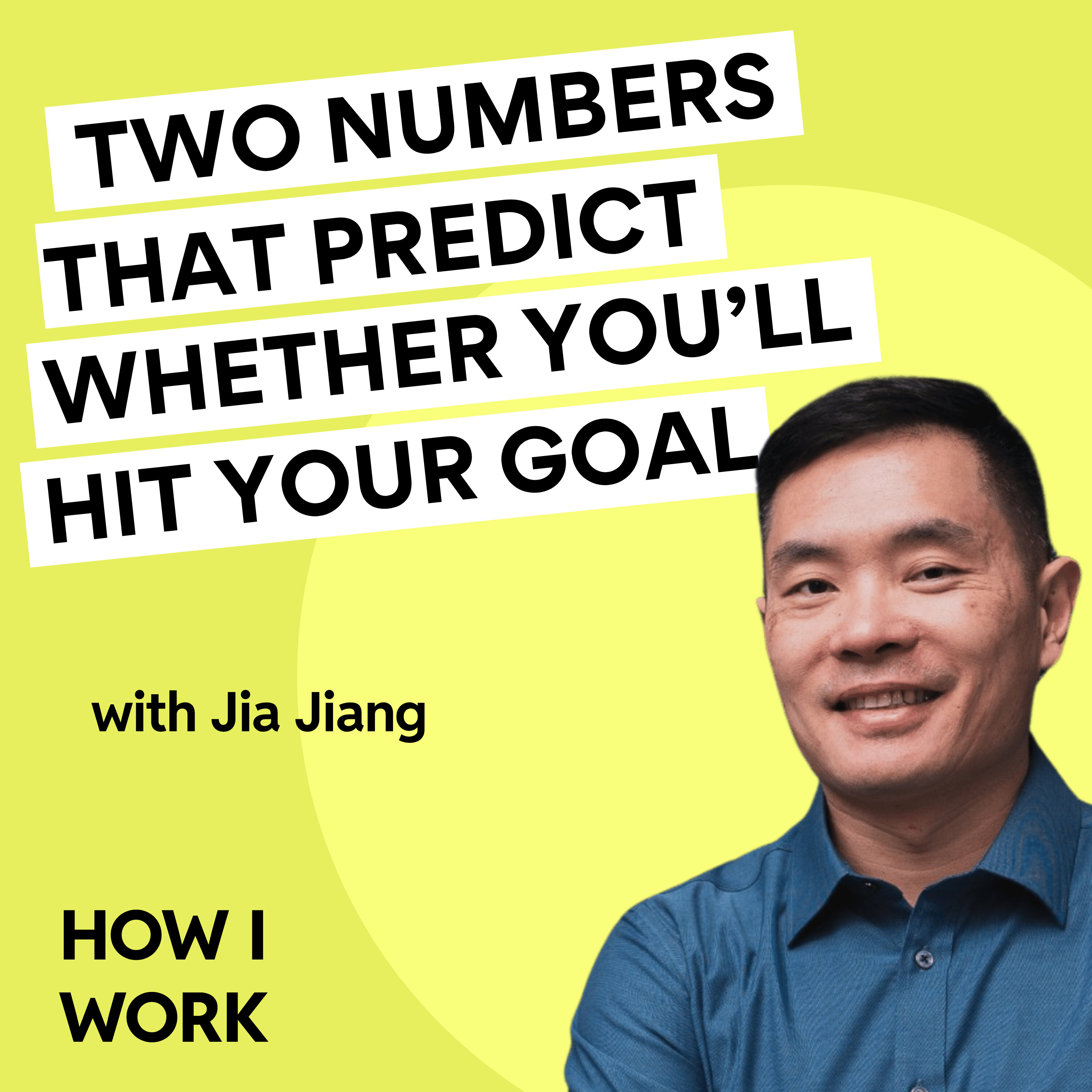
    The two numbers that predict whether you'll actually hit your goal, with Jia Jiang

    Every productivity guru will tell you the same thing: set realistic goals, or you're setting yourself up to fail. Jia Jiang did the opposite. He told the internet he'd sell 10,000 copies of his new book in 100 days, sold about 3,000, and is now going around calling it one of the best things he's ever done. He's not being delusional about it either. He'll tell you straight up that part of him wishes he'd hit the number. He just thinks failing loudly beats succeeding quietly, which might explain why only 9% of people who make a New Year's resolution actually stick to it. Most of us are setting goals to feel good for five minutes, not because we've figured out how to actually get there. In this episode, I sit down with Jia Jiang, the entrepreneur and speaker behind 100 Days of Rejection, a YouTube experiment that became a TED Talk with more than 10 million views. We talk about his new book, Easy Discipline, and how he turns huge, terrifying goals into something he can actually control day to day. If you have ever downgraded a goal so you wouldn't have to feel bad about missing it, Jia is about to make you rethink that entirely. Jia and I discuss: Why Jia deliberately sets goals so ambitious he is likely to miss them, and why a public near miss beats a comfortable target The one action goal: how to turn a big, uncontrollable ambition into a daily input you can fully control The inspiration index, the two numbers Jia tracks on every project, and why you need both the outcome and the input The Mover's Manual, and how changing his physical environment lets Jia get three to ten times more done in an afternoon Reverse AI: what happened when Jia started deliberately training himself the way AI models are trained The letter he wrote to Steven Bartlett after being turned down for Diary of a CEO, and why he published it anyway Key quotes "I'd rather fail my ambition publicly than letting it die inside privately." "When you are already rejected, you have nothing to lose. When you have nothing to lose, you have nothing to fear." Connect with Jia Jiang on Instagram, X (Twitter), LinkedIn and his website, read his newsletter on Substack, and check out his latest book Easy Discipline. If you enjoyed this episode, check out my chat with Google's Executive Productivity Advisor, Laura Mae Martin, on the practical strategies she uses to get more done in less time: https://www.amantha.com/podcasts/ruthless-prioritization-with-googles-executive-productivity-advisor-laura-mae-martin My latest book The Energy Game is out now. You can order a copy here: https://amzn.to/48ID29M Connect with me on the socials: Linkedin (https://www.linkedin.com/in/amanthaimber) Instagram (https://www.instagram.com/amanthai) If you are looking for more tips to improve the way you work and live, I write a weekly newsletter where I share practical and simple to apply tips to improve your life. You can sign up for that at https://amantha.substack.com/ Visit https://www.amantha.com/podcast for full show notes from all episodes. Get in touch at amantha@inventium.com.au Credits: Host: Amantha Imber Sound Engineer: The Podcast Butler See omnystudio.com/listener for privacy information.

    • Transcript
  • August 23 · 6 min

    Quick Win: The hidden reason AI isn’t delivering value at work, according to Dom Price

    AI might be saving you time, but if you don’t know what to do with that time, it’s not worth much. In this Quick Win, I’m joined by Dom Price, who spent 12 years as the Work Futurist at Atlassian. Dom shares a powerful reminder: saving time with AI is meaningless unless you know how to reinvest that time intentionally. After watching organisations roll out sophisticated AI tools without upgrading the human system around them, Dom explains why people often use their newfound hours poorly - and how a single, deliberate question can transform the return you get from AI. Dom and I discuss: Why organisations focus on AI tools but forget the human system that actually uses them The surprising behaviour Dom saw when teams became “35 percent more productive” - including a huge spike in meetings What happens when people gain time but aren’t guided on how to use it The small mindset shift that helps you reinvest saved time more wisely The reflection question that turns AI gains into genuine value: What’s the most valuable thing I can do with this time? KEY QUOTES “I don’t care what you saved. I care what you did with it.” “Take a moment before filling that space. Ask yourself: what’s the most valuable thing I can do with this time?” Connect with Dom Price on Instagram, LinkedIn and his website. Listen to the full conversation with Dom here. My latest book The Health Habit is out now. You can order a copy here: https://www.amantha.com/the-health-habit/ Connect with me on the socials: Linkedin (https://www.linkedin.com/in/amanthaimber) Instagram (https://www.instagram.com/amanthai) If you are looking for more tips to improve the way you work and live, I write a weekly newsletter where I share practical and simple to apply tips to improve your life. You can sign up for that at https://amantha-imber.ck.page/subscribe Visit https://www.amantha.com/podcast for full show notes from all episodes. Get in touch at amantha@inventium.com.au Credits: Host: Amantha Imber Sound Engineer: The Podcast Butler See omnystudio.com/listener for privacy information.

    • Transcript
  • August 19 · 32 min

    The Work Edit: How to scale a consulting business without growing the team

    Hiring feels like the obvious next move when a business starts doing well. More people, more capacity, more revenue. The logic is so clean it barely needs questioning. But the businesses with the smallest teams are sometimes the ones making the most money. This episode is part of The Work Edit, a format where I sit down with someone facing a real professional challenge and we work through it together. My guest is Lisa, who has spent four years building The Culture Ministry, a diversity and inclusion consulting business. She came to me with a question I hear constantly: how do I scale? What followed was a conversation about why growth doesn't have to mean hiring, what a proposal win rate above 60% is really telling you, and why a well-designed experiment beats any polished strategy framework. If you run your own business, or you're thinking about going out on your own, this one will give you plenty of tips to apply. Lisa and I discuss: Why hiring more people often grows revenue but not profit, and how Inventium is having its highest-profit year ever with a smaller team The single line in your profit and loss statement that signals when it's genuinely time to hire How AI has reshaped businesses, and the surprising place it creates new bottlenecks rather than removing them What a high proposal win rate is actually telling you about your pricing The Inventium ROI guarantee, and the slightly awkward question worth asking past clients about what you should have charged How to treat a market shift as an experiment to learn from, rather than a personal failure Key quotes "If you are getting the majority of your proposals accepted, I would say you're not charging enough." My latest book The Energy Game is out on July 7, 2026. You can order a copy here: https://amzn.to/48ID29M Connect with me on the socials: Linkedin (https://www.linkedin.com/in/amanthaimber) Instagram (https://www.instagram.com/amanthai) If you are looking for more tips to improve the way you work and live, I write a weekly newsletter where I share practical and simple to apply tips to improve your life. You can sign up for that at https://amantha.substack.com/ Visit https://www.amantha.com/podcast for full show notes from all episodes. Get in touch at amantha@inventium.com.au Credits: Host: Amantha Imber Sound Engineer: The Podcast Butler See omnystudio.com/listener for privacy information.

    • Transcript
  • August 16 · 11 min

    How I AI: The prompting mistake almost everyone makes

    How much of your week goes into fixing what AI just handed you? Not writing from scratch, just cleaning up, correcting, and nudging a draft that looked fine for about ten seconds before you actually needed it to work. That endless back and forth has a name. We call it slop fixing, and there is research suggesting it is quietly eating close to a full day of our working week. In this How I AI episode, Neo and I get into why this happens and the two very different ways of working with AI that decide whether it does. You will hear the difference between gunslinging and architecting, what a proper brief actually sounds like, and how to have a conversation with AI before you ask it to build anything. By the end, you will be getting version one at 90 percent instead of 20. What you'll learn: What actually separates AI slop from work that lands The difference between gunslinging and architecting with AI What a proper brief for AI actually sounds like How to have a real conversation with AI before asking it to build anything Why version one can land at 90 percent instead of 20 Practical AI tools for productivity and focus Real-world AI workflows used by high performers How to use AI at work without burning out Smart shortcuts for managing time and mental load Connect with Neo Aplin on LinkedIn (https://www.linkedin.com/in/neoaplin/) and via inventium.ai (https://inventium.ai), where he leads Inventium's AI training and upskilling work with organisations and teams. How I AI is a special series within How I Work where Neo and I explore how high performers are using AI at work to boost productivity, make better decisions and reduce overwhelm. My latest book The Energy Game is out now. You can order a copy here: https://amzn.to/48ID29M Connect with me on the socials: Linkedin (https://www.linkedin.com/in/amanthaimber) Instagram (https://www.instagram.com/amanthai) If you are looking for more tips to improve the way you work and live, I write a weekly newsletter where I share practical and simple to apply tips to improve your life. You can sign up for that at https://amantha.substack.com/ Visit https://www.amantha.com/podcast for full show notes from all episodes. Get in touch at amantha@inventium.com.au Credits: Host: Amantha Imber Sound Engineer: Martin Imber See omnystudio.com/listener for privacy information.

    • Transcript
  • August 12 · 36 min

    The 3 questions that reveal whether someone is actually motivated, with Dr Justin Coulson

    Every manager and every parent has met the same wall. Someone who won't engage, won't budge, won't do the thing, no matter how hard you push or how much you offer. Dr Justin Coulson has spent two decades inside the research explaining why pushing and bribing rarely work, and what actually does. Justin is a psychologist, bestselling author, host of the TV show Parental Guidance, and father of six daughters, and his work sits inside self-determination theory, one of the most evidence-based bodies of research in psychology. In this episode, I sit down with Justin to unpack the three basic psychological needs that shift someone from doing something because they have to, to doing it because they're genuinely on board. We also get into his early morning breathwork practice, why he believes boys are the solution rather than the problem, and a story involving his wife, a health retreat and a news website that will make you want to throw your phone into a river. If you've ever managed someone who just won't engage, or parented a kid who won't do anything without a fight, this conversation will change how you think about motivation altogether. Justin and I discuss: The four levels of motivation, from extrinsic to intrinsic, and why chasing intrinsic motivation in a team or a family is setting the bar too high The three basic psychological needs, relatedness, competence and autonomy, and why autonomy is often the linchpin Why "autonomy" doesn't mean freedom, and what it actually means in practice The three simple questions Justin uses with his own kids and with employees to work out where someone sits on the motivation continuum How he uses breathwork and carbon dioxide tolerance as a daily practice in building resilience What's really going on with boys today, and why Justin believes a healthy model of masculinity is the answer Key quotes "When people understand the value in the activity, when people buy the why, they will choose to do it autonomously, which means that you don't have motivation problems." "Most motivation problems aren't motivation problems at all. They're rationale problems." Connect with Justin Coulson on Instagram, LinkedIn and his website. Check out his latest book Boys, and listen to his podcast Happy Families. If this conversation got you thinking about motivation, I'd also recommend my episode with Dan Pink, where we dig further into the science of what drives us. Listen here. My latest book The Energy Game is out now. You can order a copy here: https://amzn.to/48ID29M Connect with me on the socials: Linkedin (https://www.linkedin.com/in/amanthaimber) Instagram (https://www.instagram.com/amanthai) If you are looking for more tips to improve the way you work and live, I write a weekly newsletter where I share practical and simple to apply tips to improve your life. You can sign up for that at https://amantha.substack.com/ Visit https://www.amantha.com/podcast for full show notes from all episodes. Get in touch at amantha@inventium.com.au Credits: Host: Amantha Imber Sound Engineer: The Podcast Butler See omnystudio.com/listener for privacy information.

    • Transcript
  • August 9 · 16 min

    How I AI: Do these 2 things if you're worried about AI and the environment

    There is a quiet guilt a lot of people carry every time they open ChatGPT. Somewhere between the headlines about data centres and the vague sense that AI is somehow worse for the planet than everything else we do without a second thought, it becomes easier to just feel bad than to actually work out whether that guilt is warranted. Nobody hands you the comparison points. Is a heavy day of prompting worse than a night of Netflix? Worse than a round of golf? Nobody says. In this How I AI episode, Neo and I go looking for the real figures. You will hear how an hour of heavy AI use stacks up against an hour of Netflix, why American golf courses use far more water than AI data centres, and the two things you can personally do that make a genuine difference, including one that has nothing to do with AI at all. What you'll learn: How an hour of heavy AI use actually compares to an hour of Netflix Why golf courses use more water than AI data centres, and why nobody is calling to ban golf What separates the environmental cost of training AI from simply using it What governments, companies and individuals can each actually do about AI's environmental impact The one everyday habit that beats cutting your AI use altogether Practical AI tools for productivity and focus Real-world AI workflows used by high performers How to use AI at work without burning out Smart shortcuts for managing time and mental load Connect with Neo Aplin on LinkedIn (https://www.linkedin.com/in/neoaplin/) and via inventium.ai (https://inventium.ai), where he leads Inventium's AI training and upskilling work with organisations and teams. How I AI is a special series within How I Work where Neo and I explore how high performers are using AI at work to boost productivity, make better decisions and reduce overwhelm. My latest book The Energy Game is out now. You can order a copy here: https://amzn.to/48ID29M Connect with me on the socials: Linkedin (https://www.linkedin.com/in/amanthaimber) Instagram (https://www.instagram.com/amanthai) If you are looking for more tips to improve the way you work and live, I write a weekly newsletter where I share practical and simple to apply tips to improve your life. You can sign up for that at https://amantha.substack.com/ Visit https://www.amantha.com/podcast for full show notes from all episodes. Get in touch at amantha@inventium.com.au Credits: Host: Amantha Imber Sound Engineer: Martin Imber See omnystudio.com/listener for privacy information.

    • Transcript
  • August 5 · 36 min

    Are you an insecure overachiever? Oliver Burkeman on why success never feels like enough

    There's a particular kind of tightness that creeps in when the world feels unpredictable. We tidy the to-do list, tighten the routine, optimise one more thing, all in an attempt to feel a bit more in control. Oliver Burkeman has a word for this: clenching. And he reckons it's squeezing the life out of us, even when it looks a lot like productivity. In this episode, I sit down with Oliver Burkeman, New York Times bestselling author of Four Thousand Weeks and Meditations for Mortals, and former writer of The Guardian's This Column Will Change Your Life, to talk about his forthcoming book Aliveness and what he calls unclenching, learning to loosen your grip on certainty rather than white-knuckle your way through it. We get into flexible goals, why urgency is so often someone else's agenda in disguise, and how to stop tying your self-worth to your latest achievement. If you have ever hit a goal and felt the satisfaction evaporate within minutes, this conversation will change how you think about ambition altogether. Oliver and I discuss: What "clenching" is, and why our instinct to grip tighter in uncertain times actually backfires The insecure overachiever trap, and why hitting a goal rarely feels like enough for long How Oliver's open list, closed list approach stops you drowning in fifty half-started things Setting a "no later than" time instead of a strict start time, and why looser goals often get more done Why urgency is so often someone else's agenda in disguise, and how to tell when it is genuinely yours What Oliver actually does with the emails he has not gotten to yet Key quotes "If you have this feeling of aliveness, even the most difficult challenges are copeable with, and if you don't have this feeling of aliveness, even the most impressive accomplishments are kind of worthless." "You will do enough, because you will do everything that it's within your capacities and your energy levels and your talents to do, and that just by definition will be all that you could ever have done." Connect with Oliver Burkeman on X (Twitter), LinkedIn and his website. Check out his latest book Meditations for Mortals and look out for his upcoming book Aliveness in 2027. If you want more from Oliver, listen back to our earlier conversation on time management, a great companion episode to this one: (https://www.amantha.com/podcasts/want-to-make-time-for-the-things-that-count) My latest book The Energy Game is out now. You can order a copy here: https://amzn.to/48ID29M Connect with me on the socials: Linkedin (https://www.linkedin.com/in/amanthaimber) Instagram (https://www.instagram.com/amanthai) If you are looking for more tips to improve the way you work and live, I write a weekly newsletter where I share practical and simple to apply tips to improve your life. You can sign up for that at https://amantha.substack.com/ Visit https://www.amantha.com/podcast for full show notes from all episodes. Get in touch at amantha@inventium.com.au Credits: Host: Amantha Imber Sound Engineer: The Podcast Butler See omnystudio.com/listener for privacy information.

    • Transcript
  • August 2 · 14 min

    How I AI: What you should never paste into AI

    Before you paste that customer list, that blood test result or that contract into your favourite AI tool, it's worth pausing for a second. Whatever you hand over doesn't just disappear after you get your answer. It sits somewhere, and depending on the tool and the settings, it might be doing more than just answering your question. Most people have never actually checked what happens to their data once it goes in or thought about the difference between what's fine to share and what's better redacted first. In this How I AI episode, Neo and I work through what's actually safe to give AI and what's better left out. We cover how to check your settings so free tools aren't training on your data, how to de-identify sensitive things like health results and contracts, the rules that change once you're at work, and the one question to ask yourself before you upload anything. What you'll learn: How to know if AI is quietly training on the data you give it, and how to switch that off The one question to ask before you upload anything to AI Why work and home should be treated completely differently when it comes to AI What to redact from contracts, spreadsheets and client files before sharing them Where the line sits between using AI as a sounding board and relying on it too much Practical AI tools for productivity and focus Real-world AI workflows used by high performers How to use AI at work without burning out Smart shortcuts for managing time and mental load Connect with Neo Aplin on LinkedIn (https://www.linkedin.com/in/neoaplin/) and via inventium.ai (https://inventium.ai), where he leads Inventium's AI training and upskilling work with organisations and teams. How I AI is a special series within How I Work where Neo and I explore how high performers are using AI at work to boost productivity, make better decisions and reduce overwhelm. My latest book The Energy Game is out now. You can order a copy here: https://amzn.to/48ID29M Connect with me on the socials: Linkedin (https://www.linkedin.com/in/amanthaimber) Instagram (https://www.instagram.com/amanthai) If you are looking for more tips to improve the way you work and live, I write a weekly newsletter where I share practical and simple to apply tips to improve your life. You can sign up for that at https://amantha.substack.com/ Visit https://www.amantha.com/podcast for full show notes from all episodes. Get in touch at amantha@inventium.com.au Credits: Host: Amantha Imber Sound Engineer: Martin Imber See omnystudio.com/listener for privacy information.

    • Transcript
  • July 29 · 34 min

    Part 2: The loneliness of leadership no one warned you about, with Christian O'Connell

    There is a version of leadership that looks effortless from the outside. The one where the leader always has the answers, always holds the vision, always appears composed. And then there is the version that happens in private, at 5:00 AM, when your mind is rehearsing every possible failure and no one can see it. What surprises most people is how often those two versions belong to the same person. In part two of my conversation with Christian O'Connell, breakfast radio host heard by hundreds of thousands of Australians every morning, we get into the parts of leadership nobody talks about publicly. Christian opens up about the loneliness of leading a team, the night he finally put his thoughts on a whiteboard and told his people the truth about how he'd been feeling, and why he believes his next book will be about leadership because nobody warned him how hard it would be. If you have ever found yourself carrying something heavy at work and deciding the most responsible thing to do as a leader is keep it to yourself, this conversation will make you question whether that instinct is actually protecting your team or just protecting you. Christian and I discuss: Why confidence is the wrong thing to aim for before you speak in public What happened when Christian finally stopped pretending everything was fine with his team The one thing that does more for a team than any solution or action plan Why 5am is the worst possible time to trust your own thoughts The David Letterman line that changed how Christian thinks about taking risks Why Christian considers himself an accidental leader, and what he's doing about it Key quotes "Confidence is something that catches up. Momentum is more important." "It's a beautiful thing, leadership. If you get it right, it's a path of aliveness and transformation. If you get it wrong, it's the opposite." Connect with Christian O'Connell on Instagram, X (Twitter), LinkedIn and his website. Tune in to The Christian O’Connell Show and check out his latest book Unscript: The Radical Act of Being Yourself. My latest book The Energy Game is out now. You can order a copy here: https://amzn.to/48ID29M Connect with me on the socials: Linkedin (https://www.linkedin.com/in/amanthaimber) Instagram (https://www.instagram.com/amanthai) If you are looking for more tips to improve the way you work and live, I write a weekly newsletter where I share practical and simple to apply tips to improve your life. You can sign up for that at https://amantha.substack.com/ Visit https://www.amantha.com/podcast for full show notes from all episodes. Get in touch at amantha@inventium.com.au Credits: Host: Amantha Imber Sound Engineer: The Podcast Butler See omnystudio.com/listener for privacy information.

    • Transcript
  • July 26 · 13 min

    How I AI: Agents, Projects, and Skills (oh my!): A no-fluff guide on when to use each one

    The AI world has has done a spectacularly bad job of naming things. Agents, GPTs, gems, notebooks, projects, skills - you'll find a completely different word for what is essentially the same kind of tool. Agents in one place, GPTs in another, gems somewhere else. Different names, similar ideas - and no handbook to tell you that. But the tools themselves are not that complicated. Once you know what each one is built to do, knowing which to reach for becomes straightforward. In this How I AI episode, Neo and I cut through the jargon and map out what Agents, Projects, and Skills actually are, how they differ from each other, and which one to reach for depending on what you need to do. How I AI is a special series within How I Work where Neo and I explore how high performers are using AI at work to boost productivity, make better decisions and reduce overwhelm. What you'll learn: Why agents, GPTs, and gems are the same kind of thing (just with different names) When a project is the right choice over an agent What makes a skill different from a long prompt Practical AI tools for productivity and focus Real-world AI workflows used by high performers How to use AI at work without burning out Smart shortcuts for managing time and mental load Connect with Neo Aplin on LinkedIn (https://www.linkedin.com/in/neoaplin/) and via inventium.ai (https://inventium.ai), where he leads Inventium's AI training and upskilling work with organisations and teams. My latest book The Energy Game is out now. You can order a copy here: https://amzn.to/48ID29M Connect with me on the socials: Linkedin (https://www.linkedin.com/in/amanthaimber) Instagram (https://www.instagram.com/amanthai) If you are looking for more tips to improve the way you work and live, I write a weekly newsletter where I share practical and simple to apply tips to improve your life. You can sign up for that at https://amantha.substack.com/ Visit https://www.amantha.com/podcast for full show notes from all episodes. Get in touch at amantha@inventium.com.au Credits: Host: Amantha Imber Sound Engineer: Martin Imber See omnystudio.com/listener for privacy information.

    • Transcript
  • July 22 · 28 min

    Part 1: Christian O'Connell on the habit that means he never runs out of stories

    ** Grab tickets for The Energy Game Melbourne launch (29 July, 6:30pm) here and order The Energy Game book here.** What if the stories you're most afraid to tell are the ones people most need to hear? Christian O'Connell has spent 28 years pulling stories out of strangers on live radio. He's had two number one breakfast shows on opposite sides of the planet. And yet off-air, he still catches himself at dinner with his family thinking he hasn't said anything funny in a couple of minutes, and that inner critic starting to spiral. In part one of our two-part conversation, I sit down with Christian to explore what he's learned from nearly three decades of live storytelling - and why most of us are telling our stories all wrong. Whether you tell stories for a living or you just want to hold a room for 30 seconds at a dinner party, this conversation will give you a completely different way to think about why some stories land and others don't. Christian and I discuss: The woodshed: the note-taking habit Christian uses so he's never stuck for something to say Why the stories you least want to tell are usually the ones that land hardest The two levels inside every story, and why most of us only ever tell one of them The physical test Christian uses to decide if a story is worth sharing Why the best storytellers relive rather than retell, and what that looks like in practice How speaking anxiety comes down to one thing, and it's not what most people think Key quotes "Vulnerability is the currency of great storytelling. If there's no vulnerability in here, there's no real connection in it." "The more you dial into the particulars of a story, somehow it becomes more universal." Connect with Christian O'Connell on Instagram, X (Twitter), LinkedIn and his website. Tune in to The Christian O’Connell Show and check out his latest book Unscript: The Radical Act of Being Yourself. My latest book The Energy Game is out now. You can order a copy here: https://amzn.to/48ID29M Connect with me on the socials: Linkedin (https://www.linkedin.com/in/amanthaimber) Instagram (https://www.instagram.com/amanthai) If you are looking for more tips to improve the way you work and live, I write a weekly newsletter where I share practical and simple to apply tips to improve your life. You can sign up for that at https://amantha.substack.com/ Visit https://www.amantha.com/podcast for full show notes from all episodes. Get in touch at amantha@inventium.com.au Credits: Host: Amantha Imber Sound Engineer: The Podcast Butler See omnystudio.com/listener for privacy information.

    • Transcript
  • July 19 · 16 min

    How I AI: The three questions to ask before picking an AI platform

    You see another article. "This platform just changed everything." And suddenly, the AI platform you've been using for months feels completely inadequate. You wonder if you're behind. You wonder if you should switch again. Neo and I have had this conversation more times than we can count, and it's one of the questions we get asked constantly at Inventium AI. Which of the four major AI platforms, Copilot, ChatGPT, Claude and Gemini, should you actually be using? In this How I AI episode, Neo and I walk through the three questions you should ask yourself before committing to any platform, then go through each one in turn to unpack where it shines and where it falls short. By the end, you will have a clear enough picture to make a call, or at least know which one to try next. How I AI is a special series within How I Work where Neo and I explore how high performers are using AI at work to boost productivity, make better decisions and reduce overwhelm. What you'll learn: The three questions to ask before committing to any AI platform Why your data's location could rule out certain options entirely Which platform actually plugs into your daily work apps How pricing models are shifting in ways that could blindside your budget What to weigh before moving your whole company over Practical AI tools for productivity and focus Real-world AI workflows used by high performers How to use AI at work without burning out Smart shortcuts for managing time and mental load Connect with Neo Aplin on LinkedIn (https://www.linkedin.com/in/neoaplin/) and via inventium.ai (https://inventium.ai), where he leads Inventium's AI training and upskilling work with organisations and teams. My latest book The Energy Game is out now. You can order a copy here: https://amzn.to/48ID29M Connect with me on the socials: Linkedin (https://www.linkedin.com/in/amanthaimber) Instagram (https://www.instagram.com/amanthai) If you are looking for more tips to improve the way you work and live, I write a weekly newsletter where I share practical and simple to apply tips to improve your life. You can sign up for that at https://amantha.substack.com/ Visit https://www.amantha.com/podcast for full show notes from all episodes. Get in touch at amantha@inventium.com.au Credits: Host: Amantha Imber Sound Engineer: Martin Imber See omnystudio.com/listener for privacy information.

    • Transcript
  • July 15 · 46 min

    How to get your energy back without overhauling your life

    ** Grab tickets for The Energy Game Melbourne launch (29 July, 6:30pm) here and order The Energy Game book here.** If you're someone who keeps saying yes when you should say no, or who has never once thought of rest as a skill worth building, this conversation will give you a starting point that doesn't require overhauling your life. This is part two of a two-part crossover with the This Is Work podcast, hosted by Shelley Johnson. In this episode, Shelley and I go deep into the science-backed strategies from my new book, The Energy Game, covering all three categories: boost strategies that take less than five minutes, rest strategies that are genuinely restorative (not just fake rest on the couch), and protect strategies that stop your energy leaking in the first place. Because knowing you're burning out is one thing. Knowing what to actually do about it is another. Shelley and I discuss: A surprisingly simple post-meal habit that stabilises your energy for hours Why the thing most of us do to wind down at night is not actually rest The acupressure technique from cancer recovery research that changed how I think about fatigue What happened to my creativity when I stopped filling every quiet moment with podcasts The tapping technique I used to conquer a phobia, and why it works for stress too A three-question filter for deciding what to say yes to, inspired by Adam Grant The worst speaking gig of my life, and the list I started that night Key quotes "Have you ever woken up in the morning and thought, 'I'm too busy to scroll Instagram today'? No. There you go. So you've got time to rest." "You don't have to overhaul your life to get your energy back." Connect with Shelley via LinkedIn, or through Boldside’s Instagram and website. For more conversations on meaningful work, sustainable success, and showing up as your best self – check out Shelley’s podcast this is work. If you're jumping in fresh, part one is waiting for you. We cover the warning signs of burnout, the four energy types, and why "I'm tired" isn't actually telling you much. Listen here. My latest book The Energy Game is out now. You can order a copy here: https://amzn.to/48ID29M Connect with me on the socials: Linkedin (https://www.linkedin.com/in/amanthaimber) Instagram (https://www.instagram.com/amanthai) If you are looking for more tips to improve the way you work and live, I write a weekly newsletter where I share practical and simple to apply tips to improve your life. You can sign up for that at https://amantha-imber.ck.page/subscribe Visit https://www.amantha.com/podcast for full show notes from all episodes. Get in touch at amantha@inventium.com.au Credits: Host: Amantha Imber Sound Engineer: Martin Imber See omnystudio.com/listener for privacy information.

    • Transcript
  • July 12 · 16 min

    How I AI: Cowork explained in 10 Minutes

    You've probably seen Cowork mentioned inside Claude, or perhaps you clocked the headlines when Microsoft folded it into Copilot a couple of weeks ago. Either way, the question people keep asking is simple: how is this actually different from just chatting with Claude? The answer comes down to files, time and money - three things that change quite dramatically once you move from chat to Cowork. In this How I AI episode, Neo and I unpack exactly what Cowork can do that regular chat can't, how to know which one to reach for, and what the new Microsoft version means if you're a Copilot user. How I AI is a special series within How I Work where Neo and I explore how high performers are using AI at work to boost productivity, make better decisions and reduce overwhelm. What you'll learn: What actually changes when Claude can touch files on your own computer The simple test for deciding between Chat and Cowork for any task How Cowork differs from Claude Code, and who each one is really built for Three lesser known Cowork features worth exploring What Microsoft's version of Cowork does differently, and what it costs Practical AI tools for productivity and focus Real-world AI workflows used by high performers How to use AI at work without burning out Smart shortcuts for managing time and mental load Connect with Neo Aplin on LinkedIn (https://www.linkedin.com/in/neoaplin/) and via inventium.ai (https://inventium.ai), where he leads Inventium's AI training and upskilling work with organisations and teams. My latest book The Energy Game is out now. You can order a copy here: https://amzn.to/48ID29M Connect with me on the socials: Linkedin (https://www.linkedin.com/in/amanthaimber) Instagram (https://www.instagram.com/amanthai) If you are looking for more tips to improve the way you work and live, I write a weekly newsletter where I share practical and simple to apply tips to improve your life. You can sign up for that at https://amantha.substack.com/ Visit https://www.amantha.com/podcast for full show notes from all episodes. Get in touch at amantha@inventium.com.au Credits: Host: Amantha Imber Sound Engineer: Martin Imber See omnystudio.com/listener for privacy information.

    • Transcript
  • July 8 · 40 min

    The warning signs of burnout I missed for nearly an entire year

    ** Grab tickets for The Energy Game Melbourne launch (29 July, 6:30pm) here and order The Energy Game book here.** What does it take to realise you've hit burnout? For me, it wasn't a dramatic collapse. It was a fantasy about being hospitalised just so no one could contact me, and the hardest decision I'd face would be lime or raspberry jelly. When I shared that thought with a friend who is also a clinical psychologist, she told me she'd heard it so many times she had a name for it. That moment of recognition, equal parts relief and horror, was the beginning of understanding just how depleted I had become. This is part one of a two-part crossover with the This Is Work podcast, hosted by Shelley Johnson. Shelley asked me all about my year of burnout, the early warning signs I missed, and what I found when I went looking for a way out that didn't require completely overhauling my life. We also get into The Energy Game, my new book, and the framework behind it, including the four energy types, the three energy accounts, and why the phrase "I'm tired" is actually making it harder to solve the problem. Shelley and I discuss: The "getting hit by a bus" fantasy: what it signals about how depleted you really are, and why a clinical psychologist says she hears this constantly in private practice The three early warning signs of burnout that I missed for months, covering the physical, mental, and emotional dimensions The push through paradox: why working 60 or 70 hours a week can make you progressively less productive until everything goes on strike Why the four energy types (achievement addict, over-committer, perfectionist, and people pleaser) are seasonal, not fixed, and what it means when you take any of them to the extreme Why thinking of energy as one big concept makes burnout harder to solve, and how splitting it into three separate accounts (physical, mental, emotional) gives you somewhere to actually start The minimum viable dose philosophy behind The Energy Game, and why the 53 challenges in the book were designed for people who are too exhausted for anything that takes real effort Key quotes "When you're in the depths of exhaustion, that advice just doesn't cut it." "Clarity is always the first step to problem-solving." Connect with Shelley via LinkedIn, or through Boldside’s Instagram and website. For more conversations on meaningful work, sustainable success, and showing up as your best self – check out Shelley’s podcast this is work. Find out your energy type here: Energy type assessment My latest book The Energy Game is out now. You can order a copy here: https://amzn.to/48ID29M Connect with me on the socials: Linkedin (https://www.linkedin.com/in/amanthaimber) Instagram (https://www.instagram.com/amanthai) If you are looking for more tips to improve the way you work and live, I write a weekly newsletter where I share practical and simple to apply tips to improve your life. You can sign up for that at https://amantha-imber.ck.page/subscribe Visit https://www.amantha.com/podcast for full show notes from all episodes. Get in touch at amantha@inventium.com.au Credits: Host: Amantha Imber Sound Engineer: Martin Imber See omnystudio.com/listener for privacy information.

    • Transcript
  • July 5 · 12 min

    How I AI: What is tokenomics, and why should you care

    If your organisation has moved its AI licenses onto a per-use plan, every single chat thread your team sends is now adding to a bill. Some companies are already burning through their entire IT budget for AI within the first couple of months of the year, and most staff have no idea their usage is costing anything at all. It doesn't have to be a mystery. There are simple habits, from which model you default to, to what time of day you send your first message, that change how far your usage actually stretches. In this How I AI episode, Neo and I unpack tokenomics, the economics of how you actually use your AI. We get into how usage limits work across the major platforms, why the timing of your first chat each day matters more than you'd think, and what changes once you move from a personal plan to an enterprise one. How I AI is a special series within How I Work where Neo and I explore how high performers are using AI at work to boost productivity, make better decisions and reduce overwhelm. What you'll learn: What tokenomics actually means and why it's suddenly everywhere How Claude's usage window works differently to ChatGPT and Copilot The simple morning habit that changes how far your usage window stretches Why enterprise billing is shifting, and what that means for your team's budget What managers should be doing before token usage gets out of hand Practical AI tools for productivity and focus Real-world AI workflows used by high performers How to use AI at work without burning out Smart shortcuts for managing time and mental load Connect with Neo Aplin on LinkedIn (https://www.linkedin.com/in/neoaplin/) and via inventium.ai (https://inventium.ai), where he leads Inventium's AI training and upskilling work with organisations and teams. My latest book The Energy Game is out on July 7, 2026. You can order a copy here: https://amzn.to/48ID29M Connect with me on the socials: Linkedin (https://www.linkedin.com/in/amanthaimber) Instagram (https://www.instagram.com/amanthai) If you are looking for more tips to improve the way you work and live, I write a weekly newsletter where I share practical and simple to apply tips to improve your life. You can sign up for that at https://amantha.substack.com/ Visit https://www.amantha.com/podcast for full show notes from all episodes. Get in touch at amantha@inventium.com.au Credits: Host: Amantha Imber Sound Engineer: Martin Imber See omnystudio.com/listener for privacy information.

    • Transcript
  • July 1 · 54 min

    Behind the book deal: How a book goes from pitch to print, with Penguin Random House's Izzy Yates

    ** Grab tickets for The Energy Game Melbourne launch (29 July, 6:30pm) here and pre-order The Energy Game book here.** Writing a book is hard. But getting a publisher to say yes to your book? That is an entirely different challenge, and one that most aspiring authors know almost nothing about. What actually happens when a proposal lands on a publisher's desk? Who else needs to sign off before an offer is made? And in a world where anyone can ask AI to explain any topic, why has "great content" stopped being enough on its own? This one is a little different from my usual episodes. It's a recording from a live webinar I did with Izzy Yates, head of Penguin Publishing Lab at Penguin Random House Australia, who has published my last three books, including my newest one, The Energy Game. We unpack the full journey of a book, from proposal to bookshelf, including how Penguin's internal acquisitions process works, why pre-orders matter far more than most people realise, what actually gets retailers excited, and whether you can land a deal without a big platform. If you have ever thought about writing a book, or you are in the middle of writing one right now, this is the conversation I wish I had heard before I started. Izzy and I discuss: What made my first book proposal stand out, and the key ingredients Izzy looks for in every strong proposal The formula publishers use to evaluate a book: the quality of the idea multiplied by the size of the author's platform, and why it's more nuanced than it sounds Why authors who weave personal story into their content are having more success than those who rely on expertise alone How Penguin's two-stage internal process works, from publishing meeting to acquisitions meeting, before any offer is made The full editorial journey from first draft to printed book: structural edit, copy edit, and proofread How titles and covers are developed collaboratively, and what the team considers when landing on a final design Why pre-orders matter so much and how they create a virtuous cycle with retailers and chart placement Whether you can get a book deal without an existing audience or platform What topics and themes Izzy sees as most resonant right now, particularly in the health and personal development crossover space Pre-order The Energy Game: https://amzn.to/48ID29M and book your ticket to the Melbourne book launch at the Malthouse Theatre on July 29 with Lisa Leong here. Connect with me on the socials: Linkedin (https://www.linkedin.com/in/amanthaimber) Instagram (https://www.instagram.com/amanthai) If you are looking for more tips to improve the way you work and live, I write a weekly newsletter where I share practical and simple to apply tips to improve your life. You can sign up for that at https://amantha.substack.com/ Visit https://www.amantha.com/podcast for full show notes from all episodes. Get in touch at amantha@inventium.com.au Credits: Host: Amantha Imber Sound Engineer: Martin Imber See omnystudio.com/listener for privacy information.

    • Transcript
  • June 28 · 16 min

    How I AI: Which AI model should I use for which task?

    If you've ever stared at a model picker and wondered whether to click Flash, Sonnet, Opus, Instant, or Think Deeper, you are not alone. These naming conventions are genuinely confusing, and most people just pick something and hope it works. The stakes are higher than they might seem, though. Token misuse has left some companies with eye-watering AI bills, including one case where a single employee ran up a $500,000 tab in a month. The good news is that there is a simple mental model that cuts through all the noise, and once you have it, choosing the right model for any task takes seconds. In this How I AI episode, Neo and I walk through the four major AI platforms, Gemini, ChatGPT, Claude, and Copilot, and break down exactly which model to use and when. We also get into tokens, usage limits, and why matching the model to the task matters far more than most people realise. How I AI is a special series within How I Work where Neo and I explore how high performers are using AI at work to boost productivity, make better decisions and reduce overwhelm. What you'll learn: Why ignoring model numbers and reading the small print instead saves a lot of confusion What Fable and Mythos are, and why you can't use them right now How token usage works and why the right model choice protects your access Practical AI tools for productivity and focus Real-world AI workflows used by high performers How to use AI at work without burning out Smart shortcuts for managing time and mental load Connect with Neo Aplin on LinkedIn (https://www.linkedin.com/in/neoaplin/) and via inventium.ai (https://inventium.ai), where he leads Inventium's AI training and upskilling work with organisations and teams. My latest book The Energy Game is out on July 7, 2026. You can order a copy here: https://amzn.to/48ID29M Connect with me on the socials: Linkedin (https://www.linkedin.com/in/amanthaimber) Instagram (https://www.instagram.com/amanthai) If you are looking for more tips to improve the way you work and live, I write a weekly newsletter where I share practical and simple to apply tips to improve your life. You can sign up for that at https://amantha.substack.com/ Visit https://www.amantha.com/podcast for full show notes from all episodes. Get in touch at amantha@inventium.com.au Credits: Host: Amantha Imber Sound Engineer: Martin Imber See omnystudio.com/listener for privacy information.

    • Transcript
Showing 1–20 of 22 episodes