Skip to content
Artwork for Hometown History
HistoryTrue CrimeSociety & Culture

Hometown History

Shane Waters

Discover forgotten stories from small-town America that never made it into history books. Hometown History is the podcast uncovering hidden American history—overlooked events, local mysteries, and untold tragedies from communities across the nation. Every week, meticulous research brings pre-2000 small-town stories to life in 20-minute episodes. From forgotten disasters to local legends, hidden chapters to pivotal moments, each episode explores a different town's overlooked history. Perfect for history enthusiasts seeking forgotten American stories, small-town history, and local history that shaped our nation. Respectful storytelling meets educational depth—history podcast content for curious minds who want to learn about America's hidden past without hour-long episodes.

Play
  • 23 episodes
  • weekly
  • Avg 20 min
  • English
Counted on this page — what you have heard stays on this device, so it is not something the list can be paged by.
  • #207
    Tuesday · 19 min

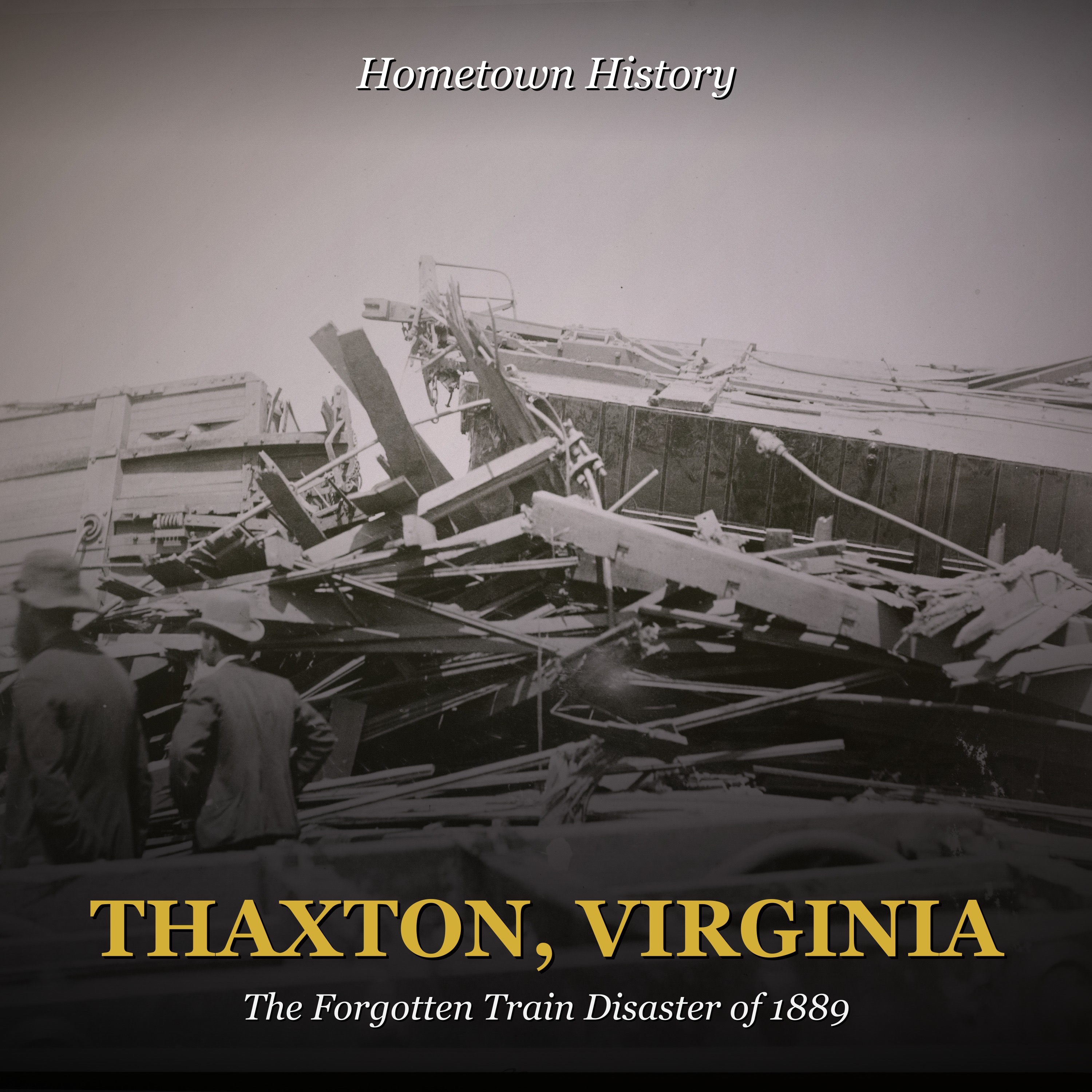
    Thaxton, Virginia: The Forgotten Train Disaster of 1889

    On the evening of July 1, 1889, Passenger Train Number Two pulled out of Roanoke, Virginia, bound east through the Blue Ridge. It was a through train, New Orleans to New York, already running late, with Engine Number Thirty at the head and 74 people aboard, 56 passengers and a crew of 18. Among them were three young men from Cleveland, Tennessee, in the first-class coach: William Steed, a thirty-year-old druggist, William Marshall, the twenty-two-year-old city recorder, and John Hardwick, thirty-three, whose father founded the Cleveland Woolen Mills. They were bound for New York to board a ship for Paris and the 1889 World's Fair. Their whole town had turned out on the platform to see them off. That night a storm turned Wolf Creek into a churning brown river. At Blue Ridge station Conductor R. P. Johnson took a message off the wire: the track is flooded to Liberty, run with great care, there is great danger. The crew talked it over at Buford and went on east, because there was no easy way to turn a through train around. At about 1:25 in the morning on July 2, Train Number Two reached Newman's Fill, where the line crossed Wolf Creek on packed dirt over a culvert. One survivor called the dark Egyptian blackness. Engineer Patrick Donovan could not have seen the gap where solid ground had been a few hours earlier. Timeline of Events July 1, 1889, evening: Train Number Two leaves Roanoke running late, bound east through the mountains. July 2, 1889, about 12:30 AM: Past Ironville, water is running over the rails. The train stops at Buford, then continues east, twenty-seven minutes behind schedule. July 2, 1889, about 1:25 AM: Engine Number Thirty hits the washout at Newman's Fill. The locomotive drops into the creek bed and the wooden cars fold in behind it. July 2, 1889, minutes later: Coal from the firebox and oil from the lamps set the split-open wooden coaches burning. Donovan, scalded by escaping steam, dies in the cab. He never left his post. July 2, 1889, dawn: Nearly five hours pass before relief reaches the site. The telegraph lines are down and nobody is coming. Afterward: Commissioner James C. Hill puts the cause on the track, not the crew. The culvert could not carry what the creek was pushing, and Donovan is cleared. Historical Significance At least eighteen people died and twenty-one more were hurt. The burning was so complete that most of the dead could never be named; recovery crews counted spinal columns out of the ash, and at least one passenger was never accounted for at all. Section master Tandy Jones, who knew every tie and culvert on his stretch, said afterward that he had been greatly surprised to hear an accident had happened at that culvert, because he regarded it as one of the safest on the line. That is the one the creek took. Major Henry N. Martin, a Civil War veteran who got out alive, said he had stood on the battlefield and watched his comrades fall like leaves in autumn and had never seen anything that curdled his blood the way that night did. W. J. Barksdale escaped and then stayed, working to free trapped passengers, telling the women who begged him to go that he would not leave until they were all safe. Steed, Marshall, and Hardwick never got past the Blue Ridge. Sources Lost at Thaxton survivor statements and recovery records Commissioner James C. Hill's investigation report, 1889 Norfolk and Western Railway records George C. Davis photograph of the wreck, Virginia Room digital collection If you liked this: Episode 191, Deal Beach, New Jersey. Another mass-casualty disaster that vanished from public memory almost as fast as it happened. Hometown History explores forgotten stories from small-town America. The overlooked events, hidden triumphs, and buried tragedies that shaped the country we live in. New episodes every Tuesday. Find every episode at mythsandmalice.com/hometown-history Episode 207 | Hometown History | Hosted by Shane Waters Advertising Inquiries: https://redcircle.com/brands Privacy & Opt-Out: https://redcircle.com/privacy

    • Transcript
  • #206
    August 25 · 19 min

    Bath, Michigan: The School Treasurer Who Spent Eight Months Planting Dynamite

    In May 1927, the small farming community of Bath Township, Michigan, suffered the deadliest school attack in American history, and nearly a century later most Americans have never heard of it. Andrew Kehoe, a 55-year-old trained electrician and school board treasurer, spent eight months secretly wiring Bath Consolidated School with more than a thousand pounds of dynamite and military-surplus pyrotol. On May 18, 1927, he detonated the north wing at 8:45 AM, killing 38 children and 6 adults. The south wing charges never went off because of a faulty alarm clock mechanism, which spared 106 students sitting directly above 500 pounds of live explosives. Kehoe also murdered his wife Nellie, destroyed his own farm with incendiary devices, and set off a truck bomb near the rescuers, killing Superintendent Emory Huyck, postmaster Cleo Clayton, and resident Glenn Smith. The community of Bath chose to rebuild the school on the same site. Among the families who returned was that of eight-year-old survivor Bernice Sterling, who had lost three siblings that morning. Timeline of Events July 1926: Andrew Kehoe is elected school board treasurer. January 1927: Kehoe begins secretly wiring the school basement with explosives. January to April 1927: He buys more than 1,000 pounds of dynamite and pyrotol from stores across three counties. May 17, 1927: Kehoe sets all of the timing devices for the following morning. May 18, 1927, 8:00 AM: Kehoe kills his wife Nellie. May 18, 1927, 8:45 AM: The north wing of Bath Consolidated School detonates. The south wing charges fail. May 18, 1927, 9:00 AM: The Kehoe farm is destroyed by incendiary devices. May 18, 1927, 9:30 AM: Kehoe detonates a truck bomb near the rescuers, killing himself and three others. May 19, 1927: More than 500 pounds of unexploded dynamite is found in the south wing. September 1928: The new Bath School opens with enhanced safety protocols. Historical Significance The Bath School disaster remains the deadliest school attack in American history, worse than every incident that has followed it. Michigan wrote the first school building safety codes in direct response, covering basement security, access restrictions, and background checks for staff with building access. In 1994, at age 75, survivor Bernice Sterling testified before Congress about school safety. The Bath School Memorial Museum, established in 1975, preserves evidence including the original clock stopped at 8:45 AM. The community's cup and saucer tree, built with dishes salvaged from victims' homes, still stands as a place people travel to see. The last survivor died in 2018 at age 99. Sources Michigan State Police investigation records Bath school board minutes, 1926 to 1927 Store purchase receipts from Lansing, St. Johns, and Owosso Survivor testimony of Bernice Sterling, Congressional record, 1994 Bath School Memorial Museum archives If you liked this: Episode 189, Ord, Nebraska. Another story of a schoolhouse at the center of a catastrophe, and the person who had to decide what to do next. Hometown History explores forgotten stories from small-town America. The overlooked events, hidden triumphs, and buried tragedies that shaped the country we live in. New episodes every Tuesday. Find every episode at mythsandmalice.com/hometown-history Episode 206 | Hometown History | Hosted by Shane Waters Advertising Inquiries: https://redcircle.com/brands Privacy & Opt-Out: https://redcircle.com/privacy

    • Transcript
  • #205
    August 18 · 22 min

    Tucker, Arkansas: Secrets of Tucker Prison Farm - The Torture Machine

    In the 1960s, Tucker State Prison Farm in Arkansas sat on 4,500 acres of Delta bottomland in Jefferson County. Three hundred inmates worked the cotton and soybean fields under the supervision of armed fellow prisoners, a practice the state called the trusty system. Only eight free-world employees ran the entire facility. Behind the walls of the so-called hospital building, a prison physician named A.E. Rollins had rigged a hand-crank telephone to deliver electrical shocks to inmates strapped to an examination table. The prisoners called a short burst "a phone call." A sustained crank was "a long-distance call." The device became known as the Tucker Telephone, and it operated for years without any outside investigation. Men died of unexplained cardiac arrest. Others carried nerve damage for life. It took an idealist superintendent named Tom Murton, a federal lawsuit called Holt v. Sarver, and a conservative judge willing to use the word "evil" to finally bring the system down, in a ruling that declared an entire state prison system unconstitutional for the first time in American history. Timeline of Events 1916: Arkansas purchases Tucker Prison Farm, 4,500 acres of Delta bottomland intended for agricultural production using inmate labor. 1960s: The Tucker Telephone is in routine use under prison physician A.E. Rollins. At least nine inmates die of cardiac failure between 1964 and 1967. January 1968: Governor Winthrop Rockefeller appoints reformer Tom Murton as prison superintendent. Murton discovers unmarked graves at Cummins Prison Farm and unearths skeletal remains showing evidence of violence. October 1968: Inmates file Holt v. Sarver in federal court. February 18, 1970: Judge J. Smith Henley rules the entire Arkansas prison system unconstitutional, a first in U.S. legal history. Historical Significance Holt v. Sarver transformed American corrections law. Before that ruling, federal courts largely treated prison conditions as a state matter and kept their hands off. Judge Henley's decision established that the Eighth Amendment's prohibition on cruel and unusual punishment applied not just to individual acts but to entire systems of incarceration. The case set the legal foundation for decades of prison reform litigation across the country. The Tucker Telephone itself became a symbol of what happens when an institution operates without oversight, and it is still referenced in law school textbooks, criminal justice scholarship, and the 1980 film "Brubaker," starring Robert Redford, which drew directly from Tom Murton's experience. Sources Holt v. Sarver, 309 F. Supp. 362 (E.D. Ark. 1970), court transcripts Tom Murton, Accomplices to the Crime: The Arkansas Prison Scandal (Grove Press, 1969) Arkansas State Archives photographic collection If you liked this: Episode 204, Little Rock, Arkansas. Another Arkansas institution that hid what it did to the people in its custody. Hometown History explores forgotten stories from small-town America. The overlooked events, hidden triumphs, and buried tragedies that shaped the country we live in. New episodes every Tuesday. Find every episode at mythsandmalice.com/hometown-history Episode 205 | Hometown History | Hosted by Shane Waters Advertising Inquiries: https://redcircle.com/brands Privacy & Opt-Out: https://redcircle.com/privacy

    • Transcript
  • #204
    August 11 · 21 min

    Little Rock, Arkansas: The Asylum That Buried Thousands in Unmarked Graves

    In 1975, a construction crew breaking ground for a government complex on West Markham Street in Little Rock, Arkansas, unearthed an estimated three thousand to four thousand bodies buried in shallow, unmarked graves. They were patients of the Arkansas Lunatic Asylum — committed not only for mental illness but for alcoholism, epilepsy, poverty, old age, and conditions as vague as "emotional difficulty due to menopause." Most had no family to claim them. Most had no headstone. Most had no name left in any record the state still kept. Shane Waters traces the full arc of this institution, from its hopeful founding in 1883 under the progressive Kirkbride Plan — which demanded sunlight, fresh air, and a maximum of 250 patients — to its collapse into a warehouse for the forgotten, where the patient census swelled past 5,000 in buildings designed for 1,750. Along the way, the asylum survived a devastating tornado in 1894, cycled through name changes meant to mask its failures, and forced patients into unpaid labor on a segregated farm. The story of the Arkansas Lunatic Asylum is a story about what happens when a society decides some people are not worth treating — and eventually decides they are not worth remembering. Timeline of Events The history of institutional mental health care in Arkansas stretches across more than a century of ambition, neglect, and rediscovery. 1873: Arkansas legislators H.M. McVeigh and D.P. Baldwin introduce Act 66, appropriating $50,000 for a state asylum. Governor Elisha Baxter signs it into law on April 19. 1883: The Arkansas Lunatic Asylum opens on March 1 under Superintendent Dr. Chastaine Caldwell Forbes, with the first patient admitted days earlier by legislative order. 1894: A tornado destroys multiple wards of the South Wing on October 2, killing asylum physician J.T. Ingate and causing over $1 million in damage. 1934-1935: Patient census reaches 4,996 to 5,046 — nearly three patients for every bed in a facility designed for 1,750. 1963: The original Kirkbride asylum buildings are demolished. All traces of the structure vanish. 1975: Construction crews discover an estimated 3,000-4,000 bodies in unmarked graves. Roughly half are relocated to the Benton Services Center cemetery; an estimated 1,500-2,000 remain beneath government buildings and parking lots. Historical Significance The Arkansas Lunatic Asylum represents one of the most stark examples of institutional failure in American mental health history. What began as a progressive experiment in architectural healing — rooted in the Moral Management movement of Philippe Pinel and William Tuke — devolved into systematic overcrowding, forced labor, and mass anonymous burial. The 1975 discovery of thousands of unmarked graves beneath state-owned land forced a reckoning with how Arkansas treated its most vulnerable citizens for nearly a century. Today, researchers through the Arkansas Lunatic Asylum WordPress project and the Privett Family Photo Album are working to recover the names and stories of forgotten patients. The site along West Markham Street remains in use as state government offices, with a modest memorial standing over the one-acre plot where an estimated 1,500-2,000 souls still rest beneath the soil. Advertising Inquiries: https://redcircle.com/brands Privacy & Opt-Out: https://redcircle.com/privacy

    • Transcript
  • #203
    June 2 · 18 min

    Jackson, Kentucky: The Lawyer Who Carried His Baby as a Bulletproof Shield

    In the spring of 1903, attorney James Buchanan Marcum faced a terrible daily calculation in Jackson, Kentucky. For seventy-two days, the most prominent lawyer in Breathitt County refused to leave his own home without his infant son pressed against his chest. The reasoning was as simple as it was horrifying: the men who wanted him dead would not risk shooting a man holding a baby. Marcum had made enemies of the most powerful political machine in eastern Kentucky, Judge James Hargis and Sheriff Ed Callahan, by challenging their stolen elections in open court. In a county where at least thirty political murders had already gone unpunished, Marcum was the last reformer standing. Timeline of Events The violence in Breathitt County, known as "Bloody Breathitt," stretched across decades of political warfare rooted in post-Civil War factionalism. Key dates in the Hargis-Marcum conflict include: 1901: legal challenge Hargis wins county judge and Callahan wins sheriff in a disputed election; Marcum takes the Fusionist April 13, 1902: Hargis property Dr. B.D. Cox, an anti-Hargis physician, is killed by more than twenty buckshot wounds near the July 1902: Town Marshal James Cockrell is shot from a courthouse window; Curtis Jett suspected May 4, 1903: behind by Curtis Jett J.B. Marcum is assassinated in the Breathitt County Courthouse doorway, two shots from August 1903: Frankfort Jett and accomplice Tom White convicted; life sentences at the Kentucky State Penitentiary in February 6, 1908: Department Store Judge Hargis is shot and killed by his own son, Beach Hargis, inside the Hargis Brothers May 4, 1912: to the day after Marcum's murder Ed Callahan is shot from ambush through the window of his store at Crockettsville, nine years Historical Significance The assassination of J.B. Marcum became a turning point for Breathitt County and for Kentucky's approach to political violence. The case drew national press coverage and forced Governor J.C.W. Beckham to deploy state militia troops, the third such deployment in the county's history. The subsequent trials, moved far from Jackson due to the impossibility of seating an impartial local jury, demonstrated both the depth of the region's corruption and the limits of legal reform in Appalachian Kentucky at the turn of the twentieth century. The Ballad of J.B. Marcum, recorded by folklorist Alan Lomax in 1937 and preserved at the Library of Congress, transformed a courthouse murder into enduring folk memory. Today, the Breathitt County Museum at 329 Broadway Street in Jackson preserves the county's violent history alongside its Appalachian heritage, and the county that once could not insure a single building is known for its Honey Festival and for filling its entire World War I service quota with volunteers, no man drafted. Hometown History explores forgotten stories from small-town America. The overlooked events, hidden triumphs, and buried tragedies that shaped the country we live in. New episodes every Tuesday. Find every episode at mythsandmalice.com/hometown-history Episode 203 | Hometown History | Hosted by Shane Waters Advertising Inquiries: https://redcircle.com/brands Privacy & Opt-Out: https://redcircle.com/privacy

    • Transcript
  • #202
    May 26 · 15 min

    The Gainesville Tornado: 203 Dead in 3 Minutes

    On April 6, 1936, two tornadoes merged over Gainesville, Georgia, and in just three minutes, killed 203 people, the deadliest tornado in a single building in American history. This is the haunting story of the Cooper Pants Factory disaster and how one catastrophic afternoon changed building codes forever. Gainesville, nestled in the Blue Ridge foothills, was thriving during the Great Depression. Known as the "Queen City of North Georgia's Mountains, " this manufacturing hub of nine thousand residents had managed to weather the economic crisis better than most American towns. Cotton mills, poultry plants, and garment factories provided steady work for families desperate for income. At the corner of West Broad and Maple Streets stood the Cooper Pants Factory, a brick structure built in 1893 where approximately 125 workers, mostly young women and girls, stitched trousers for meager wages that nonetheless kept families fed. But the building had a fatal flaw: one staircase. One entrance. One exit. For 125 people. The morning of Monday, April 6th began like any other. Sewing machines hummed to life. Thread was loaded. Workers settled into their shifts with no knowledge that a meteorological catastrophe was forming in the mountains to the west. Just the day before, an F5 tornado had devastated Tupelo, Mississippi, killing over 216 people, the fourth deadliest tornado in American history. The same storm system that spawned that destruction was now pushing eastward, producing a dozen tornadoes across the Southeast in less than twenty-four hours. Gainesville had no warning system. No sirens. No weather radar. Two separate storm cells were forming in the hills west of town, moving inexorably toward each other on a collision course with fate. Among those who would experience the disaster firsthand was C.F. "Stubby" Fiammett, a tobacco salesman attempting to drive to town when the unthinkable happened. As the two tornadoes merged directly over the city, the Cooper Pants Factory, that building with one staircase for 125 people, became a death trap. The structure collapsed in on itself, trapping workers under tons of brick and twisted steel. Fiammett found himself pinned under the wreckage, conscious and listening as the screams of trapped factory workers echoed through the ruins around him. For nearly three hours, he lay there, trapped, as the sounds of human suffering grew fainter. Not because rescue was arriving, but because the women were dying. This episode explores the meteorological perfect storm, the architectural failures that amplified the tragedy, and the survivors' harrowing accounts of those three minutes of hell. We'll examine how this single disaster forced America to completely rethink building safety codes, fire exits, and structural standards. The Gainesville tornado became a watershed moment in American disaster history, proof that sometimes it takes unimaginable tragedy to force systemic change. Join us as we walk the streets of this Georgia town and uncover the human stories buried in the rubble of industrial America. This is Hometown History: where local stories changed the world. Hometown History explores forgotten stories from small-town America. The overlooked events, hidden triumphs, and buried tragedies that shaped the country we live in. New episodes every Tuesday. Find every episode at mythsandmalice.com/hometown-history Episode 202 | Hometown History | Hosted by Shane Waters Advertising Inquiries: https://redcircle.com/brands Privacy & Opt-Out: https://redcircle.com/privacy

    • Transcript
  • #201
    May 19 · 22 min

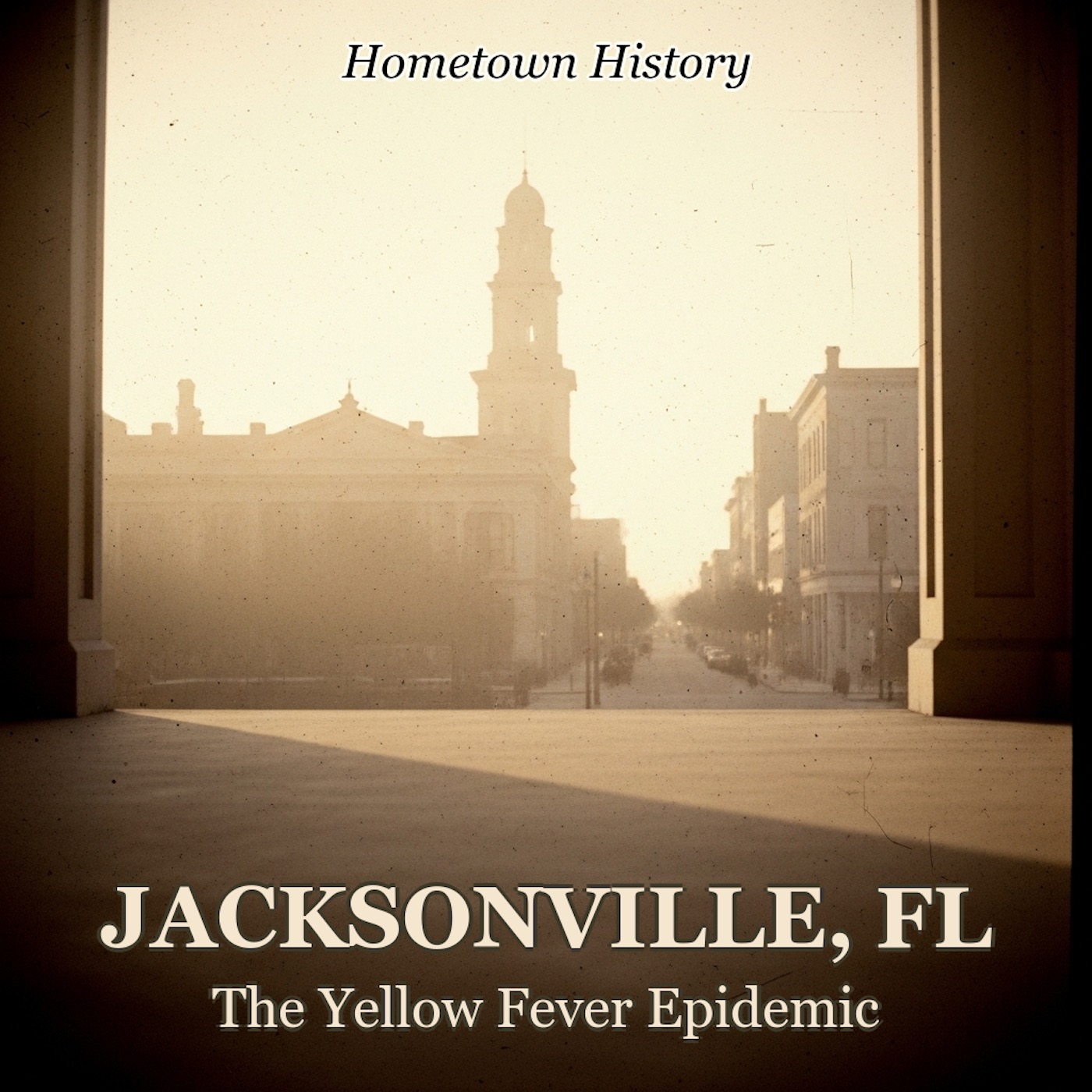
    Jacksonville, Florida: The 1888 Yellow Fever Epidemic That Built Public Health

    In the sweltering summer of 1888, a Tampa saloon keeper named R.D. McCormick stepped off a train in Jacksonville, Florida, carrying something far deadlier than luggage. Within weeks, the disease known as Yellow Jack would transform America's booming winter playground into a quarantined city of the dead, sending refugees fleeing north only to be met with armed guards, locked gates, and threats of gunfire. Of the roughly fourteen thousand people who stayed, one in three would contract yellow fever. Four hundred and twenty-seven would never recover. Jacksonville in 1888 was no ordinary Southern city. A progressive coalition of working-class whites and African Americans had swept the previous year's election, seating five Black council members, a Black municipal judge, and twenty-three Black police officers. The epidemic shattered that experiment in biracial governance. As elected officials fled, civilian leaders stepped forward. Colonel J.J. Daniel organized the Jacksonville Auxiliary Sanitary Association, hiring hundreds of doctors and nurses before the fever claimed his own life. Dr. Alexander Darnes, Jacksonville's first African American physician, stayed to treat patients from both communities. A woman known as Mrs. A.B. Anthony went house to house delivering milk to the sick at her own expense. Timeline of Key Events The 1888 Jacksonville yellow fever epidemic unfolded with terrifying speed across five months, from a single diagnosisto a city-wide catastrophe. July 28, 1888: R.D. McCormick diagnosed as first confirmed yellow fever case August 10, 1888: Board of Health officially declares epidemic; Jacksonville Auxiliary Sanitary Association formed September 3, 1888: Acting Mayor J.W. Archibald evacuates the city Late September 1888: Peak week, 944 new cases and 70 deaths in seven days November 25, 1888: First hard frost kills mosquitoes and effectively ends the epidemic December 15, 1888: National and state quarantines officially lifted Hometown History explores forgotten stories from small-town America. The overlooked events, hidden triumphs, and buried tragedies that shaped the country we live in. New episodes every Tuesday. Find every episode at mythsandmalice.com/hometown-history Episode 201 | Hometown History | Hosted by Shane Waters Advertising Inquiries: https://redcircle.com/brands Privacy & Opt-Out: https://redcircle.com/privacy

    • Transcript
  • #200
    May 12 · 20 min

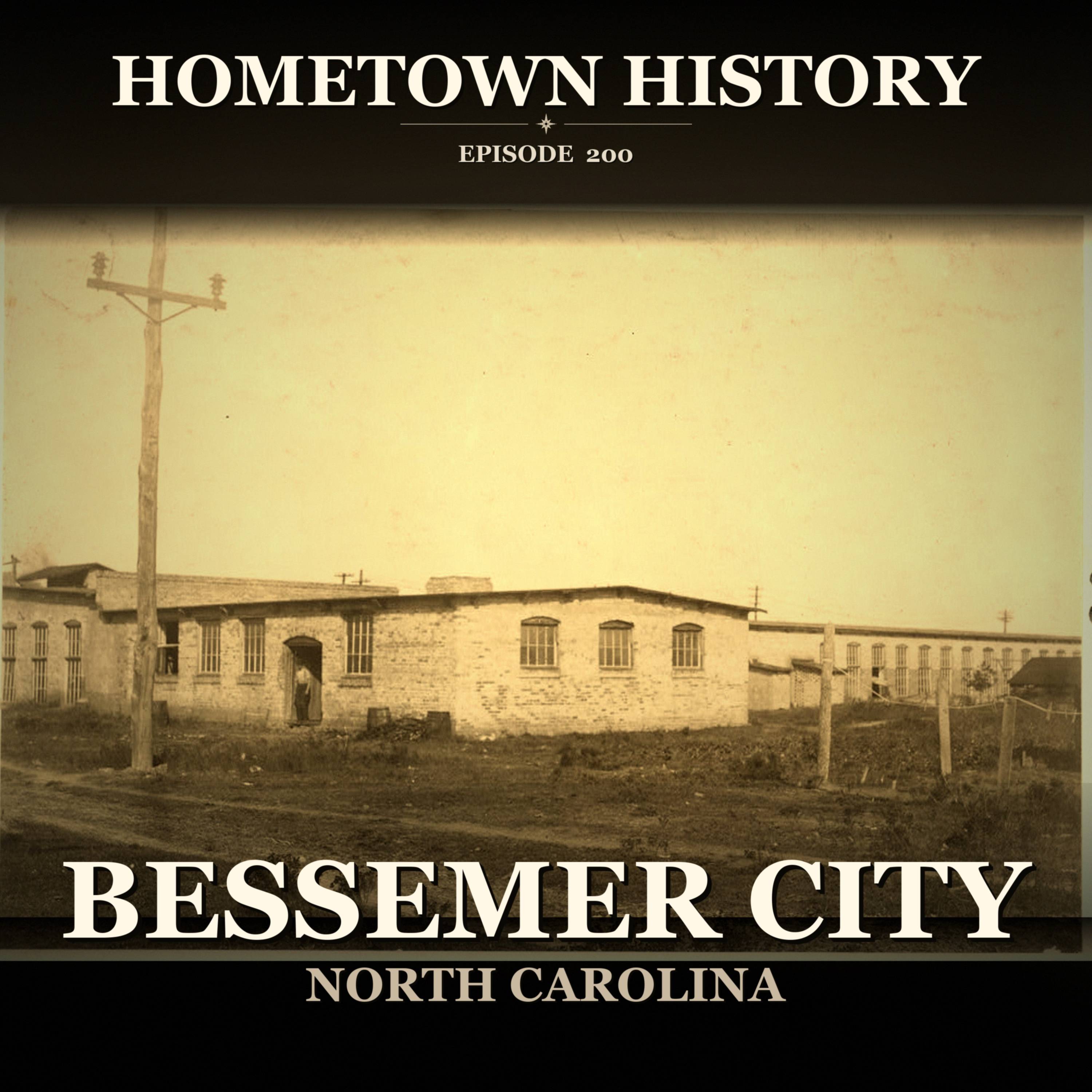
    Bessemer City, North Carolina: The Ballad Singer the Mill Bosses Couldn't Silence

    Bessemer City, North Carolina. September 14th, 1929. A flatbed truck kicks up Red Carolina dust on a back road outside Bessemer City. The boards rattle beneath 22 pairs of feet. No one in the truck bed carries a weapon. They are textile workers heading home from a roadblock that turned them around. They did what they were told. They turned back, and the cars behind them kept coming. In that truck bed, gripping the wooden side rails, a 29-year-old woman feels the September heat press against her skin. TIMELINE 1900: in the southern Appalachian Mountains. 1929: A flatbed truck kicks up Red Carolina dust on a back road outside Bessemer City. 1935: and ran as a non-union shop until it closed in 1993. 1986: North Carolina proposed a historical marker near the Loray Mill. WHY THIS MATTERS The story of Bessemer City is a reminder that the events that shaped America didn't always happen in the biggest cities. What unfolded here left marks on the community that are still visible today. The full story is more complicated, and more human, than the version most people know. Episode 200 | Hometown History | Hosted by Shane Waters If you liked this: Episode 168 (Hickory, North Carolina) Hometown History explores forgotten stories from small-town America. The overlooked events, hidden triumphs, and buried tragedies that shaped the country we live in. New episodes every Tuesday. Find every episode at mythsandmalice.com/hometown-history Advertising Inquiries: https://redcircle.com/brands Privacy & Opt-Out: https://redcircle.com/privacy

    • Transcript
  • #199
    May 5 · 25 min

    Forsyth County, Georgia: The Town Georgia Tried to Bury Twice

    September, 1912, Forsyth County, Georgia, 30 miles northeast of Atlanta, farming country, red clay roads, pine forests thick enough to block out the afternoon sun. The air sits heavy. It smells like turned earth and wood smoke. More than a thousand black Americans live here. They own land. They go to church. William and Ida Bagley own 60 acres. Grant Smith preaches on Sunday. Children walk to school along dirt paths worn smooth by generations of feet. TIMELINE 1912: stayed all white for 75 years, and then drowned the evidence under a lake. 1913: a grand jury drops all charges against Tony Howell. 1920: census recorded 30 black residents, where there had been more than a thousand. WHY THIS MATTERS The story of Forsyth County is a reminder that the events that shaped America didn't always happen in the biggest cities. What unfolded here left marks on the community that are still visible today. The full story is more complicated, and more human, than the version most people know. Episode 199 | Hometown History | Hosted by Shane Waters Hometown History explores forgotten stories from small-town America. The overlooked events, hidden triumphs, and buried tragedies that shaped the country we live in. New episodes every Tuesday. Find every episode at mythsandmalice.com/hometown-history Advertising Inquiries: https://redcircle.com/brands Privacy & Opt-Out: https://redcircle.com/privacy

    • Transcript
  • #198
    April 28 · 22 min

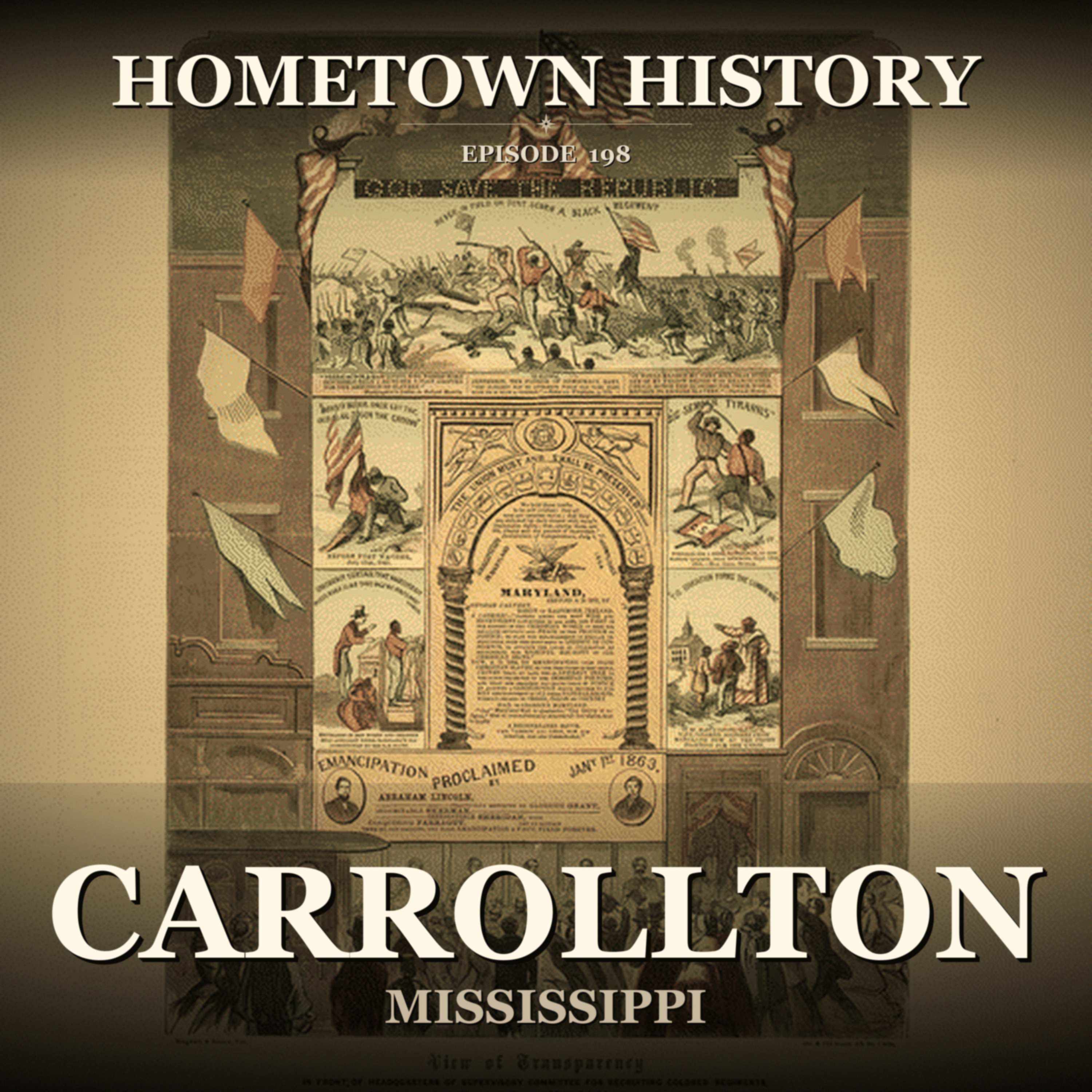
    Carrollton, Mississippi: The 1886 Courthouse Massacre That History Forgot

    January 1886, Carrollton, Mississippi, a Saturday afternoon. Two brothers are hauling jugs of molasses from a wagon into a saloon. Heavy earthenware vessels, maybe 20 pounds each, slick with condensation. Ed and Charlie Brown, part African American, part Native American, working men making a delivery. The doorways narrow, someone's coming out as they're going in. Bodies shift, a jug tilts, and thick brown molasses drips down a white man's sleeve. The brothers stop, apologize. TIMELINE 1834: and named for Charles Carroll of Carrollton, Maryland. 1876: Gray-white brick, tall windows, a cupola on top. 1886: Carrollton, Mississippi, a Saturday afternoon. WHY THIS MATTERS The story of Carrollton is a reminder that the events that shaped America didn't always happen in the biggest cities. What unfolded here left marks on the community that are still visible today. The full story is more complicated, and more human, than the version most people know. Episode 198 | Hometown History | Hosted by Shane Waters Hometown History explores forgotten stories from small-town America. The overlooked events, hidden triumphs, and buried tragedies that shaped the country we live in. New episodes every Tuesday. Find every episode at mythsandmalice.com/hometown-history Advertising Inquiries: https://redcircle.com/brands Privacy & Opt-Out: https://redcircle.com/privacy

    • Transcript
  • #197
    April 21 · 22 min

    Dover, Delaware: The Poisoned Chocolates That Changed American Law

    August 1898, Dover, Delaware. The heat of the day has broken, and the air smells of cut grass and warm earth. On the porch of the Pennington family home, Mary Elizabeth Dunning opens a package from the afternoon mail, a box of chocolate bonbons, a Cambric handkerchief, and a note. With love to yourself and baby, Miss C. She passes the candy around. Her sister Ida takes one. Her daughter takes one. Friends gathered on the porch reach in. The evening is warm. The chocolate is sweet. TIMELINE 1683: The old state house, built in 1791, still opens its doors to visitors. 1787: making Delaware the first state in the Union. 1887: to 1891, and a former attorney general of Delaware, Pennington was one of the most respected men in Kent County. 1898: the package arrived at the Pennington home. WHY THIS MATTERS The story of Dover is a reminder that the events that shaped America didn't always happen in the biggest cities. What unfolded here left marks on the community that are still visible today. The full story is more complicated, and more human, than the version most people know. Episode 197 | Hometown History | Hosted by Shane Waters Hometown History explores forgotten stories from small-town America. The overlooked events, hidden triumphs, and buried tragedies that shaped the country we live in. New episodes every Tuesday. Find every episode at mythsandmalice.com/hometown-history Advertising Inquiries: https://redcircle.com/brands Privacy & Opt-Out: https://redcircle.com/privacy

    • Transcript
  • #196
    April 14 · 20 min

    Brattleboro, Vermont: The Asylum Tower Holding a Century of Secrets

    In the woods above Brattleboro, Vermont, a 65-foot stone tower has stood since the 1890s. It was not built by architects or hired masons. It was built by the patients of an insane asylum, stone by stone, under the direction of their doctors who believed that breaking rocks could fix broken minds. But some patients found another use for the tower they had built with their own hands. They climbed it one last time. In 1938, officials sealed the door shut. At the base of that tower sits a cemetery holding more than 650 burials, many marked only with numbers. This is the story of Anna Hunt Marsh, the daughter of Vermont's Lieutenant Governor, who watched her husband's patient die from ice water submersion and forced opium comas in 1806. She spent twenty-eight years turning that grief into action. When she died in 1834, her will contained a single sentence that would change Brattleboro forever: ten thousand dollars left for the purpose of building a hospital for the insane in Windham County. She became the first woman in American history to found a mental health institution. Hometown History explores forgotten stories from small-town America. The overlooked events, hidden triumphs, and buried tragedies that shaped the country we live in. New episodes every Tuesday. Find every episode at mythsandmalice.com/hometown-history Advertising Inquiries: https://redcircle.com/brands Privacy & Opt-Out: https://redcircle.com/privacy

    • Transcript
  • #195
    April 7 · 23 min

    Waterbury, Vermont: The Asylum That Turned a Towns Name Into a Warning

    You're standing on Route 100 in Waterbury, Vermont, in November 1891. The air smells like wood smoke and coming snow. Behind you, the last maples hold on to their copper leaves. Ahead on a hill that commands the entire valley, workers are laying the final stones on a building that will change everything. The Vermont State Asylum for the Insane. Four stories of red brick, 200 windows catching the afternoon light, italianate towers that look, from certain angles, almost welcoming. TIMELINE 1891: The air smells like wood smoke and coming snow. 1900: it houses 400 patients. 1925: Every third person you pass works at the asylum. 1947: electroconvulsive therapy. WHY THIS MATTERS The story of Waterbury is a reminder that the events that shaped America didn't always happen in the biggest cities. What unfolded here left marks on the community that are still visible today. The full story is more complicated, and more human, than the version most people know. Episode 195 | Hometown History | Hosted by Shane Waters If you liked this: Episode 184 (East Montpelier, Vermont) Hometown History explores forgotten stories from small-town America. The overlooked events, hidden triumphs, and buried tragedies that shaped the country we live in. New episodes every Tuesday. Find every episode at mythsandmalice.com/hometown-history Advertising Inquiries: https://redcircle.com/brands Privacy & Opt-Out: https://redcircle.com/privacy

    • Transcript
  • #194
    March 31 · 16 min

    Riceville, Maine: The Ghost Town Whose Plague Never Happened

    Riceville, Maine. Somewhere in the forest of eastern Maine, there's a town that no longer exists. It's a summer morning, sometime in the early 1900s. A traveler makes his way down a rutted logging road through dense strands of hemlock and spruce. He's headed for Riceville, a company town built around a tannery on Buffalo Stream. He knows the place. Maybe a hundred people live there. Workers, families, children who attend the schoolhouse at the north end of town. But when he arrives, something is wrong. TIMELINE 1880: census records show just 10 people living there. 1883: money, that's an almost incomprehensible sum. 1890: Riceville had exploded to 136 residents. 1898: James Rice and his brothers Francis X and John took full control, forming the Hancock Leather Company. WHY THIS MATTERS The story of Riceville is a reminder that the events that shaped America didn't always happen in the biggest cities. What unfolded here left marks on the community that are still visible today. The full story is more complicated, and more human, than the version most people know. Episode 194 | Hometown History | Hosted by Shane Waters Hometown History explores forgotten stories from small-town America. The overlooked events, hidden triumphs, and buried tragedies that shaped the country we live in. New episodes every Tuesday. Find every episode at mythsandmalice.com/hometown-history Advertising Inquiries: https://redcircle.com/brands Privacy & Opt-Out: https://redcircle.com/privacy

    • Transcript
  • #193
    March 24 · 18 min

    Prudence Island: The Keeper Who Relit the Light After Losing Everything

    In a lighthouse keeper's cottage on Prudence Island, Rhode Island, six people huddle on the floor. It's September 21st, 1938. Outside, a wall of gray-green water is racing across Narragansett Bay, 16 feet of churning ocean pushed by winds exceeding 100 miles per hour. George Gustavus, the lighthouse keeper, stands with his wife Mabel, his 12-year-old son Edward, and three neighbors who came seeking shelter. They'd climbed upstairs when the water started rising. TIMELINE 1823: on Goat Island in Newport Harbor, it was dismantled and moved stone by stone to Prudence Island in 1851. 1933: 28 years he'd spent here. 1937: George Gustavus has finally arrived at his new posting. 1938: it's become a summer colony, though the year-round folks remain tight-knit. WHY THIS MATTERS The story of Prudence Island is a reminder that the events that shaped America didn't always happen in the biggest cities. What unfolded here left marks on the community that are still visible today. The full story is more complicated, and more human, than the version most people know. Episode 193 | Hometown History | Hosted by Shane Waters If you liked this: Episode 192 (Watch Hill, Rhode Island) Hometown History explores forgotten stories from small-town America. The overlooked events, hidden triumphs, and buried tragedies that shaped the country we live in. New episodes every Tuesday. Find every episode at mythsandmalice.com/hometown-history Advertising Inquiries: https://redcircle.com/brands Privacy & Opt-Out: https://redcircle.com/privacy

    • Transcript
  • #192
    March 17 · 19 min

    Watch Hill, Rhode Island: The Fort Road Massacre That Killed 15

    Watch Hill, Rhode Island. It's one o'clock on a Wednesday afternoon in September 1938. Miss John McKisson Camp is hosting a luncheon on the rocks at Weakapog, just east of Watch Hill, Rhode Island. Her guests gather in their summer finest. Linen dresses, straw hats, the quiet elegance you'd expect from old money families who've summered here for generations. Someone mentions that the sea looks restless today. Another guest points to a strange yellow light hanging over the water. TIMELINE 1938: Miss John McKisson Camp is hosting a luncheon on the rocks at Weakapog, just east of Watch Hill, Rhode Island. 1945: in the small, quiet town of Fayetteville, West Virginia. WHY THIS MATTERS The story of Watch Hill is a reminder that the events that shaped America didn't always happen in the biggest cities. What unfolded here left marks on the community that are still visible today. The full story is more complicated, and more human, than the version most people know. Episode 192 | Hometown History | Hosted by Shane Waters If you liked this: Episode 171 (Exeter, Rhode Island) Hometown History explores forgotten stories from small-town America. The overlooked events, hidden triumphs, and buried tragedies that shaped the country we live in. New episodes every Tuesday. Find every episode at mythsandmalice.com/hometown-history Advertising Inquiries: https://redcircle.com/brands Privacy & Opt-Out: https://redcircle.com/privacy

    • Transcript
  • #191
    March 10 · 21 min

    Deal Beach, New Jersey: 240 Immigrants Drowned 150 Yards From Shore

    Deal Beach, New Jersey. It's 6.10 on the morning of November 13th, 1854, and the gale-force winds that rattled windows all night have driven the few families of Deal Beach from their beds. Through the fog and driving rain, they see her. A massive three-masted clipper ship, full sails still set, stuck hard on the outer sandbar, just 500 yards from shore. The ship's bell. That's what woke them. The incessant staccato clatter cutting through the storm. Someone aboard is ringing that bell, desperate, rhythmic, unceasing. TIMELINE 1854: and the gale-force winds that rattled windows all night have driven the few families of Deal Beach from their beds. WHY THIS MATTERS The story of Deal Beach is a reminder that the events that shaped America didn't always happen in the biggest cities. What unfolded here left marks on the community that are still visible today. The full story is more complicated, and more human, than the version most people know. Episode 191 | Hometown History | Hosted by Shane Waters Hometown History explores forgotten stories from small-town America. The overlooked events, hidden triumphs, and buried tragedies that shaped the country we live in. New episodes every Tuesday. Find every episode at mythsandmalice.com/hometown-history Advertising Inquiries: https://redcircle.com/brands Privacy & Opt-Out: https://redcircle.com/privacy

    • Transcript
  • #190
    March 3 · 16 min

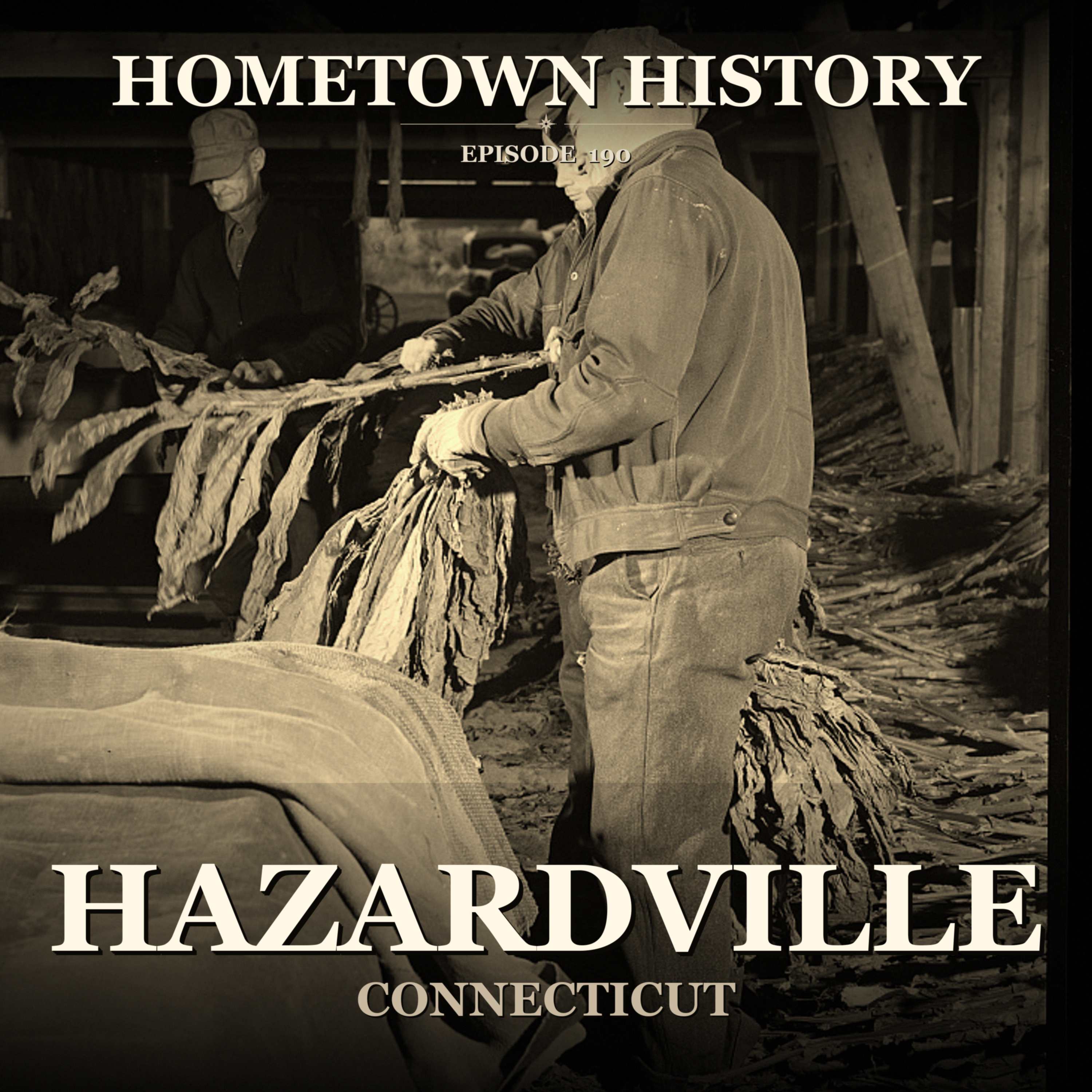
    Hazardville, Connecticut: When Gunpowder Made—and Destroyed—a Town

    January 14, 1913. Hazardville, Connecticut. A winter morning at the old powder mills, now operating under the Hercules Powder name for exactly 30 days. Workers Charles Blunden and Jacob Stocker went about their routines, same as they had for years. The machinery hummed. The river flowed past stone walls built to contain disasters. Then four blasts ripped through the mill in rapid succession. The sound reached Hartford, over 20 miles away. TIMELINE 1835: along the Scantic River in northern Connecticut. 1837: wiped out his savings. 1913: Hazardville, Connecticut. 1968: 784 acres where hikers now walk past ruins of dam structures, race walls, and pressing mills. WHY THIS MATTERS The story of Hazardville is a reminder that the events that shaped America didn't always happen in the biggest cities. What unfolded here left marks on the community that are still visible today. The full story is more complicated, and more human, than the version most people know. Episode 190 | Hometown History | Hosted by Shane Waters Hometown History explores forgotten stories from small-town America. The overlooked events, hidden triumphs, and buried tragedies that shaped the country we live in. New episodes every Tuesday. Find every episode at mythsandmalice.com/hometown-history Advertising Inquiries: https://redcircle.com/brands Privacy & Opt-Out: https://redcircle.com/privacy

    • Transcript
  • #189
    February 24 · 17 min

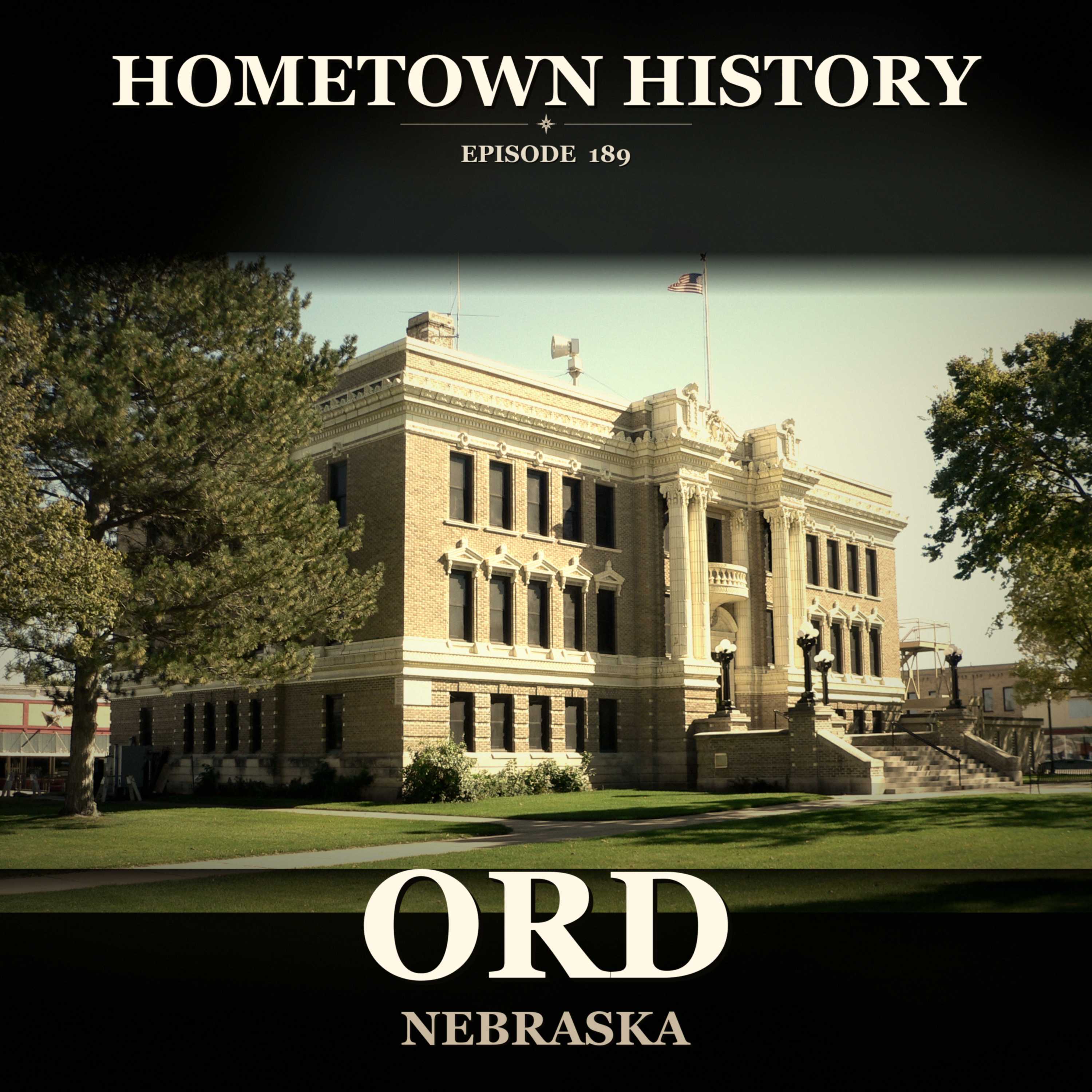
    Ord, Nebraska: The Teenage Teacher Who Saved 13 Children in the 1888 Blizzard

    Ord, Nebraska. January 12th, 1888. Morning. A one-room schoolhouse six miles south of Ord, Nebraska. 40 degrees in January. Unseasonably warm. The morning where farm kids arrive without their heavy coats because it feels like spring decided to show up three months early. Minnie Freeman, 19 years old, is teaching her first real class. 13 students, ages 6 to 14. And there's Frankie Gibbon in the back row, not paying attention to arithmetic because he's playing with something else, a ball of twine. WHY THIS MATTERS The story of Ord is a reminder that the events that shaped America didn't always happen in the biggest cities. What unfolded here left marks on the community that are still visible today. The full story is more complicated, and more human, than the version most people know. Episode 189 | Hometown History | Hosted by Shane Waters Hometown History explores forgotten stories from small-town America. The overlooked events, hidden triumphs, and buried tragedies that shaped the country we live in. New episodes every Tuesday. Find every episode at mythsandmalice.com/hometown-history Advertising Inquiries: https://redcircle.com/brands Privacy & Opt-Out: https://redcircle.com/privacy

    • Transcript
  • #188
    February 17 · 19 min

    Lewistown, Montana: When the Guide Became the Killer (1889)

    Lewistown, Montana, 1889. Mid-June, 1889. The Judith River runs cold through central Montana Territory. The water flows down from the Little Belt Mountains, snaking through grassland where cattle ranches have only just begun to replace the buffalo herds. A rancher riding his property spots something caught against the rocks near samples crossing. At first, he thinks it's driftwood. Then, he gets closer. A body. A woman, face down. Well-dressed. Too well-dressed for drowning. Before the weekends, four more will surface. TIMELINE 1889: The Judith River runs cold through central Montana Territory. WHY THIS MATTERS The story of Lewistown is a reminder that the events that shaped America didn't always happen in the biggest cities. What unfolded here left marks on the community that are still visible today. The full story is more complicated, and more human, than the version most people know. Episode 188 | Hometown History | Hosted by Shane Waters Hometown History explores forgotten stories from small-town America. The overlooked events, hidden triumphs, and buried tragedies that shaped the country we live in. New episodes every Tuesday. Find every episode at mythsandmalice.com/hometown-history Advertising Inquiries: https://redcircle.com/brands Privacy & Opt-Out: https://redcircle.com/privacy

    • Transcript
Showing 1–20 of 23 episodes