Love in the ER
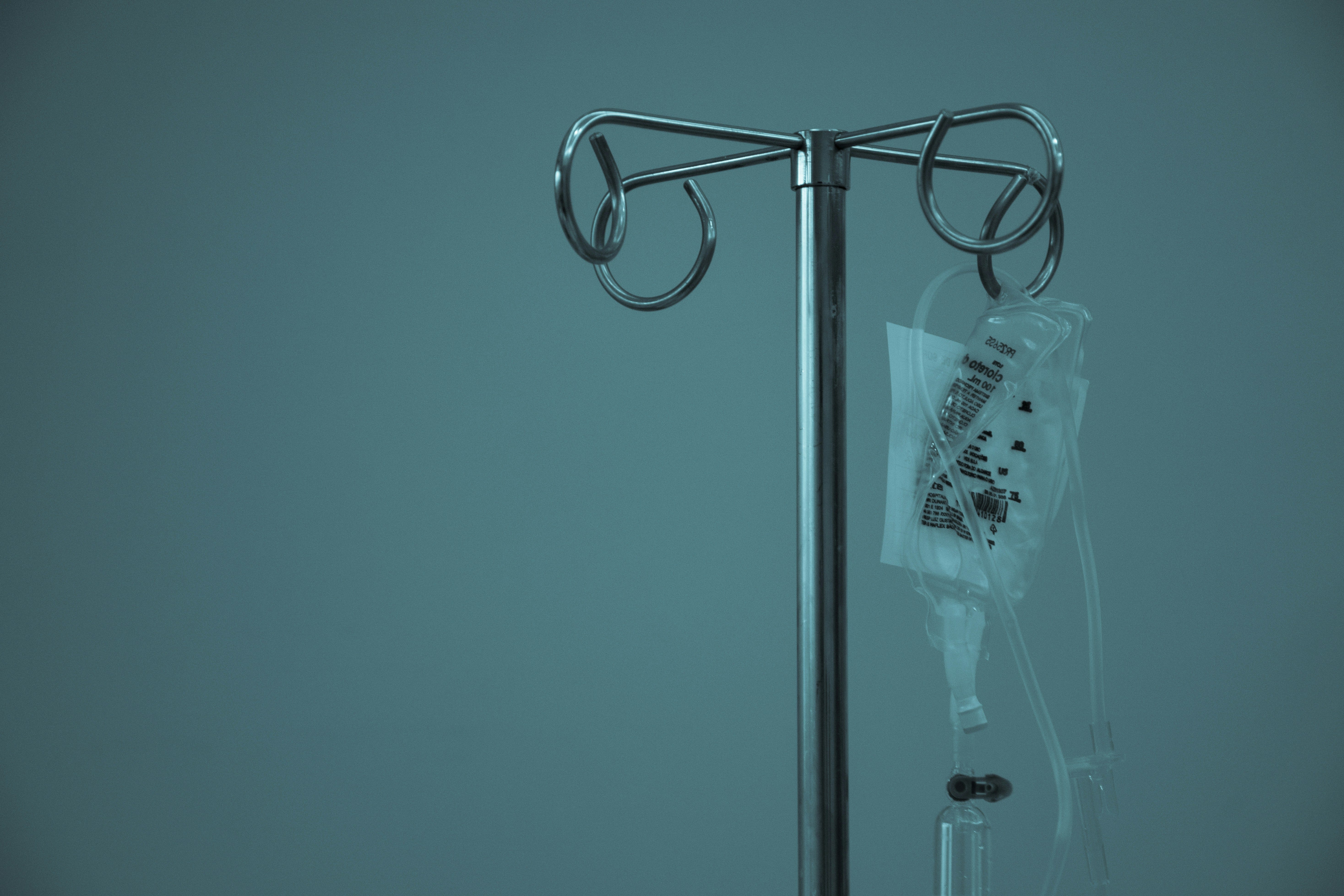
Two weeks ago, my husband shook me awake at 4:00 a.m. “I’m going to the emergency room,” he said. I tried to blink myself awake. Never much of a complainer, Ryan had grown increasingly miserable over the past few days due to a pain in the roof of his mouth. That night, the pain had kept him from sleeping. I think I mumbled something along the lines of, “What? How?” as I sat up in bed. “I’ll take an Uber,” he said. My sleep-fogged brain considered this. My pillow was calling to me. And Ryan had taken himself to the ER alone before—Boxing Day 2014 when we had a toddler and a newborn and he’d stepped on a (shockingly sharp!) toy excavator, slicing a deep gouge into his toe. Then, like now, I knew it was a gray area sort of injury: requiring immediate medical attention, but not something life-threatening. And here he was giving me an out to back to sleep… “No, I’ll take you,” I murmured, mentally running through the tasks this would require, what I needed to bring, whom I needed to notify. ***This summer I’ve been thinking about what it actually takes to make community work. Much has been written about the loneliness crisis, growing rates of estrangement, how we are replacing eye contact with screen staring. Somewhere in the past few months I heard the phrase, “Everyone wants a village, no one wants to be a villager,” and I wonder, could it really be that simple? Is our lack of community simply our own fault? *** Heretic Hereafter is a reader-supported publication. To receive new posts and support my work, consider becoming a free or paid subscriber. Ryan and I wound up at Seattle’s Harborview Medical Center. It’s a level one trauma center that I only knew from newspaper write ups about gunshot victims. I’d hoped that 4:00 a.m. on a Wednesday morning would be relatively quiet, that he’d get a quick exam, maybe some pain medicine, and we’d be on our merry way. We were greeted by five security guards, two police officers, and a metal detector. The waiting room benches hosted sleeping forms surrounded by piles of plastic bags and dirty backpacks, the tell-tale baggage of homelessness. Nurses seemed to know many patients by name—frequent fliers, I guessed. This ER felt like the last, fraying threads of a broken safety net. Here were the disabled, the poor, the mentally ill, the addicted. And yet people fell through the cracks here, too. As we waited, I witnessed security eject two patients who were acting aggressively. Even as I was relieved at their removal, I wondered where they would go. ***Culturally, we are going through a profound shift in the way we understand relationships, and I think this has a lot to do with geography: for most of human history, community was not chosen but default. It was the people in your tribe, your extended family, your neighbors. Humans were tied to land and to ancestral homes. Waves of migration and industrialization disconnected many of us from the lands of our ancestors. Increasing economic pressure pushed generations of striving young people towards college education and the metropolitan hubs of various industries. Now, many of us have unprecedented levels of choice in where we live, what we do for work, and whom we associate with. The digital revolution, helped by the pandemic, further fractured the connection between place and relationship. Now your closest confidante might be someone you only chat with online and you may spend more time focused on parasocial relationships with podcasters or influencers rather than with friends you see in real life. Real life? Who has time for that? *** A few hours after arriving, Ryan was finally taken to an exam room—and by “room” I mean “tiny alcove with curtain.” En route to our alcove, we walked through corridors lined with patients on gurneys—there didn’t seem to be a spare inch of space. Some patients slept in chairs hooked up to IVs. In the alcove stood a bed crowned with a variety of tubes and monitors. I looked around—there was no place for me to sit. The expectation, I realized, is that people come to this hospital alone. Indeed, no one I’d seen in the waiting room was accompanied. *** In the course of my 40+ years, I’ve said many goodbyes. I’ve moved 16 times. I have clashed with church communities whose beliefs I no longer held. I’ve gone no contact with family members. Maybe all of this had led me to a certain amount of overthinking on the topic of relationships and community. I notice how much time people in my community spend trying to optimize ourselves and our kids: we’ll do anything for work, anything to give our kids an extracurricular edge, even if these things (like travel sports) make us broke and miserable. There’s always a fear of being left behind. On the rare occasion that I’m able to get together with my neighbors we always find ourselves saying things like, “this is so fun” and “we should do this more often,” and yet…we don’t. We’re too busy, too tired, too introverted, too awkward. We’ve forgotten that the most important part is just showing up. *** The doctor apologized for the lack of chair and found one for me. Ryan and I spent eight total hours in the emergency department. Apart from fetching snacks, I was pretty superfluous to the process, but Ryan thanked me for coming. His pain improved. The doctor examined and scanned him before referring him to a dentist because apparently, doctors don’t do mouth stuff? Ryan felt silly and annoyed that we’d wasted so much time in the ER on what was likely a dental issue. “It’s not a big deal,” I said. “Remember last summer when I thought I was in anaphylaxis and called 911?” The paramedics had been very kind as they showed me my lack of swollen lips and tongue in the mirror. During our 19 years of marriage, we’ve interacted with emergency medical services 6 times, with only half of those being necessary. Sometimes you just don’t know. ***In a culture that’s obsessed with productivity and efficiency, it’s a radical act to choose inconvenience. That’s the story of the Good Samaritan, and the best of our caregivers and teachers. Most times I opt for efficiency—I am hurrying along my kids or growing impatient with the elderly person slowly climbing the stairs in front of me. I like getting things done, checking off tasks. But in the ER, I was reminded that presence trumps productivity. As we waited in our alcove, I heard a procession of doctors and nurses trying to cajole an elderly patient into getting an MRI. She was scared of the machine. One by one, the staff used active listening skills to validate her feelings while offering potential solutions. It was a terribly inefficient and deeply loving process. ***Thinking of those lonely people in the ER, I can imagine that it was a complex web of circumstances that brought them there—trauma, poverty, systemic racism and other barriers. It would be facile to think that deciding to act more “villager-like” would solve these complicated problems. And yet, I know that small moments of presence actually do help. We all need to be seen; we all need people we can rely on. That trust-building is a slow, inefficient process AND it’s the only way we make progress towards solving big problems like homelessness and addiction. So, even in this hectic season of back-to-school and various professional upheavals, I am going to try to be an inconvenience and let myself be inconvenienced, too. Missed a Post in our “Stuck Together Summer” Series? Here They Are! * Stop Threatening to Move to Canada * “We’re Doomed”: Great Card Game, Terrible Outlook on Life * A Post for When You Hate Everyone * Text That Friend You’re Thinking About * The Hardest Goodbye * A Police Defunder Has Some Regrets * The Other Third Places We Need Heretic Hereafter is a reader-supported publication. To receive new posts and support my work, consider becoming a free or paid subscriber. Get full access to Heretic Hereafter at heretichereafter.substack.com/subscribe